

No major European car company has suffered more over the past few years than the Volkswagen Group. The triple gut punch of Chinese competition eroding demand, tariffs eating into profits, and a failed electric transition has put the German conglomerate in a financial pickle that it doesn’t expect to recover from until next year. How does it plan to recover? Aside from slashing even more jobs than previously planned, the group also wants to build luxury cars in the United States and “reduce complexity” within its collection of brands (i.e., more platform-sharing).
Things are looking particularly bad at Porsche, where operating profit for 2025 fell by 98% due to issues that mostly mirror the larger VW Group’s problems (tariffs, Chinese competition, overspending on EVs). Things aren’t expected to get better in 2026 for Porsche, either, with more job cuts on the way.


What else is going on today? Slate, the Amazon-backed affordable electric truck startup, announced a new CEO today, just months before it’s expected to start building its long-awaited pickup. Staying in the realm of boardroom shakups, Nissan is another company that hasn’t had a great go at things lately. Its new CEO, Ivan Espinosa, is trying his damndest to turn the company around. While the company is still losing money, it’s losing less money than it expected to. A new chief financial officer should help stabilize things further.
Don’t Worry, The CEO Still Got His Multi-Million-Dollar Bonus

Last month, VW executives came up with a plan to reduce the company’s costs by 20% following a bunch of spending for electric vehicle development, which hasn’t really panned out. Competition in China from domestic brands has eroded demand in the country, with pressure mounting from those brands in VW’s home region. On a media call Tuesday, group CFO Arno Antlitz revealed plans to cut a further 50,000 jobs in Germany by 2030. This is on top of the 35,000 jobs already targeted for elimination within the conglomerate.
While Volkswagen closed a plant for the first time in its history back in December, Chinese brands are planting roots on the continent. It’s a whole new world, at least to CEO Oliver Blume. From Bloomberg:
“We are facing trade policy barriers, completely changed markets, different regulatory systems,” Chief Executive Officer Oliver Blume said on a media call. “The business model that has supported us for decades in the Volkswagen Group is not tenable anymore.”
VW is fighting back against fast-moving competition in China, still its most important market, and soft demand in Europe where the shift to EVs remains volatile. Chinese manufacturers are also preparing to enter Europe, with BYD Co., the world’s biggest EV maker, set to ramp up output in Hungary this year.
It’s not just job cuts where VW plans to save cash. It also wants to build Audis in the United States, where tariffs have kept the company’s market share at 4% (versus the company’s previous goal of 10% market share). And it could step on new subsidiary Scout Motors’ toes to do it.
To be “long term successful” Audi needs “some some localization there,” Antlitz said, pointing to VW’s existing factory in Chattanooga, Tennessee, or a new factory that will make Scout Motors branded vehicles in South Carolina from next year as possible sites.
Antliz told Bloomberg that Volkswagen plans to lean even further into “reducing complexity in the group,” suggesting that platform-sharing might become even more common between the company’s brands, to drive down costs. VW is already the king of platform sharing; the Touareg above sits on the latest version of the MLB platform, which underpins five other SUVs in the group’s lineup. My hope is this means more VW-badged Porsches, rather than more Porsche-badged VWs. But if a report from back in September about the next Macan being basically a Q5 underneath is to be believed, I might not get my wish.
Nonetheless, CEO Oliver Blume isn’t going without a bonus despite VW’s performance in 2025. Because of net cash flows for the year, Blume is still receiving about $2.3 million on top of his normal compensation. If it makes you feel any better, that’s a lot less than last year, according to Manager Magazin:
Including pension contributions and variable compensation for several years, he received €7.4 million last year, according to the company’s annual report. The previous year, Blume had received around €3 million more from VW and Porsche combined.
One reason for the decline is the salary reduction implemented as part of the cost-cutting program. The Volkswagen board of directors is foregoing portions of its compensation totaling approximately 3.5 million euros in this context.
Once you get to a certain level, anything less than total company collapse means you usually get a bonus of some kind. Must be nice.
Once A Cash Cow, Now Barely Breaking Even

Much of the VW Group’s woes can be traced back to its luxury brands Audi and Porsche, which were previously two of the firm’s most profitable subsidiaries. Porsche, in particular, has had a rough time lately, with sales in China, formerly one of its largest markets, dropping by 26% last year. Things are so bad at the Stuttgart-based brand that its profit margin has essentially disappeared, falling well below analyst estimates. From Manager Magazin:
Porsche’s operating profit for 2025 amounted to €90 million, down from almost €5.3 billion the previous year – a decline of more than 98 percent. Including financial services, the sports car manufacturer achieved €413 million (2024: €5.6 billion). Analysts at Visible Alpha had expected an operating profit of almost half a billion euros, including financial services.
Back when Oliver Blume was in charge of Porsche, he planned to cut 4,000 jobs to save on costs. Then, in January, Michael Leiters, the former CEO of McLaren, was appointed to run the company. According to one report, he had to offer employees amnesty to find out just how bad things were. Manager Magazin expects even more cuts to emerge, which could happen as soon as tomorrow, when Leiters is expected to present financial results for 2025.
Just how many cuts are we talking? Manager Magazin published a feature on Porsche last month, where it pointed out that, in 2015, the company employed 25,000 people and built around 225,000 cars. Now, it employs 42,000 people, and the publication predicts it’ll produce the same number of cars in 2027 as it did in 2015. While I’m sure the cuts won’t be as drastic as the math suggests they might be, there are certainly ways to save money here that execs will take advantage of.
Slate Replaces Its Woman CEO On International Women’s Day
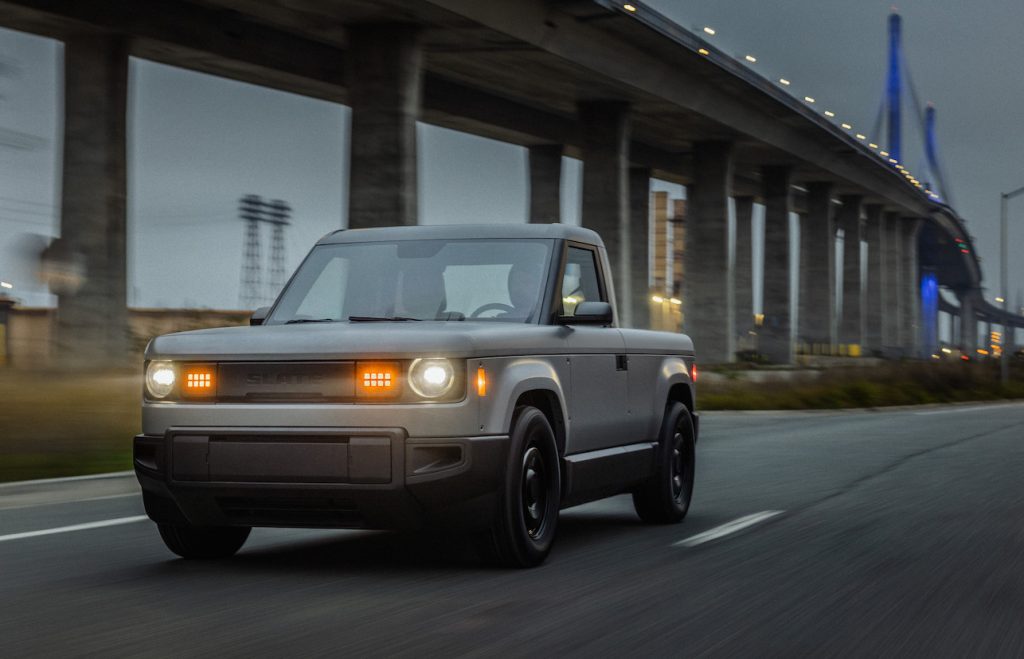
Despite a downturn in EV demand, Slate’s cheap pickup truck remains one of the most highly anticipated vehicle debuts of 2026. Christine Barman, the company’s CEO, was Slate’s first hire and has shepherded the project from small-time startup to full-on vehicle manufacturer over the past four years. Now, just months away from production, she’s being replaced by an Amazon exec. From TechCrunch:
Former Amazon Marketplace vice president Peter Faricy is the new person in charge of the company, and he started on Monday, Slate spokesperson Jeff Jablansky told TechCrunch. Most recently, Faricy had been an adviser at McKinsey and Bessemer Venture Partners. Faricy left the role at Bessemer to join Slate, according to Newsweek, which first reported the hire.
Considering Amazon has invested roughly $700 million into Slate, it’s not entirely surprising to see the company appoint one of its own to the role. But the timing is interesting. Barman has been the face of Slate since the firm revealed its truck back in April, so to remove her from the top spot now, at such a crucial time for the brand, is a bit odd.
Also, this is probably just a coincidence and bad timing, but Faricy starting on Monday means that Barman’s last day as CEO was on International Women’s Day, as the article’s author Sean O’Kane pointed out on BlueSky. Not a great look!
Barman isn’t leaving the company; she’ll stay on as the President of Vehicles to make sure deliveries commence, according to TechCrunch. Her move means there is now just one American car company led by a woman: Mary Barra at General Motors.
Nissan Gets A New Finance Guy To Curtail Losses

Nissan, like Volkswagen, hasn’t been doing great. At one point, one exec predicted the brand had “12 or 14 months to survive.” Since then, the Japanese brand nearly merged with Honda, then got a new CEO in Ivan Espinosa, who developed a multi-year cost-cutting campaign for the company that targets 20,000 job cuts and closing seven factories.
Nissan is still expected to post a loss for its fiscal calendar year ending in March, but since the cost-cutting efforts began, the company believes those losses won’t be as large. From Automotive News:
The forecasted operating loss, revised last month, is better than the ¥275 billion ($1.8 billion) in red ink it had forecast in November, but it reverses a ¥69.8 billion ($455.2 million) operating profit from the year before. Nissan is also forecasting a ¥650 billion ($4.2 billion) net loss.
That compares with a net loss of ¥670.9 billion ($4.4 billion) the year before.
Helping Espinosa with his quest was Jérémie Papin, who was appointed Nissan’s chief financial officer in January 2025. Just over a year later, Papin is stepping down for personal reasons and being replaced by Nissan finance veteran George Leondis. From Bloomberg:
Leondis joined Nissan in 2004 as head of finance for Australia. Since 2024 he’s been in Japan, where he’s led global product and industrial operations, as well as partnership financing and mergers and acquisitions.
He takes the role at a critical time for Nissan. While the carmaker’s brighter outlook has given Chief Executive Officer Ivan Espinosa a degree of breathing room, pressure is mounting on the company to refresh an aging lineup in order to reignite demand.
I like a lot of Nissan’s products right now, so I hope they can stick it out and turn things around.
What I’m Listening To While Writing TMD
It’s really nice outside in New York right now, but I’m sad some of my favorite brands aren’t doing so great right now. So here’s “Summertime Sadness” from Lana Del Rey’s debut album, Born to Die.
The Big Question
Which platforms do you think Volkswagen will start sharing throughout its brands that it doesn’t already?
Top graphic image: DepositPhotos.com


VW’s problem is that what they did so well in the late 90’s into around 2018, offering an upscale level of build quality and refinement at entry-level prices, is no longer a novel concept, nor are they the best at executing on it. The Mk4-7 generations of the Golf were extremely compelling, driving a level or three above their similarly priced rivals. Now the Mk8 has a cheap feeling interior, the Jetta is a cost-cut afterthought, the Taos is the Taos, the Atlas is extremely dated and uncompetitive, and the ID products are horrifically uncompetitive.
On top of all of this you have the Koreans offering interesting style and incredible value for their feature set, Mazda offering a great value semi-luxury experience, and the Japanese offering far more reliable vehicles. There is nothing current VW products offer that puts them ahead of their competition, no manual transmissions, no high-quality interiors, no reliable powertrains, and no vehicles that stand out (save for the Buzz which is incredibly compromised and overpriced). VW lost it’s identity by trying to chase margins and trends, and there is hardly an easy recovery out of that.
The same goes for Audi and Porsche. Audi’s lineup went from one of the best in the post-recession era to one of the absolute worst in class. Porsche on the other hand has thrown money into two generations of Panamera since the Macan has debuted, and instead of revamping what makes money in the Macan and Boxster/Cayman ICE platforms, they redo the barely-selling Panamera and make an ICE Macan that was never going to have the sales potential of an ICE or Hybrid replacement.
While yes, the Dieselgate fallout and push towards some EVs was absolutely a hinderance on their bottom line, the high-level portfolio decisions made surrounding that have had an order of magnitude greater impact on the lack of success VAG has had over the last year. Piech was certainly not perfect in his strategies (Phaeton, etc) but he understood that in order to excel, you have to make excellent and distinct products. This is something VW leadership has completely abandoned in the past decade, and the sales reflect it.
If VW wants to make a change for the better, they should go back to what made them work for so long. They chased trends all through the 2000s and 2010s into every segment. They spent a ton of money to slowly morph into a company with 3 brands in the US only selling mid size SUVs for the most part. They decided that every car needs to be a fancy rav4 with just a little size or luxury difference. Now no one can tell if your Macan/Taos/Q5 is not the larger or smaller version of each, and it all just feels like a single, double, or triple fast food burger served in the same wrapper.
Make something cheap and fun and people will buy it. The Beetle and the GTI didn’t hit 60 is 3 seconds, but they were fun to drive and worked. I would love a decent priced 150hp sedan from VW, better yet a wagon. Throw a 1.4t or a NA 2.0 with a stick in a hatch back. Hell, bring back TDI.
It’s bizarre to me to watch such massive companies fall in real time. Just a few years ago, VW produced the most vehicles in the world, and now they’re on death watch. Frankly, I don’t think anything can be done to save them without serious losses. They do not have a reputation of reliability, longevity, or quality to trade on. And building such a reputation takes significant time. What was their last successful product genre? Diesels were a lie. Their EVs are uncompetitive. They don’t offer any hybrids. And their gas ICE vehicles are unreliable. VW doesn’t have enough time or money to right the ship and start offering a full hybrid line-up like Toyota.
The worst part of all of this is that companies are scrambling to deal with “losses” from EV cars, but in the end, that’s more than likely where we are going. It makes too much sense not to for most people in most places. But companies are so set to make sure every quarter they have to hit X numbers to make investors happy they lurch back and forth and chase trends rather than set a path and stay within limits that allow for real stability.
The ID Buzz is a perfect example. It was too expensive, and too over styled. In person in a solid color, it not bad. If they could produce it for less and make it basic transportation, it would be great. If they just called it the Transport or The VW bus or something not sloganizes and build for SEO, it could have just been a god car. Instead they tried to push all the buttons at once to try and make it everything and made it nothing instead.
RIP Slate, we hardly knew ye.
The appointment just makes me go “wut”. I know everyone wants to be Tesla, which was started by SV types instead of traditional automotive folks, but this new guy’s CV isn’t a wellspring of hope. VP of Marketplace and the freakin’ McKinsey and Bessemer doesn’t inspire confidence.
Note the Barman is still responsible for ‘make sure deliveries commence’, so if that hits a snag, she’ll be the first one they throw under the bus. If all does go good, the new CEO will get the credit, not Barman.
But but…. He will make sure the stock holders will get their returns first and fast… you know make sure the value of the company is there when it’s fully taken over my amazon to make full size self driving delivery drones to chuck boxes at your house from the curb… that’s were this is going right?
I don’t even think I can armchair-executive VW right now. I got nothing for their current and continuing woes. Good luck I guess, but it’s not a brand I have any affinity for.
Well said. I owned and loved my 78 Rabbit and my 82 Scirocco and have no desire to shop VW now.
Everything VW makes, another automaker makes something better. There is no compelling reason to even shop them. My son just had his Mini totaled and going around we ignored the VW lot.
Exactly, I did see a new green vw corssover on a lot last week and went “cool green” but then I thought not a boring vw crossover.
A manual GLI is a fairly unique proposition now, and even the DSG-only GTI and Golf R have real appeal to me. But you can’t float an automotive conglomerate on 2-3 niche products. In every high volume segment there are numerous better options.
Incredibly true for VW, every single product they have has at least one Achilles heel over the competitors. This also rings true for most other VW group brands. Audi’s lineup offers little to the segment, the ICE Macan is incredibly outdated while the new EV Macan isn’t a good replacement for many, and the higher end stuff like fancy 911’s and Lamborghini sales can’t possibly counter all the bloat.
I feel for VW. Maybe I shouldn’t. But those job losses are real. And they had some genuinely good products and a bunch more that would have been great if they had managed to achieve average reliability.
I’m not sure what the problem has been in Europe, but they’ve flailed around badly in the North American market for the 20 years I’ve been looking, refusing to conform in ways that would be useful (reliability, offering products in large volume segments) and then giving up on the nonconformist things that were endearing (nice interiors, wagons, stick shifts, the Golf) so in the end they’ve alienated both mainstream and enthusiast arenas.
I don’t care about Porsche. Sorry. With the Boxster gone it’s just crossovers and unobtainables.
I feel for VW, by which I mean “I feel for the workers whose leadership have gotten rich(er) while failing them.”
Yep.
I remember back in the late 90s, early 2000s, coming from a Honda/Nissan or anything US made and then getting into a VW, just by closing the door you knew the car was different, the materials/assembly were solid, even my 73 Beetle feels solid.
They went cheap and overcomplicated things, now they are as generic as any other brand but with no reliability and very difficult to work with them. Everyone else, even Chevy, improved their assembly and quality.
Hybrids? Non existent.
Electric vehicles? Meh, GM has better ones.
Diesel? Cheated.
VW as a brand went too far and offers the same as Skoda, but those vehicles are cheaper and better looking.
Imagine if VW figures out how to lay a 4cly on its side again for Scout and then slaps that under the back of an IDBuzz and drops the price to reasonable. (just wishful thinking.)
One one hand VW can rightly lay a lot of blame for massive trade turbulence caused by illegal tariffs (not to mention all the additional political threats)
And on the other hand, everyone could see VW struggling coming into this.
Is VW building another factory or new assembly lines, for Audi and/or Scout, the best solution?
I’ll go on a limb here: long term, it’s probably the wrong answer for them. VW still needs to cut capacity worldwide to stabilize their business.
How about you reduce the complexity on a goddamn per-car basis? No more stupid e-torx, no more motors in needless places, no more allen-key-obfuscation of simple fasteners. I hated working on VAG cars. They were always so goddamn extra in every little thing.
Sorry, that bolt you can’t clearly see the top of and can’t easily access, is actually a triple square. And it’s needed to be removed for basic maintenance, tightened by the factory gorilla, and there’s no way you’re getting a breaker bar in there.
Lolol I actually started typing out more about triple squares but cut myself off to get on a meeting. 100% right though. I bought a hideously expensive 18″, 1/4″ drive flex head ratchet for exactly that kind of bullshit. Ugh.
Hey, that factory gorilla is my cousin! He’s actually got very delicate hands!
And for god’s sake simplify the infotainment system
I’m about to take the headliner, pillars and sunroof cover out of my 2005 Phaeton to reupholster them. I’ll be cursing about three minutes in. I already had to do some disassembly in those areas to run a backup camera mirror to the trunk, so I know how bad it is.
VW needs something entry-level and affordable. The original Type 1 Beetle and its platform friends the Type 2 Bus and the Type 3 coupe/sedan/wagon were the original shared platform. VWs today are extra complicated and haven’t been the cheapest vehicles on the market for decades.
A return to the *Volks* part of the name with a simpler entry-level platform would really help.
Boom, exactly. They need to lean into simple, reliable, efficient vehicles. Make commercials that make fun of everything lifted, blacked out or excessive in the automotive industry.
Very much agree. VW can even make use of existing platforms (Skoda) to do this. Looking at the VWs from the 90s, they were able to make some fun, affordable cars in addition to establishing a unique identity. The advertising was top-notch (Un-pimp the Auto and the Pink Moon ad). My wife and I looked at a Jetta in the early 2000s and the sales person told us that VW was looking to become more of a “premium” auto in the US. I think that was the beginning of the slide. That’s when the cars started becoming more complex and expensive. A back to basics approach may help VW in the US.
VW needs to figure out how to stand out in its markets and create a niche for itself. They need to focus on reliability and counter culture. Show people buying boring sedans and crossovers and then cut to cool people having fun in their Golf GTIs, Jetta GLIs and Tiguan Turbos (which should be branded like a GTI or GLI, GLX?).
The cars aren’t bad they just have no identity.
Countercultural vibes in VW’s marketing would be dope. Lean into the hippie-bus image of the old Type 2 and other classic models.
Everyone I know who claims to be a hippie (or hippie-adjacent) with a new-ish car drives Subarus & Toyotas. VW hasn’t made anything that appeals since the 3rd-gen Beetle and the Golf Alltrack.
Exactly my thinking. VW is a different image in Europe but in the US, it’s the alt. VW needs to lean into the old Apple motto “Think Different” and make basic, unique transportation.
The US has almost no hatchbacks or wagons for sale, bring back the Alltrack and a standard wheelbase Golf version and make them mild and full hybrids. Market them as the trendy, thinking persons car and get that marketshare!
Unfortunately, VW’s idea of leaning into the hippie-bus image is a $60+k electric vehicle that they take a decade to release.
I just can’t see Slate succeeding, for 27,500 you get a very basic vehicle, talking 150 miles of range, no power windows, even no radio. The truck is rwd, and has a tow rating of only 1000lbs. A quick search shows Ford Mavericks which come standard with more features and capability as being available below the proposed starting price of the slate. Even moving up to a Silverado or F150, the most basic work trucks can be had for low 30s and still have more features than the Slate. Maybe I’m wrong and all the extras and add ones will end up being super cheap and it will all make sense, but as it sits I just don’t know who the Slate EV is for.
I don’t necessarily understand this comparison. A Slate and anything else on your list is fundamentally different.
An EV is very big departure from an ICE vehicle. I would say a Slate is closer to a Leaf than it is a Maverick. Comparing Slates and Mavericks is like comparing apples and meatballs. They’re both round, both food, but if the store is out of apples, you don’t buy meatballs, and visa versa.
However, I would say that this move at the top is not going to help Slate’s chances. Their business case is an uphill battle, and strengthening that association with Amazon and other venture capital is going to disintegrate more than a few reserves.
I don’t really think that comparing a basic truck to a basic truck is some way out there comparison, but even if I take your premise. Why would anyone get this over a Leaf or a Bolt which both have way more standard features and range. It’s not like the Slate offers a lot more payload or towing than those 2 vehicles, it doesn’t give you the benefit of awd, the only think it offers is an admittedly nice looking truck body. The issue remains that this would only qualify as a good option for a vanishingly small number of people.
Amazon doing something with optics that are obviously bad to virtually anyone with functional brain… Must be a Tuesday. This is just depressingly par for the course for them.
Yeah. They don’t care.
Nissan. So, they are at the point where refinancing with special rates is the solution to their problems?
Sounds like they are learning from their customers.
What VW needs to do is hook up an ID.4 to the corpse of Ferdinand Piech and try to jumpstart him back to life
All I can think of is Piech looking like the head vampire from the first Underworld movie being reawakened
sounds about as logical as anything else they’ve tried so far
Can VW actually learn how to make cars? They’re known for making crap LOL
I don’t know, I had a Super Beetle once that was pretty damn reliable. Basic, but I wouldn’t say crap at all
What kind of volkswagen would you drive if you had just under ten million euros of your bonusses to spend?
Me? I would probably get one of those W12 pheatons for 20 grand and spent the rest on maintenance and upkeep.
Yikes, you don’t want to keep it more than a couple of years?
The last time Porsche was in trouble, they saved the company by making SUVs. Maybe this time we’ll get a pickup truck.
Honestly,
If I would have gotten a bonus of €7.4M last year and only got €2.3M this year.
I don’t know how that would make me feel.
I’d feel indignant, but also rich, so the other feeling wouldn’t last long.
Has VW tried to sell it cars cheaper? Do they have anything other than forgettable crossovers that people forget exist and then go buy a Toyota, Honda or Hyundai? Do they have anything unique, low price, and fun like they did when they grew to be a giant auto company? They can try to down to 1-2 platforms but that may not help.
Do you not remember when VW moved towards cheaper (and more boring) models in North America in the late aughts and early teens?
The B6 Passat to the NMS Passat is the classic example of it.
Isn’t the VW Jetta just the made-for-America cheap MQB?
The current A7 gen is, yes. I look at VW in America as 3 eras. In terms of Jettas, the A1 to A3 established the reputation as solid, simple cars with a cool, counter-culture appeal. The A4 and A5 gens “premiumized” those cars with higher price points and more features but maintained the appeal. The A6 and A7 are the cost cutting, appeal to everyone and therefore nobody versions.
This is exactly when VW started losing me. Compare a 2010 Jetta with the cheapo 2011 redesign. They were the same price but the 2011 was so thoroughly decontented that it felt as if the $5000 VW pulled out of it was spent directly on a kick to the groin of their prior customers.
Yes, and it’s what has ruined US market VWs. Toureg to Atlas, MKV Jetta to NCS MKVI Jetta, B6 Passat to NMS Passat. When VW tries to go cheaper, it loses anything that really makes them special or unique (in the North American market). Their cheaper models just end up being forgettable, bland, economy cars that require more regular and expensive maintenance than something like a Toyota or Honda.
I’d argue that the issue with the strategy was that VW made those cars big, complex and cheap rather than small, simple, dependable and therefore desirable.
VW needs to build cars which are small, simple, dependable and desirable again.
^This. They need to lean into simple “German Engineering” and also their counter-culture appeal in the US
All of his example vehicles were arguably less complex than the vehicles they replaced.
VW hasn’t ever been well known for dependable. There’s no “again”.
I included “unique and fun” for a reason.