

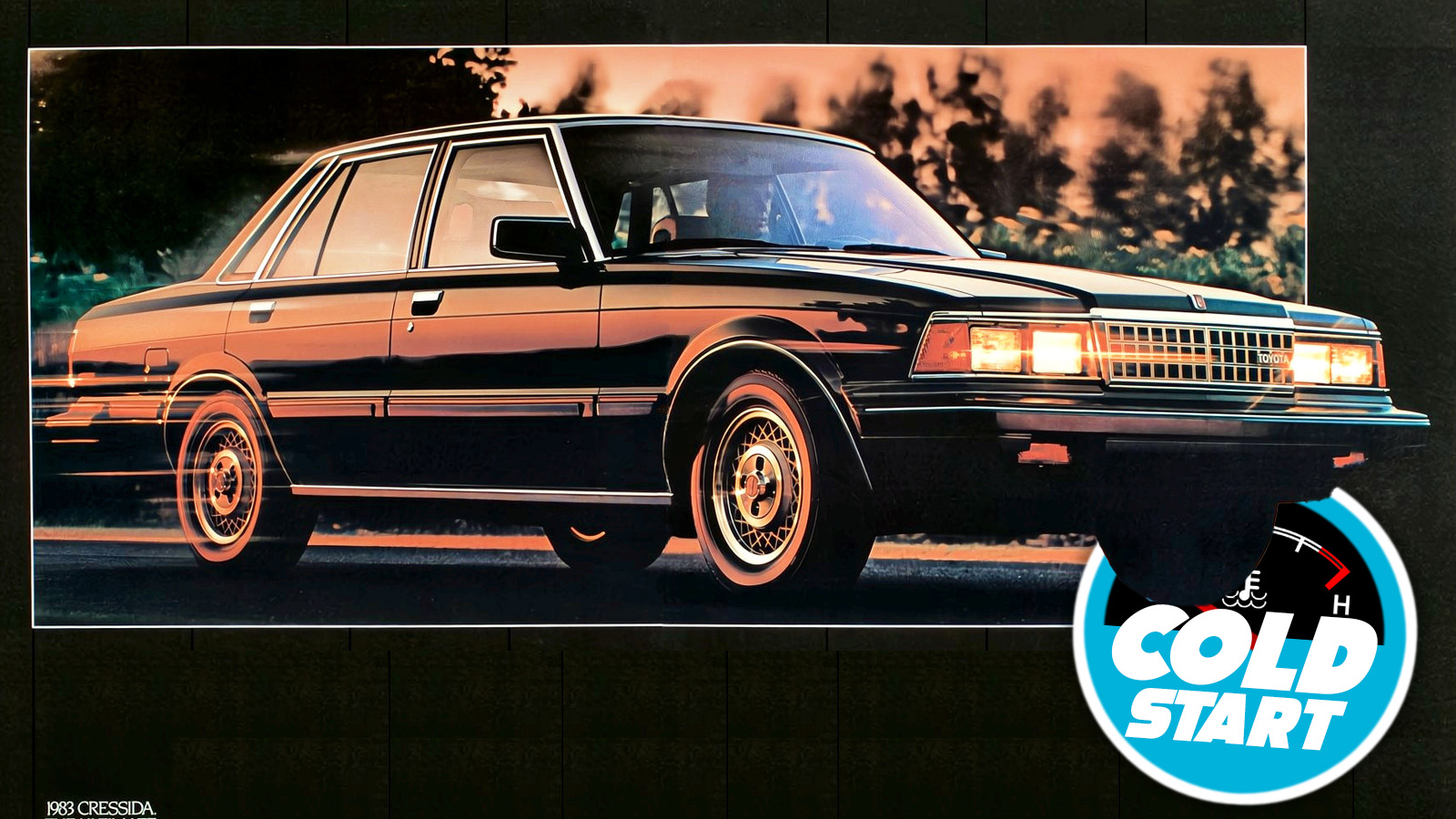
I feel like I’ve discussed how cars sort of exude a particular sort of national character here before. It’s one of those things about the automotive world that really fascinates me, because it’s very subtle but I think very real. Take almost any car-obsessive and show them an unfamiliar car, and I suspect they could at least tell you roughly where it came from, and they’re usually right. There’s just certain ways you can tell, say, an American car or a German car or a Japanese car or a French one and on and on. It’s not even a strict set of rules, as such, it’s more of a gut sort of feel.
There’s all sorts of overlap and fuzzy edges, too. Australian cars feel like bizzaro American cars (I’m sure it’s the opposite if you’re Australian) and every now and then you encounter a car that seems to hail from a part of the world other than what it seems. Sometimes that’s intentional, sometimes not.


For today, there’s a car I happened to notice a car that seems to be intentionally that way: the fourth-generation Toyota Cressida. I guess it’s not really a surprise this car feels so oddly American – the US and Canadian-spec cars were different from the rest of the world, so this was clearly intentional. Toyota wanted to make an American-feeling 1980s car, and I think they absolutely succeeded.
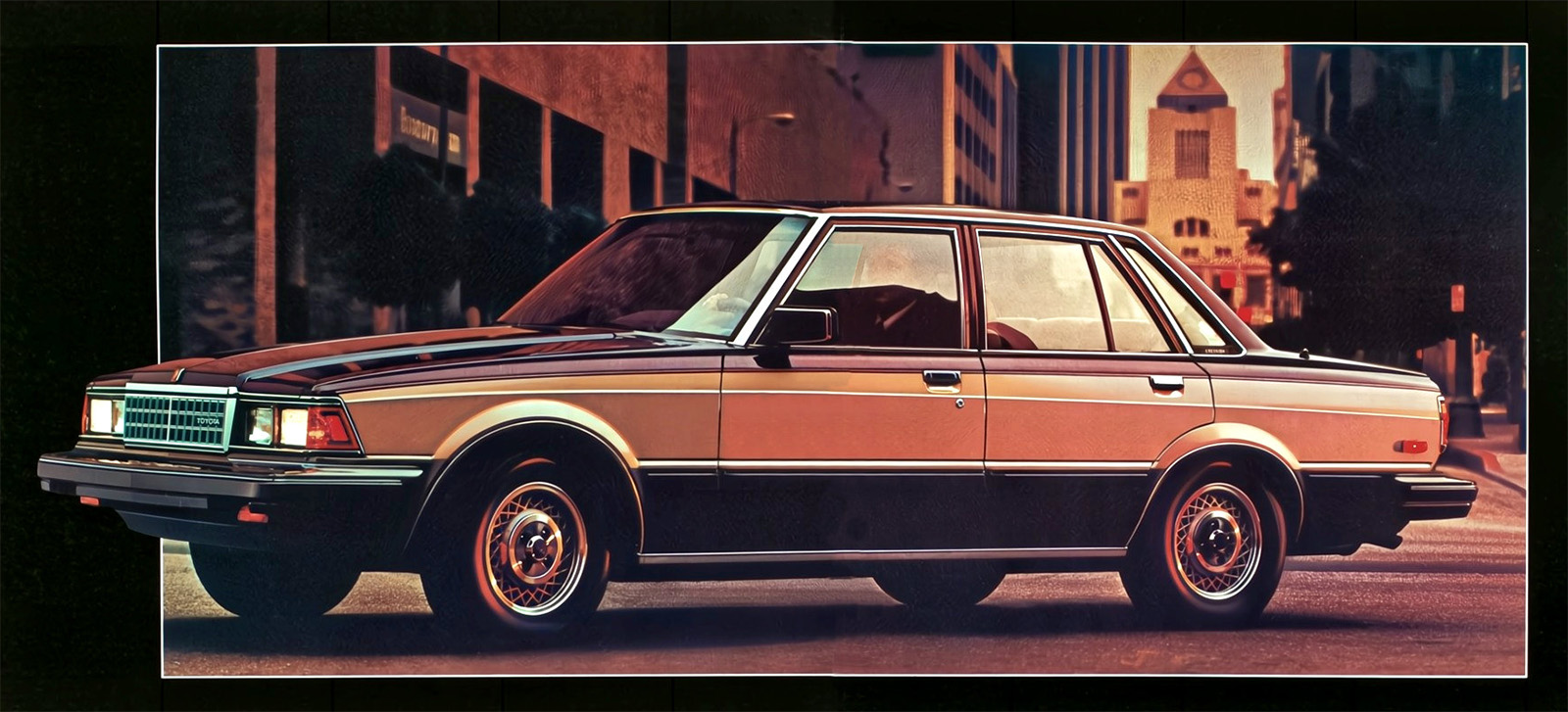
I mean, look at it; it’s not a bad-looking ’80s car, all straight ruler lines and restraint, but something about it – the door handles, the grille, the window trim and shape, the creases – just feels very American, and, even more specifically, very Ford.
This doesn’t look out of place:
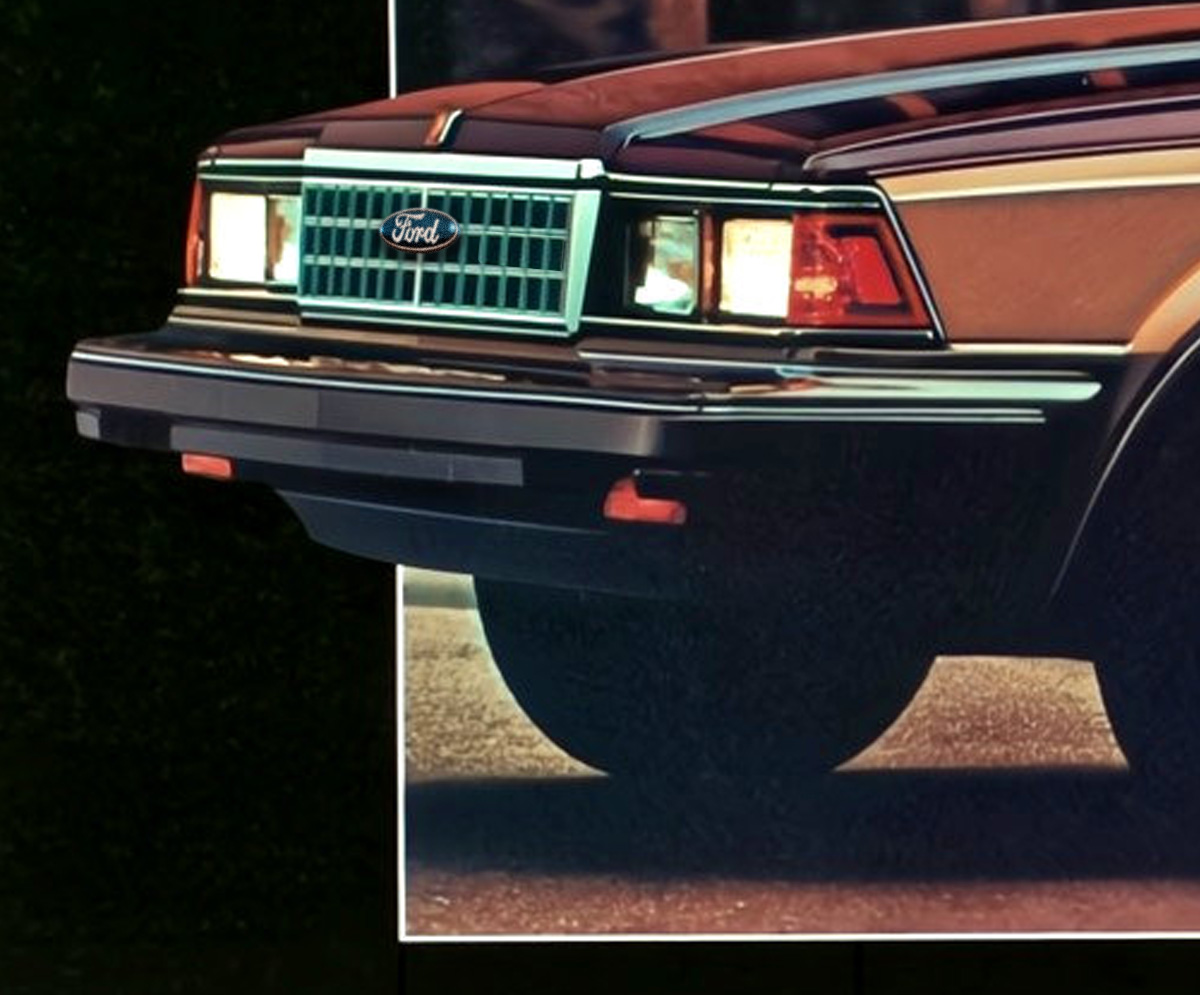
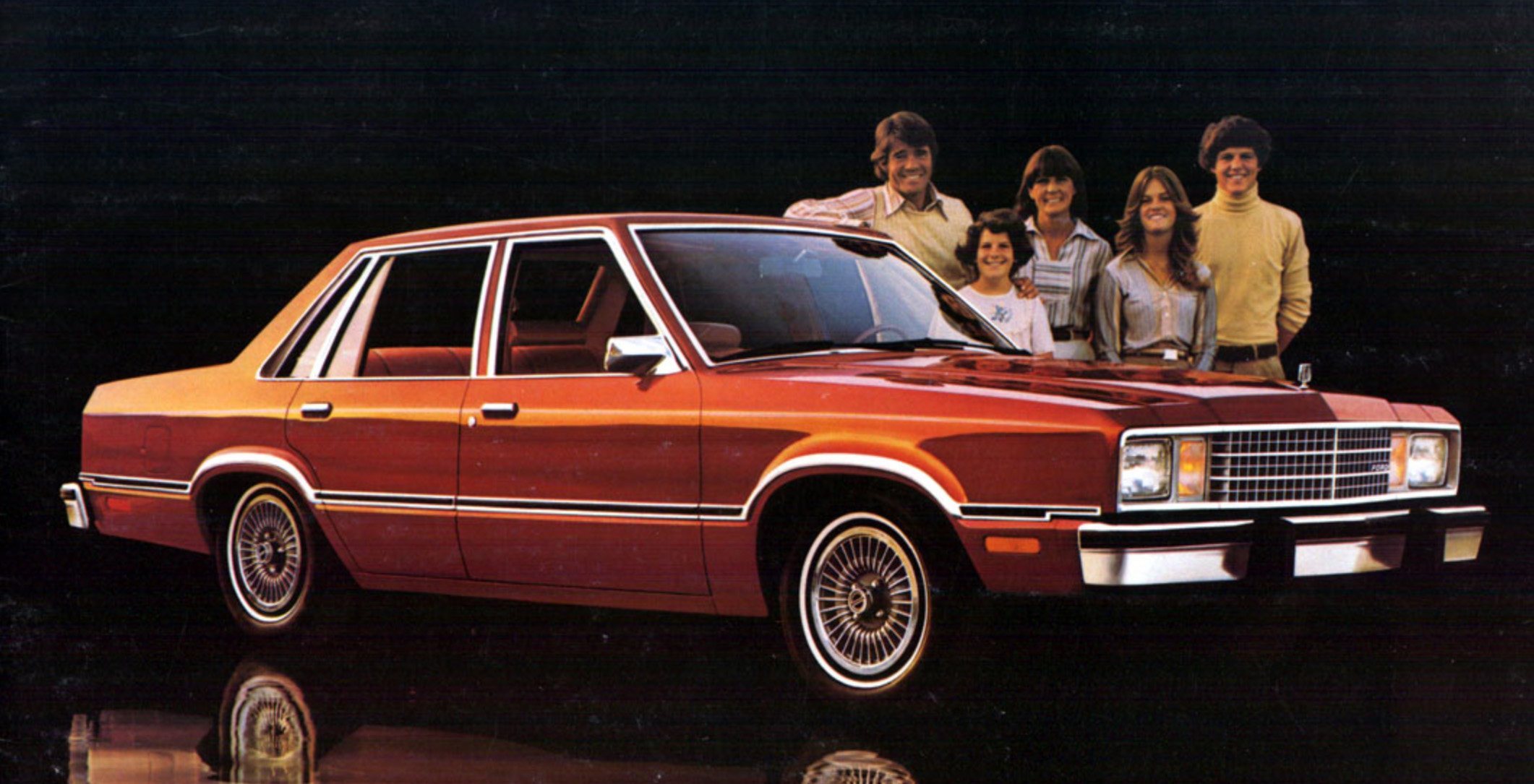
Like, if you were to have told me that car up there was a new Ford that was going to replace the Fairmont, I’d have believed you. Here’s a Fairmont, in case you’re not reading this from 1986 and can’t just look out your window into the parking lot and see, like, four of these:
Look at the interior of the Cressida, and tell me this isn’t as American as apple sushi:
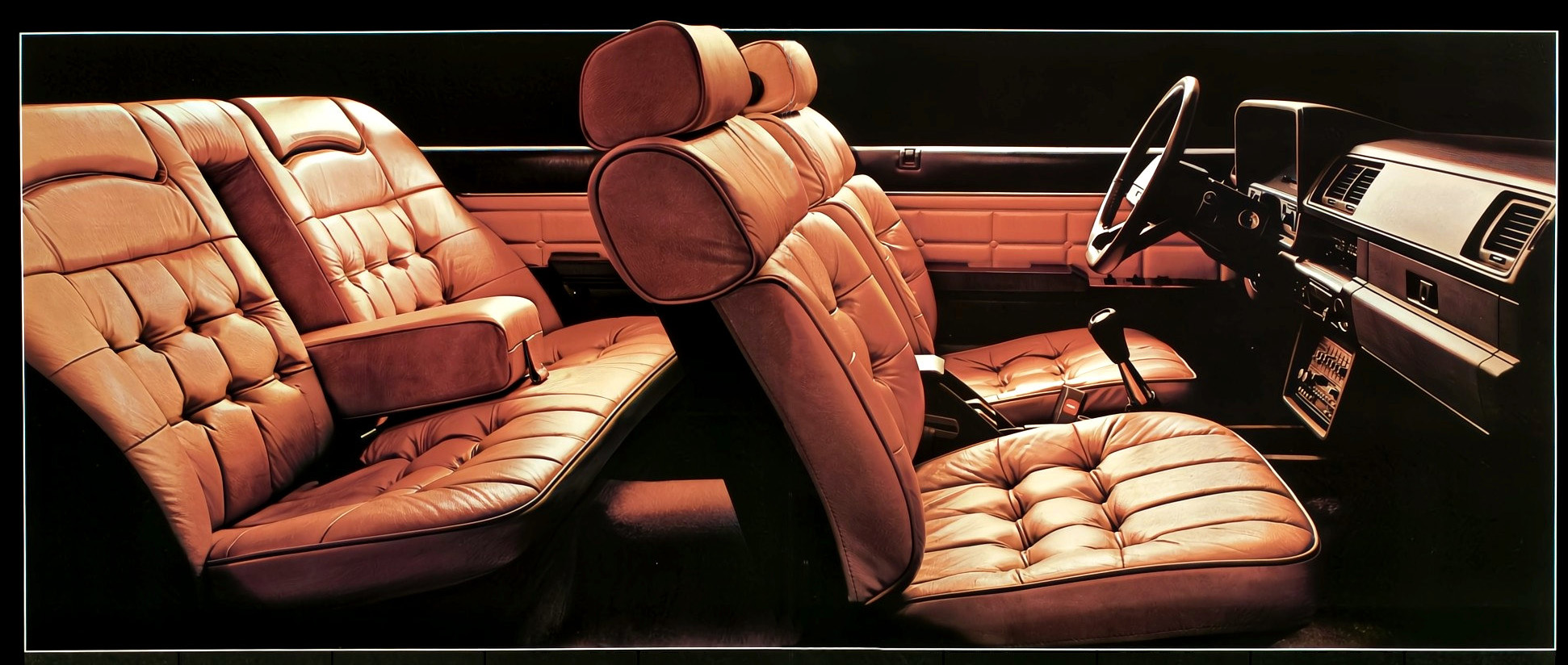
That button-tufted upholstery is just so very American. This reads like an American car interior, right down to the ’80s-tastic digital dashboard:
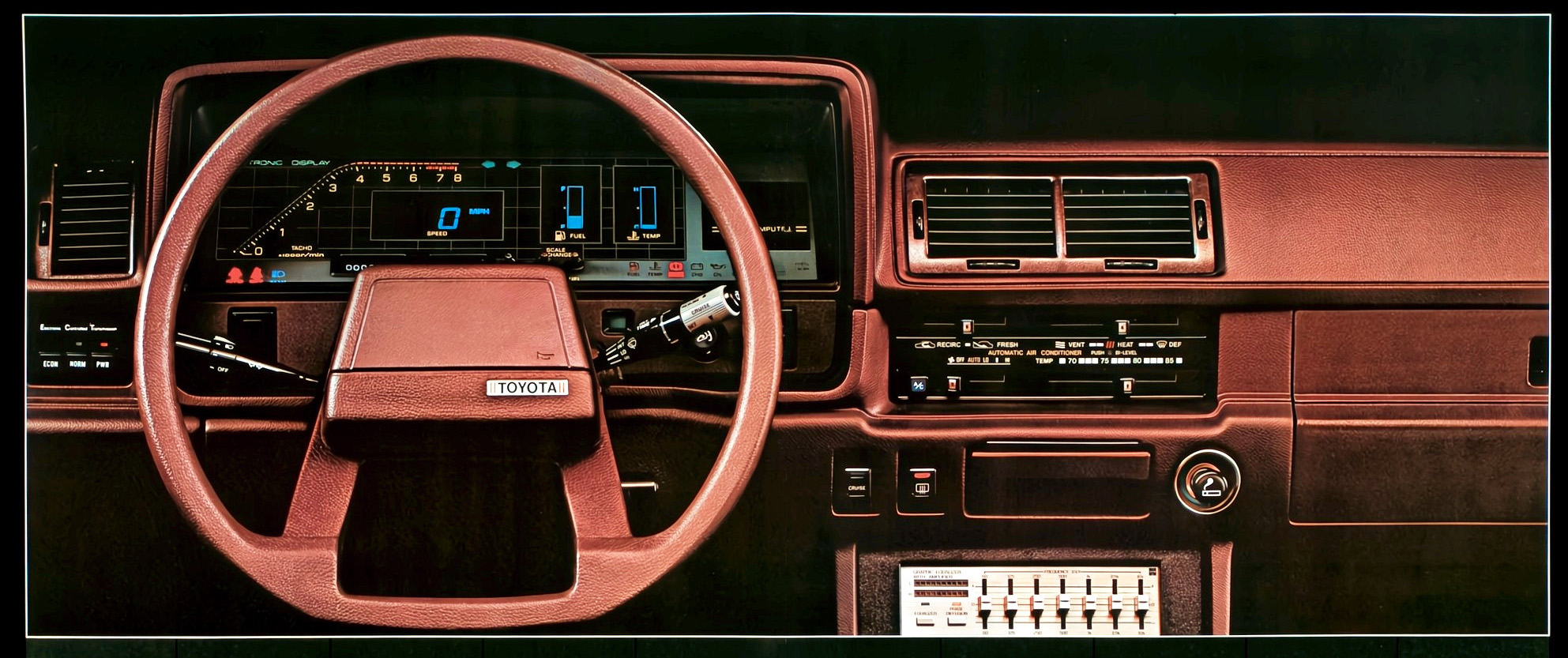
This was all Toyota’s plan, of course, and I believe they sold a ton of these here in America; I do remember seeing them all over the place when I was a kid.
It’s also interesting to me because I always thought of the previous generation of Cressida as feeling more European, specifically British:
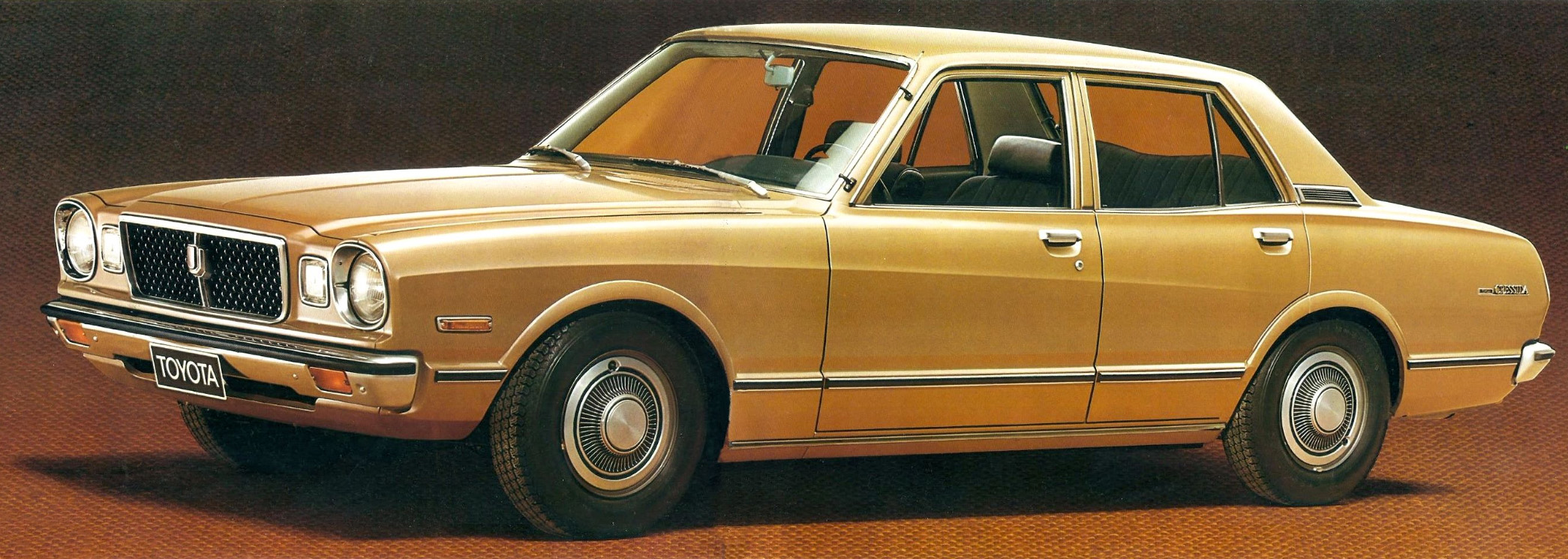
There’s something vaguely Malaise-era Jaguar about the front end there, in a more restrained, squared-off way, and the rest of it feels oddly Austin-ish. But then I look at the coupé version of the Cressida, and all I see, to my surprise, is Mustang II!
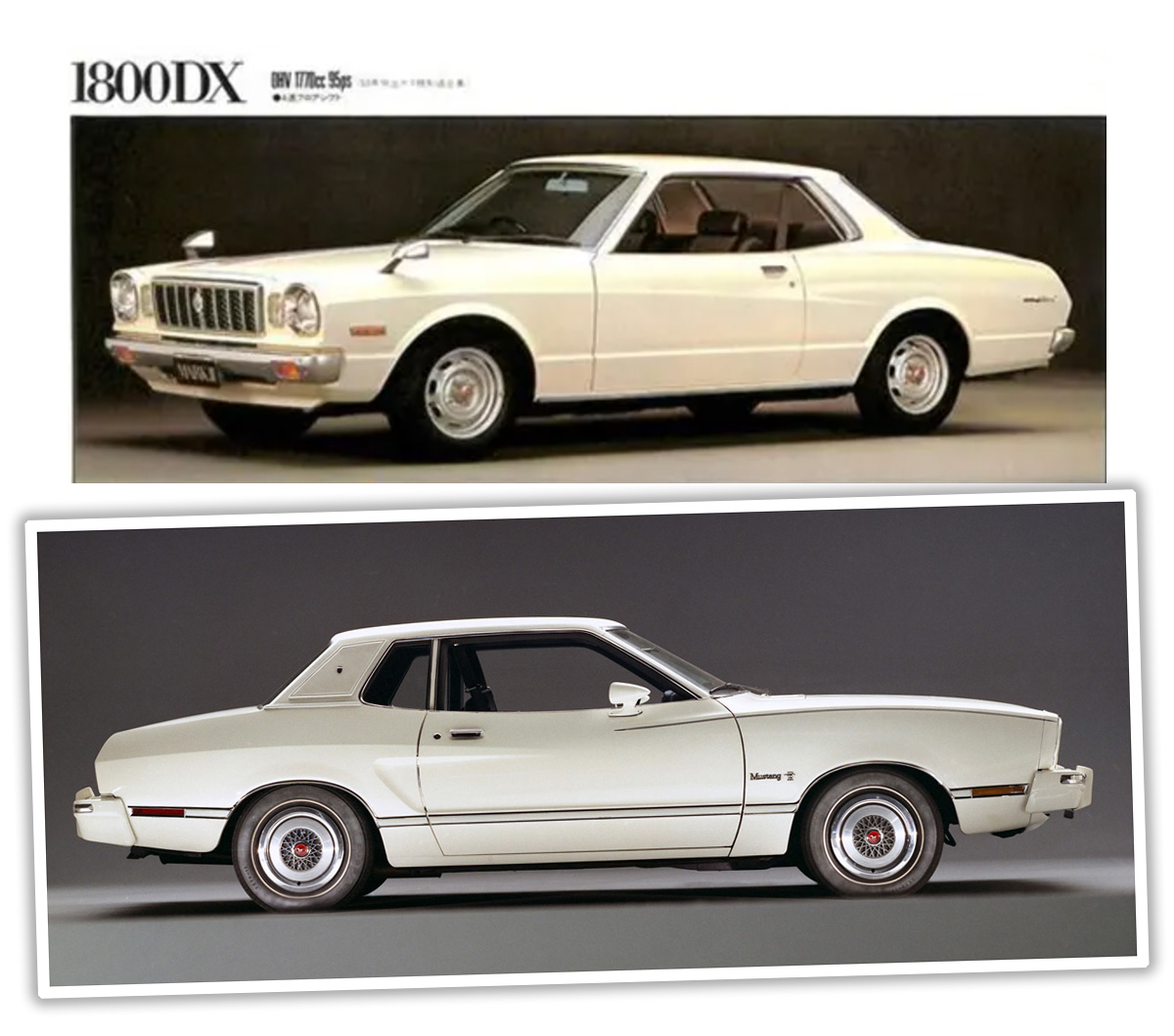
Doesn’t that feel like a slightly improved Mustang II? It has no B-pillar, so it’s more of a hardtop look, which I like a lot, and the proportions are just a touch longer, but overall? These cars feel like siblings. I really wasn’t expecting that.
I’m sure there’s a whole research paper here, figuring out what exactly the styling cues are that suggest nationality, and if anyone wishes to take this on for a dissertation or whatever, I’m happy to consult. This feels like a good use of a postgrad education.


That coupe looks like a vastly improved version of the Mustang II. It’s not even remotely the same thing. In any event the 1985 Cressida was a much better looking car:
https://bringatrailer.com/wp-content/uploads/2022/07/1985_toyota_cressida_15d840ca-ac5c-46d8-bd17-1a6a1690f2b9-53098.jpeg
The frumpy ’81-’84 Cressida should just be forgotten.
Worked at a Toyota dealership during this era and remember the quality of the Cressida vs American luxury cars. It also handled well and had that great six cylinder engine. It was a great time to work at a Toyota dealership. I was never a big fan of all the two-tone paint jobs, but they were good cars.
Toyotas of this era were really top notched, even compared to modern day Toyotas.
I think the most American Toyota would probably be the Toyota Cavalier, since it was a Toyota in name only.
I think the ’70s Mustang/Celica out-‘Mericas the Cressida. It’s close, but the outright aping of 60s musclecars puts the Celica ahead.
My Grandfather had a brown 1982 Cressida. I was hoping that was going to be my first car. It was big, comfortable, and rear-wheel drive. It spun out in the snow on the way to my house after going out to breakfast with my brother and grandfather. It had a rather large dent in the rear quarter from a transit bus, but was otherwise perfect
Right now the Tundra feels like the most American-ish Toyota.
Top quality automotive journalism for those probably on the spectrum, like me! 😀
Always felt a strong attraction to both the Cressida and Avalon, perhaps in part simply because they weren’t Camrys. I guess the Crown Signia is now what the Cressida and Avalon were back then.
Not that I have anything against Camrys really, other than their ubiquitousness. With that said, I’d be lying if I said that I wouldn’t own and enjoy a new base Camry in any actual color.
My friend’s dad bought one of these in late ’81 or early ’82. He was a truck driver, and owned a bustleback Chrysler Imperial previously that was nothing but trouble. I don’t think he ever owned a Japanese car before that one, but he felt right at home in the Cressida. As a backseat passenger in that car on a few trips, I can say that it didn’t feel like an American car of the era to me…it looked, felt, even smelled a lot better. The dash, stereo, doors, switched…pretty much everything was just better – and that was hard for me to admit because I was a strictly “BUY AMERICAN” guy back then. He never really used that car as a true daily, he kept it more for their long highway trips every summer. He had it for a good 20 years until it was totaled by another driver.
The Japanese were still very much figuring out their own style back than, and pretty regularly cloned American or European designs as they expanded across markets. Just like the Koreans in the 90-00s or the Chinese, uh, like now (China seems to likely be at the end of that period).
I don’t know, man, It’s all pretty American, but those poorly integrated front turn signal lights just sorta undo all the button-tufted leather and two-toneiness. I mean, do they even illuminate with the headlights??
This and the contemporary RWD Nissan Maxima were basically much better built, 3/4 scale Buicks.
Then the Cressida turned into the not as nice “giant Camry” FWD Avalon, and the 3rd gen (I think anyway) Maxima, the “4DSC”, became a legit sports sedan ala Audi before morphing again into the more luxobargy fancy-Altima generations.
Gee, I miss those early gens of Maximas, especially the second and third gens. I NEVER heard anyone who had one of those have anything other than praise and nostalgia for them. They were sort of Audish in their driving character, if not in interior quality. But I’m sure a 30 year old Maxima would be FAR less hassle to own now than any Audi half its age.
Possibly, though Audi did actually manage a couple generations of pretty damned good cars in the ’90s/early ’00s. They just didn’t actually sell all that many of them in that era. The n/a V6 was very, very stout, and people seemed to love them to ripe old ages. Once they caught the hur-dur “must turbocharge everything to massive HP” bug it was all downhill and the mechanical complexity got nutty.
I suspect the biggest problem with a 30yo Maxima is parts availability for anything but basic service items. The Japanese suck at supporting their old stuff, unlike most of the Germans. And they rust and the interiors disintegrate making it even worse.
Yes, I haven’t seen a 2nd/3rd gen Maxima anywhere outside of a Japanese car show for many years now. I’ve only owned a single Audi (a late 80s one) and though I really liked how it looked and was put together, it was the second least-reliable car I ever owned (after a late 90s Mercedes).
I had a few VWs too, though never a BMW. I’m pretty much off of anything German now, with the possible exception of an older Benz, but I doubt even that.
I have never bothered with Audi, they don’t do anything for me, but I know lots of people who had those second gen 100s and absolutely loved them. Seemed really solid. The 90s of that era too. I just don’t care for the nose-heavy way they drove.
My BMWs have been absolutely rock solid cars, especially my e91 and e88, but the e30s and e28s were great cars too. I’ve owned the e91 wagon from new in 2011, and the only out-of-pocket repair has been a new battery when it was nine years old. You should be so lucky with a Toyota in 14 years, even with the relatively low miles on it. My e88 has had a couple of the typical oil leaks, but so what? And it’s always been in blazing heat since new – TX/FL car. Has half again more miles on it and is also delightful. My VWs were all anvils too, but other than a new ’02 Golf TDI and a new ’17 GTI, I skipped the years people bitch about. The A1 and A2 Jettas I had were also rock solid cars and went to intergalactic miles – my ’84 GLI made it to nearly 350K before the tinworm finally got it. Really nothing but normal routine maintenance and a fuel pump, and an alternator in the 200K I owned it. The ’85 Jetta 2dr that preceded it I put 100K on and it needed a rear wheel bearing.
But ultimately the only cars I have ever had be “unreliable” were the ones I bought too far gone to save, with the absolute worst being an ’82 Volvo 245T. It caught on fire in Rt128 around Boston and like a complete fool I put the fire out and had it hauled home. Should have let it burn to the ground.
Maybe Nissan does, but Toyota is pretty legendary for supporting their cars for a long time. It helps that with the 70’s and 80’s models, the cars had very similar parts from like 1970-1985.
I had a 1976 Celica, and it used the same suspension pieces as the 85 Supra (and the Cressida, if I remember correctly). There were lots of other parts on there that were shared for a couple of decades, too… that made it easy to find stuff at the local auto parts store, even in 2010 or so, and I’m pretty confident if I still had the car, I’d be able to hunt down new replacement parts.
In fact, Toyota just announced that they will have a few new upgrade parts for the original AE86, which is pretty wild.
Like I said – basic service items. Go try to buy new interior or exterior trim pieces for one.
This is true of literally every vehicle line in the history of cars. If you want trim pieces, hit the second-hand market or junkyards.
Not here to really get into the German vs. Japanese debate… but Toyota has been pretty reliable about keeping parts around for a long time… Subaru, too. It’s easy to find interior parts, switches, badging, body cladding, etc.
The mechanical stuff is standard stock – suspension components and such are a click or a phone call away.
Sounds like Nissan may not be that way, though.
The Germans are *excellent* at supporting old cars. I was able to walk into the Mercedes dealer and order damned near anything for a 40yo car, if they didn’t just have it on the shelf, they’d have it in a few days. I bought a new rear seat cushion because the PO’s dog had taken a chunk out of it. Took a week, but it was in the warehouse in Germany. You may not like the cost though, I sure didn’t. Mercedes is also fantastic about stocking the bits that make up an assembly, rather than just selling the whole thing for $$$. Needed to rebuild the hydraulic pump for the rear suspension on my 300TD. No problem, which bits do you need? BMW is almost as good about it. I have heard Audi is NOT.
If you haven’t owned them, you simply have no idea how much better they are than the rest for this. Most Japanese cars are just throwaway commuter-mobiles, so why would they bother?
There’s the rub.
I am an avid shopper of second-hand items when I need to be. Especially when it comes to interior and trim pieces.
The cost of ownership for German cars has never been appealing to me (even if the cars themselves are).
I have owned American, Japanese, and Korean cars – and just about anything will hold up if you don’t abuse it too much. Finding parts has not been an issue for anything less than 25 years old. We’ve had a Kia for a long time, and when the cheap knobs break on the stereo, we just get a new set on ebay (and they’re cheap, so they eventually break again, because my wife drives teenagers around in that car). But the car itself? Going on 270,000 miles.
I know I don’t have the fortitude to keep up with a 40 year old German car.
Keeping a hooptie alive is a different thing than restoring a car. When you CAN’T find something used, or it’s something that isn’t a good idea to buy used, it is very nice to be able to still buy it new.
The cost of ownership of German cars is generally wildly overblown, at least if you stay away from the stupid hur-dur ones, and know which end of a wrench is which. And as a reward, you get to drive something FAR superior to a KIA. If you don’t care, then don’t bother.
…or at least you get to act like you do. The ability of owners of German cars to constantly insert their brand loyalty into conversations is legendary. It doesn’t matter if it’s a beater 318i or a diesel Mercedes, they’ll talk about it as if it’s the pinnacle of engineering, rather than pre-war tech sold at a premium to American snobs. In Germany, those cars are just cars, just like the Volkswagen beetle was for decades.
Since it’s all anecdotal anyway, I have personally known several friends and family members who fell into the “German engineering” trap and spent way too much money on maintaining their cars. BMW, VW, Audi, and Mercedes. They bought them for the air of superiority, they sold them because of the headaches.
Because they ARE superior, so any additional time and money is worth it. It’s really not a difficult concept. I drive brand-new cars from every mainstream brand under the sun as rentals for work, and I am never not happy to get back into my Germans when I get home. Not to say they haven’t jumped the shark with everything else today, but from the ’70s to the 2010s they had it going on. I like French, British, and Italian cars as well – but that’s an emotional like, not a logical one. German cars are generally ruthlessly logical. Swedish cars are slightly better to own, but much worse to drive as a rule. Owned tons of those too.
But if you don’t care or don’t get it, just drive whatever and be happy. Spend your money on golf, hookers, blow, whatever floats your boat. Even literally a boat.
People are allowed to like what they like, certainly.
I’ve driven German cars. They were just cars to me.
I also see that your list of preferred cars contains only European cars. So that probably has a lot to do with it.
The Kia we own is a 2012 Sorento. It’s actually been a great vehicle, and has 270K on it right now. I would not recommend the dealership experience, though. Man, Hyundai/Kia dealerships seriously suck. But the car has been fine, as daily commuter, kid hauler, grocery getter, etc. I had no need to pay 2-3X the cost of entry for the same function.
I drive a Subaru (2010 Forester XT), which seems to draw a lot of fire from other car owners as well, for some reason. It’s my 2nd (the first has 205K miles on it and is waiting for an engine refresh, but it’s something I can work on myself, and will make a great first car for my 16 year old). I like Subarus for their ease of use and readily available customization (often by using OEM parts from other Subarus).
Maybe the parts for Japanese cars are easier to find here in the States (if you’re in Europe, that might explain the discrepancy).
As I said, if what makes German and/or other European cars better is meaningless to you, buy something else. There are a number of different definitions of “better” – I will, obviously, pay more for a better driving experience.
I friend of mine has your car. it’s “fine”. Not anything I would ever have the first interest in owning. Not much fun to work on either, which I have had to do because the local rodent population seems to find it’s wiring delectable. And parts for it are MUCH harder to come by than for my similar vintage BMWs. KIA won’t sell you bits, just whole assemblies.
I am in the US. I am also the guy who all his friends and family come to to fix their cars, so I have experience working on everything and anything, having had a giant garage full of tools with a lift in it for nearly 25 years.
I drive the Subaru – not much of fan of the 3-row Sorento for myself. I prefer a (however slightly) more sporty platform. As you said, it’s “fine.”
I prefer working on the Subaru for everything except spark plugs. And the Kia’s not that bad for most jobs (except, oddly, the alternator – which is really tight and you have to go in through the wheel well).
I haven’t had any encounters with rodents – that sounds frustrating.
I don’t imagine you’re in Central Texas, are you?
I’d come to your garage (I’d bring beer, if you like beer).
My first car was a Subaru, an ’82 GL sedan. I liked what they were doing a decade or so ago (whatever era you could get a turbo Legacy wagon.), but not enough to have ever bought one. I was buying Saabs then. But I just have no use for the CUV things of today.
Nope – the big garage is in Maine – 2700sq/ft on two levels. I’m 3/4+ of the time in SW Florida now, only go up there in the summer. But I am building a new house with a decent-sized garage right next door here. attached 1000sq/ft 28×36 with height for a 2-post lift. SIab was poured Monday, includig footers for the lift. t’s been a long nine years here with a tiny 1-car garage. And the new house is a full 14 months behind schedule thanks to permitting issues, some engineer incompetence, and Trump and DuhSatan’s deportation madness screwing up the building trades here massively. Hoping to be moved in around February. 1400sq/ft SIP construction house on a double lot, so plenty of room for making the garage bigger.
Designed the new garage to be able to have an extension added on the back down the road once the pain of building the place subsides, and it’s paid for. I’m going to sell one or the other of my current places, but one real estate dilemma at a time. I don’t enjoy going to Maine as much as I used to, and I have friends up there I can stay with, so probably that place will be on the block at some point.
The drivetrain was basically same as the 280zx. And the interior was well made. Nissan back then was not at all like Nissan today. My grandparents had an early ’80s Maxima wagon that I drove a lot when I was in college. It was solid as a tank.
Yes, they were quite decent cars from that last RWD car through the first two generation FWD ones. But all of those cars were a LONG time ago now, and as I said, Nissan is NOT known for support of anything much more than a decade old as a rule. You are not likely to be ablet to wander over to the local Nissan dealer parts counter and buy much of anything for one. Or a 280ZX either, given the newest of them are about to be 43 years old.
One of my high school friends actually had a *diesel* Maxima handed down from dad – it was the ’80s, LOL. That was — not fast. Definitely not a 280ZX.
My very first car was the JDM version of the Cressida (Toyota Corona Mark II Grande) and I absolutely loved it
Jealous! 😀
My first was a ’79 Supra, which was basically a Celica with a longer hood to fit the two extra cylinders. I would love to sit in one of those again, just to feel and smell it. 🙂
Ohh thats a good looking car!
Are you sure you’re not thinking of the angular, second gen Supra? Mine was the first gen (which was based on the second gen Celica) and I always thought it was a bit goofy looking. The six cylinder engine was nice, but I’d have been happy with anything, it being my first car and all. 😉
I think its just a supra thing for me. My family has owned both second and third gen Supras. Of the photos I have seen, they just have a presence when they are painted black. My first car was a Tempo, the cheaper version of the shitbox showdown Topaz so I’d gladly have taken that Supra.
Late reply, but I’m 95% sure my Corona had a straight 6 very close to that Supra’s, which was a lot of motor in Okinawa
Seems like the Cressida was the spiritual predecessor to the Avalon – which itself was basically Toyota’s Buick.
Or Oldsmobile.
That generation and successor Cressida were great cars that solidified Toyota’s US reputation, and probably opened the door for the establishment of Lexus. The early Nissan Maxima was similar with button-tufty brougham goodness on top of solid mechanicals. An auto reviewer for my city’s (greatly diminished) newspaper called the Avalon “The best Buick Toyota ever built” which I’d have to agree with. (Also, the lead photo actually looks a lot like a mashup of a Fairmont and 2nd Gen Granada)
I find it slightly annoying that the brochure pic in the topshot has the speed/motion lines added but there is no blur on the wheels.
The last Cressida was a seriously impressive car. I remember wrenching on them, and they were noticeably different from any other car at the time.
A big part of it was how everything on that car felt like it was screwed together better. It all had this solid, bank-vault feel that nothing else from those days could match. And the straight-six was as smooth as an Android’s bottom and sounded like a Swiss watch. Amazing car.
The gen 4 crown should be considered too. It was sold in the US for a few years and looks similar to some amc of the era. But could probably pass as Chrysler or gm product of the era or a bit before. The gen 2 cresta that replaced it in the us lineup looks vaugly American too could maybe pass as a Ford as well as amc or Chrysler or gm.
I did always think that Crown had an AMC feel to it, maybe because the styling seemed mostly normal, but very slightly off, sort of an uncanny valley thing going on
So many Japanese cars of that era aped bigger, American cars to pull in buyers from the domestics. Every single Japanese manufacturer did it.
Ironically, once American manufacturers fell off their full-body-on-frame all-the-things mentality, they started aping Japanese aesthetics in their own vehicles. They also invented the concept of the captive import.
Why create your own new domestic car? Just rebadge another imported car into one.
Well exactly.
Look at an early 70’s Celica lift back – then a late 60’s Mustang Fastback – then tell me what the inspiration was.
My first car was an 83 in the same color and options as the second pic, minus the leather and digital dash. Same 5-speed manual and twin cam 5M-GE engine as the Celica Supra. It was a great 1st car. That engine was a real peach. I’d love to have another one. Mine had some 234,000 miles on it when I traded it for a much worse 88 Nissan Maxima SE. I remember the gauges were back lit and super bright. Loved that car.
This is gonna be a hard question because Toyota carved its niche in the 1980’s by creating designs that were almost all derivative of bigger American cars. My first choice (biased since I used to own one) is the first generation Celica. The coupe looked like a Camaro and the Liftback looked like a Mustang, complete with Mustang-esque taillights. It was actually pretty awesome except the poor rust-proofing job that they did.
Eh, Land Cruiser I think takes it overall if we’re looking at the entire Toyota lineup. From the FJ40 that your average mom would call a Jeep to the larger ones (FJ55, 60, 80) that are more or less a Japanese Suburban with an I-6 and then the FJ100 with the V8 starting the run over the last 25 years to a luxed out most recent gen than is/was more of a Cadillac or GMC Denali competitor with the base ROW variants not even available over here until the current new one that’s just trying to be more “affordable” again with a smaller engine and less sumptuous interior.
I’d say the honor of most American Toyota goes to the Tundra. The Cressida worked here because plush RWD sedans were very en vogue in Japan throughout the 80’s, so it was very easy to adapt for the US market. It wasn’t necessarily built with the US market in mind.
The Toyota Tundra 1794 Edition is the most American Toyota ever.
Ironically more American than so called American trucks.
I was gonna say, “the truck Toyota designed specifically for North America and then made trim levels directly relating to US history” is the most American Toyota.
The new Tundra even gets recalled like an American car!
The Camry is the most American Toyota ever. Literally designed from the ground up to be the best Chevy that GM could never manage. Big, cheap, reliable, comfortable, and dull as dishwater. And barely sold in the rest of the world. And an absolute bases-loaded American Pie home run success for decades. The full-size trucks are a sad joke in comparison. Especially the explody latest one, LOL.
And the Lexus ES is the highest quality, most reliable American luxury car
The best modern Buick for sure. And the spiritual descendent of the Cressida.
…of, course, all this American-Ness can absolutely be reversed with a set of coilovers, a turbo, and TE37s or Watanabes.
…heck, They did it to Dodge Vans themselves…
Dajiban!
It’s especially American in the fact that we only got the frumpy sedan with big bumpers while Japan kept the sexy hardtop version for themselves.