

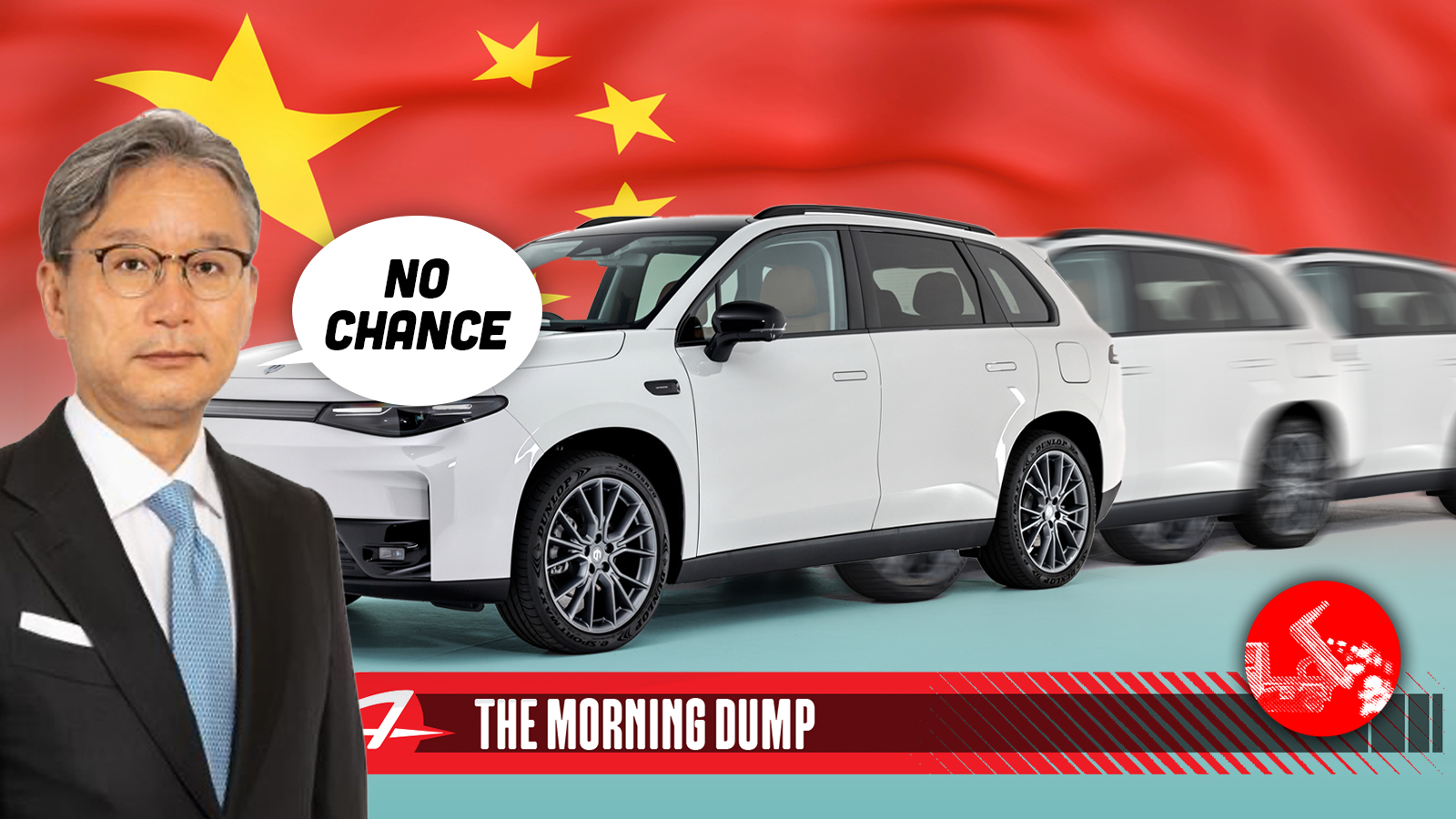
Ford created the concept of mass produced cars with the implementation of the moving assembly line. Half a century later, Toyota’s kaizen philosophy and “just in time” manufacturing further accelerated automotive production, and nearly every car plant in the world now incorporates lessons from all of the above. The next benchmark for the world? China Speed.
I’m excited we’re all here today so that we can read The Morning Dump. It felt a little more touch-and-go there than usual yesterday. I doubt Honda is letting the brief euphoria distract itself from the much larger existential threat from Chinese manufacturing, which has achieved the difficult: fast, cheap, and good.


Making cars is hard, and even the most cutting edge automakers out there are trying to get consumers to pay a monthly fee for tech you can get for free elsewhere. How long can that last? The EU and the US have a framework for a deal, but it’s not set in stone and at least one automaker thinks the EU is trying to keep out big trucks. At the same time, there’s some good news for EV charging in the US.
What Is China Speed?
People I know who do business in China and the United States often marvel at how easy and fast it is to manufacture items in the country. If you’ve got an idea, you can get a 3D mockup by lunch, a prototype by dinner, and your first crate of products ready to go to the market by the end of the week.
This is called ‘China Speed,’ and it’s what happens when a country decides it wants to be the world’s producer, and has the ability to cut a lot of the red tape that seems to slow down everyone else (granted, some of that red tape exists to protect consumers, the environment, and workers). And this isn’t just about building things. This is about everything.
Here’s a recent example from Transport Topics:
A Chinese-made Leapmotor C10 was traveling down Germany’s fast-moving Autobahn last year when the driver-assistance system braked sharply and jolted it to the side, as if boxed in by scooters in a crowded China megacity.
Leapmotor International’s Germany head, Martin Resch, was at the wheel and emailed engineers in Hangzhou to report the problem before going into a meeting. By the time he got out, a software update had been beamed to the electric vehicle, smoothing its behavior. A similar fix at a European carmaker would have taken weeks.
What is it that gives China such a huge advantage here? Sure, the country started out basically copying and reverse-engineering European and American designs, but it’s gone a lot further than that in the last few years, with Ford’s CEO suddenly not wanting to give up his Chinese car.
The Transport Topic article has the rather startling stat that China has created more than five times as many patents in “future land transportation technologies” than Germany in the last 20 or so years. That article also points to a very different environment:
While legacy automakers are trying to reduce their typical five- to seven-year product plans, their Chinese rivals can deliver a new model in under two years. Founders at Xpeng, Nio and Li Auto all had internet startups, and Lei Jun of Xiaomi has a background in software.
Workforces skew young and mobile, and pay scales are lower than at Western counterparts — with compensation often tied to financial targets, fostering an entrepreneurial culture. Ferocious domestic competition forces continual innovation and squeezes out inefficiencies.
This is the universe that Honda CEO Toshihiro Mibe stepped into when he went to China, according to an article in Nikkei Asia:
“We have no chance against this,” Mibe said during a visit to an auto supplier factory in Shanghai in late February. From parts procurement to logistics management, everything at the facility was automated, and there were no humans on the production floor.
The factory, operated by a major Chinese parts manufacturer, also supplies U.S.-based Tesla and maintains consistent quality while keeping labor costs down. Mibe witnessed firsthand the source of China’s competitive advantage: fast, cheap and good.
Obviously, Honda isn’t giving up, and it’s making a move to undo the now-questionable decision to get rid of the company’s legendary and independent R&D division. That’s probably not enough to reverse the slide, but it’s a start. Over at Nissan, even the design department is trying to learn from China Speed as 36Kr reports:
Nissan’s Global Design Director, Alfonso [Albaisa], admitted that Nissan’s design department has drawn important inspiration from the speed of its Shanghai studio in China. Compared with Nissan studios in other parts of the world, the employees at the Shanghai studio require 30% to 40% less work time to produce designs.
Now, Nissan’s global studios are gradually adopting the same efficient processes, abandoning rigid bureaucracy and cumbersome flowcharts to achieve more flexible and smooth creation. This transformation has greatly promoted close communication between engineering and design and accelerated the approval speed of senior management, making the entire product development process more efficient.
It’s not just Japanese automakers that are trying to rethink how they produce cars. When Ford announced more plans for its Universal EV Platform in Kentucky last year a lot of what CEO Jim Farley talked about was how it would be built:
We transformed the traditional assembly line into a tree with three main branches. We’ll assemble the front and rear of the vehicle on separate lines. The third branch is the vehicle’s structural battery, which we’ll pre-assemble with seats, consoles, and carpeting.
These three branches come together at the end, a process that revolutionizes the factory and simplifies work for our employees.
Can anyone catch up? It’s hard to say. The first step is recognizing the problem.
The Toyota Corolla Has More Tech Than A Tesla, Unless You Want To Pay For It

One of the big messages of the Lucid Investor Day I attended last month was that Lucid was going to make $69 a month from people who want to keep their advanced driving tech. For Tesla, that’s $99, and for Rivian it’s $49.99.
As Automotive News points out, this creates the sort of weird reality where the cheapest Toyota Corolla technically comes with more standard driver-assistance features than a Tesla (after Tesla removed lane keeping assistance from its basic cruise control package).
Consumers are particularly wary of subscriptions for features that once came with the car, said Jake Fisher, senior director of auto testing at Consumer Reports.
“It’s a little bit insidious, because what they’re doing is moving these features that used to be hardware to software,” Fisher said.
One example: Some automakers have moved the remote start button once found on a key fob to a smartphone app that requires a subscription after a free trial.
I do buy the argument that software-based items might benefit from a subscription because it’ll be technology that will continue to get upgraded over the long life of a car. I’m less inclined to think highly of an automaker that moves a physical feature to an app and then charges for it.
American Automakers Are Mad That Big Trucks Might Be Kept Out Of Europe
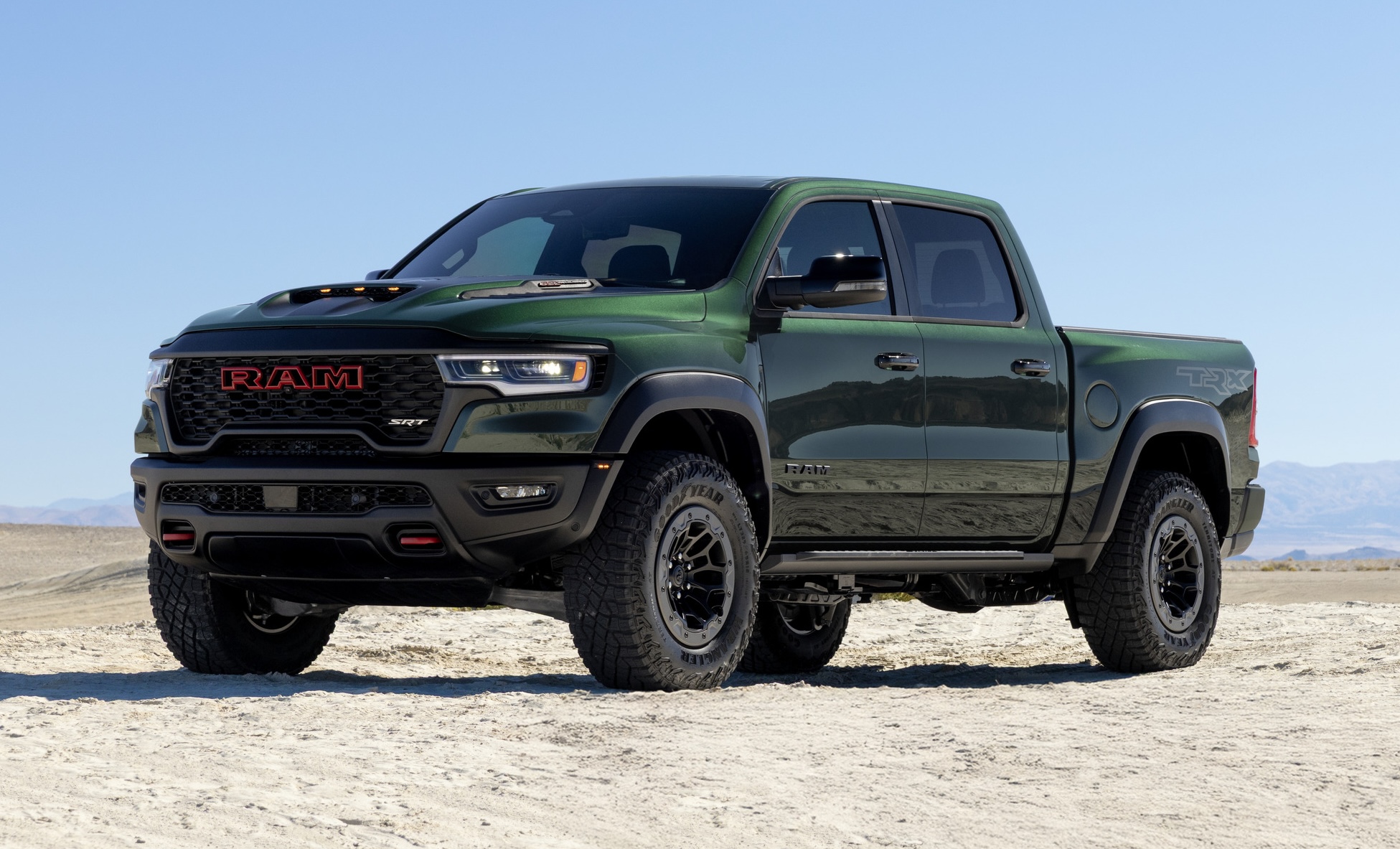
This is one of those stories that plays against a lot of my longstanding, internalized biases. I’m a Texan and I love giant pickup trucks. I also think people should generally be able to buy what they want. At the same time, I get why people don’t want big trucks in their narrow European villages. My general sense is that any societal cost should be balanced out with some form of levy (gas guzzler tax, congestion pricing for inner urban areas, et cetera).
As part of the tentative, not-yet-ratified trade deal between the European Union and the United States, there will be a harmonizing of standards between the two countries that should allow automakers to go beyond the current EU rule, which allows a small number of vehicles to be imported without being homologated.
As Automotive News reports, about 7,000 American pickups were brought to Europe this way in 2024. There’s a new article in the Financial Times with the feisty title: “US carmakers accuse EU of blocking supersized pick-up trucks from roads” related to some alleged behind-the-scenes moves by regulators to exclude big trucks. Here’s an interesting quote from an unnamed Detroit automaker to the FT:
“The U.S. administration is aware that not only is Europe dragging its feet on the trade agreement, but they’re also looking at restricting US products and limiting customer choice in Europe.”
Limiting choice, eh? There are a couple of reasons to believe that this executive might be from Stellantis. First, Stellantis loves using the term “freedom of choice” when it comes to cars. And, secondly, a majority of the trucks imported to the EU in 2024? Rams.
The Number Of High-Speed Chargers Rose By 34% In Q1

Charging infrastructure has been a common reason why consumers in the US have said they’re hesitant to make the jump to an electric car. To combat this, the Biden Administration put a lot of money into chargers, but the pace of rolling them out hasn’t exactly been China Speed. The good news is that faster deployment is finally happening, just as gas prices have gone up.
Some 605 public, high-speed EV fueling stations switched on in the first quarter, a 34% increase over the year-earlier period, according to Bloomberg News analysis of federal data. The country now has nearly 13,500 places to quickly add electrons to a car or truck, 25% more than it did a year ago.
[…]
Most of the demand is driven by the private sector. Truck stops, in particular, have been adding electron pumps in a bid to sell lucrative snacks and sodas to battery-powered road trippers. Pilot Flying J Inc., an empire of interstate rest stops, added chargers to nearly 30 of its locations in the first quarter, from Mount Airy, North Carolina, to North Platte, Nebraska. The company now has nearly 1,200 charging stalls, roughly half of what it intends to stand up.
Alright! Charge up the car and get some jerky. Everyone wins.
What I’m Listening To While Writing TMD
Man, this Major Lazer song featuring Wild Belle was everywhere ten years ago. Please enjoy “Be Together.”
The Big Question
What’s your go-to truck stop snack?
Top photo: LeapMotor/Honda/DepositPhotos.com



That the big 2 to 3 US automakers think tariffs are squelching the sales of big pickups in Europe shows how little they understand the auto markets. And we pay these fools millions?
The only truck stop (or any gas station for that matter) snack I’ve had in years was a Bucee’s on the way to and from Galaxy’s Edge in 2022. On the way home, the GF probably blew $50 on assorted snacks to take home.
They just opened one here in Dayton on Monday, have to check it out when the hubbub dies down.
I feel like today’s TMD is a bit more breathless than usual on the China topic.
Where do I start? The Honda guy is wrong to say they have no chance against this – the chances are all theirs if they are ok to roll out half-assed product, and crucially, with most problems already solved by others (I.e. copied). Ironically the dark factories in China were (some still are) built by Japanese companies. Same applies to the lore about the “fixed before lunch was over”. Of course it was, and I am sure western companies can do the same if it’s just an internal patch, the expertise exists. Then there are the fundamental, structural advantages China has patiently built over a few decades: a much stronger education pipeline, artificially lower currency, ample qualified labor and not the least, the burning desire to move up the society ladder. A young Chinese graduate nailing a job at a multinational will behave much more diligently than a western counterpart, facts.
But I disagree with the oversimplification of “better, faster, cheaper”. That’s just a sound bite. They can be two of three but not all at the same time, and when they would pull it off by a bit, it’s because their government actually helps them. They are starting to kick some serious legacy butts now but that’s also because the Stellantis-es and VAGs of the world are just asleep at the wheel and shooting their own feet with abandon.
I do think that in the long run, being the same intelligent people with lungs, kidneys and a single brain, they would eventually require the same rest, compensation, vacation time and well-being as their French counterparts. Who knows, maybe they will even unionize (/s)
Their society is all work, little play, and growth at all costs à la 1960’s America. We just don’t see all the costs, just the shiny end product.
Tesla and Rivian might be able to put our a software patch in a day but no legacy automaker can do that. Our software comes from dozens of suppliers – in different languages – that is patched together with the code equivalent of duct tape and baling twine. A very simple software change can take months.
This is why legacy automakers are suddenly so interested in having their own OS and controlling their own software destiny.
Actually yes, I was thinking precisely about those two, Lucid also? And I have an inkling that also not *all* Chinese manufacturers can pull off this now-legendary patch, at least not correctly.
No, not all Chinese automakers are up to speed with the latest and greatest but the Chinese auto industry is long past the time to start consolidating. I suspect a bunch of Chinese companies will likely disappear over the next decade. (Some western legacy ones too)
Japan is a funny country.
For all it’s advanced tech, Japan is a VERY conservative, and some might even say backwards country that is deeply rooted in some antiquated traditions.
For every advanced piece of tech that they develop, there is a pile of faxes and paperwork (on actual paper, no less) that needs to be filled out before even the most basic of activity is allowed to progress. They are caught up in a weird late 80s timewarp when it comes to bureaucratic red-tape and office technology – fax machines, copiers, filling out forms in triplicate, and lots of other ideas that have long since fallen out of favor in Western countries.
The idea to design something in the morning, prototype it at lunch and have a functional assembly in the afternoon is not new news to many engineers in the US and most of Europe. Fast decisions – even if they are wrong – help get things done. Removing many layers of management and instead experimenting with ideas is how new innovative things can be discovered. This is very much a foreign concept to many in executive positions in Japan where the “right” way is to go up the chain of command, through all the BS paperwork that involves, and ultimately waiting to see what the higher-ups decide on 6 months later. I am not saying this doesn’t happen elsewhere, but this antiquated way to thinking seems to be the norm at big Japanese companies.
Japan is going to get wiped out by the Chinese if they don’t wise up quick.
In the ’80s, Japan was living in the year 2000. They still are.
Like the kid that peaked in highschool and then never grew up, never left his home town and it still reliving those golden years.
There’s some internet infographics about GDP per capita in the past 25 years.
China went up 14X over.
Japan actually went down.
When young, ambitious engineers are given more breathing room and less bureaucracy..
I’m certainly well south of “develop a car in 24 months” on both the engineering and manufacturing perspective, but I’ve seen plenty enough to say what kills American Speed is corporate skullduggery and personnel laziness. Assigning blame, avoiding responsibility, customer indecisiveness, murky goals and objectives.
I tell me nephews, just now approaching the workforce: “Nobody is average on purpose, they’re average by accident. If you want to be above that, you just have to make the decision.”
China has made the decision to be above average.
Great advice.
I think that a lot of Americans would say that employers in the US, for the most part, have stopped rewarding anything above “average”. Millenials graduated and started jobs in their respective fields excited to contribute, and were met with mediocre pay and none of the benefits our parents got (free health insurance, profit sharing, pensions). And then we watched the GenX-ers burn out trying to make things better while the boomers resisted change until they got paid to retire early and start collecting their pensions.
I can only imagine being Gen-Z and coming into that environment with double the student loan debt we had and the same starting pay 10 years later.
I was just talking to some friends about “overachieving” this morning. You could try to do things the right way and come up with a better long term solution, but when the company only cares about this quarter’s earnings reports you’re not viewed as going above and beyond, you are viewed and being slow and not a team player.
The system is broken unless you are the one at the top making money from this quarter’s performance. For everyone else it’s a march to the bottom.
It is interesting to see the old guard and middle management fight change. We just replaced a boomer CEO with a new CEO that is mid-40’s. She is trying to make changes and cut down and pointless meetings and busywork but running into a level of middle managers that basically see meetings as the point and solution to everything. Falling behind on a project – have a meeting every day. Fall farther behind – meet twice a day…..
I had to laugh when a week after an announcement from the CEO came out saying that we were to no longer make up standard powerpoint slides for every meeting or have “preread” meeting to review those slides I got chewed out by my boss for not having slides ready to review …. in a 30 minute preread meeting he scheduled …. to prep for the 10 minute meeting we had with his boss the next day.
Don’t get me started on driving 1 hour to work to sit at a desk calling into online Teams meetings.
It will be interesting to see what happens when management finally turns over to a younger generation but I’m glad I’m on my way out the door and don’t have to deal with the BS anymore.
We have lots of smart and ambitious young people here in the US too. In the last decade a good number of them went into the various crypto get-rich-quick schemes. The most well connected ones went to the hedge funds. In the last 4 years they all flocked to anything with AI in the name. So now you see the results. We have a huge crypto, and now sports gambling sector that produces nothing tangible but hook millions of young people. We have a huge hedge fund industry that sucks all the money out of our remaining industries and leave the carcasses to rot. Our AI industry is still growing like gangbusters though. Surely the investment boom will last forever, right?
I am glad to finally start seeing reporting on why China is so far ahead on car manufacturing. Seems like they are cutting corners on things though which still has me skeptical of their quality. We’ll see I guess.
My go-to snack is any of the following. Those salami wrapped cheese sticks, doritos or snickers.
That sounds an awful lot like a “concept of a plan”. Not holding my breath.
I’m all for not restricting big pickups in Europe (if they want them). But how about doing away with the Chicken Tax and letting us have the little trucks?
M&Ms or beef jerky.
Combos. Always Combos. And a Snickers. Also a bottle of water and a pop, preferably Pepsi but Dr. Pepper works on a longer trip because it’s still fairly decent at room temperature.
A big container of store brand Combos with peanut butter. Every trip.
It’s easy to build “Quick” and “Good” when your government heavily subsidizes the “Cheap” part
Yes and no: https://rhg.com/research/why-are-chinese-evs-so-cheap/ Great data and analysis there.
Cheesy potato puffs from Kwik Trip and Caseys.
“While legacy automakers are trying to reduce their typical five- to seven-year product plans, their Chinese rivals can deliver a new model in under two years.”
I’m not sure my 21st Century-induced ADD has blossomed enough for me to see this as a benefit. I know people have been conditioned to now have zero attention span and demand immediate gratification, and I guess having a flurry of new nameless Chinese digi-cars constantly thrown at them will be appealing, but I’m quite fine with the old 5-7 year cycle from an automaker with an established history.
“Consumers are particularly wary of subscriptions for features that once came with the car”
Then the consumers need to exhibit some self control and stop paying for these subscriptions. If you capitulate to this crap, the companies will keep doing it.
And the Big3 and “the administration” can take a flying leap at the moon regarding their blustery whiny little bitchiness about bureaucratic resistance to full size trucks over the pond. Every little bit of our aggressive excessive obnoxiousness that stays squarely within our own borders is a principled win.
Oh yeah, COTD. Gardettos and diet cherry coke. Because in addition to fatigued I also want to feel kind of hollow and badly nourished at the end of a long drive. But I still do it.
See the recent Autopian story on the Willy Jeep for an even shorter development example.
However, short design cycles aren’t only important in time of war. They also help companies quickly react to changing markets and fix problems when they come up.
As a manufacturing engineer I could tell plenty of stories of issues where we have basically been told – “Oh well, the tooling is already kicked off so if you want a casting change that will be 2 years at the soonest”.
A life or death struggle for military supremacy vs. rapid production cycles of inexpensive EVs?
A shared trait doesn’t make two otherwise different things analogous.
Which society do you think can gear up for a life or death struggle faster? One that can turn out a complex products like a car in 2 years or one that takes 5?
Does the production cycle of the automotive sector correlate that strongly with military readiness?
Considering that in past wars it was auto companies (among others) retooling to make weapons – yes.
If the Ukraine war has taught us anything it is that the ability to tool up to make cheap drones quickly and to rapidly adapt those weapons is key.
However, the USA has been slow to learn that. In just the 1st week of the Iran war we burned through more than a year’s worth of patriot missiles. Somehow using a $2 million dollar missle to take out a $50K drone makes sense to someone besides a defense contractor.
However, bringing this back to cars – cutting the development time in half is a huge competitive advantage.
“However, bringing this back to cars – cutting the development time in half is a huge competitive advantage”
IF they can deliver the quality control expected for the market on that abbreviate timeline, then I agree.
The military readiness and adaptability tangent we’re on? Eh, not so sure about that Jordan. Maybe you’re right, but the logic is not strong enough for me in the way it’s being presented.
But going way back to my original comment, it’s worth noting that I said that I am fine with a 5-7 year model cycle. Can’t speak for others, but Toyota’s success under conservative model cycles suggests I’m not entirely alone.
Toyota in 2026 looks a lot like GM in 1976. Undisputed market leader and largest automaker in the world*, highly profitable, AND completely missing the rapid changes happening in the market.
Toyota used to be the disruptor but today they are the old guard that is slow to change.
(* GM made 9.2 million vehicle in 1978)
You’ve got to be kidding me. What “rapid changes” are you seeing where Toyota’s recent and popular hybrid expansion and advancing EV lineup is making them look like 1976 GM? Particularly when 2026 GM still exists and still is reliant on gas-guzzlers and yet still can’t make a naturally aspirated V8 last through the warranty period?
Who is the incoming 1976 Accord who will disrupt the market? If it’s the onslaught of Chinese EVs on 2-year production cycles, then everyone is effed.
Honda frankly looks far more vulnerable to me as an Old Guard who has misjudged the current conditions.
BYD is the 1970’s Toyota.
Toyota’s new EVs aren’t competitive with 5 year old Hyundai let alone the latest coming out of China.
ICE heavy hybrids with tiny batteries are 20 year old technology. That is nothing groundbreaking
As I said, if your crystal ball is cheap Chinese EVs then everyone is in trouble and on the back foot. And Honda will go down fast. Maybe they’re the1976 AMC!
But you’re assuming that EVs are going to take over before Toyota and other legacy automakers can adapt. Maybe. Maybe not. Their hybrid play has been smart so far. H/K is an interesting case. Hybridization, EV, feature-per-dollar, and rapid styling changes. Quality reputation isn’t nearly what Toyota’s and Honda’s were, though.
And neither are the Chinese EVs.
Yet.
Chinese EVs (at least from the leading brands) aren’t just cheap. They are also better than anything being put out by Japanese, European, or US automakers. Yes, everyone is in trouble – we have heard CEO’s from Japan, Europe, and the USA say so.
Yes, I’m assuming EVs and PHEVs continue their current growth rate outside of the USA.
Toyota’s hybrids are no longer market leading. They are still using their old small motors + planetary gearset powertrain that they have been using since the first Prius. It was cutting edge back then for fuel economy but horrible to drive. (I’ve owned 2 and driven every generation from 2005 to 2025)
Other automakers like Honda have leaned into large electric motors to give a smoother EV like experience. The Chinese have moved farther into EREVs that are even more electric focused.
Yes, quality will be key.
Timeline MBT-70 (62) through production M1 (80). Some projects go well, others don’t.
There are dozens of software projects that are late or cancelled after years of toil. I’ve been on more than a few.
Change orders and minimal reqs and specs are often the leading culprits in my experience.
It’s amazing how much technological breakthroughs happen during a war. WWII brought quantum leaps in advancements in computing, jet engines, rocketry, missiles, radar, cryptography, medicines, etc, etc.
By the end of this current Ukraine war, there will be autonomous killer robots walking around (or scurrying around like cockroaches).
Killer robots are already real – but they are on tracks not spider legs
https://www.bbc.com/news/articles/c62662gzlp8o
The US used to be quick because all the suppliers were in the same place with manufacturing right there.
The Chinese have cities that specialize in certain industries with whole supply chains right there. They learned quick engineering from the US and followed US tech making things even faster.
They listened we regulated and let bureaucracy take hold. They have in effect removed several levels of bureaucracy over the last 30 to 40 years while we have added several.
The problem is much bigger years of academia and old ideas embedded in industry preaching only one way with the guys that knew different fleeing and finding an audience.in China. We need those guys to write the book for the US and give them the power to change things. Lots of hardheaded people need to eat crow and agree to ideas they said would never work or can’t be done or isn’t best practices or my favorite “you can’t do that”. China doesn’t have those in their vocabulary for industry.
I’ve worked in academia and cheating/copying is entrenched in most of their society and it’s not because they see it as rebellious but just how it is. You constantly are trying your hardest to achieve and do whatever it takes to get the job done and excel.
The optics are just different between cultures
How the Chinese see failure culturally from an outsider looks like they are afraid to. Maybe we sort of expect similar values to the Japanese or Koreans but being there and talking with them it’s not that at all. They aren’t afraid of failure it’s not quite the opposite but they embrace it. Failure is just something that happens and you start over on a different path.
How they see IP or proprietary research seems to be changing a bit. Everything was fair game then it sort of was don’t do that to Chinese companies. How they handle this 10PB leak from one of their super computers will be interesting. We do have a patent troll issue in the west so there must be a happy medium. I’ve see that grind good ideas to a hault.
Truck stop snack is Hostess Donettes, in chocolate (never powdered sugar, for obvious reasons). I’ll pair that with a Vitamin Water or a Gatorade unless caffeine is very much needed, in which case I’ll do a fountain drink of half Diet Pepsi and half non-diet Dr. Pepper.
I try not to buy snacks. But, yeah, choco-choco chip muffin.
I will buy a Cherry Coke Zero if I find it.
Chargers on the road are great for PHEVs, as long as the added miles don’t cost more than miles from gasoline.
Math time!
Assumptions will have to be changed, as I have zero information.
Using a Prius as an example:
On the highway, a Prius PHEV car might get, say, 20 more mpg when fully-charged. So, instead of 40mpg (regular Prius), it gets 60 mpg. Suppose the tank is 10 gallons. That is 600 miles versus 400 miles.
Gas cost for those 200 extra miles is 5 gallons. At $5/gal, that’s $25. According to the interwebs, cost is only about $3 to charge, allegedly. Smaller battery pack.
Hidden cost: it will take 2-4 hours to charge it fully. Doesn’t sound like the best use of time on the road, but then, the PHEV doesn’t need it. Overnight charging is preferable, so motels/hotels would be the optimal choice, not a Flying J or Buc-ees during the day. However, for planned stops like lunch, just charge it until you’re ready to leave. That is, if there is a working charging station available.
The bad news is, if you’re reliant on public high speed EV charging, you’re not saving any money.
Well good thing that only affects those who exclusively charge at public fast chargers then and that gas just cannot increase in price relative to electricity ever.
Well good thing electricty prices are fixed and will never increase. You got me good.
…solar panels and powerwall enter the chat…
Someone ignoring the OP entering the chat – unless you’re stating that solar panels and powerall has something to do with the price of public high speed charging.
Most miles driven are local, hence my comment about solar. Installing solar pencils out for for EV owners who own their homes.
Public charging, yeah, that’s pricey. Public charging installation costs are high, and will remain so. Maybe prices will fall with competition and after the install costs are repaid, but that might be wishful thinking on my part.
Truck stop snack is trail mix, especially if it has lots of non-healthy goodies in it! Munch through a bag slowly as you drive so it won’t seem as bad for you.
Truck Stop?
Boner pills and five hour energy.
Buc’ee’s?
Tasty beverages, a nice pitstop and treats for days. Kolaches if it’s before 11.
If I’m lucky to be in a place with Dr. Enuf I grab several cherrys and maybe popcorn chicken or a tornado.
If they have the hot roasted cashews then those too.
Hmm. Not seeing any love in the comments for my favorite, which is trail mix heavy on the dried fruit, please, and a Diet Dr. Pepper.
Dear God, your snack order sounds like a Boomer’s “one of one” Corvette.
Yes! I’m the only one I see in line buying this combination, so applying logic my snack tastes are unique across the land.
Morning: Coffee and a donut, ideally of the Boston Cream variety.
Afternoon: Coffee refill, maybe a wrap, jerky or a beef stick at a minimum.
Evening: Buc-ee’s Brisket! Not really a snack, but may qualify if you’re trying to two-hand one into your gullet while knee-wheeling down the Georgia autobahn. (Not a recommended thing to try, btw.)
Glad to learn about the steady increase of charging stations. My uncle just bought an Equinox EV last weekend and said he’s actually looking forward to the charge-stops. He’s retired and him and his wife like taking long leisurely road trips all over the US when they’re not riding trains around Europe. Sampling the best snacks any given truck-stop has to offer is part of the fun for them.
I get beef jerky and an Alani energy drink on almost every road trip. And that’s the only time I consume either of those items.
Sometimes if I’m feeling extra nast I’ll get a cheesewhich too.
It’s pretty rich that the beneficiaries of the chicken tax are complaining that Europe is keeping big trucks out.
And if there were much demand for them in Europe, there are European
cartruck makers that could have been building them all along.On a long enough timeline, every truck becomes a Hilux.
TBQ:Though I no longer live near one I’m still going with Buc-Ees fudge.
Also, do you stand up in the stall?
BEAVER NUGETS!!!!!
I like those sandwich crackers with cheese that come 6 or 8 to a pack. Yum!
Toast chee *drools*