

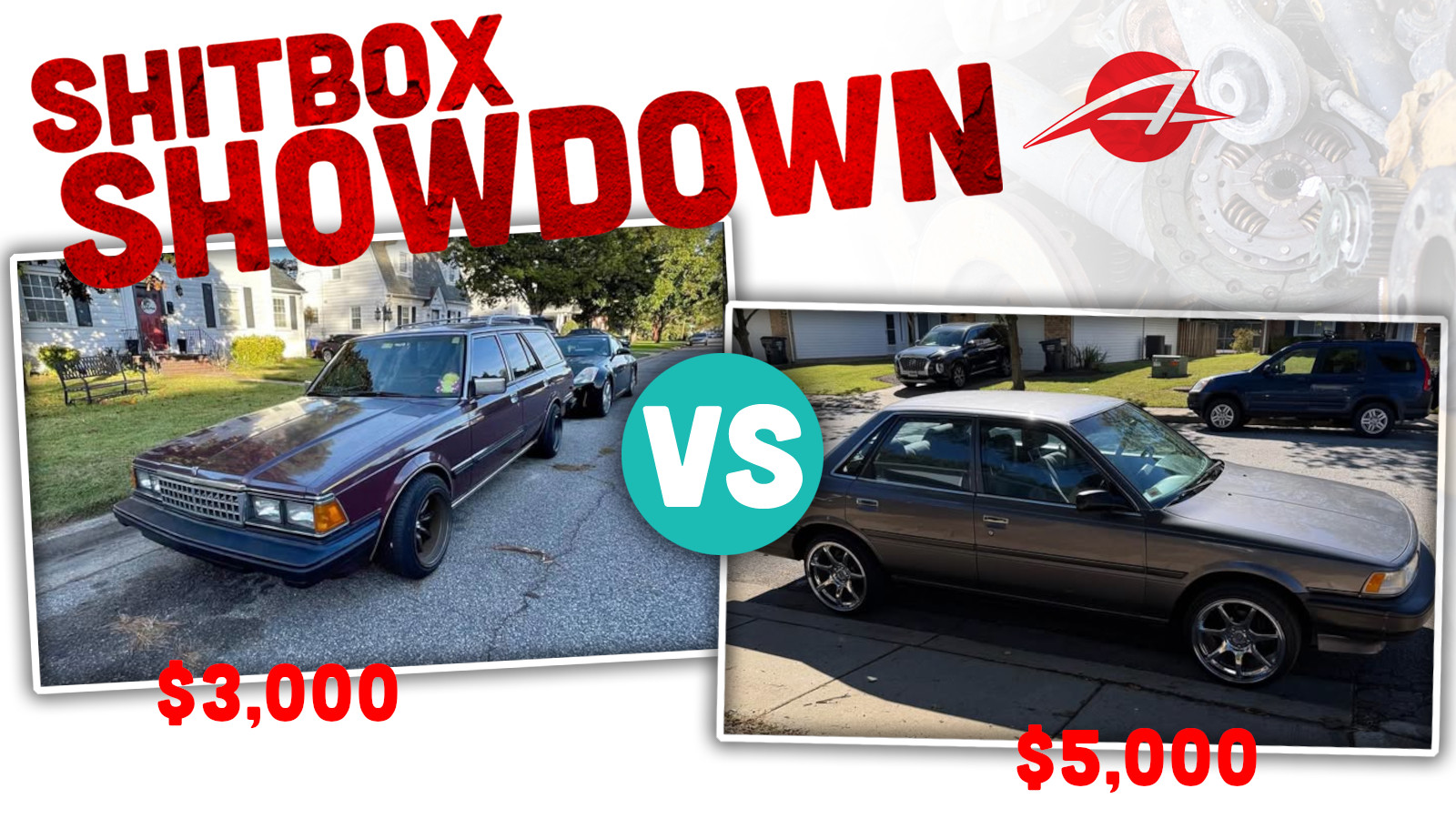
In the used car market, at nearly every price range, one name often stands above the rest: Toyota. Its cars are well-built, reliable, and low enough maintenance to survive some neglect. Get a used Toyota, and you can still go wrong, but your odds are a lot better. But even used Toyotas sometimes have some marks in the negative column. Is the brand’s reputation good enough to ignore those negatives?
Yesterday we looked at a mildly-busted Honda, and an Infiniti for which the state of California demanded its pound of flesh. I thought this one would be a little more evenly matched, honestly, but the Infiniti absolutely trounced the litle CRX. Enough of you from outside California voted for it, stating correctly that the back fees don’t apply to you. There was some debate about whether or not the car could legally leave the state under its own power, but that’s not my concern. That’s between you and the California Highway Patrol.


As for me, I’m taking the CRX. I already have a big, comfy, V8-powered sedan; I don’t need another. A CRX in need of some love, even the fuel-miser HF version, is much more interesting to me. In fact, if I ever were to get another project car – which, let’s be honest, I probably will eventually – a rust-free CRX in need of mechanical repair would be just about perfect for me.
“Get a Toyota” is the typical response when someone asks what would be a good used car. And it’s good advice, but because of their reputation, used Toyotas often command a price premium – commonly referred to as the “Toyota Tax.” The two cars we’re looking at today wouldn’t be nearly as expensive if they were, say, Fords. But they both have features that a lot of you might find undesirable: automatic transmissions, and automatic seat belts. And both suffer from aftermarket wheels that don’t fit particularly well, as well as some other minor modifications and maladies. Can you overlook these flaws for the sake of the Toyota badge? Let’s find out.
1983 Toyota Cressida Wagon – $3,000
Engine/drivetrain: 2.8-liter DOHC inline 6, four-speed automatic, RWD
Location: Portsmouth, VA
Odometer reading: 298,000 miles
Operational status: Runs and drives well
Named after a character in a Shakespeare play that nobody reads anymore, the Toyota Cressida was basically Lexus before Lexus. It was Toyota’s flagship model, a comfortable sedan or wagon with an inline six, rear-wheel-drive, and all the latest bells and whistles. Among those technological advancements is a safety feature that is now thankfully extinct: motorized safety belts. The Cressida was the first car to have them; it is, you might say, “patient zero” for that particular disease that ruined so many otherwise nice cars up until the mid-1990s.

You could get a Cressida with a five-speed manual behind its 5M-GE inline six, but good luck finding one; I think I’ve seen maybe one or two over the years, and never a wagon. Most of them have a four-speed automatic like this one does. It’s rapidly closing in on 300,000 miles, but the seller says it still runs just fine. These cars, much like the Lexus sedans that replaced them, have a reputation for racking up some serious miles, so don’t let the odometer reading scare you. It’s a lot more faithful than its namesake. (I’ve read the Cliff’s Notes at least.)
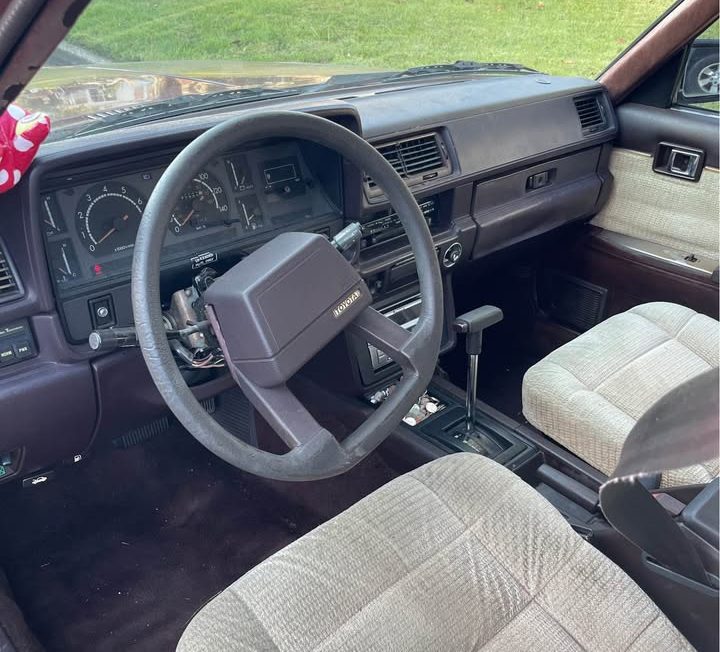
The US-market Cressida had a cushier and more luxurious interior than the Mark II on which it was based. Toyota wanted to compete with the likes of Buick, and soft seats and power doodads were one way to do that. This one is in great shape inside, except that the steering column trim is missing. It’s worth asking why. More curious, these days, is the ashtray full of change; no toll booths exist anymore, and I haven’t seen a coin-operated parking meter in years either, so why does the seller need an ashtray full of quarters at the ready?
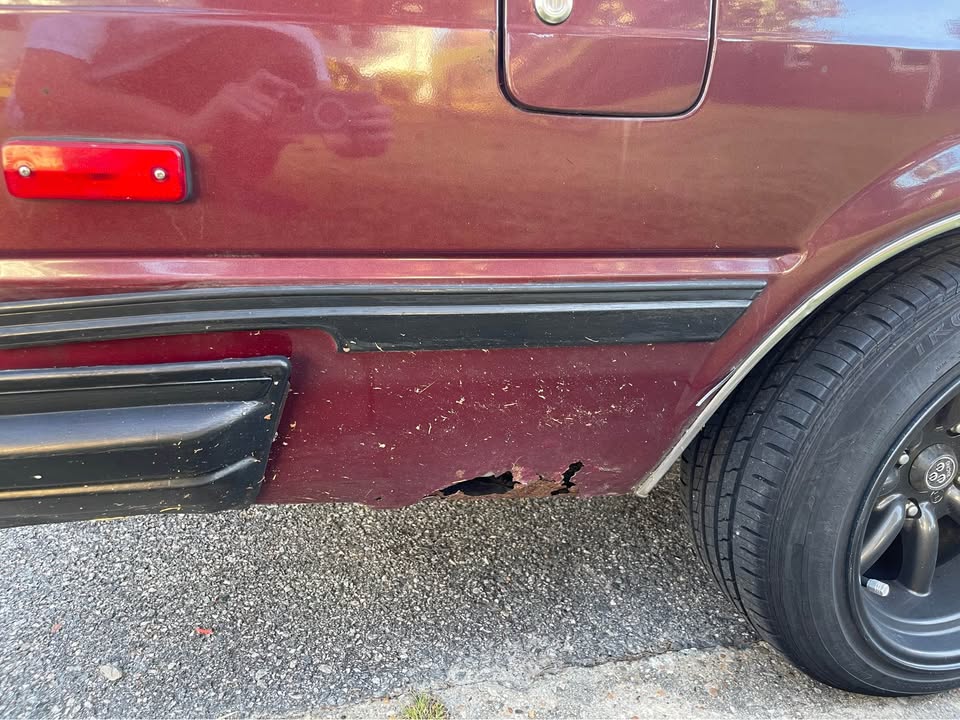
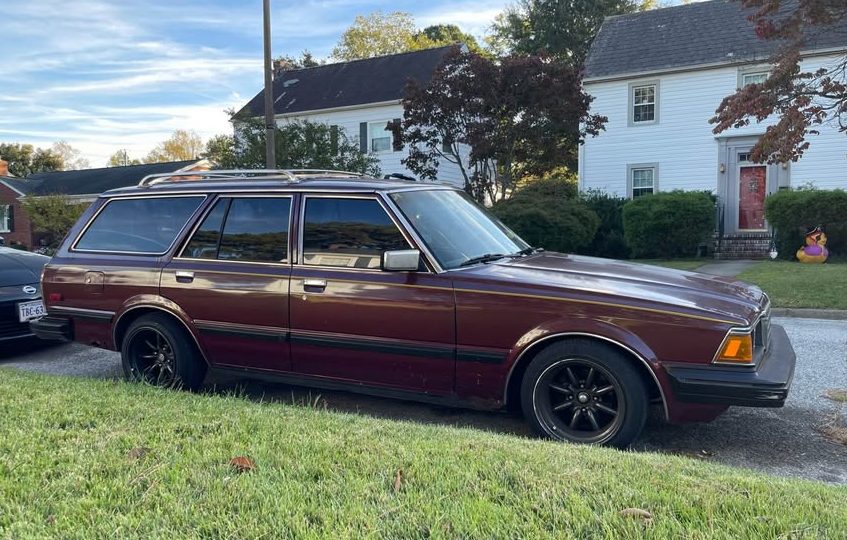
There has to be a catch, and here it is: the seller says this car has “a few” rust spots, like this one behind the rear wheel. How many is a few, and how bad are they? It’s hard to tell from the pictures. Most of the paint looks fine, though. The car has been lowered and sits on too-wide aftermarket wheels, but finding a cheap RWD Japanese car that isn’t so afflicted these days is difficult. I still want to know what’s wrong with stock ride height and tires with some actual sidewalls on them, but maybe that’s just me.
1990 Toyota Camry DX – $5,000

Engine/drivetrain: 2.0-liter DOHC inline 4, four-speed automatic, FWD
Location: Lexington Park, MD
Odometer reading: 86,000 miles
Operational status: Runs and drives well
Here it is, the car everyone hopes to find when looking for a used vehicle: a clean, straight, low-mileage Toyota Camry. This is the second generation, when the Camry really came into its own and became the “nice” car that it would be for decades to come. This is the first Japanese car that my dad seriously considered buying, after renting one for a family trip, and I can’t express how high praise that is.
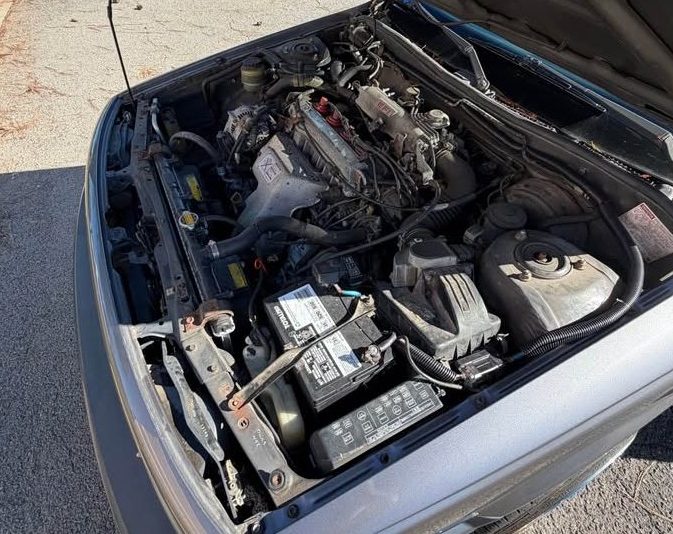
Camry engines, by and large, have never really been anything special – just very, very good. This one is powered by a 2.0-liter twin-cam engine that makes a hundred-and-something horsepower and drives the front wheels through a four-speed automatic. The exact stats aren’t important; all anyone needs to know is that it’s enough power, and it just keeps on going. This one is probably due for a timing belt replacement, if it hasn’t been done already, but otherwise, at only 86,000 miles, it’s just getting broken-in.

This generation of Camry also features those hateful automatic seat belts, but otherwise its interior is a nice place to be. It’s in beautiful condition, but you’d expect that, with the low mileage. The seller has replaced the stereo with something more modern and more powerful, including a pair of 12 inch subwoofers that eat into the available trunk space by quite a lot. (Kids; what are you gonna do?)

It’s clean and rust-free outside, but it has a set of aftermarket wheels that just don’t belong on it. Or on anything, in my opinion. That skinny-tires-on-wide-wheels thing looks stupid, and it can’t be safe. Those wheels and tires, along with the stereo, make me think that this car was owned by an elderly family member who passed it on to a younger member. At least they didn’t do anything permanent to it.
These are both probably really reliable cars, with quite a bit of life left in them, but either one is going to need some tinkering to put them back how they should be, at least in my opinion. But maybe you can look past the silly modifications and the rust. If so, which one do you think is the better deal?




That Camry is great, I would even keep the wheels. That is the kind of car an 18 year old me would drive.
The Cressida is awesome too,but I just can’t with all that rust.
Cressida because my late grandfather had a sedan in that color. It was a ridiculously reliable car that he eventually replaced with a mid-90s Camry that was equally reliable and fine. So, the straight six and nostalgia.
I know the Camry is the right choice, but I nostalgia had me vote for the Cressida. I had friend in high school with a manual Cressida and it was a legit nice car. It wasn’t sporty, but it was a comfy, competent car. My teenage self would have laughed at my friend if his car had been a wagon, but adult me loves few things more.
Lexington Park MD….home to the very active Pax River Naval Air Station. This might explain the Camry’s low mileage and loud car vibe. Could be a squid who’s grandma gave him the car when grandad did the deep six. When finally deployed with the fleet out of Seattle…it was easier to sell than move.
I’ll take the rusty wagon and keep the $2k for donuts to share with the tow truck driver.
Do my eyes deceive me or are those some clean-looking Watanabes on the Cressida? A couple grand in wheels plus the lower price has me leaning that way over the Camry.
Cressida, definitely. I like a nice wagon, I cannot deny.
These cars was what made Toyota’s reputation. A reputation they are still coasting on. This is a rare instance where there should be a ‘I’ll buy both’ button.
They’ve both been beat on by a kid who inherited them, but the camry hasn’t been beat as much yet. I guess I’ll go with that one. (Plus, obvious body rust is something I just have no time to deal with anymore.)
The Camry is just too clean to pass up for me. As for the quarters in the Cressida, one thing I keep quarters around for is for those spring water gallon filling stations in shopping centers. For whatever reason, when my street was built 20-something years ago, the town never ran municipal water down it, so we’re stuck with a well. Edit: or maybe they’re just a fan of Aldi, though of course I don’t know of anyone whose shopping trips there involve that many shopping carts.
Gotta go with the Cressida on this one. I know a few people who have manual-swapped them, and a RWD wagon with an I6 is hard to resist.
The Cressida also wins in rarity. Down here in NC, where rust isn’t such a factor, Camrys of this generation are still performing daily driver duties. You don’t see them every day, but often enough that you don’t really look twice. Corollas, Accords and Civics of this vintage are the same way. They have to be VERY clean to stand out.
I remember wrenching on Cressidas back in the day and they were top hole. The build quality was so good it literally oozed out of the car.
That Cressida was probably one of the most solidly-built consumer products in history.
The fact that either of these are priced above ~$1800 is frankly ridiculous
The future is, indeed, shit yes.
I hate rust, but I hate Camrys more no matter their condition and the Cressida is something I never see anymore that also happens to be a RWD I6 wagon—a real wagon that can fit a ton of shit, not the modern oversized, overweight land barges that offer awkward load areas and less useful vertical volume over horizontal. It even looks better, though this isn’t heady company. Unless that Cressida is rotted underneath, there’s nothing too hard to cut out and replace that I can see. Also, the motorized mice belts are a MAJOR PLUS over shitty early airbags that killed small women and required you to have a horrendously ugly and feel-reducing steering wheel. I never understood the hate. Open door, belt moves quick enough to not be in the way. Close door, belt moves to secured position while you buckle the lap belt as with any other belt. Start and drive off. The only time it might be an issue is if you’re looking to jump out to tackle someone and don’t have time to plan for the 2 seconds it takes to simply unlatch the shoulder belt. I don’t know what all the rest of you are doing, but that’s not something that’s come up very often for me and I’ve lived some shit. My Legacy had those with over 270k miles. It bound up once or twice when the pretensioner activated, fixed by unclipping the shoulder belt. BFD. The rest of the time, it was a non-issue and it meant I could replace the terrible rubber boat helm of a steering wheel, transforming the driving experience of that car dramatically from slightly less boring grocery getter to something more fun and communicative than my GR86.
A lot of times the anchor point is too high and the seat belt is slicing your neck.
My GR86 even though I’m 5’11”, yeah, it’s annoying. Never had an issue with the mouse. Mine rode along the A pillar, then down the B pillar when it locked in. It was probably the least annoying seat belt I’ve ever used. I don’t recall that with any other car of the time that I was in, either. GM’s half-assed passive belts, I could see the hate for as it was a sloppy solution and ugly, like walking into some weird giant spider web, but those were mounted to the doors and didn’t move . . . I don’t think. That was a long time ago now, so I might not be remembering that right.
My brain says Camry but my heart says Cressida.
Those awful wheels and giant subs must be worth something to someone, and the effort to get rid of them is worth it considering how clean that Camry is.
Five fucking grand?!!!! I’ll take the Cressida, rust and all. It’s still too much money, but… dang.
My parents bought a low mileage used ’82 Cressida sedan in the early 90s that I thought was pretty sweet so I really wanted to vote for that, but that Camry is just too much better to logically say “no”.
Guess how I voted? The rust just makes the Cressida more…brown.
I like both. I hate rust and at 300k, that’s a lot of miles for a 42 year old Toyota. I’ll take the Camry and sell those speakers and wheels if I can. Definitely, they have to go and I’ll try and find some proper wheels for it. Otherwise, you probably have another 20 years in its life, for good or bad. We had a 2012 Camry and it was great but maybe too boring after a while.
I once car-pooled in the 80’s with a guy who had been gifted a Cressida sedan from his physician brother-in-law. It was pure luxury compared to my ‘85 Tempo I forced him to ride in.
I hate rust, but it shouldn’t be that bad in Virginia, can it? I care about fuel economy, and I’m sure the Camry is better, but a $2000 price delta can buy a lot of fuel for an extra car, and an old wagon is a lot more interesting than a sedan that’s still relatively new
I’ll take the Cressida, and I’m keeping those wheels on it.
You can’t scare me away with rust.
Want the wagon.
Hate the rust though.
So Camry wins for me today.
Longroof for the win.
I voted for the Camry. This is a great preserved ordinary car. I even like the chrome rims and low profile tires. Five grand isn’t cheap for a 35 year old sedan, but this may be the nicest 1990 Camry in existence so the premium price is justifiable. I would probably get rid of the subwoofers, though. At this point I’m more inclined to listen to NPR than NWA, so those are just taking up space. My 17 year old self would have loved that stereo, though.
…I mean, sure, maybe at our age we’ve outgrown thumping ICE, but can you imagine: it’s the weekend, “Wait! Wait! Don’t Tell Me!” comes on, and Bill Curtis says “I’m the voice smoother than a Lexus LS,” through those woofers…
The badges on the trunk would shake loose.