

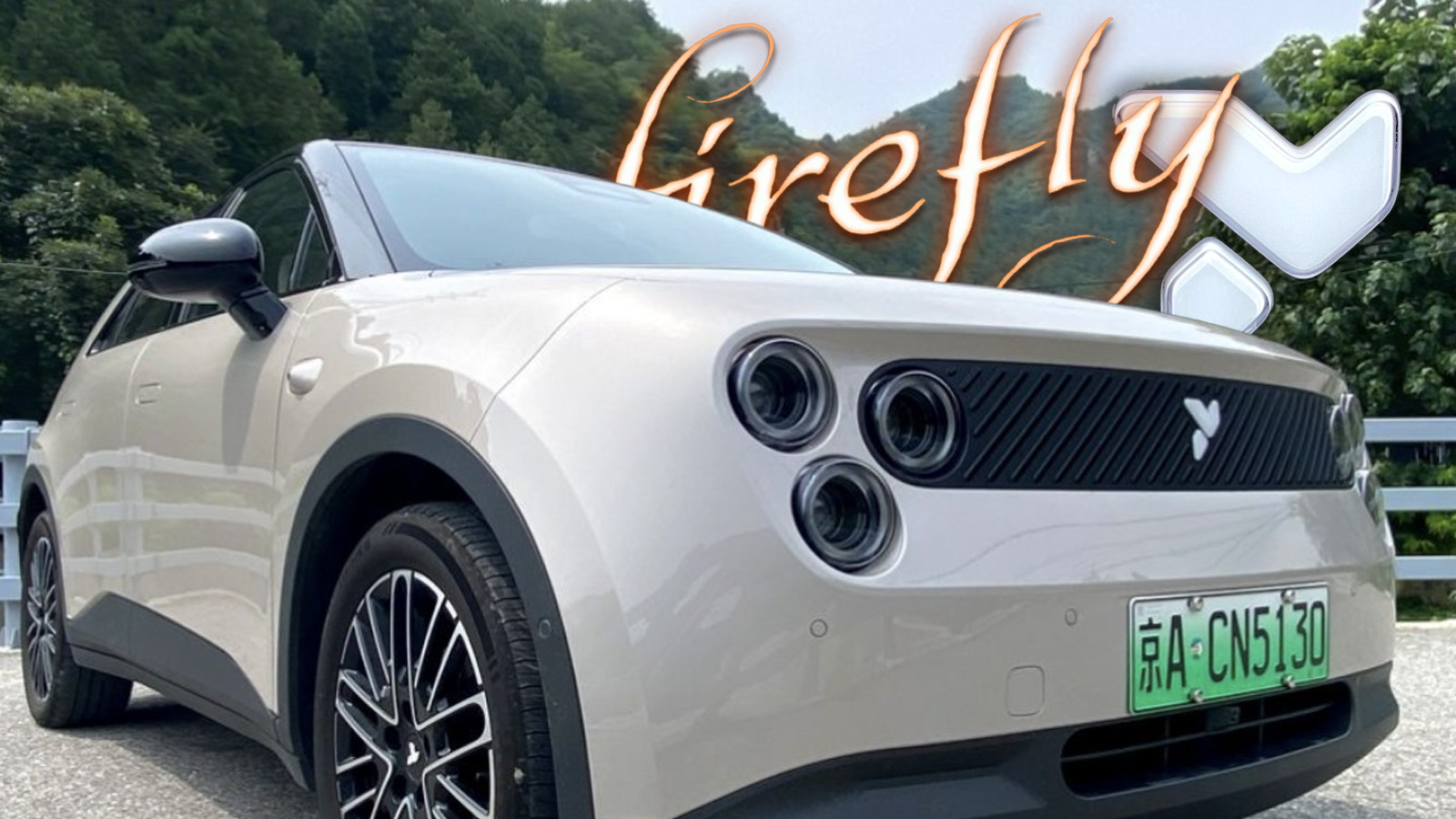
In China there’s a cool new electric hatchback called the Firefly. It’s rear-wheel drive, makes 143 hp, and will go 261-miles on a charge. In China, it costs 79.800 yuan or $11K. Yes, that’s 11.000 USD. I had a chance to test the dirt-cheap little machine; here’s what I thought.
Firefly kindly provided a car for me for a full day, dropping the vehicle off and picking it up at my doorstep in Beijing, where I was on vacation.


I planned an interesting test route for the day, with mountains and highways, city traffic, and robots. Beijing is flanked by mountains to the North, where the Great Wall is, and also to the West, where we went. My wife and kids went along for a real-deal-with-it family test trip.
What is Firefly?
Firefly is a Chinese EV brand. The owner is NIO Inc., a company that also runs the NIO and Onvo brands. NIO Inc. founded Firefly in late 2024, so this is a new brand, and it’s aimed at young folks & families — think China’s Scion, in a way. The brand’s motto is “Freedom to glow.” The first Firefly is called…Firefly. It launched in China in April, selling 9978 units so far.
First Impressions

Getting in and out is easy. When you park the car, the front seats automatically slide backwards for an easy exit. They remain in this position until you start the car.
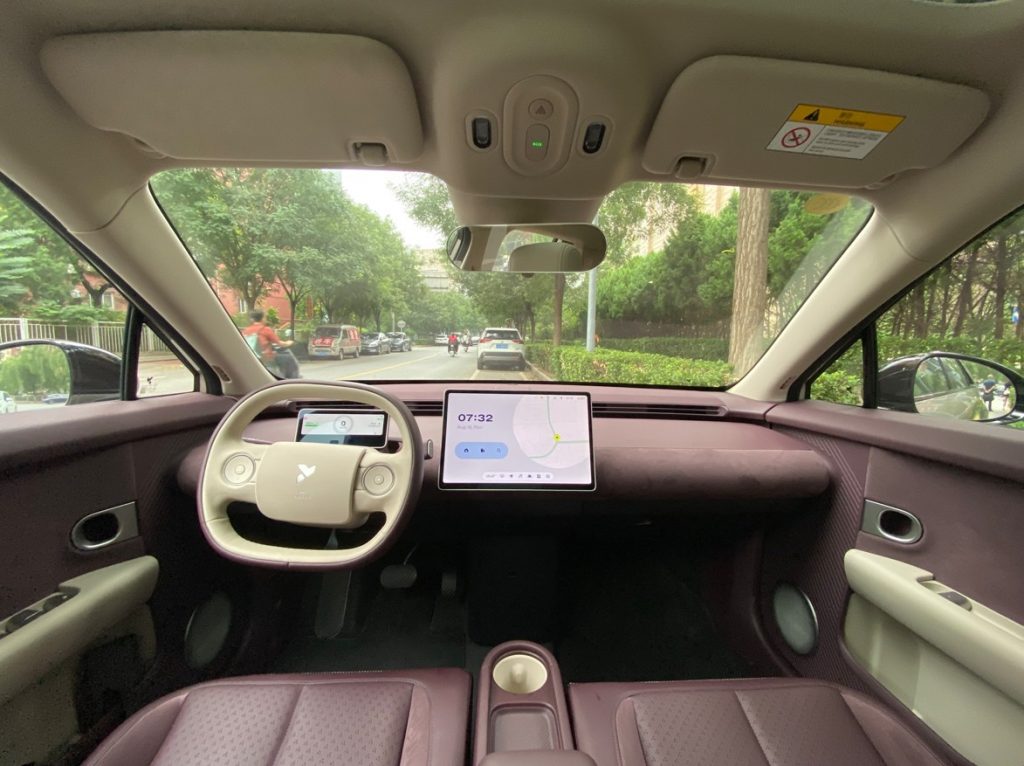
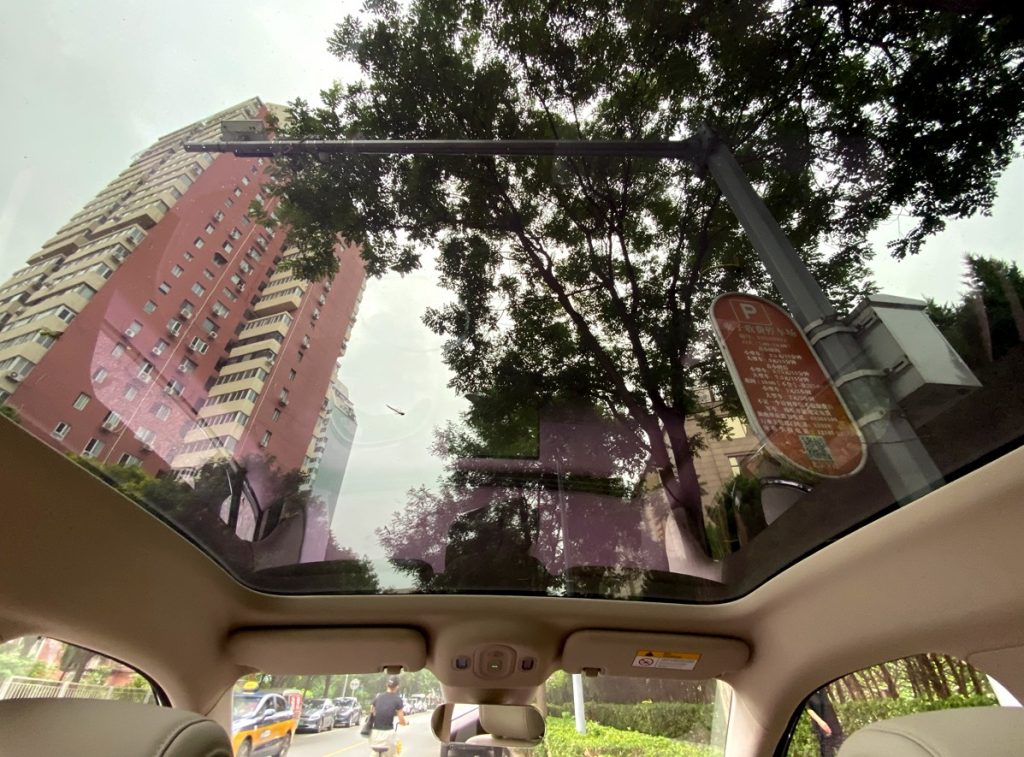
The view to the outside is great since the Firefly has large windows and the seats are high. I like high seats in family cars; if I want to sit low, I’d buy an old MG. The C-pillar is a little wide, but that’s not really a problem. The 13.2-inch 2.5K infotainment screen is fast, and the graphics and colors are hip. The operating system is Aster OS, developed exclusively for Firefly. NIO and Onvo have different operating systems. The menu structure is easy to understand, and every function is available within about 3 clicks.
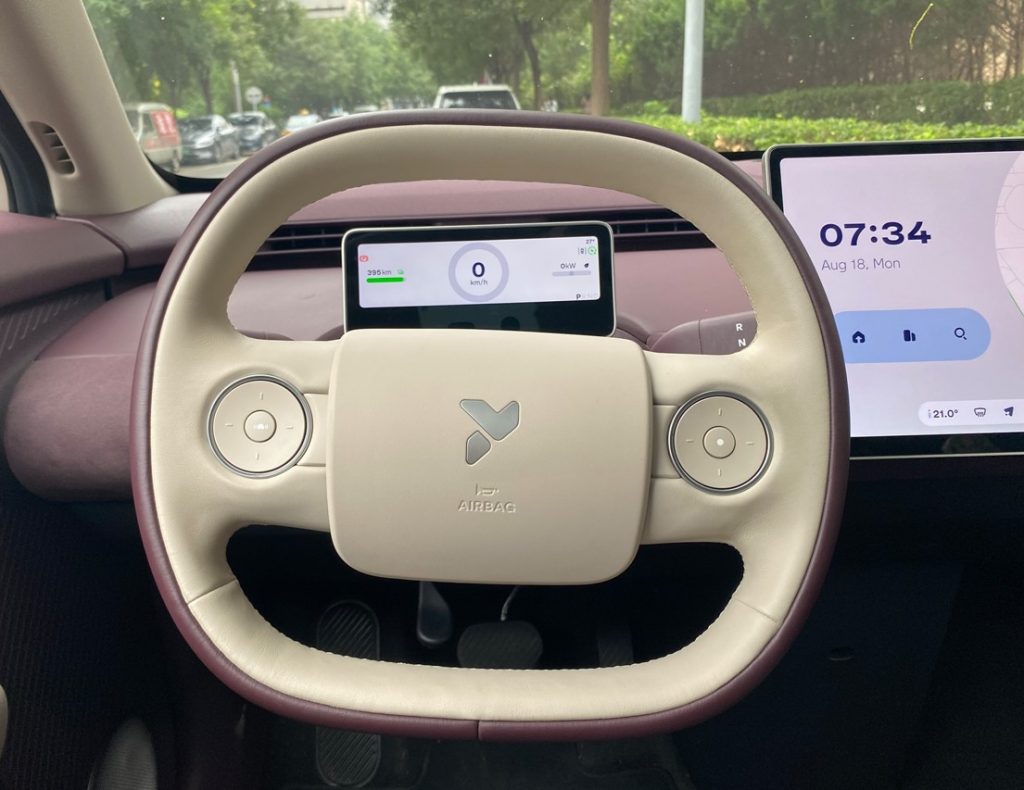
I like the steering wheel: two spokes, with a thick, real-leather rim and a flat bottom and top. It looks cool and it works well. The 6-inch instrument panel is bolted onto the steering wheel column, so it is always perfectly visible. The air vents are nicely integrated into the dashboard.
The key situation is a bit annoying. The Firefly has an NFC/RFID key card with keyless entry and keyless start. But when you try to put the shifter in D, it won’t go. First, the keycard has to be in a precise position on the wireless charging pad. If you don’t do that – and if the card is just a little out of place – it won’t go. When the key is in the right location, you can finally shift to D and go — oddly complicated, and when the key card is on the pad, you can’t use it to charge your phone.
[Ed Note: First, this key-card thing is similar to other cars like the Tesla Cybertruck. Second, how is it that Tycho isn’t mentioning that purple/tan two-tone interior! It’s amazing! -DT]
Lots of Space
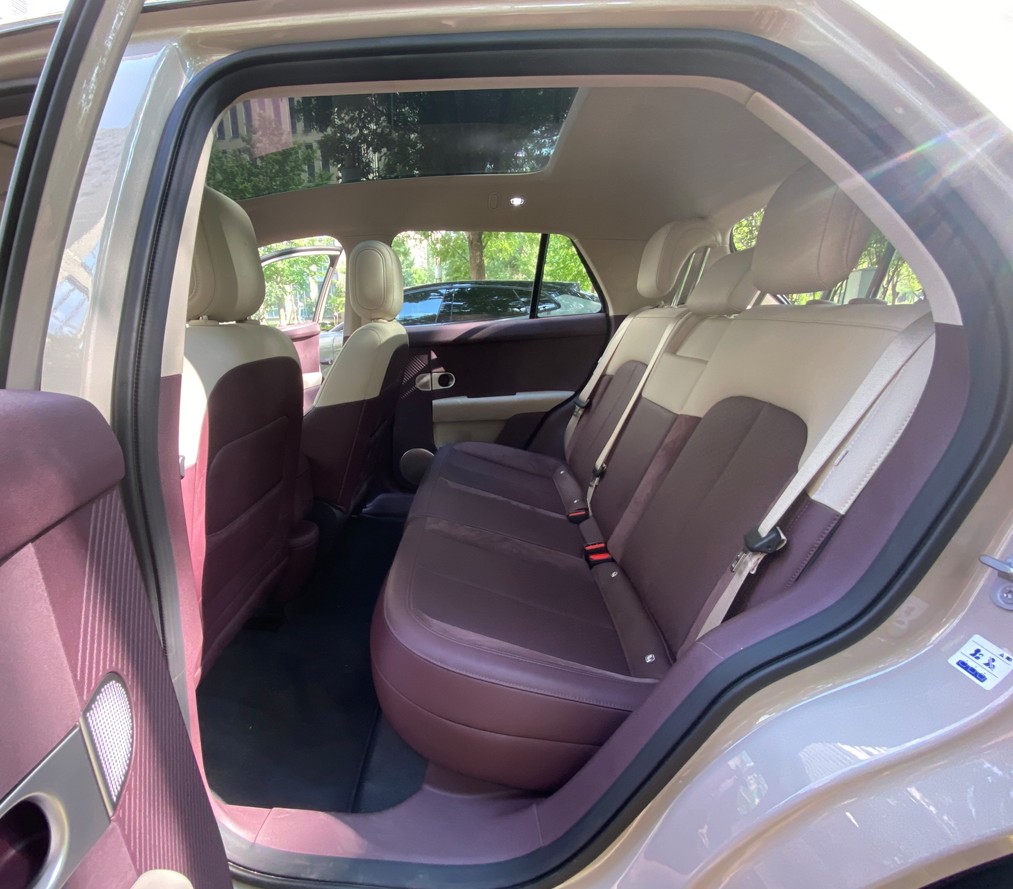
For such a small car, it has a lot of space. Loads of headroom. The floor is completely flat, so it’s easy to get around. The kids were impressed, too; they said it offered way more space in the back than our Jeep Renegade in China or our Volvo V40 in the Netherlands. They also liked the large windows and the tiny but bright pop-out reading lights.
Lumo listens

Say “Hi Lumo” and the digital assistant comes to life. She has a smooth and soothing voice. It made me calm and relaxed. Lumo can do easy stuff like adjust the temperature and windows. She can also answer questions about the weather, navigation, and traffic. Lumo has a built-in LLM called Lumo GPT. Its development is ongoing, with OTA updates. Firefly says it’ll have an “Encyclopedia of knowledge.”
Lumo can listen to four different voices. My wife asked Lumo to lower the fan speed, and my kids asked Lumo to raise it. Lumo did what was asked, so the fan speed went up and down and up and down. Perhaps the front seats should have a priority position of sorts? I’m not sure how other cars arrange this, but anyway, we had good fun.
Notably, the Firefly has a 14-speaker 640W Dolby Atmos stereo system, which is way more powerful than anything else in the segment. The Firefly has permanent 5G, and the infotainment system comes pre-loaded with every popular Chinese music app. Boom boom!
Ford Thunderbird
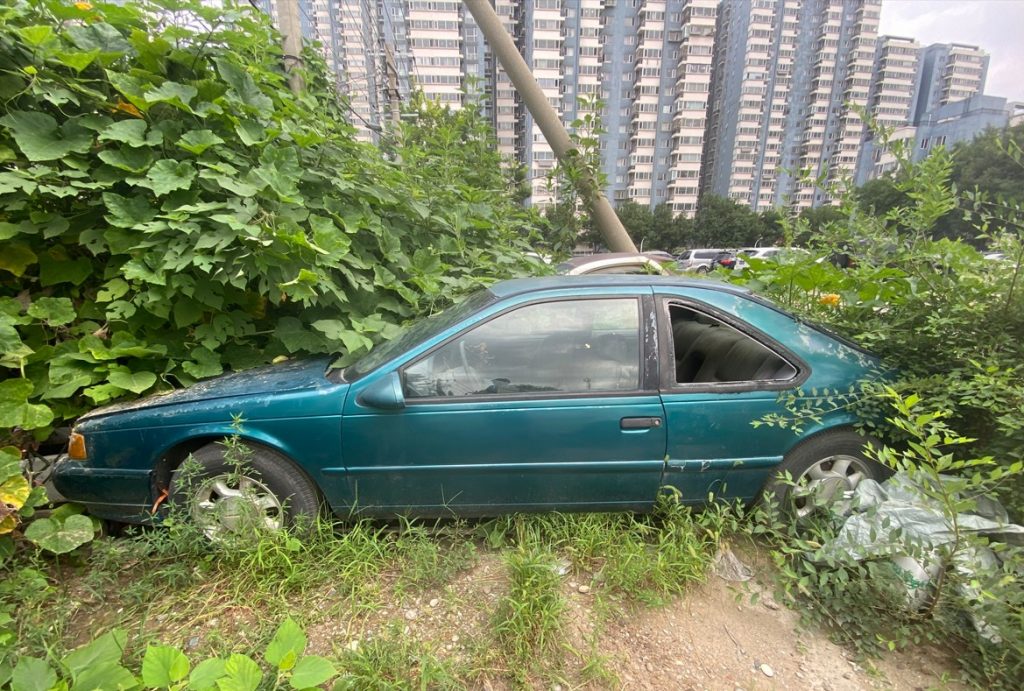
My first order of business was to find an old Ford Thunderbird. I am very into car-spotting in China, and a friend of mine heard from a friend of his that an old ‘bird was hiding somewhere in a residential compound. Happily, said compound was halfway between my place and the mountains. The compound was huge, so it took me a while to get around.
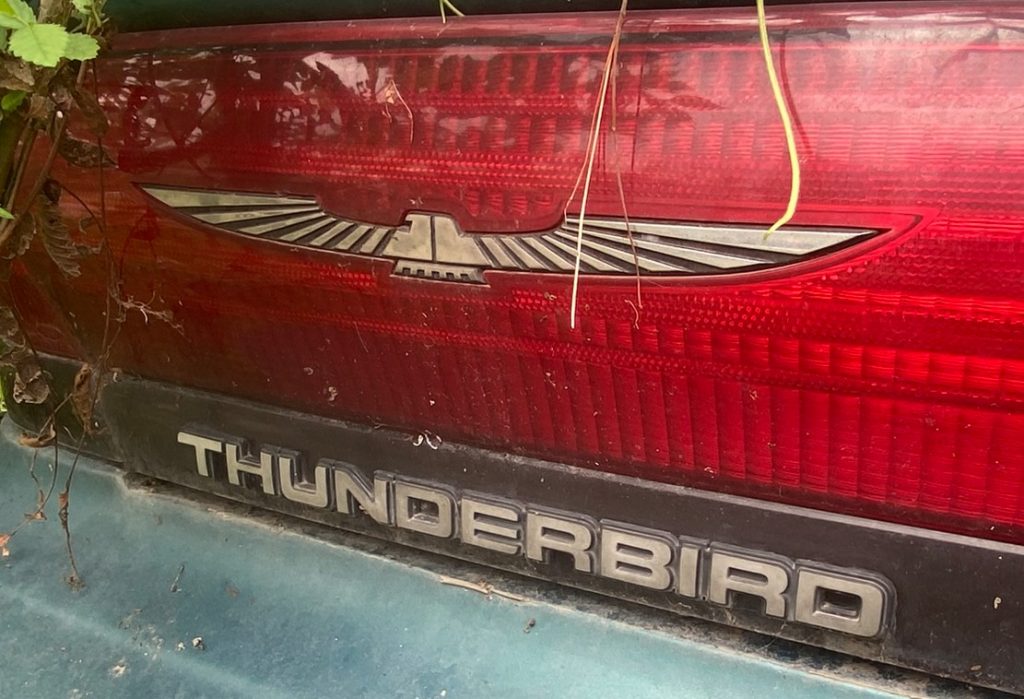
Finally, I found the Thunderbird on the edge of a large parking lot, largely overgrown with weeds and covered in dirt. This ‘bird won’t fly anymore. It is a 10th-generation Ford Thunderbird LX, made between 1989 and 1997, painted in Pacific Green Metallic with leather seats and wood trim. It is rare in China, because Ford never sold it here.
Yongding Tower

With the abandoned Ford wreckage out of the way, I pointed the Firefly’s nose straight towards our second goal of the day, the Yongding Tower in the far west of Beijing’s Fengtai District, just on the edge of town and mountain. The Yongding Tower is an impressive structure, styled like an old pagoda, but it isn’t very old. The tower was completed in 2013 for the 9th China International Garden Expo. The tower is 69.7 meters high (over 200 feet), with a concrete base and a wooden structure.

From the tower, visitors can check out the Yongding River, which has been pretty wild in recent months with rising water levels and accelerated water flow speed. Earlier this week, the local government warned residents to stay away from the river’s shore.

The tower is in a small park with this statue.
Design of the Firefly
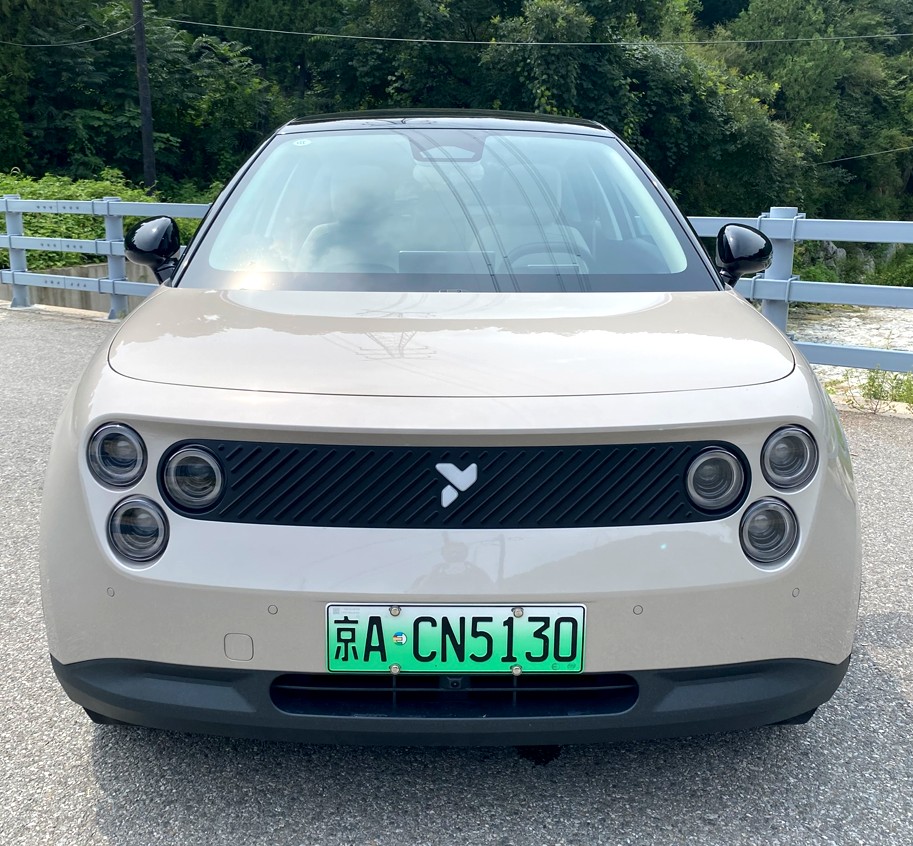
The Firefly is a great-looking car with a square, almost-boxy design. Firefly’s A-B pillars are black, with a black roof. There’s a “hoop” around the C-pillar that flows into the roofline. The main features are the “trio lightsm” which extend to a black oval shape. The oval theme comes back in the interior design.
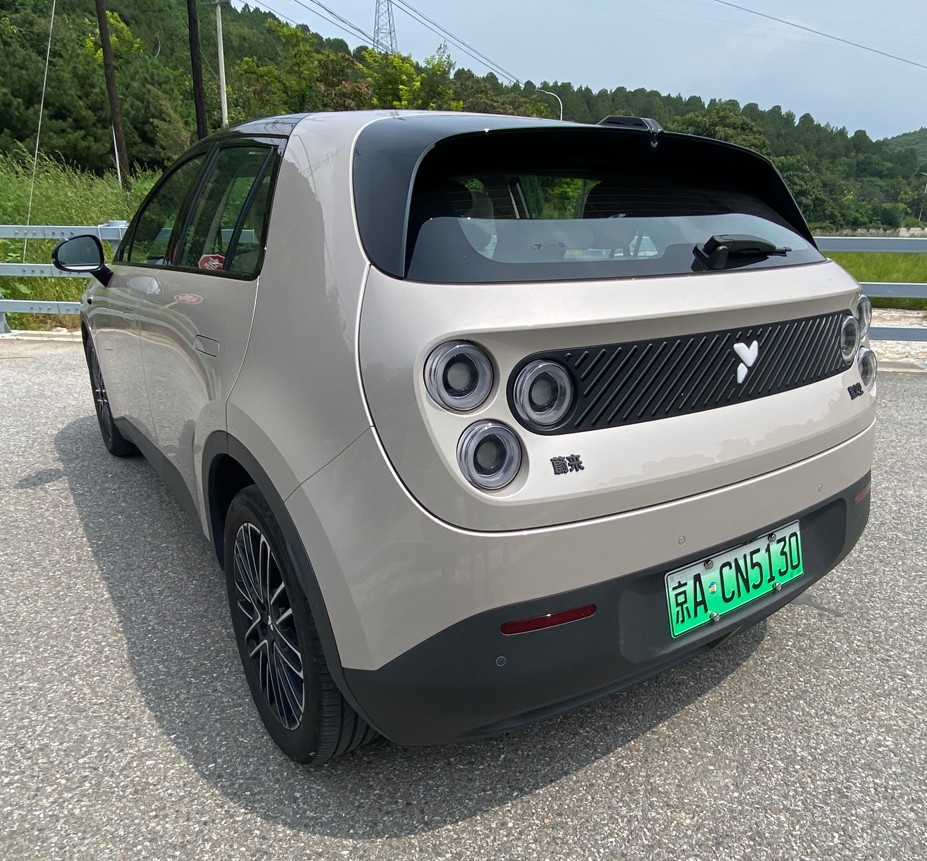
NIO designed the Firefly at its Global Design Center in Ismaning, near Munich, Germany. The design boss is Kris Tomasson. Firefly’s exterior design is by Bobby Ma, a Chinese designer who previously worked for Xpeng and Volvo Cars. The interior was drawn up by Matthew Croft, a British designer who worked for McLaren and Yamaha.
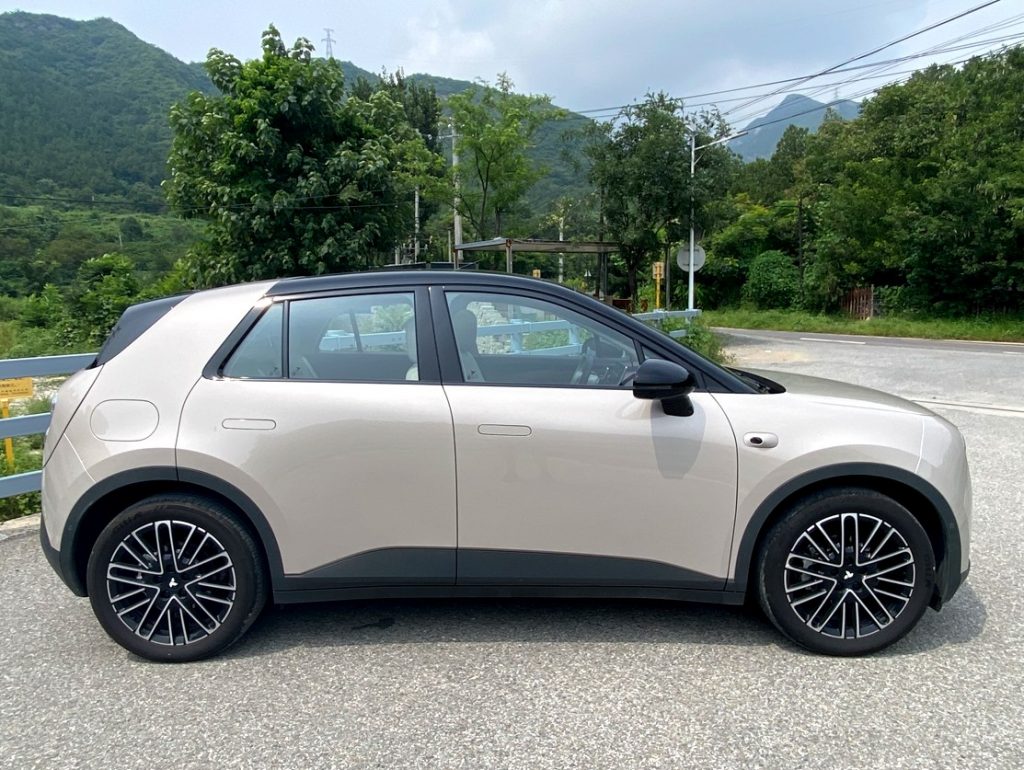
The available colors are all a tad soft. That’s trendy in China. Personally, I’d love to see a Firefly in bright red or dark green. The car I drove comes in an exterior color called Leisurely Rice, and its interior combines Warm Rice with Pleasant Purple.
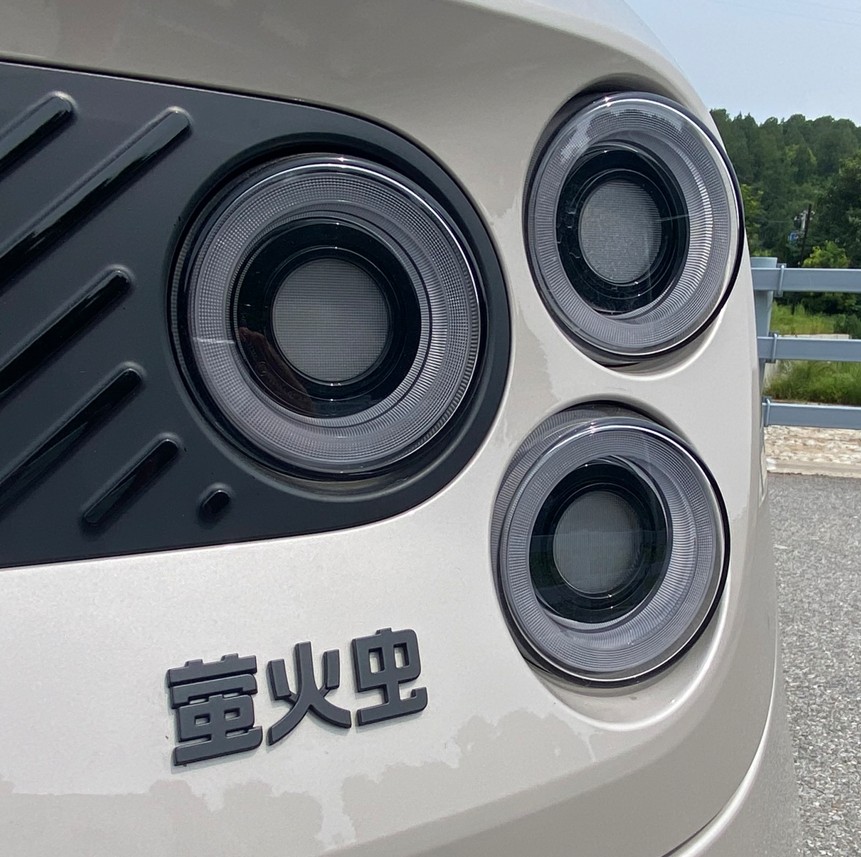
At launch, the lights were the most controversial part of the car’s design, with lots of love and hate. I wasn’t sure either, at first. Then, once I saw the lights in action, I was a fan. The Chinese name is 萤火虫, Yínghuchóng, Firefly.
Interior
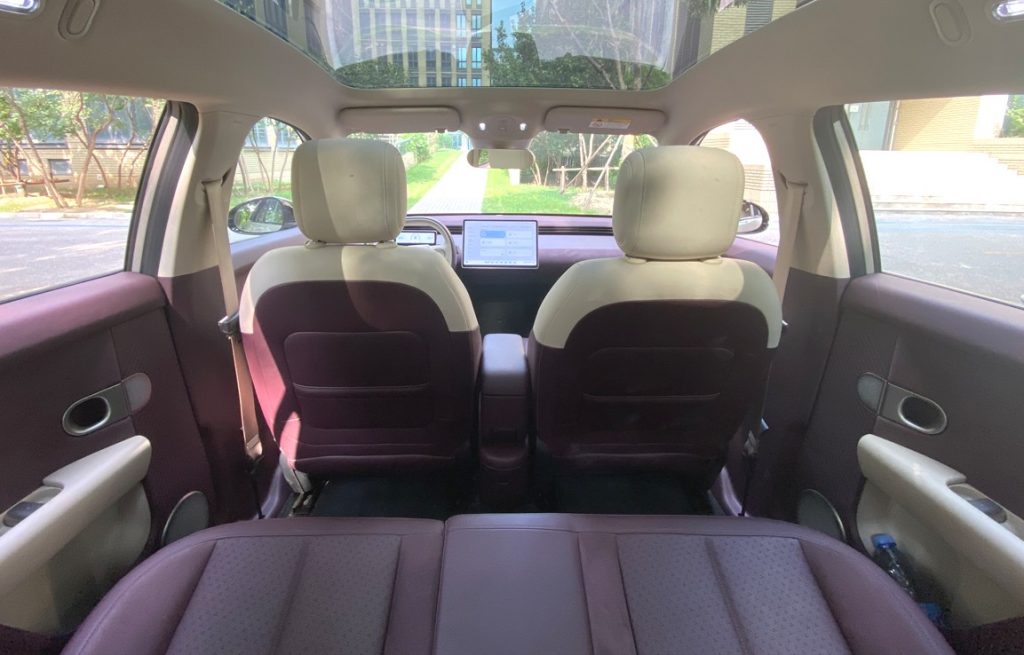
The interior’s basic design is minimalist, but at the same time, a lot is going on. That’s mainly because Firefly uses a whole lot of different materials and textures. The door handles are in silver. The dash and seats are in two shades of purple. The bins are yellow. The dash top and pillars are black. The speakers are gray. Wha! [Ed Note: Wha indeed! This is awesome! -DT].
Practical Business
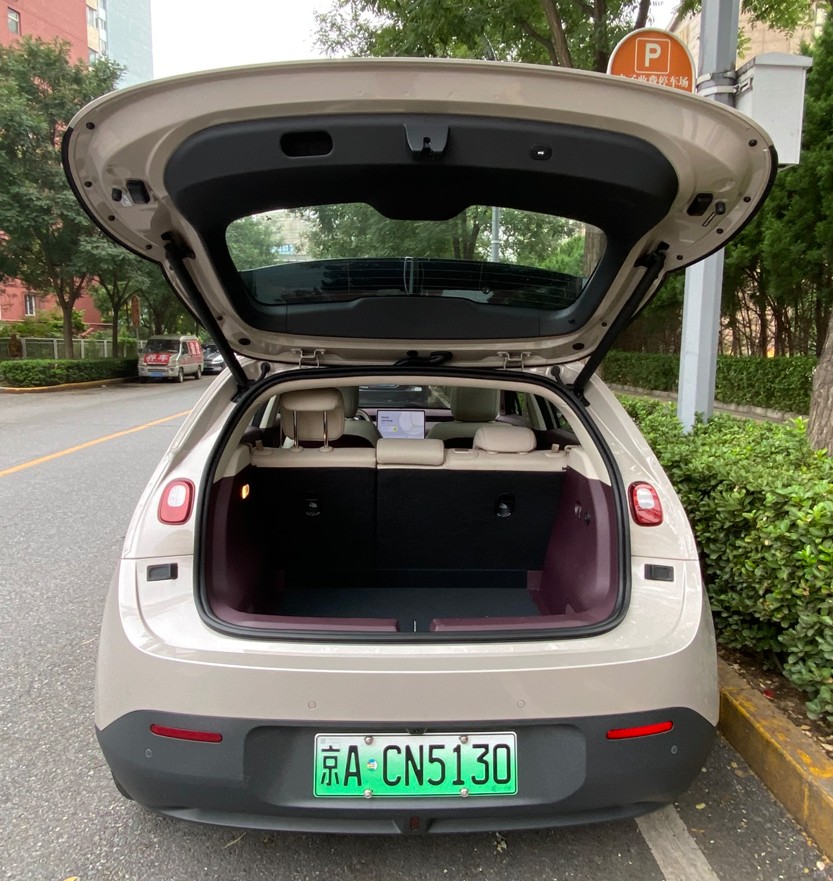
The Firefly is about the size of a Volkswagen Polo, at 157 inches long, with a 103-inch wheelbase and a 3,290-pound curb weight. There’s lots of storage space: big door bins, another bin under the armrest, a compartment under the front-passenger seat, and another one under the rear bench. The trunk’s capacity is 11.8 cubic feet or 44.2 with the bench down. The frunk adds another 3.2 cubic feet.
Gushancun Scenic Area

Time to get into the mountains! China is loaded with scenic areas; many aren’t very scenic at all, but there’s always something going on. The Gushancun Scenic Area is about 30 minutes northwest of the Yongding Tower. The road was brilliant, twisty, and narrow, mostly running alongside the river. Highlights of the Gushancun Scenic Area are small hilltop temples and old bridges crossing tiny rivers. I also found a great spot for photos; it was a bridge over a river with high peaks in the background. There was a little town too, with friendly folks, and I bought some local cookies.
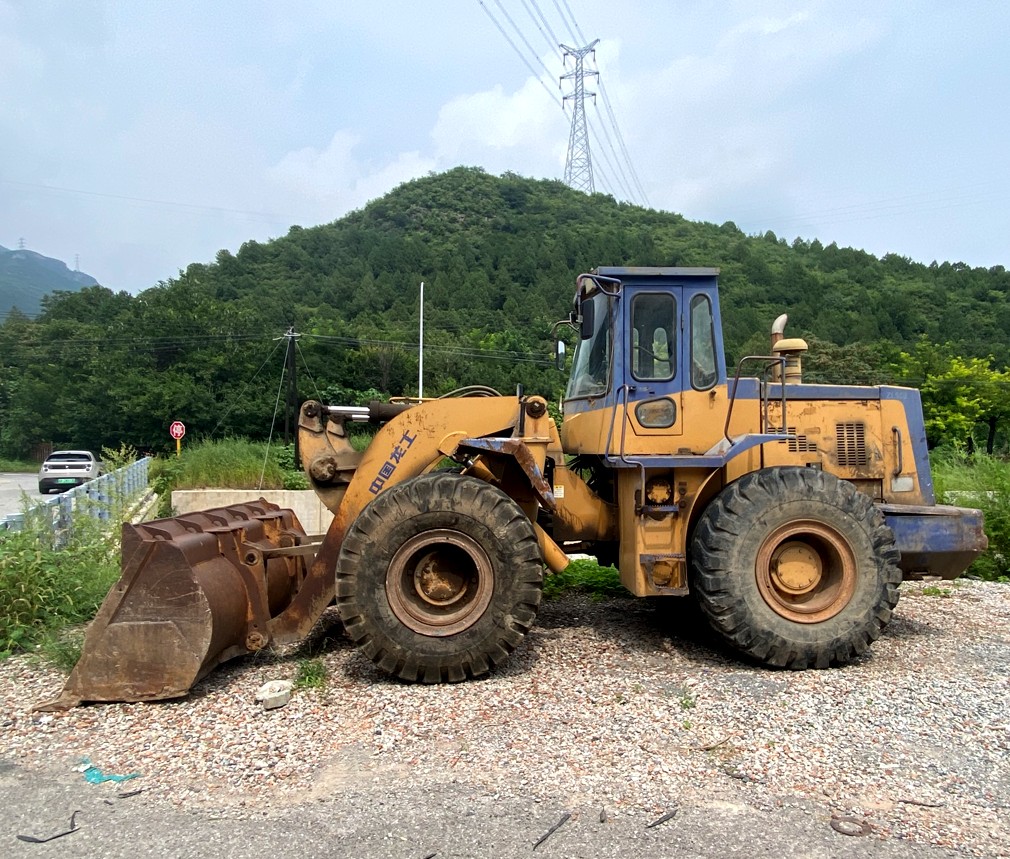
(A Lonking ZL50B loader (specs), manufactured in the late 2000s).
Driving the Firefly on a Mountain Road
The Firefly is a rear-wheel drive car; the output of the electric motor is 143 hp and 146 ft-lbs. With a 3290-pound curb weight, it isn’t very heavy. The steering is light but sharp, and the accelerator pedal response is EV-instant. That made for a great ride in the mountains; it braked well and was quick out of the corners, overtaking trucks with ease. It was good fun. Luckily enough, it was Monday, so there wasn’t much tourism traffic to deal with.
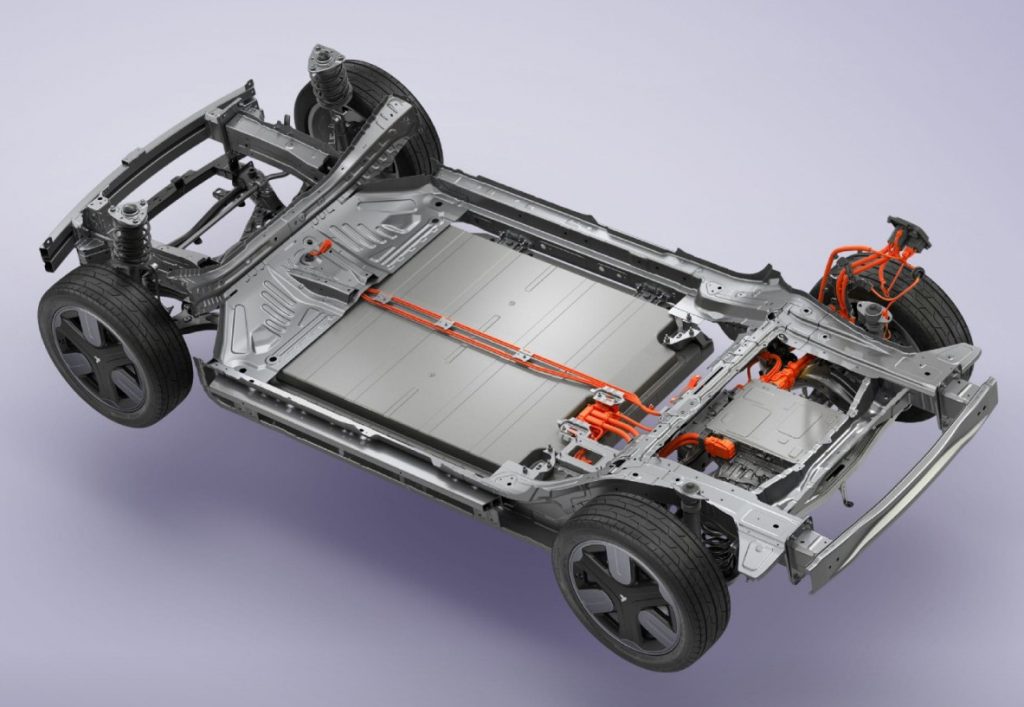
The chassis comes with MacPherson front suspension and multi-link independent rear suspension. When going downhill, it harvested energy with its regenerative braking system. It has ventilated brake discs up front and solid discs at the rear. The official 0-62 mph time is 8.1 seconds, but it seemed faster. The top speed is limited to 150 km/h (93 mph). Chinese EV brands rarely advertise with the fun bit of electric driving. Instead, the emphasis is mainly on space and AI matters.
To the Robots!
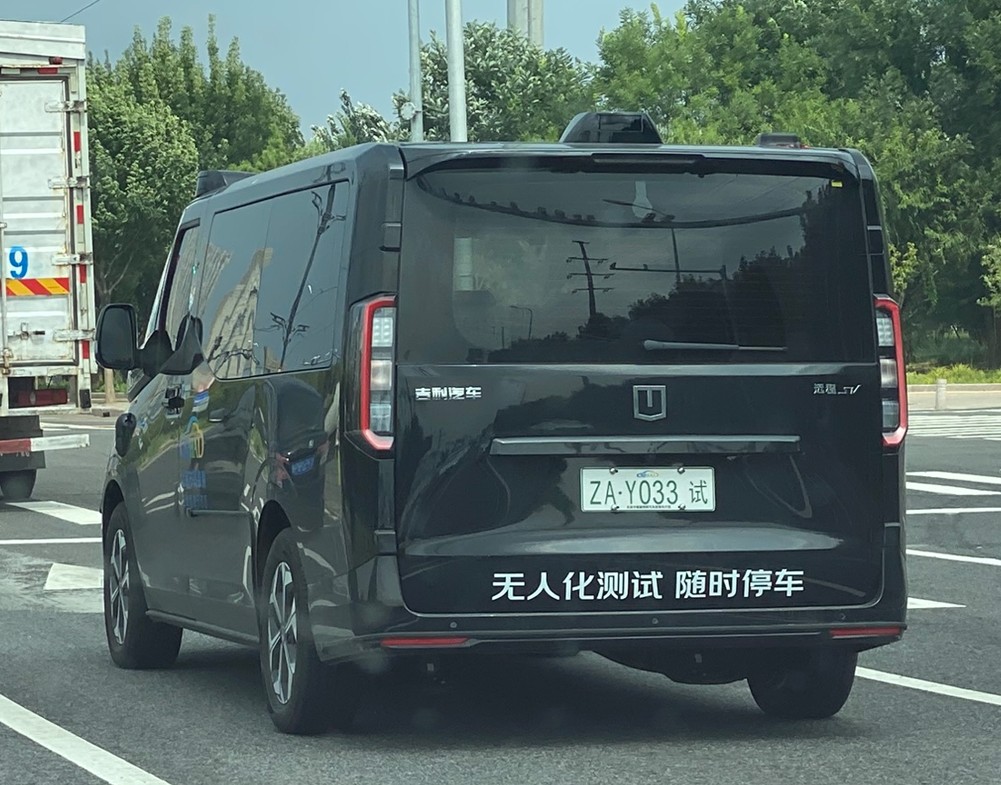
We then turned the wheel again, this time to the Tongzhou District in eastern Beijing to visit a new Robo Mall. The mall is in Beijing E-Town, a large high-tech development area that doubles as a geofenced test area for autonomous vehicles. The route took us over long stretches of highway, mainly on the Fifth Ring Road. The highway ride is typical EV: comfortable, quiet inside, and easy to drive. It has three modes: Comfort, Sport, and Eco. I tried them all out, but I didn’t feel much difference, so I left it in comfort for the rest of the day.

The area is a robot development base, with startups and established robotmakers living side by side in gleaming new buildings. Local governments set up these development areas, offering incentives like cheap land and low taxes. The problem is that every city in China has like a million development areas for all sorts of stuff, so many are half empty. Not this one, though. At the Robo Mall, various companies showed off their latest products. It was a little meh, and the demos were tightly controlled. The coolest things were a robo barmaid and an AI Chess Robot playing Chinese Chess.
Driving & Parking Autonomously with the Firefly
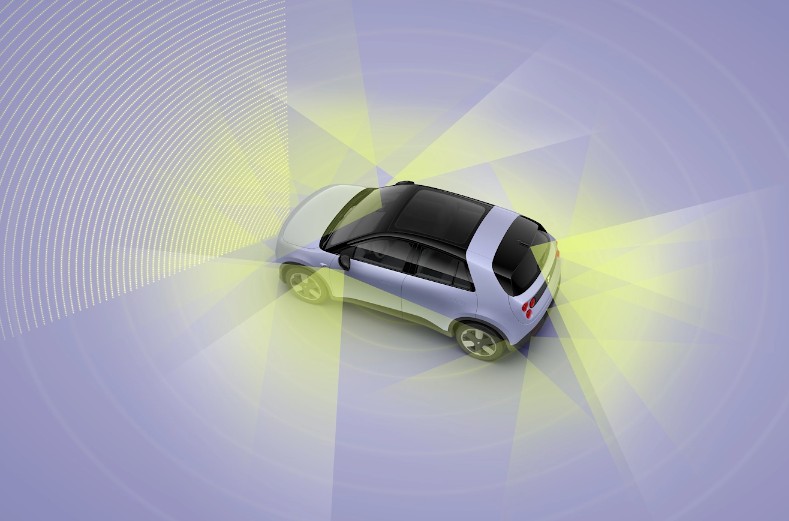
China does not allow fully autonomous vehicles yet, so by law, you have to keep your hands on the wheel. Every minute, the system beeps, you have to hold the wheel for a few seconds, and repeat. The Firefly has L2 ADAS with a Horizon Robotics 128 TOPS chipset, 10 cameras, 12 ultrasonic radars, and one millimeter-wave radar.
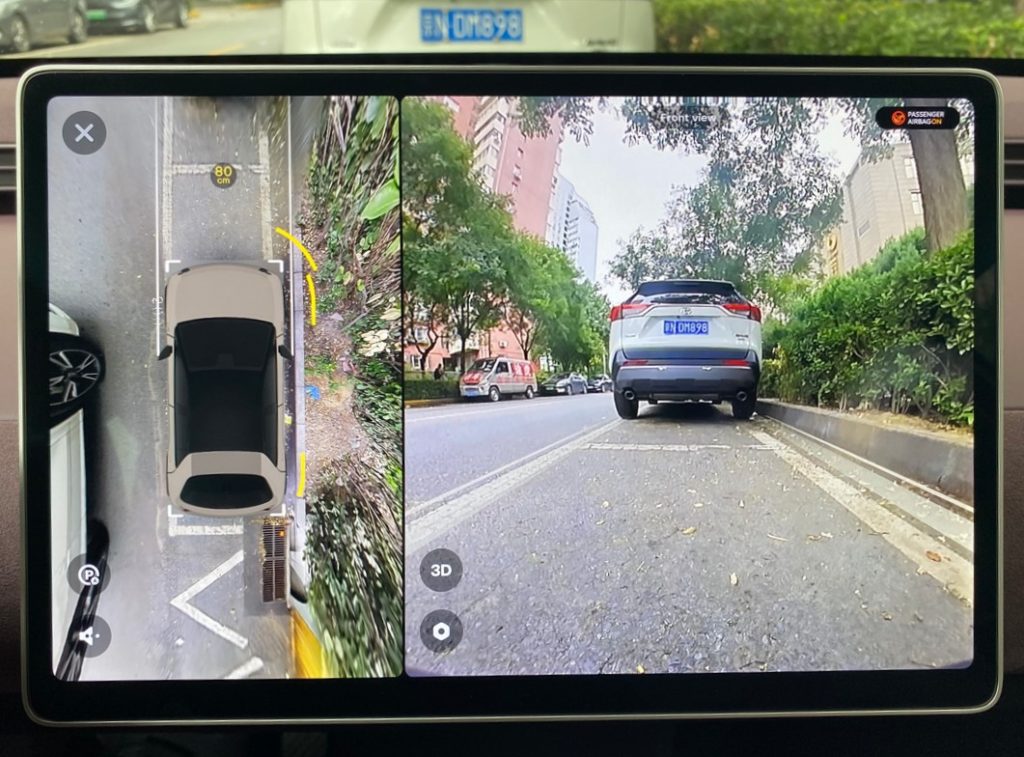
The 360-degree camera is amazing for the segment. It allows you to view the car from every side. The imagery is crystal clear. The forward-facing cam sits a little low, however. When you are parked behind a tall SUV, you see everything under its bumper.
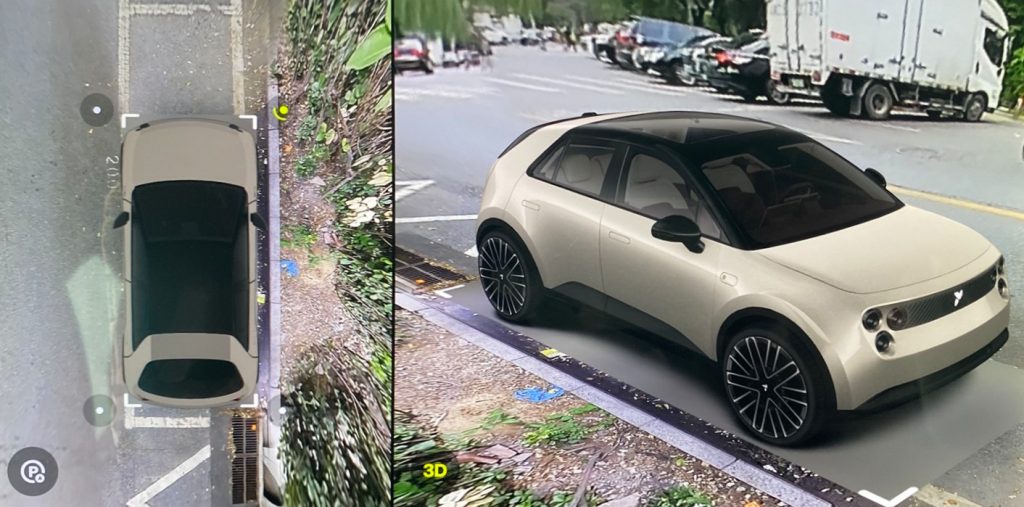
Parking can be stressful in Beijing. Lots of cars, scooters, and people. That’s why automatic parking is so popular here. Almost every new car, even cheap ones, has some kind of autopark functionality. The Firefly has fully automatic parking. Click the screen, and it finds the right spot and parks. You just sit there and watch. You can also get out of the car, and let it do its thing.
Driving in slow and moderate traffic goes very well. Click the pilot button on the steering wheel, and the autopilot is immediately engaged. Perfect for traffic jams. We had a big jam on the 3rd Ring Road, about 5 km long. The autopilot got us through without any hiccups.
It does highway entry too, accelerating and merging with traffic. When it looks for a good sport to merge, it sometimes hesitates, braking too hard, and then accelerating even harder. But in the end, every time, it got us safely onto the highway.
Firefly also overtakes automatically. Whenever it is going to overtake, it shows a message in the instrument panel, saying: “Execute takeover of slower traffic.” It switches on the indicator, speeds up, overtakes, and goes back to the original lane – without any human interference.
Self-driving too fast
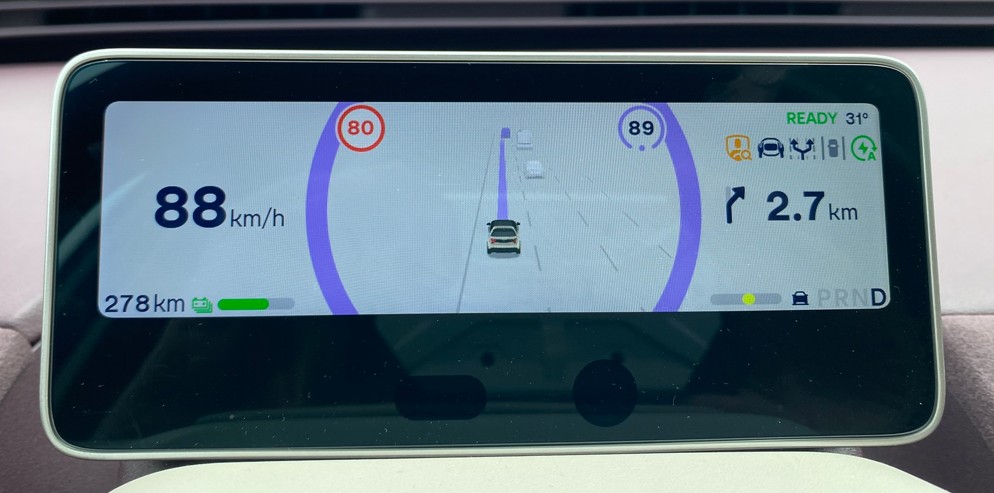
But it had some problems too. When driving on quiet roads, the car would accelerate way over the maximum speed to catch up with the car ahead. When it got close enough, it would slow down again. Two weirds: the driver’s display showed the top speed, and the actual speed, so it knew what it was doing. Even weirder: the infotainment system warned us about going too fast. But the car drove itself, so it was warning itself, I guess. It might have been a setting, but even so, I don’t think it’s right that the car can drive over the maximum speed in autopilot mode. The fastest it went was 92, twelve km too fast. That lasted only a few seconds before it slowed down to 88, as shown in the photo.
The strangest error happened when the car announced it would execute a “takeover of a slower vehicle via the right lane.” This is allowed in China, so, so far, so good. But the right lane was an exit lane. The car missed that when it planned its move. When the car realized its mistake, it aborted the takeover. However, by that time, the exit line was separated from the main road by a solid white line. The car saw that, hesitated for a moment, and… took the exit. But we didn’t need to get off there; the system had to reroute, which added 12 minutes to our trip.
Range & Charging: Battery Swaps Technology!
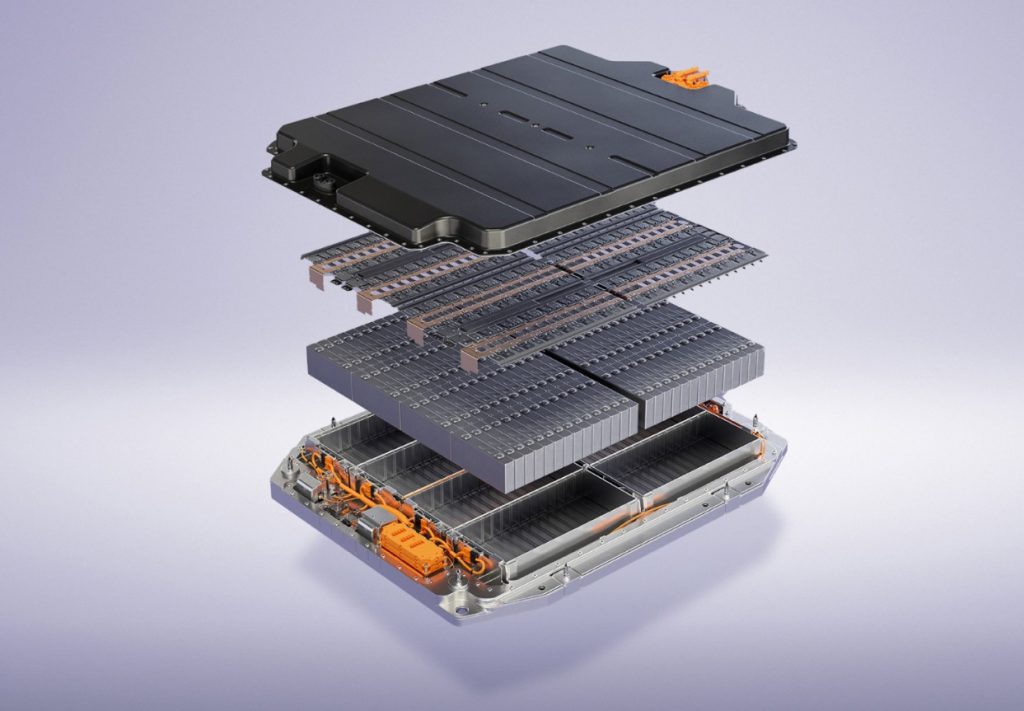
The Firefly has a 42 kWh LFP battery manufactured by Sunwoda, with an energy density of 134.1 Wh/kg and a consumption of 10.9 kWh/100 kilometers (62 miles). When I got the car, it was 94% charged with an indicated range of 245 miles. Firefly claims a CLTC range of 261 miles. During my trip, I scored an average consumption of 11.4 kWh/100 kilometers.
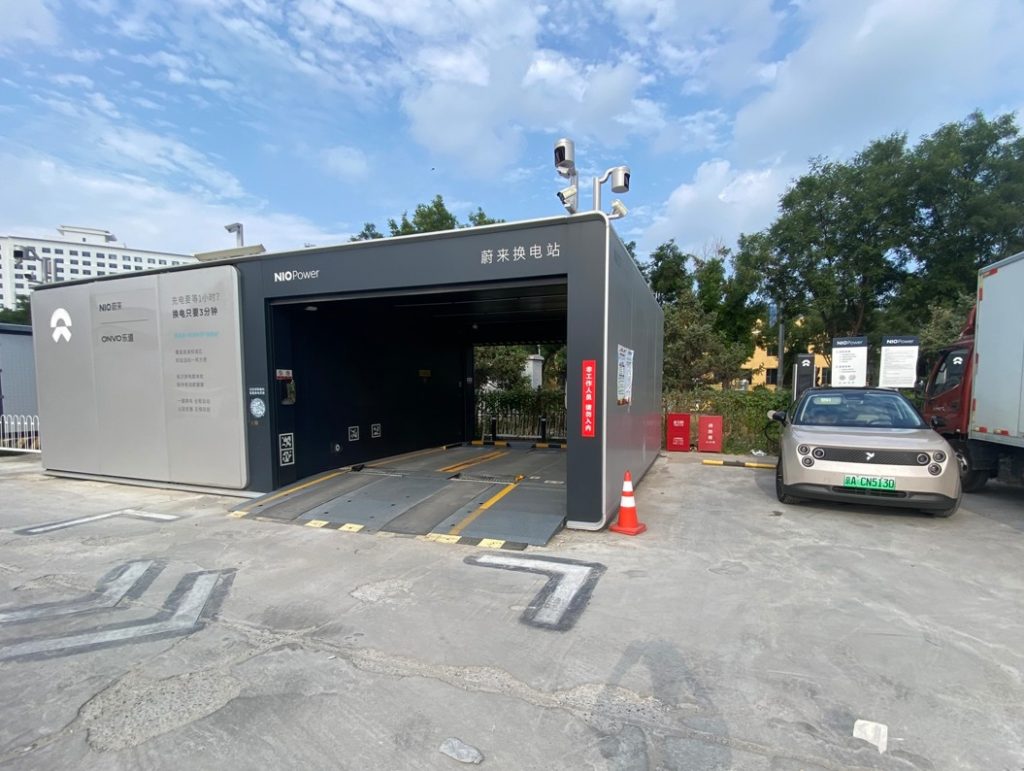
It was time to fill ‘r up. With one click, the screen showed a list of NIO Power Stations in the area. A NIO Power Station combines a swapping station with several charging piles. The closest such station was at 3 km, located in a corner of a large distribution center, with all sorts of trucks and electric tricycles zooming around.
The Firefly has battery swap technology on board, but it cannot swap with NIO Inc.’s current swap stations. That will change next year when the company’s 5th-generation swap stations come online. So, I used a charging pile.
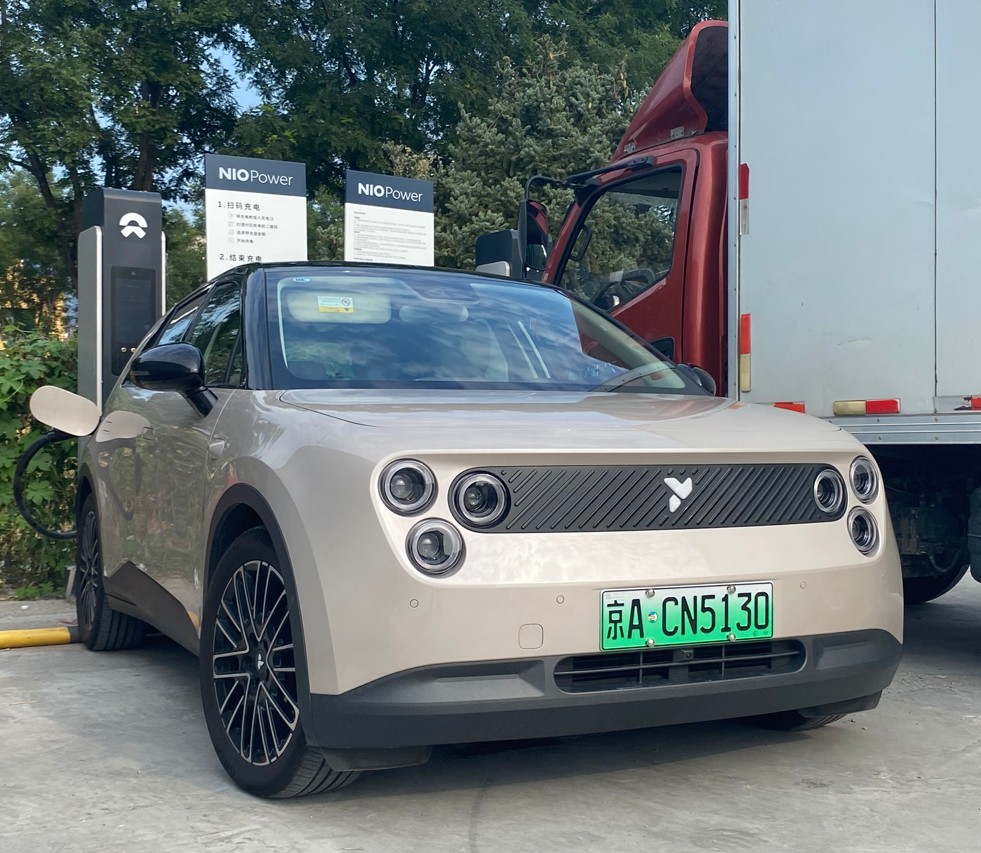
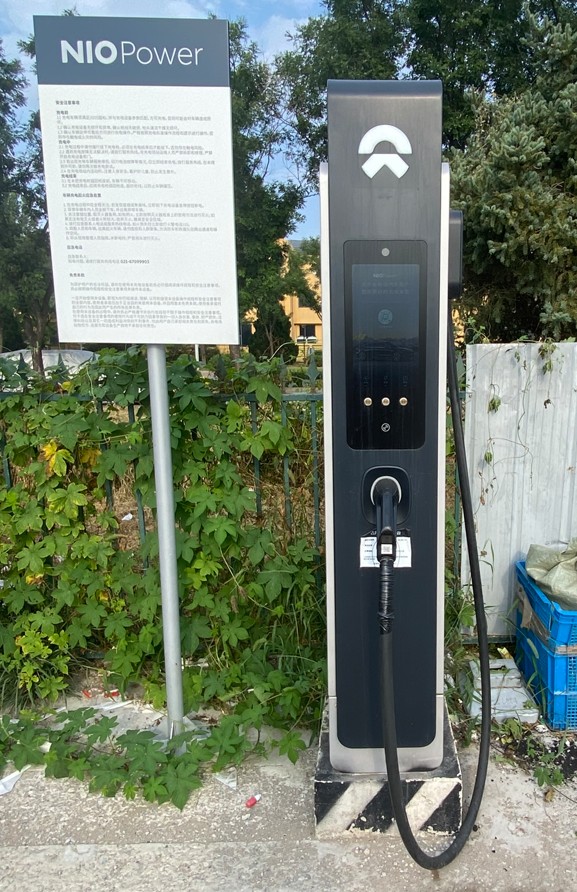
One pile was blocked by a truck, but the other one was free. The maximum charging speed of the piles at the station was 500 kW. NIO has since launched a new 640 kW charger, but that wasn’t there yet. Operating the pile was easy: just scan a QR code, plug in the cable, and go.
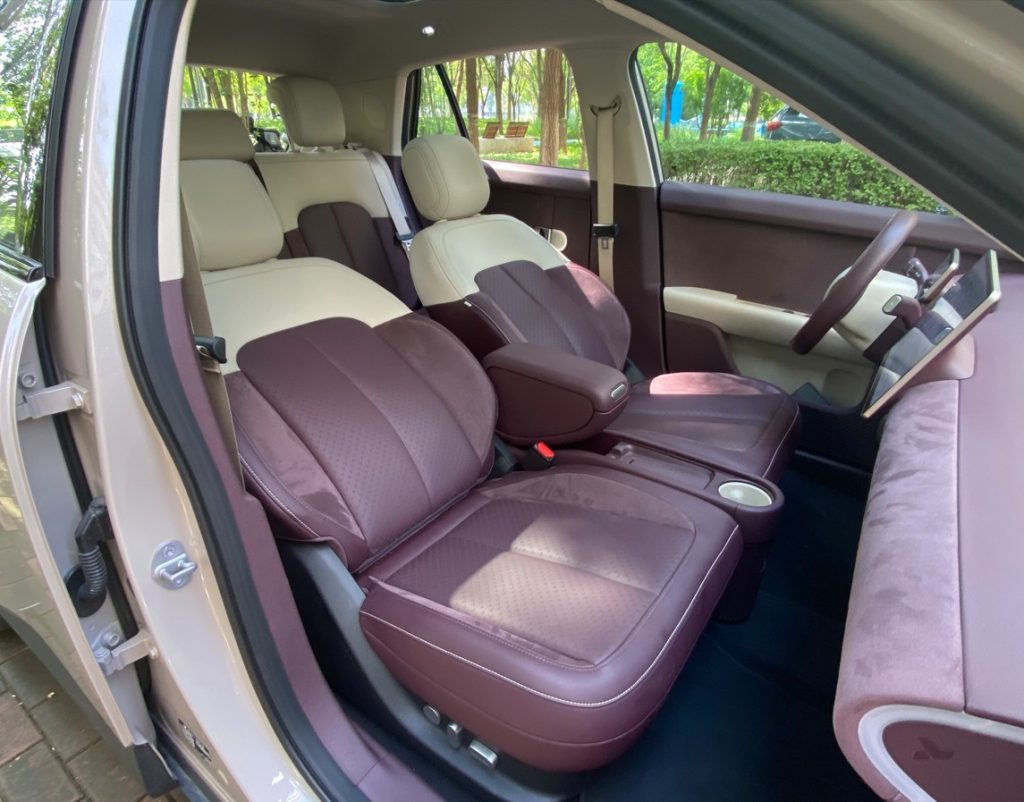
While parked, the Firefly’s front seats can fold way backwards, so you can take a nap when charging. Be careful when you have kids in the back, it doesn’t have an auto-stop, as we found out the “mama!!” way.
Not so Fast

A 500 kW pile may sound super impressive, but the Firefly’s max charging speed is only 100 kW. When I started charging, it had 58% battery. The max speed topped out at just 57 kW, with 47 minutes to go to reach 100%. The speed then went down further to only 40 kW at 75% battery. We didn’t have time to charge any further, so off we went. I am not sure why the charging speed was this low. I was the only one at the station. We paid exactly 17.69 yuan ($2.48).
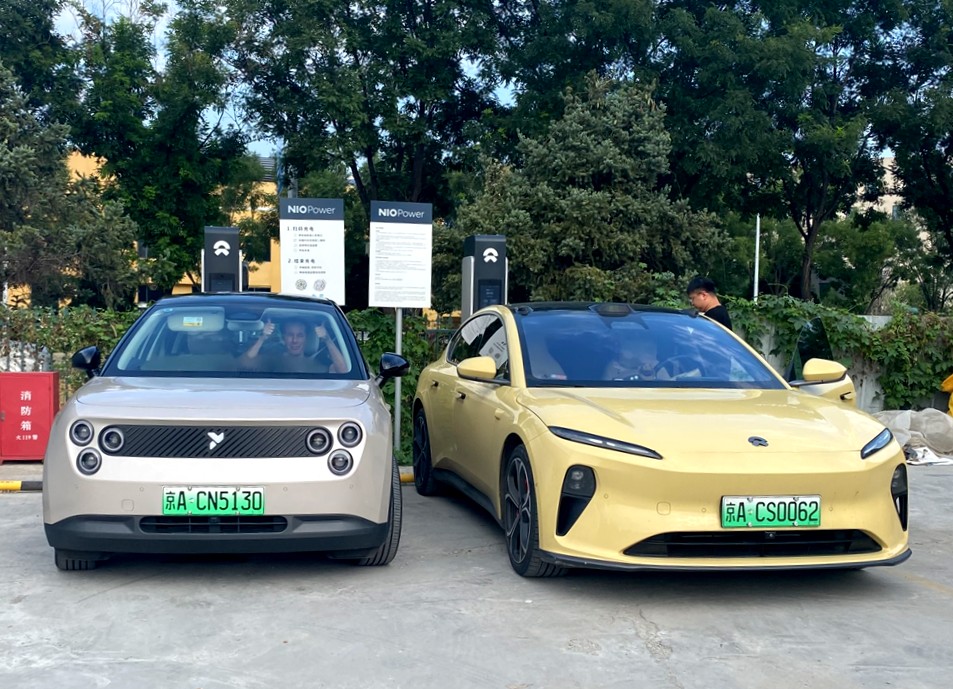
When the truck left, we were joined by a yellow NIO ET5 sedan. We went home, and that was the end of my ride with the Firefly. When I handed it over again to the friendly Firefly driver, it had 70% battery left for an indicated range of 118 miles.
Pricing: Who’s the BaaS?
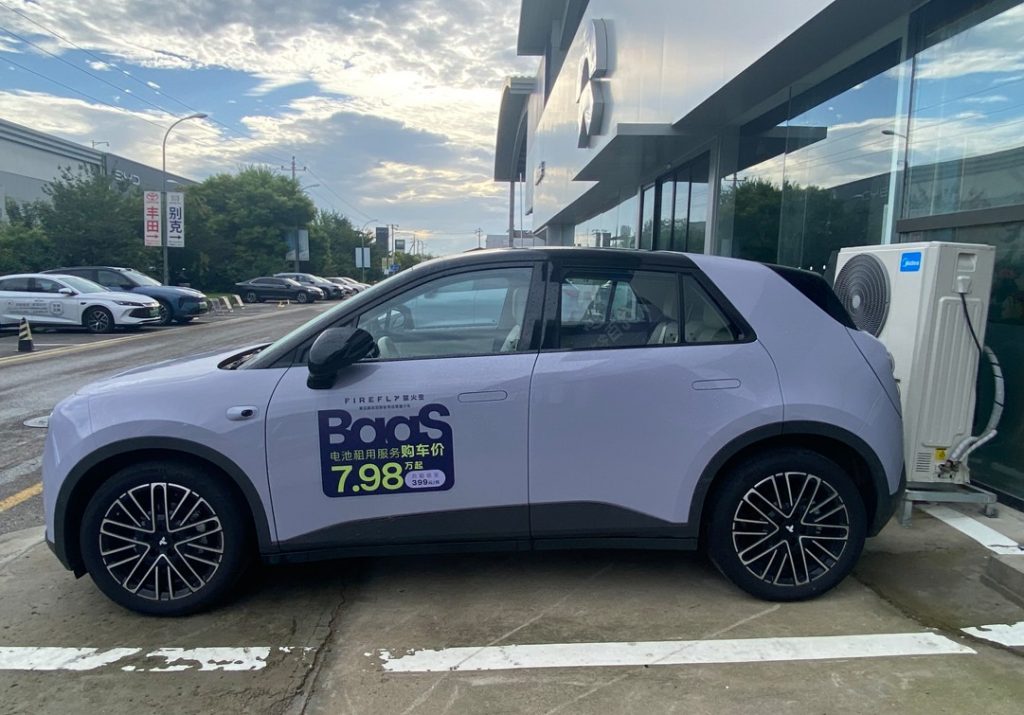
Like any car from NIO Inc., Chinese consumers can either buy the Firefly outright or with BaaS (Battery as a Service), where the ownership of the battery remains with the company. Normally, BaaS includes access to NIO’s battery-swap network, but as noted earlier, that’s not available for Firefly yet. Firefly sells 2 trim levels in China: Free and Illuminated.
| Purchase Outright | With BaaS | |
| Free | $16.8K | $11K + $56/month |
| Illuminated | $17.6K | $12K + $56/month |
The monthly BaaS fee is the same for both variants. Most buyers in China go for the BaaS option, which is indeed a very good deal. Firefly offers six exterior colors, three are standard and the others cost $420 extra.
Finding the right competitors for any NIO Inc. product is always a bit hard in China. NIO is the only car maker with a BaaS offer. When you look at the purchase price of the Firefly, its main competitors are hatchbacks like the Aion Y, the Deepal S05, the Lynk & Co Z20, and the SAIC-VW Volkswagen ID.3.
However, if the starting point is BaaS, its competitors include the BYD Dolphin, the JAC Yiwei 3, the ORA Good Cat, and the upcoming new Chery QQ3. It’s even cheaper than a Wuling Bingo! I only looked at hatchbacks for this comparison. For the same money, Chinese consumers can also choose between dozens of sedans and crossovers. Hatchbacks are actually relatively rare in China
Firefly Export
The Firefly brand is available in Europe, but only in Norway and the Netherlands. Firefly doesn’t offer BaaS in Europe. The powertrain is the same, but the trim levels differ. The base price in the Netherlands is $33K after tariffs and local taxes. That is almost twice as much as it costs in China, but still cheap compared to the local competition, which mainly comes from Hyundai-Kia, Renault, and Stellantis.
Later this year, Firefly will expand to Austria, Belgium, Luxembourg, Greece, Portugal, Austria, Hungary, the Czech Republic, Poland, and Romania. On the other side of the world, Firefly is set to launch in left-hand driving countries like Singapore, Australia, and New Zealand.
It’s Cool, Especially For $11 Grand
The Firefly is a fine electric vehicle. It offers a lot of space, it has decent power and range, and it drives well in town, on the highway, and on mountain roads. The design works for me, I like the triple lights, but it needs a little bit more excitement, like brighter colors and sportier wheels. My kids liked the space in the back, jumping around as we went. They liked Lumo too; they even said goodbye to her when they got out.
But the Firefly isn’t perfect. The ADAS really needs some work, and charging takes way too long. Details like the key situation may seem minor, but they’re illogical and super annoying. So, does it work as an electric family car? Yes, it sure does for day-to-day driving. We didn’t test it on a holiday, but it has loads of storage space, and China has a trillion chargers, so long cross-country vacation trips shouldn’t be a big problem for the Firefly.
So it was a cool trip in a cool, legitimately affordable car. Let’s see what’s next for Firefly.



It’s funny to go through the whole review of what seems like a generally competent vehicle for $11k and see anything at all under the “cons” category. A brand new car for $11k that doesn’t feel like it’s punishing you for driving it has earned every penny of its cost.
To paraphrase another car company CEO, the problem for other car companies isn’t that the Chinese cars are cheap, it’s that they’re good.
Proof that attractive design doesn’t cost money. This is so much better looking than almost anything currently manufactured.
The headlights are particularly sane, looking, why do headlights have to be so fucking ugly?
These cars look great, I was initially put off by the multi-bugeye styling but it’s really grown on me. The only bit of oddness is the profile shot where the dark roof makes the large c-pillar look even bigger, but that’s pretty minor.
I’m not sure about these fake leather interiors that all the Chinese cars come with these days, I’d like to see how they’re wearing in 5 years’ time. I’d honestly just prefer some nicely-designed cloth seats ala the Renault 5. Otherwise I like the inside, very retro-cool and colourful.
It’ll be interesting to see how much these launch for in Australia, I suspect around AU$30k, which is the cost of entry for its electric competition (GWM Ora, another retro inspired car that falls down with its downright strange droid-like rear treatment).
If I’m reading your experience with low charging speeds correctly, it was probably working normally. Starting at 58% state of charge, the battery wouldn’t be able to take the full 100kw charge rate
The 100kw charging probably occurs when the battery is around 10-15% capacity and it slowly drops off from there and this is known as the “charge curve”
I wasn’t able to find one for the Firefly, but they’re pretty easy to find for western EVs with a quick google search
The Chinese are definitely moving fast in this sector and are overtaking the other car companies. Personally I have no desire for screens and batteries but this seems like good deal if you do want a car full of screens and batteries.
I’m sold.
Those interior colours are soooo Chinese.
Battery swaps and battery as a service have seemed to be nios biggest asset and liability. Why buy a car for $17k when you can get a similar one for $8k. It’s even crazier when you go to nio branded vs a competing model. I like battery swaps plus battery as a service takes alot of perceived risk away. It’s probably makes sense to do as it would take 7.5 years of subscription to pay for the battery in 3 to 5 years it will probally be traded. The polarizing design choice along with price you can see why they have only sold 10k almost a year on. Women in china have liked the cute cars that are normally cheap cars aimed at the masses. I’ve always thought the firefly was aimed at middle or higher wage women or families for their children.
The price for the package on top of being an EV is impressive, even doubling the price would still be similar to the cheapest bare bones ev we got here from legacy carmakers
Cue up all the Americans that will complain that we don’t get cheap EVs like this in the US, but at the same time, they also demand that workers earn a living-wage.
Newsflash: One of the reasons this car is so cheap, is the impossibly low wages Chinese workers get. Then add in government subsidizing many costs for such items in China.
So which is it? You want workers to earn a reasonable wage or you’re selfish and want things that are impossibly cheap in the US that can only be made by giving workers very low wages?
Producing something like this in the US would easily add another 50% to the cost, which would put it in the low-to-mid $20k, which is where cars like the Nissan Versa and Chevy Trax is already priced at. And that is not far from where the new Leaf EV and upcoming Chevy Bolt should be priced at.
the mental gymnastics that equate ‘cheap car bad cuz living wages good’ should be a part of the upcoming olympics
You said it yourself: ‘government subsidizing’ is one of the reasons that the car is so cheap.
If something built like this in the US could be subsidized to the degree that it is in China, this could absolutely happen stateside.
But no, our government subsidies are used to spit in our faces and line the coffers of those already rich.
We literally JUST HAD $7500 subsidies for EVs as recently as a few weeks ago. Are you a goldfish with 5 minutes worth of memory?!? In fact some states still have subsidies.
Those are demand subsides, not supply subsides. Totally different.
There are BOTH in China!
Massive subsidies for EV car makers AND EV buyers in China.
Well China is not only serious about climate change, but wants to make money from the transition.
The USA? Not so much.
We did. Past tense.
In fact many of those green jobs making EVs, solar cells, chargers and a host of other things that the entire world will be needing over the next few decades would have been originated right here if we kept on track from it’s proposal in 2009.
Then things changed.
I don’t disagree… but… You cannot deny the sheer volume of EVs from a zillion different brands in China versus here in the US where we have… a handful of older manufactures who can barely eeek out their own EVs. We are leasing a 2024 Equinox EV. Leasing because even at the bare bones model it would have been close to $40,000 after fees. We have nothing even remotely close to what they have there now. And given that the current president is doing all he can to destroy our own EV plans means we will never catch up. Ever.
And its not like we in the US are perfectly innocent: Ford, GM, and pretty much all of the foreign brands were more than happy to go down south in the 80’s to get away with paying lower wages and less taxes.
There had been a massive pull back in the industry. Consumer demand for EVs had dropped considerably so the initial rollout has indeed slowed down by most manufacturers. Of course the switch-over is going to start with higher end vehicles which can more easily hide that rather huge cost of batteries but it has been trending toward cheaper cars for years now.
We also will soon have the Leaf and Bolt and Slate pickup which should be low $20k. Those are impressively low when the cheapest ICE models on sale are just under $20k for the Versa and around $21k for the Chevy Trax.
With how massive of a difference EVs are from ICE, the speed of the switch-over is impressive, especially compared to a demand which has cooled.
Comparing this to China is ridiculous because of their massive subsidies, as well as not having that legacy ICE industry. Plus, the government there is pushing EVs hard. They went from people having no cars at all to immediately jumping into subsidized EVs. No other industrial nation has that, which slows adoption because every other country has a massive pool of inexpensive used ICE vehicles that cheaper buyers can jump to. Why would anyone buy a barebones, low range, small new EV for $X, when they can get a loaded, luxury crossover used ICE for the same money? Plus their local garage can work on it, they live in apartment with no charging infrastructure, and gasoline is cheap. It is a no-brainer for most people. This is the same headwind that automakers face for any cheaper cars in mature markets like the US whether it is an EV or ICE.
Remember when there were literally a thousand personal computer manufacturers?
When a computer with a 5 gig hard drive cost as much as a Ford?
Eventually that sorted itself out while at the same time driving costs down. That’s what is happening in China with EVs – and lots of other stuff.
American cars on the other hand now cost fifty thousand times as much as a vastly more powerful computer.
When I moved to the US in 2014, the minimum wage for a tipped worker was $2.50/hr and non-tipped was $7.50/hr. Far below a large percentage of developed nations.
Surely that is “cheap enough”.
The automotive manufacturing industry pays an average of about $32/hr in the US. You’re not paying someone minimum wage in that industry, nor should you. Those are well paying middle class jobs.
Prefacing this with the note that yes, I still believe Chinese workers are paid less than they ought to be, especially compared to US workers (in most industries.)
However.
Chinese individual taxes are massively lower: only about 6% of the tax revenue in China is from income taxes, and there are no local taxes. Over half of US revenue comes from income taxes. Wages reflect that.
Chinese healthcare spending is a full ONE-THIRD of US spending, for outcomes and life expectancies that aren’t terribly far apart… and China’s healthcare and coverage has made massive gains in the past 30-40 years.
Chinese housing is in a massively weird spot, but that’s true in most of the world. Depending on the city, housing is relatively affordable, and this year housing prices have declined pretty majorly. (There’s still a huge speculation bubble, as it the case here in the US.)
China has a huge transit network, and if one lives in a city in China, the likelihood of being required to own a car is much lower than in the US, and ownership is less than half that of the US.
Like, yes. Chinese labor is notoriously cheap. But there are also other massive cost-of-living differences, and if you want to sit down and sort out the math of it, then you can do the same for an array of cities in the US. Philosophically speaking, major automakers of the west are effectively abandoning the cheap car because they are less profitable, and cheap Chinese vehicles are effectively selling to a new market (ie, people in China who do not have and have not been able to afford a car.)
It’s not exactly apples and oranges, but it’s at least, like, oranges and tangerines. There’s a lot going on, and just slapping down the “cheap labor” defense of absurdly priced US cars isn’t a very good defense, logically. It is a pretty good appeal to nationalism and some very weird pathos, though.
Great reply pointing out the subtleties there on the differences between countries and spending power
To expand on your point a bit, China is still industrializing and building out tons of housing, infrastructure, making consumer goods for the growing middle class, etc. It’s similar to where the US was in the 50s after WW2
Their steel, construction and manufacturing industries are strong because they have a ton of domestic demand from building out the country, just as the US was back in the 60s
What point are you trying to make? No crap there are massive differences between pay. We aren’t talking about US labor rate vs UK or DE or FR or CA or any other 1st world nation. Those labor rates are not that far off. Differences, but not an order of magnitude different.
But Chinese labor in the automotive industry is between $2 – 5/hr. In the US automotive industry is about 10X that amount. Do you want to get rid of those good paying middle class American job just so we can produce some $15k EVs? So we can drive all salaries in this country into the ground like places like Walmart do that are so low even full time workers feel the need to go on welfare?!?
What is this insanity?
First off, did I say any of that? Nope, sure didn’t!
Second, it’s almost like you didn’t read… the post.
Third, a boatload of American cars haven’t been built here in years because the big three haven’t wanted to pay US worker wages in decades. You know where the love to be? Mexico. Also with wages under $3 an hour. So your boogeyman argument is already there with cars we’re already producing at inflated prices! This is already the case in the US manufacturing process! And cars still cost too much.
But anyway, go off about Chinese slave labor, I guess.
Labor rates in the automotive industry in MX is WAY higher than $3/hr.
Good lord, someone thinks that the labor rate of some unskilled worker selling street tacos or dumplings in the streets of Puebla or Chongquin is the same labor rate as workers in some automotive factories in those cities.
https://www.phenomenalworld.org/analysis/capturing-production/
Go ahead and read, you xenophobic piece of shit.
Sigh, it cost a lot less to live in China than it does in the United States. Thus you can pay workers a lot less what is so difficult about understanding that?
Make it less expensive to live in the United States. Of course, that would miff the rich people, because they’re all collecting rent and income from investments. Also, it cannot be denied that it’s a lot easier to build an economy from scratch than it is to fix an established economy.
Well the cost of living in China is a lot lower, about 75% lower, healthcare is a lot lower, food is a lot lower etc.
One of the problems in China is that Chinese workers save too much, and don’t spend enough, which undermines the notion that they are underpaid.
The are a lot of legitimate problems with Chinese society, but underpaying manufacturing workers isn’t really one of them.
The point is not that Chinese auto workers aren’t underpaid for China.
The point that labor rate needed to build a $12k EV in the US would be laughably low for the US.
I thought I made that point myself.
“Impossibly low wages Chinese workers get” hasn’t been a thing for at least 10-15 years. 38hr weeks with overtime penalty rates, paid public holidays, paid sick leave, paid social insurance (housing, medical and retirement), paid maternity leave, paid annual leave etc. The lowest paid worker at NIO (probably a cleaner) would be on a basic rate of about double minimum wage. That said, labour costs in the Chinese car industry are a very small cost component due to the high level of robotic assembly lines. Don’t need a bunch of people putting the cars together, just a few technicians in the control room monitoring everything
This is the type of electric car and price I am comfortable with. The range is fine for my daily and even most edge use cases. The amenities are also nice, though I’d turn off most of the auto features.
Feels a little disingenuous to call this an $11k car when it costs $17k if you buy the whole car, not just the car minus battery. And honestly $17k is pretty good too, especially since it seems like a decent small car.
It also could never sell in the US for that little due to the volume of subsidies the Chinese government heaps on their domestic market products, and the cost of importation, testing, and federalization for US compliance. While it would certainly be cheaper than something like a Model 3, it’s value proposition would get muddy as the new Bolt is slated to come out soon, same with the new Leaf, and this thing has a real world range in the low 200s at best based on it’s own reported range, which tends to be optimistic.
360 camera and 14 speaker audio is pretty dang good for that price segment.
I forgot how much I missed funky and cute cars. Why is everything in the US so angry? Furthermore, why is everything here so big here? Even with a 100% tariff rate, this thing is still only $22k, which undercuts everything but the worst Sentras. I wonder how long before our refusal to invest in electric cars means China will have all of our EV market.
$11k is the BaaS price, you’re looking at $34k+ with 100% tariff rates for the actual price.
Its because the US has an infection of primarily angry white males who think they have to show everyone else what a badass they are and so they get those big ass “scary” looking trucks. Or its the soccer moms whom have graduated from those 90’s minivans to huge SUVs…. because they have it in their minds that the best way to protect their precious offspring is in buying a tanklike SUV for dropping them off at school. The choices now totally suck. Thats why I can never sell my 30 year old SMALL tacoma. Nobody makes anything like it except for the Ford Maverick, which has no frame, a miserably small pointless bed and as its a Ford… no way I would ever trust it for long term reliability.
The bigness for base models (not including the yahoos that make their shit even bigger) is largely two things: perceived safety and actual safety.
People think a larger car is inherently safer regardless of whether it is or not. And large, bulky bodies are better at transferring forces around the passenger compartment. Supposedly tall noses are better for pedestrian survivability in the event someone hits a walker/bicyclist, even though that taller nose reduces visibility to be able to see those same pedestrians. All those 11 billion airbags have to go somewhere, too, while still having a “roomy” interior.
Personally, my super secret conspiracy theory is that as ICEs keep getting more efficient, smaller, and more powerful, auto makers keep making their cars bigger and heavier in order to keep fuel mileage increases from being proportional to power gains. This also goes toward why so few automakers in the US are moving to EVs: oil money. Can I prove any of this? No. But I CAN idly speculate.
Tycho, very grateful for your coverage of the Chinese auto industry. The US seems so far behind
How big is a Polo in USA terms? Yaris or Corrolla?
Polo is closer to the Yaris, the Golf/Jetta is the Corolla equivalent.
Thank you.
It’s funky, even if it looks too much like a Honda e (which itself is not a bad thing either).
We need more funky cars.
Is no one going to mention the 2nd set of taillights inside the hatch, so you can drive around with the tailgate open?? That alone puts it on par with the original Aston-Martin Lagonda!
I want one.
What colors can I get with the umeboshi onigiri interior?
bring back all the round lights!
My car’s in the shop and I rented a Mitsu Mirage to run errands. Unlike the Mirages of yore this one is a sub-compact penalty box–1.2L 3-banger, 78bhp, etc. It retails for US$17K. It’s louder than my NA V8 M3 yet somehow manages to not exceed speed limits.
This NIO blows the Mirage out of the water 100x over, for the same price.
That interior is WAY nicer than the price point. I’ve seen worse in $60,000+ cars.
*cough* Tesla
That explains why it looks like a BMW i3 with different headlights.
They are certainly both vehicles with four wheels.
It looks nothing like the BMW i3
I think the side profiles (as in silhouettes, not cut lines and window shapes) are very similar.
Love the topshot. I am a leaf on the wind!
…And Fordlover1983 beat me to it, respect.
Browncoats forever!
How does it hold up in Euro NCAP Simulated Reaver Attack?
Who put together the top shot? I recognize that “Firefly” font. Not a power in the verse can stop me.
“Rear wheel drive, 143 horsepower, goes 261 miles on a charge. Cost 80,000 yuan on Earth-that-was. I call her Vera.”
Best show ever put on TV. But this car isn’t good enough to that font.
Shiny, it aims to misbehave!
I’ll be in my bunk.