

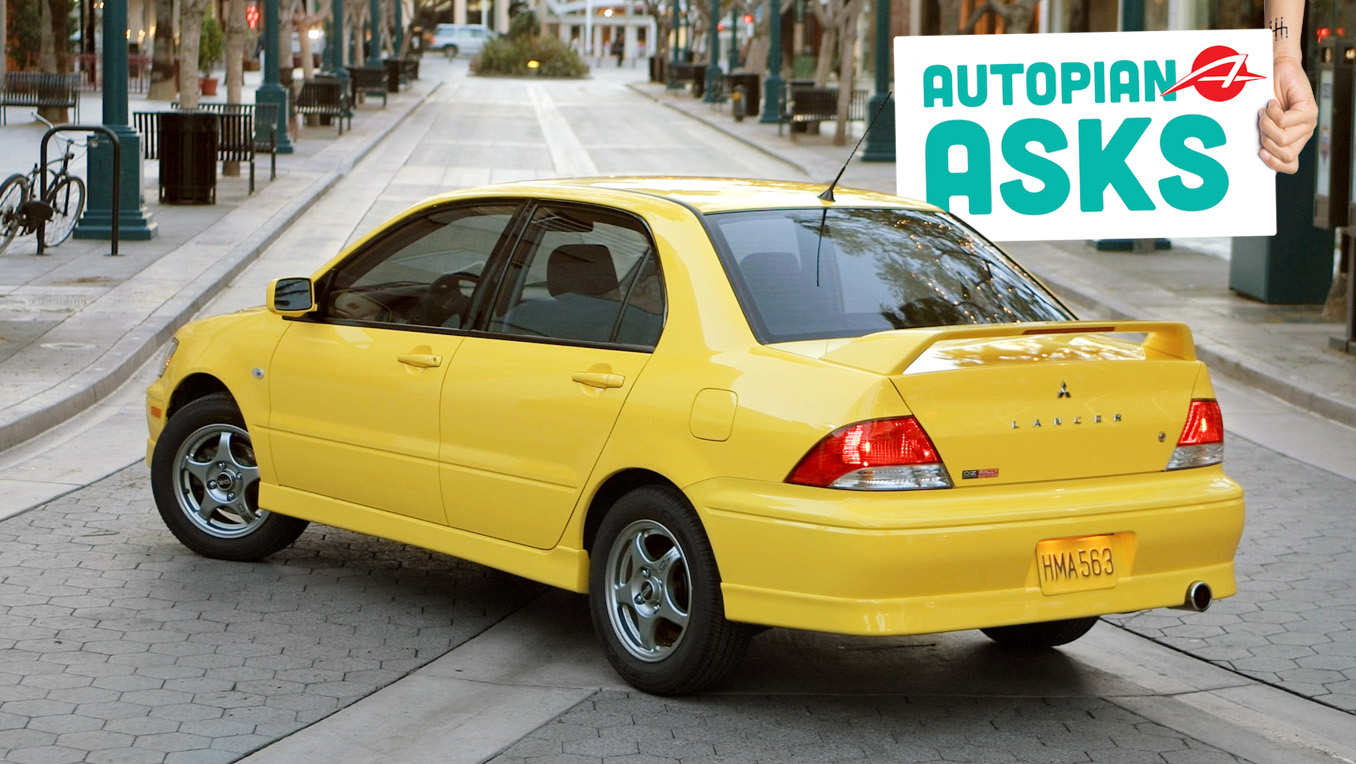
Let’s face it: a lot of cars have a loud, obnoxious bark but no teeth to actually bite you. All talk, no action. Their looks talk a good game, but their game itself is very, very weak.
Listing malaise examples would be like shooting fish in a barrel. Naturally, anything branded as a “performance” edition from the seventies was pathetic, but relative to everything else on the market in those dismal times they really weren’t that bad. However, post-malaise “sports” models didn’t have much of an excuse to suck, or at least no reason not to be at least significantly better than a cooking variety model.


If you heard that a car called the “OZ Rally Edition” was arriving back in 2003, you possibly envisioned something to kick up dust on Pikes Peak while spinning its fancy Italian wheels. When you realized that it was going to be a version of a Mitsubishi Lancer, your imagination ran wild to EVO-equivalent competition-style cars. It’s understandable that there was a bit of disappointment when we saw what an actual “OZ Rally Edition” turned out to be.
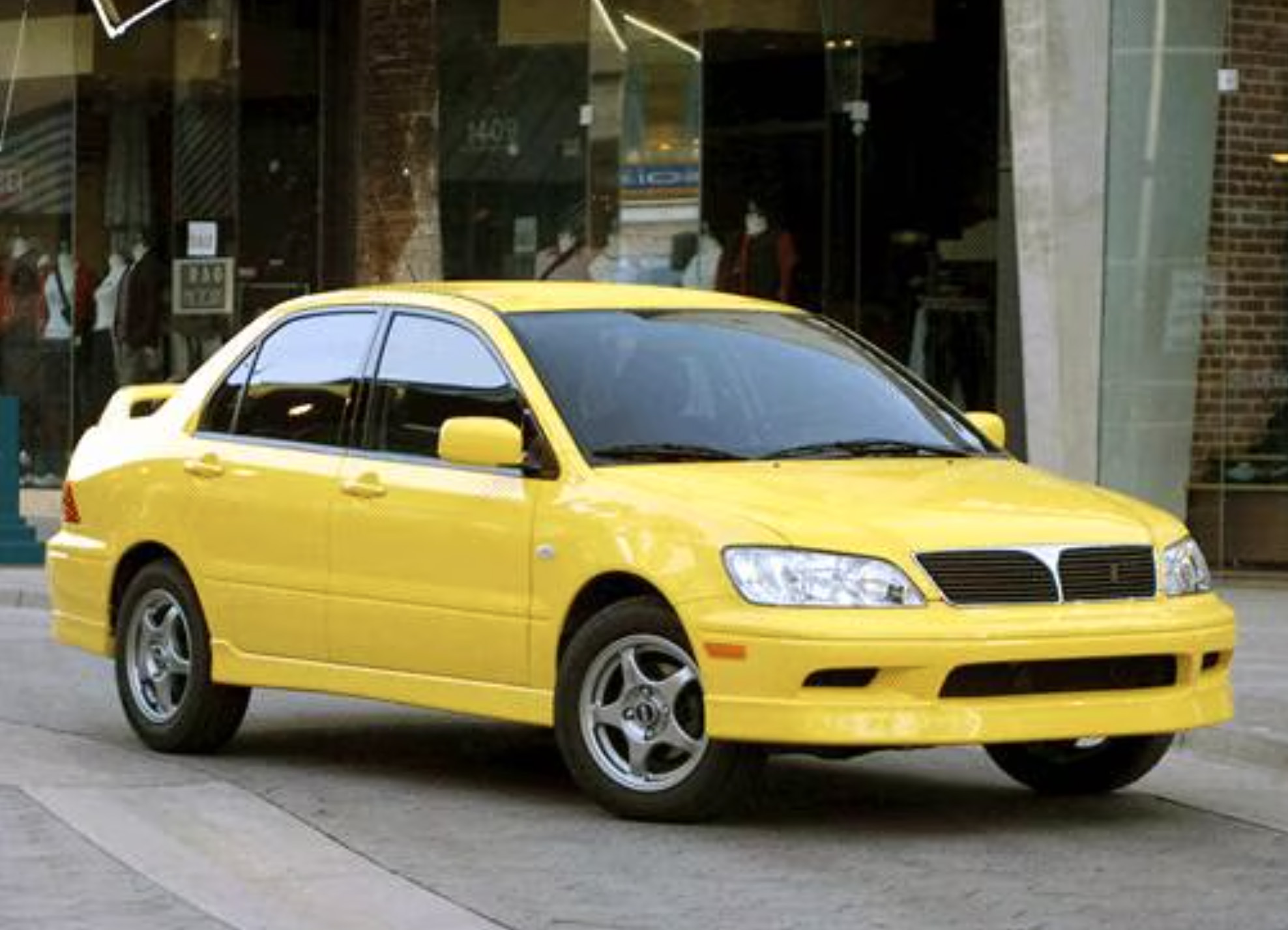
Oh, those are OZ wheels alright; whopping 14-inch meats that fit into the unmodified factory wells with room to spare. They probably could have gone down the 13s and still been able to accommodate the tiny rear drum brakes. Not that you needed giant cross drilled discs with 120 horsepower on tap, or a bit less than half the output of the vaunted EVO. Even the small rear wing was a weak substitute for the Evolution’s big ironing board.
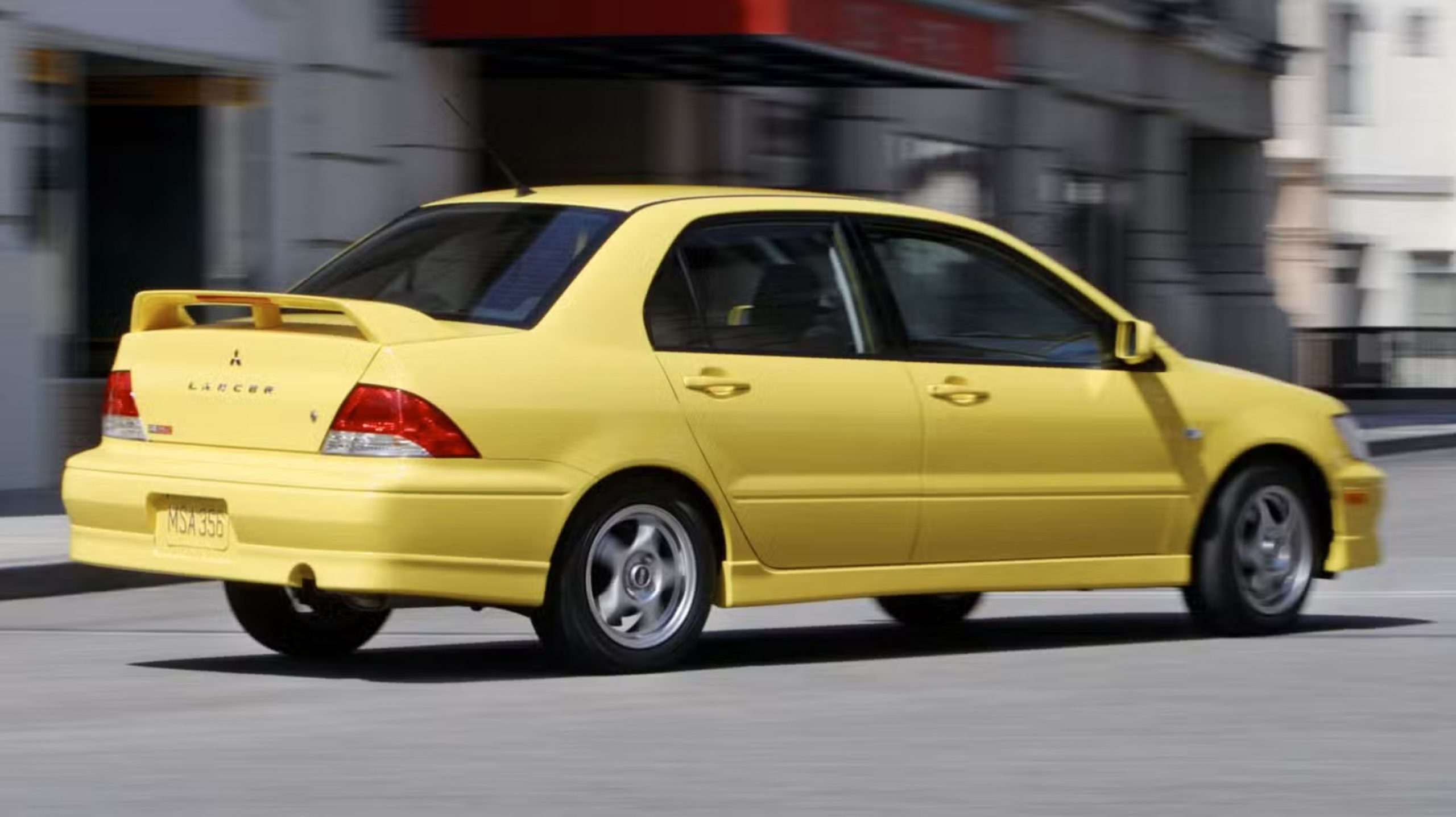
How about a 1986 Buick Century Gran Sport? Sure looks pretty sinister in its monochromatic paint scheme.
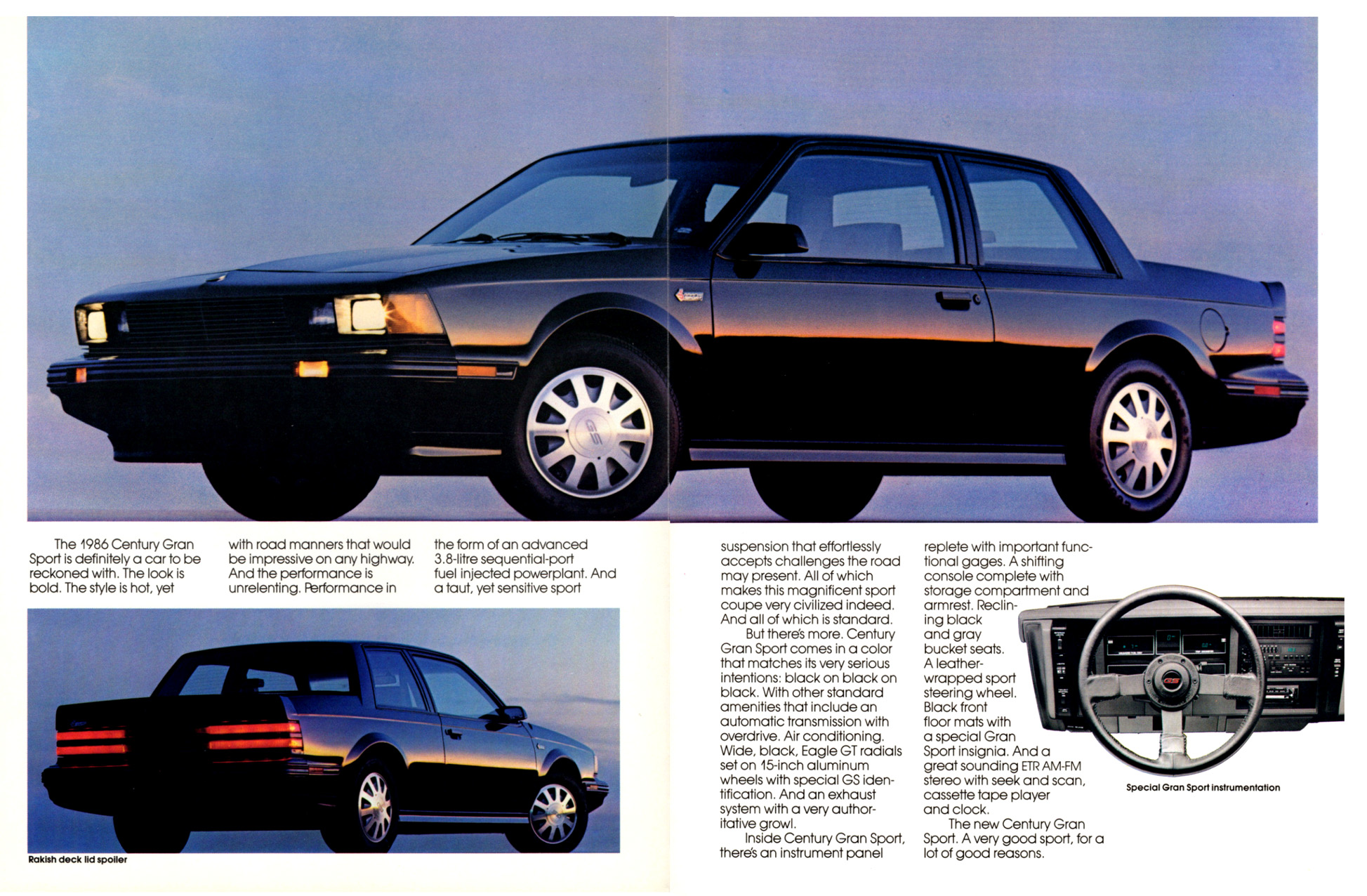
That Regal GN-style logo with the arrow-in-a-circle promises force-fed induction for the V6, or so you thought.
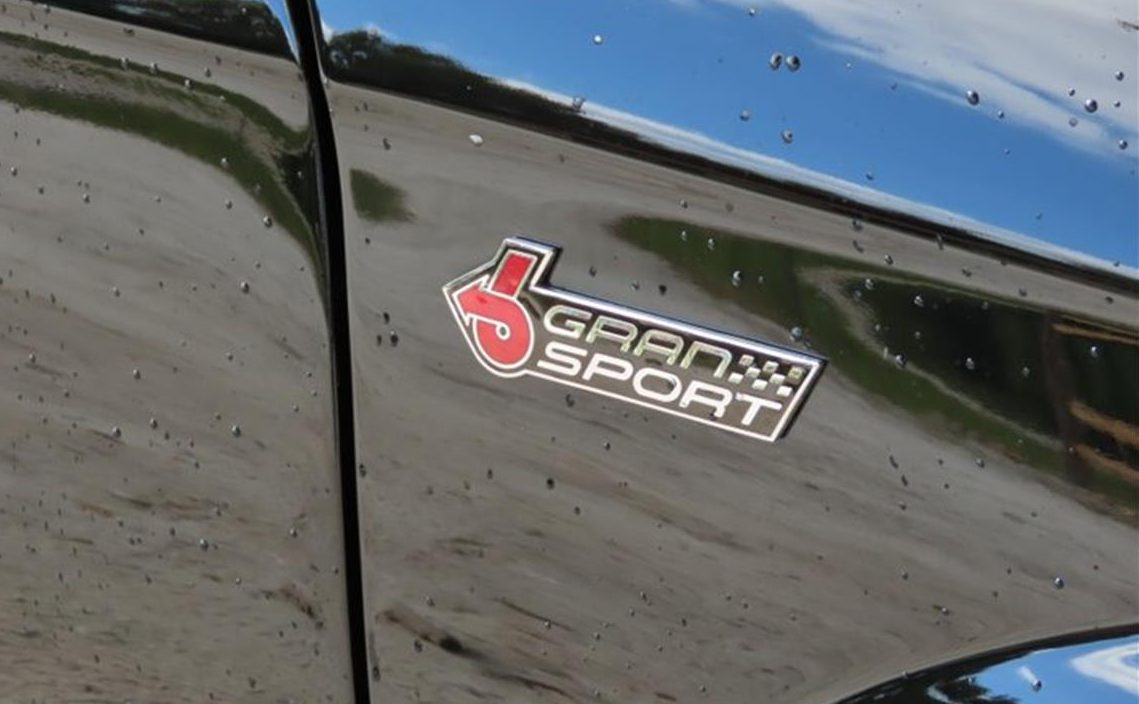
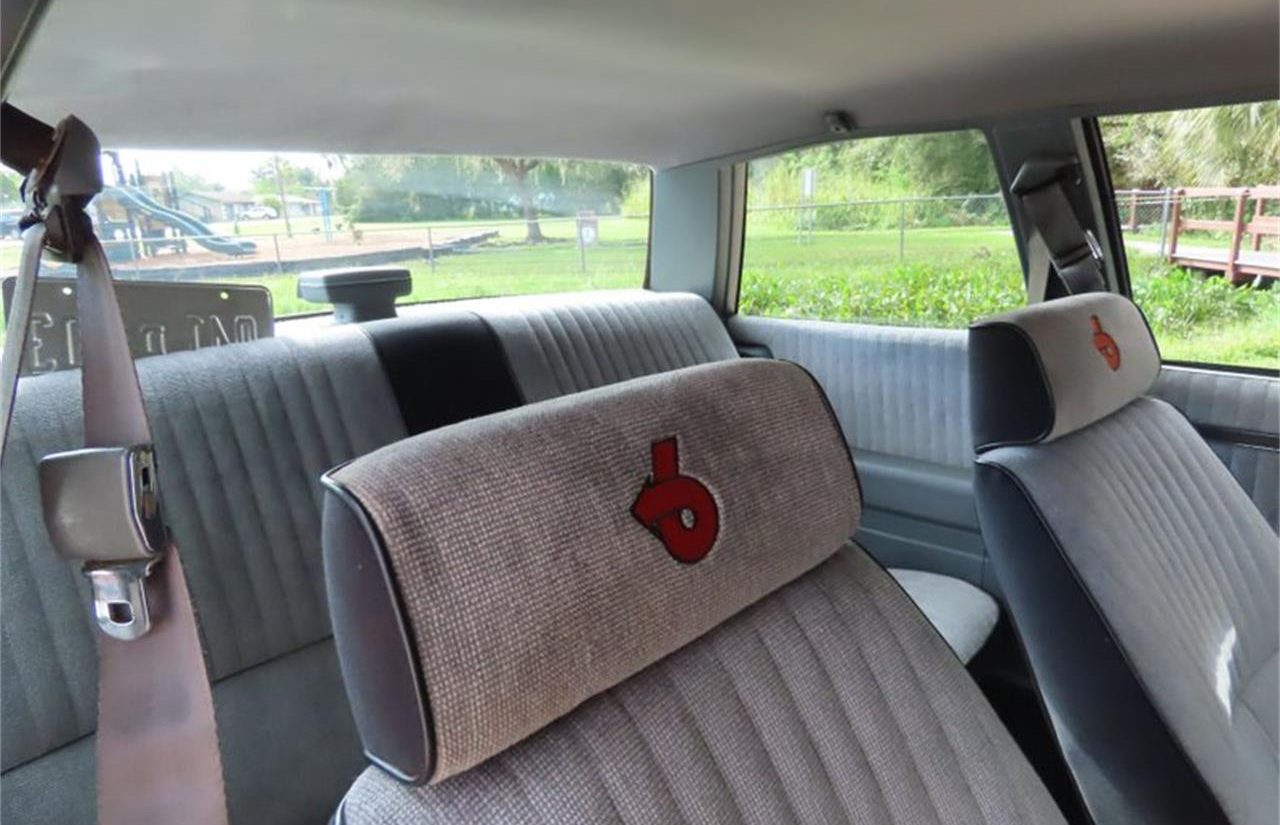
Sadly, you don’t get it. No, the Gran Sport has a 150-horsepower, normally-aspirated motor right out of your Aunt Cassie’s Century sedan; the arrow-in-a-circle thing must relate to the steering wheel? That lying logo that they put everywhere, including the headrests, was false advertising.
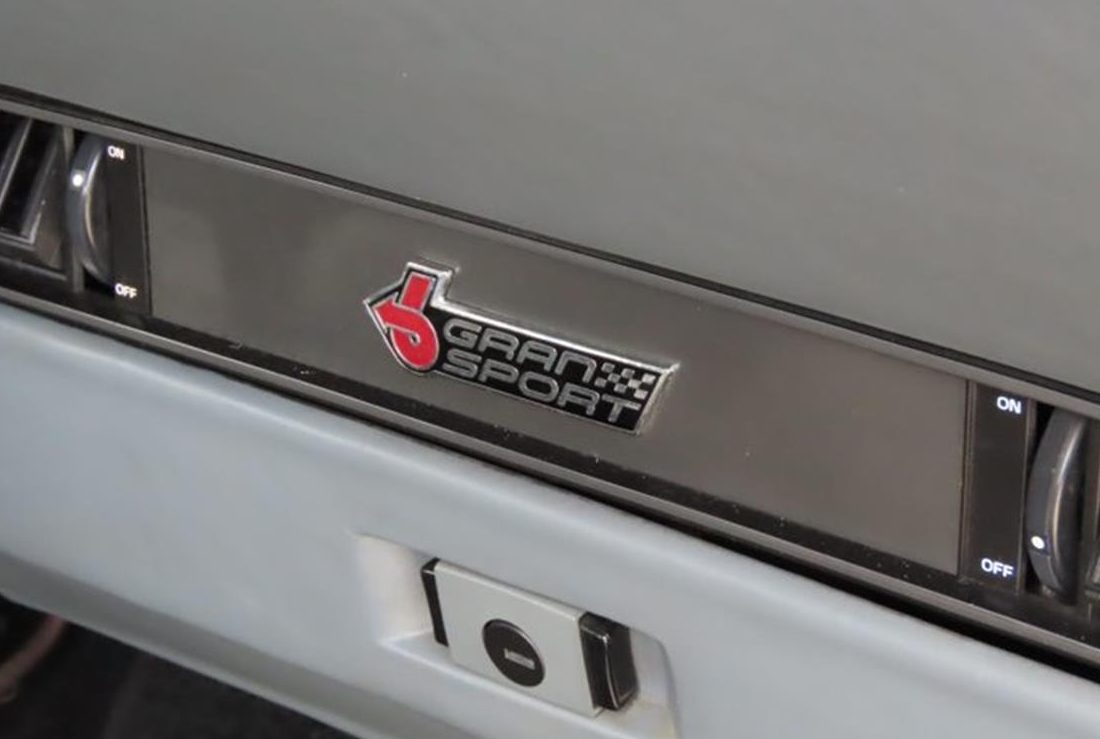
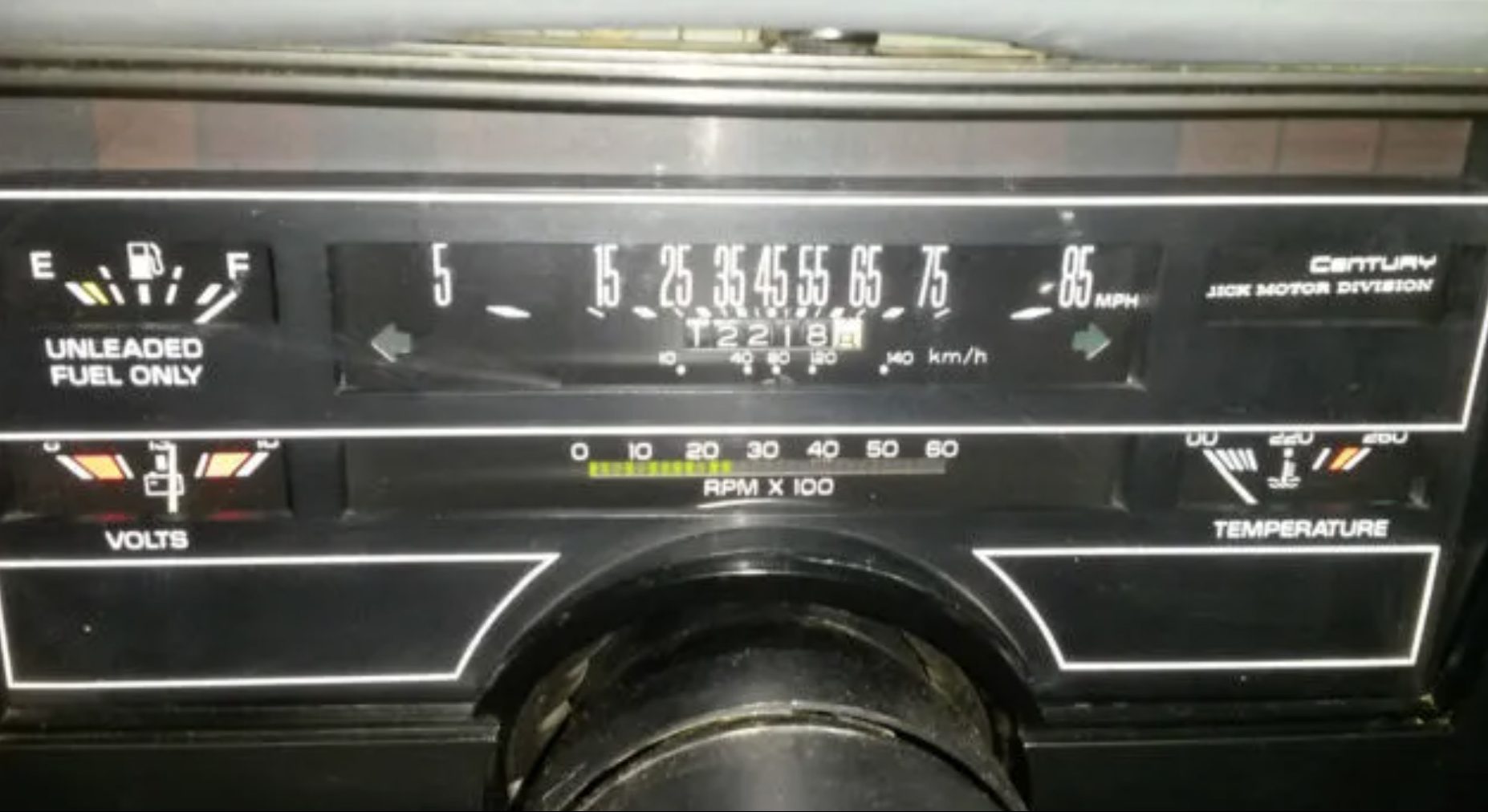
The gauge cluster tells you how pathetic this “performance” car was. A rectangular cluster like that could have been absolutely anything, yet we got a ribbon speedometer with an add-on hand-held video game LED tach where the column shifter gear indicator would have been (the Gran Sport at least had a floor shifter for the mandatory automatic). There is prominent space being used for a slightly crooked BUICK MOTOR DIVISION “gauge.” I’d forgotten how bad these types of speedometers were with kilometer markings. Poor Canadians, it’s just gloriously bad.
Throwing a supercharged 3800 under the hood, disc brakes all around, and a set of round instruments would have given us a GNX-style sleeper. Instead, we got a snoozer, an accountant in a Darth Vader costume. Come on, this wasn’t 1976; GM had so much stuff in their parts bins at the time, they could have easily made the Gran Sport so much more.
What are some other paper tiger “performance” or “sport” models that have left you wanting? Have you ever owned one yourself? The Autopian is asking!
Top graphic image: Mitsubishi


Lincoln Continental Marq VII diesel
Didn’t Mr. Regular do a review on one of these?
Things were at their worst IIRC from the mid ’70’s to the early ’80’s
heavier cars with monster bumpers, restrictive catalytic converters, low octane gas, and low compression. Slowly things improved. but there was not much incentive for manufacturers to push tech improvements. I had a 1975 Nova SS 350 out of the box it ran a 16.23 quarter mile, for comparison about the same as my stock 1986 305 C10 Short Box. In those days it was easy enough to fix though for the SBC.
A car is as much fun as you make it exploring it’s limits and riding its weaknesses.
The God made humans want to race so if you can find someone to play with equivalent hardware it’s good.
See that riding lawn mower, take the blade off, you and your buddies can race against the stopwatch. At least until you spouse comes home sees the lawn and freaks out, at which point you’ll realize you’ve made a dirt oval and you better spring for some flowers. (-:
Things can always go faster and probably will.
Bikes in the 1970’s 60+ hp made a widow maker, now it’s a good amount for a commute bike.
A 200hp bike is just a cheque (Check?) away, but both my bikes make just over 60 rwhp will manage a sub-4sec 0 to 60 mph and make 120 mph. Crazy enough for me, now and probably for good. I keep hearing though, “a bike needs 100 hp”, no it doesn’t maybe fun, but necessary no.
My personal car a 2014 Ford Fiesta with the 1.6l, 5 speed and the Ford Motorsport Handling Package.
Torque-less, gotta shift it fun.
Just ’cause the throttle pedal is planted more often does not mean it’s slower. (-;
Dang talk about hating on something. Some decent cars are listed here. Whatever happened to slow car fast? I seem to remember Top Gear putting a star in a reasonable price car and getting excitement out of it. Sure some of these cars were show but no go but others were good for the era. Others are a Miata preview just a regular performance with 2 seats and a convertible top but ahead of its time. But yeah a lot of shit in the most part.
I came here ready to see lots of lovely small sports cars getting dragged for not being muscle cars or supercars, and I was slightly disappointed to be proven right.
I will never forgive General Motors for not offering the LB9 5.0 Tuned Port Injection engine in any of the G-body “performance” models. I was a gearhead adolescent in the 1980s, and the Monte Carlo SS, Oldsmobile Cutlass 442, and Grand Prix 2+2 were three of the best looking, most promising, yet most “all hat, no cattle” cars around. The non-TPI L69 was insufficient to make these cars’ walk match their talk, especially with menacing black turbo Grand Nationals lined up at the Buick dealership across the street, saying to them, “It ain’t bragging if you can do it.”
The Olds used the “hot” LG8 307 cube Oldsmobile v8. With 180 horsepower!!!
The games GM played with the engines in their big cars and coupes drove me insane. That stupid mickey mouse electronic feedback carb instead of real multiport fuel injection like Ford was using sucked.
As a Cadillac afficantio it really pissed me off that Cadillac discontinued the big block Caddy motor for the HT4100. Then the Olds 307 was standard for 86 to 90, but they stuck the lame ass 140hp version in that 4300lb boat. You could get the high output 307 Olds with 180hp in a Cadillac Brougham. But it was locked behind the tow package option, which was very rare. And screwed with the ride quality. It was sad cause a basic caprice with a 305 had more power than the top line Caddy.
GM had the ideal solution for the Brougham, the 350 TPI motor in the Corvette was 250hp. That would have made for a proper Cadillac, a car of excess should perform, not cater to aunt Mildrid who was scared to go over 55 on the interstate.
I agree with this one the most. Bothered the heck out of me because by 95 when I got my license, I looked into those and realized they were weak sauce. The TPI would not have made it a neck snapper, but sure would have woke it up nicely.
Since someone mentioned the Eclipse,here’s one that didn’t live up to the styling.
Dodge Avenger coupe (1995-2000),built by DSM(Diamond Star Motors) in Normal,Illinois.
Base models came the 2.0 liter Chrysler 4 cylinder engine from the Dodge Neon.
Even with the optional 5-speed manual transmission acceleration was lethargic at best. The other engine option was the
2.5 liter Mitsubishi V6-and that only came with the 4-speed 41TE Ultradrive automatic. The V6 had a little more power, but that automatic really handicapped the car and left people wanting for more. The performance didn’t live up to the style of the car. When the Avenger coupe was replaced by the Dodge Stratus coupe
there were new engines, a 2.4 L SOHC four-cylinder engine and a 3.0 L SOHC V6. both engines came from the Mitsubishi Eclipse with which the Stratus coupe shared its platform. And in a first, both engines were available with either a five speed manual or a four speed automatic. The 4-speed automatic was also available in an optional “AutoStick” configuration. The one to get was the Stratus R/T with the 5-speed V6 configuration.
To celebrate the glorious Renault 8 and Renault 12 Gordini and their fantastic engines, Renault launched the 105 hp 5-door diesel Clio Gordini.
But why not give this name to the excellent Clio RS, which was perhaps the best sports city car of its generation?
I’ve thought of a few that meet the criteria.
Some of the sport compacts and even the genuine sports cars of the early 90’s had some pretty pokey base models.
The Mitsubishi Eclipse made a heart-pounding 92 horsepower in poverty spec.
Its 3000GT/GTO/Stealth stablemate made 160.
In a car that was FWD and weighed well north of 3000 pounds.
Oh dear.
The Hyundai Scoupe was even slower, with the base model making 81 horsepower.
And then there are the fleet special pony cars from the sixties.
Not only did they have the engines from compact economy cars, but they took the suspension, brakes, wheels and tires too.
Mind you, these tires were so thin that the relatively sedate straight 6’s of the time could chirp them with ease.
And they had drums all around in the majority of cases, so they were slow and handled pretty terribly doing anything other than Grandma going to church driving.
1974 Pontiac GTO (as I said in today’s Shitbox Showdown comments), the sad little compact car that killed the name off for a generation. Just a Pontiac Ventura compact with some cool wheels, star-spangled “GTO” decals, and a functional hood scoop attached to a thirsty but emissions-neutered engine. You could order the same big engine with the Ventura Sprint for less, so it barely offered any value other than the name.
You shut your mouth! The Lancer is great! 😀
Where’s Stef?!
Those OZ wheels were at least properly light. I procured a set for my Hyundai Elantra wagon back in the day. With summer tires on them they were definitely an upgrade from whatever cheap all seasons on steelies were there before.
1977 AMC AMX
2nd Gen Audi Coupe Quattro
BMW E31 3 Series
1977-1981 Chevrolet Corvette
1982-1984 Chevrolet Camaro Z28
1974 Dodge Challenger
Ford Mustang II King Cobra
1972 Ford Gran Torino Sport
1980 Mercedes-Benz 450SL and 1981-1985 380SL
1970 Mercury Cyclone
Plymouth Volare Road Runner
Mk3 VW GTI (non VR6)
The E31 is not a 3 Series
Thank you – I meant E21
Odd you mention the Mercedes SLs. Those aren’t performance cars, but even if you want to think they are – the 450 had a healthy 225 hp for a car from the 70s. The 3 speed is not fabulous, but the car will go forward, especially for a luxury convertible. Or are you talking about the US spec with 180-190 hp? Which isn’t THAT much but still it would be plenty more than many many fast sedans of a decade later.
And when you compare 180 hp of the US spec 450SL with the 5 liter Z28 of 2 years later, making a whopping 145 hp .. then the German Gentlemen Cruiser actually stands out.
Odd that a car which was quite successful in factory-sponsored long distance rallying – which when in German spec were 200+hp – wasn’t considered a performance car?
I’m referring to the 1980 US 450SL which was detuned to 160hp, and the US 380SLs which were rated at 155hp
(no wonder the grey-market imports were so popular at the time)
I have previously described the pathetic performance statistics of American cars in the mid/late ’70s as, “This is what happens when you try to meet the coming emission standards of the ’80s with engines from the ’60s.” Funny you mentioned the Z28, because I always point to the 1985 Z28 and Trans Am, the first to feature Tuned Port Injection, as the first rays of hope for GM performance cars since catalytic converters. At least, that’s what it seemed like as a 13-year-old kid.
It’s weird being a GenX car guy – even though we are a good 30 years into the new American performance car renaissance, my brain is still wired to look to the past for faster cars. When I was a kid itching to get my license, new cars were never, ever as fast as old cars. Ever. It still scrambles my brain that my 2005 Accord could notch a faster quarter mile than half the muscle cars I grew up drooling over in magazines.
There were plenty of powerful US cars in the 60s and 70s, just the above mentioned types were utterly sad sacks of nuts.
The real problem is that people actually bought them.
I used to own a 2002 Crown Victoria LX Sport. The “Sport” was a lie, as in it offered no extra power beyond the “high output” engine, which was actually just dual exhaust and super common on other trim levels.
The 235HP and 270 torques were adequate, but there was no “sport” about it. Suspension might have been a bit stiffer (from a P71 maybe?) and the rear end ratio might have been a 3.55 instead of a 3.27, and it wasn’t a 2.73 for sure (nor a 4.10). And it looked great. But it lacked any extra real “go”.
Don’t get me wrong. I LOVED that car and kept it for a bunch of years. But Ford has this odd habit of throwing a “Sport” sticker on lots of cars, and offers not much more than a trim level.
Early Golf GTI MK IV with the 2.slow
Surprised no one has mentioned the Delorean DMC-12. Low slung, Giugiaro-designed stainless steel bodywork, and ad copy that stated, “Performance is our top priority.” But the PRV V6 couldn’t cash the checks the body was writing. It was $10K more, but it was 2+ seconds slower to 60 than the contemporary Corvette and 280ZX Turbo (from a December 1981 comparison test in Car and Driver).
It’s the rare classic car where reflexively saying “LS SWAP!!!” is absolutely valid, for literally every one ever built that was not a certified “Back To The Future” movie-used car.
I was pretty disappointed with the 6000 SUX.
The Ford Escort EXP. A two door coupe version of the first generation Escort that was somehow slower than the mid-trim sedan version because it weighed more and had a smaller engine. It also couldn’t handle corners because the Escort was already an understeer stricken flop roller, and the EXP’s even worse forward weight bias meant the car would shudder under braking making preloading the suspension absolutely useless. The worst part is that over half of them were sold with the three speed ATX automatic that was so bad Ford went with an entirely new design for the next generation of transmissions.
Mercury had their own version as well.
It was called the LN7, that was based on the Escort’s twin, the Mercury Lynx.
S10 Xtreme, my cousin had a bright red regular cab one when I was a kid and I thought it looked so cool and figured it must be fast, still think they’re awesome looking trucks actually! However once I found out his was a 4 cylinder with the automatic transmission I was like wtf is “Xtreme” about this…
Those were actually kinda quick and would lay a mean patch of rubber if you got the 4.3v6. 180hp/240lb ft torque was pretty good for the 90s, way more torque than the Tacoma V6.
GM never did have the balls to give us the good stuff, the LS v8 engines fits in there better than it did on the 4th gen Camaro and Trans Am
>How about a 1986 Buick Century Gran Sport?
Came up on another auto forum the other day, the only reasoning I could think it existed was to pick up a few more marginal sales of the slow-selling 2 door Century since Buick-Olds were about to get a new A-body coupe roofline while Chevy and Pontiac dropped 2-doors entirely.
In America, GM sold the 1980 Chevette S/R, which featured a mighty 80 HP engine. The base model engine provided 69 HP of urge. If memory serves, the 0-60 MPH time was approximately 16 seconds, which was a second or two faster than stock.
That is so cool, I had no idea, now I want one if any still exist…
I remember in the mid 1990s, Ford was selling an “Escort LX Sport”
It was just a stripes and non-functional spoiler package. Had the same asthmatic 88hp 1.9L 4 cyl as the base trim.
to be fair though, there was an Escort GT, which actually did add more power. It got the 125 hp 1.8L
If you wanted 4 doors, there was the Tracer LTS with the same 125 hp engine
Oh I know. I just found the Escort LX ‘Sport’ to be mildly offenive.
Arguably the base model was more sporty since it weighed less and thus, had slightly better performance.
I remember the extremely ’90s TV ad that was run in the Denver area for that car. It talked about how eventually we all have to drive over “the pass” (assumed to be Loveland Pass if I remember correctly), and you’d never want to do it in your old college car. But the Escort LX Sport came with alloy wheels, an airbag, and a rear spoiler at no extra charge!
That was part of Ford’s “four body styles, one price” promotion, they threw in a spoiler and alloys for the cheapest base price 2-door hatchback.
I remember the Mecury Marauder being kind of disappointing, good concept, but 0-60 in 7.5 seconds was a little more than a second faster than a regular Grand Marquis, despite the price premium, flashy exhaust pipes, and all the fuss over the DOHC engine. It was definately a case of more hype than substance, and still kind of is, given how they’ve held their value
The Crown Vic LX sport was nearly as quick and nobody paid any attention to that
Yeah, the LX Sport is just a retail version of the CVPI, which means all the cop shit but less beat on.
and yeah, that Marauder engine should’ve been standard on the Marq or Town Car. The base V8 might as well been a V6 (some versions of the Duratec 3.0 back then could make 220 hp), and the V8 should’ve been the Mustang’s 260 hp version.
Too bad the Marauder didn’t get the Cobra’s supercharger.
And the CVPI was essentially the towing package, with a stripped down/decontented interior
Indeed. The 00s Marauder was the automotive incarnation of Mike Ehrmantraut’s warning to Walter White: no half measures. Mercury got halfway to something really awesome, then stopped.
I can’t remember the Canadian market name for the package, but in Australia, it was the Kia Rio Sport Pac – a basic Rio in electric blue with a hood scoop and wing that suggested an alternate reality where Colin McRae did pizza delivery.
That would’ve made an absolutely sick ps2 game
I like the Kia Rio Sport Pac more than I should, and I wish they had sold it over here!
Too bad there was no Rio Cinco Sports Pac 😛
The Honda Civic Del Sol. It was still a lowly Civic CRx with a removable roof. best case in the states 160 HP, and although that was not the worst in these little motorcycle alternatives, it was still not nearly as sporty as they would have had you believe.
The CRX was a great sports car. But when they went from the CRX to the Del Sol they went the boulevard cruiser route.
A.k.a. The Civic Del Slow-because that’s exactly what it was.
Hear me out… Toyota Paseo.
Now, all of us know it was just an Echo Coupe. An Echo was fundamentally a Tercel replacement. “It’s a car”, but it a more fun shape. No one expects performance.
Where it really becomes a headscratcher is how insurance companies handled it. I know people who wanted to pick them up used, because they were Echo coupes. They just wanted “a car” that would be cheap to run, but in a more fun shape.
… yet insurance was on par with something like a SN-95 Mustang GT for someone 21 or younger. It was wild. Insurance companies treated it like something it wasn’t. So Paseos had a real problem on the used market, because the normal people you’d expect to pick them up were allergic to them because of the insurance costs.
the Paseo was a Tercel, not an Echo 😛
It was out from I think 92-96 or something
My main point remains, I barely remember the things.
What I do remember is a friend getting a 2-year old Eclipse GS-T over a Paseo, because it was $1000/yr less (in 2000 money) to insure the Eclipse.
He went to multiple insurance agencies for quotes, and all the agents were like, “Well, the Paseo (with its what, 90HP?) is a performance car” every time.
wow that’s a shame 🙁
Yep.
He never got to experience the blistering performance of the Paseo.
— —–
Moreover, I’m 99% positive a younger cousin ran into the exact same thing, and she would’ve been looking at different carriers through different agencies. It was absolutely looney tunes amounts of money to insure the Paseo, so she got a Cavalier instead.
The Cavalier ended up being T-boned a year later, and she ultimately ended up in an E120 Corolla after that.
EDIT: For the record, she’s extremely fortunate that the passenger side of the Cavalier was hit. If it was the driver side she might’ve been dead at 20.
Jesus Christ, that’s highway robbery.
It has been asking too much to ask insurance companies to know the difference for decades and decades now.
I ran into this issue with a 2001 Honda civic I bought used. It was the fuel miser HX model with cvt transmission but because it was a 2 door coupe it was actually more expensive to insure then my v8 mustang.
I had a Paseo for a couple years and did not experience this with the insurance. I did constantly bounce off the rev limiter though trying to get it to behave the way it looked.
This might be a bit of a hot take but I always thought the late ‘90s Subaru Impreza 2.5RS was a bit of a disappointment. There was a WRX (and a WRX STI) in Japan. Subaru took all the good parts out of the JDM WRX except the engine. Instead they threw in the slightly more powerful engine out of the Outback into the Impreza, and that was what America got instead of the WRX (until 2002). The 2.5 RS was a better performer, but it felt half hearted to me because of the engine.
the SVX seemed ok on paper, 230 hp flat six and all, but the auto and awd really sucked the life out of those in a hurry, making them mush slower in reality in most cases.
Subaru is really good at making a car really good except for one thing. Like the auto in the SVX or the lack of a turbo in the 2.5RS. Another good example is the 3rd generation Forester XT (2009-2013). Great engine but you could only get it with a 4-speed automatic.
Or the new Crosstrek and Impreza finally get the 2.5 but only with a CVT. The latest Legacy GT has the same issue too.
It’s what makes a Subaru a Subaru.