

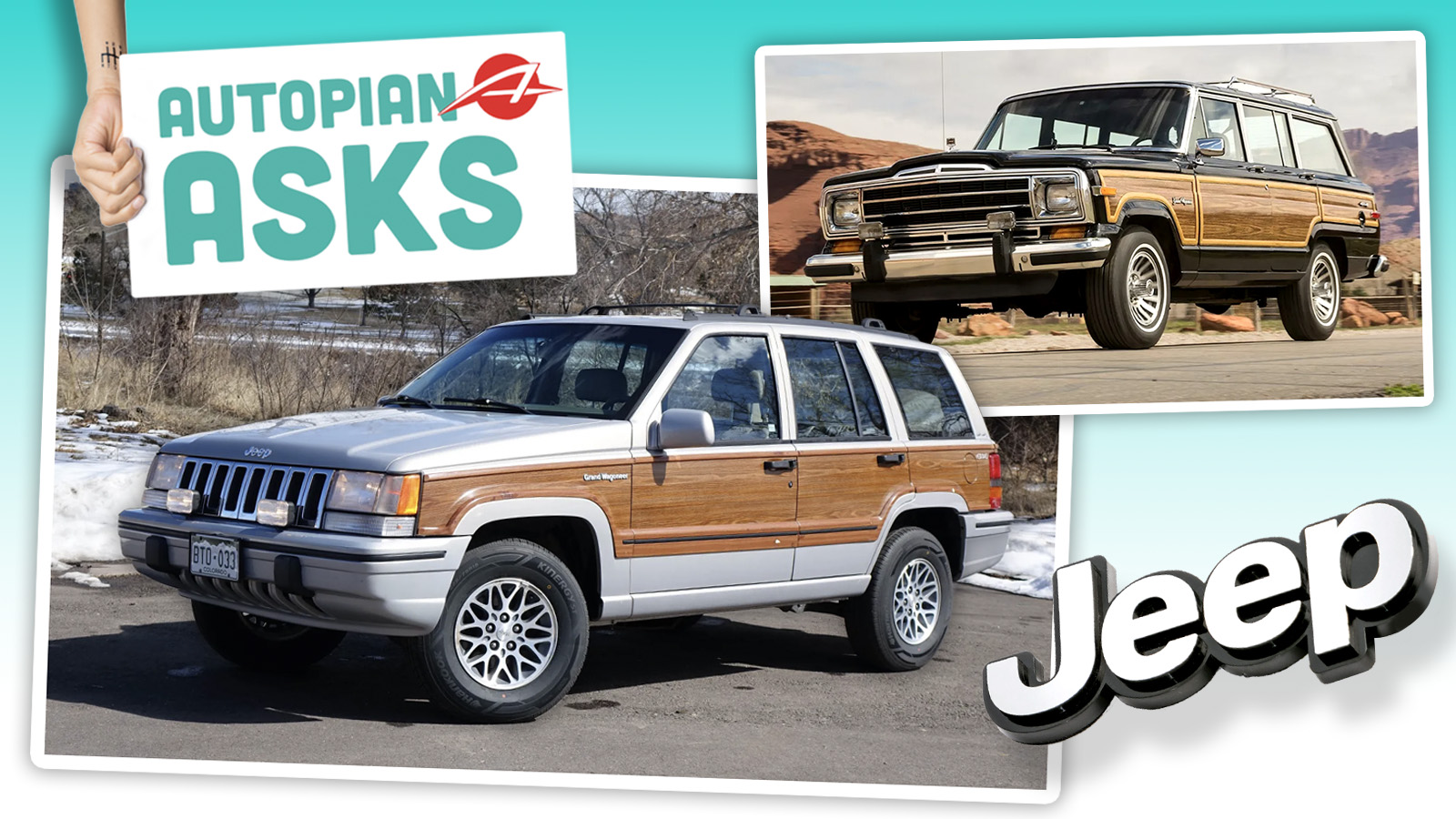
Recently I was thinking about how laughably antiquated my Jeep J10 pickup truck feels compared to my other Jeeps, especially my Jeep Grand Cherokee. Then I realized something absurd: The still-surprisingly-modern Grand Cherokee was the direct successor to the J10’s platform-mate, the also-absurdly-antiquated Grand Wagoneer. And the quantum leap between that 1991 Jeep Grand Wagoneer and the 1993 Jeep Grand Wagoneer successor is a leap like few we’ve ever seen in auto history, so let’s talk about it.
For today’s Autopian Asks, I initially had in my mind the Jeep Cherokee XJ, and just how enormous a leap over its processor it was. The “SJ”-platform Cherokee was a heavy body-on-frame design, with a fully leaf-sprung suspension, and outfitted with gutless carbureted AMC straight-sixes or AMC V8s bolted to three-speed slushboxes or four-speed manuals (some had five-speeds, but they’re rare). The XJ was 90 percent as big inside, despite being so much smaller outside, and also weighing over 1,000 pounds less. That’s truly absurd, but it was thanks to the then-state-of-the-art unibody construction (contrary to what you might find on the web, the XJ was not the first high-volume unibody SUV; that honor, I think, goes to the M151 MUTT military vehicle that went into production in 1960).


Add a unique quadra-link front suspension and better overall off-road geometry, and the XJ was leaps and bounds ahead of its predecessor. The only issue was: The available engines and transmissions were terrible.
That’s a part of the XJ’s history that many tend to forget about. Between 1984 and 1987, the XJ was a bit of a steaming pile when it came to engines and transmissions. The GM-sourced 2.8-liter V6 was a reliability nightmare, and honestly the 2.5-liter AMC motor was better, though both were gutless carbureted SMOG-choked motors. Even when the 4.0-liter fuel-injected motor showed up for 1987, it was bolted to a terrible Peugeot BA10/5 five-speed manual transmission (though the AX15 auto was good).
So yes, in some ways the 1983 to 1984 Jeep Cherokee jump was huge, particularly when you look at the body structures, but it wasn’t as huge as the 1991 to 1993 Jeep Grand Wagoneer jump.
Technically I’m bending the rules a little here since the 1993 Jeep Grand Wagoneer is technically a “package” that you could choose when you bought a 1993 Jeep Grand Cherokee, and technically that’s two years after the Grand Wagoneer left the market. Still, two years isn’t that long, and there’s no doubt that if the XJ was the successor to the Cherokee, then the Grand Cherokee was the successor to the Grand Wagoneer, which left the marketplace in 1991.
The leap between the two was unbelievable. The Grand Wagoneer was a fat, slow, downright ancient machine by 1991. Its AMC 360 engine made torque, but very little power, and was a handful to maintain (relatively speaking).
The Grand Wagoneer was completely different, and better it almost every way. Its fuel-injected 5.2-liter V8 (based on the “LA” Chrysler 360 and not the AMC 360) made 220 horsepower and 285 lb-ft of torque — 76 horsepower and 5 lb-ft more than the old Grand Wagoneer. And on top of that, the chassis was a unibody one with Quadra Coil — an industry-first fully-four-link-coil-sprung-solid-axle suspension.
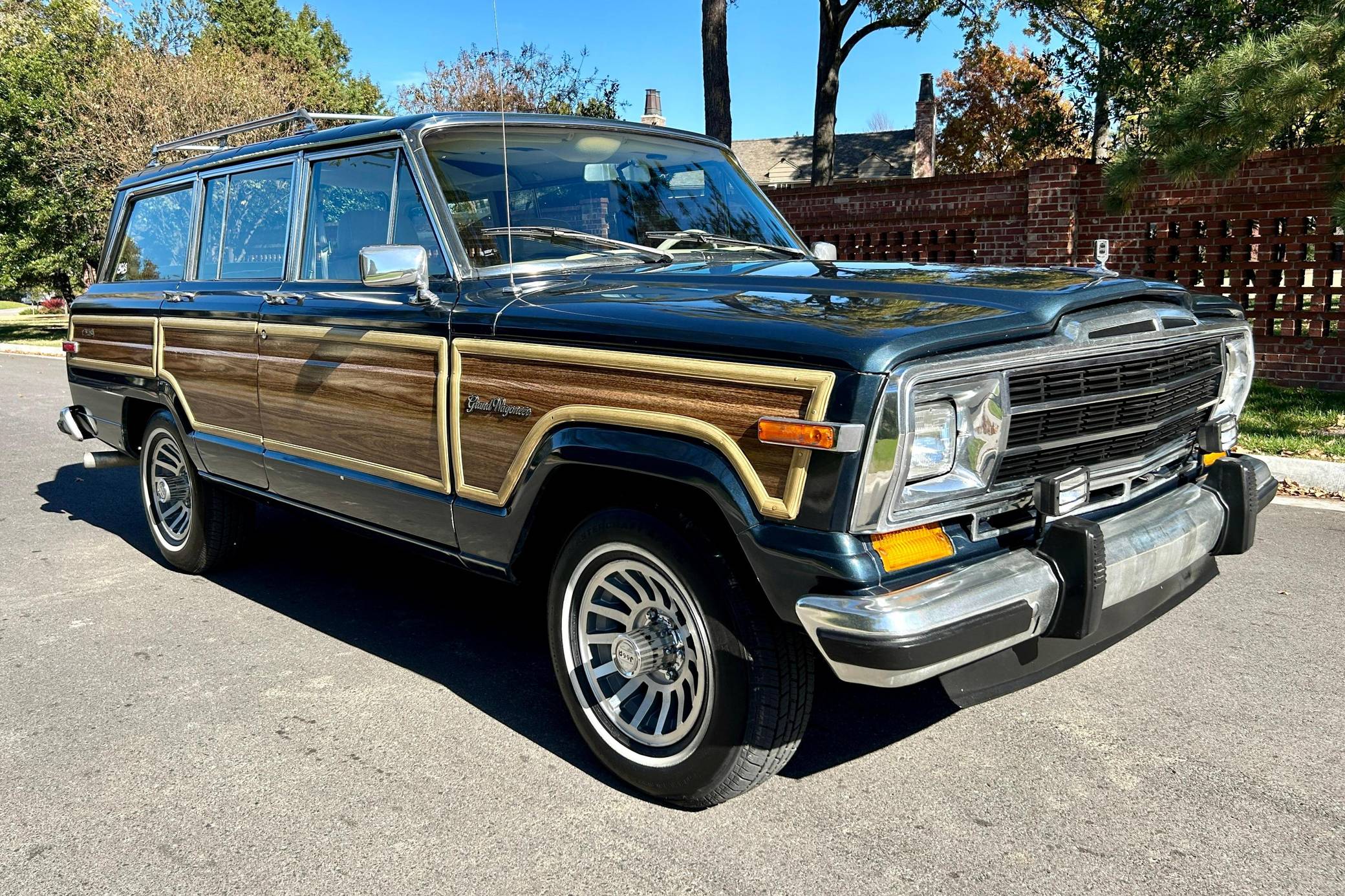
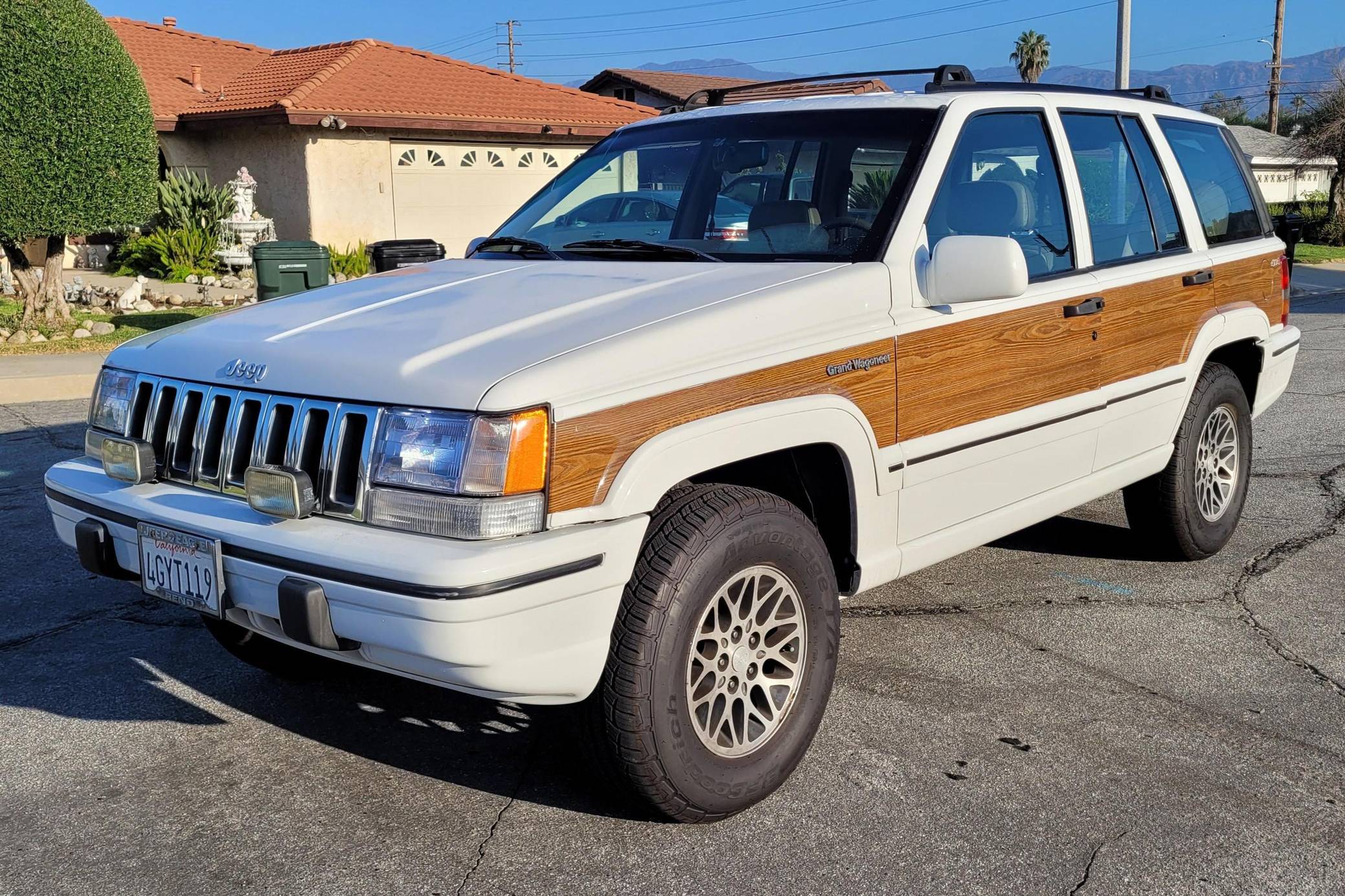
Though the four-speed automatic versus the three-speed in its predecessor wasn’t a huge leap (especially given the four-speed’s reliability issues), the significantly more powerful and reliable engine, along with the >500 pound lighter unibody structure, along with the significantly improved suspension made jumping from an SJ into a ZJ like stepping into the future.
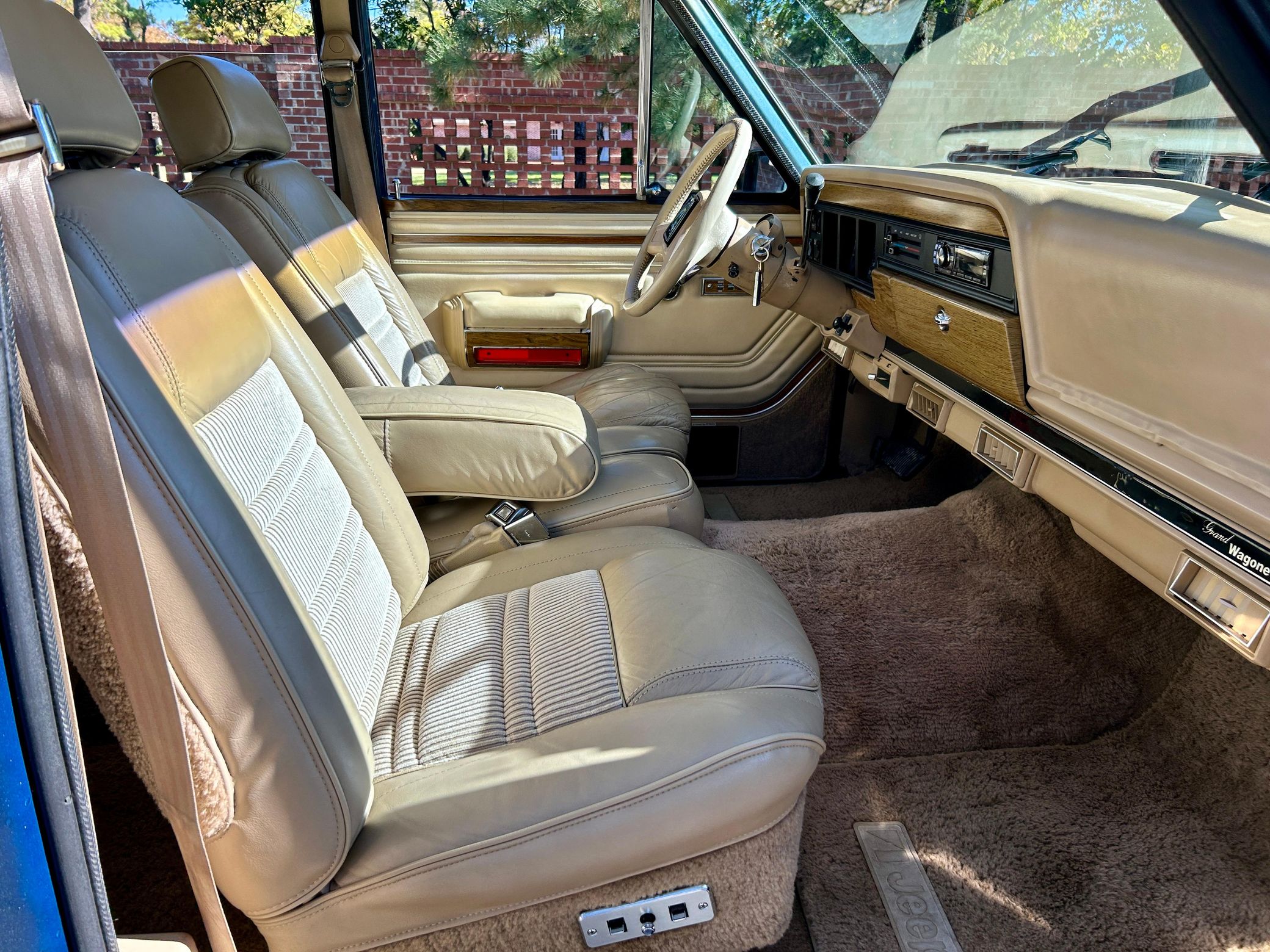
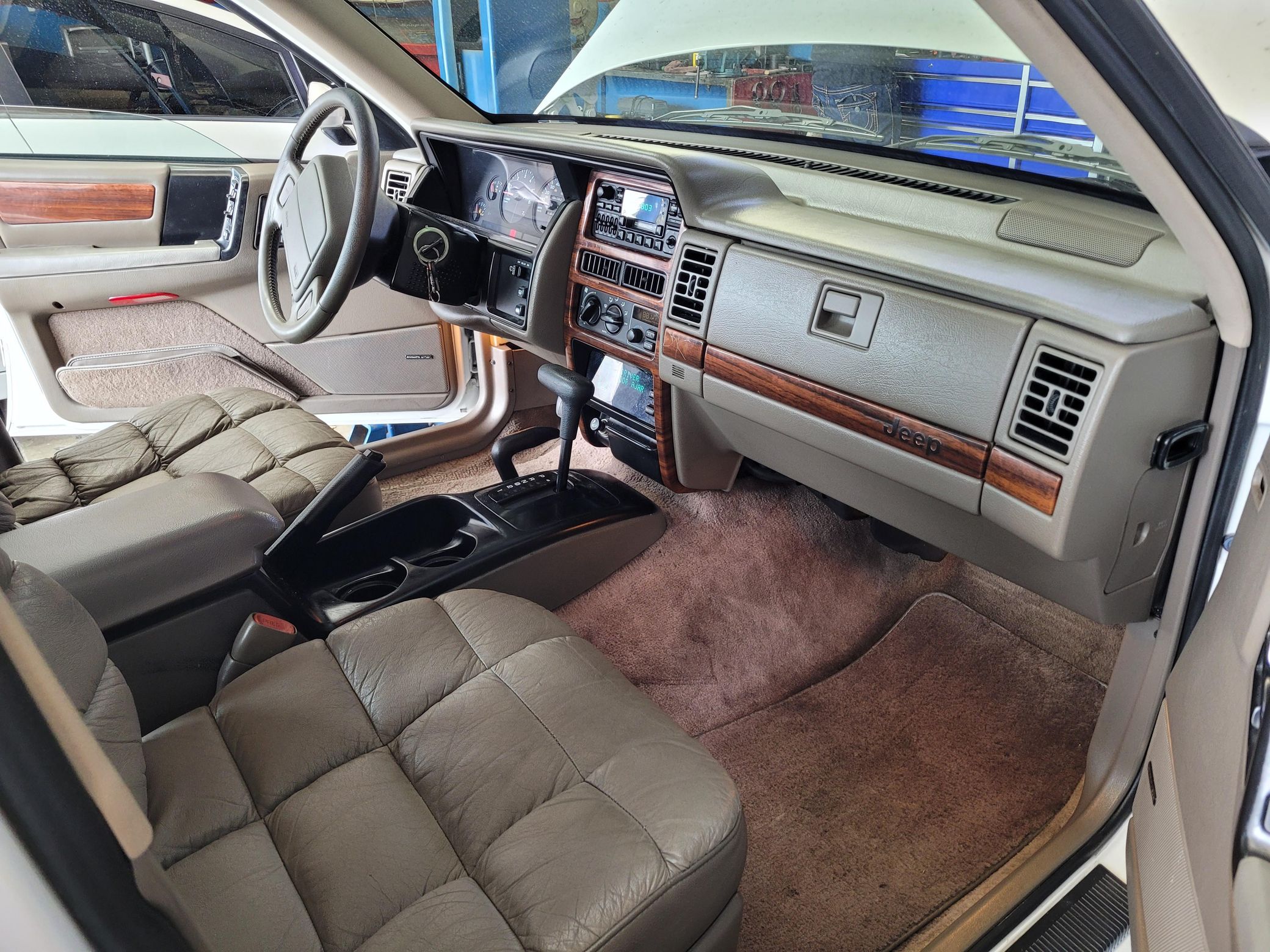
Add airbags, ABS brakes, and just a totally more modern cabin, and the two couldn’t be more different. I can tell you, after owning two Grand Wagoneer and a handful of ZJs: The ZJ is better in every conceivable way except styling.
Top graphic images: Bring A Trailer; Jeep/Ebay seller


My first thought was the Model T to the Model A.
Honorable Mention:
The 2024 Chevrolet Trax.
Definitely better than it’s predecessor, even with a smaller engine.
And no, it does NOT need AWD. If you want AWD, buy a new Trailblazer.
Mister Tracy one minor correction… the AX15 was not the automatic XJ transmission introduced in 1987, that was the AW4. As you and many others know, the AX15 was the manual transmission in many XJ’s. Have owned both with nothing but good things to say. Hope you’re getting ample sleep with the little one!
the 1994 Dodge Ram is the first thing that springs to mind.
The 2nd, probably weirder pick, is the Bugatti Veyron Supersport. Its really not as well known, but the Supersport version of the Veyron was almost an entirely new car, and improved in basically every single way.
Old to new beetle was my first thought, but if that’s cheating then maybe the previous charger to new EV charger thing? Hellcat to EV is kinda nuts. Oh, how about the previous gen Prius to latest? That’s a pretty major glow up… Although the previous to current Mirai might take that crown.
The correct answer the 90 to 91 Chevy Caprice. The styling and the Corvette engine.
Perfection
I cannot believe no one has mentioned the Supra going from the Mk III with the 7M GE and GTE to Mk IV with the legendary 2JZ GE and GTE engines yet.
1st to 2nd Gen Toyota Supra gets my vote.
I submit for consideration the 2008 Chevy Malibu. The difference between the ‘07 and ‘08 was astounding. The 6th gen looked like some poor approximation of a car, like a kid’s drawing. I hated the original front end that made it look like it was wearing braces. The interior was atrocious and somehow worse than the 5th gen car. It rode like shit, too. I remember my roommate getting an ‘07 Malibu Maxx for cheap as a disposable commuter and comparing it to my ‘06 TSX which I still enjoy. It was SAD. The 7th gen, however, was like a breath of fresh air. Handsome, restrained styling, honest-to-God interior colors (red!), comfortable, decent handling, and lots of little Easter eggs like the little bow ties molded into the lenses. It even had fender-mounted turn signal repeaters! I cannot think of two more dissimilar cars built on the same platform (epsilon).
AX15 auto? David you’re slipping.
Like a torque converter!
Can we include all new engine? This wasn’t new model, still SN197
2010 –> 2011 Ford Mustang.
The poor saps who bought a 2010 GT only had 5 more HP than the 2011 V6.
I think you need to go further back and contrast a Citroen Traction Avant to a Citroen DS. From a 1930s car to a futuristic spaceship that looked like nothing else in one model year.
I friggin’ LOVE ZJ’s, I think that’s a good call.
I think the GMT400 trucks were a huge step forward, as well as the 94 Dodge Ram.
And as I type that, I’m realizing that the 97 F-series introduced not only a new body and front suspension design, but also a new engine family. The GM and Dodge were new but had engines that were largely carry-overs.
VW Beetle and the Mini both come to mind.
I’m confused about the “rules” for this question, because “it’s cheating for a two-year jump between the SJ and ZJ”?
Would the 5th and 6th generation Charger count, even though there’s a 20 year difference between them?
Because, like, the 5th generation Charger is just an Omni coupe (if you count generations like ’66-’67, ’68-’70, ’71-’74, ’75-’77) and then in 2006 we got a RWD-based sedan with 2 “Hemi” options.
I would think gaps don’t count.
I don’t mind the gap.
Keep calm and stumble on
I am not as well versed in Jeeps but I do agree that the Cherokee and Grand Cherokee were heaps more modern than the SJ platform.
The Volvo 850 was a pretty significant change from the 200 series platform (240) that ran from the early 70s to mid 90s. I got to drive a late 240 quite a bit, and really liked that car, but it was very obviously antiquated. The 850 felt futuristic almost immediately.
Z31 to Z32
In fact, I would argue the Z32 is an alternate timeline Z, as the 350 returns to the roots of long-nosed muscle cruiser/GT.
The Z32 went to CAD-designed everything, an eye-watering 300hp on the turbo models, even though they would hit 290+ at the wheels (wink wink).
Seriously, look at the progression from 240 to 300, then look at the next 300 and say, “oh, dang”
The Dodge Ram was a huge change.
The 1993 outgoing model was a fuddy duddy malaise-era anonymous truck.
The 1994 model looked like a miniaturized semi-truck and blew everyone’s mind.
I hate Chrysler (for lemon reasons in my past) but have to give them props for the massive realignment of their pickup truck strategy.
I think this is a very good candidate. The old Ram truck (3rd gen D series) came out in 1971 and went until 1993. Which means that this truck came out 2 years before the square body GM’s and lasted 2 years longer than the GMs did (if we include suburbans/K5’s which is appropriate because the Ramcharger existed too).
Then, in 1994 the new Ram trucks were truly groundbreaking in design.
Chevy Cruze coming after the Cobalt. The Cruze was a legitimately good car when it launched. Even better than the contemporary Civic, which was so bad in 2012 Honda had to do an emergency refresh for 2013. The Cobalt was always a bit of a pile.
The Hindustan Ambassador may take this crown when/if they get around to releasing the new model.
1950s Morris sedan, produced from 1957-2014 in India. Whatever they replace it with will be a huge leap, especially if it comes with an electric drivetrain.
I’m going to the 1985 Full size GM (think Olds 88 and its brothers) to 1986 and beyond. When you think about it, GM’s full size cars were basically the same since after WW2; V8, Carburetors, RWD, if there were options, they were things like PW, PS, power brakes, Power seats, AC, radios, etc. The big issue was styling, and i’d say incrimental change
A seismic change happened, and suddenly you have a V6 making more power than the 8, FWD, Fuel injection/TBI, AC, PW, PS, PB with ABS all standard…
Ford Focus C170(1st/2nd Gen) to C346 (3rd Gen). Direct inject engines, better chassis, and ST models. I intentionally left out the transmission abominations, as M/T is more engaging.
I’m going BMW e34 to BMW e39.
The e34 was a good car, sure. But the e39 is a legend. So good that Lucid used it in benchmarking their high-tech sedan, like 25 years later.
If we consider purely a matter of technology for one update to a nameplate and not quality or reception, nor measure them per platform, I’d call the New Beetle the biggest leap.
Suddenly adding unibody construction, coil-over suspension, water-cooling, dual-overhead cams, 5-valve combustion chambers, variable valve timing, turbocharging, electronically-controlled automatic transmissions, air conditioning, power steering, airbags and ABS to the Beetle, whose “Super” version had been discontinued for over a decade, leaving only the standard, torsion-beam-equipped, body-on-pan Bug, the one that launched in the 30s.
This is only possible due to ascribing an existing name to a new platform, so it’s pretty much cheating, but unlike other revived nameplates such as the Capri and Dart, which might be really cheating, the old Beetle was still in production when the new one launched. Then again, the old one stayed in production after the new one launched, too. I’ll leave it up to someone else whether it’s more cheating to have a gap in production or an overlap.
If we’re not supposed to cheat (boooriiiing), maybe the C3 to C4? I may be severely overestimating the C4, but I understand the C3 was pretty medieval by the time it got discontinued.
C3 to C4 was the first that came to my mind as well. The C3 was old, a muscle car with a fiberglass body. the C4 was a true sports car with serious handling chops, actual consideration for aerodynamics, and (at least eventually) a decent, fuel injected engine. In a lot of ways the C7 to C8 is in contention too, as the C7 was a very good front engine sports car, but the c8 has had a huge leap in performance. Yes I am very corvette-centric….
C4 was one of this first that came to mid for me as well.
The classic Mini to new MINI is just like the Beetle. The classic was built up through 2000 and the new one started production in 01. It was even the old engineers over at rover that had done much of the new MINI development before BMW got heavily involved.
I wager that takes it, with a few caveats in favor of the beetle:
That’s about all though, and I’m sure there’s some tech that was in the new Mini but not in the new Beetle or that was in the old Beetle but not the old Mini.
Lotus Europa. 1966-75. Steel backbone chassis, tiny engine in the middle, nothing else. Crash performance mostly depended on if you were wearing boots of not. 126bhp in the most powerful version. 4-speed box. 0-60 in 6.6 (9.3 for the low power cars).
Lotus Europa. 2006-2010. Extruded aluminium bonded chassis, composite crash structure, extruded side impact door beams, 200 or 225 bhp turbo engine, 6 speed box, ABS, AC, factory SatNav, air bags, 0-60 in 5.6 for the slow version. Room inside for actual human sized people.
Plus, and this is a biggie, a cup holder.