

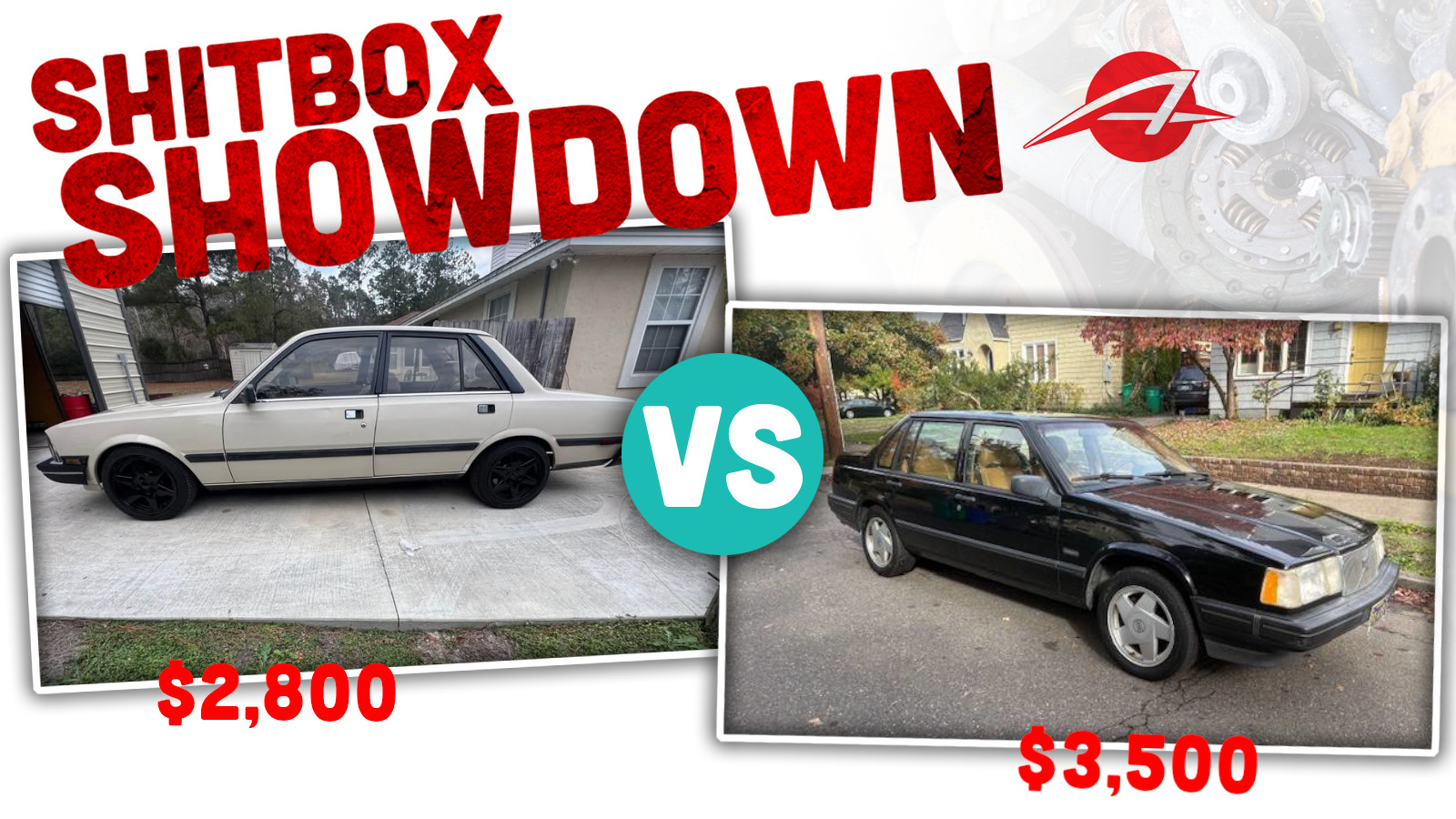
You all like European sports sedans, right? BMWs and such? Good. I don’t have any BMWs today, but I’ve got a cool old Peugeot and a really nice RWD Volvo for you to check out. Neither one is perfect, but the prices are right.
Well, the results from yesterday don’t leave any room for interpretation, do they? By a massive margin, you all preferred the AWD Chevy Astro to its Ford Aerostar competition. The Chevy’s all-wheel-drive system wasn’t the only thing it had going for it, but for a lot of you it seemed to push it over the top.


Having driven a few examples of each of these over the years, and having serviced more of them than I can count, I have to agree. The Aerostar is decent, but the Astro is excellent. There’s a reason used Astros command the prices they do, even with astronomical (pun intended) mileage on their odometers. That van will serve somebody very well for a long time to come, if they take care of it.

European cars have gotten a bad rap in recent years, mainly due to the complexity of servicing and repairing them. German cars in particular have gotten more complicated even as their makers have implemented cost-cutting measures, making service and repairs a mess, especially for DIY mechanics. But it wasn’t always that way. The two cars we’re going to look at today are from an earlier era, when European cars were simpler and more robust. No Germans here; one’s French and the other is Swedish. Let’s take a look so you can decide which one you prefer.
1986 Peugeot 505 S – $2,800

Engine/drivetrain: 2.2-liter OHC inline 4, four-speed automatic, RWD
Location: Woodbine, GA
Odometer reading: 148,000 miles (but not accurate)
Operational status: Runs and drives well, needs minor work
The Peugeot 505, introduced in 1979, had some big shoes to fill. Its predecessor, the 504, was well-known and well-loved all over the world for its durability and composure in harsh conditions. Peugeot’s engineers knew this, and chose to make the 505 an evolution of the same basic idea rather than a revolutionary new car. If it ain’t broke, as the saying goes, don’t fix it.

Many of the 505s that found their way to America were diesels, competing with the Mercedes W123 diesel models, but this one has a gasoline engine. It also, in true American fashion, has an automatic transmission, a ZF-built four-speed unit. Hey, at least it’s probably quicker than the diesel. The seller of this car has only owned it about a year, but says it runs well. It has had some recent front end work, and it drives fine, but at least one wheel is bent, causing a vibration at certain speeds. New wheels and tires are in order.

It looks good inside, with only a little wear and a couple cracks in the dash. The seller says the speedometer cable is broken, so the miles shown are not correct, and you’ll probably want to use a GPS speedo on your phone to know how fast you’re going. The air conditioning, however, works just fine.

It’s in good condition outside, though it’s kind of a bland color. I don’t think the black wheels are doing it any favors. They’re supposedly something rare, but they’re ugly and bent, so who cares? Ditch them and get something that looks better and rolls properly.
1994 Volvo 940 Turbo – $3,500
Engine/drivetrain: Turbocharged 2.3-liter OHC inline 4, four-speed automatic, RWD
Location: Portland, OR
Odometer reading: 236,000 miles
Operational status: Runs and drives well
Volvo’s long-running 240 was meant to be retired and replaced by the 740, but the 240 refused to die. Instead, the 240 and 740 were sold alongside each other until the early 1990s, when the 240 was replaced by the front-wheel-drive 850 and the 740 morphed into this car, the 940. It ended up being the last of the old-school rear-wheel-drive Volvo sedans. This car represents the end of an era for Volvo.

Turbocharging and Swedish cars go way back; both Volvo and Saab made good use of turbos to add power to their engines. This 740 is powered by a turbocharged 2.3-liter version of Volvo’s famous “Red block” engine, driving a solid rear axle through a four-speed automatic transmission. It’s all good durable stuff, as evidenced by this car’s advanced mileage. It runs and drives well, and has just had a bunch of service work done. From what I’ve seen of old RWD Volvos, this car should have a lot of life left in it.

It looks good inside, but there are a few things that need fixing. The fuel gauge is wonky, and the sunroof switch is “a bit testy,” the seller says. Also, there’s a Simon & Garfunkel cassette stuck in the tape deck, and it doesn’t work. [Ed note: so you’ll be hearing the sound of silence instead of The Sound of Silence – Pete.] But the air conditioning works, and those seats sure do look inviting.

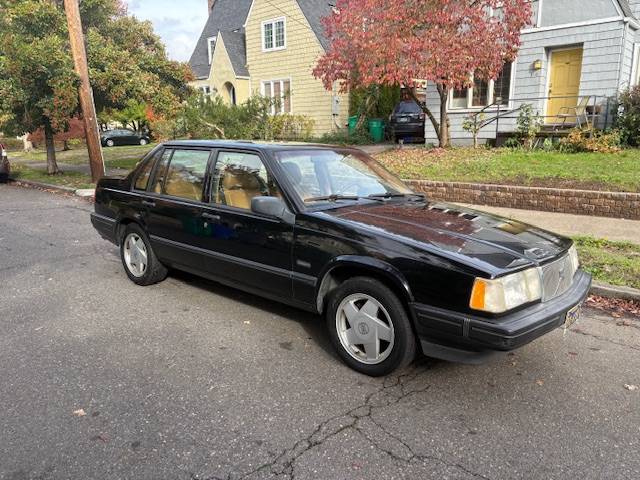
The 940 fixed the 740’s biggest visual problem: that bolt-upright rear window. This car, with the more sloped rear window, looks a lot better. The paint is a little faded, but overall it looks good, and those five-spoke directional wheels are a nice touch. The tires on them are newish, too.
These cars both come from a long line of well-designed, well-made cars that are known for their durability. One of them isn’t nearly as well-known here in the US, but that doesn’t make its reputation any less true. Either one of them is something you could be proud to own and care for. It’s all a matter of which one speaks to you.


The Peugeot is neat and I wouldn’t mind it,but all Peugeots should be either diesel or v6 and manual,so this one is out of the running. Can find much to complain about on the Volvo except the transmission,but it’s fine.
Vive les Francais!
I’ve owned both. A 505 diesel stick that had urethane bushings and Goodrich T/As. I also had a 740 Turbo Wagon. Had the third seat but I normally had my fire turnouts in the back.
Actually, both were nice cars. If the Volvo was a wagon it would be an easy choice.
As I remember, the speedometer drive gear on the Peugeot was a known issue, and fairly easy to replace. Needed to replace the gear and the cable together. The cable caused the gear failure.
The Peugeot was more comfortable, and more fun on a twisty road. Parts were a problem.
I guess I’m going to vote Volvo. The Peugeot is a better car, but the support issue will be very real
I voted for the Pininfarina-designed 505 – but today is a “Both” day.
last of the really good Volvo’s to me. not even a contest here.
940s are the BEST Volvos overall. Not even close really. But I’d still rather have any 505, as long as it didn’t need to be my only car. Not that mine weren’t peerlessly reliable, but getting parts was becoming “interesting” 25 years ago, and I doubt it’s gotten any better today. Big problem being there aren’t even really any of these cars left in Europe, as they all got exported to Africa years ago. And even with the Internet to help, I doubt “overnighting parts from Kenya” is as easy as overnighting them from Japan.
A set of ATS 10 wheels in the right bolt pattern sells for more that the price of the 505, and they can be restored.
The problem with directional wheels is that you are always wondering which side is backwards. They drive me nuts.
I was sure those were Bordet C wheels,not sure if it makes any difference though. Not terrible wheels for that car if they weren’t painted.
Where is the both button?
My 740 turbo was probably my favorite car, but the Pug looks really comfortable.
The Volvo door pockets are impressively intact, they are very brittle.
Peugeot because there’s already something wrong with me
The Peugeot is better looking, more reliable, and easier to work on believe it or not. The choice is clear and yet, somehow, the majority is opting to be foolish.
In the US, damned few have ever had the pleasure of experiencing a 505. Peugeot certainly sold fewer in the entire model run than Volvo did in a single year of the 940.
As the saying goes if everyone you meet is a problem, maybe you’re the problem? JK
Or, as Dr. Beverly Crusher famously said, “if there’s nothing wrong with me, maybe there’s something wrong with the universe.”
Wow – this is one of the tougher choices. After reading about the 505, I thought I’d definitely take it. Wheels and tires would be an easy way to make it a very cool and fairly unusual ride. But then I saw the Volvo,; it looks more comfortable and has a nicer interior, although it lacks the coolness of an older French car. The Peugeot would doubtless be more of a pain to keep running, but I’m going with it. You almost never see a Peugeot in any sort of decent shape around here, and hell, the A/C even works!
I have an unsatisfied fetish for French automobiles, but I’m also a three-time Volvo owner and appreciate practicality the old I get, so 940 it is.
Hard to argue with a two owner car that’s got its paperwork in order. This one’s also sporting an airbag, which ain’t nothing.
I do like the Peugeot a good deal and it’s significantly cheaper, but it’d take a stickshift on the Frenchie to make me switch sides.
Volvo. Even if it wasn’t a much nicer and better car than the 505, which it is, I learned to drive on a Volvo and would enjoy the 940 out of a bit of nostalgia.
The Peugeot is blending into the landscape, and only the bad choice of wheels draw any attention. The Volvo has a lot of miles, but it’s a decent car.
I’ll take the nice Volvo! It’s pretty obvious which one is the better car here. The Peugeot is still interesting and different though
Brain says Volvo, heart says Peugeot.
505 for me.
Always loved the 505, brothers friend had one, good looking sedan. But I’ll take the Volvo
I wanted to consider the Peugeot a lot more but the color, those wheels, the broken speedo, I can live with the Volvo’s sunroof issue and I would probably just replace the stereo if it’s not an easy fix. So today is a Volvo kind day.
Same. Big fan of Pugs, but that Pug is not a good one.
The Volvo, since I live in the PNW and could keep it in its natural habitat where it can frolic among the numerous specialty Volvo mechanics here.
I’d definitely pay the $700 more not to have those hideous black wheels.
You could sell the wheels to a 1971-1994 Subaru owner.
Of course the trick is to find wheels to replace them with.
I know the Peugeot is a bad idea (I can’t imagine it is easy to get this car repaired), but I voted for it anyway. It is a great looking car. It probably would end up a lawn ornament when it broke, but it would be a cool and interesting lawn ornament. I want it.
The Volvo is nice, but I can’t help but think about how much I would rather have a 240.
Volvo is the pick for sure but I had to vote for the Peugeot. When I was a kid my mom drove a 79 504 and her husband drove an 85 505. Both diesels, but I have a soft spot for those cars.
Volvo is the easy pick here. Now if it was a 505 with the manual or with the gasoline turbo with the manual, that might have swayed my vote.
First thing I looked for was whether either was a manual. Since both are auto: Volvo all the way.
No 940s with a manual were ever sold in the US. Last were the ’92 740 wagons (940s in all but front seats and badging), and only a bare handful of them. Even in New England, where manual Euroboxes were very much a thing among the cheap Yankees, I have seen one manual ’92 ever, and my local Volvo dealer only sold one (not the same one).
Manual Peugeots were not much more common – I owned the ONLY ’92 505 SW8 wagon sold new with a manual in the US. VERY special order by the original owner, and a little bit “off the books”, as they were not officially offered in the US. Came over on the very last boatload of new Peugeots. Another car I probably should not have sold, though I don’t really want to contemplate what a PITA keeping a 34yo Peugeot on the road is likely to be today. Keeping my last 940 on the road was a PITA too. rare ’91 940GLE 16V. 16V-specific parts are rapidly becoming unobtanium, even from Mama Volvo.
I didn’t realise that they were so rare in the US! I was used to 505s and 940s in the UK and the manual transmission was truly ‘standard’ there. It’s one of my greatest disappointments in looking for used vehicles since I moved back to the US: so many have a disappointing transmission.
Extremely unusual in 740s – 10%? Increasingly uncommon in 240s as the years went by, but they did offer them to the end. Maybe 30% take rate overall for the 240, though more like 50% in New England until the last few years when they also became rare. I’ve owned a dozen 240s, 740s, and 940s, and only one was a manual, the first, a ’76 242. Not for lack of desire, just could never find one when I was in the market.
505s were probably 20% manuals, and probably 80% of them were sold in the Northeast to start with. Just pockets otherwise, Atlanta had a decent number, the Pacific Northwest and California. In-between is a French (and Swedish too really) car desert. My Peugeots were more evenly split, I had two manual 504 diesels, an automatic 504 diesel, two automatic 505 turbodiesels, and that manual 505 SW8 with the 2.2l gas motor.
Volvo. We had a 740 Wagon that our kids learned to drive with. Best seats of any car we’ve ever owned. Can’t recall any issues in the years we had it.
That Centre Pompidou center stack in the Peugeot is tres cool, but the rest of the car is kind of merde. The only thing the Volvo needs is a set of $15000 hand-painted Prancing Moose logos and it’s ready to rock.