


Coming up with two cars that have something in common is sometimes tough. Often, I’ll find one car that I really want to write about, and then struggle to find one that goes with it in some way. For today, I found two that I liked – and then discovered they had a common thread I wasn’t aware of. So that will be the theme for this week: cars with one arbitrary thing in common.
On Friday, we looked at two somewhat expensive playthings, and it seems not a lot of you warmed to the idea of an ancient British car equipped with a fussy and high-maintenance Japanese engine. I’m shocked! Well, not that shocked. Besides, a Honda CRX that clean these days is a rare thing indeed, and hard to pass up, even if the asking price is a little steep.


For me, it’s the CRX, hands-down, every day and twice on Sundays. No way in hell am I going anywhere near that Spitfire. I admire the work that went into it, and I am happy that it exists. But I do not want it.

This week, I’m going to find two cars each day with some number in common. It might be as obvious as price, or as obscure as wheelbase. Today’s metric is peak horsepower, a number that advertisers like to bandy about, but sometimes doesn’t have much meaning in actual driving. I’ve heard some old-timers say, “You buy horsepower, but you drive torque.” And of course, even that isn’t the end of the story, because power-to-weight ratio matters, as does gearing, as do a hundred other less tangible aspects of a car’s design. Be that as it may, the engines in both of today’s cars are rated at the same horsepower: 135. Let’s take a look at them.
1978 Pontiac Grand Prix – $4,999
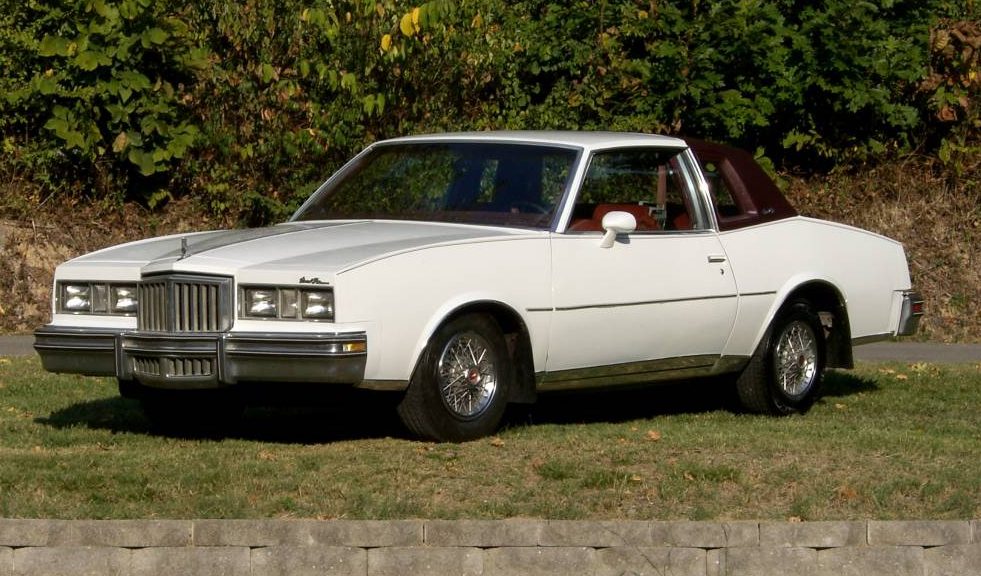
Engine/drivetrain: 301 cubic inch OHV V8, three-speed automatic, RWD
Location: Whites Creek, TN
Odometer reading: 144,000 miles
Operational status: Runs and drives well
In the mid-1970s, the penny finally dropped in Detroit: If you aren’t selling enough small cars, maybe you should make the big cars smaller in order to meet the new regulations. Most mid- and full-sized cars were a lot bigger than they needed to be, anyway. A new era of downsizing was ushered in. In 1978, GM’s A-body platform, including this Pontiac Grand Prix, received the downsizing treatment. Gone was the majestic but heavy “Colonnade” styling, replaced by a sharp-edged design that was more with the times as well as being a foot shorter and several hundred pounds lighter. This body style proved popular enough to stick around for nine model years.
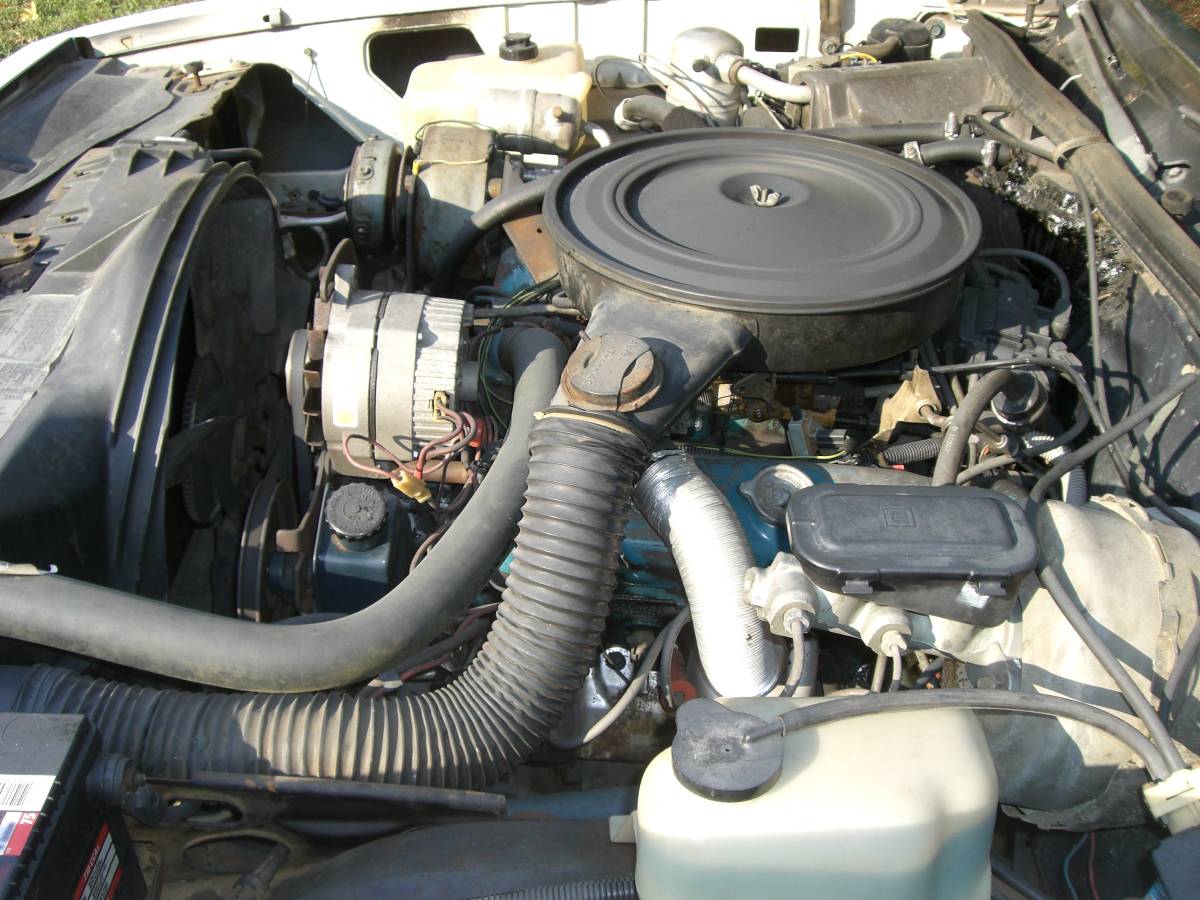
GM was already making moves towards shared “corporate” engines for all divisions, but in 1978, each flavor of A-body coupe could still be had with its own division’s engine. For Pontiac, that meant a 301 cubic inch version of its V8 that, when equipped with a two-barrel carburetor, as I suspect this one is, makes 135 horsepower. It’s backed by a three-speed Turbo-Hydramatic transmission, though I don’t know whether this is the reliable TH350 or the weak and failure-prone TH200. I suspect it originally came with the latter, but after all these years, there’s a good chance it has been swapped out for a TH350. It’s a one-owner car, so the seller should be able to tell you.
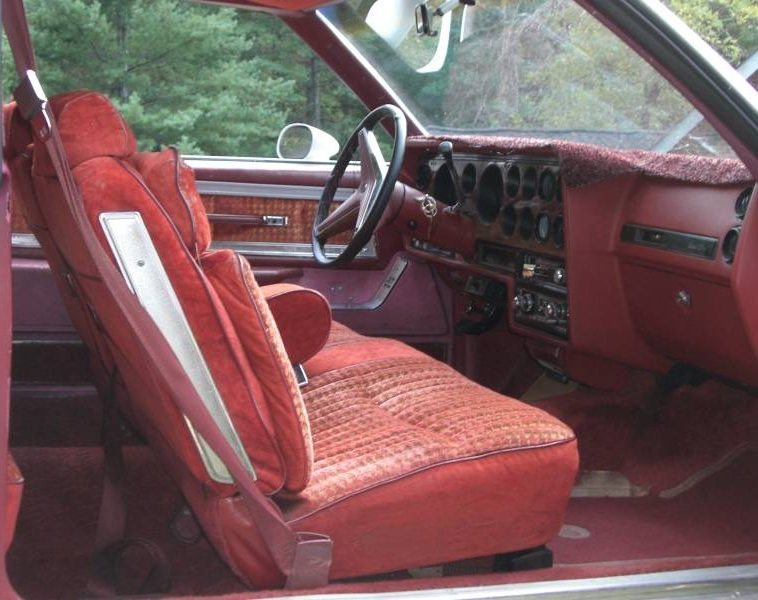
No proper ’70s cruiser is complete without a jewel-toned velour interior, and this Pontiac does not disappoint. It has a big split bench seat so soft you’ll sink into it, a column-mounted shifter, and that cool Grand Prix dash with all the round gauge holes. I think this is a base model, or at best an LJ, so most of those holes will be filled with idiot lights instead of proper gauges, but you can’t have everything. Some of it is faded, and the dash has a cover that’s probably hiding a few cracks, but overall it looks good inside for a car this age.
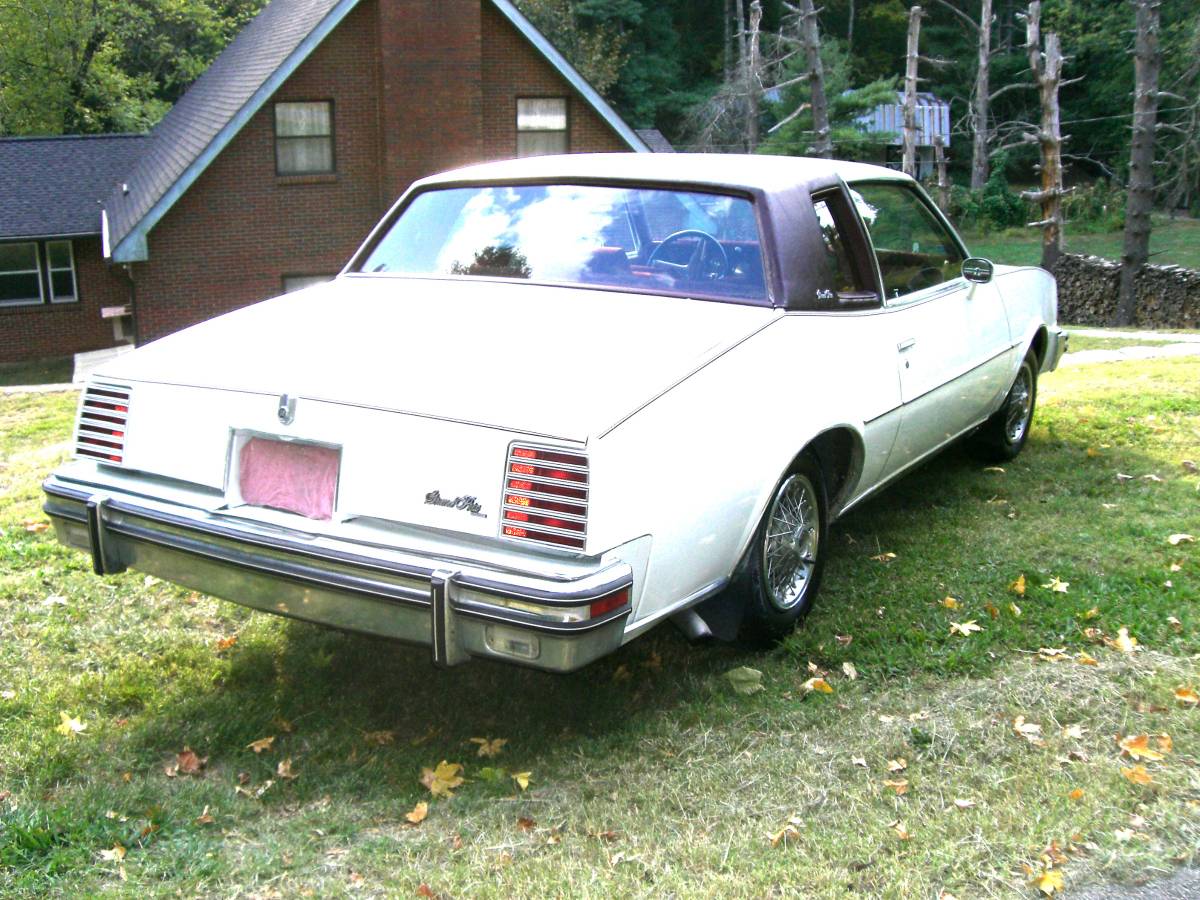
It’s clean outside too, and it has all the accoutrements befitting a personal luxury coupe from the Carter years: a landau top, fake wire wheel covers, a hood ornament, and a flip-open cover hiding the trunk keyhole. This stuff was the very height of sophistication in those days. A car like this meant you were somebody – maybe not the boss, he drove an Eldorado – but somebody.
2013 Fiat 500 Turbo – $4,500
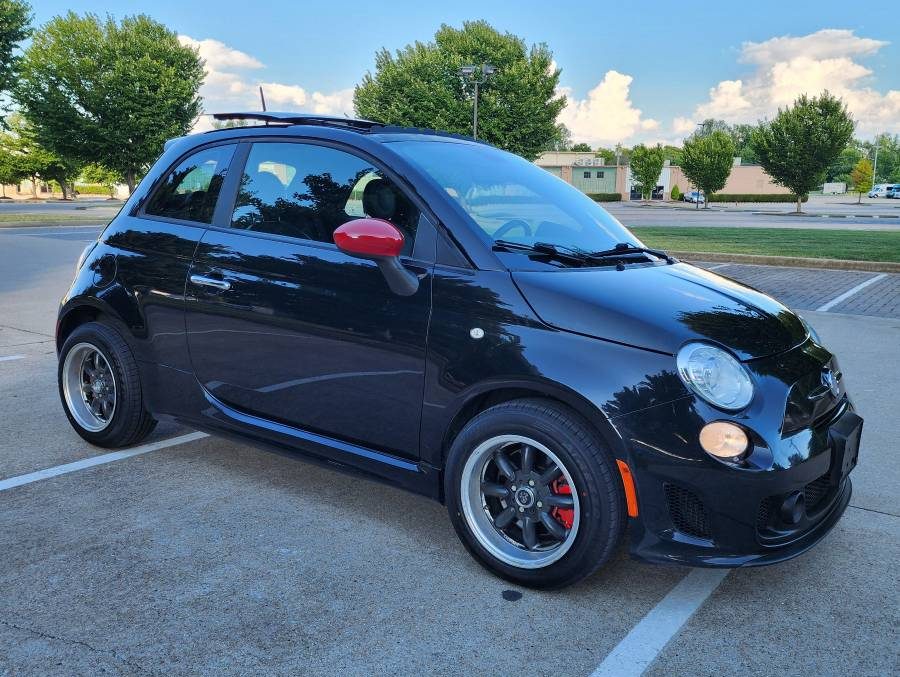
Engine/drivetrain: Turbocharged 1.4-liter DOHC inline 4, five-speed manual, FWD
Location: Murfreesboro, TN
Odometer reading: 122,000 miles
Operational status: Runs and drives well
Fiat sold a ton of cars in the US in the 1970s as well, but left our shores in 1983 in a flurry of rust flakes and broken timing belt debris. It returned in 2012, after purchasing a stake in Chrysler, with this car: the adorable retro-styled Fiat 500. It’s not exactly a paragon of reliability either, but it’s a lot better than the old ones were. And it’s so damn cute you can forgive some failings, like a puppy that pees on the floor. You want to be mad, but you just can’t.
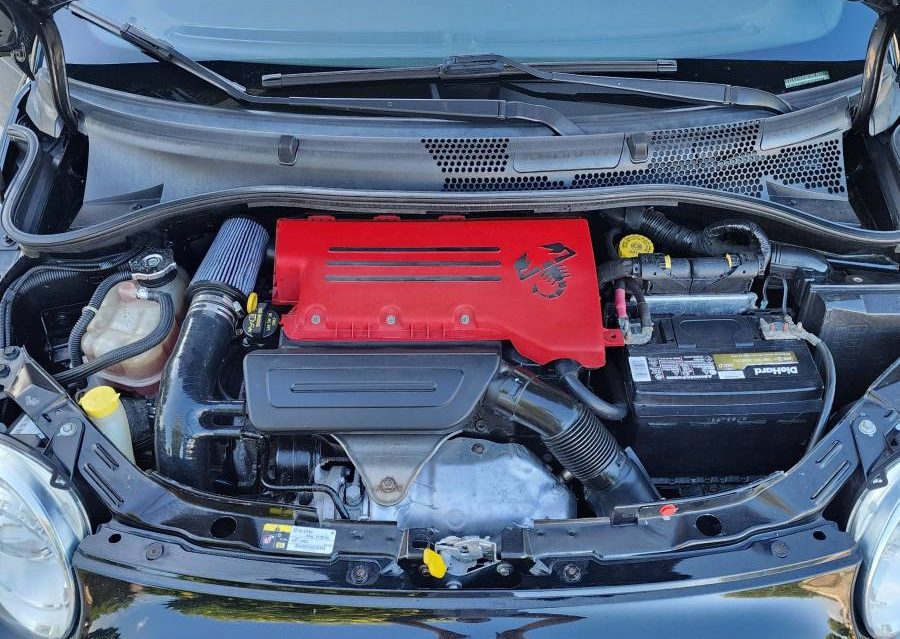
This one ups the fun factor by adding a turbocharger to Fiat’s 1.4-liter MultiAir four-cylinder, bringing the output up to the same 135 horsepower as the Pontiac’s wheezy old V8. It drives the front wheels through a five-speed manual gearbox and produces one of the best four-cylinder exhaust notes of recent years. This one has quite a few miles on it, enough to have ironed out any early quality bugs, but not so much that stuff will have started wearing out. The seller says it runs and drives great, and gets great gas mileage.
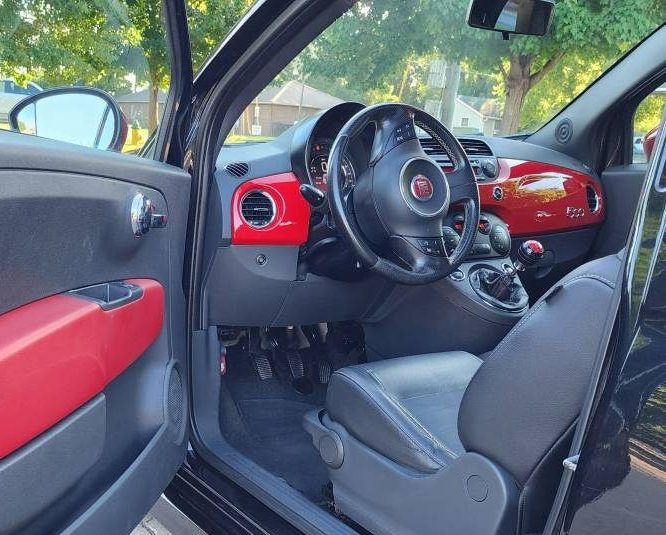
The inside of the 500 is a lot more stylish than most small cars, with bold red accents breaking up all that modern dark gray fabric and plastic. This is about the best shot of the interior we get in the ad, but it looks good in there to me. The air conditioning works, and it has heated seats for winter driving, too.
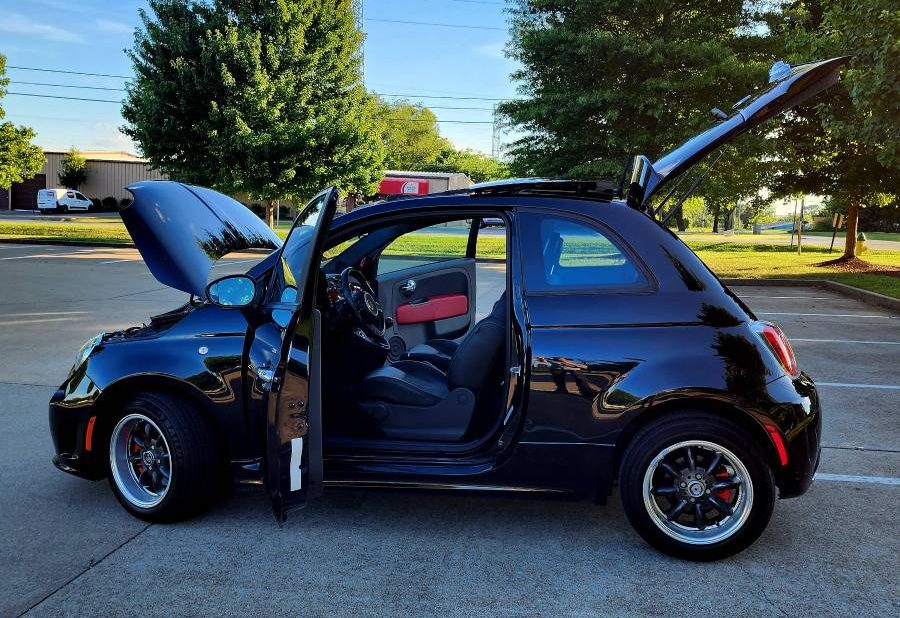
Outside, it’s all nice shiny black, hard to keep clean, but impressive when it’s all polished up. I’ve never seen a 500 with these Panasport or Watanabe-style wheels on it before; they suit it well, and show off the red-painted brake calipers, which I believe are factory.
So there they are, two cars with the same horsepower rating that couldn’t be more different. One is lazy and comfy, the other frenetic and high-strung. Either one will get you where you want to go, but as always, it’s how you get there that matters. Which sort of journey interests you more?




Fiat, all the way. BTW-that car, despite the Abarth air intake, is a Fiat 500 Turbo, which is a step below the Abarth. But nice, just the same with the faux MiniLite wheels.
Like others who ACTUALLY own a 500, my 2013 Abarth has been trouble free save for replacing a CV joint boot and driver side window regulator. Both jobs I did myself, no big deal at all. My Abarth is a Junior HellCat with it’s 165 hp turbocharged motor, all the while knocking down a steady 35 mpg.
I voted 500, but now I’m concerned about the instrument display “Abarth” mismatch to the rest of the interior and single exhaust. Half and half ain’t stock. Also, if the odo doesn’t belong to this car…..
Blech. The only thing that Pontiac is good for is smoking cigarettes with the windows closed.
Hard decision but I lean towards the Fiat depending on how the driver seat is for my meaty frame.
I was going to go for the Pontiac until I saw the 301 CI of lead under the hood, Nothing good ever came from that mill. I have no use for thew Fiat regardless of what it has. I would probably take the Pontiac and look for a 3.8 V-6 to turbo and stuff under the hood. Make a ‘grandmas’ GNX.
Probably the Pontiac. The 500 looks like it’s been messed with. I don’t buy modified cars anymore. Had enough other people’s problems. Although I owned a Pontiac 301 as a teenager and blew the connecting rods on the pavement within a month.