

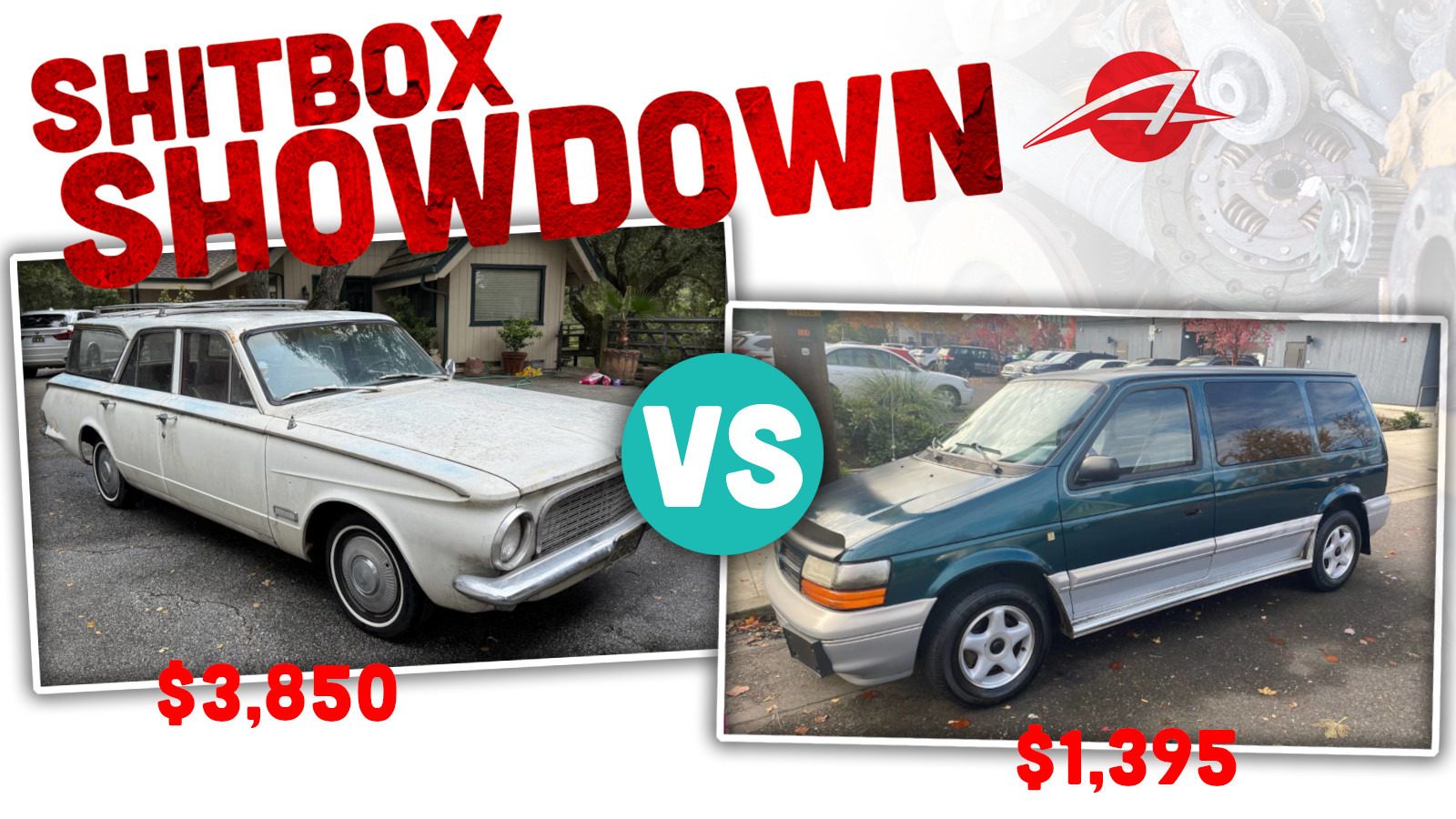
Good morning! We’re exploring connections between cars this week, and today I’ve got an interesting one for you. We’re going to look at two family cars, thirty years apart, that were built in the same factory – probably.
The connection yesterday was number of valves in the engine, and we looked at a Jaguar convertible and a Chrysler sedan. I expected the Jag’s reputation to scare more of you off, especially for five grand more, but it put up a good fight. Still, the Chrysler took the prize, by about a 60:40 margin.


Me, I’m taking the Chrysler. It’s going to be a long time before I have any interest in another British car, even one in such apparently nice condition. But that big front-wheel-drive New Yorker would make a great winter beater, to keep snow and salt off my big rear-wheel-drive Chrysler sedan.

Before I show you today’s cars, I need to make a confession: I don’t know for sure that these two cars came out of the same factory. Automakers often build the same model at more than one facility, and both of these models were built at both the Saint Louis plant, and the Windsor, Ontario plant. So there’s a good chance they came from the same place, but I can’t guarantee it. But it’s the best idea I’ve got for today, so I’m going with it. Let’s check them out.
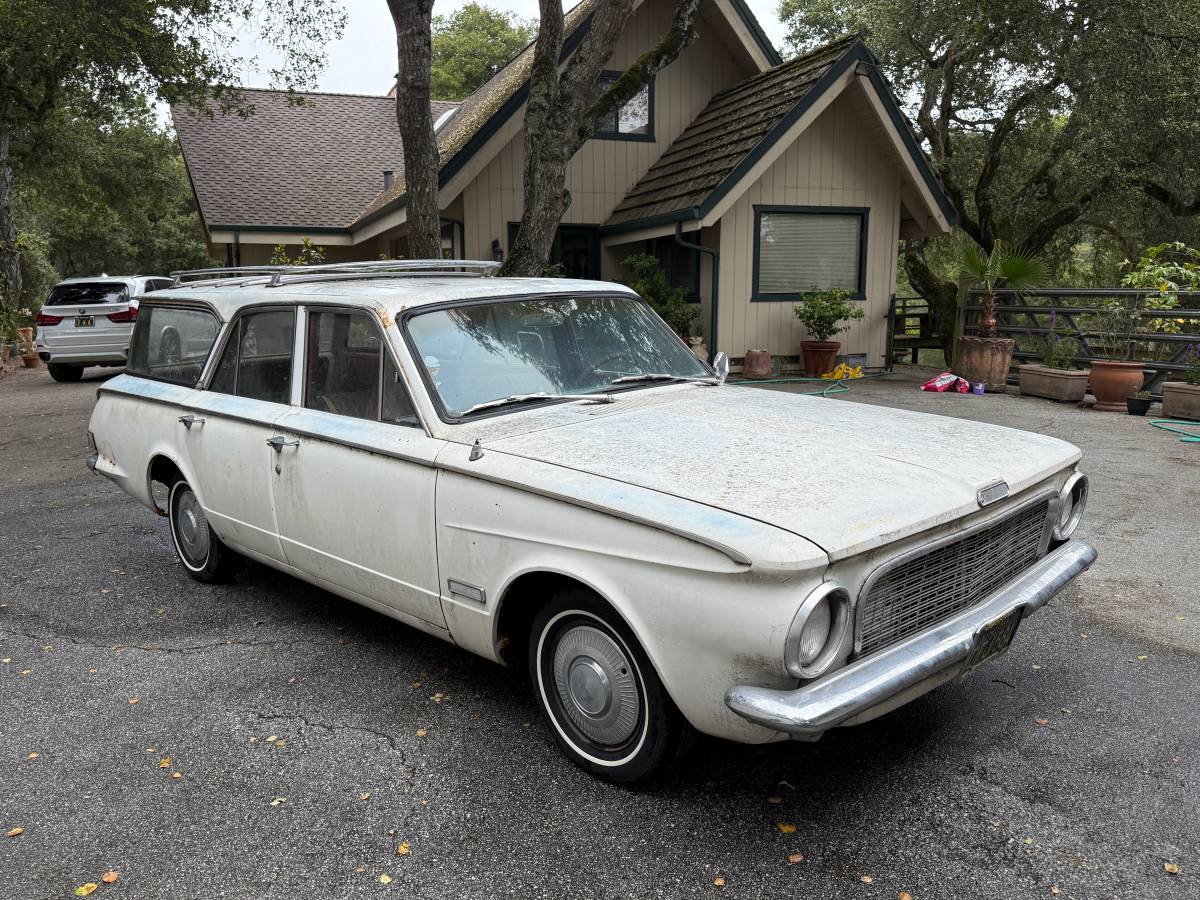
1963 Plymouth Valiant V200 Wagon – $3,850
Engine/drivetrain: 225 cubic inch OHV inline 6, three-speed automatic, RWD
Location: Aromas, CA
Odometer reading: 21,000 miles
Operational status: Runs and drives, but needs some work
We’ve looked at Plymouth Valiants plenty of times before, but I don’t remember ever showing you a wagon before. Before the Rise of the Minivan, and the later Crossover Apocalypse, you could get just about every car in wagon form. But for some reason, fewer wagons have survived the years than two- or four-doors with a trunk. Station wagons from the 1950s and ’60s are rarities these days, and even wagons from the ’70s and ’80s are less common than thier sedan counterparts. Were fewer wagons sold than sedans? Probably, but I think wagons probably led harder lives, too. This Valiant V200 wagon slipped through the cracks, though, and has reached the ripe old age of sixty-two years with only 21,000 miles to its name.
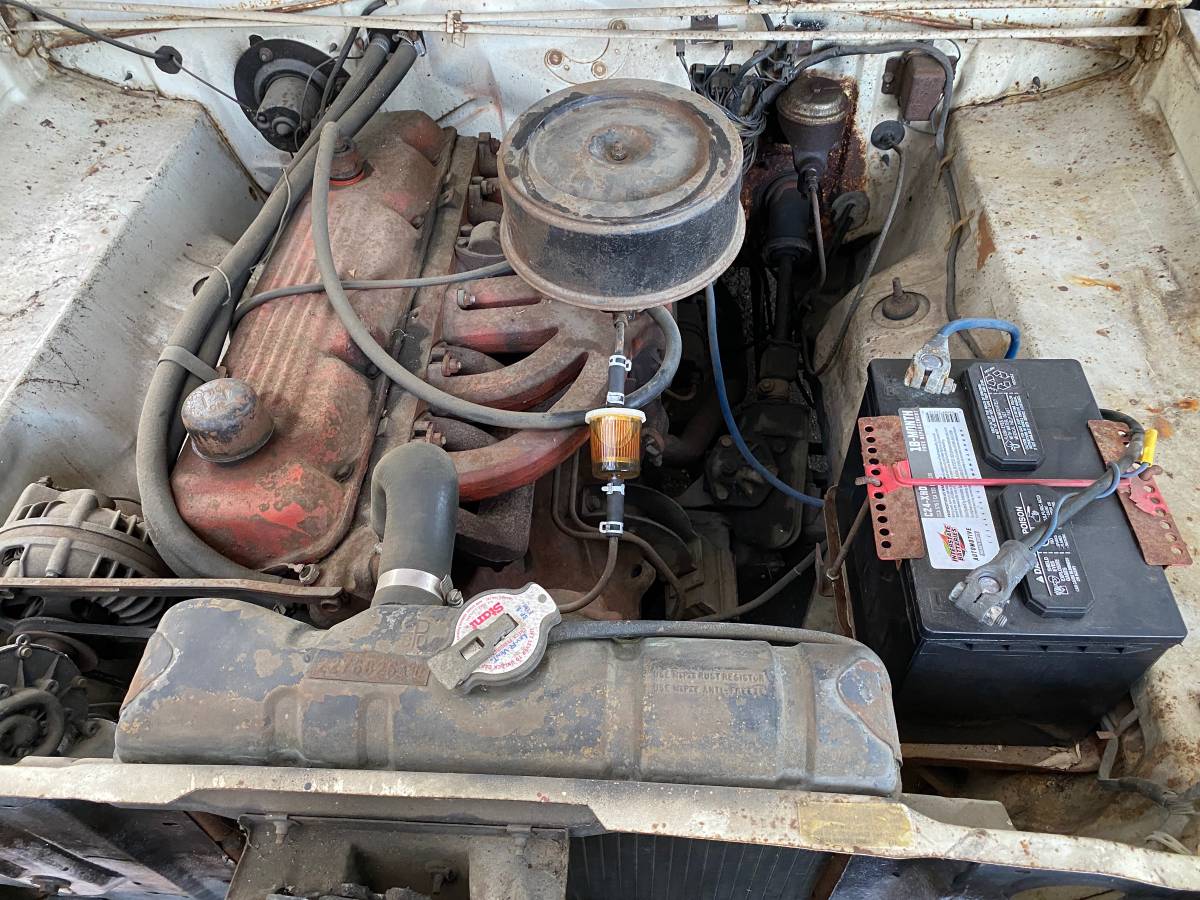
Under the hood, of course, is the mighty Leaning Tower of Power, a 225 cubic inch Slant Six. It’s backed by a push-button-operated Torqueflite automatic. This car sat around for decades, which is bad for any car, but I don’t think it’s actually possible to kill a Slant Six entirely. The seller has rebuilt the carb, replaced the battery and fuel pump, and installed new tires. They say you can drive it home, but obviously there is more to be done once you get it there.
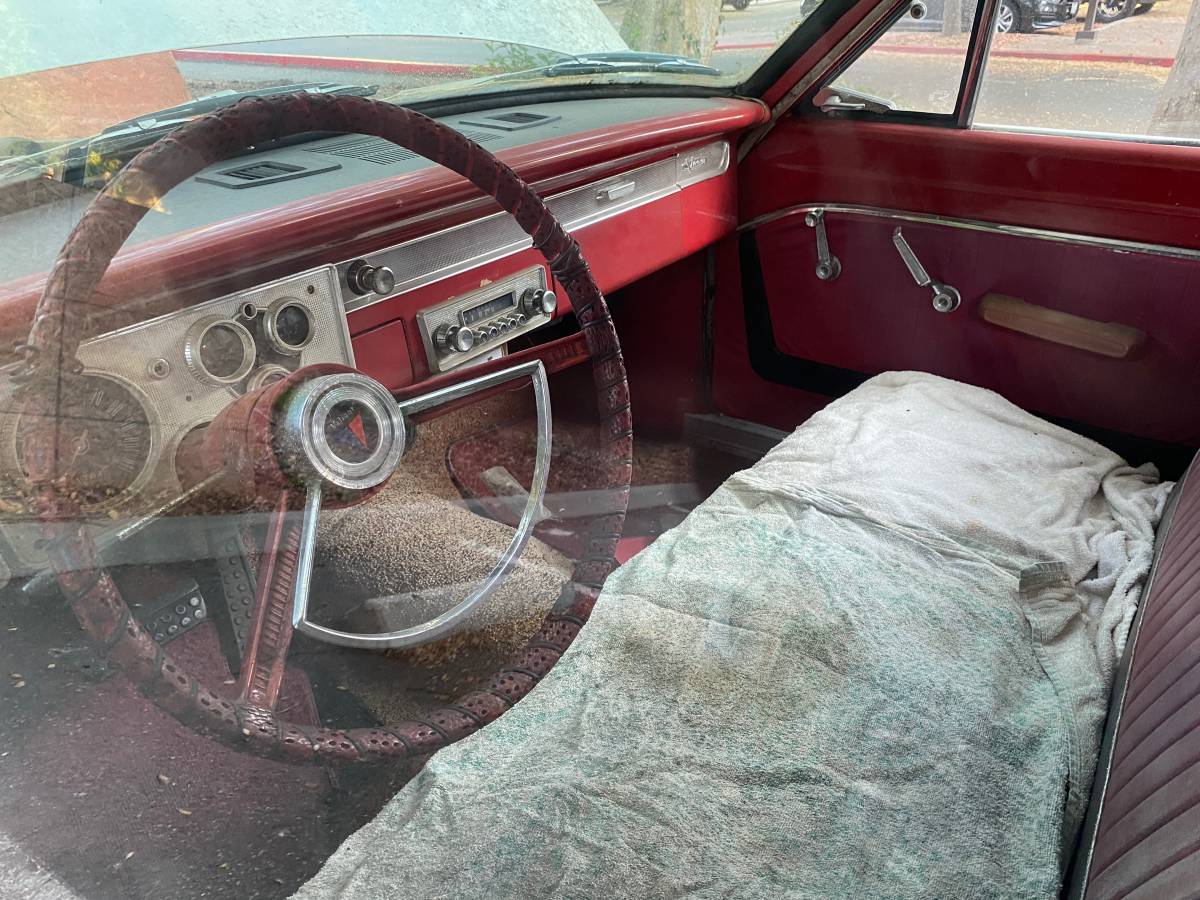
This is the only interior photo we get, and it looks like the seller took it through the driver’s window. Most of it looks pretty good, but I assume the vinyl under that blanket is toast; the seller says it needs reupholstery. But compared to most classic cars this age for this price, it looks good inside.
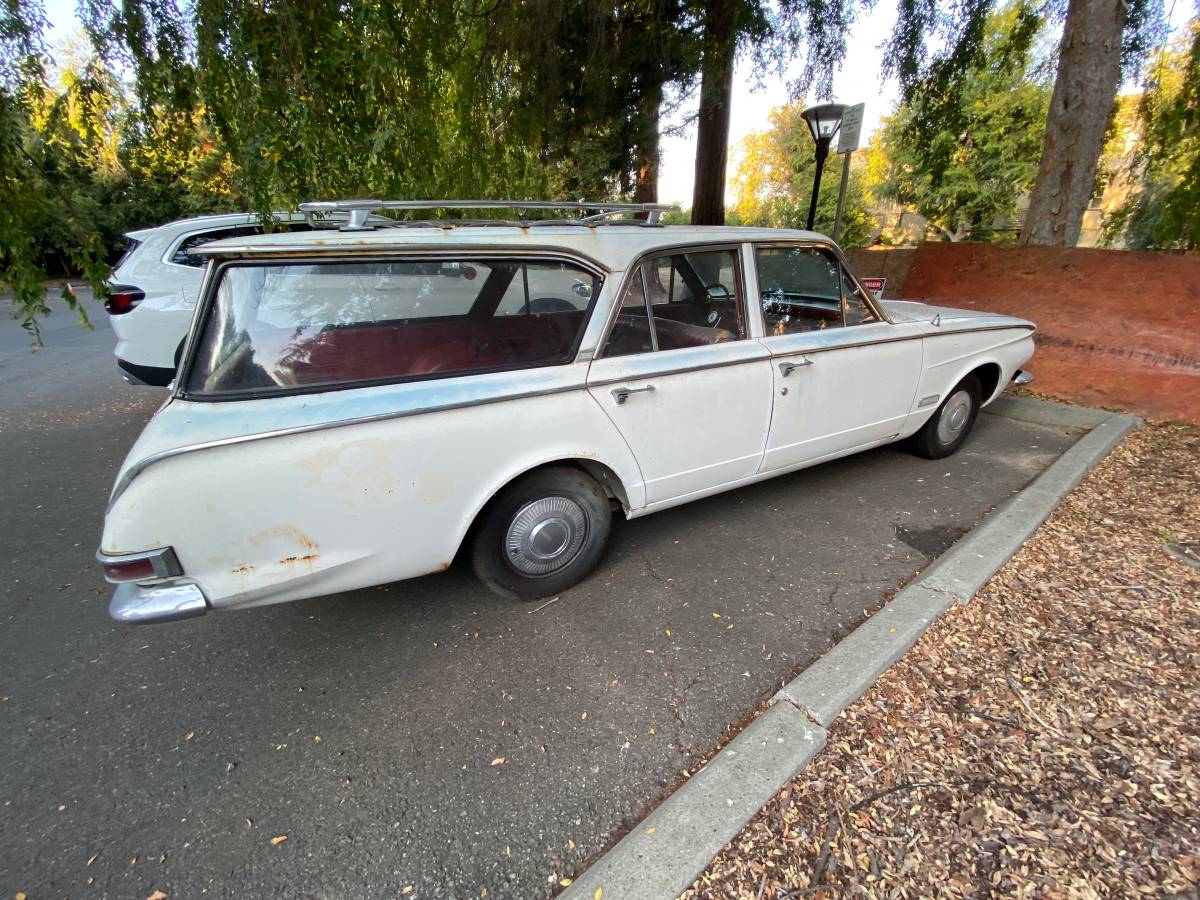
It has a little bit of rust outside, and of course the paint is fried. It looks like it actually used to be two-tone light blue and white, but the blue is sun-bleached away. But it doesn’t look bad at all the way it is, and I think you’d be the star of any Cars & Coffee gathering. The odds of another Valiant wagon showing up are pretty slim.
1994 Dodge Caravan SE – $1,395
Engine/drivetrain: 3.0-liter OHC V6, three-speed automatic, FWD
Location: Portland, OR
Odometer reading: 192,000 miles
Operational status: Runs and drives well
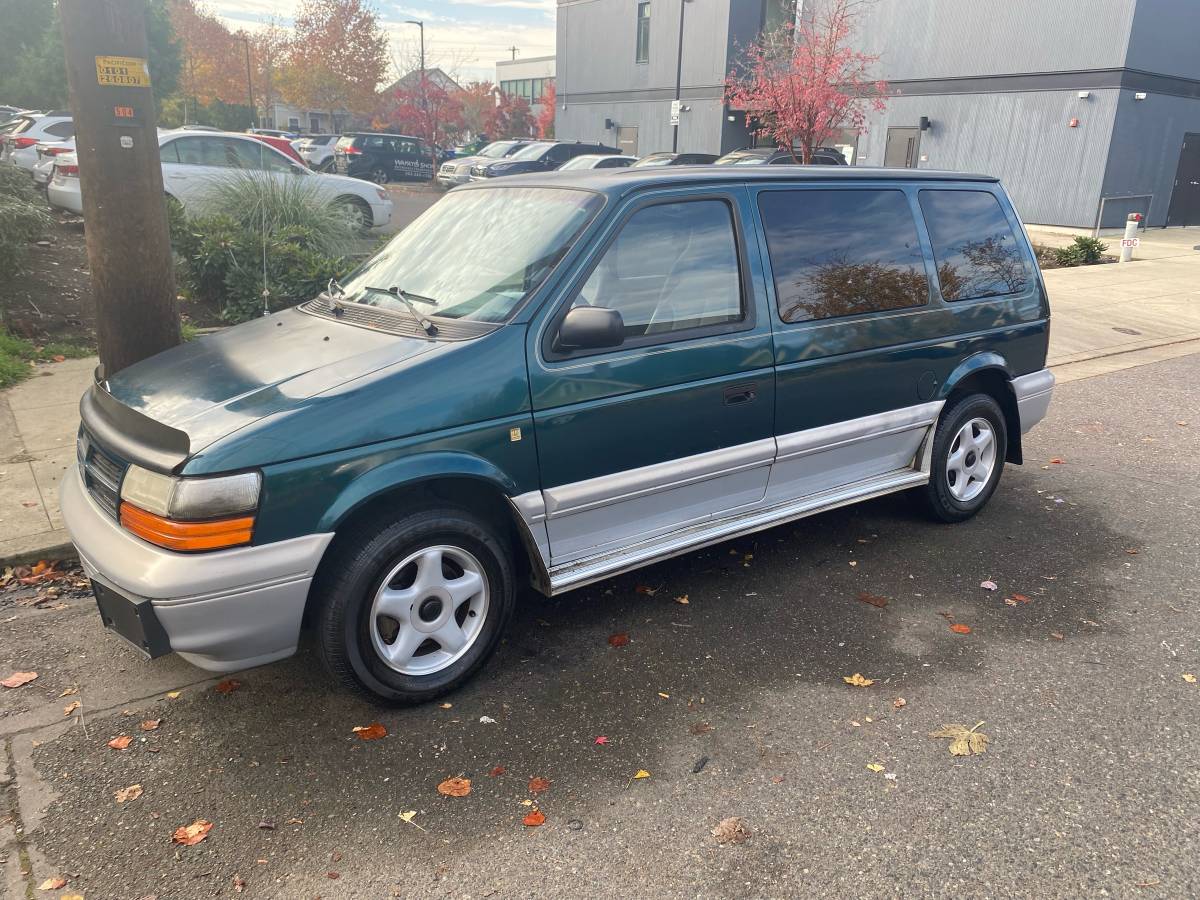
The station wagon’s reign as the family vehicle of choice ended in November of 1983, when Chrysler introduced the Dodge Caravan and Plymouth Voyager minivans. These boxes-on-wheels made so much sense that they soon filled suburban parking lots, and before the decade was out, nearly other manufacturer had gotten in on the act. The second-generation Caravan and Voyager, introduced in 1991, were more evolutionary than all-new, but it still sold like hotcakes. Short- and long-wheelbase versions were available; this one is an uncommon combination of the short wheelbase and the fancy SE trim.
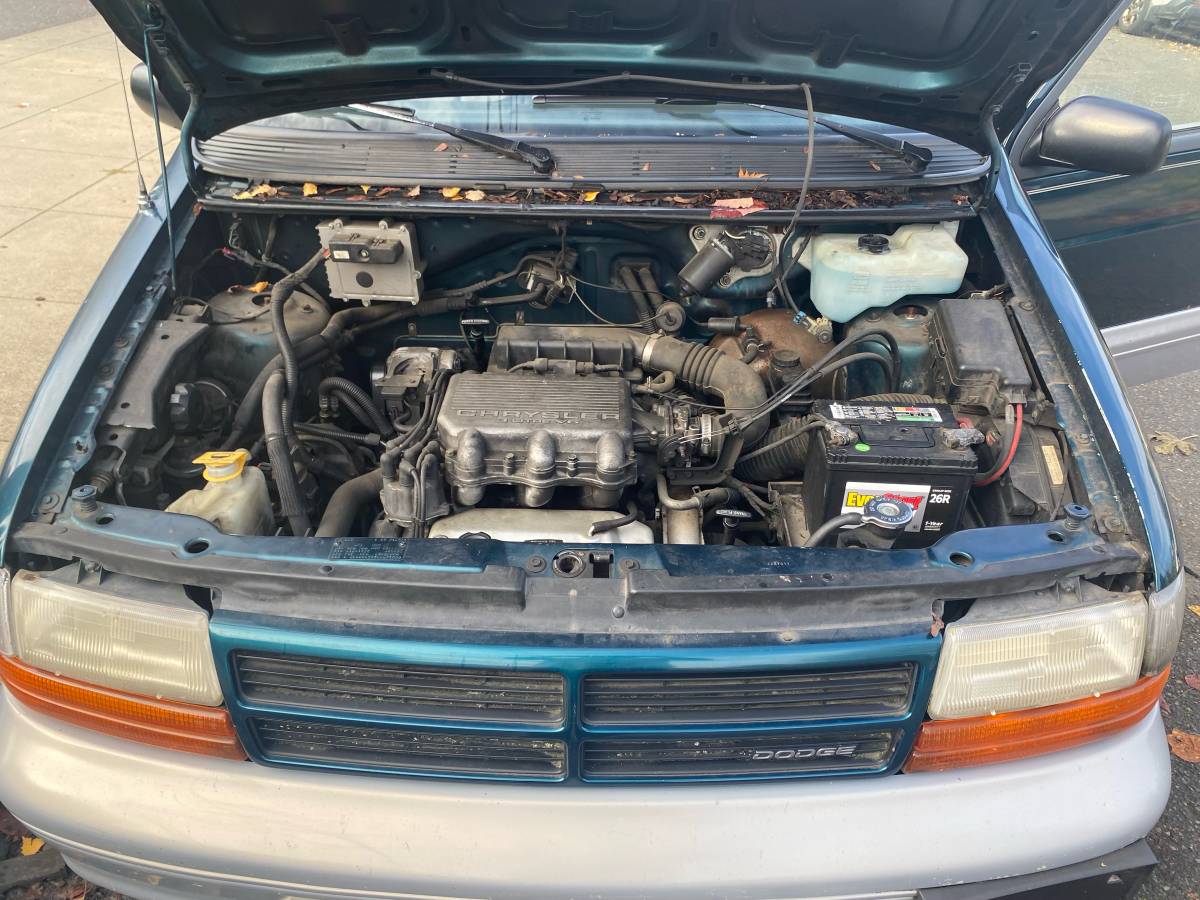
Long-wheelbase Caravans were powered by Chrysler’s own 3.3 liter pushrod V6, but the short-wheelbase vans stuck with the Mitsubishi 6G72 3.0 liter V6. This is a good thing, because it also means it uses the tried-and-true 3-speed Torqueflite transmission, and not the 4-speed Ultradrive, which was still suffering from teething problems. It’s not as refined on the highway, without an overdrive gear, but it’s bulletproof. This one is closing in on 200,000 miles, but the seller says it runs and drives great.
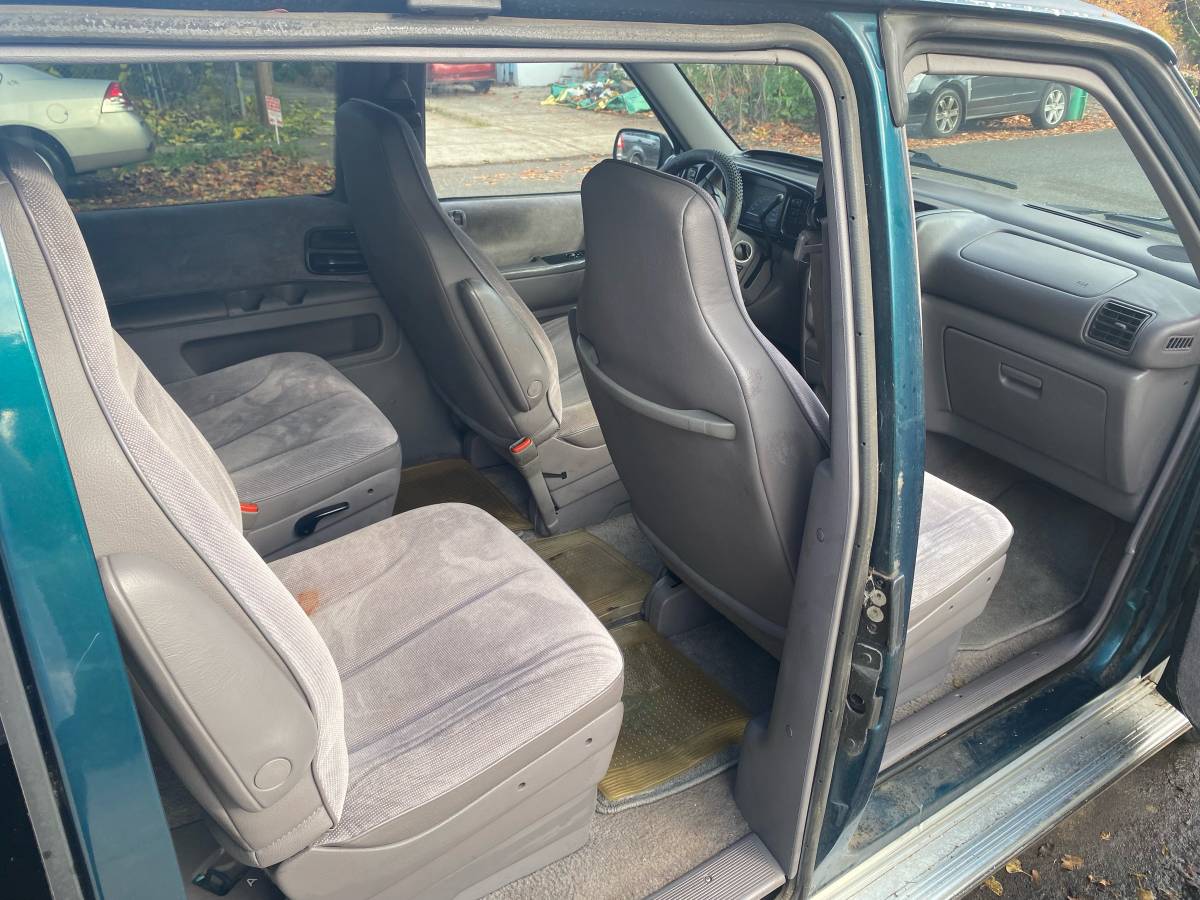
One of the hallmarks of most minivans is seating capacity, but this one bucks that convention. It has four captain’s chairs, and nothing else. It’s an idea setup if you have two kids who fight a lot on road trips, though, like my brother and I did. Seriously; we’d build a wall of suitcases and stuff between us in the back seat, because it’s the only way we could ride in the same car for hours on end. These aren’t Stow & Go seats; they’re Unlatch & Wrestle seats, but once you get them out, you’ve got enough room to lay down full 4×8 sheets of building material.
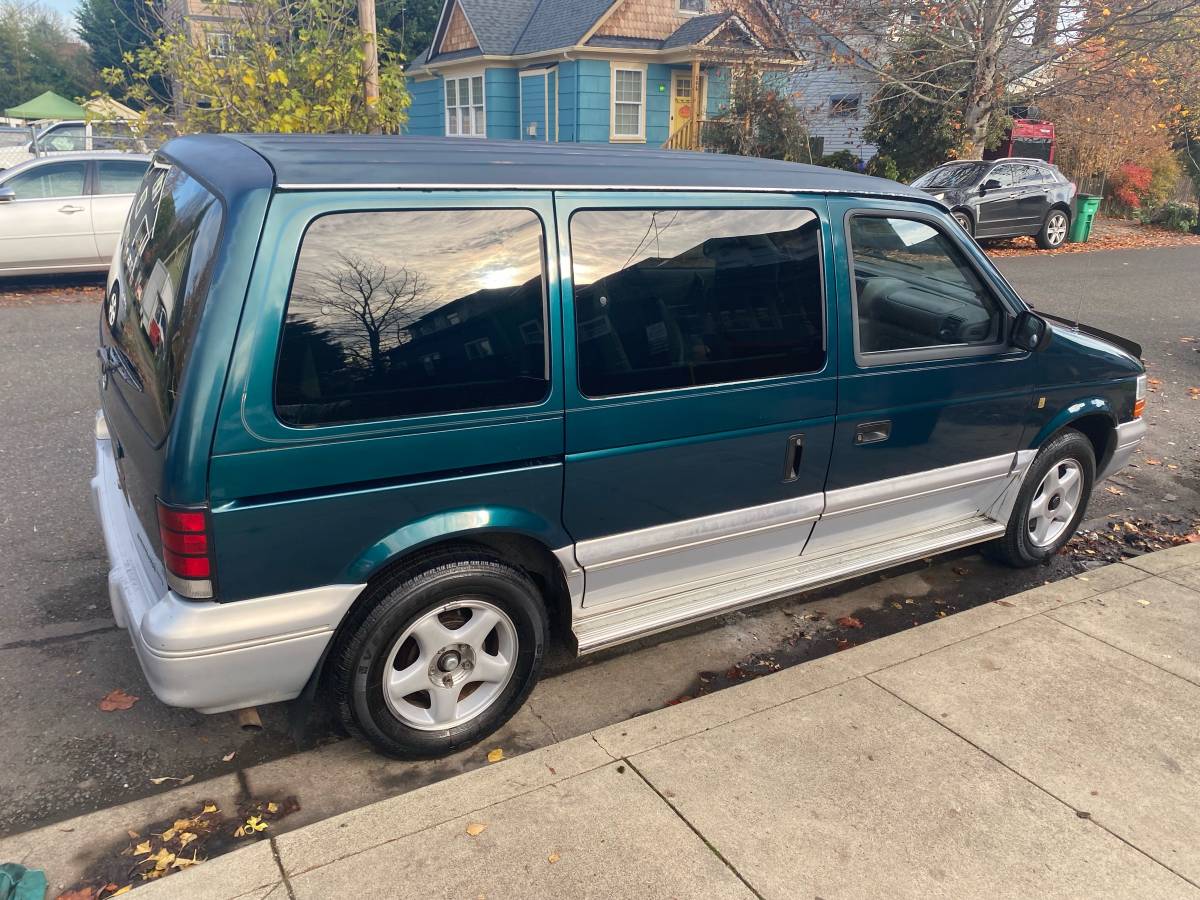
It looks good outside, and it’s a nice shade of dark green. These vans were available in a wide range of trims, but I always liked this sporty look best. “Sporty” is a bit of a stretch for a minivan, but the two-tone paint makes it look lower than it is, and the five-spoke alloy wheels are a nice touch. Too bad one of them is missing a hubcap, but if that’s the worst fault you can find, that’s pretty good for this price range.
If you ever get a chance to tour an auto assembly plant, do it. It’s fascinating to see, and it’s fun to think about all the different eras of cars that have rolled down that assembly line over the years. Times change, styles change, but that line just keeps rolling along. Here we’ve got two cars that very well could have come from the same factory, three decades apart, built to serve the same purpose. Which era do you prefer?




Already having the Australian built ute equivalent of that Valiant, and being addicted to Slant Sixes and pushbutton Torqueflites (with a shed full including probably a dozen different style inlet manifolds to suit) I’d take the Valiant, adapt the near mint condition blue original seat upholstery and door trims I have from an equivalent sedan, replace the dinky 13″ US spec wheels for proper 14″ Australian spec, and go cruising.
And yes, you can kill a Slant Six, but I only managed by losing all oil pressure due to a cracked oil line a long way from home on a very hot day, and I still got home despite all the rod bearings completely disintegrating (Australian RHD Valiants have a chassis-rail mounted steering box that would interfere with the ‘normal’ location of the oil filter on the oil pump, so Australian Slant Sixes had the oil filter mounted remotely, usually at the front of the motor on the manifold side, with steel feed/return pipes)
Wrong article!
The Valiant’s neat and all, but I don’t need another project.
The Caravan, on the other hand, has the BEST engine/tranny combo the Chrysler minivans ever had (imo). The 3-speed is reliable as a rock if you change the fluid every 60K, and I’ve had a number of vehicles in the past with the Mitsu 3.0l V6, including a ’90 Caravan, and that engine is an absolute beast. Because it’s a more complicated engine (OHC, timing belt, etc.), it requires more maintenance over the years than a Slant-6, but if I could get another vehicle with one of those in it, I’d be all over it.
Possibly blasphemous to some, but if the Valiant came home with me it would get plum-crazy purple paint and some aftermarket wheels/tires (and obviously a new interior). Also a brake upgrade of some sort. I would leave the rest of it stock.
Valiant all day every day. Nostalgia, longevity, long roof, push button, that intake manifold, fantastic condition… Yes.
In the latest of “Hold my Aussie Beer”, please see proof Valiant wagon can be cool: https://tinyurl.com/42safpmt
Both?
That valiant is awesome, I would have I would, of course have to put a hidden stereo in it and play Prince continuously, but I would probably end up killing it, hopefully not by busting a brake line and hitting a tree the way I did with my last Valiant in 1982.
I guess I would have to go with the Voyager, take out the passenger side rear seat, and use it as a truck like object. I suppose I’d have to play this.
https://www.laphamsquarterly.org/arts-letters/charts-graphs/voyagers-infinite-playlist
Beater minivans seem like a reasonable alternative to a pickup. Old small trucks are not cheap or plentiful anymore.
I do not share the auto enthusiast . . . enthusiasm for station wagons, and there’s nothing right about that Valiant outside of the leaning tower of power.
As much as it makes me ill to say it, van all day.
Duh. Its brown enough.
Hands down Valiant!
In about 1983 My Dad bought a ’63 Valiant convertible to be the engine donor for a ’65 he was fixing up for my Mom. The engine was in great shape. The rest, well that was a hole different story. Specifically, the holes where the rear floor was supposed to be. My family took that car from Indianapolis to St. Petersburg FL for spring break. My brother and I kept ourselves amused by lifting the floor mats and watching the road go by. I have fond memories of that car. I also learned to drive on that same engine.
Valiant, not even close.
If that were <1k miles from me, I'd be buying it tonight for Lemons rally….
I learned to drive in a 94 Grand Caravan – same color (bumpers were green though) and it was the long version, so it gets my vote.
I guess I get why some would vote for the Caravan, but for me, that Valiant would have to be up on blocks with no doors and a piston through the side of the engine before I’d pick the minivan over it. The Valiant is just so much more cool in every way. It would take some work to get it up to snuff, but it would be very much worth it.