

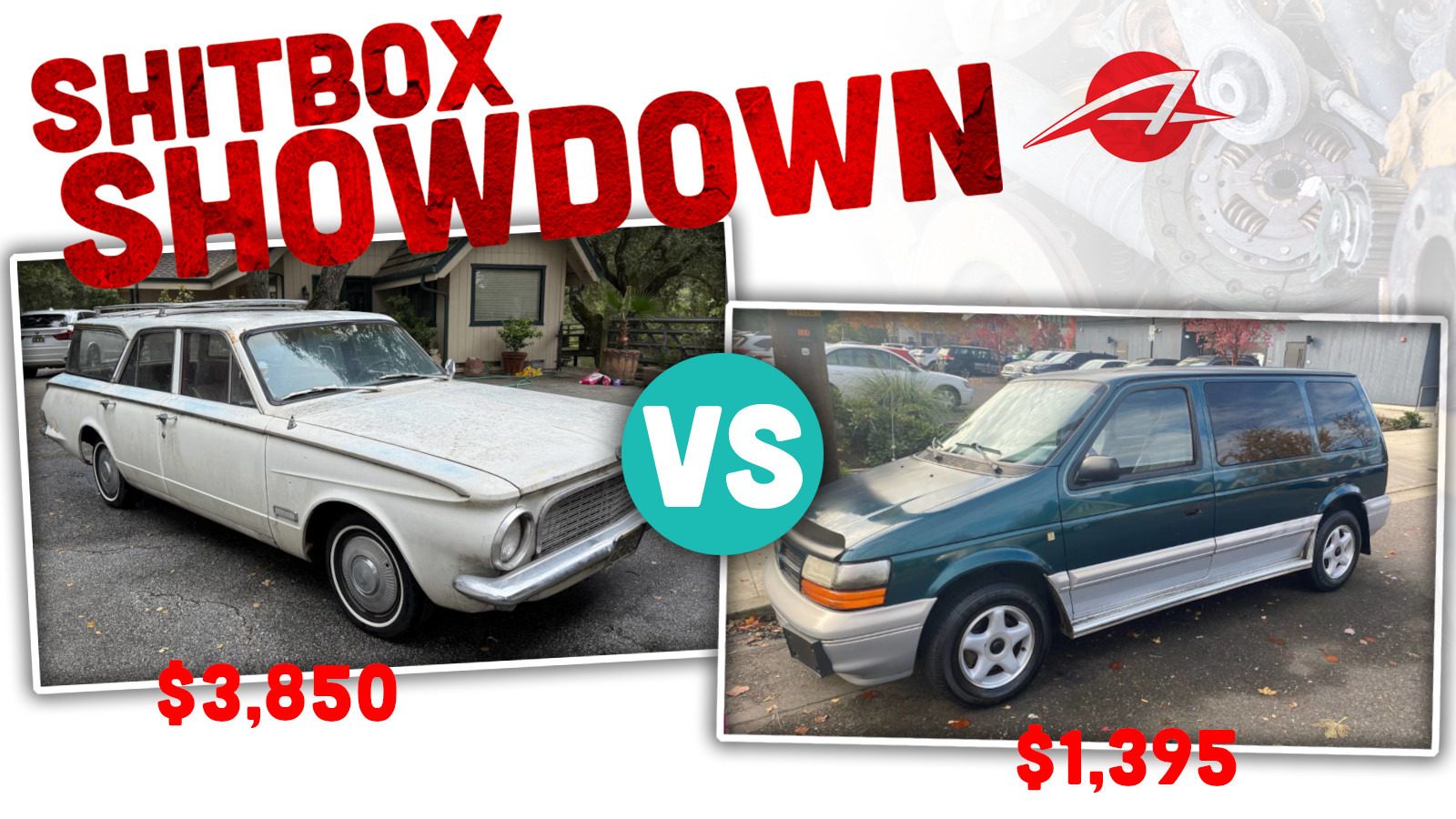
Good morning! We’re exploring connections between cars this week, and today I’ve got an interesting one for you. We’re going to look at two family cars, thirty years apart, that were built in the same factory – probably.
The connection yesterday was number of valves in the engine, and we looked at a Jaguar convertible and a Chrysler sedan. I expected the Jag’s reputation to scare more of you off, especially for five grand more, but it put up a good fight. Still, the Chrysler took the prize, by about a 60:40 margin.


Me, I’m taking the Chrysler. It’s going to be a long time before I have any interest in another British car, even one in such apparently nice condition. But that big front-wheel-drive New Yorker would make a great winter beater, to keep snow and salt off my big rear-wheel-drive Chrysler sedan.

Before I show you today’s cars, I need to make a confession: I don’t know for sure that these two cars came out of the same factory. Automakers often build the same model at more than one facility, and both of these models were built at both the Saint Louis plant, and the Windsor, Ontario plant. So there’s a good chance they came from the same place, but I can’t guarantee it. But it’s the best idea I’ve got for today, so I’m going with it. Let’s check them out.
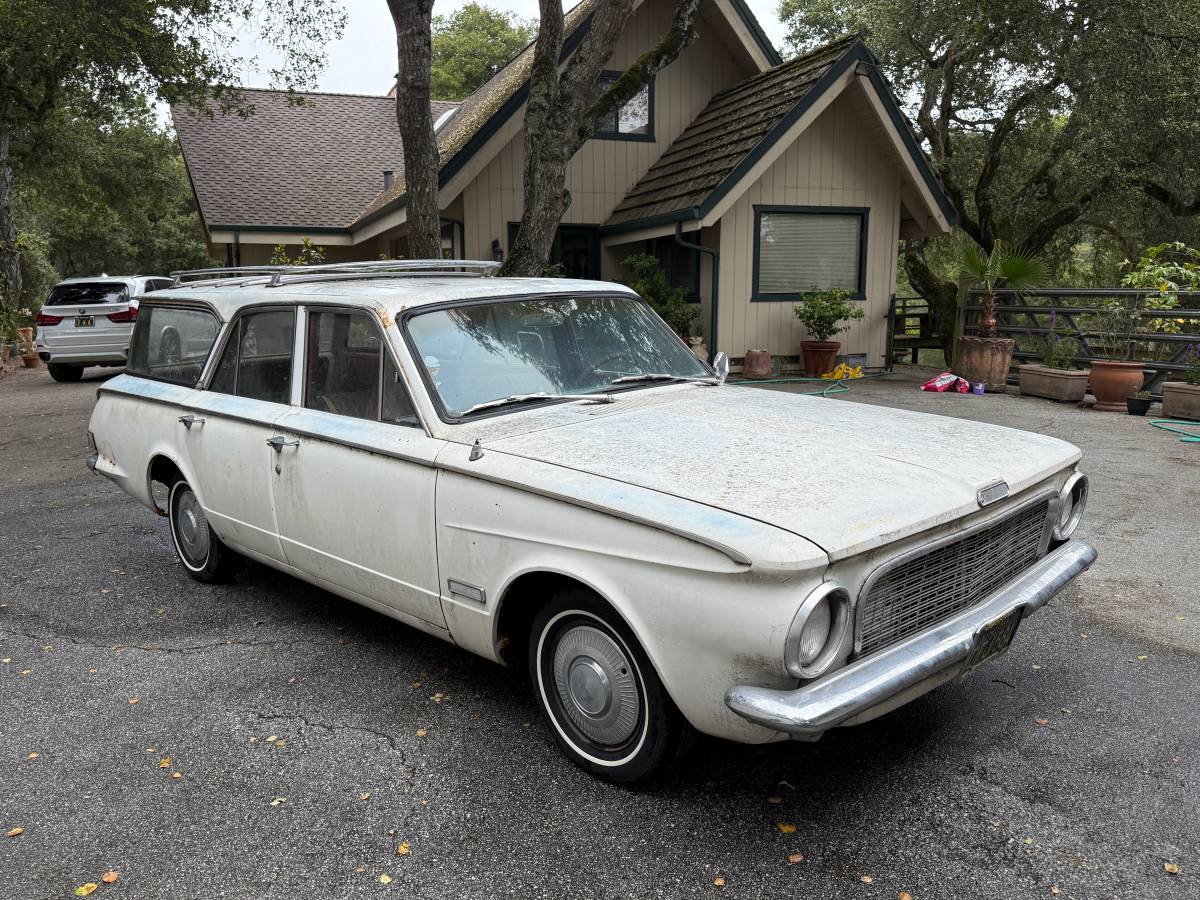
1963 Plymouth Valiant V200 Wagon – $3,850
Engine/drivetrain: 225 cubic inch OHV inline 6, three-speed automatic, RWD
Location: Aromas, CA
Odometer reading: 21,000 miles
Operational status: Runs and drives, but needs some work
We’ve looked at Plymouth Valiants plenty of times before, but I don’t remember ever showing you a wagon before. Before the Rise of the Minivan, and the later Crossover Apocalypse, you could get just about every car in wagon form. But for some reason, fewer wagons have survived the years than two- or four-doors with a trunk. Station wagons from the 1950s and ’60s are rarities these days, and even wagons from the ’70s and ’80s are less common than thier sedan counterparts. Were fewer wagons sold than sedans? Probably, but I think wagons probably led harder lives, too. This Valiant V200 wagon slipped through the cracks, though, and has reached the ripe old age of sixty-two years with only 21,000 miles to its name.
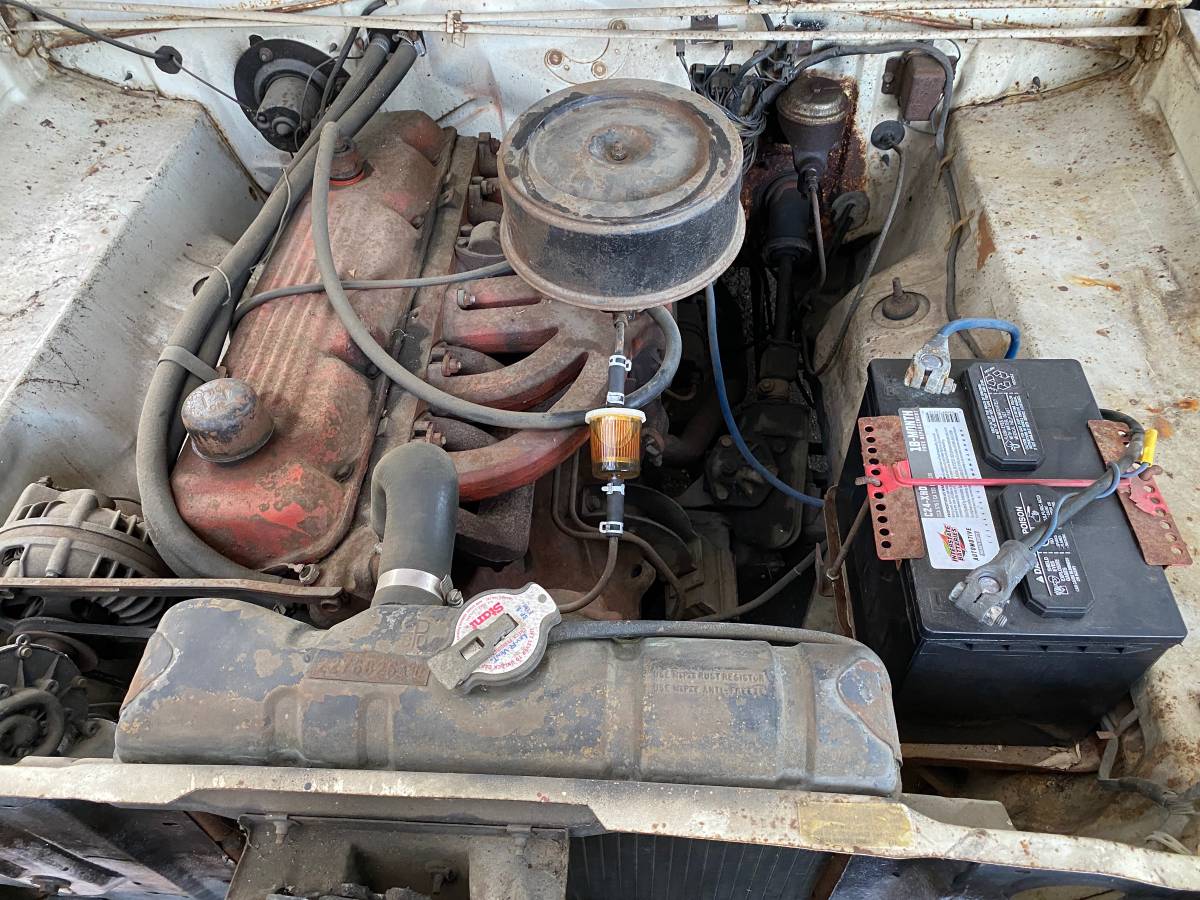
Under the hood, of course, is the mighty Leaning Tower of Power, a 225 cubic inch Slant Six. It’s backed by a push-button-operated Torqueflite automatic. This car sat around for decades, which is bad for any car, but I don’t think it’s actually possible to kill a Slant Six entirely. The seller has rebuilt the carb, replaced the battery and fuel pump, and installed new tires. They say you can drive it home, but obviously there is more to be done once you get it there.
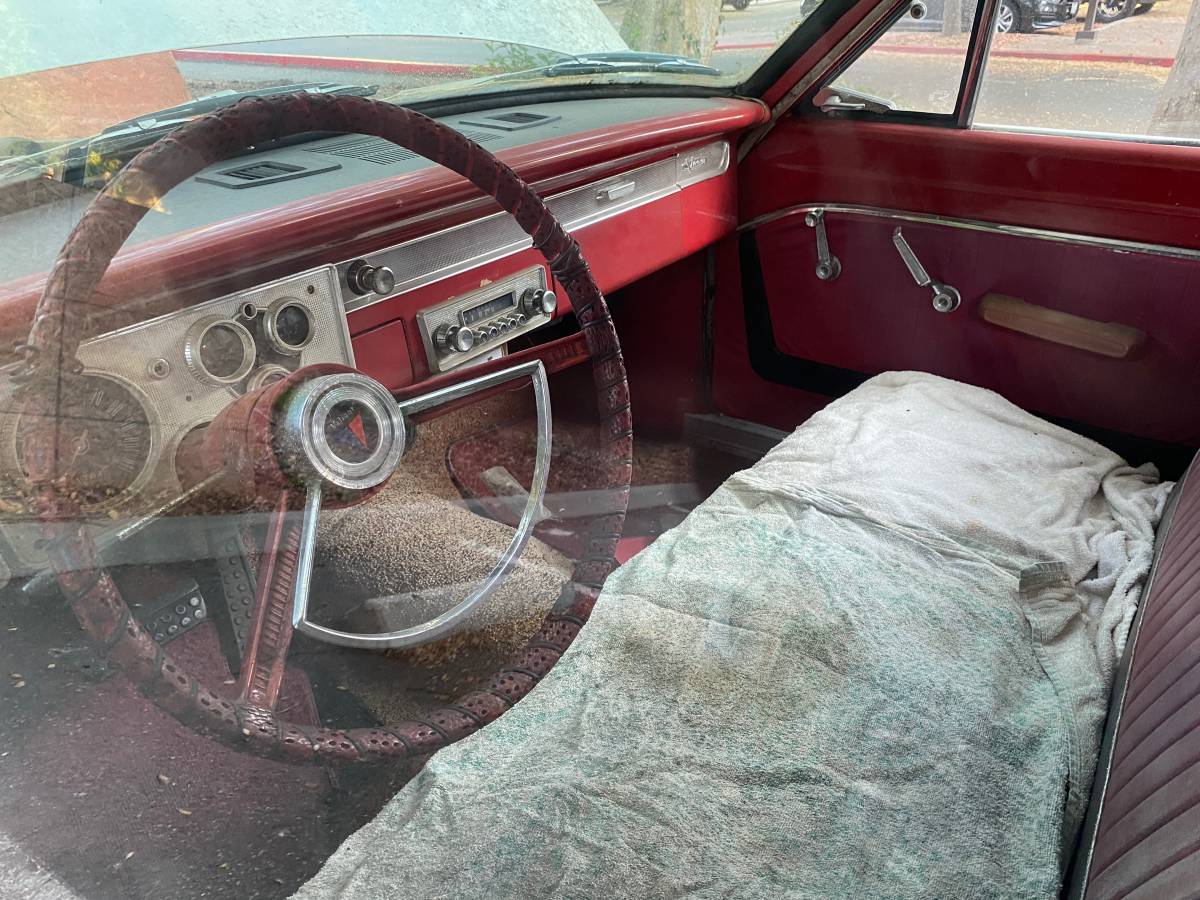
This is the only interior photo we get, and it looks like the seller took it through the driver’s window. Most of it looks pretty good, but I assume the vinyl under that blanket is toast; the seller says it needs reupholstery. But compared to most classic cars this age for this price, it looks good inside.
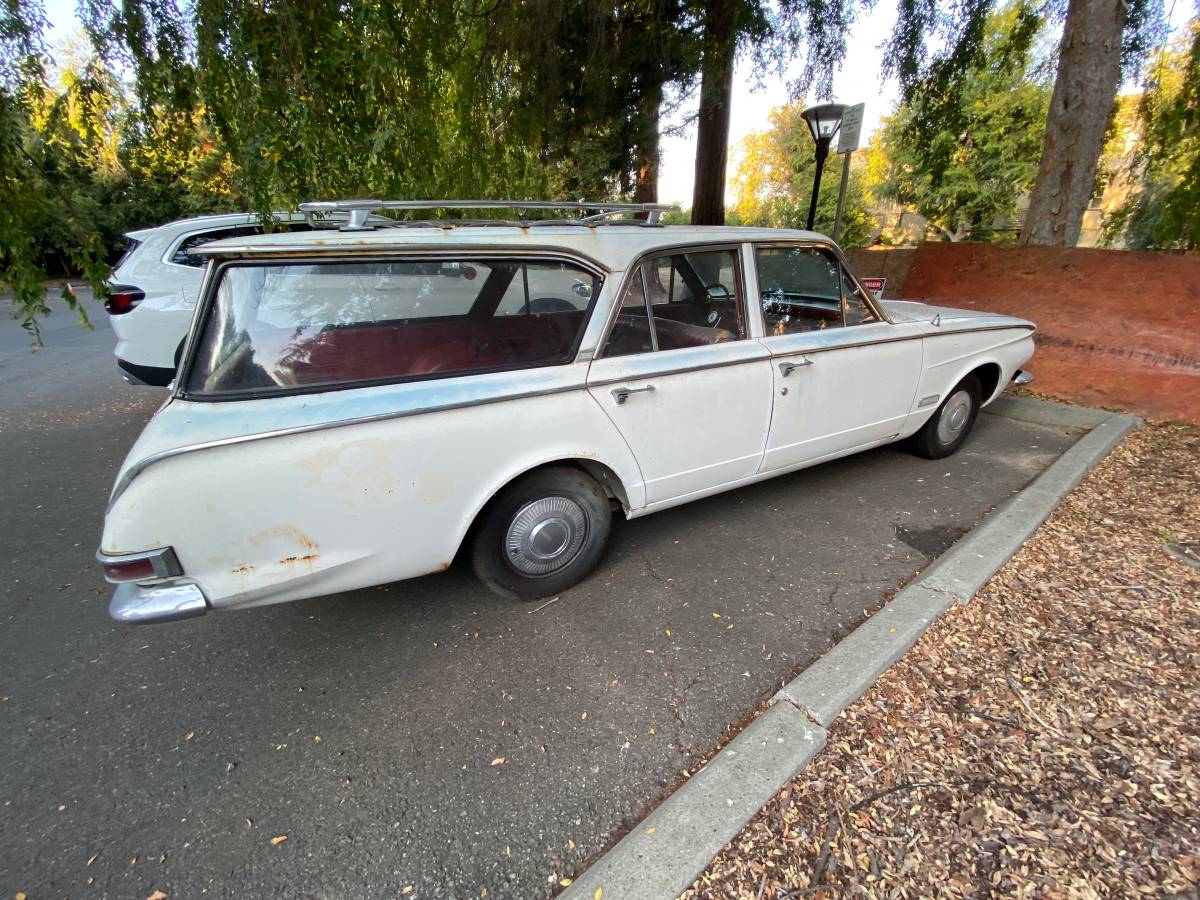
It has a little bit of rust outside, and of course the paint is fried. It looks like it actually used to be two-tone light blue and white, but the blue is sun-bleached away. But it doesn’t look bad at all the way it is, and I think you’d be the star of any Cars & Coffee gathering. The odds of another Valiant wagon showing up are pretty slim.
1994 Dodge Caravan SE – $1,395
Engine/drivetrain: 3.0-liter OHC V6, three-speed automatic, FWD
Location: Portland, OR
Odometer reading: 192,000 miles
Operational status: Runs and drives well
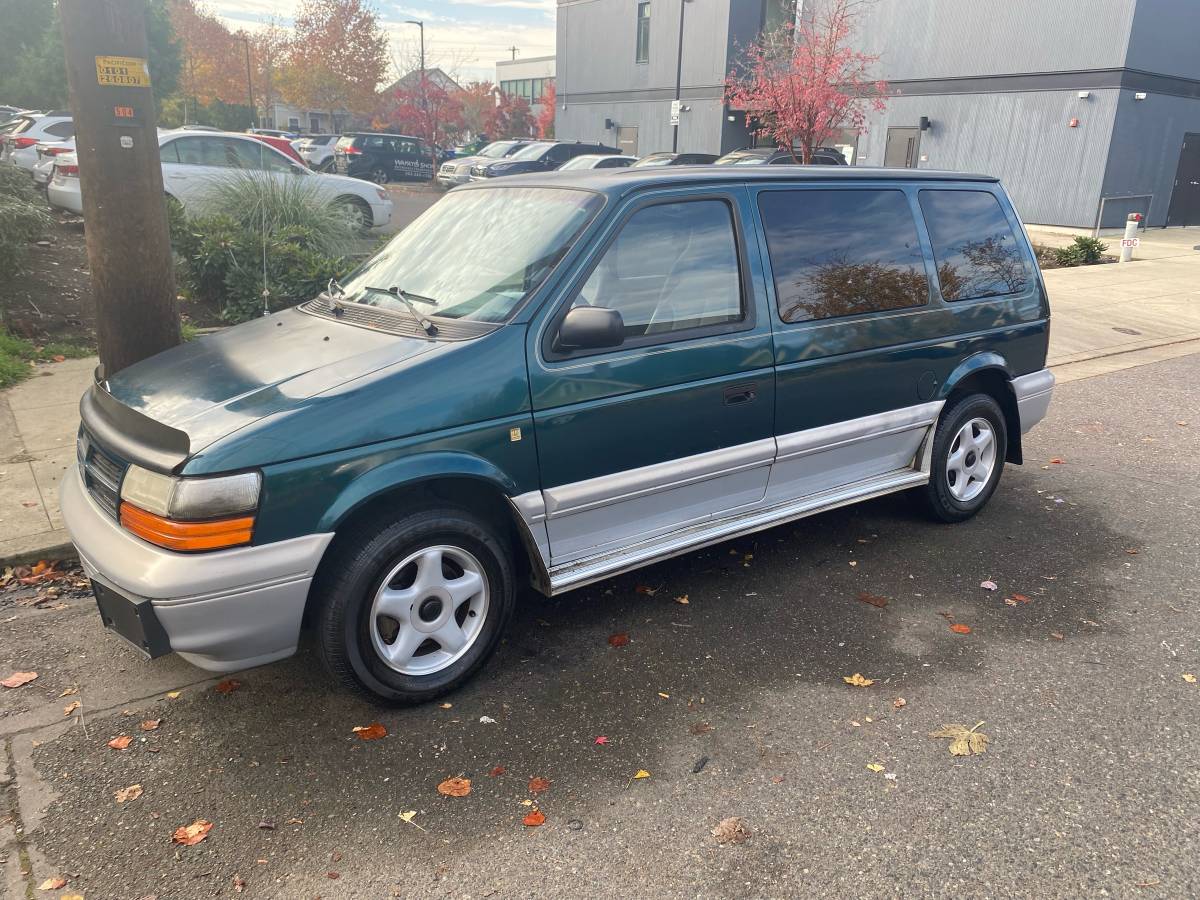
The station wagon’s reign as the family vehicle of choice ended in November of 1983, when Chrysler introduced the Dodge Caravan and Plymouth Voyager minivans. These boxes-on-wheels made so much sense that they soon filled suburban parking lots, and before the decade was out, nearly other manufacturer had gotten in on the act. The second-generation Caravan and Voyager, introduced in 1991, were more evolutionary than all-new, but it still sold like hotcakes. Short- and long-wheelbase versions were available; this one is an uncommon combination of the short wheelbase and the fancy SE trim.
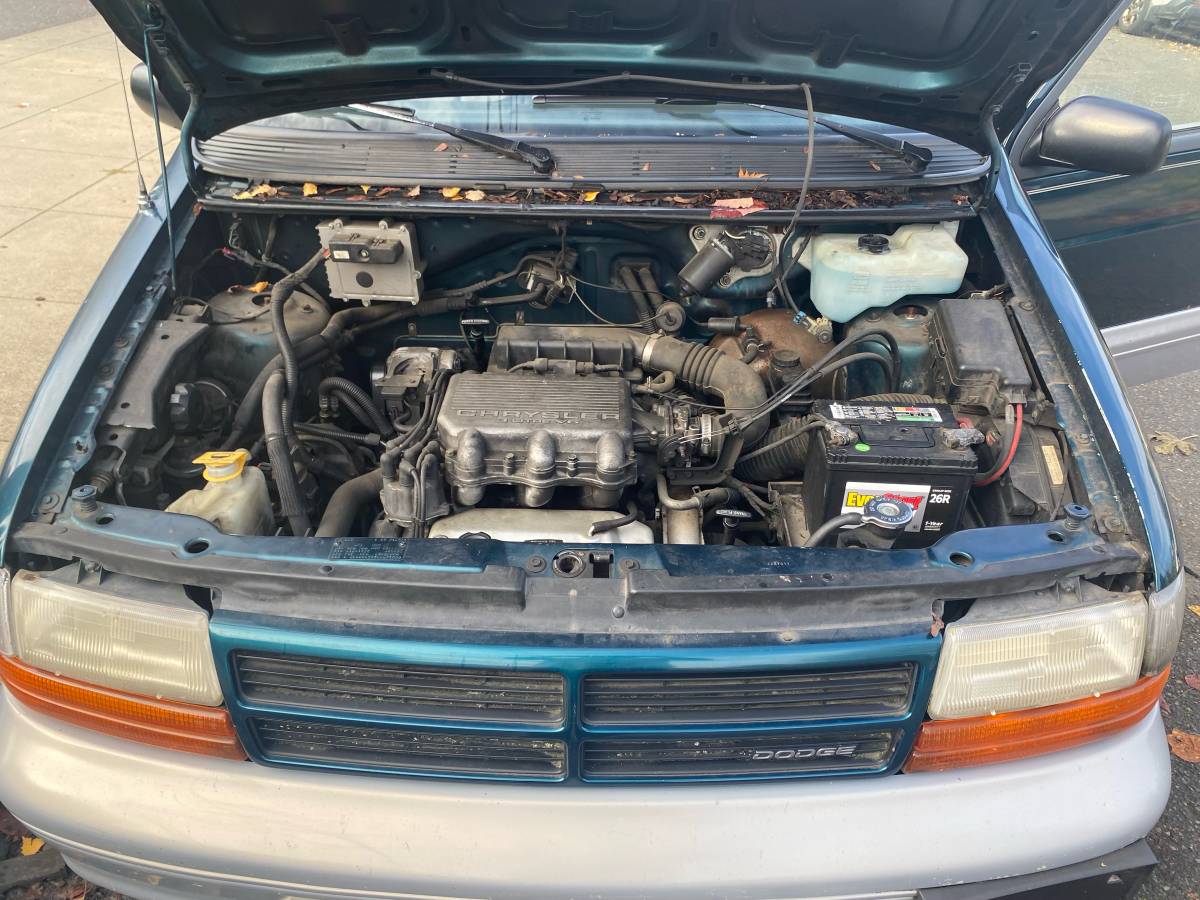
Long-wheelbase Caravans were powered by Chrysler’s own 3.3 liter pushrod V6, but the short-wheelbase vans stuck with the Mitsubishi 6G72 3.0 liter V6. This is a good thing, because it also means it uses the tried-and-true 3-speed Torqueflite transmission, and not the 4-speed Ultradrive, which was still suffering from teething problems. It’s not as refined on the highway, without an overdrive gear, but it’s bulletproof. This one is closing in on 200,000 miles, but the seller says it runs and drives great.
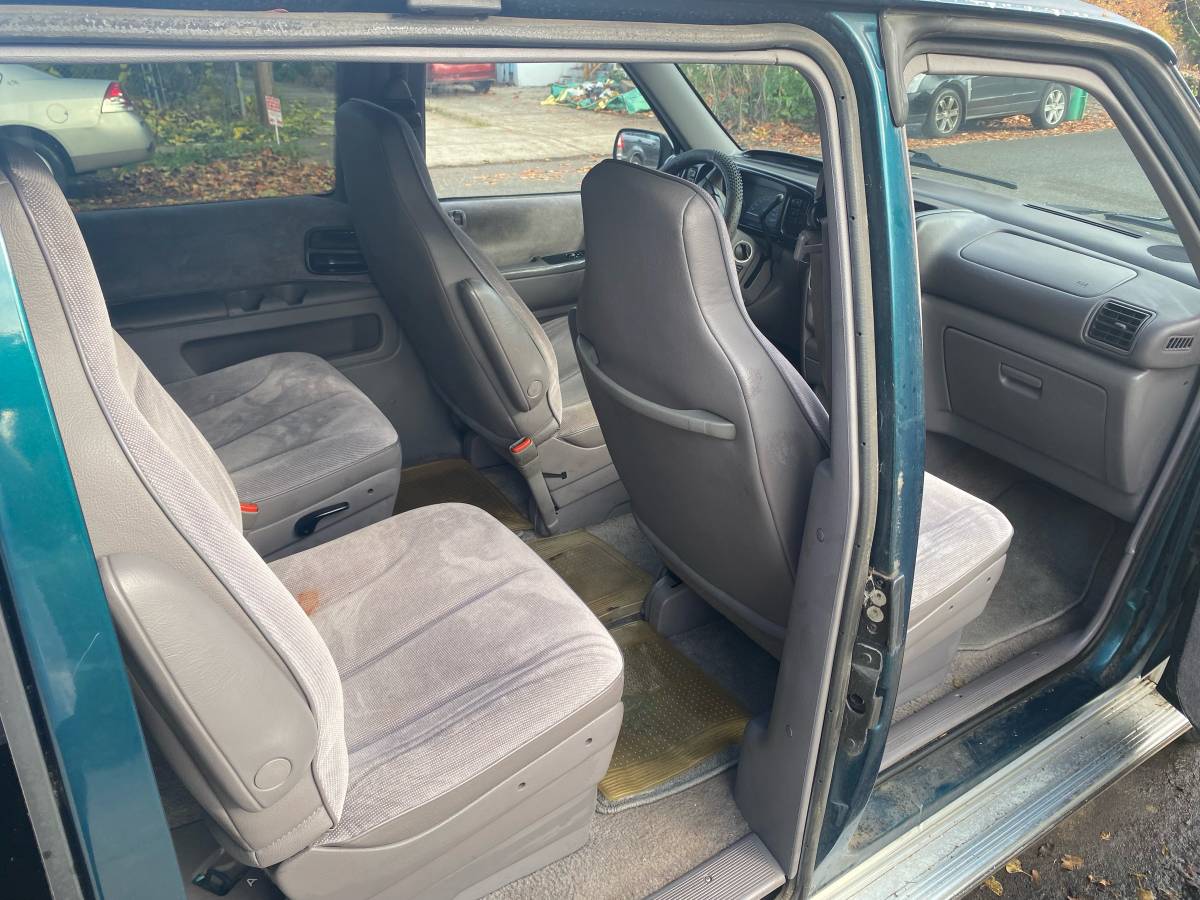
One of the hallmarks of most minivans is seating capacity, but this one bucks that convention. It has four captain’s chairs, and nothing else. It’s an idea setup if you have two kids who fight a lot on road trips, though, like my brother and I did. Seriously; we’d build a wall of suitcases and stuff between us in the back seat, because it’s the only way we could ride in the same car for hours on end. These aren’t Stow & Go seats; they’re Unlatch & Wrestle seats, but once you get them out, you’ve got enough room to lay down full 4×8 sheets of building material.
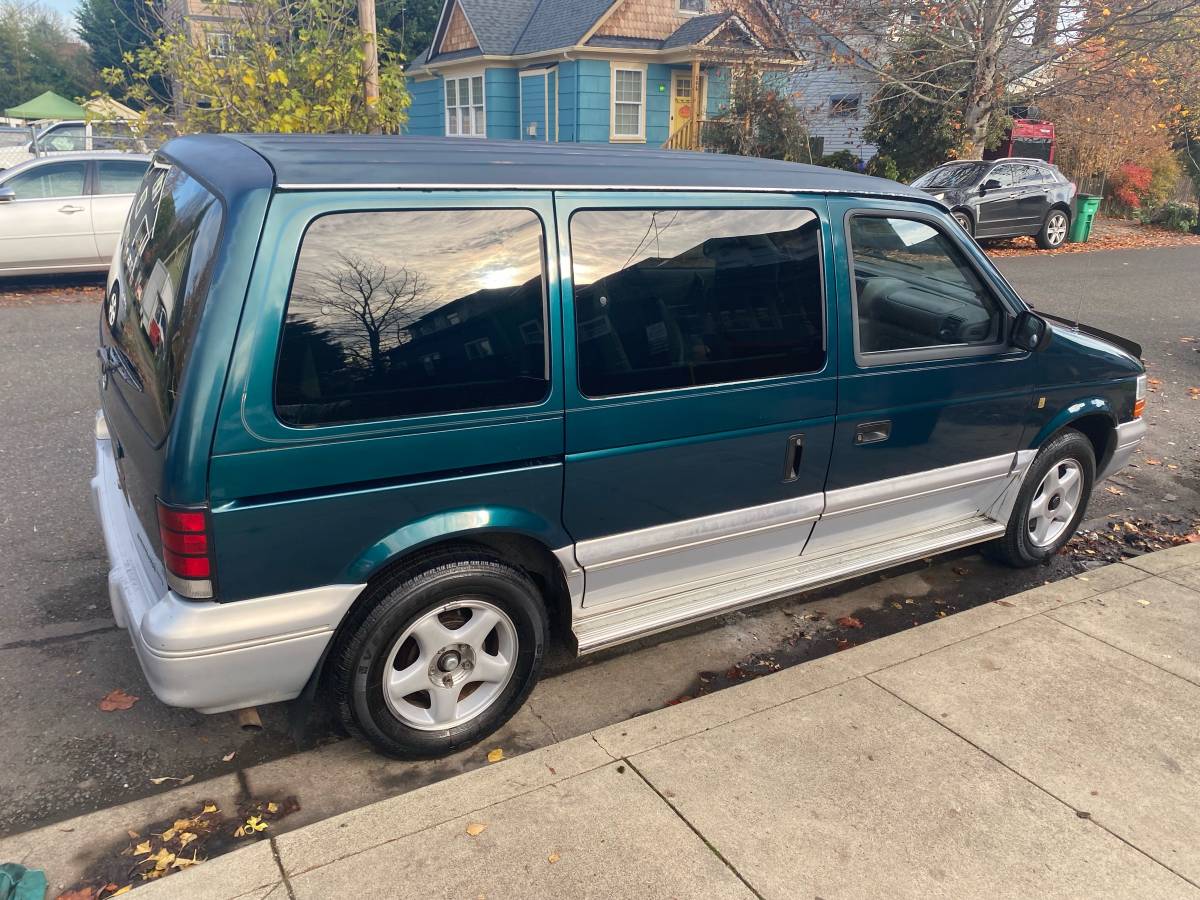
It looks good outside, and it’s a nice shade of dark green. These vans were available in a wide range of trims, but I always liked this sporty look best. “Sporty” is a bit of a stretch for a minivan, but the two-tone paint makes it look lower than it is, and the five-spoke alloy wheels are a nice touch. Too bad one of them is missing a hubcap, but if that’s the worst fault you can find, that’s pretty good for this price range.
If you ever get a chance to tour an auto assembly plant, do it. It’s fascinating to see, and it’s fun to think about all the different eras of cars that have rolled down that assembly line over the years. Times change, styles change, but that line just keeps rolling along. Here we’ve got two cars that very well could have come from the same factory, three decades apart, built to serve the same purpose. Which era do you prefer?





Plymouth makes it! Some spit, polish, and a two-tone paint job and it’s a great weekend fun car. I would pray every day that nothing happens to the gigantic side glass. Lean on me.
Valiant please!
Learned to drive in a 63 Dart wagon
First car I bought myself 64 Dart GT
Winter car to keep my new 1975 F150 out of the snow
64 Valiant wagon This will chew thru deep snow
All with the 225 lazy 6
Not fast, but dependable
Valiant. I have always found the short wheelbase Chrysler vans similar to the tiny pickup beds on fullsize trucks – they promise more than they can deliver. The Valiant is not only more practical in that regard, but just plain neat and complete enough it may not be a complete nightmare to get back on the road.
Prince Valiant for me
Not only is the Valiant cooler in every way visually, “push-button-operated” transmission sells it for me!
The Valiant, please. It’s cosmetically imperfect but seems entirely original and solid. In my mind, that’s the perfect kind of classic car to own. No previous owner hacks, chances are the last person to put a wrench on some of those bolts was in 1963. And you don’t have to worry about a ding or a chip in the paint, or getting the interior a little dirty.
Valiant location: Aromas, California
and I can smell it from here
The Caravan is fine, but I actually like the styling of the Valiant wagon. I think it’d be worth it to fix up.
My first car that I used as a daily was a 63 valiant v200 in red with red/gray interior.
I’d take this one for the memories. The caravan isn’t worth the effort at 75% off.
Caravan for me. Old slushbox cars in a low spec like that old Valiant suck. I grew up with vehicles like that and know all the different ways they suck worse compared to that much newer Dodge Caravan.
Plus the Caravan is way cheaper.
The Valiant, a handful of valium and a couple of beers should see me right.
I have to go with the Caravan. Great color and good trim, the whole thing looks surprisingly nice for a minivan of this age.
As much as my soul wants to vote for the Valiant, I couldn’t trust it with daily driving like I could with the Caravan. Im a huge 1960’s/70’s Mopar guy, but I can’t justify the Plymouth, so the cheap Dodge takes it. Also it has a 727, which is a win in any book.
The Valiant wagon gets my vote. Seems like it would be a straightforward restoration of mostly surface details. Having said that, I love that cheap van with the big cargo area.
Leaning towah of powah baby! A Valiant effort by the Caravan, but wagon is love. Wagon is life.
I have no use for the Valiant and couldn’t in good conscience drive a pre-emission vehicle in my city that routinely has poor air quality days that force my wife with asthma to limit outdoor activates.
The Caravan is a useful vehicle for cheap. The emissions are poor but not 1960’s poor and it could be useful for the occasional trip to the Home Depot for a sheet of plywood, etc.
Having been stranded by a Caravan a few times already, it’s time to try new, different inconveniences. Valiant, please.
Then again, the Slant and TorqueFlite combination means that this one might fail in some significant fashion, but the drivetrain won’t be what lets it down.
I like both today, but the oddball Valiant wagon calls to me more. Phenomenal condition for the age.
These minivans were ubiquitous in my youth.
If that Valiant wasn’t on the wrong end of the continent I’d give it some serious consideration.
I’d be happy with either but that Valiant has so many cool things going for it: slant six, push button tranny, funky rear glass
These are both David Tracy-approved, in their own way.
Both could be an option: use the van to schlep parts for the wagon and return it to its former glory.
only approved if they are on another continent.
He had a Valiant before moving to CA. He had that arc about getting it rust-proofed and such. And I believe his affection for the Chrysler van is because his parents had one when he was young (and he has an affinity for Mopar anyway).
Missed all that, thanks.
This was really tough. On the one hand, I could use the Caravan as a utility vehicle, which I don’t really need, but it’s cheap; on the other hand, I could use the Valiant as a summer cruiser, but it doesn’t really excite me all that much. At the end of the day, I find the Valiant more interesting because of its rarity. I agree with Mark that the “sporty” van looks good. I wonder if any modern minivans would take the two-tone treatment well?
I bought a ’95 Caravan new. It was great until year 17 when it seemed to fall apart all at once with a costly repair every other month. I don’t see this Caravan being any different.
this one’s 31. It might have another 3 years of life left in it (assuming the 1st set of parts were done all over at age 17).
My first car at 16 (in 1971) was a 1963 Valiant convertible. Needless to say I’ll go with the Valiant.
Valiant is like a pug dog, so ugly it is almost cute. The price is probably more than I would want to pay for a grimy Gramps garage cleanout special that does not run. But I will say it would be far easier to repair than the Caravn.
However for the price and if it does seem to run as advertised then the Caravan is far more useful to me. I would like the third row of seats though.