


By 2026, an old rear-wheel-drive Volvo will have lived several lives. Especially if it was registered new in the Scandinavian countries, or Finland. This means that 30-40 years ago, when a 740 or a 940 first started its life as someone’s new company car or family car, it was driven quite differently from today.
Having trundled through the first couple of decades in the hands of a few owners, the Volvo would have depreciated enough to be able to be bought by a 20-something driver, eager to learn the ropes of RWD handling. Given how popular they are here, it’s also completely possible they have been dependable family heirlooms that have been handed down to become people’s first cars.


By this time, comparable new Volvos would have transformed into something even safer than before: front-wheel drive with optional AWD, making old, cheap, rear-drive Volvos far more desirable than their bulky design, low engine power, and spartan equipment levels would make you think. They aren’t really hipster cars here, but something that transforms and transcends the idea of a beater car. Is it a cheap beater to get you to school or to work? Is it an ice track training car? It’s both, and more.
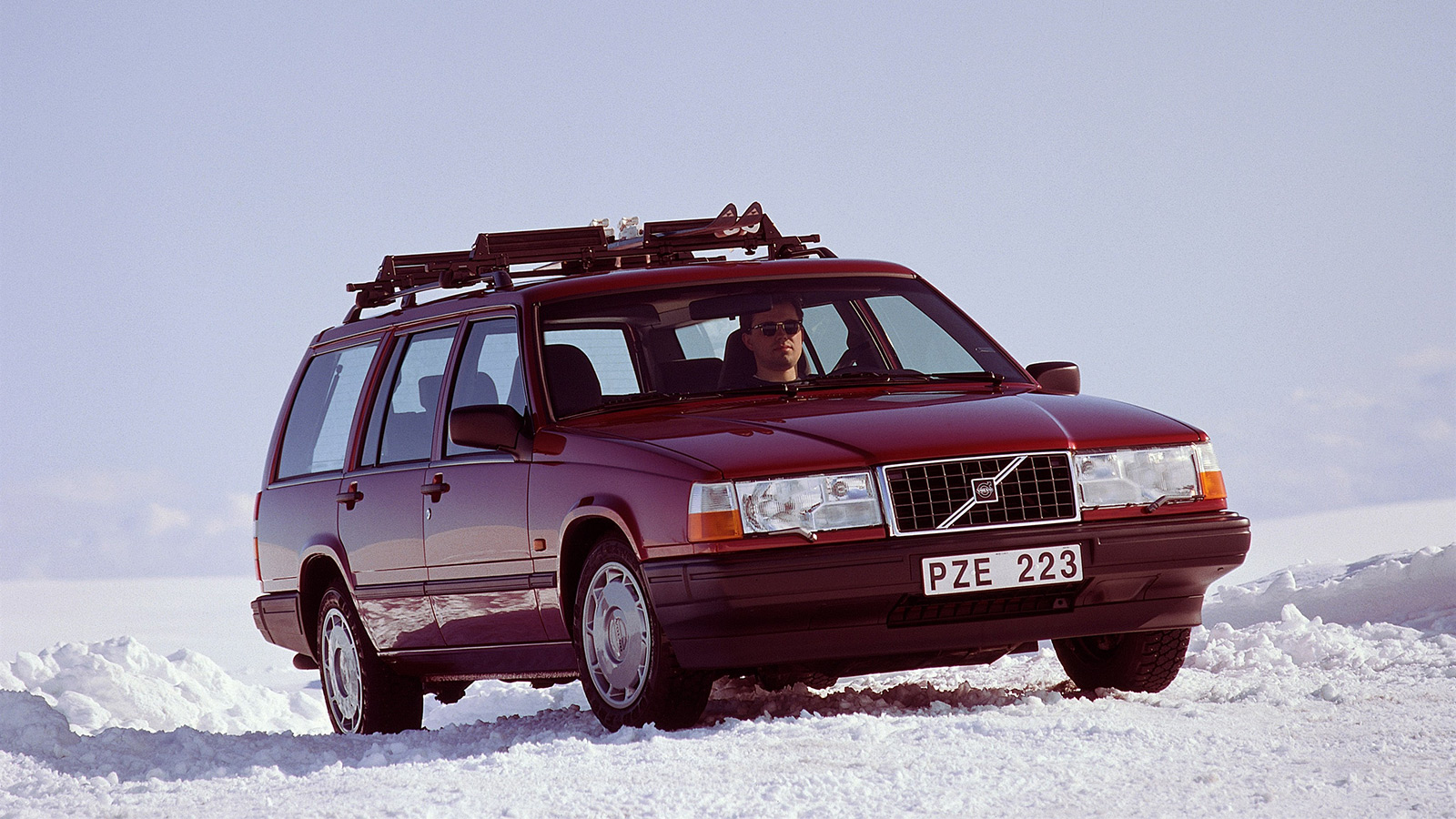
Over here, we get a good amount of winter, especially the more north you go from the Finnish capital region. This means that whenever the first snowflake falls on the ground or appears on your car’s dashboard to signal sub-zero Celsius temps, used RWD car prices traditionally take a healthy bump, especially the road-legal ones that are usable until Easter.
Every winter, we book an ice track and bring some cars, even if we’re not in our 20s anymore. There’s usually some quite heated discussion afterwards about which cars are the best, but that’s mostly because the talk takes place in the sauna.
What Other Options Are There, Even?

The cheapest winter drift cars you can buy are old ‘90s and ‘00s Mercedes-Benzes, mainly because of how rusty they are, and how unreliable the ignition locks on them are. Opel Omegas are in high demand, because they are actually very durable on ice tracks. We’ve had a couple of them over the years, and they can take repeated snowbank hits without the cooling system posing problems.
The bumper lip cracks open or detaches completely after the first few bankings, but after that, it’s smooth sailing – the cars have proved far better than expected, and if the Cadillac Catera is your only idea of an old Opel Omega, you’d be pleasantly surprised. Finnish-registered Omegas also feature limited-slip rear differentials as standard equipment, which gives them a great advantage as winter beaters, even if time takes its toll on how they lock up.

In comparison, a ‘90s-‘00s BMW is just too brittle unless you properly protect the cooling system for ice track shenanigans, and many E39s have given up the ghost far too soon into an ice track weekend, usually in a cloud of coolant steam. We got a 300k-mile 523iA one year, and it overheated almost immediately once it hit the track and the track had hit it back.
Ford Sierras are otherwise fine, but the steering on them is too slow unless modified, and a Ford CVH engine is a rare blend of an inbuilt aversion to revving yet having barely any low-down torque. And those things sound terrible under duress.
Just Get A Volvo, Believe Me

But the stoutest thing is an old Volvo 740 or 940. They are designed for the Nordic climate, which means the heater is also good enough and more reliable than the HVAC on an Omega, and if you’re in an ice track car, you know you have to keep the windows clear and your feet warm. They are very rust-resistant to a point and not known as rot traps, even if you might end up welding or replacing the rocker panels to pass road legality inspection. The most common problem you encounter with an old Volvo is the odometer packing in, instead of something related to whether or not you can actually beat on it on a day-to-day basis.
Most cheap old Volvos are manual here, and for an ice track car, the durability of the Volvo red block motor and its cooling system is something that’s deemed more valuable than outright power. Turbos exist but command a premium; most 940 turbos are low-pressure versions and have a meager power bump in stock form over naturally aspirated engines. The turbodiesel models feature Volkswagen six-cylinder engines that date back to old LT vans, and they have their own fanbase that’s not completely indifferent to rolling coal. They also have interstellar mileages on the odometer, if it hasn’t stopped counting already.

And importantly, in an old rear-drive Volvo, you have a long enough wheelbase to be able to execute impeccable drifts in long ice track corners, and enough steering angle to save the drifts that aren’t going quite as well as you intended.
There’s enough room in the car to comfortably bring enough buddies along, as you need all the available pushing power to get your car out of a deep snowbank, unless a friendly, beater car extracting tractor driver is available with a simple phone call or a WhatsApp message.
Take It From A Professional

These are all important details when choosing the perfect Nordic ice track car. You don’t have to take my word for it – how about some Scandinavian rally champions instead? Oliver Solberg and his father, two-time World Rally Champion Petter Solberg, also have an affinity for a good old rear-wheel-drive Volvo, as this promotional clip from Monster Energy shows.
Even if the clip, filmed on a frozen lake in Sweden, also features actual Toyota GR Yaris rally cars as well as seasoned drift cars (including a really meaty-sounding Nissan Silvia), it’s the old red Volvo that stands heads and shoulders above the rest of the pack.
“Volvo is the best car, we all love the Volvo”, says Oliver, WRC driver and 2025 WRC2 champion. “I think with all the good cars here, we take the Volvo first”, says Petter. And who takes the shotgun seat? Lando Norris, current F1 World Champion and McLaren driver. He’s in there to get some ice track miles under his belt. The Volvo’s not on regular winter tires but narrow spiked ones, meaning it’s perfect for the purpose.

Just a minute in, the best thing in ice track driving is there. The laughs, the giggles, the cheering. You have to bring your friends. Then Lando takes the wheel, with the best encouragement there is: “Don’t be gentle, it’s a rental.” Lando tries the faster cars too, but ends up back in the Volvo, “to end it on a high”. Says Lando, “I’m tired from laughing!” I know the feeling.
Top graphic GIF via Monster Energy/YouTube





Ancient Volvo: Better than an Audi A8 in every way.
I appreciate that since the ice racing article title did well, now we get a bunch more ice racing content. Score one for the algorithm, I guess. 😉
In high school, one of my best friends had a beater 240DL with an automatic and a grand total of SIX Hella 500s on he front of it. Two were mounted at a 30 degree angle so that he could see where he was going whilst completely sideways. The other four were capable of melting snow at 500′. Nighttime visibility was unparalleled.
With studded snow tires, that RWD car was virtually unstoppable in the snow. Even sideways.
This was also in Vermont, where fresh snow on a dirt road lived up to anyone’s WRC Sweden Rally fantasies.
This is the way.
IMO, in the entire history of the automobile, the Volvo 240 is the 2nd best car ever made.
(In case you’re curious, the Mercedes W123 is #1.)
There’s something unbelievably pleasant about something that stateside was more associated with NPR listeners, now in its native lands being absolutely hooned like mad. Look at that old brick, living it’s best life. That’s a happy Volvo.