

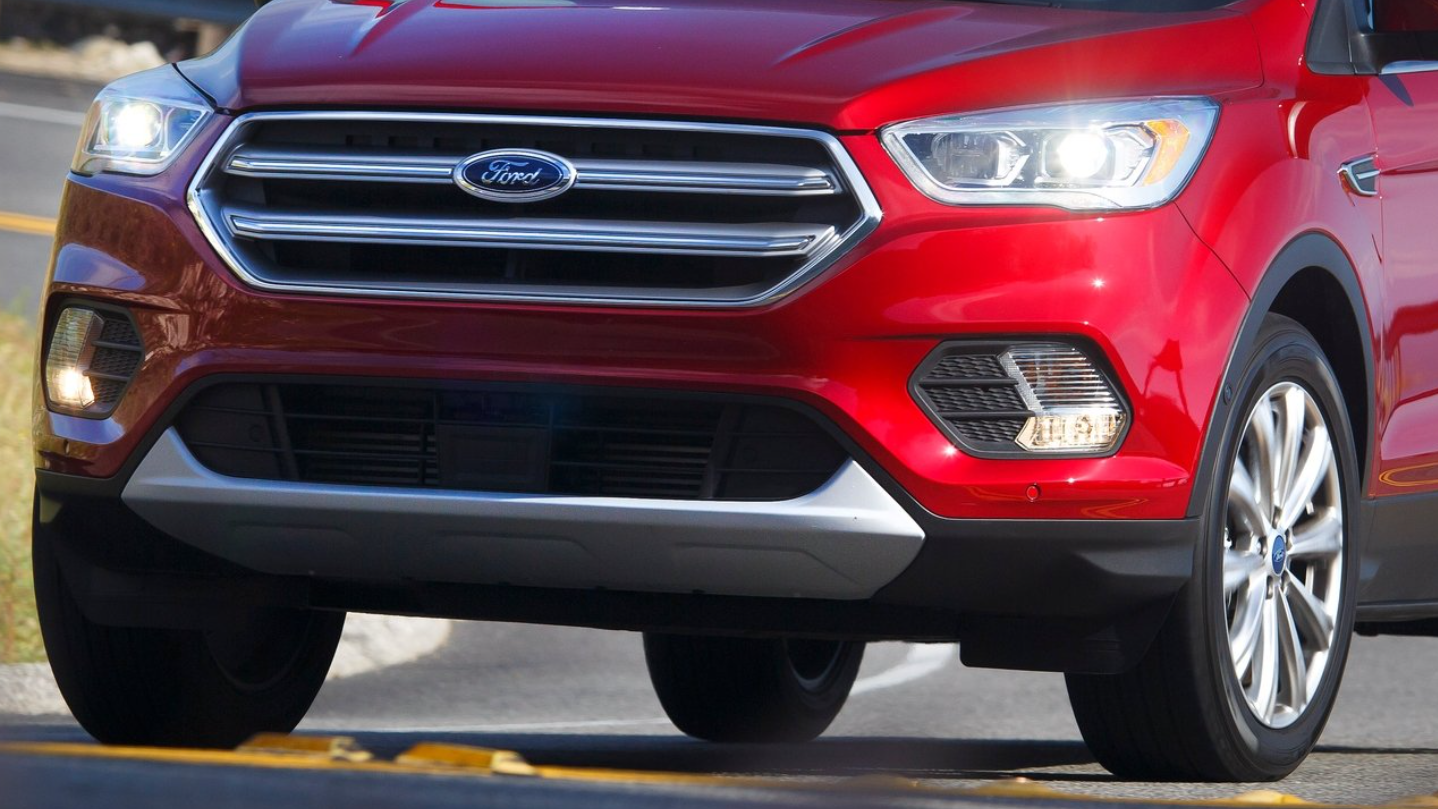
If you’ve spent any time in the northern part of the country or Canada in the winter, you’ve probably come across a parking lot with a bunch of 120-volt wall outlets (usually one for each parking spot). At first glance, it might seem like these outlets are for charging electric cars—which they may indeed be used for—but actually, they’re more commonly used to plug in an onboard feature called a block heater.
In extremely low temperatures, engine oil becomes less fluid, and the tolerances between parts shrink, placing extra strain on an engine’s starter when you attempt to start it. Starting a freezing-cold engine is like trying to stir stale taffy in a bowl with a manual whisk.


Block heaters solve this problem. They are heating elements placed somewhere on the engine that, when plugged in via a wire to an external power source, warm up a part of the engine (usually the coolant or the oil) before it’s started. It’s an optional extra on countless vehicles, either as a factory add-on or a dealer-installed kit.
Ford has just issued a recall for a block heater used in a few of its cars from the 2010s because it might be working a little bit too well to heat said cars.
When The Heating Part Goes Too Far
The recall, published last week, pertains to a certain block heater part used on the 2.0-liter four-cylinder engines found in Ford Focuses built from 2012 to 2018, Ford Escapes built from 2011 to 2019, and Lincoln MKCs built from 2014 to 2016, for a total of 116,672 potentially affected vehicles.
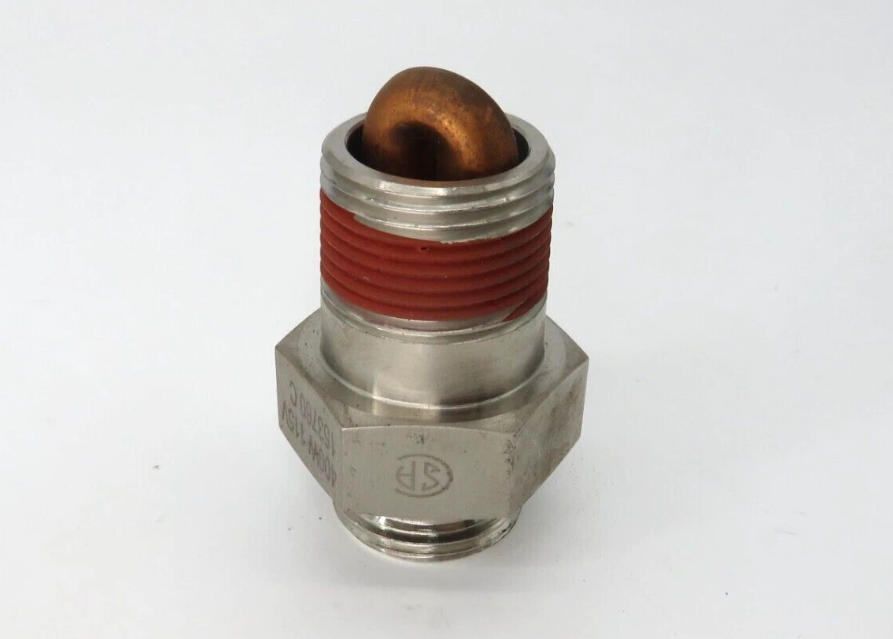
This specific block heater is responsible for heating the coolant when plugged into a wall outlet via a dedicated wire. But according to recall documents, its structure can fail and spring a leak from the coolant system:
Engine block heater solder joints can develop cracks around the element base which allows coolant to infiltrate into the block heater to cord interface. Evaporation of this coolant leaves behind electrically conductive salt deposits. Over time, these deposits accumulate, forming a salt bridge or corroding electrical connections, which could establish an electrical path to ground and may result in a resistive short circuit.

In short (see what I did there?), when the block heater is plugged in, the salt deposits may generate a short circuit and cause a fire. Ford’s investigation team says that as of last month, it has found 12 Escapes in which owners say their cars were subject to fires caused by the block heater, but no accidents or injuries.
Ford Used CT Scans To Find The Problem
Ford says it was first alerted to a potential problem with the block heater in question almost exactly a year ago, in January 2025. Though a four-month review of the part “did not identify any manufacturing quality concerns” and “were manufactured within Ford’s specifications and met all design requirements,” analysis of the failed block heaters from three of the torched Escapes ultimately revealed the issue:
In July 2025, microscopic images of three failed CV6T EBHs [engine block heaters] from fire-damaged 2014-2017 Escape 2.0L Engine vehicles were analyzed. The images revealed cracks to the solder joint around the base of the heater element, indicating a potential path for coolant to seep inside the cord connector pocket.

In August 2025, the CCRG investigation team reviewed CT-scan images from the same failed CV6T parts. These images also indicated internal solder voids. The root cause for the solder joint cracks and solder voids remains under investigation.
At least a fire wouldn’t happen without warning. Because a failed block heater, in this case, would leak coolant, that means you’d notice it on the ground or in the way your car is acting (through it slowly overheating, a loss of cabin heat, or even a low coolant warning indicator on your dash). The short-circuiting can also cause damage to the 110-volt cord and emit a smell or even smoke.

Ford is telling potentially affected owners to simply stop using their engine block heaters. Seeing as how it’s the dead of winter, that’s some great timing that I’m sure people will be thrilled with. Even better news: According to the recall docs, there isn’t an updated part available yet, and owners will have to wait until mid-April to hear about a permanent fix. It’s going to be a rough winter for nearly 120,000 Ford owners out there.
Top image: Ford




Toyota issued a similar recall in 2021.
(source: https://www.carcomplaints.com/news/2021/toyota-engine-block-heater-recall.shtml)
I believe their solution was to cut off the wires to the block heater, though they may eventually have developed a part:
and
(source: https://www.tundras.com/threads/tundra-2018-with-no-block-heater-in-canada-even-toyota-sucks-in-2022.110212/)
And more about block heaters: https://www.tundras.com/threads/oem-premium-block-heater.117453/
Mom and dad bought a ’67 Mercedes 230 with the thought that a car made in Germany would be able to handle the relatively milder Lake Tahoe winters. Uh, no. Dad solved the problem in his always-useful manner. Hung a lit incandescent light bulb in the engine bay and added a blanket over the engine, then closed the hood. It worked. BTW, mom and her sisters and their mother picked up the car in Germany and spent a few months driving around Europe before bringing it home.
At first glance, it would seem to make sense to heat the oil directly, rather than by heat being thermally conducted through the coolant to the block to the oil, but there’s a problem. Oil can be flammable. Especially in olden times where gasoline could get past the piston rings into the oil. Failure of a direct oil heater would be more likely to cause fire.
The other advantage to heating the coolant is that once the car fires off, you have instant heat and defrost.
When I worked in the defense industry we would check welds on the most mission critical of parts by putting them in a nuclear reactor. Believe it’s called Neutron Radiography.
Pffft just build a small fire under the engine bay, duh.
Block heaters heat the block and coolant and have limited or no effect on oil temps. So no a block heater doesn’t make it crank easier in the cold. For that you need an oil heater either the type that sticks in the dipstick tube or a silicone mat you attach to the pan.
Block heaters were mainly to help with starting on cars with carbs where poor vaporization would cause hard or no starting. Of course it also means heat from the start which is why they persist in modern cars.
Not sure what experience you’re basing this off of, block heaters definitely make a difference in cranking speed and starting on fuel injected vehicles. It can be the difference between starting or not at -30. Synthetic 0W oils also help greatly. The block being warm reduces friction, and even if the oil in the pan isn’t heated (though it likely is by the thick aluminum oil pan attached to the warm engine block), the oil is warmed by the thermal mass of the warm block as it circulates.
I would think these block heaters would’ve been made obsolete by the ubiquity of full-synthetic oil nowadays, although in the US “full-synthetic” was deemed a ‘marketing term’ by our courts, so unlike in the rest of the world, here they can just sell semi-synth oil with whatever they want on the label (cough-Castrol-cough).
Block heaters have nothing to do with the oil since it is down in the pan, not up in the block. They exist today because people like warm cars, but did serve a purpose to make cars start easier back before EFI.
Then I guess Ford could’ve just done what other automakers do and separate the head coolant circuit from the rest of the engine (some even split that into upper and lower head for even faster warmups) with a modern thermostat. It takes literally one minute of driving before you have cabin heat, especially with a turbo engine.
Ford does do that on some of their current hybrids along with exhaust heat recovery which gives you almost instant heat.
As someone who lives in a very cold climate, I can tell you from an anecdotal standpoint that even with modern oil, a car that has had its block heater plugged in for 4-6 hours will start substantially easier than one which has not when the temperature dips below -30. I run both gas and diesel engines in Canadian winters. Ideally, a combination of a block heater and a stick-on oil pan heater will really make a difference. Electric battery blankets are also a great addition, as really cold temperatures tend to do a number on car batteries.
You are correct that it does help with starting on a EFI car, just not as much as it did back in the days of carbs.
-30. Eeeesh.
Yeah, there are occasionally days when I question why I choose to live in this climate. This Friday may be one of them. Current forecast calls for temperatures to drop to -40 around 6 AM.
-40 is where the C/F conversion is the same thing, right? Worst I’ve ever been in is -20F/-29C.
As long as it’s not -40K.
😉
That would be below absolute zero, right? Ce n’est pas possible. 😉
I seem to remember some TDI owners installing stick on oil pan heaters. I checked and Amazon has several to choose from. The one I saw is “Amazon’s Choice” thermostatically controlled between 122F/50C and 194F/90C and $24 US for two.
They’re fairly common, and not just on TDIs. There are a number of vehicles out there for which block heaters aren’t readily available, so the stick-on oil pan heater is a useful addition. There are also in-line coolant heaters which are spliced into the lower rad hose. I’ve seen substantial debate over which is better: 1. Heating the coolant, which will circulate by convection and warm the block, but may leave the oil cold; 2. Warming the oil, which won’t really warm the block at all but will definitely make the oil circulate more easily. There is also an argument that the warmed oil will cool very quickly upon contact with un-warmed metal of the block and head.
In really northern climates (I have family and friends who spent significant time north of 60 degrees latitude), people often combine block heaters, oil pan heaters, and interior car heaters.
I was going to say that a “belt and suspenders” approach could be optimal. Heat the water and the oil. And maybe transmission fluid. I don’t know how much differentials don’t like cold temps.
A similar recall actually launched months ago (for late-model Escape and Bronco Sport) and the initial fix was just to have the block heater taken out.
Although, in almost 25 years of driving, I’ve never had a car fail to start due to the cold (there are a few days where the car is clearly less happy about it, but still starts). Granted, Toronto gets relatively mild winters, but the GTHA is home to almost a quarter of Canada’s population (loop in the rest of Southern Ontario and BC’s lower mainland, and you might approach half of Canada).
I encountered my first no-start condition due to extreme cold during a visit to a camp in the GTHA about 30 minutes north of Ajax. This was decades ago, back before synthetic oil was a common thing and I want to say 10w40 was the dominant oil weight in use?
A number of cars failed to start the morning after a night of soaking in arctic temperatures, but our 1992 Dodge Spirit fired right up, likely because we had gotten a serious case of the munchies the night before and had made a run for some hot food at around 2-3am in the morning.
My family in Saskatoon plugs theirs in, but I was just there and the average was -15, so I think the heater is warranted. Sask is not a large population, but they should at least be able to plug their cars in when needed.
Edit: For context all of my cousins are doctors up there, so they definitely have need of being able to start right then and head out, as they are on call. Two have dealt with that by getting electric cars that don’t leave the city a lot, and that makes a lot of sense.
Fair enough, and the “parking lot lined with block heater plugs” is hugely widespread in SK unlike some other parts of the country.
Growing up with an old-school mechanic for a father, I was always told it’s not just a question of whether the engine will start or not, but also of the wear-and-tear that those extreme cold starts inflict on an engine.
I always imagined that block heaters would heat the block and oil, not the coolant. What good is that? The spinny bits bathed in gelatinous oil seem like the part that would benefit the most from being warmed, not the coolant. Maybe the coolant would get warm enough to open the thermostat, but without the water pump running it would just have convective warming. You’d have to leave it on for quite a while before it did any good.
They do heat the coolant and thus the block. Heat rises and back when carbs were the norm it was heat in the heads and intake that made starting easier.
Technically, heat follows the path of least resistance.
Hot air tries to rise, but it’s easy to get stratified air running heat or ac indoors.
With a poorly vented attic, you can get radiant heat from the attic peaking after dark.
Very obvious when you stand up.
My diesel has an intake heater which helps, and even slightly warmer oil makes it spin much faster.
Even my industrial diesel heats the coolant, probably for practical reasons, and to avoid possibly cooking oil at hot spots.
There are inline coolant heaters that are very easy to install and can distribute a lot of heat quickly.
It’s possible to freeze coolant in cold enough conditions, so heating coolant isn’t terrible, especially as a backup for a block heater.
I have two stages of wind blocks for my large cooling system, one with a central hole which works most of the winter.
I find I get much better mileage on anything with a large radiator, by blocking as needed.
Make sure your gauges work.
I do believe that the real reason for block heaters goes to the root problem of oil flow when extremely cold. The heated oil flows faster and better thus protecting critical engine parts from excessive wear on start up and warm up.
The mention of wear on the starter is a small factor in the equation.
A very small factor, if one at all.
Having grown up in the Land of Moose and Squirrel, can attest to the reduced wear, and internal parts breakage due to the use of block heaters.
Sorry but Torch sort of missed the boat on that take.
That’s because it wasn’t Torch…
Mea Culpa here, my bad.
Sorry Torch, not enough coffee yet….
And too late to edit and correct.
Sounds like you needed an engine block heater to warm you up before commenting this AM…
They don’t heat the oil any appreciable amount.
Is this a risk with other block heaters?
Yes.
Great! Is there an ideal way of testing them?
Just got to keep an eye on them and replace them when they start leaking. Personally I just removed it and replaced it with a standard plug on my car but I do live in a milder climate and had never plugged it in.
I have a big mechanical diesel. 1100 lbs dry.
Anything under 50 and preheating helps.
Hypermilers think preheating could save gas by shortening the warmup cycle.
I know it extends engine life.
I don’t know how mild your area is.
Hot here in summer, cold now.
I always thought block heaters were pretty reliable.
If mine is factory, it should be.
Stock is 500 watts, but larger ones are available.
I used to hear a hissing when I first plugged it in, but not lately.
It’s working though.
I looked mine up and depending on version I have, OEM style is either expensive or twice as expensive.
Hopefully I’m getting quality for that!
Hopefully!
Perfect timing for a stop-use order… right in the middle of a cold snap in winter.
Ah, block heaters. Between the cords and the heating elements themselves, I’ve changed at least 100 of them over the years.
The Genesis Coupe had the best block heater design ever for the 2.0T. It just clipped into a cavity of the engine block. Never directly exposed to coolant.
Worked just fine, and took all of 5 mins to install or replace.
Man, Genesis will never be a real luxury brand if their cars are that easy to work on.
Oh man, I could pull the drivetrain in an hour.
Which I did, twice.
It’s not like the car is going to explode if you have to go without it for a little while. Not ideal, but not great either.
As someone who spent most of his life in the bottom half of Ameriland, these were always foreign to me — I always imagined them being more like a “heating pad for your oil pan” which still feels like a decent solution.
Is the coolant vs oil solution more about getting the cabin heat up to temp quickly? Or just keeping it from forming ice in the cooling system?
My understanding is it can heat up the block and oil better in extreme weather.
My big engine turns dramatically easier with even short duration heating.
Some Alaskan vehicles use one of every option.
Oil pan and transmission pan heaters are a good idea too.
Redline confirms preheating oil is good for reducing engine wear.
My buddy that spent some time working in Alaska said they just never shut the work trucks off unless they were brought inside to be worked on.
Years ago I had a customer that moved here from Montana his Blazer had dual block heaters, one on each side, a oil heater glued to the pan and a battery heater too.
At this point with EFI the norm it is all about getting cabin heat much quicker.
Seems like they could at least replace the failing part as a quick fix, then do it again when they get one that won’t crack under the expansion/contraction cycles. If it took that long for the problem to surface, it would buy them time to solve it for good. This is a 10-15 year problem and this “temporary” fix would probably last the remaining life of the car.
This is what I was thinking, too. It certainly sounds like something that maybe could be “fixed” by calling it a wear part and adding it to the maintenance schedule.
Even for a short term replacement, Ford probably can’t quickly come up with 116,000 of the original design.
True, that could be a challenge. Can you imagine some poor person at Ford calling all the AutoZones and Pep Boys in the area trying to buy up all the stock?
Ford really shock blocked their customers from having any fun with warming their bits this winter.