


The world of car sales is entering a new era. There were hints of it last year, when the sales of hybrid vehicles began to explode, but now, thanks to that already-softening demand of EVs and now the lack of a federal tax credit to incentivize sales, it’s clearer than ever: EVs are on the downturn.
The proof lies in October sales, which were released earlier this week; the first round of real data shows just how important that federal incentive was. It revealed a drop of 43 percent year over year. The numbers are forcing automakers to consider whether building EVs is even worth their time. And the first casualty of that thought process could be one of the most important EVs of the 2020s: the F-150 Lightning.


What else is going on in the world? Tesla CEO Elon Musk finally got approval for his controversial $900 billion pay package, winning more than three-quarters of shareholder votes. Whether he’ll actually perform well enough to earn enough to make him the world’s first trillionaire remains to be seen, though it seems unlikely.
Then there’s Toyota, which is building V6s that grenade themselves. The company has recalled another 127,000 engines for “machining debris” that could cause total failure. Oh, and Tesla has delayed the Roadster again, this time to April Fools’ Day, 2026. Let’s get into it.
Ford Reportedly Might Not Bother With Resuscitating F-150 Lightning Production
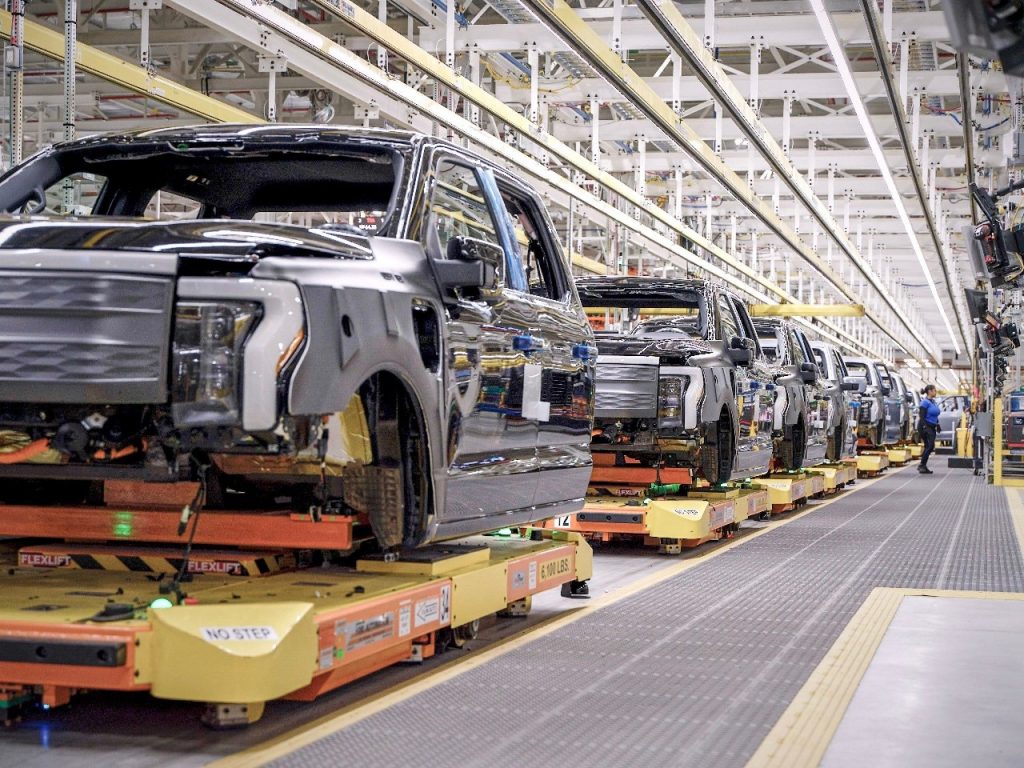
Back in September, an aluminum plant in Oswego, New York suffered a big fire that reportedly “leveled” a key part of its facility, according to the Wall Street Journal. This plant supplied aluminum to several automakers producing cars in the U.S., with Ford reportedly being the most affected. It was the biggest user of that plant, sourcing material to build its aluminum-bodied F-150—the most popular passenger vehicle in the country.
In response to this supply chain disruption, Ford paused production of the F-150 Lightning to focus production on the more profitable, higher-demand gas-powered variants. This makes a lot of sense; the F-150 Lightning may have been the best-selling EV truck last quarter, but the 10,000 units moved are just a drop in the bucket compared to the 207,000 gas-powered F-150s sold in the same period.
With demand for electric vehicles now falling off a cliff, Ford is reportedly considering whether to restart production of the F-150 Lightning at all, according to this report from the Wall Street Journal:
Ford Motor executives are in active discussions about scrapping the electric version of its F-150 pickup, according to people familiar with the matter, which would make the money-losing truck America’s first major EV casualty.
The Lightning, once described by Ford as a modern Model T for its importance to the company, fell far short of expectations as American truck buyers skipped the electric version of the top-selling truck. Ford has racked up $13 billion in EV losses since 2023.
Overall EV sales, already falling short of expectations, are expected to plummet in the absence of government support. And big, electric pickups and SUVs are the most vulnerable.
The report goes on to say that no final decision has been made, though considering Ram made the call to cancel its yet-to-be-released EV pickup just two months ago, I wouldn’t be surprised to see Ford follow suit. The signs of reduced EV truck demand are elsewhere in the market, too. Rivian, makers of the R1T pickup, just laid off 600 people. And sales of Tesla’s electric pickup, the Cybertruck, haven’t been doing well for months.
It’s not just the F-150 that’s in danger. WSJ says General Motors executives are considering axing some electric trucks from the lineup, too, citing “people familiar with the matter.” The company builds three electric pickups right now: The Silverado EV, the Sierra EV, and the Hummer EV.
In the near future, I predict the demand for electric trucks will stay level or trickle down slightly. The truth is, most people want a gas engine in their pickups if they want to do pickup things, like towing and hauling. The proof can be seen in reservations for Scout’s new truck, where 80% of buyers want the range extender over the pure EV.
Trucks that rely on battery power alone are not the move for serious tow duty, as pulling all that extra weight zaps range to impractical levels. Plus, electric trucks are usually more expensive than their ICE-powered counterparts. Extended-range EV pickups like the new Scout and Ram’s upcoming 1500 REV have all of the same benefits as a pure EV, plus they can cover the range problem thanks to the onboard gas generator. For most buyers, it’s the logical solution.
Elon Gets His Wish. Now He Has To Make It Happen
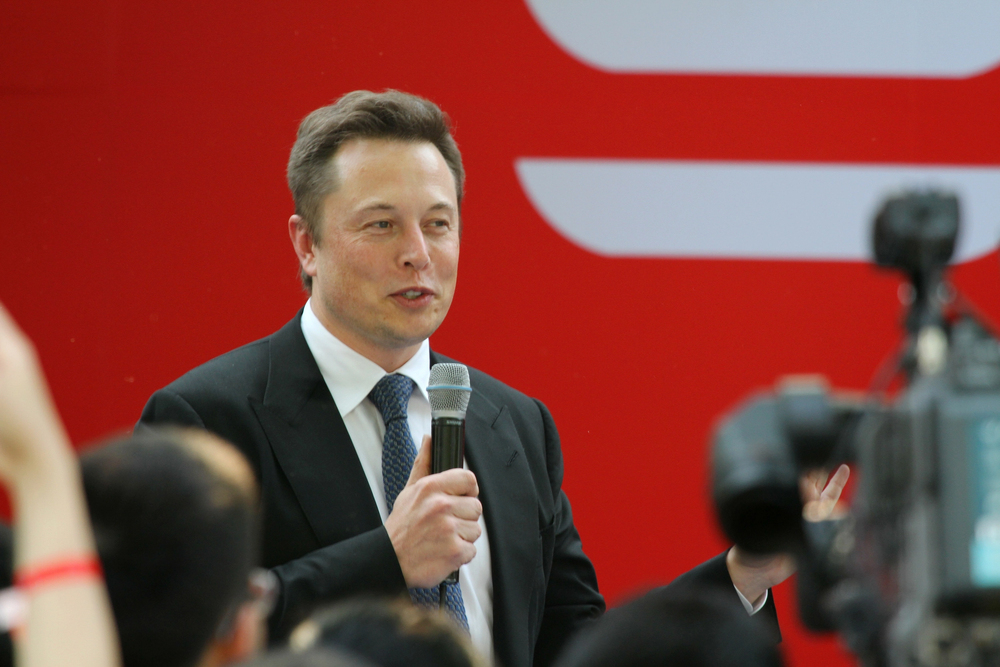
Back in September, Tesla proposed a new pay package for CEO Elon Musk that, should he accomplish a series of lofty financial benchmarks, would add nearly $900 billion to his net worth, making him the world’s first trillionaire. Perhaps unsurprisingly, this proposal faced lots of criticism, seeing as how it would make Musk, already the world’s richest person, the highest-paid CEO in the history of CEOs.
Many believe Tesla’s valuation and future success hinge on Musk staying as CEO, though the South African-born exec seems to believe his most important role will be being in control of the company’s forthcoming robot army. Either way, shareholders of the automaker voted overwhelmingly to ratify the pay package, with Musk celebrating in the only way he knows how: Next to his machines. From Reuters:
The proposal was approved with over 75% support, and Musk bounded to the stage of the company’s annual meeting at its factory in Austin, Texas, accompanied by dancing robots.
Musk, already the world’s richest person, could get as much as $1 trillion in stock over the next decade, although required payments would take the value down to $878 billion.
The vote is crucial for Tesla’s future and its valuation, which hangs on Musk’s vision of making vehicles that drive themselves, creating a robotaxi network across the U.S. and selling humanoid robots, even though his far-right political rhetoric has hurt the Tesla brand this year.
“What we are about to embark upon is not merely a new chapter of the future of Tesla, but a whole new book,” Musk told a cheering group of shareholders.
[…]
“Other shareholder meetings are like snoozefests, but ours are bangers,” Musk said. “I mean, look at this. This is sick.”
It’s important to note that Tesla won’t just hand Musk $878 billion over the next decade. The package requires him to accomplish some incredibly lofty tasks, including growing Tesla’s stock value by eight times, deploying a million robotaxis, selling a million humanoid robots, selling 20 million more cars, growing full self-driving subscriptions to 10 million users, and increasing operating profits to $400 billion. As I said in my previous coverage of Musk’s pay proposal, doing all of that seems pretty impossible, considering Tesla’s reputation and aging lineup.
Toyota Still Can’t Get Its V6s Right
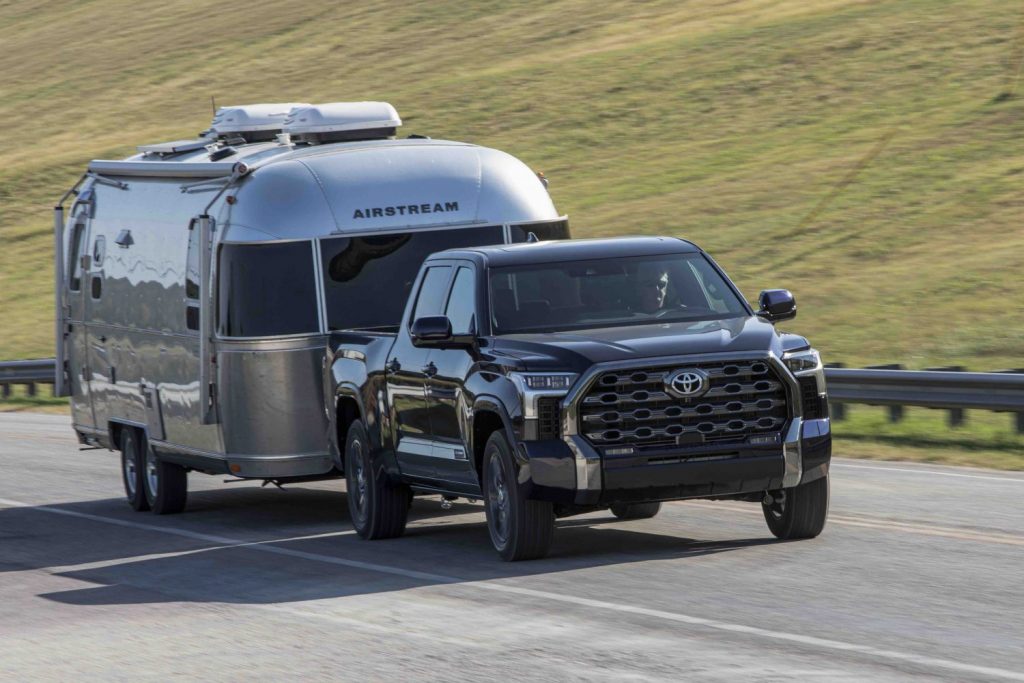
Last year, Toyota, widely known as builders of some of the most reliable, durable, and longest-lasting vehicles on the planet, caught a lot of flak for having to replace the engines in over 100,000 trucks and SUVs equipped with the company’s relatively new 3.4-liter twin-turbo V6.
Back then, Toyota said leftover machining debris from the factory was wreaking havoc on the V6’s internals, could could lead to engine knock and total engine shutdown. The company quickly reworked its manufacturing process, saying that any engine built after those deemed potentially faulty “were manufactured with new or improved processes that better clear machining debris.”
Well, it turns out that the new process wasn’t good enough, because Toyota is recalling even more V6s for the same problem. From the company’s website:
Toyota is conducting a safety recall involving certain model year 2022-2024 Toyota Tundra, 2022-2024 Lexus LX, and 2024 Lexus GX vehicles in North America. Approximately 127,000 Toyota- and Lexus-branded vehicles (conventional gas models only) are involved in this recall in the U.S.
There is a possibility that certain machining debris may not have been cleared from the engine when it was produced. In the involved vehicles, this can lead to potential engine knocking, engine rough running, engine no start, and/or a loss of motive power. A loss of motive power while driving at higher speeds can increase the risk of a crash.
Toyota says it’s “currently developing the remedy” for this problem, though if I had to guess, it’s probably just going to replace these engines like it did with the last bad batch. If I were an owner, that’s what I’d want. Even if an engine doesn’t immediately fail due to errant metal debris, I’d worry it could be enough to cause serious damage in the long term.
Can You Believe It? The Tesla Roadster Has Been Delayed Again
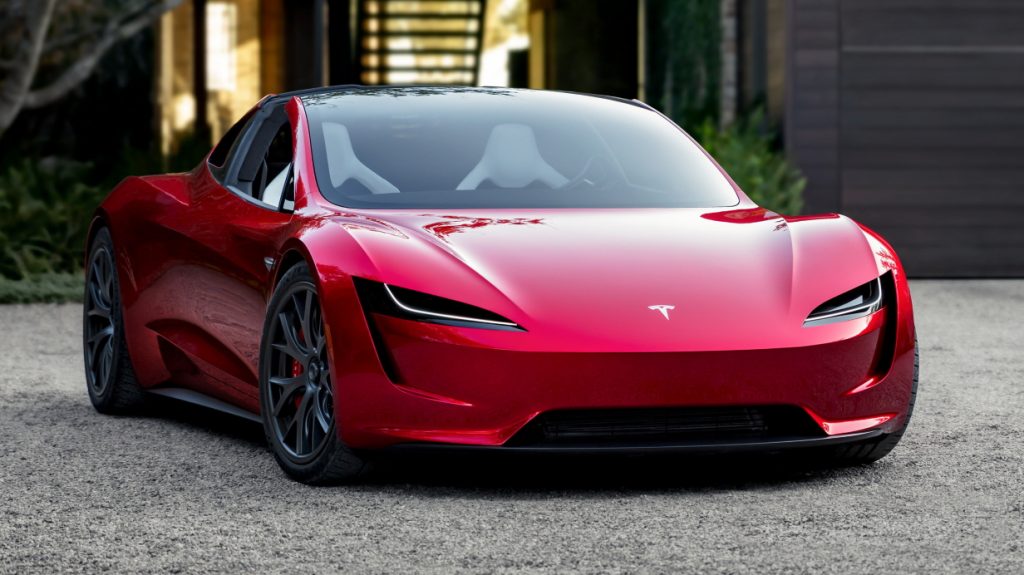
In what is undoubtedly the least surprising news of the week, the long-awaited Tesla Roadster 2.0 has been delayed for what feels the 37th time. This comes after reports that Musk had planned to show off the car by the end of this year. The new proposed reveal date isn’t inspiring much confidence. From TechCrunch:
Tesla CEO Elon Musk said Thursday the company will reveal the production version of its second-generation Roadster supercar on April 1, 2026 — nearly nine years after he first revealed the project.
Musk, who is famous for missing deadlines, said during Tesla’s annual shareholder meeting that he chose April Fools’ Day in part because it affords “some deniability.”
“Like, I could say I was just kidding” if it happens to be later, he said.
In some even more upsetting news for reservation-holders of the car, Musk went on to say that production of the Roadster won’t begin until 12 to 18 months after the reveal. So, at minimum, it won’t be until April 2027 that this car hits the road—nearly an entire decade since it was first revealed.
If Musk is to be believed, the production Roadster should, at least, be pretty different from the car we saw in 2017. From TechCrunch:
Musk stressed Thursday the car “will be very different from what was shown previously,” and again teased that the demo will be the “most exciting, whether it works or not, demo ever of any product” — a not-so-sly nod to the fact that he’s spent years trying to make the new Roadster fly in some fashion, possibly with SpaceX-built thrusters.
I’ll believe it when I see it (on the road, that is).
What I’m Listening To While Writing TMD
I love Gorillaz, even if they’re not a real band. Elon, celebrating his trillion-dollar pay package next to his robots, reminds me of this lyric from the song “Saturnz Barz” from the virtual group’s 2017 album Humanz:
With the holograms beside me
I’ll dance alone tonight.
In a mirrored world, are you beside me
All my life?
I hope all that money is worth it.
The Big Question
Should Ford and GM discontinue production of its EV pickups?
Top graphic images: Ford; Eastwing


Ford and GM need to get in the range extender EV truck bandwagon sooner rather than later. Ram is going to be there first and will take a previously unrealized truck niche and run with it, assuming they can get it on the road with reasonable quality.
Imagine 500+ miles of range with the ability to refuel with either electricity or gas. There is no downside other than initial cost and the hurdle of getting previously gas only customers to take the leap forward.
They should make small EV pickups for city runabout duties, kinda like Slate is attempting to do. That’s the best use case for EV trucks at the moment.
Ford is doing that and it is coming soon as prototypes are in testing and the plant re-tool is scheduled to start early next year.
That seems to be what Ford is targeting, too
What?? But Cybertruck sales are paying for the Roadster development and… oh yeah.
Should Ford and GM discontinue production of its EV pickups?
Entirely? No. But if EVER there was a range extender/PHEV use case, it’s the full size US pickup with towing needs.
Should Ford and GM discontinue their EVs?
No, hell no. However they should build vehicles, going forward, that allows an EV platform as an option just as an engine option can be chosen.
Will that wreak immediate havoc on the design of vehicles? Yes. But they need to shake up the lineup.
Other than what they’re filling the “tank” with, and the sounds the vehicle makes, the customer shouldn’t know whether the car is an EV, hybrid, or an IC powered vehicle. That’s how to make them ubiquitous.
That is the problem with the GM vehicles they are completely unique from the ICE trucks. Sure the Lightning has a separate name and a few tweaks to the body but the bulk of the parts above the frame are shared with the ICE F-150.
dozens of badges, odd body lines, goofy lights all over – how else would you know it’s an EV? With you, it should be a powertrain option. Make a universal platform that can have batteries and electric motors or an ice and a fuel tank.
September’s EV numbers were anomalous (much higher than normal), and so are October’s (much lower than normal). Anyone who extrapolates from either for their planning is gonna get burnt.
I mean, every month is an anomaly right now, but I wouldn’t expect typical EV sales numbers until January/February.
I agree and even Jan/Feb might be a bit early to tell how they will fare over the rest of the current administrations term. I do expect incentives of some sort to return very early in the next admin’s tenure.
The federal incentives for evs was to account for the higher costs of the batteries compared to the cost to produce an ice (or hybrid or phev).
By the end of 2024 Globally prices for lithium batteries (of all types – most definitely hugely helped by LFP batteries) was $97 per kwh. With the avg. price at $94 per kwh in China. Prices in the US were 31% higher acct. to this article (below).
$100 per kwh is supposed to be the threshold price at which evs will be purchase cost neutral to ice. EVs crossed the TCO over 5 years price threshold in 2019, i.e. a new 2019 model 3 vs. a new 2019 Camry total cost to own, the model 3 was cheaper to own over 5 years.
In China, which is the largest auto market in the world evs have 50% market share. Evs are the future propulsion method that will dominate. And it will be bc they are greener in the economic sense, i.e. cheaper to buy and cheaper to own.
https://about.bnef.com/insights/commodities/lithium-ion-battery-pack-prices-see-largest-drop-since-2017-falling-to-115-per-kilowatt-hour-bloombergnef/
I literally bought a used ev because it made financial sense for my driving needs not for the “environment”. I’ll punt a baby seal for fun.
My point was that the end of the federal incentives pulled a lot of demand forward. The only question is the reach of that pull 3 months? 6 months? Even if the mfg/dealer makes up for the loss of the incentive, the pool of potential buyers just shrank significantly and it will take time for that pool to fill back up.
You may be right about January/February (2026), but “October sales…data…revealed a drop of 43 percent year over year” should mean a comparison only between October 2024 and October 2025, not the September 2025 peak and October 2025.
Anyone who wanted an EV but was on the sidelines bought an EV in 2024 or early-mid 2025 to take advantage of the tax credit. Which was made point of sale. That had other effects like reducing the amount of sales tax owed. 8% tax on a $50k vehicle is a lot. There’s savings to be had when the cost is now $42.5k.
Now we’ll see what shakes out. For daily commuters EV’s are brilliant.
Yeah, but everyone and their mother bought their EVs early, boosting September but also making October’s numbers artificially low (with the drop tapering off through the succeeding months).
“Should Ford and GM discontinue production of its EV pickups?”
No. Doing that would be a short-sighted move.
And because it’s short-sighted, I will be completely unsurprised if they do.
If one or two of them halt production, the others will benefit. Right now, it’s a small cake being cut into too many slices.
I agree, there will be some EV pickup demand going forward but I don’t know how much mobility there is between the several layers that make up the cake. I don’t see many of the Hummer/Rivian/CT buyers moving to the Ford/Rest of GM tier and vice versa. I do see movement between Ford, Chevy and GMC buyers and especially between Chevy and GMC buyers. Slate and the new Ford are yet another layer and we will have to wait and see how that affects things once it is fully baked, but again I don’t see that layer impacting the others significantly.
This is why the big three will never have a EV that people will buy into fully. They make one, then they kill it off within a year. At least Tesla has been going for 10 plus years now. So if you buy one, there’s a network of chargers and a company that supports you. Pull up to a Chevy dealership in your Spark and see how few folks know what to do with it.
The problem with EV trucks (and a lot of EV cars) is the pricing. I get there’s a big expense for the battery, but you can’t tell me an electric motor and associated controller electronics doesn’t provide a huge cost savings over a modern ICE powerplant.
I can’t even begin to understand how the bean counters handle the cost accounting, but it seems to me the EV should be cheaper to make than the equivalent ICE vehicle. I’d expect to get a discount for going EV, not have to pay a (sometimes huge) premium.
I get it for startups like Tesla or Rivian, where they’re also needing to finance new infrastructure, but for the legacy makers with existing plants, something seems really amiss.
(Okay, shields are up – hit me on full blast about how the batteries are in fact THAT expensive.)
The key is economy of scale.
Doesn’t matter if you are a start-up or legacy automaker you aren’t making money if you tool up a plant to make 250K truck a year and then only find 30K buyers. You have to run a factory at least 70% capacity to break even.
Then there is the tooling, design, and testing. It literally costs billions to develop a new model. That cost is spread over the production cycle of 6 – 8 years. $4 billion spread over 180K vehicles is $22K just for that development before you get into the cost of parts, labor, and other variable costs.
Batteries are about $100 per kWh. That means the large battery pack in the Lightning Long Range costs about $15K
Out of curiosity what does a say 2.7 liter Ecoboost and 10 speed transmission cost? (Yes, I know we also need to factor in the electric motor here, but I’m trying to get close to apples to apples.)
$4,000 +/-
Good to know. Thanks.
Ford originally built their plant for 40-50k per year. They did quickly make some changes based on the initial reservations and did initiate changes to up production significantly. Not sure how far they got with that before they realized many of those reservations weren’t going to materialize. The one thing that the Lightning has that the others don’t is that a good chunk of the tooling and production facilities are amortized with the ICE models. Rivian does share some pieces with their SUV but it of course is also low volume.
When I said 250K a year I was talking about a generic assembly plant.
For the Ford Lightning they started at 800 a day on one shift and then did several ramps and peaked at 3200 a week on 2 shifts. That would give them 240,000 year on 3 shifts without overtime.
My point was that Ford based their cost projections on 40k units per year, though of course that turned out to be optimistic. Certainly that is one of the reasons they chose to make it a variation of the F-series, to use those designs and tooling that get amortized over that much larger volume.
Don’t get me wrong there was still a ton of expense for the new production line, tooling and of course design, with little volume to spread that over.
Ford did not base their plans on 40K a year. That was only the initial build rate for their production ramp. When we start up a new plant we start slow then build. Ford build a brand new dedicated assembly plant for the Lightning capabile of making 240K vehicles per year. You don’t do that to make 40K vehicles.
The first thing I need to know when specing new assembly equipment is the line speed. There is zero chance Ford produced 3200 trucks a week on an assembly line designed to do 800 a week. That simply is not possible.
Yes, the cab, bed, and some other parts are shared with the gas F-150 which saves money but they also invested billions in dedicated vehicle and battery assembly based on building hundreds of thousands of vehicles per year.
While I’m going to throw out points that disagree, I think that’s a reasonable assertion based on logic, but not on the economics of manufacturing, which is something not many people are going to know and I’m working off educated guesstimates here as I don’t even know where you’d find exact numbers outside of internal documentation that the OEMs have no interest in revealing. I don’t know manufacturer battery cost, but a replacement cost for the Lightning battery pack is well over $30k for the lower range battery. That’s just the battery. The equivalent ICE drivetrain production cost is going to be somewhere in the area of $10k. It’s possible that the entire ICE truck costs about 2/3 as much to make than that shorter range battery’s retail price. That’s more of an educated guess and my brain’s numbers still run behind inflation, but it should be in the ballpark. For development, in the EV’s favor is lack of expensive emissions certs to deal with, but ICE is also a more mature technology with a lot more institutional knowledge in place in terms of R&D costs and the basic tech can be used for longer than battery tech, which continually improves and has a larger and more expensive external push to maintain competitive advantage by using the latest batteries and to take advantage of the trickle down benefits of reduced weight and size. Normally, I’d assume that the raw material market would likely also benefit ICE, but everything is so chaotic right now that I have no confidence in saying much, though I don’t see that it would be worse for ICE, either way, as ICE has a simpler supply stream than EV which uses much of the same raw materials as ICE, plus more copper and the batteries. Another issue is the lower sales volumes of the EVs hurting economies of scale. There are other factors, but I think that covers the bigger points. If anyone has anything to add or refute, I’d be interested in reading them as I love this kind of crap.
Me too. This place is very educational.
Please see my reply above.
Assuming costs of lithium batteries IS 31% higher locally (local equals in the US market) as the article I found states (admittedly at the end of 2024, keep in mind battery costs to manufacturer Are still.dropping).
Then the avg. cost of lithium batteries in the US is $127 per kwh. ($97 per kwh world avg cost x 1.31% as the article states lithium batter prices are not “avg.” depending on where you are and the US market the price is 31% higher than this $97 world avg.)
This is based off of the world avg. cost of all lithium batteries (greatly helped by the Much lower cost of LFP batteries) at $97 per kwh.
So… if the “small” pack in the F150 Lightning is 98 kwh the price of the batteries alone is $12,446
And if the ‘big pack’ is 131 kwh the price again in batteries alone is $16,667
To both you have to add the costs of the battery pack cooling system as well of course of the inverters, battery pack structure etc…
And the +/-$4,000 Ecoboost and tranny mentioned in another post needs a radiator, gas tank, fuel pump, filler tube, etc.
That said, a say ~$15,000 EV pack and motor really is a $10 to $11 thousand dollars premium over an equivalent ICE, until the battery costs come down.
Thanks everyone. This has been very enlightening.
The batteries are that expensive. If they could make it cheaper, they would. No one wants to make a car that costs $10k more than equivalently equipped gas car, if they could undercut gas cars they absolutely would.
Tesla’s tooling has gotta be paid off by now, their cars are old. They keep advertising cheap versions, but then they almost never happen because it doesn’t make any money.
Teslas, Rivians, Lucids, etc. are expensive because it’s easier to bury the battery cost in the luxury car price.
Tesla has a bunch of basically brand new factories (China, Germany, Texas) and they certainly aren’t recouping the tooling for the Cybertruck, so I’m guessing their infrastructure costs are still pretty high.
That said, your points about the luxury cars having higher price points and more room to bury the price of the battery, and that no one wants to build a car that’s $10,000 more than the equivalent ICE, are dead on.
In EVs, the battery should be thought of as equivalent to the engine, while the motor and power electronics should be thought of as the transmission. Currently, batteries are indeed expensive but cell costs are coming down. However it’s not just cell cost, but the method of packaging those cells inside a pack needs significant improvement, both on the manufacturing technique side and the design side. A significant issue for American automakers’ EVs right now is the weight-cost spiral, where the additional weight of the battery requires extra structural reinforcement which increases cost significantly. The Chinese automakers have figured out methods to more efficiently package cells into a pack, and integrate the pack into the chassis to mitigate those extra costs, which is one of their key EV tech advantages.
Chinese are not only much better at packaging batteries but they have huge economy of scale. Complete LFP batteries assemblies are down to $66 per kWh in China.
The irony is that LFP technology was developed at MIT with billions in funding from the DOD and DOE. Then we sold the tech to a Chinese auto supplier in 2013 for $250 million. A decade later with some Chinese government support LFP is the dominant battery technology in the world and rapidly growing year after year.
I think you’re referring to A123 Systems, right? I heard that the Chinese supplier wanted to buy the company earlier for quite a bit of money, but the American side delayed the negotiations. In that time, A123 (or whoever it was) went bankrupt and the Chinese company got to buy it for several times cheaper. The bankruptcy had something to do with American companies abandoning most of their plans for producing EVs/hybrids after they no longer needed bailout money, and lack of direct subsidies from the government.
Correct. Wanxiang offered ~ $500 million for A123 but it went bankrupt before the deal closed. Wanxiang ended up buying the company in bankruptcy for about 1/2 that amount.
A123 invested in and was the battery supplier for Fisker Auto. That venture didn’t take off as expected and their new battery plant was mostly idle. They also had a recall the put the final nail in their coffin.
Originally the US government was going to offer a loan to keep them going but after the fallout from Solyndra the Obama administration just let them go into bankruptcy and be sold to the highest bidder regardless of country.
Which is likely good for the world as a whole even if it was a monumentally stupid decision for the USA. We could have seen a repeat of large format NiMH batteries. Chevron bought that intellectual property from GM and then sat on it until the patents expired.
“In EVs, the battery should be thought of as equivalent to the engine, while the motor and power electronics should be thought of as the transmission.”
That’s a really good analogy when discussing relative cost comparisons between ice and evs
Fitting that the world’s first trillionaire will also go down in history as being widely regarded as an absolute terrible person.
Not that he’ll care – he can a-Ford it.
I love my Lightning, and sad at the possibility of seeing it go. But I definitely remain both a Ford and EV optimist, as the Maverick has shown they can make an electrified truck for average people. Uneducated guess here, but maybe the Lightning’s parallel cab and chassis assembly processes will translate well to the Christmas Tree assembly proposed for the new common EV platform
Given the cybertruck was such a failure, you’d think Musk would’ve been fired instead of given an absolutely obscene pay package opportunity. Only in bizzaro capitalism world does anyone responsible for such a debacle still have a job, and any company responsible for such a devastating waste of investor dollars continue to be propped up artificially on the stock market like Tesla is.
The chances of Musk meeting the requirements to get the whole enchilada are vanishingly small. But what sucks is even if he doesn’t, he’s still going to get a fortune for being an idiot.
Ford stopping the bleeding seems smart to me. They are selling in such small numbers they have to absolutely be losing their shirts on every one.
Toyota is not what it once was. Though I have never seen what the fuss was all about with their trucks anyway. Crude and rust prone is not my idea of a good time. But I have little use for trucks to start with.
Even with the credit Ford was losing about $5000 per truck a few years ago, maybe it’s better now but I completely understand why they would drop it.
On one hand I don’t think the brands should outright cancel the models. The development cost is already sunk, and a lot of the parts are shared with other models. The products themselves are good, but a bit of a novelty item. I really wanted to get a Lightning when they first came out, but the cheapest retail big battery option was almost $70k. However, temporarily stopping Lightning production makes sense. The Cab is shared not only with ice F150s, but also all Super Duties. That’s not even counting the raw aluminum needed for the stampings of the unique bed, fenders and hood. The F-series is so important to FoMoCo’s bottom line, when I was working in one of the plants, we had line stoppages for other cars just to make sure the SD side had parts.
It would be nice if we came back to a more realistic outlook on economic growth, technological development, and long-term profitability instead of the ‘coked out’ hype insanity that seems to prevail today. I have low expectations about this, however, and expect mania to continue until it comes apart in an ugly, ugly mess. I make my life plans accordingly.
As long as Ford doesn’t completely abandon EV tech, I think it can pivot back there should it need to. The early 2020s electric fever dream in a mature, conservative market space (doubly so in North America) gave me the overhyped vibe. I expect more transition to electric cars, yes, but not at the rate envisioned before by the optimists.
Anyway, disappointing to hear of Toyota’s continued issues with their V6s, as they were generally pretty decent at getting a handle on problems quickly, and not a company known for being part of the trendy hype machine, which appeals to me more.
Oh well. At least every drug-induced manic high ends doesn’t lead to bad consequences, right? Right?
The lightning was really the wrong truck at the wrong time. But most people that bought them seemed to like them enough. Though I’ve seen many that were used for a year and traded in. Not as bad as the xd but as trucks go it’s up there. I think they would have been better off to scale maverick production in Mexico and have had that as en ev. They seem to understand that with the new ev trucklet. The lightning took up space and resources for a vehicle that didn’t make a ton of sense. Its really only claim was being the cheapest ev truck in the US for some time as you could pick one up with incentives for $32k. Cheaper then the gas version. Over promised f150 capabilities is Ford’s achilles heel. The lightning was no different.
“they would have been better off to scale maverick production in Mexico and have had that as en ev.”
But then they would not have gotten a photo op at the white house
That’s a bit of a stretch. You point out later in the article how the Lightning (and all other EV trucks) are not doing well because they’re a poor fit for the market.
At this point I don’t have a problem with the EV trucks continuing to exist. They’ll work great for a limited number of people. However, I wish we could go back 5 years and develop PHEV trucks instead of EV ones because I think those would have had a much more beneficial impact.
Edit:
Given that this list is all years leading up to the first recall, I wouldn’t say the problem is their new process, but maybe that they found a different problem with the old process? Seems like there’s more of a story here.
In general a shift for all vehicles from ice to phev
then from phev to ev makes sense
Bc this allows ev development to take advantage of economies of scale to work in favor for an the rapidly advancing technology of evs (batteries especially) helping to bring comparative vehicle purchase prices down.
From a pure capabilities perspective in the light truck narket GM really got it right for their evs.
Unfortunately they way they made it work requires 200 kwh of batteries which is incredibly massive.
I’d love to see GM (or anyone else) engineer their trucks like Lucid did the Gravity.
The trick would be to make it that efficient and still look like a truck enough to visually appeal to enough ‘truck buyers’ and of course still achieve the same truck capability requirements
It appears to me that the values of EV fall off a cliff when they reach 8 (or so) years old. It will get even worse when they’re discontinued and parts supplies start drying up. All the money that you didn’t spend on gasoline disappears when your $70k Ford Lightning has a resale value of $2000, eight years down the road.
8 years is when the government-mandated battery warranty expires.
Exactly. An 8 year old F-150 with 100k still has pretty decent resale value. What is an 8 year old F-150 Lightning with 100k gonna be worth? Probably not much.
I guess we’ll see. Now that the bonanza of free money is over, the flow of BEVs into the used market will basically stop. There’s going to be a bunch of off-lease cars in 1-3 years, but in the long run the values may eventually stop falling and go UP from the reduced supply, at least until the batteries age/wear out in 10-20 years. If the insurance is reasonable, the low running costs will make them fairly desirable, at least in states that have cheap or subsidized electricity for charging and high fuel costs.
Does your engine blow up when the 60K mile powertrain warranty expires? Early EVs no named the Nissan Leaf with its aircooled battery are doing OK.
25 years ago people said hybrids would be worthless when their batteries died at the end of the warranty. Most are going 15 – 20 years on their batteries with a higher duty cycle than an EV. An aftermarket also sprang up to provided replacement batteries. You can get replacement lithium battery fora 2nd Gen Prius with more capacity than the original OEM for less than $1000 today.
Probably more than an 8 year old Cybertruck.
Long-term EV resale value is currently being hurt by the reputation of experimental era EVs like the 1st & 2nd gen Leafs, which were the most popular EVs of its time but also easily the most obviously flawed with inadequate air cooling that destroyed battery longevity. Then there’s the compliance EVs like the e-Golf and Focus EV whose value plummeted because they had very poor range even when new, and their compliance nature means that very few were built and quite shoddily, with very few spare parts; a W8 Passat also has this problem. Finally, the first real mainstream EVs, the Tesla Model 3/Y, have extremely poor serviceability due to it being made by a startup.
I expect that the mainstream EVs by the legacy brands will eventually fix this reputation in the 2030s as cars like the ID.4, Ariya, Mach-E, Ioniq 5, EV6, Equinox, etc. will all probably hold up fairly well long-term as they’ll have far better serviceability and parts availability and their battery packs use much more mature cells with higher longevity.
Rivian should be building a sedan to hedge their bets, they have a one-basket problem. I think a slick looking aerodynamic SUV-ish hatchback 4-door A-La Tesla Model Y would be a welcome cross shopped alternative.
I’m guessing Ford isn’t cancelling the Mach -E.
Have you not seen the (hopefully still upcoming) R3/R3X?
Most likely not – the Mach-E is outselling the normal Mustang. (Or was, before the tax credit got chopped. We’ll see.)
It’d be much more significant if it was outselling the escape or bronco sport. Cars it’s actually cross shopped with.
A friend of mine has a Lightning and he loves it. He uses it for truck things all the time. I recently helped him load a trailer with a big forklift to be towed by it.
Admittedly most of the stuff he does is fairly local, and he has the ability to charge it via solar at the warehouse he leases, so that makes it easier to live with.
Local work is where an ev truck makes an incredible amount of dollars and cents!
Yes, they need to stop cramming 200kWh battery packs in a single EV that will end up weighing 8,000 lbs. Also why no mention of Rivian and Tesla with their equivalent trucks?
I always think back to an article on the GM Sunraycer solar car from the 90s, the more batteries you add then you need more batteries to push the weight of those batteries and it just spirals. This was back in lead acid times but it still applies.
Could power almost 3 Blazer EVs with the batteries from 1 Silverado, and the Blazer ain’t tiny.
So tell how you are going to get nearly 500 miles of range (which equates to about 250 miles of towing range) in a truck without a massive pack? (those are the figures from the Silverado EV, and Lightning can do around 320 miles regular range and about 160 miles towing)
The issue isn’t an issue of how big the pack is, but rather an issue of battery density. The higher the energy density, the less these packs will weigh and automakers are doing the best they reasonably can in that department.
Easy. Don’t build EV pickups because it’s a terrible application. Build short range aerodynamic sedans or hatchback / shooting brakes / whatever term makes you feel better. If your gas tank is a 1000 lbs battery, the vehicle will be massive and expensive and the addressable market is going to be small.
But with their gobs of low-down torque EVs are perfectly suited to being used in trucks. They are even better than diesels in this regard.
Why does no one batt an eye when a diesel F250 weighs 5700 to 7600 lbs, but everyone loses their shit when a Lightning weighs 6000 to 6800 lbs?
Just do hybrid and plug in hybrid trucks, until battery density gets like 10 times better(gasoline is 12.8kWh/kg, dividing by engine efficiency of 30% gets about 4kWh/kg, current batteries stretch to achieve 400 wh/kg) it’s just a lot of batteries. Hopefully Ford’s T3 will be more sensible, and also won’t be targeted at large trailer haulers, similar to the Slate.
I don’t disagree with you at all. Hybrids are the answer, but as I replied to the person above, I find it comical that everyone gets crazy when a Lightning weighs roughly 6500 lbs, but there are tons more F250s out there and they typically weight more than the Lightning. And the F350s and above weigh more still.
Gasoline IS incredibly energy dense
It in fact is the equilivant of approx. 32 kwh
So an ev with 100 kwh battery pack has the equilivant of just over 3 gallons of gasoline when it is fully charged
EVs with regen are over 80% efficient compared to most gasoline engines are less than 30% efficient, so that’s closer to about 6 gallons or more worth of energy use.
But still, a truck with a 30 gallon tank has almost triple the capacity of an EV truck with a 200kWh pack, for 2,000lbs less. It’s just not a good use case for electrics, and I have 2 EVs and a PHEV so I’m definitely not adverse to EVs.
And think about how many hybrid batteries you could produce with the same resources!
That was / is the argument either the former or current ceo of Toyota has made for years
Honestly, I don’t know how you would make product decisions for the American market right now. The administration is too volatile for you to predict the rules – your supply chain is in constant danger of being in upheaval due to tariffs, regulations seem to be changing daily. Add to that an economy in free-fall because of the above and who even knows what the market can even buy.
Cancel the Lightning? Bring it back? Tomorrow Shell could hire a gay person and suddenly the oil industry is going to be under attack. Then the next day you can’t get batteries because they’ve raided your supplier’s HQ on the hot tip that a receptionist knows Spanish.
This. If it wasn’t for the fire at the aluminum supplier’s facility I could only advise to keep the line going as the development costs haven’t been paid yet.
As for the rest of any automakers’ lineups: just keep building what’s popular and don’t introduce any new generations nor powertrains. Tooling is likely paid off. The lineups will looked aged by 2028 but I’d rather tag along with current times than trying a bold move right now.
I think there is a niche market for the Lightning, I see alot of municipalities and big facilities use them as fleet vehicle since they don’t see huge miles daily. A friend bought one last year and it has great acceleration. Had a power outage recently and he sent a picture with his coffee maker plugged into it.
They need to keep the Lightning line going, because battery cost will keep going down and battery density will keep going up, meaning the eventual profitability of having an already designed and tested electric F-150 for those who want it will look a lot better. Slot in better batteries that cost and weigh significantly less and the truck is a winner.
The Lightning always struck me as something that was rushed into production. Maybe they will replace it with a truck actually designed from the ground up to be an EV versus just taking an existing truck and sticking in a battery.
2nd: I’m not buying any new Toyotas anytime soon. Especially when a new Tacoma is some insane amount of money. Not until the engine issues are resolved.
3rd: That is absurd. Rewarding a man who single handedly ruined the Tesla brand, tanked its sales, and as far as I see- not developing anything new other than a bland looking roadster that’s been delayed forever when in China a new EV brand comes out every other week with a whole fleet of cars.
I said to my family last night that I will never buy a Tesla if their board and shareholders are so foolish to re-up with Special K to the tune of a trillion dollars.
But I will buy an EV at some point…guess it won’t be a Lightning, though.
The Lightning is great, and a used Lightning will be a screaming value into the next few years
it’s pretty much the corporate representation of the US Gov’t. Majority in congress foolishly siding up with you know who….
I feel like part of elon’s pay package should be that if he underperforms, and say 5 years from now Tesla stock is the same or lower, then he should lose all of his stock in the company. Have the low side consequences to go with the high side rewards.
What happens if/when we have an election in ’28 and a Democrat becomes President again? Will all the domestic manufacturers have to scramble to resuscitate their EV programs to meet new federal mandates?
This short term thinking that’s inherent in capitalism American Style has and will continue to waste untold billions (more likely trillions) of dollars, energy, and human resources.
The need for more efficient transportation is inevitable and undeniable. It has to be, at our own peril. To ignore this reality, and put the kibosh on current EV development and production just because our current government thinks that we’re living in the 1800s is suicidally stupid.
I think the political context may actually make scrapping the programs the best option for Ford/GM, but it’ll absolutely hurt their competitiveness later.
I think it would only make sense if the US is your only market.
The full size truck market is mostly North America anyways so it wouldn’t really be hurting their international competitiveness.
I think the concern is more about the institutional knowledge and internal development for future projects that might be more export-worthy.
At least, I think that’s what institutional knowledge is. I think the guy who knew what that meant was already laid off.
Ford has 9 EVs for sale in the UK. GM has about a dozen in China. They have plenty of EV knowledge without selling an electric full size truck in the USA.
(GM also has 8 EV crossovers for sale in the USA)
True on GM.
How closely tied are the operations in the US/China in companies like Ford, actually?
Maybe the better organizational question is, are there two groups of Buick employees with a huge difference in morale?
Ford is basically dead in China and most of their EU products are joint ventures with VW.
Can’t speak to GM as I’ve never worked for them.
At my employer we are highly coordinated between Europe and the USA for engines, transmissions, motors, batteries, and autonomous. Less so with China and other parts of the world.
Exactly the opportunity NASA faxed when contemplating going back to the moon sever decades after everyone involved in the original moon landing program had retired. Living institutional knowledge was gone.
suddenly 2028 looks to be a lot like 2008. I really hope I’m wrong on that one, though.
What about 2008? The financial crisis, or something else?
Pretty sure we’re hitting that point in less than 3 years, if we haven’t already.
That seems to be the consensus lately from various pundits/talking heads like Jamie Diamon (head of JP Morgan…) etc… The banking/real estate bubble, the tech bubble, and now an AI bubble that makes the last two look like little speed bumps.
Of course, it’s always easy to predict a crash because eventually, you’re bound to be right.
A month-long government shutdown certainly isn’t helping. That’s a big employer and portion of the economy overall that’s had circulation cut off.
I imagine restarting it will also cause disruption, at this point, like some kind of refeeding syndrome. Demand for things spiking, every agency swamped with a backlog of work, etc.
And then another round of mass layoffs recently.
Where do they think people get money to spend on things?
I wonder that myself. The spending thing.
Perhaps the people making layoff decisions don’t realize that they’re the only ones with a functionally limitless accumulation of wealth for covering cost of living and buying consumer goods.
They can just move to a beach house and do Uber for a while, right?
(I didn’t make that example up.)
I think the big benefit Ford has here as the Lightning is more or less just an electric F150 is the ability to turn production on and off as needed. Just have the line do more gas now, and if things change, the EV can ramp back up. Compare that to say GM who would more or less have to repurpose a factory to different vehicles if they stopped their EV trucks.
correct, I visited DAP last year and literally the EV line is just a side boot next to the main gas truck facility.
As someone that works on the OEM side of the industry, I can promise that with the exception of Stellantis, no one is outright canceling all EV programs. However, the mad dash/firehose of money was shut off, and development was brought back to a realistic level. OEMs have rightfully scaled back to levels that the current market can actually sustain. A perfect example is Toyota finishing up an EV battery production facility in North Carolina, and Ford is currently re-tooling Louisville Assembly Plant for a lower cost EV For the record, I am super pro-EV, they’re just too expensive for most people at the moment.
I’m seeing the same
Should Ford and GM axe their EV pickups?
I saw the range/weight numbers for some of those GM models.
Do away with those Main Battle Trucks and we’ll all be better off.
I’m may be a big fan of EVs, but I’m not a fan of big EVs.
Here’s a thought: Make the four-door (or mid-fullsize), AWD, range-extender optional “halfway to Slate” truck people keep demanding in YouTube comments sections. They have the resources/context where that would be reasonable.
I say this, already knowing multiple reasons they’d never even get “halfway to Slate”.
But it’s interesting to imagine while letting my coffee go cold.
Mine’s cold already.
Well, it has been a day.