

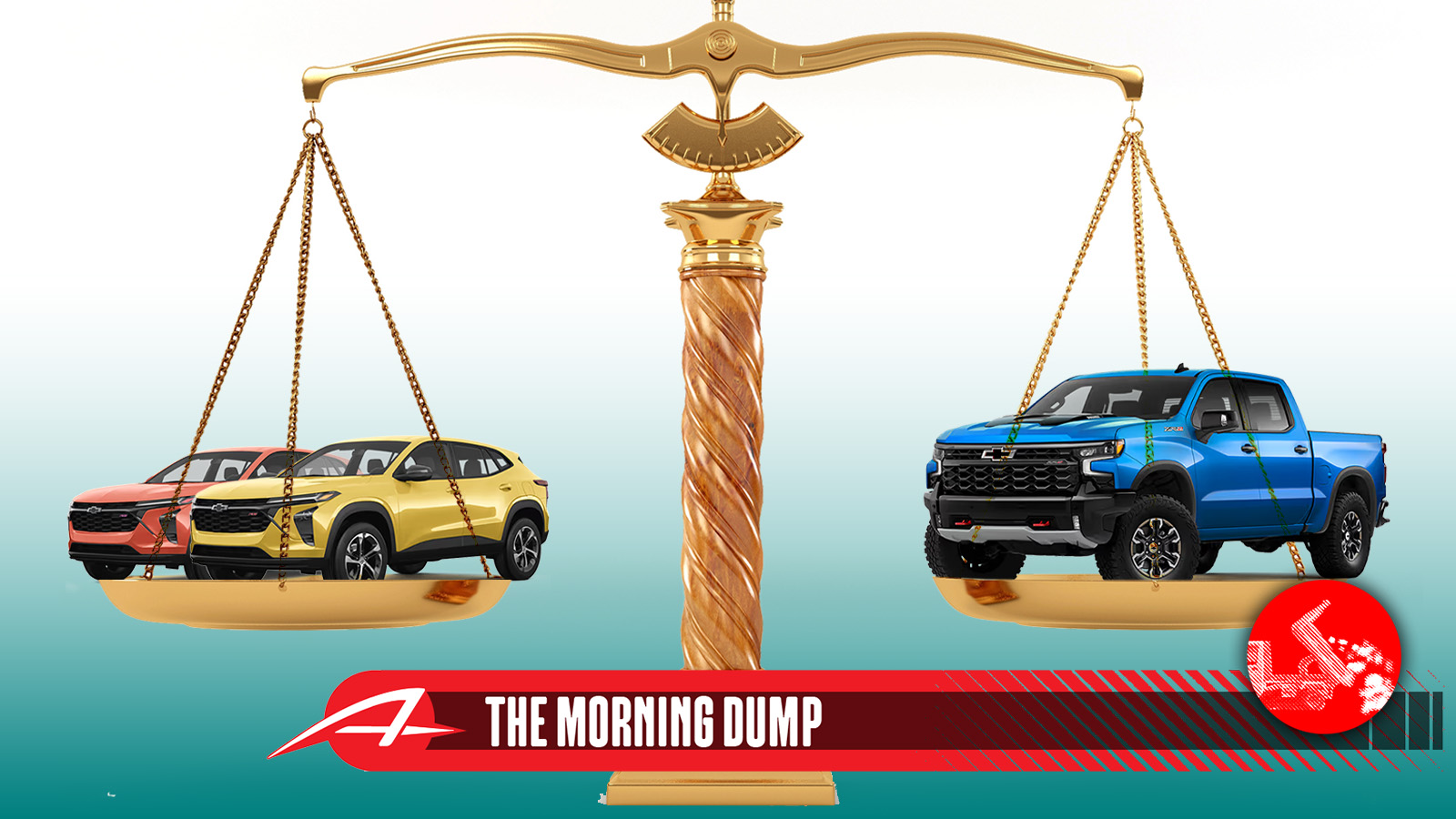
Every administration wants highly profitable companies, a balanced budget, cheap cars, and more domestic automobile production. It’s probably possible to do all of the above simultaneously, but it’s not really feasible to do all of the above instantly. This is the central challenge of the current administration, and it’s making it awfully hard on car companies and consumers.
The Morning Dump, as ever, is about affordability and the efforts to ensure that happens. Up until recently, General Motors was making great strides in offering more-than-decent, affordable little crossovers that people seem to love. The challenge, though, is that those cars are made in South Korea and will be for the foreseeable future. GM is, instead, producing expensive electric trucks here, and it probably can’t stop anytime soon.


One way to get cheaper cars in the United States, of course, is to build Chinese cars, which is something that Ford legitimately has talked about trying to do. The administration, though, seems against doing this.
Can Volkswagen save us? No. Volkswagen may not even be able to save itself.
GM’s Korea Problem/Opportunity

There’s a stat that I keep coming back to, and it’s the key to the whole affordability problem. This comes via a Cars.com report from last year:
Inventory of new vehicles priced under $30,000 — the most tariff-sensitive segment — averaged 13.6% share in the first half of 2025. This is down significantly from 2019, when entry-level vehicles made up 38% of the market and reflects the third consecutive month of declines. With 92% of these vehicles built outside of the U.S., tariffs are disproportionately affecting this entry-level tier, which relies almost entirely on foreign-built vehicles. Only two models in this segment are built in the U.S. – the Honda Civic and Toyota Corolla – while some are also produced in Japan. While overall new car units grew 5.6% year over year in the first half of 2025, the entry-level segment lagged behind at just 3.9% growth in the same time period.
Did you see that? A total of 92% of under-$30k cars are built somewhere else. And for good reason. Building cars in the United States isn’t as cheap as building cars elsewhere. Estimates vary, but a recent one from analyst Oliver Wyman shows that per-vehicle labor costs go something like this:
- Mexican-built: $305
- Canadian-built: $968
- American-built: $1,341
When it comes to a $50k vehicle, that $1,000 price difference is fairly easy to hide. For a sub-$30k cost, it’s a big deal. Another component is, of course, the metal (steel and aluminum) used to build a car. Those materials are necessary to make almost any vehicle you’re going to be able to afford, and, currently, those are being heavily tariffed in the United States. This is to say nothing of the cost of imported parts already made of those materials.
There are Toyota Corollas and Honda Civics being built here, but even those share production with Japan. So far as I can tell, the only purely American-built car under $30,000 is going to be the Chevy Bolt, although let me know if I missed one.
GM is worth talking about here because GM makes a lot of pretty good cars that cost under $30,000 in the form of the Chevy Trax/Buick Envista and Chevy Trailblazer/Encore GX twins. I just had a Trax, and I need to review it (I’m behind on reviews), but the bottom line is that it is a great choice in this segment.
All those cars are also built in Korea, and, for GM, that’s going to continue, according to Automotive News:
GM wants output to reach 500,000 at the plants this year, Korean media reported in early February. The ramp-up would dispel intermittent concerns about GM scaling back operations in the Asian outpost, especially after the U.S. raised tariffs to 15 percent, from nothing, last year.
The capacity push tests GM’s commitment to its Korean operations, and reaching full output would validate the strategy of using South Korea as a low-cost export base to North America.
This is GM utilizing its old Daewoo facilities. Currently, the not-quite-finalized trade deal with South Korea sets tariffs at 15%. That’s not cheap, but GM thinks it’ll be able to eat it. The President, though, has been toying with the idea of raising that number to 25% if South Korea, in his mind, drags its feet on American investment.
I do think that, long term, enough manufacturing could shift to the United States in order to keep prices down and, maybe, automakers could find the sweet spot. The trade-offs are numerous, though. The goal of having some cars built in Canada, Mexico, Japan, South Korea, or wherever is being able to have lower-margin, affordable cars for some Americans, and more profitable, higher-margin cars for car companies (and built in the United States).
Rebuilding the way we assemble and price cars, though, cannot be instantaneous, and it can’t be done magically without some sort of cost to automakers or consumers. This is where the President’s dream of Kei cars comes in, which is mostly a fantasy at this point.
GM is betting that its South Korean operations will avoid another tariff hit and that it’ll allow it to serve the lower end of the market while it focuses on trucks.
GM Probably Can’t Stop Building Electric Trucks

You can understand the logic of electric trucks, right? Americans love pickup trucks. While compact crossovers are the most popular vehicles, pickup trucks are highly profitable, and buyers are highly loyal. It turns out, though, that the fundamental challenges of making an efficient electric truck that can do truck things like tow (even if that’s not something people really do all that often) are mostly insurmountable at a reasonable price.
The Cybertruck is a flop, the Rivian R1T is an awesome toy for a very specific buyer, and both Ford and Ram walked away from pure-EV trucks. GM’s solution to the EV truck problem is just to slap in the biggest battery you can imagine and charge a high price.
Could GM follow its crosstown rivals and cut EV truck production? Ehhh, it’s tough, as the Detroit Free Press points out:
S&P Global Mobility principal analyst Stephanie Brinley noted that the shared architecture for GM’s large electric vehicle lineup makes it difficult to achieve significant cost savings by cutting production of just one vehicle. Sales of vehicles with the same powertrain as the electric Silverado, like the GMC Hummer EV pickups and SUVs and the Escalade IQ SUV, remain stable, selling a combined 43,174 vehicles in 2025.
Maintaining a full suite of vehicles with the same powertrain helps keep costs down, according to Sam Abuelsamid, vice president at Telemetry.
“They get some scale for a lot of components. If they start dropping models, the cost for those that remain go up,” Abuelsamid told the Free Press.
Ford had one EV truck, and RAM didn’t even build its truck, so that’s why both automakers could change course. GM has a whole product ecosystem.
Ford Reportedly Talked About Building Some Chinese Cars Over Here

I’ve already talked about Ford’s various efforts to make a deal with Chinese automakers beyond the deals it already has in place, but it sounds like Ford went a step further in trying to gauge whether or not the White House would be open to, say, allowing a Chinese automaker to build cars over here. It kind of solves some of the problems above, even if it opens up a Pandora’s Box of other issues.
This, via Automotive News, is interesting:
Farley discussed the matter with U.S. Trade Representative Jamieson Greer, Transportation Secretary Sean Duffy and EPA Administrator Lee Zeldin when they visited the Detroit Auto Show last month, the people said. The discussion took place days after President Donald Trump indicated that he’d be open to allowing Chinese automakers into the U.S. if they built plants and hired Americans, saying “let China come in” during a Jan. 13 speech at the Detroit Economic Club.
Ford said Farley gave the cabinet secretaries a tour of the Ford stand at the auto show and that they “discussed a variety of industry topics,” but declined to reveal specifics.
Ford’s talks generally about China with the Trump administration have consistently emphasized “the need to protect our home market from a flood of subsidized vehicles built in China,” Mark Truby, Ford’s chief communications officer, said in a statement.
Deeper in the article, there are a few more details, and it sounds like what Farley was talking about was a way to get ahead of the likely inevitable inroad Chinese automakers are going to make into the United States. Farley reportedly got a “cold reception” that centered around what everyone else in Washington was going to say about such a deal.
I still think the Trump administration could definitely cut a deal with Beijing to open up the United States in order to get proposed investment dollars.
Volkswagen Is Cooked
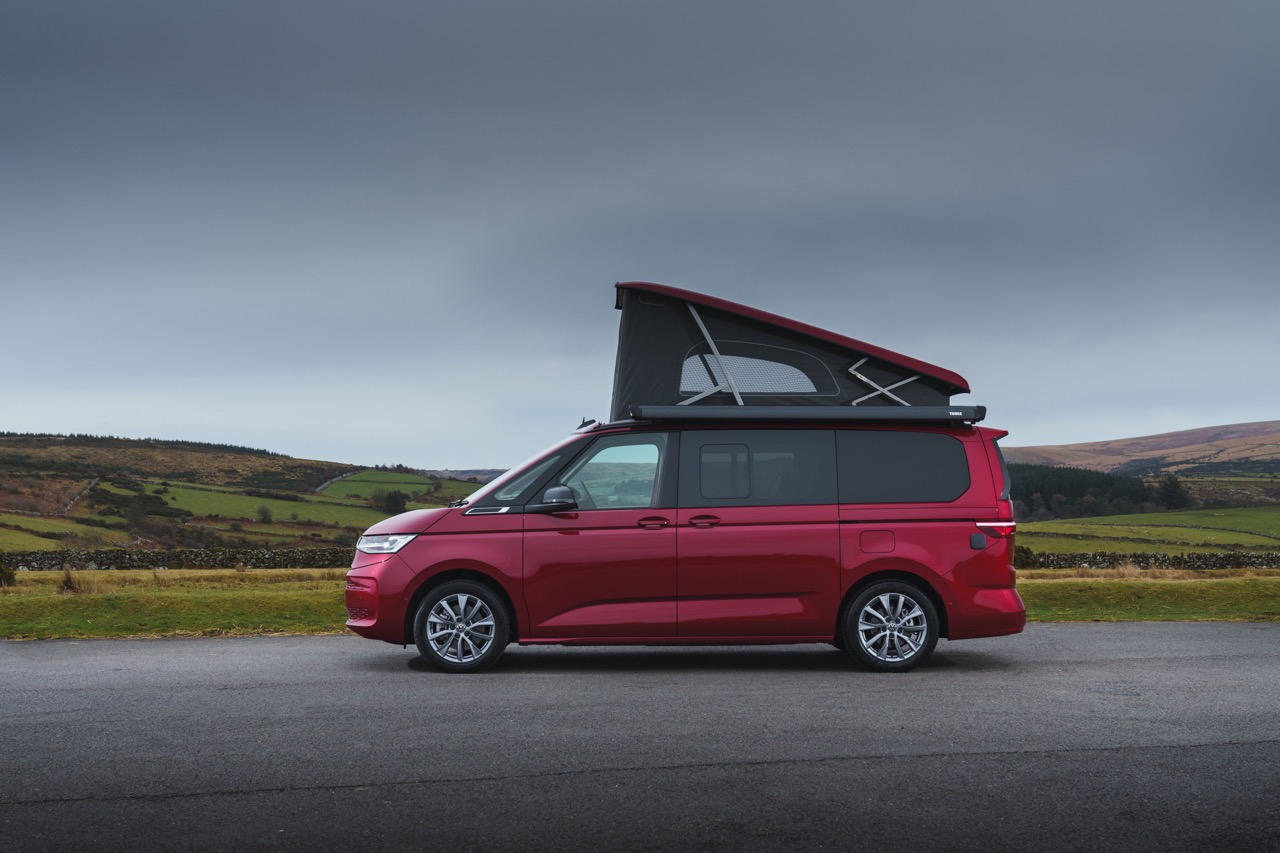
I’ve written at length about how bad of shape Volkswagen is in, and it sounds like the company has a plan. A terrible plan, but a plan. And that plan is to cut, cut, cut. Why? Volkswagen has borrowed a ton of money lately, some of which was used to finance an EV development plan that mostly hasn’t panned out. If the company runs too short on cash, it gets downgraded, and if it gets downgraded, it has to pay more for borrowed money, tuis impacting cash flows.
That’s not good, so the company is going to have to find 20% of savings, somewhere. Anywhere. Manager Magazin has the details, and the details are not great:
Volkswagen’s 120 top executives reportedly returned somewhat bewildered from a retreat in Berlin in mid-January. The board members of the various brands had expected CEO Oliver Blume (57) and CFO Arno Antlitz (55) to urge them to be frugal and adhere to cost discipline. However, the massive cost-cutting plan that the two then presented was of a completely new and unprecedented scale.
According to information from manager magazin, the company plans to reduce its budgeted costs by a massive 20 percent by the end of 2028. Otherwise, given the economic slowdown in China , American tariff policies, and the challenging competitive environment, it would be impossible to achieve a sustainable return on investment. Furthermore, one of those present commented that spending on software and the dual development of combustion engines and electric drives would remain high.
I don’t understand how this is going to work, which means I’m qualified to be a Volkswagen exec. This is a truly lost company right now.
What I’m Listening To While Writing TMD
Peaches come from a can, they were put there by a man, and then put into a song called “Peaches” by the Presidents of the United States of America.
The Big Question
What’s the best cheap car ever made in the United States?
Top graphic images: GM; DepositPhotos.com





May I make a suggestion..