

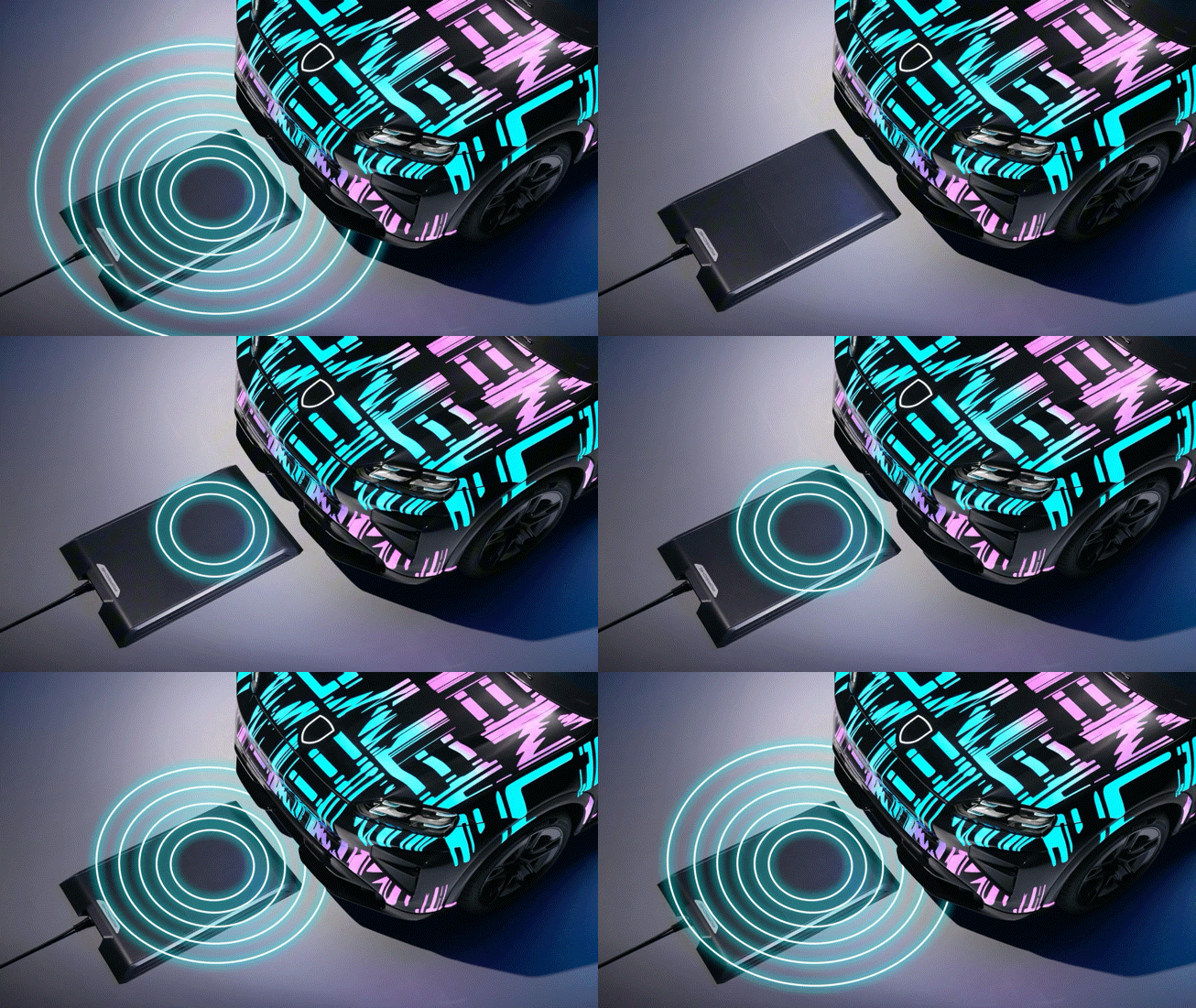
While Porsche has been pivoting back from its all-electric plans thanks to people still wanting combustion engines, don’t take this to mean its electric car offensive is paused. A new electric Cayenne is on its way to sit alongside the combustion model, and in addition to bonkers output and active aero, it’ll be available with a whole new way to charge.
While we’ve seen wireless EV charging demonstrated as a working prototype before, no automaker has been brave enough to take the plunge and offer it on a production car until now. It works on induction, much like a wireless smartphone charger, except it’s capable of supplying 11 kW of power, the same as many traditional Level 2 charging stations.


Here’s how the process works from a driver’s perspective: You drive a suitably prepared electric Cayenne over the charging pad, it detects the presence of the wireless charger, automatically dumps itself on its air suspension, and charging starts. It’s a promise of no uncoiling cables, and no banging fists on frozen charging doors, although part of me does wonder how easy it actually is to center a Cayenne’s receiver over the charging pad. Sure, there’s a mode in the parking camera system to help you guide the new electric Cayenne over the charger, but I’d definitely want to try it out in person.
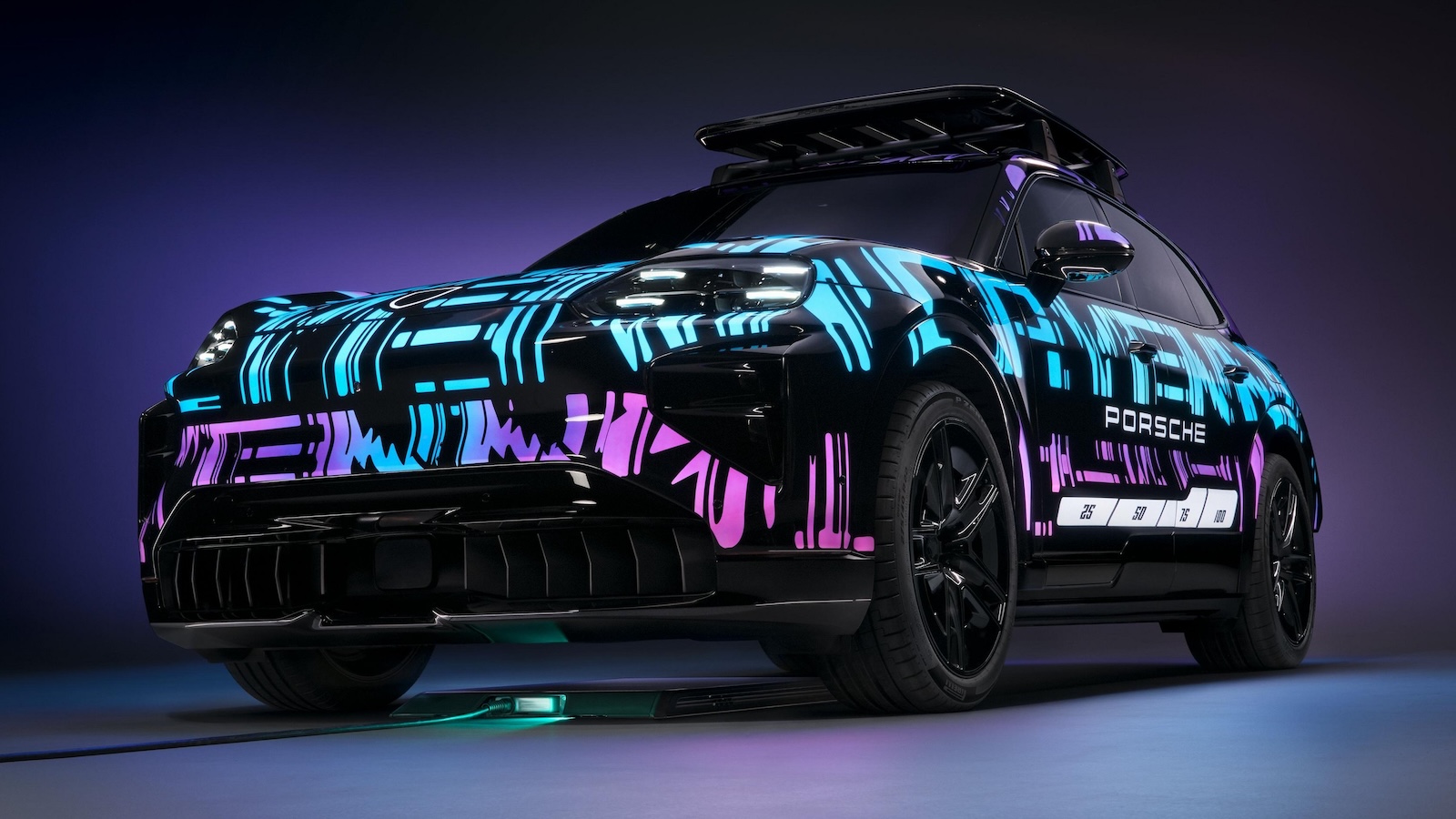
Now I know what you’re thinking: Aren’t there some obvious potential pitfalls of leaving a high-power wireless charger out and then hovering a vehicle a few inches above it to charge? Well, Porsche claims to have solved them. The wireless charger will automatically switch off if it detects metal or an animal between the charger and the car, so you won’t come out to your garage and be greeted by the smell of crispy rodent. The receiver on the bottom of the Cayenne and the pad itself are both weatherproof and resistant to light impacts, so you can send your electric Cayenne through the snow or drive your weekend car over the charging pad and everything should be just fine.
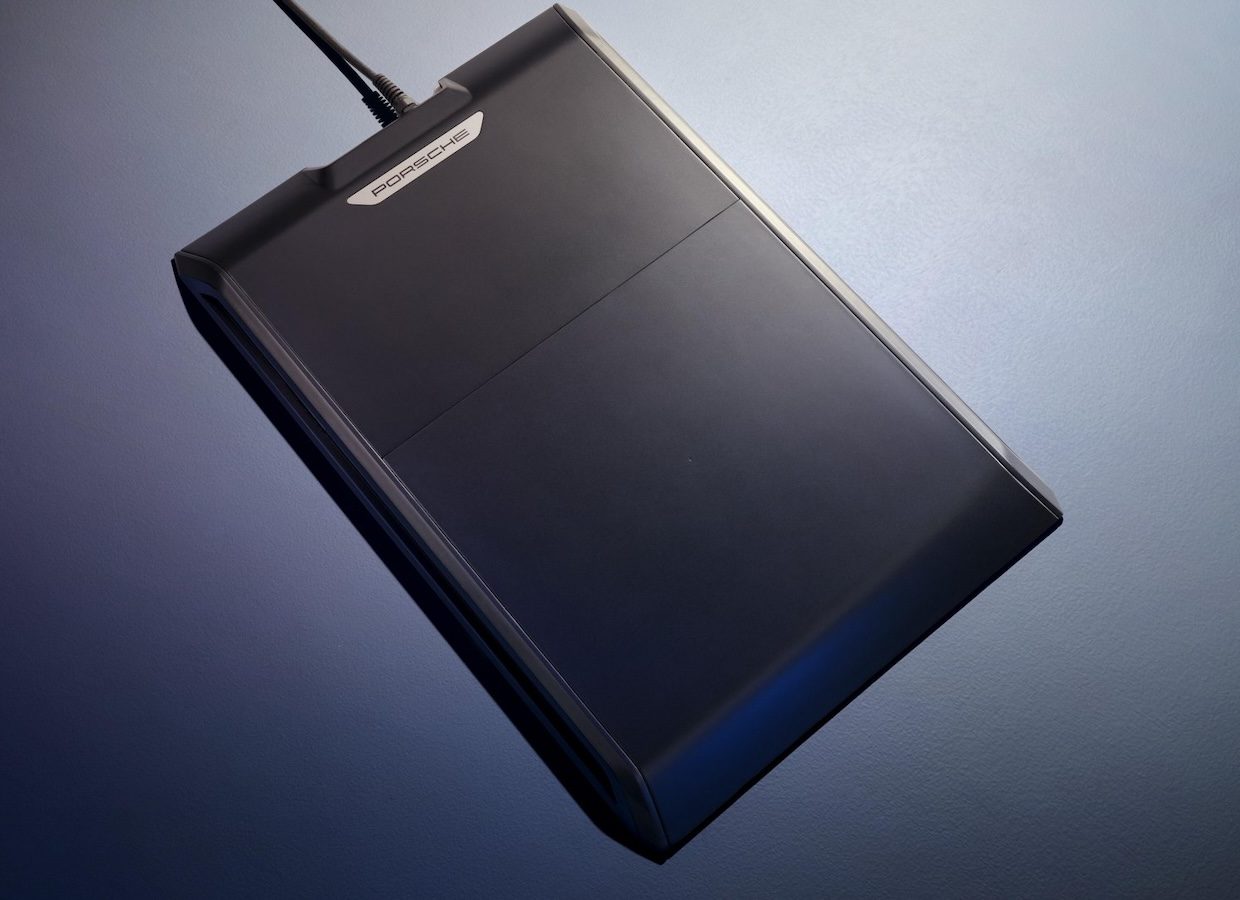
Downsides? Well, the charging pad is fairly heavy, clocking in at 110 pounds. Also, if you mount the weatherproof pad outside, you probably don’t want to hit it with the snowblower. It can be driven over, but I have a feeling that blade damage is something else entirely. There’s also no word yet on cost, and while I’d imagine the wireless charging pad will likely be more expensive than a conventional Level 2 wallbox, how much more expensive will dictate how well this technology catches on.
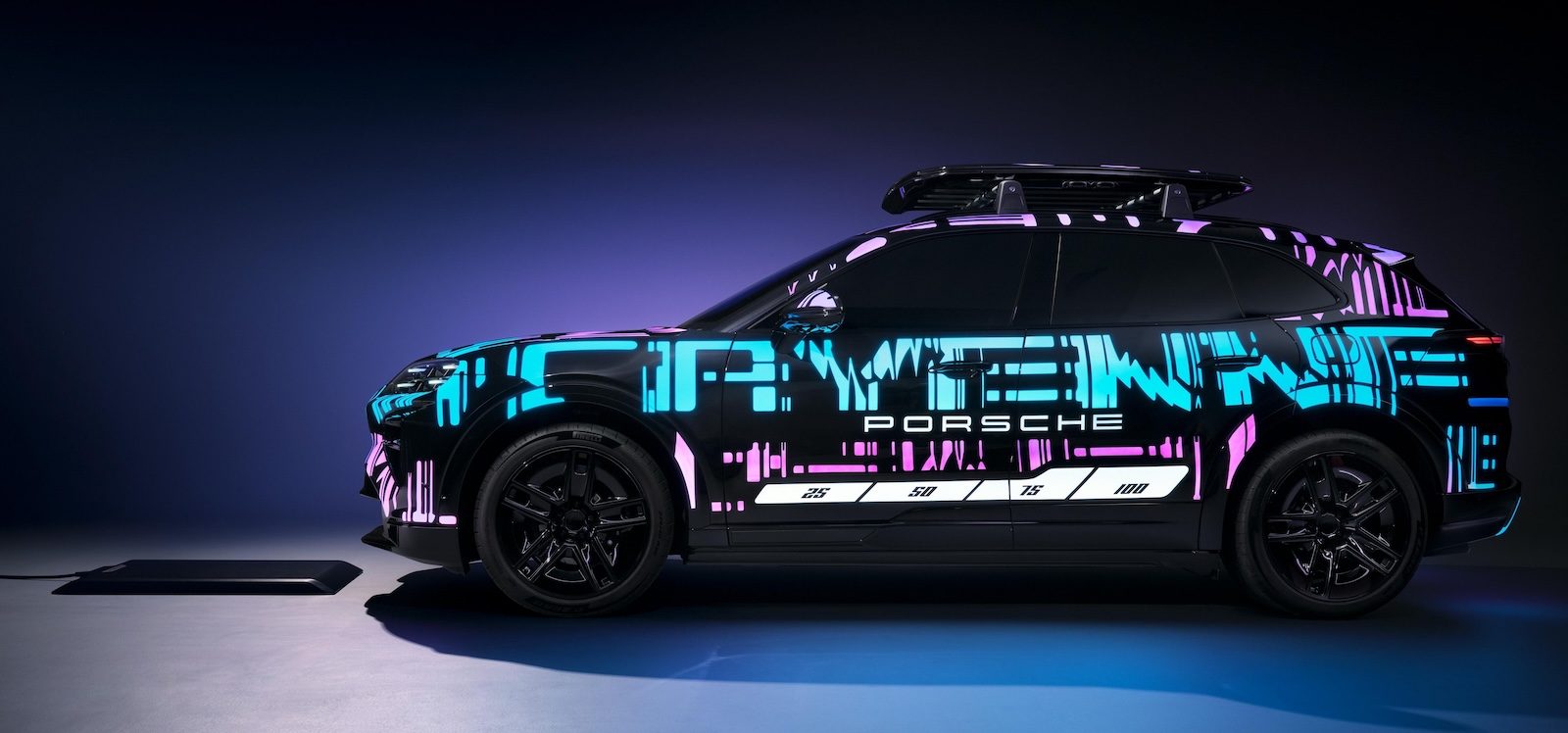
Still, if wireless EV charging does catch on and more manufacturers start to offer it, this could be a way of solving the issue of too-short cables at Level 2 stations in the future, such as when you pull up to a street-side station in a vehicle with a charging port that isn’t on the curb side.
Top graphic image: Porsche
Support our mission of championing car culture by becoming an Official Autopian Member.




this is such a terrible idea due to the waste electricity. and excess heat. having an electric car is already as lazy as it gets to car ownership and you can’t even do the ONE THING that makes it go.
So the car starts charging for 20 minutes and the pad warms up, the cat thinks that seems like a wonderful place to sleep, and then the charger is shut off for the rest of the night. So you wake up to a car that hasn’t charged. Or the animal detection feature fails (which seems pretty likely) and you wake up to a dead cat.
can’t swing a dead cat around here without seeing a Porsche with a dead battery….
Mclaren offered this with the Speedtail if I recall. Manny Koshbin seemed to have nothing but problems with it so hopefully Porshe has this figured out.
Porsche has clearly figured out this can work because so many Porsches are garage queens that only get driven a couple times a month … and they can “charge the big bucks” for the option.
I’m almost flabbergasted by the negativity to this without anybody knowing how shit works. Everybody is comparing this to the original Qi phone charger or RFID implementations which were designed to be low cost to produce, low cost to implement, meant for 5W, and 55% efficiency was considered awesome. THIS WAS IN 2010! Your phone is still supporting that old standard. It’s from the era of the iphone 4 or 5 and can’t much improve without being incompatible. They’ve since gotten better at charging faster, but they’re still limited in what they can do efficiency wise due to maintaining compatibility.
This is a whole new standard. Its goal was not cheap to make but efficient and high power now. You can’t realistically compare two standards designed for different purposes, with almost 2 decades of technology in between and assume all the flaws of the original implementation apply to the latter. Realistically I expect this to be 100KWh at the meter translating to only 87-90KWh instead of 91KWh when using a typical home charger.
“This is a whole new standard. Its goal was not cheap to make but efficient and high power now.”
But how efficient is it to regular conductive charging? I’m gonna guess it’s still far less efficient. But I look forward to when someone does a real world comparison test.
Only 1-4% less efficient than a wired connection? That is an impressive metric you found in the depths of your asshole there. Yes some Qi 2 chargers are very efficient because they have magnets that aligns the coils perfectly. Plus the phone is literally touching the charging pad.
An inductive car charger will never be aligned perfectly, and has to go through a lot more air. Distance drastically reduces inductive charging efficiency.
They’ve existed for many years in other countries. BMW claimed 85% when they rolled out a wireless charger for the 530 plug in hybrid in 2018, Genesis has offered this (on a limited basis only though) since 2022. The only thing new here is that the tech is finally almost mature enough to bring it to north america.
edit – one more thing to add, qi phone charging by design is meant to take up as little space as possible so the magnetic field oscilates up and down so you want the coils as aligned as possible, identical in size as possible, and close together. If you orient the field longitudinally down the length of the car you can get a much less finicky inductive coupling while maintaining a decent ratio of the length of the coil winding stack vs the air gap. Dedicating 2″ of thickness to the receiving coil doesn’t matter when it’s on the bottom of the car, but adding even 1/4″ to a phone would make wireless charging a non-starter so they went the less efficient route.
So 5%, which as the number is coming from BMW is the absolute best case scenario. That’s not nothing at the rate EVs use power. I’d love to know how the animal detection works too, because I can’t imagine any kind of sensor I’d trust to not cook my cat.
I guess we are talking about Porsche here, paying more for arguably better bullshit is what they do.
“…don’t take this to mean its electric car offensive is paused.”
Oh, don’t worry, I find this electric car feature plenty offensive. Oh, they have an automatic safety feature that will prevent it from turning the story of “a cat crawled under my car” into viral internet outrage?
Rather than having a safety feature that will definitely fail under some real-world conditions, one might consider not introducing the problem in the first place.
And I beg that automakers not use this as a solution for EV charging in general; it requires automatically-lowering suspension, dedicated hardware to receive wireless charging…it’s a way to make electric cars even more expensive and complex! Solving a relatively minor/manageable issue to worsen the most serious one in the category.
I drive a first-gen Veloster with a tray your phone can sit in and a USB connection for Android Auto. Every phone I’ve put there has sharply bent the cable against the trim around the shifter, causing damage to the connection. Dealing with that convinced me that a demand for wireless charging in such a position is a design issue. You wouldn’t want wireless charging for a phone as much if your car properly accommodated a wired charger.
If chargers are too short for a particular car, maybe they should include some kind of pull-out extension cord in the charging port? If they do, please let it be replaceably-connected to a normal plug instead of being a point of early failure…I just gave them another horrible idea.
(I also used the headphone jack/aux in the aforementioned car when my phone had it, in case consumer electronics people are listening/scraping…)
Just wondering install an electric magnet that pulls up the wireless charger so that it attached to the battery and then allows it to drop when charged?
I will miss the opportunity for squirrel sausage though.
IMHO based on what Porsche stuff costs forget about aborting charging if an animal is in the way and figure out a way to market it as an overnight charger and breakfast preparation
Didn’t Rolls Royce already try this a decade ago?
Or, you could just plug the car in.
Put this under a road, and it’s a great idea. Put it on a public parking spot, and it’s a good idea.
Put it in a garage, and you’re just a lazy, entitled, Porsche owner.
Wireless charging roads are an idea that belong in the same bin as solar roads made of recycled plastic.
Does it come with lead undies to protect the driver’s sperm count?
“Well, Porsche claims to have solved them. “
Did they solve the problem of it being far less efficient than conventional conductive charging (using a plug)?
I doubt it.
5 years ago, wireless charging was horribly inefficient:
https://debugger.medium.com/wireless-charging-is-a-disaster-waiting-to-happen-48afdde70ed9
https://en.wikipedia.org/wiki/Inductive_charging
“Inefficiency has other costs besides longer charge times. Inductive chargers produce more waste heat than wired chargers, which may negatively impact battery longevity.”
The inductive chargers of today MIGHT be more efficient than the ones from 2020… but do we really know?
Well there is one way to find out.
Before anyone claims this is a good idea, they should do a charging test… charge that vehicle from 20 to 100% on wireless and wired… and compare how much electricity is used in each case.
My guess is the wireless charging will be a terrible idea for efficiency reasons alone.
Check out this ifixit video on the subject:
https://www.youtube.com/watch?v=vhKVuT8-H1g
$7000 extra if you want the wireless charger in a matching color 😛
How much for deviated stitching and carbon trim?
Here’s an excerpt from my EV Tech course about wireless charging. A standard has already been decided upon by SAE so it should be plenty safe.
I maintained for at least 10 years that the normal charging is not a viable route for a majority of charging needs. Even with super-fast chargers it’s way too freaking long and ever increasing power too demanding. Instead, inductive chargers should be embedded in as many parking lot spaces as possible so that your EV can slowly auto-charge every little bit while you pop into the stores etc.
I like the idea of making charging as overconfident idiot proof as possible. I like the idea of outside charging. I still wonder what the pacemaker warning on this is.
If you get an erection lasting more than four hours turn off the charger.
Hopefully this can be turned off, I’d much rather have a crispy rat under my car than crispy wiring in the car after he chews them up.
Wouldn’t be “luxury” if it wasn’t a more wasteful and dumb version of normal charging now would it?
This device has to have a dedicated location, most likely in a garage. So since your car is always in the same place, how much harder is a cable?
I’ve got to think the efficiency is terrible. If I weren’t lazily day-drinking a beer on the couch, I would look it up, but these are the cards I’ve been dealt.
Wirelessly charging a phone is inefficient; how bad depends on your source, but it’s not good. And that’s also when the charger is a few mm away from the device. Can’t imagine a car version being even 20% as efficient as a plug.
I had the same concern so I looked it up:
“With a maximum charging power of up to 11 kW, the sports car manufacturer has even reached the level of wired AC charging with its contactless charging system. The efficiency of energy transfer from the power grid to the battery is up to 90 percent.”
https://newsroom.porsche.com/en/2025/products/porsche-wireless-charging-inductive-charging-40421.html
For comparison:
“a typical Level 2 home charger operates in the range of about 83-94% efficiency grid-to-battery depending on which one you buy.”
https://witricity.com/media/blog/why-wireless-ev-charging-is-just-as-efficient-as-plug-in-ev-charging
So it’s in the ballpark of but not quite as good as a plug.
Interesting. That Witricity link is a manufacturer of wireless pads as well, and they claim at least the same efficiency as Porsche, but they give a range at least. They have a white paper on the magnetic resonance technololgy I need to be more awake to read; not sure how it’s different from regular induction charging.
Porsche says it is induction charging, which is very sensitive to relative positioning. Looking forward to real world tests on it.
I looked it up for you.
Wireless charging is typically between 70-90% efficient. No specifics for this particular product. If it is on the low end, that is a hell of a waste of money. Even at 90% efficiency, that’s a pretty big drop just because one is too lazy to plug in a cable.
When it is your phone with its ~18.5 Wh battery, its not a huge deal. When it is a ~100,000 Wh battery, that’s a lot of needless waste.
most of the loss of a wireless charger in a phone is in converting a DC signal into AC so it can be transmitted via the coils, and then converting it to a DC your phone can use. In this case you’re starting with AC and the car needs to convert it back to DC regardless so there’s very little additional loss in this case. What this won’t work with though is DC fast charging.
Thank you for bringing the numbers so I didn’t have to. I’ve been saying it since qi became the standard, wireless charging is stupid. Plug in the damn cable you lazy bums!
https://arstechnica.com/cars/2022/09/whats-the-state-of-wireless-ev-charging/
This is from when it became an industry standard, but I doubt it’s improved much better than 90% since then, and that should be taken as a best case scenario. Keep in mind a plug in charger also gets roughly 90% efficiency, worse if you fast charge.
That was my first thought too but then I figured a Taycan probably costs $$$,$$$ anyways so if you can afford the car in the first place you probably don’t care about your electric bill.
It’ll charge the car at 11kW, but how much is it pulling to do that? Wireless charging is never going to be as efficient as a direct connection, and I know I’d be a little annoyed if I had to use 40kWh to put 20kWh in the battery.
I don’t hate the idea. Drive into my garage and the car starts charging overnight like my phone? Get enough charge to easily make it through a day? Cool.
Makes me leery. I know how hot my phone gets when I use the charging pad in my Mazda.
Yeah Level 2 charger plugs can get hot enough already I wonder what could happen to this when it eventually gets dusty/salt covered. And where I leave we get a lot of dirt dust in our garages from all the farm land around here.
On one hand, wireless EV charging has far less strict constraints on space and cost compared to a phone charger, so they can put in a lot more safety systems. On the other hand, a 15W phone charger can dump a big percentage of its energy into heating something instead of charging the battery without it actually being an issue, but dumping 3-11kW through it means even leaking 1-5% into something incidental could be a problem.