


There’s no rule that says a model has to be updated every five-to-seven years, although that’s been the expectation from certain major automakers like Toyota. A new report suggests that the Japanese automaker might be drifting towards the Nissan end of the spectrum, where models stick around a little bit longer. Is this a big deal? I kind of think it isn’t.
The notion that cars can go longer between overhauls goes against my training as an auto journalist. The internal metronome for most car hacks was set by Harley Earl, which means any vehicle that hasn’t been substantially upgraded in more than a year is somehow Methuselah-spec. The Morning Dump is open-minded and is willing to consider that maybe this is faulty logic.


Is Slate willing to consider using independent shops to work on its cars, possibly saving it money at the expense of keeping customers? Is Ford worried about handing over more data to Amazon, as it allows used cars to be sold on the platform? I’m just asking questions here, folks.
While I’m employing the Socratic method today, why did JPMorgan think it could make Volkswagen’s mobility platform profitable?
Toyota Reportedly Considering Going 10 Years Between Model Upgrades Thanks To Software
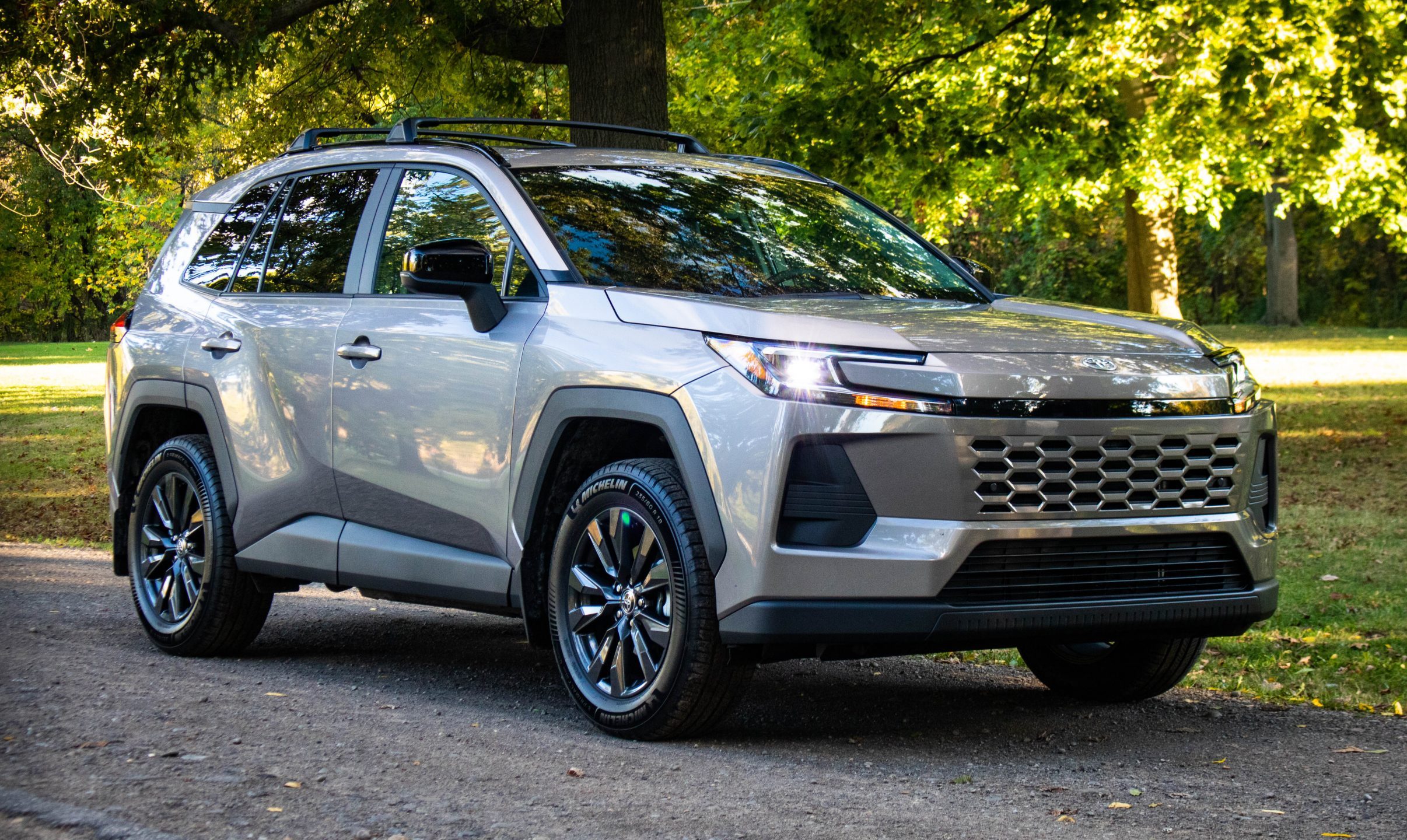
I am happy to go ten years between colonoscopies. The census, too, probably only needs to happen every decade. On the other hand, it’s been nine years since the last Rihanna album. That’s far too long, and I don’t know if I can wait another year.
What about cars? The Volkswagen Beetle is essentially the most popular vehicle of all time, and it managed to go decades with only minor ongoing improvements. That’s a far cry from post-war GM, which wanted to significantly tweak its cars every year to boost sales.
Cars are living longer and longer, so maybe it doesn’t make a ton of sense to massively change them every five, six, or seven years? That’s the thinking at Toyota, at least according to Nikkei Asia, which points out that Toyotas are so in demand that spreading out models might make sense:
Toyota is experiencing a high volume of orders, resulting in extended delivery times and order suspensions. Its Land Cruiser SUV takes years from order to delivery — and by the time the vehicle is delivered, the next iteration may already be out. A longer sales cycle will increase opportunities to purchase popular models and also increases the likelihood of selling them used at higher prices, as their value is less likely to depreciate.
With the longer sales cycle, Toyota will review wholesale prices it sets for dealerships. These prices are often gradually reduced as time passes after a model’s release. Going forward, wholesale prices will be set more flexibly, depending on the model and the sales situation.
This is an interesting article because it has basically no quotes, but Nikkei Asia is usually well-connected, so presumably there’s some kind of sourcing here. As the article points out, one of the issues with this strategy is that dealers make money on the gap between wholesale and retail prices, but prices fall relative to how old its models are. In order to address this, Toyota will allegedly be more flexible with wholesale pricing. But what about customers? For them, Toyota is looking to keep its software updated.
You’ve also probably seen this with Tesla. The automaker does small updates, but it doesn’t exactly completely overhaul cars often (arguably, the Model S is 13 years old). What it does do is upgrade the software on vehicles as much as possible to keep rolling out features, therefore keeping vehicles feeling more up-to-date.
There’s such high demand for Toyota products that it can probably afford to do this and not risk losing much market share. Also, this might mean that we can keep vehicles like the 86 around longer.
There Are Potential Downsides In Slate’s Service Plan
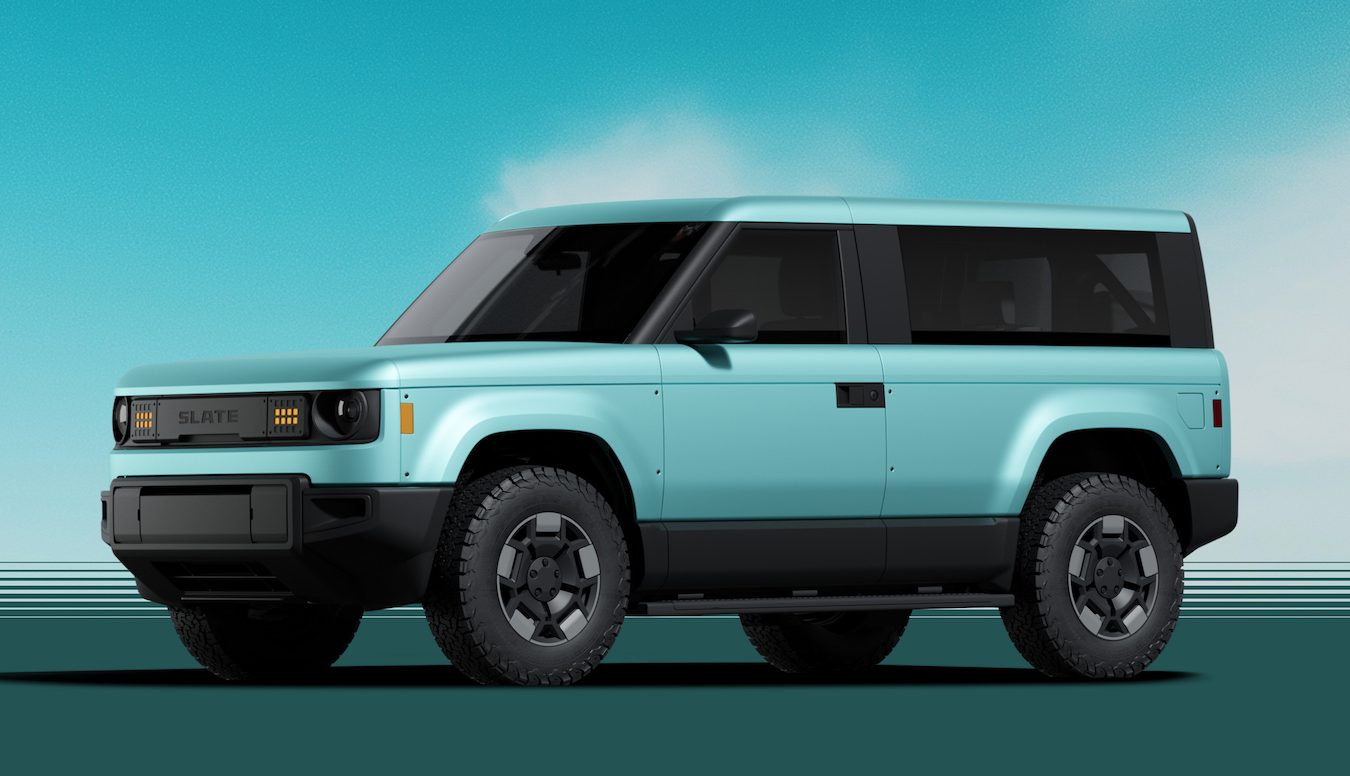
I am still quite curious about the Slack electric truck, as are at least 100,000 other people. It has a novel approach to building the car, which is how it keeps the cost potentially low. Another way it’s keeping costs low is by not having any dealers or any service centers, instead using local garages via the RepairPal recommendation platform.
Cost savings and flexibility are the upsides, but as Automotive News reports, there are some downsides:
“Price is one of the big draws of Slate, and the independent repair shop approach may help keep servicing and repair costs in check,” said Ed Kim, chief analyst at AutoPacific. “But many of today’s new-vehicle customers may find this approach doesn’t meet their loftier expectations.”
Most new-car buyers consider franchised dealerships an extension of the brand, offering expert EV repairs and a tightly managed service experience. “At an independent repair shop, this may be much more difficult to implement,” Kim said.
Alternatively, customers of Teslas and other newer EV companies complain of extended wait times from company-backed service centers, so perhaps this can help with the bottlenecks that come with a dealerless, DTC model.
Ford Joins Hyundai In Selling Certified Used Cars On Amazon

So far, Hyundai’s experience with ‘selling new cars’ via Amazon has been so slow it’s been hard to tell if it’s actually working yet. Ford is going with a slightly different approach, starting out with certified pre-owned used cars.
Again, it’s mostly just browsing cars, not necessarily buying them.
The Amazon Autos storefront at www.amazon.com/amazon-autos will connect customers with participating Ford dealers across the country.
Ford said customers can browse a participating Ford dealer’s Ford Blue Advantage certified pre-owned inventory within a 75-mile radius of their home. They can search certified pre-owned vehicles by make, model, year and color.
Each listing will include the price, vehicle history, and specifications, allowing customers to comparison shop from their computer or smart phone.
Once a customer decides on a used vehicle, they may be eligible to secure financing, start paperwork, and schedule a pickup time at their participating local Ford dealer.
Neat, I guess.
JPMorgan Shuts Down The Payment System It Bought From Volkswagen

Do you remember “VW Pay”? This was Volkswagen’s attempt to get into the mobility and financial services game with a unified system that let you pay for fuel, parking, and other car-related things electronically. Back in 2017, before Apple Pay, I suppose this made some sort of sense.
Back in 2021, JPMorgan bought a majority share in the platform and, well, it ain’t gonna work out, with Bloomberg reporting that the bank is shutting down the service. Why?
JPMorgan Chase & Co. is winding down the payments platform it acquired from Volkswagen AG just four years ago, after executives determined they would not be able to turn a profit on the platform.
Like the third owner of a Volkswagen Phaeton, sometimes you just have to learn when to cut bait and move on with your life before you lose any more money.
What I’m Listening To While Writing TMD
There’s a lot of uncertainty in the universe, so let’s embrace it. Here’s Jimi Hendrix with “Castles in the Sand.”
The Big Question
What are some cars that should have gone longer between updates? What stayed around too long?
Top photo: Lord of the Rings/Toyota




Toyota better keep on top of their refreshes if they want to go that long between redesigns. Most people don’t want to buy the same vehicle twice which is why we had the only refresh at 3 years / redesign at 5-6 year model cycle. The most common lease is 3 years and 70% of people that actually buy a new car keep them for 5 years or less.
So maybe we get a refresh every 3 years?
The current gen Toyota Corolla is pretty long in the tooth. It is quite unrefined compared to the current competition. On the flipside, I cannot think of any car that should have gone longer before an update. Maybe the Mk7 Golf, but that was around for roughly 9 years. The only reason it comes to mind is because of how disappointing the Mk8 is, not because it wasn’t due for an update.
I’m all for vehicles lasting longer. Better parts availability, more sustainable, more collective knowledge of issues.
And hopefully, for less popular models, less ongoing cost to just keep making the same thing in smaller numbers since the tooling is paid off. (Yes, I am bitter about discontinued Lexus cruisers that I could never afford anyway.)
The Canadian market Nissan Micra was gone too soon.
They’re great little commuters that are durable, economical, and CHEAP. I see them buzzing around my city all the time.
I’m also sad that the Hyundai Genesis Coupe died out after only running 2010-2016.
Pickup trucks. If they went longer, maybe Toyota wouldn’t have had the sand in the engine block problem. Same with Jeep.
I mean, the last generation Tundra ran production for 15 years. How much longer did you want them to go?
That sure sounds like a frozen Tundra.
FOREVER. I am scared to death some asshole (most likely myself) will crash my 21′ and I won’t find another reliable gasser truck again in my lifetime with how things are going right now in the industry.
Ditto on my 2015 Fit. I say a little prayer…
Oh don’t be so pessimistic. Whatever truck you buy will last until WW3 inevitably kicks off within the next few years.
Then you’ll be a sitting duck in a tank that had “machining debris” in the engine and kerploded. Your truck worries will be a distant memory!
20 would be nice.
I have the Lada for you, sir!
I’m probably off base with this, but my thought is by now they’ve pretty much got the mechanics of designing and building a car down to a science. There has been considerable improvement in powertrains (to say nothing of the migration to electric), but the shells themselves seem to be pretty mature.
Styling is, of course another matter entirely, but my impression is the platforms are mature enough that keeping them around for longer than four or five years makes a lot of sense. With tweaks to the plastic bits on the nose & tail and new color options along the way, it seems like it ought to be possible to keep a particular vehicle relevant for longer than the current cycle lengths.
I guess I’m kinda with Toyota on this one.
They do talk about software. With everything migrating into screens automakers can make vehicle interiors updated without really changing many physical part.
Change the HMI, update the processing speed, tack a different size and shaped screen on the dash…
I would love a year-9 Toyota model.
It would be the poster child of continuous efficiency.
Don’t forget that the OEM’s procurement team spends the ENTIRE model run looking for ways to lower the cost of goods sold. By the time you get to year 9, anything that can be removed, thinned, or replaced with plastic has done so.
Swings and roundabouts there.
All those optimizations will likely be supported by WWII-era bomber bullet-hole charts showing what does not need reinforcement in order to remain airborne. Not to say they all will be for the better, but neither will the original parts be battle-tested to show they are either.
The Slate plan could work if they design it to be serviced easy. It might even work out in their favor if they are also the supplier of the parts. I would stick to modular easy to access parts to make repairs easy, You might also find other businesses that could recondition parts cheap local. It is a full Electric car, maybe make some of the modules serviceable by computer or electronic repair places. In theory, You shouldn’t have more complexity with the Slate but less.
Longer gen from Toyota? That seems fine with me, most people I know with a Toyota have kept it longer than 10 years anyway. Maybe their data is showing them that they don’t need updates as often to keep people buying. I personally have 2 toyotas that are well past 10 years old as daily drivers for me and my wife. Toyota doesn’t even sell a car we would want anymore even if we went in to trade up for new. I went and looked last summer and didn’t spend even 10 minutes at the dealer before I was told I couldn’t have what I wanted because, “no one would ever want that, no company has ever even sold a car like that” as I got in that car from that company and drove away.
I’m going to die of a heart attack of not surprise.
People only have so much appetite to update their NPC mobile. Also, after long enough… they learn replacing Car X with slightly newer version of Car X wasn’t really worth the cost. Especially when current Car X is… really good. Even economy cars.
Add in how much more a new car costs relative to disposable income… no surprise.
Moreover, Toyotas as durable as fuck. It’s just not hard to get 20-30 years out of those cars if you really take care of them. Much longer if you want to. Things like seat foam, seat fabrics, rubber seals and such are the real things to worry about. Obviously corrosion needs more work to prevent in some environments. Though if you work to take care of the car, boy does the car take care of you.
One benefit to longer production runs is the very wear parts you mentioned (seat foam, rubber seals, interior trim, etc.) are much more likely to be plentiful when you need them. After all, interior parts are much easier to find for a car with a 10 year run that’s “only” been out of production for 10 years than one with a 5 year run that’s been out of production for 15 years…
Seat foam admittedly is the easiest thing to deal with.
Seat fabrics is harder, but good seat fabrics still “look OK’ after 25-30 years.
OEM rubber door seals? That’s the real yikes part (OEM price), but at least Toyota is good on supporting them. The aftermarket ones tend to be trash.
I was shocked at just how easy (and cheap) new lower window seals were for my first gen Tacoma. Given how almost all of them have almost all the rubber peeled off, I thought they were either hard to find or expensive. It took me about 5 minutes to find them and they were less than $30 each for OEM replacements. Small price to pay considering they keep water out of your door…
The driver’s door card for my second gen xB is another story (crack forming on the armrest), that looks like I’ll have to go the part-out route. The mechanical, platform shared parts are a dime a dozen; the model specific parts, not so much. For comparison, it’s a 13 year old car that was in production for 6 years…
Yeah, window seals can be reasonable. You won on the Taco, for sure.
Go check door seals. The molds are much larger, and take up a lot more space in storage. Not uncommon to see them in the $500-1000 range.
15+ years is when stuff starts to become harder to find for most manufacturers, but Toyota is better than most OEMs on support.
It’s almost as if they expect their cars to last that long…
So is the Slate not offered with a warranty? Not sure you could get independent shops to play ball with warranty nonsense.
No dealers or factory service centers. They claim warranty work can be done at any independent service center on the RepairPal app (owned by Yelp). However, that Automotive News article quote here says only 200 of those shops are certified to work on EVs.
Dodge Magnum shouldn’t have been dropped to make room for the Challenger. There was capacity to build all the LX cars in parallel.
Frankly, I wish they were still building and selling the old Challenger/Charger/300. The Challenger sold 60k units a year like a metronome for more than a decade, including in the same years when Camaro and Mustang sales tanked. The sedan sold at 90k/year volumes, and even the spendy Durango also did 60k/year on the same platform*.
The sales equation was simple: offer a V8 for ~$30k, and a V6 for cheaper than that, in a stylish, comfortable, usable car that also happened to be fun to drive.
Autojourno whinging about age notwithstanding, there was nothing wrong with that platform, and unless the tooling was flat out worn out, I don’t see that they had anything to gain from making a new one, especially a way too expensive new one missing any compelling powertrain at all. They should have kept pumping the things out on 100% depreciated tools printing money until someone actually competed with them successfully in their market niche.
(*Edit: did some research to back up my claim that the Durango and LX car platform were related, and they weren’t as close as I seemed to recall. WD – Durango, Grand Cherokee, and LD – facelifted LX cars were developed around the same time and use similar drivetrain components, but evidently are different enough that they can’t reasonably called platform-mates. Apologies for the error.)
It would have also been the last non-SUV police-trim vehicle left standing. I’m sure the police fleets would have loved the idea of having a never-ending train of vehicles using common spares.
One would think that alone would have justified maintaining production…
“Like the third owner of a Volkswagen Phaeton.”
That feels personal.
Mercedes out here catching strays.
Yeah, not sure I’d have gone down that Streeter. Paybacks.
GM let the first gen Cruze go too long. They had the second gen ready to go and then sat on it for a year. In that time Honda introduced the Gundam Civic and made the second gen Cruze look like a cheap copy. That killed the buzz really quickly.
I sort of doubt these longer cycles will actually happen. Depending on how you look at it anyway.
Toyota already has a tendency to stretch out architecture and powertrains for long, long periods of time. So yeah, we might not be seeing substantial edits, look at the most recent Rav4 and Camry designs. But we’re still going to see these heavy refreshes being sold as “all-new” designs, because new designs are half of what drives people to buy new cars to begin with. Good luck selling someone a brand new Toyota for big bucks 7 years after buying their last, only to show up to the dealer to find that it’s the EXACT same car that they already own.
I know that this is The Autopian, and a number of people here would probably LOVE this, but we’re talking about non-miserly-non-enthusiasts here. Most buying something new for 45k, want it to at least appear to be new.
After Akio’s gross little MAGA party Toyota is off our shopping list for good. With that out of the way I also think the level of hubris they’re displaying is astounding, even by Japanese business standards, where massive egos are the expectation. I don’t think a lot of their cars are going to competitive in a decade.
They’re behind on EVs, their current body on frame stuff is not well reviewed or perceived, and their lead on hybrids won’t last forever. Other manufacturers are quickly catching up to them on that front and offering hybrids in classes of cars that only Toyota had them in previously. A lot of the publications that got their hands on the new RAV4 said it’s still behind the current CRV, which is now half a generation old, and their partner Subaru is going to take a lot of their sales with their new and unique hybrids.
Customers are also sick of the dealership shenanigans. Toyota artificially limits supply to drive demand up and allow their dealerships to charge through the roof. It’s all fun and games right now, but I don’t think it’s sustainable, and when Toyota’s overpriced cars are being undercut by as much as $10,000 or more by their competitors you have to REALLY want a Toyota to pay the cost delta that’s essentially the difference between a normal car and a luxury car, if not more.
Anyway, I think they’ve had a good couple of years and are now high on their own supply. “It’s a Toyota” isn’t going to sell cars forever and as perspective buyers (MAGA bullshit aside) my wife and I have already decided that we’re not up for playing Toyota dealership games. When a certified XC90 PHEV is way less expensive than a damn Highlander Hybrid or Sienna you’ve got a problem…not to mention you can get a well equipped CX90 off the lot for well under $50,000.
BuT mUh ToYoTa ReLiAbIlItY aNd ReSiDuAlS ! I’m sorry, that’s a hard sell when the initial cost delta is 5 figures. Is the improved fuel economy, better long term value, and lesser maintained of a Highlander over a CX90 going to add up to $10,000 over the life of the car? I’m not so sure, but someone will undoubtedly call me an idiot for saying it and maybe they’re right lol.
Maybe the Toyota dealerships around you are so bad because they have more customers than they know what to do with so they do not really care. The Toyota dealership here in Michigan has a very good reputation. Just checked their website and they have a 2026 Toyota Corolla Hatchback SE 2.0L 4-Cyl. Engine Front-Wheel Drive SE 5Dr HATCHBACK for 25k after the dealer adjustment lowered the price by $950. The Kia dealership where I bought my last car has a 2025 K4 for $800 less that is still in transit. I paid about $800 for the hatchback option, so these cost about exactly the same when adjusted for hatchback. I would way rather get a newer model year Toyota for the same price.
Have to agree on the intentional scarcity. Last year my original choices for a new vehicle were a base Prius or a base Maverick Hybrid. Neither one existed on dealer lots or were even on order, only the loaded ones with markups if you did not want to wait a long, long time. Bought a base Impreza instead, on the lot and ready to go, in a color I wanted. And I have my local garage do the maintenance as I have known them for over 20 years and would trust them more to perform surgery on me than some unknown in a mask.
What are some cars that should have gone longer between updates? What stayed around too long?
Gonna sound a little boomer-ish with this one, but darn near every car during the peak muscle car age. (Using the narrow definition starting in 1964 with the GTO and ending at the end of 1972 with oil embargos and government bumpers)
All of the most iconic muscle car designs were pretty fleeting if you think about it. The Chevelle cosmetically changed a bunch every year except 71-72. Same for the rest of the A-bodies. Sure, the silhouettes looked the same, but GM was way too ADHD in the 60’s to keep the same nose and tail on any car and it’s a bit of a shame as some of those specific years were near perfection design-wise. (To me at least).
I think up until now there have been a lot of laws to make cars safer and less of a pain to insure that have impacted design way more significantly and now the dust has mostly settled.
They’re cooked, chat.
Assuming they supply training and have an ecosystem for any specialized tools and parts, it could work.
Hell, it’s not really different than how it works on the heavy equipment side. OEM engine/trans/driveline suppliers have training for techs to become “certified”. We’re a fleet and we do our own warranty work cause we’re trained on the product.
There’s still brand service centers around, but they’re few and far between.
Training is easy money and insulates you from higher costs.
I’m sure they’ll have to offer tech training and have some kind of parts network – those are pretty basic must-haves for this kind of thing. But it’s a brand new product from a brand new company – there’s going to be inevitable teething issues with the cars, and Slate won’t really have much control over these shops themselves. I could see service becoming a potential nightmare for owners, and since the thing is creeping closer in price to a base Maverick, it’s going to start making a lot less sense for people to buy one.
My hot take is that Slate will pivot to being a “mobility and innovation” company within the next 6 years after their vehicle project fails spectacularly.
Entirely possible. Especially if they can’t stay price competitive.
I’ve watched a lot of videos on them, including a full munroe teardown. These things are simple af. As long as their software doesn’t shit the bed, any local tire shop could probably do 99% of the repairs let alone an actual mechanic.
I don’t doubt that, but my concern with them basically contracting out service is what happens if that independent shop decides they don’t want to do it any more?
Same thing that has happened with Chinese motorcycles that have tried the same scheme. They say you can take it to the closest service center (which is in another state) or they will send you the parts and let your do the wrenching yourself.
CSC offered a 2 year parts and labor warranty for their motorcycles. Several people in forums ended up rebuilding their own engines while under warranty.
What are some cars that should have gone longer between updates?
The Chevy Express. If N is the number of years the current generation lasts on the market, and M is the number of years it should have stayed on the market, N < M for all possible values of N.
I see those things as like a crocodile. They evolved to a perfect state of being for their niche in the automotive environment, and have no need to change at all. Sometimes you just need a simple, dumb, rugged, largely unkillable, box on wheels that can haul a bunch of shit around on the cheap, and that is exactly what a Chevy Express is.
People often meet expectations. If local repair shops are held to some decent expectations of service and behavior then the Slate plan may work out just fine. If people are sent to crappy local shops and get rude expensive treatment then it will not work out.
The Jeep CJ and Wrangler has usually(??) gone 10+ years between big changes and about 5 with minor changes.
I am all for slowing the changes down to longer intervals for most vehicles as it gives time to fix issues and fewer big price jumps.
The first one that comes to mind is the Super Duty, all the changes they’ve made since the original 2017-19 design have made it uglier. It’s an HD truck, it’s in a very brand loyal segment and the people who buy them really want them (to put up with the compromises over a half ton). Why does it need constant grille changes?
It’s hard for me to criticize cars for this, because an old-school nature, especially in the powertrain, generally appeals to me. My answer is probably the GTR, simply because it was marketed as high-tech at its launch, then fell farther and farther behind, which kind of defeated the whole point of the car vis a vis its competition.
FWIW the cab, and box went through a fairly significant metal overhaul for the P708 gen in 2023, even if from the outside it doesn’t look like much. I personally prefer the 2020 facelift of the P558 though. I helped out the truck shop during the model launch in the plant, I was in body on the Expedition/Navigator Side.
I just wish the ugly plastic bedside steps were an optional delete, although I understand why they aren’t.
They look fine on an XL or XLT, but Platinums and such shouldn’t have that kind of plastic visible IMO.
They also kept raising the prices every year. Its started as offering supercar performance for an attainable price but ended up priced about on par with a 911 Carrera for about a 15 year old “new” car.
For Slate it will be interesting. A normal dealership can sell a car at a loss and make it up by servicing that same car for the next few years, I’ve seen that first hand many times when I worked at a Honda dealer in some rougher times, but Slate intentionally losing out on the service aspect I would think would cause prices to be higher in the long term.
Short term it would save them money since they don’t have to build out all the infrastructure and everything, but it still seems short sighted due to that.
Who knows, I just hope I can get one of the things for a good price late next year!
Update every 10 years?? This might be more palatable if cars weren’t so ugly to begin with, and they were offered in 18 different COLORS every year.
Jeep tends to cycle in good colors every few years on the wrangler to keep thinks fresh.
The Nissan Frontier stayed around way too long before it got a meaningful update. I was given a 2018 as a rental several years ago and it felt like driving a 15+ year old truck despite only being 2 years old at most. It wasn’t even a case of “it drives like a truck” because my 3rd gen Tacoma (which was by no means a thoroughly modern vehicle) felt like it was lightyears ahead of the Frontier in every way.
Chevy SS. Wish they still sold that now, I’d still be interested in a new one. Can’t justify new prices for a used one with 100k miles on it.
(I know they couldn’t still be making them, because they closed the plant. We’re dreaming here, okay?)