

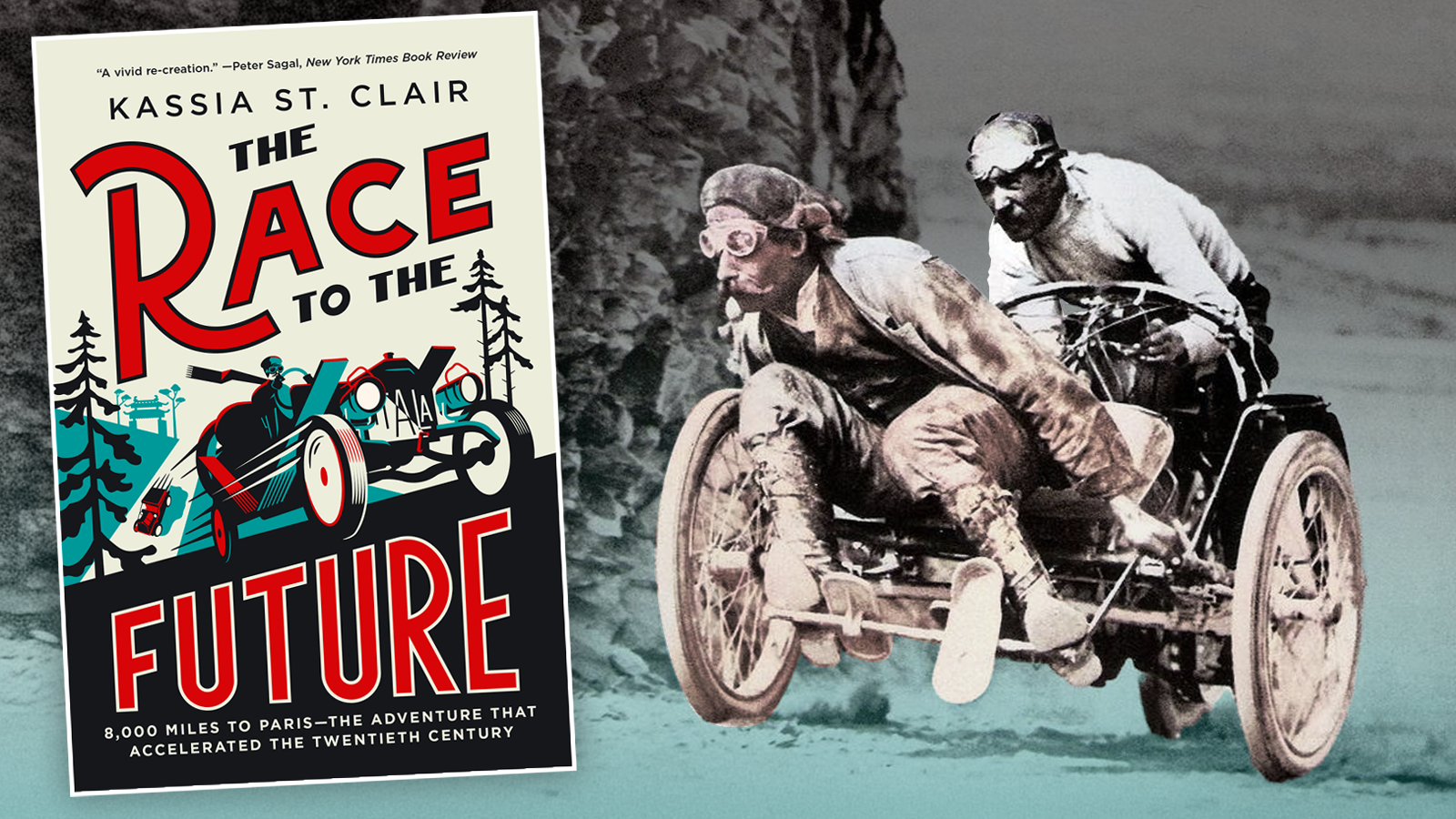
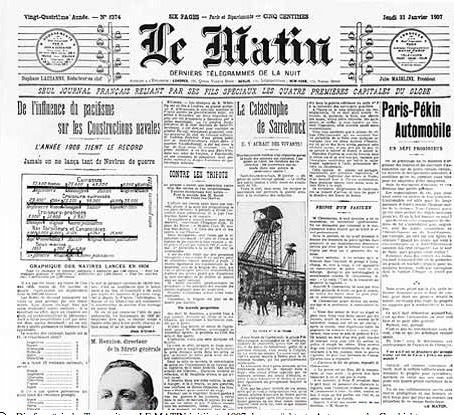
In January 1907 Le Matin, a Parisian newspaper, threw down a gauntlet to the world. What they proposed was an automobile race across two continents, a grand experiment that would push the boundaries of a fledgling technology. The trailblazing motorists would set off from Peking and drive westwards to Paris, passing through five capital cities and covering some 8,000 miles. What would unfold over the following months was both a rip-roaring adventure and a parable about the birth of a new world: ours.
While such a journey might be daunting even today, in 1907 the idea of driving so far and through such remote country was considered laughable. But, just as Le Matin had intended, it drew the eyes of the world. A week after the race was proposed, the Sydney Morning Herald called it ‘such a bold and gigantic scheme that it almost takes one’s breath away’ and ‘sufficient to frighten the pluckiest and most enterprising of promoters.’ For the Evening Bulletin of Honolulu, it was ‘the most stupendous automobile race ever undertaken.’


According to one estimate, between 500,000 and 600,000 people thronged the rain-soaked streets of Paris to see the winner enter the city. Participants – several of whom nearly died in the attempt – were compared to Heroic Age explorers like Richard Francis Burton, Roald Amundsen and Ernest Shackleton. The winner was ‘a pioneer of civilisation whose name will be quoted by future generations.’
[This excerpt is from the wonderful The Race to the Future 8,000 Miles to Paris – The Adventure That Accelerated the Twentieth Century by Kassia St. Clair. I read the book last year and practically begged the publisher to allow me to publish an excerpt drawn from two chapters here. If you love a good yarn about an important part of automotive history, I highly recommend picking up a copy – MH]
The Peking–Paris was a decisive moment. It put the utility and practical significance of the automobile beyond doubt. Afterwards, even the most hardened sceptics could not ignore its potential as a rival to the railway or its applications in both civilian and military life. If the race was not quite the reason the automobile triumphed, it certainly smoothed its path. In practical terms, driving across two continents was the sternest test the technology had faced. Although there had been races and rallies before, they had been far shorter. One contemporary called it ‘the greatest event in the automotive world, not just for the past year, but even for the entire existence of self-moving carriages.’
The endeavour was adjudged to have ‘worldwide economic and social significance.’ The Sunday Times dared prophesy after the completion of the Peking–Paris that ‘the automobile may be looked upon as one of the greatest mediums of civilisation in the future, as it will penetrate into the furthest corners of the earth long before such places are reached by regular trade routes.’
The race also had potent symbolic resonance as a harbinger of a new era of globalisation. The distance between East and West had never before seemed so small and traversable. ‘The Peking to Paris motor race may have something to do with the poetry of motion,’ argued a writer in the South China Morning Post, ‘but it helps to destroy the poetry of distance . . . Locomotion and communication are making the world smaller.’ Portions of the Silk Roads, which had begun to wither with the completion of the Trans-Siberian Railway, could suddenly be reimagined (as they are being once again today, thanks to China’s Belt and Road Initiative). Automobiles could be agents for progress, civilisation and peace. One journalist opined that similar rallies – ‘universal attempts to extend the civilisation of the world’ – would be their own form of diplomacy. ‘[W]ars are likely to disappear since the common interests will become so strong in the future that they will easily absorb the separate interests of the different nations.’
The Peking–Paris encapsulates the West’s ideas about herself and her role in the world a few short years before these would be overturned by the First World War and the breakdown of empires. It is emblematic of the struggles of the Old World to retain technological and industrial supremacy. And it offers a window into Russia and China at pivotal moments in their history, moments that seem increasingly relevant to their own self-image and foreign policy today.
Where They’re Going, They Probably Need Roads

It is difficult to comprehend the scale of the challenge the Peking–Paris competitors faced. For a start, automobiles were in their infancy. Karl Benz’s Motorwagen – usually celebrated as the very first automobile – was patented in 1886 [Ed note: Obviously, we have thoughts about this! -MH]. It was a spindly contraption consisting of an engine, a seat and three wheels. It fielded around 0.6 hp – like an underpowered hotel hairdryer on wheels – and managed a top speed of just under ten miles per hour. By 1907, the technology had progressed, but automobiles were still rare and considered unreliable. An article in The Economist castigated those who had ‘rushed with such luckless enthusiasm to invest in motor-bus companies’, arguing instead that ‘the horse is coming triumphantly through the ordeal.’
Although there had been races and rallies before Le Matin proposed the Peking–Paris, they had been far shorter and notoriously dangerous – usually involving fatalities. Automobiles were temperamental, prone to frequent breakdowns and punctures. (Most owners considered it essential to employ a chauffeur who could both drive and maintain the machine in working order.) Motoring manuals contained long lists of the tools, lubricants, spare tyres and parts that it was advisable to carry, even on short journeys. They were also so expensive to buy, run and repair that they were out of reach of all but wealthy elites or manufacturers.
The year of the race, 1907, was one of the last when the automobile would be considered an experimental novelty rather than a practical form of transport. Radical sporting events like the Peking–Paris, which emphasised the exploratory and long-distance capabilities of the vehicle, rather than the more usual, humdrum ones, would also help nudge carmakers to go all in on combustion engines. It was also the final year when Europe – and France in particular – could claim to be the centre of the automobile industry. While their own manufacturers had been rapidly catching up, many Americans were still importing European cars. By October 1908, however, the very first Model T was completed at Henry Ford’s plant in Detroit; already the automobile was settling into a new spiritual home.
What made the Peking–Paris so compelling was that the motor car was only half the challenge. Even the most bullish enthusiasts were intimidated by the route. Throughout western Europe, roads were generally poor outside major cities; and within them, many were cobbled or covered with tram rails, which hardly made for an enjoyable ride. Elsewhere, roads often existed in name only. From Peking to Moscow, the initial four-fifths of the route, the motorists would drive on tracks formed by the passage of donkeys, horses, carts and people on foot. These would be ankle-deep in dust or knee-deep in mud, depending on the weather, and littered with trees, roots, boulders and other debris. Where there were major obstacles – for example, in the mountainous passes north of Peking – vehicles would need to be lifted bodily over obstructions. Where even this proved impossible, drivers would be forced to make their own road, using pickaxes, axes and shovels.
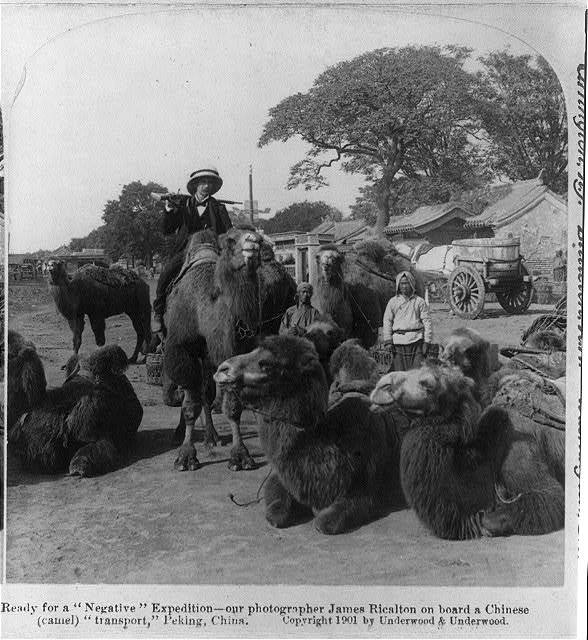
Most of the land through which the motorists would drive was remote and sparsely populated: accidents or miscalculations about equipment, food or fuel supplies could prove fatal. Participants would have to scale mountain ranges and cross a desert. The vehicles in the race were phaeton-style – the most common at the time – which meant that apart from flimsy canvas canopies (soon discarded to keep the weight down), they would be open to the elements. Since there were no petrol stations, fuel would need to be sent out in advance and left in strategic locations. For a portion of the route, this meant transporting fuel by camel. If motorists failed to locate a cache, or if one was pilfered before they reached it, they would be stranded.
Despite the doom-mongering, participating in so historic an event proved a strong lure: the starting line would feature a compelling and varied cast of characters. Among their number were an Italian prince and his chauffeur, a former professional French racing driver and a conman, as well as journalists whose job was to write and transmit regular reports on their progress.
The Peking–Paris was a news age phenomenon, garnering headlines from Melbourne to New York, Manchester to Shanghai. Newspapers revelled in the glamour and drama of the race, spinning it as a triumph of modernity over antiquation, of speed over sloth, of Western civilisation over Eastern barbarism. There was also a sense that it was a triumph of journalism.
Proposed by a canny French newspaper, the story held the news-reading world captive for months, elevating the newspapers and journalists involved as surely as it did the automobile itself. And it was the telegraph that would prove crucial to the whole endeavour. Its physical structures – offices, wires and poles – helped shape the route while also transmitting updates to readers around the globe.
It Almost Failed Before It Started
From the beginning, Le Matin’s enthusiastic bulletins were met with near universal howls of scepticism, cynicism and derision. A writer for the British magazine Autocar sniped that the event ‘is one of those hardy annuals that crop up . . . when there is nothing else to talk about’. Russia’s Avtomobil’ (Автомобиль) was even more damning, claiming that Le Matin was a newspaper ‘renowned for its tirelessly inventive self-promotion’, and that the French, ‘with their usual frivolity’, were like Don Quixote, refusing to put their lovingly crafted idea to a proper test, such as ‘a preliminary, trial expedition as far as Moscow’. If they did, they would surely abandon the whole idea in utter dismay at the terrible roads, filthy hotels and lack of basic amenities. The writer allowed that it might be possible for ‘us, the Russians, or the Americans, but not the French. They are far too spoiled by their wondrous roads and consider it some sort of “Tour de France” as a grand voyage.’
The South China Morning Post called the Peking–Paris ‘a colossal joke’, akin to a ‘motor-boat race under water from Berlin to Rangoon’, or a ‘trip to the Moon by wireless telegraphy – competitors not to exceed 2,000,000,000 miles an hour’.
Whether as a result of this deluge of scorn or, perhaps, the imposition of a 2,000-franc deposit, the Peking–Paris committee and the entrants began to lose heart. A statement published on 22 February concluded that the ‘extraordinary challenge’ was really ‘an unachievable mission.’
A month later, things were bleaker still. Costs were ballooning, and they received telegrams from alarmed diplomats and hastily arranged local organising committees in China and Russia warning that the enterprise was preposterous. In large sections of the specified route there was nowhere to obtain fuel; there were, indeed, few roads. Enthusiasm at Le Matin began to curdle. Of the two dozen or so individuals who had shown serious interest, only a handful were willing to ship their vehicles to China. De Dion would send two cars but declined to drive one himself.
The venture seemed destined for ignominy, which was more than the editors could bear. Telegrams were dispatched to the entrants informing them of a momentous decision: as abruptly as it had been proposed, the Peking–Paris was off.
Luckily fate, and the logistics of early twentieth-century travel, intervened. By the time Le Matin had sent their message, one participant – Prince Scipione Borghese, an Italian aristocrat – had already committed. His vehicle, a patriotically all-Italian Itala fitted with Pirelli tyres, was steaming towards China aboard a fortnightly Norddeutscher Lloyd boat under the care of Ettore Guizzardi, the prince’s mechanic and chauffeur. Borghese himself was also packed and ready to go. His response to the Peking–Paris committee and the editors of Le Matin was curt: ‘I sail tomorrow from Naples.’
The die was cast. Politesse and national pride would not allow the organising committee to be humiliated by the Italian nobleman. The remaining entrants were peremptorily directed to depart for China on 14 April, as previously arranged.
The day after they set off, Le Matin published a defiant article written by Georges Bourcier Saint-Chaffray, general commissioner of the organising committee and a close associate of the Marquis de Dion. The piece passed over the last-minute change of plans and took pains to patriotically contrast Prince Borghese –
‘confident in his good fortune’ – with the French: ‘The intrepid
explorers of the Mongolian desert, the valiant champions of mechanical locomotion.’
For the participants of the race, the month ahead would be spent navigating the waterways between Marseilles and Tientsin aboard the Océanien. A twenty-three-year-old French mail steamer, she was long and low-slung, with three large masts and two stubby black chimneys that belched forth smoke from her coal-fired boilers. Comfortable rather than luxurious, she was also ponderous, with a top speed of sixteen knots. Océanien’s most notable passenger thus far had been Paul Gauguin, who in 1891 had spent ‘sixty-three days of feverish expectancy’ aboard, bound for Tahiti. While their own journey was half that of Gauguin’s, it was still sufficient to give the motorists ample time – while they walked the decks or relaxed in the salons – to reflect on the folly of attempting the rugged return journey overland in vehicles built for the smoothest of European roads.
The Entrants
Spyker
For Jean du Taillis, the weeks on the Océanien were largely spent observing his future travelling companions. Born Fernand Joseph Octave Boulet in a small town in Normandy in 1873, he had begun styling himself Jean du Taillis – adapted from his mother’s maiden name, Havas Dutaillis – in his twenties. Now thirty-four, he was blonde-bearded, gangly and generally affable, although prone to squalls of irascibility when he felt cheated. In a culture notable for its sartorial conformity, his dress sense was outré: often incorporating distinctive headwear from countries he had previously visited. His eyesight was poor and he always wore gold-framed glasses. His skin was tanned and weathered for his age, the result of having fallen in love with North Africa, where he had spent several years working and travelling. Although he liked grandly styling himself an homme de lettres on official forms, he was not particularly successful or well known.
He sustained himself by writing and editing books about France’s colonies, taking photographs of Morocco and Algiers for news agencies, and writing for national and local publications. The high-profile role of Peking–Paris correspondent for Le Matin was a career coup, one he was determined to grasp with both hands.
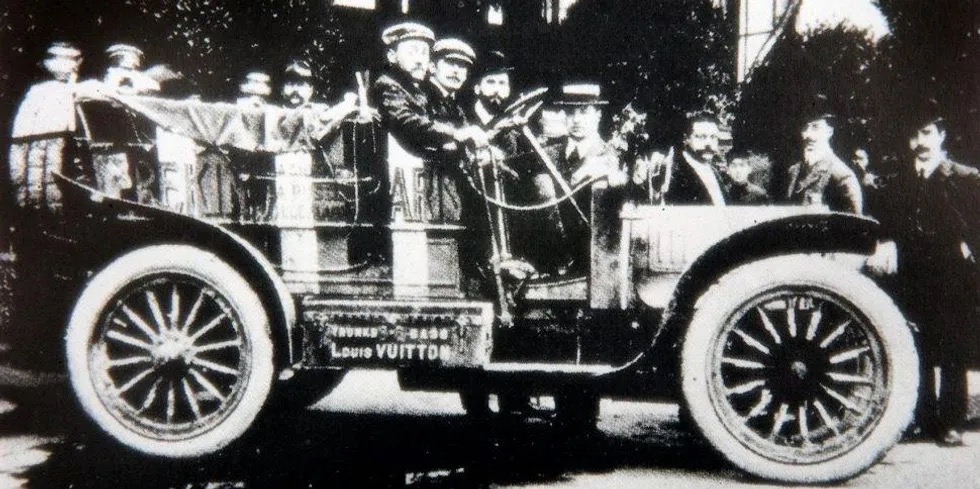
Charles Godard, with whom du Taillis would be spending the journey back to Paris in a 15 hp Dutch Spyker automobile, was his primary focus. Godard was born in 1877 in Pesmes, a small village a day’s ride east of Dijon, in Burgundy. His was not a prestigious or wealthy family – his father was a gardener – nor does it appear to have been a close one. By the time he was twenty, they had scattered: he was working in Reims, ninety miles north-east of Paris, while his parents remained in Burgundy.
Godard should have been unremarkable in appearance. He was five foot three (a shade below average for the time), with blue eyes, dark hair and an oval face. By 1907 – his thirtieth year – he had filled out. Suit buttons strained; his hands were plump, with short, blunt fingers. His hair was receding, and he wore it combed back. Yet there was a childish elasticity to his features. Moustaches quivered, nostrils flared, eyes crinkled, rolled or widened beneath eyebrows that bobbed up and down like storm-tossed boats. This restlessness found an echo in his character: Godard’s energy and ebullience were so potent that he tended to be remembered, even after the most casual of acquaintances. The Océanien, it seemed to du Taillis, might have been powered by Godard’s joie de vivre alone. ‘The purser and the excellent captain were at his command, pianos travelled from the second-class lounge to the promenade deck, accordions were commandeered, all at the say-so of Mr Godard. Everyone laughed, danced and whirled around thanks to him.’
Aboard, less endearing traits began to emerge. Godard snored, which did not augur well for the weeks ahead when they would be sharing tents and hostel bedrooms. More ominously, he was suspiciously close-lipped about his life before entering the Peking–Paris. He had revealed his birthplace to du Taillis, but on everything else relating to his youth, previous employment or even his experience with automobiles, he remained silent. At odds with this reticence, and making it all the more suspect, it soon became clear that he was boastful, vain and incautious, earning him the soubriquet ‘The Braggart of the Gobi’ long before they reached Peking. Worse still, he also showed himself to be unprincipled, lacking in foresight and, du Taillis increasingly feared, a penniless scoundrel.
Godard offhandedly mentioned to du Taillis that he had convinced the Dutch car manufacturer Spyker to loan him an automobile in which to participate. (They would later allege that he had assured them that Le Matin had promised to cover costs and that there was a large cash prize, both of which were untrue.) And it had been his idea to deck out the Spyker in the eye-catching stripes of red, white and blue of the French flag: an insult to his Dutch benefactors. Godard also told the journalist that he had managed to get hold of the great number of spare parts and tyres they would need for the journey. He was vague on details, but it later transpired these had been illicitly acquired by assuring a shop that the Spyker firm would settle the bill. This was moot anyway: Godard had promptly sold the lot to fund his steamer fare to China. First class, naturally.
Perhaps Godard’s most intriguing characteristic was his knack for landing on his feet at the very moment it seemed his chickens had come home to roost. On debarking at the port of Tientsin on 1 June with du Taillis and overseeing the removal of the Spyker from the hold, he was accosted by a representative of the shipping firm. The paperwork was all in order; there just remained the small matter of the 3,000-franc bill before the automobile could be handed over. Mr Godard surely remembered he had promised payment for the transport of the vehicle from Marseilles on delivery? Du Taillis, mortified by association, looked on, his ears reddening, as the heads of their fellow passengers began to turn. Godard, however, seemed almost to relish the confrontation. Chest thrown out, gesticulating wildly and insensible to reason, he demanded the Spyker’s immediate release.
Godard, as du Taillis knew, would not pay because he could not pay: he was flat broke. At the very instant that du Taillis was resigning himself to the idea that he would not be driving back to Paris after all, a man materialised from the crowd, like a fairy godmother, and placed a soothing hand on Godard’s elbow. This, it transpired, was the Dutch consul, anxious to forestall a diplomatic incident involving the first vehicle from his home country to arrive in China. ‘Without hesitation,’ du Taillis marvelled, ‘the Consul offered his bond for the payment and with that freed both Godard from a crushing nightmare and the Spyker from the hold of the steamer.’
That problem dealt with, at least until the consul demanded they settle the debt, all Godard and du Taillis had to worry about was how on earth they were going to get the car on a train to Peking and buy the fuel, food and everything else required to take them the 8,000 miles back to Paris. ‘Trifles,’ Godard crowed to du Taillis, rubbing his hands together in a pantomime of glee.
They would work something out.
Itala
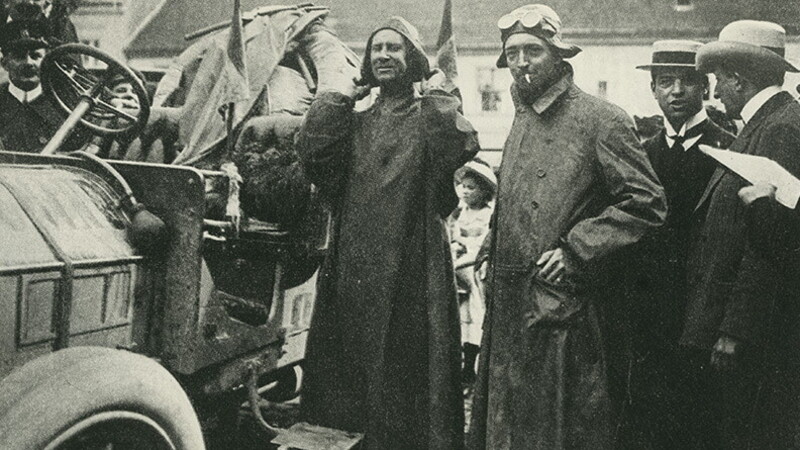
Also on 1 June, nine days before the start of the race, Luigi Barzini reached Peking. Travel-stained and hollow-eyed, he was deposited by a guard from the Italian embassy at the formidable Grand Hotel des Wagons Lits in the Legation Quarter of Peking. His journey had been especially gruelling as a result of him having been sent westwards from Italy by the Corriere della Sera to report on the rebuilding of San Francisco after the 1906 earthquake and the finale of the Harry K. Thaw trial, a celebrity-strewn cause célèbre that had been engrossing the news-reading public for months. He checked in and swayed up to his room behind the bellhop, bearing a letter from his employer and a handwritten note from the man with whom he would shortly be sharing the adventure of a lifetime.
Although in his early thirties, Barzini was slender, almost boyish. Observers often noted how frail he looked, an impression bolstered by slight shyness and a tendency to look anxious. Appearances notwithstanding, he was easily the most renowned of the Peking–Paris journalists, and was reporting for both the Corriere della Sera and the Daily Telegraph. His career had taken off in 1899 after he persuaded a reclusive Italian opera star to give an interview. This had impressed the editor of the Corriere so much that Barzini was hired as London correspondent on the spot. Armed only with a new suit and a dictionary, he headed to Britain and proceeded to write, to great acclaim, exposés of London’s Chinatown and its opium dens. From there, he was sent to China in 1900, to cover the Boxer Rebellion; Russia in 1903, to report on political unrest; and Japan in 1904, as war correspondent during the Russo-Japanese War.
Although better known than his peers, like them he was well travelled and well read, but solidly middle class. The note that he had found waiting for him at the front desk of the Grand Hotel des Wagons Lits, which he clutched as he sat on his bed looking out at the city beyond, was from a man of a very different order. Written in a stiff, aristocratic hand, it formally welcomed Barzini to Peking and invited him to meet its author, Prince Scipione Borghese, on 6 June, by which time the prince and his wife would have returned from a horseback recce of the route northwards.
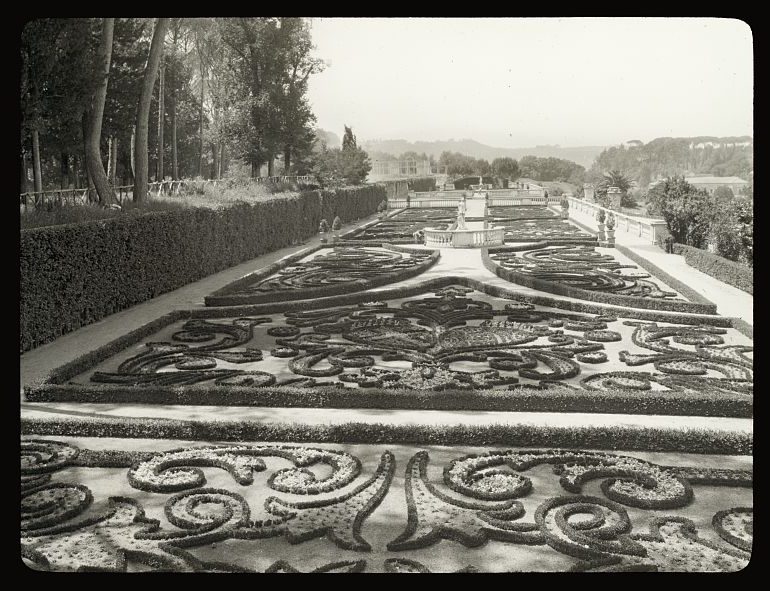
Born in 1871, the thirty-five-year-old Prince Luigi Marcantonio Francesco Rodolfo Scipione Borghese came from one of Italy’s most illustrious families. One ancestor had been pope. Another – a seventeenth-century cardinal and Scipione’s namesake – had filled the Villa Borghese, the family palazzo in Rome, with paintings by Caravaggio and Raphael and sculptures by Bernini. Borghese, however, had grown up at a time when his family’s power, influence and funds were waning. Masterpieces such as a famous painting of Cesare Borgia – inspiration for Machiavelli’s prince – had still been on the walls when he was a boy, but many had since been sold. So too, just four years previously, had the enormous grounds – tastefully landscaped in the eighteenth century in the English style – of his family’s villa itself. This protracted humiliation had a profound impact on Borghese’s character, inculcating self-reliance, aloofness and the occasional flash of ruthlessness.
Privately, however, Borghese was also sensitive and cultured; he had an eye for art and enjoyed sketching places he saw on his travels. (Among the possessions he kept with him until his death was a collection of watercolour vistas he had painted while travelling in the Middle East.) Educated in the Classics, he spoke excellent French, English, German and a little Russian. And although each passenger of the Itala was restricted to only fifteen kilograms of luggage, to keep weight down, he allowed himself a set of miniature, leather-bound books, most of them in Italian or Latin, but one in English: a Lilliputian copy of Gulliver’s Travels.
The prince did not wear his family name or history lightly, which had a powerful effect on those around him. His family tree was a veritable who’s who of European nobility: de Nagy-Appony, de La Rochefoucauld, von Benckendorff. Barzini – not one to be easily intimidated but nevertheless a man who could appreciate the importance of a well-placed patron – treated Borghese with deference. He took care never to criticise or contradict the prince in print, submitting to his will without demur and faithfully casting him in the role of hero.
It helped that the prince looked the part. He was physically fit – he had attended the Military Academy in Turin as a youth and would later enjoy mountaineering – and was easily the tallest of the group. His nose was rather large and his hair, which had long since receded, was combed straight back from a looping widow’s peak. In the few group photographs taken of drivers and passengers in Peking before their departure, Borghese stands slightly aside, resisting photographers’ attempts to bracket the motorists together.
Even for his contemporaries, he was a contradictory, difficult man to understand. Unlike the majority of his family, whose lives centred around Italy and Rome in particular, he was adventurous. In 1900, he had embarked on a journey through the Middle East from the Persian Gulf to the Pacific. He was interested in politics, particularly those on the far left. He had been elected to parliament in 1904 after spending a number of years helping to set up agricultural workers’ cooperatives near Lake Garda. His politics, however, did not make him approachable or particularly sympathetic. Italian observers often noted that Borghese behaved and dressed like an Englishman, by which they meant that he was reserved and self-contained and had a fastidious taste for tailored suits – he favoured a creamy linen one with a mandarin collar while in Peking.
On the other hand, he prized loyalty and was most comfortable amidst an intimate circle of family and friends. Ettore Guizzardi, the mechanic-cum-chauffeur Prince Borghese chose to travel with, had been with the family since he was fifteen. Around the turn of the century, a train had jumped the rails at Albano, on the border of one of the prince’s properties. The train’s driver was killed outright; his son, Ettore, seriously injured. Borghese ensured the boy was cared for at his villa and, when he recovered, took him on as a member of his household.
A few years after the race, Guizzardi would marry in the grounds of the palace on Lake Garda that belonged to the prince’s wife, Anna Maria de Ferrari. Commemorative photos of the reception, with Guizzardi smiling next to his bride, were carefully pasted into leather-bound family albums beside images of the prince, Anna Maria and their two daughters, Santa and Livia, on camping holidays and visits to the Venetian Lido. In one set of photographs, taken in June 1904, the prince wears a pale suit and white bow tie and mugs for the camera, eyes scrunched up, lower teeth protruding, lips pulled towards his chin like a grouper.
De Dion-Boutons

At the other end of the social scale was Jean Bizac, the De Dion-Bouton mechanic. Nicknamed the Groundhog by his team-mates in recognition of his capacity for daytime naps, he looked slightly sinister, habitually holding his chin tucked down towards his chest, his eyes shadowed by asymmetrically scribbled eyebrows. He dressed, whatever the weather, in the French workers’ uniform of rough woollens and blue flannel jacket. He sweated profusely, never complained – although he had no time for those he considered dilettantes – and made it his business to wake the others in his group each morning. While he had spent years making automobiles, his experience of being in one was limited. ‘Bizac had never sat in an automobile!’ one driver noted with delighted astonishment. ‘Taking a seat in one, feeling the wind against his face at high speed, was something he had never experienced.’
The others lay between these two social poles. Georges Cormier, Victor Collignon (the De Dion-Bouton drivers), Charles Godard (team Spyker), Auguste Pons and Octave Foucault (Contal) were lower middle or skilled working class, and most were involved in the automotive industry, either as sportsmen, mechanics or dealers. Introducing them to his middle-class Parisian readers, du Taillis poked fun at their use of sporting jargon. ‘ “No need to lay it on thick.” Which might be said to mean: “Why are you exaggerating?” ’
As 10 June approached, differences in class and character were becoming ever more evident. While Godard fancied the race already won and the prince was displaying his habitual sangfroid, it was clear to du Taillis and Barzini that others were less sanguine.
Georges Cormier – who had chosen to travel to Peking by train, because he despised steamer travel – was the most openly daunted by the whole affair. A sleek otter of a man, with dainty ears, a drooping moustache and eyes that sloped up towards the bridge of his nose, Cormier was deeply unimaginative in the way that only dedicated sportsmen can be. At thirty-eight he was, like his benefactor the Marquis de Dion, a leading light in the French motoring world, with a reputation to uphold.
Motorised vehicles were the fixed point around which his world revolved. He was the proud proprietor of Agence Cormier, an automobile dealership in Paris’s fashionable eighth arrondissement. Du Taillis – who did not like him much, finding him morose, fussy and a little sly – joked that, after years of successfully competing in motorbike and automobile races, latterly Cormier had ‘developed the unfortunate habit of travelling alone.’ In 1902, he spent thirty-nine days touring western Europe in a new 6 hp De Dion-Bouton on loan from the Marquis. Cormier’s account of this trip for the magazine La Vie au Grand Air was for the consumption of purists only. He professes to have found Vienna ‘rather disagreeable, involving twelve kilometres of uneven cobblestones’, while in Utrecht the ‘roads were paved with tiny little bricks laid on the fields’. Geneva was dismissed with the brief note that ‘torrential rain forced me to stop [there] for twenty-four hours’.
Given his extreme preference for driving down the finest French tarmac on his own, the 8,000-mile journey from Peking in the close company of others was giving him pause. So too, from the very instant the automobiles were unloaded from large wooden packing cases on the platform of Chien Men Station, did the logistical challenges that began sprouting like summer weeds.
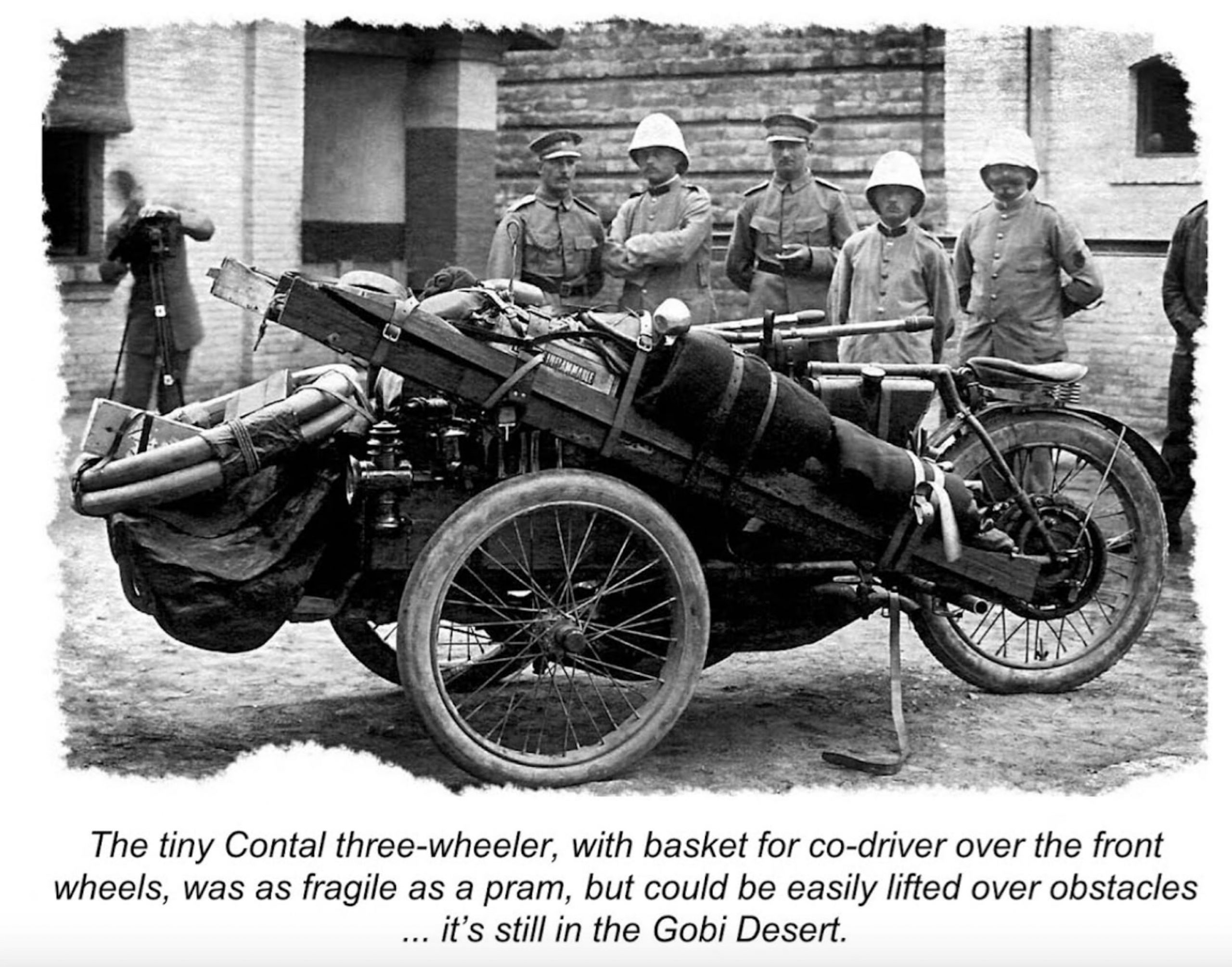
In the fortnight before the race began, Cormier scurried around Peking procuring all the tools and supplies he could think of. Soon a hillock appeared in the French Legation composed of cans of preserved meat, condensed milk, 110 litres of petrol, 20 litres of oil, ships’ biscuits, camping stoves and mattresses, tents, sleeping bags, hoists and hammocks. Before long, the pile of equipment dwarfed the little three-wheeled Contal Mototri parked beside it.
Cormier also dispatched Victor Collignon, driver of the second De Dion-Bouton, to reconnoitre the route out of Peking. Collignon was a deferential, unassuming man, which suited Cormier perfectly. With dark hair, ample cheeks and ears that stuck out slightly from beneath his favourite flat cap, Collignon looked rather like an overgrown schoolboy. Perennially cheerful – one acquaintance described him as ‘a good mood in motion’ – he was a veteran sportsman. Before driving automobiles he had raced motorcycles, even coming second in a race during the 1900 Olympics in Paris. Like Cormier, he was an old De Dion-Bouton hand: he had driven an early model in the infamous 1903 Paris–Madrid race. Since then he had become better known as a mechanic than as a driver, which suited his easy-going nature and his knack for tinkering. ‘The engine is his passion,’ du Taillis wrote. ‘He is sworn to the engine. He knows all its secrets.’
His loyalty, once given, was unwavering. Of the Peking–Paris competitors, Cormier was the only person to earn it. Collignon would later open his account of the race with a few touching lines about his colleague. ‘We were also dear friends. I trusted him. I know him to be the most capable driver and the best companion for the long journey that it was possible to have . . . I was happy to believe that we would remain together all the way from Peking to Paris.’ When Cormier told him to inspect the route on horseback as far as the Nankou Pass, Collignon did so without question.
Prince Borghese had recently returned from a similar reconnaissance expedition with his wife and one of her friends. They had carried bamboo rods, cut to the width of the Itala – at 40 hp and more than two tons, it was by far the largest and most powerful of the automobiles taking part – to check whether it could fit along the narrow, rocky tracks that had previously accommodated only mules, donkeys, horses and travellers on foot. It could not. Pickaxes and shovels were added to the list of tools the Italians would need to bring.
Contal

Léonard Louis Auguste Antoine Pons and Octave Foucault, driver and crew respectively of the Mototri, were both small men – essential for riding the minute Contal – and shared the same tough, wiry physique and predilection for flat caps. Foucault, who had a mop of dark curly hair, liked to wear his pushed right back with a crest of locks escaping over his forehead. Pons, at thirty-two, was succumbing to male-pattern baldness and preferred to wear his cap low, clamped tightly to his head with a pair of driving goggles. Still, he was handsome, with large, wide-set eyes and a moustache that swooped over his top lip.
Of the two, Pons was the real presence. (His mechanic was barely mentioned by other participants. News reports variously gave his first name as either Octave or Oscar, and his surname as Foucaud or Foucault.) Pons had a sing-song southern French accent and a keen sense of both honour and grievance. He was stubborn, competitive and a true believer in the power of light, nimble vehicles over long distances and rough country. This made him a perfect fit for the Contal Mototri, a unique vehicle that took a bit of getting used to. It was small and three-wheeled, more akin to a long motorcycle than an automobile, with a single, rear driving wheel and two wide-set front wheels used to steer, with a long pair of handlebars curling back and round. The driver sat at the back, over the rear wheel, the engine between his legs. The passenger perched, fully exposed, in an open bucket seat between the front wheels and directly ahead of the driver, rather compromising the latter’s view of the road.
After they entered the Peking–Paris, Pons took the Contal up Mont Ventoux, a Provençal mountain north-west of his home town of Draguignan, for practice runs. An extraordinary photograph from this trip shows him and his passenger crouched low over the speeding machine, both leaning into a sharp bend with a solid wall of rock to their right, a spuming trail of road dust in their wake. Notably absent are the spares and equipment they would need and the modifications they made for the race, including the addition of a fold-out bridge – composed of four wooden planks – that doubled as mudguards.

For Pons, the Peking–Paris offered both an opportunity to make his mark and a glamorous escape from humdrum family life with his Italian wife, Maria, and their nine-year-old daughter, Alice. He was determined to make the most of the opportunity. Long before their departure he assiduously courted the press. Several publications used photos of the modified Contal, with Pons at the wheel, showing off its adaptations and proclaiming that it was this automobile – the lightest by far – that would triumph over the following months.
At the starting line, the contrast with the other vehicles could not have been more marked.
While all the passengers had forgone luxuries and non-essential supplies in the battle against superfluous weight, in the Contal this had been especially extreme. ‘There is no debating the heroism of Pons and Foucaud [sic],’ wrote du Taillis. ‘[They] had sacrificed everything: their personal luggage (only one small suitcase was given to Godard), their sleeping equipment (camp beds had been abandoned), their very food supplies (hard tack and corned beef).’
The Race Begins
During the last week of May and the first week of June, a range of topics filled the mouths and ears of the residents of Peking’s Legation Quarter: opium prices and proposed anti-opium regulations; railway building; threats of cholera and famine to the south; and, of course, the Peking–Paris race. Grist to the mill on the latter was an unlooked-for impediment: the Chinese government was refusing to issue passports to the participants.
Although the motorists seemed wrong-footed by the diplomatic wrangle over their passports, they should not have been. Allowing foreigners freedom of travel around China’s interior had long been resisted, and the route north from Peking was especially sensitive. Sir John Walsham, Britain’s ambassador to China in 1887, had been doubtful he would be able to secure Harry de Windt permission to travel this route by horse and camel. The automobile added a new dimension. China was wary of Russia’s acquisitiveness, and the route through Mongolia seemed a likely line of attack if it could be made faster and less arduous. Why, the Chinese officials wanted to know, if the motorists were going to Paris, were they taking such an indirect course?
(This, incidentally, closely followed a Chinese railway line, then under construction, from which individuals within the government might profit. If a rival automobile route opened, it would be financially ruinous and a great embarrassment.) How many passengers could one car take? Why were diplomats from so many European countries applying pressure to ensure the race went ahead? Why did so many of the participants – Cormier, Collignon, Borghese and Bizac – have military experience?
For those involved in the race, such questions seemed absurd. Barzini believed the government was, as ever, being ‘watchful against the profanations of the west’. Du Taillis, more sympathetic, still scorned their ‘puerile scaffolding of imaginary dangers’, their ‘childish’ concerns. Tensions seethed. French, Italian, Dutch and Russian ministers besieged their Chinese counterparts with messages, visits, entreaties and threats. The more pressure they applied, the more suspicious the Chinese ministers became.
On 9 June, the day before the race was due to start, passports had still not been delivered. Cormier, whose feet were already getting rather cold, called a meeting and suggested selling the vehicles and calling the whole thing off; Collignon, following his lead, agreed. Once more the fate of the Peking–Paris race hung in the balance.
Again, one participant remained unmoved.
‘Gentlemen,’ Prince Borghese said, ‘whatever you decide, my resolution is made: no one can change that.’ Godard, ignoring his lack of funds, fuel, spare parts and tyres, agreed, perhaps hoping that making himself agreeable to the wealthy prince would pay dividends if he got into financial trouble or needed supplies.
That evening, the passports were delivered. The participants went to bed battling a sense of unreality. It was happening: five motor cars would set off the following day heading west, towards Paris, the self-proclaimed capital of modernity.
[Excerpted from The Race to the Future: 8,000 Miles to Paris – The Adventure That Accelerated the Twentieth Century. Copyright (c) 2023 by Kassia St Clair. Used with permission of the publisher, Liveright Publishing Corporation, a division of W. W. Norton & Company, Inc. All rights reserved. It has been edited for length. If you love a good yarn about an underexplored part of automotive history, I highly recommend picking up a copy. This post also contains an affiliate link, so if you buy the book we may get a commission. – MH]
Top graphic images: Newspress, W.W. Norton & Company, Skoda Motorsport


New writer? Welcome Kassia!
Seriously great article and excerpt. Now for my silly jokes:
So is this similar to the journey from Milan to Minsk?
“Ah,
Rochelle, Rochelle”… “A young girl’s strange, erotic journey from Milan to Minsk”“she was long and low-slung, with three large masts and two stubby black chimneys that belched forth smoke from her coal-fired boilers. Comfortable rather than luxurious, she was also ponderous”
Sounds like a land yacht I want to buy, ha ha…like Uncle Buck’s car or a 79 Lincoln Mark V Bill Blass. A Chrysler New Yorker or Newport would be awesome!
Great article,!I know it’s a book excerpt, but I hope you will be writing more here! This is why I love the Autopian, it’s not about the cars, it’s about the people.
50 horsepower seems like plenty for that sort of trip. A lot actually for the time.
Making trips like that in 2CVs seems to be a thing, and for 2CVs to have 50 horsepower you would need two or three of them, right?
For examples:
1954 Four Continents: Jacques Cornet and Henri Lochon covered 32,292 miles across four continents in 367 days. https://citroenvie.com/across-four-continents-on-two-cylinders/
The Luo Family Trip: Drove 25,000 miles across Europe, Russia, Mongolia, China, and North America. https://www.hagerty.com/media/archived/citroen-2cv-road-trip/
Alaska to Ushuaia: The creators of “Au cours du monde” drove the length of the Americas in a 1977 2CV van.
https://landcruisingadventure.com/if-you-have-a-dream-you-can-make-it-happen/
Now if the headline had been “ 120 Years Ago, These Wild Men Tried To Cross The Globe In Early Automobiles before there was any place to buy gasoline or roads to drive on” that would be more to the point.
50 horsepower seems like plenty for that sort of trip. A lot actually for the time.
Making trips like that in 2CVs seems to be a thing, and for 2CVs to have 50 horsepower you would need two or three of them.
For examples:
1954 Four Continents: Jacques Cornet and Henri Lochon covered 32,292 miles across four continents in 367 days. https://citroenvie.com/across-four-continents-on-two-cylinders/
The Luo Family Trip: Drove 25,000 miles across Europe, Russia, Mongolia, China, and North America. https://www.hagerty.com/media/archived/citroen-2cv-road-trip/
Alaska to Ushuaia: The creators of “Au cours du monde” drove the length of the Americas in a 1977 2CV van.
https://landcruisingadventure.com/if-you-have-a-dream-you-can-make-it-happen/
Now if the headline had been “ 120 Years Ago, These Wild Men Tried To Cross The Globe In Early Automobiles before there was any place to buy gasoline or roads to drive on” that would be more to the point.
What a great read as an excerpt. I have now ordered a copy from my local, independent bookstore. Thank you for sharing that Matt.
Woohoo!
can i just say i really missed the memo that this was an excerpt from a book and suddenly found myself wondering how Matt’s writing style became so literary and theatrical all of a sudden
I remember watching the documentary for the 100th anniversary where several people re-ran the Peking to Paris route in the original cars. I’ve been fascinated with this race ever since. Will certainly have to look into picking up this book!
The Contal 3-wheeler drew me in. This was a great article. I love reading about early automobiles. There are some lessons they can teach that have been lost to time with modern vehicles.
While the original Contal got abandoned in the Gobi desert, someone made a replica of the trike in 2019 and replicated/completed the trip.
Ugh I purchased a copy. thanks
Thanks for the excerpt! For fans of this type of story, I can also recommend a recent book, “The hardest, longest race: Henry Ford and the cross-country contest that changed America”, by Eric Moskowitz. The book follows the 1909 “Ocean to Ocean” New York to Seattle race, the first transcontinental automobile race, along with the shenanigans from the Ford team to ensure their Model T finished first. A thrilling read!
Speaking as a Model T owner with an office on the former A-Y-P Exposition site immediately next to the finish line of that race, Shawmut was robbed.
I purchased a copy. Thanks for the thrilling introduction.
Now THAT’S adventure! Book ordered.
Fewer. Thank you.
I read this book last year too! It’s a great read, definitely recommend, but the above excerpt probably does more to recommend it than I can, haha!
“ And it had been his idea to deck out the Spyker in the eye-catching stripes of red, white and blue of the French flag: an insult to his Dutch benefactors”
Talk about things going sideways at the start! How did they notice though?
Ha, was thinking the same. Just say the painter’s head was tilted to one side 😉
950 years ago Rabban Bar Sauma, Uyghur monk and envoy of the Mongol khanate, traveled from Peking to England (and halfway back!), arriving at the court of Edward the First in an age when very few people (other than sailors) ever went more than a day’s travel from where they were born.
https://en.wikipedia.org/wiki/Rabban_Bar_Sauma#Ambassador_to_Europe
The Mongols under Genghis Khan basically invented international trade (and many, many ways to lay siege to a town.) Almost a thousand years later the jury is still out on this great experiment in globalism.
Something I did not know until this year when I watched the show Pluribus is that it is still almost impossible to drive from Central America to South America.
According to this, there have been only seven successful attempts by four wheeled vehicles.
https://www.hemmings.com/stories/darien-gap-crossings-truck-motorcycle/
I still love that a Chevrolet Corvair of all things is one of the few cars that’s made it through the Darien Gap. Kind of turns VW’s “how the snowplow driver gets to work” ad up to 11.
I’m a sucker for any racing or automobile related book. Adding to my Kindle now.
The book is glorious. Try also ‘Road fever’, ‘ Survival of the quickest’ and‘First overland’.
Thanks, they are all going on the TBR list.
If you’re interested in the philosophical end of things, check out “Why We Drive – toward a philosophy of the open road” by Matthew Crawford. It’s a great look at why automobiles draw us so much, at both the intellectual and visercal levels.
“Classic Speedsters” by Ronald Sieber is pricey but gorgeous. Snapshots from earliest days through the Porsche 356 of the grandaddies of sports cars, race cars, and hot rods. Also a bio of a famous owner for each car. Pricey in physical form, but impressive in your lap or in the shelf. The PDF is much more reasonably priced.
https://ronaldsieber.com/store
Another fun read: “Free Air” by Sinclair Lewis. 1919 novel about a young aristocratic woman who decides to drive coast to coast. Brilliant picture of what a challenge that was before even the Lincoln Highway. One of the very first road trip novels. Because it’s Sinclair, there’s a fair amount of reflection on class and power.
https://en.wikipedia.org/wiki/Free_Air
Hell of a good read, thanks Matt and Kassia!
PRESS THE BUTTON, MAX!
From the sounds of it, the 1908 New York to Paris was even more nuts and the kicker is that at least two of the competing cars for that one still exist: a Zust 28/45 HP, and the Thomas Flyer, (the Leslie Special in the film). Jay Leno did a video on the still running and drivable Flyer last year that’s worth a watch.
Professor Fate, inventor of the lift kit.