

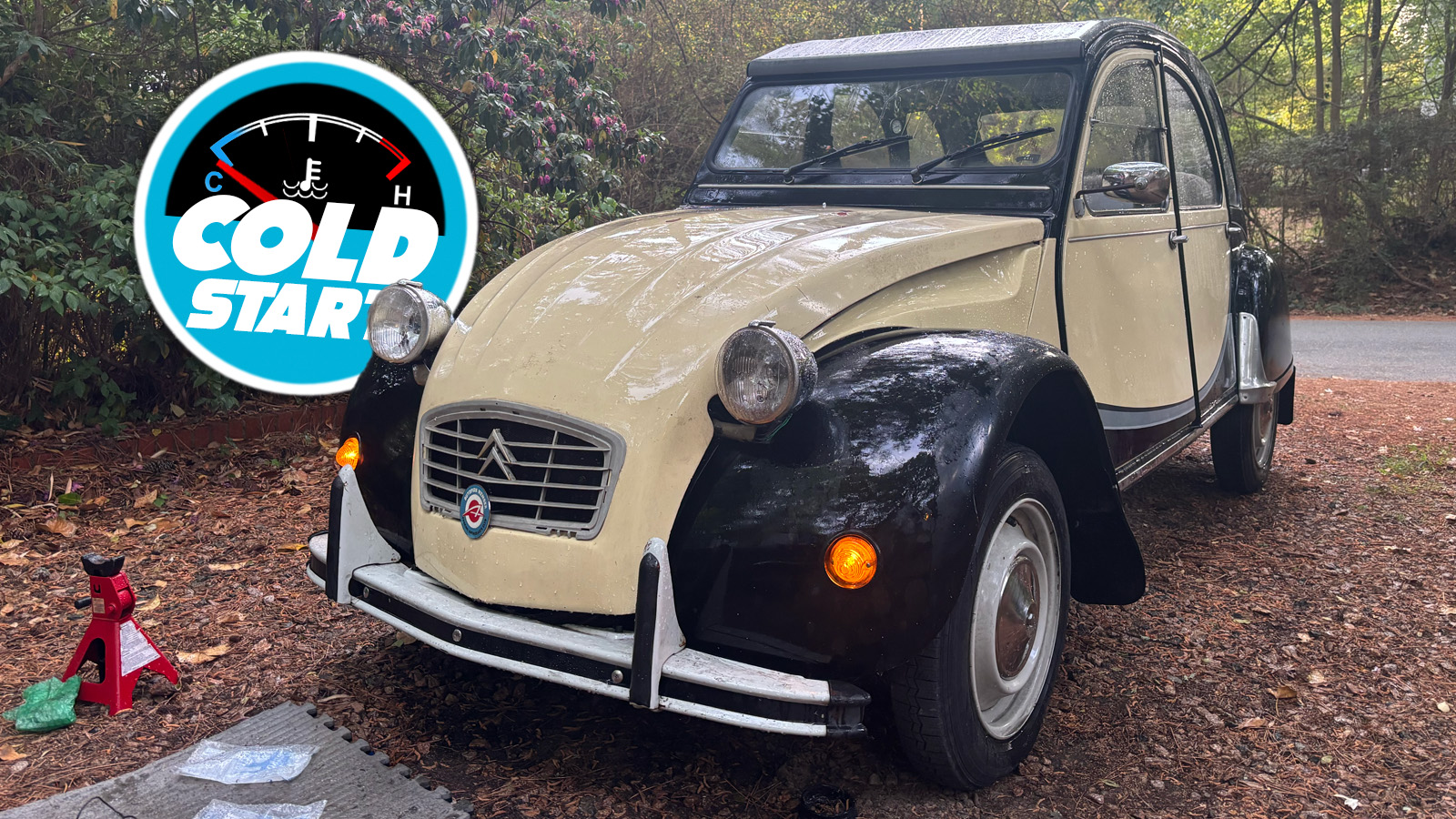
I love it when a plan comes together. Or a car. Or, for that matter, even a sandwich. I guess I like when anything comes together. But, I’m particularly fond of when my Citroën 2CV comes together, and it looks like that finally is happening. As you may recall, this is the 2CV that our own Stephen Walter Gossin rescued from sitting in a field for a decade, forlorn and bullet-ridden. It seemed like it was well on its way to being reclaimed by Mère Nature, but Momma Nature can get her own damn 2CV. This one is mine.
My plan is to try and make it my daily driver, all 29 horsepower of it. To most people, 29 horsepower doesn’t seem like a lot of horsepower. But they’re forgetting one crucial thing: 29 horsepower is almost 30 horsepower. Now we’re talking!


But before that happens, I have a sort of driving goal/milestone in mind for the car, to give myself a sort of deadline. I’m judging the upcoming 24 Hours of Lemons race at Carolina Motorsports Park in Kershaw, South Carolina this coming weekend, and I want to drive the 2CV there. It’s a three-ish hour drive on mostly backroads, so I think it’s an ideal big maiden voyage for the 2CV.
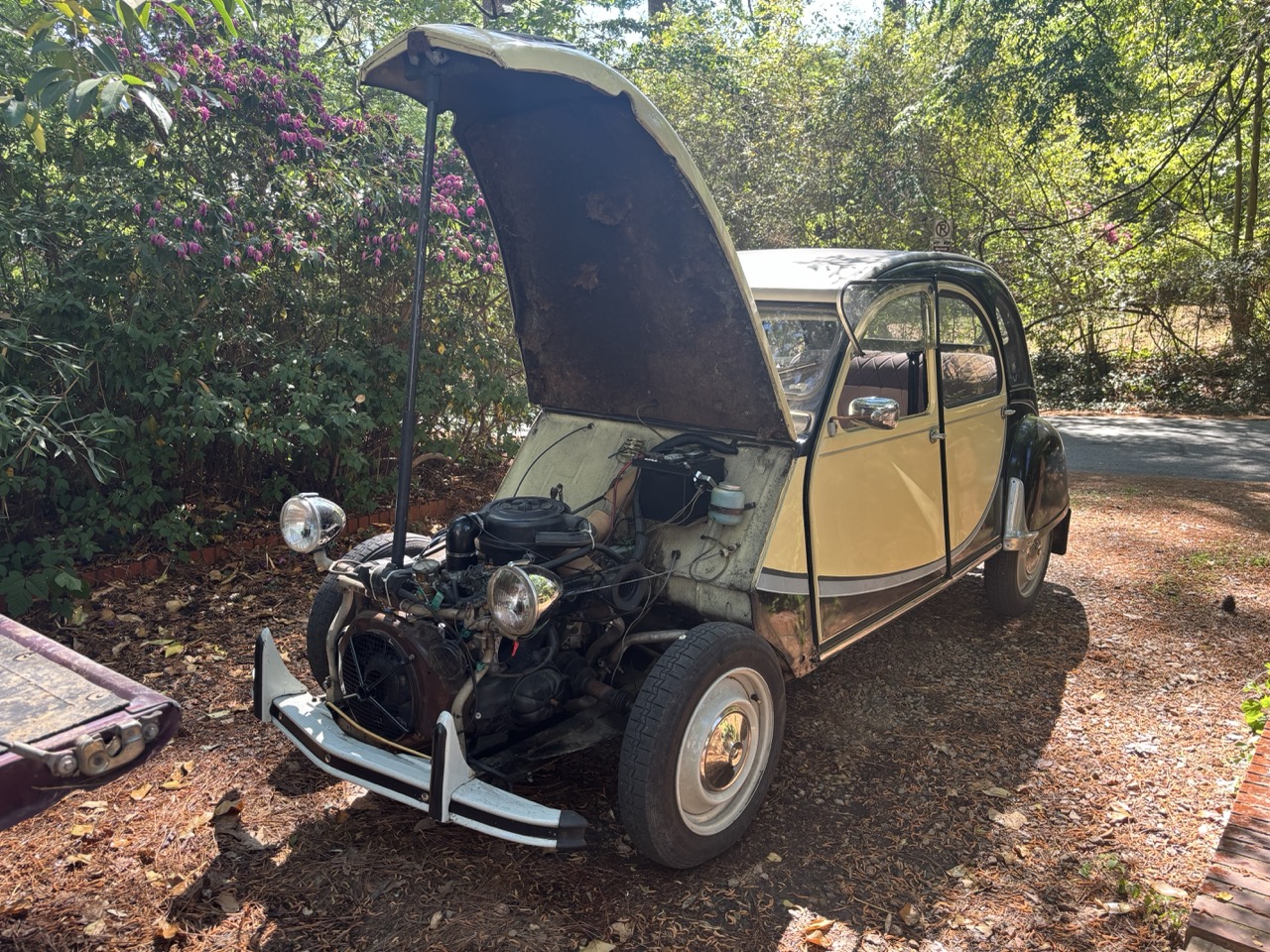
In this final burst of preparation, there were a number of things I needed to get done: replace the voltage regulator, get the battery mounting right, get the headlight adjuster bar put together properly this time (I did it all wonky before), change the transmission oil, replace at least the driver’s side CV boot which is torn and barfing grease, and finally put the fenders and those triangular side-filler valance panels back on the car. It’s not a colossal amount of stuff, but it’s plenty for me.
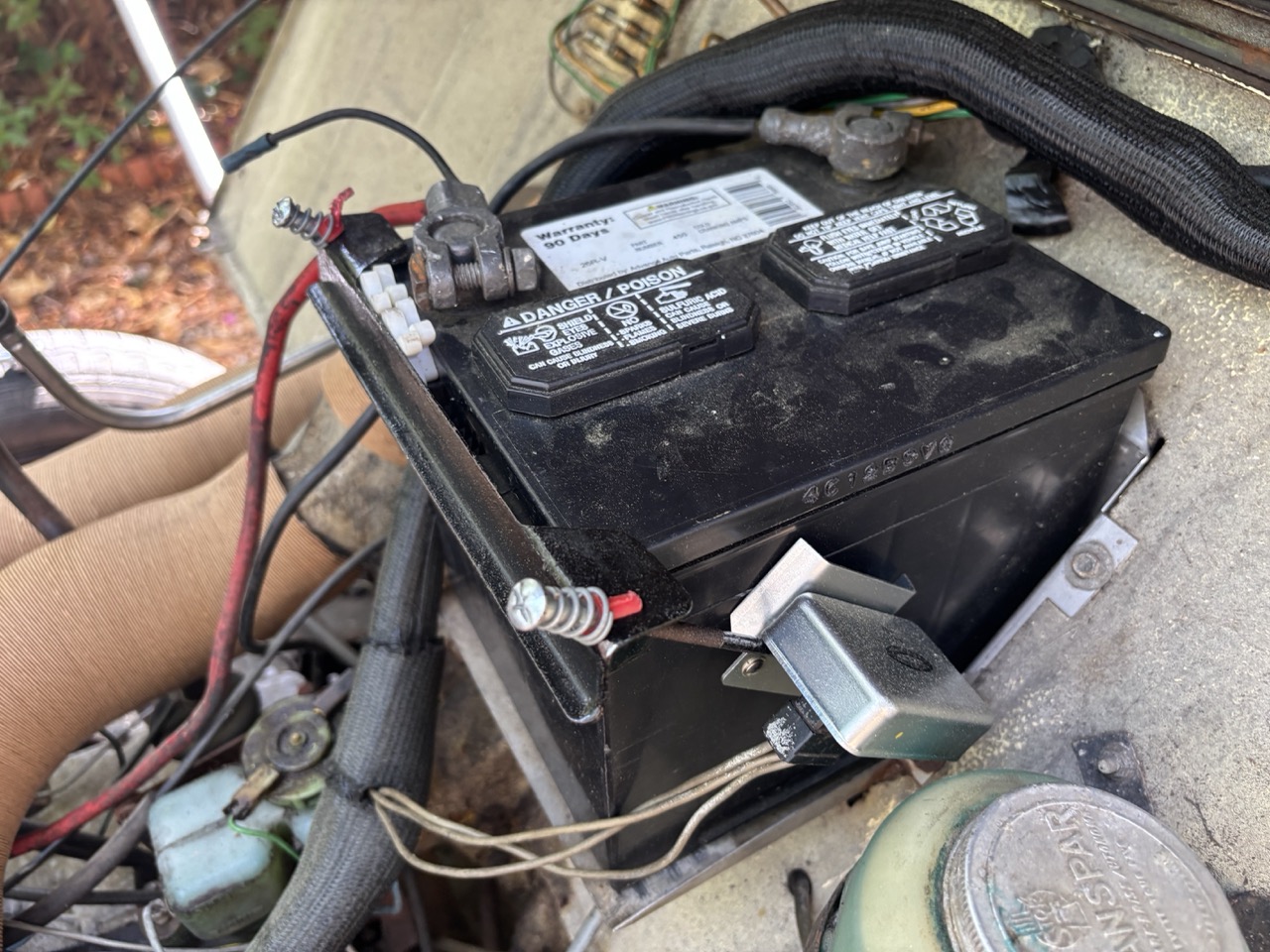
Some of it was pretty painless; I ordered a new solid-state voltage regulator, which manages to keep those volts down to a reasonable 14.8V or so instead of the 18V(!) I was seeing with the dying old electromechanical one. Oh, and I had the battery mounting clamp upside-down before. Oops.
Okay, let’s get to the transmission oil change! I had no idea how long this thing had gone since having the transmission oil changed, and I’ve learned my lesson about that the hard way. I’m not going to make the same mistake here!
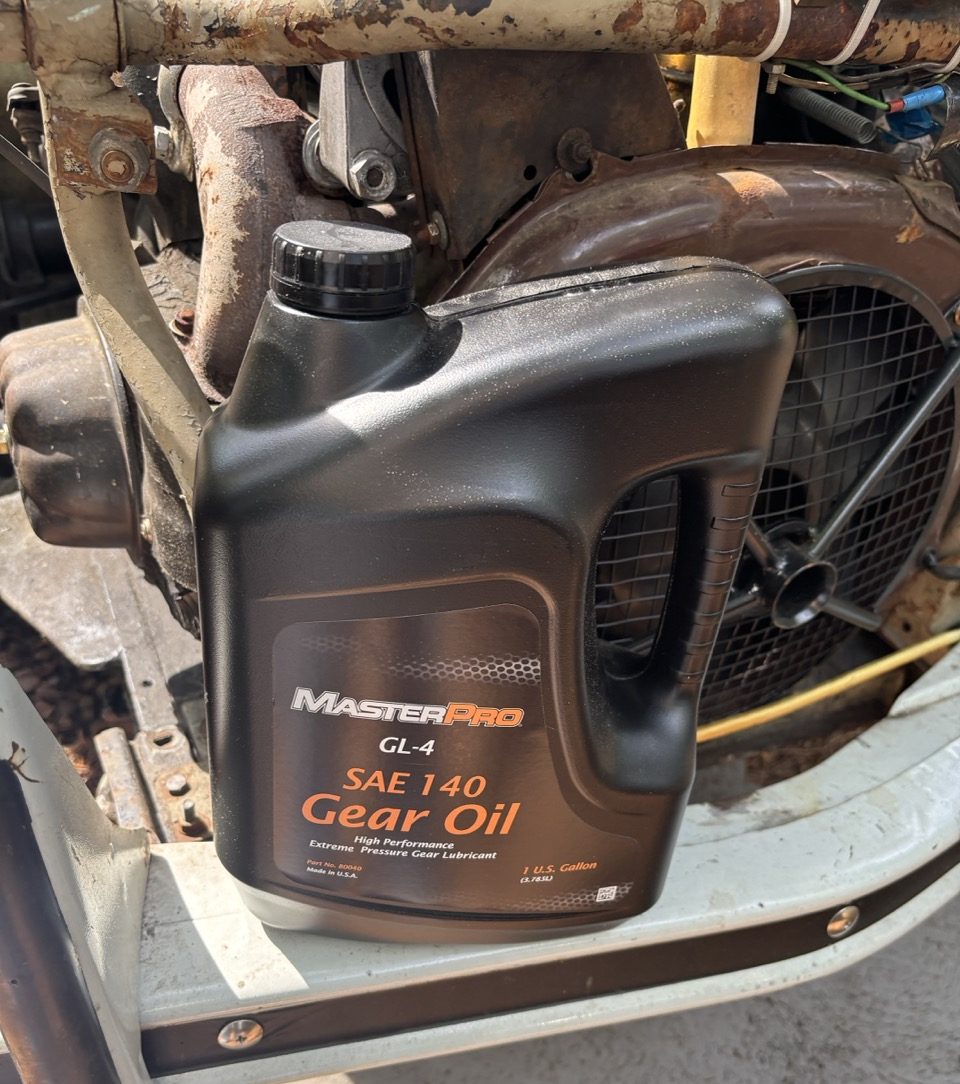
The tricky part about this is that the 2CV’s transmission requires – like many older cars – an oil that’s rated API GL-4, not GL-5, which is far more common. This is because GL-5 oils are very bad for “yellow metals” – you know, like brass transmission synchronizers and that sort of thing. I had the damndest time trying to get GL-4 oil locally, and while I could order it, there’s something about ordering oil that feels, I don’t know, wrong.
I finally found one that would work. It’s a single-weight oil, not a multi-grade oil, but that should be fine, I’d think, at least for now. Maybe I’ll change it to a multi-grade come winter, but for the moment, I’m on a deadline.
Draining the oil isn’t bad, and Citroën thoughtfully provides a little hole in the chassis/skidplate to access the drain:
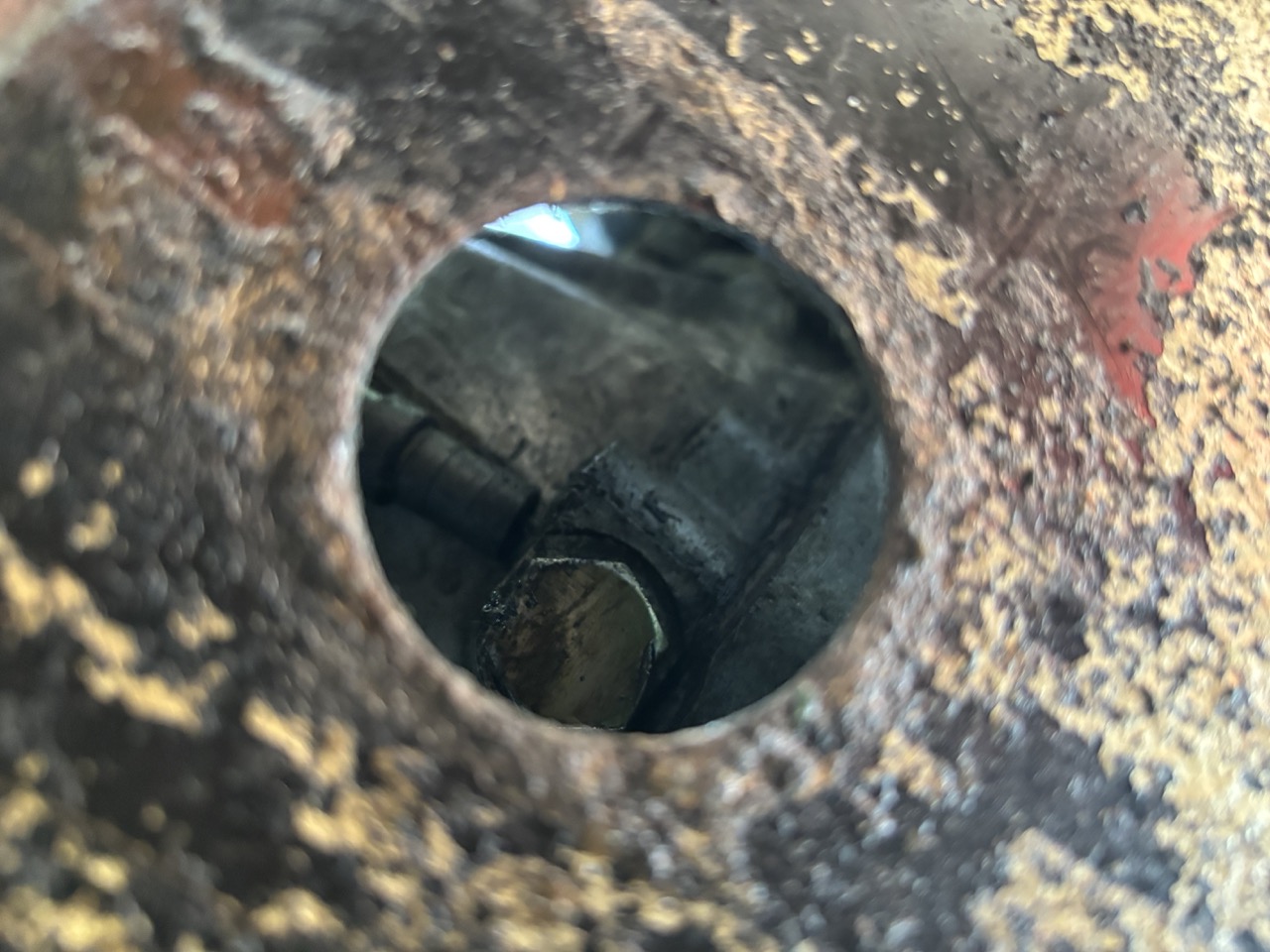
I feel like I’m so used to more modern cars making everything a pain in the ass where you have to remove panels and plastic shields and crap, this little hole felt like such a thoughtful gesture. I even made a reel about it:
View this post on Instagram
The drain plug is magnetized, and had some metal shavings on it as would be expected, but it didn’t seem especially alarming:

Filling is a little less easy, though. For whatever reason, transmissions seem loath to provide a fill hole on the top, where you can just leverage your old pal gravity. My F-150 has a transmission filler hole that requires the use of a pump, and while the 2CV isn’t that bad, it is a vertical filler:
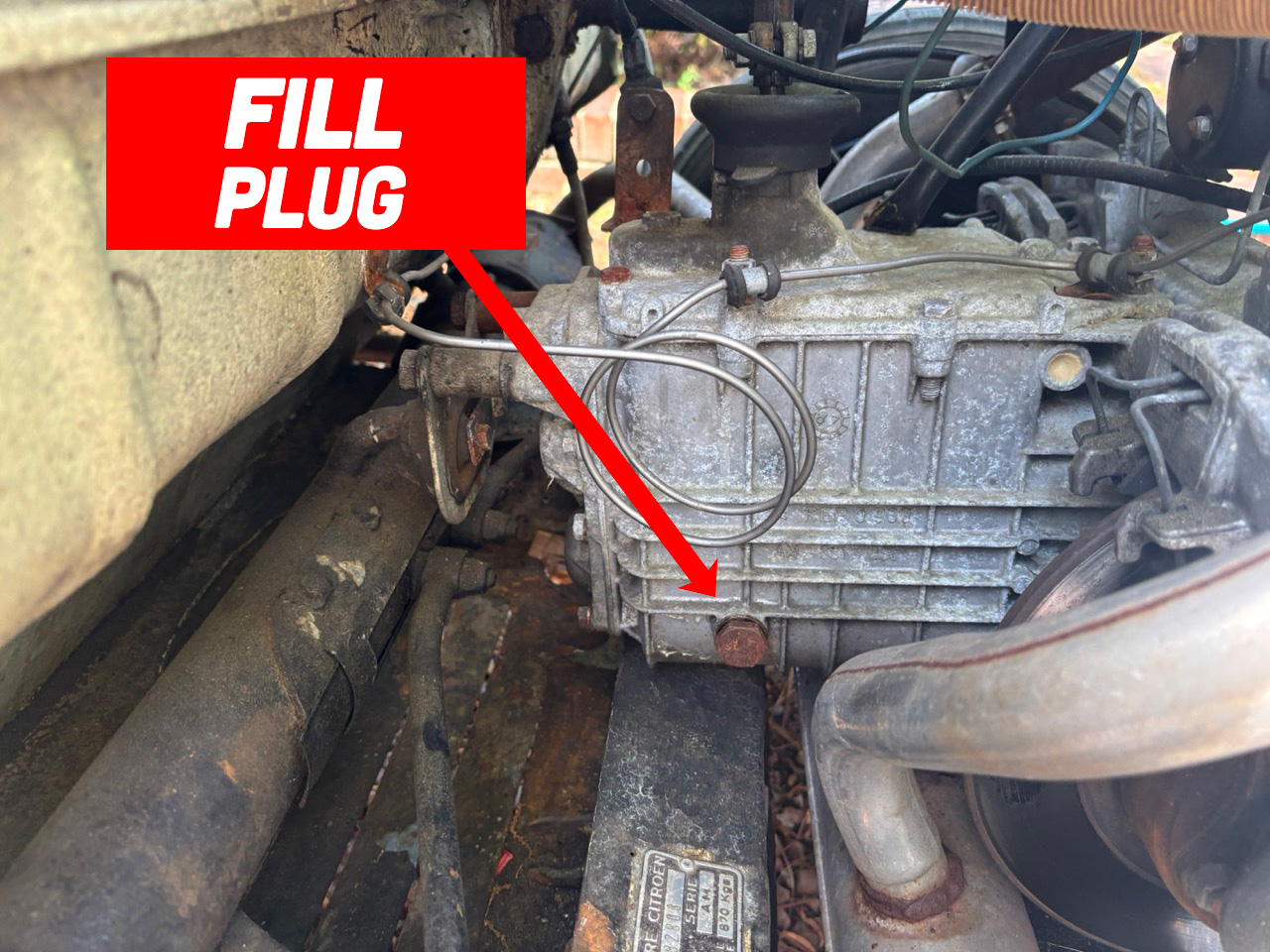
Couldn’t they have put it in the top? There must be a reason for this I’m just not getting. Anyway, it’s not that bad to fill, you just need to get a hose and funnel and stand like the Statue of Liberty to do it:

This was a very clear-looking oil, so I just watched the bubbles slowly glide down to know it was all being drank in. The transmission wants 0.9 liters of oil, and that funnel held 200ml, so I gave it five funnelfuls of delicious oil.
Next came the CV boot replacement, and I’ll fess up to something right away: I did it the lazy way. I know the right way would be to take the whole axle out and slide on the factory-correct CV boot, but I didn’t have the time for that. So I got one of those universal split CV boot kits.
And I know they’re only a temporary fix, and I should do it right eventually, and I know people roll their eyes at these things, but sometimes good enough is, you know, good enough. And it’s way better than what was there before!
You can’t really tell in this pic where I slid it up and away, but this boot had a big tear and was pooping so much grease onto that control arm below:
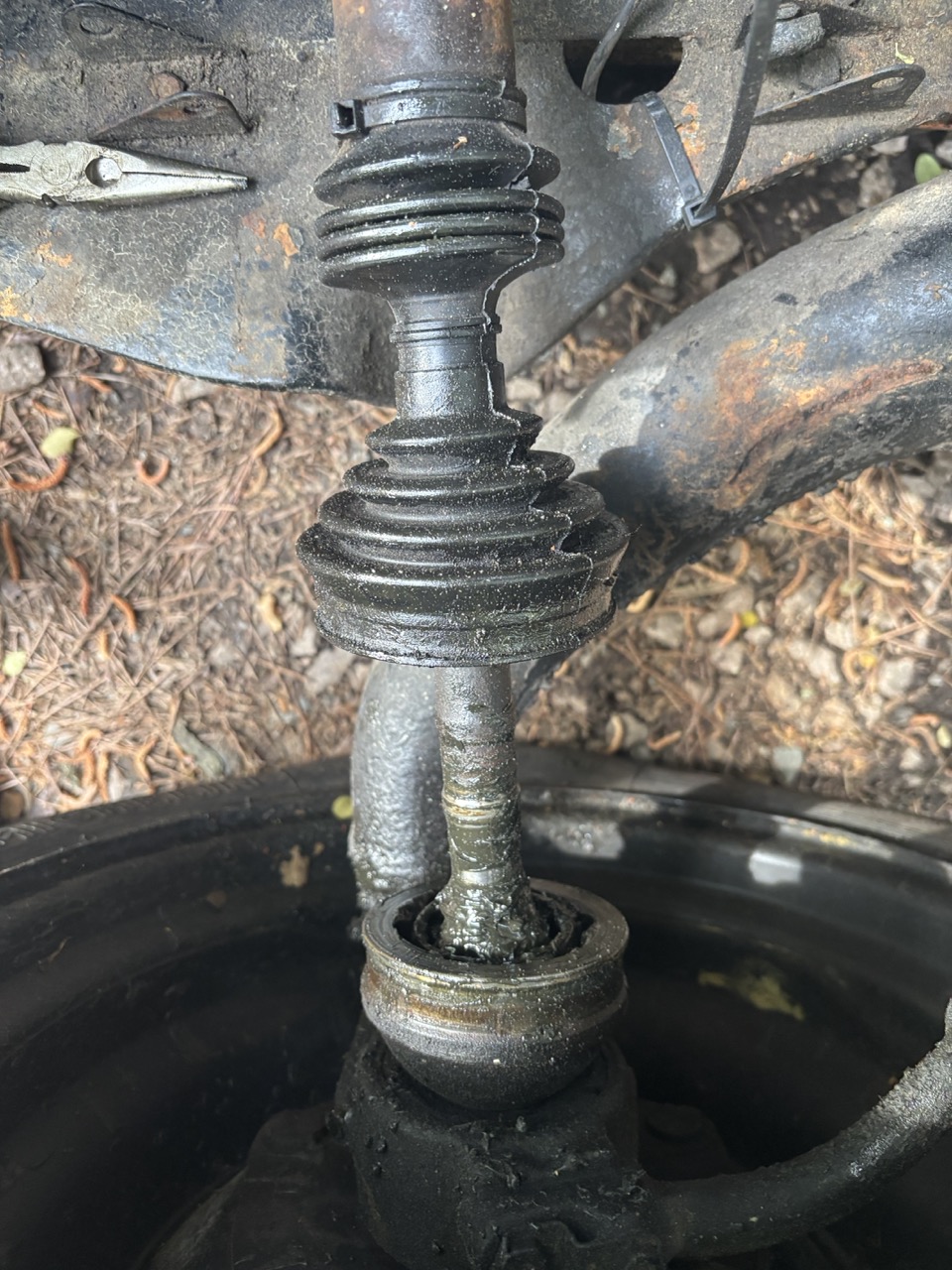
As you can see, that CV joint could use some more grease, too. So I cut off the old torn boot and packed in as much of that asphalt-mousse-looking grease as I could:
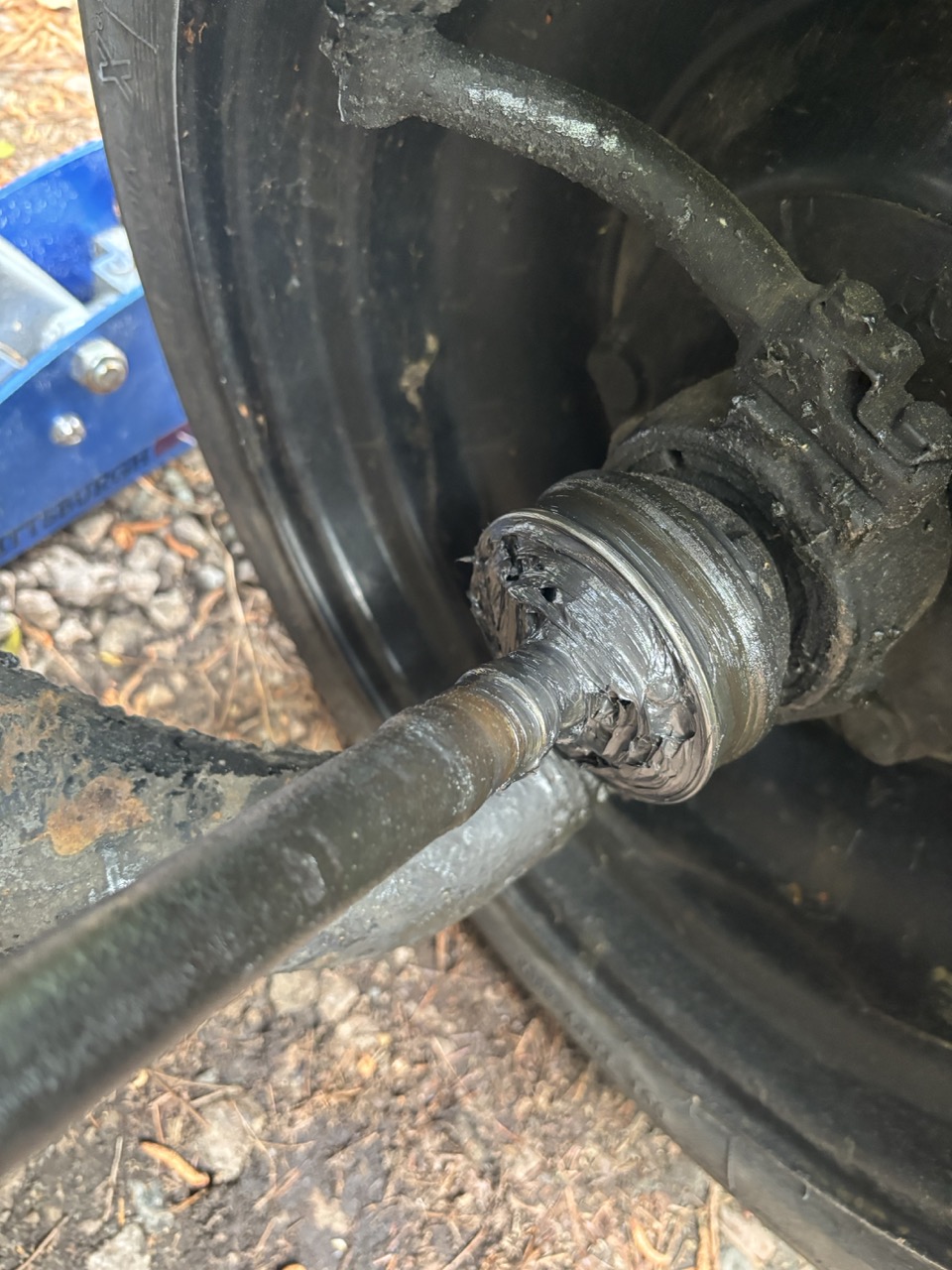
The way these boots work is that they’re split into two halves, and they lock together and are then glued. I did hit a snag when I found the Loctite glue provided with my kit was bone dry, and solidified as hard as a diamond:
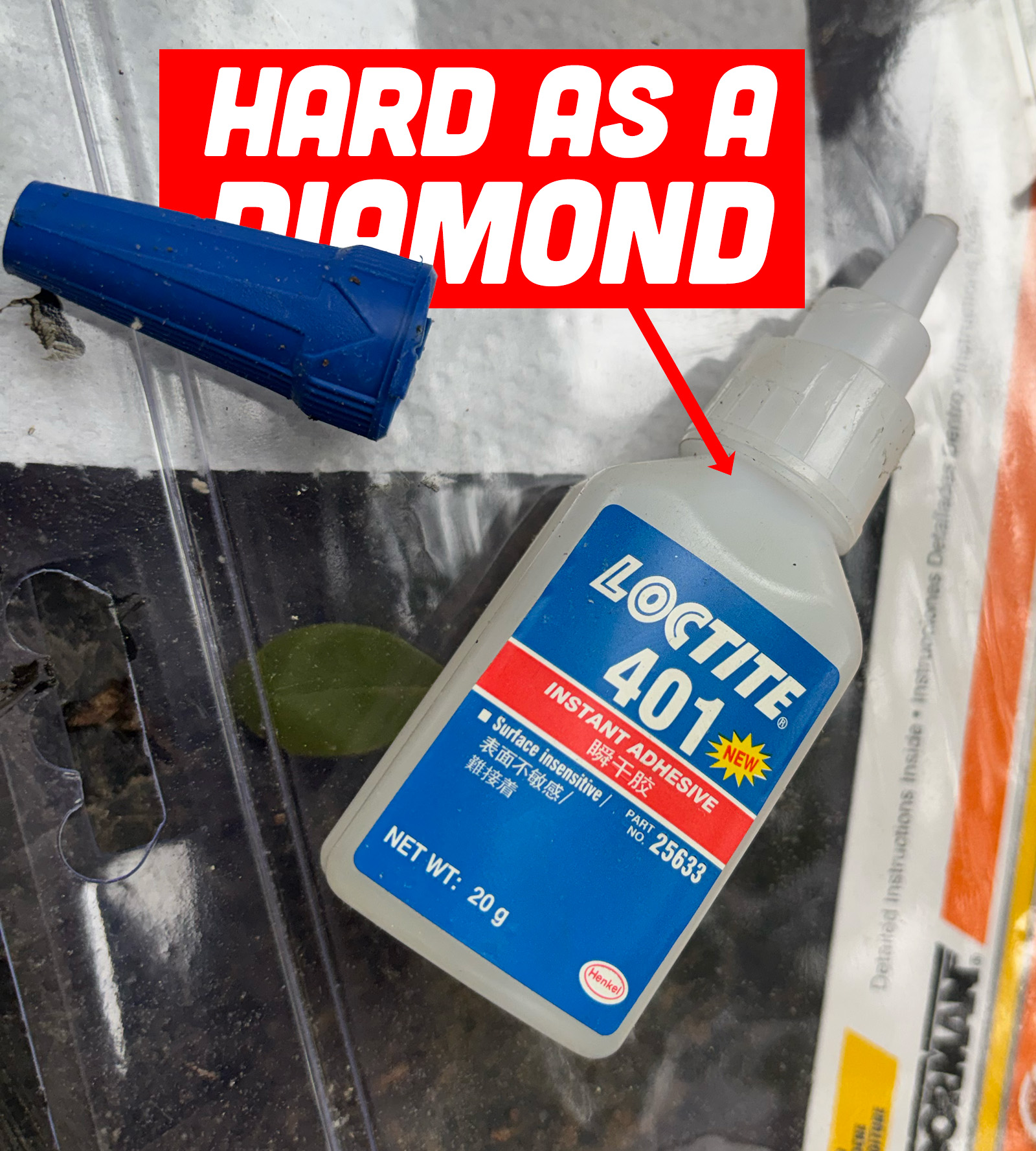
Well, crap. Luckily, I bought two, so I used the glue from that one, and it actually turned out better, because I had inadvertently bought two different-sized boot kits, and, shockingly, the 2CV needed the larger one? Who would have thought?
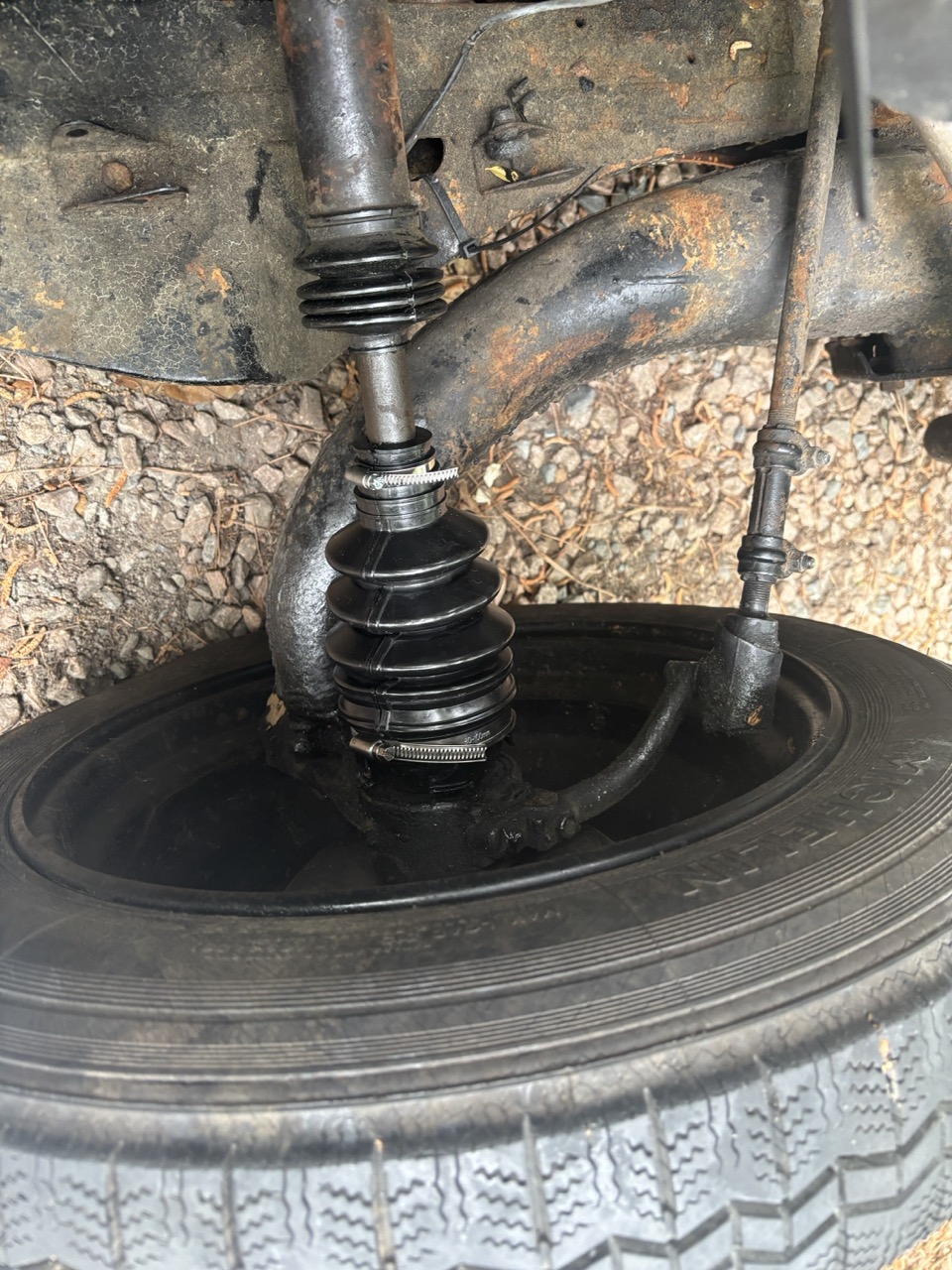 Anyway, with a bit of wrestling and gluing fingers together and other excitement, I got the boot on, and it seems to look pretty good! I mean, this isn’t rocket science – it’s a rubber accordion designed to keep grease in and crap out. This seems fine.
I packed a bit of grease into the other boot, which was in better shape, and I’ll liberally apply hope to that one and replace it next time.
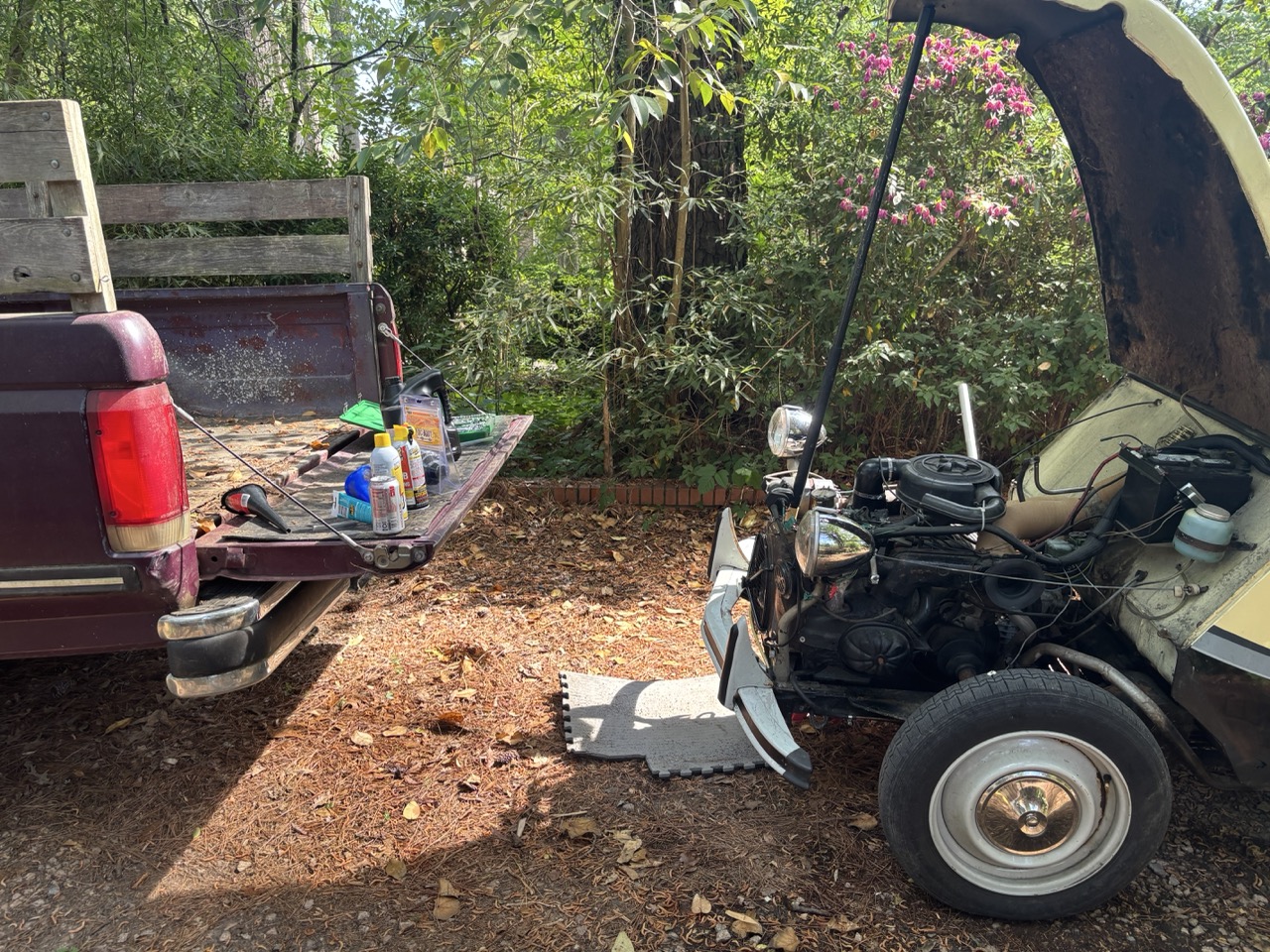
By the way, for those of us without garages, a truck tailgate makes an excellent ersatz workbench. I used it to hold my tools, my sparkling array of PB Blaster elixirs and unguents, and as a surface to trim rubber boots and cut up Diet Coke cans, which I’ll explain in a moment.
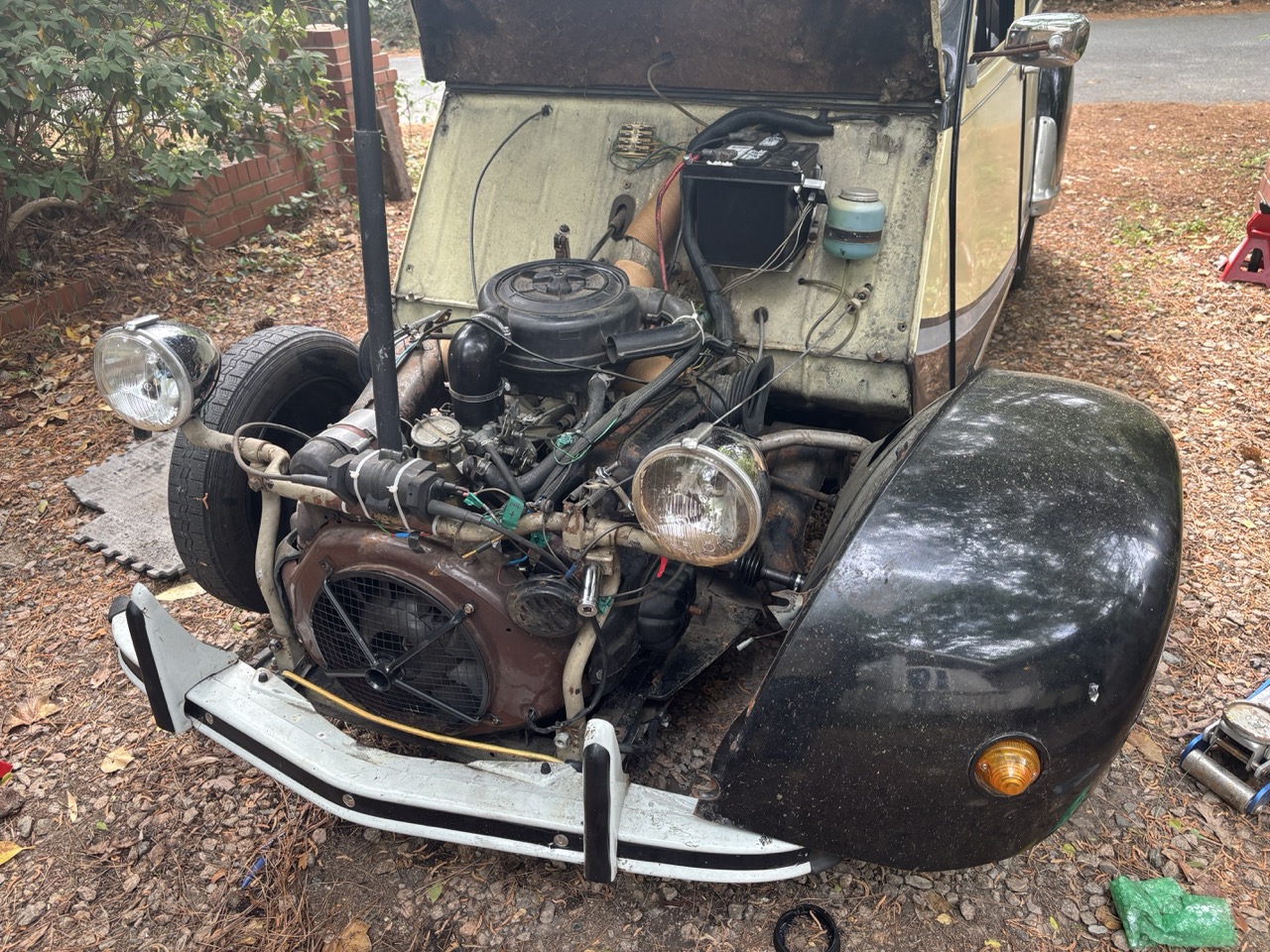
Putting the fenders and side valence panels back on was the next and most visually dramatic task, as I’ve been driving this thing around sans fenders for months. Without those fenders and fill panels, there really isn’t much body on the front of a 2CV, just a hood covering the engine like a gazebo; the sides are all exposed.
Getting the fenders on really helps define the 2CV’s face. While it looks like a strange Madmaxican hot rod without fenders, the 2CV’s chubby-cheeked look really needs the fenders:
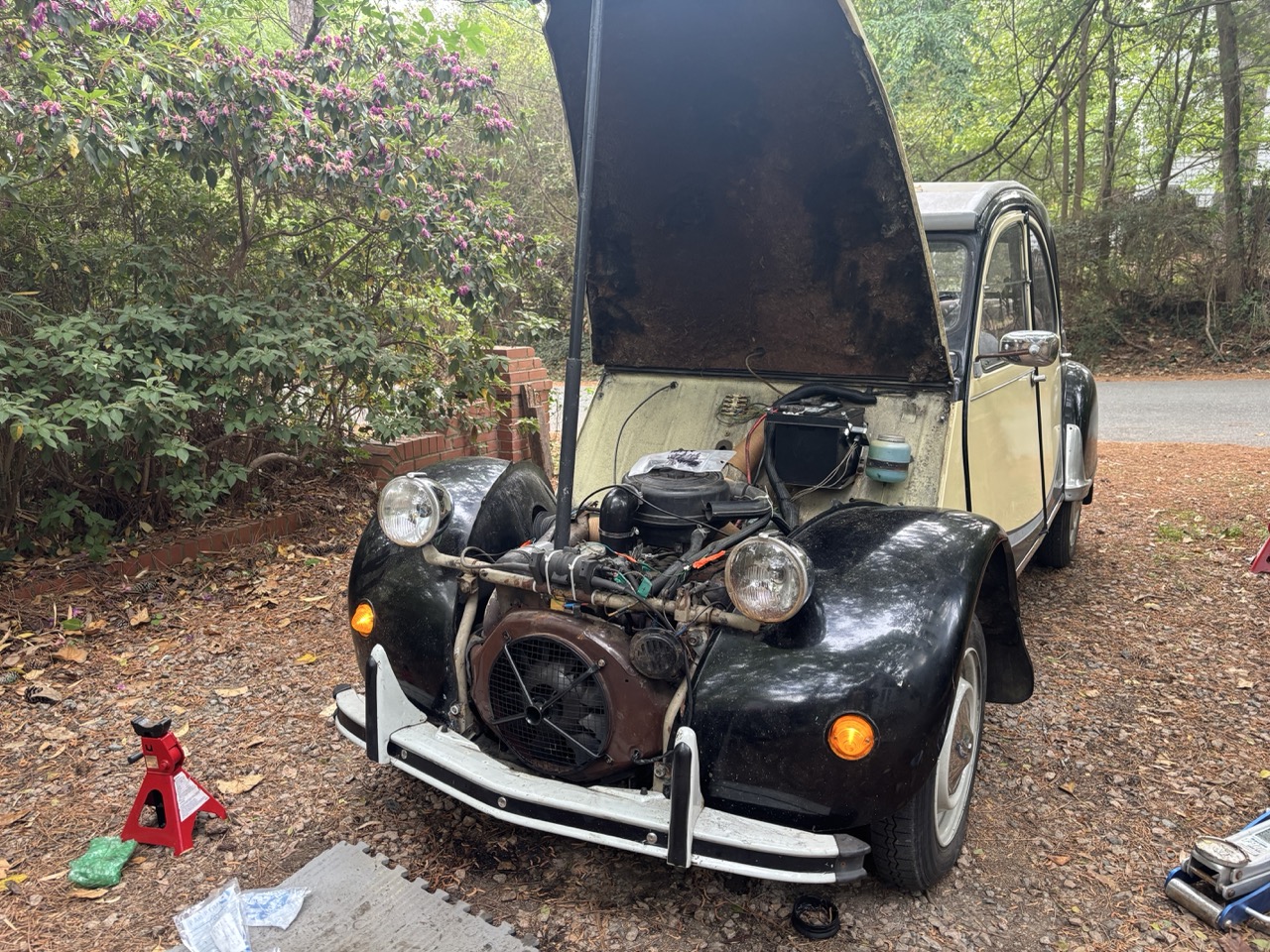
Also, the fenders house the front indicators, which are very useful. Ethical, even. Happily, the wiring for those, with a bit of minor splicing/repairing, worked.
I’ve never actually seen the side valence panels actually on the car since I’ve had it, and I sort of realized why: a lot of the mounting hardware was missing. Luckily, these four little clips were there, and they would be the hardest to find, but none of the bolts or anything like that.
I did a hardware store run and got bolts that fit (and some missing fender nuts), but soon realized that the bolts I had were too small for the little clips. This is where the Diet Coke can comes in.
I’d actually used Diet Coke aluminum on one other part: I found that sometimes when I flooded the carb trying to start the car (that was before the choke was working properly; it hasn’t happened for a while now), it would drip some gasoline onto the exhaust manifold below, which I found alarming. So I made a little heat shield/drip tray to keep any errant gasoline droplets off the hot exhaust manifold:
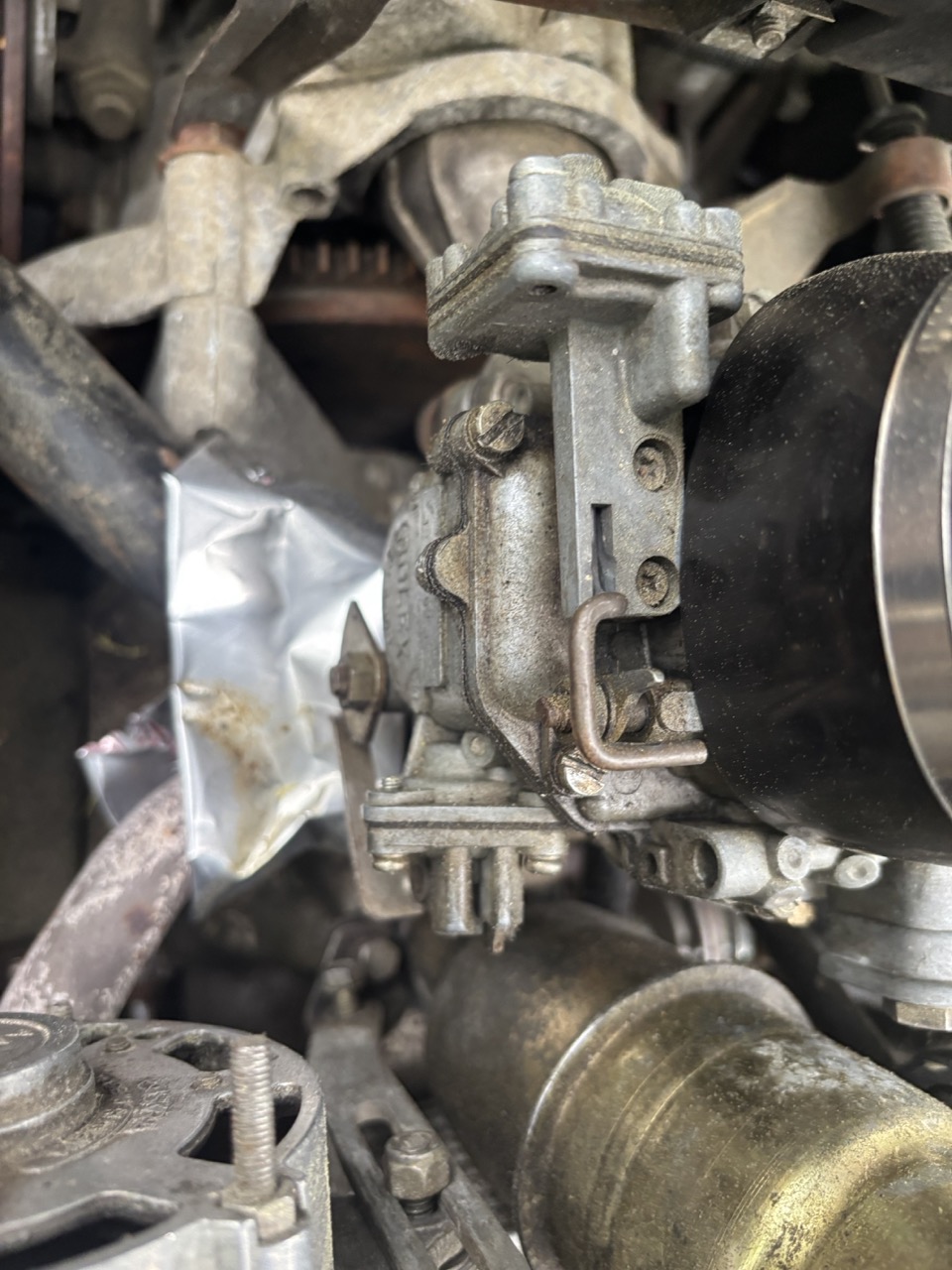
You know, safety first!
Anyway, I realized that I needed to do something to make these bolts and clips work in glorious harmony, so I started cutting some can aluminum:
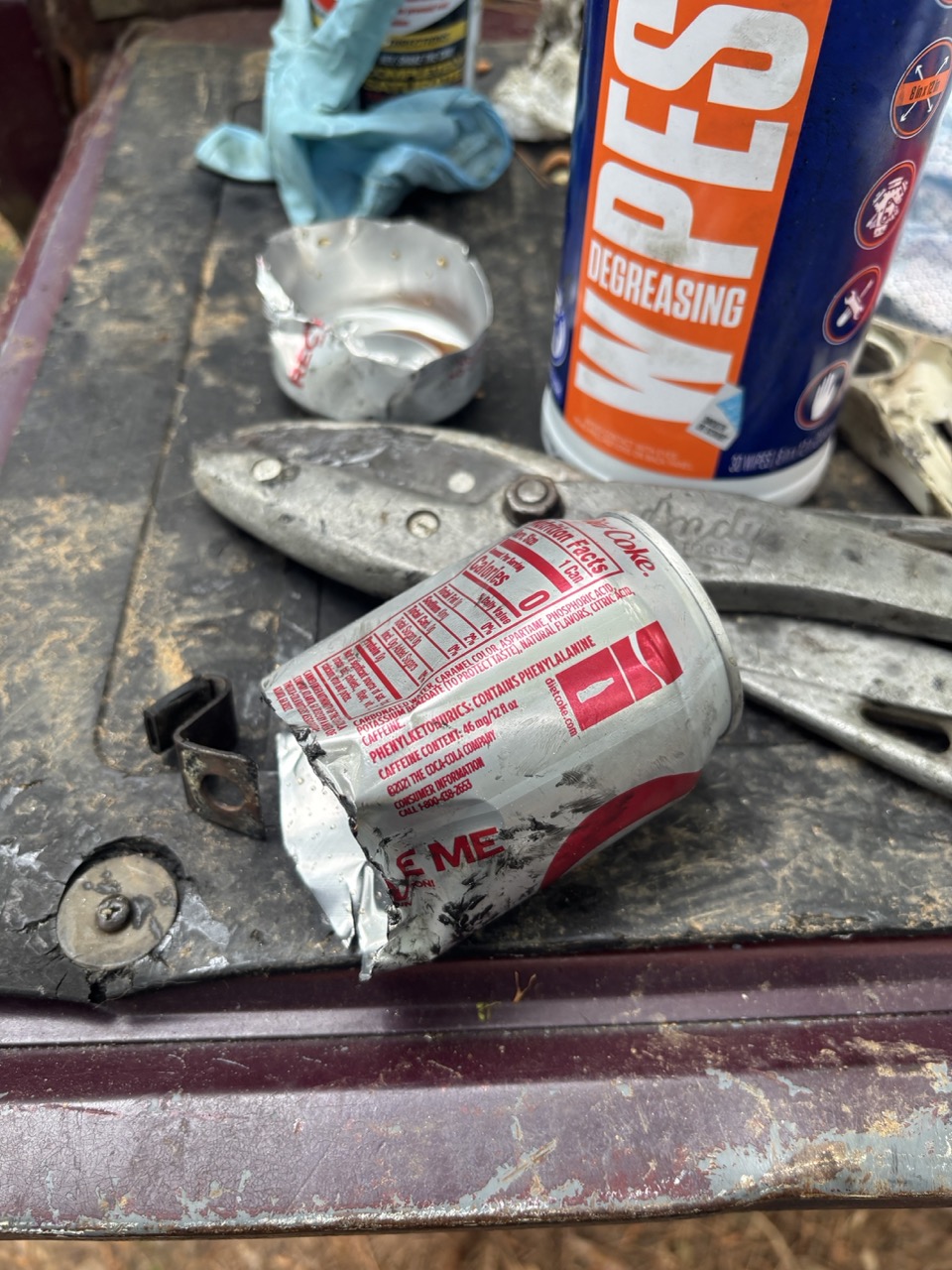
…and made some little folded-aluminum washer-like things for the clips:
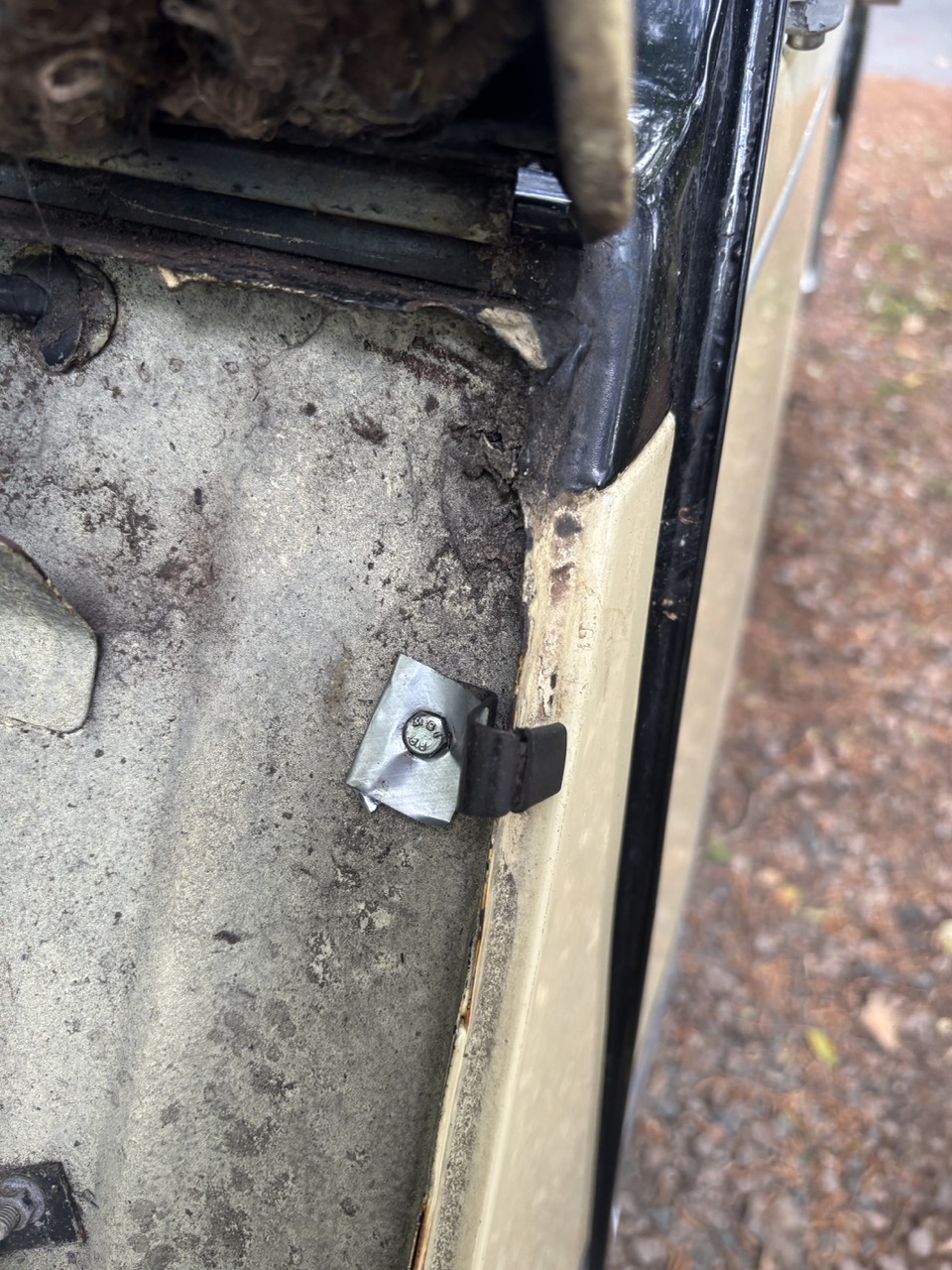
Look at that! It’s like it just came from the factory! Except that should be a Perrier can or something, I suppose.
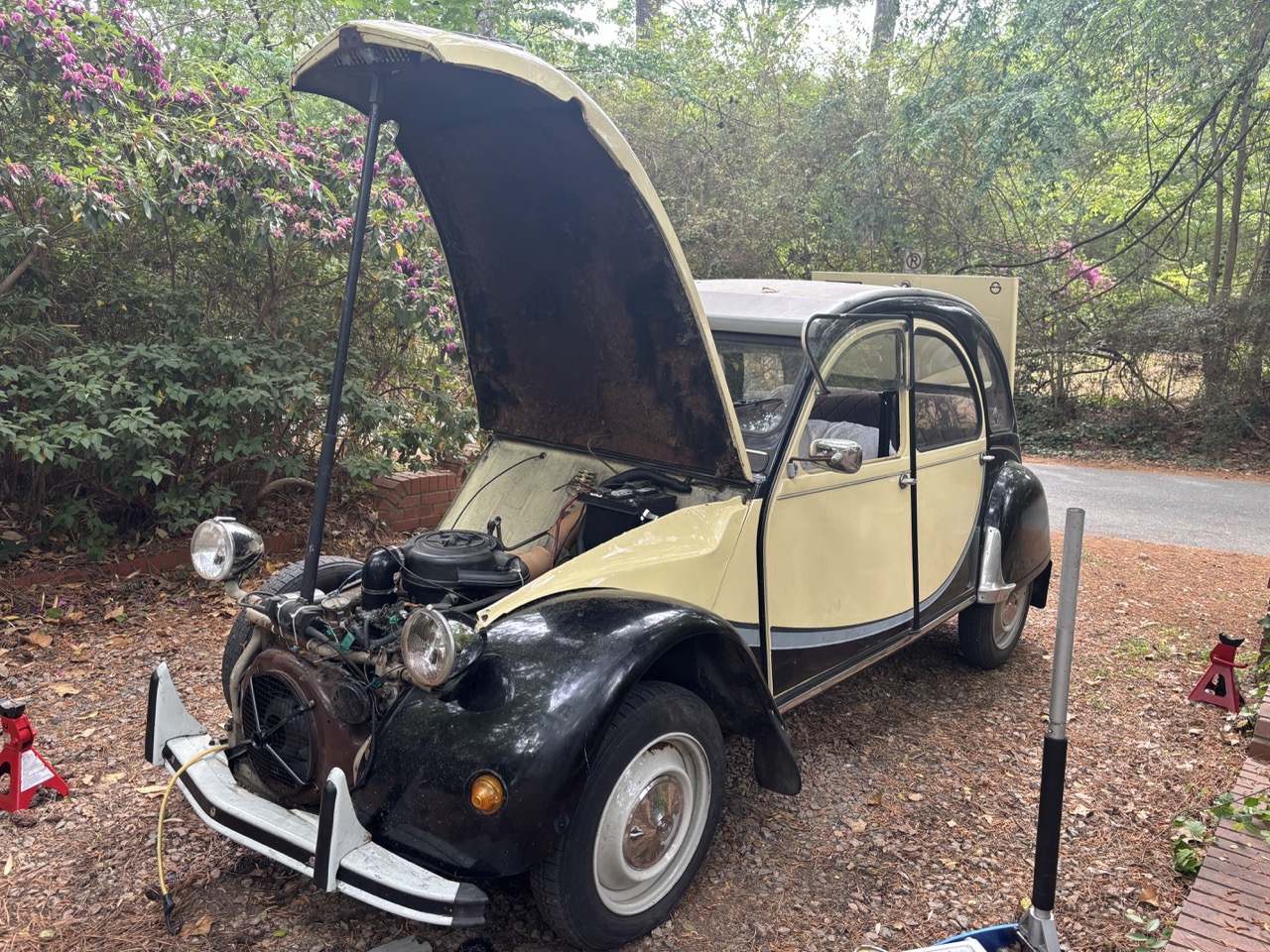
Say what you will, but it worked! And that’s enough for me.
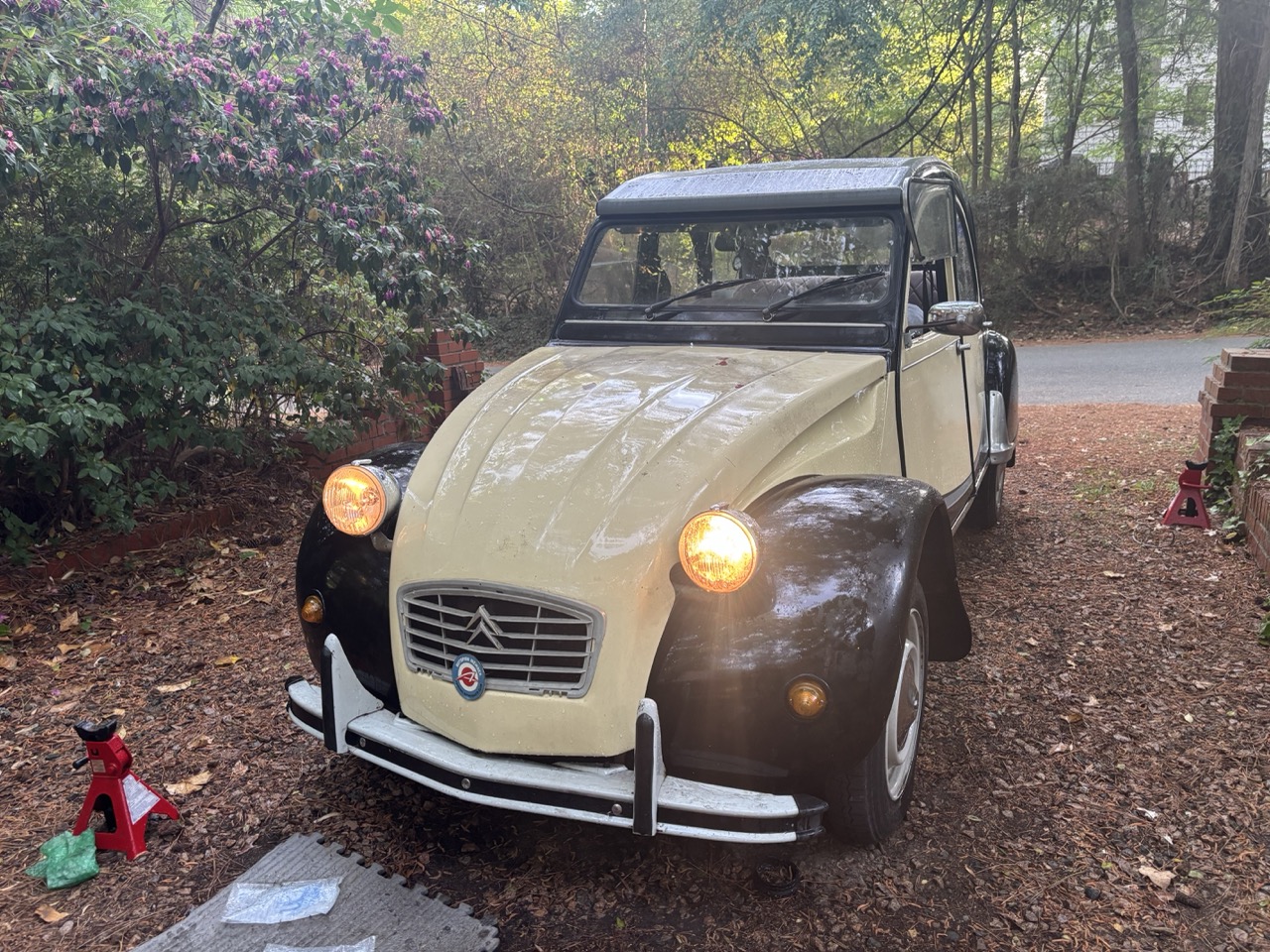
Look at that! It’s so together! I’m positively delighted. I love this car, and I can’t wait to drive it more, lots more. I took my kid out on a little test drive around the block, but as I was driving, I heard a troubling-sounding rattling noise that was getting worse and worse. And I could feel something banging around! Crap! What’s happening?
Then I remembered I couldn’t find my socket wrench.
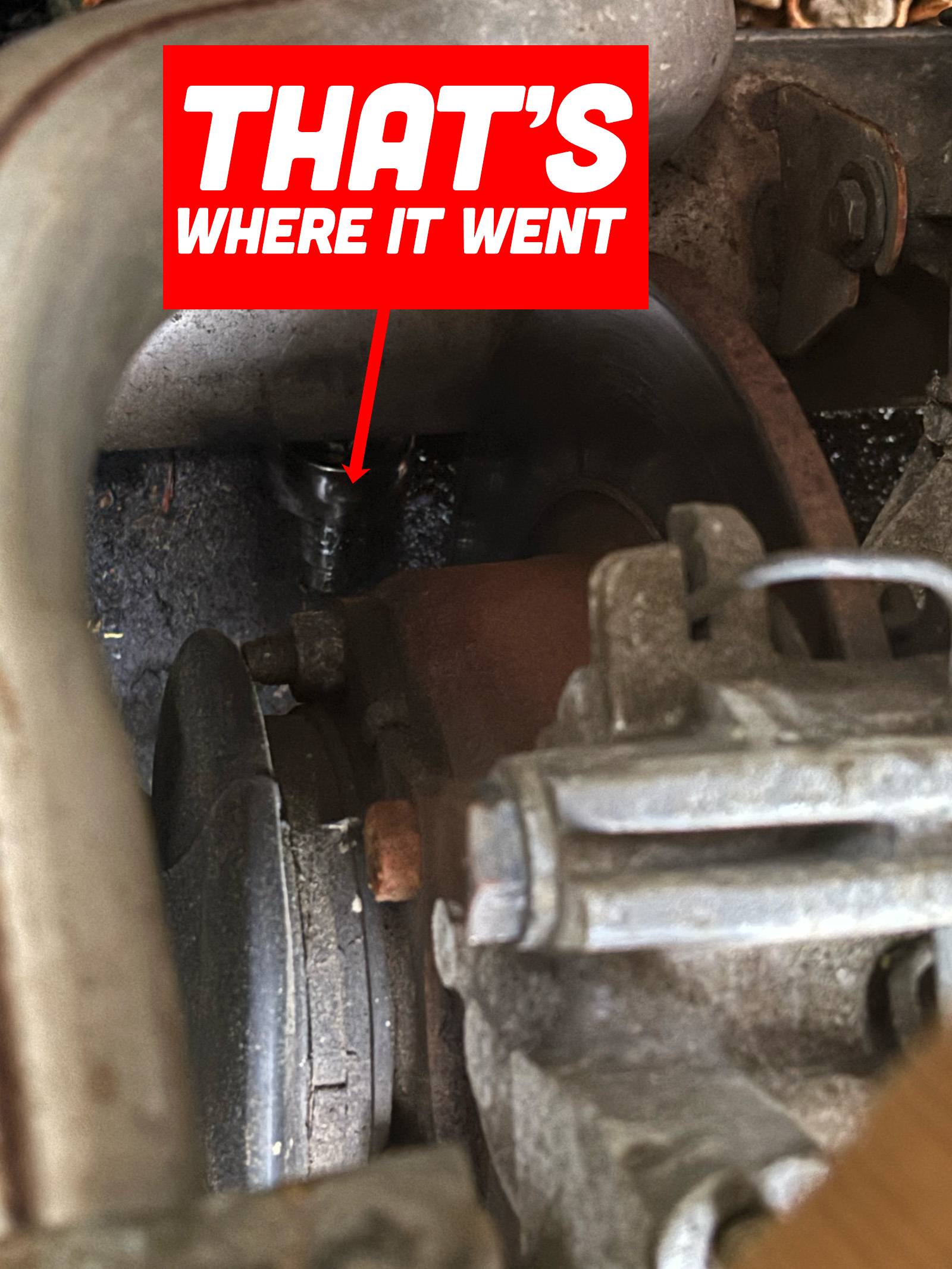
Somehow, I had dropped the wrench and it ended up in the chassis pan, by the muffler and one of the inboard disc brakes. The handle was peeking out below the car. Whew!
Anyway, I’m so excited. I think one night this week I’ll do some sort of extended test drive of like an hour, and then, fingers crossed, I’ll be making my first real journey in this thing come the weekend!
Wooooooo!
All photos: Jason Torchinsky


So instead of feeling wrong, you prefer to just be wrong? Continuously?
SAE Grade 140 GL4 has a viscosity of ~335 cSt @ 40C and ~25cSt @100C
If you had used the appropriate viscosity grade, 75W90 or something in that range, you’d be at ~135 cSt at 40C and ~15cSt @ 100C.
Your gearbox is going to feel like it is filled with luke warm baby shit. It’ll probably be particularly noticeable when cold.
Or you know, you could have just ordered the correct viscosity in addition to the correct spec, so that you could actually do the job properly. Maybe then you’ll actually be able to feel what it is like to do a good job. I hope your children don’t look up to the work you do. You should at least disclaim to them that you’re an idiot.
Wow! Buddy, it’s okay! When winter comes I can change the oil again, it’s not that big a deal. The gearbox feels fine. I’m more worried about you; this sort of vitriol regarding someone’s choice of gearbox oil feels unhealthy. And, don’t worry, my kid already knows I’m an idiot.
Jeez dude, who pissed in your cheerios?
Are you OK? I’m sure there are good therapists out there.
Got a little tired of the funnel and garden hose setup for filling oil strange places myself, so came up with a new approach:
A used soap bottle pump will happily pump liters (quarts) of gear oil, engine oil, LHM oil or whatever, you need to get in – or out – of strange places. Attatch a clear hose (like the ones used for brake bleeding, they are cheap from China as “aquarium air hoses”) to each end. Requires a bit of patience, but the spillage is minimal compared to other methods.
You can also pump gasoline with it – for hand filling a carburettor bowl for instance – but not for long, as the gas ruins the pump gaskets. But if you just save the pump everytime you throw out a soap bottle, there should be plenty where it came from 🙂
-Come to think of it, I might try reverse bleeding brakes (down to up method) with one of those next time!
Here’s what I do now: I just put a tube from the top of the bottle into the hole of the trans/diff/whatever, then drill a small hole on the top of the bottle, maybe 1/8″ big. Then just take a compressed air sprayer and inflate the bottle. Easy peasy.
Best wishes! I drove my Velorex 435 to work as safety staff at last weekend’s Lemons race at Pacific Raceways but that track is only about forty-five miles from home which, even in the Velorex, doesn’t quite take three hours.
Magnifique!
You didn’t drop the wrench you left it it under the hood. Failure to put it back where it belongs was still less than the mistake of forgetting to replace the oil filter cap after filling the oil. It seems they could design a better design for refill of oil than a plastic cap that if you forgot it will require a new motor. I’m imagining a fitting that closes when ever there isn’t a quart of oil in the way.
When I first read Jason wanted to run his 2CV at the 24 hours of Lemons in South Carolina I thought he was stating his desired lap time.
So happy to see this beauty with all its skin back on.
Jason: Darn you to heck. Now I’m going to stop looking at Fiat 500C’s and try to find a 2CV. If all else fails, I can call my ‘French daughter’ in Cognac and have them snag one…
I haven’t seen one of those split-boot repair kits in a long time now. Once upon a time CV boots replacement was a basic and commo repair and these split-boot kits were everywhere. Nowadays for some reasons CV boots seem to last a lot longer and at least I haven’t seen split boots in auto parts stores in a long time.
I didn’t even know they were a thing, but even knowing they exist, I think I’d still just take my car to a garage and get them to fit a ‘proper’ one. Removing an axle is a bit beyond the tools and space I have.
There is a LOT of overlap in oil specs when it comes to being used in transmissions. For example, while the “official” spec for my Triumph’s box is also GL4 – with the same caveat about not using GL5 lest the brass bits dissolve or explode or otherwise have VERY BAD THINGS happen, it is also perfectly happy on straight 30W non-detergent motor oil. And that makes the electric overdrive unit happier. Also doesn’t smell nearly as bad when it leaks (and OF COURSE it leaks, it’s British). I suspect Triumph spec’d GL4 simply because then the same lube is used in the transmission as in the diff, where the GL4’s high-pressure lubrication properties are actually needed.
Loved the article. Always thought I needed a 2CV. Now I’m sure.
For future reference: Loctite 401 is a type of CA glue. In a pinch, and especially for a temporary repair, you can substitute a garden variety super glue and most likely get a serviceable bond.
CA glue is also used for making custom O-rings I think? So I guess if it works for that…
Almost all gear boxes, I’d ever had to fill, have had vertical fill: You fill it ’til just before it starts pouring out again, and the level is correct.
If only engine oil was done the same way, so you couldn’t overfill it.
Hell yeah, nice job Torch! You knocked out a bunch of stuff, I was wondering what the status was. The car looks great. You really need a garage my friend. Getting too old to be laying around on pine needles and tree sap. Autopian will fund it 100%
Always love your writing style. So conversational for an automotive journalist!
How far from Kershaw to Charleston? You could take your Charleston to Charleston. bonus points if you eat a Charleston Chew while you’re there.
…and also dance The Charleston while there.
It is looking much better than it did when we pulled it out of the woods. Much less bullet-holey
You were instrumental in rescuing this car, my friend!
It was a good time. Feel free to include me in more adventures!
♪♫Fiddle plays♩♬
I love the use of tin snips on what’s arguably the thinnest metal material that can legally be called “sheet metal”…
Voltage regulator empathy! Higgins (’67 Datsun Roadster) developed a runaway charging situation (18.5V yeesh), which spurred some AI-advised multimeter probing and revealed a historical dogs-lunch alternator ponytail hiding in plain sight. Cleanup on that didn’t resolve the runaway charging and my suspicious gaze returned to the no-name mechanical VR that I installed in 2023. A solid state unit arrives today, and a new bench-tested mechanical unit is on its way. I’ll be in a better position to troubleshoot, in any event, with a spare for the road. I look forward to hearing if your electronic VR does the trick.
Apologies if I missed and earlier discussion of the headlights.
It appears Jason’s using the yellow P45T bulbs in the headlight fixtures. Charming and very French, but a little alarming to me if I was driving at night. Maybe sub in halogen P45T bulbs, which might throw a few more lumens down the road, or try a pair of LEDs?
Give the deer a chance to see you’re coming.
Is there a US supplier of P45T LED bulbs that actually throw the correct dipped pattern? All the ones I found were “ATV” lights and use a wide, high pattern for both levels, which are terrible for oncoming traffic
One can buy P45T LED bulbs marketed as drop-in replacements for incandescent P45T bulbs used in British motorcycle headlight fixtures. Beam patterns in these relatively crude fixtures (crude in comparison to modern projector headlamps) would be determined by the fixture and lens, and less so by the bulb chemistry.
Jason can control the headlight angle with a lever in the cockpit and the number of baskets of eggs in the back seat.
No, the bulbs in his and my 2CVs are dual pattern. So moving to LEDs is a step down as both low and high throw light upwards. I replaced the correct but dim bulbs in my 2CV last year with LEDs and they are all (other than some hard to get ones here) single pattern. So the old filament are actually better other than being dim
Good to know, thanks.
I recently imported a FIAT 126 from Italy to Nova Scotia. I’ve driven it literally maybe 10 minutes total so far because ‘winter’ and ‘storage’ to keep it safe and salt-free until spring, but I found a UK company that makes LED retrofit LED bulbs for classic cars that seem to have the LED ‘filaments’ in the right place for use in classic halogen fixtures.
I know a lot of people that that is blasphemy, and it probably is…but I don’t intend on driving the car much at night, and my brief tests in the storage unit on the wall in front of the car seem to show the light from the LEDs doesn’t seem to go up any higher than the halogens on full or dip, so I don’t think they would be too dazzling? They are also vastly brighter than the dim 45/40 watts the original R2 / P45T bulbs put out, and use way less power to run, which helps the little Inline-2 cylinder 24hp engine through the alternator not needing to charge as much when they are turned on!
We’ll see how it goes when I’m able to drive the car more, but I’m happy so far!
Here’s the link to the ones I bought…also, no stupid fan assembly thing sticking out at the end to eventually burn out and kill the LEDs either!
https://www.classiccarleds.co.uk/products/compact-direct-fit-p45t-r2-led-hi-lo-beam-conversion-5-15-volts-410-423
In the UK the spread of the headlights is one of the checks on an MOT, so I’d have pretty high confidence that these are probably correct in terms of beam pattern.
Although now I think about it, classic cars over 40 years old are MOT exempt in the UK anyway.
Haha – I’d been tempted by these exact lights!!! They have the correct “reflector/baffle” that should give the right pattern. Good to hear of someone who has them.
They passed a Nova Scotia safety inspection here, and the company claims they are MOT compliant, so I think they are a good bet!
Woohoo! Mine are on their way. Thanks for the recommendation
No problem! I’ve not driven the car at night yet to properly test them (it REALLLYYYYY needs some steering adjustments), but using the ‘shine them on a garage door / wall trick’, they seem decently similar to the pattern of the original halogen bulbs!
Reply and let me know how you make out, I’m curious!
They are a little deeper than my current bad-pattern bulbs, so I had to bend the contacts a bit (and need to bend them more when I have more time). But the pattern is so much better than my other bulbs, and they are otherwise perfect drop ins. Thank you!
Hey, late reply, but very glad they worked for you! I had to bend the contacts a TINY bit myself, but they were essentially drop-in with no issue!
Glad the pattern seems better…lends credence to them definitely being MOT-legal in the UK and therefore decent! 🙂
Mother Nature has plenty of horses, she won’t miss just two.
It looks great, I’m jealous!
Homer Simpson: “I’m not jealous, I’m envious. Jealousy is when you worry someone will take what you have. Envy is wanting what someone else has.”
I’ve a soft spot for 2CVs. I liken it to cooking a chicken, where you can use “the whole animal.” Nothing gets wasted. You can genuinely use all of it. No waste.
2CVs on a backroad are fundamentally the same thing. You have to put in effort as an operator, but you can use “the whole car.”
But mainly 4th gear and a lot of throttle, in my experience
There are parts of a chicken I’d rather do go to waste.
Nope, render it for stock to make soup or gravy with. Don’t have to “eat” it.’
And THEN you can turn what’s left of it into fertilizer.
When I buy a roast chicken I use it all. The muscle meat gets pulled for me, the skin and carcass go into the pressure cooker to make stock.
https://m.youtube.com/watch?v=3k20zFlbFfE
The pressure cooked solids are them pureed into pet food.
It’s the calories from the cluck and the cock-a-doodle-doo I can do.without.
Excellent work and good job increasing the CrazyBastard™️ level.
Many of us would rest a little easier if there was *one* Toyota in the mix, you know…
I believe David tried sending Torch a Toyota Sienna and it ended up being such a basketcase that he got rid of it. Maybe the superpower of The Autopian is turning any vehicle into a shitbox? 😉
https://www.theautopian.com/its-possible-these-tires-werent-great-cold-start/
Torch owned a Scion xB for years, which became the unfortunate Autopian Test Vehicle, that now sort of lives on as a reader’s race rocket. So he’s had at least TWO Toyotas. Which is one more than me….. not that anyone asked.
I remember both of them…I was referring to the here and now.
That’s because most people have no idea how much can be done with how little power, provided that you, as Colin Chapman would put it, add some lightness. I make do with 34hp and they are very much capable of haulin’ ass if needed because they’re normally propelling a sub-2000 pound car+driver combo. 29hp in a 2CV is more than adequate. I wish we still had light, underpowered cars these days.
I never understood this until I got my Chevrolet Bolt. I can cruise along at 68mph showing the usage to be 17kw. That is 23 hp! On a 3500 lb car…
Amazing! Of course, the Bolt needs more than just 23hp because not all driving is highway cruising, but at the equivalent of 200hp at peak delivery (if the internet is to be believed; not sure all trim levels have similar power ratings to be honest), the Bolt sounds almost terrifying to me.
Well, 29HP when it left the factory. Mine has clearly lost a few since 1980
Oh, I’m sure my Renault 4’s C1E engine also no longer has all the 34hp it packed when it originally rolled off the Novo Mesto plant in June 1990. Still more than capable of keeping up with freeway traffic if I’m in a hurry 🙂
As a Crosley owner, I look up to Jason’s lofty 29hp from my 26.5hp. Crosley counts the half a horsie. In a light car, as others have said, it’s perfectly adequate.
Ooh cars with power ratings down to the half horse. That’s how you know they mean business! Every half horse counts 🙂
My first car (VW Polo) had a heady 47HP*, and as a 17 yo with a fresh license, that was more than enough to get into trouble. I even got it to an indicated 100mph one day! (After about five minutes of foot-flat-to-the-floor acceleration.)
*(when it was new, probably less by the time I bought it for £100)
I drove a 1998 Polo to its death (it was a free car) between 2013 and 2024, and I also squeezed quite a bit out of whatever remained from its original 50hp. Also hit 100mph a few times (I think its top Waze-verified speed was close to 175km/h, so about 108mph). That car had absolutely no business reaching those speeds, or cruising so effortlessly at 90 – which it did, somehow.
Simplify and add lightness. What a mantra. Seems like it’s not an actual quote from Chapman, more of a sentiment he expressed regularly in more words, but that’s just spot on for me.