

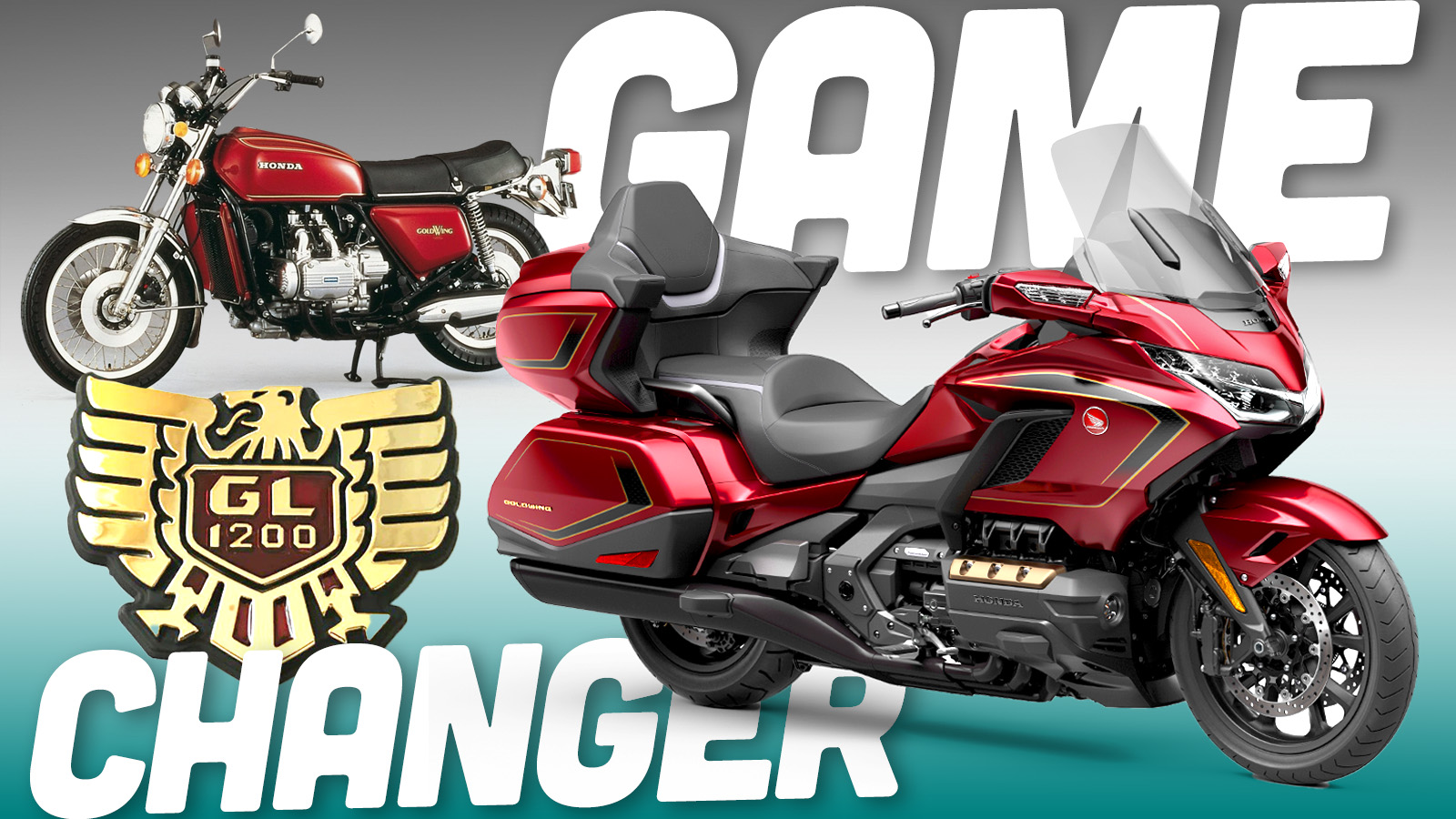
If you live your life on two wheels, and love going the distance, there’s a pretty good chance that you’ve either considered the Honda Gold Wing or maybe even own one. The Gold Wing has, for many, been the standard in long-distance riding for decades. Honda’s big luxury tourer turns 50 this year, and the wildest part about its story is that it was never designed to be the best touring bike on the road or the closest two-wheel equivalent to a car. Here’s how Honda accidentally changed motorcycle touring back in the 1970s.
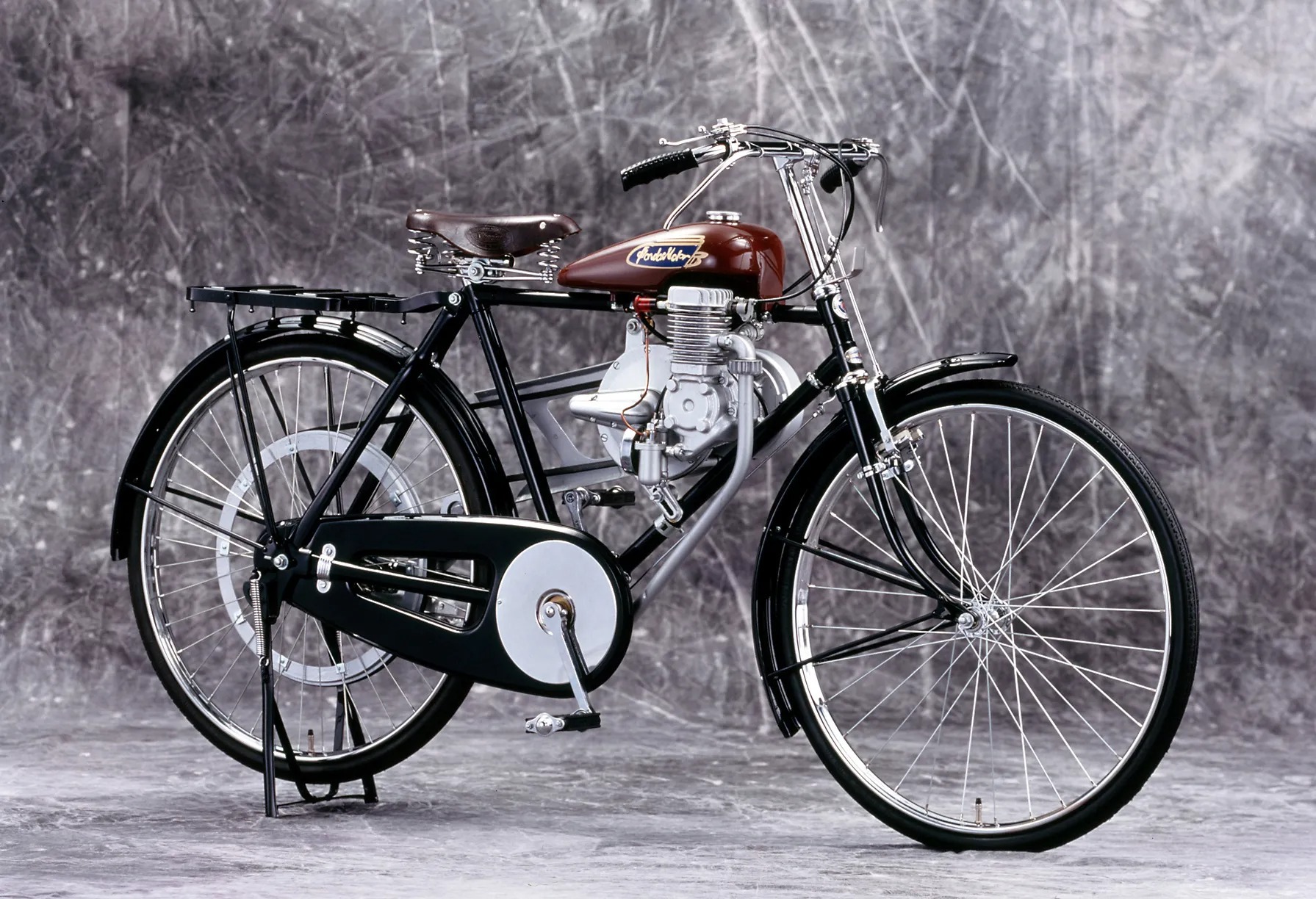
Like many companies, Honda got its start by messing around with bicycles. Immediately after World War II Soichiro Honda found inspiration in the little engines that powered wireless radios during the war. Honda figured he could use an engine like that to make his wife’s life easier. He mounted an engine on her bicycle, which allowed her to ride to town much quicker than before. Given that smashing success, Honda decided to make a whole business out of it.


Honda’s first product was the Honda A-Type, launched in 1947, a year before Honda formally founded the Honda Motor Company, but a year after Honda started engineering. The A-Type was a die-cast two-stroke engine with rotary valves that delivered power to a bicycle’s wheels through a patented belt drive. Honda built its engines on assembly lines, and parts were designed so that anyone could put them together without manually filing and shaping the parts. In reality, Honda says, most of Honda’s early parts still needed manual finessing before they could fit together, but the concept was still sound and was refined as time went on.
It was only 11 years later that Honda would change the world. Honda and managing director Takeo Fujisawa traveled to Europe, where they found out that the small motorcycle culture was way different there than it was in Japan. They went back to Japan, convinced it was time for a revolutionary new way to travel. Honda’s new motorcycle would be neither a moped nor a scooter. It would also be designed to be inherently friendly and easy to ride. Further, this new bike was to be designed from the start to be for everyone, from the suited Japanese businessman to a woman in a clean dress. Oh, and the motorcycle couldn’t be complicated, so a traditional manual transmission was out, and the motorcycle had to be seriously rugged and powerful to survive Japan’s rough roads.
In 1958, Honda launched the Super Cub. The little motorcycle did everything Honda wanted and more. It was truly a motorcycle for the masses, no matter where in the world they lived. Perhaps even more brilliant than the Super Cub itself was its marketing. In a time when motorcycle riders were gaining a negative “biker gang” reputation, Honda proudly marketed the Super Cub as being the motorcycle for everyone. “You Meet The Nicest People On A Honda” remains one of the greatest marketing lines of all time. As such, it’s not one bit surprising that the Super Cub remains the world’s most popular motor vehicle, with well over 100 million examples sold.

Honda had shown the world that it wasn’t just the Americans, Germans, and British who could build awesome motorcycles. Now, it was going to flex its engineering muscles even harder. Of course, throughout all of this time, Honda was also making its name by building excellent cars, too.
In 1969, Honda blew the world away with the launch of the CB750.
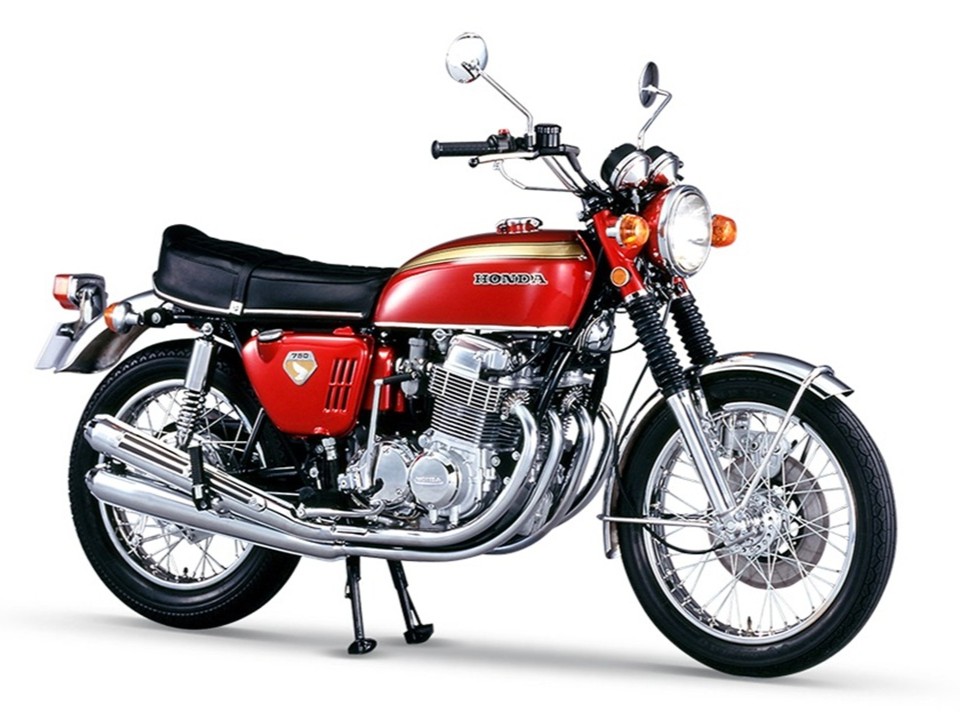
This was the first mass-produced motorcycle with an inline-four engine and disc brakes. The CB750 was called a “superbike” and it combined Japanese reliability with British speed in a concoction that had riders falling in love. The success of the CB750 was so grand that its basic formula would become the standard across brands in Japan, leading to the so-called “Universal Japanese Motorcycle.” By 1978, Honda sold over 430,000 CB750s. Today, the CB750 is considered to be one of the most important motorcycles in history.
The hard part for Honda was figuring out how it was going to follow up the CB750. It just built a world-beating motorcycle. Naturally, the response would be to build something even more revolutionary. Honda would set its sights on creating what it called “the ultimate motorcycle,” a motorcycle that we know today as the Gold Wing.
Building A Flagship
Honda’s plans were ambitious, and to create the so-called “ultimate” motorcycle, Honda founded a Research & Development division in 1972. The R&D center was led by Soichiro Irimajiri, who made his name in auto racing and was the head of design for Honda’s five- and six-cylinder motorcycle racing engines in the 1960s. Honda’s ultimate motorcycle was going to be its flagship, and the team was going to do something entirely new for the brand.
According to Honda, Soichiro Honda took note of the popularity of large and sporty touring motorcycles in America, and decided that the new Honda flagship would be aimed right at the USA. At the time, Harley-Davidson was making bank on bikes like the Electra Glide while BMW and Moto Guzzi enjoyed a strong fanbase. Honda knew the market for a large bike was there, but if Honda was going to break into this market, it had to do something strong, something grand. Honda had to stand out in the field of big bikes in America.
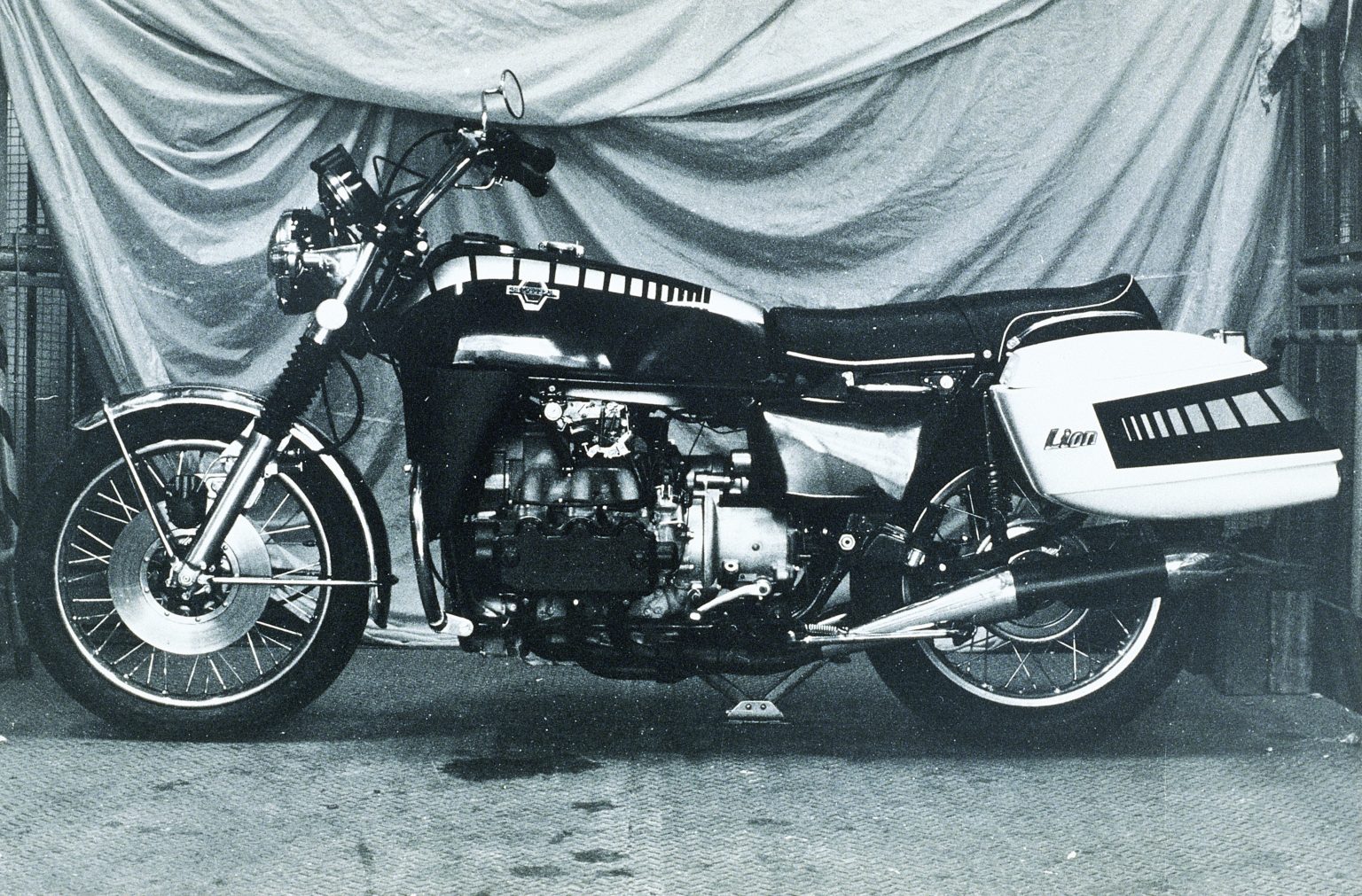
As it turns out, Honda’s engineers were already working on an interesting project, from Honda:
Honda’s journey toward creating the ultimate touring motorcycle began in the early 1970s with the ambitious M1 prototype—an experimental machine that would lay the conceptual foundation for what was to come. Internally known as the “King of Kings” project, the M1 was developed under the guidance of Soichiro Irimajiri, the visionary engineer behind many of Honda’s most legendary racing engines.
Though widely believed as such, the M1 was never intended as a direct precursor to the production Gold Wing, but rather as a bold engineering exercise. It featured a groundbreaking 1470cc liquid-cooled, horizontally opposed flat-six engine paired with shaft drive—a configuration aimed more at exploring the limits of motorcycle performance than production feasibility. While technically impressive, the M1 proved far too complex for mass market realities.
Recognizing this, Honda pivoted its focus and refined the concept into something more practical, leading to the birth of the GL1000 in 1974. Though the production model swapped the six-cylinder for a more manageable 999cc flat-four, many of the M1’s core ideas—its smooth engine layout, low center of gravity, and shaft drive—carried over, influencing what would become a hallmark of long-distance motorcycling.
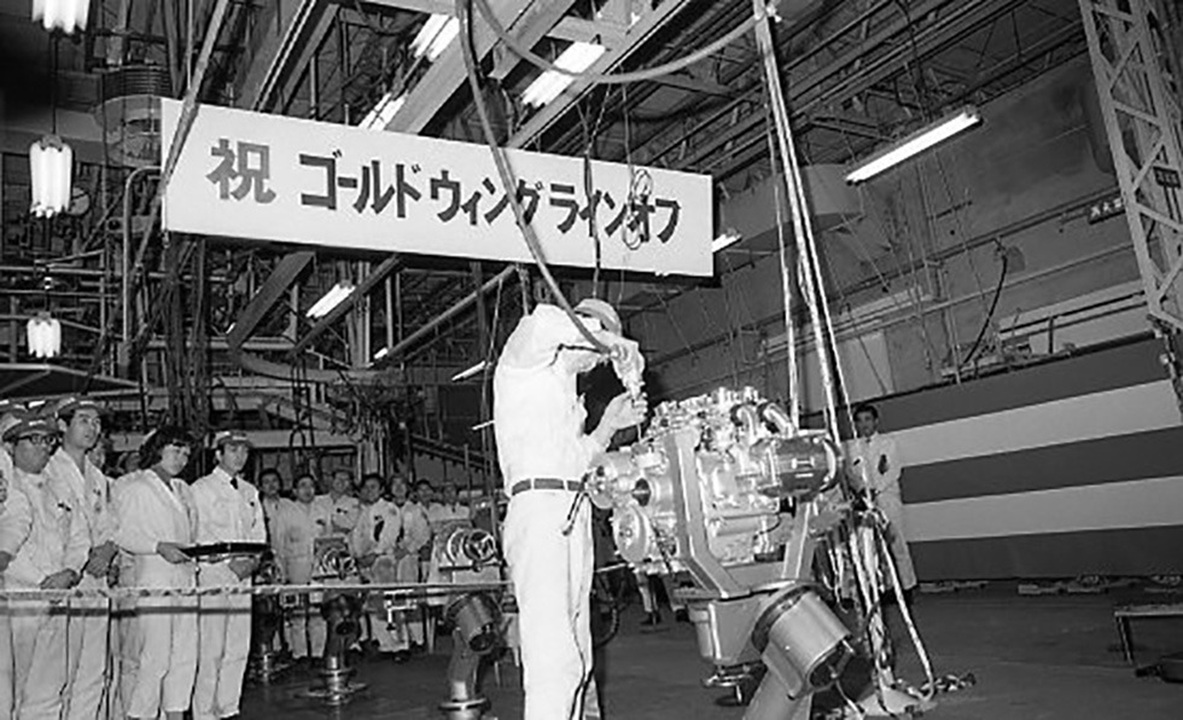
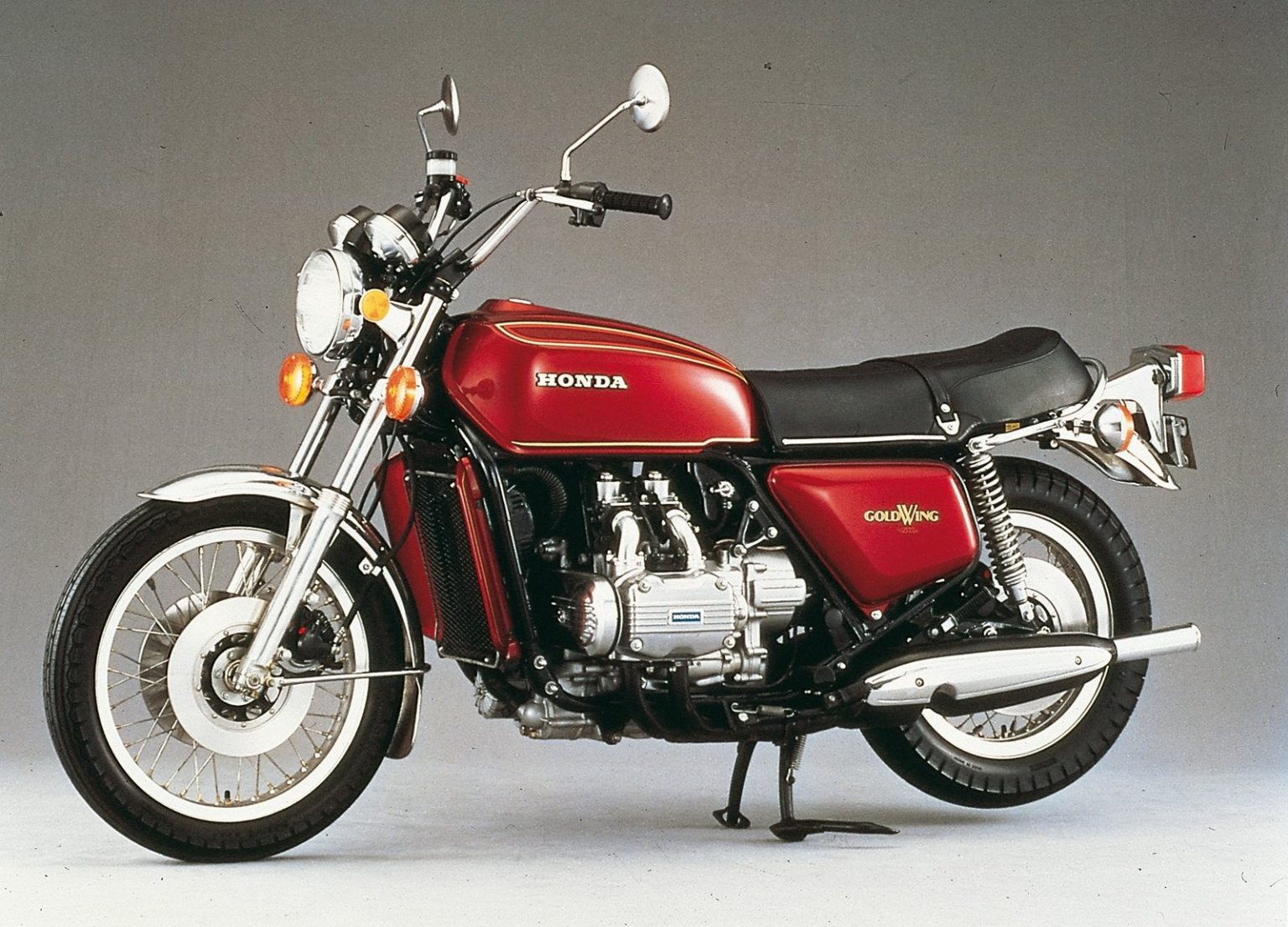
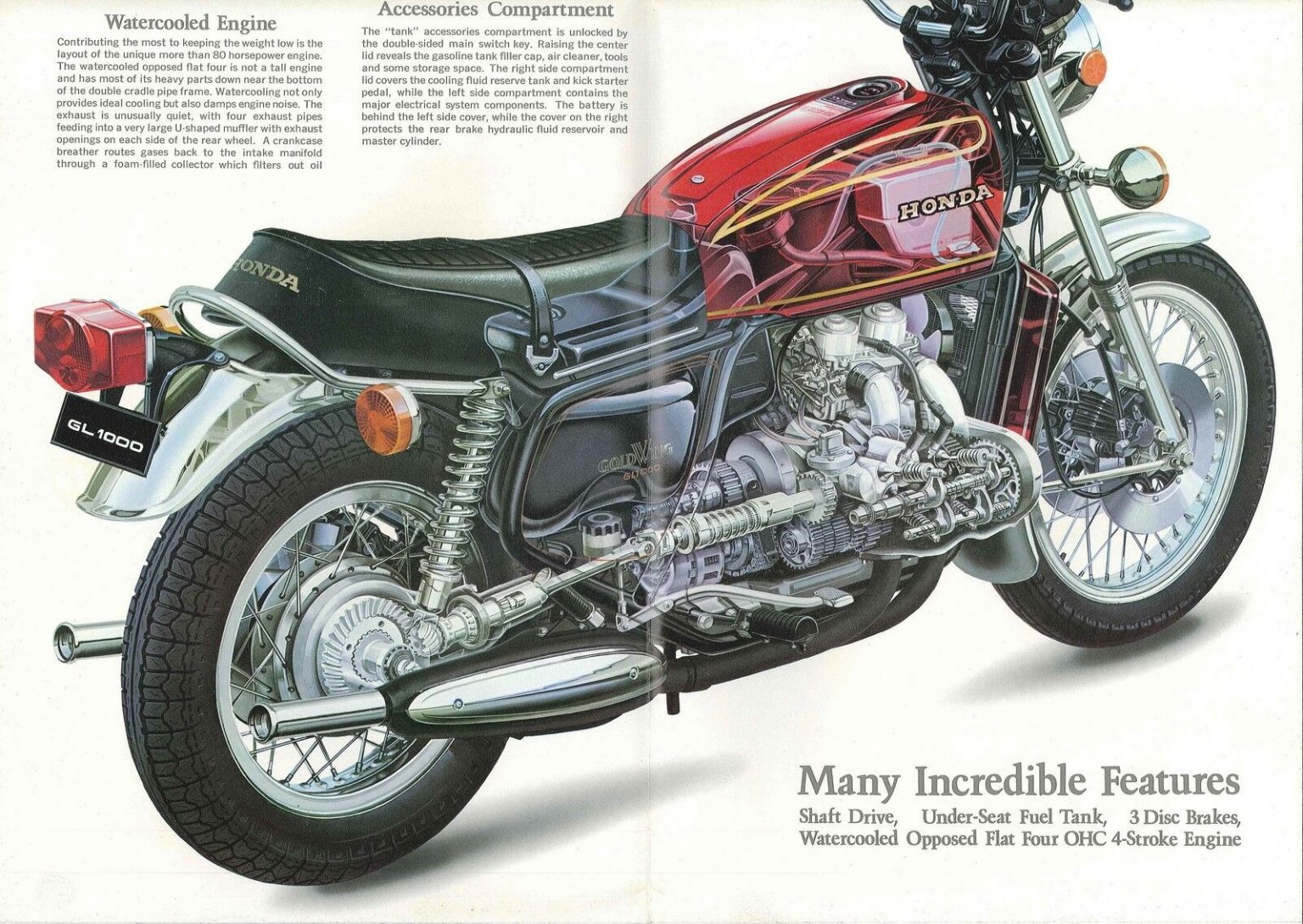
What’s interesting is that the very first Gold Wing, the GL1000, wasn’t designed to be strictly a touring machine. Honda wanted its ultimate bike to be fast, with great handling to boot. In Honda’s own retrospectives, it calls the original Gold Wing a “supersport” motorcycle, which is not something that you would say about the modern “Winger.”
In adapting the M1’s concepts to the Gold Wing, Honda’s engineers learned a few things. To accommodate the chunky flat engine, the rider would have to sit in a rather uncomfortable position. Thus, the big flat six became a more manageable 999cc flat four. This engine was a weirdo for Honda. Soichiro loved air cooling, but this bike had a big radiator and liquid coolant. It also utilized single overhead camshafts, and instead of noisy cam chains, the motorcycle utilized cam belts. That engine also featured a cush drive on the end of the crankshaft for smoothness. This was practically unheard of for Honda and rare in the motorcycle world.
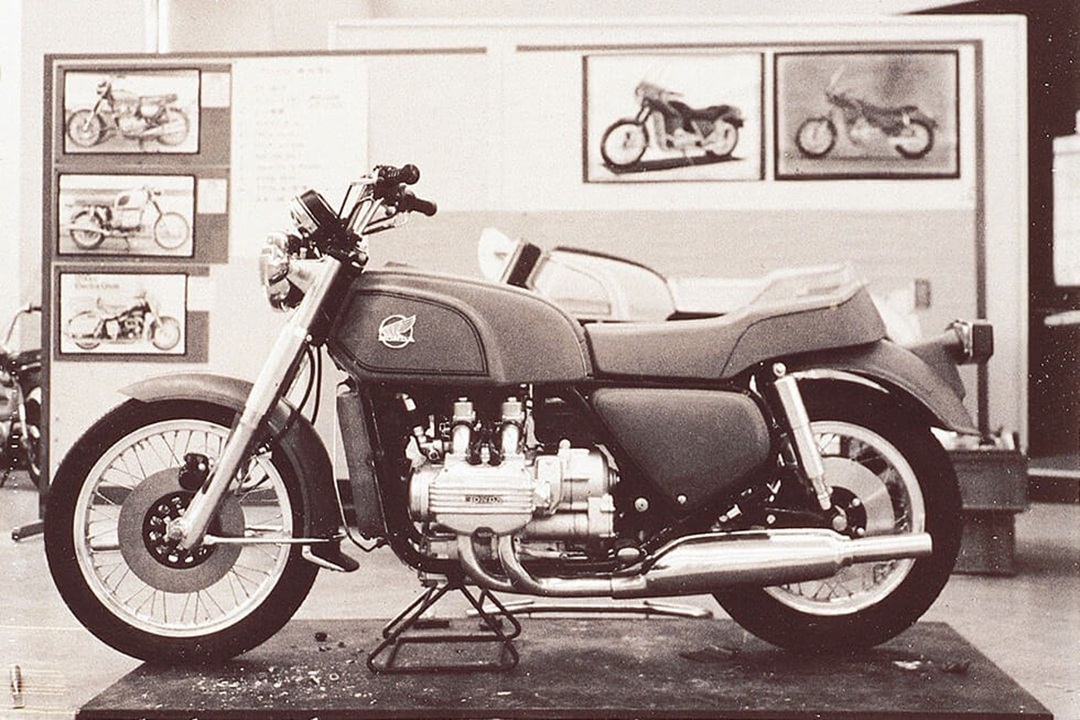
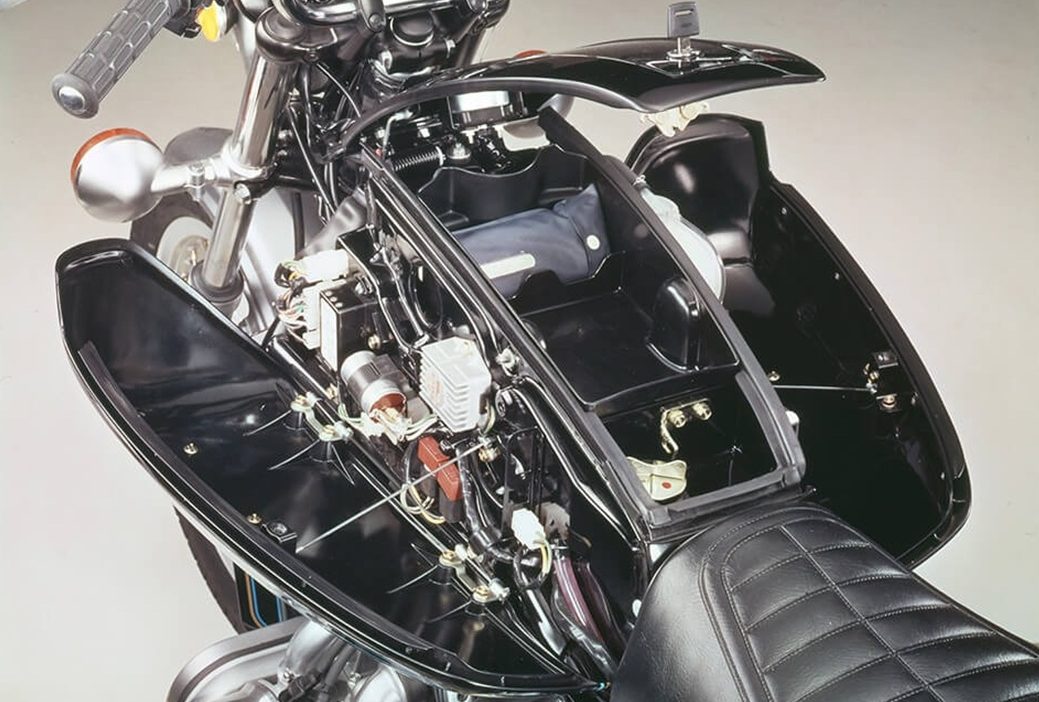
In 1974, this smaller engine was bolted into a steel, full duplex cradle frame. Honda’s engineers didn’t stop with the flat four. Instead of fitting the bike’s tank right up top like most bikes, engineers put the fuel tank under the seat behind those huge side covers. The more traditional-looking “tank” was now a glovebox that contained the motorcycle’s tool kit and an emergency kick starter. Honda also stuffed the coolant reservoir and fuses in there. Putting the fuel tank under the seat and behind the engine helped keep the bike’s girth down low and better distributed, allowing the Gold Wing to feel lighter than its 650 pounds of wet weight.
Straddling The Lines
When the GL1000 launched in 1975, it was a bit of a confusing machine. The Gold Wing had that super buttery-smooth flat four, but it pumped out a sporty 78 HP and stopped on a triplet of disc brakes. It had cruiser-ish style and required low maintenance — perfect for touring — but a seat that some riders felt was too firm. Honda also left the bike totally naked.

The original Gold Wing’s unique straddling of two entirely different missions meant that the motorcycling press really didn’t know what to make of it. Here’s commentary from Cycle World:
Cycle World’s test in April of 1975 never painted the GL as ground-breaking; we referred to it on the cover simply as “Honda’s 1000cc Four, The Gentleman’s Choice,” and the Gold Wing name was mentioned just once in the entire issue. Only in the test’s conclusion did we write that the bike “may soon be the touring machine on American highways.”
At Cycle Guide magazine, where I was editor at the time, we praised the bike’s smoothness and powerband but stopped short of predicting its eventual dominance as a long-ride partner. And although the GL’s promotional materials occasionally mentioned touring, Honda offered no optional saddlebags, fairing, or even a windshield.
Some journalists compared the GL1000 to being a two-wheeled car. Meanwhile, Hagerty UK notes that one publication even lost Honda as an advertiser because of a negative review:
“Two Wheeled Motor Car?” sneered Bike, Britain’s best-selling monthly, before describing the Wing as ugly, overweight, too complicated and boring. That was enough to lose the magazine Honda’s advertising for a year.
While the bike mags might have been confused, Americans were not. The Gold Wing offered an interesting proposition. A 1975 Harley-Davidson Electra Glide was $3,555 ($22,106 in 2025), while the BMW R90/6 was $3,395 ($21,111 in 2025) and the Moto Guzzi 850-T was $2,699 ($16,783 in 2025). A Honda Gold Wing was more expensive than a Moto Guzzi but less expensive than a fully faired Harley at $2,895 ($18,002 in 2025).

Riders quickly fell in love with the Gold Wing’s effortless power, ability to ride crazy distances in a single ride, and nearly turbine-smooth engine. Suddenly, you could ride across the country at a moment’s notice, and your hands would still be vibrating long after you kill the engine. Your bike also wouldn’t be leaking oil or breaking down, either. Honda sold 13,000 Gold Wing units in America in 1975 alone.
As for touring gear, the aftermarket easily filled in the gap, and riders soon loaded their Gold Wings up with windshields, cases, and other road-trip-friendly bits. In a way, the Gold Wing was a learning exercise for Honda. Through the GL1000, Honda learned that people did adore the sporty parts of the Gold Wing, but wished it were also more road-trip friendly. Entirely by accident, Honda created a new kind of touring machine. The company might have sought to create a supersport for Americans, but instead, it found the formula for a quick, luxurious, and comfortable tourer.
The Gold Wing Finds Its Way
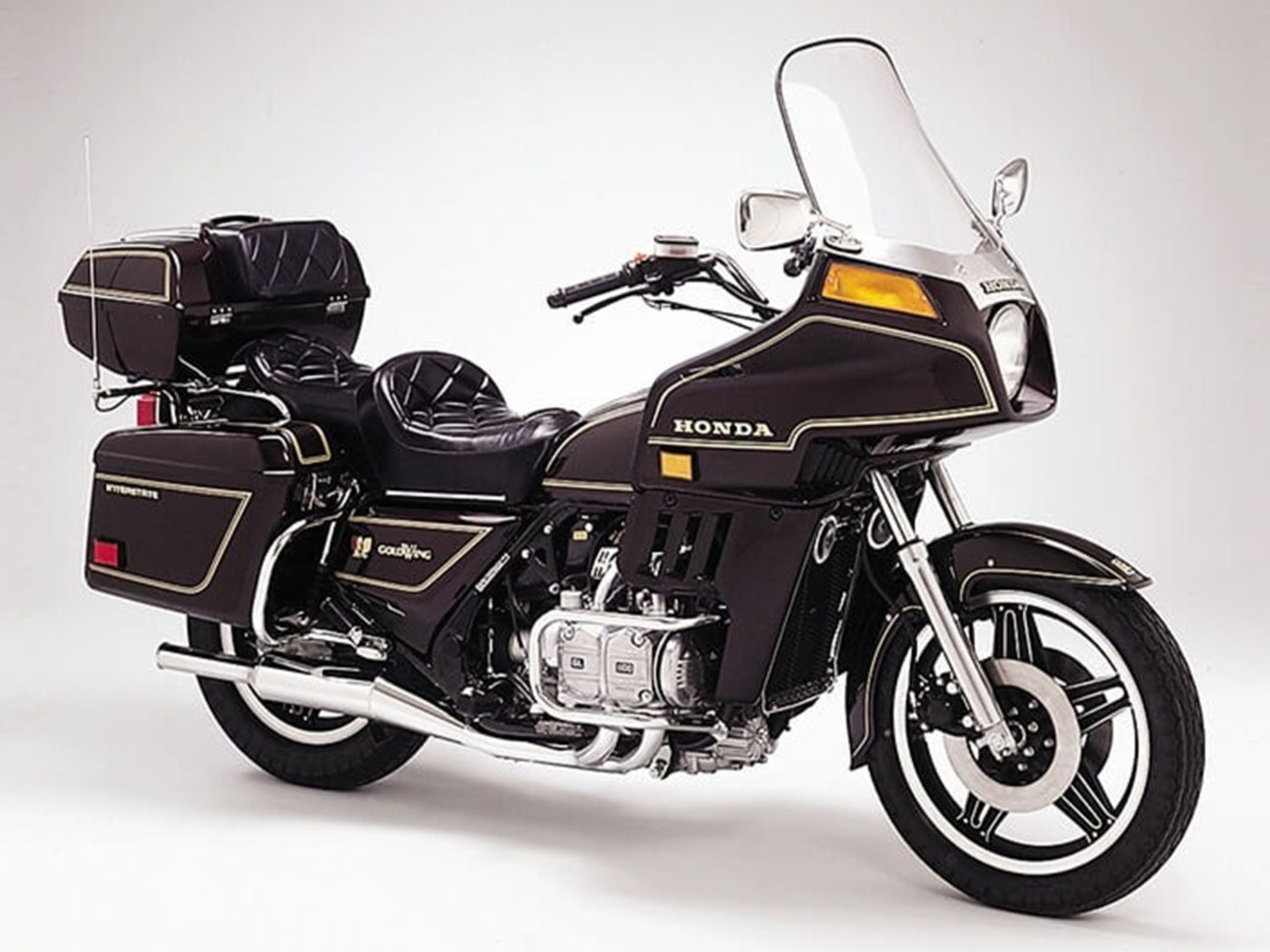
In 1980, Honda implemented those findings in the GL1100. From Honda:
The 1980s ushered in an era of sophistication for the Gold Wing with the introduction of the GL1100. An improved Gold Wing with several advancements, the GL1100 featured a larger 1085cc engine, longer wheelbase, electronic ignition, and improved suspension. This era saw the factory introduction of fairings and hard luggage and innovative features like an onboard air compressor, adjustable rear shock, and fuel efficiency improvements. This further cemented the Gold Wing’s reputation for long-distance comfort and reliability.
The GL1100 era came with various model options, including the standard GL1100, the GL1100 Interstate, and the GL1100 Aspencade. Each model featured unique amenities to cater to the preferences of different riders, such as the introduction of color-matched factory fairings, saddlebags and trunk, built-in stereo systems, and digital instrumentation. This wide array of choices expanded the Gold Wing’s appeal to an even broader range of enthusiasts.
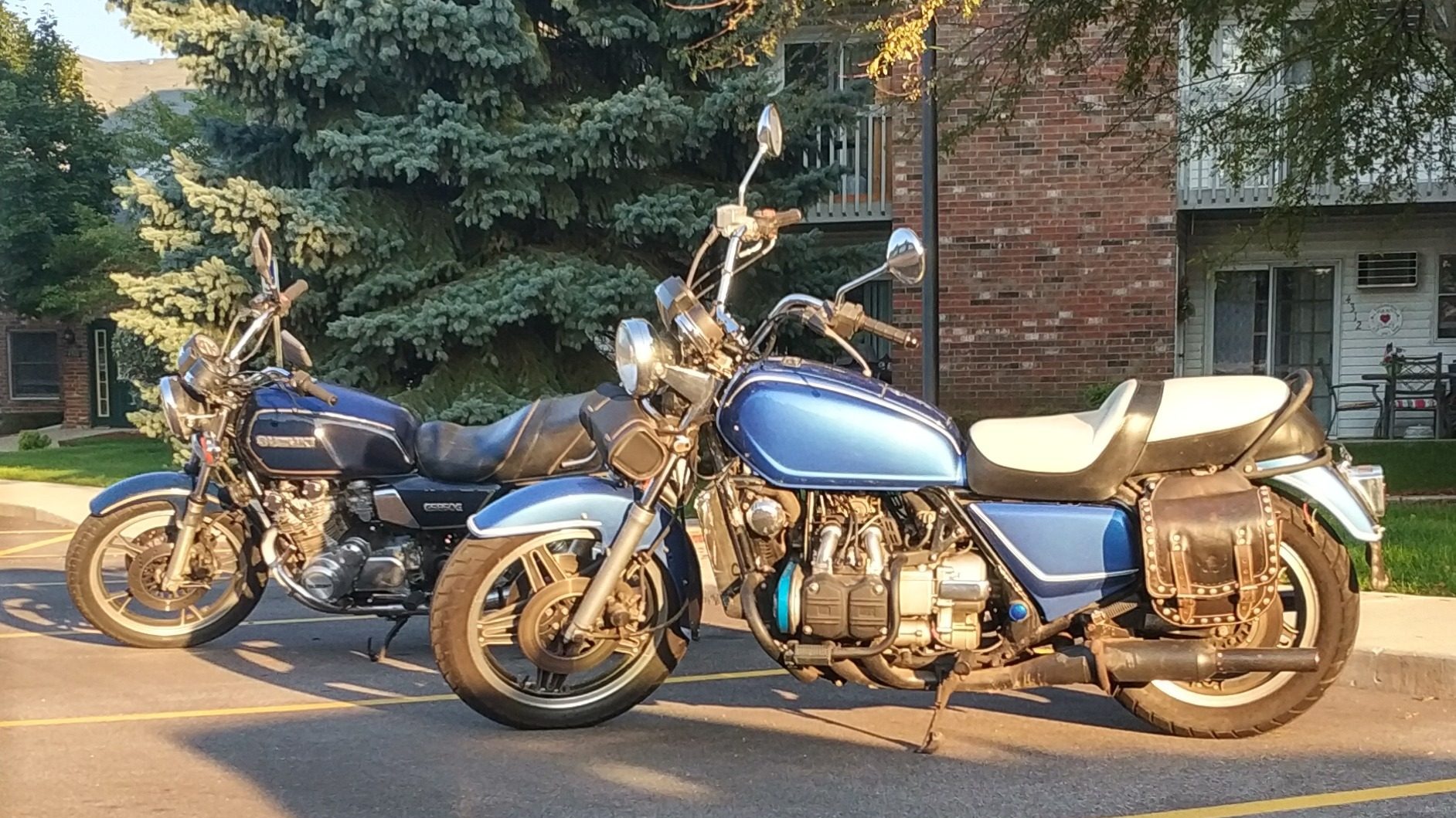
I owned a naked GL1100 before, and it was an absolutely stellar machine. It was a motorcycle that was so comfortable that I was able to ride it for hundreds of miles at a time, even in the winter. Its flat four transmitted barely any vibration at all to the handlebars. For me, the best part was the engine’s sound. Mine had a custom exhaust and reminded me of some of the greatest hits of an air-cooled Volkswagen, but a bit more refined. I’d probably still have my GL1100 today if it weren’t for the fact that it blew its head gaskets and starter clutch at about the same time, which would have required a major teardown to fix that. I paid a whole $950 for the machine, and I think I got my money’s worth.
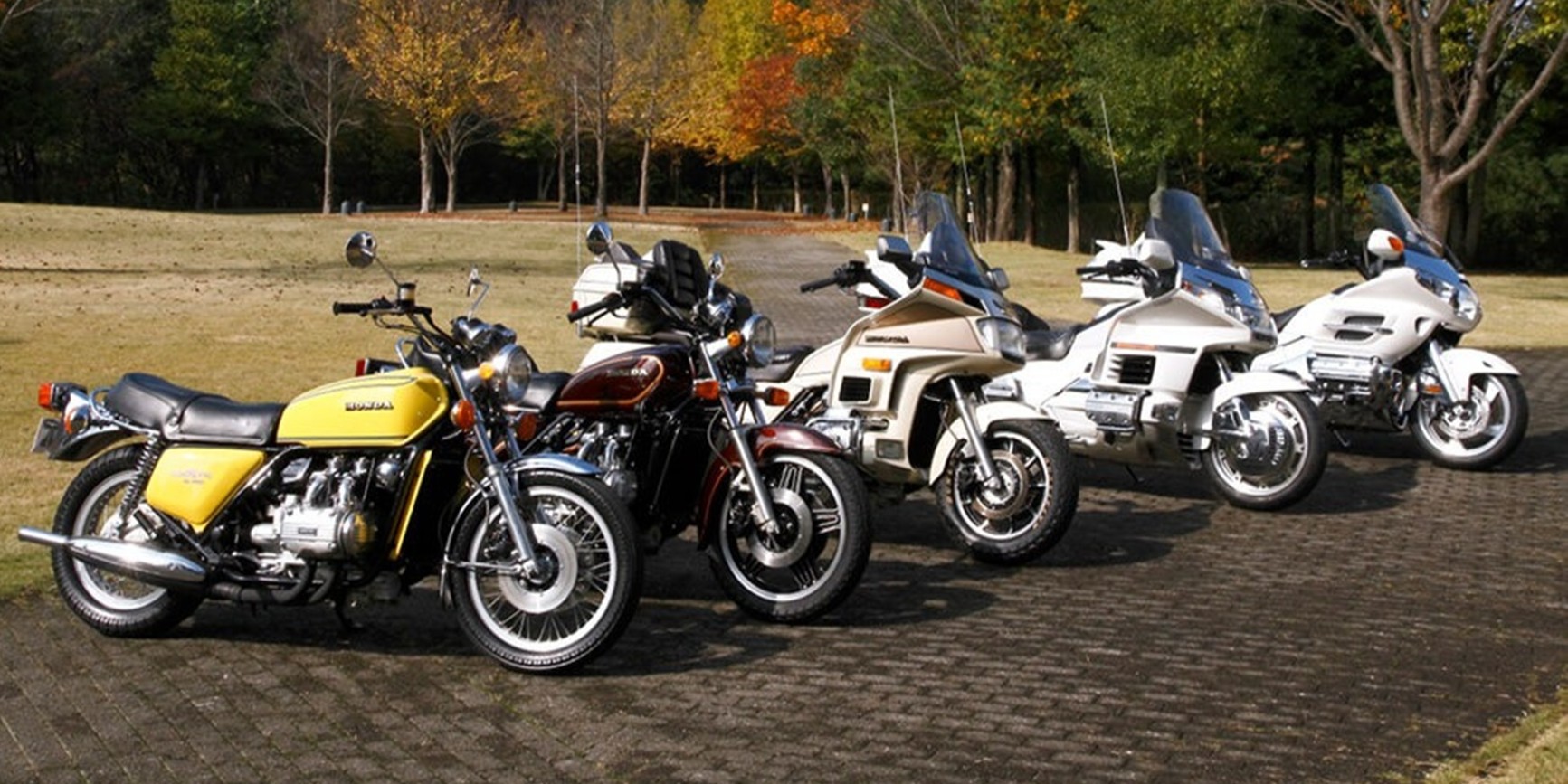
The standard set by bikes like the GL1100 was continued through successive generations. The Gold Wing would get larger, more comfortable, more luxurious, and more advanced. To many, the Honda Gold Wing is the standard in touring. Basically, if you aren’t criss-crossing the country on a big Harley, you’re probably on a big Honda.
Returning To Its Roots
In 2018, Honda launched the sixth and current generation of the Gold Wing. Honda said the 2018 bike was the first all-new Gold Wing since 2001, when Honda released a Gold Wing with an 1800cc flat six.
This time, Honda also flipped its script a little bit. A rear trunk and side cases had been standard equipment for Gold Wings since the 1980 Gold Wing Interstate. However, by the late 2010s, baggers — touring motorcycles with an emphasis on design, featuring hard side bags and a large front fairing — were taking off, and Honda capitalized on the movement. The new Gold Wing came with the top case and side cases just as it had for decades by that point. But Honda also offered a new version that had only side cases, which brought the Gold Wing’s visual weight down.

But this wasn’t all. Honda had recognized that, in making each Gold Wing generation more luxurious than the last, the Gold Wing lost its reputation for sportiness, and it instead had a reputation for being a bit of a two-wheeled car or a “couch on wheels.” Honda didn’t like this new look, and the sixth-generation Gold Wing was designed to be a bit of a return to the Winger’s roots.
Honda started with the chassis. The current Gold Wing sports an aluminum twin tube chassis, which, thanks to finite element analysis, Honda was able to get to weigh less than its predecessor. The suspension is also fascinating, as the Gold Wing sports a double wishbone front suspension with tie rods. This, Honda says, gives the rider the best of both worlds with ride comfort and handling.
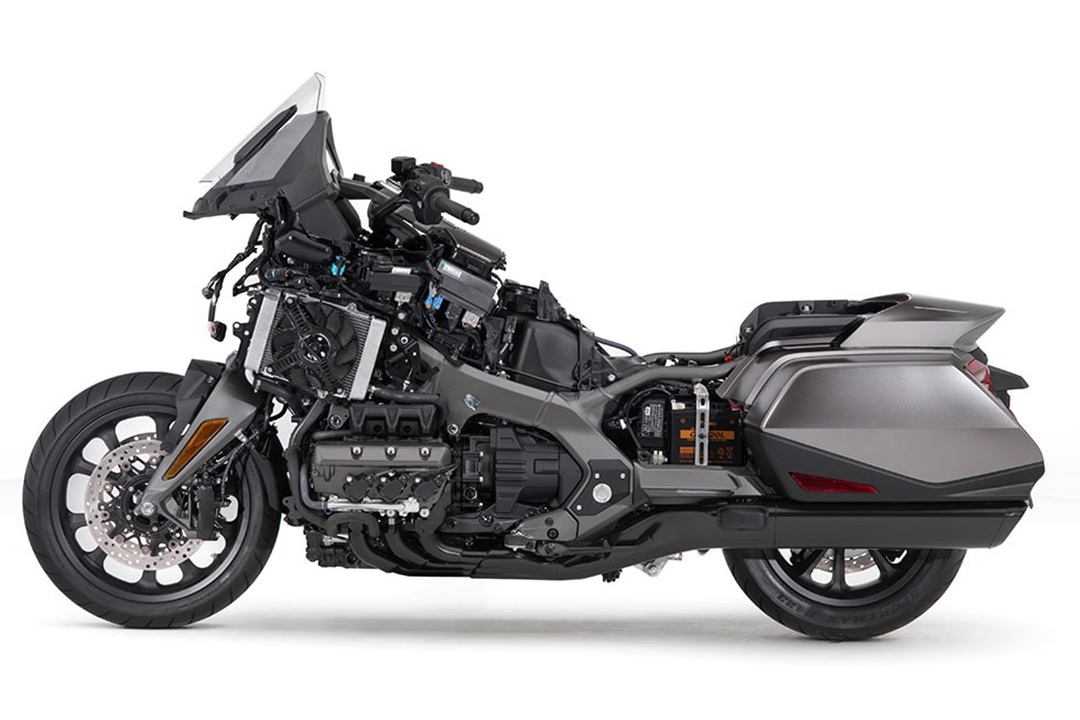
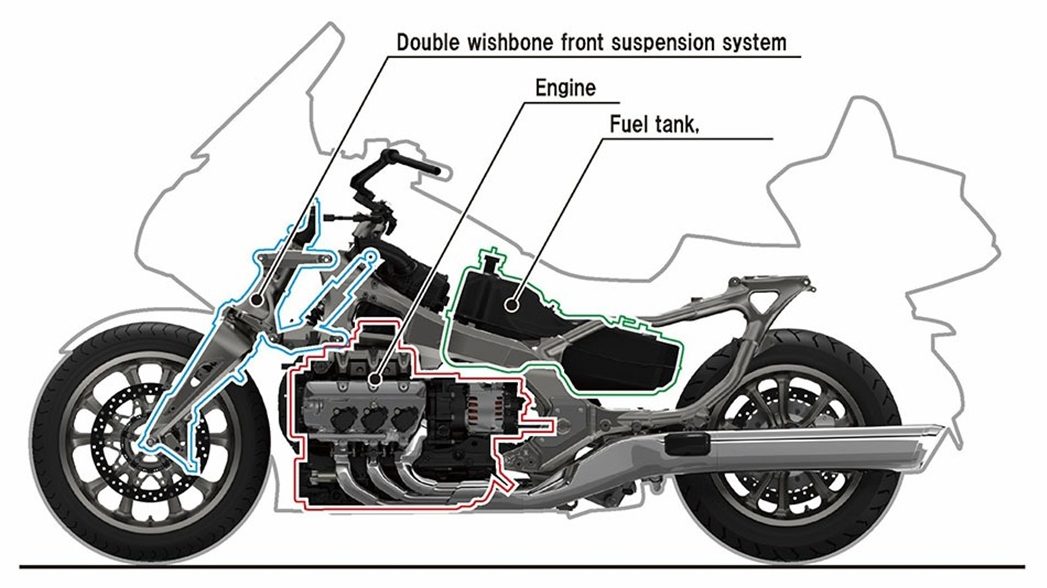
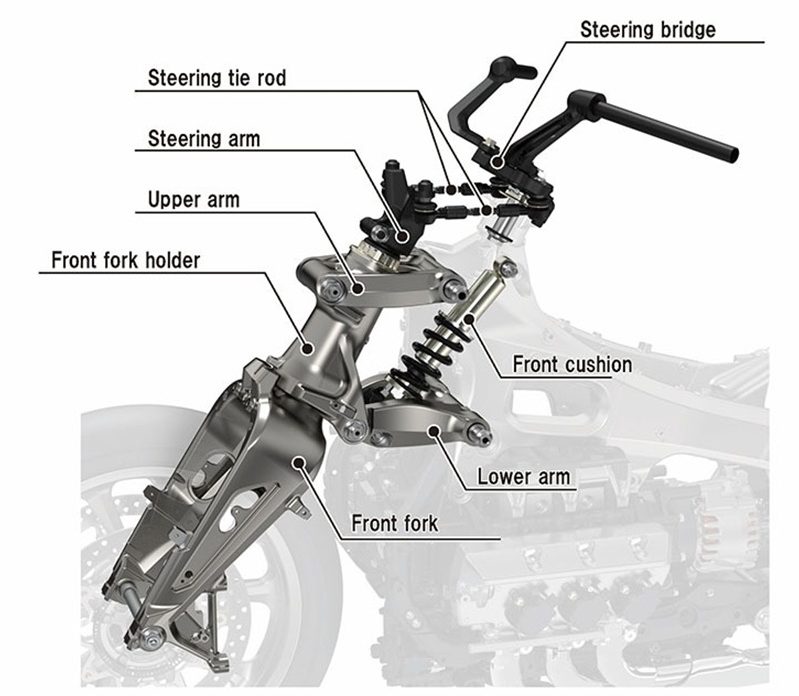
Bolted to this chassis is Honda’s characteristic four-stroke flat six, but even this saw great changes. The big change, Honda says, was the adoption of its Unicam, which Honda describes as:
Honda’s innovative cylinder heads combine single- and double-overhead-cam designs, resulting in a compact engine that saves weight compared to traditional dual-overhead-camshaft motors. The narrow valve angle and flattened combustion chamber facilitate better ignition flame propagation, allowing for a higher compression ratio, improved engine efficiency, and increased power output. With the camshaft positioned lower in the cylinder head, the engine design contributes to a lower center of gravity, enhancing overall handling and stability.
For the Gold Wing’s engine, adopting Unicam meant that the 1833cc engine was able to lose 13 pounds of weight. It was also able to become physically smaller, too. Add the weight savings up, and the new Gold Wing weighed 83 pounds less than the fifth-generation model. In a world where everything gets bigger, losing 83 pounds is a huge deal.

The engine isn’t a slouch, either, with its 120 HP and 126 lb-ft. Shifting comes from your choice of either a six-speed manual or a smooth seven-speed DCT. The lightest of the new Gold Wings weighs 802 pounds, 200 more than the 1975 model, yet they’re still quick. A new Gold Wing can hit 60 mph in the mid-3-second range and race on to a top speed of 130 mph.
Honda didn’t forget the luxury either, of course. These come with Apple CarPlay, Android Auto, reverse, cruise control, ride by wire, an electrically-controlled windscreen, a big central dash display, 55-watt speakers, heated grips, and LED lighting. They’re also tech-heavy with electronic suspension control, ABS, Traction Control, Hill Start Assist, and TPMS. The options list is insane and includes everything from a garage door opener and chrome accents to carpeting for your cases.
A Well-Deserved Celebration

Honda is celebrating 50 years of the Honda Gold Wing this year, and it recently invited journalists to experience the difference five decades can make. Pretty much all of America’s major motorcycling magazines seem to love it. Here’s just a snippet of Motorcycle.com‘s great review:
On our subsequent ride from Barber Motorsports Park in Birmingham, Alabama, to our destination in Daytona Beach, Florida, (more on that in a minute) I spent the first day aboard a seven-speed DCT model and the second day aboard a six-speed manual clutch model. Given the choice, I’ll take the DCT for public road riding every time. Depending on the rider mode selected (Tour, Sport, Econ, Rain) DCT will choose the appropriate gear. As aggressive as Sport mode is, DCT isn’t ready for track application even when manually switching gears utilizing the electronically selectable buttons on the left handlebar. There’s no doubt Honda didn’t intend for DCT to be used competitively, or for the Gold Wing, whether 1975 or 2025, to be on a racetrack, so why are we spinning laps around Barber in the first place?

Over the two-day, 673-mile route from Bama to Daytona, I appreciated the placid ride afforded by the double-wishbone front suspension and the unobtrusive way the DCT chose the correct gear for the situation. The DCT worked well even when performing tight U-turns, requiring only a little rear brake application to smooth throttle inputs. The electrically adjustable rear shock is great for quick preload adjustments, but this motorcycle should be outfitted with semi-active suspension. Cruise control has been on the Gold Wing’s features and benefits menu since the 1985 Limited Edition GL1200 model, which points to another missing modern convenience, adaptive cruise control. You’d think Honda would use an auspicious occasion such as a 50th anniversary to leverage the addition of such technologies… you’d think.
Cool mornings and warm afternoons had me shedding layers, closing and opening vents, switching heated grips and seat on and off, and raising or lowering the electrically adjustable windscreen on our ride. Wind protection from the narrower fairing deflects the elements well enough, while the windscreen in the up position creates such a quiet bubble behind it, I had a phone conversation without the person on the other end knowing I was riding 70 mph, which happened to be on U.S. Highway 27 next to the famous Suwannee River.
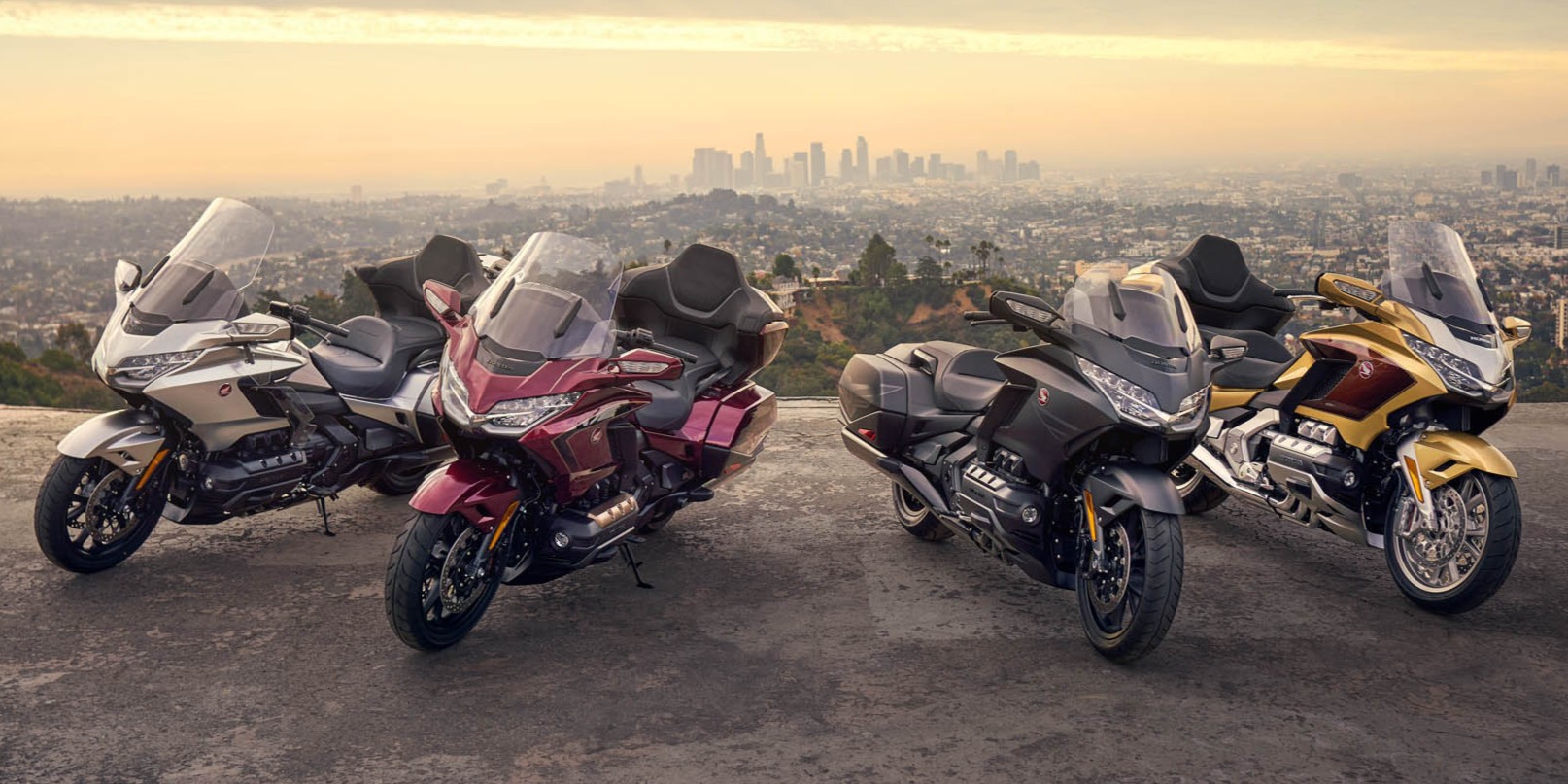
In short, it sounds like the new Gold Wing is so far ahead of its original 1975 model, and remains so good that it’s easy to see why it’s the touring standard for so many. Maybe I can convince Honda to let me take a ride before winter sets in!
Honda is celebrating 50 years of the Gold Wing with the 50th Anniversary Edition. The changes are purely cosmetic and include 50th Anniversary badging, Gold Wing logos, the instrument cluster says “Since 1975” when you turn the bike on, and the Gold Wing’s native navigation has been deleted. You also get a 187-page coffee-table book explaining the Gold Wing’s history, plus a 1:12 scale model depicting the 1975 GL on one side and the 2025 GL on the other.
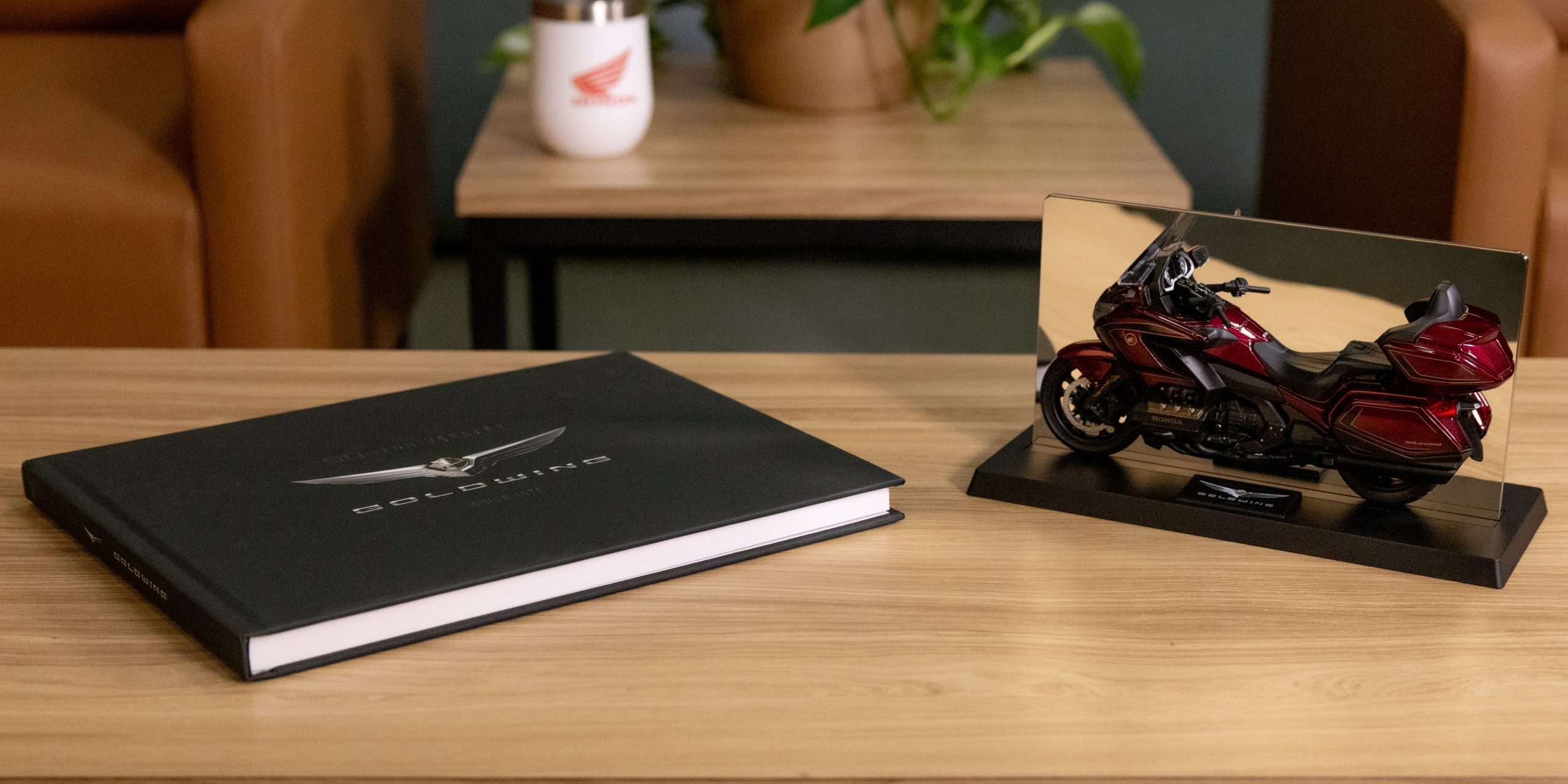
Pricing starts at $25,200 for the standard Gold Wing 50th Anniversary Edition and rises to $33,500 for the Gold Wing Tour Airbag DCT 50th Anniversary Edition. There’s no getting around it, the Gold Wing is an expensive bike. However, for thousands of riders, nothing Harley-Davidson or Indian makes can come close to the Gold Wing’s combination of speed, comfort, and handling.
Five decades ago, Honda changed motorcycle history, and it was technically by accident. What was once supposed to be “the ultimate motorcycle” and a supersport bike ended up being the first name in long-distance touring. Honda’s history is full of cars and motorcycles that changed the game, and I think this 50-year celebration is well-deserved. I can only hope that, 50 years from now, I’ll be able to see the Gold Wing hit its 100th birthday and be amazed at what Honda comes up with next.
Top graphic images: Honda; GoldWingParts.com



Growing up my dad always had a Goldwing. My sister and I grew up on the back of his Interstate on the 80s. He’d throw both of us and our luggage back on the back of his bike and haul us back to his apartment on his weekends, safety standards were different back then. Later he upgraded to an Aspencade and kept riding up until just a few years ago. I’ve always joked that the 2-wheeled Winnebago was for older dudes while I zipped around on my Nighthawk but I’m starting to reach that age. I can see myself shopping for a Wing of my own in a few years maybe.
I can’t be the only one to think adaptive cruise control on a bike is a terrible idea, right? Maybe I’m just wired differently and for a different style of riding, but I am never not scanning, watching, attentive to the hilt when riding. I don’t think I could handle, and it is alien enough to be confusing to me, handing off some arbitrary fraction of my attention. (FWIW, I pretty much feel the same way about anything more advanced than cruise control but less than full autonomous operation in other vehicles, too. But on a bike, the consequences for zoning out can be dire.)
I owned a ’74 for a summer and loved it. I owned a few old 2-stroke bikes, a Kawasaki KZ900, and a ’91 Ducati 900ssFE at the time but the Honda got the most use. It had plenty of power, cruised well, and the low COG meant that even the mainly city miles I would ride weren’t an issue. It had a few custom “bobber” modifications which felt cool at the time. It only went away because I move across the country and sold all the bikes in the process.
My dad has owned both a GL1500 and 1800 (5th gen), and they’re pretty great bikes. Really my only complaint with the 1800 was that it still only had a 5 speed gearbox. By that point, I feel like a 6 speed was standard on sport bikes, so it felt like an oversight not to give your touring bike an extra gear. Especially to move over 1k lbs once you add rider and passenger.
I’d love to ride a newer one, I’m very curious how the handling feels with that suspension setup.
I had 5th gen GL1800 for a couple of years and did some multi-day trips with it. It was a heavy bike at stop lights, but once above 5 MPH felt much lighter and even agile. When romped on, it sounded like a Porsche six-cylinder. But that brings up the biggest disappointment, at least from then. Redline was 6,000 RPM and fuel cutoff came maybe 200 RPM after that. So that was a party pooper.
I bought it used, and it had a factory-installed CB radio which had a laughable range of maybe five miles. It also had a reverse gear using the starter motor to back out of places that human legs should not have parked it.
I also had a Suzuki V-Strom 1000 and to be honest the Suzuki rode more comfortably over rough pavement. Two different bikes with totally different characteristics. But both enjoyable.
Wait, so what exactly did Honda do for touring motorcycles that BMW didn’t do first?
Ok, I guess they did a 4 cylinder water cooled engine first? But the /5 and /6 were excellent and reliable touring capable bikes long before the GL1000, with similar power: weight ratio, and the R100RS was fully faired in 1976, 4 years before the GL1100. I suppose we wouldn’t have the K bikes from BMW without the Gold Wing?
What I see Honda doing is bringing the BMW type experience down to a lower price point, not necessarily being groundbreaking in what they did.
When I rode a GL1100 I was not impressed. It is the worst handling bike I have ever ridden. The noodly fork felt like it was going to kill me in every corner and was entirely inadequate for the weight of the bike. However, the engine was extremely smooth when cruising, similar to how boxer BMWs settle down with vibration right at cruising speed in top gear. No complaints there.
Thanks for the history lesson, Mercedes!
My lead MSF instructor ~20 years ago had a bunch of bikes and a small rental business, but rode the Gold Wing most of the time. Someone in the class called him out, not believing anyone could get through the course on “any motorcycle” as the instructor claimed. Instructor whipped through the course on that 90s GW with such composure and speed it left all of us slack-jawed.
I also didn’t know about the original naked Gold Wings until a couple years ago I saw one street parked in my neighborhood on dog walks. It had the “Gold Wing” on the sides of the tank so had to look it up to confirm it was real when I got home.
No idea if you’re based near Seattle like I was, but had the exact same experience in my advanced rider class, whose (fantastic) instructor also rode his 90s GW thru the figure 8s like he was riding a Super Cub. Learned a lot from that guy and the great class in general.
Mine was around SLC, instructor was from around Farmington or Bountiful area just north.
Bought an ’89 GL1500 for $1200 about a year ago. Spent ~$300 and a few weekends getting it back on the road. Since then I’ve taken it all over the southeast. Somehow it is the most reliable bike in my garage – even with over 109k miles on the odometer.
It’s definitely not a looker – a re-spray sometime in the early 2000s has not aged well – and if you know these bikes you know that it is not always economically feasible to replace the aging plastic panels. I’m currently missing a few of the air vents – which I cannot find out how to replace without replacing the whole panel, but otherwise everything works. (Even the cruise control).
Great bikes. Love the Flat 6 in the 1500. I get to pretend I am cold starting a 911 every morning.
I’ll never own one, but I still find them fascinating. Thanks for the excellent history/overview Mercedes! 🙂
Haha what the hell? Really?
All motorcycles are quick, and have terrible aerodynamics, to get good two up passing at 80+ mph, you need some real power.
I owned a 2018 standard with the manual transmission and it was a dream to ride. I traded my 2012 FLHTC for it during COVID and have never looked back. This Gold Wing makes pretty much any other motorcycle look and feel ancient.
My only gripe was the center screen was not “touchable” as you had to toggle through the menu buttons with your thumb.