


The American superhighway is a legendary marvel of engineering. These highways carry all sorts of cars, trucks, buses, and more safely and quickly across the country. If you’ve driven across Pennsylvania at all in the past 85 years, chances are you probably paid to run on the Pennsylvania Turnpike. This highway might not seem like much today, but when it opened in 1940, it was America’s most advanced highway. Later, it also became arguably one of America’s safest.
America’s superhighways — generally, divided high-speed highways with multiple lanes heading in the same directions — line the country, and enable you to connect any point in America by car with ease. These highways range from the compact, with two lanes in both directions, to gargantuan, with the capacity to move a mind-boggling number of cars per day. America’s widest superhighway is probably a section of Interstate 10 in Texas, where, west of Houston, the highway grows to 26 lanes, if you include frontage roads.


Most Americans probably never think of these highways, except when their respective jurisdictions raise toll rates, or when travel times creep up due to construction or congestion. Certainly, I would be willing to bet that you were not thinking about highway engineering while stuck behind a semi-tractor going 70 mph, that’s passing another semi going 69 mph.
But if you look past all of the boring or aggravating parts about trying to drive long distances, highways are actually awesome. Everything serves a purpose, from the spacing of the lines to the rumble strips lining the shoulder. There’s one highway that Americans can thank for innovations that they take for granted, and it’s the Pennsylvania Turnpike.
Getting Over Mountains Used To Be Hard
The Pennsylvania Turnpike recently celebrated its 85th birthday. Just after midnight on October 1, 1940, the Turnpike opened to the public, and it was an engineering project so grand that it received national attention. Today, the Pennsylvania Turnpike Commission, as well as many historians, consider the PA Turnpike to be the nation’s first-ever superhighway. Let’s take a look at how Pennsylvania made history.
As the story The Building of the Great Pennsylvania Turnpike, by Pauline Shieh and Kim Parry, notes, Pennsylvania’s unique geography had long been a barrier to efficient travel in the region. In the late 1700s, Pennsylvanians rode on horses and in carriages to traverse treacherous, muddy roads and roads constructed out of logs. The greatest challenge to travelers back then was getting over the Appalachian Mountains. These mountains were nearly impassable back then, which made travel between western and eastern Pennsylvania inefficient, if not sometimes impossible.
Engineers throughout Pennsylvania’s history have found clever ways to defeat the mountains. At first, a canal system was constructed, which carried people and cargo through the mountains. Trips across the mountains that might have been near-impossible in the past became executable in only days. The canals were only the start.

In 1834, the Allegheny Portage Railroad began service as the first railroad to traverse the Allegheny Mountains. The Allegheny had only 36 miles of trackage, but it was enough to cross the difficult terrain divide between the Ohio and the Susquehanna Rivers.
In 1854, the Pennsylvania Railroad completed the iconic Horseshoe Curve (above), which greatly reduced travel times through the mountains by reducing the grade that westbound trains would have to climb. The line measures 31.1 miles and was constructed by men using only basic tools and animals. The Horseshoe Curve is such a big deal to traversing the mountains that it remains in heavy use today by the Norfolk Southern Railway. The curve is also considered to be such a marvel that there has been an observation area on the curve since 1879.
The invention of the automobile didn’t change much, at least, not at first. As The Building of the Great Pennsylvania Turnpike notes, early roads in Pennsylvania were primitive, and it would take days for a car to travel through the mountains, if you even made it. Changing weather conditions in the mountains made what few roads existed dangerous. Taking a train was still just the better way.
From Rails To Road
As early as 1910, the Pennsylvania Turnpike Commission says, plans were being pitched on how to fix the problem. The idea was to turn a railway that never really existed into a road. From The Building of the Great Pennsylvania Turnpike:
Two companies controlled the railroad industry on the eastern side of the United States during the 19th century. One was the New York Central & Hudson River Railroad Company (NYC&HR), and the other was the Pennsylvania Railroad Company (Pennsy). During this time period competition within the railroad industry was fierce, and there were several strategies the companies employed to gain a competitive edge. It became common practice to build new tracks, expand railroad tracks, or buy the stock of newcomers to force the competition out of business. These tactics would later provide significant routing for the creation of the PA Turnpike.
At the time, William H. Vanderbilt, the owner of the NYC&HR, felt his company’s main competitor was intruding upon his territory near the Hudson River. In order to gain the upper hand, Vanderbilt decided to construct the South Pennsylvania Railroad. The new railroad was to run directly parallel with the Pennsy’s main line to create competition and prevent a monopoly in that part of PA. A lot of people were excited by this project because they felt the Pennsylvania Railroad’s freight rate was too expensive and the additional competition would prove to be beneficial for all. The project was backed by steel magnate Andrew Carnegie since he too was angered by the outrageous rates the Pennsy was charging for transportation.
However, this project was abandoned in 1885 when J. Pierpont Morgan, a board member of NYC&HR and a powerful financial banker, convinced both railroad companies to come to a truce. Morgan felt that the completion of the South Pennsylvania Railroad would potentially hurt the company’s profits. Upon hearing the news, workers of the South Pennsylvania Railroad simply stopped working and walked away from the work site. This aborted venture of Vanderbilt has become known as “Vanderbilt’s Folly.” The semi-constructed railroad lay unused for over 30 years, until William Sutherland of the Pennsylvania Motor Truck Association and Victor Lecoq of the State Planning Commission decided the PA Turnpike was to be built in the 1930s from Vanderbilt’s abandoned railroad project.
Before the project that would create the PA Turnpike launched, Pennsylvania had attempted other ideas for getting cars through the mountains. One was the Lincoln Highway. Created by Carl G. Fisher and dedicated in 1913, this highway stretches from Times Square in New York City to Lincoln Park in San Francisco. The route, which currently spans 3,389 miles across 14 states, was also a testbed for America’s first superhighway. A stretch between Philadelphia and Pittsburgh operated as a toll road, but the road was peppered with sharp curves and slow speeds due to the fact that its routing followed old wagon trails. Increasingly few drivers were interested in paying for such an experience. The Lincoln Highway would fail to become a superhighway, but it remains historically significant in its role for connecting much of the country.
The challenges of existing highways were part of why the PA Turnpike was such a major triumph. Wagon trails were simply unsuitable as high-speed road networks. Inspiration would come from the Bronx River Parkway in New York. Completed in 1925, the Bronx River Parkway was America’s first express highway. Even as the skies’ clouds drew in and America fell into the Great Depression, cars remained a popular and growing fascination. Yet, Pennsylvania didn’t have a solution for people who would rather drive across the mountains than take a train.
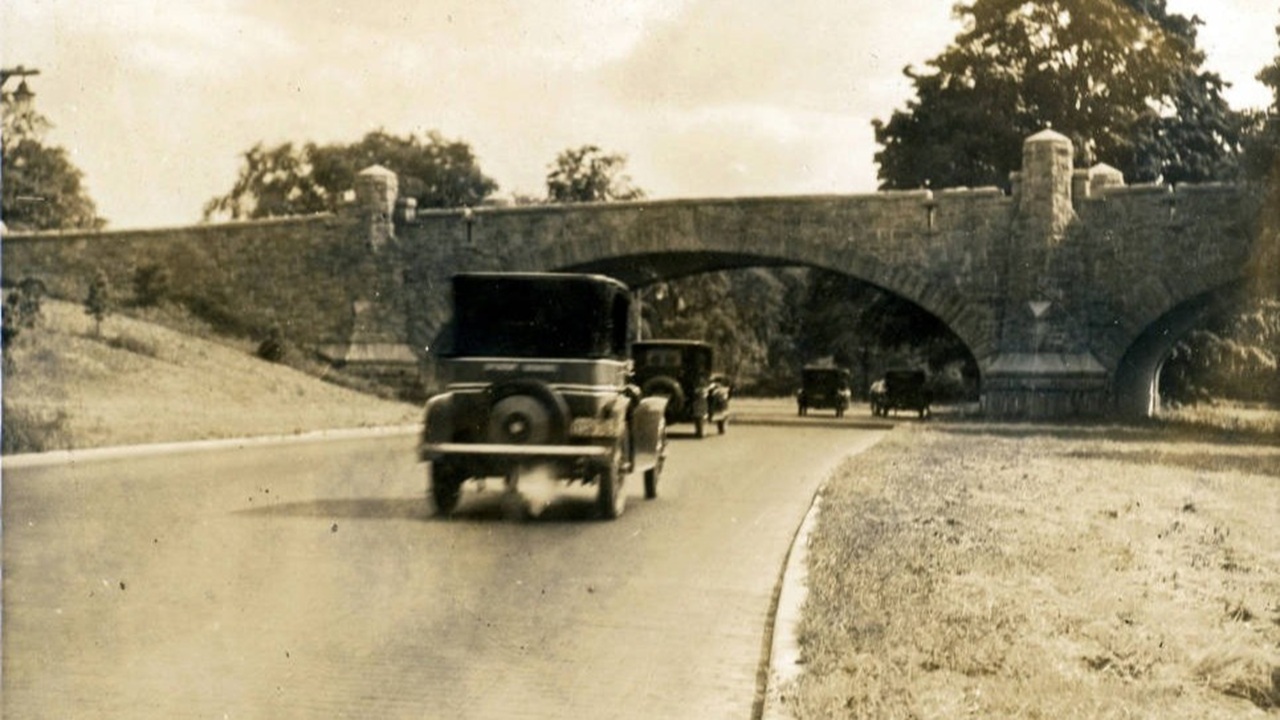
Reportedly, these were among the motivations behind William Sutherland and Victor Lecoq going to state Representative Cliff S. Patterson to pitch their idea for Pennsylvania’s road of the future. When plans were hatched to build a proper road across the mountains, the abandoned Southern Pennsylvania Railroad lines seemed like a good fit. The grades were fit for trains, which meant that cars wouldn’t have much of a problem. Nine tunnels were built for the rail project, too, which could also be repurposed for cars. This would also save money on building costs, which was important because the legislators who greenlit the project did not approve of state funds being used for it. Though apparently, the existing tunnels did need repairs and boring.
America’s Most Innovative Highway
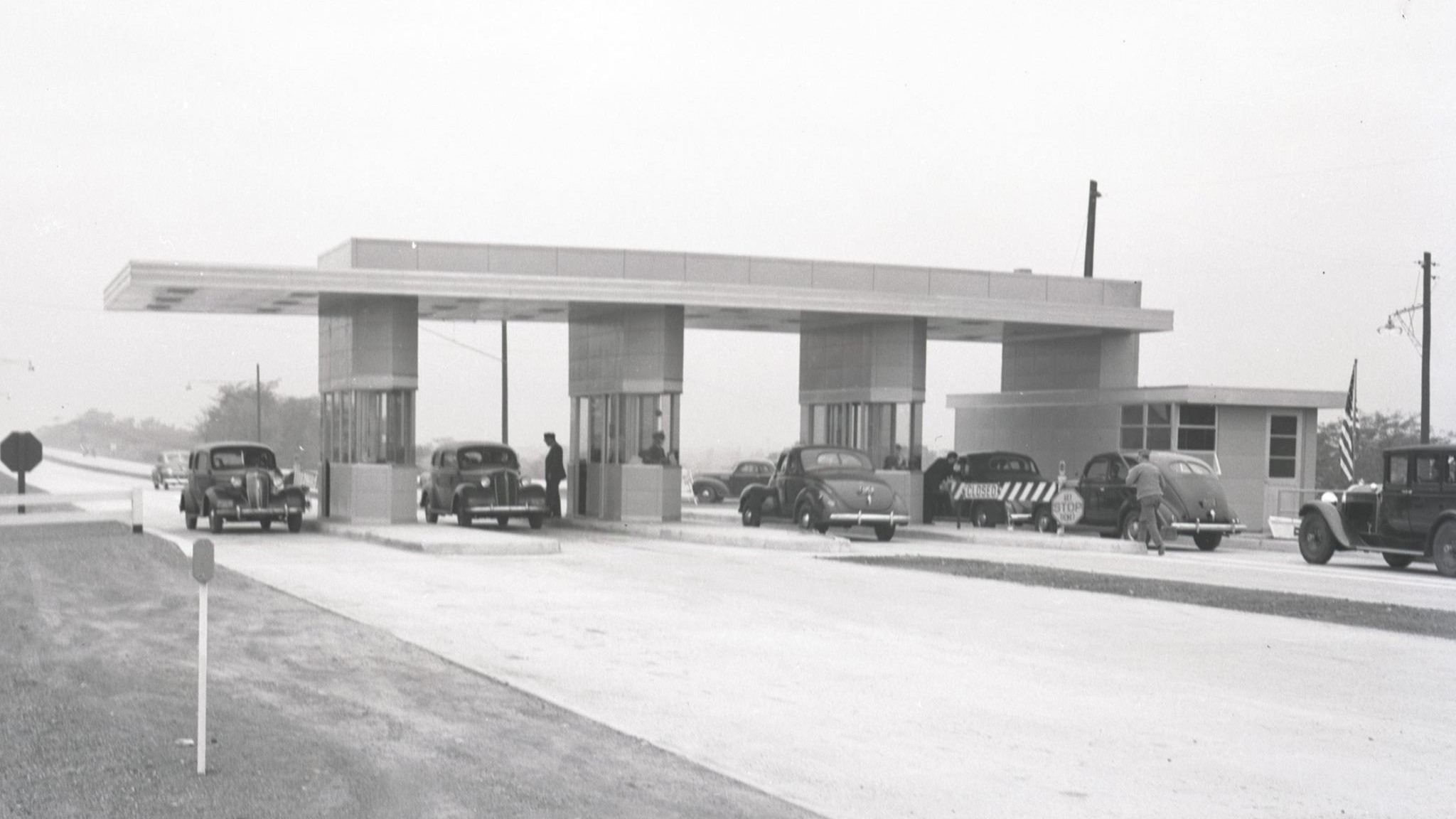
Pennsylvania Governor George Earle signed the Pennsylvania Turnpike Commission into existence in 1937. Reportedly, getting funding for the project was difficult due to its wild ambitions. The plan called for a 160-mile route from Carlisle to Irwin, and a project of this magnitude had never been done before. Luckily, President Franklin D. Roosevelt liked the idea of the Pennsylvania Turnpike as a way to reduce unemployment.
Now with federal government backing, the highway was on, and construction broke ground on October 27, 1938. Six of the nine unused railroad tunnels and some of the rail bed were used for the PA Turnpike. It would take just 23 months for the initial tollway to go from the beginning of construction to being open to the public. Some 15,000 workers and 155 construction companies from 18 states took part in the mammoth project.
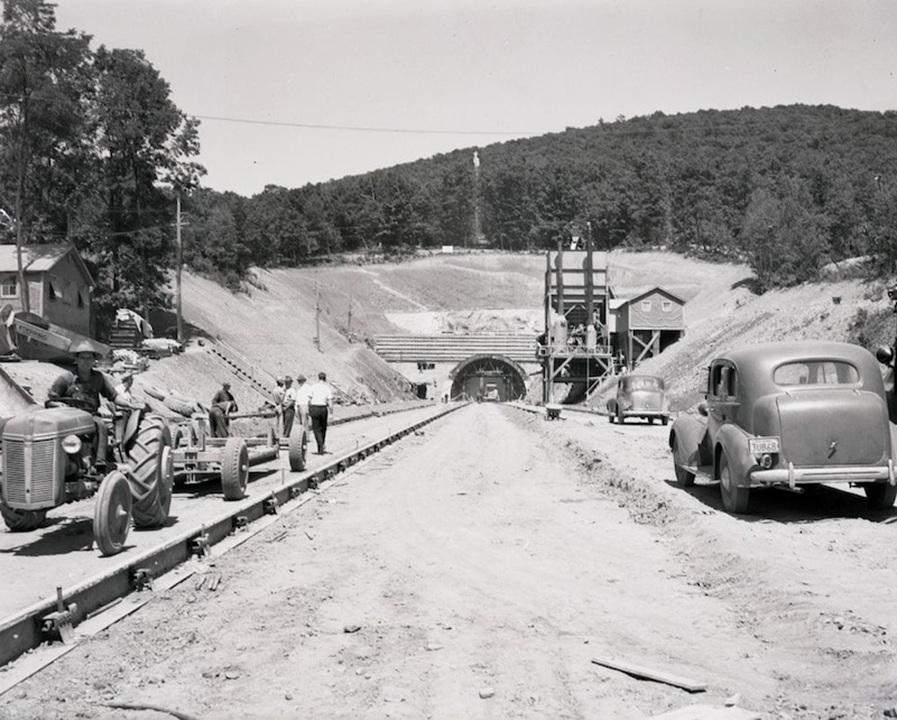
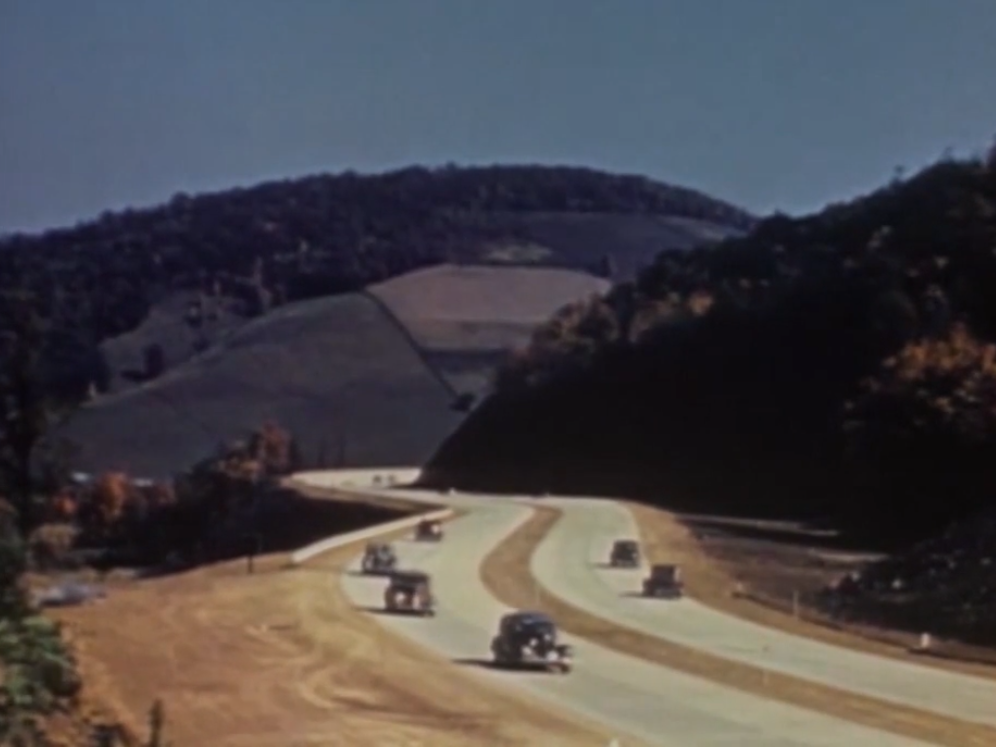
What’s fascinating is that the highway’s engineers didn’t just punch a road out onto an abandoned rail line. The Pennsylvania Turnpike was designed to be the ultimate driving experience. The highways of the 1930s were often built to inconsistent standards, with one highway being built somewhat differently depending on when and where it was built. The engineers of the Pennsylvania Turnpike did away with that, and the entire 160-mile length was built to the same standards.
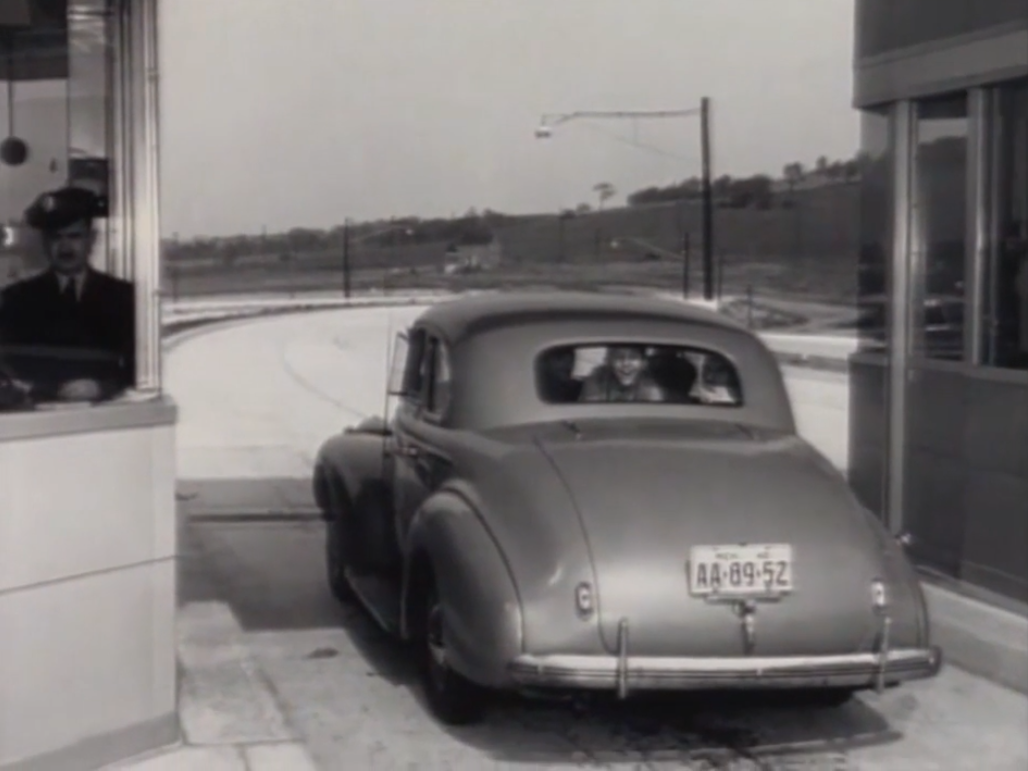
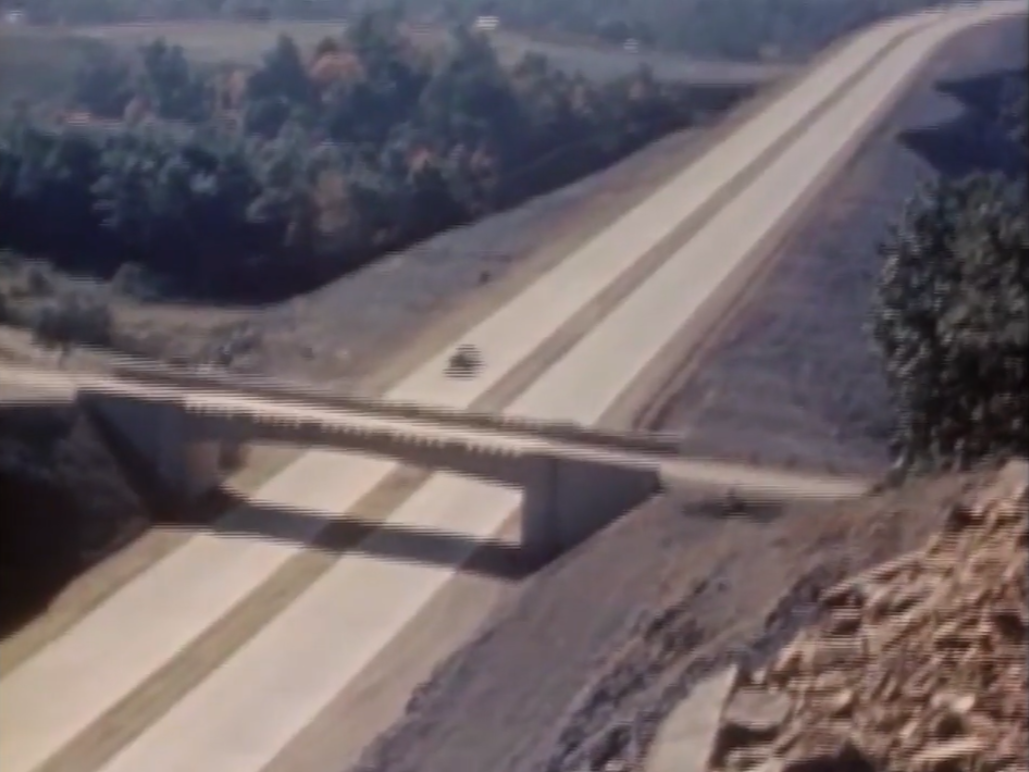
These standards were forward-thinking for their day. The PA Turnpike was designed as a limited-access, divided four-lane highway with no speed limits, no grade crossings, no intersections, and no stop signs. Drivers entering the highway would have 1,200 feet to accelerate, and drivers exiting would have 1,200 feet to brake. No grade was to be greater than three percent, curves were to be wide and banked, and signs were to be big so drivers could read them at high speed. The engineers were even exacting in the pavement design, which was to be exactly 24 feet wide in each direction, plus two 10-foot wide shoulders in each direction.
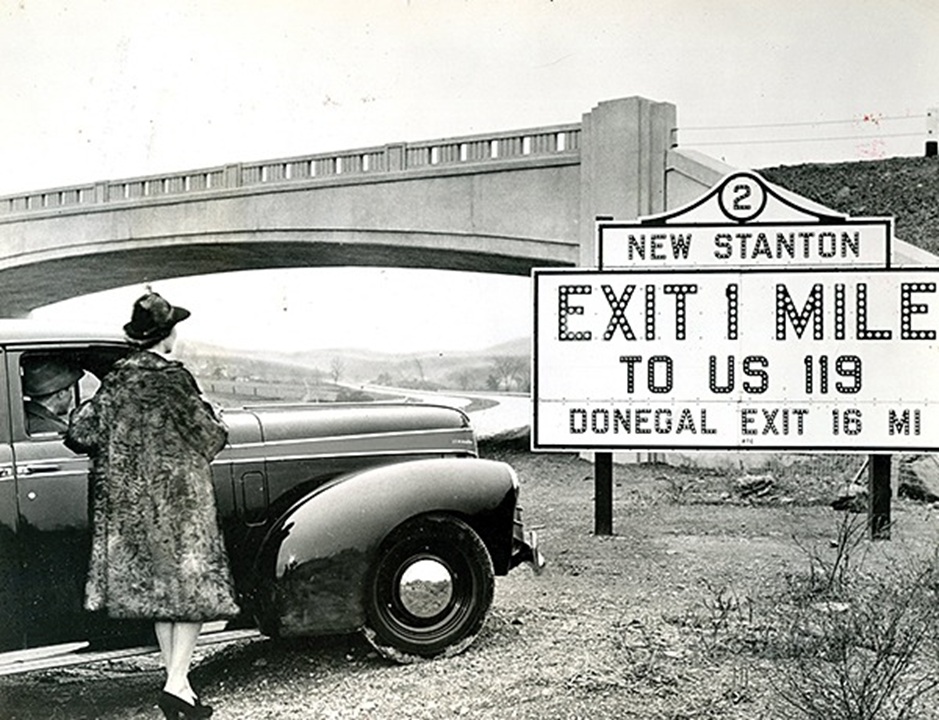

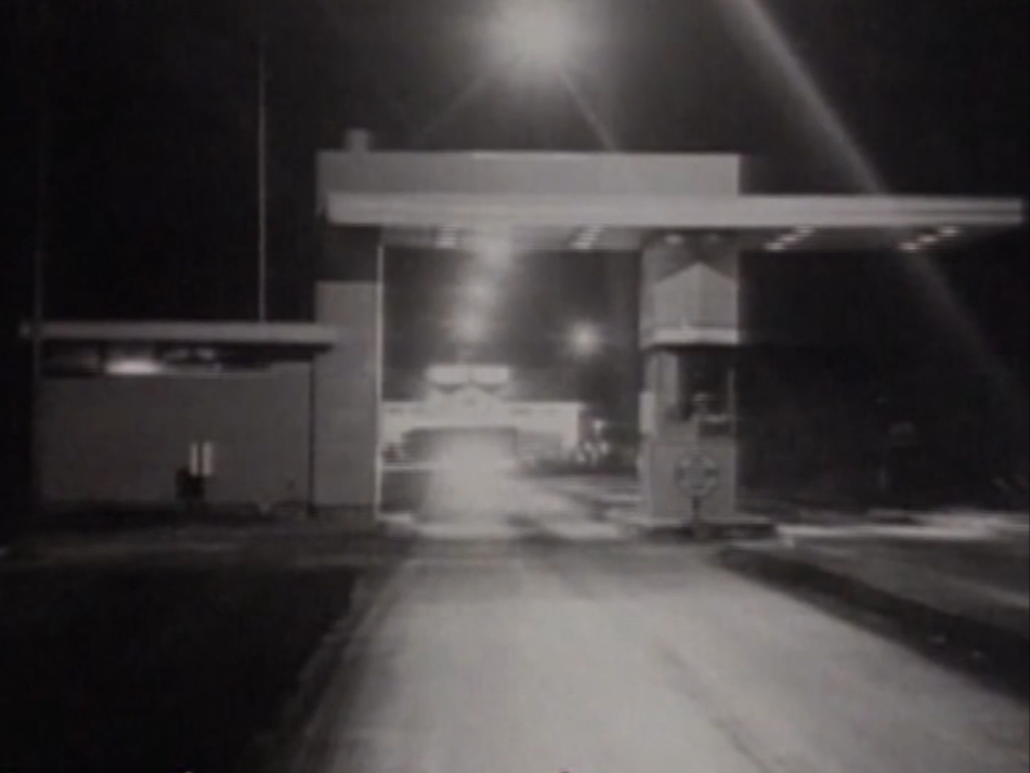
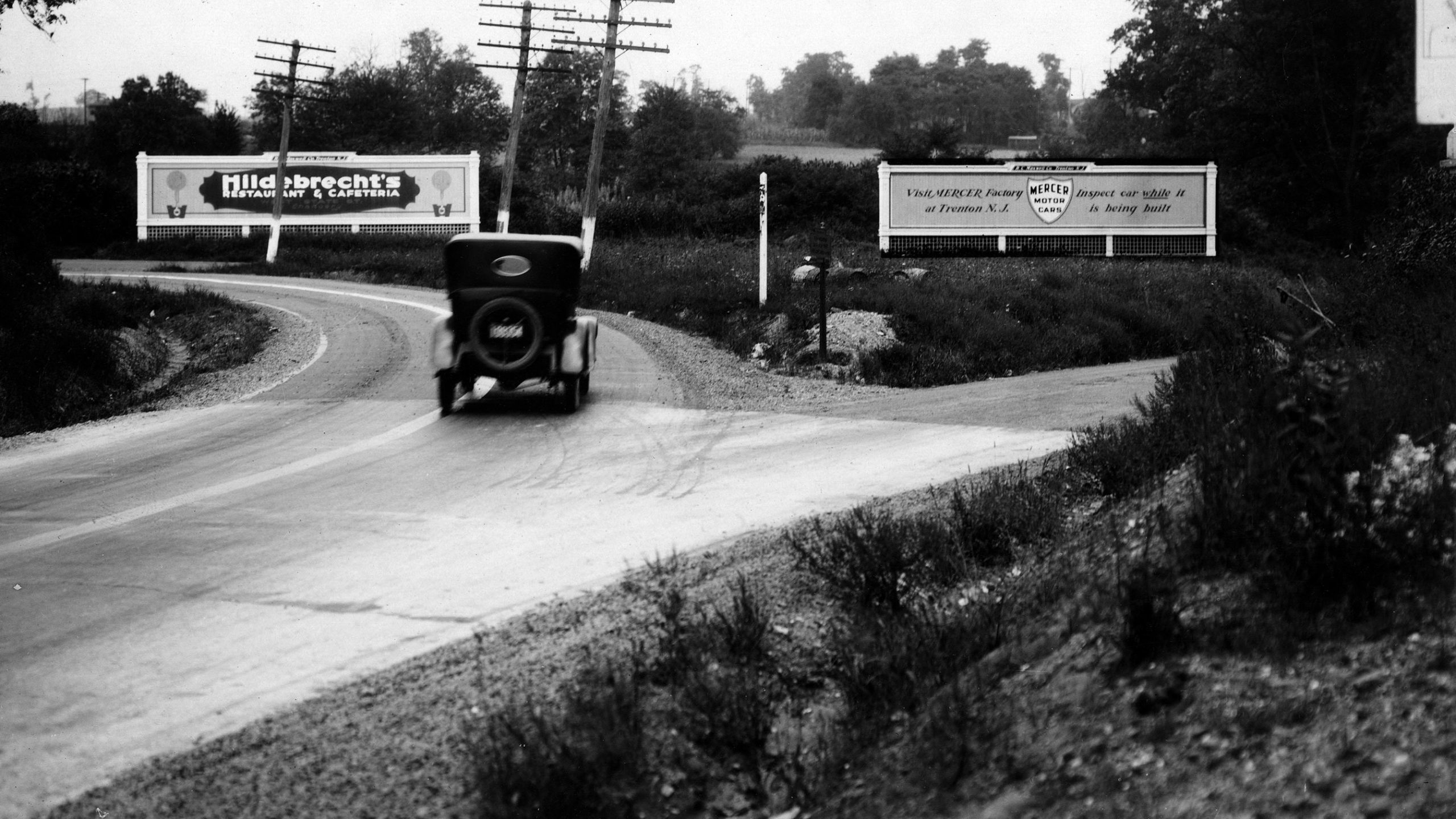
Small changes made a huge difference. The 11 interchanges on the highway had lighting so drivers could safely navigate them, there were guardrails, cat’s-eye reflectors on signage, and the highway even cut down on distractions by banning billboards.
The engineers even thought about how there weren’t many gas stations or restaurants in rural Pennsylvania, and decided to erect service plazas where motorists could fill up their tanks and their stomachs.
Drivers Go Nuts
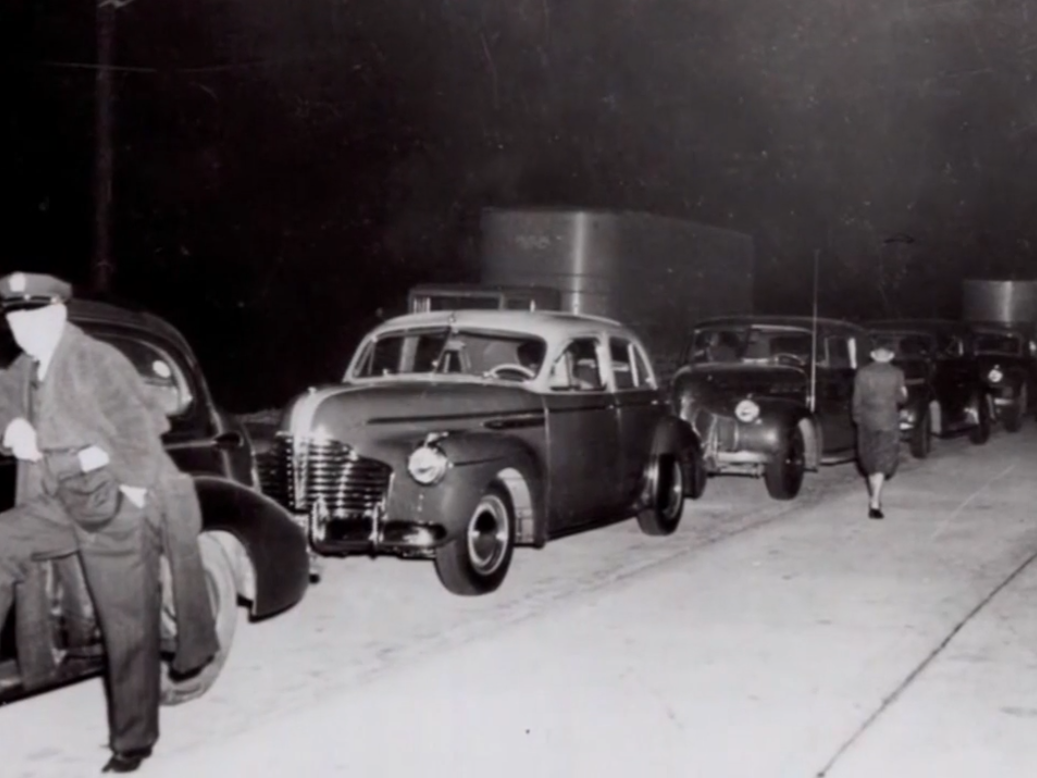
All of this was done on a mission to create one of the safest, most satisfying road trip experiences in America, and the response by the public and the news was grand. From The Building of the Great Pennsylvania Turnpike:
Following the ceremony that signaled the start of “America’s Superhighway” in the late 1930s, Turnpike Commission Chairman Walter A. Jones and his crew were approached by a woman asking for their autographs. Puzzled by the sudden celebrity treatment, Jones asked the reason behind her request. The woman replied, “…so that my children can say that they saw history being made that day when the greatest highway, a new era of road building, was started.” Those words were spoken by a farmer’s wife whose land was bought to build one of the biggest expansion projects ever to connect roads across the state, the Pennsylvania Turnpike. The woman’s words reflected the hopes and dreams of many Americans who had been eager to see the completion of the freeway.
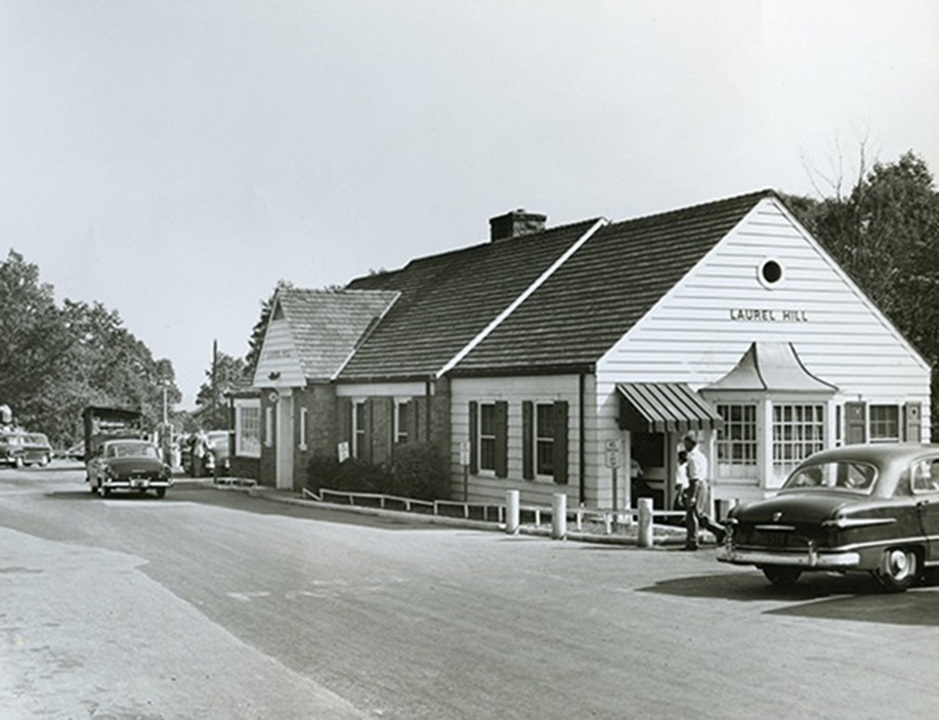
People came in droves from all over to be the first to travel the Pennsylvania Turnpike on its opening day. The Harrisburg Telegraph described the event to be like the beginning of a car race: “At midnight, two black cats ambled across the gleaming cement. A minute later, a ticket-seller dropped his arm in the gesture of an automobile race-starter, and traffic was under way.” The first traveler to pass through the Carlisle toll booth was Homer D. Romberger, a native Carlisle feed and tallow dealer, and Carl A. Boe of McKeesport was the first at the Irwin interchange. It’s interesting to note the first two hitchhikers on the PA Turnpike, Frank Lorey and Dick Gangle, were picked up by Boe shortly after he had gone through the turnstile. There were many other firsts on opening day and everyone wanted their chance of fame.
Unlike today, there was no established speed limit when the turnpike opened and motorists excitedly recounted their tales to others of traveling the highway at speeds up to 80 or 90 MPH. One Ohio trucker who feared getting a speeding ticket remembers his first run-in with the police on the PA Turnpike: “I was going down one of those grades at 70 to 80 miles an hour. I looked in the mirror and saw a white car following me. I didn’t know whether I was going to get arrested, so I pulled off the road as though to take a rest. The white car pulled off, too. An officer got out and asked me, ‘How do you like the road?’ I said, ‘It’s very nice – I guess I get a ticket.’ The cop told me, ‘No, we aren’t interested in the speed limit. As long as you stay on your own side and watch yourself, we won’t bother you.’” However, speeding did begin to pose a problem and a 50 MPH speed limit was imposed.
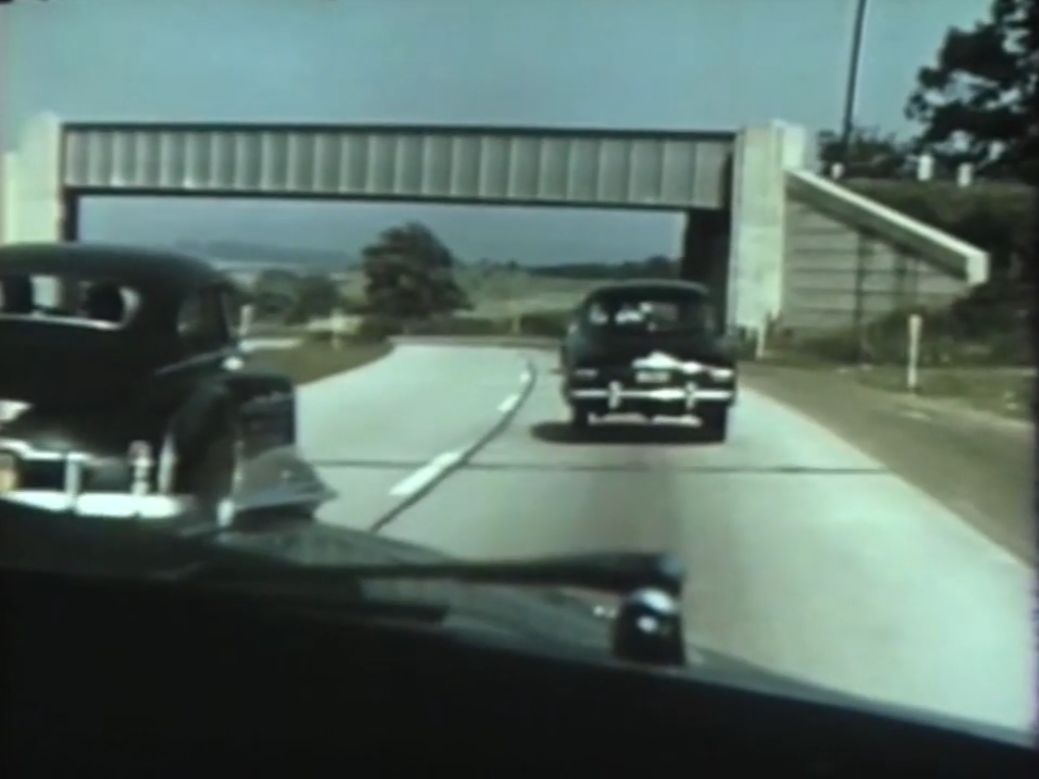
Reportedly, critics of the project thought it would be a failure, just like the Lincoln Highway’s toll road, and estimated that fewer than 800 cars a day would drive the newfangled PA Turnpike. They couldn’t have been more wrong.
The PA Turnpike estimated that in just its first four days of operation, a whopping 240,000 cars drove on the tollway, and the state collected $140,000 in revenue. That was all from vehicles paying only a penny a mile to experience America’s first superhighway. The PA Turnpike had a little something for everyone, from the families who wanted a safe way to drive across the state to the car enthusiasts who wanted to see how fast their cars could really go. A road where a car enthusiast could go top speed for 160 miles was unheard of at the time.
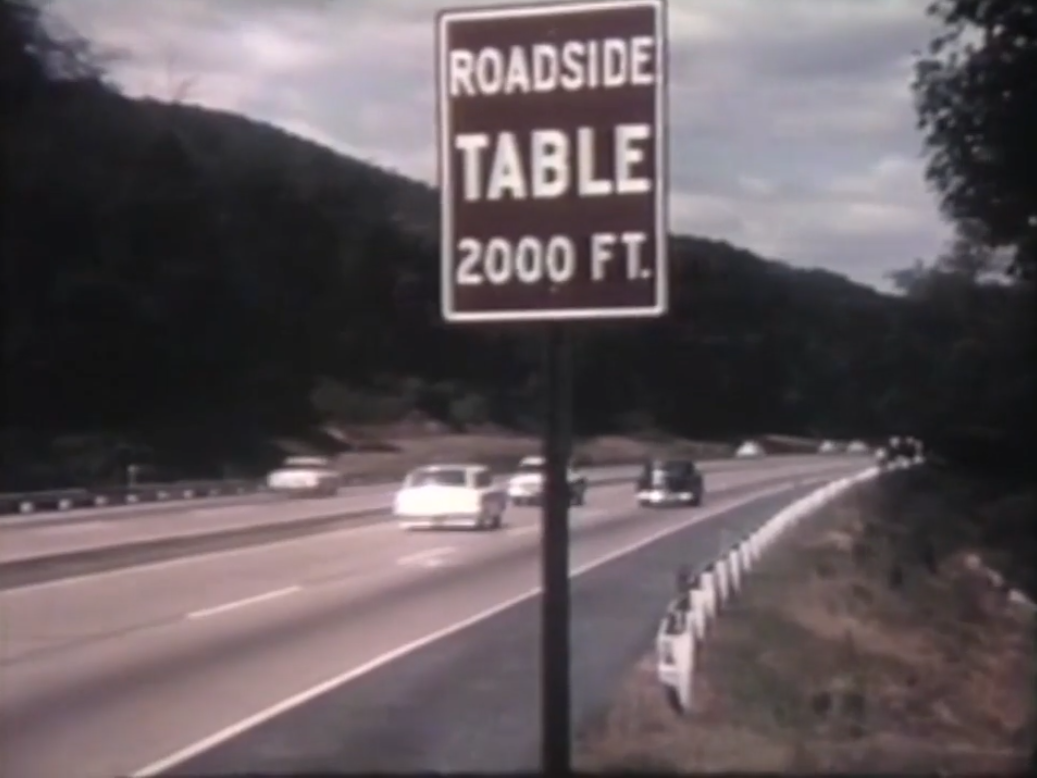
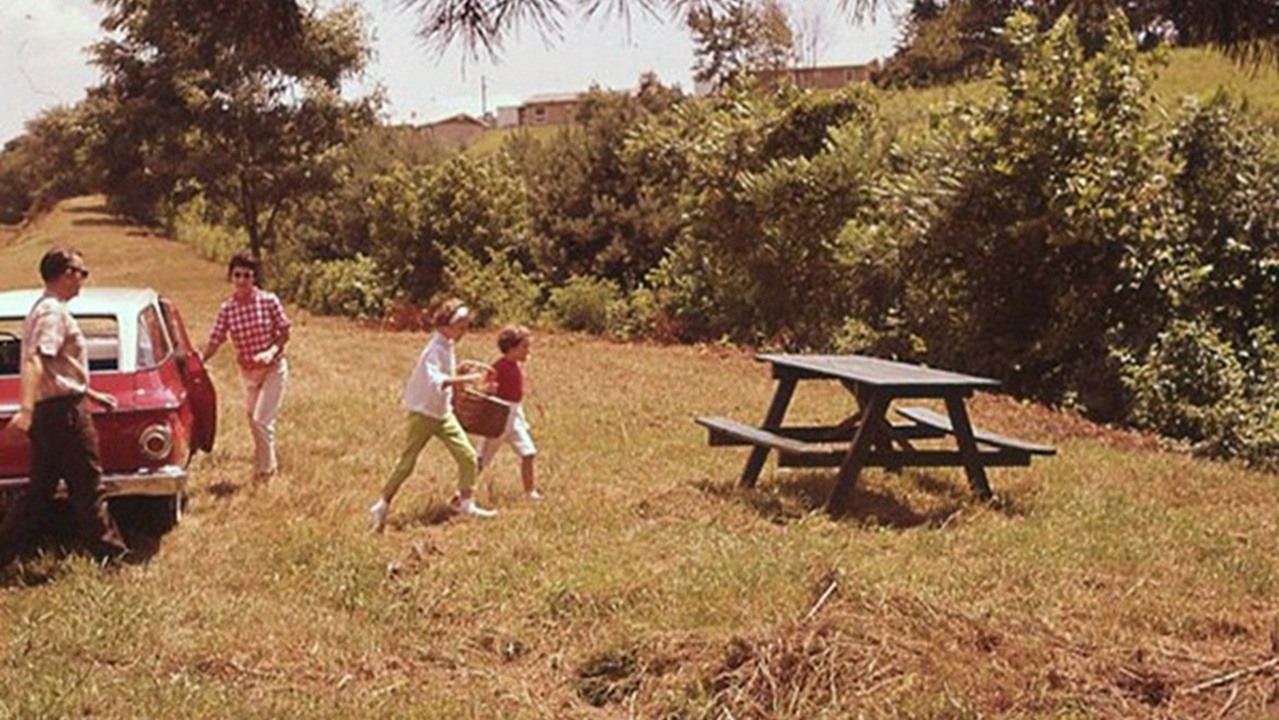
The PA Turnpike says that the public’s obsession with the turnpike was so wild that people drove the turnpike’s entire length both ways just for the fun of it, and families parked their cars on the side of the highway to enjoy picnics next to the cars and trucks thundering down the road at top speed.
The Turnpike Continued To Innovate
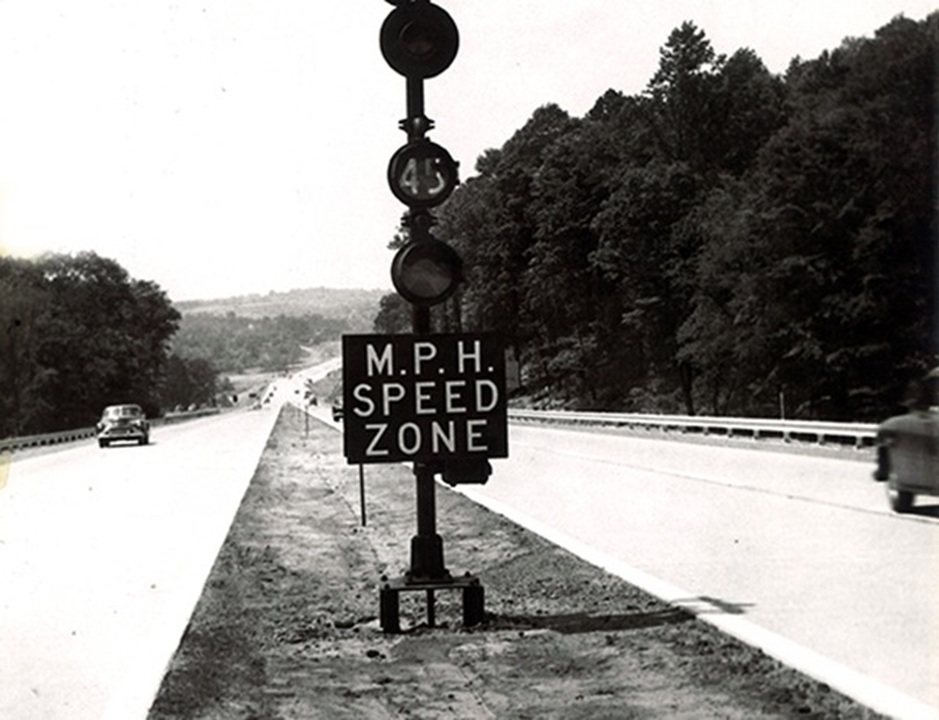
The PA Turnpike would also become known for further innovations. When Turnpike authorities learned that there were a high number of crashes on bridges, they installed special speed limit signs in the median to slow bridge traffic down to 45 mph. Turnpike traffic would pick up after World War II, and authorities observed a huge spike in head-on collisions. This led to the installation of guardrails in the median.
But perhaps the biggest advancement came in the 1980s, when bridge engineer Neal E. Wood invented the Sonic Nap Alert Pattern (SNAP), an improvement to the rumble strip, configuring it into something capable of waking sleeping drivers before they crashed. From the Federal Highway Administration:
The idea for SNAP originated with the author’s review of police accident reports, looking for engineering modifications that could improve safety. Early in 1984 it became apparent that Drift-Off-Road (DOR) accidents constituted a significant safety problem on the PA Turnpike. Some individual observations on the Turnpike and preliminary research led to a 1984 sketch of the original SNAP concept.
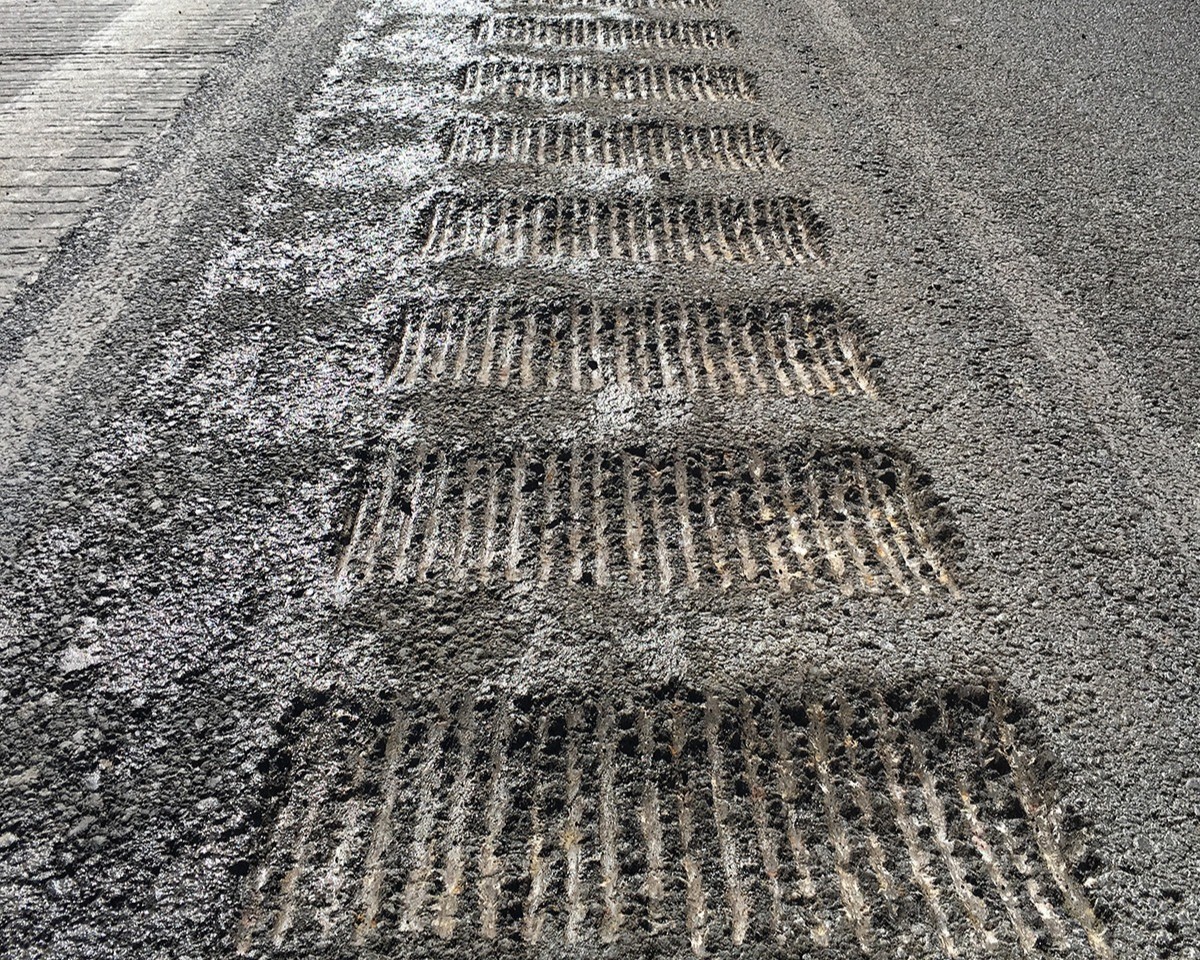
Study of existing intermittent rumble strips showed that effectiveness depended on a continuous pattern. Since the Turnpike has a “bare pavement” snowplowing policy, any form of raised pattern was eliminated and only indented patterns were considered. Also, a narrow pattern was necessary because maintenance vehicles travel the shoulders daily for debris collection and the pattern should not encroach on their wheel path. Thus, a narrow SNAP was proposed in the original 1984 sketch. Upon seeing the sketch, the Turnpike’s chief engineer thought that it had potential, but would require testing.’
During August 1985, tests were conducted on several indentation methods along the shoulder near one of the Turnpike’s Maintenance facilities. Using a pavement heater, an indented pattern was “raked-in,” similar to the proposed SNAP, which resulted in a loud noise and perceptible vibration in vehicles driving over the pattern. In the meantime, a Federal Highway Administration report (1) had been secured that indicated other states were experimenting with rumble strip designs to alert drivers that were drifting off the road. The report described a variety of test installations, but was not conclusive on specific designs or future tests.
Part of what made SNAP an important evolutionary step in rumble strips is that Pennsylvania tested out a variety of strip widths and depths until engineers found a configuration that was loud enough and drivers favored. The result? Drift-off-road accidents were reduced on the Pennsylvania Turnpike by 70 percent.
A Template
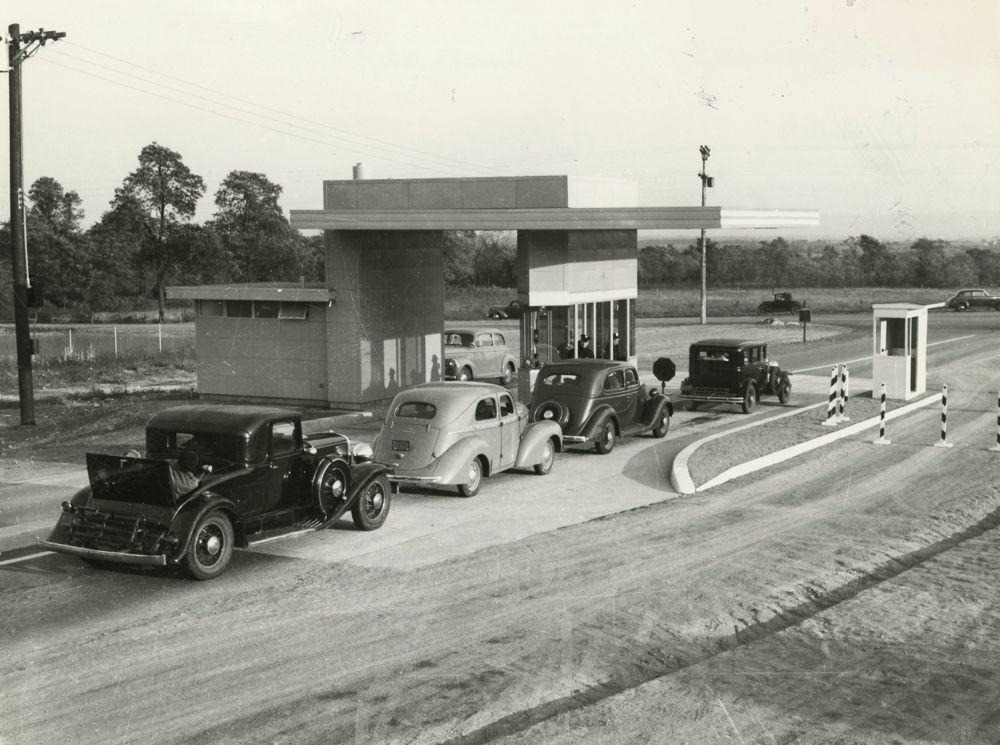
The Pennsylvania Turnpike would become even more historically significant because other highway engineers found the Turnpike so impressive that it would become the template for other American superhighways. Innovations that were tested at the PA Turnpike, like SNAP and service plazas, would also be used elsewhere. Pennsylvania claims that the towns surrounding the Turnpike also continue to see growth, and so the highway isn’t just good for cars.
The PA Turnpike has evolved dramatically over the years, with modernization efforts, bypasses, and open road tolling. Today, the PA Turnpike feels like any other highway, and so unless you knew its history, you wouldn’t know that the Turnpike is a big deal. I drive on the PA Turnpike every single time I drive to Baltimore, and even I only recently found out that it’s a real piece of history.
So, the next time you find yourself getting lunch next to a highway, or see a driver successfully awoken by rumble strips, thank the engineers of the PA Turnpike. 85 years ago, a 160-mile highway meandering around the mountains of Pennsylvania was at the apex of road engineering.
Top graphic image: Pennsylvania Turnpike Commission


I love how even in the 40’s the thinking was “how do I spend as little time in Central Pennsylvania as possible.”
(as an Atlantan who now lives in Ohio I do love your state but good lord that central chunk)
“Philly in the east, Pittsburgh in the west, and Alabama in between” was the old saw. See also Pennsytucky.
My favorite is, “Pennsylvania is two cities that hate each other, separated by the Amish.”
There is no love lost between the two cities.
For a second I thought you were talking about Lancaster and York PA and all the Amish along Rt 30.
The further north you go in PA the more Confederate battle flags you see.
Sad but true. Outside of the cities it has become almost the norm.
I remember growing up in central PA and using the turnpike a lot in the 80s and 90s and still think it is wild that it still had numbered in order and not mile numbered exits all the way to around the year 2000.
The NYS Thruway is still like this.
The PA Turnpike also used to have an emergency phone boxes every mile in the days before cell service was common. They were still there through the ’90s at least.
As a highway engineer in the State (Commonwealth) of Pennsylvania – This is a well written article. Great work! Part of my grad school work was the history of the Pennsylvania Turnpike. You hit the key points very well.
Mercedes, as a small companion piece to this, you may be interested in some of the folklore and explorations of some of the now disused Pennsylvania Turnpike tunnels. There are three total. The stretch between them is, appropriately enough, now called the “Abandoned Pennsylvania Turnpike”.
Seconding this. Disused tunnels have some great stories and real-world uses, from stunt driving to university science.
I used to love driving out East and, as Stephen King puts it, “turnpikin'”.
Now, thanks to that open road tolling, I have to set our Garmin GPS to avoid tolls. The wife and I had no problem paying tolls by either tossing coins into those little hoppers, like the good-old days of the Illinois Tollway, or by taking the little card when you got on the turnpikes and handing over some cash to the toll collector when you got off the turnpikes.
The only I would drive on a tollway or a turnpike would be if I was driving a company vehicle with one of those EZ-Pass transponders, but since I’m retired now, the GPS is set to avoid tolls. We just take the more leisurely routes. That way we don’t have to worry about having to figure out how to pay all those tolls once we get home from whatever trip we were on that required the tolls. And we don’t have to worry about getting threatening letters in the mail about not being able to renew our registrations due to unpaid tolls.
The only toll we pay nowadays is the Mackinac Bridge toll, which is still only $4 and you can hand the cash to a real person at the toll booth.
Simply purchase your own EZPass transponder and keep it topped up. Set it up to automatically top itself off, and it becomes a zero-maintenance system until you buy/sell a car or get a new credit card.
The problem is, we only drive on toll roads once every 2 or 3 years. Is it worth it to pay for this when it isn’t used much?
I don’t think there’s a recurring charge for having the transponder on your car. At least there wasn’t when we lived in Valdosta and had a PeachPass/SunPass.
One time transponder fee, and it can be used in multiple cars. EZ-PASS covers all states east of the Mississippi I believe.
PA has steep discounts for transponder use over toll by plate.
I just looked into The Illinois IPASS system, which is the closest state that has tolls. It looks like you cannot get transponders anymore. They’ve switched to a sticker-for-each-vehicle system.
I liked the transponder idea, as it looked like you could use these with rental cars, if you wanted to take a long road trip and not put all those miles on your personal vehicle.
I see the stickers are free, but you have to get a separate sticker for each vehicle.
Something to think about…
Yes, the transponder I can carry with me. Put in a rental, loan to a child, friend, etc… PA still uses the transponder.
I take mine on work trips in rental cars, then reimburse myself. It’s easier than using the rental’s transponder.
I’ve used it in IN/KY, WV, and NY. It’s pretty handy.
RiverLink (KY/IN bridges) still have them available for purchase for $15; the stickers are free there, too.
Depending on where you’re using it, you only need an account, not a transponder. I’ve forgotten mine and RiverLink automatically reverts to the license plate instead.
Ez pass didn’t work in the Orlando area when I was last there, right before the pandemic lockdown.
EZ-Pass may not work in Florida. Not sure now but my sister thought so a few year ago and was hit wit a huge fee in the mail.
It does now; I think they switched in 2023. I used mine this year and last year without issue on several different toll roads.
Thanks. that is rather recent. We have been just keeping an sunpass for when we travel there.
Why can’t the various states settle on one pass. There’s the E-Z Pass in the east, except for the Peach Pass and who knows how many others. In the west there is the Fast Pass for California, something else in Oklahoma, more in Texas. Given that the Feds “control” the highways w/ funding, it seems like it could be done w/ toll transponders. That would save having 20 different agencies to set up their own transponders and tilling authorities and make it easier for travelers utilizing the nation’s highways.
Transponders are FREE from Massachusetts. And you don’t need to live there; I’ve never even been in the state. Order it online and they’ll send it to you.
https://www.mass.gov/ezdrivema
You do need to put in an initial $20 but it’s used for tolls. I have it set to post anther $20 whenever it runs out from a credit card. It’s nice too that you can move to up to 8 different passenger vehicles. Just register the car and its plate online with them.
I used to avoid toll roads but as I get older I find I’d rather have the time. If the time difference is tiny I’ll still skip the toll, but often it’s not.
Toll by plate is incredibly easy to pay, I was honestly surprised how simple it was to use.
Spending 30 seconds on a computer in your own home when you get the letter to pay for your whole trip is vastly more convenient than paying cash at every toll
Obviously taking back roads is more fun when you aren’t in a hurry, but not having toll collectors is a stupid reason.
Simple, but some places that take EZPass charge up to DOUBLE the toll, then add on a fee because they had to mail you a bill.
Yeah true, but it’s cheaper than getting an EZ pass if you only need it every other year
I’m in Maryland and the EZ pass is free you just need to have something like $25 in an account to pay tolls as they happen.
Same with Massachusetts. Just keep $20 in the account, no charge for the EZPass to get it or have it. I only use it once or twice a year myself.
I’ve noticed that tolls are sometimes cheaper with an i-Pass or EZ-Pass. I’ve also had co-workers not get the letter in the mail saying they owed a toll. Then they get a letter 9 months later threatening their vehicle registration or even legal action due to their not paying their tolls, for which they now have to pay a late fee + processing fee.
I tried using the Illinois tollway website, when they first got rid of being able to throw coins in a hopper. They wanted you to remember which toll booth number you went through and at what time you did so.
Who can remember that 7-10 days later when you get home from a vacation? I don’t always bring a laptop with me on trips (although I’ve started doing so more recently) so I cannot pay online until we make it back home.
For now, it’s easier to just avoid all the tolls. If I get a transponder, maybe I’ll feel more comfortable about electric tolling.
The weak link in that system was the post-office, not the electronic stuff. I’m sure there were shitty government websites but I think the PA one is run by EZ-pass so it actually works. And yeah toll-by-plate is more expensive, but if you only use it once a year it’s cheaper than getting an EZpass
A toll road without speed limits? OK I’ve never driven a toll road before but I would make a little detour just for that.
My father got to an indicated 120 mph on a “I swear it came from the factory like this” 49 Ford. Had a Lincoln motor and an electric overdrive that allowed it to basically have aa 5 speed.
What year did that happen and what tires? I don’t know if they had speed ratings on tires back then, but I guess it all turned out OK in the end.
About 1950 or so. I figure the speedometer was likely way off with that overdrive. But he might have bumped into the triple digits. Rocket 88s were known to hit 90
The mountainous section of PA Turnpike between New Stanton and Carlisle is honestly not meant to be traversed at more than 75 mph in a modern car. Lots of elevation changes and tighter than expected curves, plus only 2 lanes each direction. Add in the tunnels and weather.
I can only imagine driving this flat out in a ’40 Ford…
I grew up in the double nickle era and a 70 speed limit in PA is a fairly new thing.
Wow, some cool history there!
The toll stations look amazingly modern. For 1940, this must have been like Disneyland. Throw in a few Burma Shave signs and take my money!
I remember how they were so cool to watch work when I was a kid, and they were 40 years old back then.
My grandmother, who was 32 when the Turnpike opened, told me about cars on that first day taking advantage of the lack of speed limits that were not designed with sustained high speeds in mind and doing dreadful things to their engines.
Awesome! I can’t imagine traveling 80 or 90 mph in a car from that era though. I love learning about historic roads; I ended up on the Merritt Parkway once by mistake, and ended up having a great trip.
I had the same thought about that kind of speed in those kinds of cars.
I-5 winding over the Siskiyou Range and past Lake Shasta is also a marvel.
I-10 in western Texas has a speed limit of 80. Trucks are allowed to go the same speed as cars, but their tires generally are only speed-rated for 70, so there are a lot of “road gators.” And there’s a toll road from outside San Antonio up to Austin that has an 85 mph speed limit.
I stumbled across this article about other interesting roads around the country:
The Steepest Highway Grades in North America Will Blow Your Mind (and Brakes)
A 26% grade! The maximum on federal highways is 6%.
When the PTC opened, most cars really didn’t go too fast. So a speed limit seemed pointless. Funny now to us how great that would be today.
As an occasional user, it’s definitely one of the more fun turnpikes to drive for sure. The varied scenery really holds your interest (unlike say the Ohio turnpike), and the tunnels are just cool. I still get a kick out of the “Mountain Man Drinks Milk” ads that are left, not to mention random barns.
The Ohio Turnpike is so mind numbingly straight and uneventful. I used to take 80-77 from Detroit to Charlotte, now I just cruise straight down 75->23->77 much more interesting drive, also a few minutes shorter and less time in Ohio.
The turnpike is the definition of excitement compared to I 75.
The only time I spent driving in Pennsylvania was I-90 back when I was working in Cleveland and my wife was working in Rochester, NY. It was along the edge of Lake Erie and there wasn’t much terrain to deal with. Just an onerous 55 mph speed limit.
Our speed limit STILL 55
I’m so sorry. Even “green” Oregon allows 65 outside of what passes for urban areas in that state.
Thanks for the deep dive into the history. Having lived for a while in the area back when I was a kid I did know that “The Turnpike” was considered quite a wonder back in the day. I was quite surprised that you had to throw money in a basket to use the road and of course asked my dad why. I also liked the Service Plazas that made so much more sense than having to get off the freeway and back on if you needed gas or a bite to eat. (Of course in hindsight didn’t know that since they had a relatively captive audience they could charge more and of course probably had to to pay off the bribes it took to get the contract) I was always excited when we were going to take a trip that took us down “The Turnpike”. I always wanted to toss the coins and stop at the Service Plazas.
I love these articles about the history of things like transit or highway systems
I was aware of the Turnpike’s history but you did a good job laying it out. I’ve crossed PA many times and the Turnpike is too expensive. I usually take 78/76 and aim for Columbus Ohio instead of Cleveland.
Pennsylvania is a difficult state to cross for the reasons cited. There are no significant back road state routes and you really have to take one or the other highways. Because of the mountains, there are few East-West roads and many North South. East Coast travelers make heavy use of the I-95 corridor and make the turn West in NY/NJ. Highway 6 is too Northerly and 22 is complicated.
Pretty much any federal highway going over a mountain range is going to have challenges. Similarly, bridges. I’m thankful they were built when they were. I can’t imagine what it would cost to build them in this era. Sadly, many don’t want to pay the taxes it takes to maintain them.
This is a great and entertaining story. I assume most of the information was provided by the PA turnpike commission. As a resident yes it was started and financed in the 40s. Now not only hasn’t been paid for yet it now owes Billions of dollars because bribes and corruption. I have over 100,000 miles on the turnpike and all I have realized is I wish I owned the orange barrel concession because the turnpike has never been finished and is still under construction. The best accomplishment of the PA Turnpike is the never ending state jobs it provides to elected officials idiot family members. Can you imagine a state job, benefits, and pension to stand in a glass box taking quarters? The only better job is one at a state liquor store where you get paid alot to run a cash register it is a union job with a pension but you have to be related to the scum politicians to get hired
They’ve eliminated all the toll taker jobs.
Transponders and license plate readers, I assume? They have done that in Texas and Washington state. Probably just about everywhere else as well. It’s kind of cool to see the strobes go off on the plate readers at night.
At least here in NC, the strobes are also a thing of the past. When our one and only toll road, the Triangle Expressway, opened about ten years ago the toll gantries would flash at night. Now night-vision camera tech has gotten to the point where the strobes are no longer needed.
No one stands in a toll booth any more around here. It’s all electronic, and even if you don’t have a transponder, they still get your plate and you still get the invoice.
It’s cheaper if you have the transponder. At least in TX and WA. In WA, it’s $2 cheaper going over the Tacoma Narrows Bridge (and all the other toll roads in the state) with a transponder. And the amazing thing is how small the transponder is now. It’s a sticker on the windshield the size of the smallest bandage in a box of Band-aids. They used to be a box 3x the size of the box the Band-aids come in. It’s got an RFID chip that has far more range than I knew they had. Or the sensors are more sensitive than I knew. I may go down an internet rabbit hole about this someday. Or maybe Mercedes will beat me to it.
Yolo County in CA set up a license plate reader earlier this year on the easement in front of the family farm along a heavily traveled county road. I’m not opposed to it, because I don’t do things that it would bother me to be geo-located.
And the geo-location data that cell phones log similarly log doesn’t bother me. Yet. I don’t want to get political, but if the US continues to descend towards the gulag which it seems some are intent upon, I’ll consider ditching my phone. Or leaving it at home while I do my innocent stuff on my scooter.
1984 may be arriving 41 years late.
In PA I think it was close to double without EZPass, and you get a fee because they had to mail you a bill. You don’t want to go without EZPass.
Oh, PA. Such a bummer on I-90 when I lived in Cleveland and my wife lived in Rochester, NY.
And I don’t know how we didn’t get tickets from doing the math from when we got on the tollway and exited it.
The Turnpike isn’t even state owned.
Yes. The Express Lanes around Houston were all privately owned as was the 85-mph toll road between San Antonio and Austin. You can pay taxes or tolls, I guess.
Just like Route 66, the road and it’s path have changed over the years as it evolved to become I-76. Many of the original tunnels have been abandoned and the path of the road has changed in places as the road has been cut into the hills rather than running through them.
“highways are actually awesome”
Agree to disagree. Our cities can’t afford them and they are the yoke around the neck of every major metropolitan area from New York to Los Angeles.
Highways helped turn the American dream into a ponzi scheme and it all started here.
Internet shorthand: if you need to use the word “actually” to prove a point, there’s greater evidence to the contrary.
I mean, that is a fair point. Highways have been at the center of some extremely dark periods of American history. However, I still think that the concept of highway development is fascinating from a car enthusiast perspective and amazing from an engineering perspective.
If you want to drive on a crazy highway, check out the Swamp Expressway. I was on my way from Missouri down to New Orleans, didn’t know anything special was coming, started up a bridge, and then the bridge just…kept…going…for so many miles. It’s surreal to be zooming along above the gators and a little worrisome how few places you can pull off the road up there.
https://www.youtube.com/watch?v=CLmT41GZ40A
I have driven that road many times.
I don’t know where you live, but are you saying you would prefer that we all had to take two lane country roads to get from say Savannah to Atlanta? And all the trucks that bring everything from ports or processing plants to where you buy them? Or surface streets to get from Long Beach to Pasadena? Unless you’re riding a motorcycle and are okay with splitting lanes, that sounds like Hell to me.
In Texas, there are “Farm to Market” roads that are two lanes, no median and 75 mph speed limits. On those, were it not for a fairly sturdy lower body infrastructure, I could have had some Code Brown moments. While in a car, an oncoming moron tried to make a pass with insufficient space to do so and I nailed the brakes, getting into ABS, dodged over the rumble strip, and at least two wheels onto the unpaved shoulder beyond to avoid a head-on collision. It happened more than once in my time there. Thank you, God, and Sochiro.
That’s not a recipe for efficient or safe intra and interstate travel.
perhaps highways built through/in/around major cities (lived in Cleveland for 15 years, and just imagining what I-90 must’ve done to the neighborhoods near the lake…) but things like the PA Turnpike to connect population centers through previously near-impassible wilderness? Brilliant and a huge benefit to society.
Tolls?
A lot. The State forced the PTC to help pay for transportation funding for the entire state. So the Turnpike turned up tolls to pay for that (ACT 44). It’s a long highway. 7 hours from NJ to Ohio. So you can imagine what that bill is. Trucks get it worse. Car from Ohio to NJ with EZPass is $60 ($120 without EZPass!) 18 Wheeler? $162 w/ EZPass or $323 w/o it. Yikes!
If we don’t get no tolls, we don’t eat no rolls.
You made that up.
“Very fascinating. I’m afraid I’m going to have to hurt you.”
Now do a story on the Arroyo Seco Parkway for contrast.
Oh, do I hate that 5N lane into that tunnel, with the sharp left. You can tell it was designed and built almost a century ago, when many cars could barely breach 45 mph.
Perhaps we should think of it as the Pa Turnpike, since it’s the daddy of them all.
Automotive Dad Joke.
I’m now paying a dollar a mile for a tollway near me. Harrumph!
I thought the first toll road was the Gov. William J. Le Petomane Thruway.
“Somebody’s gotta go back and get a shit-load of dimes!”
Hey, I didn’t get a Harumph out of that Yzguy…
It’s twue…
A map showing the route would have been useful here, especially for those not familiar with Pennsylvania (or the east coast).
Great point! I just added a map that’ll hopefully illustrate the scale of the highway. 🙂
Thank you!
Well, that historical postcard map has northern Maryland actually in southern PA, and Harrisburg basically in Allentown… lol
And Pittsburgh is just south of Erie…
Thanks a lot for the map! As a west-coaster who only ever drove through that general area south-to-north, that map showed the multiple passes the road has to pass through. I knew nothing of the topography. I’m more used to the one giant pass over the Sierras topography.
To see why it’s hard to get across Pennsylvania, take a look at a satellite view of the state. See all those dark green arcs going from near Maryland to the northeast? Those are steep, tall hills. In a few places they’re broken by rivers like the Lehigh, Schuykill, and Susquehanna, but mostly they are just extremely long and in the way. The Turnpike goes under a bunch of them, simplifying things considerably.
Over every mountain range in the world, there are steep grades to get over.
From the Siskiyous to the Stelvio Pass, there are challenging roads for drivers and far more so for the railroad and road builders.
There were some very smart people doing some pretty smart stuff, back when we didn’t have the tools we have today. I’m really in awe of them.
Yup, my grandfather was a civil engineer way back when working for the railroad. He admited to only two mistakes in his career. He set the backsights for a mile-long tunnel and where the backsights met in the middle of the tunnel, his mistake was that he was 1/4″ off. Amazing what they were capable of doing with what we now consider primitive tools.
Absolutely! There are architectural miracles done with slide rules or less. Around the world. Blows my mind how.
PA has a good number of surprisingly fun to drive interstates. I-476 is one, as is the northern part of I-99. Both are fairly narrow-feeling and snake through the mountains.
They’re widening 476 at least up through the Lehigh Valley interchange, but north of that they’d have to widen the tunnel under Blue Mountain (and the Appalachian trail) which will be big bucks.
99 north of 80 was an old US 15 highway forever. The changeover to I-99 is neat to see but also sad to see the old US 15 highway get deleted. 15 during the fall and winter was foggy, curvy, full of deer and fun to see all the rural places along the way (Trout Run). 99 is obviously more efficient and safer.. but I still miss the old road somedays.
I’m quite familiar with the old 15. That was a giant bottleneck going south for that part of PA and the areas of NY right above it. But cheaper gas back in the day and fireworks made the trip worth it.
The stretch of I-99 that goes past Altoona changed my annual Raleigh-to-Buffalo trip completely. Before, the western route (I40-I79-I77-I90) through West Virginia was the fastest route. After I99 opened, it made the eastern route (I85-I95-I70-I99-US219) the fastest.