

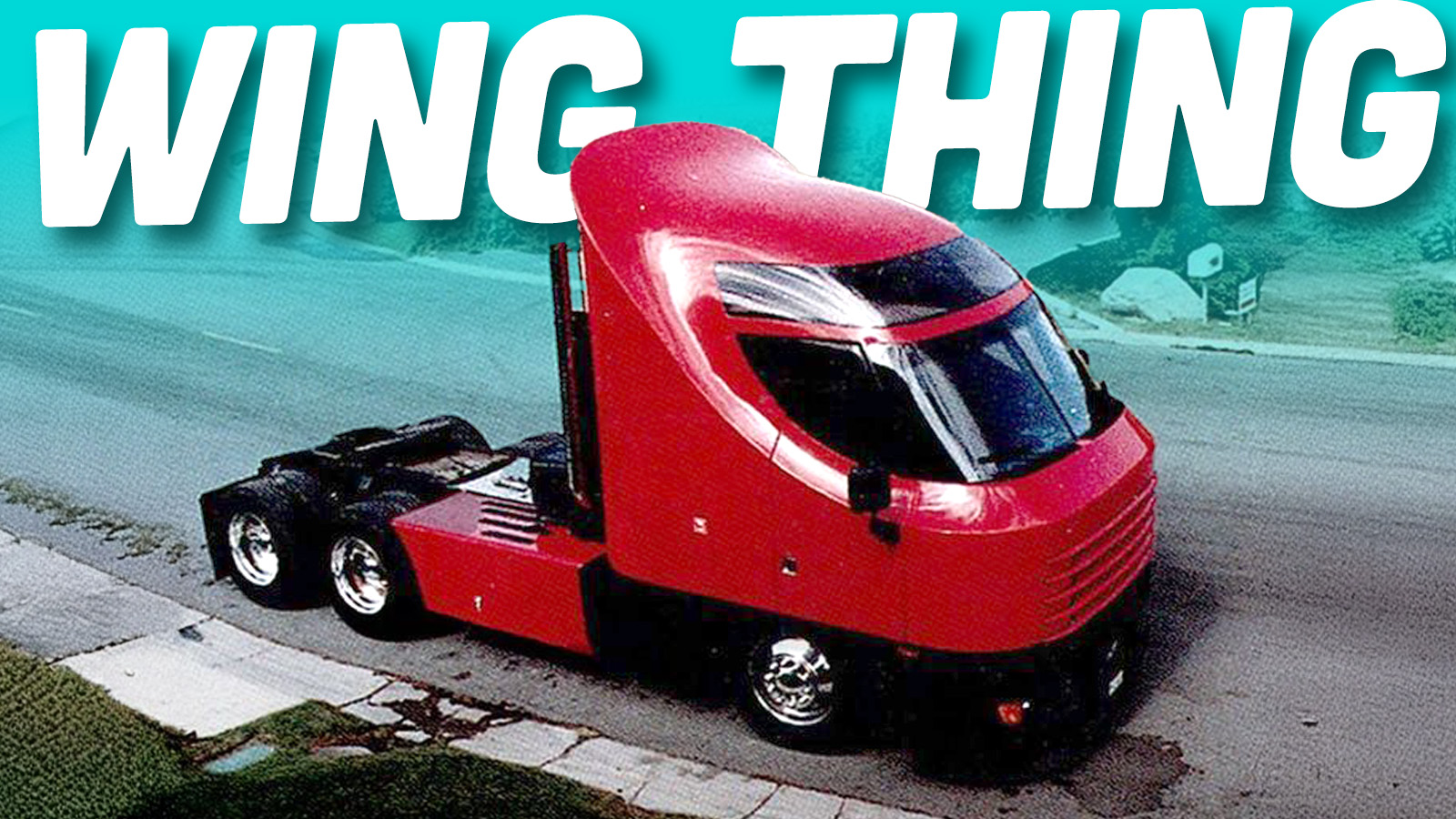
Truck manufacturers, fleets, and owner-operators are always trying to figure out how to stretch every cent farther. If their semi-tractors could just carry a little more cargo or get better fuel economy, operators might be able to put a little more cash in their pockets. In the past 50 years or so, this objective pushed several truck designers to focus on one of the biggest problems facing big rigs: aerodynamics. One company went all-in on aero and tried to build the ultimate wind-slicing hauler. The Design Project Engineering Performance Cab was hoped to revolutionize trucking with 40 percent fuel efficiency gains and an interior so large, it was like having your own hotel room.
The Performance Cab comes from a fascinating part of American trucking history. For most of trucking history, which spans more than a century of time, aerodynamics weren’t much of a concern. The trucking industry battled heavy length and weight restrictions until the 1980s. Because of these restrictions, which were sometimes so tough it led to tractor-trailers in Illinois being no longer than 35 feet long, the cab-over-engine truck design ruled supreme.


Cabover semis, at least as they were built for much of American trucking history, sacrificed cab space, comfort, and sometimes serviceability to maximize loads. If the truck itself were as small as possible, the operator could fit more cargo into their trailers, and thus, hopefully bring in more bacon. Fuel economy was putrid for much of this time, with rigs that averaged 5 mpg being pretty common. The fact that these trucks had the aerodynamics of the Willis Tower had a lot to do with it. At the same time, however, diesel was also cheap. The Willis Tower would suffice.
The tumultuous 1970s brought winds of change. Most trucks continued to return terrible fuel economy, but now diesel fuel wasn’t so cheap anymore. This laid the groundwork for innovations that remain enjoyed by the modern trucking industry. If you couldn’t change the price of fuel, perhaps you could change the design of the truck itself to be more efficient?
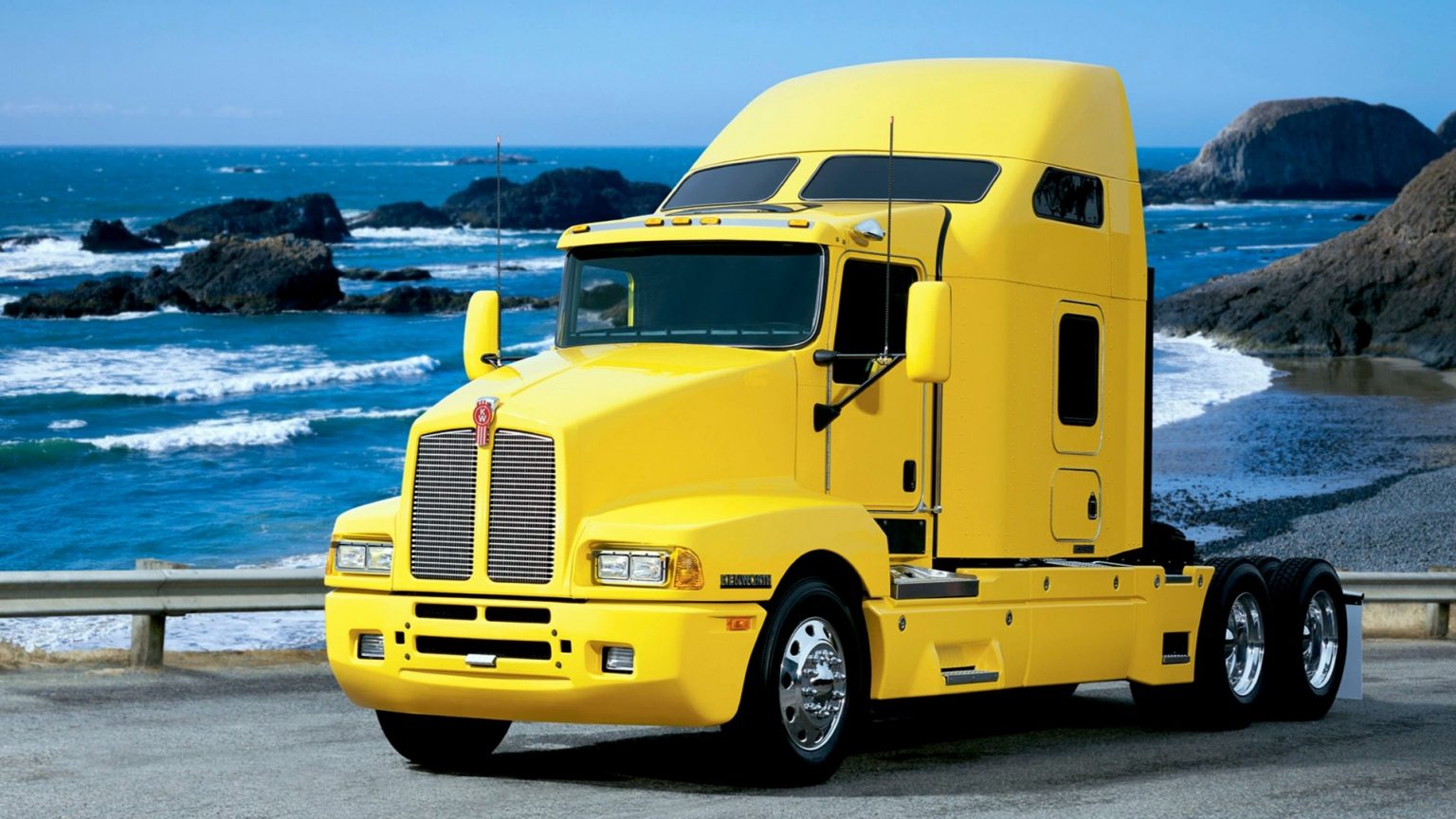
There are several old semis that earned better mileage through smoother bodies. The Paymaster was ahead of its time, adorning an aero design in 1969 before the first major oil crisis arrived in 1973. Then there is the 1984 Kenworth T600, a revolutionary aerodynamic conventional truck. Don’t forget about the 1988 Peterbilt Model 372, an aerodynamic cabover that tried to win hearts with a huge sleeper and 11 mpg. Most of these older projects, with the exception of the T600, didn’t catch on at the time, though their ideas live on in modern semi-tractors.
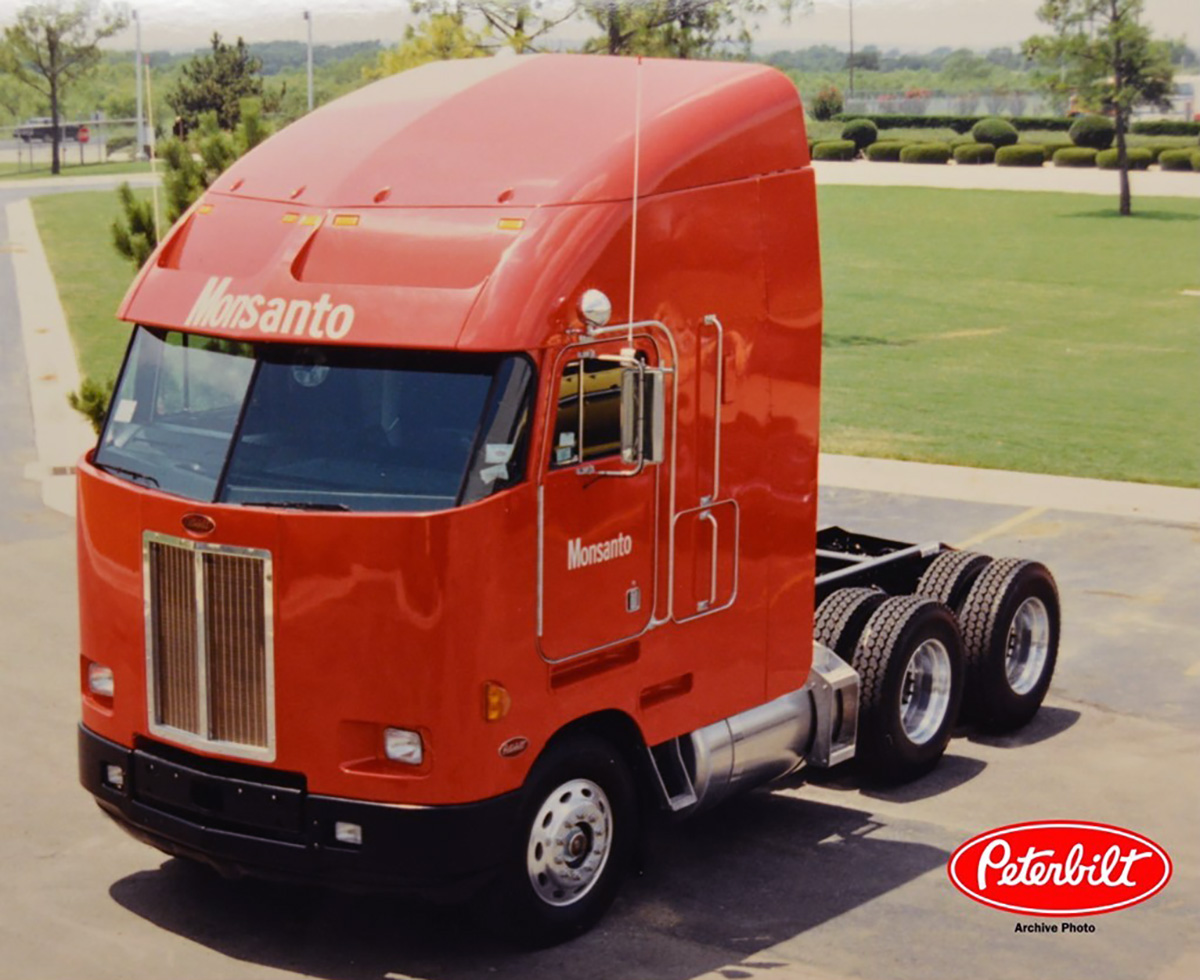
One of the Model 372’s failings was that it was the right idea at the wrong time. The fact that it got 11 mpg was great, but by the time it hit the market, the cabover was already losing ground to the conventional truck configuration, where the engine and front axle are ahead of the cab. The Motor Carrier Act of 1980 advanced deregulation of market entry, and the Surface Transportation Assistance Act of 1982 set national standards for total length and weight. These more unified standards allowed for longer tractors, which helped the conventional semi become the default truck in America.
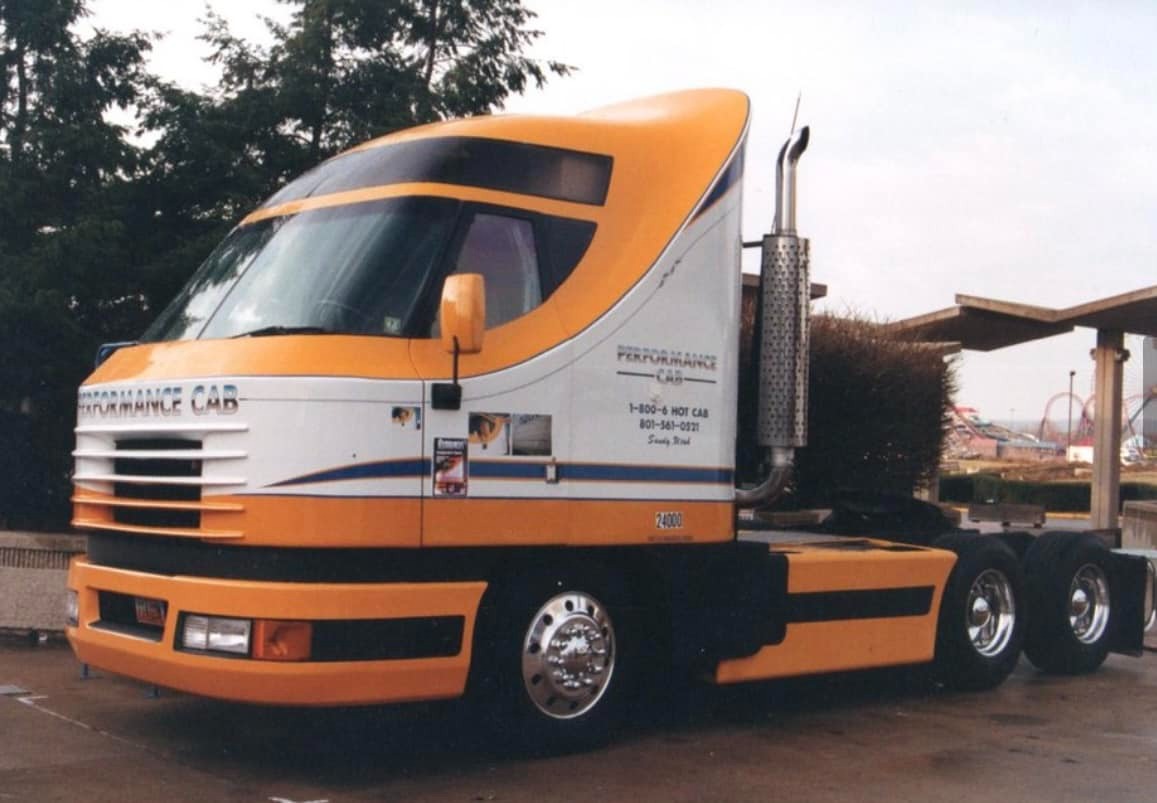
But the Model 372 wasn’t the only cabover that tried to flourish in a new world. There was also the Design Project Engineering Performance Cab, a truck that was so ambitious that the company that sold it promised 40 percent efficiency gains, plus cash bonuses to truckers who got other truckers to buy one.
Made To Rebody Existing Trucks
I love to write about the origins of a vehicle. I have to know who designed the vehicle and why. Sometimes, the story of how an engineer or designer came up with an idea is just as good, if not better, than the vehicle itself. I have spent much of 2025 attempting to learn the story of the Performance Cab. Something like this doesn’t just materialize out of thin air.
Unfortunately, many details about the truck and the two companies that tried to sell it are fuzzy. I found a man who claimed to be the son of the designer. He claims that his dad was a long-haul trucker and came up with the idea for the Performance Cab while his mom was pregnant with him. I reached out to this man, and while he said this story is true and that he was going to send me details, our conversation stalled out, and I found myself no closer to learning the truck’s story.
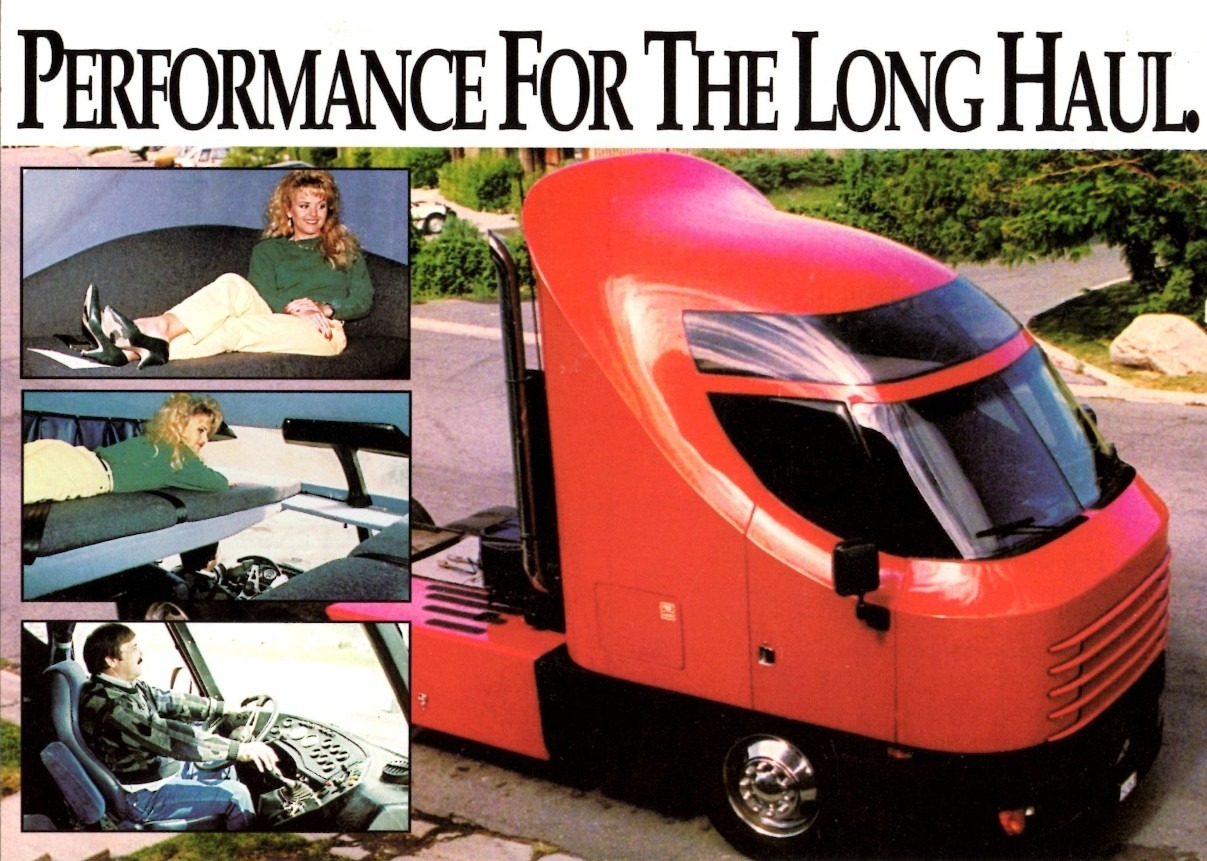
What I have been able to decipher is that the truck’s design appears to have materialized in the mid-1980s. In 1985, Pegasus Truck Cab Conversions, Inc. of Orem, Utah, filed for a patent on a truck cab, listing Robert E. Smith as the cab’s inventor.
One interesting note about the patent is that it cites page 157 of the January 1978 issue of Commercial Car Journal. I looked up that issue and found that the page talks about the wild trucks designed by Luigi Colani. At the very least, whoever applied for the patent was aware of Colani’s work.

The company registered the “Pegasus” name as a trademark in 1988, and based on the legal documents that I could find, the President of Pegasus was William A. Fresh.
The company’s product was a bit different from the other trucks I have written about. Pegasus did not develop an entire truck. Instead, it developed a body that you were supposed to bolt onto an existing cabover truck. The Pegasus Cab, as the body was originally called, was supposed to be a highly aerodynamic semi and a hotel room in one. The body was something else and resembled a huge wing of sorts.
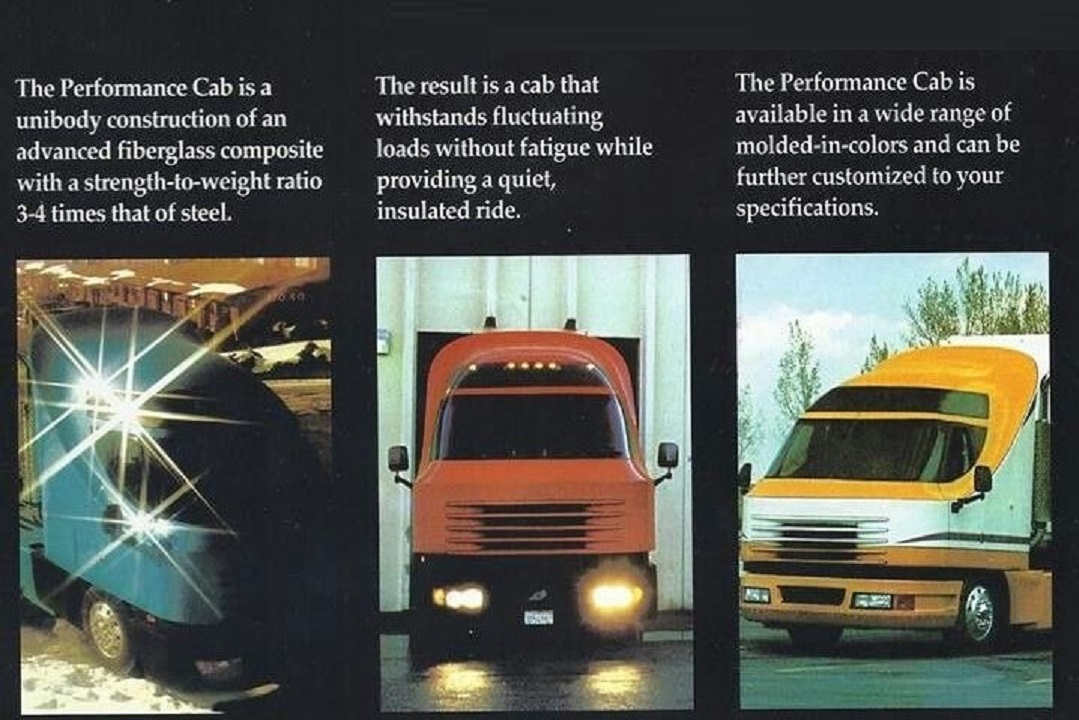
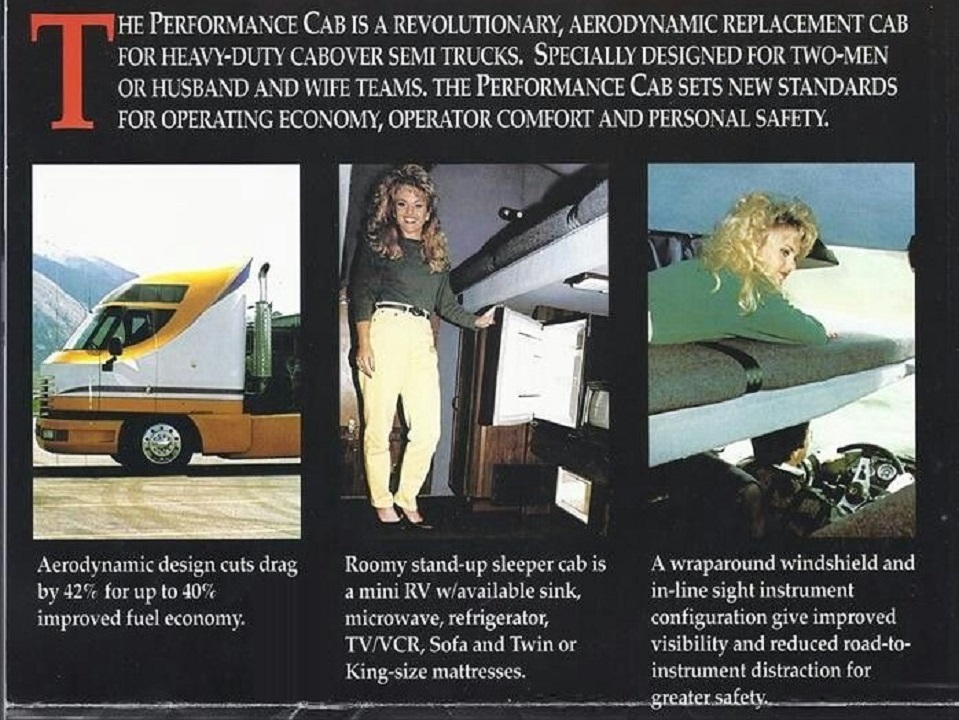
There are about two publicly known brochures for the Pegasus Cab, and one says that the body is made out of a fiberglass composite that was molded in color. Since the cab was designed to be mounted onto several cabover designs, Pegasus didn’t advertise any single number for aerodynamic or fuel efficiency gains. Instead, the company said, mounting its cab onto your truck could result in “up to 42” percent less drag and between 15 percent and 40 percent fuel savings.
This alone was supposed to be catnip for operators, but Pegasus sweetened the deal by saying that the Pegasus Cab would come with a galley kitchen, a dining table, a television, a toilet, a sink, and twin bunks that converted into either a queen or a king bed. If that sounds like Pegasus slapped an RV on the back of a semi, you’re not wrong. The truck was even advertised as an RV that can haul huge loads.

The marketing for the Pegasus Cab targeted team drivers, with the idea that one driver could get rest in the RV portion of the cab while the other drove. All of this, from the fuel economy gains to the idea that you wouldn’t need to book hotels anymore, was supposed to put money into the pockets of truckers. Allegedly, at least one of the prototypes was built on a 1980s GMC Astro Class 8 semi chassis.
According to the man who claims to be the son of the truck’s inventor, about five or six prototypes were built. Marketing images seem to suggest that at least one of the prototypes was put into service. Amazingly, I’ve found no usable information on the Internet Archive or in my other sources. If a trucking journal wrote about the Pegasus Cab or Performance Cab, it may not be on the Internet.
No examples were sold, however, and Pegasus quickly ran into money troubles. A Utah records search reveals that Pegasus Truck Cab Conversions, Inc., which would change its name to Pegasus Truck Cab, Inc. at some point, secured financing from Lobo Gold & Resources, Inc., of Ontario, Canada. This financing covered everything from furniture to patents.
Only two years later, the U.S. Internal Revenue Service filed a tax lien against Pegasus Truck Cab due to nearly $34,000 in unpaid taxes. The trail for Pegasus Truck Cab goes cold from here.
The Pegasus Reborn
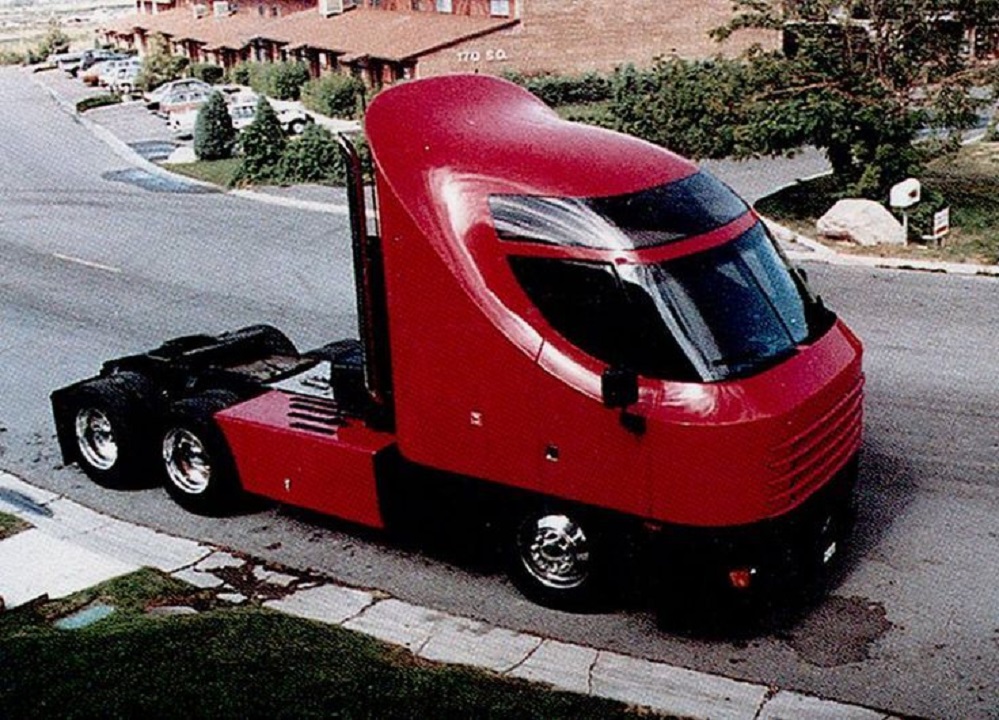
Yet, this wasn’t the end of the truck’s story. In the early 1990s, the truck appeared on the radar again, but under a new name and a new company. This time, the truck was called the Performance Cab, and it was being marketed by Design Project Engineering, Inc. (DPE) of Pleasant Grove, Utah. The original owners of the Pegasus Cab patents transferred their interest to Design Project Engineering.
From what I could find, it appears that DPE made a great push to market the Performance Cab, publishing the brochure you’ve seen here, and the truck also made an appearance in the 1994 short film Override. DPE also advertised a referral program, which said that truckers and fleets would get $250 for getting someone else to buy a Performance Cab.

Yet once again, it appears that DPE failed to actually sell any units. It even seems like the fate of DPE was similar to Pegasus, as in 1995, the IRS filed a tax lien on DPE for $15,309.34 in unpaid taxes. This lien was released in 2005.
The trail goes completely cold from there. The prototype trucks disappeared, and any online discussion about the rig has less information than I’ve published here. Not even I am happy with the depth here. There are so many unanswered questions that I have been trying to get to the bottom of for months. Who came up with the idea for this truck, and why? Did the prototypes live up to the promises? Why were zero production examples built, and how did the companies offering this rig seemingly falter so quickly?

You can make some educated guesses about the challenges this truck would have faced. Conventional trucks were already becoming the dominant truck of the late 1980s and were pretty much the default choice not long after. So, the Pegasus Cab and the Performance Cab would have been novel ideas for a shrinking market. Likewise, big names like Kenworth, Freightliner, and Peterbilt were already getting into the aero truck market, so truckers didn’t need to try out a new company they might have known nothing about.
Still, I don’t want guesses; I want answers. If you know the answers to these questions, please reach out to me at mercedes@theautopian.com. This truck will be stuck in my mind until I can close the loop on this story.
Either way, the Pegasus Cab and Performance Cab are weird examples of what some thought would be the future of American trucking. Everyone was obsessed with efficiency, but had differing methods to get there. To some, the future was still a cabover, only one that looked like a giant wing and apparently had an RV slapped onto the back of it.
Top graphic image: Design Project Engineering



Interesting article and comments! I was familiar with Colani’s designs but not the Pegasus/Performance Cab. Aerodynamics has such a major impact on fuel economy at highway speeds that it’s surprising we don’t see more effort on that from the major manufacturers. This might’ve been featured here before, but just making a few aero tweaks to his existing big rig allowed an owner to nearly double his mileage. https://www.overdriveonline.com/overdrive-extra/article/15295717/how-steve-kron-took-his-2001-international-above-10-mpg?fbclid=IwY2xjawOvu_ZleHRuA2FlbQIxMABicmlkETFDOTlaY0J5WHFwa0JqYWtZc3J0YwZhcHBfaWQQMjIyMDM5MTc4ODIwMDg5MgABHmusU2Uzhf61ZixO9Bo_Q78PbfWkF5CRtBRJnvrmeiEYxWbzd6xZbQc_7giJ_aem_lrhpFUI0zW8IknGF_WYhTw
On a related note, the US DOE funded a “SuperTruck” research program to help big rig makers develop more efficient trucks. Although it resulted in some impressive concepts over the last 15 years or so, I haven’t seen any production versions on the road. https://www.ttnews.com/articles/supertruck-final-concept-trucks
Is the T600 still being produced, or is the design just so ambiguous? I swear, every truck I see looks like this, besides that weird Pete with the Daewoo looking grille.
Im pretty dang certain it still is, but called the t800 or t880 iirc, the 600 cab was used i believe until the early aughts. The t2000 was the next evolution of aero trucks
But just about about all the aero trucks now sure have that blobby look to em.
Look at the Mack Truck Aero Experiment of the early 1990s. One of them actually got turned into a space shuttle
A google search gives me 90% AI-generated slop of “new” and “upcoming” Mack models, and one picture of the exact truck that got turned into a space shuttle.
yeah AI sucks
Blunt nose approaching the side profile of a barn doesn’t help, in semis or consumer trucks.
How dare you? It is and always will be the Sears Tower.
I had to think about that one for a good five minutes. The journalist in me was like “it’s the Willis Tower now and you have to be technically correct.” The Illinois resident in me was like “Sears Tower forever!”
As a non-Chicagoan, I had no idea what the Willis Tower was.
I’ve never been to Chicago and only know it from Microsoft Flight Simulator 5.0. It’s still the Sears Tower for me too.
Holy shoulder pads, Batman, That is some 80’s hair in those photos.
If you didn’t grow up in the 80s, the universe robbed you of a very unique and life-long memorable experience. Not to steal a Beastie Boys line, but man did I love girls in new wave haircuts.
I was 11-20 years old during the 1980’s I agree.
In middle school in the 80’s, the boys in our class would do the “pencil test” with girls hair. One of the boys would press a pencil on the poofed bangs of a girl to see if the pencil would spring off and check if her bangs would return to normal. If they did, she had used enough hair spray that day. If not, the girl would typically use enough hairspray in between classes for an EPA fine to be assessed while re-poofing her hair.
Good times in the 80’s!
I was thinking of the other pencil test.
This post brought to you by Rave and Aquanet.
I use to wonder how the Virginia Slims and Aquanet did not cause an conflagration. Probably not enough oxygen present to sustain combustion.
We used to hold the lighter in front of the hairspray to make flamethrowers but I don’t think a cigarette would light one. Man, I can still taste the 80s.
I used black flag ant and roach as a flame thrower it would burn on after contact. and I can still smell the 80s
I was in elementary school in the mid-80’s, my first thought when seeing that photo was of my friend’s high school age sister, she like, totally had that look.
For a few years I and other members at ecomodder.com were talking to forum member Shepherd777, who was part of a team developing the so-called “Airflow Bullet Truck.” Then, dissatisfied with those results and knowing they could do better, they tried again:
http://www.ttnews.com/sites/default/files/images/articles/shellrotella.jpg
The Starship truck is, for lack of a better word, striking. But this goes far, far beyond merely recabbing an existing chassis.
I bet that could approach 20 mpg on flat ground at highway speeds carrying a fully-loaded trailer if it had a modern diesel-electric hybrid powertrain. According to what I’ve read, it got about 10 mpg equivalent on natural gas.
I’ve also posted on ecomodder on rare occasions. There’s a wealth of information there, and I mostly read for hours at a time when I’m there because there’s so much to absorb. I’m going to have to hunt this truck down on the forums after work today for more info.
I thought I recognized you.
When I look at the Performance Cab, it’s striking lines evoke an image of a Weinermobile being dropped and smorshed.
So a big rig kit car? Are you sure there aren’t some half finished unpainted/primered projects hidden in garages, or due to the size, hangars?
On the topic of truck economy, One thing I have noticed a lot more here in the UK is camera pods replacing the big mirrors, I assume there has to be some drag reduction there as the pods are like thin wings poking out. I wonder how much difference they make over the year.
depending on the truck, it is roughly between 1,5% to 3% reduction of fuel consumption. If this will work out in the real life is of course always a different question, as the most important factor is always the driver.
Thanks. If you have a fleet of trucks I guess even the 1.5% is a worthwhile ammount.
IIRC Amsoil used to market some heavy duty oils as fuel saving. It was something like 1.5% fuel savings. When a 10 truck fleet is getting 5 mpg and traveling 500k miles a year that fuel savings adds up.
That works out to something on the order of $5K/yr in fuel savings per truck, then. Yeah, pretty significant.
There’s a company called Stoneridge that markets these in both the US and Europe, and yeah the fuel savings they tout is fantastic. I’ve seen them in action, the cameras are also nearly panoramic, so the driver gets almost a 360 degree field of view around the cab. It’s pretty amazing tech that I wish I could also get in my car, but the screens are so big they would create blind spots. in different ways.
The end of length restrictions and tha advent of aero conventionals like the T600 would have made this irrelevant in short order. It’s an interesting dead end that anticipates the modern luxury sleeper cabs.
It’s worth mentioning the last gasp of the cabover in the US was the Freightliner Argosy which featured retractable stairs to enter the cab
I wish I had some data on wind tunnel tests with these. I’m curious how slippery they were. The Peterbilt, even more-so.
Luigi Colani’s 1978 truck design was impractical in many measures(that unique windshield wiper didn’t help it, and I have a compulsion to comment on Luigi Colani every time I hear someone talk about aerodynamically-streamlined big rigs), but was overall a truly visionary concept. His overall shape could have been made into something both practical and ergonomic for the operators, if only someone with the funds/manpower/energy would have put in the effort. I love Colani for that, because he embodies the definition of “intellectual terrorist”. Proven by the fact that he made an updated version of the truck concept in 2012, a prototype called the Marchi Mobile Innotruck! I’d bet my left nut that thing could get higher fuel economy than multiple current models of EPA-rated boutique 6+ figure “supercars” with SUV-like mass steadily lumbering along the highway at the speed limit(right? right?), truck staying even with them, and that would be with the truck having its trailer fully loaded with cargo and maybe the 4,000+ lb “sports car” is also loaded to max GVWR. Maybe even into the 20 mpg range.
Prototypes like this need good publicity stunts to get them notoriety, and what I described or various other wacky stunts are a means to get these vehicles exposure. You have to put things into terms that most people can intuitively understand just watching the spectacle. “Reality” is against these machines after all, but I also think these out-there designs are an example of “making” reality. Colani’s revolutionary ideas with the most impact IMO weren’t his goofy aesthetic preferences, but what the thing he designed actually DID in the real world for or by its user. The fact that we weren’t taking advantage of low-hanging fruit to improve our lives frustrated the man to no end, and rightfully so. And IMO, Colani was also trolling the public, but simultaneously being useful to anyone who would listen to him.
I can’t help but wonder if the other 1980s aero relics referenced in this article were inspired by Colani’s 1978 design, ideas conceived by people who listened to him, not for their aesthetics and/or even ergonomics, but the vehicle’s FUNCTION. His contemporaries and peers often excoriated him for not being based in “reality”, but for the most part, Colani’s designs worked in the real world in spite of that “reality”.
I think designers everywhere need more of Colani’s madness. I would be surprised if the designers of these 80s rigs DIDN’T know about Colani’s design, given there was a FUEL CRISIS and all. When you pay attention to Colani, he might light a fire under your ass. He’s very peaceful, and that previous sentence was a metaphor, or was it?
I’d love to see Adrian molest iconic Colani designs into something that not only matches his own personal goth/post-punk/post-apocalyptic aesthetic preferences(I have those too, not judging), but also still FUNCTIONS as a no-bullshit “get ‘er done” device with an intended purpose. Especially if he likes to smoke funny cloves when he draws(If that is the case, I’m not judging, we friendly/rude American yanks just love our vices).
That’s funny, i haven’t heard the name Colani in at least 20 years. In the 1990s, he seemed to appear everywhere, at least here in Europe (Switzerland does have a border with Italy, so maybe he was particularly well known here): Colani glasses, the Colani TV set, the Colani coffee maker…(maybe I made up the coffee maker, but the others i remember vividly). Personally, I didn’t like these items, to me it felt like he had had one single idea in mind and applied this to everything, regardless if it made sense or not. For example the Colani TV set was just a convenient CRT TV from one of the big brands that didn’t bring anything new or interesting to the table, other than looking goofy (you’re right about that) and more cumbersome than a conventional TV set. Of course, some people might find his designs interesting and good, but it’s definitely not to my tastes. I prefer design that isn’t “in your face”, but subtle.
Do you know of any cars that he was instrumental in designing? I mean mass produced cars?
Mass-produced? No. Low-volume serial production? Yes. The Colani GT, a VW-Beetle based kit car.
The following French article shows many of his aerodynamic car designs:
http://www.bubblemania.fr/luigi-colani-inventeur-bio-design-germany-1928-2019/
The man even designed a velomobile!
I wonder if this is an AI piece: in the very first paragraph, it says that he was German and of Swiss and Polish origin, whereas in the second it says that one of his parents were Italian. Now there is an Italian speaking region in Switzerland (a small area at the border to Italy), so maybe that’s where the confusion comes from. Furthermore it states that he changed his first name from Lutz (which is very German sounding) to Luigi (which is 100% Italian), so that just makes him look like a phony. At the same time, his professional achievements shouldn’t be diminished by personal flaws, but it still looks…weird?
Given the date, it is unlikely to be AI.
Yes, it’s not AI. I took the time to read it a little more thoroughly, and it’s probably a bunch of snippets edited together by a fan. Probably some of it was machine translated, there are a few weird passages, linguistically speaking. Or translated by someone who didn’t speak either of the two languages perfectly.
I was surprised to see that some, if not most of his earlier car designs look really good, and also seem to be quite functional. Maybe they would have been difficult to drive, due to limited visibility from the driver’s seat, but that is true for a lot of “sporty” cars.
As I mentioned before, I was only familiar with his work from the 1990s, which looks mostly like a quick cash grab in comparison. But again, that is true for a lot of artists (musicians, writers), and somehow understandable. I mean not many people would refuse to make big bucks on something that doesn’t take a lot of work, as opposed to making no or very little money for a huge effort, which was probably the case for most of his earlier work.
It’s funny you mention Colani. You just triggered a memory from when I was poring through the patent. There’s a single line that cites a magazine page. That page talks about Colani’s designs. So the people behind this truck were at least aware of Colani’s existence.
Thanks for the reminder! I added it to the story.
I appreciate the dedication. I would not have found that on my own.
Those side windows look right at home on the Lancia Stratos! I wonder if they have the same innovative lightweight lowering mechanism?
Huh. There’s a big beverage company around here that’s been using than for a while. You might have heard of D PEP-C trucks.
Wow. That model has some proper 80s Big Hair! She’d have been right at home in a Motley Crue video!
Too bad there doesn’t seem to be any test data backing up those claims.
It’s the Fuel Shark of semi trucks!
Except the Fuel Shark is actually in production, unfortunately.