

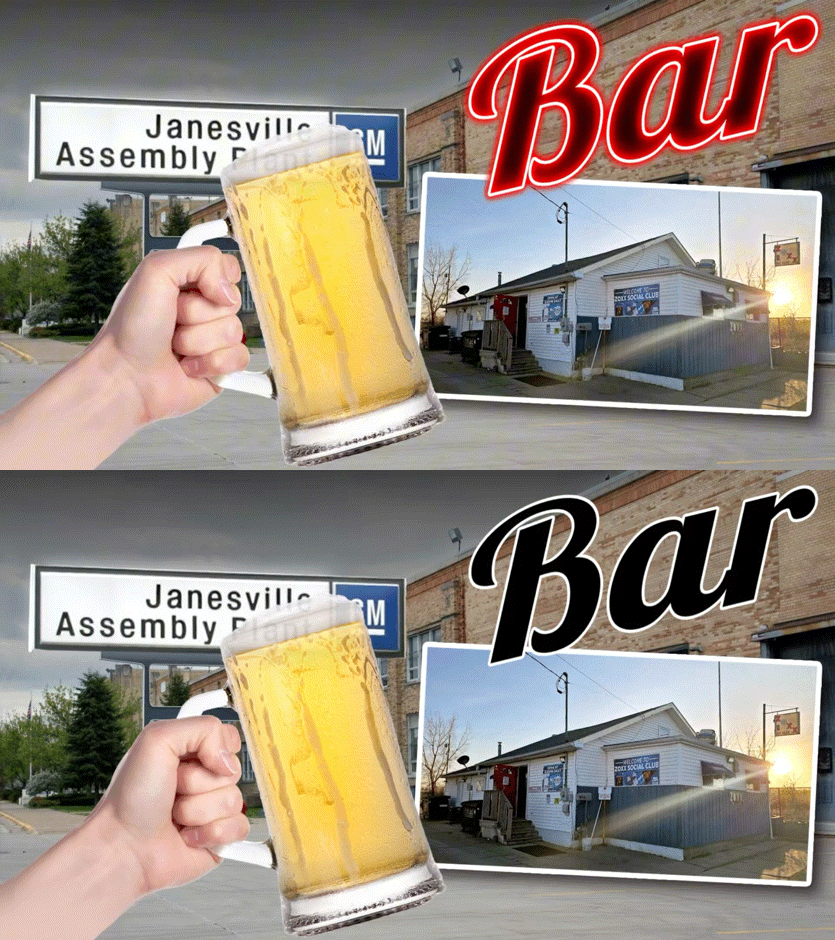
For many Americans, there’s nothing quite like cracking open a cold one while you decompress from a hard day of work. Bars have people from all walks of life just blowing off steam. But what happens when that bar ends up in the parking lot of the factory of a major American automaker? For decades, workers of the General Motors assembly plant in Janesville, Wisconsin, had a bar and restaurant right in the parking lot. Workers were so desperate to get to this bar, which was owned by a GM worker, that they climbed over their own cars and a fence to get there on their lunch breaks. Now, both the factory and the bar are gone.
This story comes to us from Automotive News, and it’s just about the most Wisconsin story you’ll be likely to read this month. One of the stereotypes about Wisconsin is that its residents drink so much booze that there’s practically a bar for every person. It’s not that extreme, but the reality is still funny. According to 2019 data from the United States Census Bureau, the state of Wisconsin sits in fifth place for most bars in America with 2,732 bars across America’s Dairyland. First place, for reference, was New York with 3,389 bars. However, Wisconsin ranks third for most bars per capita at 46.92 bars per 100,000 people.


What I’m getting at here is that Wisconsin loves to drink. I’m a Wisconsin native and lived in Kenosha briefly as an adult. There was a bar on practically every corner, and my all-time favorite restaurant is a bar. Wisconsin even has drive-through liquor stores so you can get your fill on the go.

Wisconsin is also steeped in car culture. Kenosha was once its own ‘Motor City’ and was one of American Motors’ greatest manufacturing hubs. Ford briefly had manufacturing in Wisconsin, and General Motors had an iconic plant nestled in the land of cheese castles and booze.
The Janesville Assembly Plant was GM’s oldest operating factory until it was idled in 2008 and demolished in 2018. The last surviving part of this plant’s legacy, the Zachow’s and Zoxx bar that stood proud in the factory’s parking lot, sadly met its end on February 26. But why was a bar even in a GM factory parking lot, anyway?
GM’s Presence In Janesville, Wisconsin

Zachow’s was more or less created by GM employees for GM employees, and at first, Zachow’s wasn’t on GM’s territory. As Automotive News writes, GM worker Roy Zachow and his wife, Geri, purchased the 900-square-foot former Tom Sawyer Cottage Grill bar in 1961. Zachow worked at the GM Janesville Assembly Plant, and at the time, the bar was in a residential neighborhood. Zachow’s bar was just a neat place for him and other GM employees to enjoy a good lunch while on break or after work. Then, GM started moving in.
The Janesville Assembly Plant nearby was a massive facility, covering over 4,800,000 square feet in its peak. In the 1910s, Hemmings writes, General Motors wanted to compete with Ford in the tractor market. Janesville Machine Company general manager Joseph A. Craig heard news of this and managed to convince William C. Durant to let Janesville Machine Company handle farm implement production for Durant.
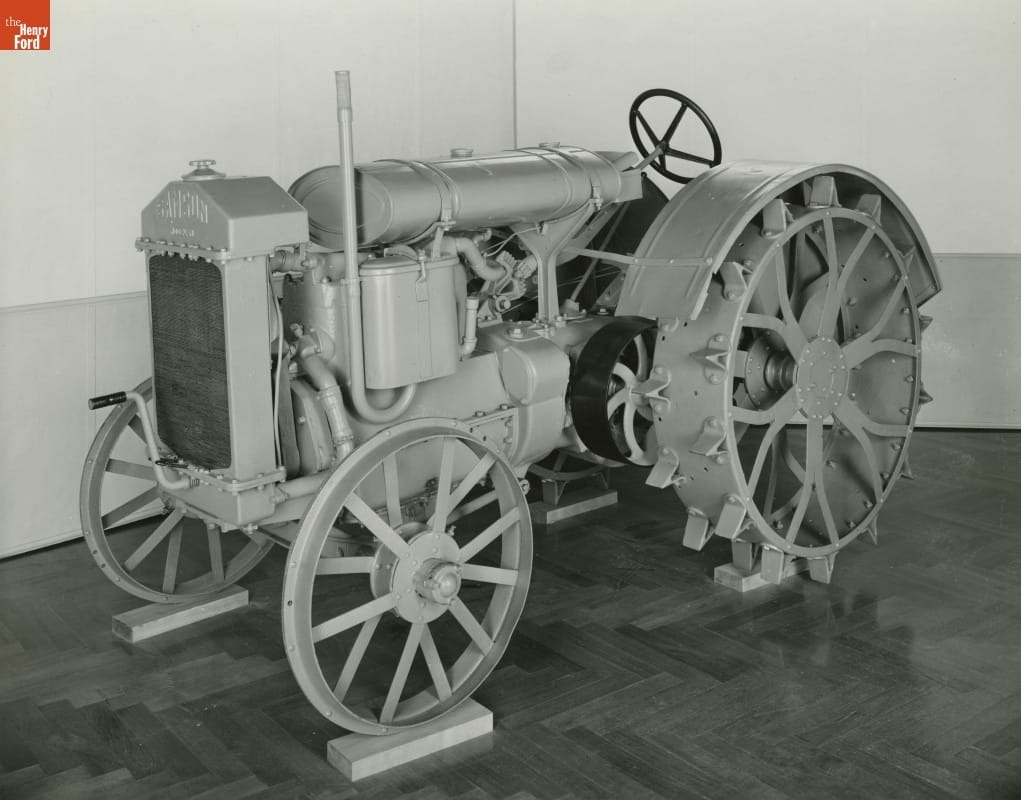
In 1918, Durant scooped up California’s Samson Sieve-Grip Tractor Company, then bought the Janesville Machine Company for $1 million. Samson had also been a General Motors entity since 1917, and GM decided to combine its two farm implement firms, merging Samson and Janesville Machine into the Samson Tractor division of General Motors.
General Motors considered moving Samson to the Midwest. Ultimately, Janesville Machine Company general manager Joseph successfully convinced GM that Janesville was the perfect place to plant its stakes, given the city’s large labor force, proximity to rail lines, and roughly central location in the United States. General Motors would move Samson Tractor to Wisconsin, and the plant, employing 3,000 workers, cranked out its first tractor on May 1, 1919.
Then the whole thing fell apart. There was a tractor boom that ended after the conclusion of World War I, and the new market wasn’t large enough for Samson. The division would fail only a few years after it built its first tractor. As the Janesville Gazette Xtra reported, GM then considered abandoning Janesville, but Joseph came to the rescue. He noted that Janesville upheld its end of the deal by building a school, paved roads, and houses for GM employees. All of this infrastructure was still useful.
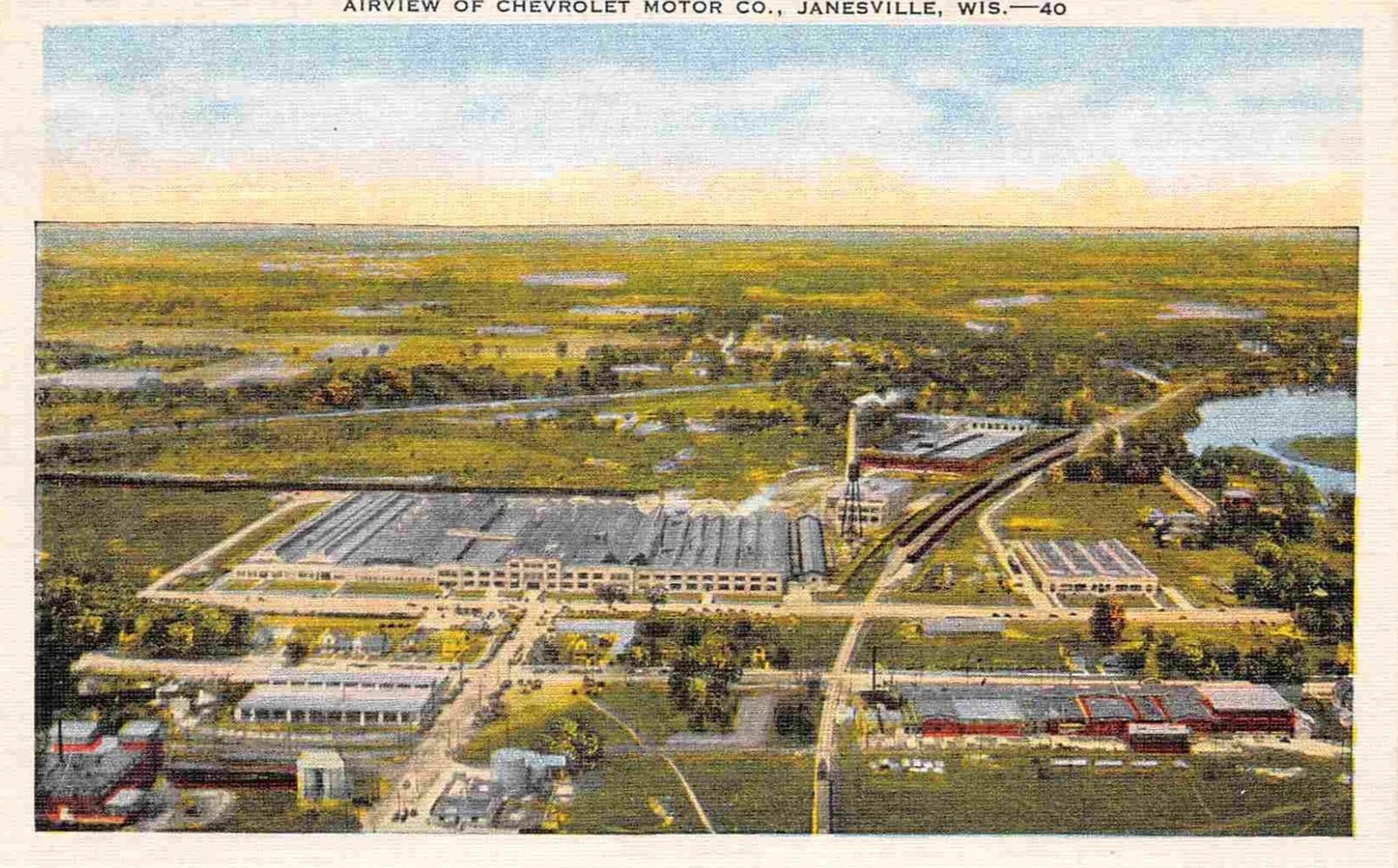
GM moved truck assembly from Flint, Michigan, to Janesville in 1920. In 1923, Fisher Body moved in, allowing the Janesville plant to build Chevrolet cars. The University of Wisconsin-Madison History Department, the Wisconsin Historical Society, and Wisconsin Public Radio’s Wisconsin Life program have created the ‘Wisconsin 101: Our History in Objects‘ project. Part of the project explains what happened with the Janesville GM facility:
General Motors’ entrance into Janesville in the early 20th century drastically boosted the city’s population and recognition on the national scale. The city’s population of 14,000 at the time Samson Tractor began production in 1919, boomed to 20,000 in just eighteen months. At the company’s peak in the 1970s, the plant employed over 7,000 workers; about 1 out of every 7 people of the city’s population of 46,000, was employed by General Motors. The company’s presence in the city and success have played an immeasurable role in the prestige and national recognition of the city. For many years Janesville’s identity has been bound to and defined by the success of the assembly plant, exemplified by the company’s production of the 100 millionth General Motors vehicle in 1967. This vehicle celebrated both the accomplishments of General Motors and of GM workers throughout the country, especially those in Janesville.
Although General Motors brought many good things to the city of Janesville and its workers, their relationship was not one-sided. Janesville brought GM recognition on the world stage and hard work for decades. In 1933, 200 workers from the Janesville Assembly Plant represented the company in the GM Pavilion at the 1933 Chicago World’s Fair. In 1932, GM had decided to temporarily close the Janesville plant due to the Great Depression and Wisconsin’s increased corporate tax rate, but the company offered employment at the pavilion for plant employees looking for work. The fair, called The Century of Progress. was planned to celebrate Chicago’s centennial and promote American technology. The 200 workers from GM Janesville created quite a spectacle as they worked on an assembly line that was visible to onlookers, producing Chevrolet Master Eagle sedans that could be purchased right off the line by fair visitors. This exhibit was a massive success for General Motors and so it was continued again in 1934. The pavilion not only afforded publicity for General Motors and demonstrated to the public how interesting the car-building process was, but it also celebrated the skill of Janesville’s plant employees as the model workforce of the American automotive industry.

Janesville GM’s hardworking employees made the assembly one of the company’s most successful. A 1954 article of the Janesville Gazette reported that the plant had produced the fourth highest cumulative number of Chevrolet vehicles of any plant nationwide, despite the fact that Janesville Assembly had begun production over a decade after Chevrolet was founded. The article goes on to state that Janesville workers had been putting in more work to keep up with current demand, producing 167,000 cars per year on average between 1949 and 1954, compared to their previous peak output average of 100,000 per year. Their high level of production demonstrates Janesville workers’ hard work, as they ramped up production and were able to rise to the occasion.
The project continues by saying that the workers of the Janesville Assembly Plant were instrumental in the creation of the United Auto Workers labor union. To summarize this in far fewer words, Janesville was an important fixture in American automotive history. Janesville also became the place of a weirdly inspirational battle between a corporate titan and a small business.
The Bar On GM’s Grounds
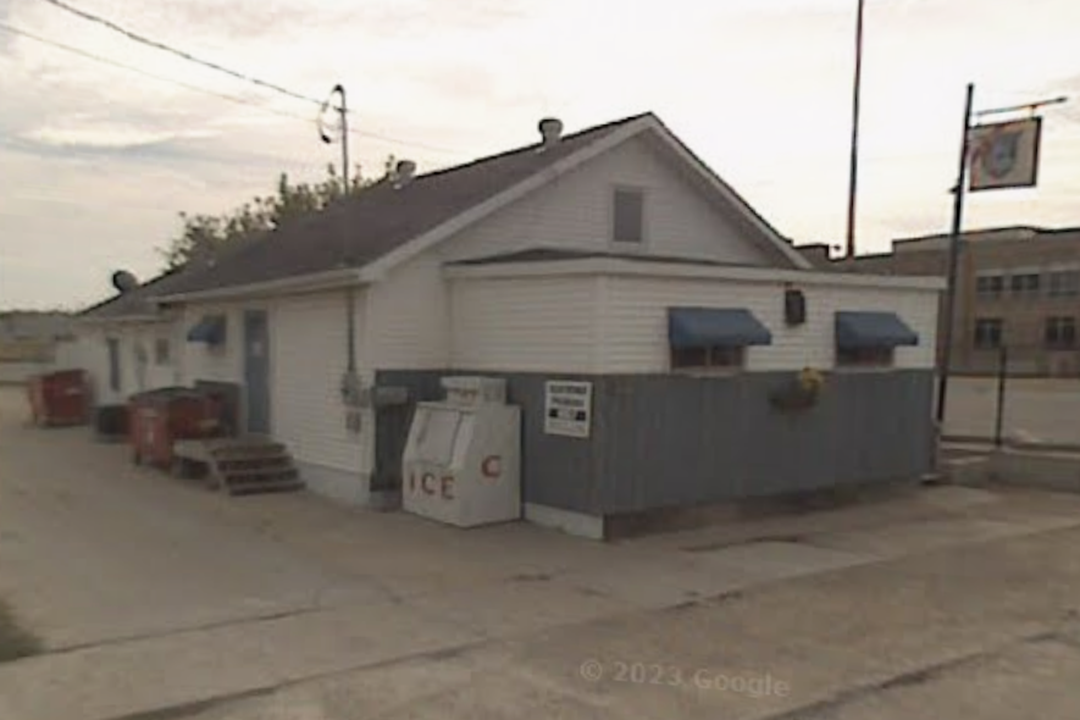
The Gazette Xtra reports that Zachow’s was an interesting experiment at first. The Zachows had just purchased a house and a new van when Roy got the bar idea. Geri thought running the bar on top of having to raise five kids was a bad idea. Yet, the bar turned out to be a smash hit. As GM plant employees discovered the place, Roy had to increase his beer orders from 10 cases to 100 cases. Eventually, he had so much money flowing in that he remodeled the bar’s kitchen and started serving burgers and fries to go with the beer.
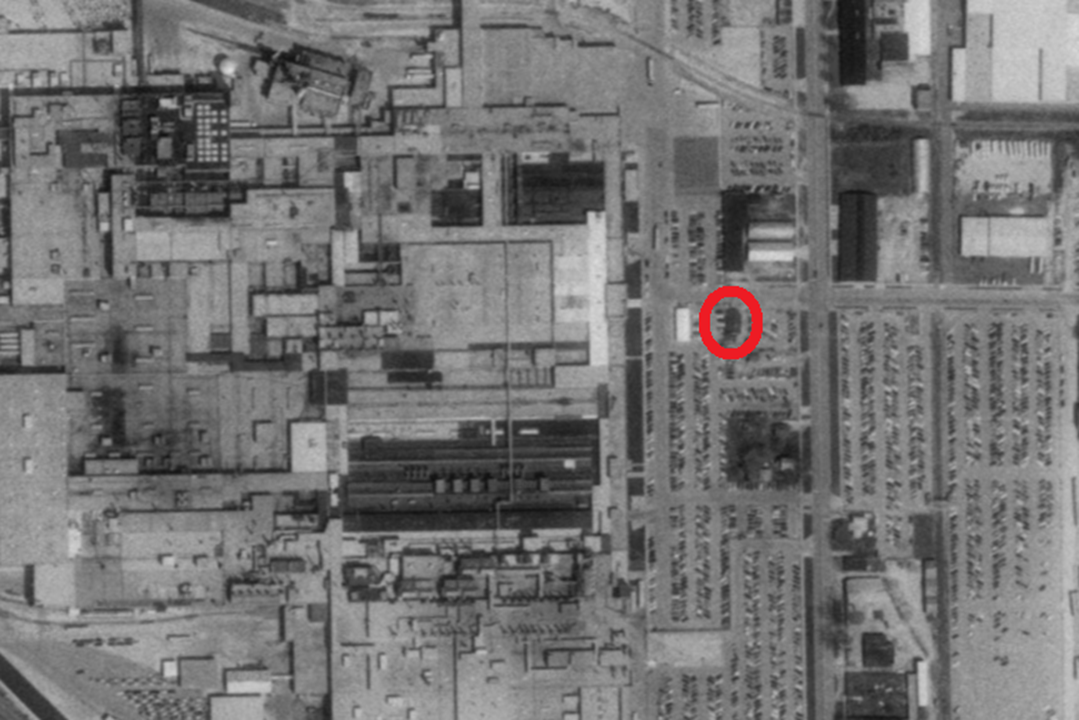
It took some time, but GM brass eventually figured out where Janesville plant workers were disappearing to on their breaks, and learned that it had a bar right there at its doorstep. It must have been a twist to find out that the bar’s owner was an employee of that factory. Below is a satellite image from 1985, the bar is circled in red:
As GM expanded its Janesville operations, it purchased the residential properties in the neighborhood and bulldozed them down to make more room. There was one impediment to GM’s progress, and it was the bar. Zachow wasn’t interested in selling his hangout.
The Gazette Xtra reports that GM treated the Zachows to a fancy dinner at a Holiday Inn, offering $96,000 for the couple to sell their property. The Zachows countered, saying that they were making much more money by selling beer and burgers to GM employees. Geri Zachow offered a compromise. GM could move the bar off the land it wanted and place it in an old lumberyard in the neighborhood. Allegedly, GM wouldn’t accept anything but the bar’s entire removal from the neighborhood.
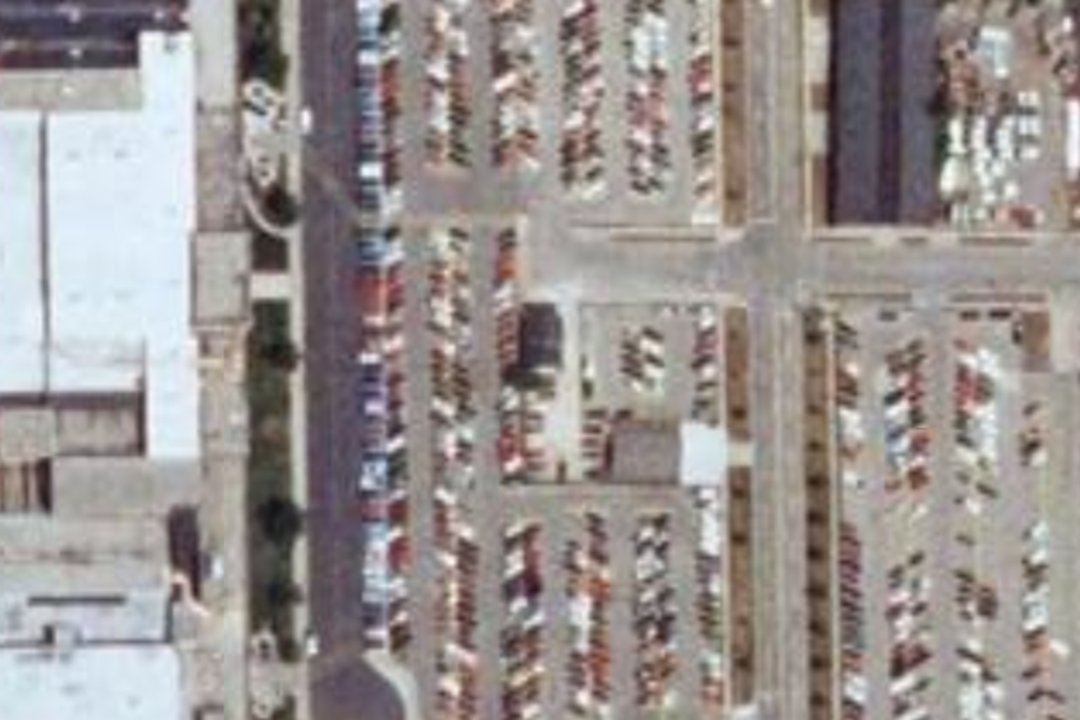
Allegedly, Roy was fired from GM soon after he refused to sell his bar.
GM also never gave up. In 1987, GM flew Roy out to Detroit and offered $200,000 for the property. From Gazette Xtra:
“They paid for his trip over there, but he told them he wouldn’t take less than $500,000,” [Geri] said. “I think he probably would have taken $350,000.” “He came back, saying, ‘Those bastards will never get the bar.'”
Plant Workers Got Crafty To Reach The Bar
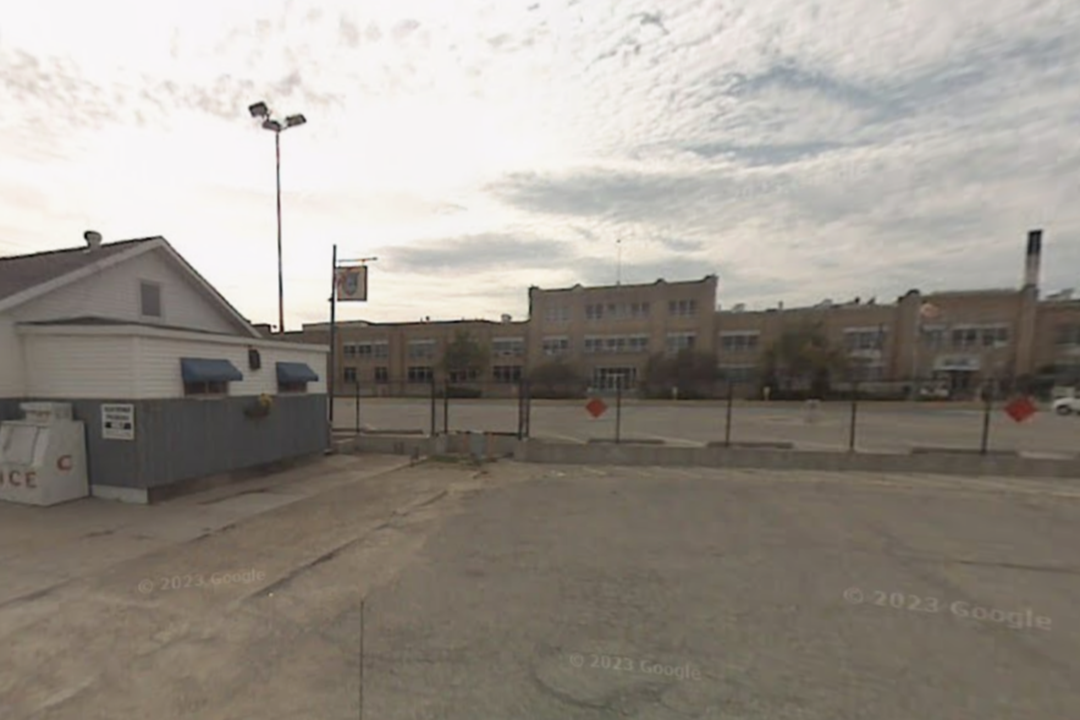
Since GM couldn’t buy the bar out of existence, it instead tried its hardest to deter workers from going there. By now, the factory had expanded to the point where the bar was in the factory’s parking lot. To deter workers from going to the bar on their breaks, GM erected fences. This meant that the official way to get to the bar from the plant was to walk around the block. Workers had only 30-minute breaks, and there just wasn’t enough time to walk around the block, grab a bite at the bar, and then walk back.
So, the workers started getting crafty. Some climbed the fences while others parked their cars next to the fence and then climbed over their cars to jump the fence more quickly. Geri Zachow described how crazy it got, from Gazette Xtra:
“Some of them broke their legs going over that fence,” she said. “They only had a half hour to eat, and they couldn’t walk clear around the block to get here.” “They came everyday to eat, not get drunk. You could hear ’em coming like a herd of buffalo on the plains.”
As Automotive News notes, serving the plant’s workers was such good business that Zachow’s operating hours reflected those of the factory. That meant that the bar was closed on weekends and on the same holidays that the plant was. That alone is insane. There are lots of folks who go bar-hopping in Wisconsin on weekends, but Zachow’s was doing so well from factory workers that it didn’t even need to be open then.
The Bar Outlasts The Factory

In 1989, the Zachows sold their bar to their son, Jim Zachow. Jim later sold the bar to Andrew Sigwell, his stepson and the grandson of Geri Zachow. Along the way, the bar was renamed to the Zoxx 411 Club. Sigwell had worked at the bar since 2000 and saw the writing on the wall that GM wasn’t going to keep the plant open forever.
The Zoxx 411 Club began opening on weekends and, in 2006, focused on being a destination for dart-throwing teams. The Zoxx 411 Club hosted 14 teams, some of which went on to become world champions. But when General Motors idled the Janesville plant in 2008, it was a blow to the community.
The plant had a rich history up until that point. In 1977, Janesville Assembly’s 7,100 workers built 274,286 cars and 114,681 trucks. In the 1980s, full-size car production left the plant, and Janesville built J-platform cars like the Buick Skyhawk, Cadillac Cimarron, and Chevy Cavalier. Other GM vehicles in the Janesville Assembly’s past include the Chevy Blazer, the Chevy C/K pickup, the B-body Chevy Caprice and Impala, the Chevy El Camino, the Chevy Kodiak, the Chevy Bel Air, the Chevy Biscayne, and so many more. The plant even made 16 million 105mm Howitzer shells as well as Isuzu trucks, Chevy motorhome chassis, and school bus chassis.

By the early 1990s, Janesville was GM’s capital of SUV manufacturing. In its final years, the plant was known for building GMT900 SUVs like the Chevy Tahoe, Chevy Suburban, and the GMC Yukon and the GMC Yukon XL. In 2006, the plant produced its 500,000th SUV capable of running E85 FlexFuel.
Janesville was a winner in the SUV boom of the 1990s and the 2000s, but those fortunes quickly turned to woes during the financial crisis in 2008. As SUV sales cratered, GM scaled production back to only a single full-time shift. Then GM enacted its employee buyout program. The last vehicle was manufactured within the halls of Janesville Assembly on December 23, 2008. That vehicle was a 2009 Chevy Tahoe, which was donated to the United Way of North Rock County for a raffle.
Only a part of the plant remained open until April 23, 2009, as 57 workers continued building Isuzu medium-duty trucks. The full factory never reopened, and in 2018, the wrecking balls came for GM’s oldest plant.

Sigwell was smart to shore up the Zoxx 411 Club as a bar for everyone. Some former GM plant workers continued going to their old hangout spot, but the bar had been attracting younger patrons interested in darts.
Sigwell sold the bar to Andy and Desiree Wilson in 2020. The couple transformed the bar into the Zoxx Social Club, which expanded on the idea of turning the bar into a local gathering place. Zoxx Social Club hosted open mic nights and Green Bay Packers potlucks, plus monthly meetings of the Janesville Deaf Society. Amazingly, the bar managed to thrive without GM, sitting on its own in an otherwise deserted swath of land that used to sit in the shadow of the plant.
Janesville Makes Way For A Data Center
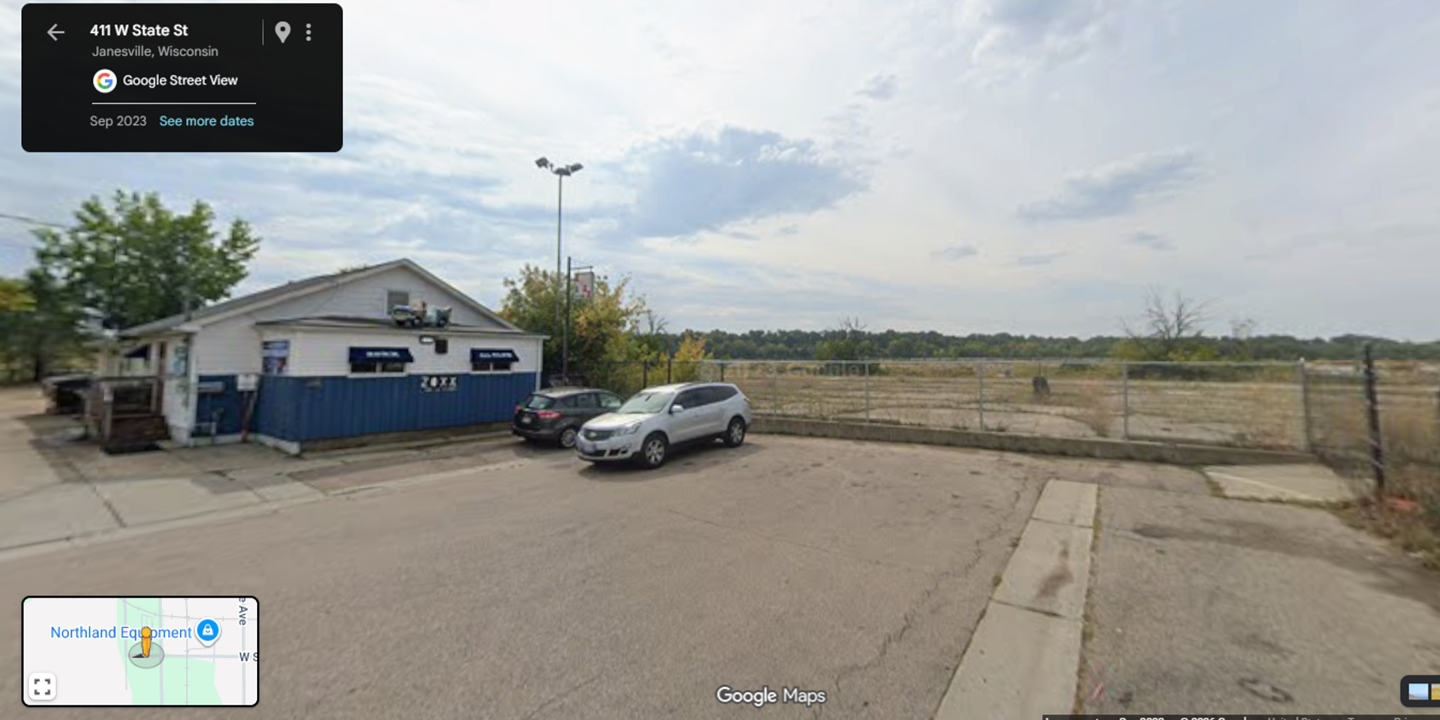
Janesville worked through plans to possibly fill the empty space with housing or an industrial park. Then came an offer the city couldn’t refuse. Viridian Acquisitions LLC wants to plant a potential $8 billion data center on the 240-acre site. The project calls for the creation of 13,200 construction jobs. When finished, the data center will consume 800 MW of power.
There was only one thing in Viridian’s way, and it was the little bar that beat GM decades ago. Sadly, this time, the bar met a foe it couldn’t beat: the city. As Automotive News reports, Janesville forced the Zoxx Social Club out through eminent domain, paying the owners $280,000 in the process, and then the building was destroyed on February 26, 2026 (video embedded above). The owners ended the bar’s run with the Zoxx’s End of Days party before its last operating day on August 1, 2025. At least one attendee came from as far as Minnesota to celebrate the bar.
It was a sobering end to what was a local legend and a part of automotive history. Zoxx was the tiny bar that battled GM and won, even outlasting the GM factory. It was the place where countless GM employees blew off steam and made memories with their compatriots. Later, it was the social spot for the deaf community, Packers fans, and serious dart players. Now, it’s going to be another data center, and the bar, like the GM factory before it, will have to live on in memories, photos, and stories online.
Many will likely think about those olden days, back when GM workers tried to make the best of their 30-minute breaks by clambering over cars to hop a fence to get a burger or a work-break beer. All the while, GM brass was offering the bar’s owner increasing sums of money to go away, and failing. This feels like a story that could only have happened in a place like Wisconsin and with a corporation like GM. Hopefully, that history will never be forgotten.
Top graphic images: Cliff – CC BY 2.0; Zoxx Social Club; DepositPhotos.com


“Well… you can’t stop progress.” – the Sign Painter
I remember being a bit surprise when I first visited a tractor manufacturer in Wisconsin and they ordered 2 pitchers of beer at lunch for a table of 5.
Not the business lunch I was used to having started out my professional career in the South.
Great article Mercedes! As a Wisconsinite, this makes me proud.
Where was Ford’s WI facility? I haven’t heard about that one before today.
There was a Ford facility in Milwaukee during the early decades of the 20th century!
I recall various people who worked for “Ford’s” talking about Janesville and how they were drunk all the time because they had a bar basically in the parking lot. Even saying you might find a beer bottle somewhere in a car build there. Still a funny idea. I would imagine a good shop steward would try to get any injuries related to management blocking their bar as work related.
I wish governments would realize data centers biggest employment and all the money is in the construction. Then it’s less then 100 people most less then 30. It continues to be less and less as things are optimized. Plus they want to use municipal water as a cooling loop. Make them put in their own closed loop geo thermal system. Or use the heat for something beneficial.
Most of the time, you can’t use the waste heat for anything beneficial. They’re being built in the middle of nowhere, so there aren’t that many houses to heat, anyway.
30 jobs and property tax revenue is better than having an empty concrete slab on those 240 acres.
(Having the same argument in my city but in our case the land in question is “farm” land that grows grass seed, employs basically nobody, and pays very little in property tax)
That picture of the tractor reminds me what a game changer tractors must have been for farming. And they were made even better when enclosed cabins and climate control became available and then even better than that with GPS navigation.
Then JD had to go ruin the party with proprietary repair.
Yay, shoutout to where 2 of my trucks were built. There was also a Geri’s hamburger (no relation) on the other corner of the plant, it didn’t last as long as the bar. Also, that data center idea can F-OFF, but I think the city screwed themselves into a corner and they don’t have any other options.
Ah yes, a new data centre. Just what everyone needs.
Goes to show how the world works now. GM couldn’t solve the problem via private or public means during their heyday, perhaps politicians were less easily bought. Now the motto is more, move, bitch, get out the way.
What a Ludacris time to be alive.
Yeah, the world definitely needs a new Robin Hood and Lil Jon of sorts to Usher in a change. Yeah.
This seems like a potential good spot for a data center, although it surely won’t employ as many as GM used to.
Loved this story about a part of GM’s history that I had no idea about. And totally loved the indomitable spirit of the bar’s various owners over the years. To outlast the corporate entity that was largely responsible for laying the foundation for your successful business hits me just right in the feels.
“… GM treated the Zachows to a fancy dinner at a Holiday Inn, offering $96,000 for the couple to sell their property.”
It clearly wasn’t Prime Rib Night – otherwise they might have sold.
I laughed when reading that they took them to the Holiday Inn. Maybe back then it was something special.
I laughed when I read that part of the original report. My first thought was “well, no wonder they didn’t take the offer.” lol