

If you’ve ever registered a car at your local DMV, you’ve likely seen a checkbox on the registration document marking whether or not you’d like to register your car as a classic or historical vehicle. In many cases, checking this box does more than get you a different license plate. It could make you eligible for lower registration costs or cheaper insurance premiums.
Registering a car as a classic can come with some restrictions, too. In many states, there are rules against using vehicles registered with historical plates for daily transportation. Wisconsin is especially strict with its collector and hobbyist plates. To make sure you don’t use the plates improperly, the state requires you to have a daily driver registered in your name before it will issue you plates. If your classic is jointly owned, both drivers have to have registered daily drivers before Wisconsin will issue these plates.


Currently, Minnesota has some similar rules in place for its collector plates. According to the state’s DMV website, owners have to certify they already own a daily driver, and the car can’t be used for general transportation. While the agency uses driving to and from car shows and parades as examples of acceptable use, there aren’t any explicit rules for where and when you can drive. If this new bill is signed into law, though, vintage car owners with historical license plates could face a lot more restrictions.
The bill, titled HF (House File) 3865, would establish a host of new rules for owning, registering, and operating classic cars in Minnesota. A classic car can be registered in a few different ways through the Minnesota DMV. There are standard “collector” plates, where any car that is at least 20 years old, but newer than 1935, is eligible. Then there are “classic” plates, where only vehicles built between 1925 and 1948, and designated as a classic car by the Classic Car Club of America, are eligible. Then there are “street rod” plates, which can only be registered to vehicles built before 1949 and “designed and manufactured” to resemble a street rod. Finally, there are “pioneer” plates, which can only be registered to cars built before 1936. Oh, and there are also classic motorcycle plates, which follow similar rules to the “collector” plates, in that the bike has to be at least 20 years old to qualify.
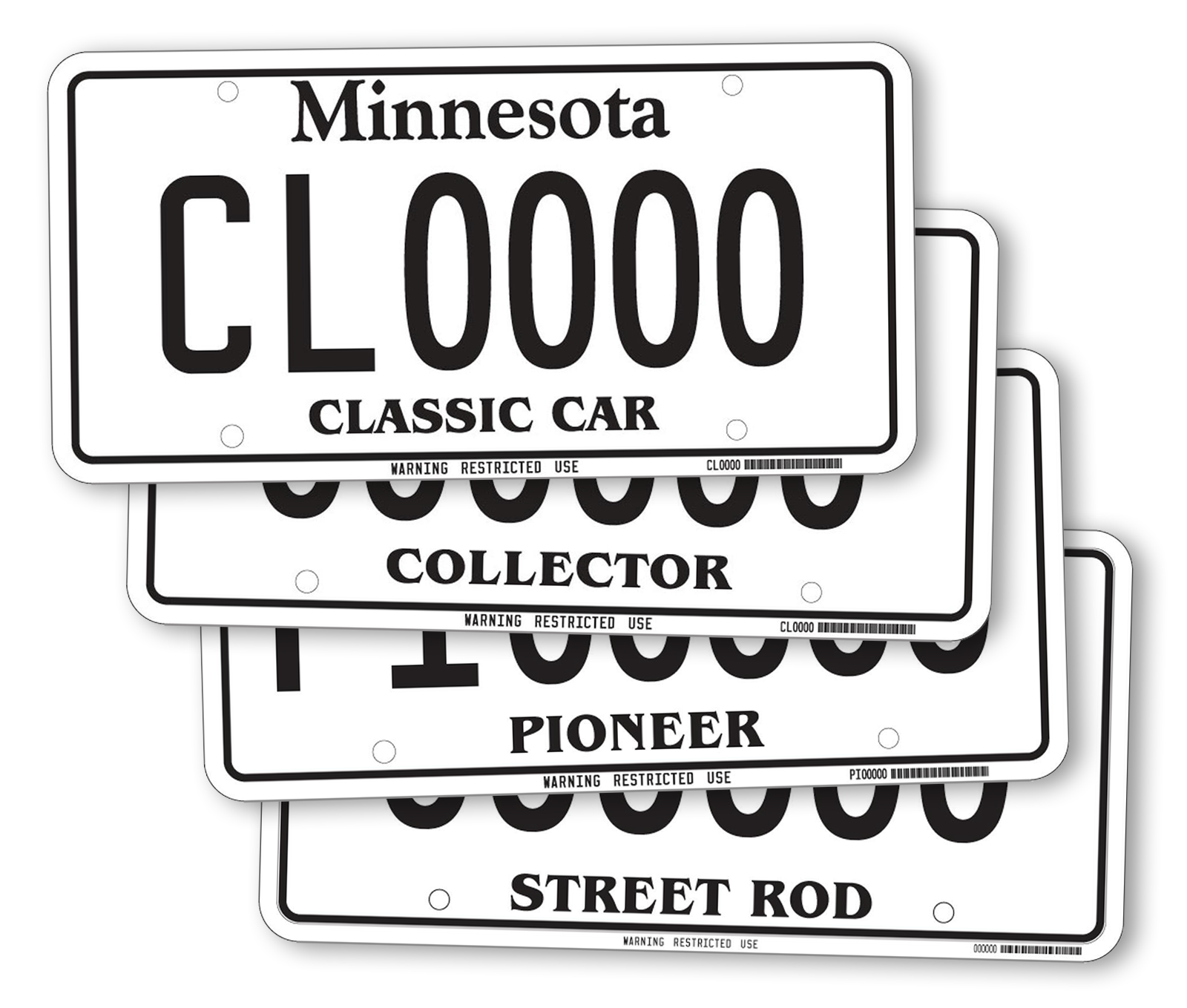
This new bill would apply to all of the above plates, as well as military vehicles that are at least 20 years old. Here’s the paragraph you have to concern yourself with:
Subd. 5. Vehicle operation. A person may operate a vehicle registered in the collector class under subdivision 1a, 1b, 1c, 1d, or 1h, or under section 168.105, solely as a collector’s item and not for general transportation purposes. Operation as a collector’s item includes: (1) transportation for a collector vehicle club activity, exhibition, tour, parade, or similar use; and (2) operation on Saturday and Sunday from sunrise to sunset.
Alright, there are a couple of things to point out here. First, subdivisions 1a, 1b, 1c, 1d, 1h, and section 168.105 refer to all of the historical plate types I listed above. Next, according to the above text, this proposal would clarify what these cars can be used for, specifically noting driving to a collector vehicle club event, a car show, a tour, a parade, or similar.

On its surface, this feels only a tiny bit more restrictive than the current rules, which only allude to this type of restriction, but don’t explicitly state it. But it’s an important distinction to make. Whereas before, you could very easily get away from driving pretty much anywhere with your classic, this bill would assign specific use cases you’d have to adhere to.
This new restriction would only apply on weekdays, according to the bill. Going by the last line in that paragraph, drivers of classic cars will be able to drive their vehicles freely throughout Saturday and Sunday, but only during daylight hours. This is painfully vague and leaves the language up to some serious interpretation. How it’s written now, it suggests that vintage cars would only be allowed to drive on weekdays if they’re on their way to a show or other official exhibition use, and they wouldn’t be allowed to drive on the road at all whenever the sun goes down on the weekend.
This raises lots of questions, obviously. What qualifies as a sanctioned event? Could I still go on a casual cruise to meet a few friends in a parking lot on a Tuesday night? Is that considered an “exhibition?” What if I need to drive the car to my local workshop for a repair? Most shops aren’t open on the weekend, so would I have to have the car towed there? And for the love of all that is holy, why can’t I drive my classic car to the drive-in on a Saturday night? Has the writer of this bill ever heard of a sunset cruise?

Curious to know what those in the Minnesota classic car community think about this, I reached out to a couple of car clubs.
“I do think the language of the bill is problematic,” Cameron Parkhust, president of the BMW Car Club of America North Star chapter, told me over the phone. “The restrictions that are proposed, if strictly enforced, don’t make sense and are not workable.”
Parkhurst went on to say that people in his circle will often go to drive-ins and smaller meets, like Cars and Coffee events, on weekdays, and expressed worries about how people will get their cars repaired. “It’s too restrictive,” he said.
Gary Watkins, president of the Corvettes of MN club, told me most of his members wouldn’t be affected, as very few run collector plates. Nonetheless, he was far more blunt with his assessment of the bill: “It’s a stupid waste of time proposal,” he told me over email.
I’ve reached out to state representative Meg Luger-Nikolai, the bill’s sole sponsor, to get some clarity on the wording and find out why she’s trying to impose these restrictions. Neither her nor Governor Tim Walz’s office has gotten back to me. Most people online speculate that the cheaper cost associated with registering a car as a collector compared to a normal registration is the likely reason for the push.
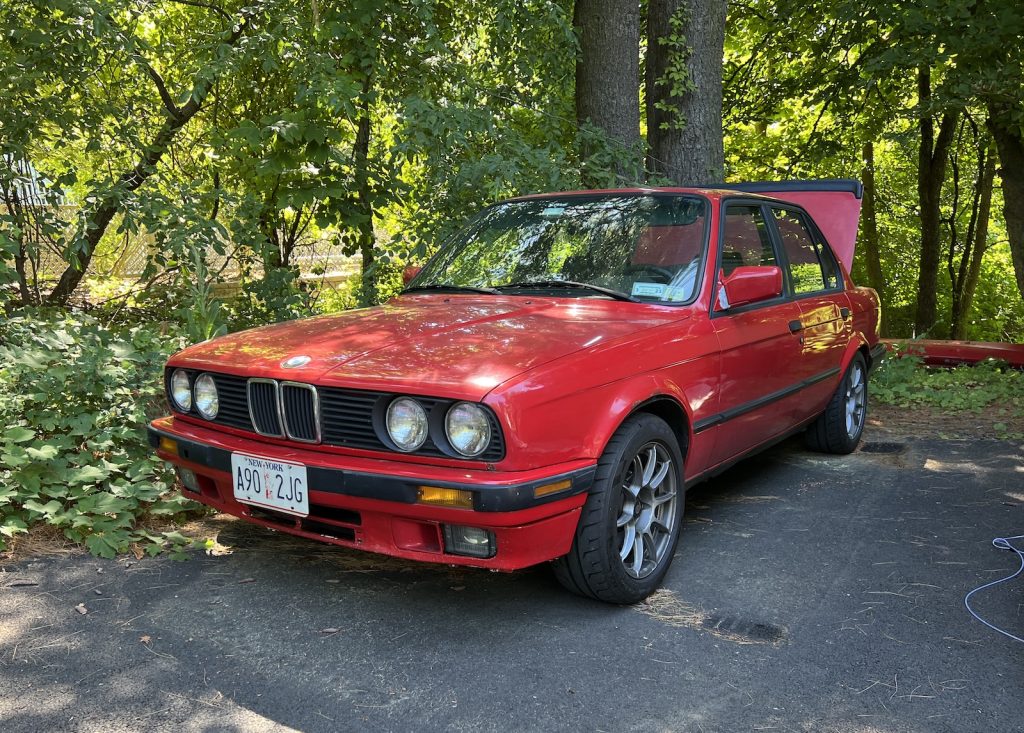
Either way, if I were a Minnesotan with one of these plates on the back of my car, I wouldn’t be too worried. These sorts of restrictions are rarely enforced, at least going by my own experience. I street-parked an old BMW 3-Series for nearly two years and used it nearly every day on a historical registration, and was never called out for it. Parkhurst mentioned to me that he’s never seen Minnesota’s current laws on classic car driving restrictions enforced.
Plus, the bill’s chances of passing aren’t exactly clear right now. A couple of Facebook groups report that the bill was dismissed from the house discussion for the year, though I haven’t seen that reported anywhere else. Even if it passes through the legislature, the proposal also has to be signed into law by Walz, a noted vintage car enthusiast who owns a 1979 International Harvester Scout II. Whether that means the car community could win sympathy from him is unclear.
If you live in the North Star state and feel strongly enough about this, I suggest reaching out to your representative. It might feel like your call or email is going into a black hole, but it’s certainly better than nothing. You could also just re-register your car normally, with standard Minnesota plates. It’s a bit pricier, but if it means avoiding these restrictions altogether, then it might be worth the trouble.
Top graphic images: DepositPhotos.com


God, I hate living in Minnesota more and more with each passing day.
Late to the party, but I feel like Walz wouldnt go for this- considering he has his International Scout
This is the sort of law that only gets enforced if you piss off a cop. Don’t piss off cops as a general rule. Politeness and discretion about where you hoon your old crock go a long, long way.
There is also a very simple solution – just register the thing as a regular car if you are going to use it as a regular car. And deal with whatever the consequences may be. In the case of my two antique-registered old crocks in Maine, that would mean the slight bother of getting them inspected every year, as that is the only advantage of antique plates in Maine. Same taxes and registration, and I’ve had collector car insurance for decades without them knowing or caring how the car is registered.