I love the phrase “nauseously optimistic,” because that’s how I feel most of the time when something is going well. While I’m a generally positive person, I cannot entirely silence the voice in the back of my head that enumerates all the things that could go wrong. It’s how I would describe every Mariners fan going into the bottom of the 7th inning last night.
Are automakers happy about losing billions of dollars to tariffs and having to shift a bunch of their production? Probably not. Is it as bad as it could have been? Also, probably not. The temptation I always have when writing The Morning Dump is to give in to either doomerism or unqualified exuberance. To get lost in the sound of battle and not see the larger map.
This was the case when I started writing TMD, and it simultaneously seemed like the industry would never pull itself out of the chip shortage and somehow also sell 10 trillion EVs in the United States by the end of the decade. I like to think I resisted both, although I’m sure you can find examples of me giving in to temptation just a little bit.
With tariffs, it’s been easy to assume that everything would go wrong and automakers wouldn’t absorb any of the costs. That’s not quite what happened. Instead, GM thinks it’ll do ok, and most analysts are saying the sky hasn’t entirely fallen.
You want some doomerism? Here’s some doomerism: Toyota’s reasoning for not selling the Baby FJ is super bleak and makes me sad. It’s also the inverse of why some Europeans really don’t want our cars.
ADVERTISEMENT
And optimism? Here’s some optimism: Dacia Duster. That’s it. Dacia Duster.
GM Slightly Revises Up Earnings Estimates For 2025
Source: GM
Going into the year, most automakers had rosy predictions for how much money they’d all make. For some reason, they didn’t take the threat of a global trade war seriously. And then it happened, and it was a mess, and none of it made any kind of sense.
The good news for automakers, depending on your perspective, is either that President Trump always “chickens out” (the TACO trade) or that the President is willing to listen and to adjust policy as necessary. You can imprint your views on the news that the White House is considering importing beef from Argentina to help bail out that country and lower costs, and what it means for a White House that’s trying to make the case that we should do the opposite for seemingly every other product sold from any other place.
Either way, GM sees things as not so bad. The company’s Q3 earnings data isn’t great, as earnings and net income both declined significantly. The market expected worse, and CEO Mary Barra, in her letter to shareholders, acknowledged that the company is in a position to slightly raise its lowered revenue guidance for the year:
Thanks to the collective efforts of our team, and our compelling vehicle portfolio, GM delivered another very good quarter of earnings and free cash flow. In the U.S., we achieved our highest third-quarter market share since 2017 with strong margins, and our restructured China business was profitable once again. Based on our performance, we are raising our full-year guidance, underscoring our confidence in the company’s trajectory.
One of the big changes, she notes, is the MSRP offset announced last week. Now that automakers can deduct a huge portion of tariffs if the cars are assembled in the United States, there’s going to be less of an impact going forward. This applies not only to American automakers, but also to any company that builds a lot of cars here (Honda, Toyota, et cetera).
ADVERTISEMENT
This does make me wonder if the White House isn’t inadvertently encouraging companies to raise the MSRPs of their cars and then discount on the back end, thus giving themselves more tariff relief.
American Car Execs Are Less Freaked Out, But That Doesn’t Mean Things Are Perfect
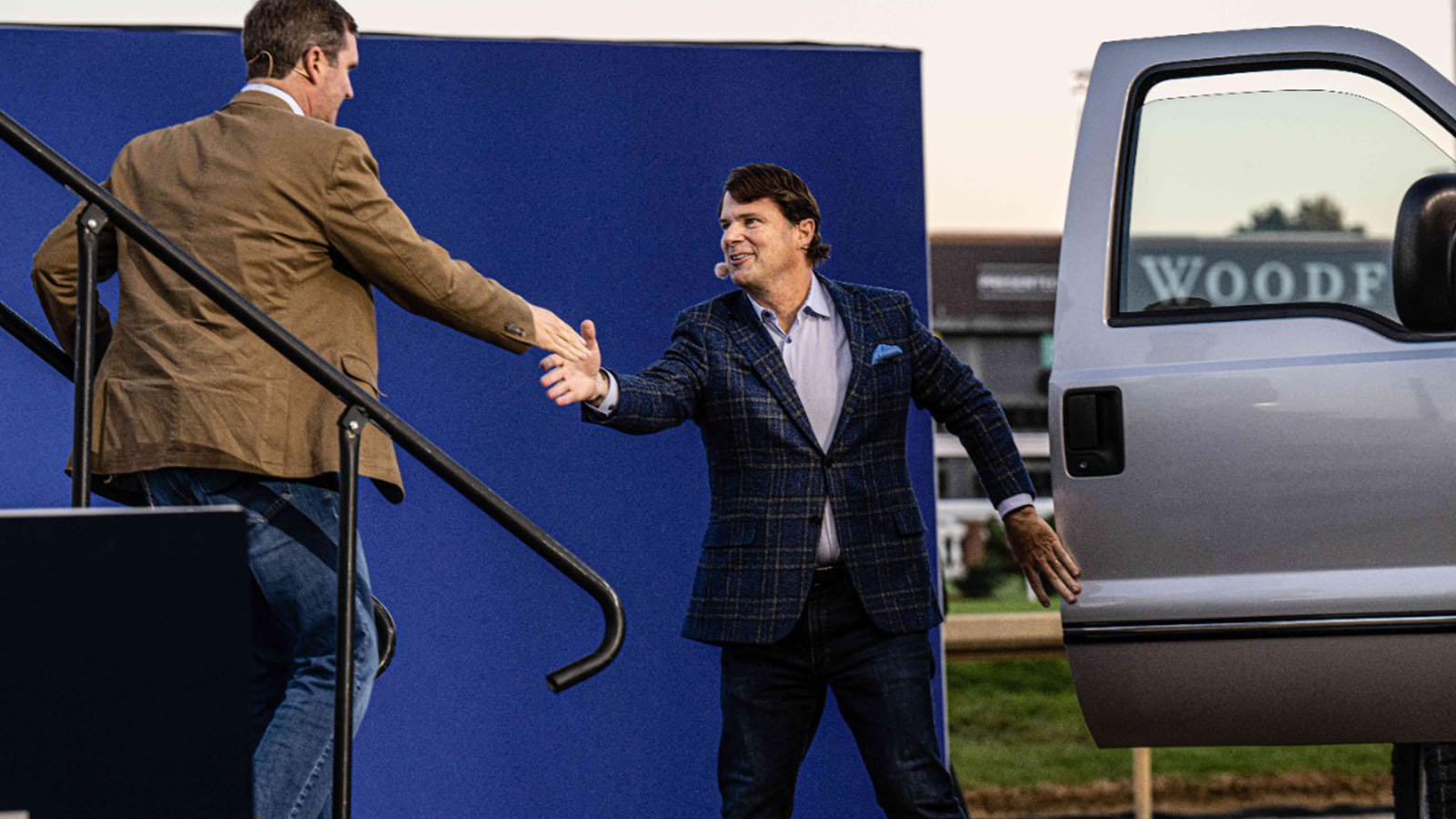
Source: Ford
As much as I’d like to enjoy the moment of blissful optimism, carmakers and CEOs are mostly saying it’s not going to be as bad as they thought, not that it’s going to be immediately great.
There’s a good CNBC article today that goes through a lot of what analysts and carmakers are saying, and it’s mostly: It could have been worse. Here’s a nice summation:
“There’s some positives for next year, but there could also be some really bad negatives if there’s a freak out on tariffs or the consumer finally breaks down or whatnot,” Morningstar analyst David Whiston told CNBC. “But no one’s calling for a complete crash.”
Whiston — who covers GM, Ford and several auto retailers and suppliers — characterized his outlook as “cautiously optimistic,” saying the significant industry concerns are countered by other bullish circumstances.
UBS analyst Joseph Spak agreed, noting a lot of challenges for automakers such as tariffs and losses on electric vehicles “have already been incorporated into 2025/2026 estimates,” he said in an investor note last month.
Again, some of this is premised on nothing bad ever happening. If there’s a drop in consumer confidence, a run on the banks, or whatever, this tenuous peace we have could break.
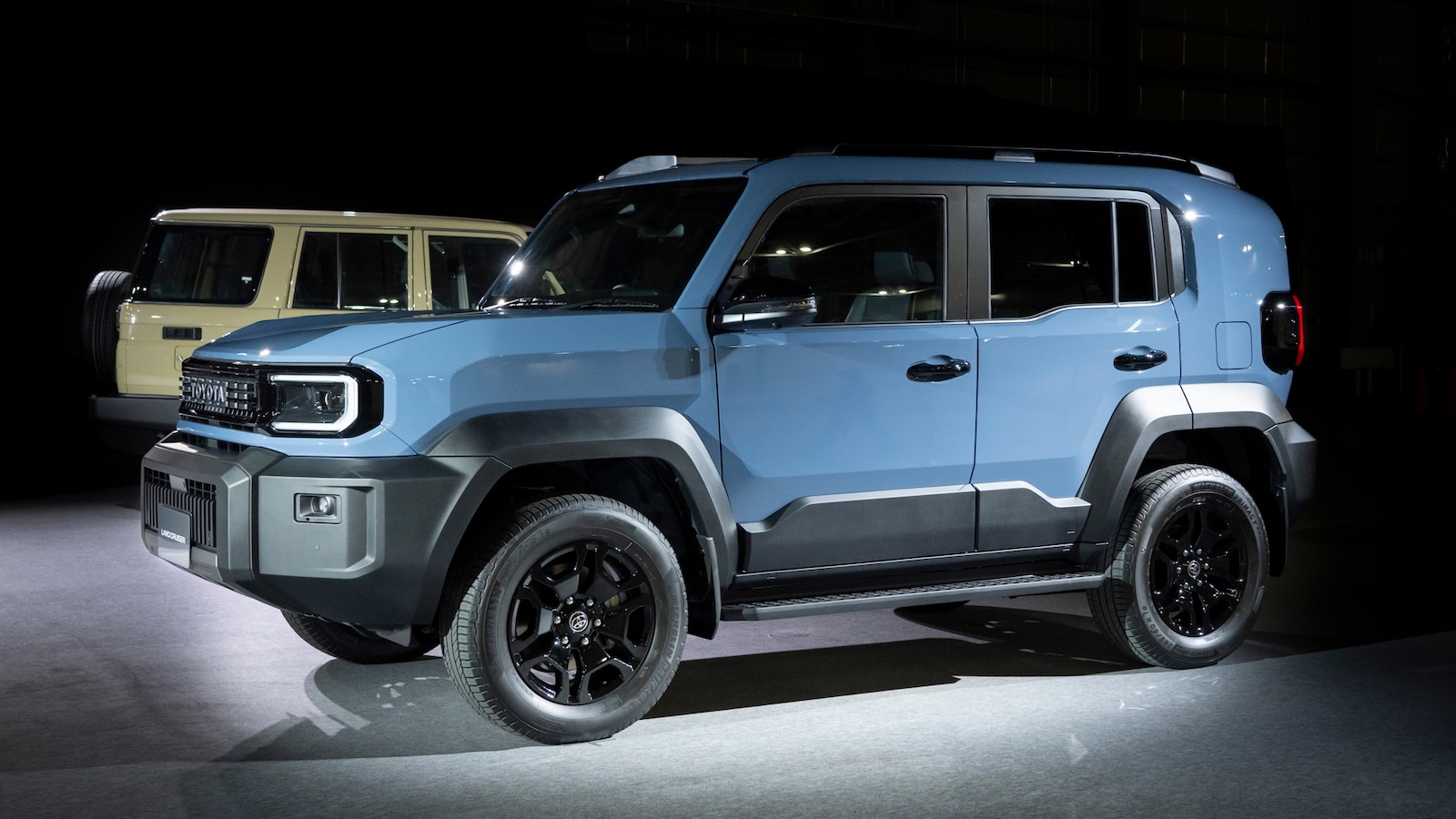
Toyota Says The Baby FJ Is Too Small For Us
Photo credit: Toyota
We finally got to see the Baby Land Cruiser FJ, and I love it. At the same time that it was announced, it also became clear that we’re not getting it. Ugh! Why?
The FJ will be built in Thailand and target emerging markets in Southeast Asia, Africa, the Middle East and Latin America, Uchiyama said. It will also be offered in Japan.
Uchiyama, who oversees the entire Land Cruiser family, said the FJ is too small for the U.S.
“There are no plans for America or Europe,” Uchiyama told Automotive News during an Oct. 20 preview at Toyota’s Higashi-Fuji technical center. “The start point for this is the global South.”
You sonofabiiiiiiish!
American Cars Are Too Big For Europe, Says Some Europeans
Source: GM
I love going to the UK and counting how many Mustangs I see. The Brits love a Mustang. Actually, all good people love a Mustang.
That being said, the environmental policy group Transport and Environment is not super pleased about the US and EU harmonizing standards as a way to get the Trump admin to lower tariffs. Why? Our cars are not built for European roads:
The deal agreed over summer states that “with respect to automobiles, the United States and the European Union intend to accept and provide mutual recognition to each other’s standards.” Yet, EU vehicle safety regulations have supported a 36% reduction in European road deaths since 2010. By contrast, road deaths in the US over the same period increased 30%, with pedestrian deaths up 80% and cyclist deaths up 50%.
Europe currently has mandatory requirements for life-saving technologies, such as pedestrian protection, automated emergency braking and lane-keeping assistance. Some of the most basic pedestrian protection requirements which have long been in place in the EU, such as deformation zones in the front of vehicles to reduce crash severity and the prohibition of sharp edges have made cars like the Tesla Cybertruck illegal to sell in Europe.
“Europe built its reputation on pioneering robust vehicle standards.To accept lower US standards would undo decades of EU progress,” say the signatories. According to the letter “the consequences of such a move for European road safety would be profound.”
Look, I don’t care about your facts; I only care about my feelings. And my feeling is that it would be a lot of fun to roll around Barcelona in a Bronco Raptor.
ADVERTISEMENT
Also, yeah, many of our cars are not really built for European roads, which is why I think this is somewhat overblown. While a few people might import some interesting cars, I think generally American HD trucks aren’t going to be that appealing to Europeans.
You know what Europeans buy a lot of? The same sort of mid-size and smaller crossovers that Americans are buying in huge numbers.
Dacia Duster
Source: Dacia
You know what’s a small SUV I’d love to see here rebadged as a Nissan? The super cheap Dacia Duster. Here’s a Dacia Duster Extreme 4×4 being used by the Bridgnorth Community First Responders.
The volunteer-led organisation, which began in 2001 as part of an initiative to support ambulance services in remote areas, has grown into a vital lifeline for the local community. Trained by West Midlands Ambulance Service in advanced first aid, the eleven-strong team of volunteers respond to 999 emergencies across Bridgnorth and the surrounding villages, providing critical care in the vital minutes before an ambulance arrives.
Source: Dacia
To mark their upcoming 20th anniversary and keep pace with increasing demand, the group has invested in a new Dacia Duster Extreme 4×4, replacing their decade-old vehicle. It was a choice driven by both necessity and pragmatism.
I’m a fan of both necessity and pragmatism.
What I’m Listening To While Writing TMD
ADVERTISEMENT
Have I really never done “Big in Japan” by Tom Waits off the excellent Mule Variations? That seems unlikely. Apologies if I’ve done this one before; it just fit today.
A long-time writer and editor in the car space, you may have read my work in Wired, Jalopnik, and the newsletter for my local Ultimate Frisbee team. I love writing about the car industry, driving minivans, and dreaming about owning various European Fast Fords. I drive an E39 530i Sport (with the stick) and a CR-V Hybrid. You can email me at matt@theautopian.com or follow me on Instagram. Oh, I'm also the Publisher of The Autopian. That seems less interesting than the European Fords thing, though.
I mentioned that I saw some resemblence in the snouty bits of the Baby FJ to the Hilux Champ, which is also (mostly? all?) built in Thailand as well. Not to break my arm patting myself on the back or anything… it was hardly deductive reasoning.
So, Toyota won’t let us Americans (and Europeans too?) have either the Hilux Champ or Baby FJ. 🙁 Very sad.
I’m not about to plunk down hard-earned cash on a new Toyota truck or crossover, BUT if the Champ and Baby were available here (and not crippled by dealer mark-ups, which is so often the case with anything hot) I’d have SUCH a hard time keeping that money in my bank account.
GhosnInABox
3 months ago
“Carmakers and CEOs are mostly saying it’s not going to be as bad as they thought”
They win = we lose. Remember that.
Cheats McCheats
3 months ago
Cadillac Escalade. Honda beat. Lada 2101
Member
William Domer
3 months ago
Suburban. Hummmer. Escalade.
Jason’s pao. Caterham
Alpine. Renault R5 EV.
Member
Taco Shackleford
3 months ago
1) Hummer EV
2) Fiat Topolino (maybe not actually a car(I also would US drive one))
3) Peugeot 308 GT
M SV
3 months ago
I’m not so sure too small is a thing but I suppose if most Americans can’t fit in it then maybe that would be an issue. I’ve gotten in to keis with very large people it’s possible. Then again you have people that for decades have bought trucks and SUVs because they can’t comfortably fit in a lot of cars. But those people also exist in Europe. All those tall Dutch people get into tiny little cars because the tiny little cars fit on their tiny streets. Many American cars won’t fit in most European city centers or cities themselves. But fit fine elsewhere in the country. The idea of 1 tool for all jobs doesn’t work so well. But if there was ever a tool for almost all jobs it would be a kei truck or kei van. American pickup trucks and vans and probably a close second. But the new American trucks are just too big and focus on passenger space over cargo space. The transit van and similar size can get around many European cities but go any wider and it’s going to be a problem. The longer wheelbase would probably be a problem too.
Member
Horizontally Opposed
3 months ago
I already made the case here before that The Duster is perfect for everywhere. So that’s my answer. So so glad to see this underdog of a brand (even with Renault backing) thrive in a formerly bleak, extremely poor and oppressed country. I would know, I was born there.
I think the baby FJ not being sold here is 100% expected. They have Land Cruisers to sell to New Jerzy people driving them to the malls. Nothing wrong with that aspiration, except Toyota would make less money. The real surprise though is not seeing it sold in Europe. Then again, they may be afraid of the Duster, can’t blame them.
I have an extremely uneasy feeling about the US industry and economy as a whole. Lots of it could be because of the current state of politics but isn’t perception reality at some point. I sure hope I’m wrong and all our savings etc will be fine in 5 years from now.
Brandon Forbes
3 months ago
Living in England back in 08ish, I saw a 90s GMC Suburban parked on the side of the road one time, it blew my mind! It was street parked in front of a Vauxhall, and stuck out like an extra 18″ into the street and I just could not fathom how someone could drive such a massive LHD car over there. That’s definitely too big for most of Europe!
Member
Johnologue
3 months ago
Name a car too small for the United States
For the mass marketer? Anything can be “too small” with enough imagination.
For an individual driver? Anything can be big enough depending on what you need from it. I’ve seen someone with a helmet and one of those one-wheel teeter-totter things waiting at a stoplight near where I live, at the top of a hill.
If we’re going for what most would consider an American-appropriate car though, it just needs to do well on the freeway. Take 4 people and some stuff on a freeway without being scary (in itself, not counting nearby scary trucks), and you’ve got an “adequately-sized” car for the US.
Member
Ricardo M
3 months ago
I think European manufacturers go to the exact limit of vehicle size that can sell to the European public, anything larger than a Q8 is mostly useless there. There’s a certain market for novelty behemoths like the Ram TRX, but only for shits and giggles.
There aren’t any cars today that are truly too small for America, only ones that are too slow. Americans want cars that will happily and quietly hold 75mph and reach 95 for the occasional pass. While that doesn’t have a hard wheelbase requirement, it does pose a horsepower requirement, one that most city cars can’t match due to the role they fill across the pond. When a manufacturer looks at the price of redesigning the car for a bigger engine and making it meet US regulations, it usually doesn’t work out to a positive equation. The ones who’ve been bold enough to try have seen mixed results, with the VW Beetle being the most noteworthy
Americans are willing to go tiny if it gets them something special though, but it needs to be special. Consider the Triumph Spitfire, it was a resounding success here, even though they never bothered to ship a Herald across the Atlantic. That’s because Americans could buy a Falcon that trounced it in power and high-speed stability, so there was no reason to buy a small “boring” car unless it was dirt cheap like the Beetle or Dauphine, and only the ones that were both cheap and tough survived.
Member
Ben
3 months ago
This does make me wonder if the White House isn’t inadvertently encouraging companies to raise the MSRPs of their cars and then discount on the back end, thus giving themselves more tariff relief.
Inadvertently? I called this back when the tariffs were first announced. Just like the pandemic shortages, companies will take any opportunity to raise prices. Most likely you’ll see MSRP increases that are larger than justified purely by the tariff increases too. You’ll never convince me that at least one unspoken motive for the tariffs wasn’t to give companies another excuse to juice their profit margins. They want to concentrate wealth even more, and this is going to do that because small businesses won’t be able to weather the storm as well.
We just lived through a period of economic upheaval and big businesses in particular raked in record profits. It’s not real hard to guess how this economic upheaval is going to go.
Edit: Speaking of history repeating itself:
Again, some of this is premised on nothing bad ever happening.
It’s 2007 all over again. As long as the line keeps going up, everything will be fine.
You could just look at the actual economic data and see that profit margins are plummeting at automakers. 3Q2024 GM’s net margin was 6% – low but healthy for an automaker. 3Q2025 GM’s net margin was 2.6% – less than the 4% you can get in a money market fund. Tariffs are not a collusion between corporations and the administration.
Trump likes tariffs because they give him personal power – especially as he is wielding them today (likely illegally). Tariffs makes powerful people come grovelling. Come and say “oh great one give me relief” and you can earn a few months relief before you have to grovel again. Contribute to something he wants like the ballroom or straight up give him a bribe by buying some of his worthless crypto and you can get more. My CEO has gone begging twice and got a delay each time from import tariffs. (That doesn’t mean that metal tariffs aren’t crushing us.)
No mainstream economist thinks broad across the board tariffs are good for the USA. None think that changing them every few weeks makes any sense. On the other hand Trump’s personal wealth is up $3 billion in less than a year.
Member
Waremon0
3 months ago
I heard about the new FJ months ago from a woman who I suspect is not into cars at all. How she found out, I have no idea. I assumed she was gushing over one of the concepts that Toyota released all at once and just nodded along politely to her description. Lo and behold, it exists! She was super into the looks and, for most people, that’s all that matters (besides price).
She’ll be disappointed that it won’t be coming to the US but I suspect it would be more popular than Toyota and many of the commenters here think.
My friends love their Bronco Sport and I suspect this FJ would hit the same spot. Quirky looks in a sub-compact/compact CUV size. Smaller even than the Rav4 but stands out way more. If they offered it in some funky colors, we’d probably see them everywhere as city cars.
I think the Baby FJ would sell here, to the same people that buy the Bronco Sport and the Fiat Jeeps.
People like the looks of them, and never use the capabilities, so the fact they are soft roaders and not true off roaders isn’t a problem.
The people buying them wouldn’t buy a 4runner or full size Land Cruiser, so not cannibalizing high margin vehicles. It might impact Rav4 sales, but I assume the Baby FJ would have better margins due to the LC nameplate.
Member
Cerberus
3 months ago
Nobody would buy that FJ. It’s too small, probably too slow, and somehow goofier looking than a Renegade, which people mostly bought because they have no credit and/or think it must be cool because it’s a FIAT Jeep. That FJ, being a Toyota, wouldn’t be near as cheap and they wouldn’t lend to the same people. On top of that, the biggest reason is plain in the statement that it’s intended for emerging markets, meaning it wouldn’t pass safety standards, nor would it likely have the kinds of coddling features “required” here.
Member
Dottie
3 months ago
Too large for EU: Charger EV
Too small for US: Every Kei car, but also the Honda E to keep on the EV track.
Just right: Do you have time to talk about our Lord and Savior: the Buick Envista?
Eggsalad
3 months ago
I’m still patiently waiting for a latter-day Malcolm Bricklin to figure out how to import Dacia vehicles into the US. Virtually everything I read about them is positive, and the prices are low, low, low. I believe that a Dacia is the lowest-priced vehicle sold new in the UK, and they seem to be popular.
Member
Drew
3 months ago
Too big for Europe: 5th gen Ford Ranger
Too small for US: Ford Courier
Just right for everyone: 2nd or 3rd gen Ford Ranger
If we still have the 25-year rule but harmonize the standards, you’d able to import something newer because it would in fact meet the standards, since they’d be the same 🙂
It wouldn’t matter if the standards were the same; you still wouldn’t be able to legally import anything newer than 25 years, since that’s what the law states. I know that the reason for that law is the differing safety/emissions standards, but the feds would only be concerned with the model year in this case.
Do you really want Rover Sterling 825s roaming our streets?
Jllybn
3 months ago
You may not be old enough to remember, but Detroit always says thee sky is falling. They said they couldn’t possibly meet safety and CAFE requirements or electric car mandates. Yet when forced, they always do.
The margins on those SUVs is massive and Ford and GM will be fine. If they had listened to the people instead of the politicians, they wouldn’t have dumped so much into EVs and would be much better off.
There have been some CEOs that have come close to destroying their companies, but Mary Barra seems to be adequate at the very least. Ford has build problems and maybe needs a new captain. Elon’s good for another year. Stellantis is as American as VW and I’m tired of their whining.
If they listened to people instead of analysts and shareholders, they’d have dumped some money into EVs people can actually afford and would be much better off.
Every EV is an upmarket tech toy with too much range.
Range anxiety is circular feedback whose demands always increase just-beyond practical technology, and the most expensive part of an EV is the battery.
It’s not a perfect example given the low-volume/early-adopter context, but the thing that made the Chevy Spark EV (a compliance/conversion EV with ~82 miles of range) sales multiply by 9 overnight? Lowering the price and marketing it more.
I was one of those Spark EV buyers. Spark sales soared because GM needed ZEV credits. They not only cut the MSRP but put massive incentives on the hood to bring the price down. I leased one for zero down $99 per month but could have bought it outright for $11K after the factory incentives ($10K) and tax credits ($7,500). Zero chance GM made any money on that sale directly but an EV sale earns 4 ZEV credits that are worth $5,000 each.
Yes, automakers can meet CAFE, safety, and even the CARB ZEV mandates. We always cry wolf because the moto is to meet regulations in the cheapest possible way and the absolute cheapest way is to get the regulator to back off on the regualtions.
On the other hand it is hard to fault automakers for making the investments needed to meet the regulations. It is a huge gamble to ignore regulations and hope a future administration roles them back.
As to listening “to the people” – the people didn’t want catalytic convertors or the emission regulation that put us into the malaise era. That said the public complaining didn’t get the regulations overturned – they continued and automakers met them and eventually learned to make much better cars that were both safer and cleaner.
Member
Alexk98
3 months ago
Too big for Europe – Cadillac Escalade, about as big as “car” can be
Too small for the United States – Kei class cars – everything else is just underpowered for US highways (by consumer standards*)
Perfect size for everywhere – Golf and similar sized hatch/crossovers
This is funny to me because I finally traded in my Golf because my family just did. not. fit. in her. Still miss her …
Dan Parker
3 months ago
Not sure if England counts as Europe in this context, but I was there for work a few months back and walked by someone trying to parallel park 1st gen Navigator on small, crowded side street in Altringcham. Seemed too big to me. Same trip, same day, a little ways down the road a youngish looking hipster type drove by in a pristine red mustang II, seemed just about right. Not sure about too small for the ‘states, at least around these parts.
Last edited 3 months ago by Dan Parker
M K
3 months ago
Let’s answer this questions with all VW products.
1) Too big for Europe – VW Transporter
2) Too small for US – VW UP
3) Perfect for Everywhere – VW Golf Variant R-Line (Wagon)
Ignatius J. Reilly
3 months ago
First, Mule Variations is excellent, full stop.
Other than the idiocy that comes from a trade policy based on xenophobia and overt kleptocracy, the thing that will doom the American automotive industry is that most sane people will want to be associated with anything to do with the United States, including people who live here.
Since the U.S. auto industry isn’t pushing back against MAGA fascism, I have no issue with them suffering. Any company that complies with Trump’s requests deserves to go out of business.
How about those of us that work in the auto industry that are also suffering?
Exactly what do you expect an automaker to do – refuse to pay the tariffs? Looking at my employer despite all the happy talk and ring kissing all we have actually done is lay of workers, shift more production to Mexico, raise our prices, while seeing profit margins plummet.
We certainly aren’t making big new investments in the USA but of course preplaned investments get a nice press release about our commitment to manufacturing in the USA.
It is far more than simply paying the required tariffs. It is the lack of spine that exists in all corporate leadership, and the happy talk simply empowers the people causing the destruction. It sucks that you work in an industry with truly vile shitbags at the helm, but we are past the point where your job is of any importance whatsoever. Apparently, until a lot more Americans feel the pain of the current administration in their bank accounts, they are willing to ignore what is happening.
The corporations can start by not funding the bullshit with campaign donations and licking the orange taint whenever they are told to do so.
It isn’t that those people don’t matter; it is just that they don’t matter more than the population as a whole and the threats of martial law, military deployments to threaten people based on politics, overtly racist policing policies, over kleptocracy, and on, and on, and on. The leopard is coming for your face as well, and pretending it won’t if you play nice is absurdly naive. Given the weight of the issues, your job is demonstrably insignificant.
Sorry but you actually haven’t said anything above.
What should say GM be doing right now? Actual policies. Suing the feds? Doing a media campaign against Trump? Sending their CEOs to march in No King’s rallies? Shutting down production until he changes policy?
As I said, start by not providing large campaign contributions and being clear, publicly, that they oppose the idiotic policies rather than demurring. Talk about the negative and long-term costs. Speak to how the bigoted anti-DEI requirements by MAGA are clearly counter to the values of their companies. Talk about how the policies will clearly hurt U.S. competitiveness in other markets. Stop running jingoistic ads that piggyback on the fascist ideology MAGA is pushing.
I understand the idea that CEOs and corporations need to act with even a tiny degree of ethics is problematic for most Americans. And that most people in the U.S. are happy to watch their neighbors and minorities get threatened and kidnapped as long as they can afford Disney+, but it isn’t an attitude I, or anyone with even a shred of decency, have any sympathy for.
Member
NCbrit
3 months ago
First, name a car too big for Europe.
Chevrolet Suburban
Name a car too small for the United States
Citroen Ami
Name a car that’s the perfect size for everywhere
VW Golf
I believe all 3 of your and my answers are the same!
Member
JaredTheGeek
3 months ago
The auto sector is in big trouble. In the EU the average new car transactions was $48k and the US crossed $50k. This is not a sustainable market on either side of the Atlantic.











I mentioned that I saw some resemblence in the snouty bits of the Baby FJ to the Hilux Champ, which is also (mostly? all?) built in Thailand as well. Not to break my arm patting myself on the back or anything… it was hardly deductive reasoning.
So, Toyota won’t let us Americans (and Europeans too?) have either the Hilux Champ or Baby FJ. 🙁 Very sad.
I’m not about to plunk down hard-earned cash on a new Toyota truck or crossover, BUT if the Champ and Baby were available here (and not crippled by dealer mark-ups, which is so often the case with anything hot) I’d have SUCH a hard time keeping that money in my bank account.
“Carmakers and CEOs are mostly saying it’s not going to be as bad as they thought”
They win = we lose. Remember that.
Cadillac Escalade. Honda beat. Lada 2101
Suburban. Hummmer. Escalade.
Jason’s pao. Caterham
Alpine. Renault R5 EV.
1) Hummer EV
2) Fiat Topolino (maybe not actually a car(I also would US drive one))
3) Peugeot 308 GT
I’m not so sure too small is a thing but I suppose if most Americans can’t fit in it then maybe that would be an issue. I’ve gotten in to keis with very large people it’s possible. Then again you have people that for decades have bought trucks and SUVs because they can’t comfortably fit in a lot of cars. But those people also exist in Europe. All those tall Dutch people get into tiny little cars because the tiny little cars fit on their tiny streets. Many American cars won’t fit in most European city centers or cities themselves. But fit fine elsewhere in the country. The idea of 1 tool for all jobs doesn’t work so well. But if there was ever a tool for almost all jobs it would be a kei truck or kei van. American pickup trucks and vans and probably a close second. But the new American trucks are just too big and focus on passenger space over cargo space. The transit van and similar size can get around many European cities but go any wider and it’s going to be a problem. The longer wheelbase would probably be a problem too.
I already made the case here before that The Duster is perfect for everywhere. So that’s my answer. So so glad to see this underdog of a brand (even with Renault backing) thrive in a formerly bleak, extremely poor and oppressed country. I would know, I was born there.
I think the baby FJ not being sold here is 100% expected. They have Land Cruisers to sell to New Jerzy people driving them to the malls. Nothing wrong with that aspiration, except Toyota would make less money. The real surprise though is not seeing it sold in Europe. Then again, they may be afraid of the Duster, can’t blame them.
I have an extremely uneasy feeling about the US industry and economy as a whole. Lots of it could be because of the current state of politics but isn’t perception reality at some point. I sure hope I’m wrong and all our savings etc will be fine in 5 years from now.
Living in England back in 08ish, I saw a 90s GMC Suburban parked on the side of the road one time, it blew my mind! It was street parked in front of a Vauxhall, and stuck out like an extra 18″ into the street and I just could not fathom how someone could drive such a massive LHD car over there. That’s definitely too big for most of Europe!
For the mass marketer? Anything can be “too small” with enough imagination.
For an individual driver? Anything can be big enough depending on what you need from it. I’ve seen someone with a helmet and one of those one-wheel teeter-totter things waiting at a stoplight near where I live, at the top of a hill.
If we’re going for what most would consider an American-appropriate car though, it just needs to do well on the freeway. Take 4 people and some stuff on a freeway without being scary (in itself, not counting nearby scary trucks), and you’ve got an “adequately-sized” car for the US.
I think European manufacturers go to the exact limit of vehicle size that can sell to the European public, anything larger than a Q8 is mostly useless there. There’s a certain market for novelty behemoths like the Ram TRX, but only for shits and giggles.
There aren’t any cars today that are truly too small for America, only ones that are too slow. Americans want cars that will happily and quietly hold 75mph and reach 95 for the occasional pass. While that doesn’t have a hard wheelbase requirement, it does pose a horsepower requirement, one that most city cars can’t match due to the role they fill across the pond. When a manufacturer looks at the price of redesigning the car for a bigger engine and making it meet US regulations, it usually doesn’t work out to a positive equation. The ones who’ve been bold enough to try have seen mixed results, with the VW Beetle being the most noteworthy
Americans are willing to go tiny if it gets them something special though, but it needs to be special. Consider the Triumph Spitfire, it was a resounding success here, even though they never bothered to ship a Herald across the Atlantic. That’s because Americans could buy a Falcon that trounced it in power and high-speed stability, so there was no reason to buy a small “boring” car unless it was dirt cheap like the Beetle or Dauphine, and only the ones that were both cheap and tough survived.
Inadvertently? I called this back when the tariffs were first announced. Just like the pandemic shortages, companies will take any opportunity to raise prices. Most likely you’ll see MSRP increases that are larger than justified purely by the tariff increases too. You’ll never convince me that at least one unspoken motive for the tariffs wasn’t to give companies another excuse to juice their profit margins. They want to concentrate wealth even more, and this is going to do that because small businesses won’t be able to weather the storm as well.
We just lived through a period of economic upheaval and big businesses in particular raked in record profits. It’s not real hard to guess how this economic upheaval is going to go.
Edit: Speaking of history repeating itself:
It’s 2007 all over again. As long as the line keeps going up, everything will be fine.
That line has to stop at some point. There is no way our economy gets out of this shit show without a huge correction.
You could just look at the actual economic data and see that profit margins are plummeting at automakers. 3Q2024 GM’s net margin was 6% – low but healthy for an automaker. 3Q2025 GM’s net margin was 2.6% – less than the 4% you can get in a money market fund. Tariffs are not a collusion between corporations and the administration.
Trump likes tariffs because they give him personal power – especially as he is wielding them today (likely illegally). Tariffs makes powerful people come grovelling. Come and say “oh great one give me relief” and you can earn a few months relief before you have to grovel again. Contribute to something he wants like the ballroom or straight up give him a bribe by buying some of his worthless crypto and you can get more. My CEO has gone begging twice and got a delay each time from import tariffs. (That doesn’t mean that metal tariffs aren’t crushing us.)
No mainstream economist thinks broad across the board tariffs are good for the USA. None think that changing them every few weeks makes any sense. On the other hand Trump’s personal wealth is up $3 billion in less than a year.
I heard about the new FJ months ago from a woman who I suspect is not into cars at all. How she found out, I have no idea. I assumed she was gushing over one of the concepts that Toyota released all at once and just nodded along politely to her description. Lo and behold, it exists! She was super into the looks and, for most people, that’s all that matters (besides price).
She’ll be disappointed that it won’t be coming to the US but I suspect it would be more popular than Toyota and many of the commenters here think.
My friends love their Bronco Sport and I suspect this FJ would hit the same spot. Quirky looks in a sub-compact/compact CUV size. Smaller even than the Rav4 but stands out way more. If they offered it in some funky colors, we’d probably see them everywhere as city cars.
Oh, and her mom drove a current Rav4 and was also excited about the FJ’s looks.
Non-car people love fun-looking cars!
I think the Baby FJ would sell here, to the same people that buy the Bronco Sport and the Fiat Jeeps.
People like the looks of them, and never use the capabilities, so the fact they are soft roaders and not true off roaders isn’t a problem.
The people buying them wouldn’t buy a 4runner or full size Land Cruiser, so not cannibalizing high margin vehicles. It might impact Rav4 sales, but I assume the Baby FJ would have better margins due to the LC nameplate.
Nobody would buy that FJ. It’s too small, probably too slow, and somehow goofier looking than a Renegade, which people mostly bought because they have no credit and/or think it must be cool because it’s a
FIATJeep. That FJ, being a Toyota, wouldn’t be near as cheap and they wouldn’t lend to the same people. On top of that, the biggest reason is plain in the statement that it’s intended for emerging markets, meaning it wouldn’t pass safety standards, nor would it likely have the kinds of coddling features “required” here.Too large for EU: Charger EV
Too small for US: Every Kei car, but also the Honda E to keep on the EV track.
Just right: Do you have time to talk about our Lord and Savior: the Buick Envista?
I’m still patiently waiting for a latter-day Malcolm Bricklin to figure out how to import Dacia vehicles into the US. Virtually everything I read about them is positive, and the prices are low, low, low. I believe that a Dacia is the lowest-priced vehicle sold new in the UK, and they seem to be popular.
Too big for Europe: 5th gen Ford Ranger
Too small for US: Ford Courier
Just right for everyone: 2nd or 3rd gen Ford Ranger
Yeah harmonizing would be awesome 😀
It would also make the 25-year rule moot.
That’s doesn’t mean it would go away. Sadly.
But it wouldn’t really have to, at that point.
If we still have the 25-year rule but harmonize the standards, you’d able to import something newer because it would in fact meet the standards, since they’d be the same 🙂
It wouldn’t matter if the standards were the same; you still wouldn’t be able to legally import anything newer than 25 years, since that’s what the law states. I know that the reason for that law is the differing safety/emissions standards, but the feds would only be concerned with the model year in this case.
Do you really want Rover Sterling 825s roaming our streets?
You may not be old enough to remember, but Detroit always says thee sky is falling. They said they couldn’t possibly meet safety and CAFE requirements or electric car mandates. Yet when forced, they always do.
The margins on those SUVs is massive and Ford and GM will be fine. If they had listened to the people instead of the politicians, they wouldn’t have dumped so much into EVs and would be much better off.
There have been some CEOs that have come close to destroying their companies, but Mary Barra seems to be adequate at the very least. Ford has build problems and maybe needs a new captain. Elon’s good for another year. Stellantis is as American as VW and I’m tired of their whining.
If they listened to people instead of analysts and shareholders, they’d have dumped some money into EVs people can actually afford and would be much better off.
Every EV is an upmarket tech toy with too much range.
Range anxiety is circular feedback whose demands always increase just-beyond practical technology, and the most expensive part of an EV is the battery.
It’s not a perfect example given the low-volume/early-adopter context, but the thing that made the Chevy Spark EV (a compliance/conversion EV with ~82 miles of range) sales multiply by 9 overnight? Lowering the price and marketing it more.
I was one of those Spark EV buyers. Spark sales soared because GM needed ZEV credits. They not only cut the MSRP but put massive incentives on the hood to bring the price down. I leased one for zero down $99 per month but could have bought it outright for $11K after the factory incentives ($10K) and tax credits ($7,500). Zero chance GM made any money on that sale directly but an EV sale earns 4 ZEV credits that are worth $5,000 each.
Interesting to hear the perspective of someone who was buying at the time!
Yes, automakers can meet CAFE, safety, and even the CARB ZEV mandates. We always cry wolf because the moto is to meet regulations in the cheapest possible way and the absolute cheapest way is to get the regulator to back off on the regualtions.
On the other hand it is hard to fault automakers for making the investments needed to meet the regulations. It is a huge gamble to ignore regulations and hope a future administration roles them back.
As to listening “to the people” – the people didn’t want catalytic convertors or the emission regulation that put us into the malaise era. That said the public complaining didn’t get the regulations overturned – they continued and automakers met them and eventually learned to make much better cars that were both safer and cleaner.
Too big for Europe – Cadillac Escalade, about as big as “car” can be
Too small for the United States – Kei class cars – everything else is just underpowered for US highways (by consumer standards*)
Perfect size for everywhere – Golf and similar sized hatch/crossovers
This is funny to me because I finally traded in my Golf because my family just did. not. fit. in her. Still miss her …
Not sure if England counts as Europe in this context, but I was there for work a few months back and walked by someone trying to parallel park 1st gen Navigator on small, crowded side street in Altringcham. Seemed too big to me. Same trip, same day, a little ways down the road a youngish looking hipster type drove by in a pristine red mustang II, seemed just about right. Not sure about too small for the ‘states, at least around these parts.
Let’s answer this questions with all VW products.
1) Too big for Europe – VW Transporter
2) Too small for US – VW UP
3) Perfect for Everywhere – VW Golf Variant R-Line (Wagon)
First, Mule Variations is excellent, full stop.
Other than the idiocy that comes from a trade policy based on xenophobia and overt kleptocracy, the thing that will doom the American automotive industry is that most sane people will want to be associated with anything to do with the United States, including people who live here.
Since the U.S. auto industry isn’t pushing back against MAGA fascism, I have no issue with them suffering. Any company that complies with Trump’s requests deserves to go out of business.
Why would the US auto industry push back against MAGA? They ARE MAGA. In fact, they’re the *original* MAGA
The 25-year rule, different-but-not-better standards, the chicken tax, and yes, that shit has proven to be counterproductive.
Oh, I’m not saying I had different expectations. They have simply made it an unavoidable truth.
How about those of us that work in the auto industry that are also suffering?
Exactly what do you expect an automaker to do – refuse to pay the tariffs? Looking at my employer despite all the happy talk and ring kissing all we have actually done is lay of workers, shift more production to Mexico, raise our prices, while seeing profit margins plummet.
We certainly aren’t making big new investments in the USA but of course preplaned investments get a nice press release about our commitment to manufacturing in the USA.
It is far more than simply paying the required tariffs. It is the lack of spine that exists in all corporate leadership, and the happy talk simply empowers the people causing the destruction. It sucks that you work in an industry with truly vile shitbags at the helm, but we are past the point where your job is of any importance whatsoever. Apparently, until a lot more Americans feel the pain of the current administration in their bank accounts, they are willing to ignore what is happening.
So the 1 million people that that work for motor vehicle and part manufacturers in the USA don’t mater to you. That is a hot take.
Again – what do you expect corporations to do exactly?
The corporations can start by not funding the bullshit with campaign donations and licking the orange taint whenever they are told to do so.
It isn’t that those people don’t matter; it is just that they don’t matter more than the population as a whole and the threats of martial law, military deployments to threaten people based on politics, overtly racist policing policies, over kleptocracy, and on, and on, and on. The leopard is coming for your face as well, and pretending it won’t if you play nice is absurdly naive. Given the weight of the issues, your job is demonstrably insignificant.
Sorry but you actually haven’t said anything above.
What should say GM be doing right now? Actual policies. Suing the feds? Doing a media campaign against Trump? Sending their CEOs to march in No King’s rallies? Shutting down production until he changes policy?
As I said, start by not providing large campaign contributions and being clear, publicly, that they oppose the idiotic policies rather than demurring. Talk about the negative and long-term costs. Speak to how the bigoted anti-DEI requirements by MAGA are clearly counter to the values of their companies. Talk about how the policies will clearly hurt U.S. competitiveness in other markets. Stop running jingoistic ads that piggyback on the fascist ideology MAGA is pushing.
I understand the idea that CEOs and corporations need to act with even a tiny degree of ethics is problematic for most Americans. And that most people in the U.S. are happy to watch their neighbors and minorities get threatened and kidnapped as long as they can afford Disney+, but it isn’t an attitude I, or anyone with even a shred of decency, have any sympathy for.
First, name a car too big for Europe.
Chevrolet Suburban
Name a car too small for the United States
Citroen Ami
Name a car that’s the perfect size for everywhere
VW Golf
I believe all 3 of your and my answers are the same!
The auto sector is in big trouble. In the EU the average new car transactions was $48k and the US crossed $50k. This is not a sustainable market on either side of the Atlantic.
Yeah. This quote “or the consumer finally breaks down or whatnot” was just casually tossed out there.
I believe those EU prices include taxes too (their advertised prices do) while US ATP figures do not include taxes.