

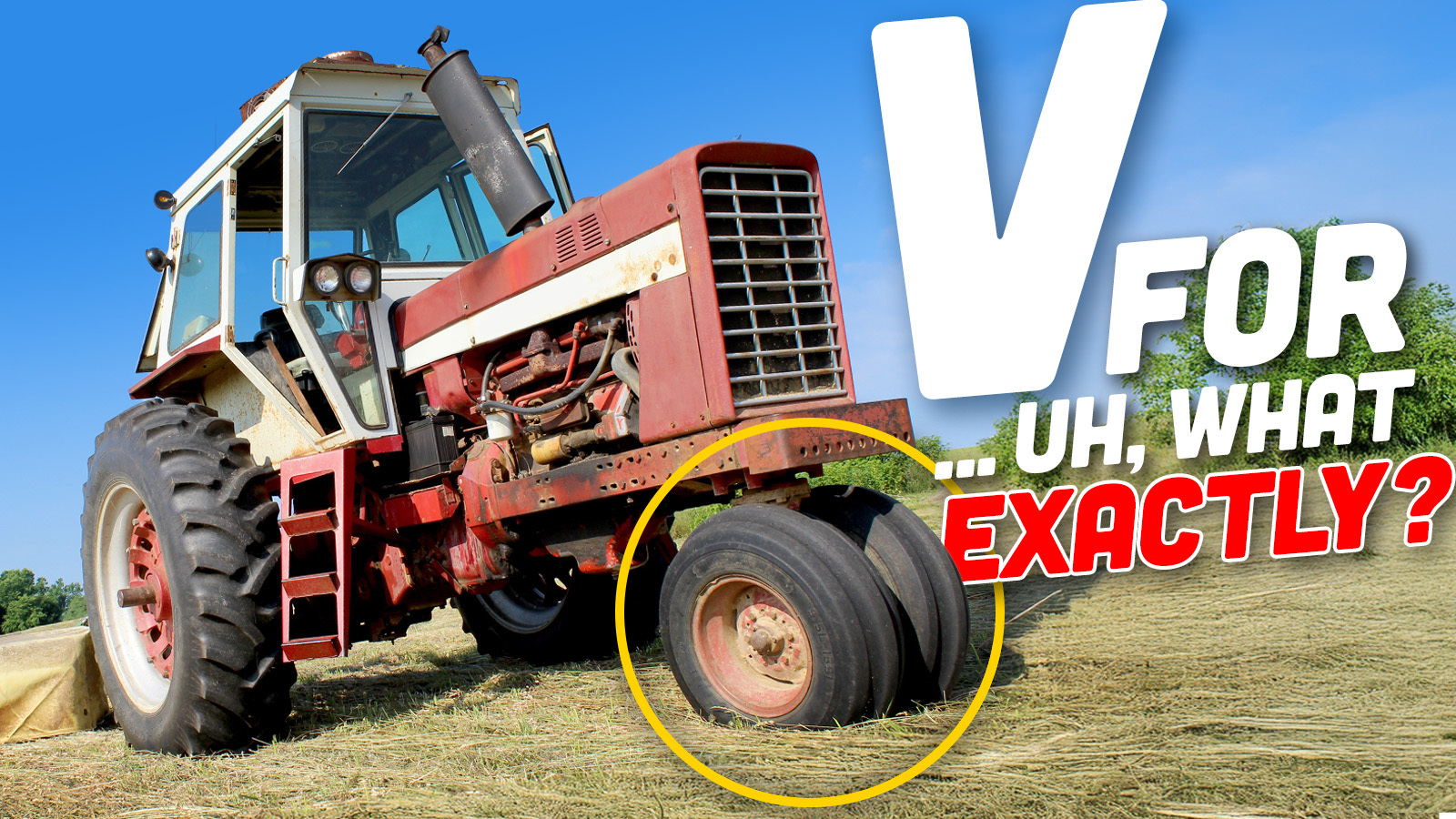
The humble tractor is one of America’s most underrated specialty vehicles. Day in and day out, farmers work hard to keep us all fed, and tractors help them get the job done. But how often have you thought about a tractor? Have you ever wondered why a lot of old tractors often have two front wheels parked close together and angled into a ‘V’ shape? Here’s why tractors used to look like that, and why you don’t really see new ones like that anymore.
Several readers have asked us to dip into the world of agricultural equipment. We already write about aircraft, motorcycles, cars, semi-tractors, and sometimes ships. Yet, there’s a whole world of vehicles that keep the world fed. The subject of tractors and their design came up in a recent staff meeting. One of the questions pitched by my colleagues was “Why do old tractor wheels look the way that they do?” Oh no, that’s bad, or maybe good, because it sent me down a rabbit hole.


I have written about the beautiful history of tractors before, and I recommend reading it by clicking here. The important part that you need to know is that some of the earliest tractors in history, which were built in the mid-1800s, were towering beasts powered by steam engines. These mechanical wonders moved slowly along the land using massive metal wheels, and those wheels were in tricycle configuration with a single wheel up front and two in the rear, or a standard four-wheel configuration. If you like steam engines, you’re going to want to watch this:
If you look up photographs or imagery of a classic American tractor, there’s a pretty high chance that your results will be populated with tractors that have sizable rubber-shod rear wheels, and a pair of much smaller wheels that are up front, are close together, and are angled. What’s up with that? Tractors used this configuration for decades for a practical reason.
Tractor Flavors
First, I should explain what I’m even talking about here. There are several different kinds of tractors. A common kind of tractor that you’ll find is a row crop tractors, which feature four wheels on adjustable axles. These adjustments allow the operator of the tractor to adjust the track width so that they can drive their tractor in a field without crushing crops.

Standard tractors also have four wheels, but tend to be lower, heavier, and are usually found pulling implements. These are generally used for plowing and other heavy duties. A derivative of a standard tractor is the Wheatland tractor, and what a Wheatland tractor is will vary depending on who you ask. International Harvester had a tractor line called Wheatland, but the term spreads beyond IHC fans. From Farm Collector:
The definition of a Wheatland tractor is hard to nail down. In some tractor circles, enthusiasts identify Wheatlands as being nothing more than standard tractors that were used in wheat fields. Some say they had adjustable front wheels; others say no. Some say they never had a 3-point [hitch] or PTO; others disagree. Some say several of the “Wheatland” tractors should be designated “Wheatland-style,” as they have several of the attributes of Wheatlands, like a larger frame and bigger wheels. Others claim all McCormick-Deering tractors were Wheatlands, so there is little agreement on the features of any given model. Some even say the difference between Standard and Wheatland depends on where you live.
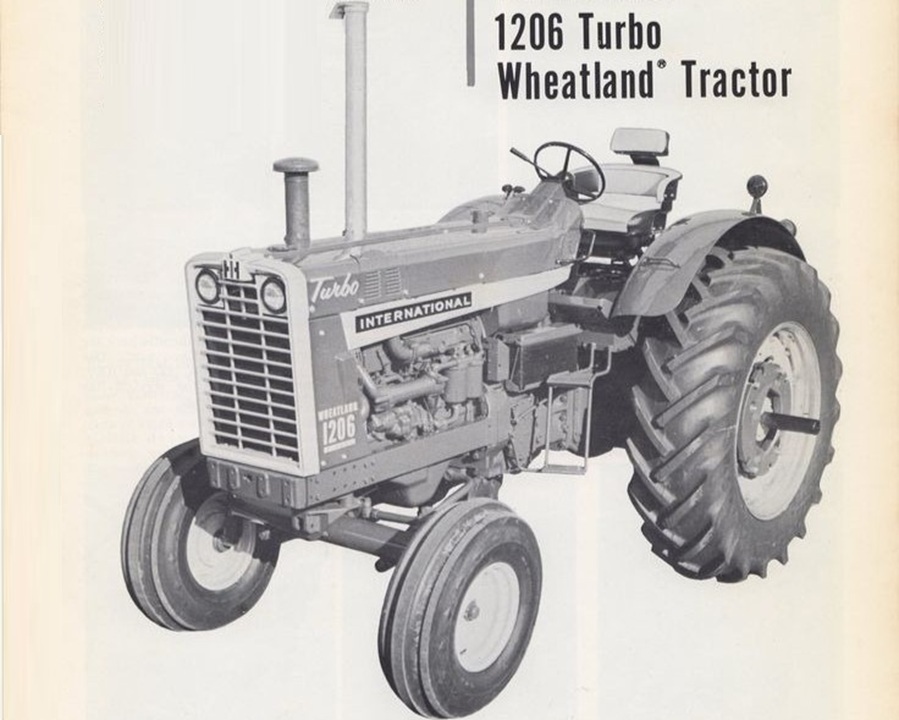
Generally, although the “Wheatland” name was only badged onto a few tractors, IHC Wheatland tractors could include these numbered models because most of them have larger fenders, a dust shield (sometimes), no PTO or 3-point, larger tires and frame: 350, 460, 560, 660, 706, 756, 806, 856, 1206, 1256 and 1456.
Some people think the McCormick-Deering W-4 and W-6 should also be termed Wheatlands. The one point of agreement in any Wheatland discussion is that nobody agrees on a single definition of what a Wheatland tractor is.

Thankfully, we’re not here to litigate what is or what isn’t a Wheatland. But the short version is that, depending on who you ask, a Wheatland is either a standard tractor that drives in wheat fields or is a standard tractor with big wheels, a big frame, and other attributes.
Moving on from here, other tractors that you’ll find out there will be high crop tractors, which have big adjustable wheels and big ground clearance to drive over tall crops, utility tractors, which get used for general labor around the farm, and garden tractors, which tend to be used for landscaping.
An American Icon
The kind of tractor we’re interested in today is the tricycle tractor. These tractors were also among some of history’s earliest designs, and would become the dominant tractor design from about the 1930s and into the 1970s in America. Chances are, if you look at illustrations of classic tractors or go to a museum that has tractors, you will see a tricycle design. These tractors are perhaps the most iconic American tractors, even decades after they were last popular.
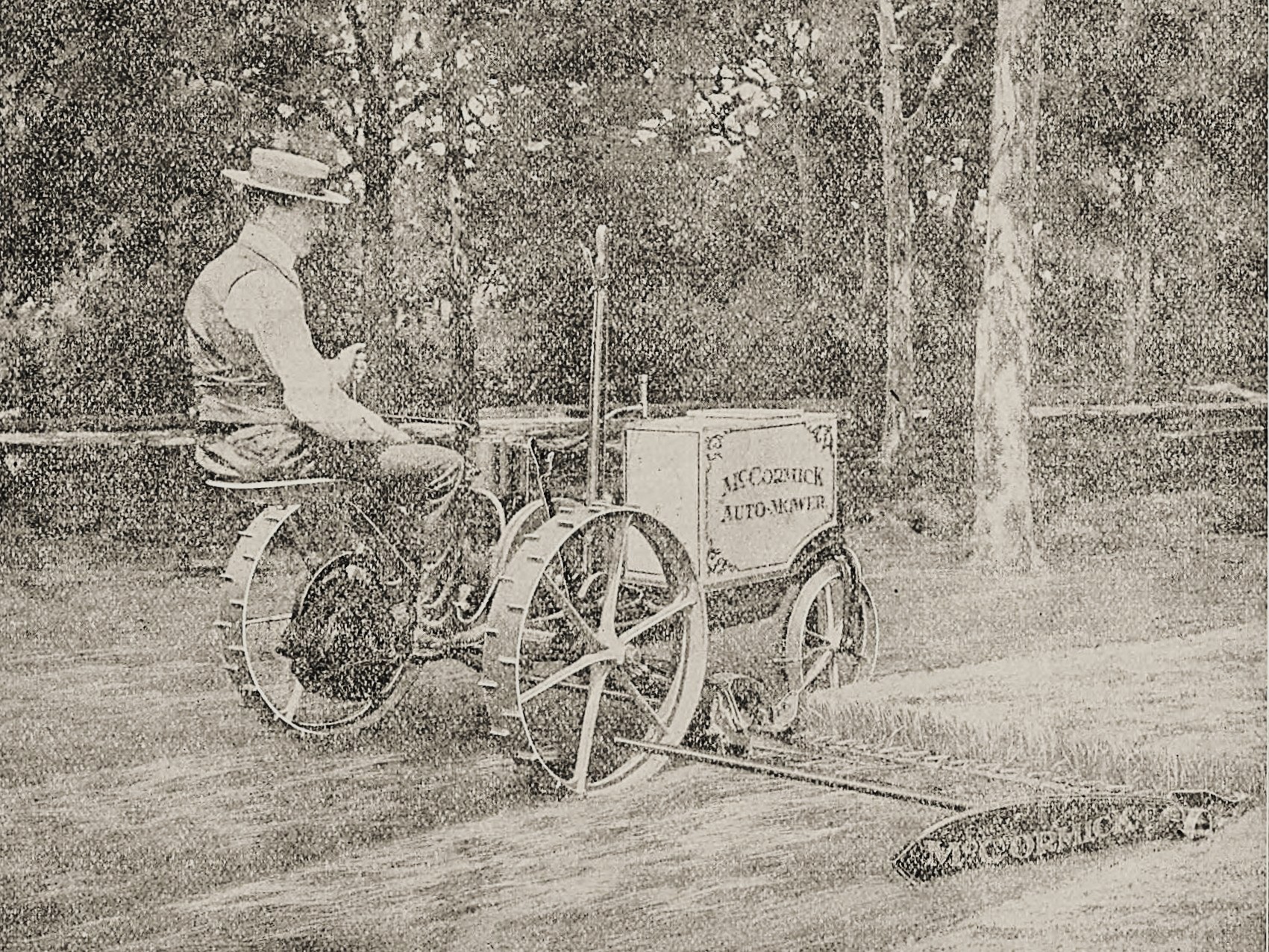
According to Successful Farming, the ancestor of the tricycle tractor was the 1899 McCormick Auto-Mower. This tractor was an experimental design that featured a single-cylinder engine, a cast-iron frame, three wheels in a tricycle configuration, a transmission with reverse, and a live power-takeoff. This tractor was designed as a hay field mower, and it was intended to replace the horse-driven sickle-bar mowers that had been in use since after the Civil War.
According to Successful Farming, the Auto-Mower was the invention of McCormick engineer Ed Johnston, who had been experimenting with engines since 1898. Today, it’s believed that an Auto-Mower that’s in the hands of the Wisconsin State Agricultural Museum is the oldest surviving tractor in America.
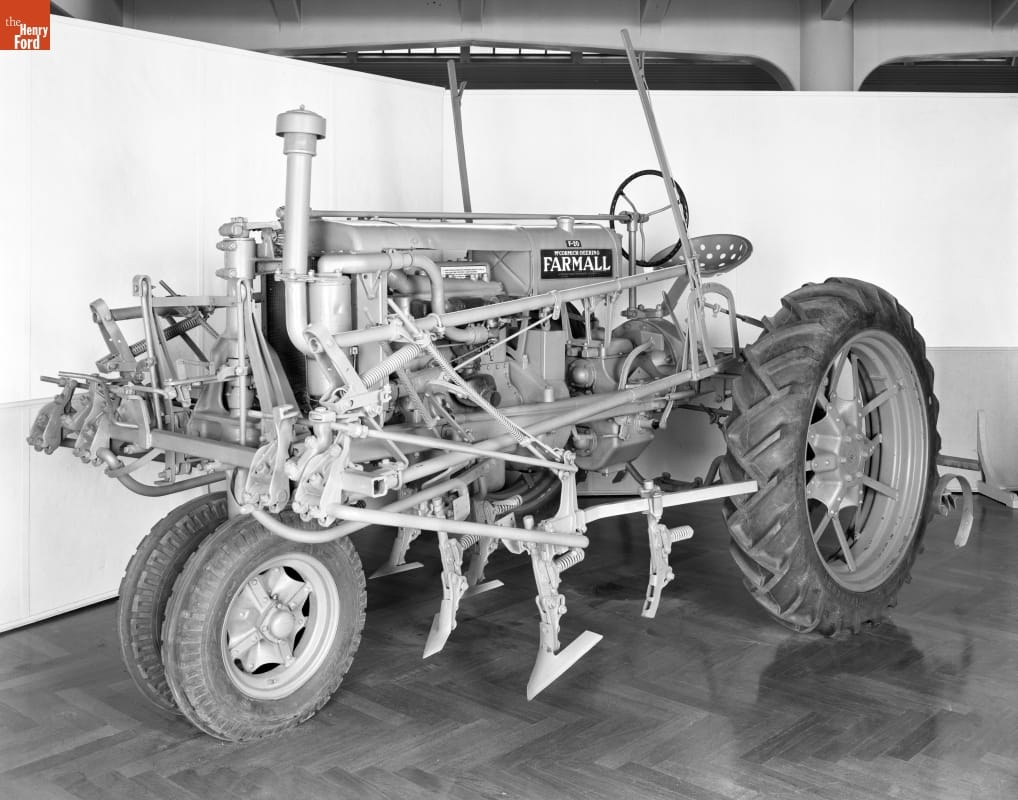
It would take a little over two decades for the tricycle configuration to really take off in America. The design that’s credited with popularizing the tricycle tractor is the iconic 1924 McCormick-Deering Farmall. This wasn’t just the tractor that popularized the tricycle configuration, but, as the Philadelphia Society for Promoting Agriculture writes, it was the first successful all-purpose tricycle tractor. Morning AgClips has more information:
In the early 1910s International Harvester ruled the American tractor market, but by the end of the decade they were overtaken by the Ford Motor Company which introduced the Fordson tractor. Falling behind in the market International sought to find a way to regain their place on top.
An International implements engineer named Bert Benjamin came up with an idea that proved fruitful. Benjamin grew up on an Iowa farm and was well versed in farm implements, but did not have much experience with tractors. While on an assignment that tasked him with adapting International implements so they could be used by Ford tractors, Benjamin created a kit that enabled Ford tractors to cultivate. This gave him the idea of creating a tractor that could do several tasks for farmers like planting, cultivating, and more. He wanted to create a machine that could replace horse-drawn farming.
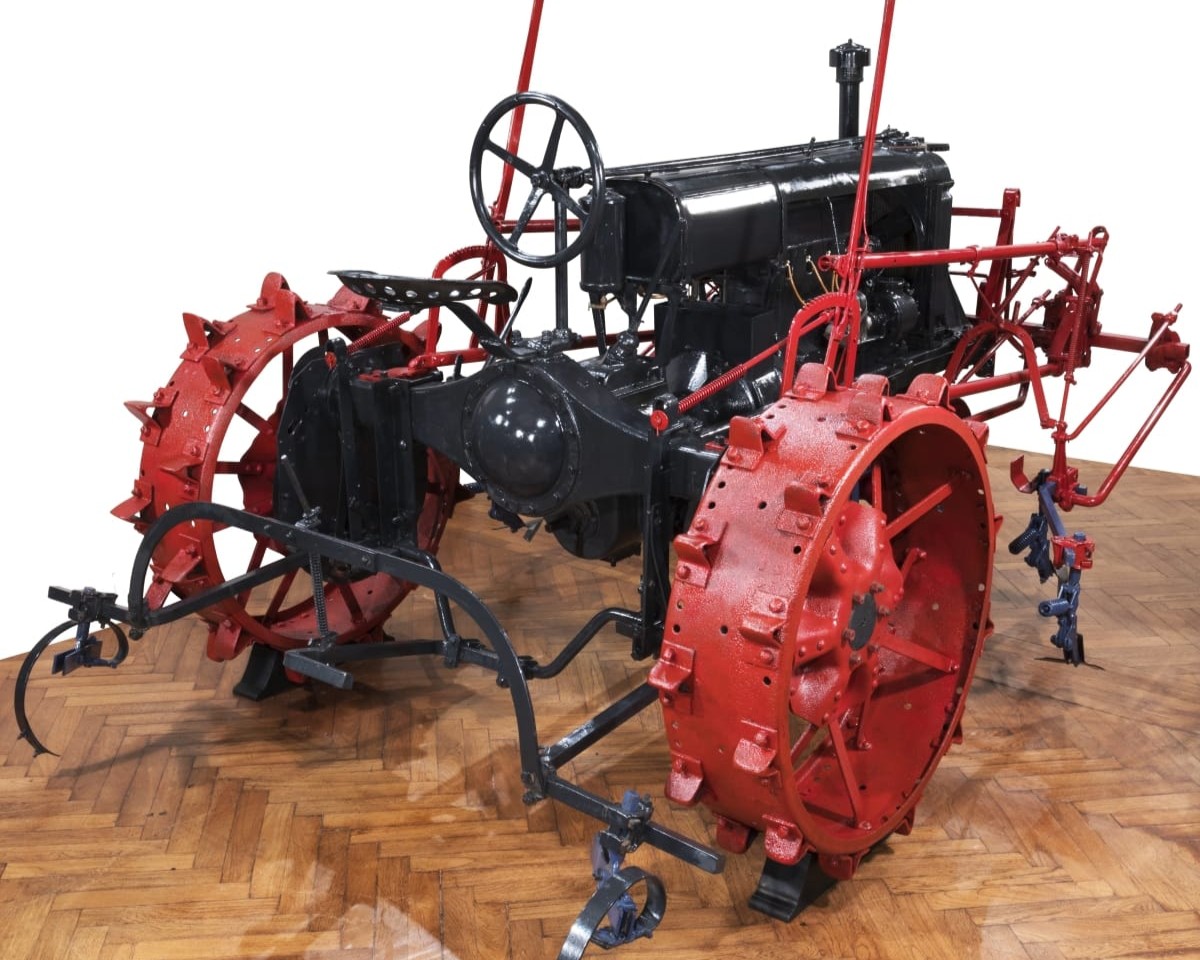
International Harvester did have a Motor Cultivator but it was never very successful and eventually discontinued. Drawing on this machine and other ideas, Benjamin and others began working on this “do-it-all” tractor in 1919 and an initial prototype was ready in 1921. Improvements to the tractor continued after this first prototype, mainly making the tractor more lightweight while at the same time durable. In 1923 the tractor, called the McCormick-Deering Farmall, was ready for field testing and 200 were produced that year. Sales and shipments began in 1924 and it quickly became a popular tractor for American farmers.
Tractor historians call the Farmall a major step forward in tractor technology, and several features of the Farmall are responsible. The Farmall had, among other things, automatic steering brakes, a cultivator gang shifting mechanism, a Power Take Off, 2,700 pounds of pull, and its legendary tricycle configuration.
Four Smart Wheels
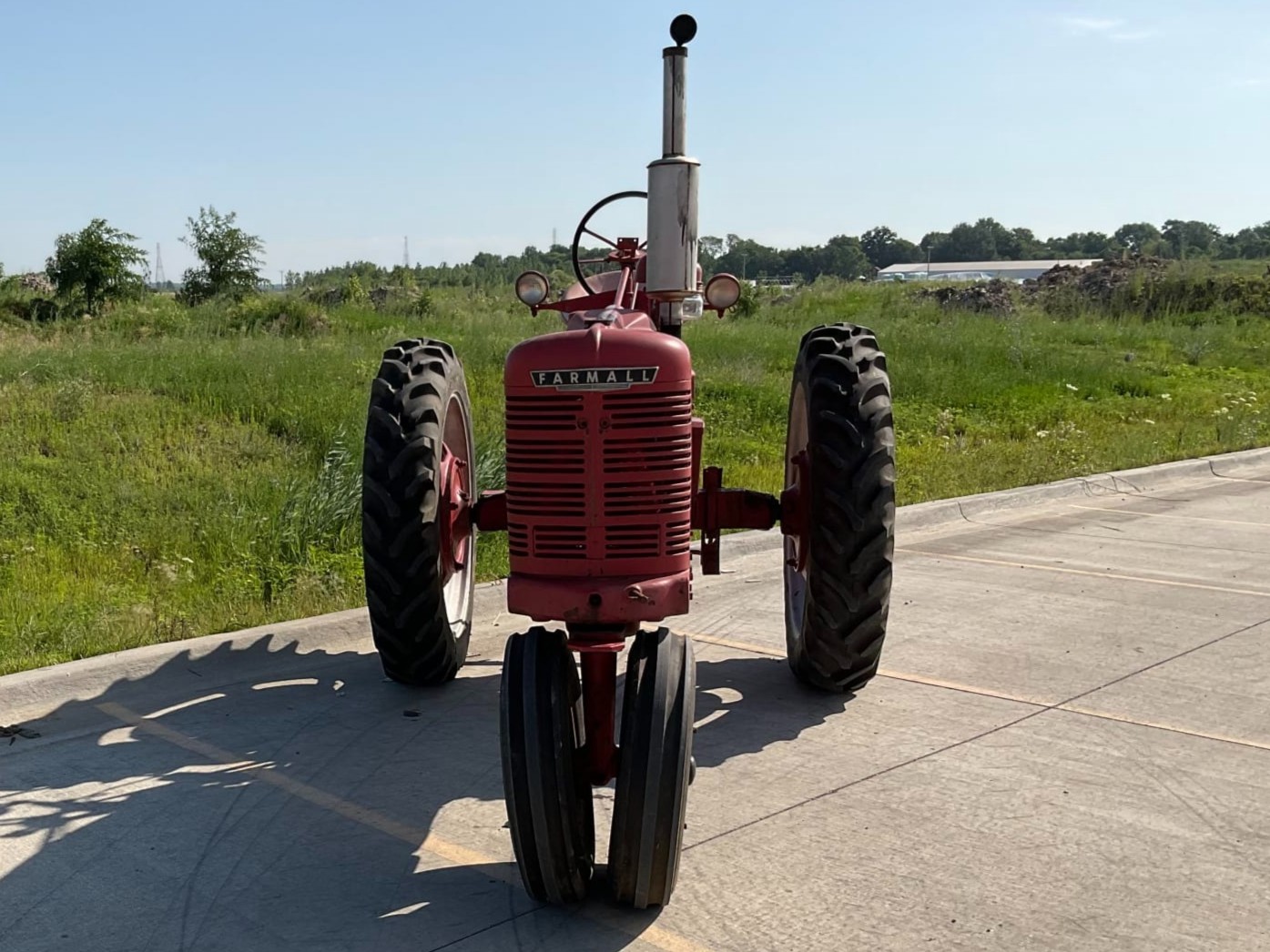
Why was the tricycle part so important? By having super-narrow front wheels and huge rear wheels, the Farmall had great ground clearance, but could also be spaced just right to drive between rows of crops without destroying the plants. The Farmall also sported an eight-foot turn radius and a price of $950.
While the Farmall wasn’t the first tractor to sport some of the features noted above, it was special in that it had a bunch of features that used to be found in individual tractors, and implemented in a way that a farmer could easily operate. In short, it was basically one tractor to rule them all. Soon enough, tricycle tractors became the default tractor configuration in America for decades.
As the Delaware Co. Daily Times writes, tricycle tractors had several advantages for their time. These tractors usually sported rear axles that were intentionally too long. Building them like this allowed operators to adjust the rear track width of their tractors so they could find a setting that would allow them to perfectly straddle their crops. Another advantage was that these tractors were simple and cheap to build. This was important because farmers, like most other people, didn’t have a ton of cash to spend during the Great Depression.

The Delaware Co. Daily Times even explains why, in addition to helping the vehicles straddle crops, these tractors had weirdly angled front axles:
The angle between the vertical axis of a tire and the vertical to the ground is called camber; we’re talking about positive camber in the tractors. Those early tractors didn’t have power steering; turning the steering wheel was somewhat difficult and fatiguing after many hours in the field.
The early tractors were being developed at a time when agriculture was in a transition period. Most farmers were using horse-drawn machinery for some jobs and a tractor for others. Tractors needed to work fields that were laid out by horses. A narrow front axle and separate brakes in the rear wheels made those early tractors extremely maneuverable. A farmer could turn the steering wheel to the right and at the same time tap on the right brake, and that tractor could spin on a dime. It could pivot within its own length. Turning in a constricted space was easy – and especially useful when pulling machinery in the field such as mowing hay or pulling a grain binder, corn binder or combine. Another reason for canted front wheels was to let mud or a stone – that had become pinched between the tires at their bottom-most point of their rotation – to fall out before it reached the steering post between the front wheels.
Yet another advantage was that cultivators could be mounted on the side and underneath the tractor. That isn’t easy to do on a row-crop tractor where the front wheels are several feet apart. Early tractors had a powered pulley that could run stationary machinery such as a threshing machine, corn shredder, feed-grinding mill, corn sheller, windmill pump or buzz saw. It worked better when there was no wide front axle in the belt’s way. One disadvantage of the tricycle design was the difficulty of adding a front-end loader.
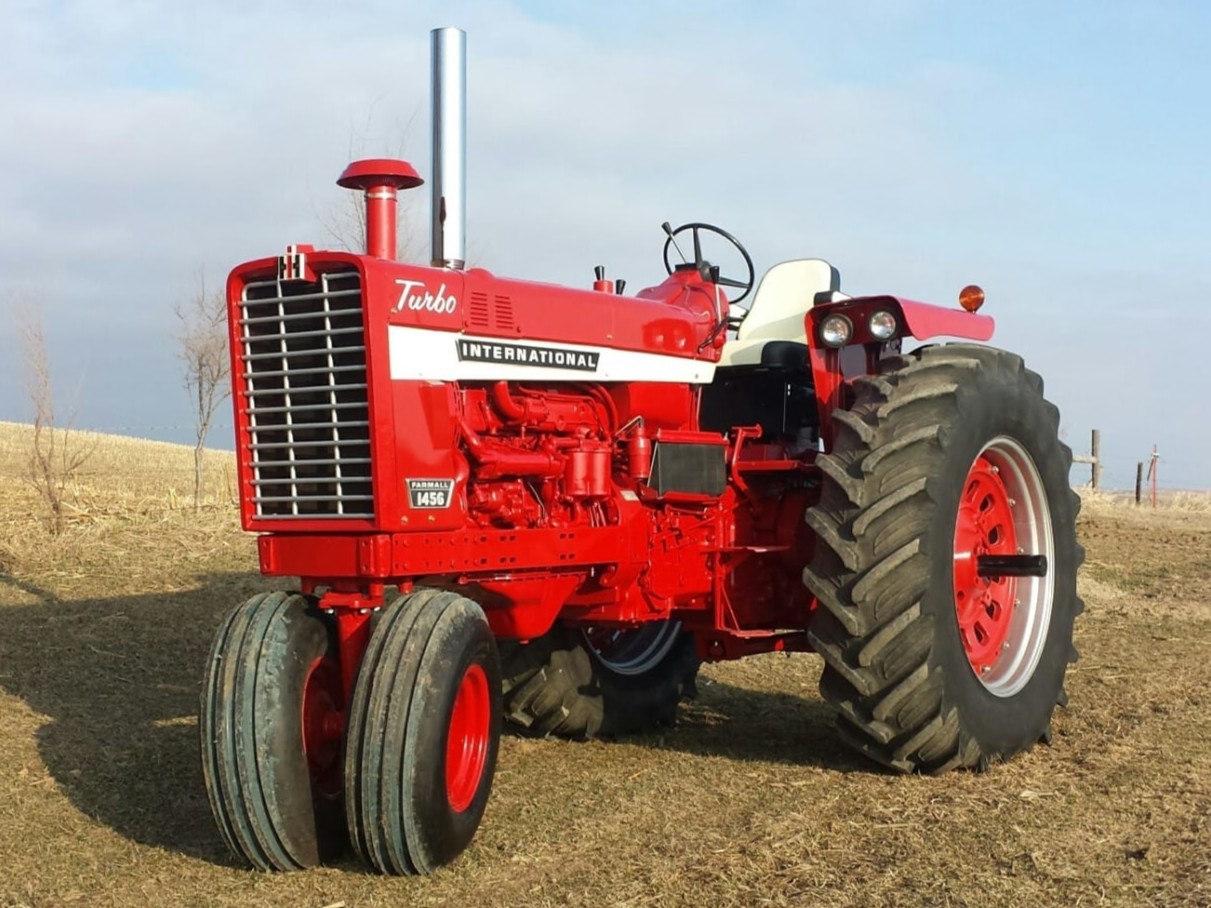
Unfortunately, for all of their advantages, tricycle tractor operators had to be careful because if the tractor lost balance, things could get deadly fast. If the operator of a tricycle tractor tried to turn at too fast of a speed or tried to take on too steep a hillside, the tractor was liable to roll over, crushing the poor farmer under the weight. Oh, and the rollovers weren’t always side-to-side, either, as in some situations, a tricycle tractor would rollover backward — briefly doing a wheelie — on its way to try to crush its operator.
Reportedly, these tractors were sometimes known as “widow-makers,” and I’m not sure I need to explain the meaning of that. But for some, these tractors were really only as safe as their operators were. To be fair to the tricycle tractor, farmers still die in tractor rollover accidents, and a standard tractor will roll under unfortunate conditions, too.
Everlasting Fame
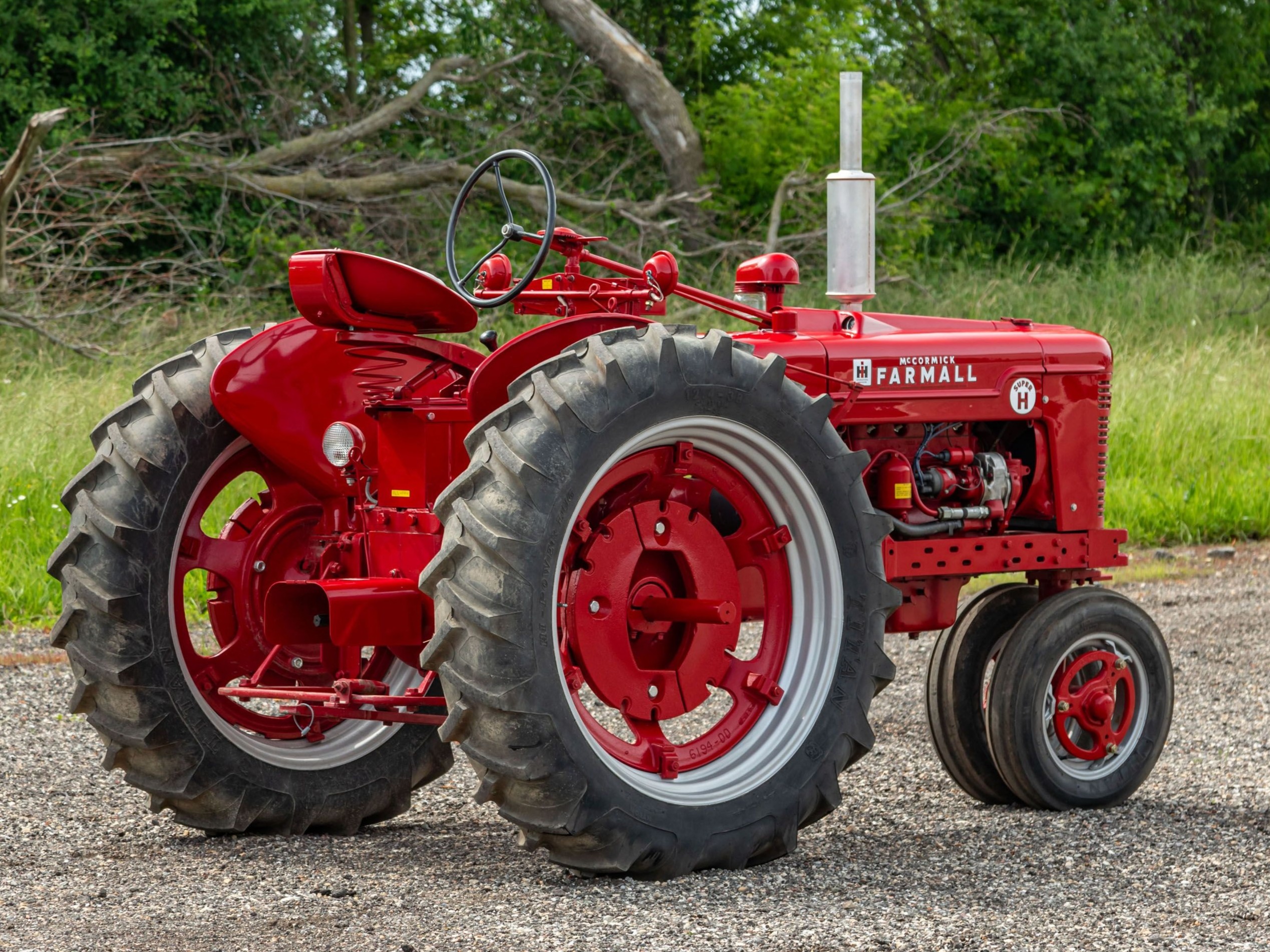
Eventually, farming would evolve beyond the tricycle tractor. Over time, power steering would creep its way into tractors, and tiny turning circles became less important. The farming machinery that also mounted to the front of a tricycle tractor, like a belt-driven threshing machine, a corn picker, or a cultivator, would lose popularity in favor of more modern electric and gas-powered equivalents. Thus, by the 1970s, the tricycle lost its crown as America’s favorite tractor.
Yet, after all of these decades, it’s still an icon. I’m willing to bet that when some of the people reading this picture a tractor, they imagine a classic tractor with two huge rear wheels and two small V-shaped front wheels. Now, the next time you see one of these tractors, you know why the front wheels are a bit weird.
I think this is a perfect example of brilliant engineering hiding in plain sight that I bet a lot of people haven’t thought about. You, like me, might have just accepted that tractor wheels looked like that for reasons. As it turns out, those narrow front wheels facilitated easier turns and allowed tractors to straddle crops. Now, I feel like seeing if I can find more neat pieces of engineering that are not even hidden from view.
Topshot image photo credit: DespositPhotos.com



I grew up driving Allis-Chalmers B’s and C’s (and later CA’s and WD’s)…there is a photo of me plowing a field in 1985 when I was 8. Two summers ago, my son was 7 at the time and after watching myself and my grandfather operate “his” B (that my father restored for him), he jumped on one day and started it, let the clutch out and got rolling all on his own.
anything 3-wheeler should be avoided if you are over 4 years old.
There is a speed differential between a Honda three wheel ATV and a tractor, at least most narrow-front tractors that people will have access to. With the advent of ROPS cabs in the 70’s, even narrow-front tractors have as good of roll-over protection as wide-front.
If you haven’t actually driven a tractor, you should find a farmer who will let you toodle around their farm for a few hours. It’s quite a different experience from driving a car.
Also, there’s always a display at the Minnesota State Fair for those big steam tractors. Might be a good opportunity to talk to some of the owners. And get weird food on a stick (not sure if there is spaghetti, shrimp, or clams on a stick, but I wouldn’t rule it out 😉 ). And a cookie bucket. And…look, just arrive hungry, okay?
Machinery Hill at the MN state fair (NE of the fairgrounds), is where you’ll find the classic tractors: gas, diesels, some steam powered. As well.as lawn / garden tractors and 100+ year old hit or miss engines demo powering all sorts of stuff, original tub washing machines, pumping water, etc…
Elnora, IN has a real nice farm, implement, truck, and amish show once a year. Some of the weirdest tractors ever brewed up have been shown there.
Their apple cider slushies are worth kicking kids over.
“Their apple cider slushies are worth kicking kids over.”
Ha 1st I’ve heard of an ‘apple cider slushie’
Sounds like something I’d like to try!
I was skeptical at first, but was extremely pleased with them.
They had an amish booth cranking em out. The long line helped convice me.
Long line equals good sign
In that case, indeed.
Broke 3 ribs when I tipped one of these things- worst thing is we didn’t even need the narrow front- it just came from auction like that
We had a series of John Deere and Farmall A and B tractors as a kid. I lived in the country, but we didn’t farm for a living. Dad would buy them at auctions, clean them up, fix the leaks and repaint them in Grandpa’s body shop, then take them back to the auction.
The “working” tractor was a 961 Ford. I guess I learned to “drive” on that, after graduating up from the lawn mower (a three wheeled Swisher!, the ORIGINAL zero turn).
Don’t know that I’ve ever heard anyone refer to them as “Tricycles” though. It was always narrow/wide front.
Since we’re plugging tractor events/museums/etc., I need to do a shout out to the local one. The Agriculture Hall of Fame in Bonner Springs, KS. https://www.aghalloffame.com/