

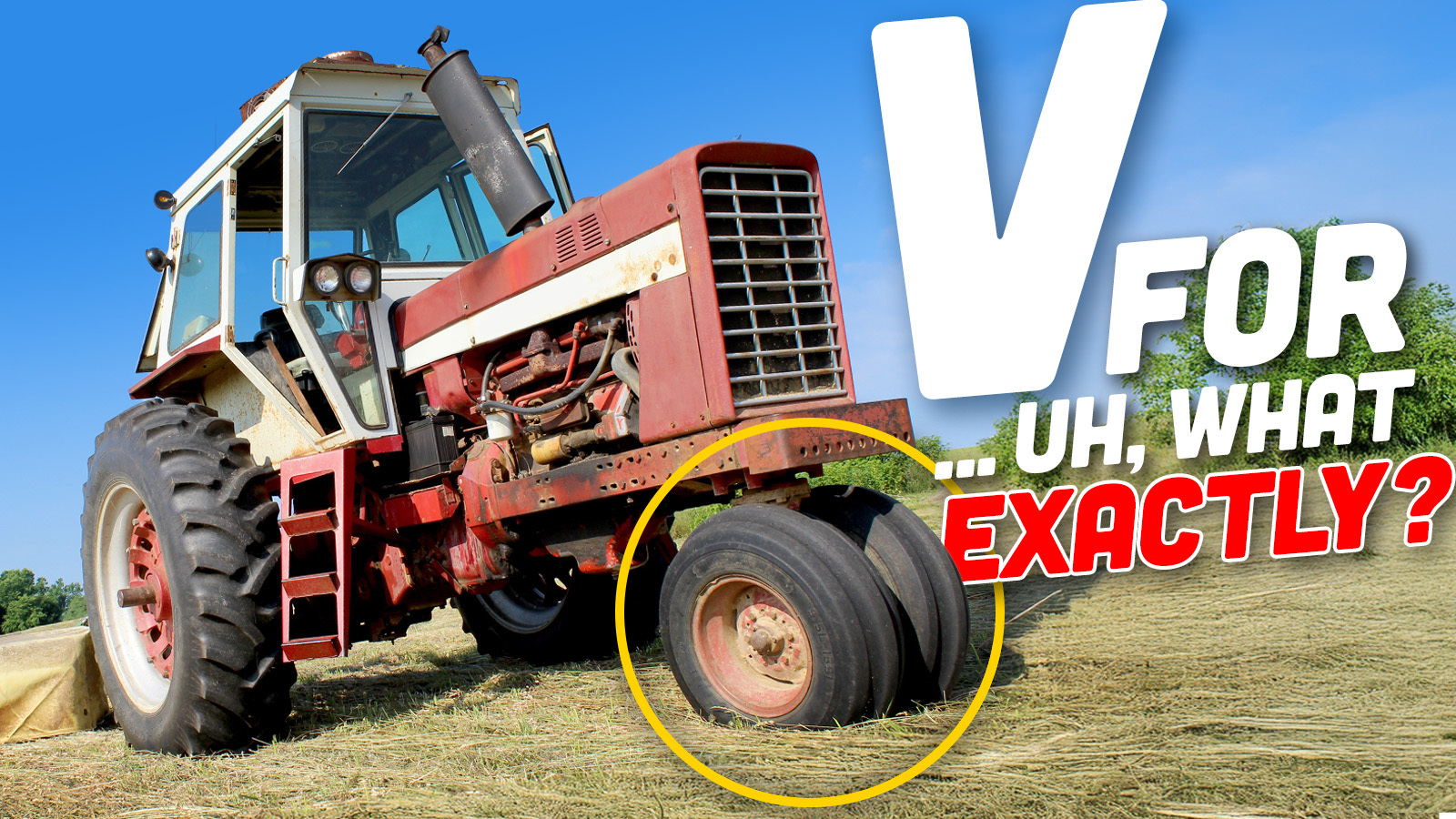
The humble tractor is one of America’s most underrated specialty vehicles. Day in and day out, farmers work hard to keep us all fed, and tractors help them get the job done. But how often have you thought about a tractor? Have you ever wondered why a lot of old tractors often have two front wheels parked close together and angled into a ‘V’ shape? Here’s why tractors used to look like that, and why you don’t really see new ones like that anymore.
Several readers have asked us to dip into the world of agricultural equipment. We already write about aircraft, motorcycles, cars, semi-tractors, and sometimes ships. Yet, there’s a whole world of vehicles that keep the world fed. The subject of tractors and their design came up in a recent staff meeting. One of the questions pitched by my colleagues was “Why do old tractor wheels look the way that they do?” Oh no, that’s bad, or maybe good, because it sent me down a rabbit hole.


I have written about the beautiful history of tractors before, and I recommend reading it by clicking here. The important part that you need to know is that some of the earliest tractors in history, which were built in the mid-1800s, were towering beasts powered by steam engines. These mechanical wonders moved slowly along the land using massive metal wheels, and those wheels were in tricycle configuration with a single wheel up front and two in the rear, or a standard four-wheel configuration. If you like steam engines, you’re going to want to watch this:
If you look up photographs or imagery of a classic American tractor, there’s a pretty high chance that your results will be populated with tractors that have sizable rubber-shod rear wheels, and a pair of much smaller wheels that are up front, are close together, and are angled. What’s up with that? Tractors used this configuration for decades for a practical reason.
Tractor Flavors
First, I should explain what I’m even talking about here. There are several different kinds of tractors. A common kind of tractor that you’ll find is a row crop tractors, which feature four wheels on adjustable axles. These adjustments allow the operator of the tractor to adjust the track width so that they can drive their tractor in a field without crushing crops.

Standard tractors also have four wheels, but tend to be lower, heavier, and are usually found pulling implements. These are generally used for plowing and other heavy duties. A derivative of a standard tractor is the Wheatland tractor, and what a Wheatland tractor is will vary depending on who you ask. International Harvester had a tractor line called Wheatland, but the term spreads beyond IHC fans. From Farm Collector:
The definition of a Wheatland tractor is hard to nail down. In some tractor circles, enthusiasts identify Wheatlands as being nothing more than standard tractors that were used in wheat fields. Some say they had adjustable front wheels; others say no. Some say they never had a 3-point [hitch] or PTO; others disagree. Some say several of the “Wheatland” tractors should be designated “Wheatland-style,” as they have several of the attributes of Wheatlands, like a larger frame and bigger wheels. Others claim all McCormick-Deering tractors were Wheatlands, so there is little agreement on the features of any given model. Some even say the difference between Standard and Wheatland depends on where you live.
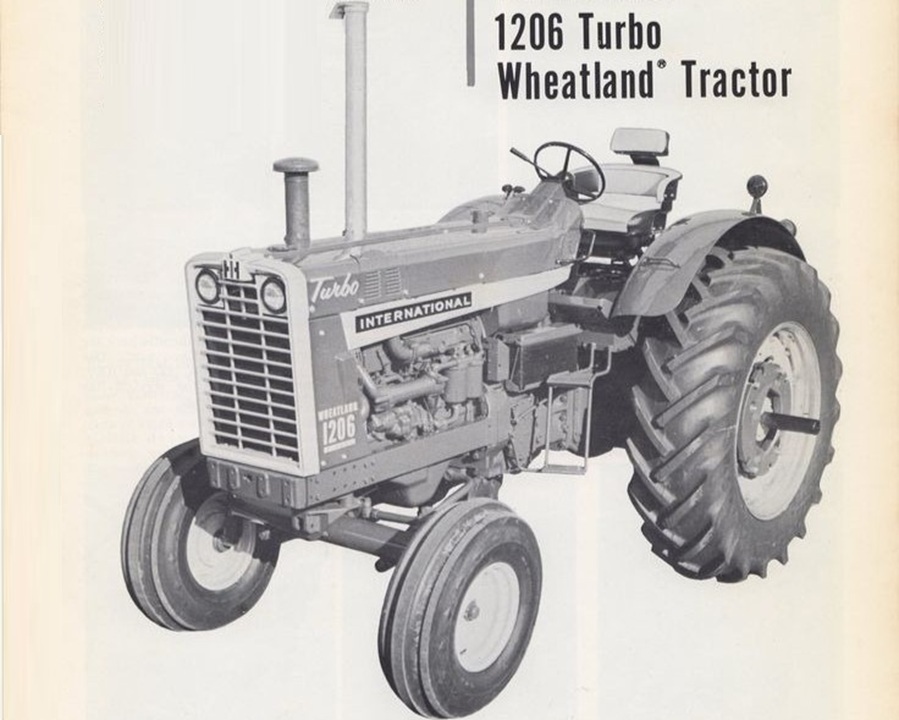
Generally, although the “Wheatland” name was only badged onto a few tractors, IHC Wheatland tractors could include these numbered models because most of them have larger fenders, a dust shield (sometimes), no PTO or 3-point, larger tires and frame: 350, 460, 560, 660, 706, 756, 806, 856, 1206, 1256 and 1456.
Some people think the McCormick-Deering W-4 and W-6 should also be termed Wheatlands. The one point of agreement in any Wheatland discussion is that nobody agrees on a single definition of what a Wheatland tractor is.

Thankfully, we’re not here to litigate what is or what isn’t a Wheatland. But the short version is that, depending on who you ask, a Wheatland is either a standard tractor that drives in wheat fields or is a standard tractor with big wheels, a big frame, and other attributes.
Moving on from here, other tractors that you’ll find out there will be high crop tractors, which have big adjustable wheels and big ground clearance to drive over tall crops, utility tractors, which get used for general labor around the farm, and garden tractors, which tend to be used for landscaping.
An American Icon
The kind of tractor we’re interested in today is the tricycle tractor. These tractors were also among some of history’s earliest designs, and would become the dominant tractor design from about the 1930s and into the 1970s in America. Chances are, if you look at illustrations of classic tractors or go to a museum that has tractors, you will see a tricycle design. These tractors are perhaps the most iconic American tractors, even decades after they were last popular.
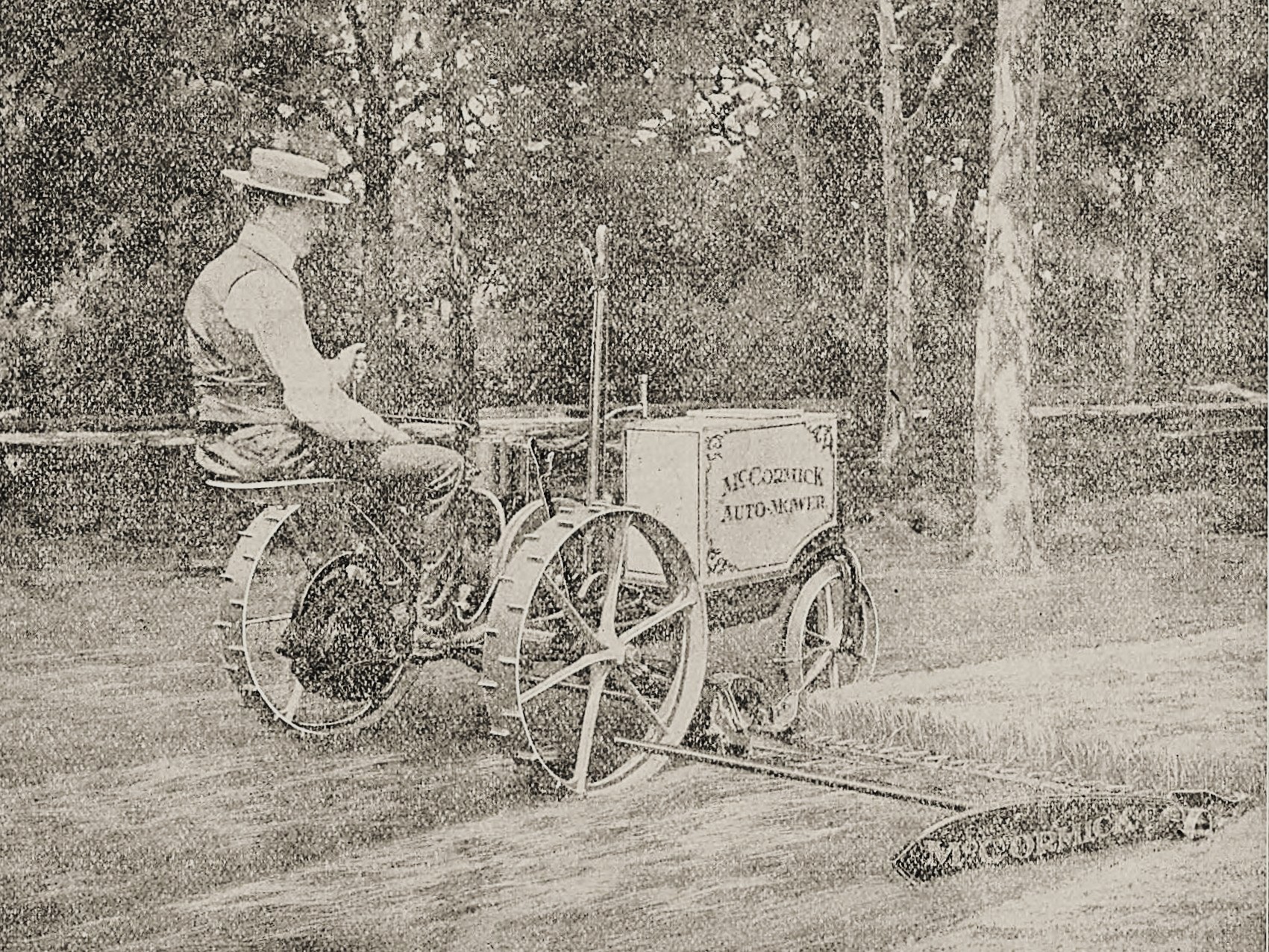
According to Successful Farming, the ancestor of the tricycle tractor was the 1899 McCormick Auto-Mower. This tractor was an experimental design that featured a single-cylinder engine, a cast-iron frame, three wheels in a tricycle configuration, a transmission with reverse, and a live power-takeoff. This tractor was designed as a hay field mower, and it was intended to replace the horse-driven sickle-bar mowers that had been in use since after the Civil War.
According to Successful Farming, the Auto-Mower was the invention of McCormick engineer Ed Johnston, who had been experimenting with engines since 1898. Today, it’s believed that an Auto-Mower that’s in the hands of the Wisconsin State Agricultural Museum is the oldest surviving tractor in America.
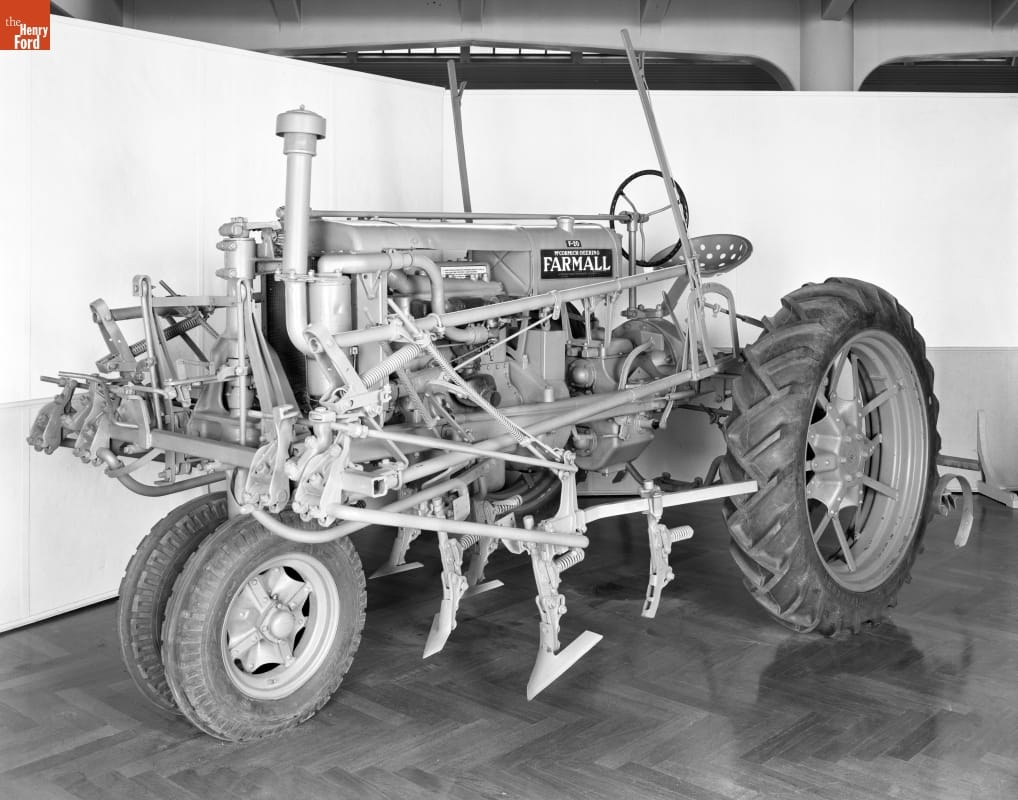
It would take a little over two decades for the tricycle configuration to really take off in America. The design that’s credited with popularizing the tricycle tractor is the iconic 1924 McCormick-Deering Farmall. This wasn’t just the tractor that popularized the tricycle configuration, but, as the Philadelphia Society for Promoting Agriculture writes, it was the first successful all-purpose tricycle tractor. Morning AgClips has more information:
In the early 1910s International Harvester ruled the American tractor market, but by the end of the decade they were overtaken by the Ford Motor Company which introduced the Fordson tractor. Falling behind in the market International sought to find a way to regain their place on top.
An International implements engineer named Bert Benjamin came up with an idea that proved fruitful. Benjamin grew up on an Iowa farm and was well versed in farm implements, but did not have much experience with tractors. While on an assignment that tasked him with adapting International implements so they could be used by Ford tractors, Benjamin created a kit that enabled Ford tractors to cultivate. This gave him the idea of creating a tractor that could do several tasks for farmers like planting, cultivating, and more. He wanted to create a machine that could replace horse-drawn farming.
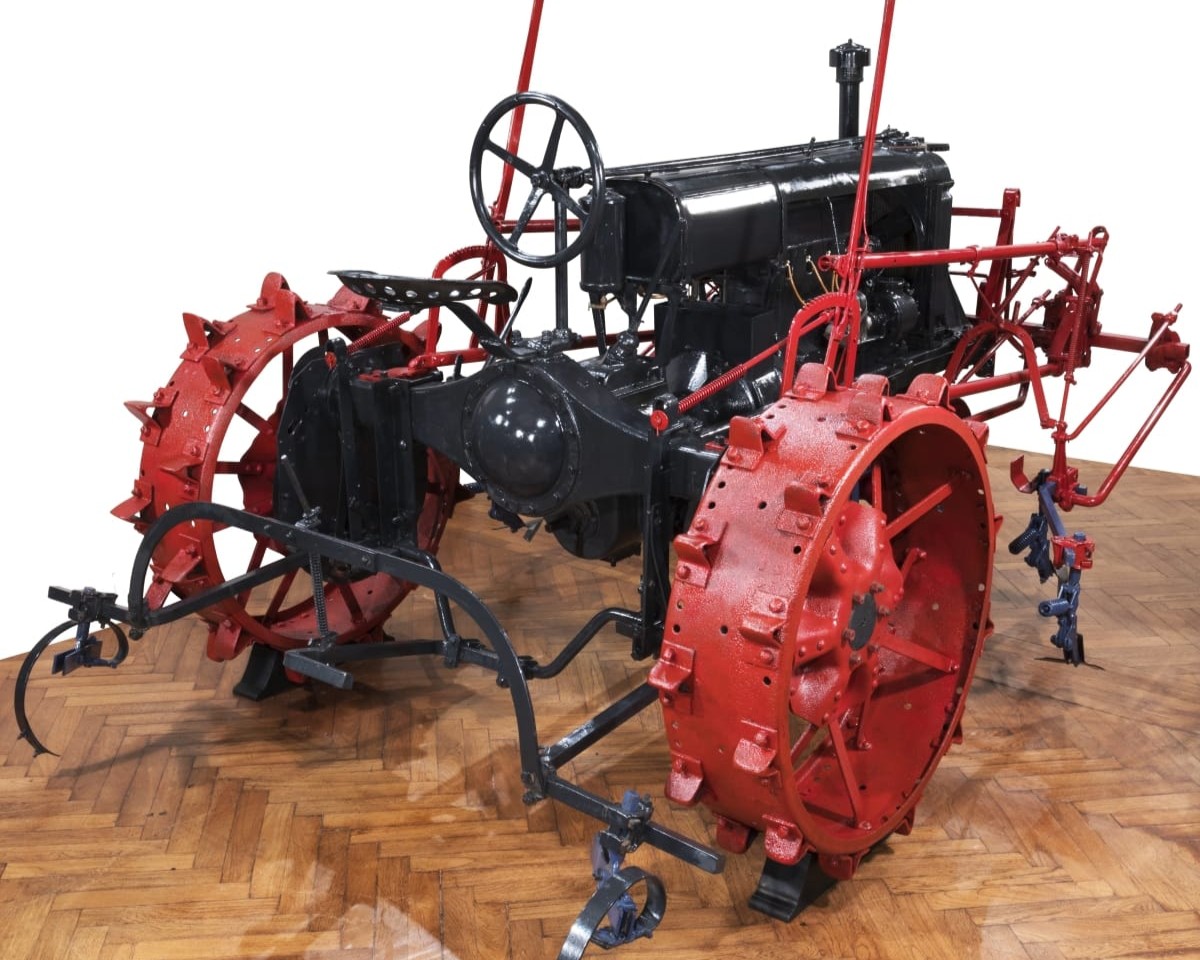
International Harvester did have a Motor Cultivator but it was never very successful and eventually discontinued. Drawing on this machine and other ideas, Benjamin and others began working on this “do-it-all” tractor in 1919 and an initial prototype was ready in 1921. Improvements to the tractor continued after this first prototype, mainly making the tractor more lightweight while at the same time durable. In 1923 the tractor, called the McCormick-Deering Farmall, was ready for field testing and 200 were produced that year. Sales and shipments began in 1924 and it quickly became a popular tractor for American farmers.
Tractor historians call the Farmall a major step forward in tractor technology, and several features of the Farmall are responsible. The Farmall had, among other things, automatic steering brakes, a cultivator gang shifting mechanism, a Power Take Off, 2,700 pounds of pull, and its legendary tricycle configuration.
Four Smart Wheels
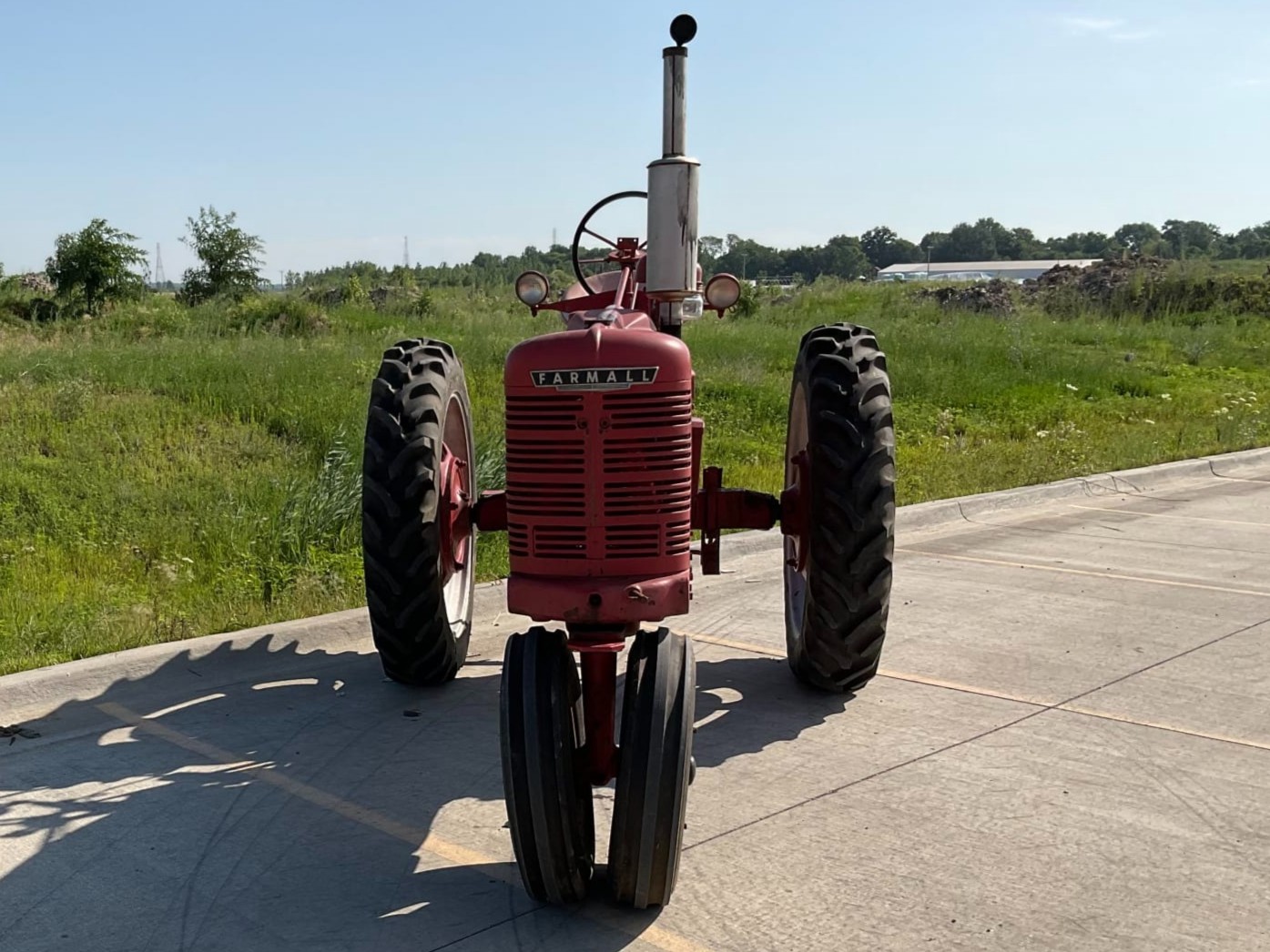
Why was the tricycle part so important? By having super-narrow front wheels and huge rear wheels, the Farmall had great ground clearance, but could also be spaced just right to drive between rows of crops without destroying the plants. The Farmall also sported an eight-foot turn radius and a price of $950.
While the Farmall wasn’t the first tractor to sport some of the features noted above, it was special in that it had a bunch of features that used to be found in individual tractors, and implemented in a way that a farmer could easily operate. In short, it was basically one tractor to rule them all. Soon enough, tricycle tractors became the default tractor configuration in America for decades.
As the Delaware Co. Daily Times writes, tricycle tractors had several advantages for their time. These tractors usually sported rear axles that were intentionally too long. Building them like this allowed operators to adjust the rear track width of their tractors so they could find a setting that would allow them to perfectly straddle their crops. Another advantage was that these tractors were simple and cheap to build. This was important because farmers, like most other people, didn’t have a ton of cash to spend during the Great Depression.

The Delaware Co. Daily Times even explains why, in addition to helping the vehicles straddle crops, these tractors had weirdly angled front axles:
The angle between the vertical axis of a tire and the vertical to the ground is called camber; we’re talking about positive camber in the tractors. Those early tractors didn’t have power steering; turning the steering wheel was somewhat difficult and fatiguing after many hours in the field.
The early tractors were being developed at a time when agriculture was in a transition period. Most farmers were using horse-drawn machinery for some jobs and a tractor for others. Tractors needed to work fields that were laid out by horses. A narrow front axle and separate brakes in the rear wheels made those early tractors extremely maneuverable. A farmer could turn the steering wheel to the right and at the same time tap on the right brake, and that tractor could spin on a dime. It could pivot within its own length. Turning in a constricted space was easy – and especially useful when pulling machinery in the field such as mowing hay or pulling a grain binder, corn binder or combine. Another reason for canted front wheels was to let mud or a stone – that had become pinched between the tires at their bottom-most point of their rotation – to fall out before it reached the steering post between the front wheels.
Yet another advantage was that cultivators could be mounted on the side and underneath the tractor. That isn’t easy to do on a row-crop tractor where the front wheels are several feet apart. Early tractors had a powered pulley that could run stationary machinery such as a threshing machine, corn shredder, feed-grinding mill, corn sheller, windmill pump or buzz saw. It worked better when there was no wide front axle in the belt’s way. One disadvantage of the tricycle design was the difficulty of adding a front-end loader.
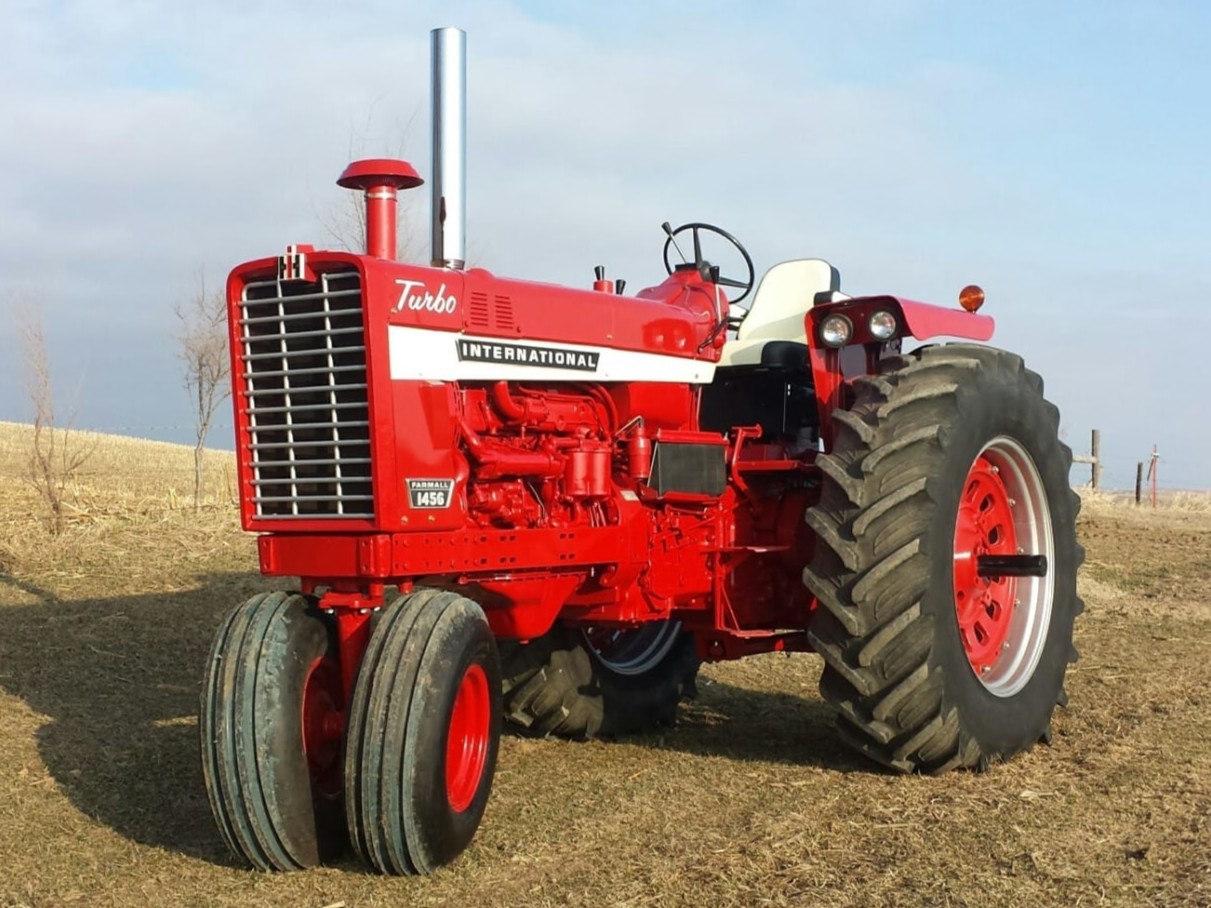
Unfortunately, for all of their advantages, tricycle tractor operators had to be careful because if the tractor lost balance, things could get deadly fast. If the operator of a tricycle tractor tried to turn at too fast of a speed or tried to take on too steep a hillside, the tractor was liable to roll over, crushing the poor farmer under the weight. Oh, and the rollovers weren’t always side-to-side, either, as in some situations, a tricycle tractor would rollover backward — briefly doing a wheelie — on its way to try to crush its operator.
Reportedly, these tractors were sometimes known as “widow-makers,” and I’m not sure I need to explain the meaning of that. But for some, these tractors were really only as safe as their operators were. To be fair to the tricycle tractor, farmers still die in tractor rollover accidents, and a standard tractor will roll under unfortunate conditions, too.
Everlasting Fame
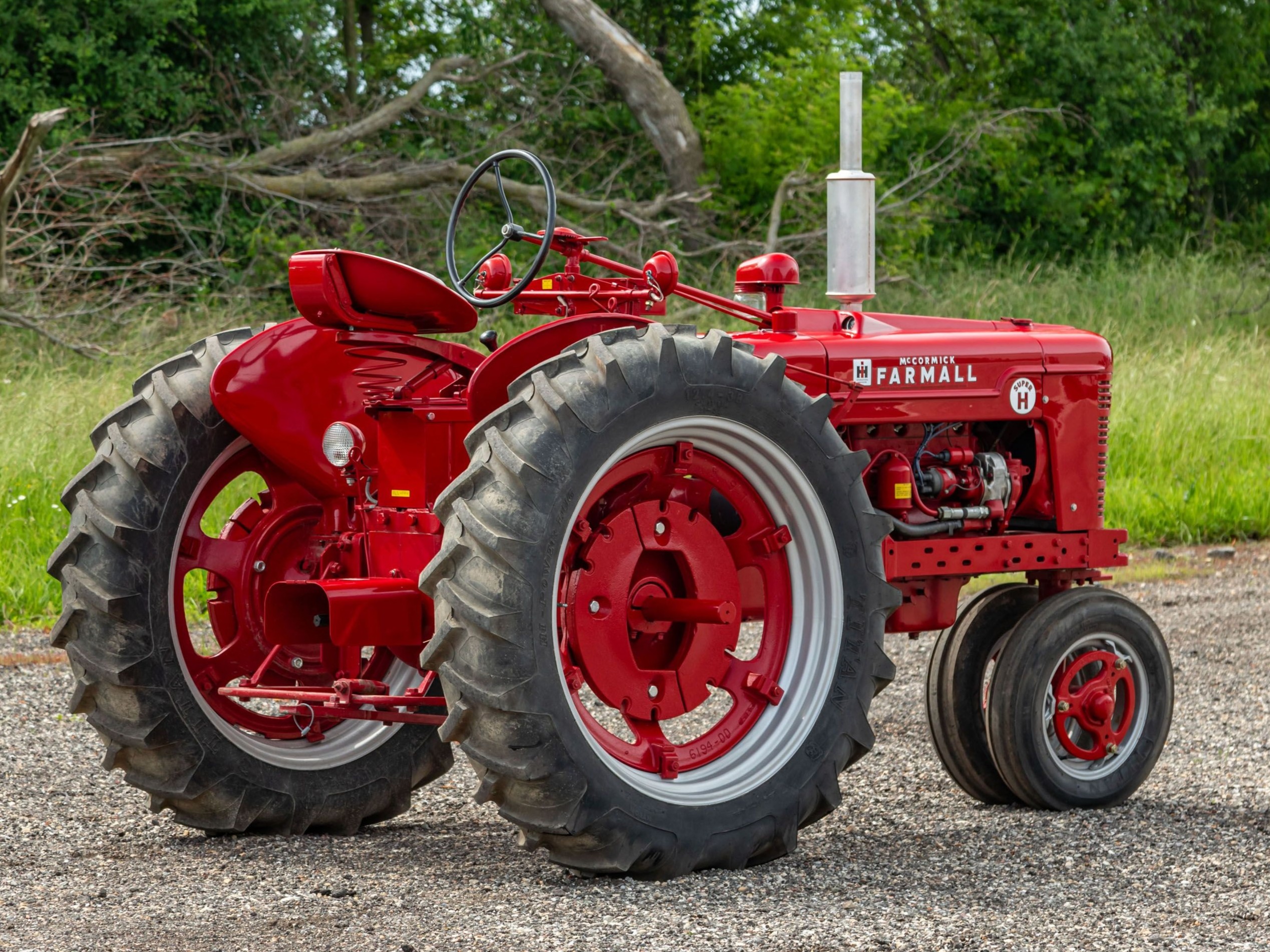
Eventually, farming would evolve beyond the tricycle tractor. Over time, power steering would creep its way into tractors, and tiny turning circles became less important. The farming machinery that also mounted to the front of a tricycle tractor, like a belt-driven threshing machine, a corn picker, or a cultivator, would lose popularity in favor of more modern electric and gas-powered equivalents. Thus, by the 1970s, the tricycle lost its crown as America’s favorite tractor.
Yet, after all of these decades, it’s still an icon. I’m willing to bet that when some of the people reading this picture a tractor, they imagine a classic tractor with two huge rear wheels and two small V-shaped front wheels. Now, the next time you see one of these tractors, you know why the front wheels are a bit weird.
I think this is a perfect example of brilliant engineering hiding in plain sight that I bet a lot of people haven’t thought about. You, like me, might have just accepted that tractor wheels looked like that for reasons. As it turns out, those narrow front wheels facilitated easier turns and allowed tractors to straddle crops. Now, I feel like seeing if I can find more neat pieces of engineering that are not even hidden from view.
Topshot image photo credit: DespositPhotos.com


These days I find tractors and heavy equipment much more interesting than cars and trucks. My company manufactures thrust bearing washers and sleeves for Cat, John Deere, CNH. Always fun to look up the machines these items go into, simply astounding the size, complexity, and technology of these machines. And the cost, my god the cost. Multi hundred thousands and up. In order to be a successful farmer, logger, or heavy equipment operator you must be hardworking 24 x 7, smart, a person of many talented hats, and have good luck. Most of this equipment is leased or financed, when its not moving its not making money, but the interest is still ticking away.
And it’s locked behind DRM, so you can’t fix it when it breaks.
Much like commercial aircraft.
If getting into tractors, the Minneapolis-Moline UDLX would make a great article.
Also, recommend the Rollag Steam Thresher Reunion if you want to see the old steam tractors in action
I worked for farmers in the 1970’s while in high school and for a machine shop / farm.
The most dangerous people I ever worked for.
We heated the machine shop with firewood. The short path back to the wood took me down a hill that was way to steep to stop on with a tractor (Farmall H?). You put the tractor in high gear and slid down the hill. I used the brakes to slow down the rear wheel that was spinning backward. You were slightly crossed up all the way down.
The boss also added an old buzz saw to the front. So a mostly unguarded 3 foot diameter blade driven by an open belt. Cuts wood much faster than a chainsaw.
Very scary, that blade is not going to stop if something goes wrong.
Glad I did all this stuff, it made me pay attention.
Now I have an old Ford 2N with a Dearborn loader for plowing snow, etc.
You can fix most of this with an adjustable wrench and a screwdriver.
Osha? No, no one named Osha here!
I’ve helped my cousin on his farm. I refer to everything as having rapidly rotating knives of death. Makes me stop and think twice before I get out of the tractor to fix something.
Having driven both in my youth. I worked in an orchard in college so the tractor roll bars were removed for safety. I do NOT like the narrow front wheel tractors.
Thanks Mercedes! I always wondered about those cambered front wheels. As an owner of a 58 Ford 841, I encourage more tractor content. The history of PROs and the 3 point hitch are fascinating
PTOs?
Yes, PTOs. Thanks! Can’t seem to edit my post
Yeah. I just wanted to make sure there was not yet another thing I didn’t know about tractors. I only drove two kinds.
You only get so long before you can’t correct or retract your post. As much as I love the content on this site, some of the mechanics of it are FUBAR.
Tractor content on the Autopian! Super fun. I never thought about how the positive camber would self clean the debris out from between the wheels. I love it when simple solutions have multiple benefits.
If only we could add positive camber to people’s ears to clean out the crud in their heads.
Mercedes,
Can you caption the images explaining what is in them? What am I looking at?
The captions give the source, which is excellent, but I don’t know enough to match your text with the images on many of them. If I could do that, I wouldn’t need article.
Seconded. I’m completely ignorant about tractors, help me change that!
The v shape would allow the tires to naturally kick out large rocks big enough to get wedged in tire when it spreads apart it would fall out of the v so you didnt get rock packed in front tires when working cultevator any thing where it open dirt apposed to sod
“It’s after six. What am I, a farmer?” – Jack Donaghy.
A diesel Cadillac Seville bustleback could be in your future as a Rhodius replacement. But at least it’s black.
Interesting. I thought it was to help them track within a furrow so they didn’t crush their crops.
Another great Mercedes article! I’ve read that another wheelie hazard is the rear tires freezing in muddy ground, so farmers in frigid areas should reverse briefly before going forward. Don’t know any farmers from where I’m from to ask about this, and where I live now it’s not an issue.
I love these rabbit-hole deep dives. I hadn’t thought of such tractors in years, much less wondered why the front wheels were canted like that, but seeing this article instantly made me say, “Yeah, why is that? Tell me more.”
But as a GenX kid with farmers up and down my mom’s side of the family, I saw tons of them as a little boy. My first tractor ride would have been in my great-uncle Frank’s lap atop a red Massey-Ferguson of this precise type.
(Side note: my parents’ mechanic and our longtime family friend, Max, is a VERY country boy from south Alabama, with a typically “colorful” deep south potty mouth. But whenever he wants to clean up his language, when little ears or female ears are nearby, he substitutes “MF’er” with “Massey-Ferguson.” “Welp, that alt’nator was a real Massey-Ferguson to get outta there, but we got ‘er done.” God, I love that guy – he’s not only good as gold, but an absolute scream.)
“I am sick. to. death. of all these Mighty Fine snakes on this Monday to Friday plane!”
Samuel Jackson, after the movie was “edited for television.” I’ll let you guess the movie. It ain’t hard!
Heh. It wouldn’t be as funny if Max had gone the edited-for-TV “Platoon” route and said “maggot farmer” instead.
That’s freakin’ hilarious! I’m older than you and got taken by my dad and later went on my own to a couple of rural bars and was amused by the signs they put on the bathrooms. There were “pointers” and “setters” for the hunting bar and then “John Deere” and “Allis-Chalmers” for the farming bar.
I’ve had an International Cub Cadet Garden Tractor since 1988, that was a 1972 model. I just replaced the rear original tires this past fall, and the original front ones are still on it. It has a hydrostatic transmission that works great, and the only maintenance has been to replace the rear main seal once, and to change the oil at the beginning of each mowing season, and to clean the air filter often. Living in West Virginia, my land is all hills, and the heavier frame of the garden tractor gives it so much more stability. Great Article, Mercedes!
There was a program in Vermont and likely other states around 15-20 years ago to retrofit all those old tractors still in use on the many small hill farms with roll bars.
Everyone should get to drive a “classic” tractor at one point:
Yes you can indeed spin the tractor around one of the rear wheels.
But it also was a “manual posidrive”. Stomp on the brake of the wheel that’s spinning and there’s a good chance you’ll get moving. Unless you’re sunk down to the axle (I tested this for you all, don’t do it).
Takes quite a bit of muscle learning to drive them, but once you get the hang of it, it’s truly light work afterwards.
Ever drive an old 2-cyl Deere? Hand clutch adds another level of mechanical engagement. It’s a learning curve, but now that I’ve got the hang of it, I absolutely tedding hay with my JD 70.
I miss my popping John.
I’d kind of like to get an LA Deere, they are really pretty little things.
I’ve had the pleasure of driving a few as my one friend is a vintage John Deere guy. They are lots of fun. It’s amazing the difference in how they feel and drive relatively between 1920s and 1960s machines.
I remember the little flip lever on the brake peddles that would lock them together or flip is the other way to brake on one side or the other.
Yes it does, but it’s also pretty fun. My grandpa used to farm in the 70s and 80s after he retired from factory work. He had a 450 and a 756 with a cab. I never did get to drive the 450 (though we did rebuild the engine), but have driven the 756 many times. Grandpa taught me to drive it when I was little and on snowy mornings he’d let me plow the driveway before he took over to do the road and church parking lot.
He’s been gone for about 20 years, but two of my cousins now have those tractors and the 756 still sees pretty constant use.
YESSSSS. Autopian goes tractor…I’ve waited for this day.
Btw that topshot is an IH from the -06, -26, or -56 series. My neighbor just sold an 806 narrow front that he converted a few years back to WFE. Always liked that tractor better than my 856 WFE that I also just recently sold. Narrower front tractors have their place, but they take a careful operator…easy to tip them if you’re in a sketchy situation. My dad remembers a Farmall Super C with narrow front AND a loader…lots of guys locally had similar setups for cleaning barnyards, but I always hated the lack of stability with that. Skid steers are much nicer for cleaning barns.
Skid steers look like a lot of fun. I wanted an Attex 6×6 so bad when I was a kid. There was a kids’ show, The Banana Splits Adventure Hour, when I was too impressionable.
https://youtu.be/t2JEH9nBjlo?si=K1qYai87vy-72bMD
Several years ago I went to a tractor museum south of Richmond, VA, just off of I-95. It was amazing, and huge. After a quick on line search, I think that it was the Keystone Truck & Tractor Museum, even though I don’t remember the trucks.
If you are in the area and have a little time, it is worth the effort.
IIRC, the tractors were parked close together in neat rows, so there are more vehicles than I expected.
I imagine that Mercedes would enjoy!
It’s a great museum! My favorite tractor there was the MM UDLX…a tractor way ahead of its time in a lot of ways.
While I wouldn’t make a special trip, if you’re in Joseph or Enterprise Oregon the Sunrise Iron collection is worth a visit. It’s the personal collection of a retired farmer and has a lot of very early gas tractors. Oregon Field Guide did a,video segment a few years ago.
They also just did a segment on rail speeders who do an annual run on the Oregon Coast. Since these are car adjacent they belong in The Autopian too
I’ve never been, but I know the place – I lived in Portland for over a decade, and I passed by the sign on I-5 many times. My wife’s cousin’s husband knows the place well, though, because restoring steam engine implements is his engi-nerd hobby, and he brings machines to their steam engine shows regularly.
In fact, his wife’s dismissive term for his projects, “rusty junk,” got recycled by my wife as her description of my favorite YouTube channels like Vice Grip Garage and Junkyard Digs, which she calls my “rusty junk shows.” The other day I was watching an episode from WD Detailing, and she came into the living room and said, “What’cha watching, rusty junk?” I said, “Not exactly. This is a car detailing channel. So I guess this would be dusty junk instead.”
There were also some tractors that had single front wheels, mostly for the reasons described above (I think).
More speculation: another advantage to having two wheels would be slightly better weight distribution as engines got larger and heavier.
As an antique tractor owner and enthusiast, I approve this #Agtopian content. Thanks Mercedes!
Agrotopian!
Tractopian was right there!
/archer GOD DAMMIT
Both are great! I love this site!
I’m never deleting this app!
(Akshwally, I don’t have the app and I just use the browser, but you know what I mean.)
I always thought the row crop tractor was a tricycle configuration, but then I’ve never heard of a wheatland tractor before either. From Squatch253 videos I’ve learned about aftermarket front ends for Farmalls.
One very interesting sub class are orchard tractors which are streamlined to fit between trees and avoid damaging branches
The orchard I worked in as a teenager had all the tractor roll bars off to avoid any unintended wheelies from a branch catching on a roll bar.
That seems like the sort of thing you figure out the hard way. Terrifying.
There’s also the possibility of getting “clotheslined” by a low hanging branch, and then pinned between it and the bar. Things rarely end well when you become a human sandwich.
I mowed over my hat and walkman after they were wacked off my head by a branch.
Hmm, that’s one benefit of a mid-mount mower I’d never actually thought of, but if I had a pull-behind, I’d probably have mowed over my hat and earbuds a few times too! The old mulberry in particular always seems to have one branch sticking down a bit lower than you think.
I loved that old pto driven brush hog mower deck, only occasionally would it shoot a chunk of branch into my back.
Yeah, nothing like getting a walnut branch caught on the front of the tractor, bent back really far and then it cuts loose and whacks you in the head. I wore a motorcycle helmet in the orchard. A neighbor kid got killed when apparently he leaned forward to duck under a branch, got hit on the head and fell under the wheel.
You are more that twice as likely to get killed farming as being a police officer.
“If it looks stupid but it works… it’s not stupid”…
Wearing a motorcycle helmet while on a tractor going through an orchard is a really smart idea.
I wouldn’t be worried about ‘a little bump’ to the head, rather getting hit so hard like the story you mentioned that I’d be knocked out and then run over and of course possibly killed
” Orchard Dress ! ” I learned that term from the owner of the fab shop I worked in. We made a pair of skirts for a John Deere .
Skirts madrnoutnof chain to prevent especially heavy branches being kicked up from under a brush hog is a damn good and potentially life saving idea
HOORAY TRACTOR ARTICLE! And trust Mercedes to pick a fun angle and turn it into an enjoyable read.
I once wanted to enter a “chicken tractor” (wooden mockup of a farm tractor driven by people in chicken suits) into our local soapbox derby, but I could only imagine a tricycle tractor like these Farmalls, and knew it wouldn’t corner AT ALL.
Maybe you should have followed Jeremy Clarkson’s lead and mocked up a Lambo instead.
I’m missing a reference here, but Lamborghini started out building tractors (and still does tmk).
“Clarkson’s Farm.” Jezza’s post-“Top Gear” show, in which he decides to be a farmer. Hilarious. Check it out.
I’ve seen pictures of Porsche tractors as well.
I think Porsche only ever made 1 tractor a small(ish) general purpose wide front (Porsche Diesel 419)
There are Ferrari tractors. The model I’ve seen the most is a cool 4×4 general purpose that pivots in the middle.
https://ferrariagri.com/en-001/
Though the Ferrari tractor company has nothing to do with the Ferrari car brand, rather both were started by men with the sur name of ‘Ferrari’
Garden tractors are sort of a vanishing breed these days. They’ve essentially been replaced by even-more-expensive “sub-compact utility tractors” — the smaller cousins of the already small “compact utility tractors” like the ubiquitous Kubota machines. The very largest Wheel Horse and competing John Deere garden tractors of the 90s were edging into sub-compact territory before it even became a class.
One of the most common rollover hazards to tractors, no matter how careful the operator, are groundhog holes. (They’re a hazard to livestock, too, of course.) Keeping a sharp eye on the ground ahead for their holes is important. It’s not just that one wheel will dip in the hole; the entire burrow below can collapse under the weight of the machine and tip it.
Farmers also used the extra axle length on some tractors to mount dual rear wheel/tire combinations, particularly for plowing and disc work prior to planting. The weight was spread out for better traction in ground made muddy by Spring rains, and more tire surface area meant more traction, and sometimes the ability to pull a couple more plowshares or disks to cover more ground in fewer passes. And, the wider track with dual tires had a slightly better chance of not sinking as deep if they encountered a groundhog hole or burrow. Any safety margin was a good thing. That’s where the modern four-wheel-drive articulated tractors also have an advantage — in addition to being able to pull heavier equipment in soft ground, their articulated design will let one corner sink while the whole machine can stay more-or-less upright and continue forward onto more level ground. They’re not invincible, but they’re definitely a big step forward in useful power and safety.
Stance 4 Lyfe!
Fantastic article! As a city boy that relocated to the country and was apprehensive to question ornery farmers/ranchers; my curiosity has been satisfied today!
Oh, I’m sure they would gladly answer your questions. Problem is, they might answer your questions with complete bullshit, just to laugh at the city boy after you leave.
You’re not wrong.
Wide front track tractors will pop a wheelie too. BTDT, on my great-uncle’s farm as a teen. Thankfully, it didn’t go all the way over, but it was a definite code-brown moment.
It is at that moment when “jump” is not a bit of a pop song.
LOL – no doubt. IIRC, the cause was a grumpy “Ford-O-Matic” that let the thing rev right up then SLAM into gear, and too much youthful exuberance.
Put a round bale of hay on a spike on the back for maximum lift off. And you have a built in wheelie bar to send the front back down to earth. Fun times as a teenager.
Did this once with a 1086 on the road. Had a baleage bale on our unroller (probably close to 2000 lbs total) and went to shift from 3-4, got stuck between gears (f@&$ing IH shift linkage), came to a complete stop right at the same time the tractor dropped into 4th gear. Wheelie time! The unroller gouged the asphalt about 15 feet before the front end of the tractor came back to earth. I hated that 1086.
Wheeeeeeeee!
I suspect doing it intentionally is a lot more fun than having happen unexpectedly.
1st memory of being on a tractor it was a mid sized narrow front IH.
My cousin that lived on the family farm gave me instructions on how to drive it. Not knowing any better I pushed the throttle lever way too far and way too quickly.
The front end jumped up off the ground easily 3 feet*. I very quickly pulled the throttle lever all the way back. We bounced the front end 2-3 times before it settled back down.
*I know it was higher than 3 feet because I very distinctly remember it was higher than the hood of the car that was parked way too close for my comfort. We both thought thr front wheels of the tractor were going to come down on the cars hood
Yikes! Yeah, those things are a lot more dangerous than they look at first glance.