

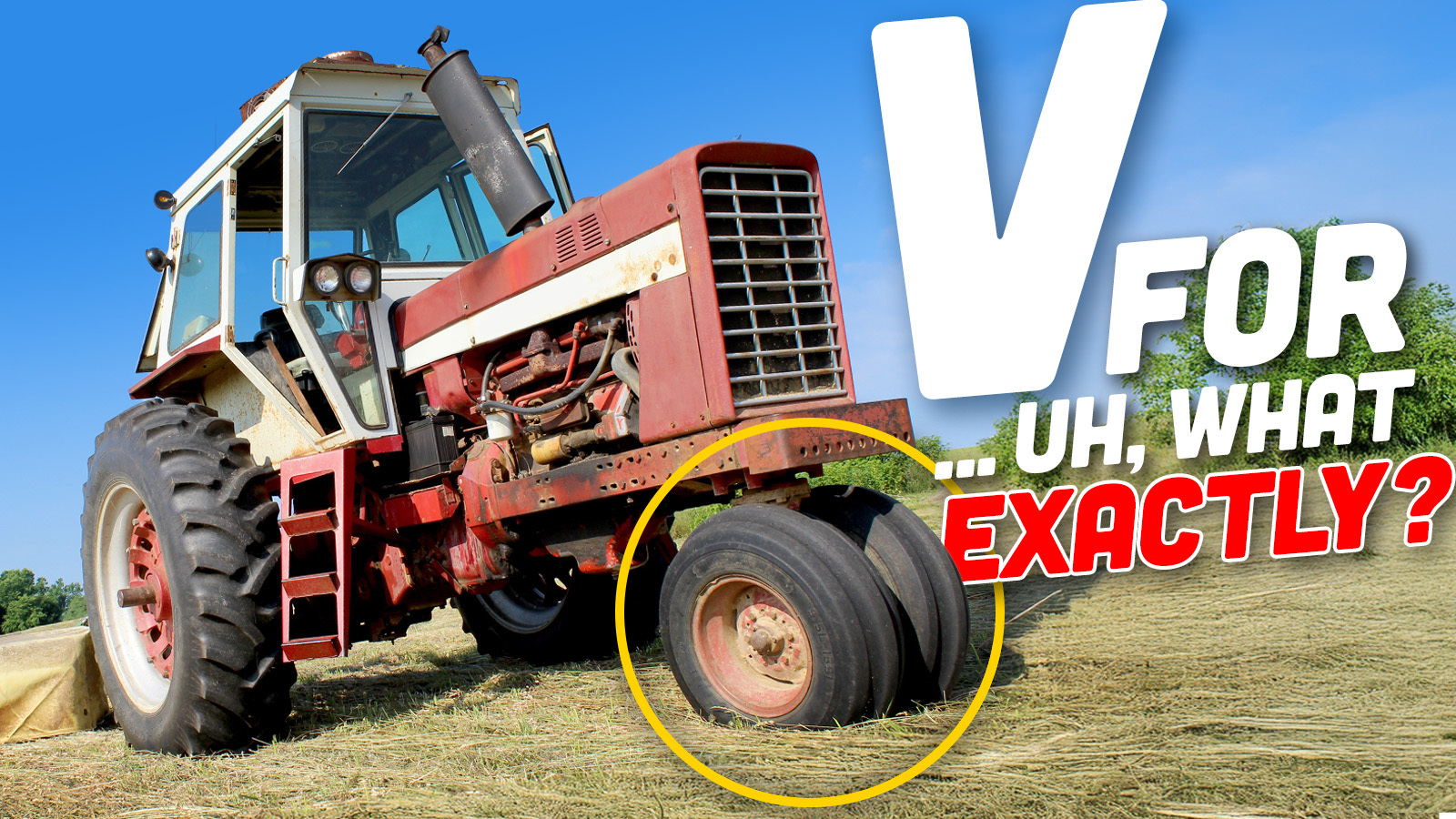
The humble tractor is one of America’s most underrated specialty vehicles. Day in and day out, farmers work hard to keep us all fed, and tractors help them get the job done. But how often have you thought about a tractor? Have you ever wondered why a lot of old tractors often have two front wheels parked close together and angled into a ‘V’ shape? Here’s why tractors used to look like that, and why you don’t really see new ones like that anymore.
Several readers have asked us to dip into the world of agricultural equipment. We already write about aircraft, motorcycles, cars, semi-tractors, and sometimes ships. Yet, there’s a whole world of vehicles that keep the world fed. The subject of tractors and their design came up in a recent staff meeting. One of the questions pitched by my colleagues was “Why do old tractor wheels look the way that they do?” Oh no, that’s bad, or maybe good, because it sent me down a rabbit hole.


I have written about the beautiful history of tractors before, and I recommend reading it by clicking here. The important part that you need to know is that some of the earliest tractors in history, which were built in the mid-1800s, were towering beasts powered by steam engines. These mechanical wonders moved slowly along the land using massive metal wheels, and those wheels were in tricycle configuration with a single wheel up front and two in the rear, or a standard four-wheel configuration. If you like steam engines, you’re going to want to watch this:
If you look up photographs or imagery of a classic American tractor, there’s a pretty high chance that your results will be populated with tractors that have sizable rubber-shod rear wheels, and a pair of much smaller wheels that are up front, are close together, and are angled. What’s up with that? Tractors used this configuration for decades for a practical reason.
Tractor Flavors
First, I should explain what I’m even talking about here. There are several different kinds of tractors. A common kind of tractor that you’ll find is a row crop tractors, which feature four wheels on adjustable axles. These adjustments allow the operator of the tractor to adjust the track width so that they can drive their tractor in a field without crushing crops.

Standard tractors also have four wheels, but tend to be lower, heavier, and are usually found pulling implements. These are generally used for plowing and other heavy duties. A derivative of a standard tractor is the Wheatland tractor, and what a Wheatland tractor is will vary depending on who you ask. International Harvester had a tractor line called Wheatland, but the term spreads beyond IHC fans. From Farm Collector:
The definition of a Wheatland tractor is hard to nail down. In some tractor circles, enthusiasts identify Wheatlands as being nothing more than standard tractors that were used in wheat fields. Some say they had adjustable front wheels; others say no. Some say they never had a 3-point [hitch] or PTO; others disagree. Some say several of the “Wheatland” tractors should be designated “Wheatland-style,” as they have several of the attributes of Wheatlands, like a larger frame and bigger wheels. Others claim all McCormick-Deering tractors were Wheatlands, so there is little agreement on the features of any given model. Some even say the difference between Standard and Wheatland depends on where you live.
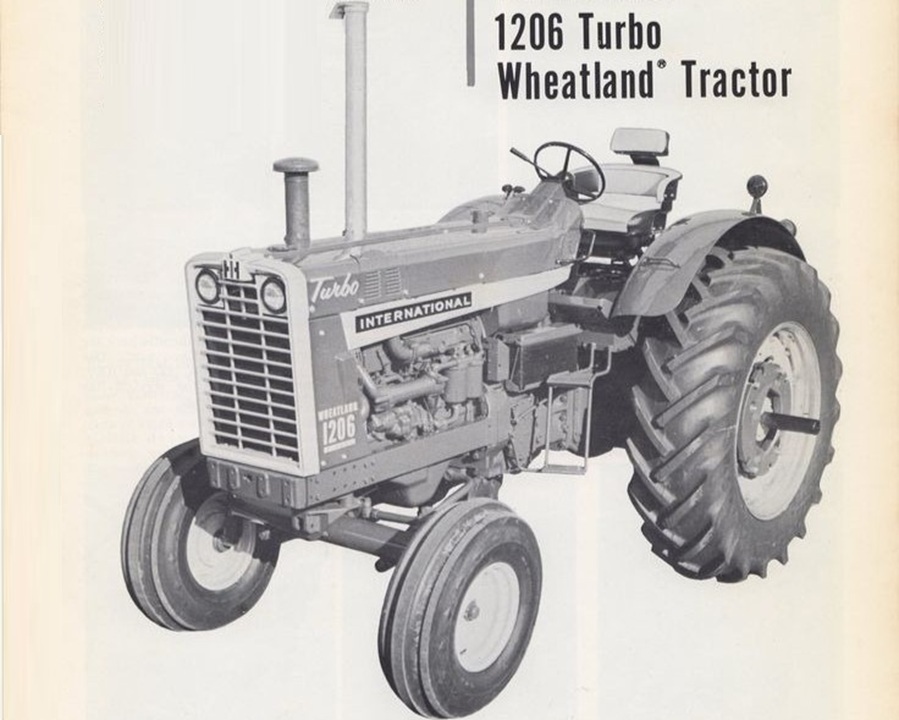
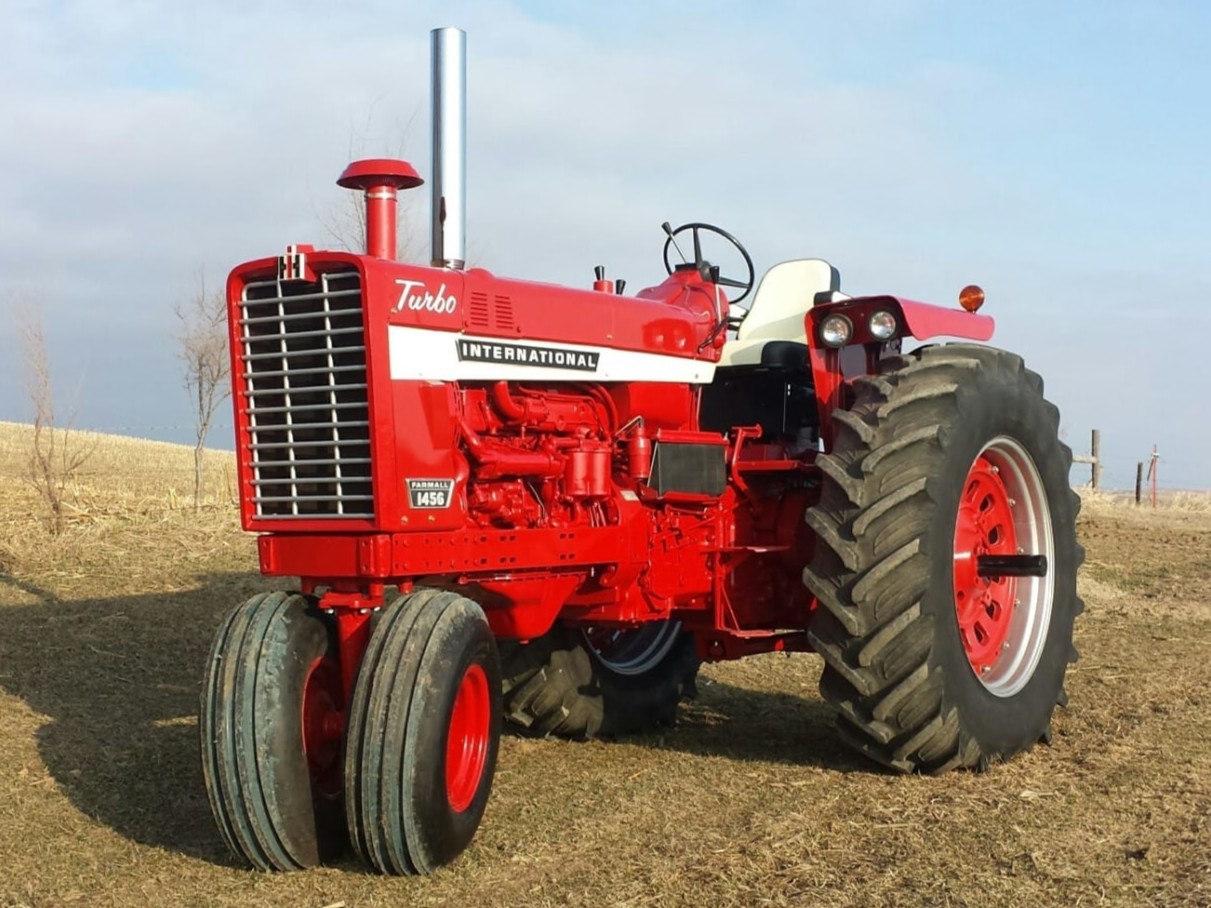
Generally, although the “Wheatland” name was only badged onto a few tractors, IHC Wheatland tractors could include these numbered models because most of them have larger fenders, a dust shield (sometimes), no PTO or 3-point, larger tires and frame: 350, 460, 560, 660, 706, 756, 806, 856, 1206, 1256 and 1456.
Some people think the McCormick-Deering W-4 and W-6 should also be termed Wheatlands. The one point of agreement in any Wheatland discussion is that nobody agrees on a single definition of what a Wheatland tractor is.

Thankfully, we’re not here to litigate what is or what isn’t a Wheatland. But the short version is that, depending on who you ask, a Wheatland is either a standard tractor that drives in wheat fields or is a standard tractor with big wheels, a big frame, and other attributes.
Moving on from here, other tractors that you’ll find out there will be high crop tractors, which have big adjustable wheels and big ground clearance to drive over tall crops, utility tractors, which get used for general labor around the farm, and garden tractors, which tend to be used for landscaping.
An American Icon
The kind of tractor we’re interested in today is the tricycle tractor. These tractors were also among some of history’s earliest designs, and would become the dominant tractor design from about the 1930s and into the 1970s in America. Chances are, if you look at illustrations of classic tractors or go to a museum that has tractors, you will see a tricycle design. These tractors are perhaps the most iconic American tractors, even decades after they were last popular.
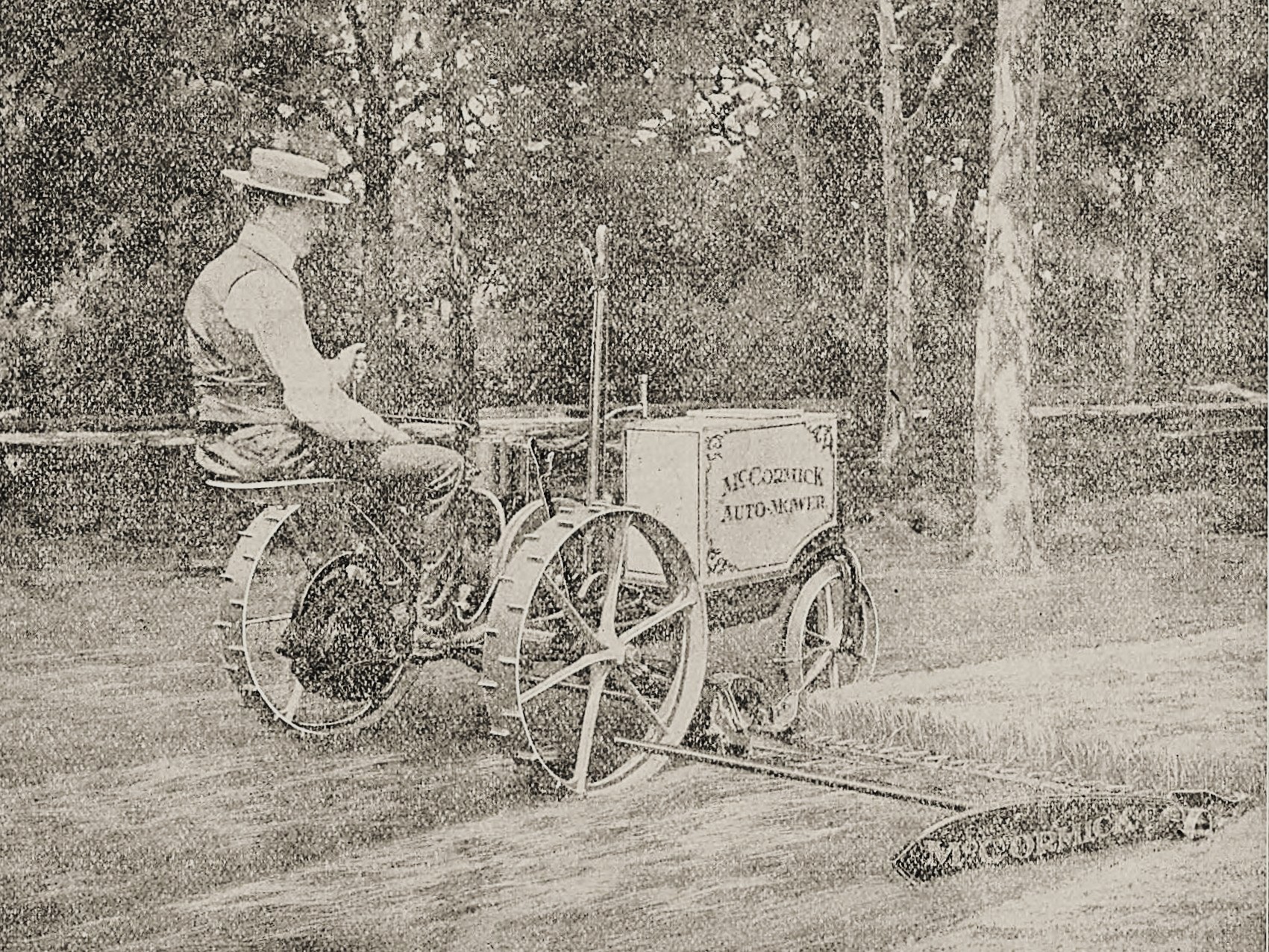
According to Successful Farming, the ancestor of the tricycle tractor was the 1899 McCormick Auto-Mower. This tractor was an experimental design that featured a single-cylinder engine, a cast-iron frame, three wheels in a tricycle configuration, a transmission with reverse, and a live power-takeoff. This tractor was designed as a hay field mower, and it was intended to replace the horse-driven sickle-bar mowers that had been in use since after the Civil War.
According to Successful Farming, the Auto-Mower was the invention of McCormick engineer Ed Johnston, who had been experimenting with engines since 1898. Today, it’s believed that an Auto-Mower that’s in the hands of the Wisconsin State Agricultural Museum is the oldest surviving tractor in America.
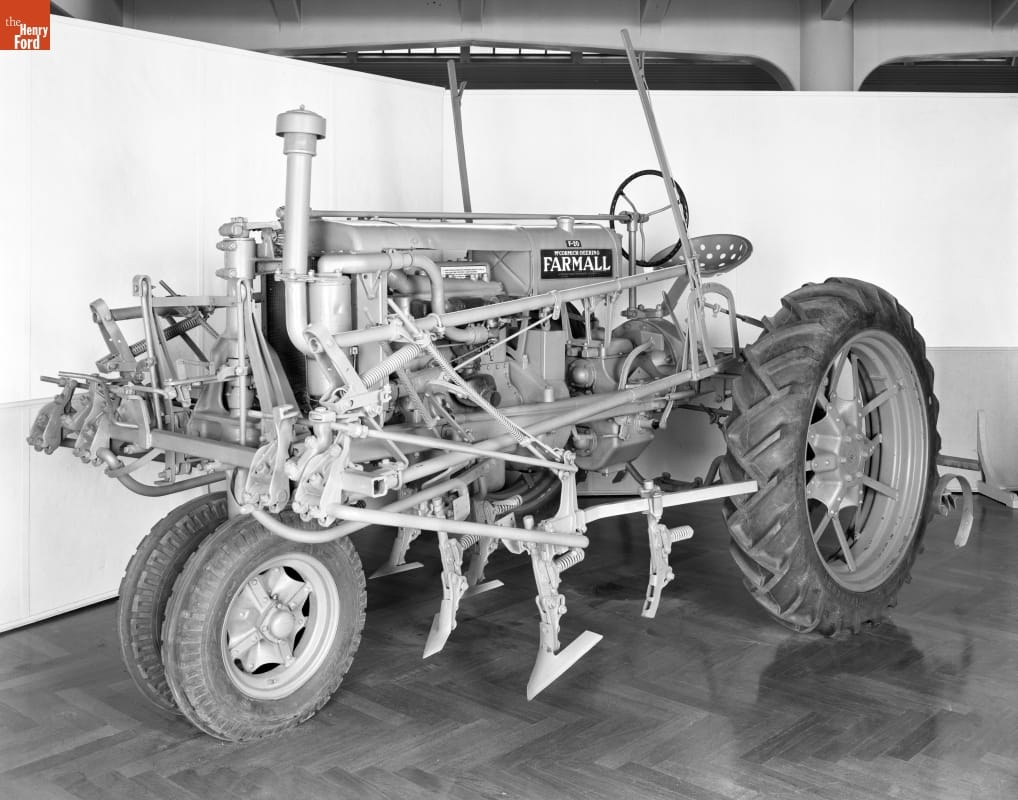
It would take a little over two decades for the tricycle configuration to really take off in America. The design that’s credited with popularizing the tricycle tractor is the iconic 1924 McCormick-Deering Farmall. This wasn’t just the tractor that popularized the tricycle configuration, but, as the Philadelphia Society for Promoting Agriculture writes, it was the first successful all-purpose tricycle tractor. Morning AgClips has more information:
In the early 1910s International Harvester ruled the American tractor market, but by the end of the decade they were overtaken by the Ford Motor Company which introduced the Fordson tractor. Falling behind in the market International sought to find a way to regain their place on top.
An International implements engineer named Bert Benjamin came up with an idea that proved fruitful. Benjamin grew up on an Iowa farm and was well versed in farm implements, but did not have much experience with tractors. While on an assignment that tasked him with adapting International implements so they could be used by Ford tractors, Benjamin created a kit that enabled Ford tractors to cultivate. This gave him the idea of creating a tractor that could do several tasks for farmers like planting, cultivating, and more. He wanted to create a machine that could replace horse-drawn farming.
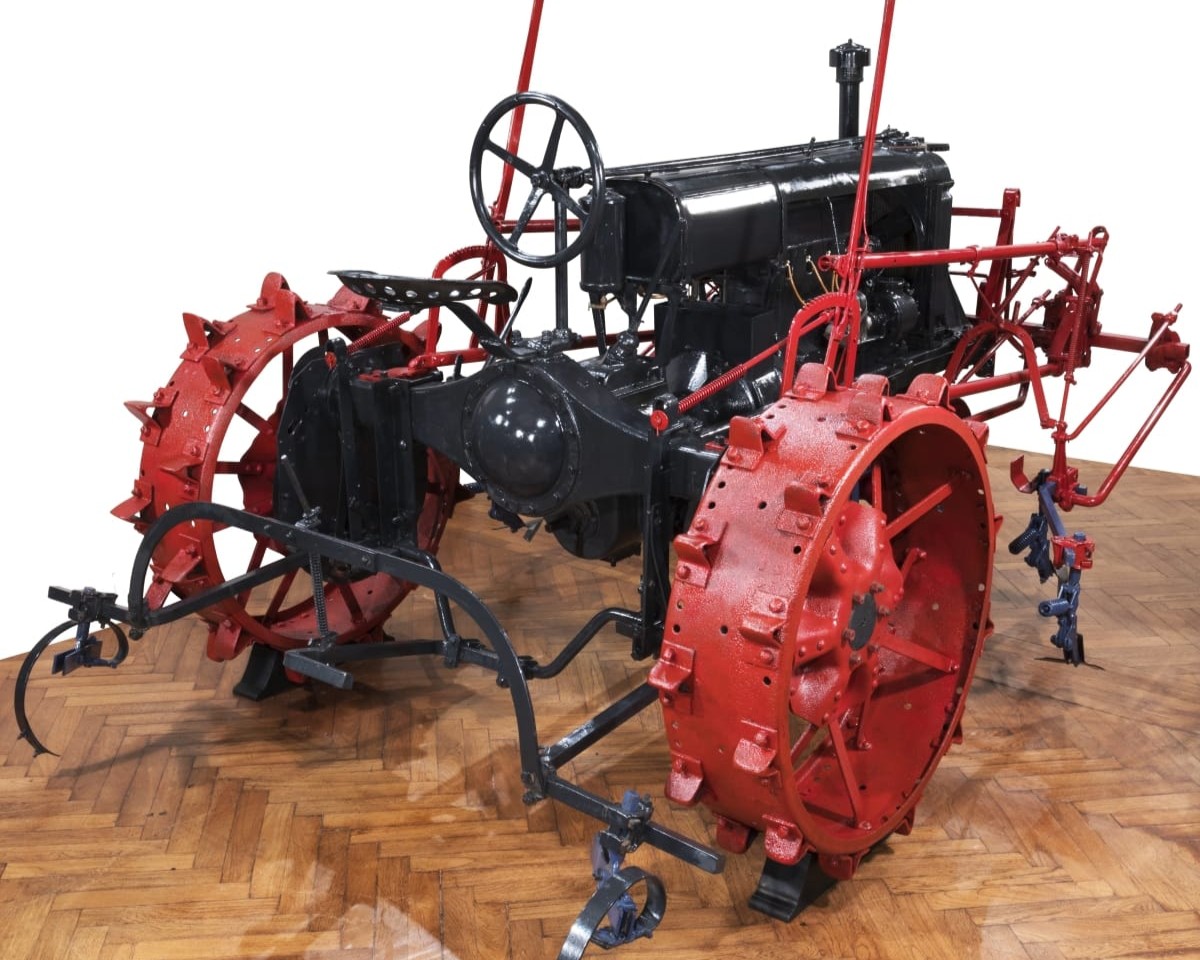
International Harvester did have a Motor Cultivator but it was never very successful and eventually discontinued. Drawing on this machine and other ideas, Benjamin and others began working on this “do-it-all” tractor in 1919 and an initial prototype was ready in 1921. Improvements to the tractor continued after this first prototype, mainly making the tractor more lightweight while at the same time durable. In 1923 the tractor, called the McCormick-Deering Farmall, was ready for field testing and 200 were produced that year. Sales and shipments began in 1924 and it quickly became a popular tractor for American farmers.
Tractor historians call the Farmall a major step forward in tractor technology, and several features of the Farmall are responsible. The Farmall had, among other things, automatic steering brakes, a cultivator gang shifting mechanism, a Power Take Off, 2,700 pounds of pull, and its legendary tricycle configuration.
Four Smart Wheels
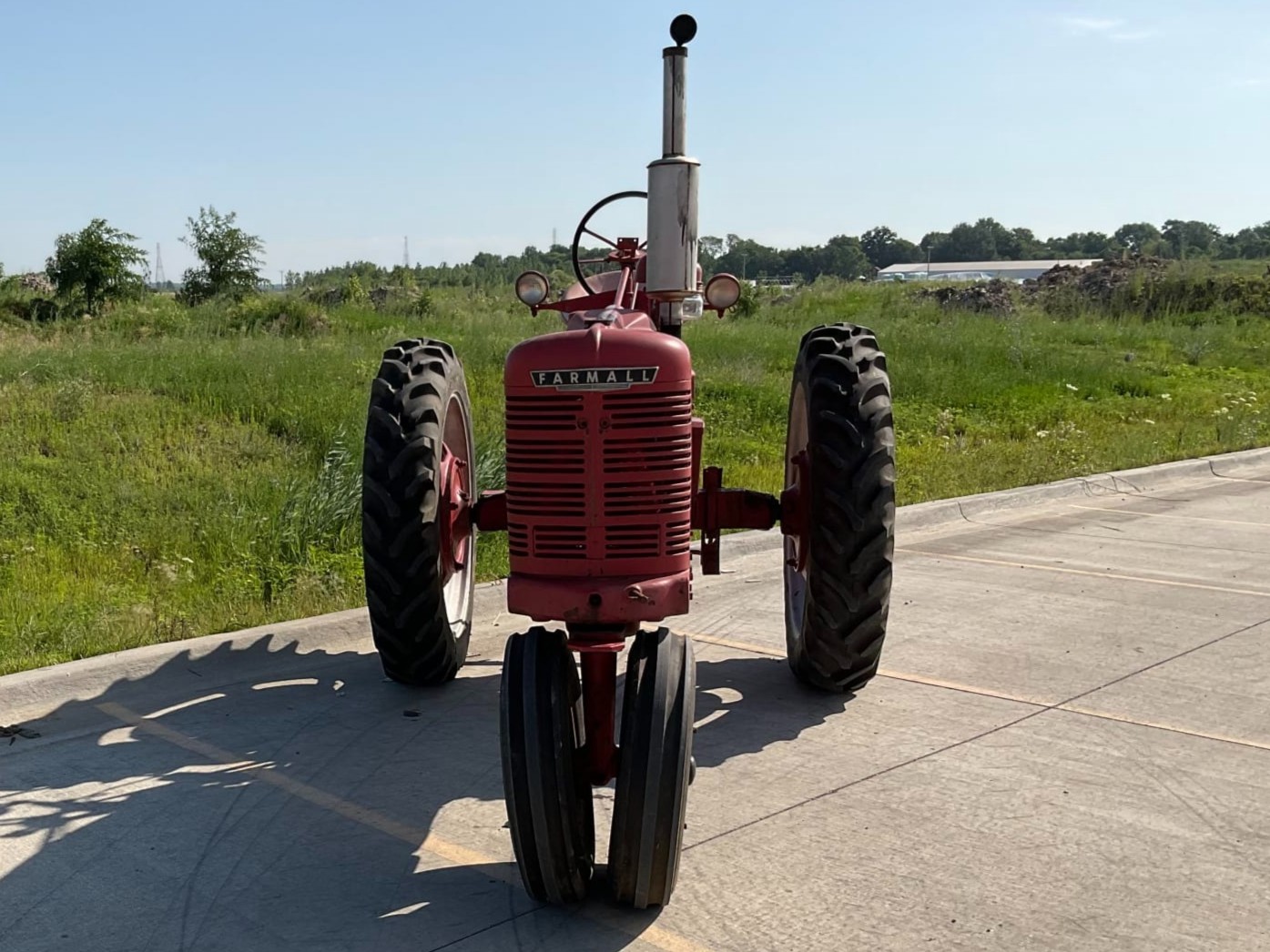
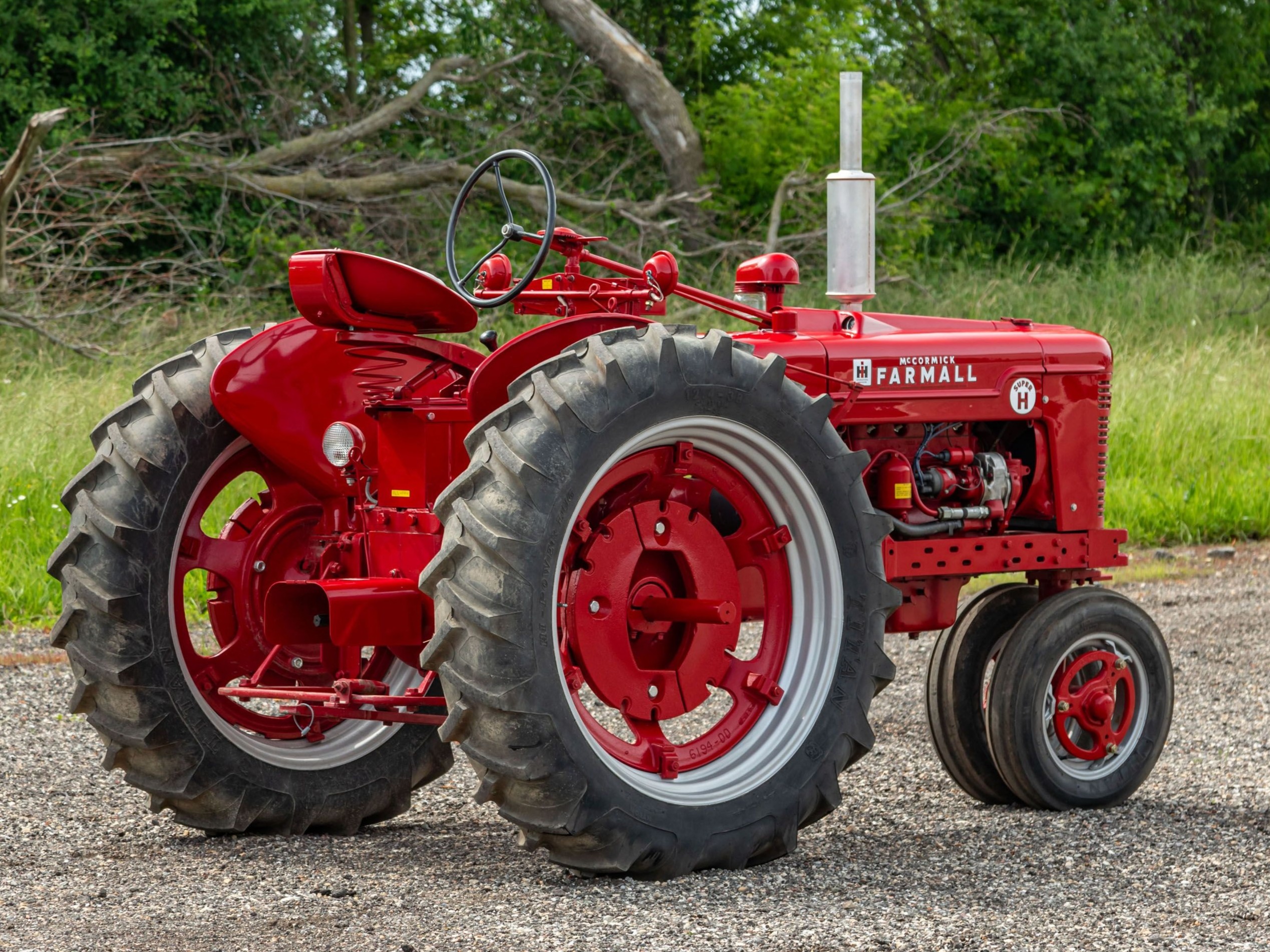
Why was the tricycle part so important? By having super-narrow front wheels and huge rear wheels, the Farmall had great ground clearance, but could also be spaced just right to drive between rows of crops without destroying the plants. The Farmall also sported an eight-foot turn radius and a price of $950.
While the Farmall wasn’t the first tractor to sport some of the features noted above, it was special in that it had a bunch of features that used to be found in individual tractors, and implemented in a way that a farmer could easily operate. In short, it was basically one tractor to rule them all. Soon enough, tricycle tractors became the default tractor configuration in America for decades.
As the Delaware Co. Daily Times writes, tricycle tractors had several advantages for their time. These tractors usually sported rear axles that were intentionally too long. Building them like this allowed operators to adjust the rear track width of their tractors so they could find a setting that would allow them to perfectly straddle their crops. Another advantage was that these tractors were simple and cheap to build. This was important because farmers, like most other people, didn’t have a ton of cash to spend during the Great Depression.

The Delaware Co. Daily Times even explains why, in addition to helping the vehicles straddle crops, these tractors had weirdly angled front axles:
The angle between the vertical axis of a tire and the vertical to the ground is called camber; we’re talking about positive camber in the tractors. Those early tractors didn’t have power steering; turning the steering wheel was somewhat difficult and fatiguing after many hours in the field.
The early tractors were being developed at a time when agriculture was in a transition period. Most farmers were using horse-drawn machinery for some jobs and a tractor for others. Tractors needed to work fields that were laid out by horses. A narrow front axle and separate brakes in the rear wheels made those early tractors extremely maneuverable. A farmer could turn the steering wheel to the right and at the same time tap on the right brake, and that tractor could spin on a dime. It could pivot within its own length. Turning in a constricted space was easy – and especially useful when pulling machinery in the field such as mowing hay or pulling a grain binder, corn binder or combine. Another reason for canted front wheels was to let mud or a stone – that had become pinched between the tires at their bottom-most point of their rotation – to fall out before it reached the steering post between the front wheels.
Yet another advantage was that cultivators could be mounted on the side and underneath the tractor. That isn’t easy to do on a row-crop tractor where the front wheels are several feet apart. Early tractors had a powered pulley that could run stationary machinery such as a threshing machine, corn shredder, feed-grinding mill, corn sheller, windmill pump or buzz saw. It worked better when there was no wide front axle in the belt’s way. One disadvantage of the tricycle design was the difficulty of adding a front-end loader.
Unfortunately, for all of their advantages, tricycle tractor operators had to be careful because if the tractor lost balance, things could get deadly fast. If the operator of a tricycle tractor tried to turn at too fast of a speed or tried to take on too steep a hillside, the tractor was liable to roll over, crushing the poor farmer under the weight. Oh, and the rollovers weren’t always side-to-side, either, as in some situations, a tricycle tractor would rollover backward — briefly doing a wheelie — on its way to try to crush its operator.
Reportedly, these tractors were sometimes known as “widow-makers,” and I’m not sure I need to explain the meaning of that. But for some, these tractors were really only as safe as their operators were. To be fair to the tricycle tractor, farmers still die in tractor rollover accidents, and a standard tractor will roll under unfortunate conditions, too.
Everlasting Fame
Eventually, farming would evolve beyond the tricycle tractor. Over time, power steering would creep its way into tractors, and tiny turning circles became less important. The farming machinery that also mounted to the front of a tricycle tractor, like a belt-driven threshing machine, a corn picker, or a cultivator, would lose popularity in favor of more modern electric and gas-powered equivalents. Thus, by the 1970s, the tricycle lost its crown as America’s favorite tractor.
Yet, after all of these decades, it’s still an icon. I’m willing to bet that when some of the people reading this picture a tractor, they imagine a classic tractor with two huge rear wheels and two small V-shaped front wheels. Now, the next time you see one of these tractors, you know why the front wheels are a bit weird.
I think this is a perfect example of brilliant engineering hiding in plain sight that I bet a lot of people haven’t thought about. You, like me, might have just accepted that tractor wheels looked like that for reasons. As it turns out, those narrow front wheels facilitated easier turns and allowed tractors to straddle crops. Now, I feel like seeing if I can find more neat pieces of engineering that are not even hidden from view.
Topshot image photo credit: DespositPhotos.com


Always awesome to see tractor articles on here. I grew up in the woods driving tractors and other large equipment from when I was 8 or so on, and just recently inherited one of those old tractors, which I’ll be using to clear some land and build myself a new home, so tractors are on the brain a lot recently.
I grew up in small town southern Iowa, andwas around tractors a lot. The most memorable one was not used for farming. It was 1970 or so, and I was driving on a state highway. This road had narrow lanes, with curbs, as was common at the time. All highway speed limits were 70mph. I was approaching an S curve, and had slowed a bit, so probably going about 70 or a little less. I was suddenly, briskly, passed by a shiny green Oliver tractor, with narrow front wheels. It was powered by a Hemi. My jaw about hit the floor when he went through the S curve without slowing. There was a tractor-pull in my home town that day, so I’m sure that’s where he was heading. The sight of that thing going through those curves at speed is imprinted in my memory, and still make me a little anxious when I think about it.
Yea more tractor stuff! And yes the terminology and genre’s of tractors can be confusing. Wheatland, western, industrial, high-crop, lo-boy, etc etc..
“Unfortunately, for all of their advantages, tricycle tractor operators had to be careful because if the tractor lost balance, things could get deadly fast.”
That’s how my great-grandpa died back in the 40s I think.
tractor death country song: https://www.youtube.com/watch?v=t_DP1ATl0K0
YES. Came here for reference to fellow Tulsan John Fullbright, and was not disappointed.
We were dispensing with all of the old salvage auto parts from my Father-In-Law’s estate (run auto repair business on his property for 40 yrs) so it could be sold. We got his old 1967 IH tractor running to pull the 57(!) engine blocks out from under the sheds to put on trailer to haul off for scrap using the boom on back. Well, had a few old flat head Ford V8s to move and they were so heavy that the front tires were barely on the ground so had a real hard time turning the tractor around. Later, I was relating the story to my Dad and he goes “why did you not just use the single wheel brake to turn tractor? That’s why the brake pedal is split.” D’OK! This city boy didn’t know that!
Edit: Didnt scrap the flat heads…sold to some guy on FB Marketplace.
How timely! Was at an estate sale and they had a few restored tractors in shed with these narrow front wheels. So I call my Dad (former 40’s-50’s farm kid) to ask difference between narrow and wide axles. As noted here, the narrow axle let you spin the tractor around almost 180 at end of rows so you could plant closer to the fences than a wide axle…every little bit helps on a small farm.
we have 2 tricycles in the fleet. a massey harris senior 101 with a continental inline 6 that was my great grandpas and a 1952 john deere a. i hate the deere. the hand clutch is so cumbersome. the massey on the other hand has a conventional foot clutch and just feels more intuitive.
Tricycle tractors just remind me of that Simpsons episode where the tractor keeps flipping on top of Homer every time he’s even near it.
My first thought was “Pa!” Edit: wait, I just watched the clip and he said dad. Nevermind…
I assumed that was the clip linked in this sentence:
“But for some, these tractors were really only as safe as their operators were.”
Missed opportunity, Mercedes! Oh wait, there are entire generations of people that DON’T view the entire world as one big Simpsons reference.
Thanks for the link.
You are already writing about semi tractors, but if you want even more interesting stories you should try writing about any truck used for construction. I’m 100% certain that that’s were you find the most interesting and clever solutions, yet people don’t give a lot of thought to them.
Our family moved from suburbia to a 20-acre farm when I was 15. Dad bought a used Ford 8N wheel tractor and an IH TD-9 crawler tractor and taught my brother and I how to operate both. We still have the farm, but sadly Dad and the tractors are long gone. We lease most of the land to a guy who lets his livestock graze on whatever grows during the wet season. My brother went on to work in heavy construction, and familiarity with two completely different tractors was probably a great head start for him. Before retiring he operated Cat 988 loaders and 657 scrapers (“earth movers”).
I have owned an 8N and they were great little tractors. The engine on that thing would fire right up even on the coldest days. I grew up on a farm but now own a small 1 acre plot in a rural area. I keep a Massey Ferguson 245 for plowing snow and tilling the garden and a 1952 John Deere model A for the hell of it.
Being familiar with driving various equipment as a kid can sometimes be helpful in the most random situations. We ended up needing to use a telehandler at work and I was able to figure it out in just a couple of minutes. A lot of driving equipment is keeping an eye on where you are and what is around you.
Yes. The 8N always started right away. On “cold” days (N California, so upper 20s at worst), the TD-9 sometimes needed a little (and I mean little) shot of ether. If it didn’t start in the first five seconds of cranking, I would give it a minute to rest/cool the starter motor, do like a one-second shot of ether into the air filter and try again. It always worked. Didn’t want to grenade it.
Dad and the tractors are gone. Mom has Alzheimer’s now, and I have been driving from Tacoma to Woodland/Davis, CA and back every other week since June. Now that it’s becoming winter, I’ll fly to SMF and rent a car. The I-5 Siskiyous are not fun in the snow.
She lived here for 53 years but is no longer safe on her own. I could buy my brother out of his half of the farm when she passes, but none of the fun toys are left here. And neither of us really want it. It was uh, character building in our mid-teens, milking dairy goats and then having to drink that on our breakfast cereal. I’m surprised I like goat cheese to this day.
Dude! I also grew up with goat milk on my cereal. Lol.
Do you like chevre these days? And did you have to milk the goats? My last wife actually liked goat milk in her coffee. So, we had to buy a pint every couple of weeks. Getting a whiff of it was enough for me. Not nauseating. And I still like the cheese.
I do like goat cheese. More of a stilton man though. We milked 2 goats by hand. They were just sort of pets/for 4H. The old man had about 200 hogs and 40ish beef cows as well.
Blue or white Stilton? I like the blue. I have never had the white.
I’m all about the blue. and that bass
Both sets of grandparents had half section farms in north central Nebraska, and a couple of Ford N model tractors from the 40s and early 50s. I learned to drive those things when I was 11 or 12 yrs old. Both grands were semi-retired by the time I was in my teens. My paternal grandfather would start whichever one he needed to run in the winter by lighting a pan of old crankcase oil under the oil pan of the engine to warm the oil to be able to crank it w/ those little 6 volt batteries.
He also brought home rabbits for dinner one evening after spotting a nest in the meadow while mowing the hay. He stood up and reached into the toolbox, grabbed out a wrench and threw it while driving. Nailed a couple of them. As I recall it, I was not impressed with the taste of rabbit.
“A lot of driving equipment is keeping an eye on where you are and what is around you”
And I’d add anticipating what is coming up next down the road / (crop) row / land in front of you
Do you need to throttle up or down due to changing topography?
Or up / down shift
And near future ground conditions… for example, Wet ground ahead may mean you need more throttle to build up momentum to get you and your load through…
Agreed. Always good to know where the hard soil is and expect the front end to get a little light.
Another place to see old tractors in action is the Old Threshers Reunion in Mt. Pleasant, Iowa. Went when I was a kid and we lived nearby. Usually happening around Labor Day weekend.
https://www.oldthreshers.org/
Throughout lots if not all agricultural states there are “Antique Tractor Shows / Thrasherees” that can be really interesting especially if you like mechanical inginuity
I was at a tractor show last fall in WI that had 4 old tractors that together via a series of long leather belts that then went through an old truck differential to a drive shaft power a large (like literally 5 foot) in diameter saw blade on an old fashioned log mill.
3.iron wheeled steam tractors as well
And there was a machine shop with at least a dozen different implements being run off of 1 electric motor with an elaborate Rubric like series of leather belt.system of pullys through out the “machine shed”
As well as a blacksmith working on a coke fired furnace
And of course freshly made ice cream being powered by a hit or miss engine too
1 – great article!
2 – this is the most unexpected invocation of the Delco times I’ve ever seen. Not only random, and surprisingly informative….but these days, there are probably 5 actual tractors in the entire county, and that might even be generous.
When are we gonna get that article about the insane amount of variance of the GMT 800 platform?
Tractors are cool, but come on. Let’s get back to the vehicles!
GOBLESS
One particularly cool version of the narrow front (tricycle) configuration was the John Deere Roll-o-Matic.
The two front wheels are connected by a gearbox that makes sure the weight is always distributed equally between them. If one wheel hits a rock, the other is forced down to keep it from lifting off the ground.
Hey Mercedes, if you want to see something really weird, look up the David Bradley walk-behind tractor.
Cool article. My father-in-law, a retired farmer, loves restoring these old tractors. He has or had several of the ones in the pictures.
We had a pre-war Oliver 70 with tricycle (pony) wheels when I was growing up in the 00’s that we still used for pulling wagons and hay rakes. I never got the wheels off of the ground very high, but I definitely bounced it a time or two. What was really… invigorating with it was running down the road in 6th gear. You were only going about 15mph, but it felt way faster. And with the amount of play in that low-geared steering system, you were skittering all over the place.
Unfortunately, that thing drank oil as fast as it did gasoline and, one day, we let it run dry in the field. The engine locked up, never to restart.
I had to look that up and the whole Olive 70 and Hart-Parr Wikipedia rabbit hole is pretty interesting. Sorry about yours. It was called the 70 because it would run on 70(!) octane fuel. And apparently oil in your case.
They were cool things. The first tractors intentionally designed to *look* good and (one of?) the first to use the same fuel as cars of the time.
The 70 was named for its octane, but it led to the 60, which was a smaller version, the 80, which was larger, and then the 66, 77, and 88, which were improved versions of the originals.
The tractor went to a guy who had restored several tractors and was either going to use this as a donor or restore, so at least it wasn’t rusting in a field.
I’m happy to hear that yours didn’t just rot away.
When I was a kid, we moved to a new subdivision on the edge of town and there was an old combine abandoned in the field the subdivision was adjacent to. About all I remember is that its hopper was made of wood and that me and my friends climbed all over it and pulled and pushed on every lever. A few months later, it was gone and more streets and homes were going in.
Then we moved to “the farm” and had two tractors as described above. Both were aesthetically pleasing to my eye. But I do see what you mean about the 70. Fords, before that, weren’t so much. And I wonder what made them start painting them blue. But I’d guess to make them a bit more distinctive.
There are some monstrous tractors out there now:
The Biggest And Powerful Tractors In The World – 2022/2023 – FarmerDB
If you want sketchy and dangerous by flipping things around and putting the narrow end of the tractor in the back, search for “reverse allis loader”. My father still has one, a “R-WC”, that he got running again last year. It’s actually one that he helped convert back in the early 1970s when he was a young man working for a small town tractor dealership.
Glad to see The Autopian getting into tractor content- there’s tons of fascinating stories and ideas from the world of tractors and farm implements.
Interesting article, I make hay on 30 acres with my dad. We have two Farmall H narrow front tractors that we use to move wagons and other small jobs, with the narrow fronts they are super maneuverable, but they definitely feel less stable than our wide front tractors
I asked an old timer ag engineer about the v shape wheels like that one time. Because I always heard they were for row cropping but it seemed like people were using them for just about everything at one point. It was admittedly before his time he started his career in the late 60s early 70s when things were starting to change. He suggested they felt v shape would help during planting keep the rows intact and that in theory you could also close a row with them. His thought was ag science after the dustbowl focused on compression.Just like you have a lot of believers in no plow today. He also pointed out a lot fo farmers for many years just had one tractor or maybe they would have a second newer one that did the same functions. Standardizing implements was a big game changer that might be a rabbit hole to go down.
Another factor is that you don’t have a tie rod, and half as many moving parts.
If you want to go to farm and steam heaven, come up to Rollag MN for Labor Day and go to the Western Minnesota Steam Threshes Reunion!
https://rollag.com/
Everything from steam shovels to stationary engines. And there is modern stuff, like from the 1920s.
How about steam shovels next? I think most people only see a tin shed on tracks with a crazy looking mechanical arm sticking out the front, but few stop to ponder how the steam power gets managed by the operator controls to actually move the bucket arm.
Mercedes Mulligan and Her Steam Shovel.
You are only showing tractiors with 4 wheels! We had a couple of John Deere tractors that actually had a single wheel in the front. It was incredibly easy to get the front wheel off of the ground just by opening the throttle too quickly when it wasn’t hitched to anything. Giant cast iron rear wheels with tires filled with salt water didn’t help. We filled a 42 gallon barrel full of cement and hung it off the front end on one to get it to pull harder. The 8 foot turning circle was achieved by applying the brake on one rear wheel. 4 foot track = 8 foot turning circle.
We actually had a kit to switch between one and two wheels on the front,
Is it common to put water in the tires? I’m guessing the salt is to prevent freezing. Seems like there’s an article or two right there
Yes. It is called loading the tires. Salt water. Calcium chloride & water. Modern day people like to use beet juice as it has anti-freeze properties, but won’t rust away your rims if a tube springs a leak.
Dumb question: Why beet juice instead of something more common like RV/boat antifreeze or windshield washer fluid? Sure, beet juice is natural, but the other two are literally made to be dumped out into nature, and you don’t have to farm beets.
In some parts of the world, there is a surplus of beet juice. Some places it is actually used as a road deicer with the added benefit of not rusting cars. Whey is used as a deicer some places as well for the same reasons, but I have no idea what it would smell like if a tractor tire full of whey sprang a leak after a couple years in the sun.
I kinda figured that, but I wouldn’t even know which way to point to the nearest beet farm. It’s all grain country out here (aside from some small specialty producers). Our equivalent would be ethanol, but no one’s giving that away.
Just the way the original comment was phrased, it sounded like that’s what everyone everywhere does, so I was a bit confused.
Dumping dozens of gallons of antifreeze directly onto your crops when a tire comes off the rim is not gonna be good for them regardless.
cost.
My grandfather was old order Mennonite in Mexico. His ordnung allowed tractors with steel tires, but not rubber. He ended up excommunicated for getting a tractor with rubber tires. Others allowed rubber tires but not filled with air, so they filled them with water. He never mentioned salt, but not as much chance of them freezing up in Mexico.
Now I’m curious how a pneumatic tire rides when filled only with water and no air pressure.
Well, water isn’t compressible, so it’d ride pretty much like a solid rubber tire.
You would leave a little air in it. No air and things break.
Actually calcium chloride or beet juice is more common, and in the 60s there was even a company that would fill tractor tires with lead powder, but that was a really bad idea. Adding calcium chloride prevents freezing, but it’s also heavier than water.
Putting ballast in the tires puts less strain on the tractor than putting a couple extra tons of unsprung weight on the wheels and axles etc. Also it doesn’t bounce.
It’s easy to shift into a lower gear, and increase weight for traction.
Even a little tire slipping can wear the tires out, and they are really expensive.
Is there an advantage to having two narrowly-spaced front wheels as opposed to just one front wheel? I’ve also seen tractors with one front wheel and wondered why you’d even bother with two front wheels if the tricycle configuration is what you want
The only reason I can think of are redundancy because there are lots of sharp things out there that can poke holes and tires, or maybe just stigma of only having three wheels?
Glad to see the Autopian branching out. There are lots of interesting things in the farming and heavy equipment worlds. Rebuilding the engine in grandpa’s 450 was fun. Fixing the hydraulic lines on the snowblower for the 756 when it was -21 and -70 with windchill one winter was… not. The 756 still gets used by my cousin for that every winter. Few things in this world sound as good to me as those old straight sixes.
Yay tractor deep dives!
Side note: the Wisconsin Historical Society provides a fantastic resource for us IH owners—you send $20 and your truck’s serial number in to them and they send you back the Lineset Ticket, basically the build sheet for your truck. This is super helpful when you have a truck like mine that’s built out of three other trucks.
Also, if you haven’t already seen this, Junkyard Digs on YT does a thing every spring and fall where they find an old abandoned tractor or combine, drag it home, get it running, and use it to plant/harvest corn or beans. It’s fascinating to learn about how combines actually work (so many spinning gears and pulleys) and how planters operate.