

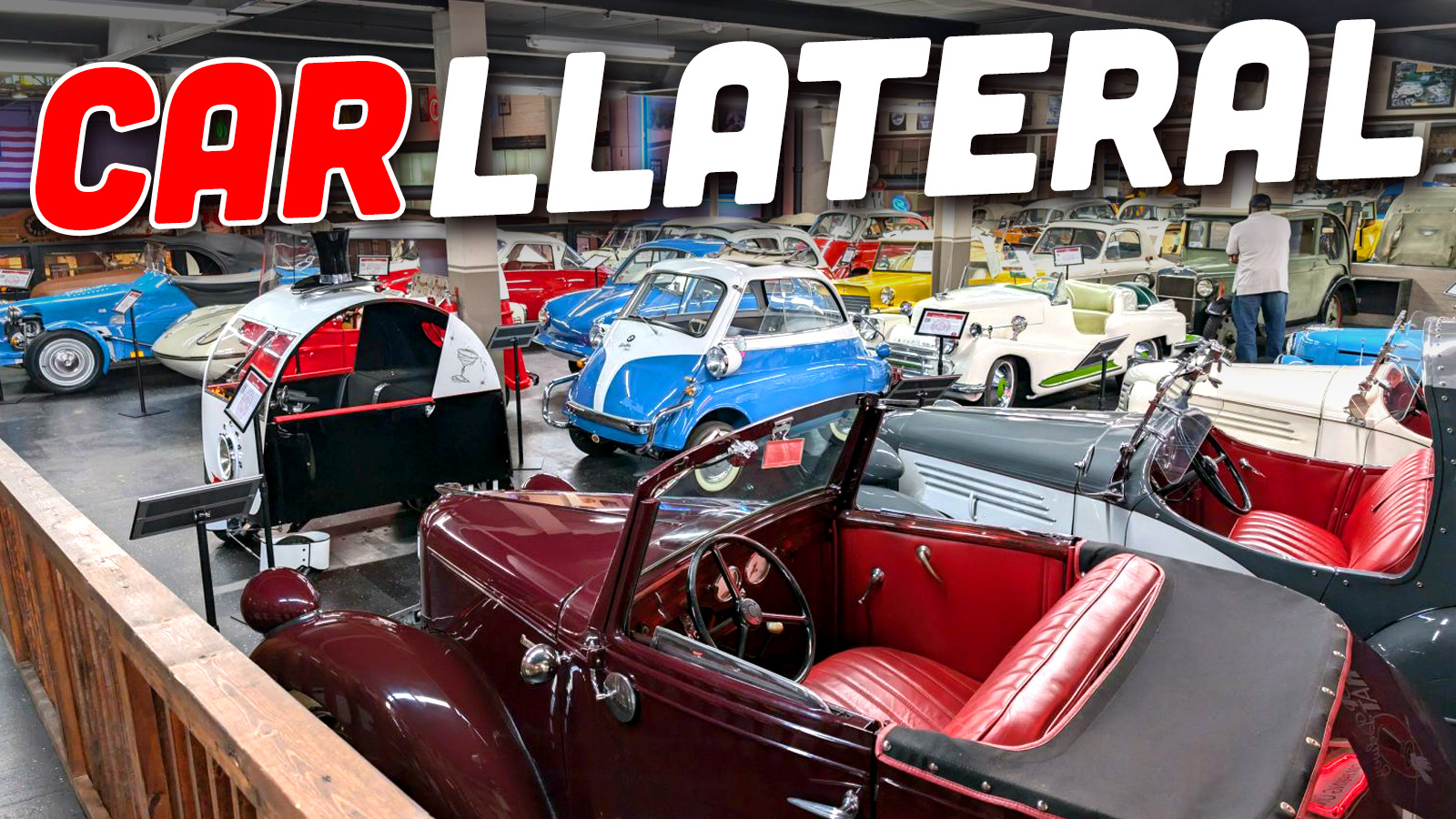
One of the many ways wealthy people retain and grow their wealth is through the art of secured loans. Also known as collateral (or securities-based financing), it allows someone to put up some sort of asset—real estate, stocks, bonds, etc.—as collateral to secure a favorable loan from a bank.
There are three main benefits of taking a loan out on an asset rather than selling that asset to get the cash. The first is speed. Selling a piece of real estate could take months or years, but a bank can transfer cash into your account in no time at all. Rich people routinely do this to make big purchases or quick investments.


The second reason is to avoid taxes. If you sell a stock you’ve made money on, you’ll be subject to capital gains tax. But by using the stock as collateral, you get to keep it in your portfolio and avoid being taxed. The next benefit is lower interest rates. Securities-based interest rates are usually lower than traditional loans, since you’re putting up a specific piece of collateral that can be seized by the bank if you default on the loan.
In addition to more traditional securities, banks have also begun accepting more unusual assets as securities for loans. Art pieces, watches, jewelry, and wine collections have become popular collateral in recent years. Now, you can add car collections to that list.
To These People, Expensive Cars Are Basically Investments You Can Drive

JPMorgan Chase & Co., the biggest bank on the planet, today announced plans to expand car-collection-based lending services, which allow people to borrow against their rare, vintage, or custom vehicles, to Europe (it was already available in the U.S., unsurprisingly). According to Bloomberg, cars are a pretty important asset for younger, wealthy individuals:
The lending push comes as wealthy individuals use car collections — and other physical assets — as a way to diversify fortunes, building on the auto sector’s traditional status for passion projects. Classic cars from European brands such as Ferrari NV, Porsche AG and Mercedes-Benz Group AG have outperformed stock markets in recent years, and the overall market still grew in 2024, even amid a broader downturn for luxury assets.
High-end automobiles rank as the most popular luxury asset younger members of the world’s ultra-rich aspire to own personally besides real estate, according to Knight Frank’s 2025 Wealth Report. That puts cars ahead of demand for private jets, wine and art collections and superyachts.
This type of loan is, obviously, a lot different than the type of car-backed loans most people are familiar with, known as title loans. While these mega car collection-backed loans provide favorable terms and rates to their borrowers, title loans are often predatory in nature, trapping borrowers in a cycle of debt with massively high interest rates and fees. Title loans are usually tied to just one vehicle, and typically have far shorter terms (15 to 30 days, according to Experian). Title loans are so predatory, they’re actually banned in nearly half of U.S. states.
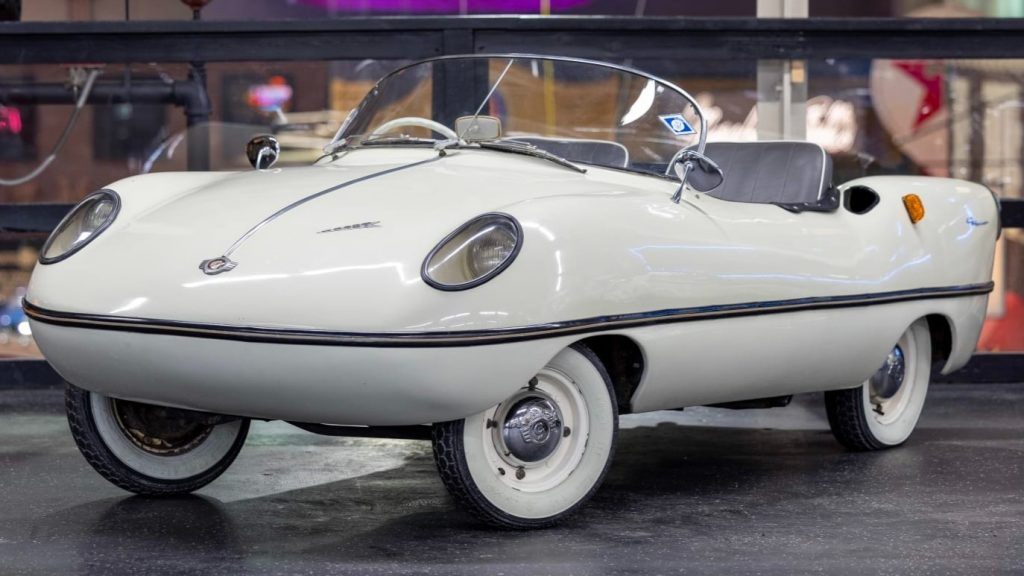
As an enthusiast who likes to see cars being driven, this is particularly sad to me. Sure, there are a handful of ultra-rare, 1-of-1 museum-piece vehicles that should probably stay off public roads. But the vast majority of “collector” cars deserve time on the street, not stashed away in a climate-controlled building at the back of some dude’s Hamptons estate. Taking out loans on these collections will, presumably, further discourage their owners from driving the cars in their collections, lest they risk their leveraged investment plunging in value thanks to a few extra miles on the odometer.
It’s in these moments that I wonder what I’d do if I were one of these rich people. Would I use my collection of old BMWs and weird French cars as collateral for my next big real estate acquisition? Or would I stick to my guns? Alas, I am not wealthy and likely never will be. It’s a whole different world out there. And now loans backed by your dream cars are helping fuel it.
Top graphic image: Mercedes Streeter




We live in hell, but yeah—using a supercar as collateral for a loan has been around for a bit. Only makes sense that it would extend to whole collections.
Eat.
The.
Rich.
Also worth noting is that the value of stuff that can be used as collateral can crash when the economy tanks and the value goes below the value of the loan, and people have to sell it off which makes the value go down more, etc.
but when the economy totally crashes, at least we can use this collateral to drive around in the Mad Max post apocalyptic wasteland.
“ To These People, Expensive Cars Are Basically Investments You Can PARK” – look I fixed it!
When I worked for First Republic Bank – before the Tech-Bros destroyed it – we had a separate group which specialized in collateral loans on yachts and private aircraft.
Not surprised to see JPM (who have the remains of FRB) add classic cars.
Tomorrow: How I used my car collection as collateral to buy and import this cutest Kei motohome.
– Mercedes Streeter
Anything can be collateral as long as you can convince the people you want to borrow from that it’s ‘valuable’.
“It’s in these moments that I wonder what I’d do if I were one of these rich people.”
You’d shit on everyone below you and do anything to keep from paying your share of taxes. Carsie Blanton said it best.
https://www.youtube.com/watch?v=0BAEUksdLCs&list=RD0BAEUksdLCs&start_radio=1
1929 called…
Jalopnik-ass headline, disappointing to see it here.
No Kidding, securities backed loans are so common, and cars have become their own bonafide investment class post-covid. Not to mention leveraging assets for investments is not a “rich person only” activity. It’s not any different from a car loan even. Why spend 40k cash on a car when you can get a promo rate of 2% and make 5% on that same cash in a money market account or HYSA? These are all well defined ways of leveraging your assets for growth, it’s not exclusive to the 1%, they just do it more.
Yeah it’s too bad because this is an interesting topic that is worthy of the article, but the whole thing is so tainted with the “eat the rich” nonsense from the other place that it just makes the reading less enjoyable.
I didn’t see too much classism there, but I think the other side of the coin would be more useful: “Regular people are refinancing their dealer loans with credit unions to get a lower rate since even 3-year-old cars can be considered ‘new'”
Jim saving $300/year on his 2022 CR-V is a lot less interesting than gawking at the wealthy. It’s a sickness that’s infected a whole generation where simply having money conveys status, even if that money didn’t come from some genius idea or even a lot of hard work.
I probably would have been fine with all the text in the article if the headline hadn’t been so shitty, tbh. Just left a bad taste when reading the rest.
Yeah, coming back and seeing the headline from scratch, it’s a little clickbaity for sure.
OK, but what is untrue about the headline? It doesn’t even use inflammatory words such as “scam” or “regulatory capture.”
They changed the headline.
Money has always conveyed status. That’s the entire point of that social construct, quantifying how much better someone is that the rest.
I always thought the point of money was that it evolved as a more efficient way to preform commerce, better than the barter system. Fiat currency has a whole new point of power.
It’s not called “fiat currency” anymore, nowadays it’s “Stellantis currency”
I like to think that I have evolved from my “eat the rich” position to a more nuanced “eat the billionaires” stance.
Brings a whole new meaning to the phrase “expensive taste”.
I’m not always adverse to an appetite for the rich, but agree that this place is normally good keeping ‘the site’s main focus…to create fun, engaging content that fosters an inclusive, close-knit automotive community.‘ It’s sometimes very hard to keep politics out of car news as the two are intertwined, but this does feel more like commentary.
Maybe they taste good?
No one wants to eat their bloated flesh. We just want them to PAY.
For anyone who comes across this comment thread, they changed the headline and I retract my criticism. Thanks!
Can you imagine if this had been posted on the old site? Instead of just fixing the mistake, you’d have had writers from the site down here flaming you for being anti-woke or something.
Exactly right, which is why this place is seemingly thriving with people paying for it, and that place is what it is.
I think the common part that flies over our heads is that most rational people don’t borrow money to make investments. The upper echelon of retail investors might have a credit line for making leveraged purchases, but that’s dangerous territory.
If you consider a loan might fetch 6-7% APR, and the average S&P return is about 7%, these are very sophisticated borrowers/investors who are clearly finding things that are worthwhile, like hedge funds, private equity, or crypto or something along those lines. In other words “Don’t try this at home.”
If they were taxed for realized gains when they use stocks, etc. as collateral (because they are realizing gains from the value of that asset), I wouldn’t have much of an issue with it.
As it is, it’s legal tax evasion and infinite money machine once you hit a certain net worth with at least room temp IQ.
“…most rational people don’t borrow money to make investments.”
Have you never heard of a margin account?
Have you also never heard of a leveraged buyout?
Leveraging assets – which is using other people’s money – is incredibly common.
That’s usually how Billionares became Billionaires.
“Art pieces, watches, jewelry, and wine collections have [been] popular collateral [for] years.” Fixed that for you.
The attorney I clerked for back in the 90’s focused his practice on personal property (e.g., art) loans, insurance, international transactions, etc. Art as collateral wasn’t new then. I’m only surprised it’s taken banks this long to recognize the value of vehicle collections.
One area that was (and I’m sure still is) particularly fishy was around donating art and antiquities. It’s an enormous tax deduction when properly executed and IMHO, presenting far more more opportunity for abuse than asset backed loans.
Assets are assets.
But art donations are an impressive display of financial creativity.
Rewatch “Tenet”
Those Freeport art & asset storage vaults are a real thing.
Fine art is wild. Money laundering, tax evasion, lending it to a museum (which is essentially getting it stored and insured for free and probably claiming some amount of charitable donation), flaunting wealth, donating it for a massive tax deduction…it does so much and can hide so much.
Not to mention that the reason most art is stolen nowadays is to keep on hand in exchange for a reduced sentence.
Which must have REALLY pissed this Romanian guy off after his mom burned a Matisse, a Monet, and a Picasso in her oven, thinking that destroying evidence would help him stay out of prison
https://www.cbc.ca/news/entertainment/alleged-art-thief-s-mother-may-have-torched-picasso-monet-1.1312301
I had missed that one. Yeah, that certainly made things worse, especially when she admitted to hiding and then destroying the art. Pretty much gave them her son if there was any doubt.
oh yes, art as leverage is the highest and best use for stole art. Look into the life of Myles Connor if you are not already familiar with him.
LOL, it’s 2008 all over again, but this time the “ATM loans” are cars, not houses.
I’ve been in bank loan risk management for almost 20 years, and loan underwriting before that. This is a really, really dangerous game to play, but the reality is this: If the asset declines, just like a stock, the lenders can demand additional collateral (which wealthy people usually provide).
The big risk is a broader asset crash — if your cars all drop in value by half, and your stocks are down, too, you’re much more limited in what you can offer.
I wouldn’t personally want to be a part of using classic cars as if they were real estate, but these Wealth Management people are pretty creative and are probably lending no more than a fraction of the car’s value (50% tops) to protect against depreciation.
The other big thing from my auto lending experience: Cars can be moved, hidden, or chopped really easily.
I’m excited to see banks liquidating these collections for pennies on the dollar. Surely, at least a few of these collectors are making all their money on the AI bubble and will default once it pops. Maybe that’ll help to chain-reaction pop the classic car bubble.
They’ll probably just pass all their losses off onto the lower classes, but I can dream…
Silver lining: given the environmental consequences, I’d rather rich ppl be stockpiling cars than yachts
I asked my banker what sort of loan I could secure using my ’95 hartop Miata w/85Kmiles on it, and they said it’d be enough for a light breakfast at Starbucks.
$1,500 sounds pretty generous to me!
Whoa man, NA/NB hard tops are big money these days! You could probably convince people to do a timeshare style fractional ownership deal
Repeated government-funded bailouts at taxpayer expense have been partially responsible for enabling this scheme, and this may help exacerbate conditions to a point where the political class will claim such bailouts are “necessary” once again in the future.
Nothing new, and not something only “rich” people do. No different than a HELOC or a loan against a 401K, things perfectly ordinary people do every day.
Only difference being the perceived volatility of classic cars. But I think they know what they’re doing. I was in community banks for quite a while and we lent agains a jet ski and a riding mower once (separate individuals and transactions) which the borrower had towed into the parking lot of a branch. 🙂
I suspect, as is often the case with HELOCs and leveraging against investment accounts, that there is only a certain percentage of value that can be borrowed against, likely under 75%, in order to hedge against value fluctuations. I know HELOCs tend to be limited to 80-90% of equity and that’s on a relatively stable asset. There is certainly a risk to the banks, but that’s generally factored in to the terms.
Yep, safe bet. I put it in a different post, but a lot of brokerage accounts (used as collateral) are limited to about 50% of their current value, with margin calls if it rises to 75% or so. This is probably not much different. So more power to them, I guess…
They really aren’t THAT volatile, at least once you get to those that are worth enough to use as security for a loan. And a bank would be extremely unlikely to loan 100% of the value anyway. Especially with the big runup in values of some cars the past 20 years, it’s not hard to be sitting on an asset worth a couple million. All those Gullwings that were 150-200K cars not terribly long ago for example. They are not going to come crashing down.
Exactly – JPM is not lending 100% LTV on a ’64 GTO or a Pagoda SL in someone’s attached garage in Suburbia.
They’re lending 50% on a Duesenberg SJ or Bugatti Atalante with significant restrictions on where it’s stored and displayed – usually in a climate controlled commercial facility with 24/7 monitoring and fire-suppression equipment.
Definitely not new. Nick Mason famously used his Ferrari 250 GTO as security to finance a Pink Floyd tour about 40 years ago.
I think the biggest difference is that when most of us (absolutely not all of us) get a HELOC it’s because we don’t have cash on hand to renovate our kitchen and don’t want to do a full refinance, not because we plan to invest that cash into the stock market, or some other private equity investment.
Don’t be so sure about that. People use equity for all sorts of things. And equity is equity, whether it’s an investment portfolio, a piece of art, a collector car, or a house. Any and all of it can be used to secure a loan.
And even with long-term capital gains tax rates being fairly low, it often makes sense to leverage equity rather than sell the asset for tax purposes alone, no matter what you are using the money for. Selling that Gullwing you paid $200K for is going to result in a whopper of a tax bill that can cover years of interest payments. And you hope the thing continues to increase in value too.
You’re actually better off using that HELOC to invest in an S&P Index fund where you’re more likely to see long-term gains than an upscale kitchen remodel which can only be expected to add @36% of the cost to the value of your house.
Even minor kitchen updates – such as new countertops and appliances – can only be counted on to add at most 80% of the cost in value the day they’re done – because in a year, they’re just used appliances.
Probably not at current HELOC interest rates with the market gearing up for a “correction”. But a few years ago when they were 3-4% (and lower if you had a LOT of equity)? Possibly, if you weren’t risk averse.
I predict there will be an AI bubble crash to rival the turn of the century Dot Com bubble crash. And then the long climb will begin again.
I’d say it depends on your location, conditions of the before and after, etc. but I agree replacing a 2015 kitchen renovation with all the newest greyest instagram kitchen trends isn’t likely to make your money back. That said, kitchens really do wear out and get old and someone needs to renovate them. In my experience frequently it’s the owner who bought the house years ago with a decent kitchen that is now old but the house they still want to live in has increased in value by tens or hundreds of thousands of dollars.
Could they leverage it into the stock market, classic cars, or fine art? Sure but they really just want a new kitchen.