

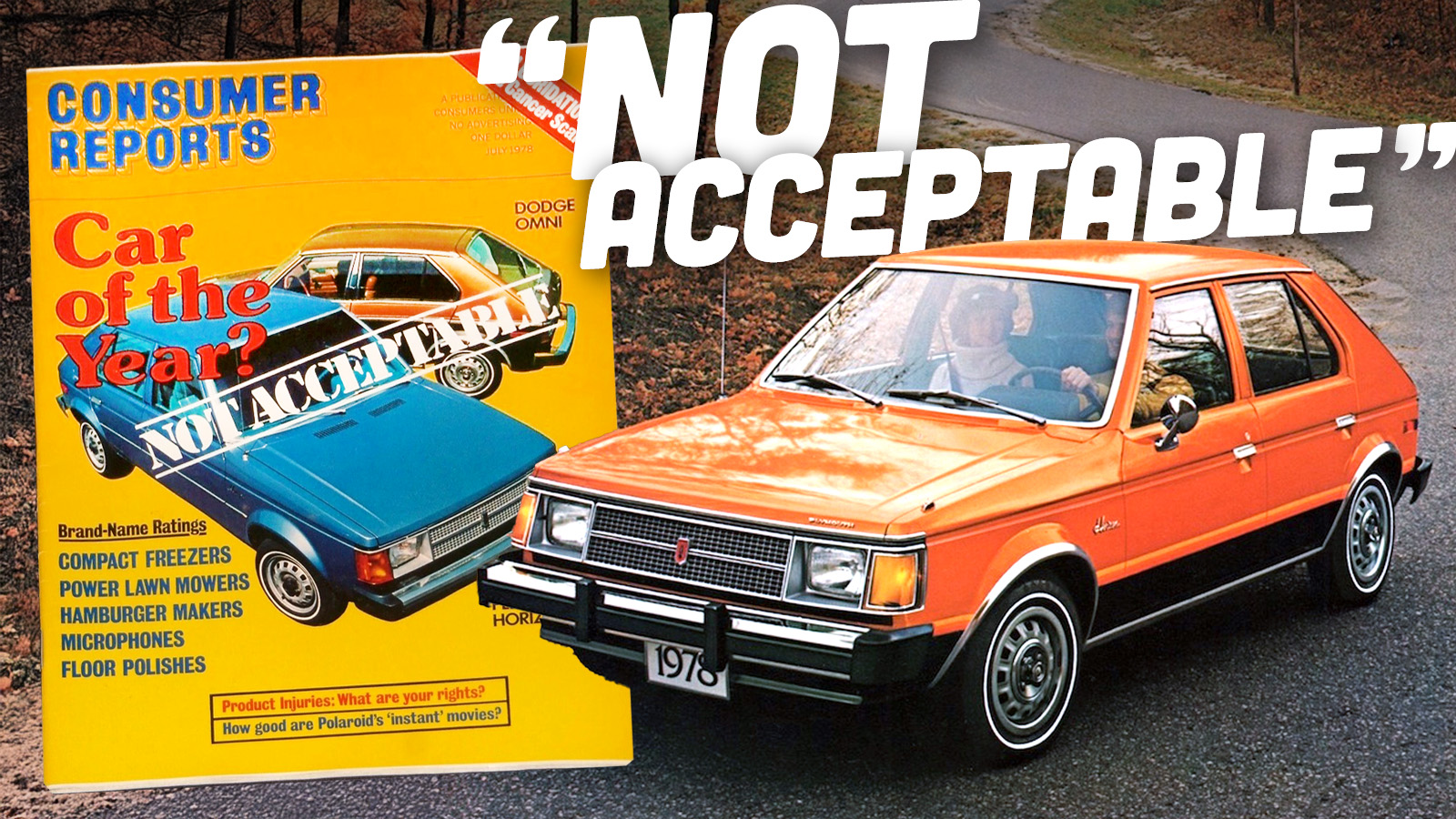
Consumer Reports is considered a trusted resource, whether you’re consuming reports to help you choose the best blender for your margaritas or the best car for your family. It’s a pretty big deal when Consumer Reports publishes a negative review, and in 1978, the magazine caused a bit of a headache for Chrysler when it panned a critical model for the brand. That year, Motor Trend nominated the Dodge Omni its Car Of The Year, but Consumer Reports was unwilling to accept it, and spent an entire article explaining why the Omni and its Plymouth Horizon sibling not only weren’t deserving of Motor Trend‘s award, but were actually “Not Acceptable.”
The automotive media wields more power than you might think. One negative article by a large enough publication can trigger alarms within an organization. Part of why manufacturers care so much about this coverage is that sometimes, all it takes is for one negative review from a major publication to ruin a model’s reputation. Sometimes, it doesn’t even matter if other publications wrote glowing reviews.


Perhaps the most infamous occurrence of this is when Consumer Reports, the magazine of Consumers Union of U.S., tested the 1988 Suzuki Samurai. As CNN reported in 1997, Suzuki accused the magazine of rigging its test results, which suggested that the Suzuki Samurai “rolls over too easily.” To keep it short, Suzuki sued Consumers Union, and the pair settled in 2004. Ultimately, Suzuki was vindicated somewhat as it was found out that the Samurai was no more rollover-prone than other SUVs. However, the damage was done, as Samurai sales plummeted by 70 percent after the article.
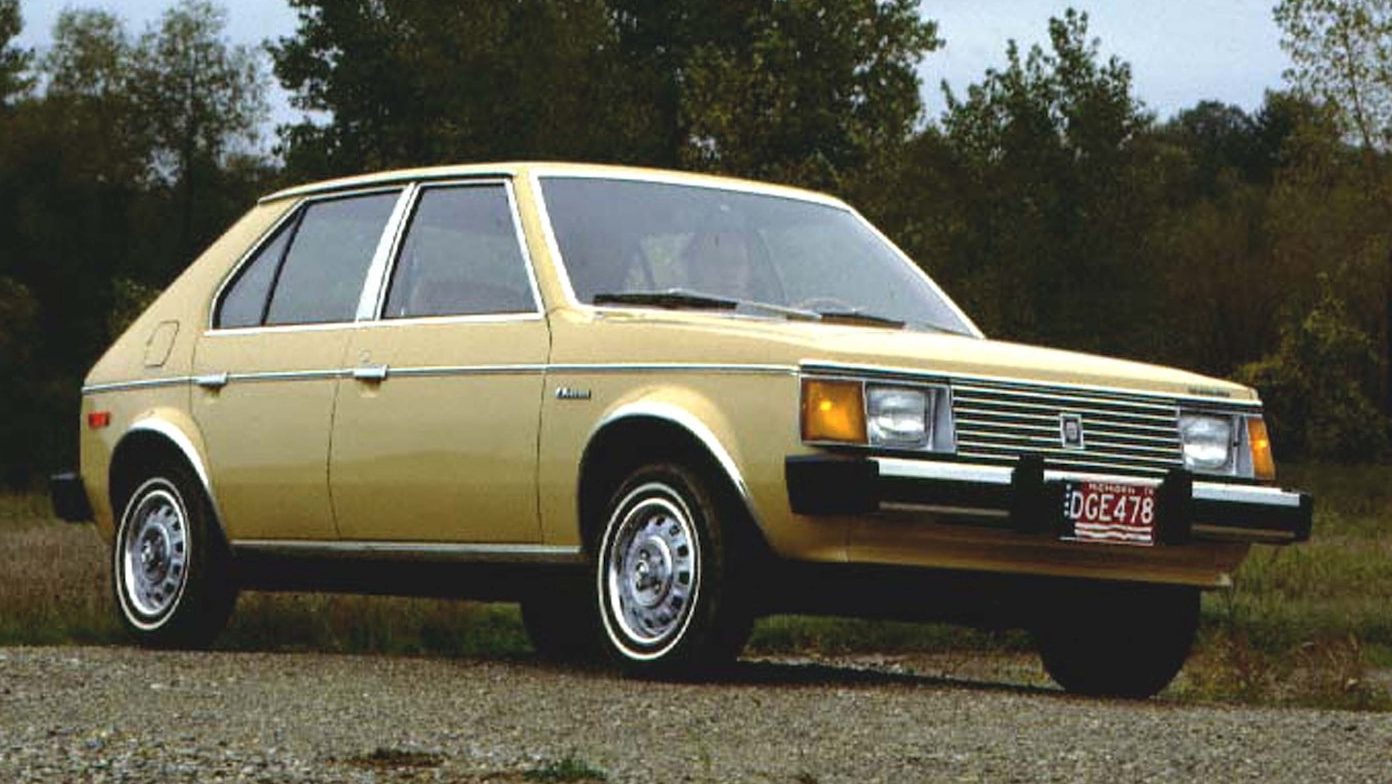
Another time when a car caught some heat after a Consumer Reports test was after the magazine published a review of the Dodge Omni that called into question why Motor Trend had nominated the small car as its Car Of The Year for 1978.
A New Era
This story takes us back to the 1970s, when dramatic downsizing was in vogue. Ford built the Pinto, Chevrolet built the Vega, and AMC had its Gremlin. As Hemmings writes, Chrysler was supposed to create its own domestic compact to battle its rivals, and started Project R-429 in 1969 to facilitate it. That car was due to arrive in 1971.

However, as the New York Times noted, the Chrysler subcompact never came. Part of the blame, the NYT reported, was on Chrysler President Lynn Townsend, who dismissed subcompacts. As the story reports, Townsend believed that one of the biggest threats against full-size cars was taxes on low fuel economy, but Townsend didn’t expect the full impact of those to hit until about 1980. In Townsend’s eyes, Chrysler had plenty of time to figure out just how many subcompacts it wanted to sell.
At the time, Chrysler had amassed a massive empire. It was under Townsend’s control that Chrysler spread far and wide, from one of my previous stories on Chrysler history:
In 1958, Chrysler decided to make its mark on the international stage by purchasing a 15 percent stake in French company Simca from Ford. In 1963, Chrysler put more money in, acquiring a total of 63 percent of Simca by buying shares from Fiat. That same year, Chrysler also took 35 percent of Spanish bus, truck, and car manufacturer Barreiros.
Chrysler’s buying spree included the purchase of Greece’s Farco in 1963 and an attempted purchase of an interest in Britain’s Leyland Motors in 1962. Chrysler didn’t get Leyland, but it did score a 30 percent share in Rootes Group (Hillman, Talbot, Sunbeam, and others) in 1964. By 1967, Chrysler’s European division was in full motion as the company purchased the remaining shares of Rootes. Farco, then renamed Chrysler Hellas S.A., ended production, but two years later Chrysler would take control of Barreiros.
In 1970, Rootes was renamed Chrysler UK Limited with Simca becoming Chrysler France. During the existence of Chrysler UK, storied British names such as Hillman, Humber, Singer, and Sunbeam saw their badges phased out and their vehicles called Chryslers. Between vehicles that were long in the tooth and general brand confusion, Chrysler’s European operations struggled to stay viable. In 1978, Chrysler decided to pull the plug, selling off the European division to Peugeot. Now under Peugeot control, some cars that were once branded as Chryslers, Hillmans, and Simcas were renamed to Talbot, a brand that at that time was dead.

As Chrysler figured out its plans for a domestic subcompact, it sold captive imports as a stopgap measure. These vehicles included the Dodge Colt, Hillman Avenger, and Plymouth Cricket, which were all rebadged versions of cars sold overseas. If you were wondering why Chrysler failed to make a domestic subcompact, Townsend made an interesting statement to Forbes in 1973:
“The subcompacts are just too small. The American people won’t climb into them. They have to give up too much in creature comfort. I think even a compact’s a little small. I would think that probably the most popular car size you’ll see 15 years from now will be like our intermediates today.”
Chrysler’s “World Car”
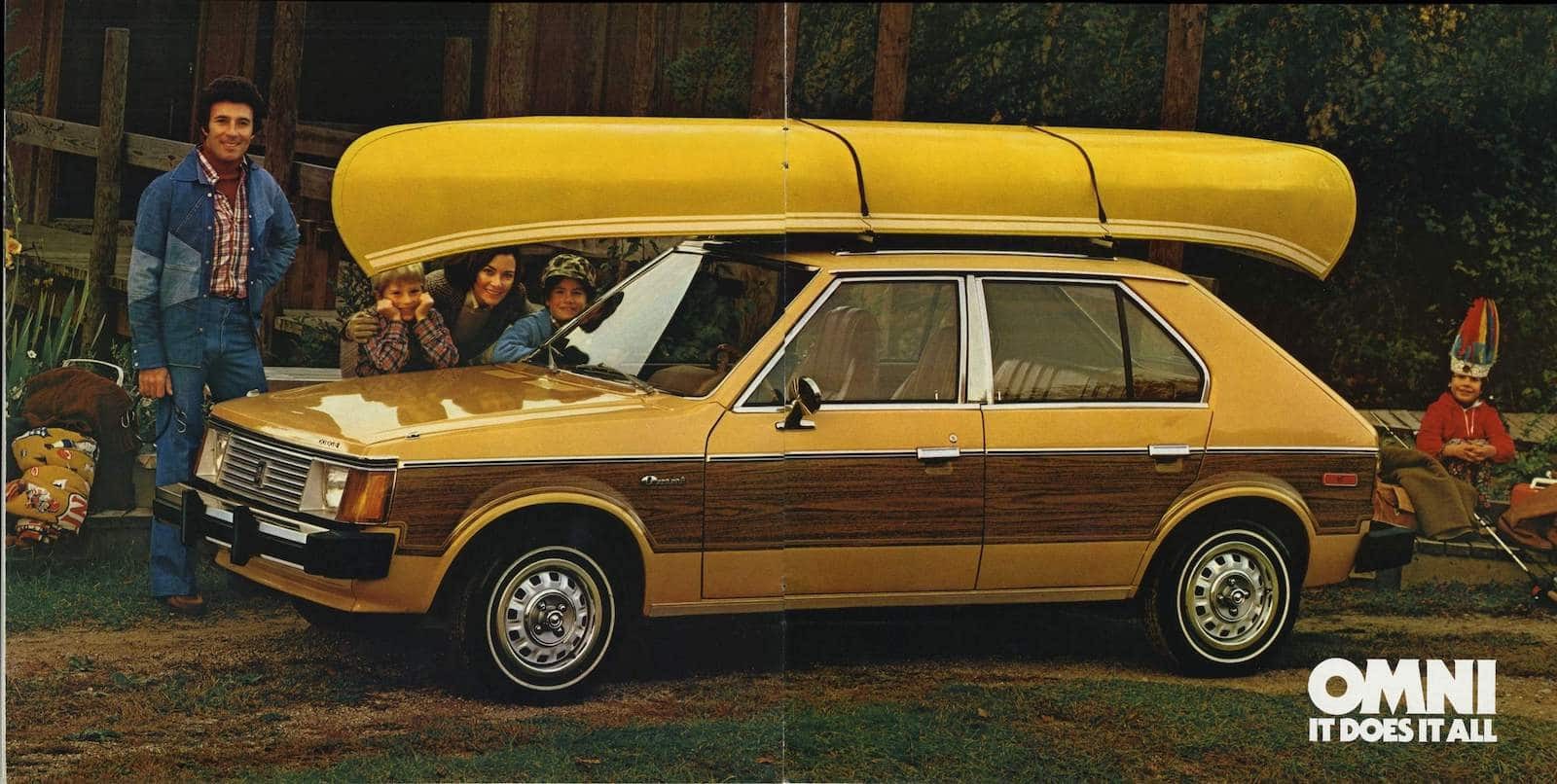
The Omni was a product of collaboration between Chrysler here in America and Chrysler in Europe. Chrysler enthusiast site Allpar has an article sourced from people involved in the making of the Omni. In that story, Allpar notes that in 1975, Chrysler Europe implemented a modernization program, which included the creation of three new platforms to create new models that could cover two-thirds of the European car market.
Chrysler, which had sent executives to Europe in 1974 to find a small car for America, was initially interested in the C6 platform, which would underpin the likes of the Chrysler Alpine and Simca 1308. Ultimately, Townsend rejected this vehicle, even though it would later win Europe’s Car of the Year award in 1976. Townsend would retire from Chrysler in 1975, and Chrysler moved forward with its plans to have a small car for America.

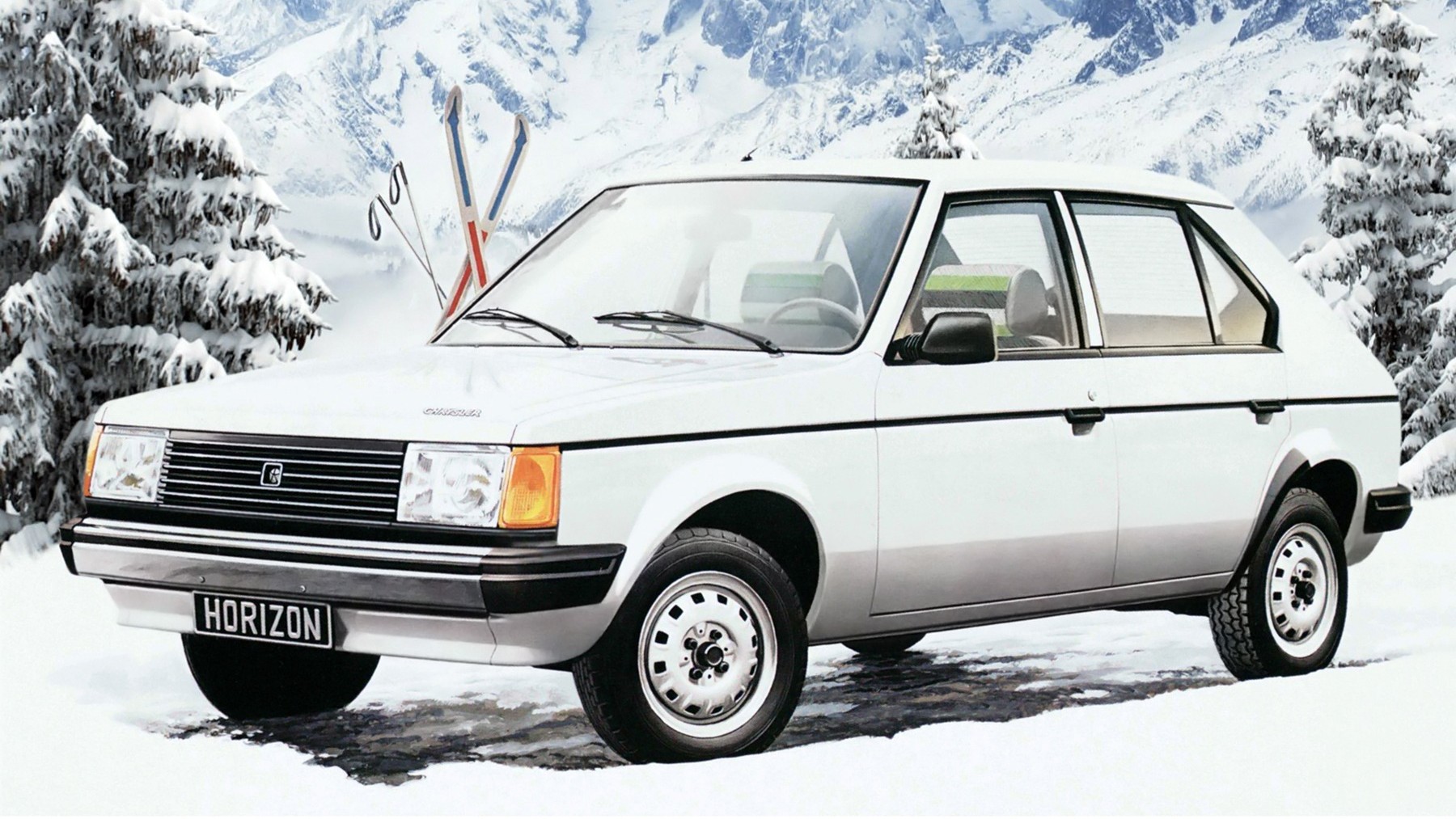
This time, America had set its sights on the C2 platform, which had been in development in 1974. The first sketches of the C2 labeled it as a short-wheelbase version of the award-winning C6. Clay models were made later that year, and development went full speed ahead on the car meant to replace the Hillman Avenger and the Simca 1100. Apparently, when the Americans saw the C2 in the clay, they had decided it was the car destined to win in the American small car market. The C2 became Chrysler’s “World Car.”
What’s fascinating about the C2’s development is that while the cars would be similar in appearance, the American version and the European version were actually very different.
Marc Honore, Director of Product Planning, gave this statement to Allpar:
It turned out that the C2 was a “World Car” in only sheet metal appearance. Unique USA powertrain, crash test, lighting, and bumper requirements changed many aspects of the European-designed vehicle. Then, European management, under the influence of a Sales/Manufacturing lobby, insisted on retaining the Simca 1100 torsion bar front suspension on the basis that this would save a bundle of investment money (an attractive argument in Detroit at the time) and assure for the new C2 the reputation of the Simca 1100 for comfort and surefootedness.
While this decision saved investment money, it also added a significant piece-cost and weight penalty to the C2, as well as some loss of front leg room because the torsion bar suspension required a higher floor pan than the originally planned McPherson strut suspension, which was retained in the American design. The relative heaviness and cost of the torsion bar setup was to penalize the European C2 throughout its life. I always felt that this was a bad decision.
Other sources of diversification arose from differing requirements for light switches, column controls, steering wheel, seat and door panel designs. The European and American cars looked similar but by the time we were through, I doubt if we had many common parts!
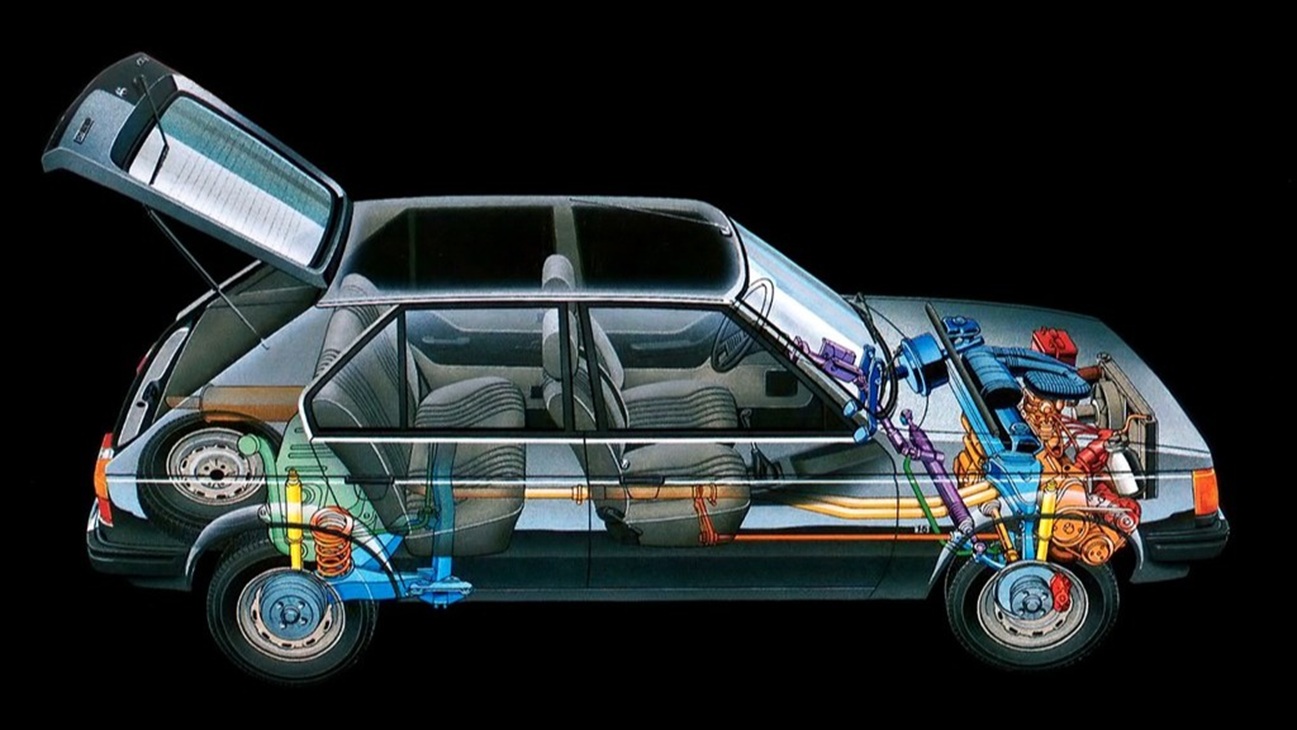
According to Motor Trend, Chrysler purchased 79 Volkswagen Rabbits for the design team to use and get ideas from. After all, the Dodge Omni and Plymouth Horizon would be Chrysler’s answer to the popular Rabbit.
The significant differences between the teams in America and Europe, from differences in paperwork to measuring systems, meant that the teams spent a lot of time hashing out many different details. The teams even had to figure out a part number scheme since France, the United Kingdom, and America all had different ways of doing part numbers.
The Crowd Goes Wild
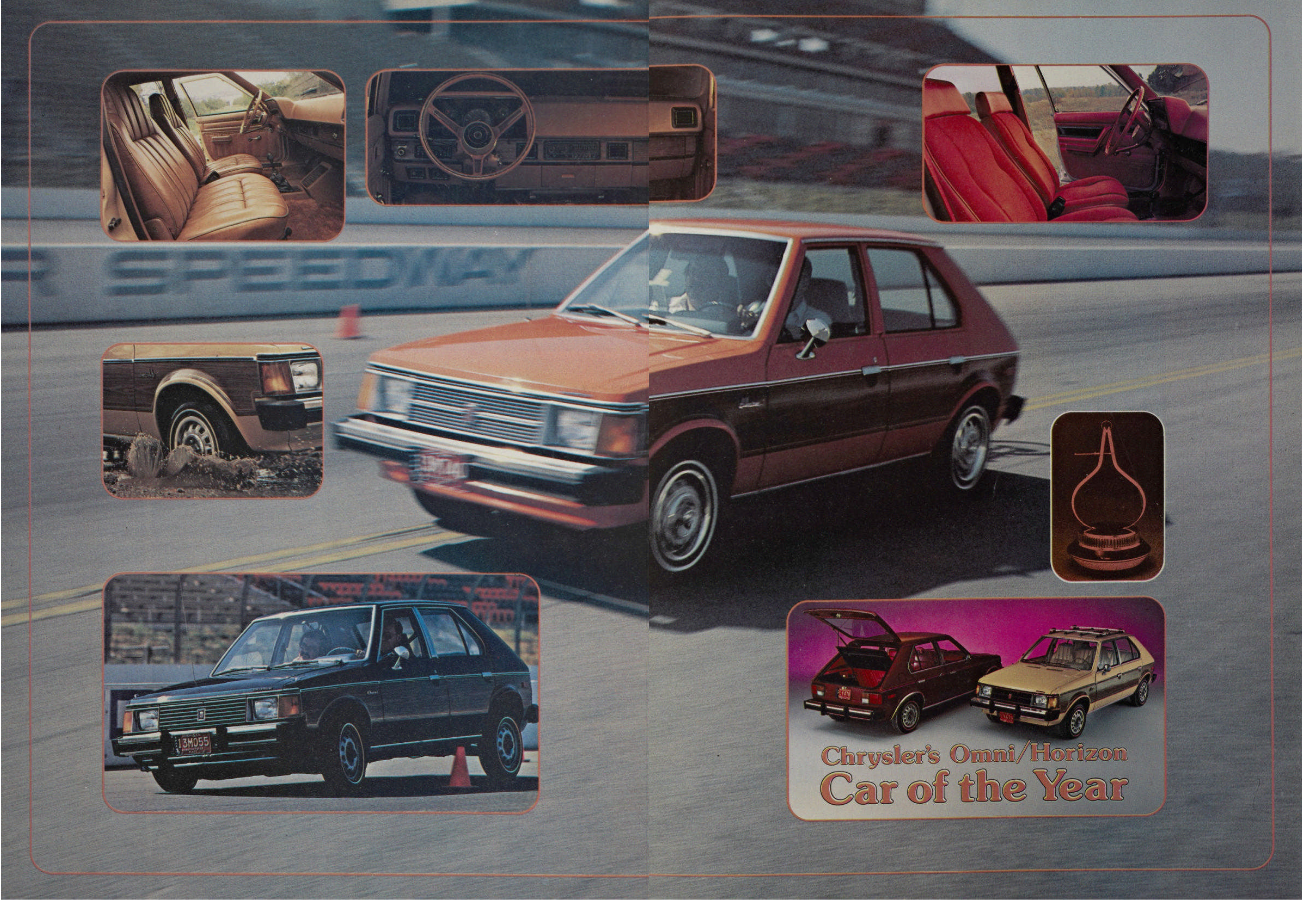
The C2 platform would go on sale in the 1978 model year. Over in Europe, the team had done it again, and the Chrysler Horizon scored the Car of the Year award in 1978 in Europe. Over in America, the Dodge Omni and Plymouth Horizon, despite being very different under the skin, also impressed the American automotive press. Here’s what Car and Driver said:
The prototype cars we have driven did not offer a satisfactory basis for final ride judgments, but they did demonstrate exactly what Chrysler engineers are after. Extra-long wheel travel (6.6 inches in front, 7.7 inches in back, compared to 6.1 and 7.9 inches respectively in a Rabbit) is this car’s claim to fame, even though such an attribute is rare in American cars. The long travel theory of suspension design allows soft spring rates for absorbing little bumps, with less likelihood of bottoming out over big bumps. Body roll is managed by front and rear anti-sway bars. This is a typically European approach, but while VW or Fiat would finish the job with tight damping, Chrysler has chosen very low shock-absorber control. This lessens the influence of small bumps on comfort but also makes the car slow to settle after wavy pavement. On fast steering maneuvers, the Omni and Horizon react in a lazy fashion—they’re still zigging when you’re ready to zag. The idea here is not to make former VW owners feel at home, but rather former big-car owners, who might be ready for more efficient transportation.
They will be asked to bear few sacrifices. The options sheet is fat with goodies new to this size car. In spite of the engineers’ best recommendations, power steering is at the top of the extra-cost list. It’s not at all necessary from a functional standpoint, but the marketing types had no desire to cold turkey their power-assist addicts.
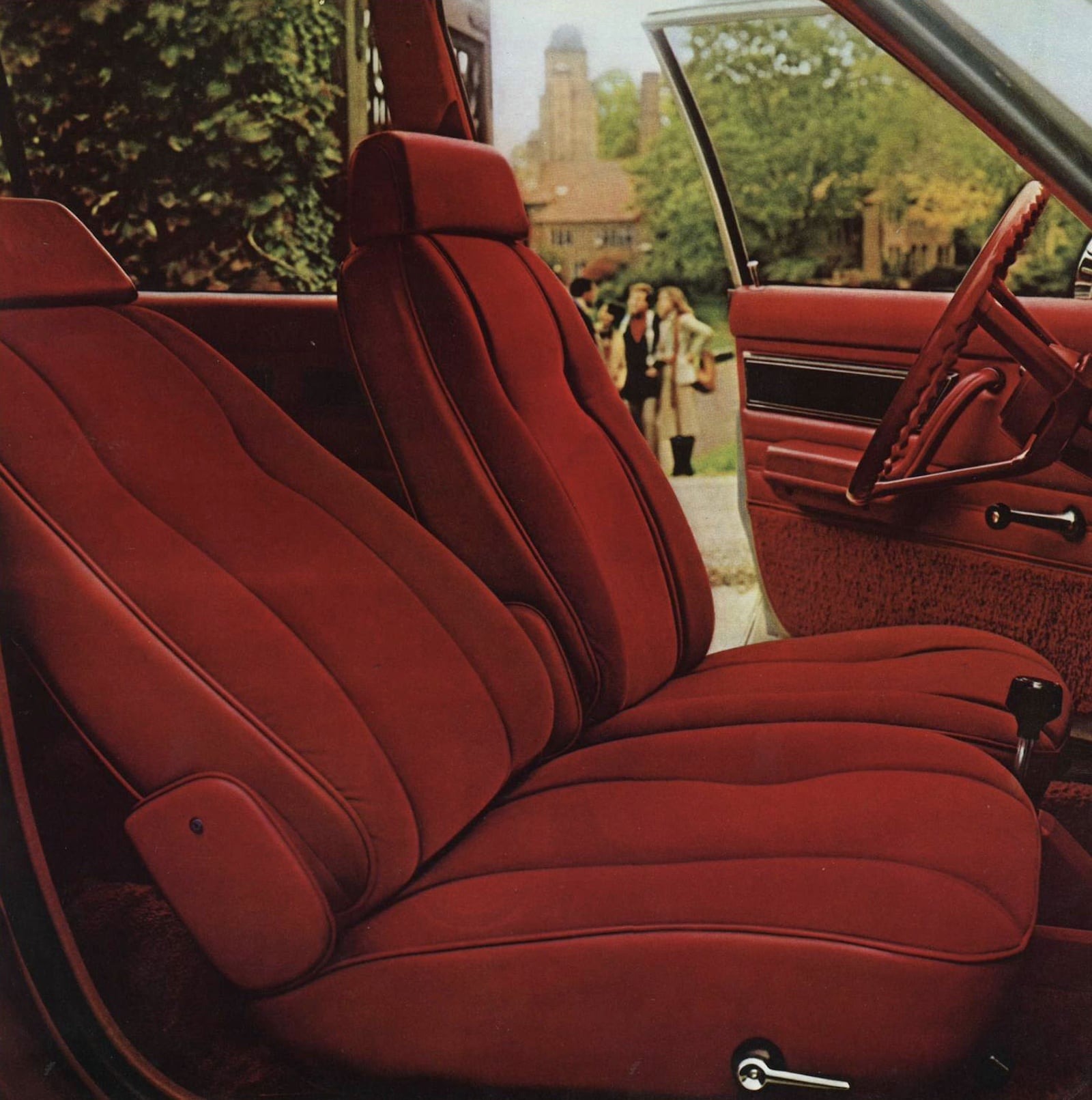
Inside, there has been no skimping—no exposed heaters, no bare metal panels, no rubber floor mats—and this should tell you the Omni and Horizon start out at import-deluxe levels of trim. How far you take them in the luxo-garnish-molding direction is limited primarily by your imagination. You can pick from two upgrades of interior and exterior trim, outside woodgrain, or even premium outside woodgrain. Vinyl bucket seats are standard, but you may choose from five other vinyl, or cloth and vinyl combinations in two different backrest designs. Cut-pile carpeting is standard with all interiors.

The Dodge Omni and Plymouth Horizon originally sported a 75 HP 1.7-liter four-cylinder engine sourced from Volkswagen with modifications from Chrysler. The American version of this engine has a longer stroke and slightly more displacement, plus a different intake manifold. The Omni also sports a Holley two-barrel carburetor as opposed to the Bosch fuel injection found in the VW equivalent of the engine.
The Omni also used a Volkswagen four-speed manual transaxle or a Chrysler three-speed automatic. Reportedly, the Volkswagen guts came because Chrysler initially didn’t have the capacity to build hundreds of thousands of engines for the Omni and Horizon. Chrysler would change this later on as these cars gained Chrysler K four-cylinder engines and a Chrysler manual. In terms of suspension, the Omni would sport trailing arms in the rear and MacPherson struts up front.
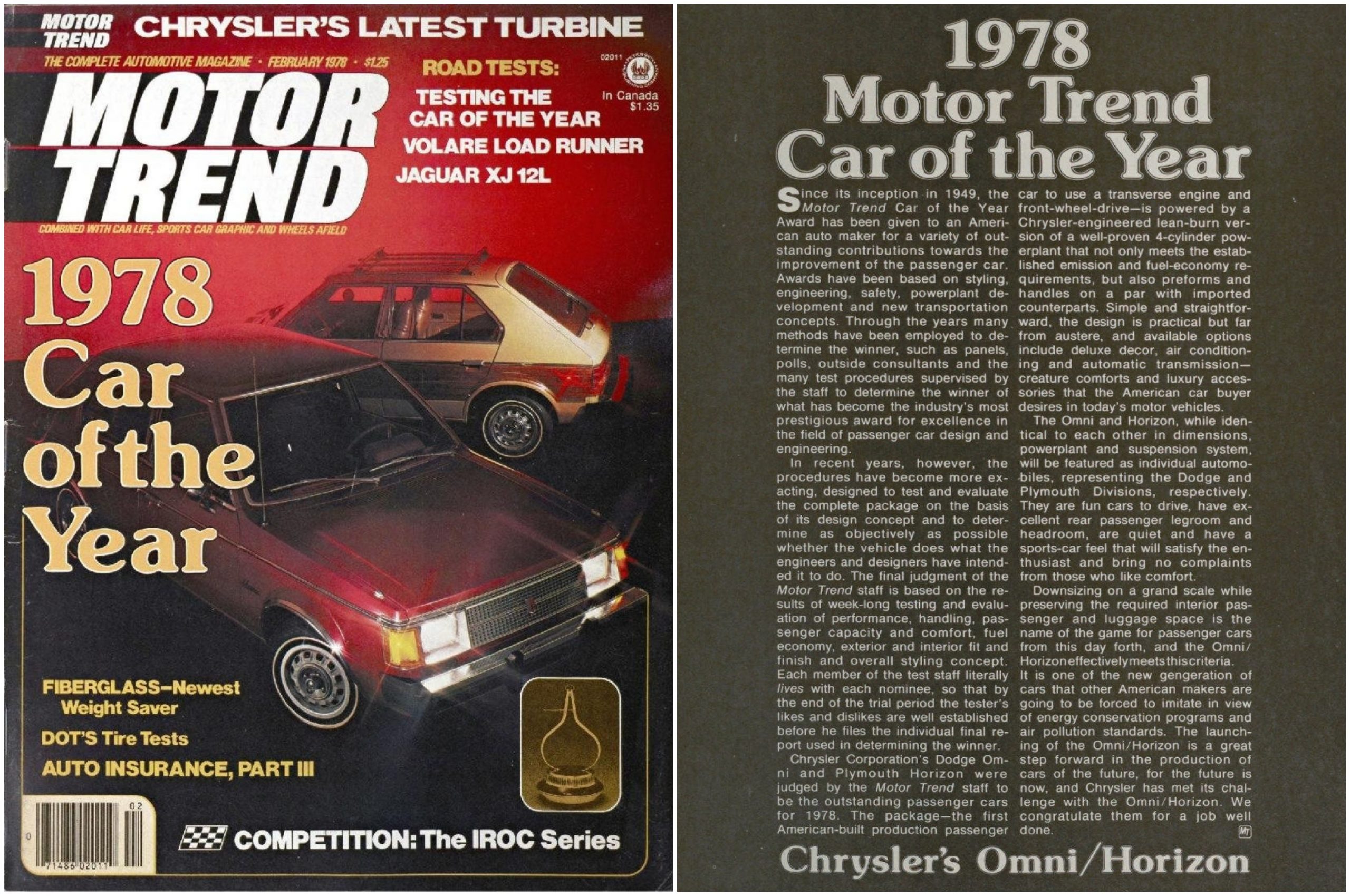
Motor Trend loved the Omni so much that the publication nominated the Omni as its 1978 Car Of The Year. Here was the magazine’s rationale:
Chrysler Corporation’s Dodge Omni and Plymouth Horizon were judged by the Motor Trend staff to be the outstanding passenger cars for 1978. The package-the first American-built production passenger car to use a transverse engine and front-wheel-drive-is powered by a Chrysler-engineered lean-burn version of a well-proven 4-cylinder powerplant that not only meets the established emission and fuel-economy requirements, but also preforms and handles on a par with imported counterparts. Simple and straightforward, the design is practical but far from austere, and available options include deluxe decor, air conditioning and automatic transmission- creature comforts and luxury accessories that the American car buyer desires in today’s motor vehicles.
The Omni and Horizon, while identical to each other in dimensions, powerplant and suspension system, will be featured as individual automobiles, representing the Dodge and Plymouth Divisions, respectively. They are fun cars to drive, have excellent rear passenger legroom and headroom, are quiet and have a sports-car feel that will satisfy the enthusiast and bring no complaints from those who like comfort.

Downsizing on a grand scale while preserving the required interior passenger and luggage space is the name of the game for passenger cars from this day forth, and the Omni/Horizon effectively meets this criteria. It is one of the new generation of cars that other American makers are going to be forced to imitate in view of energy conservation programs and air pollution standards. The launching of the Omni/Horizon is a great step forward in the production of cars of the future, for the future is now, and Chrysler has met its challenge with the Omni/Horizon. We congratulate them for a job well done.
The platform would go on to underpin the Omni 024 and Dodge Charger coupes, the Dodge Rampage and Plymouth Scamp utes, plus the spicy Omni GLH and Omni GLH-S hot hatches. The 1986 Shelby Omni GLH-S would still be a relatively quick car today with its 175 HP and 6.5 second sprint to 60 mph.
Consumer Reports Disagrees
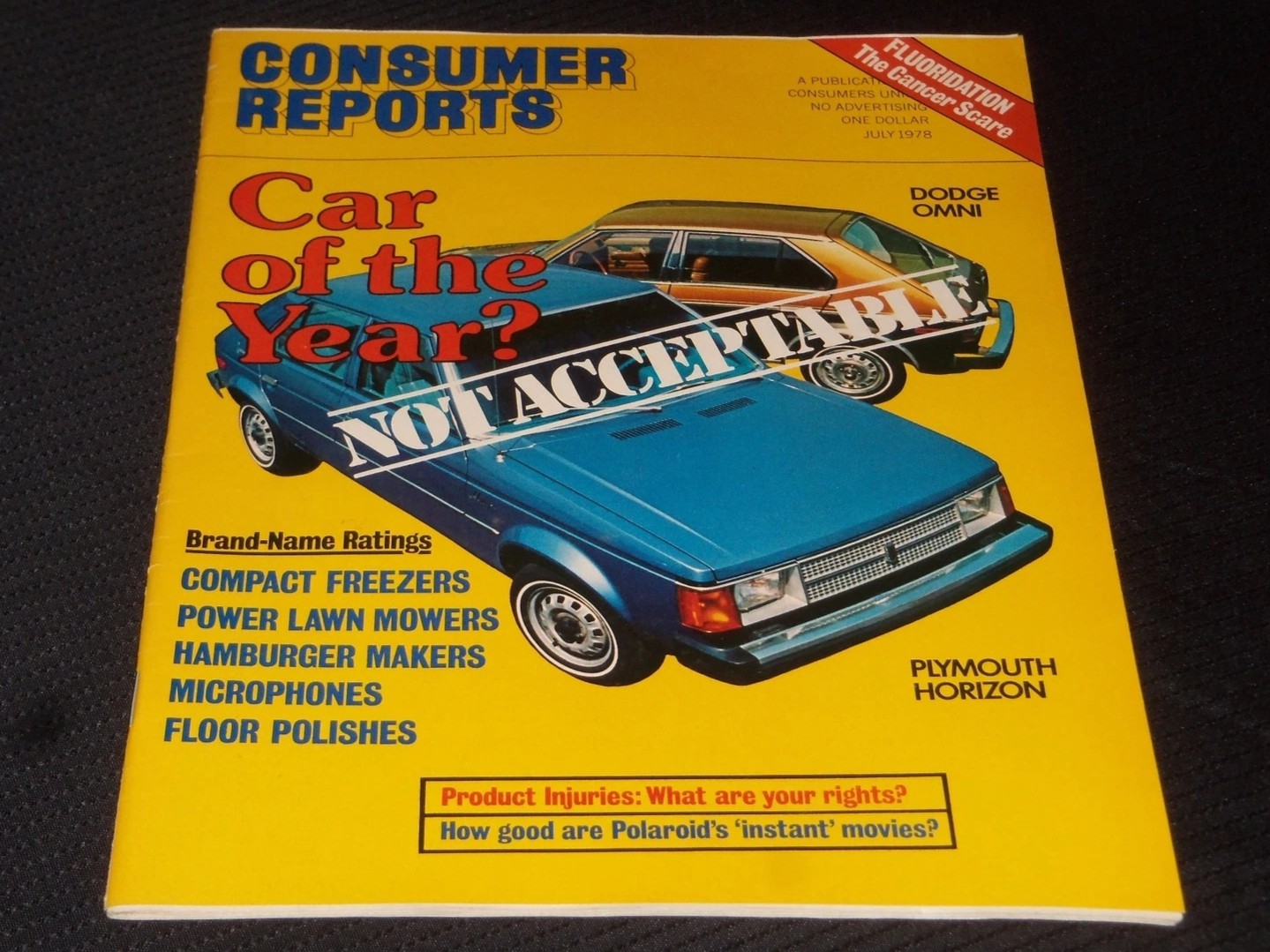
Not everything went smoothly, however. Consumer Reports tested the Omni in 1978, and unlike the car buff mags, it wasn’t nearly as complimentary.
In the July 1978 issue of Consumer Reports, the magazine came out swinging. The issue’s cover notes that the Omni was awarded as Car Of The Year, but puts a question mark at the end before following it up with “Not Acceptable” in all caps. The article itself pulled no punches. Even though the article was a shootout between four hatches, the title of the article was “Chrysler’s Big Mistake” with a subheadline of “The Dodge Omni/Plymouth Horizon is judged Not Acceptable.”
This is honestly amazing because, again, this is supposed to be a shootout of the Omni versus the Chevy Chevette, Toyota Corona, and Datsun 510. But the article is centered around the Omni, or specifically, how much the magazine thought the Omni and Horizon sucked. Here’s the opening salvo:
Chrysler Corp.’s new subcompact—the Dodge Omni and identical Plymouth Horizon—is the most unfortunate car of the year. From the outside, it looks very much like the high-rated VW Rabbit, the Ford Fiesta, the Honda Accord, and the other boxy, relatively roomy subcompacts whose design it copies. Like many recent subcompacts, it has front-wheel drive, an arrangement that can be advantageous when well-designed. It has a peppy little engine made by Volkswagen. And its price looks good compared with the inflated prices of imported cars.
However, the Omni/ Horizon gave evidence of poor design. Because it behaved in an unstable manner in the handling tests described in the box on the facing page, our auto testers judged it Not Acceptable. Our test results confirm that a prudent buyer should approach any new model line with caution. Since it went into production, late last fall, the Omni/ Horizon has been recalled repeatedly to check for safety-related defects unrelated to the unstable handling revealed in our tests. Presumably, the problems for which the car has been recalled can be fixed. But the handling problems we found may be much more difficult for Chrysler to solve.
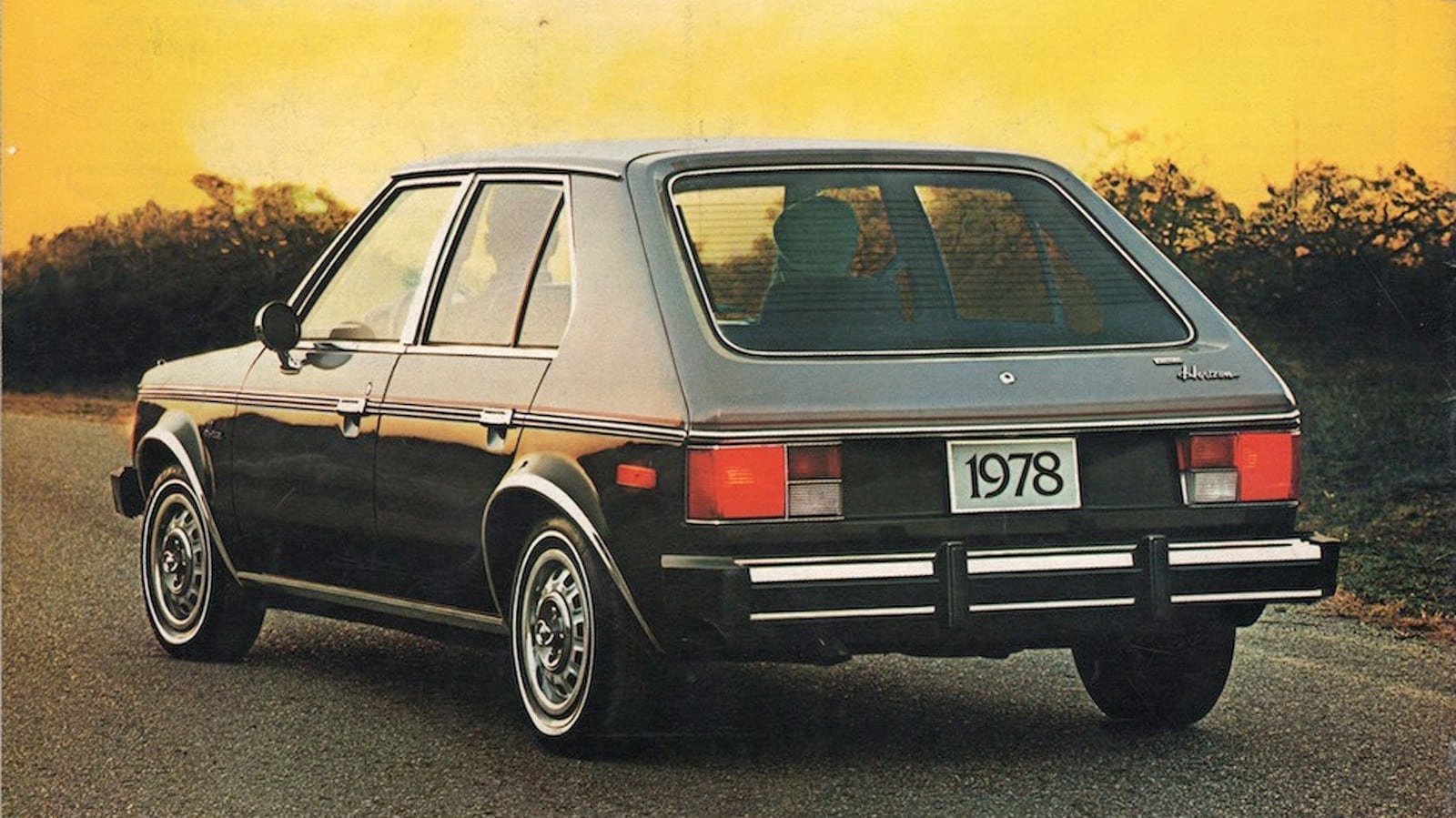
The story continues by talking about how the publication got three Omnis, and of the trio, two of them were riddled with defects. The article then takes a swipe at Motor Trend:
The many failings we discovered in the Omni/ Horizon make us wonder how Motor Trend, a magazine for auto buffs, decided to pick that model for its “Car of the Year” award—a selection made before a single Omni or Horizon had been sold by a dealer. News of the award ran in Motor Trend’s February issue, cheek-by-jowl with paid advertising from Champion spark plugs and General Tire congratulating Chrysler for its achievement and, in Champion’s case, congratulating itself for selling parts to Chrysler. Chrysler has since spent a pretty penny publicizing the award and, incidentally, publicizing Motor Trend. (“Nobody can buy this award,” says Robert E. Brown, Motor Trend’s publisher. Brown describes the “Car of the Year” award as a “good healthy promotion.” )
Most years, the commercial back-scratching that sometimes passes for journalism, even for product-testing, can be ignored; it’s just a drop in the ocean of flackery. But sometimes, as this year, those who take such flackery seriously risk paying with more than their dollars.
Perhaps one could understand—if not justify—such an award if the design of the Omni/ Horizon had broken new ground. But Chrysler has merely followed what has become the standard subcompact recipe. That recipe has worked very nicely for the Rabbit, the Fiesta, the Accord, and other models.
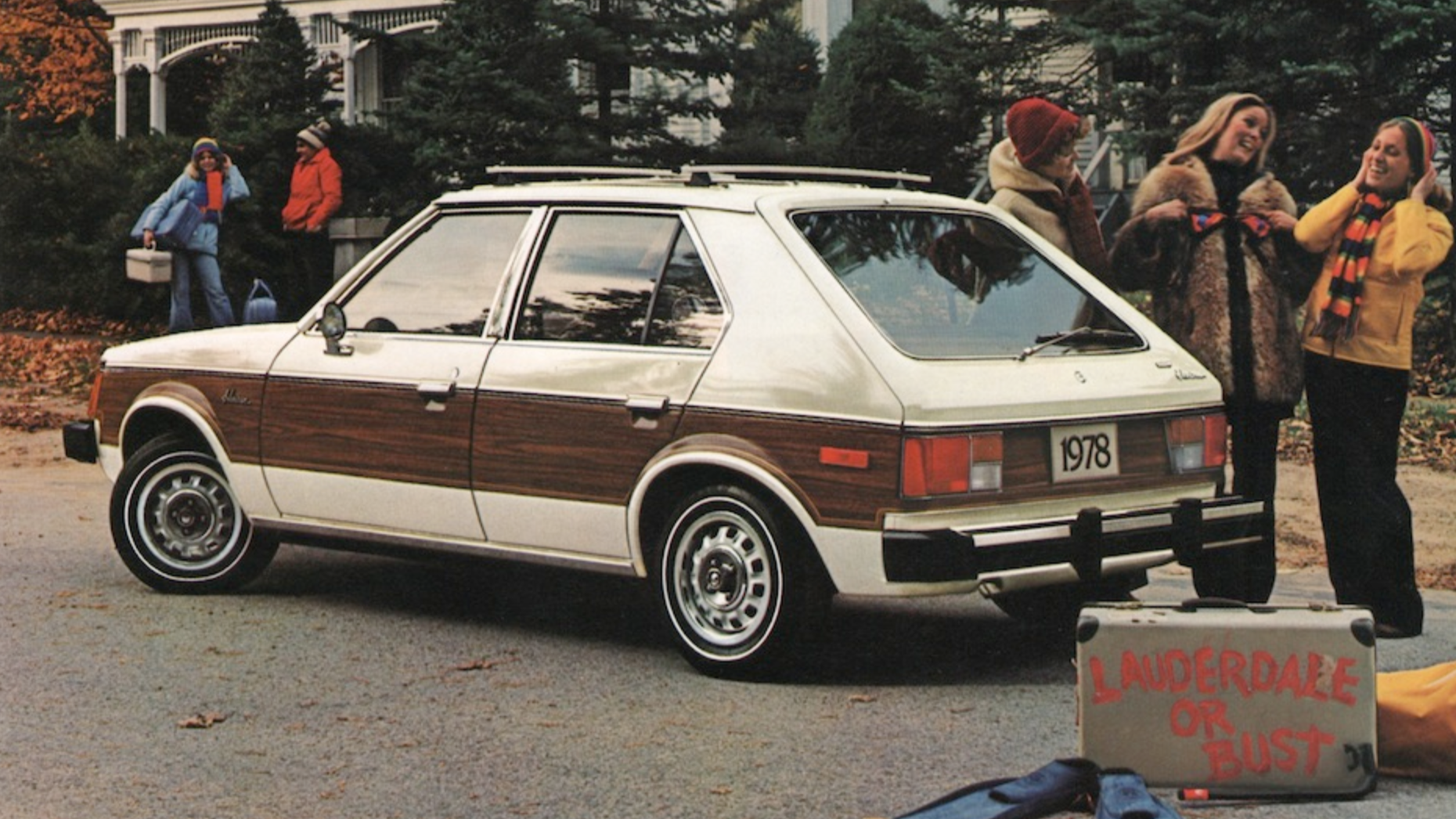
The comparison then kicks off. To the Dodge Omni’s credit, it scored 30.9 mpg, besting everything in the comparison. Second place was the Chevette with 30 mpg. The main Omni test car also had power steering, which none of the other three cars in the comparison had. But things basically immediately fall apart for the Omni on the same page, in a blocked section that says “The Tests That The Omni/Horizon Flunked.” In this area, Consumer Reports explains that in 1974, it adopted a test where the publication’s drivers would pilot a vehicle at 50 mph on a track and then tug the vehicle’s steering wheel abruptly while leaving their foot on the throttle. The tester will then let go of the steering wheel and see how much drama ensues. The article said that, at that time, most cars would usually straighten out by themselves with limited swinging, and that the cars often returned to close to being on course.
The Test
So, naturally, the magazine tried the same test with the Omni. Here’s how that went:
When we performed that maneuver with our Omni and our two Horizons, the results were unsettling—and often frightening. After we released the wheel in each of those three cars, the car veered from side to side; sometimes each swing was wider and more violent than the one before. The technical term for such behavior is “oscillatory instability.” The driver had to grab the wheel quickly and firmly and make skillful steering corrections to bring the car under control. Power steering made the instability worse. We check-tested a car with heavyduty suspension; it did no better than our three Cars.
Motorists do not perform such maneuvers in normal driving (and we urge you not to try it out of curiosity). But the way a car behaves in this “free control stability test” can point to problems in the car’s basic design. No car on which we’ve performed this test has behaved as poorly as the Omni/Horizon. (Otherwise, normal driving wasn’t unusual.)
That first indication of instability was confirmed during our handling tests at the track. In an avoidance-maneuver test, we run the car along a path that includes an abrupt swerve—like the swerve one might make to avoid a child darting from the sidewalk—and an equally abrupt swerve back to the original lane. The path is outlined with rubber cones. We run each car through the course many times, gradually increasing speed until the car can no longer go through the course without knocking over any cones. After the final swerve in that test, the Omni/Horizon cars would veer from side to side in much the same way as they did in our free-control test. Such behavior made the cars hard to control. In our other track tests, the cars tended to swing out their rear ends sharply when we cornered hard. If the driver of an Omni or a Horizon should have to make an abrupt evasive maneuver at expressway speeds, we believe, keeping the car under control could require more driving skill and experience in high-speed emergency maneuvers than one can reasonably expect of nonprofessional drivers. We have therefore rated the Omni/Horizon Not Acceptable.
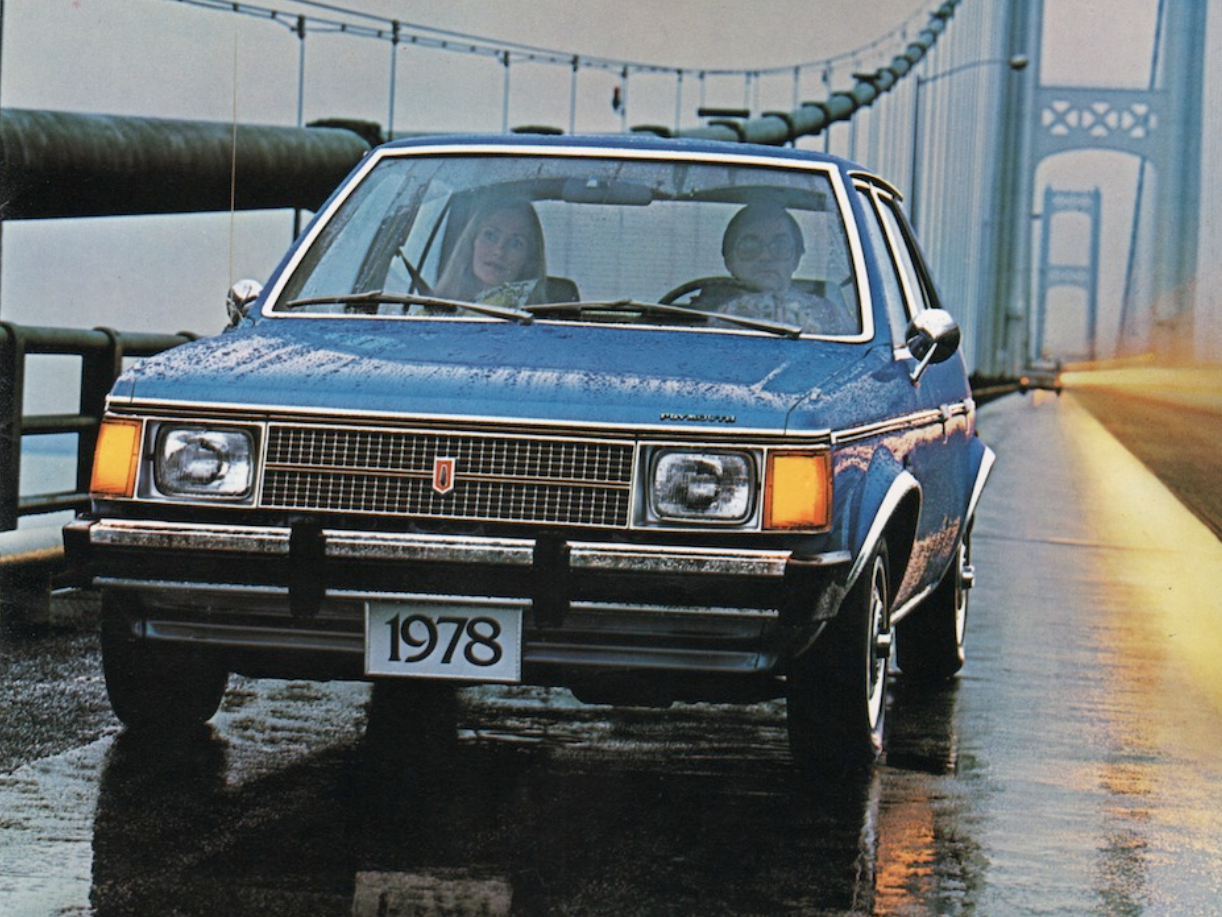
The paragraphs I quoted above became a huge headache for Chrysler. It became such a big deal that national news publications like Time Magazine covered it. Front-wheel-drive economy cars were still somewhat novel in America, and reports of these cars potentially being hazardous were news.
Time talked about the test that I noted above, and then included the bit from the now-infamous test that a typical driver might not be skilled enough to handle the Omni in an emergency. Worse was the fact that the 1978 Dodge Omni test was the first time Consumer Reports had declared a car “Not Acceptable” since its test of the AMC Ambassador in 1968.
Chrysler was quick to respond to the test. It gathered a gaggle of journalists and took them to its proving ground in Chelsea, Michigan, where Chrysler replicated the conditions of the Consumer Reports test, and the car did not lose control. Likewise, Chrysler said it had not received any complaints about such behavior, and according to Time, the National Highway Traffic Safety Administration hadn’t received any complaints, either. Initially, Time says, NHTSA couldn’t even figure out how Chrysler and Consumer Reports got vastly different results doing the same tests.
The car buff mags responded by pointing out that the Consumer Reports test didn’t accurately reflect real-world conditions.
The Omni Perserveres

A year after the test, Chrysler added a steering damper to the Omni and Horizon, which reportedly satisfied Consumer Reports‘ safety complaints. The model would go on to sell over 2.5 million units over a production run that lasted 12 years. As for Consumer Reports, the next time it would rate a vehicle as “Not Acceptable” was the Suzuki Samurai, which kicked off that whole scandal.
This whole debacle goes to show the power that some publications can have. One bad test can result in a huge headache for every party involved, from the publication and the automaker to even the person buying the vehicle. In the years since, Consumer Reports has grown to be an even bigger testing powerhouse, one that many consumers trust to deliver unbiased, comprehensive testing of new vehicles. Of course, the magazine also still tests more than 10,000 other products, too. Notably, the outlet still buys the vehicles that it tests, which many dedicated car publications can’t do.
The Dodge Omni and the Plymouth Horizon are largely forgotten by most people now, but Mopar enthusiasts keep the passion alive. Occasionally, even publications will write a story about Chrysler’s world car. But if you were a car buyer in 1978, there was a good chance that, maybe, you bought a different car because there was some hot debate over whether the car was as good as the car-buff magazines said it was.
Top graphic images: Chrysler; Ebay


I’ll admit that I will occasionally still thumb through an issue, but I have serious trust issues where CR is concerned. It’s as if every few years they sensationalize some “horrible” product in order to generate revenue. And some of the vehicles they call good or great? I have doubts about those, too.
The first TV station I worked at had four of these things. They weren’t nice, but I don’t remember them being horrible either. Two were automatics and two were sticks.
One night one of the sticks had something go wonky with the cables running between the shifter and the transmission. It was fortunately stuck in second, which was low enough to pull away from a stop sign or light with some slippage of the clutch. I had to drive about 10 miles across town to get back to the station. The normal freeway route I would have taken was out of the question.
A sports guy I worked with took one of the automatics over 100 mph with me in it, but it seemed okay. I don’t know why he was such in a hurry. We were hours away from a deadline. Maybe he just drives like that all the time. If so, I feel sorry for his wife.
I remember one of them hydroplaning with me at the helm, but that was probably more about the tires than the car.
Most sports guys I worked with drover like that. They get in the habit from shooting high school football. Having to cover up to 100 miles while taking breaks to shoot highlights pretty much requires a lead foot.
One large market station I know of used to send the helicopter to get to more games, but that was in the days when TV stations actually spent money on something other than buying automation so they could fire more people.
One of the stations I worked at (for nine years) still flies a Bell LongRanger an incredible number of hours per week. I was the news ops manager there for a few years back in the early 90s and saw the fuel and maintenance bills. I can’t even imagine what they are today.
Yeah, my last station had a much cheaper chopper than that, and got rid of it because it was a grand just to start the engine. TV was just saturated with money back in the day (and still is to an extent, it just all gets funneled to the parent company as profit).
The KCBS/KCAL duopoly in Los Angeles has or had not one but two fully equipped AS350s back when I was doing software for TV stations. They had a very cool photo of the two of them flying side by side in the main lobby. I wish I had grabbed a shot of it with my phone when I was doing a project there.
From what I can find on the internet, it seems they’re down to one Bell 407 formerly operated by a station in Boston.
Any (especially turbine-engined) helicopter is expensive to operate. Did your station have a R44 “Newscopter?”
I got a demo flight in a Bell 407 and it was pretty impressive compared to a 206, but I like AS350s too. I don’t particularly want to go any higher up in the Eurocopter family as the first few models up are frequently medevac choppers.
The US Coast Guard has a bunch of MH-65 Dolphins that are made by the same company, and in the early 90s I got to fly in one over Lake Erie when it was quite frozen.
In another lifetime, I would like to be flying one of those. Nobody is shooting at you. You’re either picking somebody up out of the water or off a boat or just looking for stuff. Sounds a lot better than a Black Hawk or Apache.
An R44 would have been nice. It was a Bell47, of all things. I really wanted to stick a MASH decal on the side, but they wouldn’t let me.
I knew of a station in Des Moines that had an even crappier one. Don’t know the model, but I used to work with a guy who dealt with it and heard the stories. Wasn’t outfitted for TV work, they’d just shoot off the shoulder out the door and called it good.
It was a 2 seater, but its weight limits were so low that they always had to find the smallest intern and give her the camera because the regular photogs were all too heavy.
Oh dear! A 47!
Before the FLIR et al gyrozooms, we used to open a window and shoot off the shoulder too.
Telecopter – Wikipedia
Actually, this is even better: Video Vault: KTLA Telecopter’s first public demonstration (1958)
I had to laugh as they almost folded up the antenna landing at the very top of the clip.
My parents had a dodge Omni when I was little. It had an unfortunate accident into a ditch totalling it. It just couldn’t handle curvy roads through the bluffs in the rain I guess. It was replaced by a gen 2 cavalier. That cavalier by comparison was utterly amazing. I think this was ’92 or ’93.
The Omni just never seemed nice.
related: The Arrogant Worms wrote a song about the Plymouth Horizon – https://www.youtube.com/watch?v=QlXhHQQFCfk
> Now under Peugeot control, some cars that were once branded as Chryslers, Hillmans, and Simcas were renamed to Talbot, a brand that at that time was dead.
If memory serves, some were branded “Talbot-Simca.” Others were “Chrysler-Simca” like the Solara in the German ad in this article. Then there was Matra-Simca. It was all very confusing.
A family friend gave me rides in his optioned-out Solara (1307 GLS). He was especially fond of the glove box door, which included room and support for two champagne glasses when open.
My first car was a 1989 Plymouth Horizon. It was far and away the worst pile of shit I have ever sat in, owned, or driven. Nothing worked. It blew a head gasket at like 60k miles. I have PTSD from being so stressed not knowing if I’d ever get to my destination.
That car is the reason I will loathe Chrysler until the day I die. I may even come back for 3 days to pee in a Chrysler dealer’s sign.
That is an oddly specific threat, and I love it. lol
Note that I’m not targeting any dealer in particular, as I bought that pile from an individual.
I think the Omni/Horizon saved Chrysler’s bacon as much as the K cars did. When Lee went before Congress for a bail out he could at least point to the O/H and say this is our way forward and we can do it because we are already moving in that direction. Without the O/H they would have only had has been models from the early 70’s not a good look.
We had a pair of Horizon TC3s. One for my mom, and one for my sister. I always liked the nose of the Plymouth better than the Dodge Omni 024. I was too young to experience the driving behavior of them
I think both needed tows because of a plastic part in the shifter assembly failing.
I don’t recall any other issues with my mom’s example. My sister’s overheated (I don’t remember the root cause of that) and while she was aware, it was at night in a sketchy area so the head gasket was toast by the time she stopped.
I’m not sure what prompted the replacement of my mom’s car. Could have been miles, rust, or a combination of the two.
Good article, Mercedes, though I would say that the word “nominated” should be replaced by “awarded” or “named” with reference to MT.
Shifter link at the bottom of the gear shift broke on mine as well. Fortunately a nice tow truck driver saw us at the side of the road and knew the issue. He crawled under and had me put it in third so we could force that bastard (the Omni) to get us home. If I had the resources of the Autopian at the time I could have strapped it together with a rock and some pipe clamps (thanks Torch).
Either way here’s to the tow truck driver who showed pity to a car full of dumb ass travelers that day.
PS the part to replace the link was like $6 and could be done in the driveway with no ramps or jacks necessary.
I read that and couldn’t get past the thought of just HOW MUCH cars have changed. Growing up in the 80’s, the shittiness of 70’s cars was still very much on display in most places but still… wow. You could upgrade to your choice of vinyl or cloth and vinyl seats… (one second thought, by the mid to late 80’s there really weren’t that many 70’s cars on the road, attributing to their inherent shitboxiness)
Makes my first gen Tacoma almost look plush by comparison…
My parents were appreciative of the option of cloth and vinyl, when the middle seat in the back was vinyl, and I shoved crayons in the crease… During the height of summer, resulting in them melting. Far easier to clean up from the vinyl. ????
I wasn’t around for the 70s, or 80s for that matter. But I do own a ’72 Super Beetle, and it’s remarkable that the Beetle sold so well for so long. It’s not particularly space efficient, nor refined, nor does it have anything resembling luxuries…unless you count things like carpet, seats, armrests, and a radio luxury items.
We had 1980 Horizon TC3 and a 1983 Turismo, and never had any problems that weren’t caused by 16 year old me.
Wasn’t the Chevy Vega the 1971 Motor Trend Car of the Year as well?
It’s like watching the 2019 into 2020 New Years Eve celebration.
My first brand-new car was a 1989 Omni. $6000 even, out the door. That was the 2nd to last year of the model, and most of the kinks had been worked out.
When I decided on it, I’d test-driven most everything else in its class. Oh yes, the Japanese entries in the subcompact class were better cars, but owing to Voluntary Import Restrictions, dealers were selling them well above MSRP. A base Civic was $1500 more out the door.
The TBI 2.2 was by far the biggest engine in the class; most were 1.6 liters. And while the 2.2 was slow in a K-car, and even worse in a loaded minivan, it was plenty of power for the Omnirizon. In the fashion of large American sedans, the 2.2 Omni would loaf along the highway in 5th, at much lower RPM than any of the competition (and many of the cheapest subcompacts didn’t ever give you a 5th gear!)
If it was 1989 again, I’d still pick the Dodge.
My sister had a 2.2L Omni, and it was an excellent highway cruiser. It would hold 85-90mph all day, with no complaints. The interior materials were unpleasant, and the normal handling dull. But for 500 mile runs across the midwest, it was surprisingly comfortable, stable, and fast.
Holy crap, Volkswagen was on to the second gen Golf and GTI back then. There was an Acura Integra for sale at the time. To be honest, I didn’t even know the Omni was for sale beyond about 1984. I think I would have shopped the used market before I considered an Omni. This is coming from a guy who almost bought a Citation X-11 in the mid-80s.
They did update the Omni/Horizon somewhat in the latter years, though. It even had a driver’s airbag in the end.
That’s cool. I think the airbag (or motorized belts) were required by then. I’ve always had respect for the GLH and GLH-S, but in the end, these cars were uncompetitive by 1979, let alone 1989. Their successors (the Neon) were genuinely good cars from what I recall, with an entire SCCA racing program to support them. I honestly have not seen a Neon in the past 10 years, so there must be some sort of native issue(s) with them, but I think they were respectable in the day. Unfortunately sedan only.
I’m a recovering neon fanatic and former Chrysler Corp. employee. There’s a 1998 neon at my house right now (my son’s former daily driver) and an endurance racing neon in the garage too. The neon was a lot better than most people give it credit for!
It’s wild to me that for a car that was supposed to be replaced by the P-bodies in ’87 they made a one-year-only dash redesign and airbag for ’90 rather than just dropping the thing entirely.
The test is obviously nonsense. It’s exactly the opposite of what you would normally do in an emergency maneuver, so it would almost be like criticizing a car for having bad brakes because your test involved someone panic stabbing the accelerator instead.
If the behavior caused problems under any kind of real driving conditions (which seems to be in some dispute) then I’ll buy CR’s argument. However, given their history of bogus Not Acceptable ratings that were based on unrealistic and even fudged tests, I’m going to remain a bit dubious.
yeah I’m super confused by the test.. Also:
includes an abrupt swerve—like the swerve one might make to avoid a child darting from the sidewalk—and an equally abrupt swerve back to the original lane.
What? Like the Walking Dead? CR thought a reasonable test was to speed down the road like you do then jerk the wheel (no braking) as you do, to avoid a child, then continue on your way? No mention of the glass of scotch between your knees spilling or anything? Not to excuse the Omni, but that is ax grinding at it’s finest/
I have this exact maneuver (prescient that this is french word) seared into my memory. The time was 1984. My mother was a Finnish national so we would go visit Europe on a regular basis. European delivery was commonplace back then and dad was still smitten with the 1979 Rabbit diesel he bought (Euro delivery) a few years prior. His order was for a 1984 Quantum turbodiesel wagon. Volkswagen cancelled the order due to a metalworkers strike, but somehow suggested that he might still be able to get the just-released Jetta GLI in Tornado Red. Alas that car was also cancelled as the strike dragged on. We rented a station wagon, but upon arrival, the agency did not have any wagons, instead giving us a Peugeot 305 with a roof rack. Five of us crammed into the Peugeot with our luggage in the trunk and mostly on the roof. During one stage of the trip, my 16 year old sister was somehow driving (1980s) on a two lane road in France at about 90km/h. Somebody did not see us and pulled out from a side road immediately in front of us. Sister swerved into oncoming traffic and then jerked the wheel back just before getting hit head-on. The top-heavy Peugeot leaned like a sailboat in a gale, but miraculously pulled off the exact maneuver that CR tested for. My sister has always self-professed herself to be a below-average driver, and she was not any better at age 16, but somehow the combination of her below-average driving and a car with average or better handling, is why I’m alive today.
“The subcompacts are just too small. The American people won’t climb into them. They have to give up too much in creature comfort. I think even a compact’s a little small….”
This could have been a quote from a Ford or GM CEO last week.
Enjoy your 3 ton, 4 door, 12mpg pickup!
Only 3 tons? cumon man think bigger, the F-350 can be specced to be 4 tons!And it gets 12mpg highway. (gas only)
We were a Chrysler family, we had the yellow Omni 024 (I remember getting burns from the vinyl seats and seatbelts), then a silver Dodge Omni for my brother, my cousin had a blue silver Plymouth Horizon, and my sister up in Virginia had a yellow Plymouth Horizon. Eventually, my brother went from two different Omni’s and got a 98 VW Jetta TDi, my cousin got a Saturn SL1, and my sister replaced the Horizon with a Ford Contour. Jesus, that seems like ages ago.
You forgot one of CR’s most notorious “Not Acceptable” reviews, the Subaru 360 which came out in 1969. One of my favorite parts of that review is where they criticize the placement of the headlight switch on the dash. They apparently kept turning the headlights off when the test driver moved their hand from the shift knob back to the steering wheel which is ridiculous.
To be fair, Subaru themselves regarded the 360 as unacceptable for the US market, but their hands were tied
Very true. But, Road & Track liked it and I’m pretty positive Malcolm Bricklin didn’t pay them off because he never paid anybody.
He paid some people – himself and his close friends and family all count
I have a surprising amount of seat time in one of these things, considering my general loathing of crap cars. I worked as a bank courier for a couple years in college, summers and the school year I took off (’88-89). The fleet was comprised of a few dozen Escorts, diesel and gas, a single Hyundai gifted to the company by Hyundai to try to get the business, and a single Omnirizon (I couldn’t tell you which). That turd was originally bought for the owner’s wife, but she absolutely hated it so he stuck it in the fleet as a spare along with the even nastier Hyundai. BUT – it was the only car in the fleet that had *air conditioning* (and an automatic). So on hot summer days I would always take it on my runs. Utterly horrible in every way – and considering the basis of comparison was ’80s Escort diesels with 500K on them that is saying something – but it blew cold air! I hate being sweaty more than I hate driving crap.
no, I’m consuming a cookie right now
Well it’s been an hour… are you done with that cookie yet? You should be onto the milk by now!!!
LOL
that cookie has been consumed