

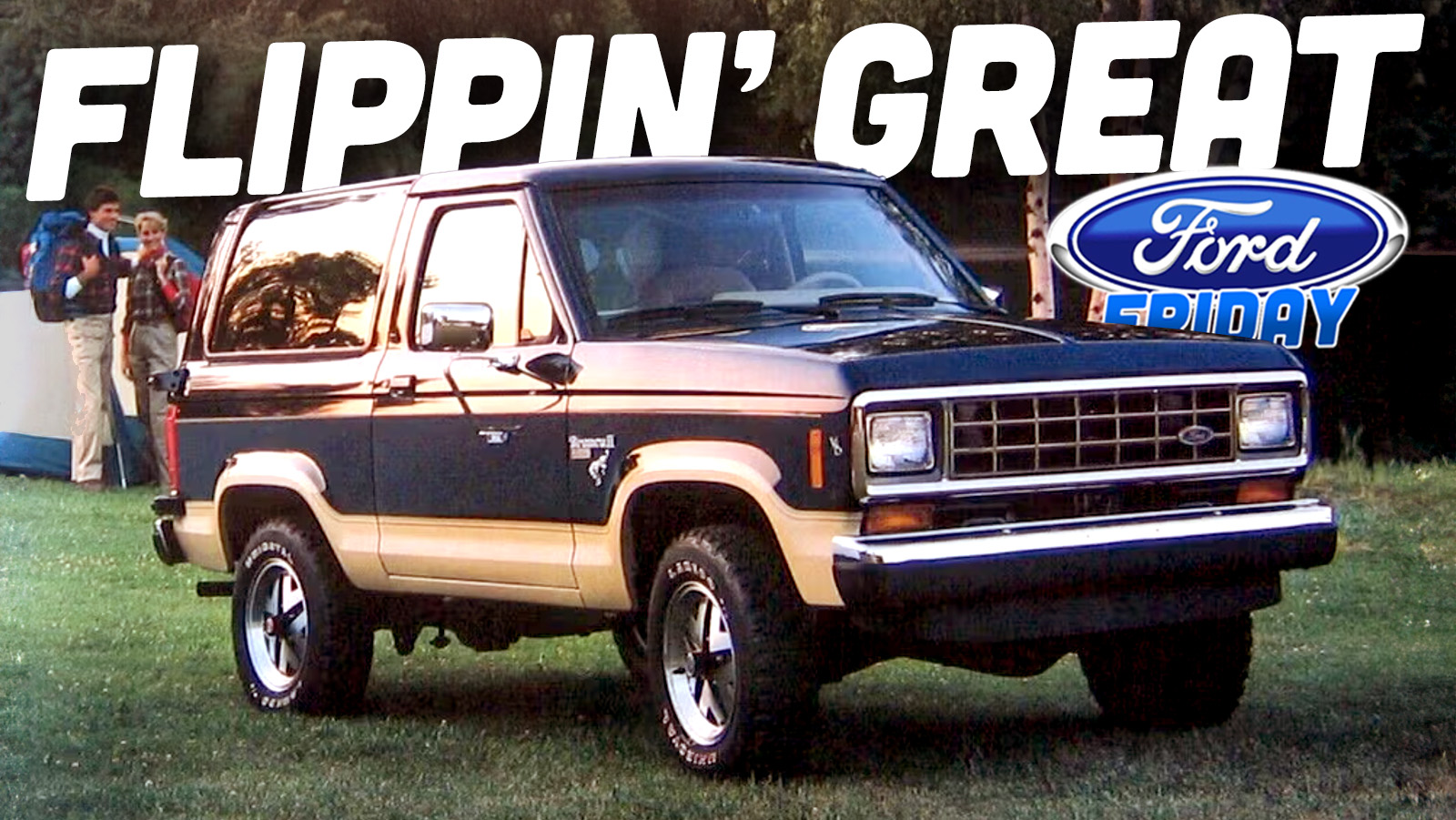
The charts speak for themselves: the revived-for-2021 Bronco has been an absolute sales smash success. Created as a straight-on competitor for Jeep’s Wrangler, it’s become a formidable challenger for the descendant of that World War II legend. However, is such a giant-tire-clad and wide-tracked product really a true spiritual successor to the original 1966 Bronco? I would have to say no; it’s way too big, too flashy, and too expensive.
There was, however, once a Bronco sized within inches of each dimension of the first one that offered a more comfortable and usable daily driving experience of the 1966 first generation without losing any of the capability or economies of that legend. Unfortunately, that similarity to the original might have helped make it one of the most notorious Fords ever. Still, that’s not the fault of the product so much as how it ended up typically being used; certainly, it shouldn’t take away from the fact that the 1984-90 might actually be the greatest Bronco of all time.


From The O.G. To The O.J.
The idea of a vehicle like the Jeep CJ that offered more user-friendly features like the witchcraft of actual doors and roll-up windows was not a new thing in 1966; admittedly, the International Scout was there first. However, Ford was the first Big Three member to actually produce such an entry with the legendary first-generation Bronco. With a size between a CJ-5 and the Scout, it was ideal for serious off-road duty but could also be used as daily transportation if you were willing to deal with the shortcomings of the design for such tasks.

The Bronco sold relatively well at first, but the introduction of Chevy’s full-size, truck-based Blazer, along with Jeep’s two-door Cherokee, started to eat into Ford’s market rather quickly. Eventually, Dodge entered the game with a large Ramcharger, and even the Scout got “upsized” to the point that a relatively unchanged-from-1966 Bronco was very much out of contention in 1977.
Ford made the inevitable decision to follow the other Big Three brands and base the new 1978 Bronco on a shortened F-series truck body and chassis.

This continued when the 1980 “Bullnose” trucks were introduced and Ford gave us the new, also large Bronco.

Of course, this “O.J.” Bronco was launched just as the effects of the 1979 oil crisis were really setting in, with doubling fuel costs, high interest rates, and inflation that made owning a giant V8-powered utility vehicle a bit of a liability. Ford’s smaller truck offering at the time was simply a rebranded Mazda pickup, so it was clear that Ford needed to come up with something internally that was easier on owners at the pump: a little Bronco that brought the harkened back to the past.
Yummy Yuma

Ford knew that a home-grown solution was going to be required to complement the big F-series and began what was called “Project Yuma” in 1976. Conceived to be smaller and more efficient, the design parameters of the little truck still required it to carry four-foot-wide items in the bed. With Ford’s financial struggles in 1980 and the need to recoup the cost of the “Bullnose” redesign, “Project Yuma” was almost cancelled. President Donald Petersen persevered, knowing the importance of the project in the current economy as well as the fact that GM was developing its own domestic compact truck. Released in January of 1982 as a 1983 model called the Ranger, the plan for the immediate future included a Bronco based on a shortened version of the new little truck.
Again, Ford needed something to combat Chevy and GMC’s new two-door SUV versions of their S-10 and S-15 models, which complemented their full-sized Blazer and Jimmy. The product Ford launched in March of ’83 was over a foot shorter than the “Bullnose” Bronco; even the new S-10 Blazer was over six inches longer.
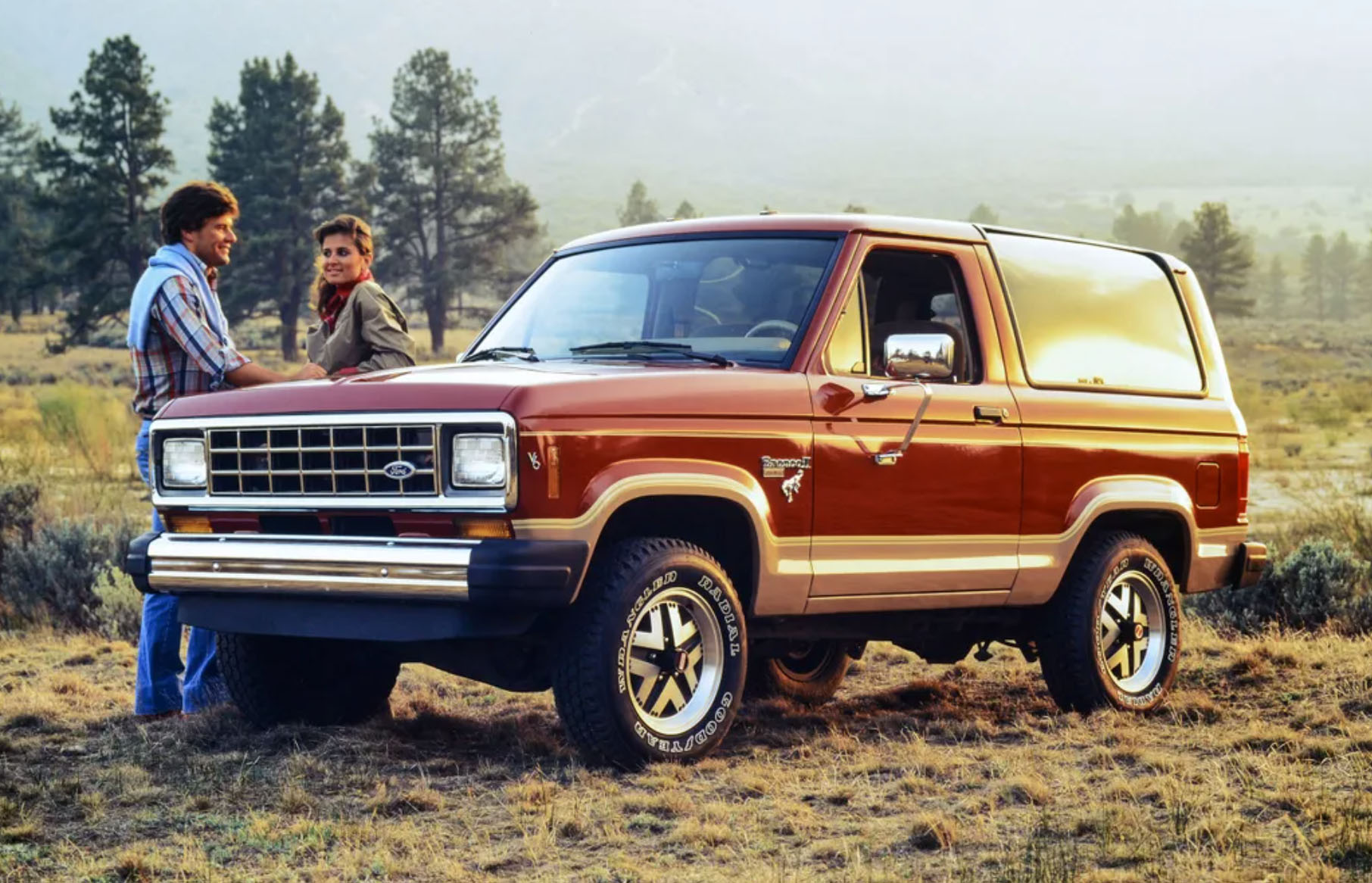
Even more stunning was the width of what would be called the Bronco II, which was almost a foot narrower than the full-sized model. This meant that the new little Bronco was almost identical in size to the 1966 and could go through all of the tight places that the original could. It also meant something else that wasn’t quite as good that we’ll get to shortly.
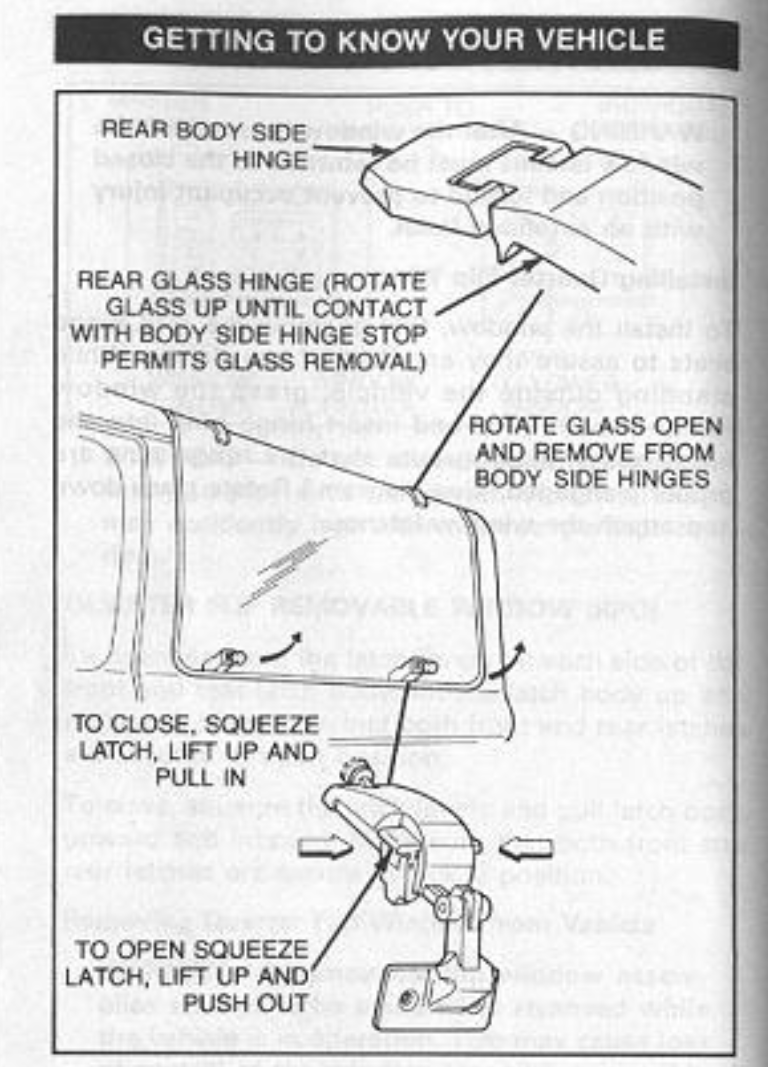
If the S-10 Blazer cut a rather slick profile, the Bronco II was all business and bore a strong resemblance to its big brothers. The only real concession to unique and even frivolous styling was the cool rear quarter windows that radius curved into the roof.

One of our commenters (nlplt) just pointed out that on very early ones you could actually remove those rear quarter windows!
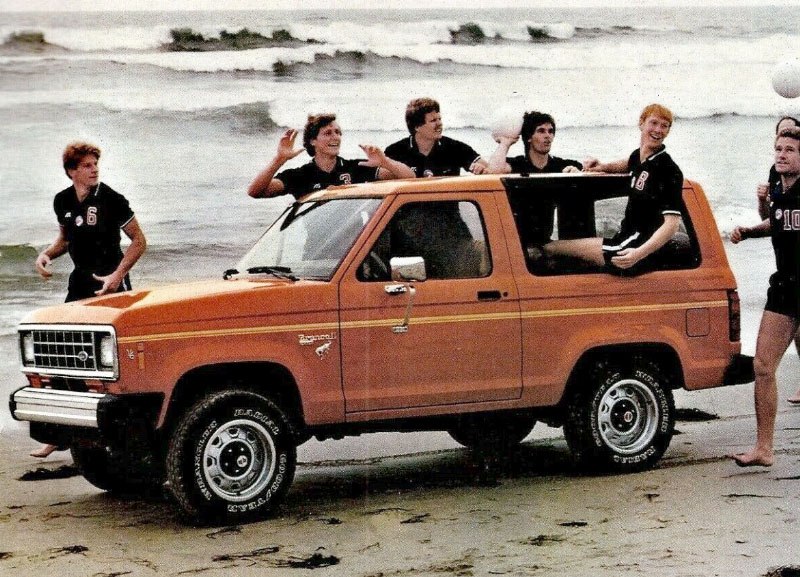
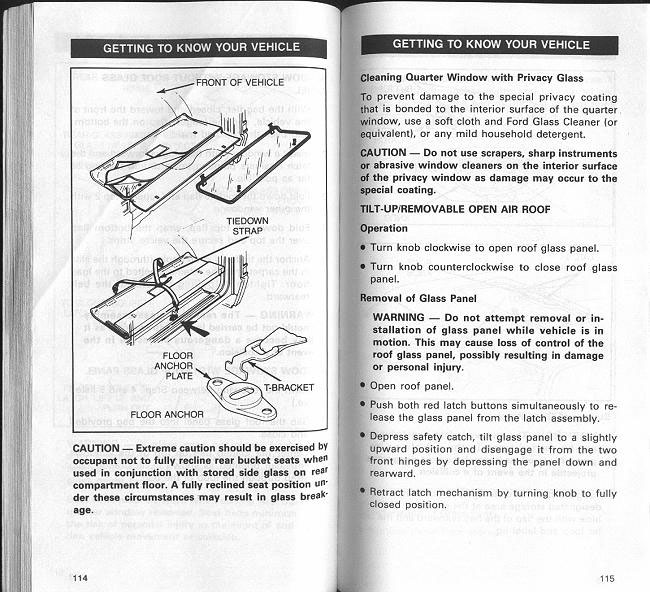
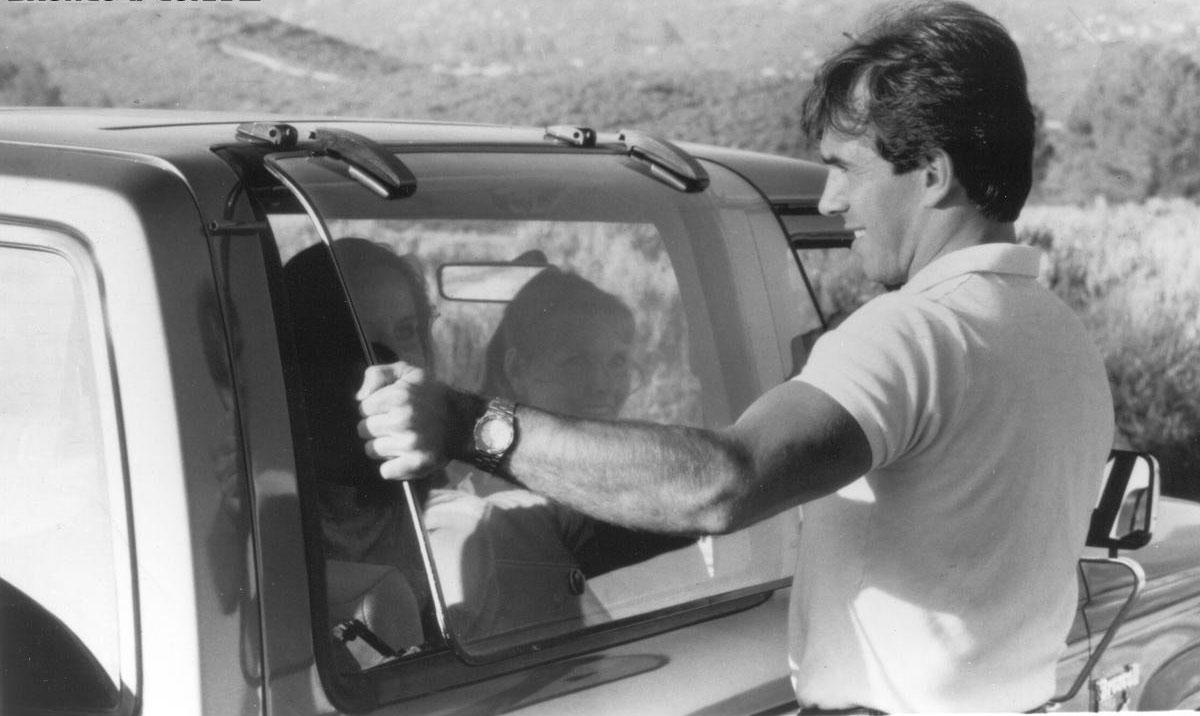
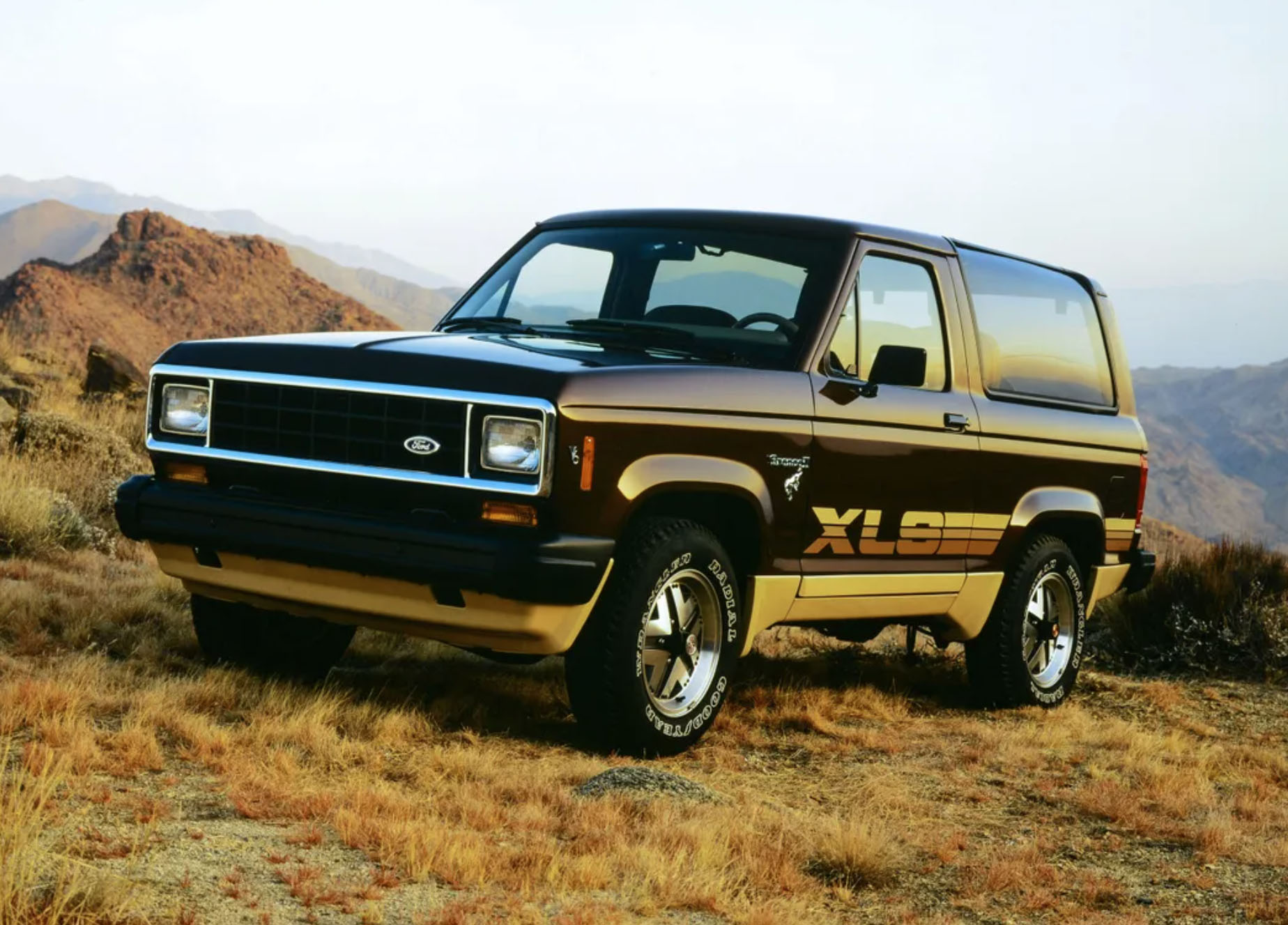
Also, Ford offered plenty of period paint and stripe packages to spice up this rather utilitarian ride. You can’t get much cooler than a glorious brown with tan stripes, can you?
Unlike the Ranger and the GM competitors, you couldn’t get a Bronco II with a four cylinder; only Cologne V6 engines were available for the duration of the production run. This meant even in standard form, the Bronco II was sold as the best choice for those who like to tow.

One important note: many sources that I read stated that the Mitsubishi 4D55T turbodiesel found in the Ranger was available in the Bronco II for 1986 and 87. I see nothing stated in any brochure or technical information that this was ever on the options list, and I couldn’t find any evidence of these ever existing: if they really were a thing, and you have one, I’d like to hear about it in the comments. Please.
Also, Bronco IIs were only sold as 4WD at the beginning, but gained a 2WD version later. Funny detail: the transfer case was still in place on rear drive models, and the hole where the front driveshaft would have attached was simply sealed!
While Jeep XJ Cherokees gave you a solid axle up front and S-10 Blazers a more conventional independent front suspension, the Bronco II got a scaled-down version of Ford’s famed “Twin I Beam” independent system that was prized for ostensibly offering the benefits of both.

Interiors ran from basic up to fancy donut-hole headrest versions to the luxurious, later Eddie Bauer-branded models.
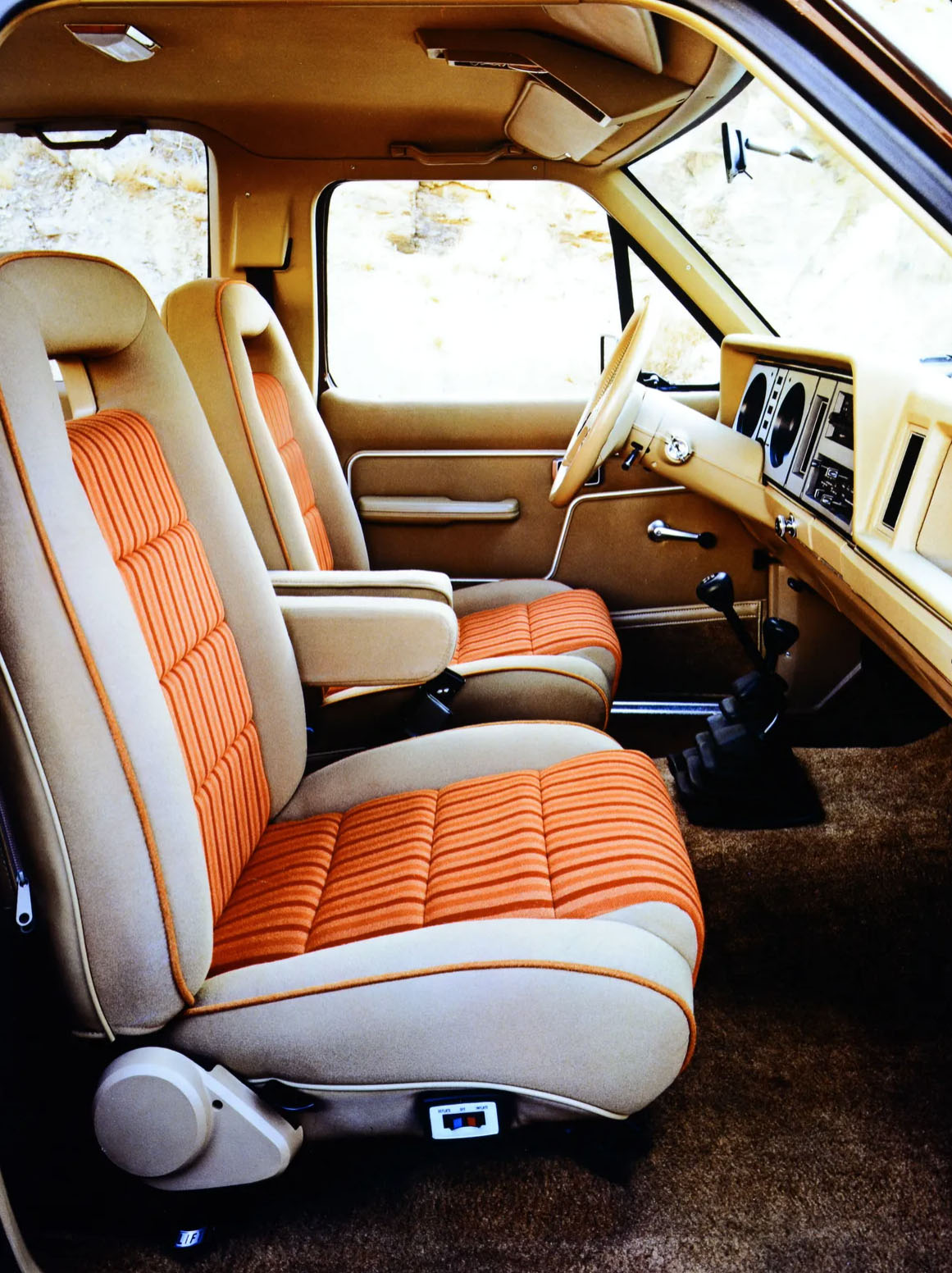
For such a small vehicle, the Bronco II offered great cargo space, with folding rear seats that had pivot-forward cushions to allow for a flat floor. There’s also a plethora of storage bins inside.
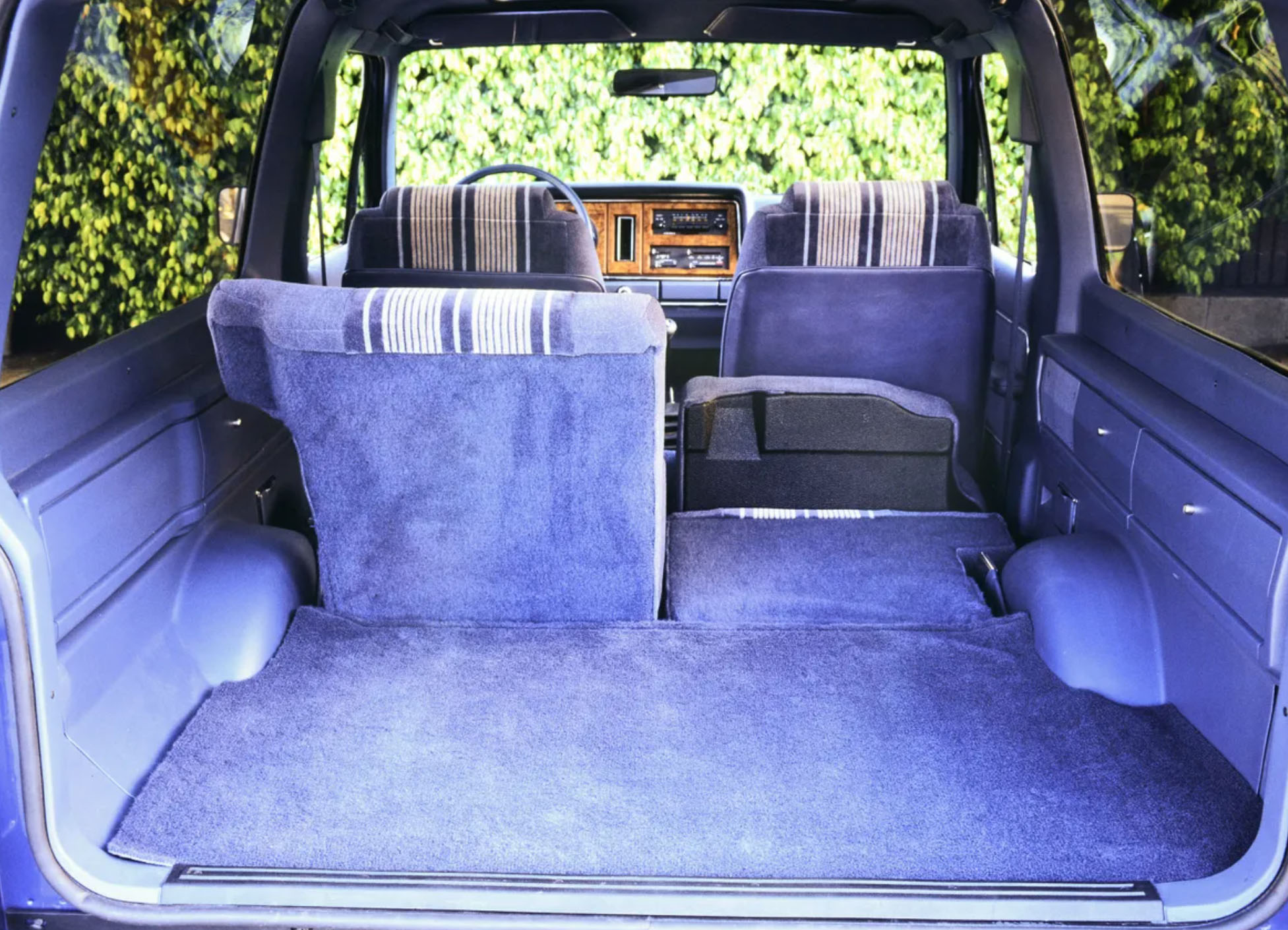
Bronco IIs compared well in this expanding market of the early eighties:
For 1989, the Bronco II got a refresh along with the Ranger, but the basic truck stayed pretty much the same otherwise.
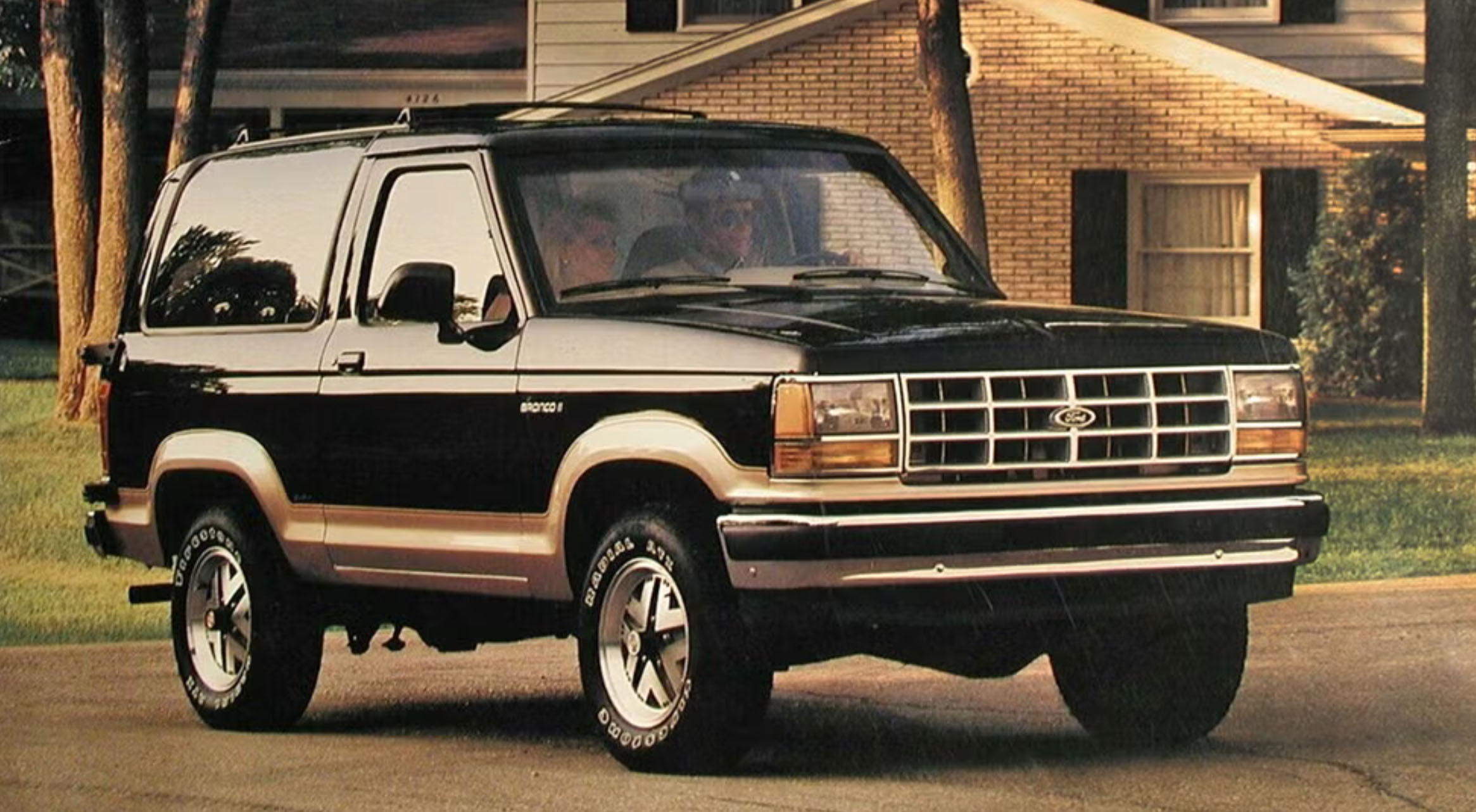
Sales were strong, and unlike the original Bronco the new Bronco II found a lot more buyers. In fact, they found a lot of new customers that had never owned or even driven a tall Jeep-like SUV before. This would turn out to be a blessing but also a very, very big curse.
II Tall IV The Street
Everyone driving an SUV today will see the cartoon on the sun visor of a vehicle doing Joie Chitwood-style driving on two wheels stunts to warn that you are not driving a car; you’re in something with a high center of gravity. We tend to ignore these stickers since most current products have been carefully developed to lower their propensity to tip over during hard cornering. That’s because their manufactures know that if drivers of traditional cars ignore these warnings they’ll end up in hot water like one car brand did with a certain early SUV. That brand was Ford; the SUV in question was the Bronco II.
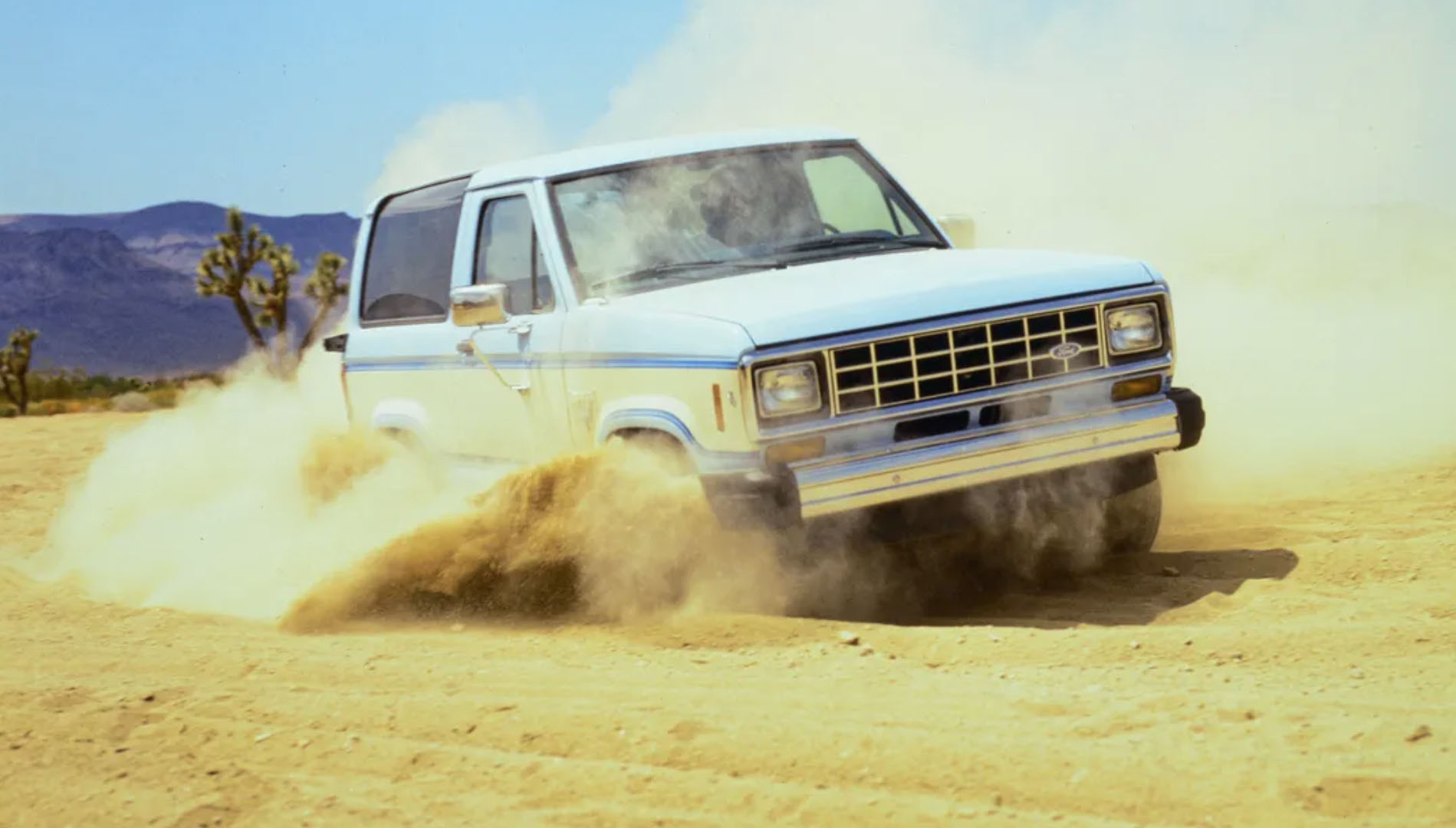
With early Jeeps and that 1966 Bronco, most buyers knew they were driving an off-road machine that, if they knew the limitations, could be safely used on the road. For the Bronco II, brochure shots like below show that Ford was absolutely not targeting these types of hard-core outdoorsman.
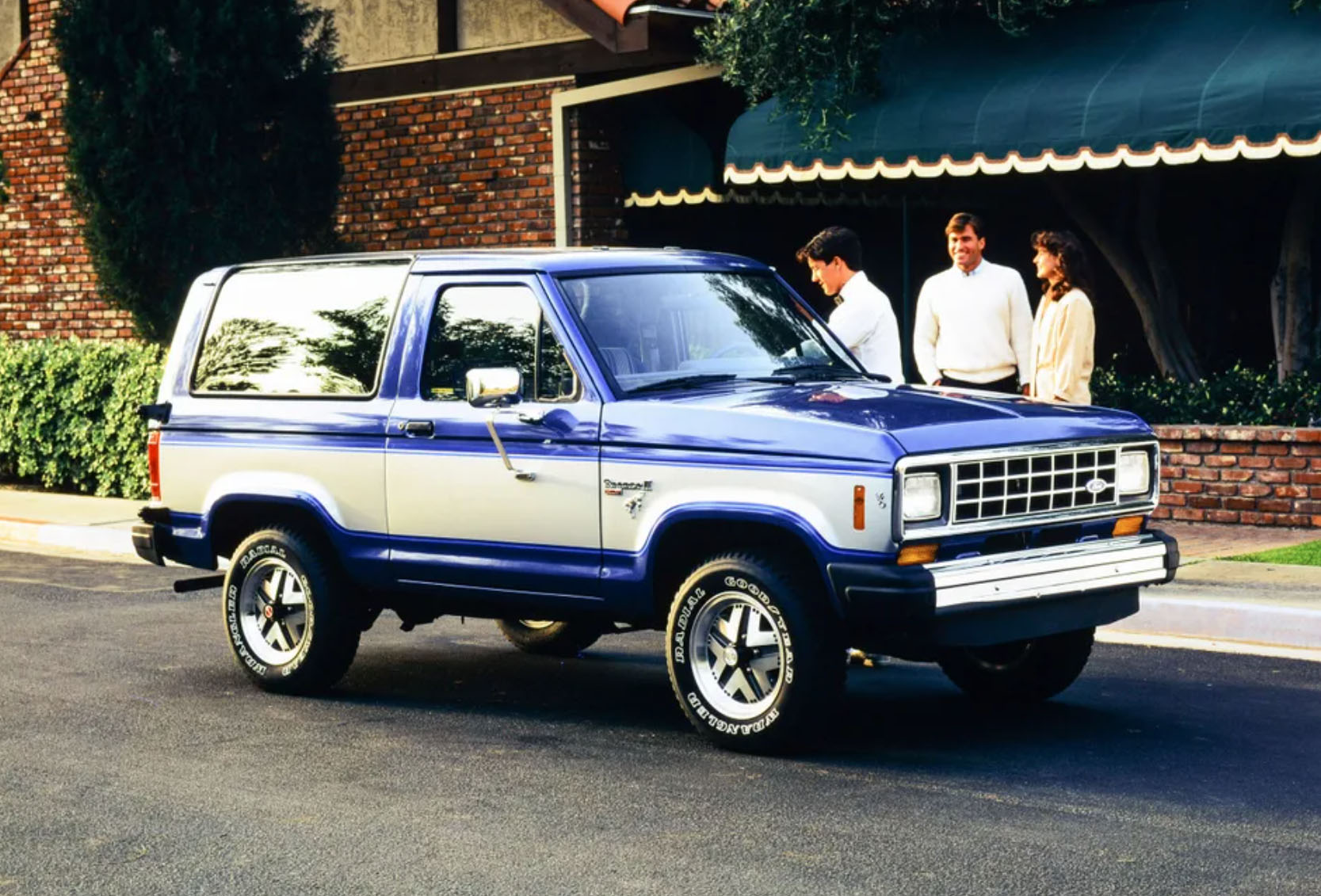
In his book Why Lawsuits Are Good For America: Disciplined Democracy, Big Business, And The Common Law, author Carl Bogus claims that Ford was aware of these issues during development Bronco II but did not want to delay the launch and let the S-10 Blazer have the market to itself. In 1987, Detroit news said that year there were 43 deaths attributed to Bronco II rollovers versus only 8 in the also-tipsy Suzuki Samurai; however, the NHTSA investigated and found that Bronco II was no more prone to rollovers than any other SUV (also remember that there were a lot more Bronco IIs out there than Suzukis).
Despite this, the damage was done. Ford’s claim that essentially all of these rollover fatalities were based on driver error was likely true, but considering they were marketing this purpose built off roading machine as a family car seemed to bite them. Their argument certainly didn’t work in court; by the year 2000 Ford had paid out nearly $2.4 billion in damages related to Bronco II rollovers.
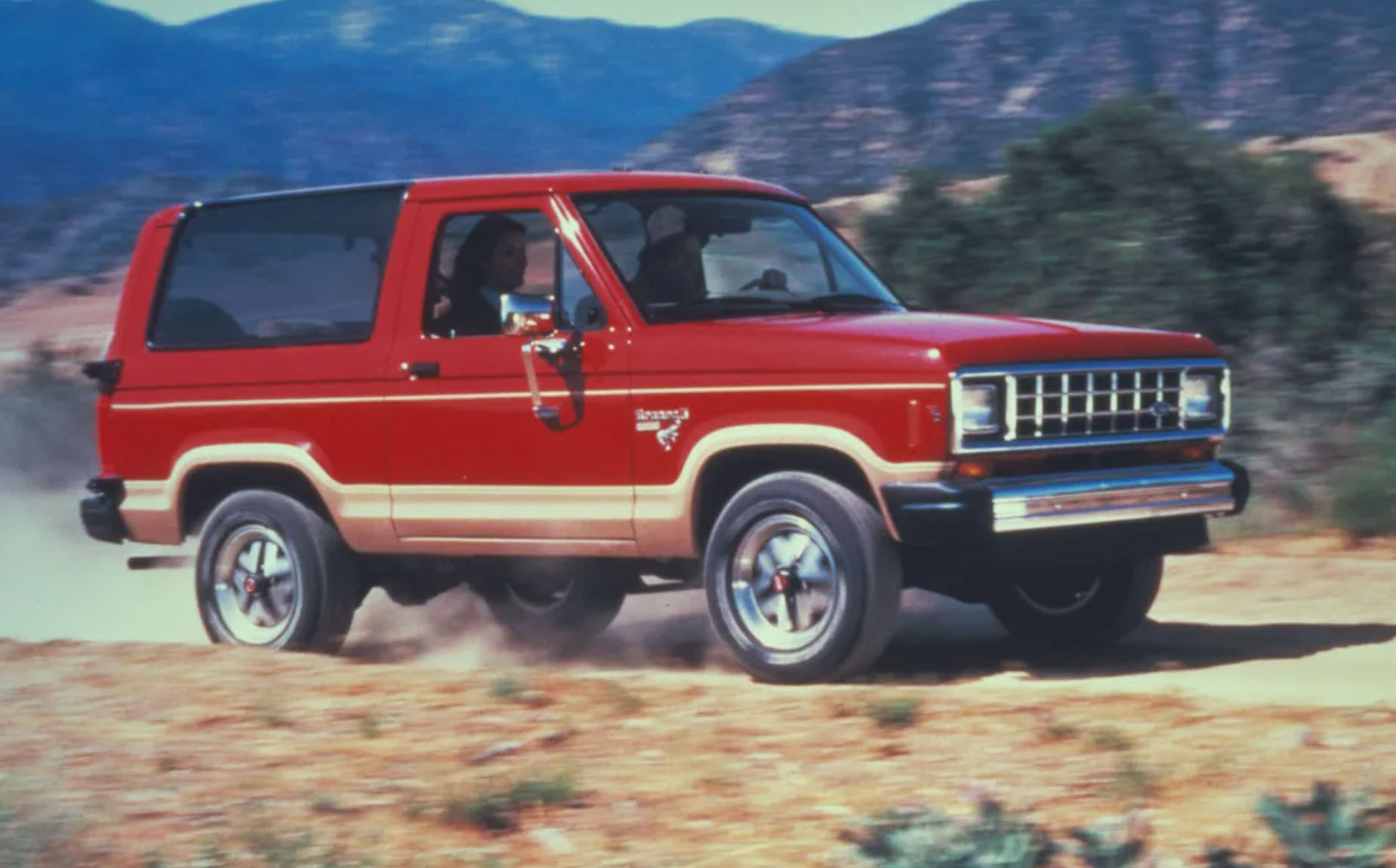
Much of this controversy affected the Bronco after it left production to be replaced by the Explorer in late 1990. Over 600,000 found homes over the production run, but the poor reputation meant that the attrition rate was high. That doesn’t mean you can’t find them if you look.
Pocket-Size SUV For Pocket Change
As a GenXer I can remember when these “II”s were essentially everywhere, but the passage of time, hard use and depressed values from the rollover reputation making even moderate repairs uneconomical has decimated the supply. The remaining good ones, you would imagine, are prized by collectors and fans of “real” off road machinery. You would imagine wrong.
Here’s a really nice 1988 model in one of Ford’s signature Bronco II two-tone combinations.

I sure miss the kicking Bronco logo that they removed from sides of later models.

This one even has the desirable manual five speed on the floor.

Like many later version, this one is loaded up with options like power windows and locks.

The rear seat is cozy to be sure but still better than a Wrangler, and look at all of that glass!

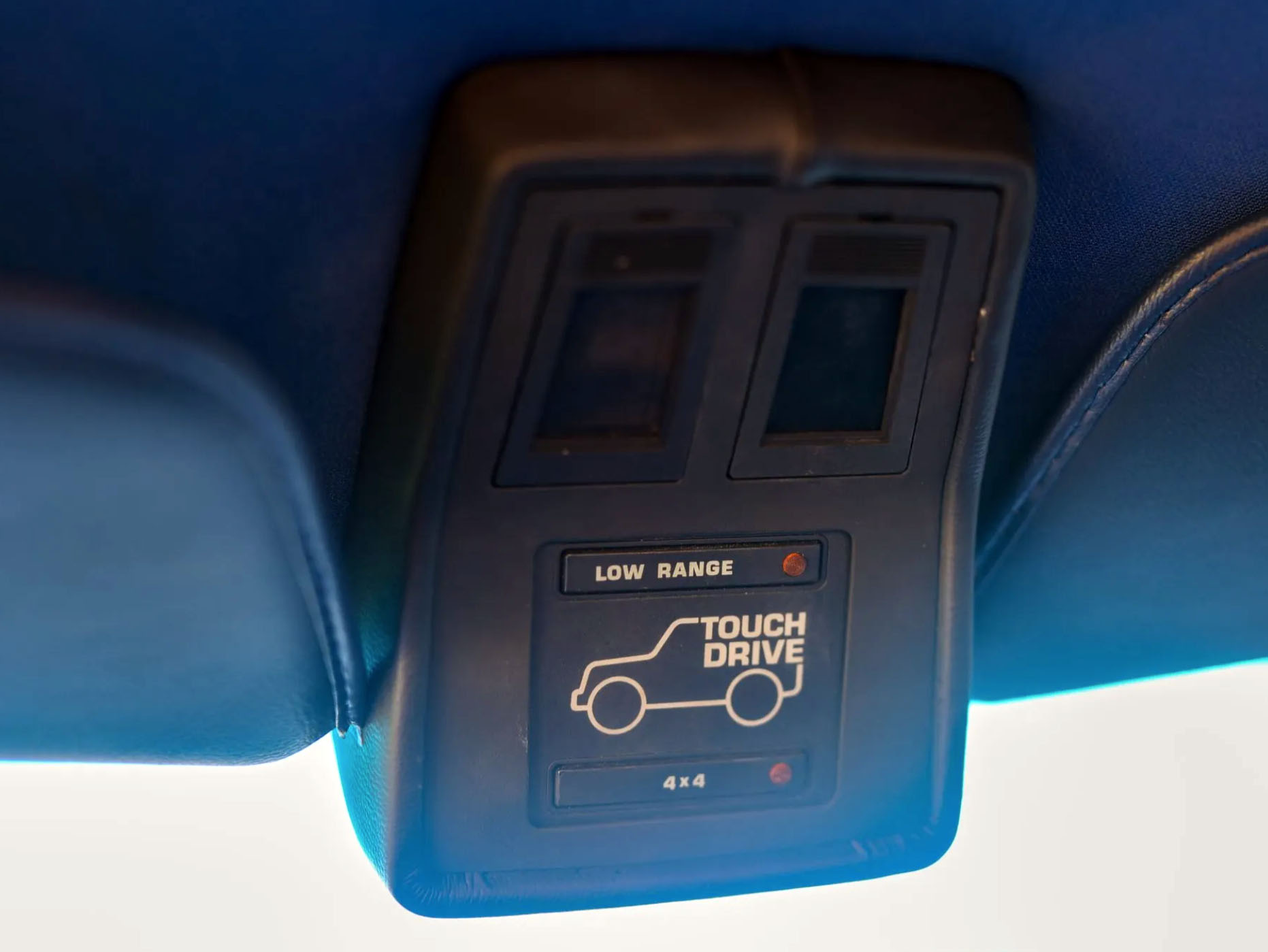
Early models had rather crude 4WD shifting systems, but by the time this one was built, you got a high-tech ceiling-mounted pushbutton control for the drive system.
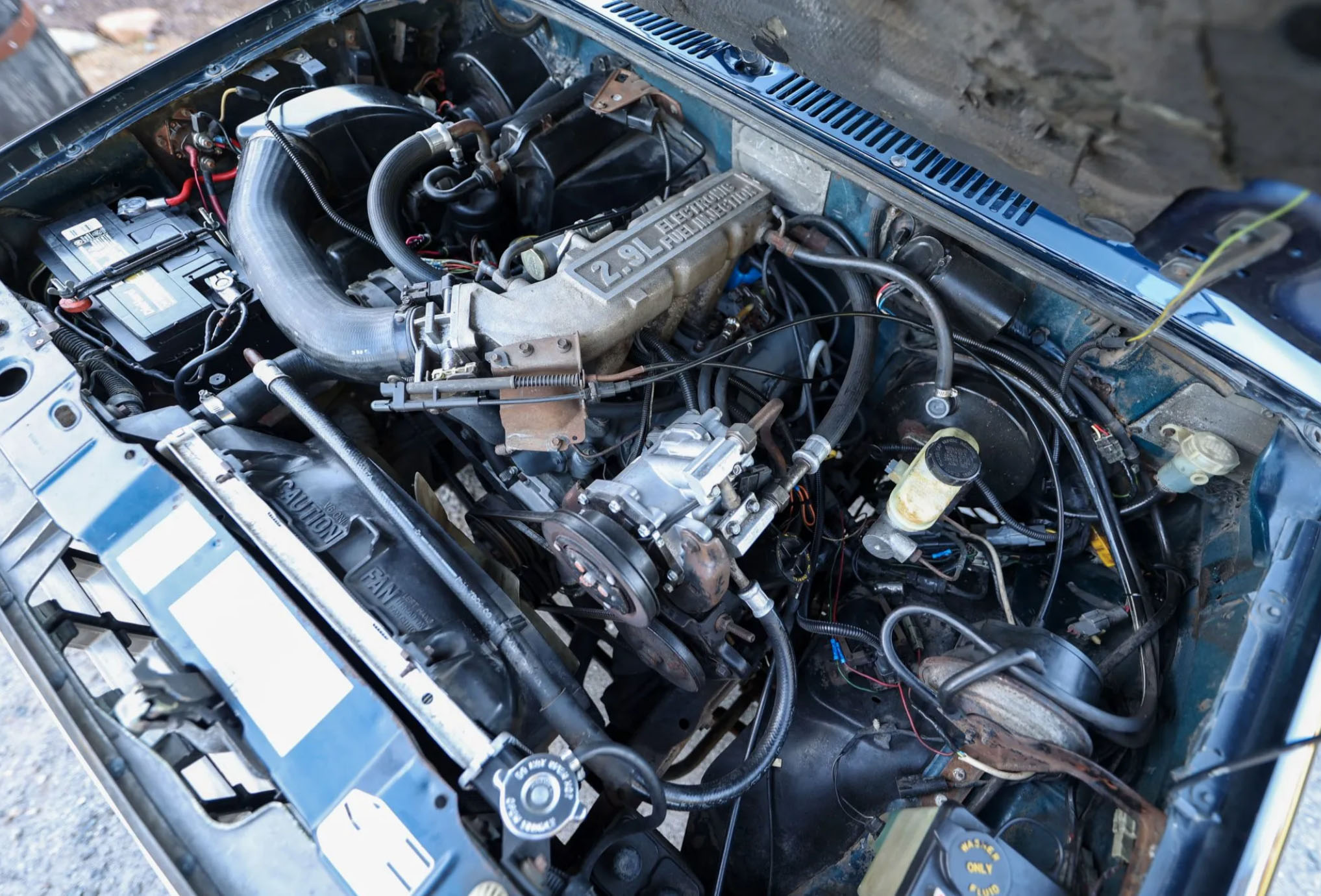
The 1986-on 2.9 liter version of the Cologne V6 was known for its durability even if the 140 horsepower is hardly massive output.
How much for this highly usable and more practical alternative to a Wrangler? How about $9,000? Looking at Bring A Trailer, most really good examples sell for mid-teens at best, with a lot of great deals in the four-figure range. Mitsubishi Mirage (used Mirage at that) money for a tough little four-wheeler? Are you kidding?
You Want To Spend Five Times As Much On A Not-As-Good ’66?
That new 2026 Bronco might look a lot like the 1966, but it couldn’t be further from the principals of the original SUV. It’s oversized and heavy where the first one was lean and lightweight, it’s an honest design where the new one is almost overblown with massive fenders and rolling stock. Not only is the Bronco II almost identical in size to the 1966 Bronco, its compact, functional purity makes it the true spiritual successor the legendary first generation. It takes all of the qualities of its forebearer and adds more comfort without compromising useability. It might bite if you try to make it do things it wasn’t designed to do, but you wouldn’t tickle a grizzly bear either, would you?
Ultimately, Ford ended up with a product that gets lumped in with the Pinto simply because the brand launched a purpose-built machine with outstanding overlanding qualities and sold it to people who didn’t know what to do with it. Does that make it a bad product? Absolutely not. In fact, these qualities could make the Bronco II the best Bronco ever. Even if they don’t, I’m certain that it deserves a lot more of our respect than we ever give it; hopefully that changes before they’re all gone.
Top graphic image: Ford


I’ll take a 4WD, 5MT, Eddie Bauer Edition please!
Since I’m catching up, the Bronco II was driven by the star of the cop show Lady Blue. AFAIK the Bronco stayed shiny side up just as the Jaguar XJ6 in The Equalizer was always running.