

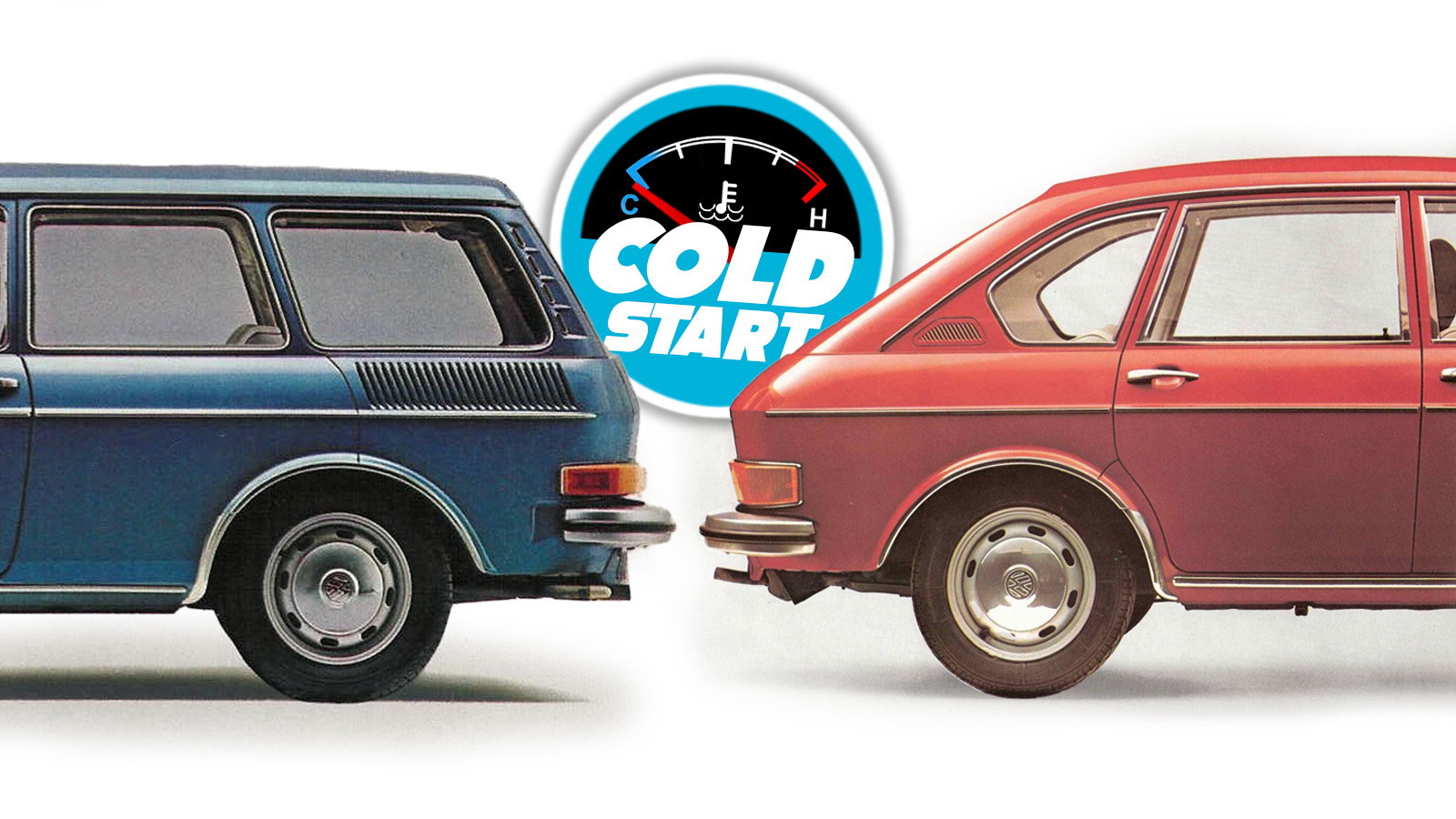
Volkswagen, at least air-cooled-era Volkswagen, has a very strange relationship with four-door cars, and it’s not a relationship I understand. For most of the air-cooled era, VW was pretty staunchly two-door focused, something that I generally associated with German car market preferences, though I don’t pretend to fully understand those, either.
My personal daily-driver cars have generally been mostly two-door cars, at least in part because a good number of those have been Beetles, but even looking at the my non-Beetle daily drivers – a Nissan Pao, Volvo 1800S, a Reliant Scimitar, a Yugo, an Isuzu Pickup, and so on – they’ve all been two-door cars. Until the 2CV finally made it back into the world of the running, I’d never realized the joys of four doors, and while I don’t think I need the extra pair of doors, I get the appeal. But I’m not sure VW ever really did.


Which is kind of strange, since the first car that Volkswagen technically built in real numbers was a four-door car: the wartime Kübelwagen:
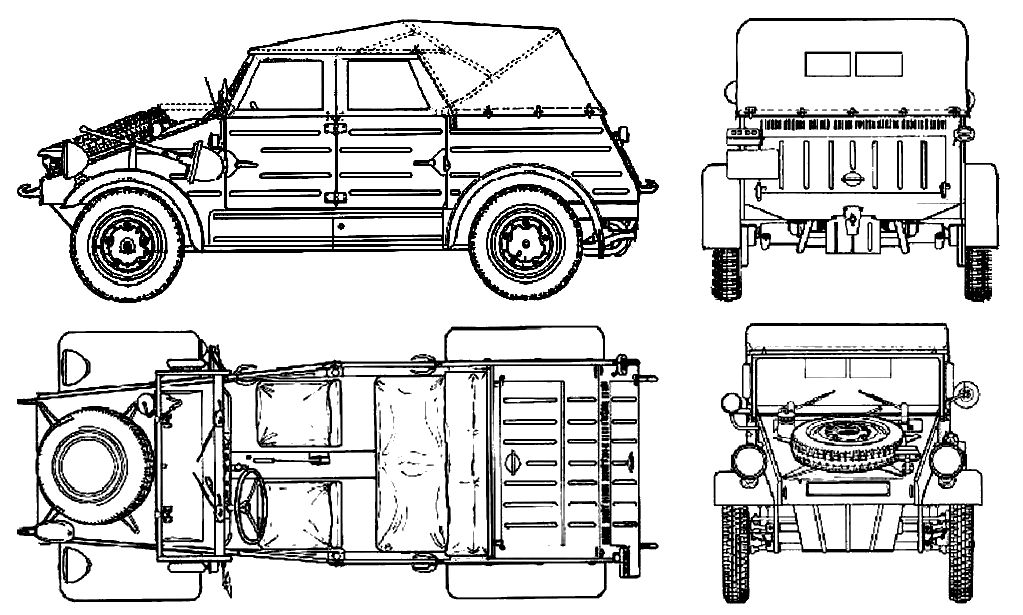
But then, after that, VW went decades without a four-door passenger car – I mean, if we don’t count the Microbus, which is sort of a different category because it’s a van, even though VW sold it as a “Station Wagon” and, let’s be honest here, that likely filled most of VW’s four-door-like requirements, even if those had sliding doors.

Okay, but back to non-van passenger car four-door Volkswagens: it took VW until 1968 to actually build and sell four-door cars, and the ones the came out with were a bit, um, unexpected. First, there was the Type 181, which we know here as the Thing, which was a sort of modernized Kübelwagen, a military/utility/fun car:
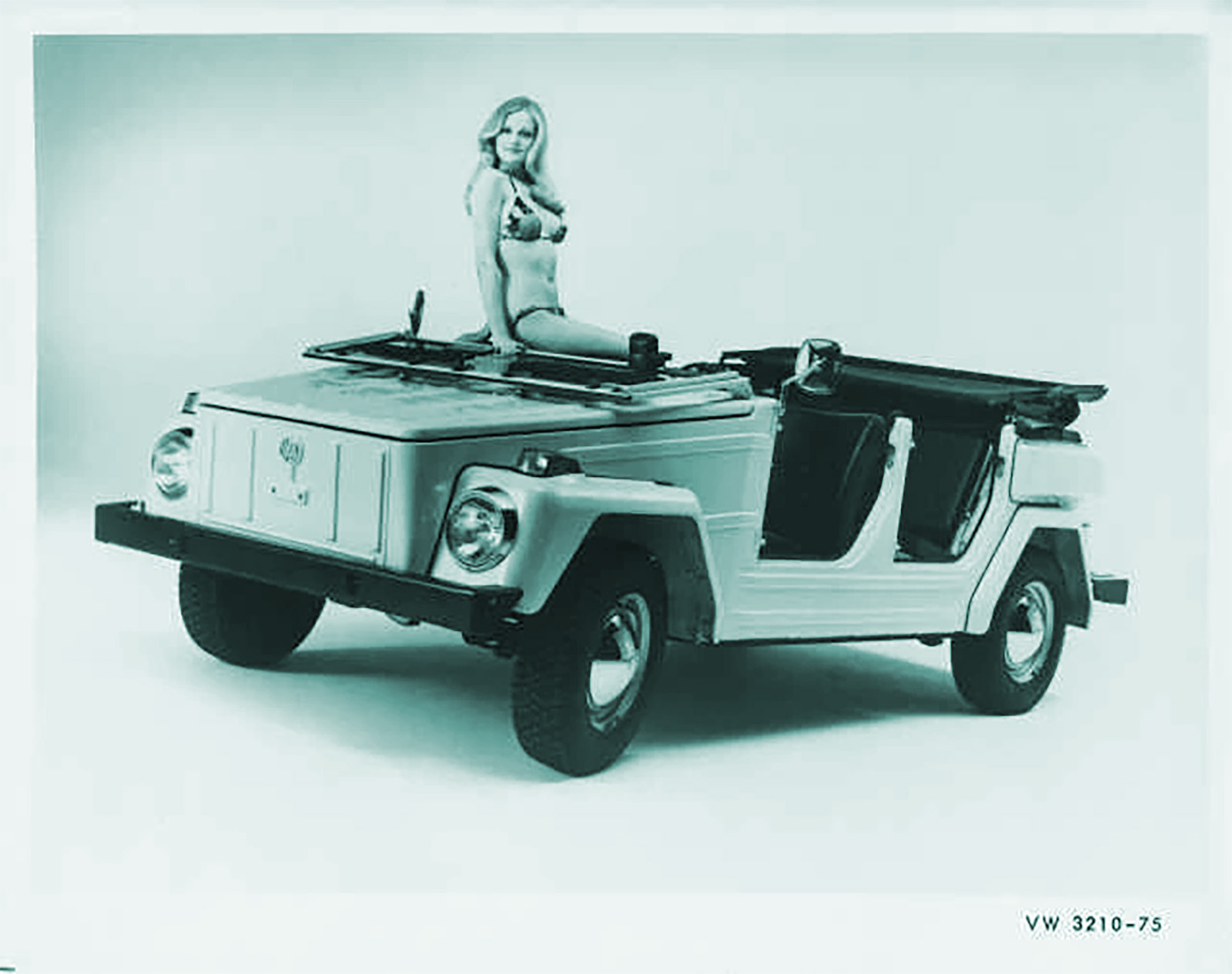
Not only did it come with four doors, you could turn it into a no-door car, as you see above. But the cutouts there should show you where the doors go, you’re pretty smart. The other four-door VW introduced in 1968 was the Type 4 Sedan: 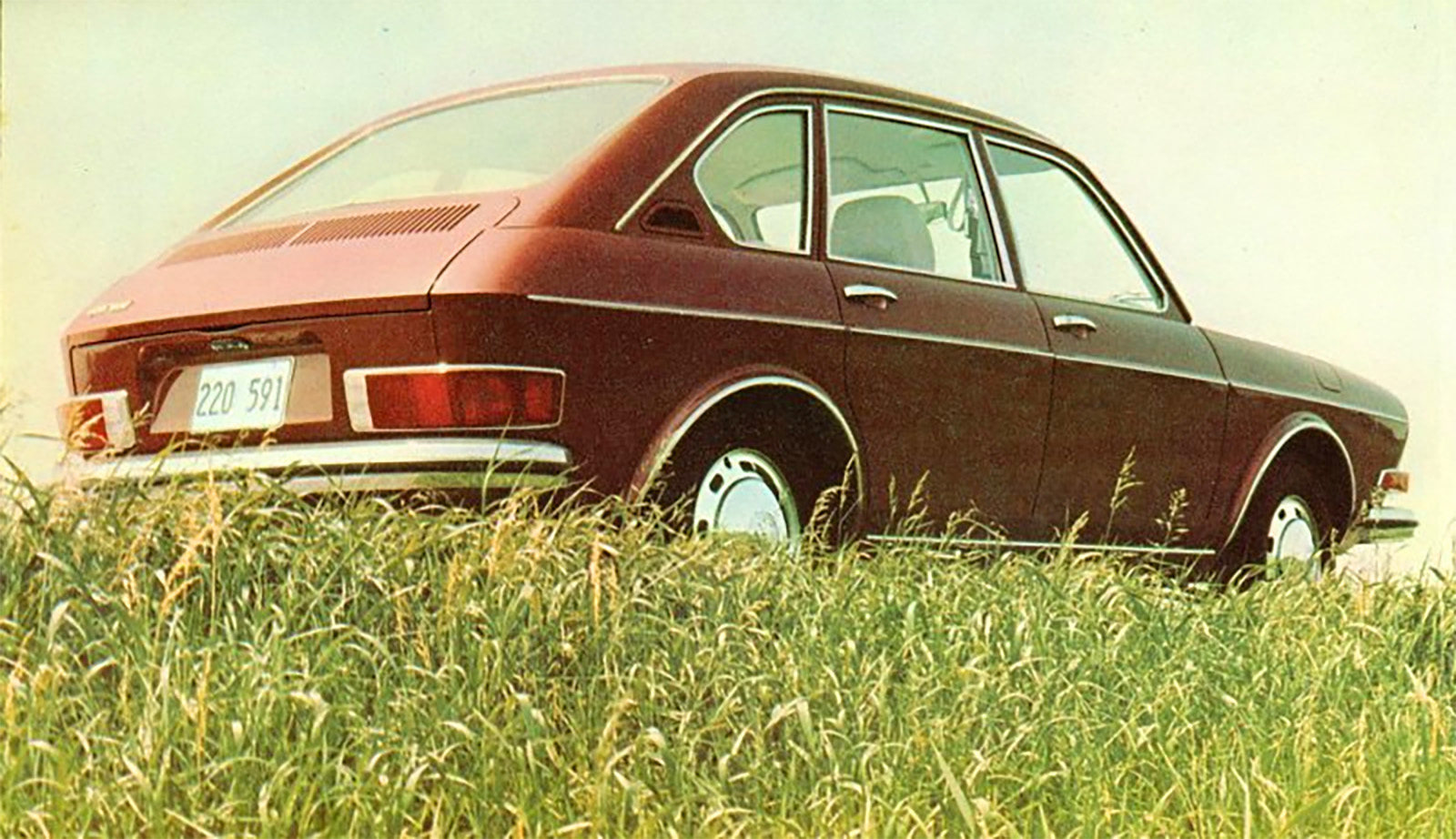
I always thought the Type 4s were really interesting cars, despite them being somewhat of a failure for VW, sales-wise. They were a real attempt to modernize the technological DNA of the company that started way back in 1938 – air-cooled, rear-mounted, horizontally-opposed engines and torsion bar suspension and so on – by making cars with modern unibodies, updated front suspension, and such advancements as electronic fuel injection and so on. The VW Type 3s started some of this, but it was the Type 4 that really attempted to drag the VW concepts into the modern world. Now that I think about it, the Type 3 wagon, the Squareback, was only two-door as well, but none of the Type 3s had four doors like the Type 4 family did.
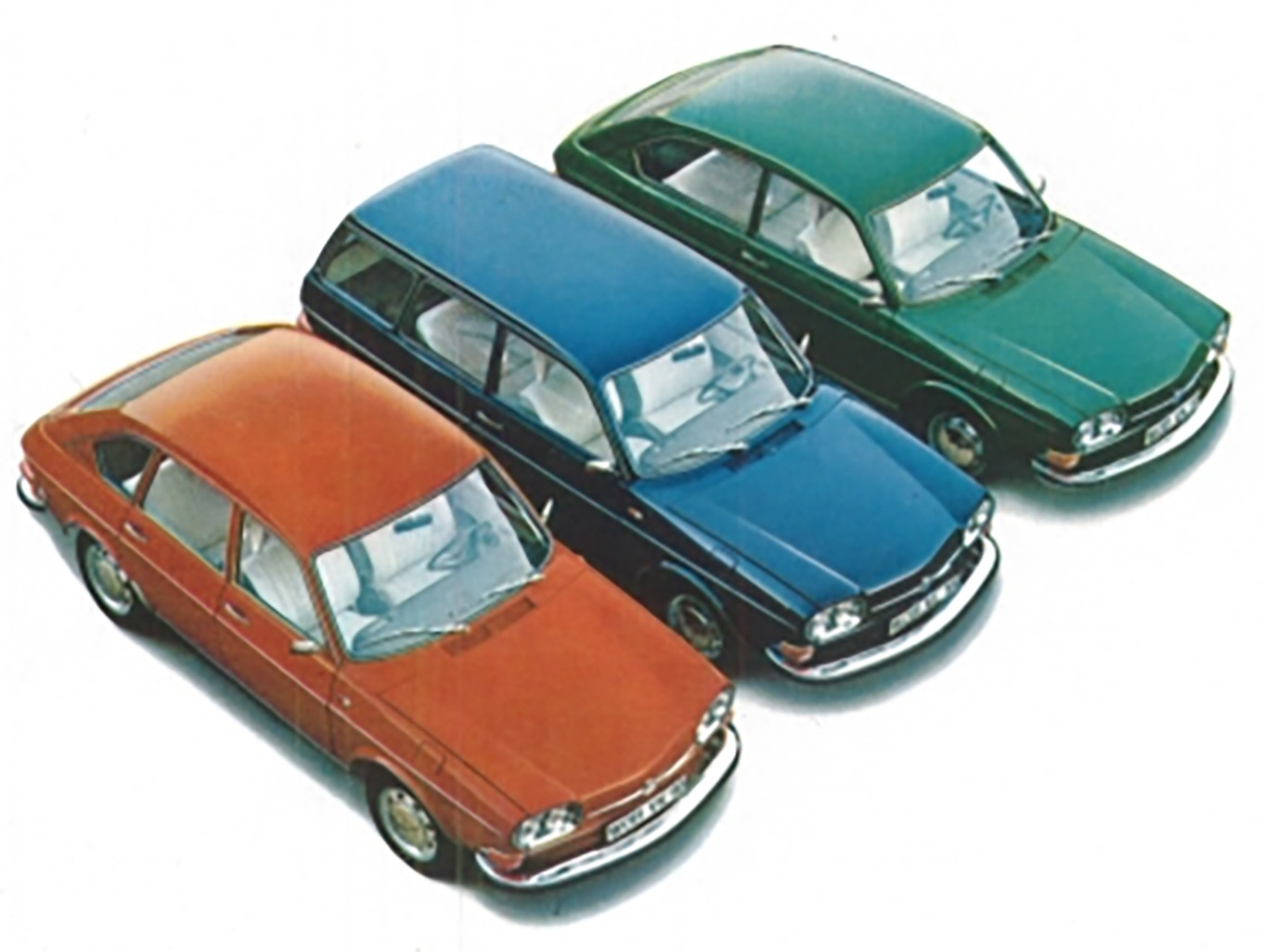
There were three cars in the Type 4 family: a two-door fastback, a two-door wagon, and a four-door sedan. Now, here’s what I don’t get at all: why wasn’t the wagon given four doors?
You’d think out of all of the cars in this lineup, the wagon should have been the one with four doors. It was absolutely pitched as a family car, and that’s when you want four doors, right? Because you always have people, either in their larval kid state or grown, getting in the back seat!

I don’t get it at all. Ads of the era, as you can see above, definitely showed the wagons being used as family cars, but that mom would have to wrangle those squirmy kids into the back through the front door, and if anyone has to pee in the back seat, a minimum of two people are getting out of that car.
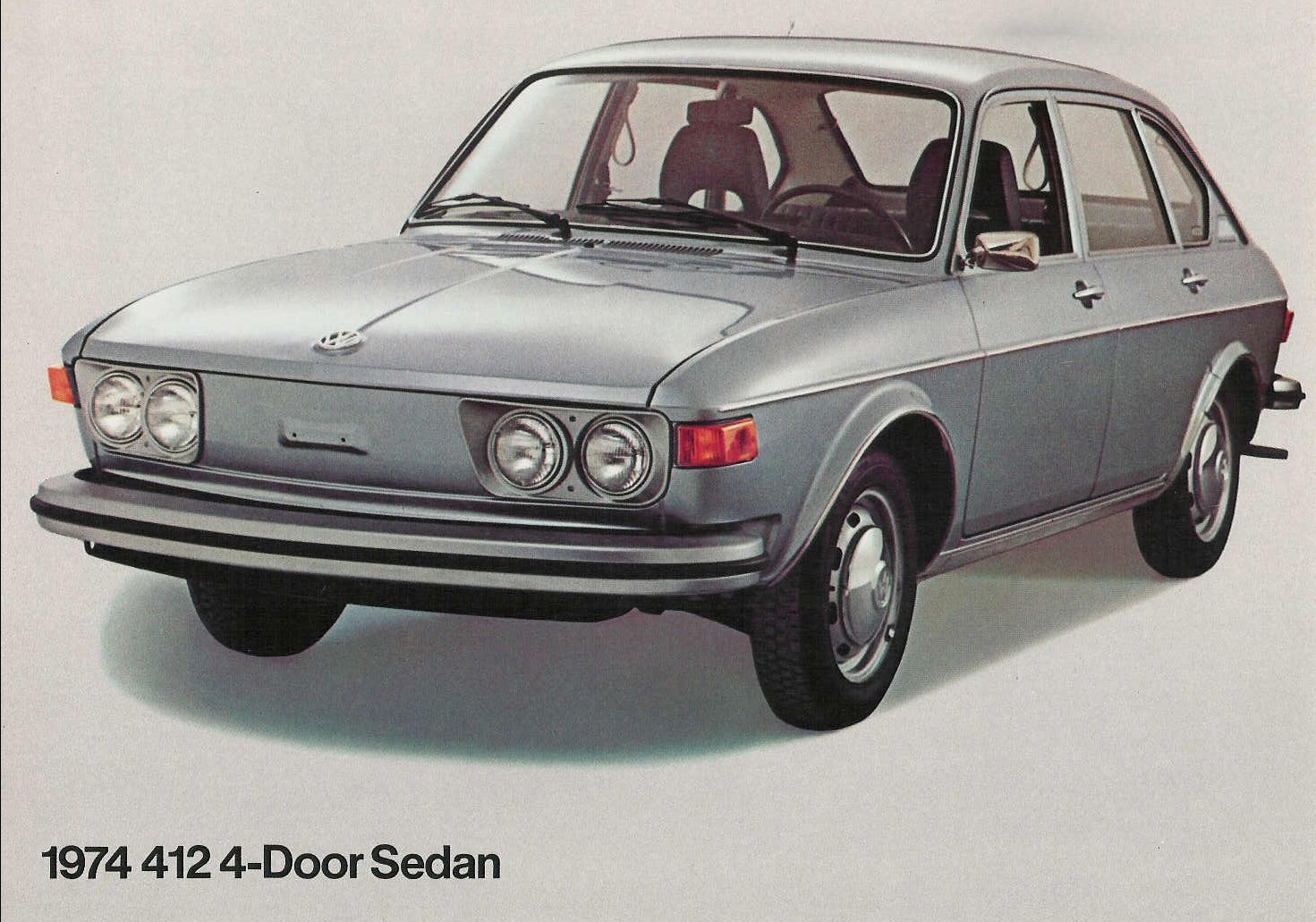
Now, sure, the four-door sedan could be a viable family car, and I’m sure was for plenty of people. VW’s clever packaging and flat engine design meant there was great storage room front and rear, even in non-wagon form:
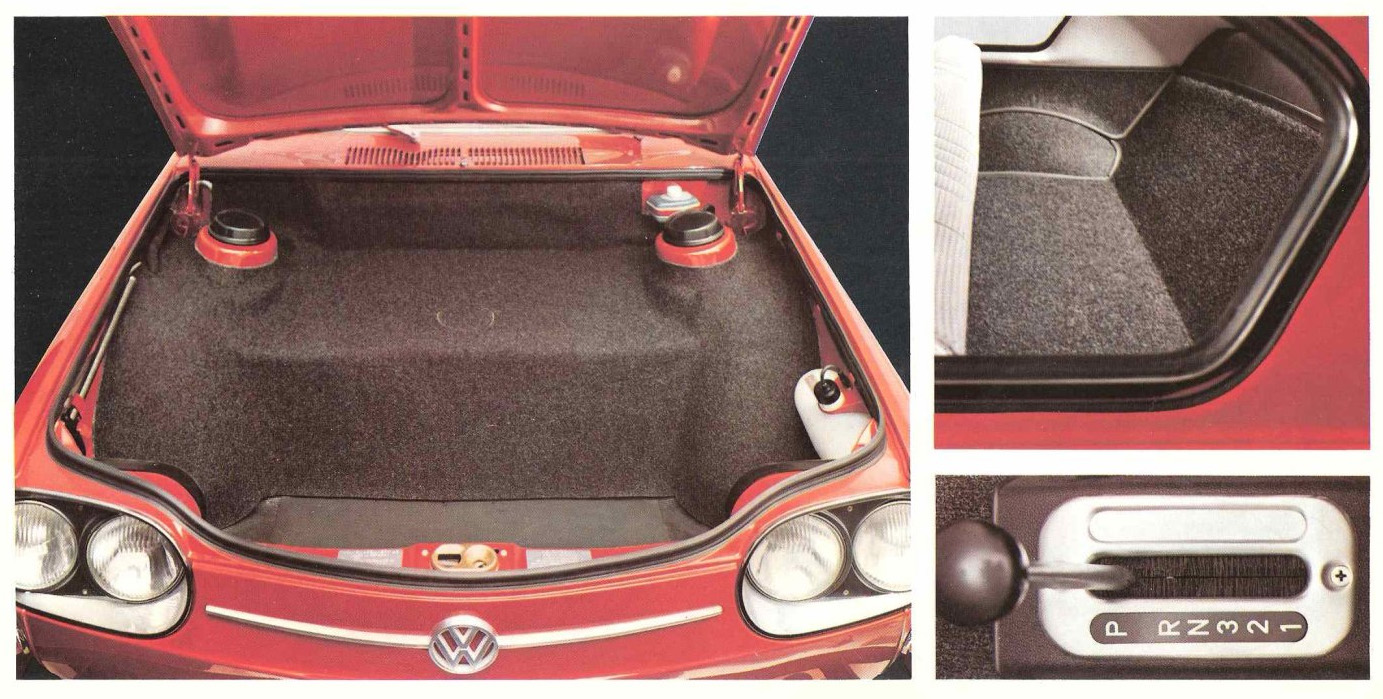
Here’s a nice cutaway, too, showing how roomy these things were – remember, all that area up front is a trunk, too:

…but even so, a wagon would have been even better, in many cases. And it’s not like the design of the wagon couldn’t have had that rear door. I mean, look:
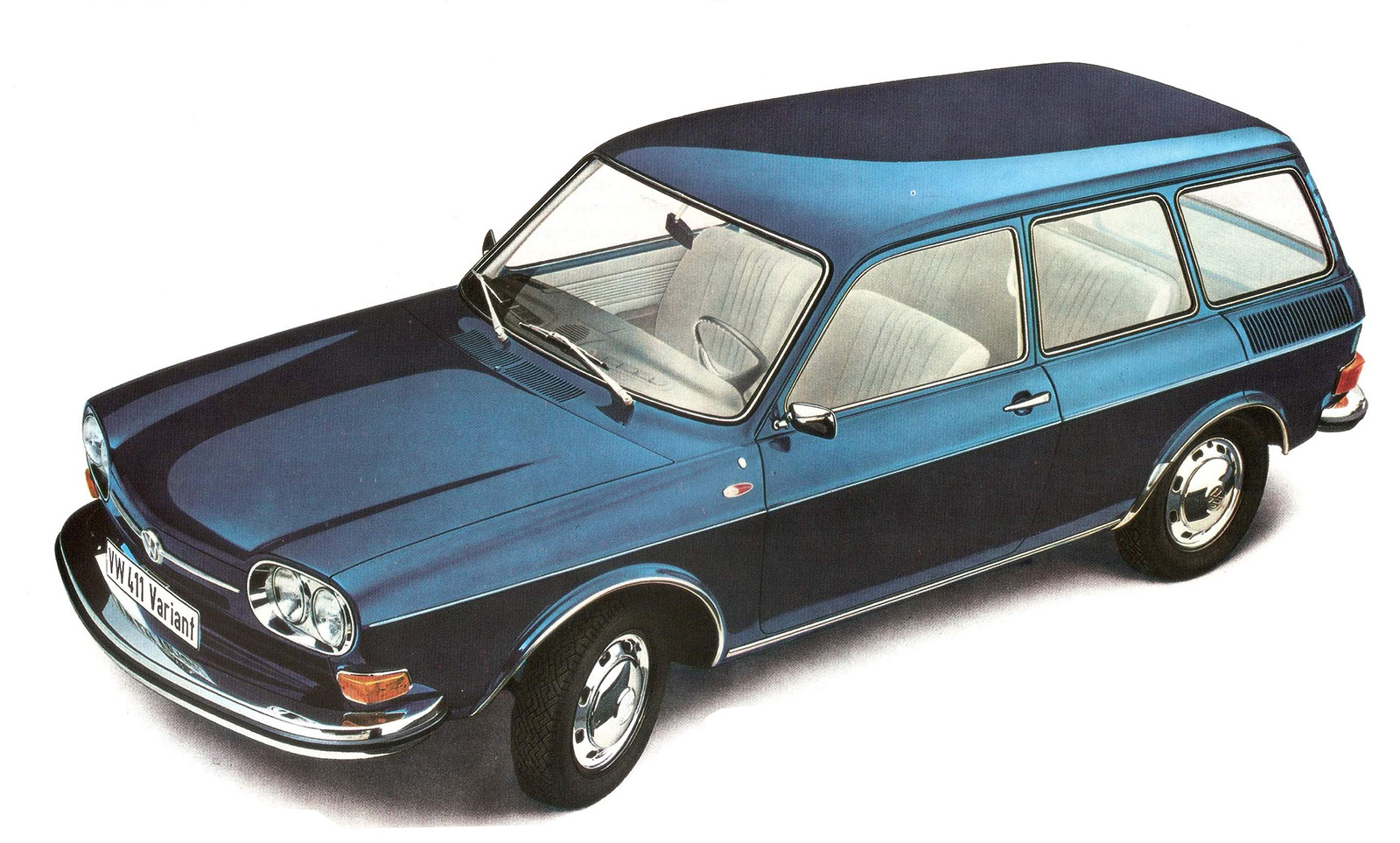
There’s plenty of room back there for a back-row door. Compare it to the sedan:
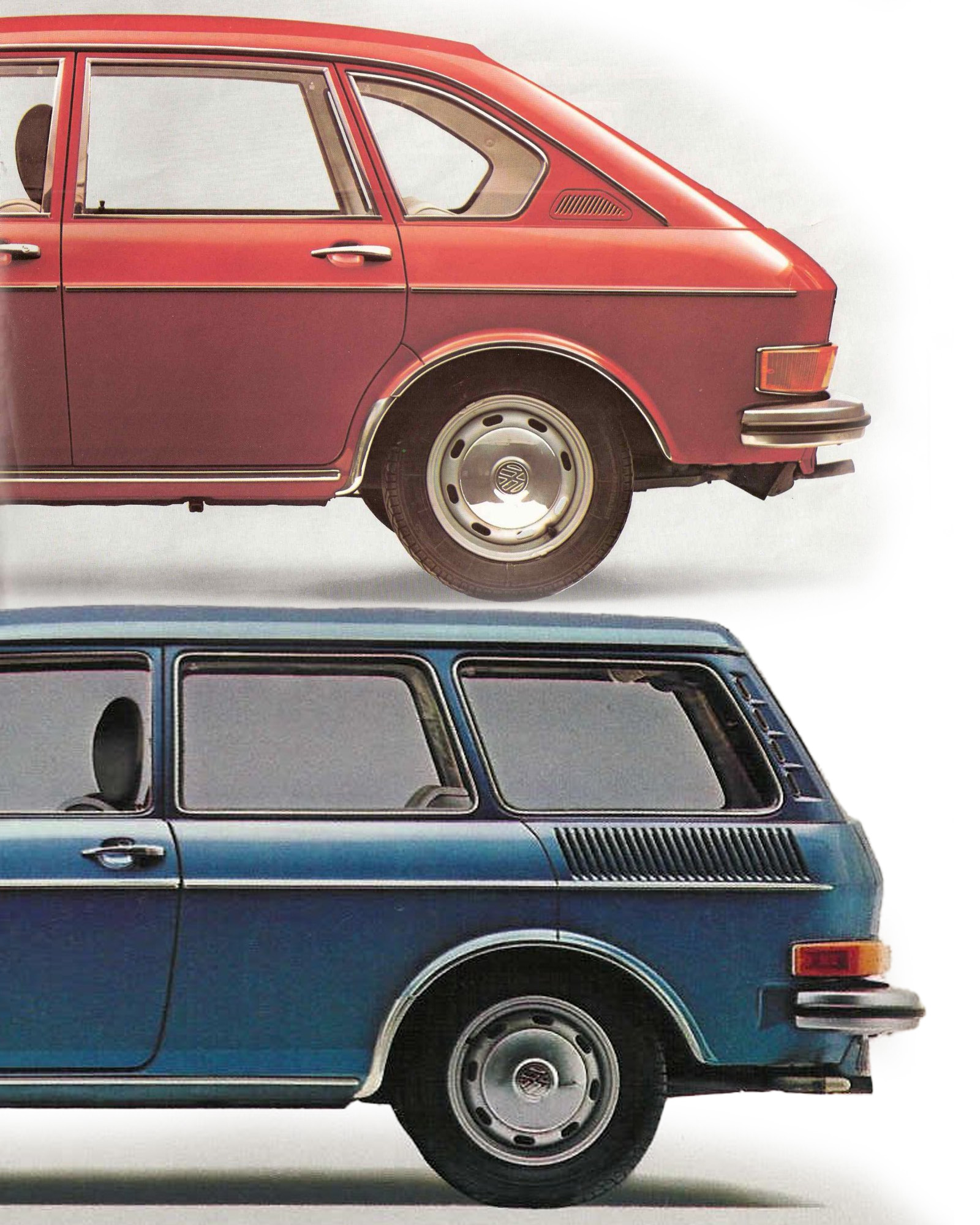
There’s even a body panel seam right where a door edge could be! Why wasn’t this section a door? Look, a door would have fit there just fine:
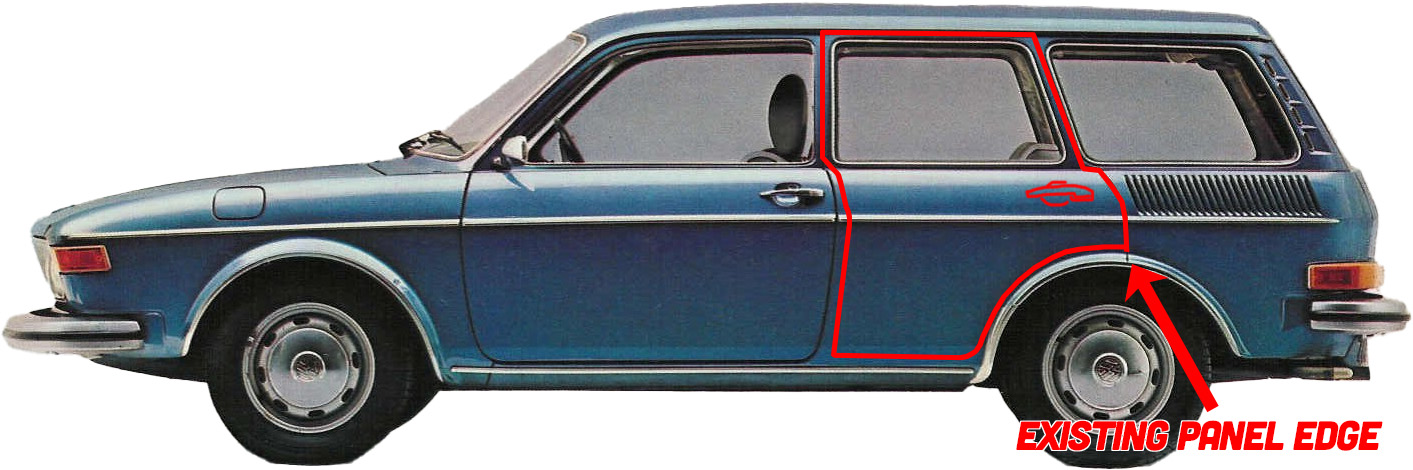
I really don’t understand what VW was thinking here at all. I’m pretty sure the rear door from the sedan could have been made to work here, too. They were developing these bodies at the same time, and no one thought to make the sedan and wagon the same up to the C-pillar, and have a four-door wagon? They must have considered it, right? But why did they abandon it?
It’s not like the Type 4 wagon had, say, sporting pretensions and was trying to be a shooting brake, or something. Sure, VW was happy it had more power than previous models, but this was pitched as a family wagon. Maybe it was a safety thing in an era before common child locks? Keep the kids trapped back there?
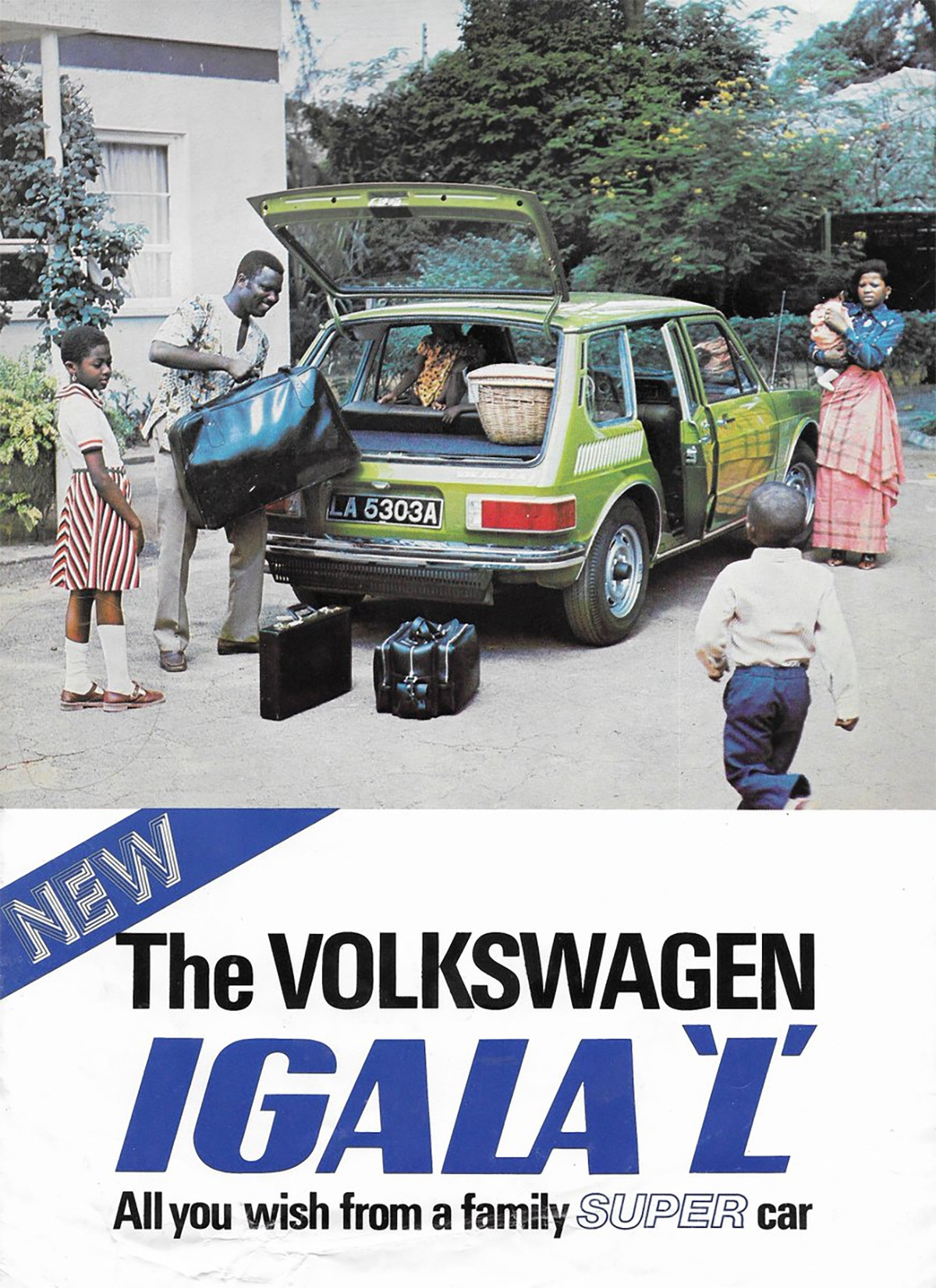
And, it’s not like VW didn’t know how to build four door wagons; the VW Brasilia (or Igala, for the Nigerian-built versions) was based on the smaller and less sophisticated Beetle Type 1 platform, and yet they still managed to have a four-door wagon version of that car:
All of this is to say that I’m baffled by VW’s late ’60s to mid-’70s thinking. Could a four-door Type 4 wagon have maybe saved that doomed class of air-cooled VW? Maybe? Probably not, as the liquid cooled FWD cars were definitely coming no matter what, but who knows?
If anyone has any theories to explain this weird fixation on two-door wagons, I’d love to hear it.


“I generally associated with German car market preferences, though I don’t pretend to fully understand those, either.”
Many German families with small children preferred two-door saloons, coupés, and estates for many years. Two doors were “insurance” against the accidental opening and jettisoning of children out of the vehicles while travelling at breaknecking speed on the Autobahnen.
That is until the manufacturers started offering the child safety locks for the rear passenger doors in the 1970s and 1980s.
“Fellow managers, I am to inform you that the meeting regarding the number of doors on the Type 4 Wagon has come to an end. After debating all of the options it has been decided that two doors is the perfect number of doors. Of course, I couldn’t help myself and suggested one door. It would be sublime, wouldn’t it? The cost savings alone gives me a shiver. Alas, Direktor Schmidt remarked that one door is a bit cruel. Of course, as a boy Herr Schmidt attended private school in Switzerland so we cannot blame him for being a little too empathetic. What about three doors, you ask? One more door, what can it hurt? Allow me to respond with a question for you. Do we indeed desire to speed the decline of western civilization? The passenger seat has been cleverly designed to move forward so the children can climb into the back. A few bruises or pinches here and there can only make them stronger. A third door is an insidious invitation to sloth of which I will not be a part. And now we finally come to it, don’t we? I will say the words even though as I form them in my mouth it tastes of poison. Four doors. Perhaps you’ve noticed that our colleague who last month uttered these words is absent? You will find him, should you desire, in Fickmühlen, assisting in the production of currybockwurst. Four doors? A ridiculous indulgence. What’s next, cupholders?”
Obligatory upvote for the mentioning of “Fickmühlen”!
Remember this rule of thumb: Whenever you see something out there in the world that makes no sense, is all backwards, and if it worked differently it would work so much better and logically, the answer is always money.
That, or a religion.
My understanding is that the Bus and Passat are the reasons why the Type 4 wagon never had a 4-door variant. Initially, I believe there were fears that a 4-door wagon would cannibalize Bus sales. I have read in a Type 4 book that a 4-door wagon prototype was eventually built, but it never reached production because by that point, VW had plans to launch the Passat and didn’t want the two wagons to overlap. I’ve never seen photos of this prototype, but I’m sure they exist somewhere.
Back on my old neck of the woods, Brazil, our first Beetle “derivative” was a homegrown notchback version, that I believe you covered here already. That lineage gave us four door fastback and square back versions, but they weren’t as popular because two doors had some “status” over the more practical 4 doors – I guess it was a mix or not trusting the build quality of four doors cars (not without reason for VW do B), nad the idea that four doors were seen as “worker” cars, i.e. Taxis and such.
I wasn’t born at the time, but throughout the 80’s I remember some remnants of this. I guess it was the same kind of cultural quirk that make people today shun the OBVIOUSLY superior minivan, going instead for SUVs and the like.
As a side note, we had something called Variant II that was the most advanced anything aircooled in Brazil, maybe equivalent to the German 412. And, as far as I can tell, having lasted only from ~78 to 81, it never had a four door version. What a shame!
I was working for a WV dealership when the Type 4 came out.
I was one of the few that kind of liked the Type 4 when it came out.
Was it a shooting brake? Yes. At the time, it was a real looker.
One of VW’s under appreciated offerings.