

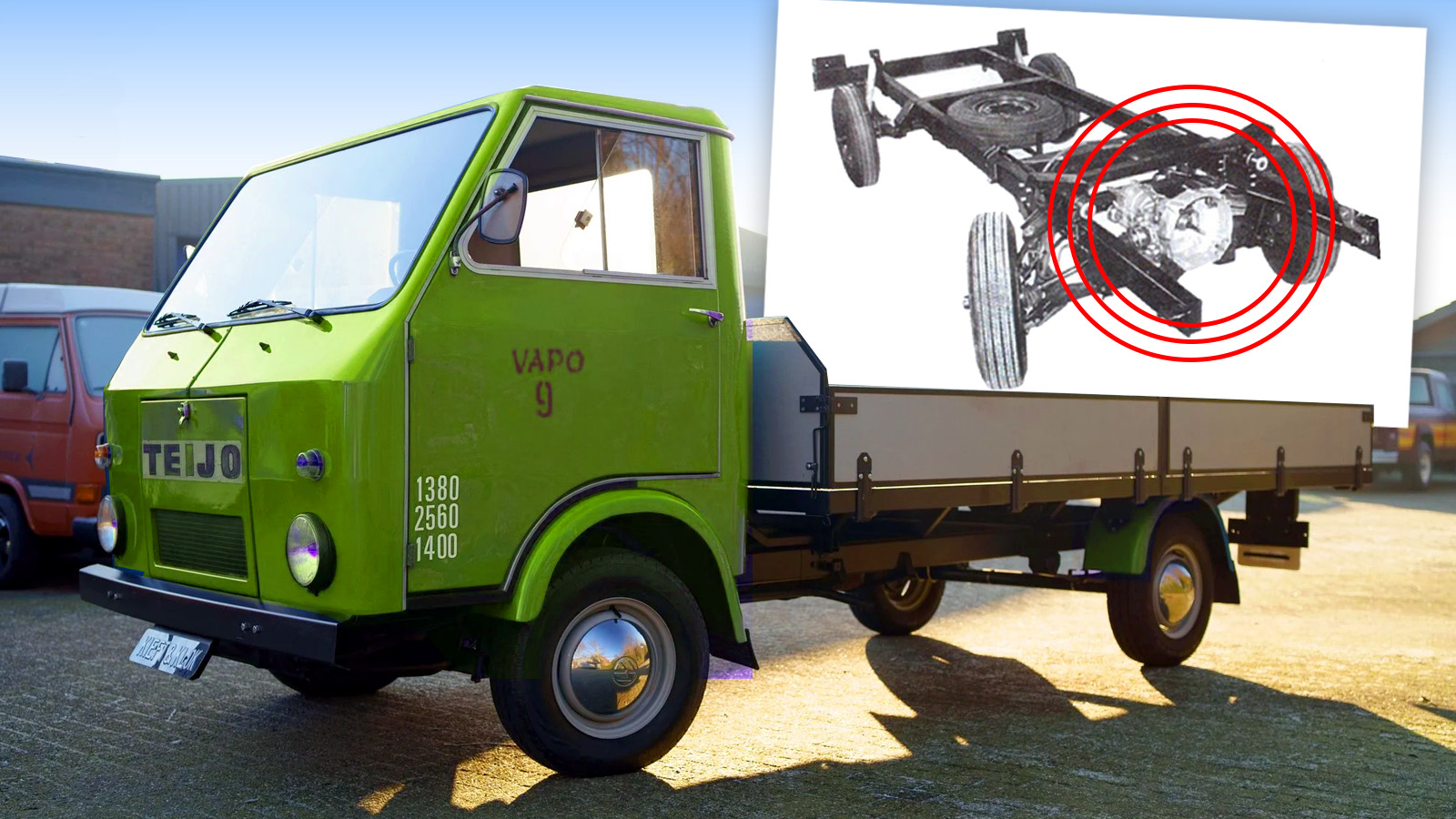
Teijo! Teijo! Daylight comes and I wanna go home. The Teijo was a Volkswagen-based truck made in Finland, short-lived and simple. While automotive production in Finland has mostly taken place at the Saab factory in Uusikaupunki, the 1970s attempt to build Teijo trucks is a story of its own.
The Teijo truck is named after the village in southwest Finland, where the factory was located. Teijo is located at a sea inlet not far from the mostly Swedish-speaking Finnish Archipelago, which is also a popular tourist region these days. In addition to offering views of the scenic archipelago, the area is historically industrial, as an iron works was located there in the 17th century, as well as a later development that includes the docklands of a Finnish international conglomerate, the Wihuri Group.


In the 1950s, the Autola dealership that was part of Wihuri imported and sold Volkswagens, forming close ties with the German automaker. In addition to imported cars, Wihuri built 48 Beetles from CKD kits at its Heinola facility in the late 1960s, but there wasn’t a lot of Finnish parts content in those; just glass, seatbelts, and Nokia tires.

In the 1970s, Wihuri had another go at car production. This time it would take place at Teijo, where the company had been building trailers. Through its Volkswagen connections, Wihuri had secured access to the basic layout of the EA489 Basistransporter, a front-wheel-drive truck designed to be as simple as possible, to cater to the needs of developing markets that just needed a truck, no matter how spartan it would be. Or as a magazine of the time puts it: “The developing country design principles of Volkswagen’s truck are also well-suited for Finland, even if we are not generally considered a developing country.”
The basic idea of the basic truck was to foster domestic production instead of having to rely on imports, with a chance of exporting them. Teijo’s head engineer was Max Johansson, a Finn who also had experience with VW-engined Formula Vee single-seater racing cars.
The Finnish automotive press was granted access to the Teijo prototypes in 1974, a couple of years before the Basistransporter would enter production in Germany. The prototype truck consisted of a stout, Basistransporter-style chassis with a cab made out of three-millimeter reinforced plastic riveted onto a steel structure. All glass was flat, with the side windows sliding open.
The prototype cabin had no creature comforts – just bare surfaces and 2CV-style camping chairs for seats, with only the driver’s seat mounted on rails for adjustment. The front-mounted engine, a 1.6-liter air-cooled boxer, produced 45 horsepower and was coupled to a four-speed manual transmission with a floor-mounted shifter. The engine had very low compression, just 6.6:1, so it could run on low-octane fuel.
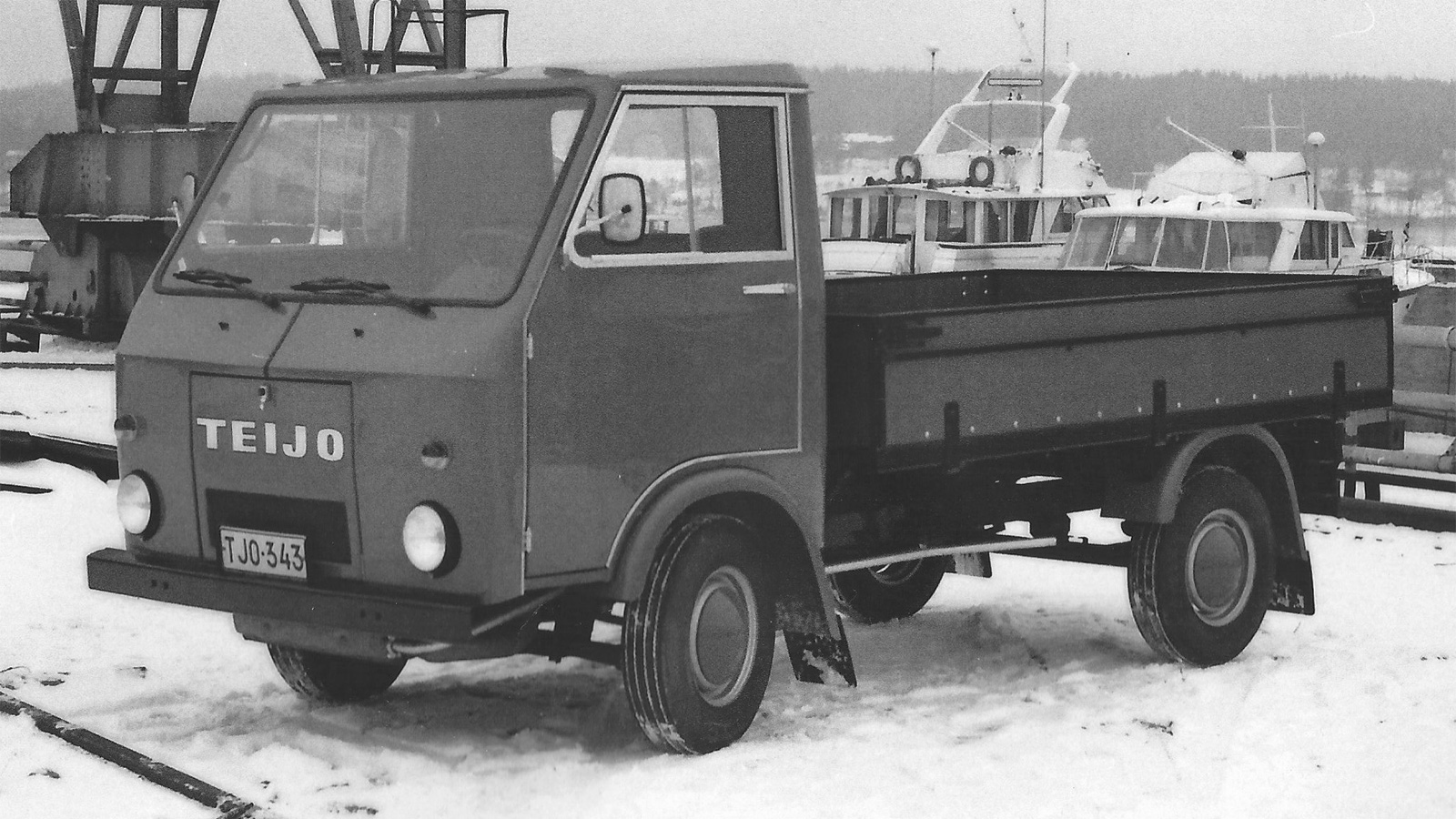
Fifteen pre-production trucks were made in the mid-1970s to weed out possible teething problems, which resulted in numerous improvements ranging from more comfortable seats to better wipers and improved pedal position.
The instrumentation was extremely basic: just a Beetle speedometer mounted in the plastic dashboard, in front of the driver.

A test drive in 1975 noted that the improved seats were better, but the driving position was very upright, and because the seats were mounted directly onto the cab floor, the simple suspension made the ride very uncomfortable. Ventilation was poor, and the 1975 prototype included a rag for wiping the fogging windows! Meanwhile, the air directed onto the driver’s feet was hot enough to roast them. The engine was said to be ponderous even unloaded, and completely gutless when transporting anything.
This would be an issue because the chassis itself would carry loads very well, and at no point did the leaf spring rear suspension bottom out. One would have to drive with the pedal welded to the metal to keep up with traffic: this resulted in horrendous 15 MPG mixed-use fuel consumption for a tiny truck. Steering was imprecise but light, and the heavy rear bias of the weak brakes was noted as a safety issue.


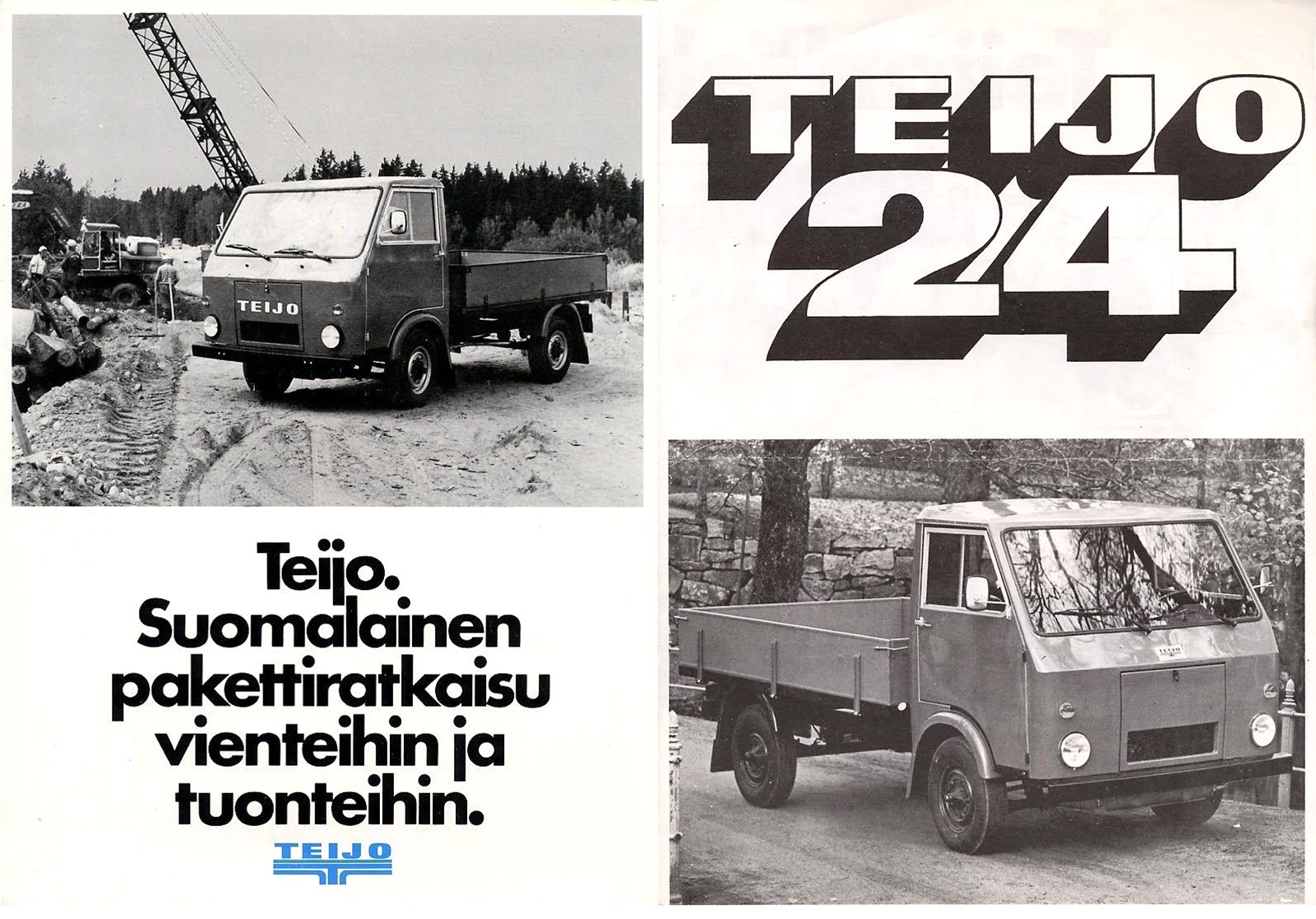
One of the main goals of the Teijo design was to keep domestic parts content as high as possible. As a result, the frame, cab, bed, tires, glass, battery, and wiring were all made in Finland. The engine, transmission, front suspension, wheels, brakes, and steering parts were imported from Germany, resulting in 60% domestic content.The imported parts are seen in the top left corner of the above brochure photo, as well as the basic structure with its steel cage and plastic cab. Amusingly, the brochure also states the driveability of the Teijo is “excellent,” while contemporary tests do not say the same.
Access to the engine was through removing the front grille, which meant that changing spark plugs or checking the oil level were difficult tasks.

The production version, announced in late 1975, was available in two models named for their wheelbase length: Teijo 24 for the shorter, eight-foot truck, and Teijo 30 for the longer, ten-foot truck. A tipper truck version was also developed. In simple chassis configuration, the shorter truck cost around 18,000 FIM, with extra length available for an an additional 1000 FIM. That’s about the same in today’s Euros, or around $21,000. The 1974 article hoped the Teijo would have remained markedly cheaper, at 13,000 FIM.
As a result, the Teijo simply went nowhere, both in terms of performance and sales. While it was priced to make sense to produce it, it cost the same as the competing Toyota Hi-Ace pickup truck, which, for all intents and purposes, was a real and superior product, as were the Ford Transit and the Bedford CF. The H10 generation Hi-Ace already made things difficult for Teijo as it had been available for far cheaper at its 1973 introduction, and when the new H11 gen Hi-Ace was introduced in 1977, the Teijo was effectively rendered obsolete. The H11 also brought diesel engines into the Hi-Ace range, a welcome addition.

The earlier statement was correct: 1970s Finland wasn’t a developing country, and a far more comfortable truck in the same price range would knock out the Teijo, even if a Hi-Ace used the same amount of fuel when driven briskly.
This is pretty much comparable to the Tata Nano, which also flopped due to its basic design. People just want more than the absolute minimum. The same happened with the Basistransporter, as only a couple of thousand were built.
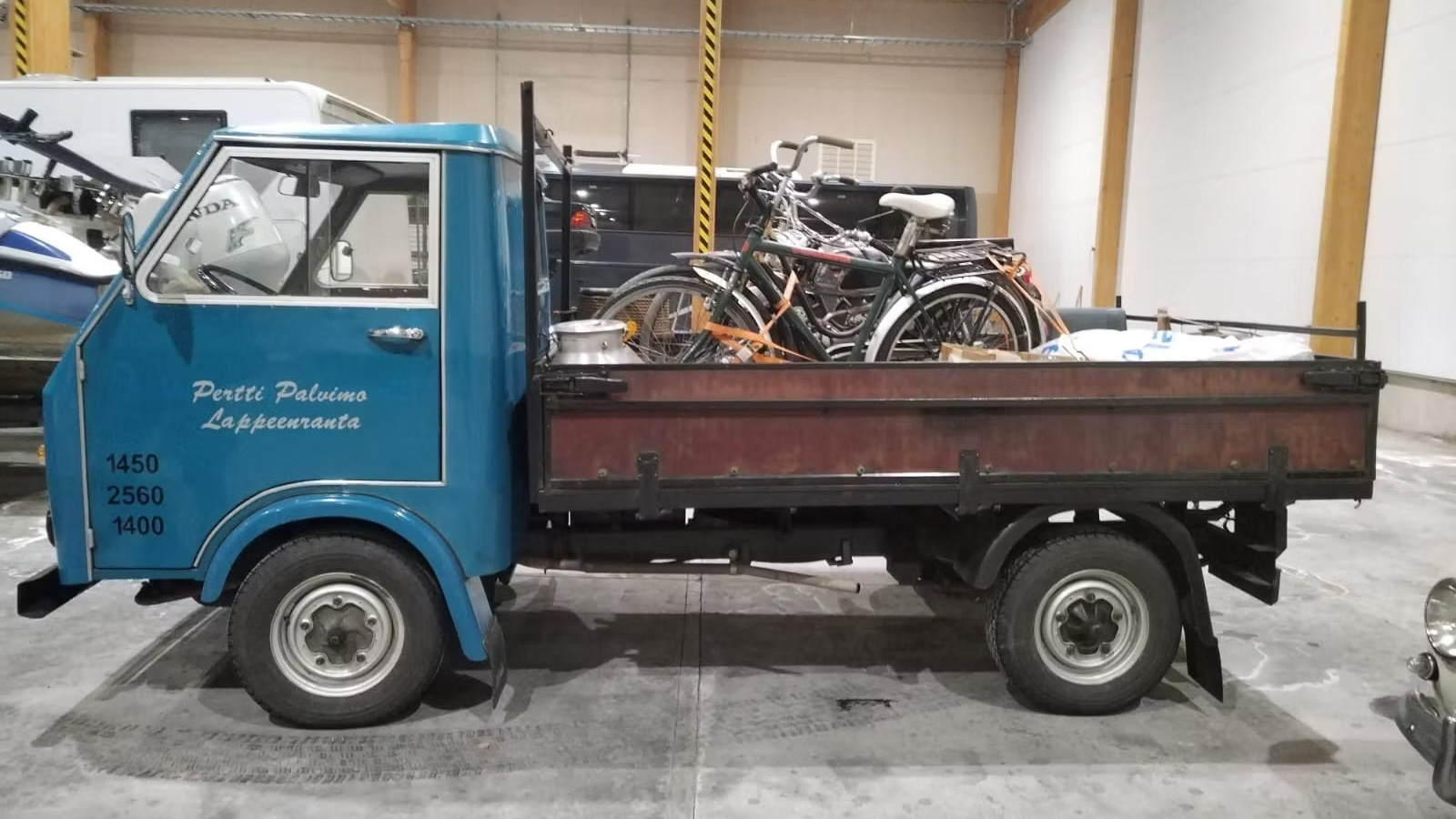
In the end, only around 200 Teijos were ever built, with many of them being used by municipalities and the road authority, as it was difficult for Teijo to find buyers outside the public sector.
While a handful of Teijos were originally exported to the Netherlands, the one currently for sale there is a second-hand import, and it was originally used by VAPO, a Finnish state-owned producer of fuel peat. The VIN notes it as the truck number 70, which, for a 1977 model, seems like a low number.
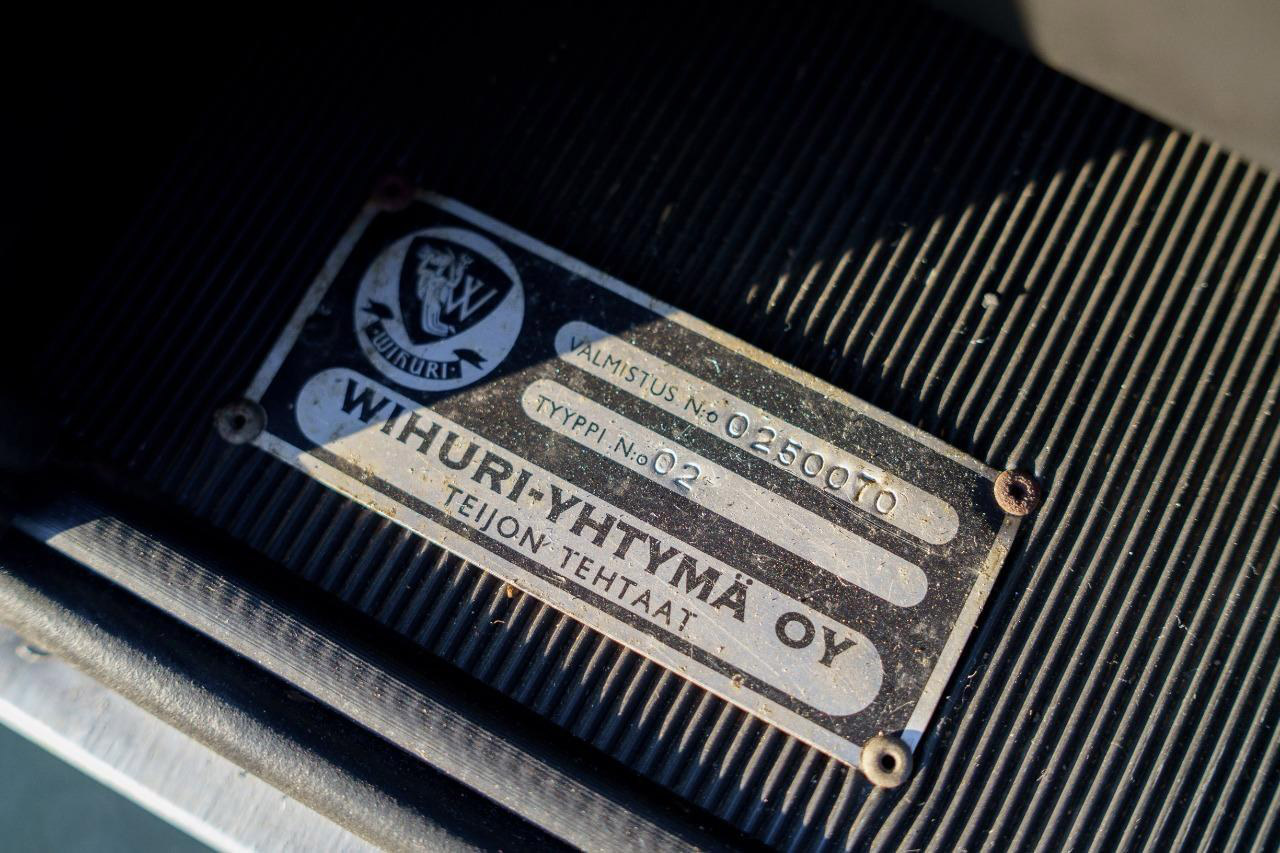
In 1977, it was reported that Teijo frames were shipped to Egypt to underpin Westfalia bodies for minibus and ambulance production: this was probably to get rid of surplus chassis. Sales ended in 1978, and Teijo historians note that Toyota raised Hi-Ace prices by 30% immediately afterwards. However, it is likely that the price hike has more to do with the Hi-Ace changing generations and offering a new diesel engine than price dumping to prevent Teijo sales.
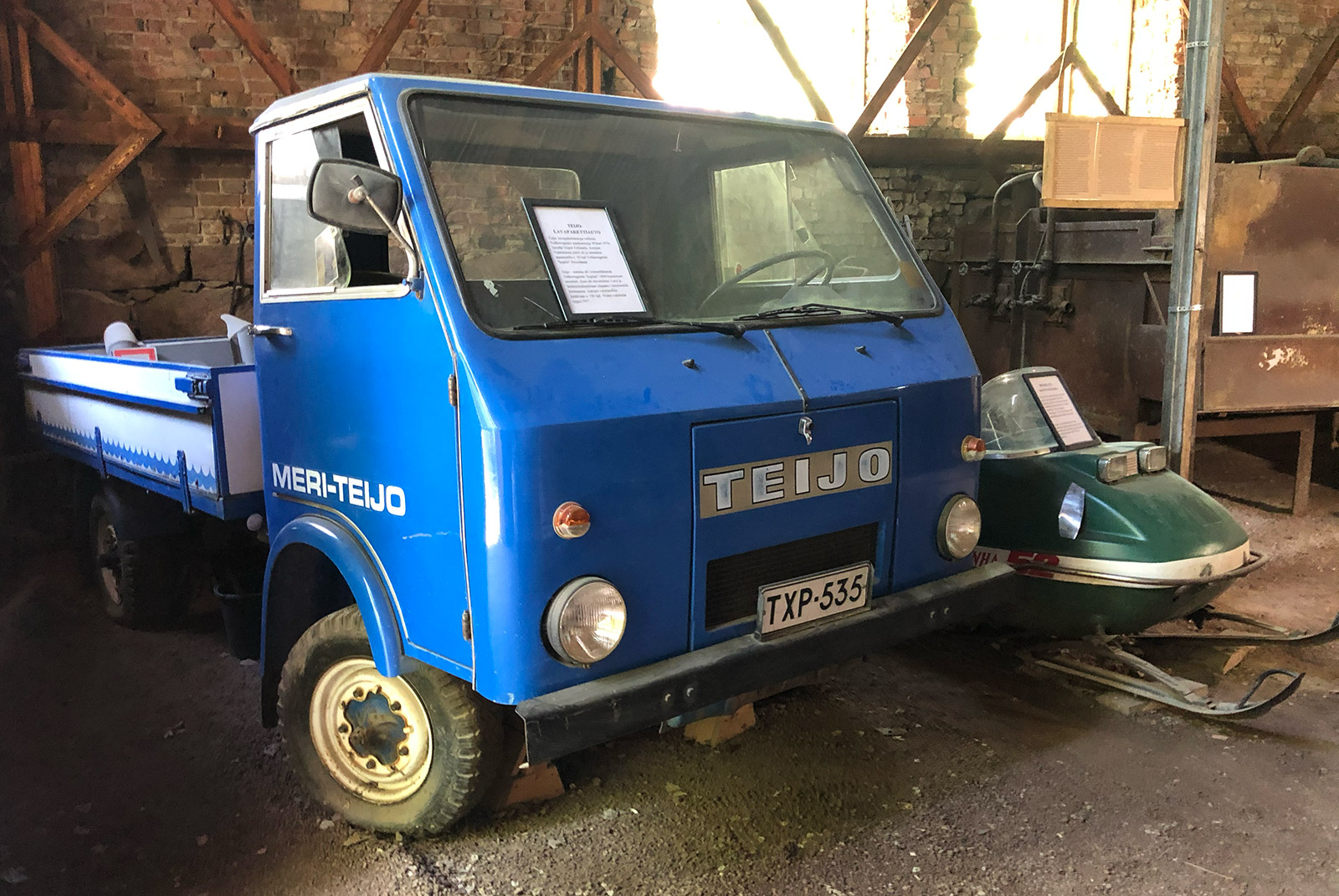
These days, a surviving Teijo is an oddity, one that can be kept on the road thanks to good parts availability for the running gear. Many have been restored, and they aren’t exactly valuable in Finland: one was auctioned last week for less than $5000. There is a chance that they could be seen as rare and desirable elsewhere, as the Dutch dealer is asking 17,500 Euros for their example. The one pictured above is displayed at the ironworks museum in Mathildedal, alongside a Winha snowmobile that the original Teijo factory also produced.
Top graphic images:


I would not buy this for importation to the US due to the design compromises, but if I were to do so, I would name it Danny.
What’s that you’re hiding under the seat? A MACHETE!!!!!
Wait, what?
Nokia made tyres? That Nokia?
Did they have incredibly long lifespan and were near-indestructible?
We need to hear more of this.
Nokia made everything. The company was founded in the 1800’s as a pulp mill. It seems like they would just totally change course every few decades.
https://en.wikipedia.org/wiki/Nokian_Tyres
One of these would be so cool with a camper on the back. And probably a built motor.
Teijo the Lutefisk of the finlandian automotive world
Rare don’t mean valuable
This is reinventing the Tempo Matador, with less success. I’m not surprised a vehicle designed for developing countries flopped in an industrialized country. Finland may not have had much of a car industry but neither did Norway or Denmark.
Should “Nokia” Tires in the 3rd paragraph be “Nokian”?
The history of Nokia(n) Tyres is quite interesting and even teaches us some Finnish grammar: https://en.wikipedia.org/wiki/Nokian_Tyres
Ah ha! Thank you for that. Having previously lived for quite some time in the western Upper Peninsula of Michigan that is dominated by Finnish culture and names, a whole bunch of things make more sense.
Legend tells us that my Grandpa was born on the boat coming over from Finland – but his family settled in Central Illinois.
Yet he spoke Finnish at home.
And yeah, Pasties are a thing.
https://finnishdish.blog/2020/11/06/pasties/
I’ve been working with historical Finnish-American emigration research for a couple years now. It’s fascinating and I love looking at old passenger lists and things like that. You can usually trace the roots back all the way to the villages from which they left.
The Uusikaupunki factory might merit an article of its own. Valmet used to build hundreds of thousands of Boxsters and Caymans for Porsche.
And later made the Karma for Fisker
Thanks, I didn’t know that! Makes the story even more interesting.
Prior to the BMW takeover Rover was planning for Valmet to build the upcoming Freelander
I just love Finnish culture. I can just picture how this materialized…
Veljo: “I’m so tired of having to carry my wife around.”
Markus: “Here hold my sahti, watch this.”
Looks a lot like the Hormiga
Oh man I love these basic designs. This one reminds me of the portuguese Datsun Sado, a light pick-up truck/van with a body comprised of some of the flattest body panels ever commited to a production design. I miss the time when these were everywhere here in Portugal, and I have a parking spot for one in my dream garage.
The shape of the cab reminds me of the VW LT, which by the way shared the EA831 engine with the Porsche 924:
https://www.theautopian.com/has-volkswagen-ever-built-a-front-engine-rear-drive-car-the-answer-isnt-clear
Oh hooray, another Datsun for me to want! A12 engine so decent parts availability I think.
This seems like a fun conversation piece at an ACVW meet. I also wonder if any owners took the Type 4 engine and stuck it in there for a bit more grunt.
How many trucks were built out of reverse Beetle butts? I was surprised it happened more than once.
You fools! The seats in the beetle were part of the suspension!
I just want to know how that seat conversation went. We got a VW Beetle chassis and wanted to make a very cheap truck. Why not also use VE Beetle seats they are pretty cheap. Nope not cheap enough. We need wood rope and horsehair
I love how for a time, people were putting air-cooled VW engines in just about anything.
When you load four people into my old Beetle, you can feel the engine working harder. I can’t imagine how dismally slow one of these must have been fully loaded. Was it even capable of climbing hills when loaded down? Present my Beetle with a long and steep enough hill and at some point you’ll end up going 30mph in second gear with your foot on the floor. It will climb like that forever and won’t overheat, but it will not be rushed.
For reference, the Type 2 Transporter had a pretty high GVW rating (I don’t recall the number). It could carry and move a surprising amount. Slowly.
There were just so many millions of them out there, it was almost as common and standardized of a power unit as the typical alkaline battery sizes of A, AA, AAA, D, etc that consumer electronics manufacturers design around
That performance wasn’t unique. When I was a yoot, my family’s Saab 93 (2-stroke 3-cylinder, 33hp) was like that. If you saw a hill coming, you floored it so you at least had a running start, and sometimes you’d make it to the top without having to downshift.
Did they also try to rally drive them ?
Driving a chassis backwards is rally driving…
Your articles are always very interesting! Keep them coming!