

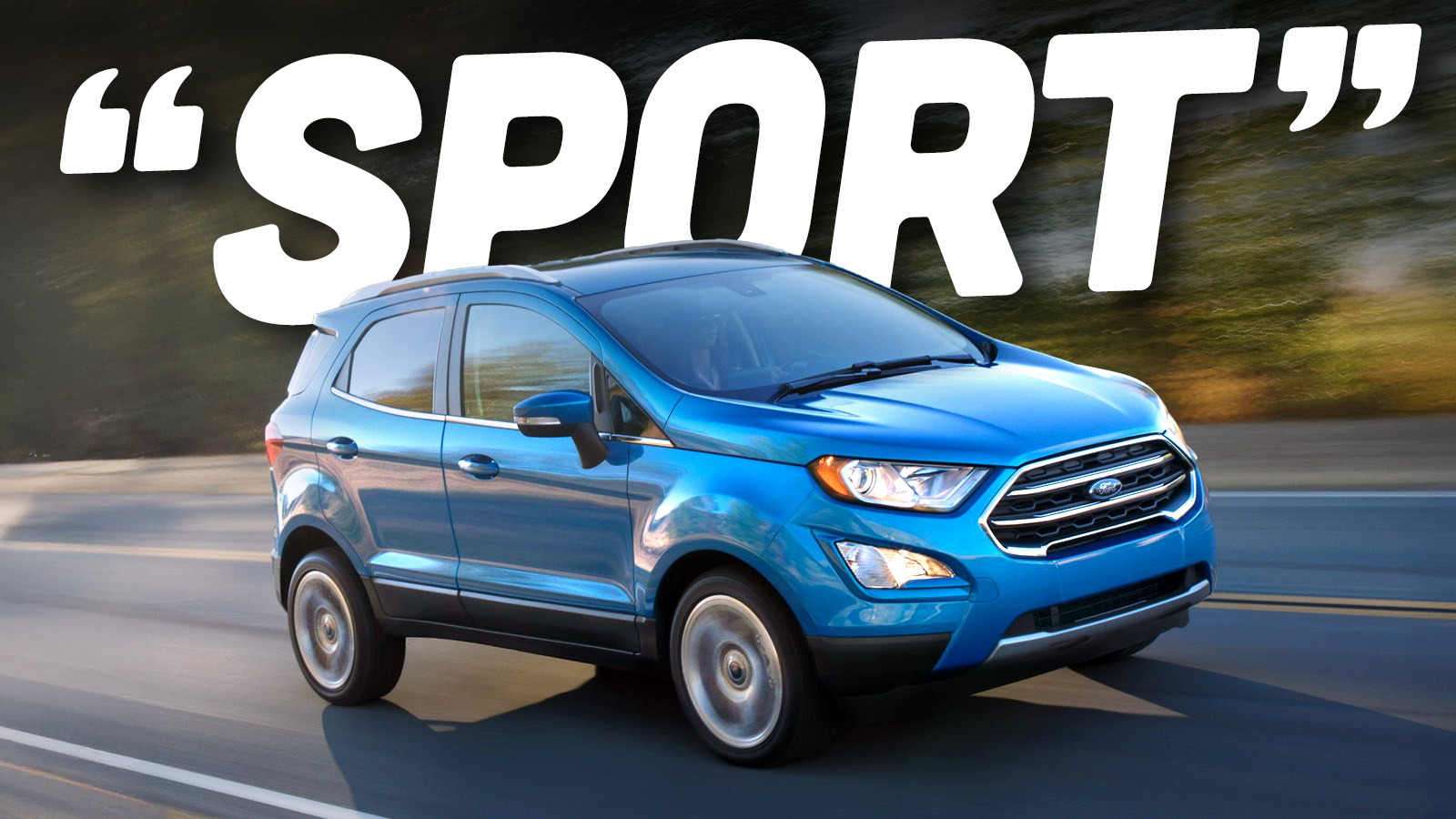
There is a kind of car buyer out there who doesn’t need miles of leather, mountains of power, or the length of a cruise ship. They just want reliable transportation with a warranty, an easy interior to get into, and decent enough fuel economy. Today, this segment is ruled by small crossover SUVs like the Honda HR-V, Hyundai Kona, and Chevrolet Trax. When Ford wanted to enter this market, it grabbed a tiny and rugged SUV that was already for sale in other parts of the world. In 2018, the Ford EcoSport tried to make a name for itself in the USA, but ended up being such a poor fit for the American market that it trailed in sales for years before being killed off without fanfare.
The ascension of the compact crossover has been fascinating to watch. Some consider the 1980 AMC Eagle to be the genesis of the compact crossover, but even if you don’t, it wasn’t much longer before the genre really kicked off. Some of the compact crossover old guard include the earliest examples of the Toyota RAV4, the Kia Sportage, the Honda CR-V, the Subaru Forester, and the Ford Escape.


Some of these vehicles were marketed as small SUVs, but almost all of them – with the exception of the body-on-frame Sportage –were based on car platforms. These little sport utes were positioned as the sort of vehicles that you would buy if you wanted something that was small, like a Ford Focus, but with SUV looks. Models such as the RAV4 and the Escape drove like cars, fit easily into parking spaces like cars, and got decent fuel economy like a car. But they also sat high enough that, a lot of the time, you could just slide in and out of the driver’s seat rather than hunch yourself down into a low-riding car.
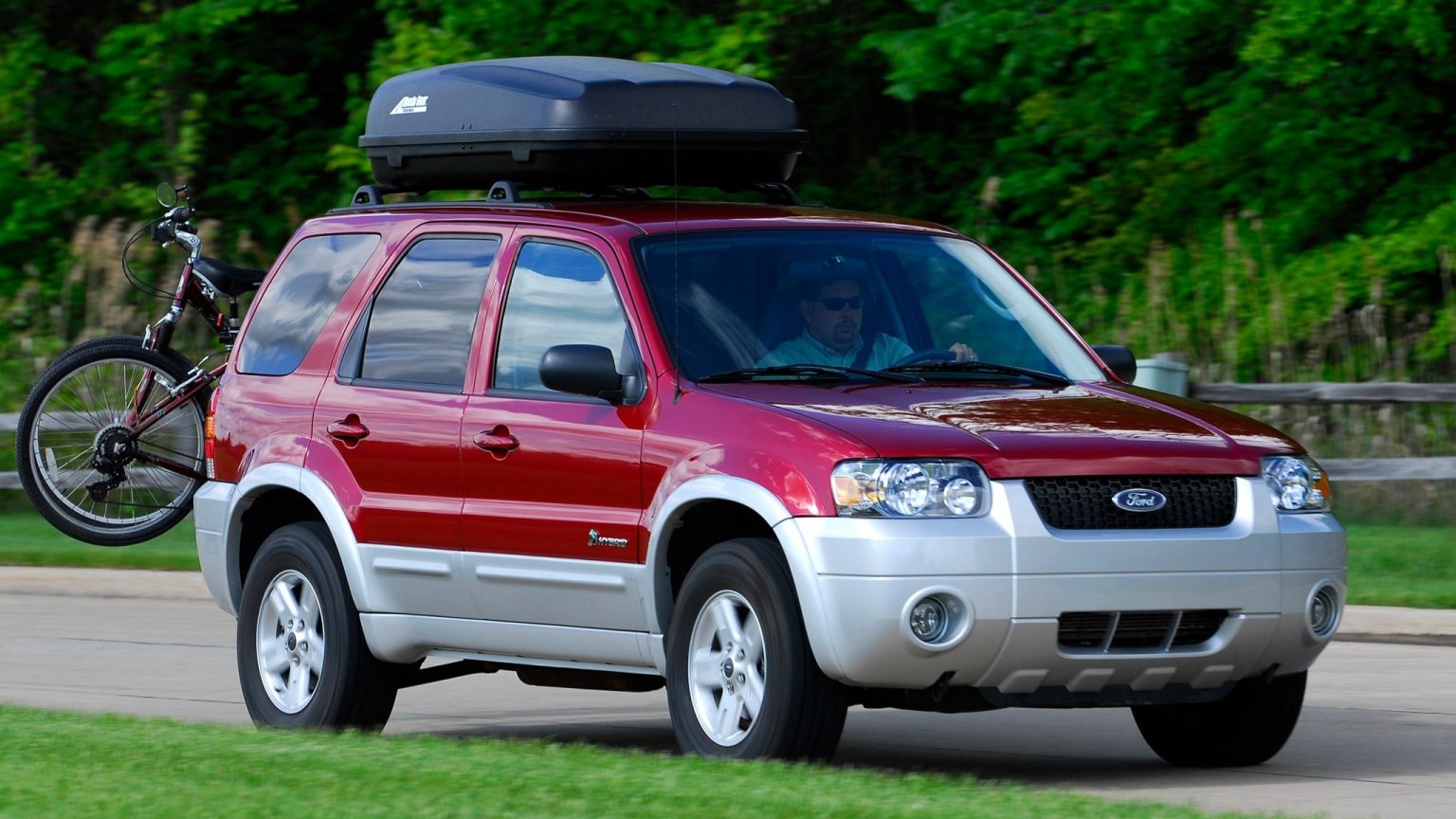
The crossover would become a smash hit, and it wasn’t long before crossovers grew in both size and scope. By the end of the 2000s, American crossovers like the GMC Acadia were just as large as a standard full-size body-on-frame SUV.
The 2010s saw the rise of a handful of fascinating segments. Diesel cars very nearly became mainstream in America in the years leading up to Dieselgate. Many Americans also found themselves buying extremely tiny cars like the Ford Fiesta, the Honda Fit, the Fiat 500, and, on occasion, the Smart Fortwo.
This era also brought the rise of a class of even smaller crossovers. In 2013, Chevrolet started selling the subcompact Trax. Then, a year later, Honda unveiled the second-generation HR-V, which would go on sale in America in 2015. The Jeep Renegade also went on sale in 2014. Buick had its own version of the Trax with the Encore. But Ford? Somehow, the Blue Oval wasn’t in this market. By this time, the Escape had grown through its development, and it was a full foot longer than the Jeep Renegade. The Escape was still 10 inches longer than the Trax.
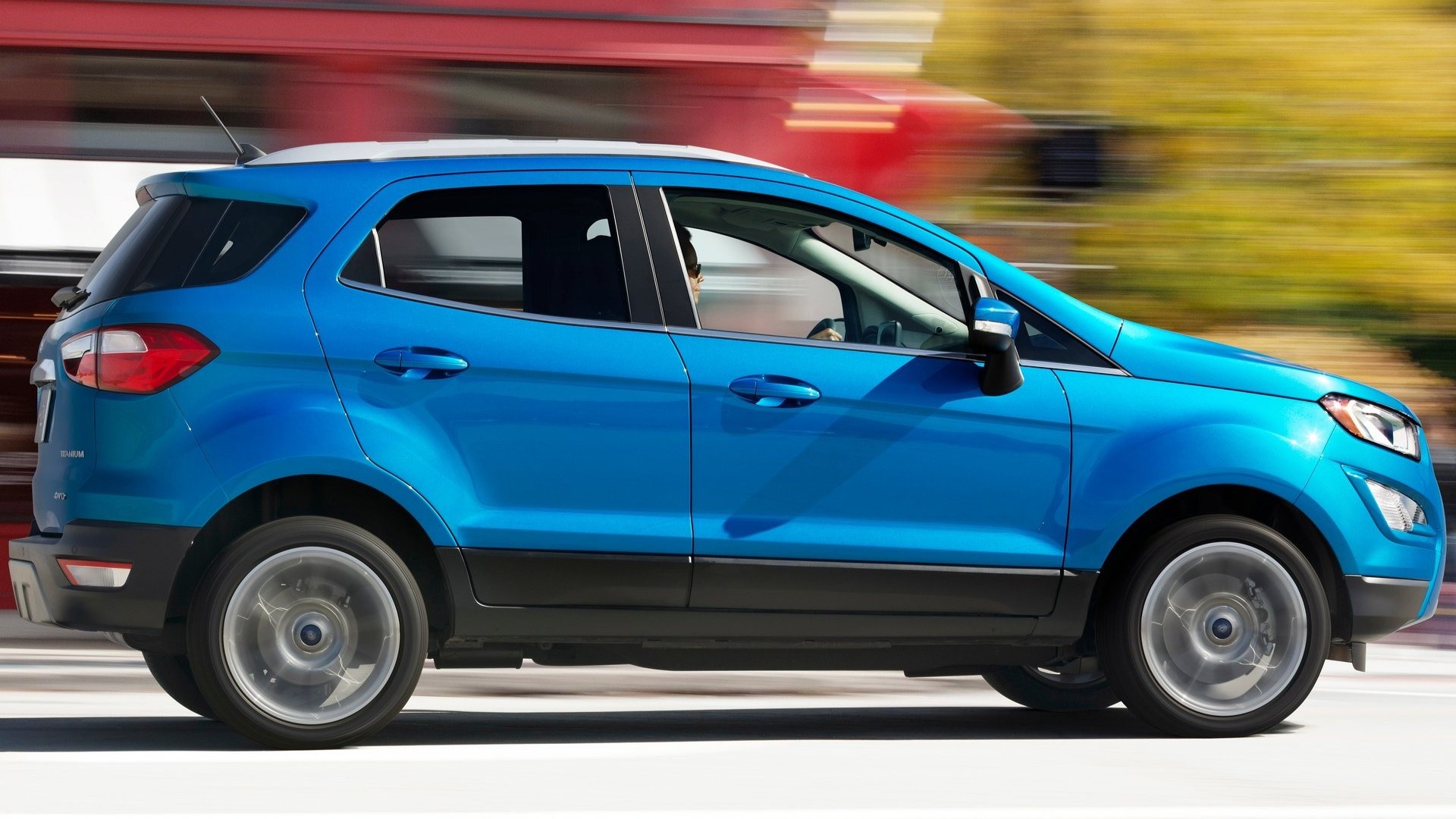
Ford would become late to the subcompact SUV party, waiting years to launch a product. When it did, Ford brought over the EcoSport, a car that wasn’t even designed for Americans.
A South American Sensation
The story of the EcoSport began long before the little crossover ever landed in America. Back in 2002, as the New York Times reported, the Ford Fiesta launched in Brazil and was a runaway success. Ford Brazil, not wanting to squander an opportunity, wanted to see if it could replicate that same success, but with a small SUV. The original EcoSport was spawned by Ford Brazil’s Project Amazon. The idea was simple. Engineers in the Ford Development Centre in Brazil would take the European-spec Ford Fiesta, jack it up, and sell it to Latin America.
The EcoSport was brilliant on paper. It was priced far lower than a typical SUV, and much smaller, too. Ford South America thought that buyers all over the region, who don’t have deep pockets but also need to navigate tough roads, would be willing to buy a cheap subcompact SUV rather than buy something used.

As the New York Times wrote, Ford South America placed a bet that the EcoSport would be so successful that it would put the division in the black. In 2001, Ford’s market share of Brazil had slumped to only 6 percent, down from the 13.2 percent share it had in 1998. Sales were so bad that dealerships left the Ford family to sell other brands. Ford spent $1.9 billion in the region building a plant in Camaçari, Brazil, and the success of the Fiesta recovered Ford’s market share to 9.3 percent by the end of 2002. In Ford Brazil’s eye, it needed something to keep the momentum.
The EcoSport was a smashing success, becoming not just one of Ford’s best-selling cars, but one of the top 20 best-selling cars in Brazil as a whole. By 2012, Ford claimed, the Camaçari plant had churned out more than 700,000 units. There were hints that the first-generation EcoSport could have come to America, but that never happened. Instead, it stayed in Latin America and Mexico.
Doubling Down

How do you follow up such a hit? By doubling down with an even greater effort than the first time around. In an interview with Autocar India, then Ford CEO Alan Mulally said that the Asia-Pacific region was growing into one of the world’s largest car markets, and, just like Americans, consumers out there were begging for something that drove and rode like a car, but had the flexibility and looks of an SUV. Yep, they got crossover fever, alright. Ford didn’t want to miss out on the fortunes.
Ford describes what its engineers accomplished:
Ford’s all-new EcoSport SUV offers drivers the perfect combination of small car agility, affordability and fuel efficiency, with the flexibility and spaciousness customers expect from a SUV – in one stylish and connected package. The stylish and rugged all-new EcoSport is the first SUV in the world to offer a 1.0-litre engine and is among the first Ford vehicles in Europe to be offered with Ford SYNC with AppLink, enabling drivers to voice-control smartphone apps while keeping their eyes on the road and their hands on the wheel.
[…]
EcoSport is the first Ford global model to be developed entirely in South America. First introduced in 2003, Ford created the segment in Brazil and has since sold more than 770,000 of the first EcoSport models in the region. Ford engineers and designers from more than 16 countries worked together to develop the all-new EcoSport that is launched amid increasing demand for SUVs in Europe. Ford projects that between 2013 and 2018, sales of all SUVs in Europe will increase by 22 per cent, and sales of small SUVs – like EcoSport – will increase by 90 per cent.
Like the previous EcoSport, the new EcoSport borrowed its underpinnings from the Fiesta. In this case, the EcoSport rode on the B2E global platform, the same platform that underpinned the Fiesta here in America. Something Ford mentioned right from the jump was that the EcoSport was designed to meet the demands of the customers in the crossover’s main markets, namely the buyers of South America, India, China, and other regions. The vehicle’s initial factories would even be right where the most sales were expected to be in Brazil and India.
Frugality, a compact size, and ruggedness were among the main goals of the EcoSport’s design. This is why Ford bragged so much about the EcoSport shipping with a 1.0-liter EcoBoost turbocharged three-cylinder engine. Ford also didn’t want to give buyers a spartan, fragile vehicle, and it described what it did to make the EcoSport tough:
In testing, the all-new EcoSport was first subjected to 20,000 virtual test scenarios using a computer programme that replicated a multitude of different road conditions from around the world. It was then driven more than 2 million km on roads in South America, North America, Asia and Europe, in temperatures ranging from 50 C to -25 C, and at altitudes of up to 4,300 metres.
EcoSport’s agility and ability ensure it can tackle even the most challenging road conditions, whether it’s narrow, twisting, uneven rural roads, or the potholes, and high kerbs of an urban environment. The 10.6 m turning circle is among the best in its segment, and the EcoSport – which is equipped with front and rear skid plates – also has a 200 mm ground clearance, a 25 degree approach angle, 35 degree departure angle and a wading depth of 550 mm.
The new Ford EcoSport has been awarded a four-star safety rating from independent vehicle safety organisation Euro NCAP, and is equipped with driver, passenger, curtain and side airbags – as well as a driver’s knee airbag – as standard. Super-high-strength boron steel has been used in the door frames to provide a high strength safety cell; and further safety systems include: Traction Control, Electronic Stability Program, Anti-Lock Brakes, Electronic Brake-Force Distribution and Emergency Brake Assist; and the EcoSport is also equipped with Tyre Pressure Monitoring System and Passenger Airbag Deactivation Indicator.
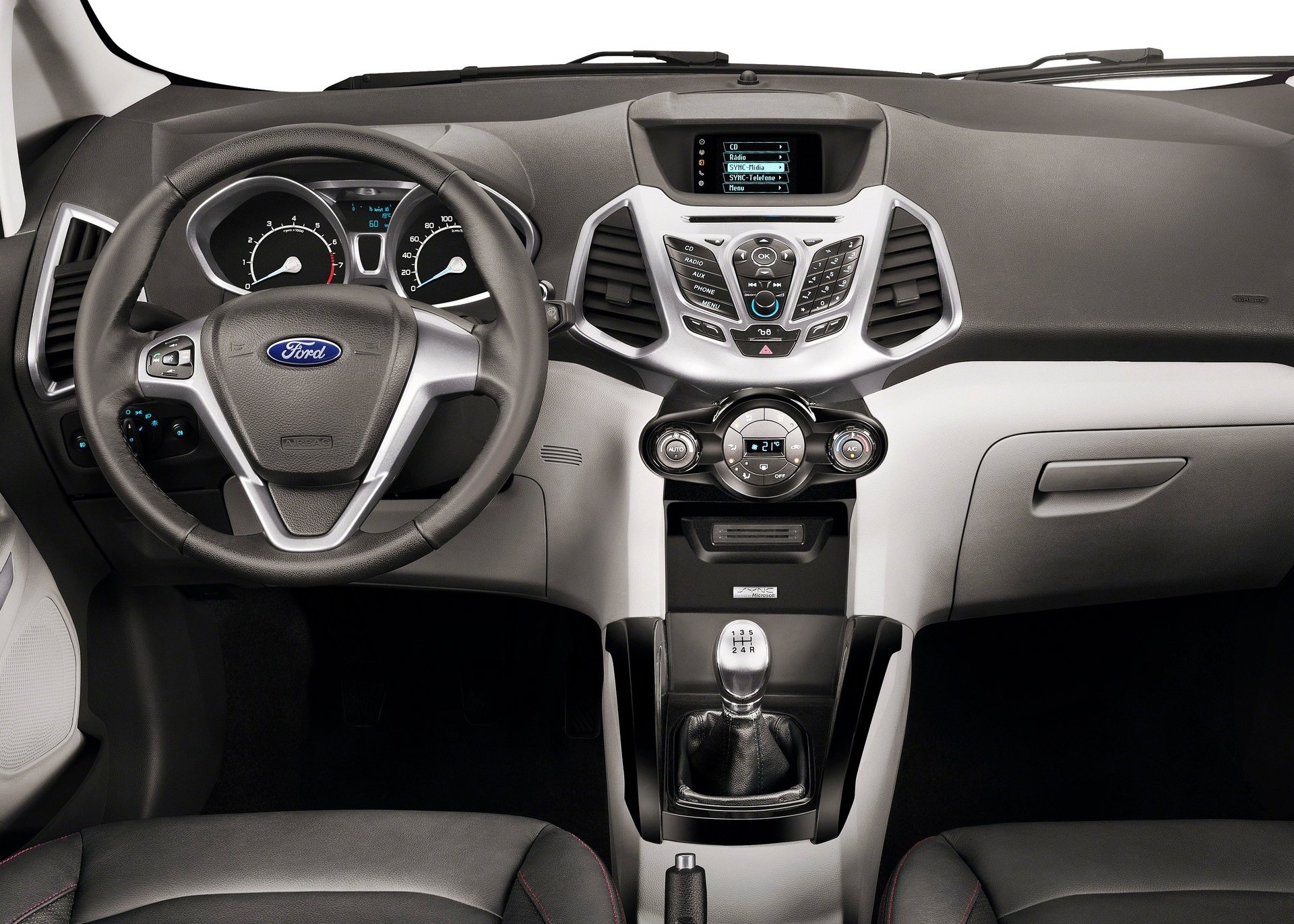
The Ford EcoSport – which is meant to be pronounced like “Echo Sport,” not “Eco Sport” – went on sale in 2012, and once again, Ford had a hit on its hands. By 2015, the plant in India churned out 200,000 EcoSports. In 2013, EcoSport sales in Brazil increased by more than 100 percent, allowing the Brazil plant to surpass 770,000 EcoSports built in total by 2014. EcoSport sales were also strong in China, and Ford found itself selling so many SUVs all over the world that it sold 1.2 million SUVs in 2013 alone.
Ford also gained market share in the regions where the new EcoSport was sold. To Ford, the answer was clear: The world needed even more compact crossovers.
The EcoSport Lands In America With A Thud
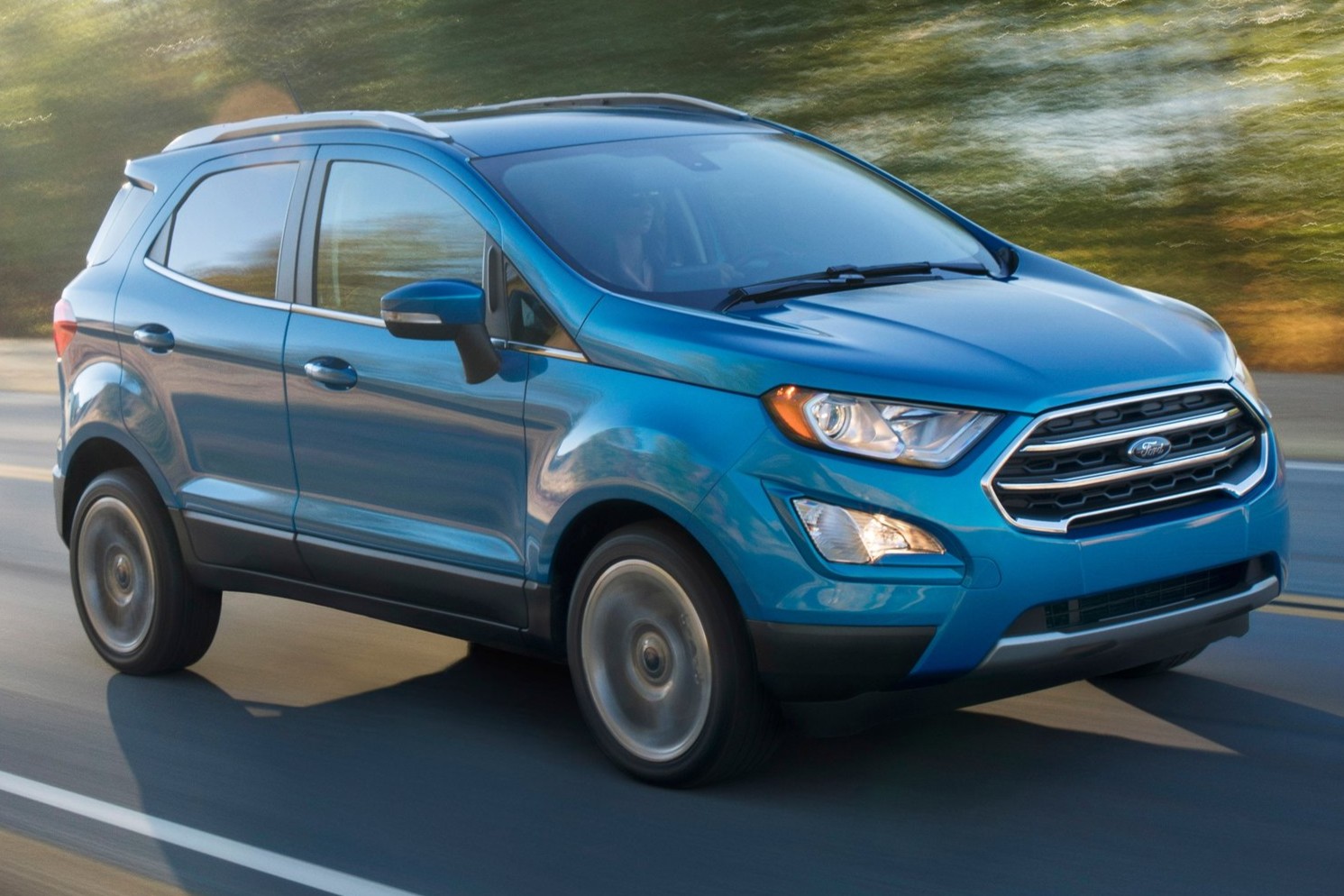
That brings us to America. At first, Ford never brought the EcoSport to America. However, the market would force Ford’s hand. As Car and Driver reported, Ford realized that compact SUVs were the fastest-growing market in America, and Ford just wasn’t competing in it. The answer? Bring the EcoSport to the States. If it were such a runaway success in Brazil and India, maybe it would work here? In late 2017 for the 2018 model year, Ford made it so.
The EcoSport was a true oddball by American standards. At a diminutive 161.3 inches (13.4 feet), the EcoSport was 16.8 inches shorter than an Escape. It was five inches shorter than a Jeep Renegade and six inches shorter than a Honda HR-V. Car publications started calling the EcoSport not just a compact crossover, but a subcompact crossover. To put the length of the Ford EcoSport into perspective, it was only two inches longer than a Honda Fit and barely two feet longer than a Fiat 500.
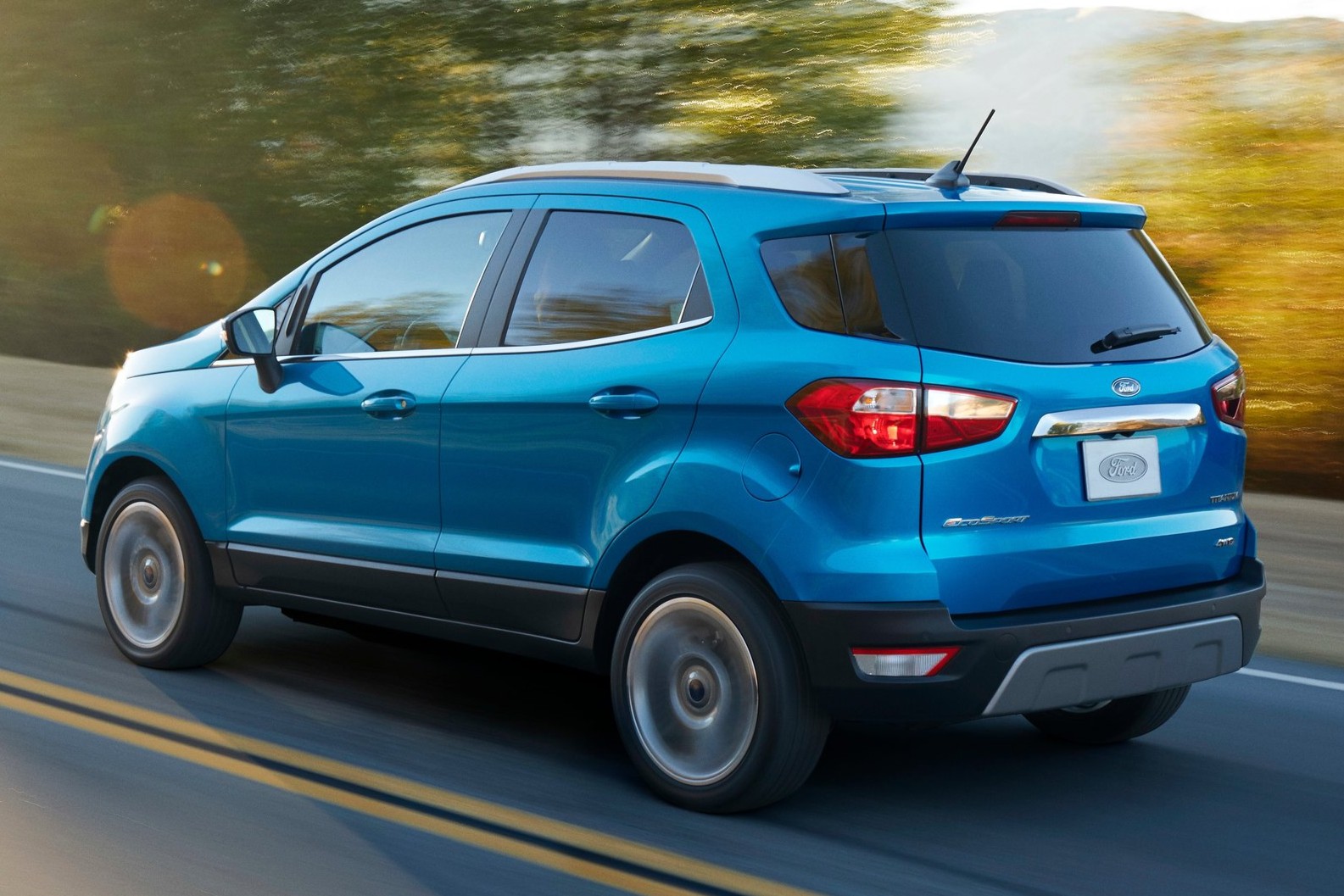
By now, the EcoSport was also a truly global car, and it was built in Brazil, China, India, Romania, Russia, Thailand, and Vietnam. The American version was shipped in from India. Unfortunately, the press was hard on the EcoSport right from the launch. Here’s what Motor Trend said:
“Dearborn, we’ve got a problem here.” We imagine the 2018 Ford EcoSport’s marketing manager paraphrasing Apollo 13 astronaut Jack Swigert’s famous line upon discovering the full details of the hand-me-up subcompact cute-ute he or she was tasked with launching into one of America’s hottest and fast-growing sales segments. Swigert was reporting what turned out to be an oxygen-tank explosion that compromised the ship’s electrical and life-support systems. Ford’s marketing team faces the daunting if less critical task of peddling a “brand new” six-year-old vehicle optimized for emerging markets.
The EcoSport is based on 2011 Fiesta underpinnings and since mid-2012 has been produced in Romania, China, Brazil, Russia, Thailand, and (for our market) India. We bet it’s a peach in those places. But in the U.S., where it must lure customers away from Subaru Crosstreks, Kia Souls, Jeep Renegades, Honda HR-Vs, and the Chevrolet Trax, the EcoSport looks to us like a tough marketing challenge.
How have Ford’s “mission controllers” handled this dicey launch? By taking a page from Buick’s introduction of the Chinese-built Envision and quietly releasing the car into the market in January before ever formally inviting any automotive press to drive or report on it, thus bending the adage: “If they won’t have anything nice to say about it, don’t let them say anything at all.” So in March we finally drove two EcoSports that were on hand following a 2019 Ford Fusion backgrounder.
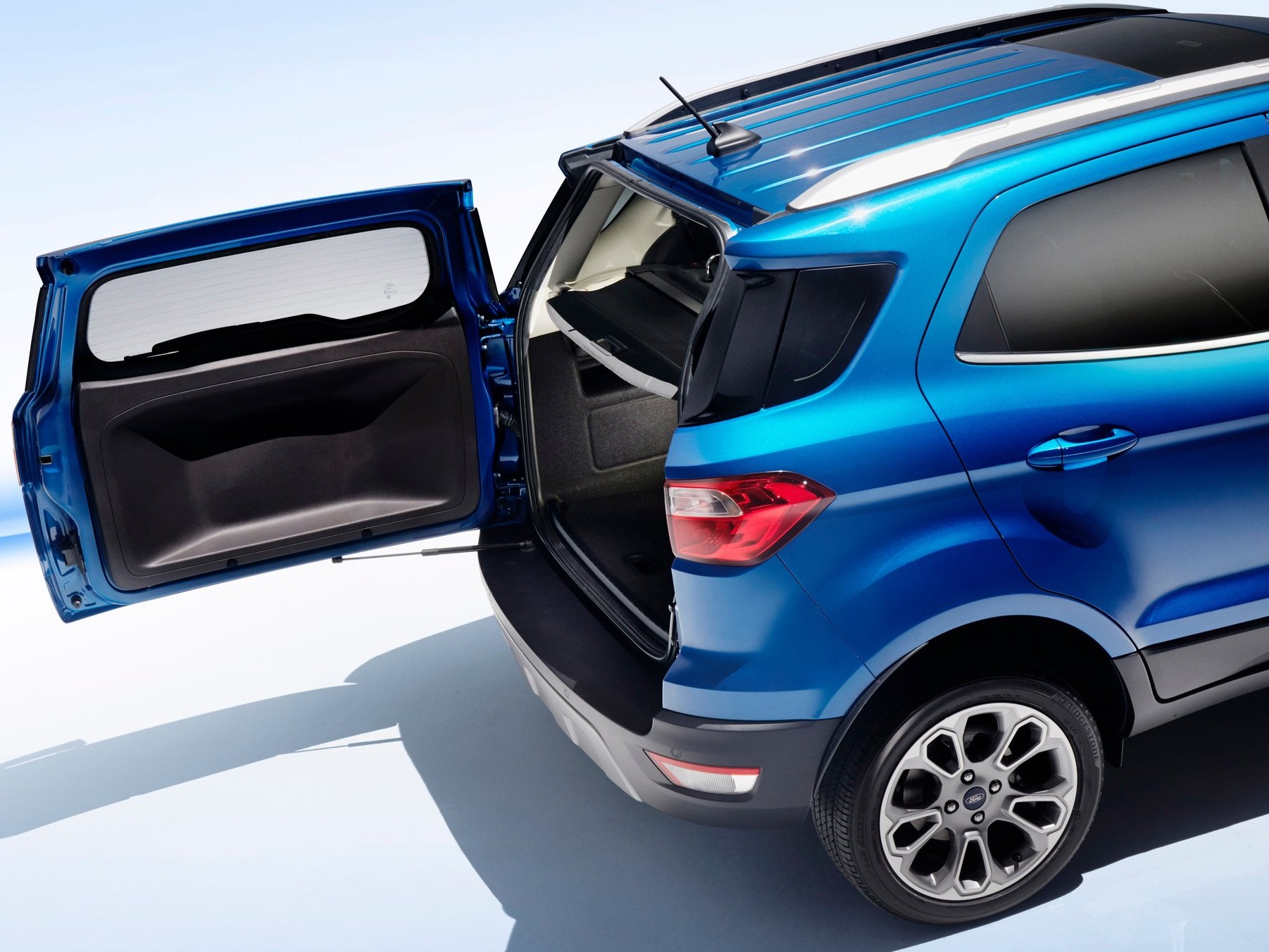
Ouch. The review didn’t let off the throttle, either, saying that the EcoSport was tiny in nearly every metric, from its 99.2-inch wheelbase to the front seat and rear seat space. The one place where the EcoSport bested the competition was in trunk space, but journalists had complaints there, too.
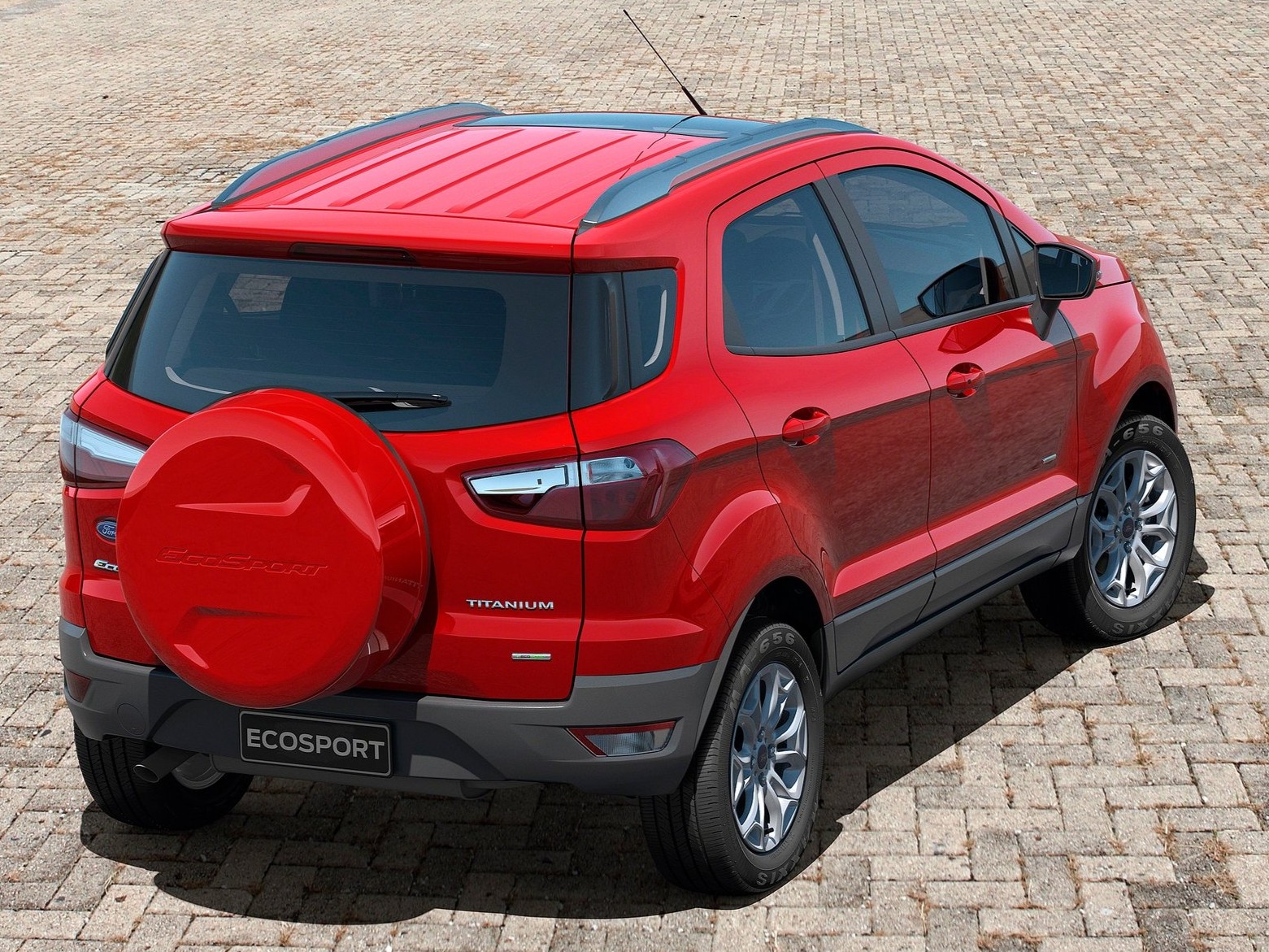
In a different Motor Trend piece, the publication noted that EcoSports in other countries get rear-mounted spare tires, but Ford decided that was too antiquated for Americans. Instead, the American EcoSport had nothing attached to its tailgate, and buyers got only a bottle of goo and well wishes for flat tires. Yet, the American version still had the EcoSport’s weird side-hinged tailgate. But now it had less of a purpose. Motor Trend complained that this tailgate meant that you couldn’t easily carry overly long materials like you could with an SUV with a top-hinged tailgate.
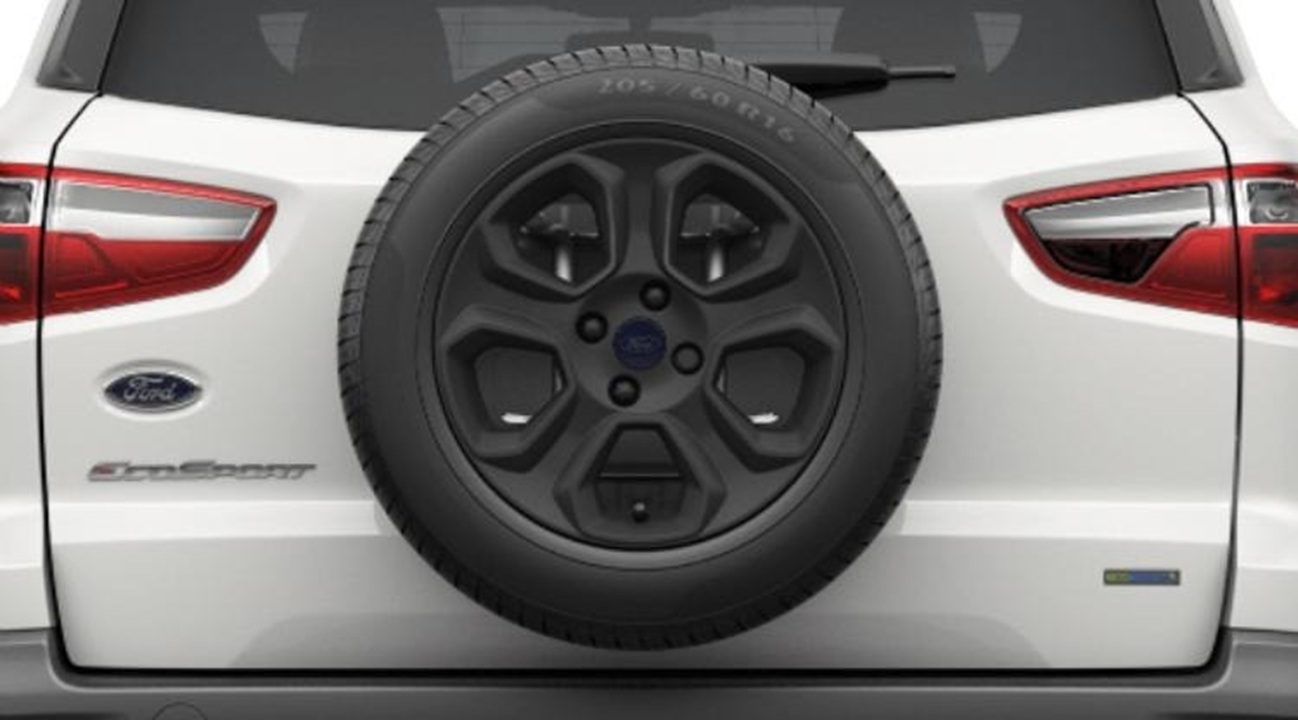
Apparently, a spare tire would make it over to North America, but as a short-lived option on only the base model.
Eco Without The Sport
The hits kept on coming, from Motor Trend:
The mainstream 1.0-liter three-cylinder EcoBoost EcoSport (say eek-oh-boost echo-sport) engine produces 123 hp at 6,000 rpm and 125 lb-ft at 3,500 rpm. These numbers are lowest in the class, resulting in the highest weight-to-power rating, so it’s no shocker that this three-banger seemed to struggle with two adults onboard. It moans under hard acceleration and it vibrates the steering wheel when it’s working hard. Not even a brake-torque launch could elicit so much as a chirp from the front tires. Ford optimistically rates the 1.0-liter as capable of towing 1,400 pounds. Please don’t try this.
Opt for all-wheel drive and you automatically get the 2.0-liter naturally aspirated four cylinder and an “intelligent” torque distribution system that lets you monitor where the torque is going via a dash screen. This engine produces a healthier and more class-competitive 166 hp at 6,500 rpm and 149 lb-ft at 4,500 rpm, earning a more plausible 2,000-pound tow rating. The only available transmission with either engine is a six-speed torque-converter automatic—a welcome upgrade from the little-loved dry dual-clutch box the EcoSport was born with. Ford claims the steering wheel shift paddles offered on the SES 2.0-liter we drove are a segment first (our Titanium 1.0-liter lacked them). Although the big engine greatly improves acceleration response, it still feels and sounds coarser and less refined than those powering the class leaders.
[…]
That short wheelbase and tall seating position give EcoSport a slightly squirrelly handling demeanor. Nothing dangerous, mind you (stability control comes standard), but we found it disconcertingly easy to induce oversteer—and instantaneous intervention from the nannies—when braking into some ess-turns in north-central Detroit. Ride quality is another area where the intersection of elderly underpinnings and a design optimized for third-world roads and expectations result in sharp reports and steering wheel judders from driveway curb-cuts and frost-heaved pavement slabs its competitors take in stride.
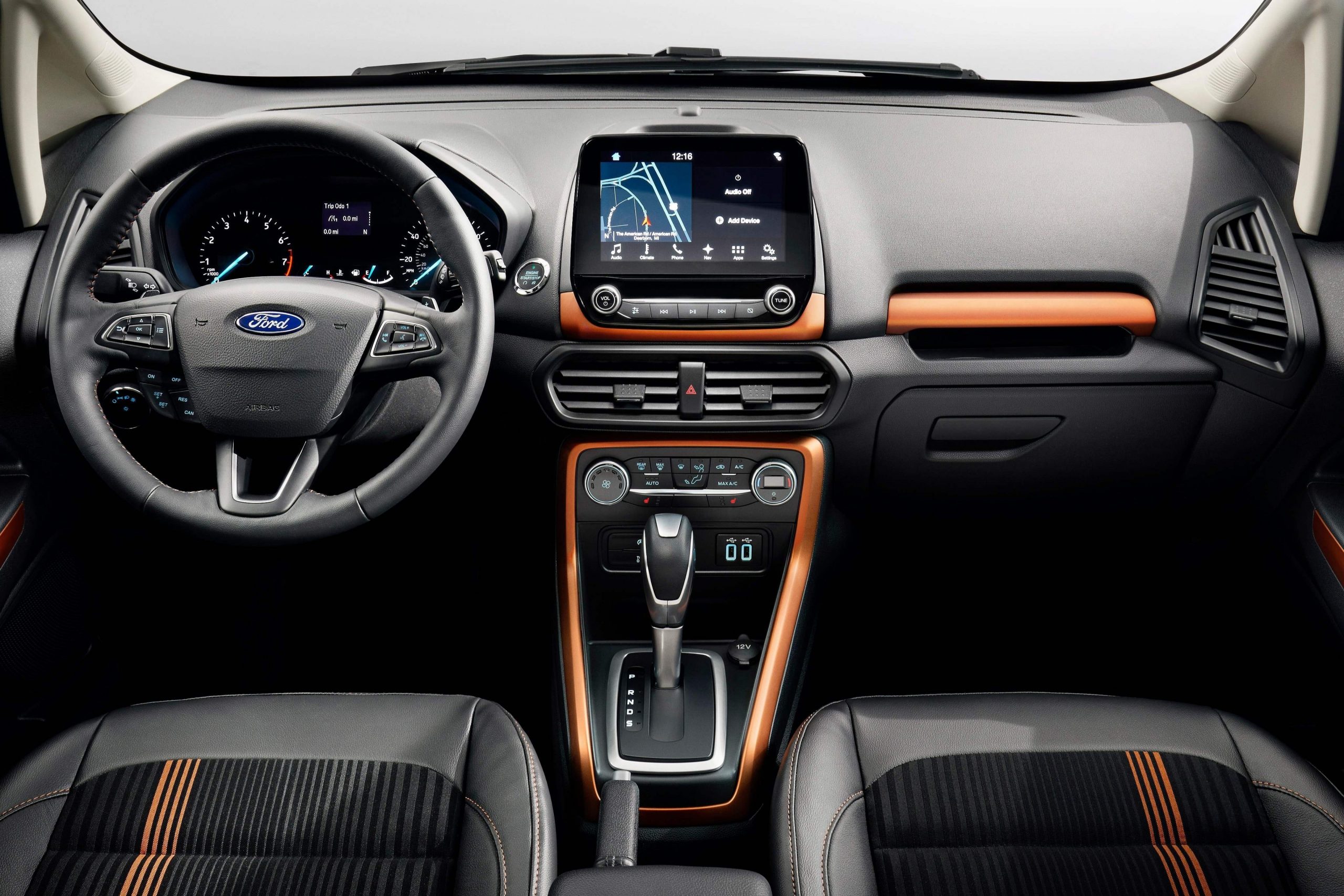
Car and Driver wasn’t any nicer to the EcoSport, with its summary of low points saying:
Tight back seat, modest power, drinks gas like a bigger SUV.
Indeed, while the EcoSport had tiny engines, none of them scored better than 29 mpg in EPA testing. By this point, other larger small crossovers had figured out how to exceed 30 mpg, so the press was thoroughly unimpressed by the EcoSport.
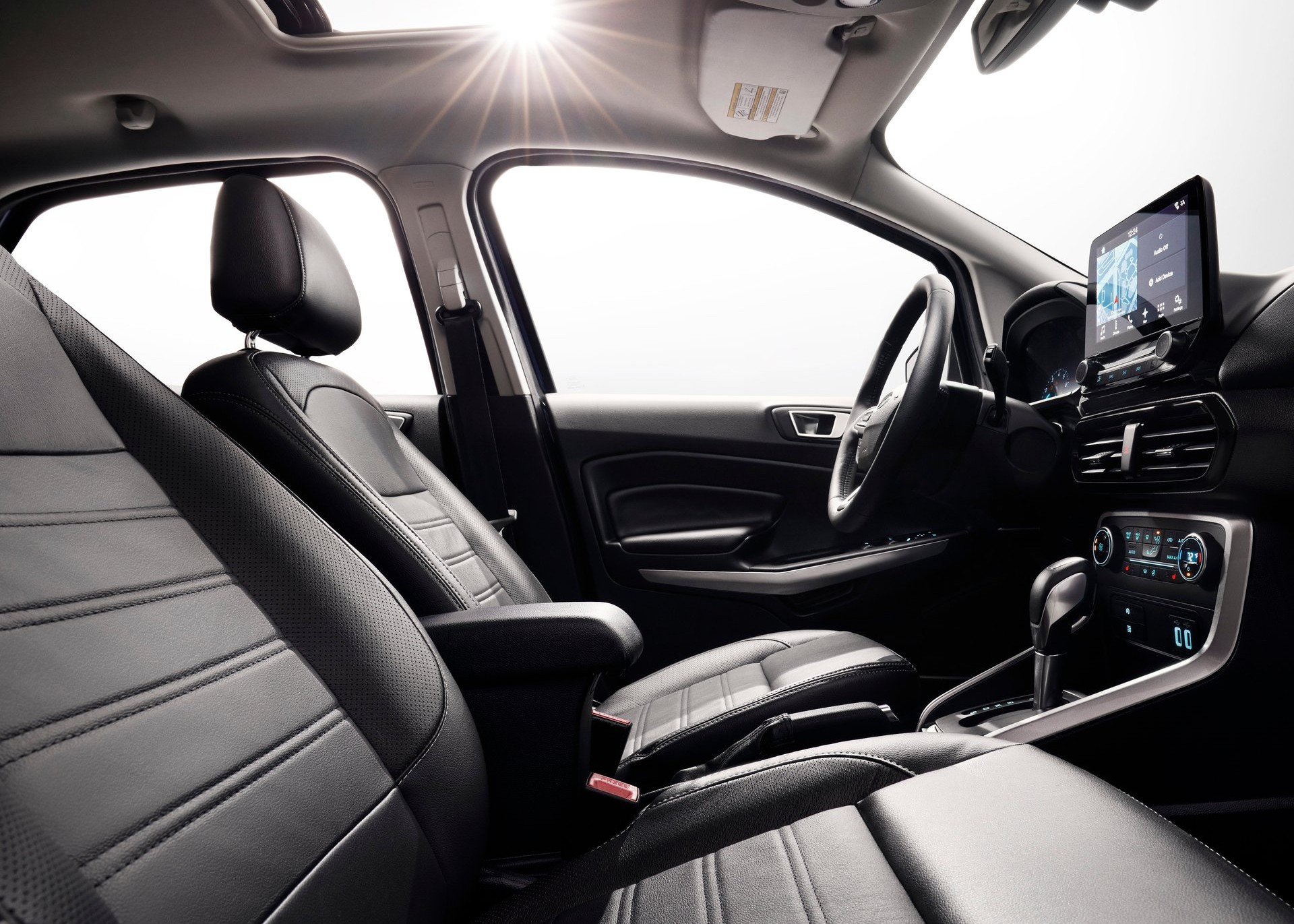
However, journalists were still somewhat hopeful. A base model EcoSport had a base price of only $20,990 in 2018, and had the option for all-wheel-drive, which not all compact crossovers offered in 2018. Another upside is that Ford kept the EcoSport’s tech simple, which was great for the buyer who either didn’t know how to use an advanced infotainment system or just didn’t want one.
The base model had only a basic Sync system, and the fancier SE, which was $23,900, had a 6.5-inch screen with Apple CarPlay and Android Auto. If you really wanted to run your EcoSport through the garden, you could have gotten an 8-inch screen, a heated steering wheel, a Wi-Fi hotspot, and even a Bang & Olufsen. However, the EcoSport was sort of low-tech, too. No trim level offered automated emergency braking, a forward collision warning, or a lane-departure warning.
Why The EcoSport Didn’t Catch On

Unfortunately, it wasn’t just the journalists who didn’t care all that much about the EcoSport. The little crossover sold 54,348 units in 2018, and then peaked at 64,708 in 2019. Sales entered a freefall and never recovered. Of course, the pandemic can be blamed on some of the poor sales, but it was also just the fact that the EcoSport had only a tepid response in the marketplace to begin with.
The Nissan Kicks, for example, sold 58,193 units in 2019. However, unlike the EcoSport, it actually gained sales during the pandemic. The Chevy Trax sold 89,916 units in 2018, 116,816 units in 2019, and 106,299 units in 2020. Unfortunately, while the EcoSport did enjoy okay sales, it was in the back of the pack of the segment it entered.
What’s worse, the Detroit Free Press reported, the EcoSport lost its edge in other markets, too. While the EcoSport might have been a pioneer in tiny crossovers in Brazil and India, other brands figured it out, caught up, and then passed Ford.
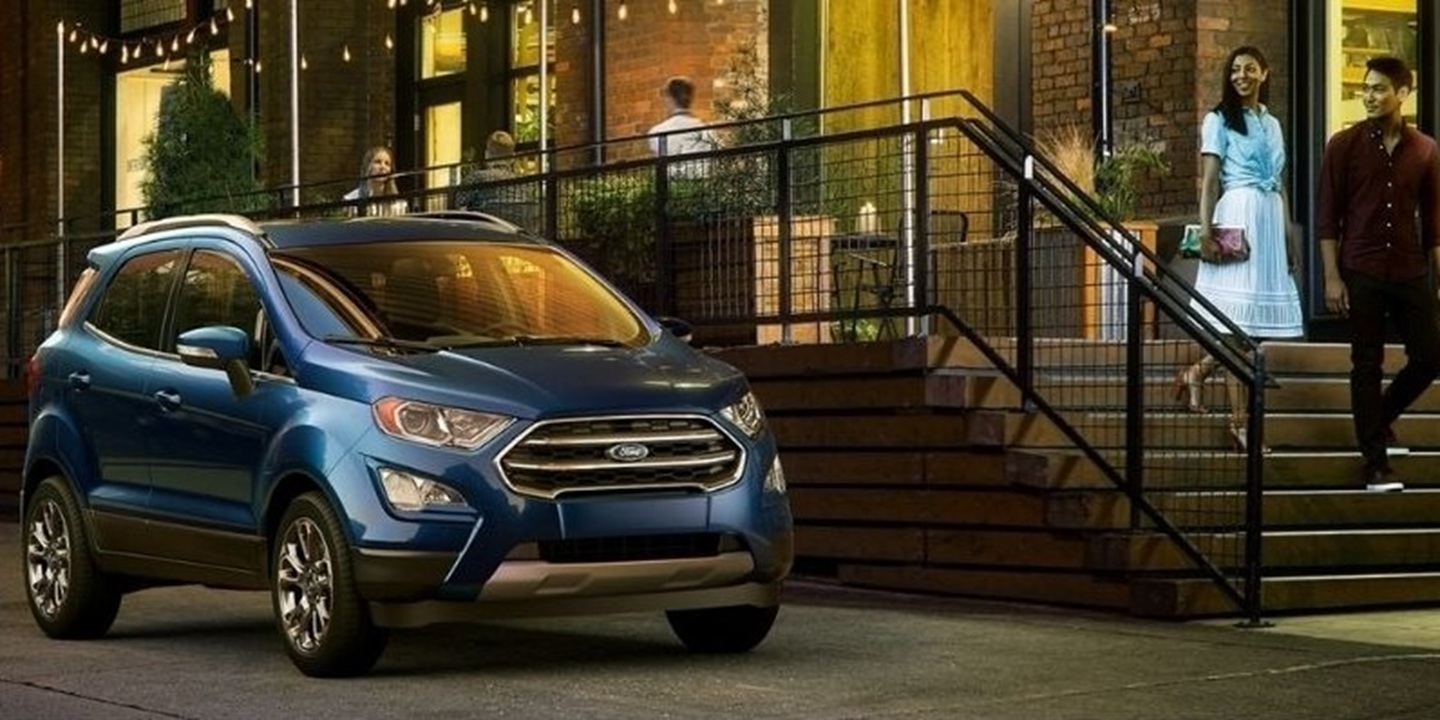
U.S News & World Report probably battered the EcoSport most of all, saying:
“The 2021 Ford EcoSport doesn’t compare favorably with most vehicles in the subcompact SUV class. It suffers from an underpowered base engine, a harsh ride and limited advanced safety features, which is why it ranks near the back of the segment.”
Little by little, Ford started killing the EcoSport. Production ended in Russia in 2019 with the closure of the Naberezhnye, Chelny plant. Ford then cut the EcoSport out of the Australian and New Zealand markets in 2020 before calling it quits in India in 2021. Ford shuttered its Vietnam operation in 2022. With Ford pulling out of India, America lost its source of EcoSports. Yet, as the Detroit Free Press wrote, it didn’t seem like many people cared:
“Ecosport was never really a fit for the American consumer,” said Maeva Ribas, manager of design research and strategy at The CARLAB Inc., an automotive product planning consulting group based in southern California. “Ford is just rectifying a misconception. Ecosport does not belong in the U.S.,” she said.
[…]
“The demise of the Ford EcoSport in the U.S. comes as no surprise. It is made in India, where Ford has been winding down its business,” said Michelle Krebs, executive analyst for the online marketplace Autotrader.com. “Plus, the EcoSport was never a strong seller. It didn’t measure up to some very tough competition in the subcompact SUV segment.”
The EcoSport even had Ford’s infamously unreliable PowerShift DCT in international markets, which further hurt its reputation. Thankfully, America got a six-speed automatic.
The Aftermath

The Detroit Free Press notes that the EcoSport managed to find a small but strong fanbase in America. While lots of people didn’t care for the EcoSport, many of those who stuck with it do seem to enjoy the fact that it’s super tiny and a little weird. Unfortunately, EcoSport owners are a bit like Smart Fortwo owners. There just aren’t enough of us to justify its existence. Certainly, there’s also no shortage of people who don’t think positive thoughts about the EcoSport.
Ford doesn’t seem to care much, either, considering just how much everyone seems to love the Maverick. Really, it seemed that the EcoSport just wasn’t really for Americans, and so it’s not very surprising that it didn’t resonate well in the market.
Still, I could imagine how much of a great idea the EcoSport seemed in 2017. Here was a tiny crossover that sold outrageously well in much of the world, and could be sold in America for just a tick over $20,000. It was cheap, not overburdened with technology, and tiny. That might be a good concoction in a sports car, but it looks like SUV buyers weren’t having it. So, the EcoSport faded away, not with a bang, but a faint echo.
Top graphic image: Ford


If Ford really wanted you to pronounce it Echo they simply would have named it the EchoSport.
It’s Ford crap. What do you expect? 🙁
They HATE making anything other than the F150
They gave me one of these as a rental, as soon as I sat in it, I told them to get me something else. I’m just barely over 6′ and there is no way I could comfortably drive one of these.
Me (pronounced meh) don’t like. In euro market they replaced the mildly interesting B-max mini-MPV (with no b-pillar!)… with this thing. The Romanian built Ecosport had at least initially so cheap and awful materials that it very clearly showed it’s developing market roots. But in the end, it was the styling. After all, the same factory builds the Puma, on Fiesta underpinnings, which is ok. Also Dacia Duster has similar quality plastics, but it is honest about it and does not look like an inflated Fiesta on stilts.
So… if they had just designed it properly, the story could be different. They had all the ingredients but probably got greedy.
I think anybody that’s driven one understands why it’s neither a sales success nor offered in the US market anymore.
Thanks Mercedes! Shockingly I still see these around, I assume they’re all the 2.0.
Bringing the diesel, manual version here with the spare tire would certainly have made it more unique. Unfortunately I don’t think even that would have made it not a crapcan…really struggling to find anything redeeming about this thing.
Every time I see one of these it’s tailgating the crap out of somebody. Usually me. In my Raptor. You must have a death wish to drive these things the way people do. Like it’s an Altima or something. . .
Ha there’s an EcoSport around here that has an aftermarket Raptor style grille. And the driver is usually tailgating somebody.
That 1.0 ecoboost is one of the worst engines of the last 10 years. Absolutely stay away. The bigger engine one may be surprisingly fun for a little crossover, easily inducing oversteer is my kinda car, but might as well just get a Fiesta. If I had to get a crossover in this category I’d go renegade though. I drive a stick one once and it felt more like a tall spicy hatch than a suv/crossover. It was kinda the Fiat Panda of the US.
The 1.0 seemed a great idea at the time, and initial reviews of it were positive, but apparently they haven’t held up well. I had a Peugeot 2008 rental a couple months ago, equipped with a 6-speed manual a 3-cyl. The car had a few unfavorable issues, but the drivetrain and ride wasn’t one of them. I was kind of impressed with the power, sound, and smoothness. It was my first time drive a 3-pot, came away impressed overall, so not opposed to them per se. I think Ford might be able to do something again, but better.
Oh I have no problems with 3cyl engines. They can be neat and fun. The ford has a wet timing belt with a 150k mile replacement interval that actually fails as soon as 20-30k miles. It’s an absolute nightmare and a horrendously stupid piece of engineering. There’s been a recall out for a long time now that still has no solution as far as I last heard cause there really isn’t any actual fix for something that dumb. Just trash engine. But properly designed 3cyl turbos are great fun little motors!
So far it seems that many (most?) 3-cyls use wet belts though, such as the Stellantis unit in the 2008, GM engines in Envista/Trax. Quick search says Nissan has a chain.
Wet belts *should* work fine, and are theoretically quite advantageous. Ford obviously screwed the pooch along the way with the engineering of theirs. Other makes don’t seem to be having nearly as widespread issues, though it could simply be that there are just FAR more Ford engines with them out there, and they get that “first mover” penalty.
The PSA PureTech is pretty well known for disintegrating belts clogging up oil pickups.
The EcoSport was a hateful, cynical little penalty box that Ford dragged kicking and screaming into this market for the sole purpose of having a basic vehicle in the range. It was awful.
I got an Ecosport as a rental once. It was horrible. The pillars are placed so you can’t see out of it. It has huge blind spots. The seating position is uncomfortable. The handling is awful bordering on scary. You feel like you are going to flip the thing over all the time. This is coming from somebody who owns a Mirage and finds it acceptable.
You beat me to the blind spot issue. I have never driven one, but I sat in a friend’s and could not believe how bad the sightlines were for something so small.
https://images-stag.jazelc.com/uploads/theautopian-m2en/Ford-EcoSport-2013-HD-d22c59c71c065efece07c4bd32d481a952918c55f.jpg
My god that is ugly. I can’t imgine looking at all that every day.
As a small-car lover (formerly smart eD, which I adored, and Honda Fit which I drove into the ground, now Bolt), I say that “small” wasn’t the problem – packaging was the problem, outdated design was the problem, built-in-India was the problem. I had a EcoSport as a rental once. I found it horribly uncomfortable, cramped, and a noisy slow car. I think the only people that bought these were older folks who either a: found Escape too techy and overwhelming, or b: couldn’t finance something bigger.
Does anyone know if the 2.0 has the same wet belt oil contamination mess that the 1.0 has or is that issue exclusive to the smaller engine? I always assumed it was just the 1.0, 3-banger but a quick search gave me mixed results (thank you to our new AI overlords once again).
The 2.0 is the Duratec, which is excellent. Jointly developed with Mazda, has a timing chain.
You said it yourself. The EcoSport wasn’t the answer. The Maverick was and is.
Not sure where the “rugged” in the article title comes in.
Lower body cladding and marketing jingo. It makes everything rugged if you use enough of it. A proper application of marketing department approved lower body plastic cladding and a few photo ops in the mountains can even make a crystal chandelier all rugged and oudorsey.
The EcoSport seems like it was sturdy enough to handle the rougher roads of developing countries. Allegedly, that was part of its success. Well, the platform, anyway, not the engine or transmission.
So are all manner of crappy little cars that don’t pretend to be off-roaders.
I don’t understand the love around here for crapcans like this. If you only have $21K to spend and MUST have a crossover, just buy a damned used RAV4, or whatever not-crap one floats your boat. It’s better in literally every way, and will still be running long after these turds are recycled into refrigerators and plastic waste. Especially the base ones with epically terrible 1.0T wet-belt triple (I don’t THINK the four was also so afflicted in that era, but don’t know that for sure). By the time you bought one with the 2.0L you were into real money too.
Literally nobody here or in real life likes this car lmao.
I understand the love in that things that are different add a spice to car life/car culture, but I agree that this was just a bad vehicle, no redeeming qualities. Either buy a used Rav4 like you said, or (at least when these were being made) buy a 5 door hatchback from just about any OEM that will do all the things this did, but cheaper and better. It was not priced cheap enough to justify its existence in the U.S.
That’s about 27.2k in current dollars for a FWD 1.0 Wet-belt Ecoboost engine. You can get a base CX-30 OTD for about that ,money, with AWD standard, and a decent 2.5L NA engine. Not to mention when this thing was “New” in 2018, the competition was so fierce you pretty much only bought an EcoSport if you had a desperate dealer or Ford Employee pricing plans. They were, and still are absolutely abysmal little penalty boxes. These failed because they sucked, and I have nothing positive to say about them.
Or you can get a Mazda3 Preferred.
It’s dumb how people think they need AWD, etc. when 98% of the time they just need a car.
The EcoSport’s wet rubber timing belt means the engines are doomed to fail. The belt is buried, so not a simple replacement.
It was two inches longer than a Honda Fit and got basically similar MPGs to a Pilot. That’s the story
I wanted to like the ecosport but so many bad decisions were made on it. Plus unil the last model year maybe last few you could get an escape cheaper at the end of the model year. The last time I looked and they had ecosport they were maybe $14k but that wet timing belt that degrades in oil and other shortcomings it just doesn’t make a ton of sense. Maybe there is value in one with a blown engine someone is dumping.
The MPG is what really made me scratch my head when these were new. I feel like one of the problems of small cars in the USA is the substantial amounts of highway driving and that longer cars do better aerodynamically. Real world I get better mileage from my Outback than I did from the crosstrek. Since most other advantages of being small aren’t as relevant here, it’s a hard sell all around.
Yup. The EcoSport is what I always think of when people talk about how they wish manufacturers would bring X or Y tiny car from developing markets to North America. There is a lot more to building a good compact car than simply a tiny engine or footprint.
The reality is, todays’s Civic, Corolla or RAV4 (especially the hybrids) do everything better and more efficiently than their sub-compact predecessors. They also hold up well enough that they present a better value lightly used than a true barebones subcompact does new.
Mileage and price. I thought these were interesting when they came out (compact and awd option) until my Brother visited with one of these as a rental. I like the compact interior, but when I drove it (1.0 ecoboost), I was disappointed.
In the US, one doesn’t need a subcompact due to the narrow roads and such, so one compromises on a subcompact for much better mileage and price. Did not deliver on either of these.
I was given one of these as a service loaner (for my F350, lol) and while I try to find something positive about anything I drive, this was the worst new or nearly new vehicle I’ve ever driven.
When the service desk told me I was getting an Ecosport, I made some kind of disappointed noise, which prompted one of the other service writers to chime in that she “loved hers”. I hope she still does.
Ha! I’ve always been asked if I need a truck as a loaner. It’s rare that I’ve said yes, if for no other reason than I don’t want to tow a load on some random loaner truck.
I think this was all they had left.
But in general I’ve had bad luck getting decent loaners.
A Ford Service Writer is probably the last person on the planet I’d take car buying advice from, save for maybe a Jeep salesman. It’s a close race though.
People seem to equate the idea with the execution. Just because something was done poorl does not mean the whole idea is bad.
There are many good compact SUVs, but it’s completely understandable if people hate them all because of the Ecosport. It was really Ford’s first crack at it in the US, and it was a joke, at best. If you want people to take you seriously in a specific category, don’t half-ass the first one you ever sell.
This is one of like 3 cars that I simply outright hate and despise. They were badly made, uncomfortable, loud, and generally very impractical for what they were, but the most egregious offense is that they killed the Fiesta for this horrible thing. I know the Fiesta had its issues, but it was cheap and fun to drive. I hate the Ecosport 25% because of what a god-awful bag of shit it is, but 75% because Ford replaced an objectively decent car with something that was considerably more expensive and worse in every meaningful way.
If I had money and time I would buy every one that’s left, melt them into cans, and dump them on Jim Hackett’s driveway.
Oh!!! And, the dingleberry on top of the whole shit sundae is the fact that Ford had the audacity to expect people to pronounce its name a certain way. “Umm, it’s ECHOsport actually?” I get that they didn’t want it confused with Ecoboost, but literally go to hell. It’s not some coachbuilt Maserati from 1956, it’s a horrible rental car reject. I will pronounce its stupid name any way I want. If you didn’t want it confused with something else you could’ve not been cheapskates and given it a different name.
it’s pronounced “Stall G17, out the door, two aisle down, last car on the right, up against the fence.”
I like to imagine someone doing the Planes, Trains, and Automobiles “I want a fucking car” scene except they were actually given a car – it was just an Ecosport.
“Subaru Crosstrek (or similar).“
There is so much to unpack on to why these were awful:
1) As mentioned above, this was an old, international design, that was not catering to the US market (in size, or style). It looked frumpy, which didn’t translate well. It got worse with the rear spare tire.
2) The 3 cyl had a wet timing belt that liked to fail and grenade the engine. Horrible design.
3) It low key killed off the Fiesta and Focus in the US market. This meant the Fiesta ST and Focus ST/RS went away, never to come back. Unforgivable.
4) It was slightly more expensive than the base Maverick that replaced it. No one in their right mind would spring for the Ecosport. With rebates, you could have an Escape for roughly the same price, which was better in every metric than the garbage Ecosport.
These were utter garbage; good riddance. The only slightly redeeming fact is that they didn’t option these out with the Powershift transmissions (as mentioned above) in the US market.