

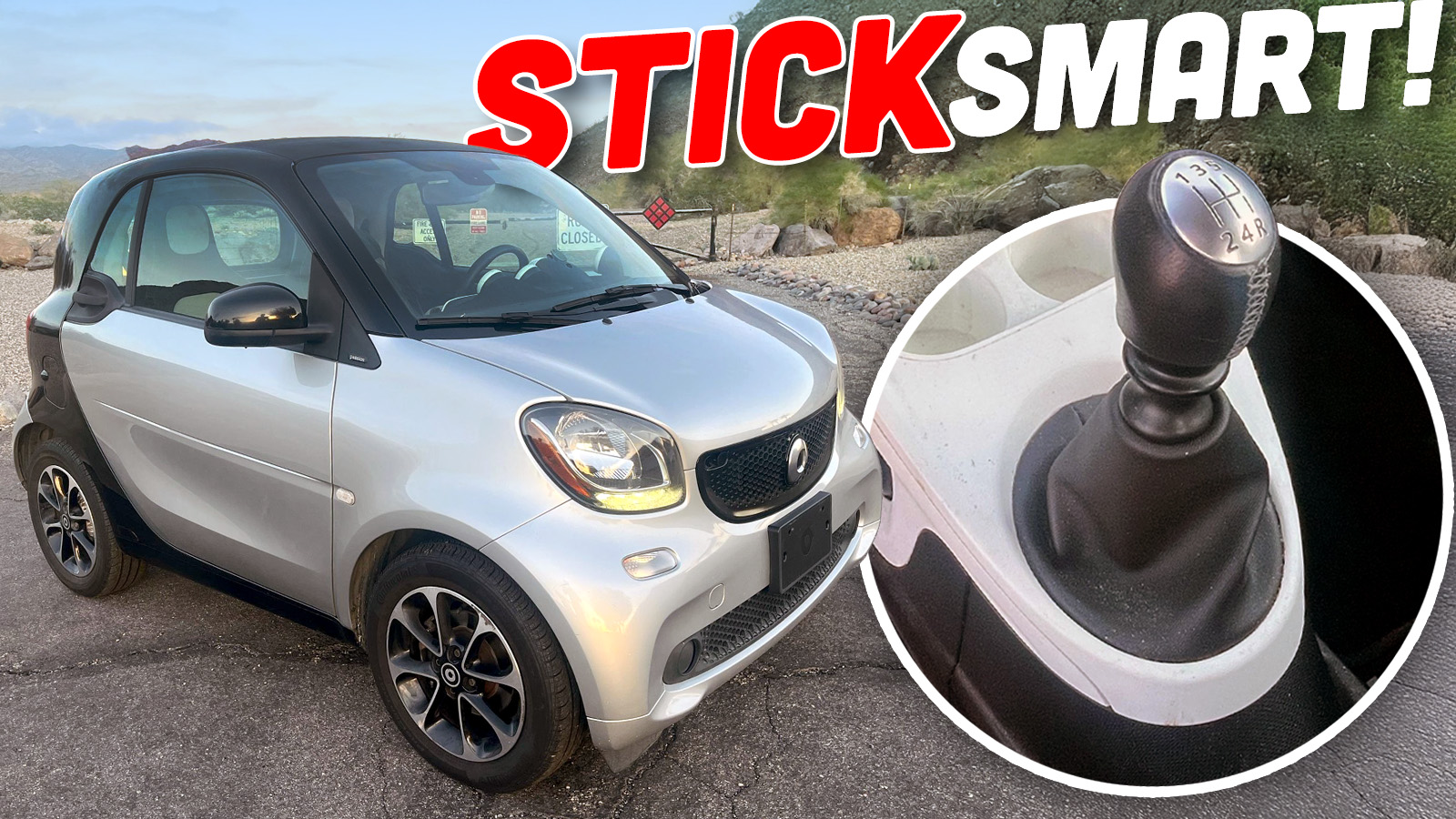
The Smart Fortwo was a polarizing car when it was sold new in America. For much of its existence, many Americans thought the Fortwo was too slow, its suspension was too harsh, its transmission was too rough, and the engine returned fuel economy that wasn’t good enough. For just two years, Smart solved nearly all of those issues and created a Holy Grail in the process. During that short time, American buyers were able to get a Smart with a quick turbocharged engine, decent suspension, and a fun three-pedal manual transmission. You can even find a few for sale right now!
One of these Holy Grails of Smarts in America can be found on Cars & Bids right now. Amusingly, at least three people have sent me this listing, including the staff of Jalopnik. I have been on a secret search for the perfect Smart Fortwo with a manual transmission, so the timing on this one is remarkable. Sorry to disappoint you, but I will not be bidding on this car.


This little-known variant of the North American-spec Smart Fortwo doesn’t look like it, but it’s likely one of the rarest “regular cars” of the 2000s. Fewer Smarts were sold with manual transmissions than the Nissan Murano CrossCabriolet. There are fewer of these cars than the entire production of Volkswagen Phaetons or Volkswagen Passat W8s in America. If my calculations are correct, there are probably just as many Smarts with real manual transmissions out there as there are Volkswagen Passat W8s. In other words, it’s sort of a huge deal to see any of these little cars come up for sale.

I would even go as far as to say that the 2016 and 2017 Smart Fortwo is such a huge improvement over older examples that, if you hated Smarts in the past, these cars could bring you back around. The manual transmission is just a sweetener.
Trendy, But Sometimes Polarizing
I’ve explained the history of Smart in America rather extensively, so I’ll spare you reading it again. Click here to read that history. Instead, I just want to point out why the third generation of the Fortwo was such a leap forward.
The first generation of the Fortwo, which was originally named the City Coupé, launched in 1998. The City Coupé was only a touch wider than a Japanese Kei car, but much shorter at only 8.2 feet long. These cars were so short that you could park them perpendicular in a parallel space and still be within the lines. But these cars were more than just tiny, as they had colorful plastic panels that could be exchanged out like you would watch bands, and interiors that looked like a trendy sneaker.

But perhaps the most striking part was the vehicle’s safety cell. Mercedes engineers went through a lot of work to make the vehicle safe, and normally, a vehicle’s safety structure doesn’t really add to the vehicle’s look. That wasn’t the case here, as the steel Tridion Safety Cell, as it was called, was also a prominent design element, and was often painted in a color that contrasted the plastic panels.
Unfortunately, for how cute and weird Smarts were, Mercedes struck out on performance. At launch, the City Coupé had a rear-mounted 599cc turbocharged Suprex three-cylinder engine that was mated to a six-speed automated-manual transmission. These engines made between 45 horsepower and 61 horsepower before any tuning. The output wasn’t that bad, and the engine drove the rear wheels, too. What was a hindrance was reliability, as it was common for these early engines to need overhauls before 100,000 miles, with some needing overhauls as early as 60,000 miles.
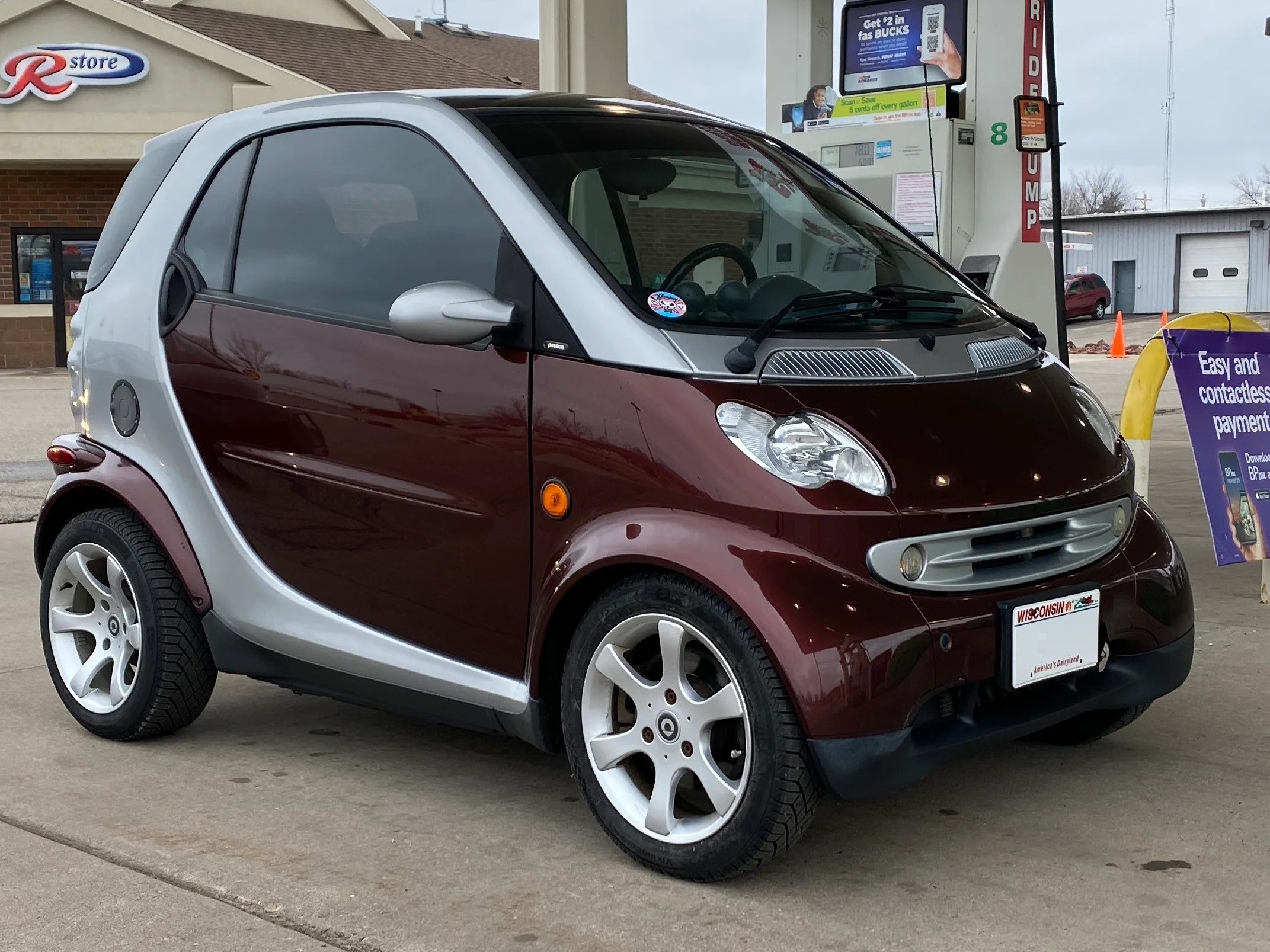
The transmission, a single-clutch manual shifted by computer, was notorious for taking its sweet time to reach the next gear. Then there was the suspension, which offered little respite from rough roads. Mercedes also baked in poor handling characteristics on purpose, namely heavy understeer, to reduce the chances of the car rolling over in an emergency maneuver.
Still, the City Coupé would become a popular city car. Smart would also improve the concept over time, launching a slightly more reliable 698cc turbo three, an astoundingly reliable and efficient 799cc turbodiesel triple, and transmission software improvements that smoothed things out a bit. Then came subsequent models, like the four-door Forfour – which was really a Mitsubishi Colt underneath – and the sporty Roadster. Smart even put a concept car into limited production with the Crossblade, and then developed an SUV for America, the Formore.
The Smart Most Americans Know
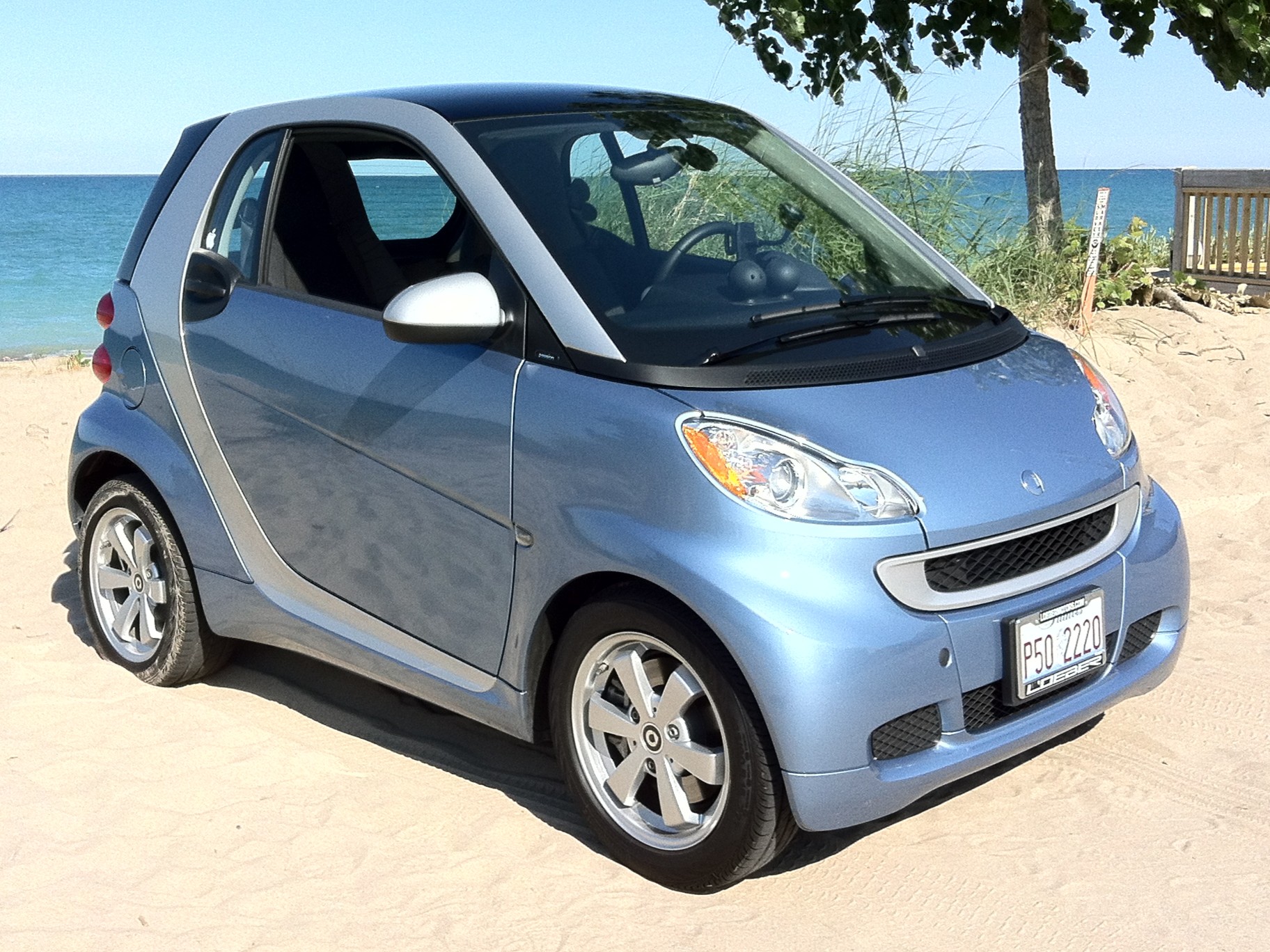
Sadly, while Smart made fun cars, it burned through billions of Euros. In 2006, the company was liquidated. From 2007 to 2014, Smart would have only a single model in the entire world, the Fortwo. In 2007, the Fortwo entered its second generation. It got a little wider, a little longer, and a bit more highway-friendly. The gas engine became a hardy 70 HP naturally aspirated three-cylinder from Mitsubishi, while the old, nearly bulletproof diesel also carried over. Smart also continued to be married to an automated-manual transmission. Only this time, it had only five gears. It also still took some time to get to the next gear.
Smart finally officially launched in America for the 2008 model year. There are a touch under 100,000 Smarts in America, and the vast majority of them are this second-generation model. American car journalists complained about the harsh ride, slow transmission, and unimpressive engine. Indeed, while the rear-mounted Mitsubishi power plant has proven itself to be amazingly reliable, it returned 41 mpg at best in EPA testing. While that did make the Fortwo the most fuel-efficient car in America that wasn’t a hybrid or a diesel, Americans still expected more. The old Geo Metros easily got over 50 mpg, so why couldn’t a Smart?
Smart did have the correct engine for the job, a diesel that got an honest 70 mpg, but never brought it over to America. At any rate, sales in America were good only for a single year, 2008, and then never recovered.
Third Time’s The Charm
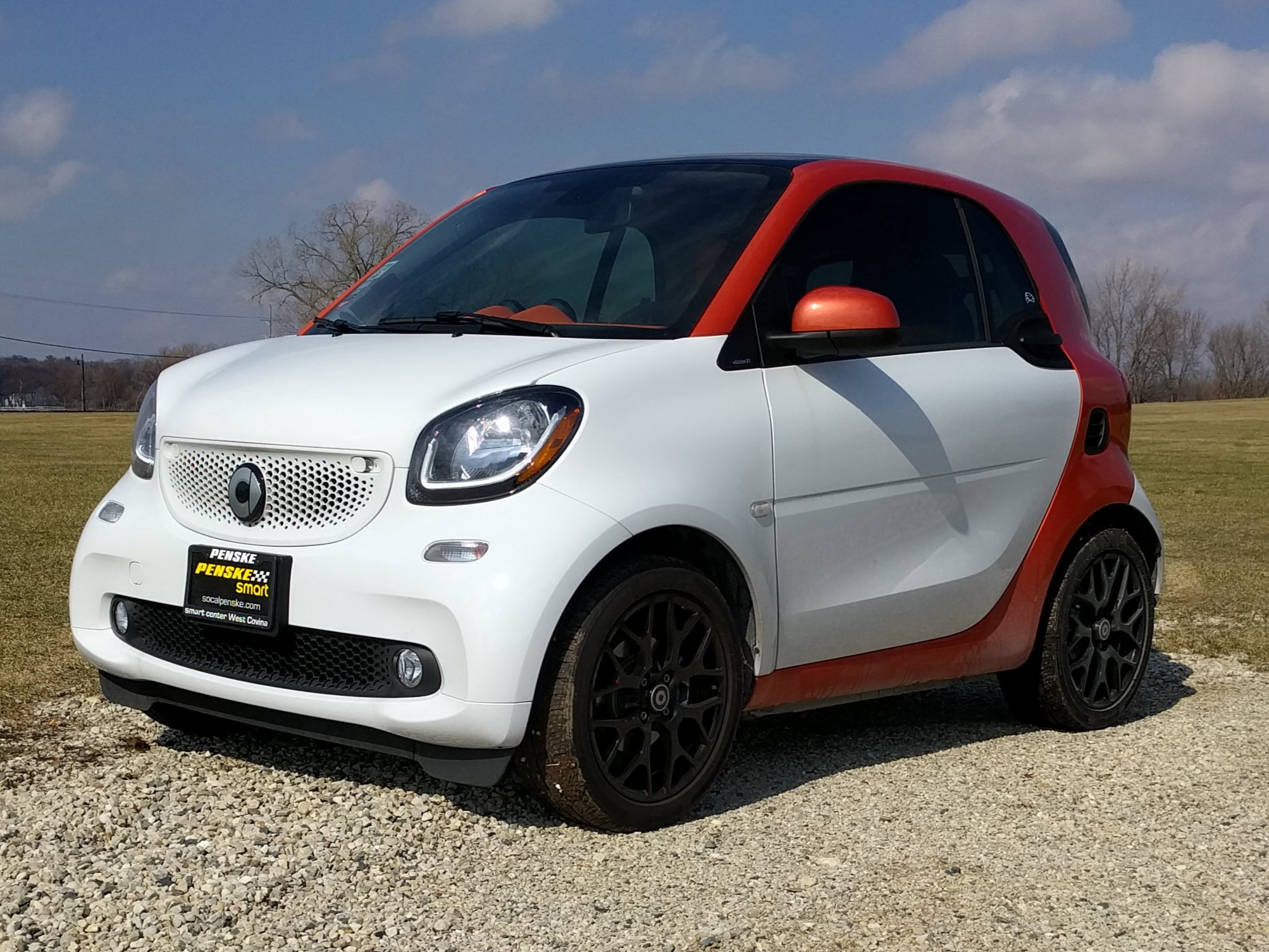
The greatest change to the Fortwo came in 2014. Smart flipped the script with the third-generation car.
This time, Daimler partnered up with the Renault-Nissan Alliance, which sought to build the next-generation Twingo. The cooperative engineered the new architecture in three distinct sections: the front clip (radiator, cooling fans, steering gear, battery, and HVAC components), the middle section (4-person seating), and rear section (powertrain). Building the car in sectors like this meant that Renault was able to get its four-door Twingo, Smart was able to make a second generation of the Forfour, and then create the Fortwo by replacing the 4-seater middle with a 2-seat assembly.

How close were the then-new Smart Fortwo and Forfour related to the Renault Twingo? They share 70 percent of their parts with the Twingo. Smarts have unique bodies and interiors, but they’re largely mechanically the same as the Twingo. This was good for Smart.
The new 898cc triple Mercedes-Benz/Renault plant under the hatch made a healthy 89 HP with a turbocharger, and the single-clutch auto-manual transmission finally died, replaced with a snappy DCT. The official 60 mph acceleration time is 10.4 seconds, but in years past, I have timed my 2016 Fortwo DCT sometimes doing the deed in under 10 seconds in Sport mode.

The car got wider, more comfortable, and handled so much better. Seriously, the new Fortwos are far more fun to zip around than you’d think they have any right to be. Smart also didn’t give up on keeping the car tiny, too. Third-generation cars didn’t get any longer than second-generation models, and measured only 8.8 feet long.
But the best part was probably an option that had never been offered on any Fortwo in the company’s history: An honest three-pedal five-speed manual transmission. Yep, if you didn’t want a computer swapping cogs for you, Smart finally gave you the option to do it yourself.
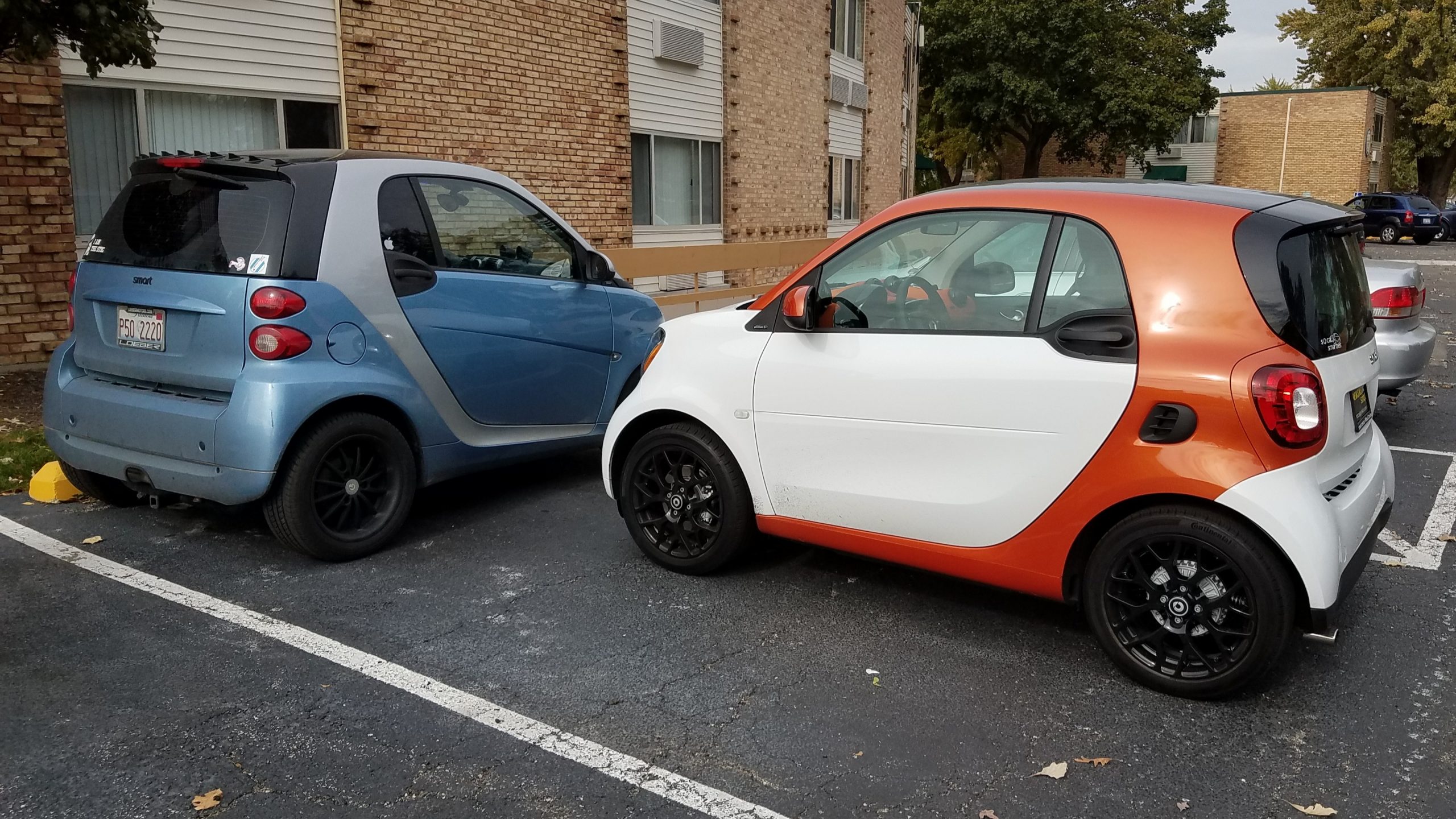
Third-generation Smarts launched in America in the 2016 model year, and gasoline models were discontinued after the 2017 model year. Smart pulled out of America entirely at the end of the 2019 model year. That means that all gasoline-powered third-generation Fortwos fit into the 2016 and 2017 model years. Only 9,282 Fortwos were sold in America between 2016 and 2017. Of that lot, a small percentage were electric.
Sadly, Smart USA never broke sales up by variant or transmission. If we’re being generous and say that five percent of all of the Fortwos sold in America in 2016 and 2017 had manual transmissions, that’s only 464 units.
This Manual Smart
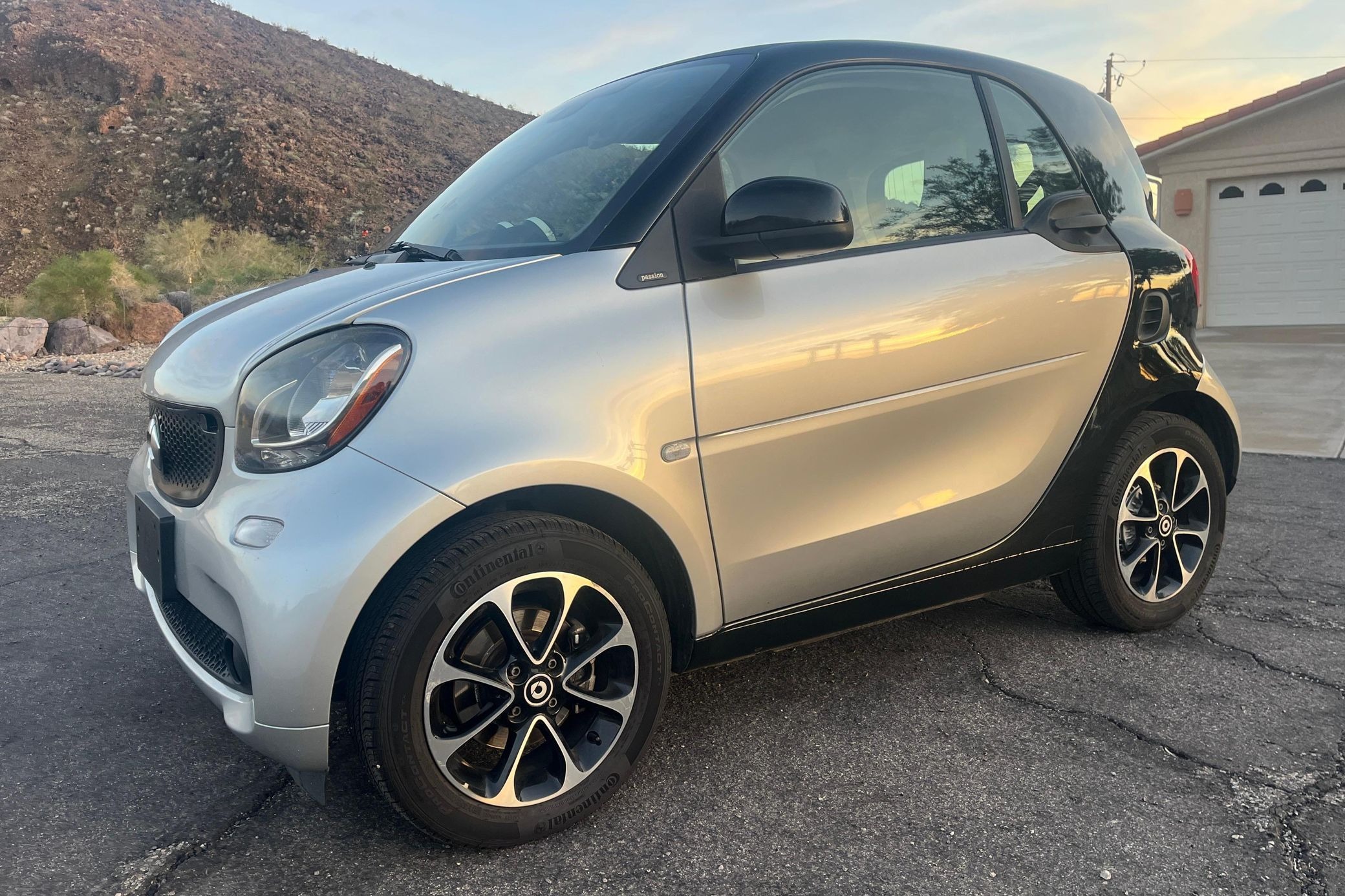
All of this to say that the 2016 Smart Fortwo Passion Coupe that’s currently for sale on Cars & Bids is a rare unit. It’s not the rarest Smart officially sold in America, as the Ed Hardy, Brabus Tailor Made, and ForJeremy limited editions were each far rarer, but it’s not a car you will see often.
You could mistake this car for just another normal Fortwo, and I wouldn’t blame you because the base car doesn’t really have anything amazing going on. It’s painted in black and silver, which was a common and not really bombastic color combination for this generation. It also doesn’t have the Sport package, which added a 10mm suspension drop, stainless steel pedals, chrome exhaust tip, and wider 16-inch wheels. This car also doesn’t have the LED lighting package, either.

The interior has much of the same going on. The white interior accents are a nice touch, though they will be hard to take care of. Smart’s white interiors have a tendency to get stained up, and this car has plenty of stains to show as proof. Otherwise, the car is a pretty base Passion spec, including the base stereo, base speakers, and no seat heating. The vehicle doesn’t even have fog lights or a panoramic roof.
Basically, the entire reason to buy this example is its manual transmission. It’s a good reason, too, as adding a row-your-own transmission improves the experience. Smart shifters aren’t as satisfying or as clicky as a Honda or Mazda transmission, but they are engaging and fun. Add in the much-improved handling, the sharp steering, the boosted engine, and the refined suspension, and you have the recipe to generate smiles. Even Car and Driver was impressed with the third generation’s improvements.
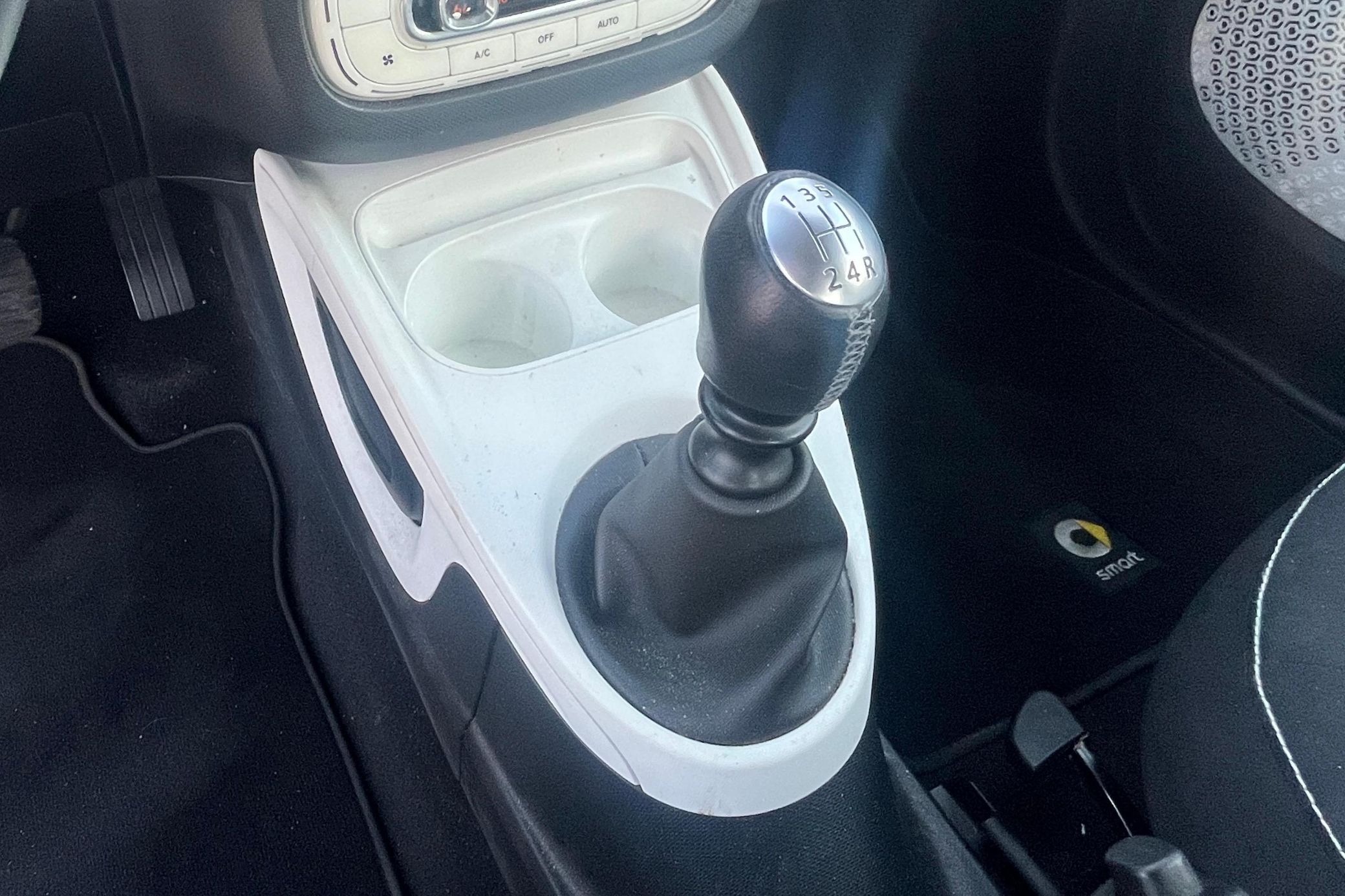
The cheapest Fortwo with a manual was $15,400 in 2016 ($20,973 in December 2025 money). That got you a Pure with an even plainer interior and only steel wheels. The base Passion with a manual, which is pretty much what this car is, was $16,890 ($23,002 in 2025 money) when new. It was possible to load up your Passion with options and still keep the manual transmission. I have seen cars like those a handful of times, but they’re even rarer than just seeing a Smart with a manual.
If you’re wondering why I’m not a bidder, it’s because I’m looking for a manual with a lot more color and, ideally, a few more options. But if you aren’t as picky as I am, I think this car should be a fine way to enjoy a rare Smart. Amusingly, I generally keep track of the manual Smarts for sale in America, and remember seeing this one for sale on Craigslist in Lake Havasu City, Arizona, back in December for a touch under $9,000. Apparently, the seller acquired the car in October to tow behind a motorhome and then changed their plans.

There are a few other manual Smarts for sale in America right now. There’s one for sale in San Jose, California, for $6,666, one for sale in Marysvale, Utah, for $6,600, and one in Charlton, Massachusetts, for $4,500. That last one was in a crash and was repaired poorly with Bondo. It also has clutch problems. Otherwise, I would have bought it by now. I would buy the one in Utah in a heartbeat if it weren’t located in the middle of nowhere and hours from the nearest airport with airline service.
It’s hard to say where this auction will land. This car has 92,400 miles, and other Smarts with manual transmissions and high mileage seem to fall in that mid-$6,000 range. But this is Cars & Bids, where sometimes people spend tons of money on a weird car. So, who knows?
What I do know is that this car is one of the Holy Grails of Smarts in America. If you don’t mind the stains, the mileage, or the lack of color, this car should be a ton of fun. You’ll get a cute little rear-engine, rear-wheel-drive car that’ll park anywhere, score around 40 mpg, and has a choose-your-own-adventure transmission. Dare I say, this little car can probably even change the mind of a Smart hater.
Okay, I have to turn away now before I make a bad financial decision …
Top graphic images: Cars & Bids


Mercedes you should just but this car and wrap it any color you want. it’s a smart car it would cost like three dollars and 50 cents to wrap the entire thing.
I think ADDvanced is exactly right. Back in my ’01 Jetta TDI 5M days, I remember feeling a bit smug when I saw a Smart car and knowing that I was getting similar fuel economy with all the luxury and safety of a larger car. It was a really pleasant car to drive. If I hadn’t moved to Texas for a while, where it really could have used a 6th gear, I might still be driving it.
Diesel fuel got more expensive and the ’17 V6 Accord I replaced the Jetta with gets 35-40 MPG on the freeway. I miss rowing my own gears, but I’ve also developed neuropathy in my feet, and I appreciate a decent automatic and not a CVT.
The Jetta was very efficient. The worst tank I got was 38 mpg, which was almost completely cold or cool (low 30s *F) starts and maybe a mile roundtrip, The Accord would probably be down ar maybe 13 mpg in similar duty.
My wife had two of this generation in Forfour form in the U.K. and they were both manuals. The first had the N/A motor that was actually pretty nice to drive if you could get over that it was really slow. The second had the turbo motor. It had more go but also awful Turbo lag especially in the first few miles of driving before it had warmed up. It felt to me like an old carburetor car with the choke stuck in the wrong position.
Mercedes, respectfully, I just do not get your infatuation with these things. And it’s fine, everyone can like different stuff. But please just drive a 1g Honda Insight before you keep pumping these things; there is a reason they did not sell and imho it’s because they were not good cars and not very smart to buy.
1G Insight____________ Smart Car
1800lbs____________ 1775lbs
76hp (hybrid)_________ 61hp
83 ftlbs ____________70 ft lbs
155″ long ____________98″ long
53″ high____________ 61″ high
13 sec 0-60 ___________14.5 sec 0-60
110mph top speed______ 84mph top speed
60-70mpg ____________50mpg
So you have something that’s slower, less efficient, less reliable, less safe… just… why?! The only advantage I see to one is that it’s really short, which means you can park it easy… but cmon now. Parking something the size of an Insight is also cake.
The ‘safety cell’ of the Smart is also questionable. Is it strong? Sure. Will instant deceleration cause your brain to splatter inside your skull? Also yes. Having basically no crumple zones to absorb energy around the safety cell is not a good idea. Guarantee you throw a g-force sensor in both cars and drive them into a wall at 60mph, the insight will be safer.
It’s my hypothesis that once you spend time in an Insight you’ll realize your love for the smart car was misguided, and you’ve been a Honda fan all along 😛
I kind of like the Fortwos that get painted like the Little Tikes cars, but that would wear off fast I feel like. I would like this manual over a DCT, but again I think the overall style would eventually wear off on my interest level. The one Smart they never brought stateside that I think was a mistake was of course the Roadster, had they put this manual and the larger displacement motor, with a turbsky out back, that might have been something infinitely fun and interesting….maybe.
the accent panels are sold seperately and rather cheap to replace/repaint. a lot of people wrap them its a very tiny car and very economical to change colors.
marysvale isn’t THAT far from SLC, usually under 3 hours
i’d be happy to go take a look at it or shuttle you from the airport 🙂
Mercedes, you’ll be happy to know that Sugarfoot’s Cupcakes in Spring has THREE Smarts in full cupcake liveries that they use, I presume, as delivery vehicles. I’d only seen one parked out there until recently when numbers two and three made their appearances. I drive past it every day on the way to work.
eh…. is this the same Mercedes that drove the most fancy pancy pickup she could borrow with a U-haul trailer to pick up her absolute dream kei car more than 700 miles from home? So she had some good/bad stories to write?
Maybe that’s why she’s not eager to do it again. I recently bought another a car via the fly ‘n buy method. It wasn’t the first time I’ve done that, but I questioned the wisdom of the process for the entire 550-mile drive home. Would I repeat the experience? Probably not for another car that I’m not totally in love with. Too much hassle for something that’s just okay. And that was a relatively straightforward undertaking that only involved a rideshare to my hometown airport and a one-way flight that ended with the seller picking me up from my flight in my new hooptie.
Too bad the 3rd gen smart car didn’t get a Nissan or Mitsubishi engine, so it could be more reliable. Nissan and Mitsubishi are also part of that Renault alliance thing.
The Mirage’s engine and transmissions would’ve been more reliable and more economical too. The Mirage doesn’t have the CVT problems that other Jatcos have, mainly because it’s the same CVT hooked up to less power.
Yeah, the Jatco Xtronic CVT would’ve been better than any transmission offered in a smart car
Do NOT waver, Mercedes. A car that is not optioned right will never satisfy that itch properly. Wait for the absolute right one. If the one in Utah has all you want….. you’ll make that work. Ask a local reader to do the PPI and even drive it to an airport, if you must.
hi yes i live in SLC and i will do the damn thing
I’m trying to remember the last time I’ve seen a non-electric third-gen Smart. I had no idea they made gasoline ones with a manual transmission.
I could buy it and have a trifecta of sub-500 sold in the US manual transmission oddballs. But this is nowhere near as cool and my 6spd RWD BMW wagon or my 5spd Land Rover Disco I.
The safety cage of the Smart is pretty amazing – as long as you can manage to only crash into something of similar weight. Against a Canyonero, well, the thing likely won’t crush, but you are going to get some impressive g-forces on you as it gets punted into next week like a ball hit by a bat.
Now I’m wondering if you can convert the single-clutch auto into a sequential-shift manual, like converting a Harley to a foot clutch and jockey shifter.
Has anyone figured out how to put one of those engine-gearbox combos in a Smart Roadster? That would make it a brilliant car!
p.s. That is a Renault shifter!
I don’t think I’ve ever seen any of these 3rd gen Smarts in person.
I test drove one back when these were new. The manual was garbage.
Not surprised. The car community loves to talk about manual transmissions but the reality is that manuals in commuter cars are almost always terrible.
See: Lexus ES and 2008 Merc C class with manual transmission the internet raved about while owners of those vehicles called it the worst shifter in the world and automatics were better suited.
The Honda Fit would like to have a word with you.
The shifter in my Insight is great.
Weird, the one I tested was quite fine. Not the best I’ve driven, but not garbage. Car and Driver also thought theirs was decent. Granted, Smart’s quality and consistency was hit and miss even on good years, so I wouldn’t be surprised if you drove one that was broken/out of spec from the factory. Both of the Smarts I bought new were broken upon delivery. The 2012 had a bad alignment and the 2016’s computer couldn’t figure out know how big its gas tank was. lol
That shift knob is definitely a Renault part, same era Renaults and Dacias have it too. Maybe the entire transmission unit is Renault.
Most of the Renault manuals feel kinda loose and imprecise.
I don’t think this was ever meant as a performance option, just a manual cheap commuter.
when I drove all the way to Portland OR to lease a smart eD, they had a (brown!) stick-shift gas smart, fully loaded. I test drove it and, honestly, didn’t love it. at least not compared to the smooth EV. BUT it was a massive massive massive massive (did I say massive) improvement over the horrible manu-matic with that car’s “OMG WHAT’S HAPPENING??” shift style. I miss my little smart so much, i’d consider one again – either the brown stickshift or any of the eD.
Why Smart? Fiat 500 Abarth 160 Pony, fun to drive Jay Leno prove it.
The manumatic in a 2nd gen Smart holds the dishonorable distinction of the WORST transmission I have ever experienced in an automobile, which includes such hits as a Versa with a CVT, a 6 cyl C10 with a powerglide, an unfinished VW sandrail that I couldn’t find 2nd gear in, and countless C-series grain trucks that have never seen a service in their 50 year lives. Shame too, because I could see the potential, but my god that transmission is fucking horrible.
*Insert Michael Scott “Thank You” GIF here*
It most certainly is.
I’ve driven countless automobiles and multiple Nissan variants.
That Gen Smart will go down as the worst transmission I’ve ever driven.
Long live the Powerglide!
Well they are certainly long lived! Not too bad behind a big honkin V8, but behind a single barrel 6 cyl? Woof.
Fair enough. My only experience with one was with a 327 in a 69 Camaro. And I rather enjoyed it
You’re going 60 and you put the hammer down, that thing shifts into low, and the engine SCREAMS. Pretty great stuff.
The only Smart I’d buy, but I already have too many cars I don’t drive.
The manual really didn’t make sense for how these were used in the US, though.
I suspect that’s why basically none were sold with a manual. Smart owners were usually city dwellers or older folks trying to buy what’s more or less a highway-legal golf cart. Neither of those is the job of the manual.
I cannot get excited about the car that Peter Theil assigned his Personal Assistant…
That does seem in-character for Temu Bond Villain.
I mean, I tried? I even did a little research in another tab, but the commentariat here brings subjective wisdom to the table and that helped me quickly conclude this isn’t a candidate I’d pick for a fun, um, urban runabout. Which is a kind of car I am interested in.
This is part of why I love Mercedes’ articles so much. Even if I don’t have much of a personal interest in the subject, geeking out on the details makes the journey worth it.
TIL that there was a factory collab Ed Hardy Smart car. Kind of cognitively dissonant. I’d have guessed that the licensed tattoo art analogue of Live Laugh Love home decor would have paired better with the PT Cruiser (awkwardly but accurately), the Dodge Caliber (HELLZ YEAH BRO! RIDE OR DIE!) or a later, brawnier DaimlerChrysler/Stellantis product. However, a brief search shows that while those instantly recognizable flaming hearts, snarling tigers and bloody roses ended up decorating many other vehicles, Mercedes was the only manufacturer to put the decals on at the factory. Go fig.
ive always fancied the sub model often found in second hand markets, the smart forbusa…
Cool backstory. I did a business case study on Smart around 2000 or 2001 for a graduate level class and I tried to make a case for them to sell in the US. Unfortunately, as you mentioned, the version that finally made it here was a little underwhelming.
But in its defense, I see the same issue with the midsize-vs-fullsize pickup debate: If you have any need for the smaller one (like parking or offroading) then go for it — otherwise it seems like a waste of money to not get the bigger one.
For Smart, it was more about whether you’d benefit from the tiny packaging or not…because as an everyday American suburban runabout, it had kitsch appeal but wasn’t that great, objectively.
I still see quite a few of the early models around (maybe 3-4 regularly), but I don’t think I’ve even seen a single third-gen in my life. So much so, I did a doubletake at this very article to be sure you were talking about a car that made it to the US.
Do we need to encourage you to buy a Smart in Utah and take it to Moab?
I do agree that looks to be about the middle of nowhere, but driving through Utah and visiting the national parks is a fantastic adventure. Getting it over the Rockies would be fun as well. The next thousand miles of corn fields to get it home, not so much….
This guy did the trip to Moab in something even smaller than a Smart! A hilarious watch….
https://www.youtube.com/@c90adventures
Is it weird that I would drive this manual Smart over most sports cars?