

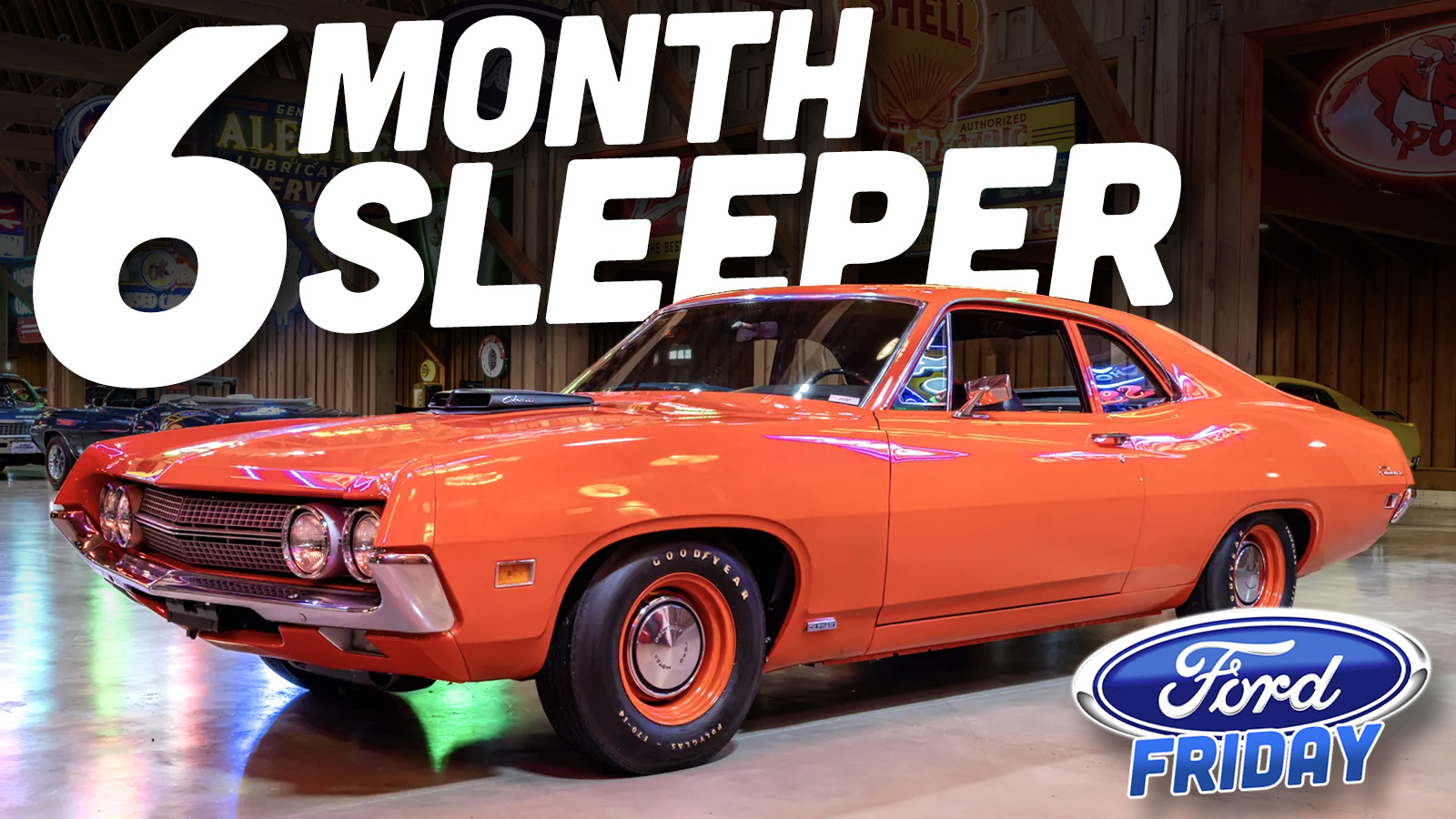
Would you spend large sums of dollars on sheet metal tooling for a product that would only be produced for around six months? I certainly wouldn’t, and you’d think most large car companies aren’t interested in throwing away money in such a manner.
That’s why I’m so befuddled by Ford’s decision to release a stopgap car in 1970 that included a coupe with a unique body style. Also, this car was a low-end version of Ford’s mid-sized Torino, yet you could check the option boxes to include the Blue Oval’s most powerful motors, inadvertently allowing buyers to create a sleeper that was one of Ford’s fastest cars of the time.


Here’s the story of the strange, elusive 1970 ½ Falcon coupe.
Well, We Gotta Give ‘Em Something
We all know how projects go sometimes: you set a deadline, but for whatever reason, things work against you. Regardless, you have to come up with something – anything – to fill the bill. Ford seemed to find themselves in this position in the late sixties. Production of the dependable-but-boring Falcon was coming to an end in 1969. The staid Falcon made the Dodge Dart look exciting, and its aging design was reportedly not going to meet the new-for-1970 safety standards.

Ford did have a replacement ready with the much slicker-looking Maverick, which would add some style to Ford’s entry-level compact line when introduced at the end of 1969. There was only one problem: the four-door version of the Maverick wouldn’t be ready until the 1971 model year. What could Ford offer in the interim as an ultra-cheap, decent-sized four-door?
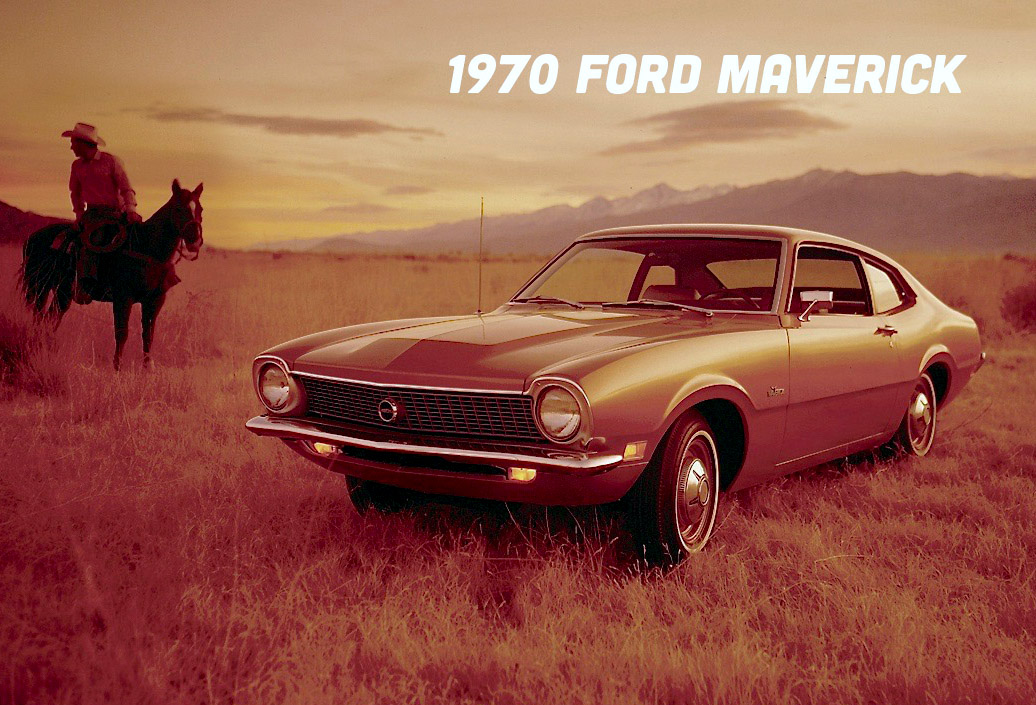
Ford’s solution was to first produce runout models of the old Falcon as 1970 models up until the end of 1969. Next, they made a new “Falcon” by rebadging a very stripped-out Torino, a model below even the budget “Fairline 500” version of Ford’s midsizer. With a taxicab-basic interior, this Falcon offered limited options and was made specifically for those wanting a decent-sized car for minimal cash, available as a sedan, wagon, and coupe. Growing up, one of my friend’s parents had the wagon version in stool-sample brown with what I’d assume was the “Thriftpower” six under the hood; it was the perfect kind of product for people who didn’t hate cars because they didn’t care enough about cars to feel anything towards them in the first place.


While the bodies of the 1970 1/2 sedan and wagon Falcon were virtually identical to their fancier Torino siblings, Ford made an investment for the two-door version that seemed rather short-sighted. You see, the top-of-the-line Torino got the “Sportsroof” treatment with an angular quarter window similar to the Mad Max Falcons in Australia:

Ford also gave buyers the less-expensive standard Torino hardtop (and the low-end Fairlane 500) with a gently curved C-pillar. So far, so good.


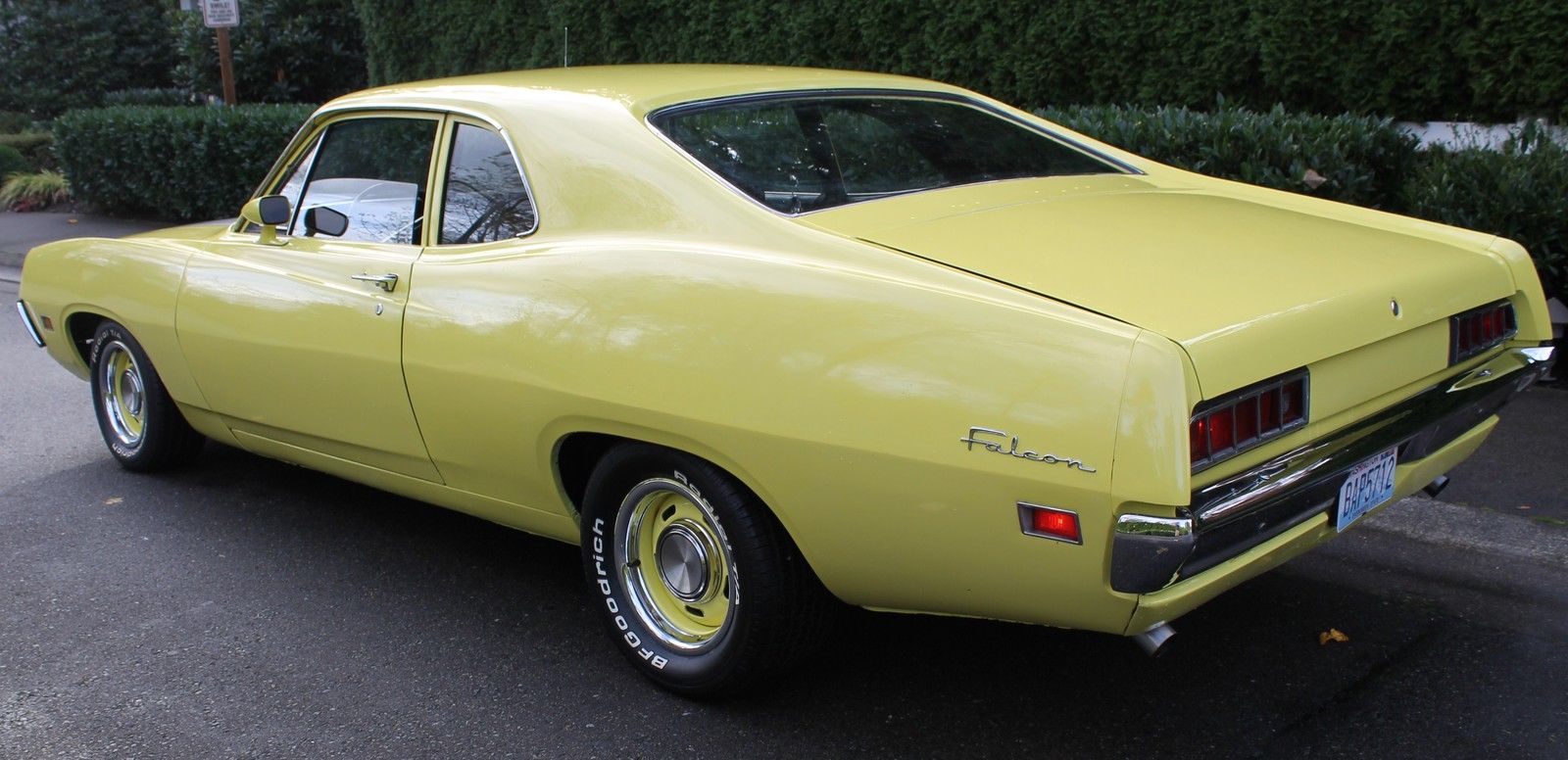
Here’s where it gets strange: For the ultra-penny-pincher Falcon version, Ford made a special “two-door sedan” body style with framed windows on the doors as well as on the quarter window with a B-pillar instead of the pillarless hardtop. I can see why Ford might do this if the production run was going to be half a decade or so, but to go to such lengths for a car that would only be made for around six months? Insane, and Ford likely knew that going in. Here’s the Falcon coupe with the framed windows and B-pillar design:
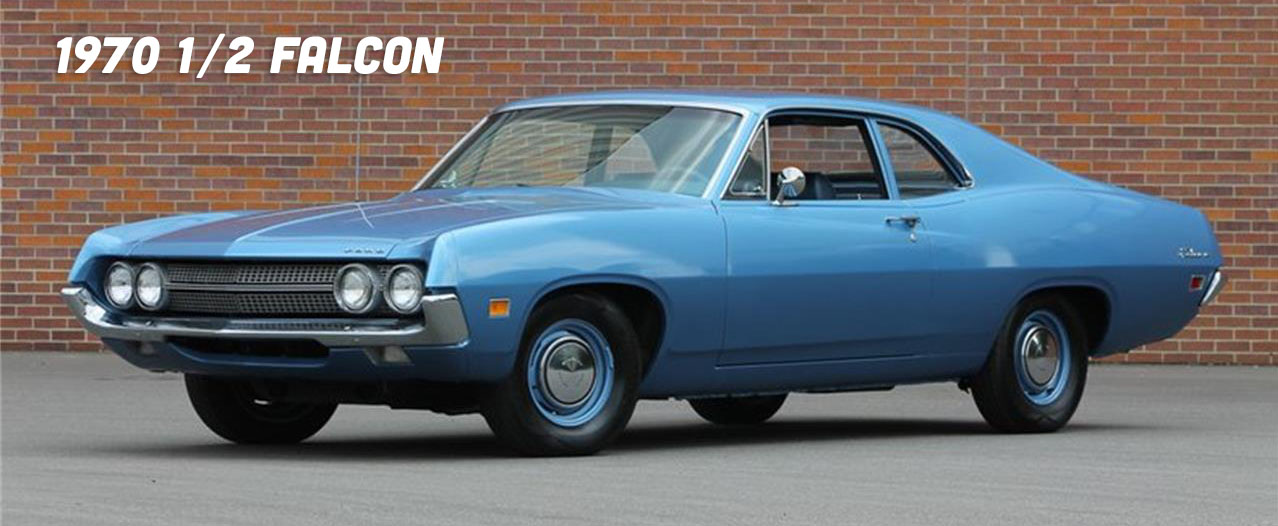

This is extremely odd; besides, if the Maverick was going to be the entry-level coupe, why have a Falcon two-door as well? Also, why go to the trouble of making a special pillared body style on a 180-day stopgap? They had to price it lower, so were they even recouping the added tooling and production costs? I don’t know, but as bizarre as this decision was, they made even more head-scratching options for this short-term Falcon.
This Is Called A “Factory Sleeper”
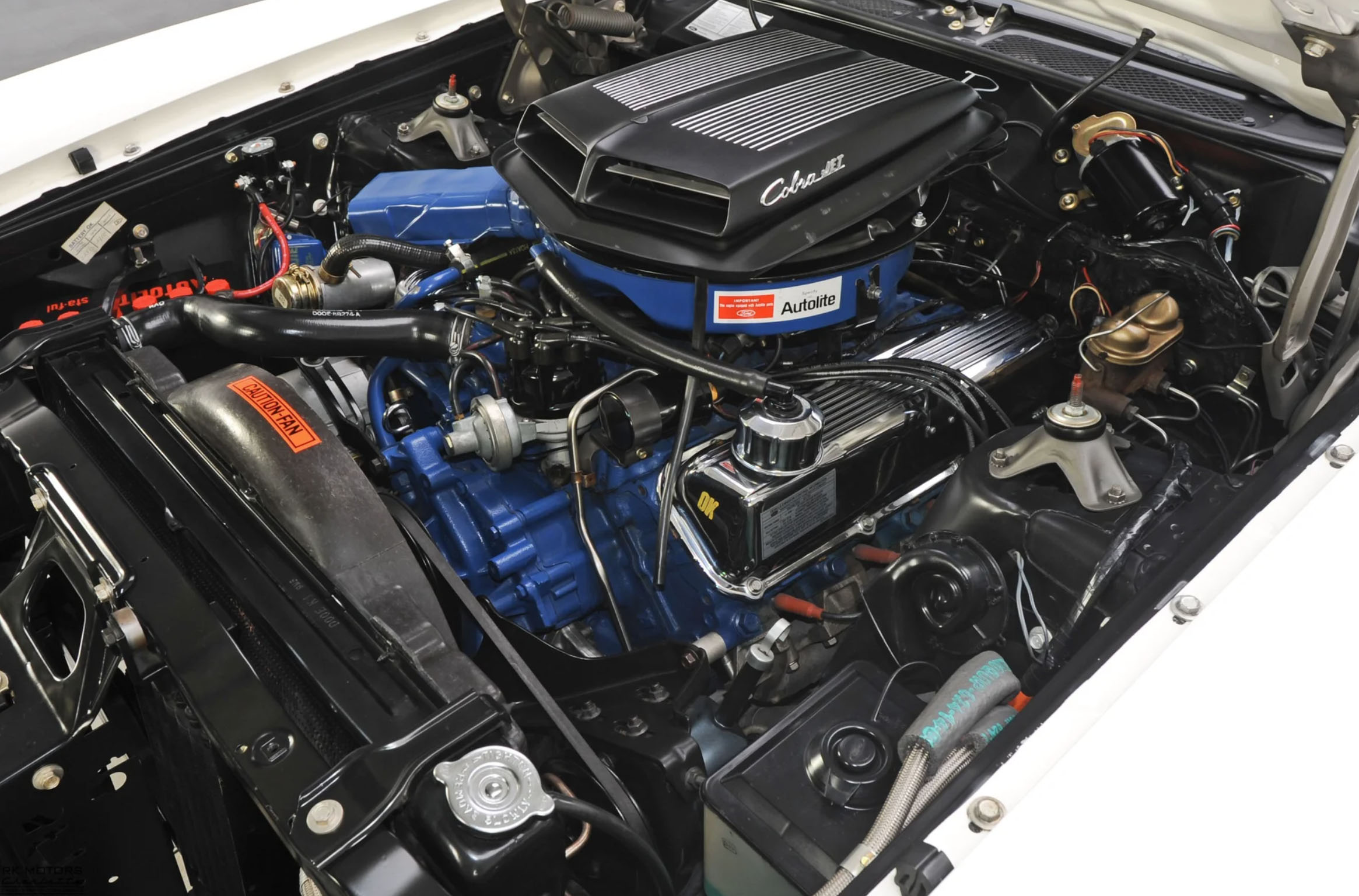
To help move buyers up the food chain, Ford was careful to limit the options you might be able to get on this bargain-basement Falcon. You could forget about checking a box for a fancy radio or power windows on most iterations. But for some reason, the folks in Dearborn did not reduce the number of powertrain choices available to Falcon buyers. You’d think a clunky straight six and the wheeziest two-barrel Windsor V8 would be the only engines you could have under your hood of this stripped-out budget mobile, but no. Even the mighty, top-of-the-heap 429 “Cobra Jet” Ram Air was just a tick-box away on the Falcon order sheet.

This is crazy for a number of reasons, but the biggest issue I can think of is the rather distorted pecking order that such availability created. I mean, the fearsome high-dollar Torino GT coupe (below) was marketed as the last word in performance Ford mid-sizers, right?

Well, if the top powertrain from that car was put into a stripped-out two-door of the same body style, you would imagine that lighter car would be faster. Sure, the weight difference might not have been enough to create an uproar, but at the very least, having the ability to buy a Cobra Jet-powered Falcon meant that you could go at least as fast in a similar car for minimal dollars.

You’ll notice in the Ford spec sheet above that the Ram Air Cobra Jet is listed with the same 370 horsepower as the “standard” Cobra Jet. That was supposedly an intentional factory misquote. In reality, the Ram Air pumped out at least 40 more horses, delivering closer to 400 horsepower in this budget muscle coupe.
Naturally, the Cobra Jet Falcon was quick; a quarter mile in the mid-13s and a zero to sixty in around six seconds were about as good as American cars were going to get before the malaise era truly set in.

With park-bench seats and few amenities, there weren’t a ton of buyers who would accept such austerity in exchange for speed. In fact, there were supposedly only around 90 customers chose a Falcon with the Cobra Jet option.

Even the trunk barely has any trim, just that old school Ford tartan plastic sheeting to cover up bare sheet metal:

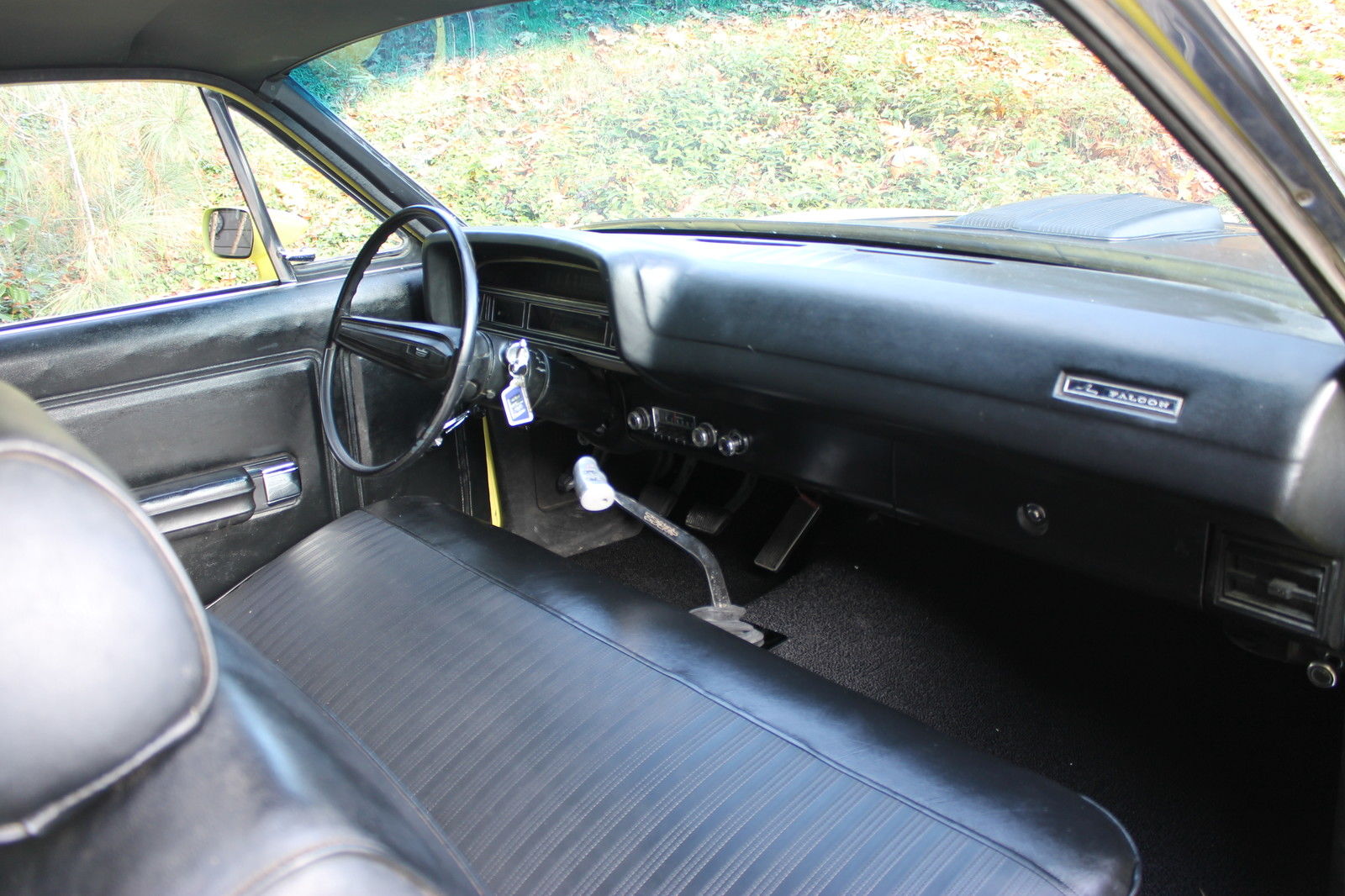
The dash is the expected seventies Ford issue, but I do like the odd optional “band” tachometer below and to the left of the speedometer:

Still, if you think that slushbox Cobra Jet Falcon was scarce, you could get rarer still. Reportedly less than ten Cobra Jet Falcon buyers selected the four-speed manual transmission option, such as on this one:
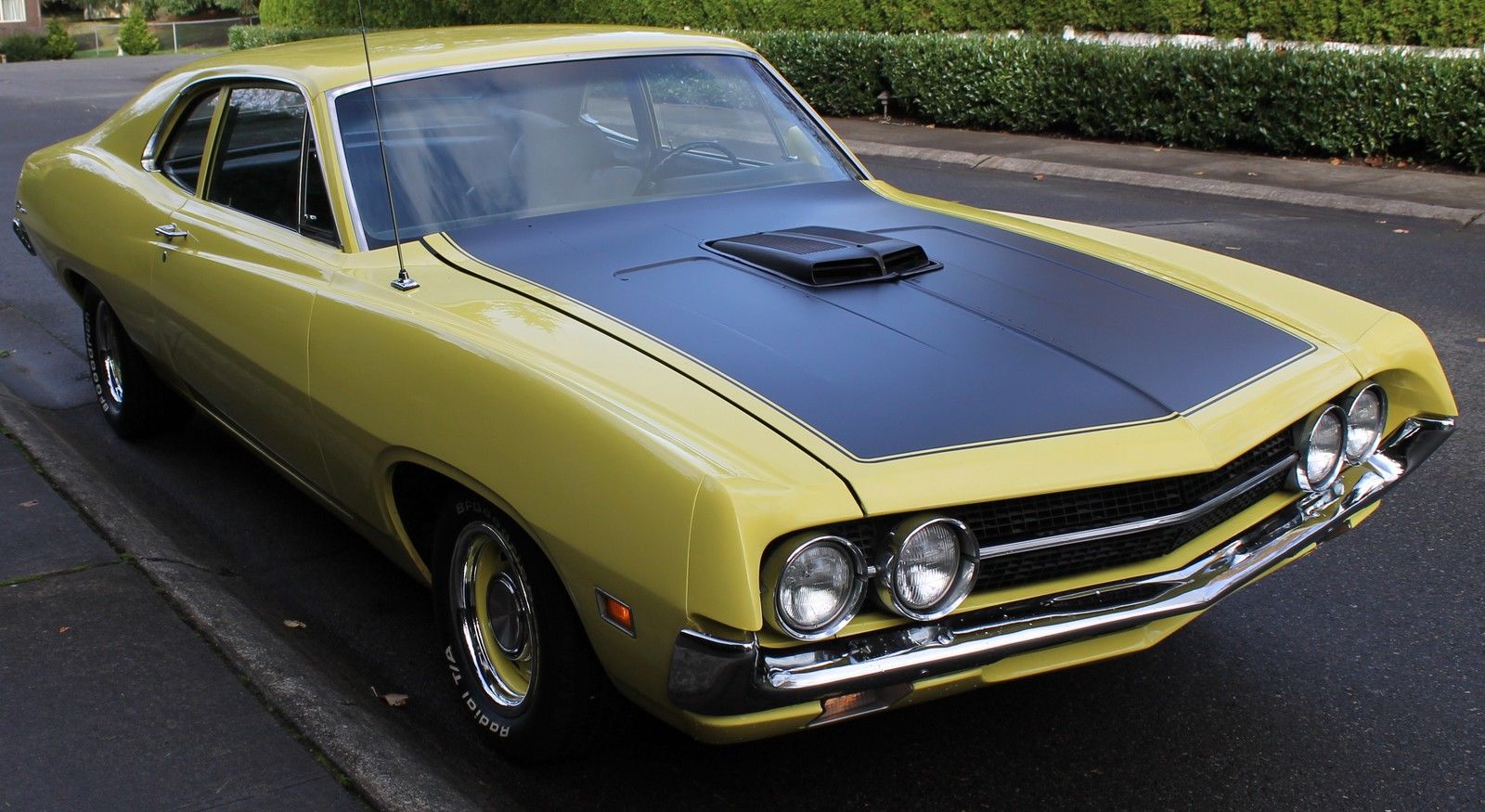
I love the look of the racy shifter poking up in front of that municipal bus bench seat. Talk about an interior where you simply know you’ve got the least expensive version:
The number of existing stickshift CJ Falcons today must be so low as to almost not exist, and the entire ’70 ½ Falcon experiment barely existed as a whole. Total production of the six-month-only Falcon two-door totaled only around 26,000 cars before Ford ditched the Falcon name for good (in the US at least, mate) and offered only the lower-level “non-Gran” Torinos instead.
Bulls (Torinos) May Run, But Falcons Fly
Both the Falcon and Torino of these years are arguably some of the best-looking family Fords ever, and were reportedly some of Lee Iacocca’s favorite products from his time in Dearborn, despite his later love for T-square-designed cars.
Today, any high-powered 1970 ½ Falcon coupe is worth a bundle, but the holy grail orange example in the topshot above with the drag pack and four speed sold for only $130,000 . You get the sense that a similar rare and special performance version of a more popular Mopar and GM muscle car would sell for far more, particularly if it’s an example like a stick Falcon Cobra Jet where the total number made could be counted with your fingers and still leave you with a free digit.
A Cobra Jet-powered Falcon is not for hedonists. Still, if you want no-nonsense frills-free performance, there’s one Ford coupe that came and went as quickly as it’s hot, enigmatic motor could take it on the street.
Top graphic image: Richmond Auctions





Man, I just cannot tell any of these malaise/just-antemalaise cars from one another. I’ve been trying forever, but if you hid the emblems and told me this was a Chevy/Pontiac dichotomy type thing I’d totally have believed that. They’re all big square noses and long bodies to me, with the affect of a road going boat.
I don’t know how The Bishop does it.
Yeah, every time people are like “All cars look the same now!” I get just a little irritated — with both them and myself — since almost every time we see something from the 50s-70s and my kids ask what it is, I have to make something. “Oh, yeah, that’s a ’68 Chevelle SS!” (in my head: “Wait, Nova? Or maybe Camaro? Was Chevelle just a trim or a model? I haven’t listened to Chevelle in years, I should put them on my Spotify list…”)Edit: if we can fix the nonstop site lag and loss of formatting when editing, I’m signing up for a membership.
It’s always been that way, since the dawn of vehicles. Other than a few obvious standouts, for the most part, the basic cars sold at any given time kind of mush together into sameness.
Falcon didn’t completely disappear after ’70, either.
Maverick is a re-worked Falcon. So was the Mustang thru 1973.
Granada, also. Which also means the Lincoln Versailles – a car which is more like a lobster, really; purchased used for its disk-brake 9″ rear end and the rest generally discarded.
The asterisk statement by the top 2 Cobra Jet engine choices notes “not available in Wagon.”. Even in 1970, the long roofs missed out on the best specs.
I do love a factory sleeper, but the wagon with a four-speed and a 360hp 429 is absolutely fascinating to me.
Falcon, Fairlane, and Torino for 1970.
Very interesting taxonomy.
Now we know where Tesla got the idea for their interiors.
The Falcon looks like someone at least tried to design a dashboard.
The only thing I can imagine is that there was a multi-year government contract that included some two door sedans that justified the tooling.
Also I remember that a lot of drag racers campaigned two door sedans rather than hardtops because they had more torsional strength. Offering a cobra jet option may have been on the books just so some special customers could order a car that met some class rules.
Or maybe there were just some rural mail carriers in Wyoming and Nevada who were in a big hurry. That nice bench seat would make for some pretty fast driving from the right seat.
I might be able to find the answer.
Bill Lawton used to race for Bob Tasca. Bill Lawton raced one of these Falcons. Bob’s not around any more, but his son Carl may know, and his grandson Bobby (a bit older than me) very likely knows, as Bobby still drag races.
EDIT: I’ve known Bobby since I showed him how to put Top Gear episodes on the very original iPhone, when he saw it was on mine. I’ve known the family for a while.
The important distinction here is that this is the two-door sedan, not the two-door coupe – at the time the two-door sedan was often the cheapest variant of a model, and people who regularly wanted to carry passengers would pay extra for the four-door sedan.
Meanwhile, the two-door pillarless coupe was considered the more racy variant for those who wanted a bit more flair than the four-door sedan and would be priced higher.
The difference between the two-door models seems academic to the modern eye, but in the smaller car market of the time there was an intentional variant hierarchy going on.
Certainly not an expert on malaise era Fords, but the whole Falcon continued as a Torino thing is news to me, let alone the engine and power train options. As somebody else stated, when I saw the blurb I thought this was some Australian thing.
Never knew of these. It seems really odd by today’s standards, but it was much cheaper to build cars back then and they tended to sell in larger numbers than today as the domestic brands held most of the market. It wasn’t unusual to have post and non-post coupes/hardtops and this is essentially a decontented coupe version of the hardtop Torino. Tooling-wise it likely wasn’t much money in that it appears to require door frames and side windows to fit the frames. The frame parts and glass were likely added to the standard doors. Back then, things were the reverse of today in that labor was cheap, but parts were expensive, so the savings in a decontented interior probably made it all worthwhile. They could have just made it a base Torino, but my guess is they wanted Torino to seem more upscale as a model than the decontenting allowed, so they stuck with the old bargain shopper Falcon name instead.
Agreed that this falcon/torino body style was really good looking (I am ostensibly a GM person but dang that is a nice car).
This looks to be one of the last drag racer spec cars to come out. It was told that the “post” cars (cars with the b pillar post) were more rigid and therefore, better for drag racing. The ford engineers knew what they were doing and most likely built out the option sheet for a specific drag racing class/group that wanted the stripped down car with the biggest engine and wanted those window posts and where able to green light those handful of money losers. Gm and Mopar also had similar cars like this throughout the 60s even though they were “officially” not involved in racing.
An agressive looking cartoon falcon and some advertising would have made this a Road Runner competitor.
add a Falcon-sounding (squaking) horn
Plymouth spent about $10,000 to develop the Road Runner horn. If Ford did it for $9,000 they would have won.
Ford could have named the Mach-E the Ford Falcon. It would have avoided unnecessary controversy, and probably resulted in higher sales.
Galax-E
Perhaps, but would it be as memorable and discussed? Naming it a Mustang means it can live “rent-free” in folks’ minds.
Compare that to the VW id.# series, Nissan Aria (I’m not adding the Y), the gm and honda/Acura (the rebodied gm EVs) crossover EVs, etc. that are forgettable and not discussed with much excitement or passion.
On the other side of that you have Tesla, Rivian, and Lucid (to a point; winning MT’s CotY a few years ago helped them a lot) where even non-owners are passionate about the vehicles and the company.
I personally liked the ideas of GalaxiE/Galax-E, dusting off some old names like Fairlane and Fox, or using some Lincoln/Mercury names like Cougar and Mariner. But at least having it as a Mustang it gave the development team some focus, and I think it’s still a compelling product despite the name controversy.
One of the weirdest cheapifications of all the Falcon-derived cars is that they didn’t have a trunk floor. The top of the fuel tank *was* the trunk floor. That cheap tartan trunk mat was desperately trying to protect the top of the gas tank from your golf spikes and other pointy things.
Yes, but it still could rust. I was pretty young but as I recall by the early seventies our 1965 Mustang convertible’s tank was doing that. Not only did you get a minor wiff of gas in the trunk, but putting heavier objects in jostled rust loose and clogged the filter.
This is one of the 17 reasons that making the gas tank into the trunk floor was a bad idea.
That’s why they built it into the rear bumper of the soon to arrive Pinto.
So, in theory, you could have ordered a 360HP Station Wagon with a 4 speed? There’s your sleeper!
My thoughts exactly – especially since a ram-air hood and Cobra Jet parts were just a friendly dealer parts man away.
Never knew the version existed.Is it me or does the orange one at the top of the page look like the color on the fender is off?Maybe the way the light hits it.
Ok so it wasn’t just me that saw that.
Too much red.
“[B]esides, if the Maverick was going to be the entry-level coupe, why have a Falcon two-door as well?”
I don’t know, give consumers choice? Something that’s been shareholdered out of mainstream cars?
Not an expert but seems that if they didn’t want a faster cheaper sleeper they could have just not offered the faster engine. Any chance this was offered to meet NASCAR’S or some other racing league need for availability to the public requirements?
My pop had one of these new as a company car.
As I remember it, it was Highland Green, plain jane, no A/C but it had the 351 4bbl and I was about 11…..but I remember it was fast AF.
At least for an 11 year old.
The 351s were pretty strong. My dad had an early 70s Torino with the 4-bbl 351 and quite enjoyed it.
It definitely was an interesting choice to tool up for a non-hard top version of that body which didn’t have long to live no matter what the badge on it said.
The whole thing does bring back up the issue of how regulations used to be by build date, not model year. Which is why the made the old Falcon until Dec 69 even though the last 3 months were sold as 1970’s. The reason it couldn’t be made after 1/1/1970 was that it lacked a locking steering column. Interestingly the Mavericks made before 1/1/1970 didn’t have a locking steering column either. I understand not investing in a new steering column and wiring for the Falcon but it also doesn’t make sense that they tooled up a non-locking column and dash mount ignition switch when they knew it was going to be a 6 month wonder too.
Locking steering columns are one of those things that seem like a good idea that I can do without. The early years had some weird failure modes.
The GM locking steering column and steering column linkage to the four speed transmission so that the stick shift would spin a ring on the steering column that could lock and keep the shift from working had so many interesting ways of not working. Usually fixable by crawling under the car when a parking valet james the whole thing up.
Truly a – who asked for this? – feature.
I’m guessing those people who had their cars stolen by the old reach up under the dash and “twist some wires together” method thought locking steering columns (and shifters) were a good idea. I’m also pretty sure the insurance industry was lobbying pretty hard for something to reduce auto theft.
I was surprised the first time I noticed that the ring on the column moved with the floor mounted shifter on the AT GM cars with those early Saginaw locking columns. I do think it was a pretty good solution to minimize the tooling and parts cost to still be able to offer a compliant floor shifter. All they needed was a shift collar w/o a place for a lever.
I did not know they went with that same column on the 4sp cars to prevent accidental locking of the steering column. Most mfgs took the option of some sort of lever or button to push before you could turn the ignition switch to lock. Of course that probably would have required far more changes to the steering column design.
So much easier to pop the hood to hotwire. I have no idea how the twist some wires together thing works – except that it seems to involve the wire stripper fairy.
When I lived in the east village and lost the ignition key to my 62 ford;
Cop: whatcha doin?
Me: I’m Hot-wiring my car, registration is in my wallet if you want to see it.
Cop: nah, that’s ok I saw you do that a couple of times, I was just wondering how it worked.
Me: I clip this wire to the coil, and reach under the solenoid and (engine starts) but you need another wire for the second part on your Chevy.
You can use your teeth to strip wire. You shouldn’t, but you can.
Apparently Ford was just falcon crazy in those days.
Hence the sofa king comfortable front seat.
That is a handsome car.
I was today years old when I learned Ford was still building compact Falcons all they way though 1969. I guess I thought they just stopped making them around 1966-67.
Same. I had no idea they made Falcons that late, and coming into the article mistakenly assumed this was talking about an Australian model. Pretty interesting, to be sure.
Actually until 1970 as they exploited the way the regulations were written to have a calendar date cut off for new standards. So from Sep – Dec 69 they cranked out the same old car to be sold as 1970 Falcons. Then came this the 1970 1/2 Falcon that were built after 1/1/1970 and Ford even referred to them as 1970 1/2 in some of their literature.
Automotive afterthoughts and patch jobs are my absolute favorite items.
That’s why I write ‘em up
You ought to do a compendium of cars that only came with vinyl roofs because the bodywork underneath was such a mess. Mopar seemed to specialize in that.
In addition to the “We can’t be bothered to weld up some steel for a roof” cars with plastic foam instead, there were always the “white hat specials” at the end of the model year that were botched up welding jobs that they put a white vinyl roof over and sold it as a added value free option.
The horrors hiding under Dodge and Plymouth vinyl roofs makes you wonder how the rest of the unibody was holding together. Scary!
There had been a pillared 2-door Fairlane “Club Coupe” in 1966-67, and the 1968-70 was a heavy reskin of those so there probably was a minimum of development cost if the old tooling was still on hand. Especially since they really only needed a 4-door sedan as explained above. Or they could’ve put the Fairlane dash and steering column in the old Falcon body since the standard not being met was the lack of an ignition lock.
The cowls were identical and had been since 1966, and the entire wagon body had been shared between the Falcon and Fairlane, on a compromise wheelbase. Yes, that meant a Fairlane hardtop coupe rode a longer wheelbase than a Fairlane wagon.
I second this – if you look at the photo of the ’69 Falcon and the ‘70.5 Falcon in the post, you can see the windshield header, door frames etc are the same, so I doubt it cost all that much to design it into the refresh.
I suppose it’s not inconceivable that they had built tools for a pillared coupe already and decided late in the day that it wasn’t in the product plan for the Torino. With those tools already around it would make a lot of sense to put them to use, even if it was only for six months.
Similar thought here. Chevy had a 2 door fixed frame coupe in its new for ’68 300 (stripper) and 300 Deluxe (base) lines, but the 300 base line was gone altogether in ’69 and as was the fixed frame coupe – hardtops only.
It wouldn’t surprise me that Ford tooled up a pillared coupe for the ’70 Torino lineup, then saw what Chevy did in ’69 so they decided to make some lemonade from lemons. This was the era when 2 door sedans went to die across the board.
I’m surprised the 4-door Maverick wasn’t ready, considering that it’s pretty much the same old Falcon with a curvy body.
Would putting the new Maverick shell on obsolete Falcon underpinnings be called a body-on-shame car?
Well no, Ford didn’t even have enough shame to update the underpinnings when they replaced the Maverick with the Grenada.
We can’t forget the Lincoln Versailles.
We can’t, but should.
Manufacturing equipment, installation and down time
A couple wild guesses on the B-pillar version: a) I think crush/rollover safety standards were still shifting around so they wanted to have stampings ready in case the hardtop couldn’t pass, and b) stiffer body for racing homologation that never got used.
I’ll go with “B”, NASCAR
I second the thought of B) that it was for racing purposes, either nascar or drag racing or both.