

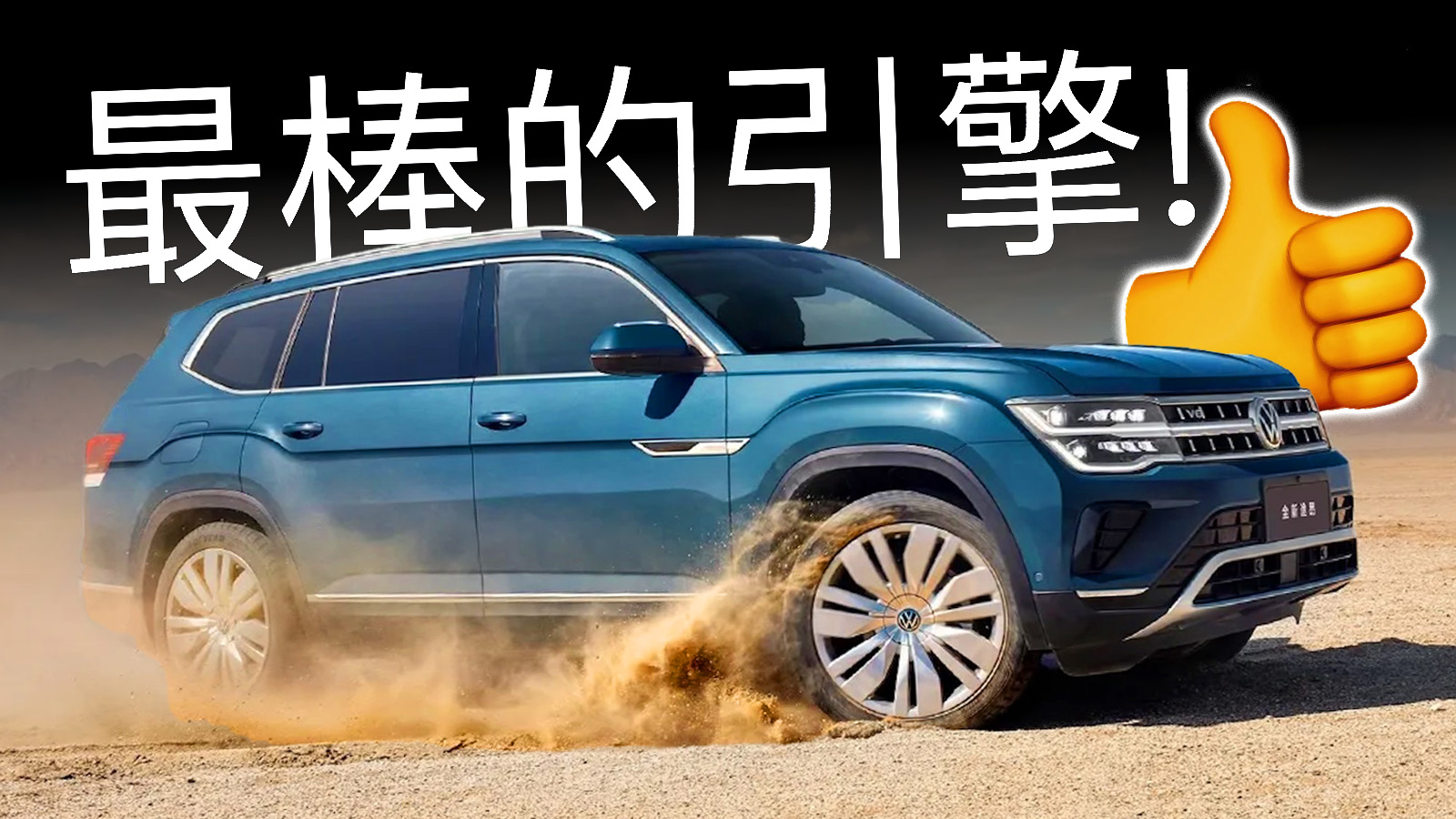
How do you start a fight among a bunch of car nerds? Just ask if the VR6 is a V6 or an inline-six. For more than 30 years, Volkswagen’s ingenious shallow-bank-angle, single-head six-cylinder engine was one of the most unique motors on the market. From its Wookie growl to its willingness to take boost, this is one unforgettable mill. However, one of the most tempting variants was never sold in North America, or even Europe. You know the outgoing Volkswagen Atlas? Turns out it was way cooler in China.
The first-generation Volkswagen Atlas is only just on its way out, but pre-facelift examples proved to be perfectly fine, genuinely enormous family haulers with no learning curve. You initially got real buttons for everything, convenient keyless entry pads on the rear door handles, and Big Gulp-sized cup holders. The perfect model to take to China under the names Teramont for the regular Atlas and Teramont X for the two-row Atlas Cross Sport.


However, there was a little bit of a problem with the U.S.-spec model when it came to optional powertrains. While the extra-cost engine for the old Atlas in North America was a 276-horsepower naturally aspirated 3.6-liter VR6, China has a strong 25 percent excise tax on passenger vehicles with engine displacement between three liters and four liters. While Volkswagen could’ve simply turned up the wick on the EA888 two-liter four-cylinder engine to Golf R levels, the automaker decided to do something infinitely cooler.

It starts with the familiar iron block VR6 architecture, but it shrinks each combustion chamber so that total displacement only adds up to 2,492 cubic centimeters. That’s small enough to fall under a far more favorable nine-percent excise tax, and it resulted in a nearly-square bore and stroke of 81 mm by 80.6 mm. Since relying on natural aspiration would’ve probably produced an engine less potent than the standard two-liter turbocharged inline-four, Volkswagen then added a turbocharger, resulting in peak output of 295 horsepower at 6,000 RPM and a beefy 369 lb.-ft. of torque from 2,750 to 3,500 RPM. That’s 111 more lb.-ft. of torque than the U.S.-spec 3.6-liter VR6, and a horsepower tie with the Holy Grail Passat R36. Talk about the pride of the Salzgitter plant.

Unsurprisingly, this much torque would probably be too much for the U.S. model’s Aisin eight-speed automatic, so Volkswagen gave the VR6 Teramont and Teramont X its stout DQ500 seven-speed dual-clutch automatic transmission. With the confidence of all-wheel-drive, it all adds up to a package that might’ve actually done well in America. After all, there’s a market for the Ford Explorer ST, right?
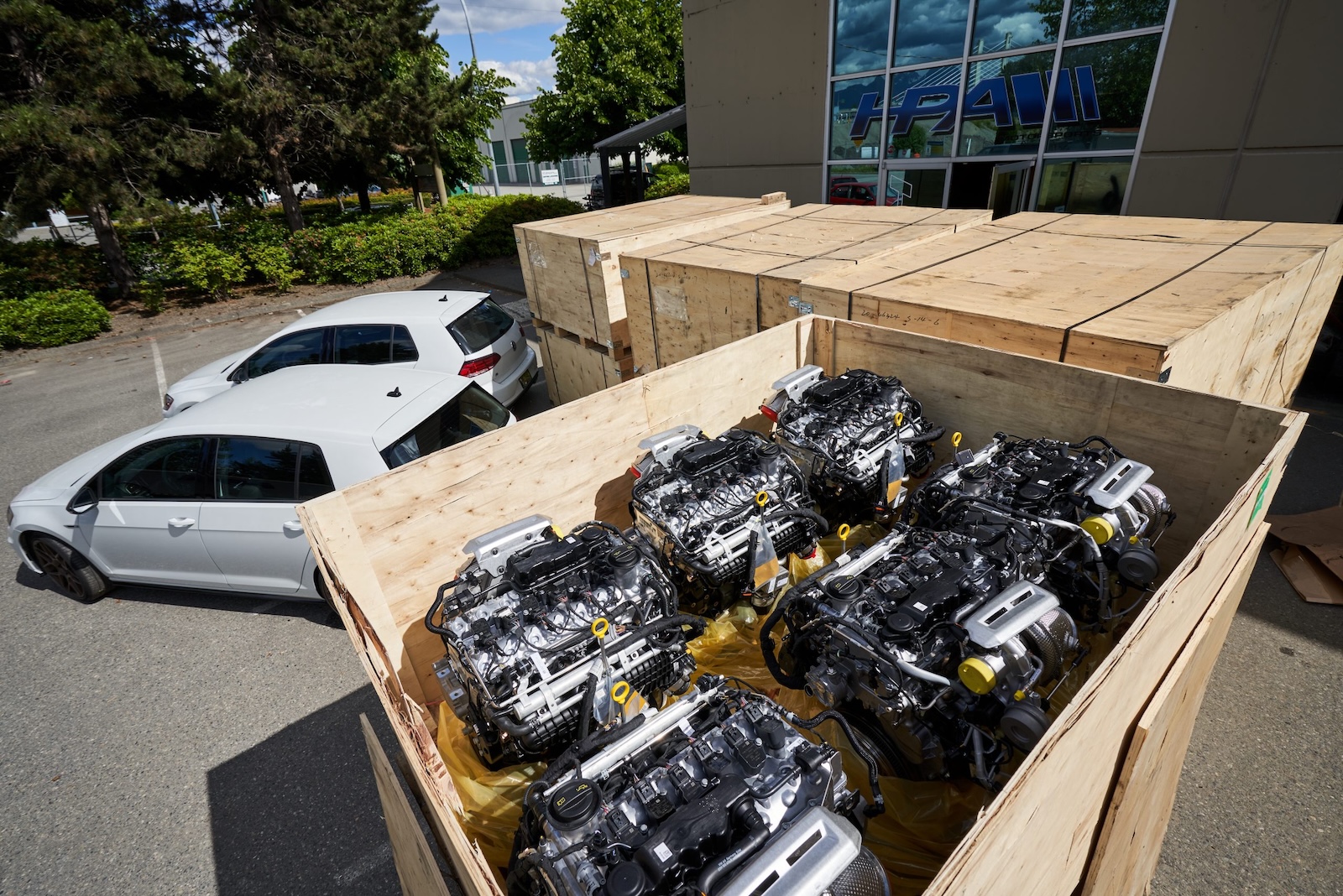
Sadly, good things don’t last forever, and Volkswagen phased out production of the VR6 in 2024. However, because a bunch of both the earlier direct-injected DDKA 2.5-liter turbocharged VR6 and the later dual-injected DPKA 2.5-liter turbocharged VR6 engines were still around, British Columbia-based tuner HPA Motorsports made a deal to acquire a load of them from Volkswagen. With a little tweaking, the end result is the HPA VR550T program. That’s 550 horsepower, with a goal of OEM-like driveability. At $40,000 turn-key, it’s not the sort of thing you buy on a lark. For the right VR6 fans, though, it could prove worth it.
Then again, what if you don’t want a turn-key product and are willing to do things the hard way? The previous-generation Teramont and Teramont X are now used cars that face attrition in China, and you know what that means. That’s right, not only is there a market for rebuilt DDKA 2.5-liter VR6 engines, but you can find reconditioned long blocks being sold on Alibaba, and they aren’t even wildly expensive. Here’s one for $2,200.
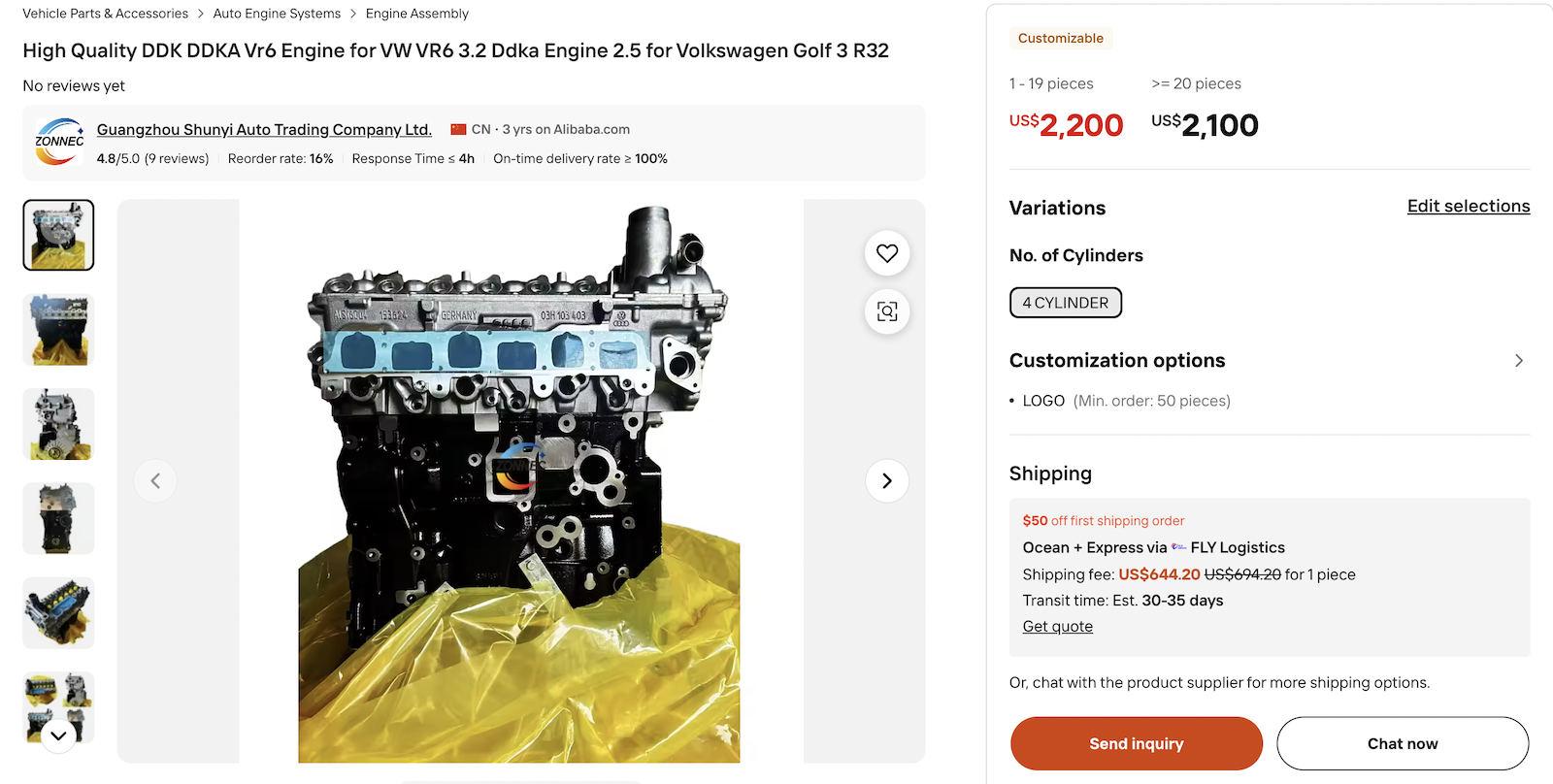
Now, going this route does come with some downsides. Since a long block is basically a complete engine minus all accessories, you aren’t getting an intake manifold, an exhaust manifold, or a turbocharger for that sort of money. Granted, if you’re going bonkers, you’ll probably want to fabricate your own turbo manifold and intake manifold, so maybe consider this an advanced DIY option. You’ll also need to figure out an accessory drive system, but if you’re putting this thing into say, a Corrado, maybe its better to not have all the OEM Teramont components. Look, if I had more space and could TIG weld, bad ideas would be happening.

In some ways, the 2.5-liter turbocharged VR6 feels like the finale of Volkswagen’s truly mad engine phase. The same era that gave us the Touareg V10 TDI and the gloriously weird VR5. Would a boosted big-displacement 3.6-liter VR6 have greater overall potential? Perhaps, but I still want to know what that small-displacement variant feels like. Who’d have thought a Chinese-market family SUV would hide such a fascinating secret?
Top graphic image: Volkswagen


A 300 hp 2.5L VR6. With the potential to go to a whopping 550? This is massive news tbh for VW people.
I had a (Australian) second hand top spec 2002 Bora 2.8l V6 with the 4motion system. It was the best worst car I’ve ever had. I got it with over 120,000kms on it, but it hadn’t necessarily been loved well. Almost everything attached to the engine broke and got replaced at some point, but the engine itself was glorious and when everything worked it was sublime.
In the end I got rid of it for less money than I should have. And then I discovered a few months later that the new owner was replacing the 2.8 with a 3.2. So replacing the one reliable thing about it and keeping the rest of the unreliable bits attached.
Of all the cars I’ve had, that’s the one I regret selling the most, and wish I had invested a lot of pointless dollars in making it better.
I’m not seeing a Chinese Crossover.
I’m just seeing a Chinese-market VW Atlas.
What am I missing?
an editor.
Back when I was a VAG boy, turbocharging the 3.2 or 3.6L VR6 was always the holy grail build. I looked at buying a supercharged MK4 R32 at one point in time but the vibes of the owner and car didn’t fill me with confidence that it wasn’t just going to explode. Probably still should have bought it.
Theres a MK5 R32 for sale near me currently, manual, but with an R36 engine swap. He wants far too much money for it though.
It really doesn’t matter how many cylinder heads it has. It’s a “vee” engine. VW cribbed the basic engine design from Lancia, and their engine was proudly a V4.
If I feel like being annoying, Subaru and air-cooled VW/Porsche engines are also “vee” engines, the angle between the cylinder banks just happens to be 180 degrees.
Yes, Lancia and VW are V-engines, but Subaru and Porsche are not.
Subaru and Porsche boxer engines use a different crankshaft so that the cylinders move in opposite directions. Boxer crankshafts have an extra pin.
https://www.aircoolednut.com/erkson/personal/vbox3s.gif
Ferrari’s “boxer” (used in the BB and Testarossa) *was* just a 180-degree V engine that didn’t use the boxer crankshaft.
It’s just simply not a vee engine. It’s an inline with the cylinders splayed a little to reduce its overall length. It has an inline 6 crankshaft (and cams ofc). Lancia’s may have been a v4, but VWs is semi proudly an inline. It is externally marketed as a v6 for marketability reasons but in reality, VR stands for “shortened inline”, so even they know it’s an inline 6.
This is the correct answer! Considering this has one cylinder head, one exhaust manifold, one crank, and a single block rather than a block split into a “vee”, this is an inline engine. Anyone that’s ever seen the intake manifold off of one of these can easily say it’s an inline.
Interesting that they didn’t use the in-existence 2.5L VR5 instead of making the 3.6L VR6 smaller. Maybe the VR5 wouldn’t have been able to handle boost. I also know that the Chinese market has a thing about # of cylinders, to the point where Ford reverted back to the 1.5L I4 after encountering issues moving the newer 1.5L I3.
Now I’m imagining a VR4
The W8 in the Passat is a pair of VR4’s 😉
And I’m sure there’s W8s out there that are only running on four cylinders 😉