

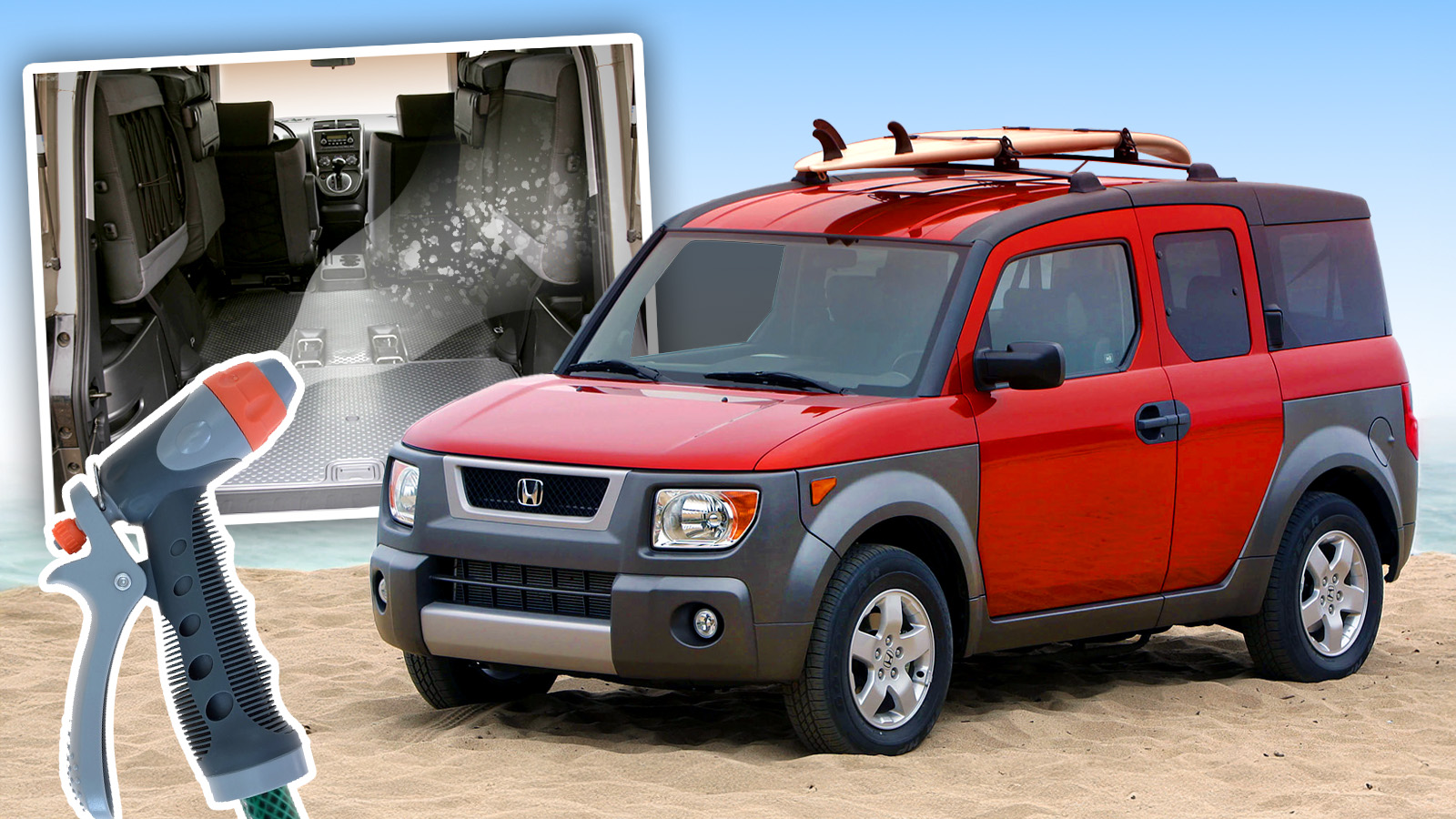
The Element is easily one of the best vehicles ever created by Honda. There’s so much that’s just awesome about the Element, from its smart appearance to its insane practicality. If you ask an Element owner, they might even tell you that the Element is so genius that you can clean it out with a hose. Unfortunately, I have bad news. There’s nothing physically stopping you from hosing out your Honda Element, but it comes with a dark tradeoff. Let’s get into this.
Few automakers have understood their market as well as Honda has. For decades, Honda has built a reputation for legendarily reliable and practical cars. Honda has also catered to the enthusiast – not just the car enthusiast, but pet lovers, outdoorsy types, and large families.


Something I’ve found fascinating is that when a rumor or myth is created in the automotive world, that myth sometimes travels far. Enthusiasts end up passing that myth around to each other. If that myth goes uncontested for long enough, sometimes the myth becomes accepted as the official truth.
Sadly, it looks like the Honda Element has gotten caught up in one of these deals, and I want to correct it before more damage is done.
Not Honda’s First Rodeo
A Honda product has been subject to mythologizing before. For more than two decades, motorcyclists loved to talk about how the Honda PC800 Pacific Coast was a weird bike because not only was it built for car drivers, but it was designed by car designers. Motorcycle enthusiasts pointed to the motorcycle’s bodywork, instrumentation, weather protection, mirrors, and trunk, all rendered in car-like style, as evidence. The myth became accepted as reality.
How big did the myth get? In 2020, prominent motorcycle YouTube channel Fortnine took the myth a step further. Until then, people just said that the Pacific Coast was made by “car designers.” Fortnine said that these designers were specifically from Acura. That video, which has 1.4 million views today, even has the title “The Weird Motorcycle Designed like a Car.”
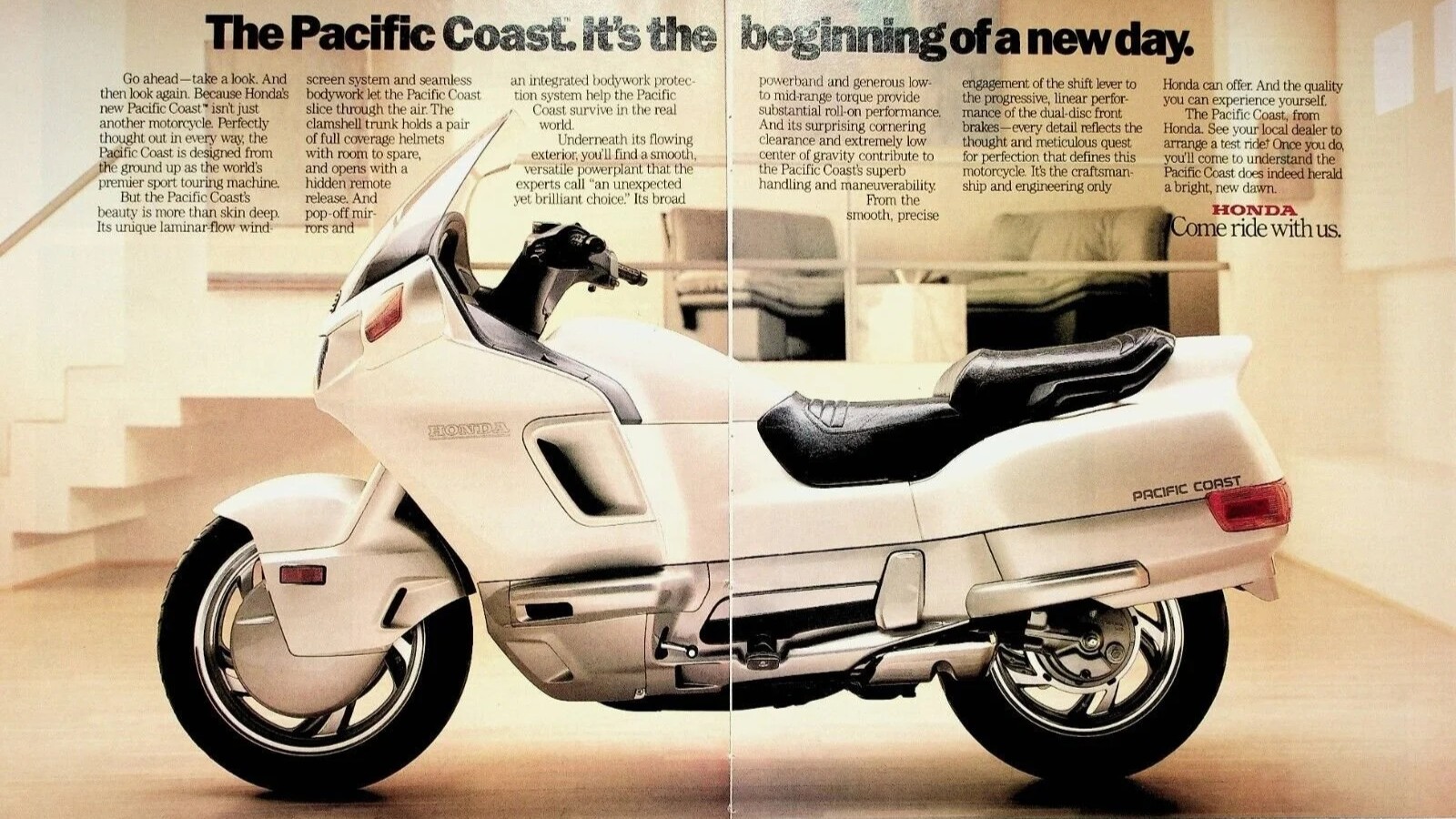
But where did this myth come from? There was not a single press release or brochure that I could find that mentioned car designers at all. You’d think that, if the myth were true, Honda would make that a headlining thing to advertise.
So, I reached out to Honda Powersports, and thankfully, the division still had people on staff who were involved in the design and launch of the motorcycle. They told me, quite bluntly, that the PC800’s design and engineering were handled entirely within Honda’s motorcycle division, and that the motorcycle wasn’t designed for car drivers, but to be appealing to non-riders who might feel intimidated by a typical motorcycle. All similarities to cars were just coincidences. Here’s that Fortnine video:
This was further reinforced by period reviews. When MotorWeek‘s John Davis tested the PC800, he said the bike was for intimidated beginners. He made no mention of car designers or a target market of car drivers.
The story of the PC800 is relevant because a different, yet equally powerful rumor has floated around the Honda Element for years.
The Coolest Honda Crossover
The first time I remember running into the rumor was in 2012 when I signed up for an account at Jalopnik. Whenever the subject of the Honda Element came up, Jalopnik readers were quick to praise the Element for its interior that could be easily “hosed out,” unlike other crossovers.

You cannot escape the claim. Cruise through the comments in Facebook groups or YouTube comments, and you’ll find people saying that Honda designed the Element to be washed out with a garden hose. Just this week, I read at least three comments here at The Autopian that made the same claim.
I’m a huge fan of the Element, and given more space than I have now, I would own one. Yet, this has always confused me. For years, I’ve heard that you could hose out the interior, but I never heard such a thing from Honda. I have scoured brochures and press releases and found nothing. Surely, Honda would have mentioned you could safely hose out the interior if it were designed for that, right? The idea has racked my brain for years. Now, I have decided to get an answer once and for all.

Before we continue, I think it’s worth explaining why the Honda Element is worth creating such a legend over, and it’s because the Element was a legendary crossover in itself.
According to Honda, the Element’s history is about as weird as the crossover itself. It starts with the Model X concept, which began development in 1998. The idea was to make a vehicle for young men, specifically, dudes who surfed, rode mountain bikes, went climbing, and perhaps liked the X Games. In 2001, the Honda Model X concept made its public debut at the North American International Auto Show in Detroit,
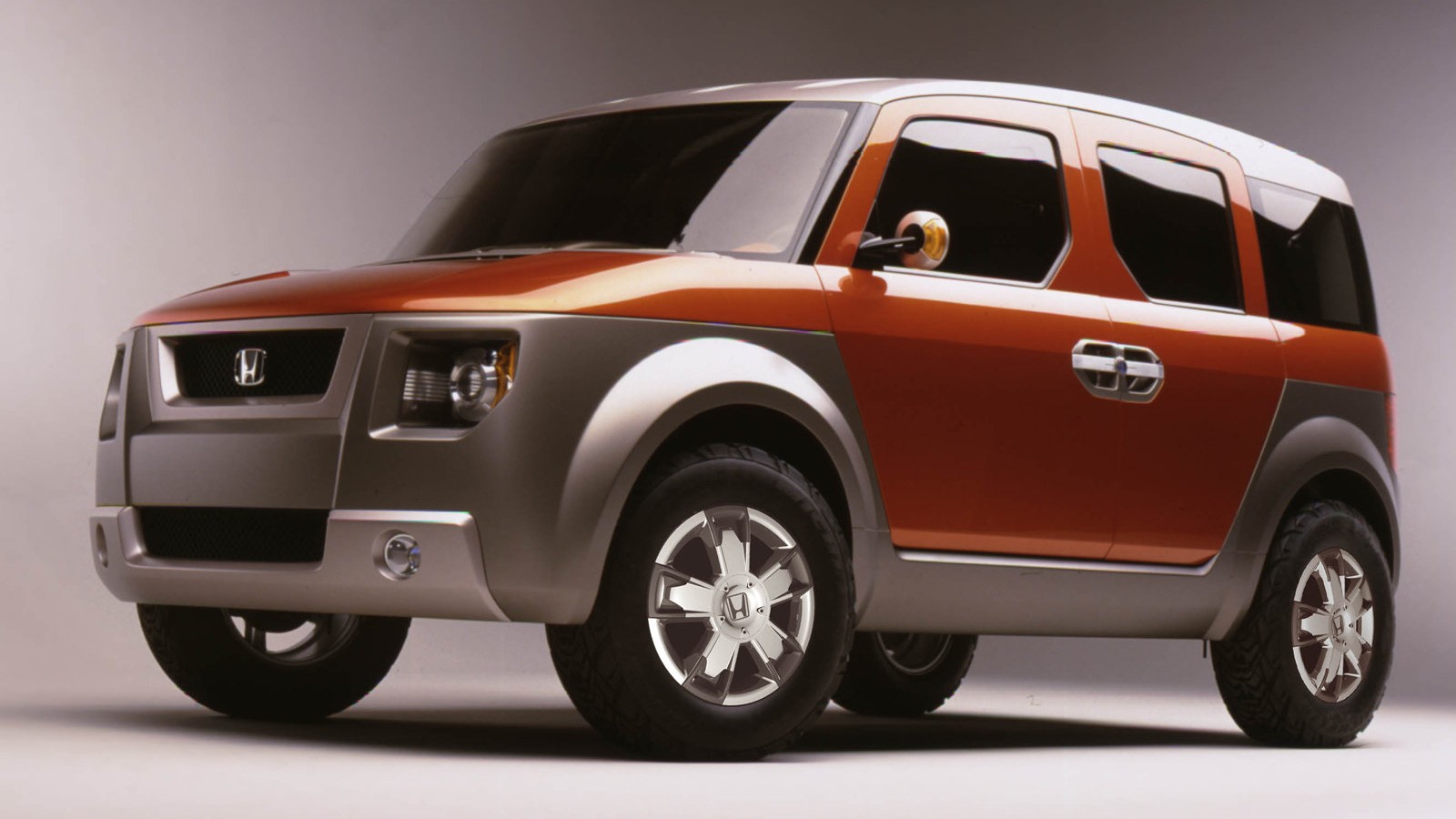
The vehicle would go on sale in December 2002 for the 2003 model year as the Honda Element, and what was awesome was that the concept car looked pretty close to the production car.
The Element was amazing right out of the box. The bones of the Element are largely based on the Honda CR-V, and thus, aren’t that impressive. At launch, you could get your Element with a similar 2.4-liter inline four that was available in the Accord and the CR-V. This engine made 160 HP in the Element and was mated with either a five-speed manual or a four-speed automatic. The Element didn’t move with much alacrity – 60 mph came in 10 seconds – but that didn’t matter. What made the Element so cool was how it looked, and how you could use it.

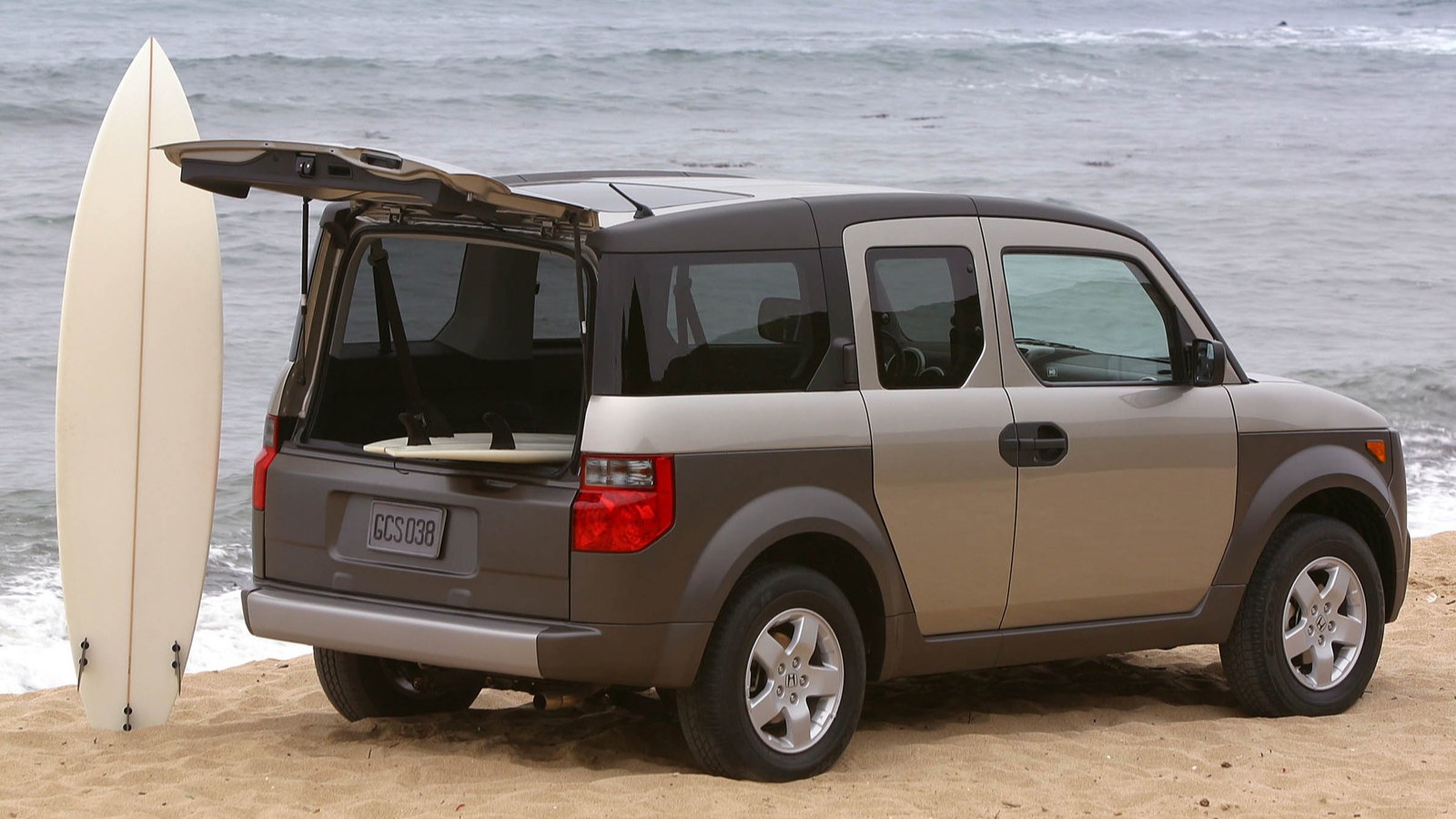
Car and Driver found that, for starters, due to its carlike underpinnings and independent suspension, the Element handled way better than you’d expect a big box to. But the real magic happened in and around the Element. Pop open the side doors, and you have a huge opening to load in sporting or camping equipment. You could also fold all of the seats flat into a bed or flip the rear seats up to create a cargo area large enough to carry a small motorcycle or some bicycles. Those seats were made out of stain-resistant material. You could even remove one of the glass roof panels in the cargo area to load a tall item.
The Element also had clever storage solutions, a rack for even more gear, and then we get to perhaps one of the vehicle’s highlight features: its TPO-coated urethane flooring. This was huge. Having stain-resistant seats and a plasticized floor was great for so many reasons. Kid spills a drink? Just wipe it away! Want to carry the dog? The Element is perfect for that. You don’t even have to care if the tires of your minibike are dirty when you load it because the floor is just so easy to clean.
Hosing Out Your Element?
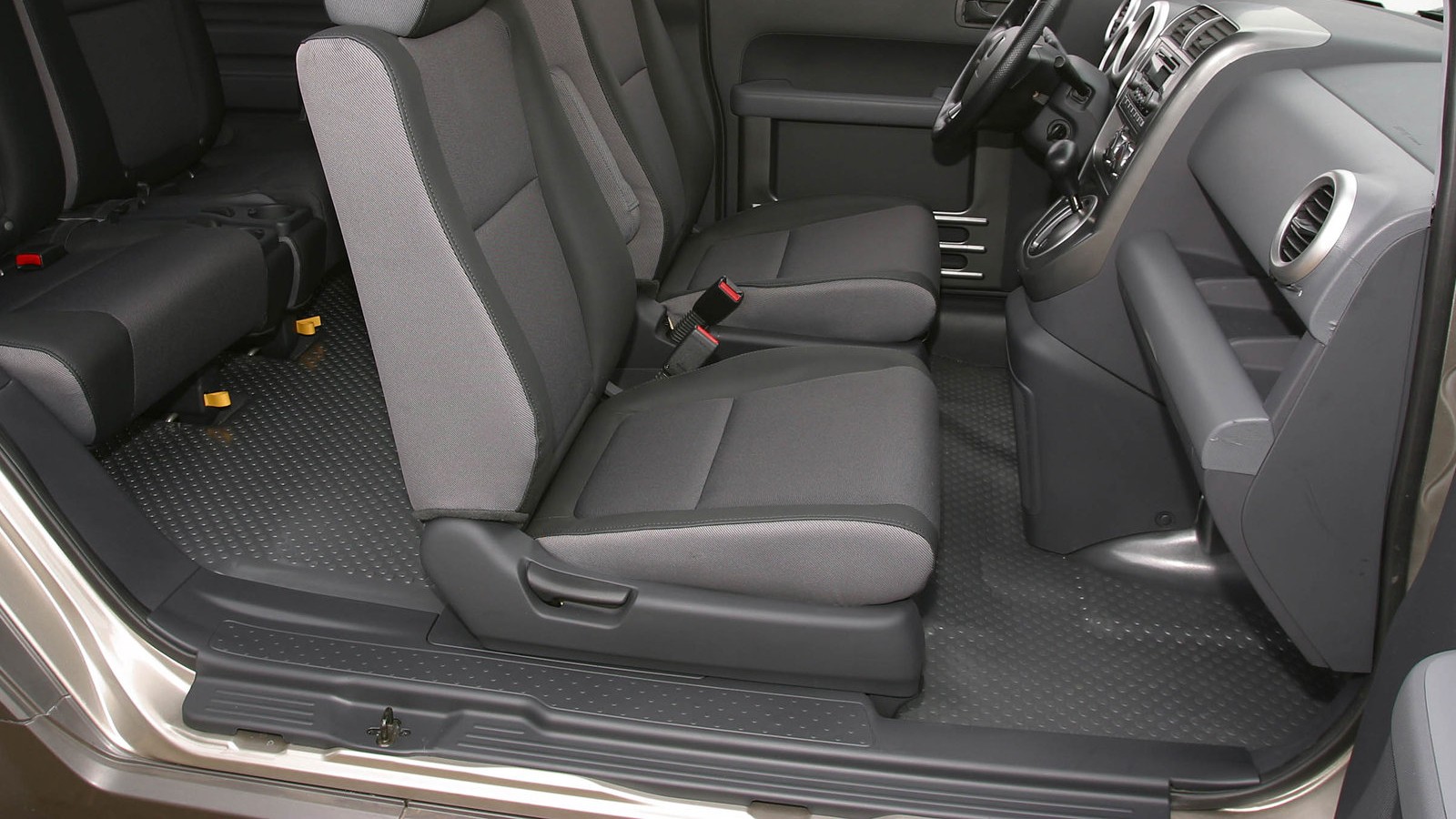
This urethane flooring is at the center of this whole idea that you can hose out an Element. But here’s the weird thing. I have gone through so many brochures and press releases, and not a single one of them mentions a floor that can be hosed.
The closest thing that I could find was in Honda’s original press release for the 2003 Honda Element. Here’s the part about the floor:
The rugged and worry-free interior of EX models features waterproof material on the front and rear bucket seats (front seat only on DX models). A urethane-coated utility floor resists water, dirt and scratches while providing easy clean up and easy cargo loading.

Maybe folks took the waterproof seat material and water-resistant floor to mean that you can just point a hose at the floor and fire at will?
Here’s a brochure image, check out the bottom:

I also took a look at period reviews. Car and Driver‘s initial review said that you could wipe down the floor:
The low, plastic-coated (wipe it clean!) flat floor allows for removal of the rear seats, making the most of the available cargo space.
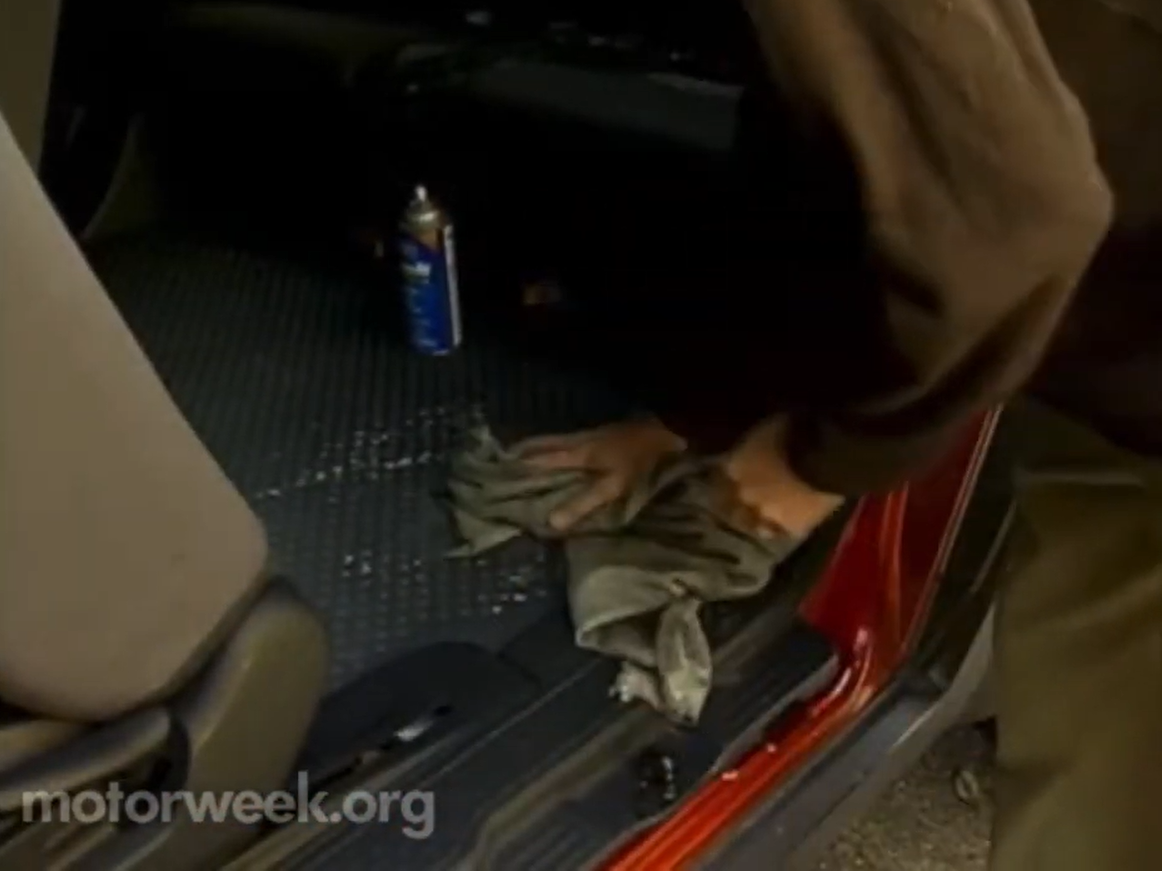
Motor Trend‘s early review just said that the floor is easy to clean, without stating a specific method. The charismatic John Davis of MotorWeek explained that the Element’s floor could be cleaned with a wet sponge, and the video shows someone doing just that:
All of the above cleaning methods that the car buff magazines mentioned are approved to wash the floor. Honda wanted the floor to be easy to wipe down, sweep out, or vacuum up. It’s a floor that won’t stain and won’t be filled up with crumbs and petrified fries after kids have their way with it.
But then I dug further. In Car and Driver‘s long-term review, Peter Ferguson makes a quick comment about spilled drinks, emphasis mine:
The cup holders are too far back and too small to hold and support the “grande” drinks. They tip over (oh, yeah, just hose ‘er out).
In a different Motor Trend review, a journalist straight up says that you can hose the Element out, emphasis mine:
The materials are New Wave, with hose-it-out, non-slip urethane flooring, waterproof seating material (covering all four seats on the EX model), geometric graining on the padded vinyl surfaces of the two-tone color-coordinated dash, and bungee-cord map-pocket straps on the back of the driver-side front and rear seatbacks.
Folks on Reddit claim that salesmen at dealerships might have also told customers that you can hose out the Element’s interior. This is pretty convincing evidence to me that car buff mags and Honda dealerships created a new feature out of thin air. Still, I asked Honda if the interior is supposed to be hosed out or wiped out, and got this back:
We do not recommend hosing out the interior of the Element. We advise against it. It could lead to unintended water intrusion. You are correct though that the floor is easy to wipe clean.
Hidden Dangers
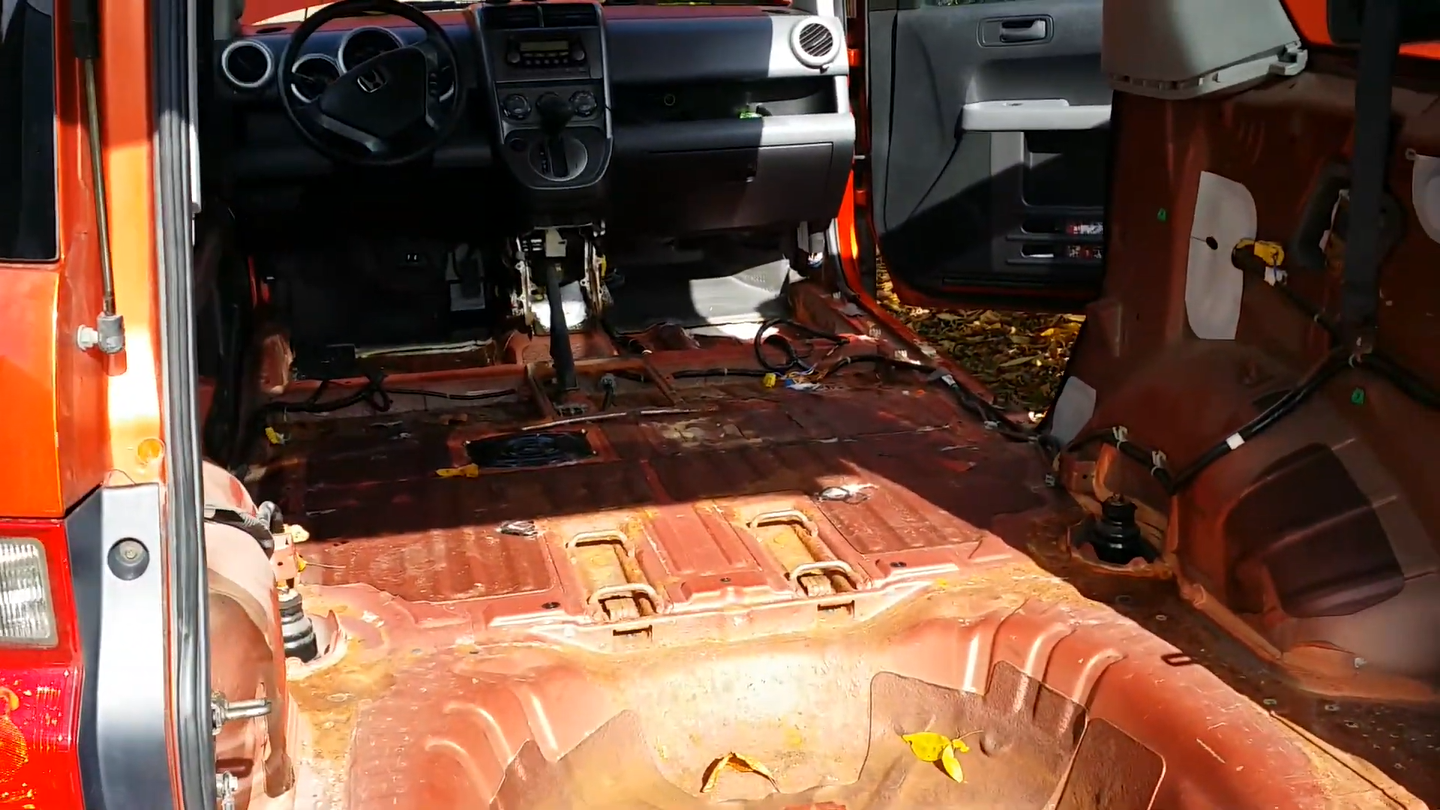
So, that settles it. You are absolutely not supposed to hose out an Element. But why do I care about this so much? Well, it’s because pointing a garden hose at your Element can have catastrophic long-term consequences. One Element owner has even dedicated an entire webpage to warning other Element owners not to hose out their interiors.
Not only are the vehicle’s electronics not waterproof or water-resistant, but the floor has no real way to evacuate a water inundation. Aside from the spare tire well, there are no real drain holes for the water to go to, either. If you get aggressive enough with the hose, water will even go into the rear HVAC vents.
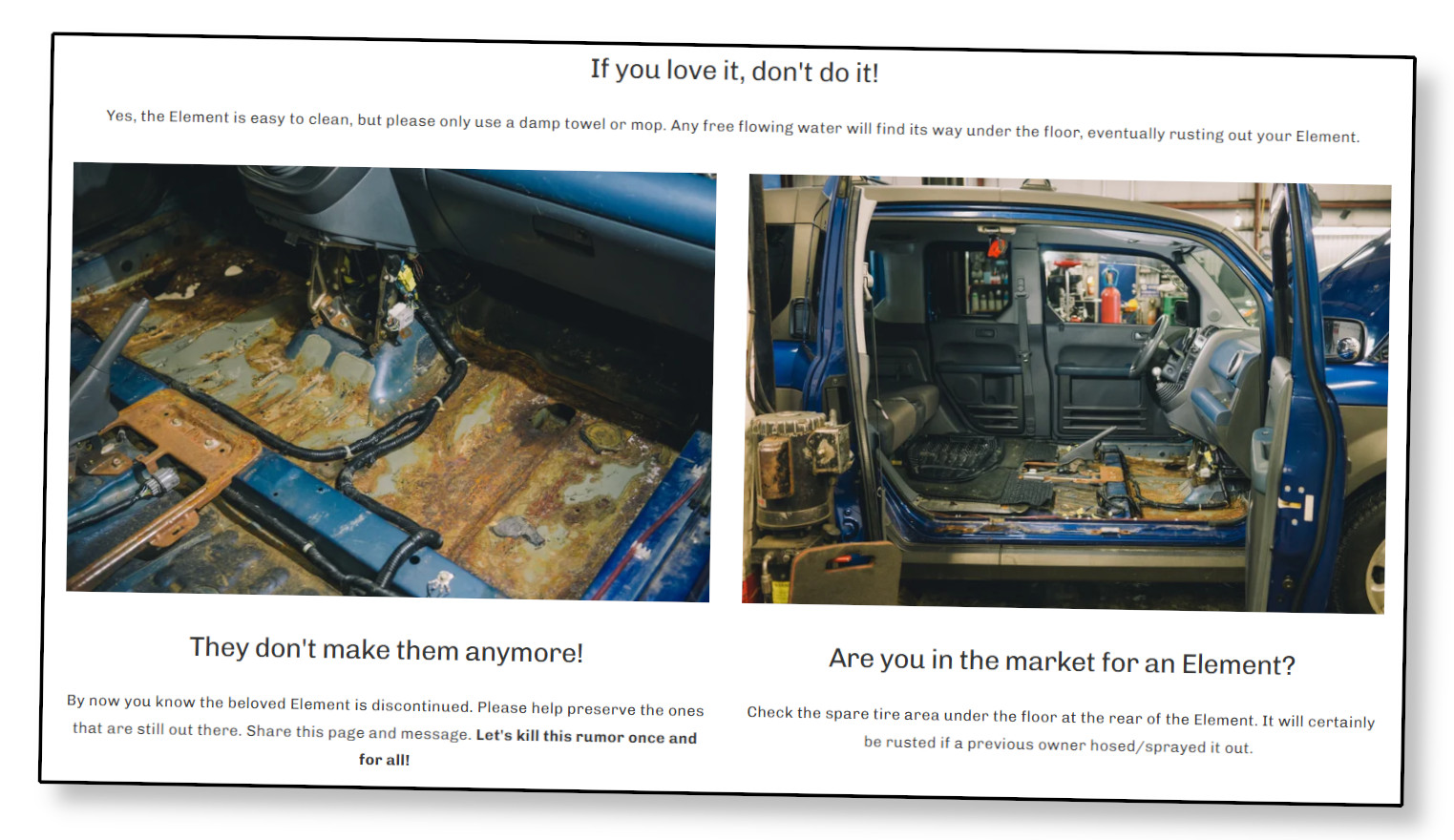
Further, the floor is not perfectly sealed. If you hose out your element, you will put water between the flooring and the metal floorboards underneath. That water will sit there, fester, and rot out the floorboards. This is especially sinister because, due to the plasticized floor, you may never even notice the rust growing right under your feet.
This is terrible news for someone looking for an Element today. You can find an Element that looks perfectly clean on the outside, but has a totally rotted out floor from repeated hose downs. If you never check under the floor, you might never even know. This is especially bad because, technically, even California-based Honda Elements could have floor rot due to hosing out the interior. Here’s a video from a YouTuber who shows pretty heavy floor rust from what he suspected was someone hosing out the interior in the past:
Again, to correct the guy in the video here and to make sure we’re all clear, it wasn’t Honda that advertised hosing out the interior.
So, don’t hose out your Element. Honda says it’s okay to wipe down the floor, and it’s okay to use a sponge and a little bit of water on the floor. Sure, that’s a little more work than blasting your garden hose at your car, but your car will thank you later and reward you with clean floorboards.
If you’re looking at buying an Element, ask the owner if they’ve hosed it out. Also, see if you can check under the flooring for rust. Good luck!
Update: A reader has reached out and pointed out that the Honda Model X concept did have an interior that could be hosed out. Maybe some of the confusion comes from there, too.
Sadly, all of this seems to be because of some offhand comments made over two decades ago by car journalists and dealerships. The rumor spread far and wide, then was allowed to stick around for long enough to be accepted as truth. Rumors are powerful and weird like that. Hopefully, at least, this is the end of that rumor.




I was very interested in getting one of these as my family hauler. Being who I am I joined the Element Owner’s Group forum to get some real owner feedback on using them for hauling two kids around town and on the odd road trip. The issue of hosing these out was being de-bunked on nearly every thread by current owners in which the topic came up, and this was twenty years ago when they were first release. The only people that I have every heard say this are those that have never owned one.
~As an Element owner,~ I still correct people to this day about the hose-down floors. It’s one of those rumors that just won’t die. The last one was from an FJ Cruiser owner. No, your floors aren’t hose down either!
I bought my very-mistreated ’07 Kiwi two years ago and despite all the damage the previous owners did to the engine, that K series won’t die. Paid for itself ten-fold with that flat load floor compared to the Fit it replaced.
When my wife and I found out that we were going to be parents for the first time, we traded in our 2 seater B3000 for a new ’03 Element. One of the biggest reasons we chose the Element was that the salesman (a family friend) told us we could hose down the floor. My salesman (at least) was telling people they could hose down the floors for these things! Huge fan of these things btw- raised a family in the ’03 and then an ’07. Never ended up hosing out the back, but definitely mopped it a few times!
Oh you can hose anything out.
When I was living in a fifth floor walk up on the upper east side of NYC , they were building a super tall apartment building next-door and after they pumped a couple cement trucks full of concrete into the forms they couldn’t figure out where it all went. It turned out the exterior wall of my apartment had collapsed, and it filled with wet concrete. 8 feet deep of wet concrete. Fortunately, I was not home at the time.
So anyway, they remediated the situation by having a FDNY pumper truck pump water into my apartment until they had washed 25 cubic yards of concrete mixed with my stuff down six flights of stairs. It even made the news.
About a week later I had to go to the NYC department of buildings to retrieve some records for a lawsuit, and the woman at the main counter said into the intercom “it’s the guy with the apartment” which is quite something in a city of 8 million people and 3.5 million apartments.
Of course 30 years later my father-in-law’s supply apartment on the 27th and 28th floor filled with water when the FDNY pressure tested the water tank on the 29th floor. So in my family, not all that unusual.
So, like I said, you can hose anything out.
You can absolutely hose out anything…once.
I’ve always wanted one of these. When they were still sold new, I test drove manual and automatic versions, in FWD and AWD. I liked them all to be honest. Despite the look, it really never felt top heavy. Yes, none of them were remotely quick, nor really handlers, but they felt well-made and weren’t too noisy for big boxes with such large openings. I’m also a fan of Honda’s older, larger displacement, naturally aspirated engines, which always provide a feeling of longevity, unlike all of the 1.5 turbos I’ve tried in recent models.
I knew that you couldn’t really hose them out, though I gather rust can still be an issue under the vehicles too, particularly on east coast cars where roads are salted. Almost all used Elements now have six figures on the odometer, and given that the used market has yet to fully recover from the post-pandemic craziness (it probably never will) I’m sure any low-mile ones you can find will be up in the five figure range, and then some.
I always thought that the fenders by Rubbermaid were a great idea if you live where people park by ear and half of them seem to be deaf anyway.
Those exterior plastics do take a beating from the sun too, getting lighter in color and showing some ‘crazing’ over time. But that happens on older base BMW X3s, and pretty much any car from any brand that used/uses unpainted black plastic (I dunno what kind it is… maybe ABS?) on exteriors.
So no “high quality H20?” Ha ha
On a lark, a friend and I chased a swell up the east coast once. I wanted to take my Jeep, but he was all in on taking his element. I’m glad we did. Better gas mileage, better ride, and sleeping was much more comfortable with the seats folded in the element than the back of my Jeep. You could also get changed inside, which was a bonus. We did the trip in October, bound from Florida. By the time we hit Massachusetts it was 40 degrees in the morning.