

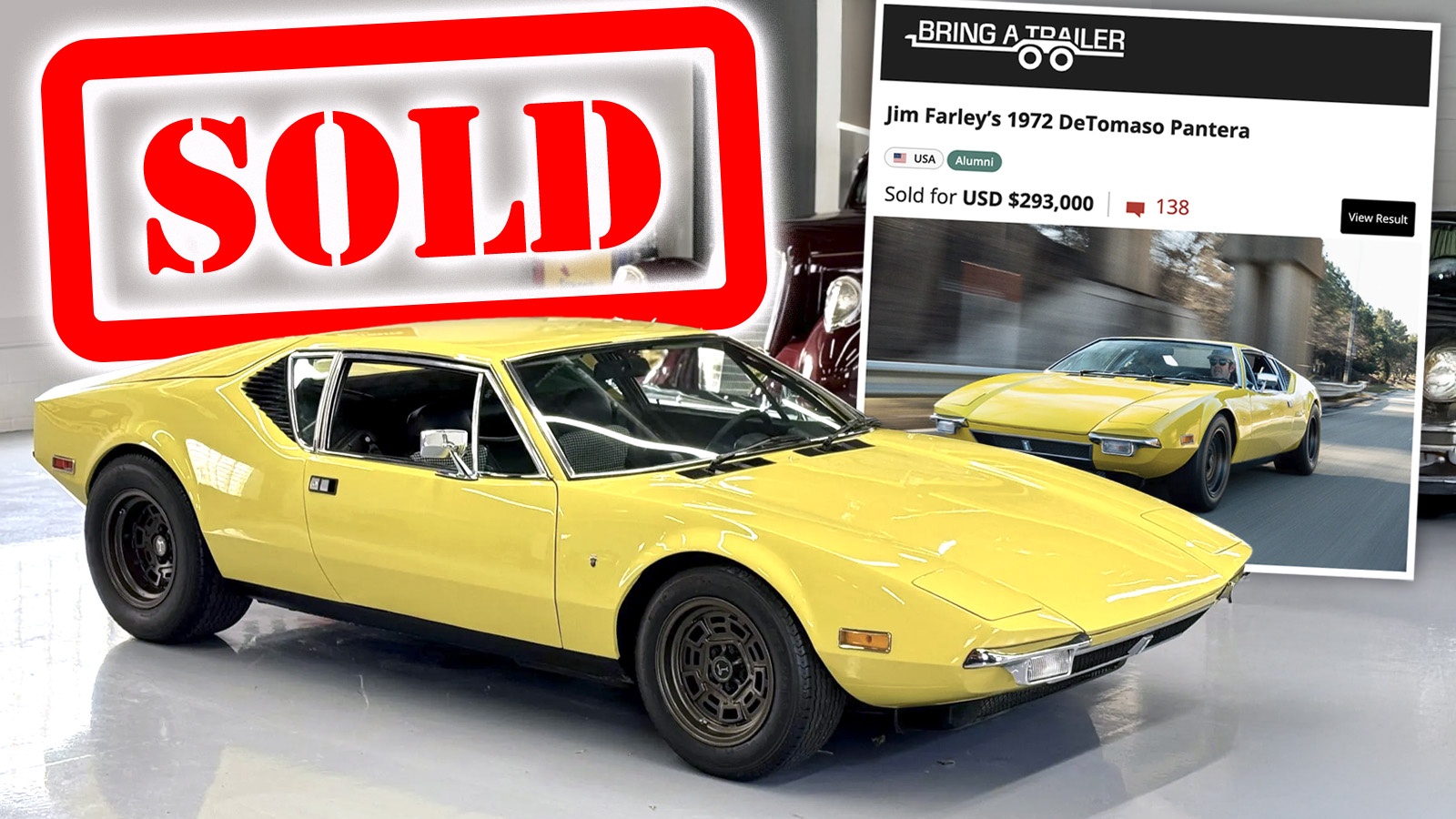
A little while ago, we wrote up the story of Ford CEO Jim Farley’s Bring A Trailer bidding history, as he had decided to sell his yellow De Tomaso Pantera on the same auction platform where he got it from. There’s a chance the car’s provenance had an effect on the auction, as it sold for a very good price: after 61 bids, it went for $293,000.
The final ten minutes were some serious big-money bidding, as the car first broke $200,000 and nearly hit $300,000. Keep in mind the car sold for $121,000 the last time around in 2024. The purchase of the Pantera is the latest link in a story that spans all the way from San Mateo to Argentina and Yokohama, Japan.


There must be a very good reason to bid a Pantera up to nearly 300 grand, and the comments on BAT go some way into explaining that. The car will be displayed at the Taube Family Carriage House in Redwood City, which includes the Kopf Family Automobile Gallery. The Pantera’s buyer is Ben Kopf, whose family has run the Towne Ford dealership in Redwood City.

Benjamin Kopf’s grandfather, Benjamin, was born in Buenos Aires, Argentina, in 1890. His father, also called Benjamin, was a brewer who had emigrated from Alsace, a region of France that was annexed by Germany in 1871. Benjamin Kopf, the eldest, passed away in 1892, casting his young son’s future in doubt. Once Benjamin the younger grew up, however, he found work at Ford Motor Company’s South American outfit in 1917. Benjamin quickly rose to a manager position, and by the time he was chosen to lead Ford’s 1920s expansion to Japan, Kopf had led the company’s operations in Chile, Bolivia, Uruguay, and Peru.

According to an article in Redwood City’s Climate Magazine, Henry Ford himself sent Kopf and his young family to Yokohama in 1925. In this passenger list from March 1925, he’s on his way from Brazil to Yokohama, having arrived in New York on the S.S. Southern Cross (later renamed USS Wharton).
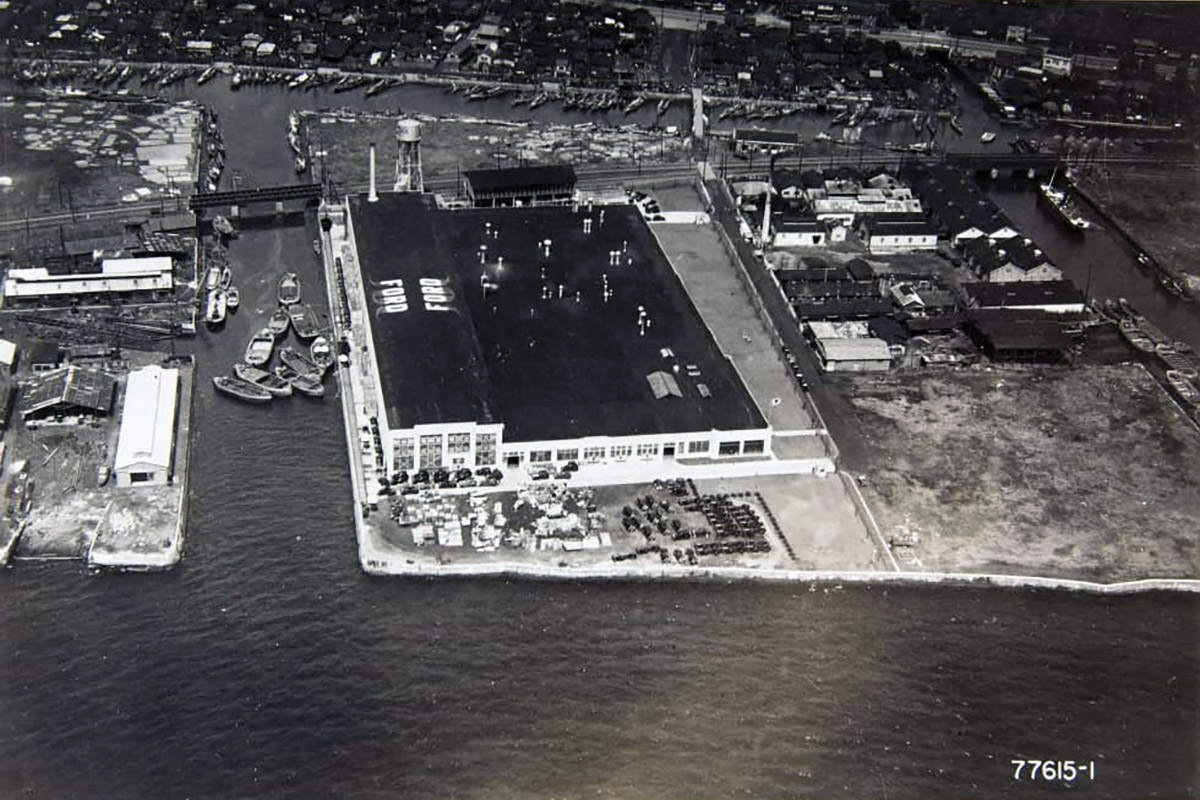
Looking at it from 100 years in the future, it’s difficult to say if the new position in Japan was a reward, a blessing, or a curse.
J. Scott Mathews wrote for the Michigan Historical Review that Kopf landed in Yokohama with one shipment of Model T knock-down kits and the US Department of Commerce report on prospects in Japan. Despite the initial outlook, the conditions in Japan were favorable for Ford. After beginning car sales in 1913 with the help of an importer, Sale & Frazer, Ford’s brand name was soon so strong and the business opportunities so good that, from 1925 to 1936, Ford was the top-selling carmaker in Japan, as reported by Japan Today in its retrospective on Ford’s start in the country.
It took until the 1930s for Japan’s home-grown brands to sell over 1000 vehicles – combined – while Ford Japan, founded in February 1925, started with 3,427 sales per year, followed by 8,677 in 1926. Kopf was practically raking in the money, especially as Chevrolet only started selling cars in Japan in 1927. Soon, Kopf expanded Ford dealerships to China, the Philippines, and French Indochina, which comprised parts of Cambodia, Laos, and Vietnam.
By the end of the 1930s, the political climate was changing. Japanese automotive manufacturers had nearly matched Ford sales, and Chevrolet had already left. In 1936, foreign companies were prohibited by law from increasing their annual production. After the Japanese invasion of Manchuria in 1931, Ford’s attempts to purchase land in Yokohama in 1934 for a proper production facility in addition to the harbor plant were initially pushed back by the U.S. Army, which stated that it would be seen as assisting the enemy, as the USA had condemned the invasion of Manchuria. The land deal was eventually made, but the Second World War was at hand.
Japan’s December 1941 attack on Pearl Harbor had a devastating effect on Ford’s Japanese operations. In the hours after the attack, Ben Kopf rushed to the factory in Yokohama to secure essential documents and was told that some of his staff had been arrested by Japanese authorities. He was soon detained himself. After a couple of years under house arrest, Kopf was able to leave the country. According to passenger lists, he arrived in New York on the M.S. Gripsholm repatriation ship in October 1943. As Kopf’s grandson says in his BAT comment, Henry Ford himself was there at the dock to meet Kopf as he returned from Japan. When Ben Kopf originally left for Japan in the 1920s, he had been dreaming of running Ford’s South American operations from Mexico City. After returning from Japan, he got that position.
In the 1940s, his son, also called Benjamin, found work at Towne Ford in Redwood City and ended up buying the dealership decades later, along with Stanford Lincoln-Mercury, Towne Mitsubishi, and Hopkins Acura. When Benjamin was ready to retire in the mid-1990s, he sold Towne Ford to his son, Ben Kopf III – the Pantera buyer.
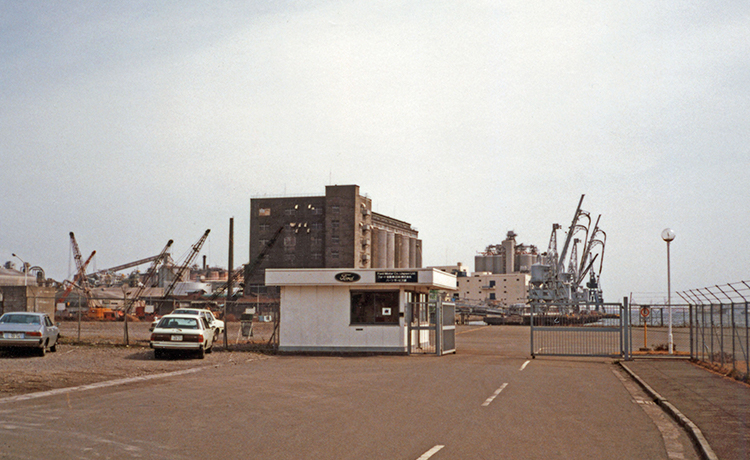
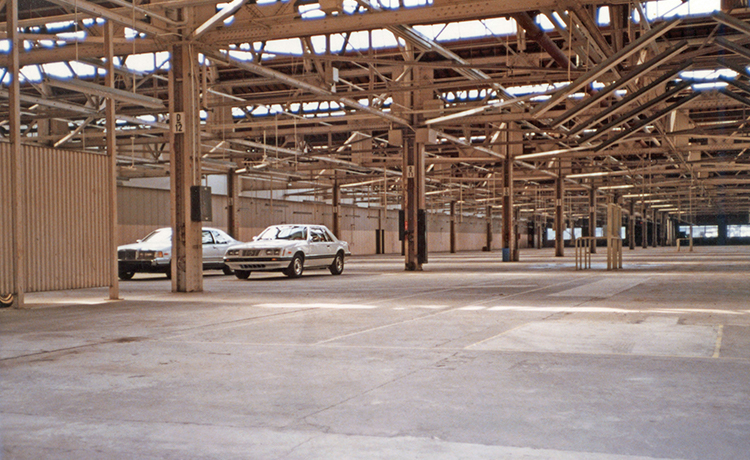
After Ford Japan had been formally dissolved in 1941, the company would not return to Japan until the 1970s. Ford’s Yokohama plant was razed in the 1980s to make room for Mazda’s R&D center, completed in 1987 (below). These 1984 photos show a Lincoln Mark VII and a notchback Foxbody Mustang inside it, years after it actually built cars.
What car would be a better fit for the Kopf Family Automobile Gallery and its dedicated display for Argentinian-American automobile manufacturing pioneer Benjamin Kopf than a De Tomaso Pantera? Don’t forget that Alejandro de Tomaso himself was also an Argentinian, forced to leave the country for Italy in 1955 after his involvement in an unsuccessful coup attempt to oust the Argentine leader, Juan Perón. De Tomaso found work at OSCA, a second carmaker founded by the Maserati brothers, and soon set up his own racing car business with De Tomaso Automobili SpA in 1959.
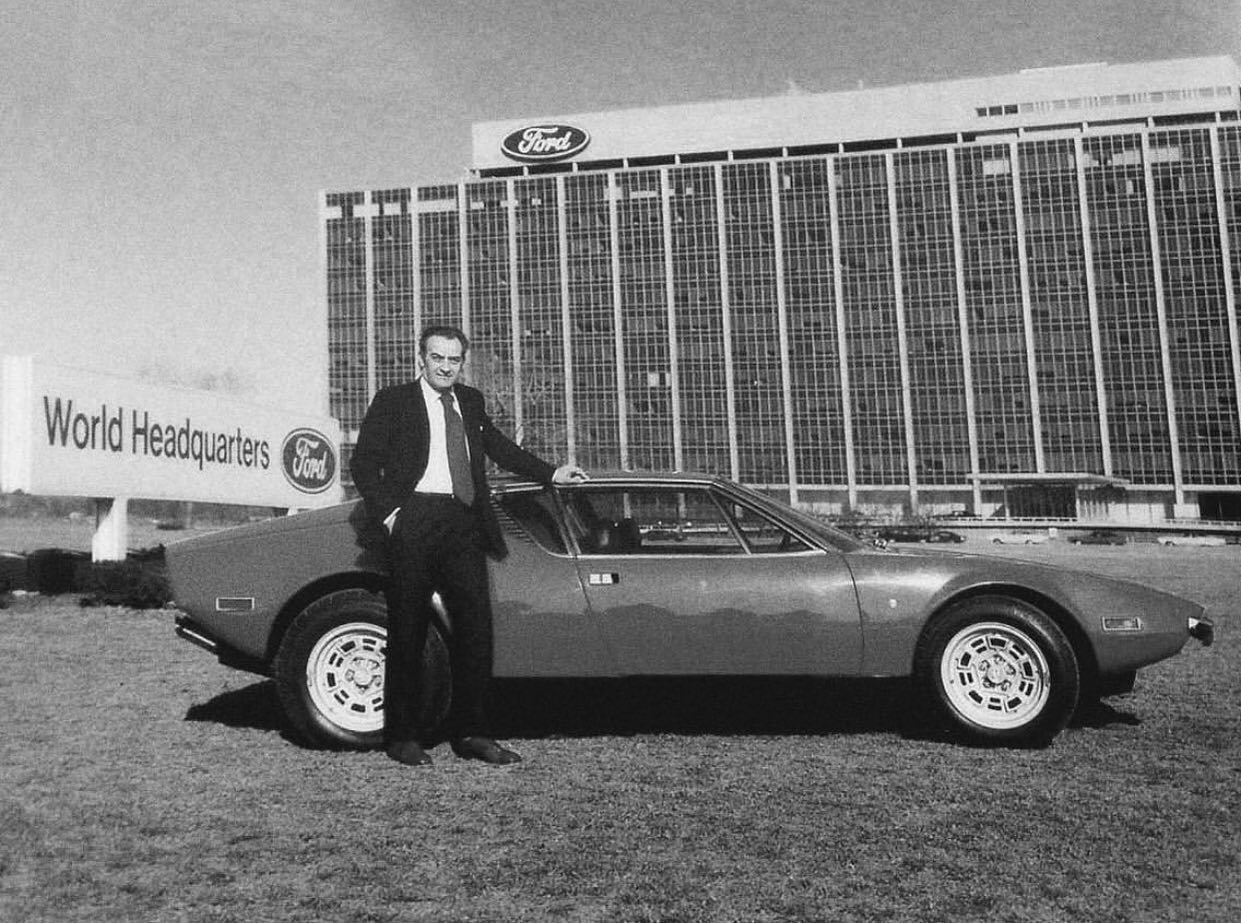
Keep in mind that Jim Farley himself was also born in Buenos Aires, Argentina. His father, James Duncan Farley senior, started working at the First National City Bank in Argentina in 1950. Jim Farley the younger was born in 1962, after which the family relocated to the United States.
It’s fascinating that an Italian sports car, with Ford power, has coincidental ties to Argentina through three different people. On BAT, today’s Ben Kopf explains that the exhibit at the museum will span Ford’s decades from 1926 to 2026, and up until the Pantera, they wouldn’t have had “anything significant” to represent the 1970s. They have now.
And for Jim Farley? Well, as the Pantera nearly tripled its price, he can absolutely now go and buy the E46 M3 he wanted.
Top image: Bring A Trailer


one might say that the pantera will end up… far beyond driven.
For the record, my last name is not Kopf…as far as you know. 😉
How much is Jim Farely paying you guys? I cannot believe the non-stop ball guzzling going on here with him.
Don’t kink shame!
I’ve passed by this museum a few times and thought I should visit. I guess I’ll do that now. Redwood City has gone all-in for development. Traffic and parking can be challenging, but how can you not visit a city that has a big sign saying “Climate best by government test.”
And the rich get richer…
Wow sold for $300,000 on BAT? He must have cleared a good couple of hundred dollars after their fees. That was not mentioned in the article
What can I say?
Beyond my wherewithal of course, but I find the question of when does a car become a collection piece vs a conveyance? fascinating.
Seems more an art than a science, though I suspect at least some of the decision has to do with the arithmetic of numbers still in existence, transaction value, that sort of thing.
It is a bummer that the car will probably not be driven
While there is something to having cars driven all the time, and I generally agree, there are plenty of driven Panteras and this one is going to a nice collection.
It’s funny as even eh, 40 years ago, modding your Pantera wasn’t a negative thing
wow. Farley has questionable citizen status according to the current admin. /s
Hey!
Deport him… just to be on the safe side!!
HES STEALIN’ AMERICUN JOBS!!!
I wonder if his status has anything to do with the Aluminum denial? Just wondering
I guess saying it (correctly) as aluminium would be grounds for deportation.
Oh my gosh, this is absolutely the kind of thing I love! The twists! The turns! Everything weaving together perfectly! Gah, what an absolutely perfect new home for this car, love love love!
The one thing that lost me was the 17 Benjamins (or was it 18?) and 6 Jims.
Shoresy has entered the Jim chat
When CEOs of car Companies are flipping cars on auctions you know times are tough