

Rear-wheel steering is a neat piece of tech that, as the name suggests, turns the rear wheels to help a car maneuver. In modern rear-wheel steering systems, it’s smart enough to turn the rear wheels in the opposite direction of the fronts to improve agility and reduce the car’s turning radius. At high speeds, the wheels turn in the same direction to improve stability. On vehicles like the GMC Hummer EV, there’s even a “crab walk” mode you can turn on that allows the SUV to drive diagonally on its axis without pointing the nose towards the direction of travel.
I’ve driven a bunch of cars with rear-wheel steering. Some I’ve enjoyed, but others weren’t exactly tuned well enough to inspire confidence in high-performance driving situations. Some are a bit too sensitive, giving you more steering than you’d expect. Some, meanwhile, would adjust the steering differently depending on the situation or drive mode.


The worst kind of rear-wheel steering, though, has to be the type that develops on its own. I’m not talking about a car magically growing a steering rack on the rear axle, of course. I’m referring to the type of rear-wheel steering that occurs when suspension parts fail, causing the wheel to be angled in a manner that isn’t straight (or the correct spec for toe-in if not “straight,” you know what I mean). In the past, I’ve dealt with this myself in various rusty shitboxes I’ve owned. If you own a Ford Explorer, you might be dealing with it, too.
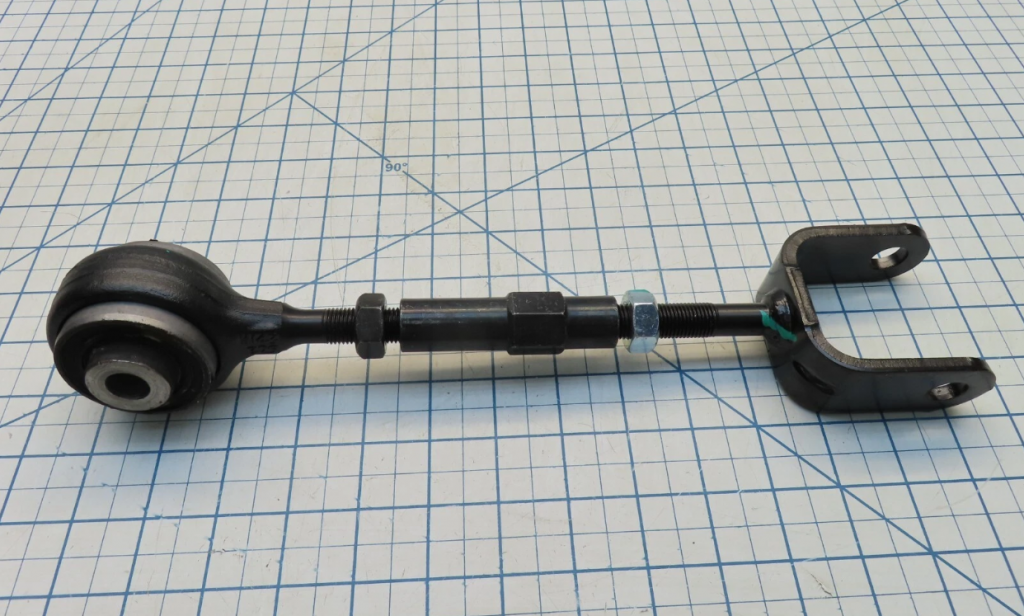
Ford submitted a recall last week for Explorers built between May 2017 and March 2019 over rear cross axis ball joints (CABJs) that could seize in place, causing the toe link they’re attached to to fracture. Toe links are an integral part of a rear independent suspension; they hold the wheel in a fixed position so it doesn’t pivot left or right while the car is braking or turning. Adjustable versions, like Ford’s original shown above, can be shortened or lengthened to modify or correct the rear wheel’s alignment. If a wheel is facing outward relative to the car’s bodyline, that means that wheel is exhibiting toe-out. If it’s facing inward, that means the wheel is toe-in.
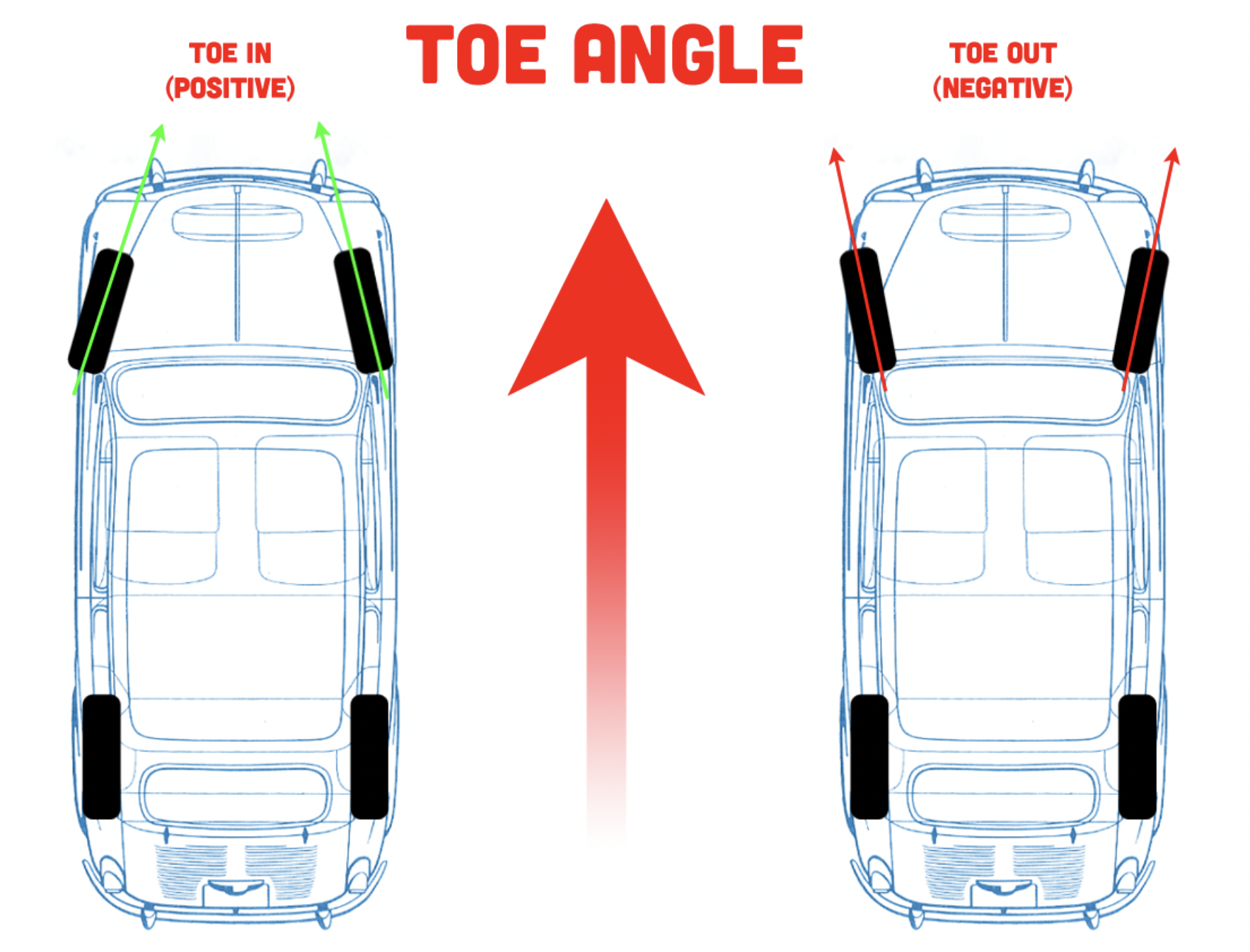
When the toe link fractures, “The driver may notice a clunk noise, unusual handling, and/or a misaligned rear wheel,” according to the recall. So basically, rear-wheel steering that you didn’t have before, can’t control, and weren’t expecting could appear at any time. A scary combination.
This recall is actually an extension of a previous recall issued by Ford back in 2022, which covered over 770,000 Explorers built from 2013 to 2017 and also targeted a faulty ball joint that seized and caused rear toe links to snap (that recall was triggered after 16 crashes and four allegations of injury, according to the NHTSA’s documents). This latest recall was prompted by the NHTSA, which started receiving complaints from Explorer owners outside the original recall spectrum. From the report:
On January 13, 2026, the National Highway Traffic Safety Administration (NHTSA) contacted Ford regarding five Vehicle Owner Questionnaires (VOQs) they received describing a loss of directional control while driving resulting from a failed rear toe link on 2018 model year Explorer vehicles. These 2018 Explorers were equipped with SAF CABJs and were therefore not included in the 21S32 population. On January 20, 2026, Ford’s Critical Concern Review Group (CCRG) opened an investigation into this concern.
The CCRG’s investigation identified 26 reports received by Ford of rear toe link fracture globally on vehicles produced after the 21S32 population. Ford’s investigation has not fully established root cause of these fractures to date, though a subset of reports indicate symptoms indicative of a seized CABJ.
Ford says it has identified two instances of crashes that could be traced back to the failed toe links in this latest recall, but thankfully, no injuries. Ford plans to implement the same fix here as in the previous recall: Install a new, stronger toe link that it says is “more resistant to a seized CABJ” than the original part. Here’s what the new toe link looks like:
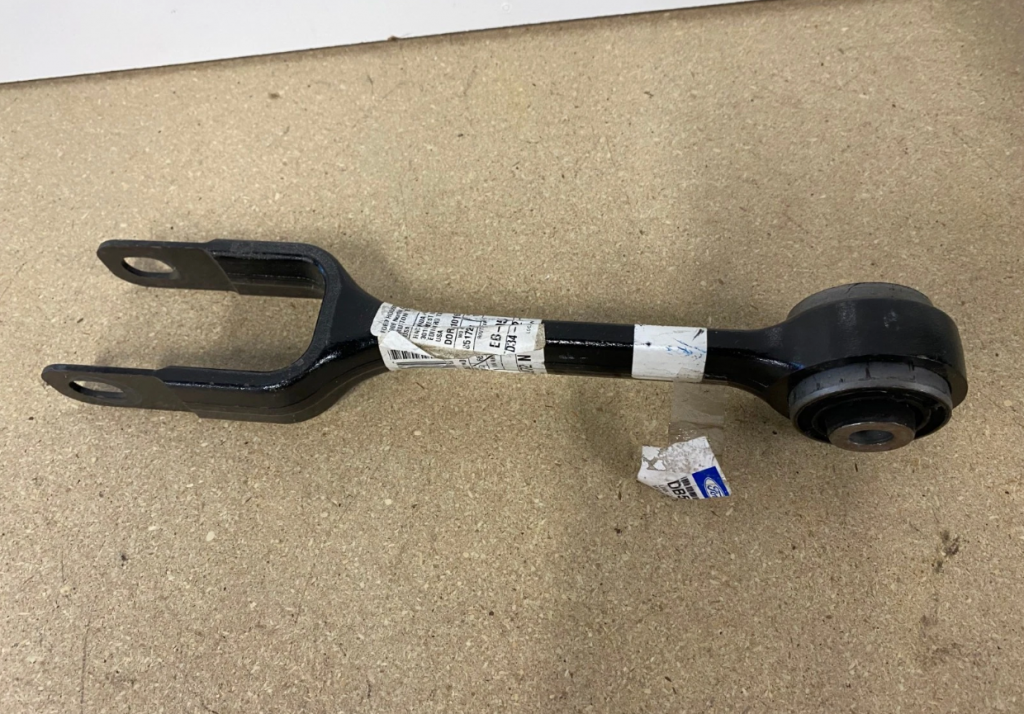
Notice how this new link is just one fixed-length piece, rather than an adjustable series of parts screwed together. While one piece of steel will certainly be stronger, you also lose the ability to easily adjust toe, which isn’t very helpful if you’re trying to dial in your alignment. You can still adjust toe, to be clear, it just requires your alignment shop to be a bit clever when tightening the outer end of the link to the knuckle. Here’s a video explaining that process:
If it means not having a part that’ll fail and quadra-steer me into a guardrail, I’m totally fine with a bit of extra effort
Top graphic image: Ford


I joined the Autopian just to comment on this thread! This happened to my 2017 Explorer in December of 2024. The RH toe-link failed on the freeway at about 70mph.
A few points:
Ford knew this was an issue and attorneys / accountants figured out a way to skirt responsibility and the expense of replacing the components. It’s interesting to see that they have now admitted to the issue regardless of what region the car is registered in.
Had a company Explorer, I think a 2014, that had this issue around 2018. It was pretty funky to see, because someone drove it and came back saying it was steering strange and howling like mad. We walked out and looked at it and I immediately saw the drivers side back wheel was out of toe. The dealership sent a flatbed and got it fixed, but it sure was an odd issue that led to a lot of finger pointing at my company as to who hit a curb and messed it up.
This is called “emergent behavior”. It’s the world’s first AI SUV. Market it.
How many years does it take for the manufacturer to be deemed non-liable for worn out parts? The Ford warranty is only 36 months, so why are they taking responsibility for these parts 7+ years on? I’m all for manufacturers taking the blame when it’s deserved, but isn’t that ended after the warranty period? It sounds like this is really only an issue in rust-belt states. Is the manufacturer responsible for what the states put on the roads? Maybe people need to consider the conditions they drive in when they maintain their vehicles.
Rant over.
If you only intend to hold Ford to 36 months of their vehicle being able to drive in the direction it is pointed, that’s…something.
Well, that’s all they guarantee. And if the number isn’t 36, what should it be? 60? 100? 360? I mean, things wear out. Their warranty essentially tells you it’ll last 3 years. The newest of the vehicles in the recall are about 7 years old, or 84 months. What’s reasonable to expect? If I buy a phone that’s warranted for a year, do you think they’ll replace it or fix it for free at a year and a day? That’s a hard no. I respect Ford for standing behind it’s product, but do I think its necessary when it’s been out of warranty longer than it was in warranty? Probably not.
Edit: I don’t mean to say Ford doesn’t have too many recalls. In the first two years I owned my Ford Maverick, it was recalled 7(?) times or more, so yeah, they definitely have work to do.
if they were wearing out at the pivot, fine, that’s wear and tear. the problem is they break, not wear out. and they have been since they were new
If your phone starts flambe-ing itself at year three, potentially killing people if it does it in the wrong place and time, you can bet that the maker is going to be forced to do something about it. Same thing with cars. Failing cars cab and do kill people.
I think it’s good that we live in a much more safety-focused culture overall. Back in the day, stuff like this was just swept under the rug and ignored.
They have been recalling these things for this issue since they were new back in 2012. we have one. so many recalls for this issue…
Safety recalls are nearly eternal when there is a chance of people dying. Better to get ahead of it before the Government makes you do it, and all the resultant bad publicity. Looks like Ford started this one on their own, but the Feds are making them expand it.
There is a difference between normal wear and a part actually breaking too. These should slowly get sloppy and allow the alignment to change, but absent abject abuse like hitting a curb, they should never just break without warning – and it sounds like that is actually happening with this part.
<thought>
Oh boy, I can’t wait until we have AI rear steering! It will predict what to do based on your past inputs, and never get anything wrong.
That would be worse, indeed. Proving, again, that everything is worse with AI.
UGH! Don’t scare me like that! I drove my wife’s lane assist car in the snow, and I couldn’t tell when I was wandering out of the snow rut and hitting poor road, because the car would vibrate the steering wheel for the white line that it couldn’t see, because of the snow.
Give me a car with 2WD and communicative steering, please! (NOT that kind of communication!)
There are times when this stuff needs to be turned off, for sure. But you don’t necessarily know that until stuff happens. I can’t trust my vehicle’s auto braking, it has almost gotten me rear-ended when there was nothing in front of me or anywhere else causing danger.
But the hallucinations will be epic!
Or if it’s like the image generators, cpcih.
Sorry, you need to explain that one – Google failed me.
One of the things that the AI image generators continue to get wrong is text in the images being garbled letter combinations, or actual garbled non-letters.
Oh definitely.
I understood that reference.
So…. it’s slotted with no cam washer or offset spacer and you have to smack it to adjust it.
Glad to see American car design philosophies being unchanged from 1962!
Seems like a wild way to Explore(r) nature…or a ditch, whatever.
I just did a mid-oughts RAV4 that had the rear toe links very visibly replaced with units marked “SAFETY RECALL NOT ADJUSTABLE.” Interesting.
The key is to just let it all wear out.
My Sorento’s entire front-end suspension/steering has what I like to describe as Bluetooth bushings, as everything has worn out and clunks.
Just relax and let your inputs to the Suggestion Wheel take you vaguely where you want to go. The lane is 10ft wide and you’re allowed to use all of it!
So like nearly every old American car even when new?
This recall may have been recently updated, but this suspension part has been under an active recall since 2016 (even longer than noted in the article). Recall 21V537000 was the one that preceded the updated announcement in 2026. This recall covers all Explorers made from 2013-2017.
Recall 21V537000 specifically calls out salt-belt states as a key contributing factor to the failure of the adjustable toe link’s adjusters.
This recall is an expansion of previous NHTSA recall numbers 16V-245, 19V-435, and 20V-675. Since the first two digits of the recall indicate the year it was issued, these adjustable toe links have been under recall since 2016.
TL;DR: Ford Quality remains high
High enough for them to proclaim victory after a record setting 152 (or 153 depending on your source) recalls in a year and give themselves a bonus. Ford has approximately 15% of the US auto market and yet in the third quarter of 2025 produced 60% of all recalls. Staggering.
Just slap some Firestone tires on there and good to go.
Add some takata airbags to make sure you rest for good.
I like the cut of your jib, Sid.
*Ralph Nader stare*
In fairness, modern Firestone tires are quite good.
The old Wilderness line that was OE on the Explorers and other Ford trucks/SUVs had its issues, for sure. Though Ford dictating that the tire pressure on Explorers should only be 26psi really didn’t help the situation.
“In fairness, modern Firestone tires are quite good.”
Every time I had them in the past, they sucked in some way. Now it’s one of the brands I avoid.
Anecdotal evidence. How long ago was “in the past”? If it’s more than 20 years that’s not at all relevant. They’re generally well-reviewed, and typically sit on the upper side of average for their aftermarket offerings. Being owned by Bridgestone helps.
They were bought by Bridgestone in 1988, the Explorer blowout recall whit the press in 2000. Not sure if Bridgestone was a help or not.
“If it’s more than 20 years that’s not at all relevant”
The earliest bad experience was about 25 years go.
But the most recent bad experience was around 15 years ago (early 2010s).
After that, all my tires were from Nordman, Nokian, General Tire or Michelin.
Bridgestones were OEM on my 2015 Fit and they were awful. Regular false TPMS readings that went away with my next set of tires.
Are you sure that wasn’t solved by the shop replacing the failing sensor with the new tires?
The car was relatively new. If there was a replacement it wasn’t on the invoice from the Firestone shop.
Most factory tires are mediocre at best. Until you get into bespoke tires for ultra-high performance vehicles, there are usually better options on the aftermarket, even from the same brand.
IMHO, Firestone took the fall for a problem that was mostly of Ford’s making. Having the pressure recommendation that low left no margin for owner neglect.
A certain group of Fords from the St. Louis area were famous for rear-wheel steer for decades. But that was controlled with a toggle switch. Having rear steer that is controlled, randomly, by time, wear, and corrosion? Yikes!
My buddy worked at the that Ford plant for years. The tales he told swore me off of Ford.
You never want to know how the sausage is made.
Also I was referring more to a monster truck team whose name is another word for “sasquatch”
Oh, I remember driving by a dealership that had one on display . . . Maybe Florissant area IIRC?
Are you referring to the exciting truck that required gigantic shoes?
It’s a pity that so many modern truck owners try (badly) to copy that look for their road vehicles without understanding the rationale behind it.
Oh, certainly. 66×43-25s if I remember off the top of my head. And do wish the same.
Well Ford said they were getting control of their recalls
I mean these cars are 7-9 years old to play devil’s advocate.
Trust me, the BHPH stores have plenty of them.
Really? I thought they only sold 15-30 year old Mopar and GM products
Oh, they still sell those along with the rejected Kia and Hyundai models with the defective engines rejected from warranty service.
How long do you expect a car from the last 10 years to remain safe to drive? (To devil against your devil’s advocate, fully aware that midwest salt is nasty shit!)
I expect modern, decent cars to survive a good 20 years of Maine winters. I think we are to the point where the bodies will in many cases outlast the mechanicals/electronics. Rust protection has come a long, long way.
Whether Fords can be considered to be “decent cars” is however subject to argument, and certainly the steel underpinnings of the AlumaFiddies are not impressing me much in terms of rust resistance, even as the bodies stay shiny. But regardless, safety recalls like this should be forever. There are always those low-miles, only driven on nice days by little old ladies to church survivors.
Down here in the bible belt I keep getting older but the cars on those lots have barely changed since I was a kid 20+ years ago.
Does that mean they haven’t sold those cars, yet?
😉