


I’m not willing to give up on the VW ID. Buzz.
Well, that’s actually not entirely accurate. I’m happy to give up on the horribly-named Buzz in its current state, and it seems like Volkswagen is as well, at least for the 2026 model year. Personally, I don’t see it coming back in this form, but we all want to see a do-over. At the Autopian, we continually talk about what seems like the perfect solution to this conundrum that’s right under VW’s nose. Let’s explore how we might be able to make the New Bus that everyone really wanted all along. Well, not exactly what everyone wanted, but something far more usable.


Buzz Kill
“Highly anticipated” is often a kiss of death for any product. You anxiously await some Next Greatest Thing for ten or even twenty years, and expectations are way up there. Sure, there are occasions when the thing finally arrives, and you’re delighted, but all too often you’ll end up with the likes of a Godfather III Guns N’ Roses Chinese Democracy.
After the exciting and successful reboot of the Beetle in 1997, we were just waiting for a revival of the next-most-loved VW, the Type II Transporter “Bus.”
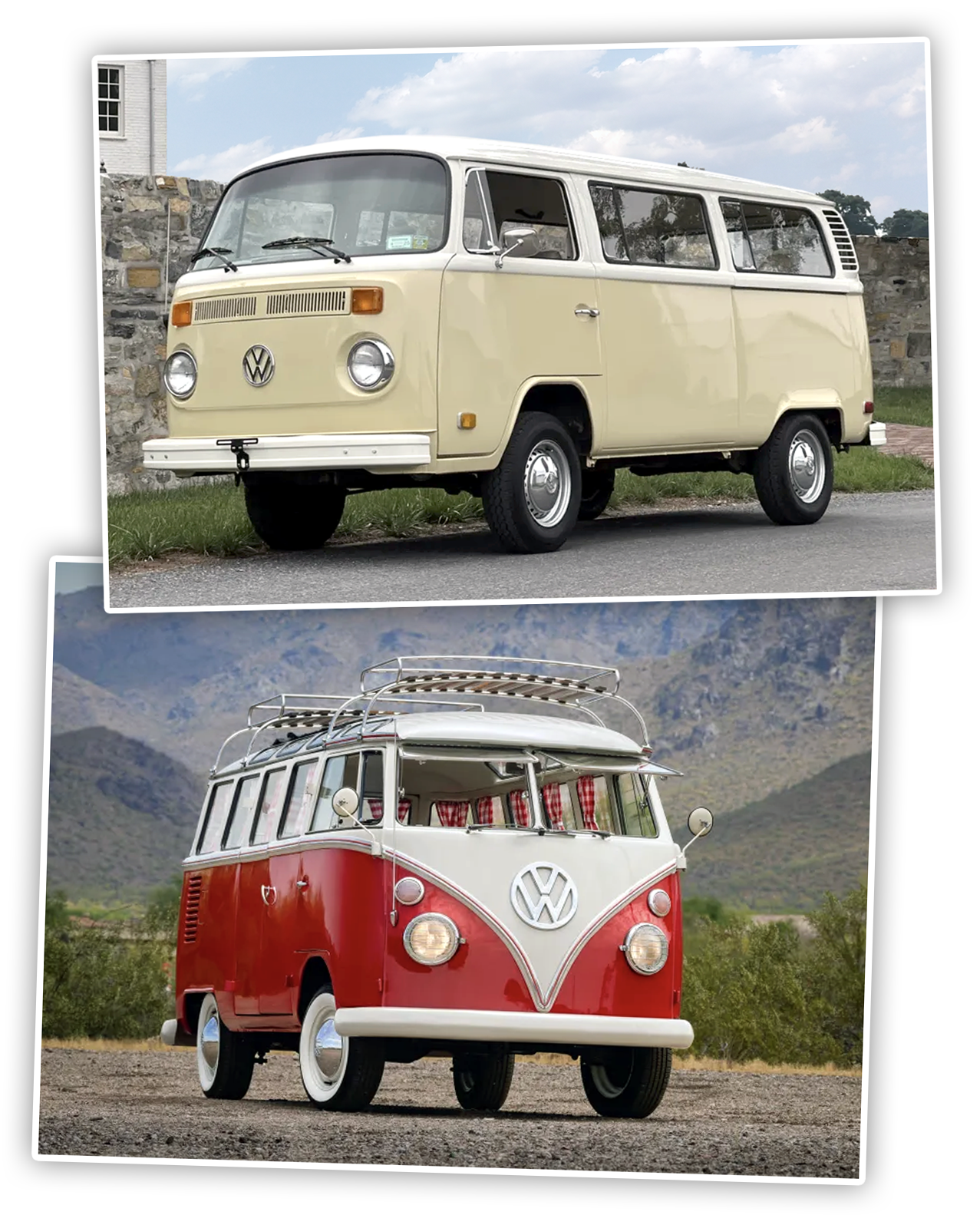
You can read through VW superfan Jason Torchinsky’s recounting of the sad tale here and here, but the idea of a modern VW Bus goes back almost a quarter of a century. After the gangbusters success of the New Beetle, we were all stoked to see the first of many revived Type II concepts at the turn of the century. This thing was paraded around endlessly, and then revised versions were presented to an anxious public. Naturally, we all had high hopes for this thing; finally, a minivan that was cool. The assumption was made that it might be affordable enough and economically powered by a Passat motor or something. When the finished product arrived, it indeed looked good, but the appearance was about where the excitement ended.
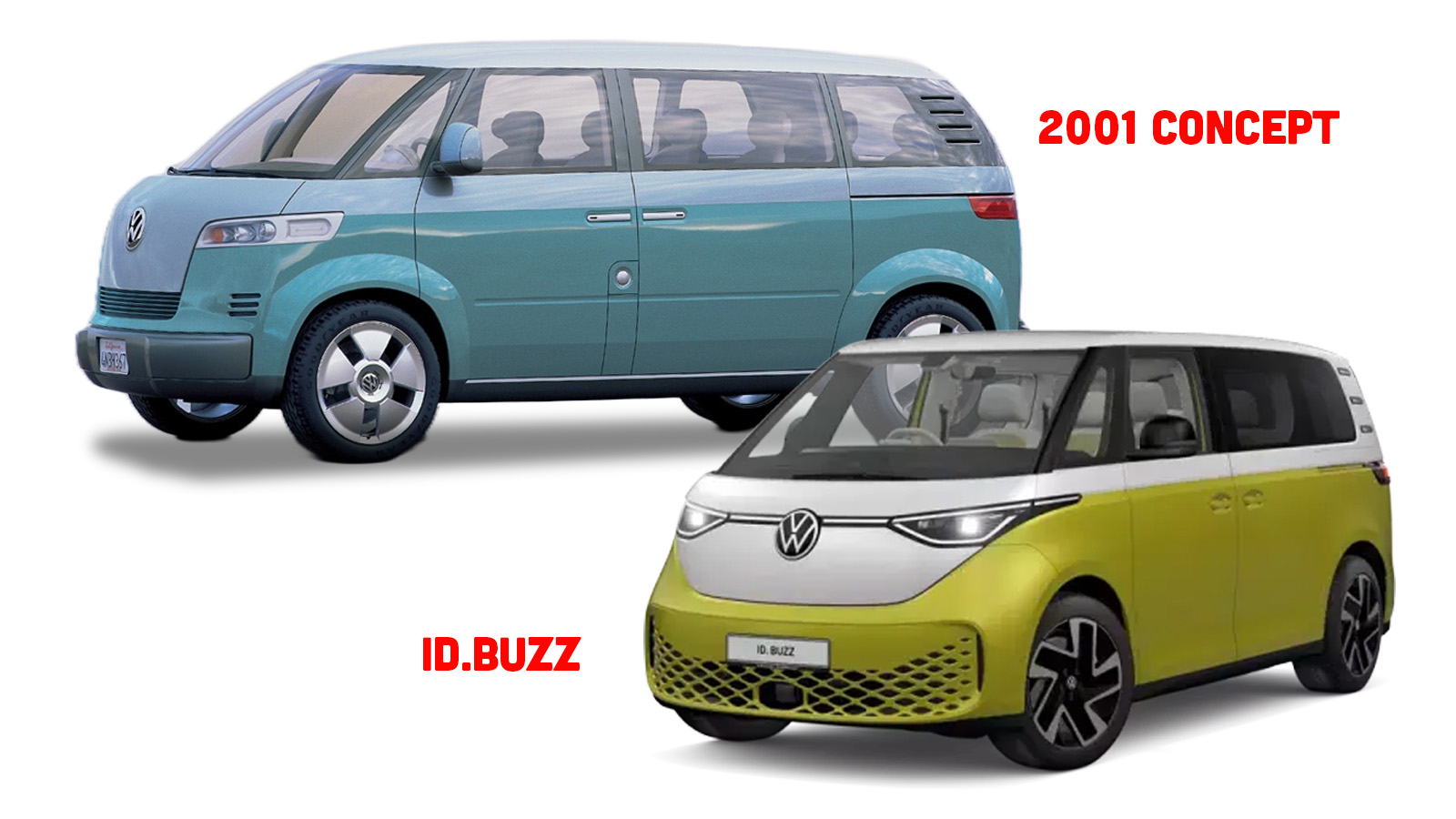
First, the new Bus got caught up in Volkswagen’s electric initiatives and became an EV-only proposition. The timing of the launch also coincided with a major drop in EV popularity as the public saw a freeze in the development of the charging infrastructure. Believe me, this new Bus would need that infrastructure. Our man Jason’s test vehicle could apparently only muster about 150 5o 160 miles between charges in warmish North Carolina, making it a bit of a non-starter as the road trip machine it appeared to be.
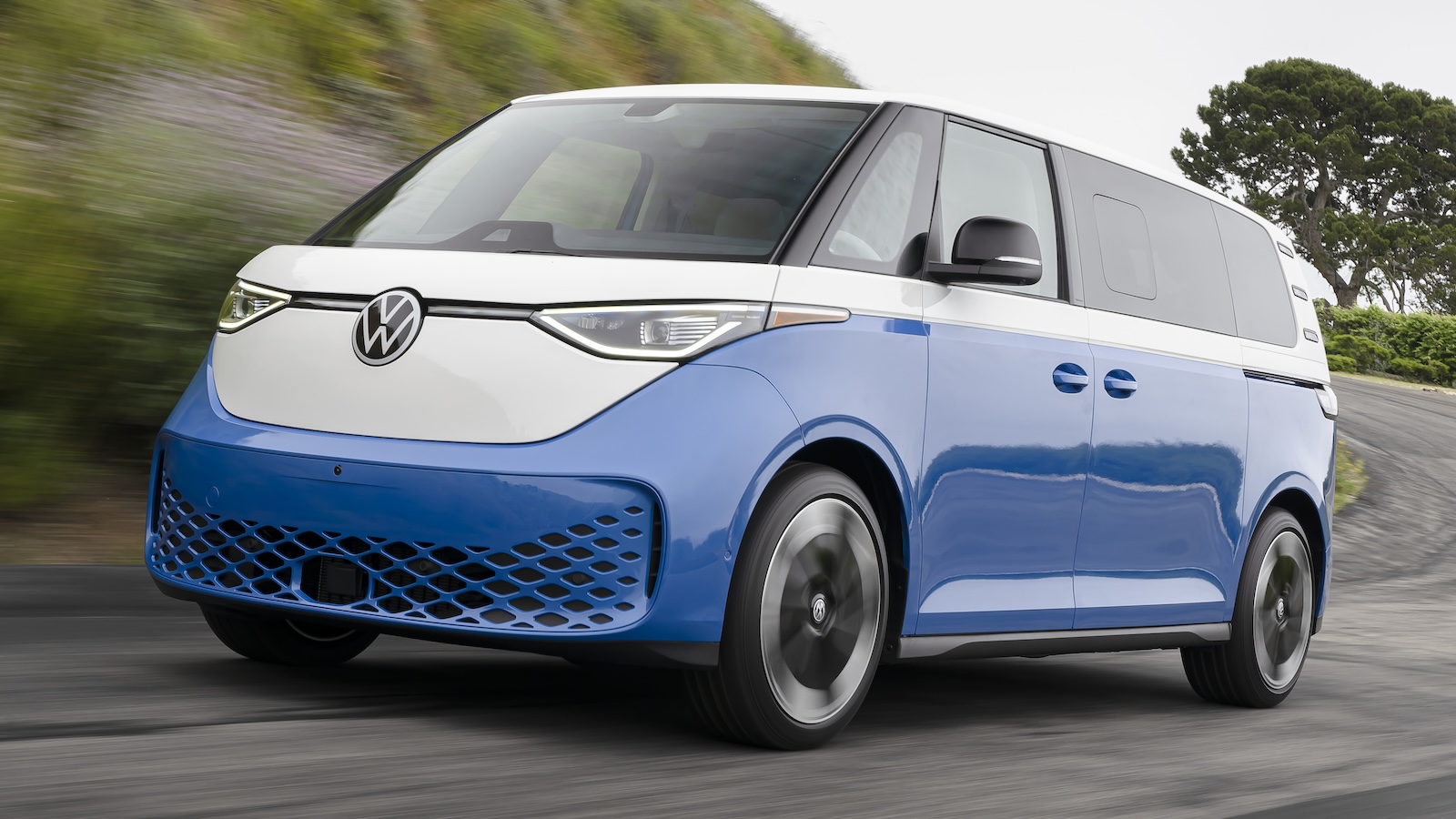
Things got worse from there. Here’s a minivan that can only seat seven with a bench seat in the middle row (no captain’s chairs) and, when fully loaded, stickered for around $70,000; a price point that could almost get you a “real” luxury car and not what appeared at first to be an affordable family van.

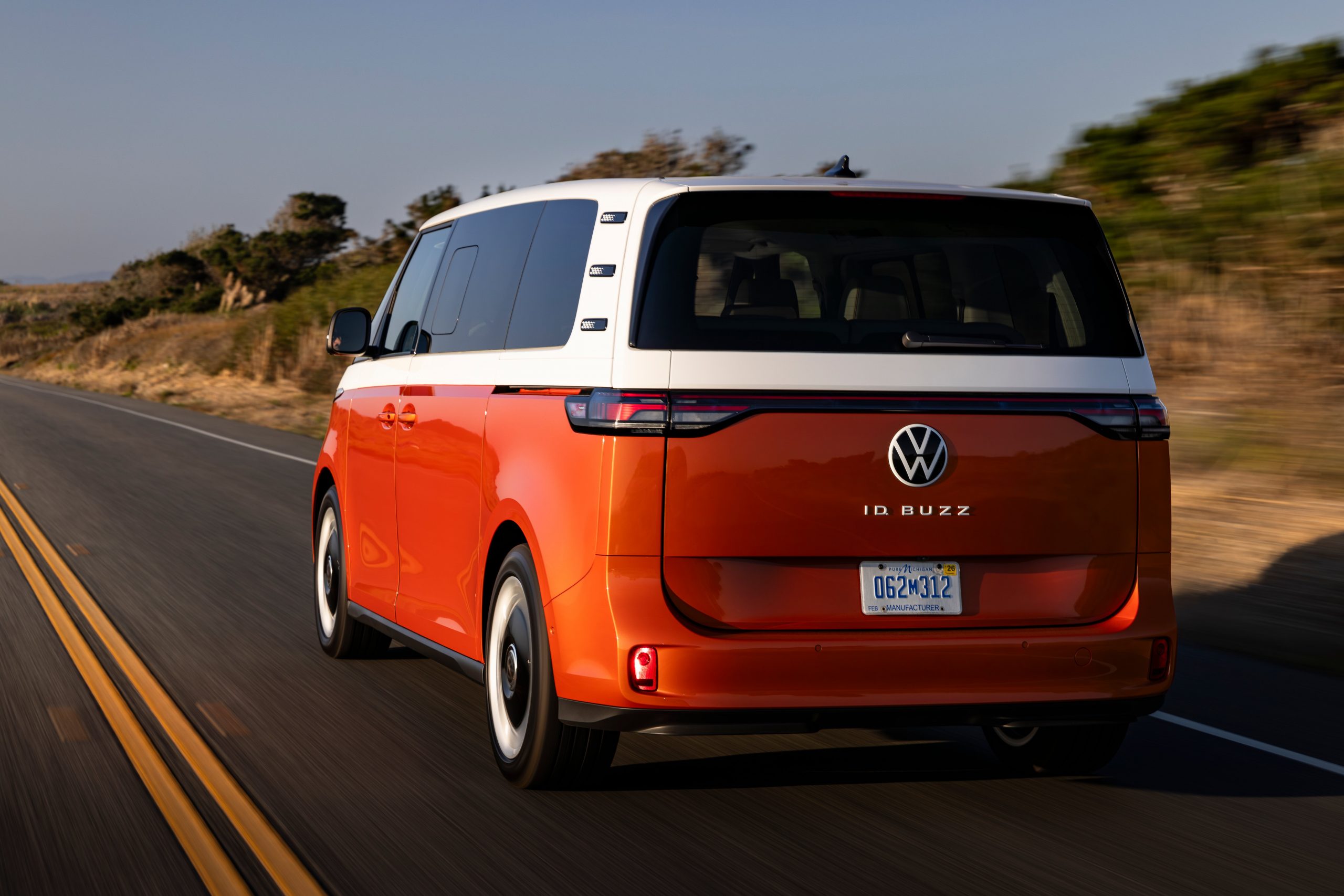
The rear doors only have small opening glass portals (which refused to work on the one I tried), and fit and finish don’t live up to that price tag. Even the “ID. Buzz” name is horrible, and when you see monochromatic white or black ones, it’s obvious that the two-tone paint jobs are doing a lot of the heavy lifting with the “fun” image.

Seriously, if it just looks “sort of like a VW Bus” or a “subtle visual tribute,” then it’s not going to accomplish what the buyers likely want. If it doesn’t look much like a retro Bus, even at a highly discounted $50,000 price, I’d rather just buy a likely far more reliable Odyssey or Sienna and be done with it.
I could go on, but why? The fact is that if even just one of the major faults had been fixed- the overall range or seating capacity or the selling price- we’d have had the winner we expected on our hands. Talking with Jason and based on the comments of our ever-active Slack, there’s a way to possibly fix both of those major problems and have The Bus We Want.
Ist das die Antwort?
Visiting a trade show in Germany last week, I was astonished to see virtually no examples of ID. Buzz prowling the streets of Düsseldorf in the home nation of this EV van. I did, however, see something else in essentially every street and parking lot.
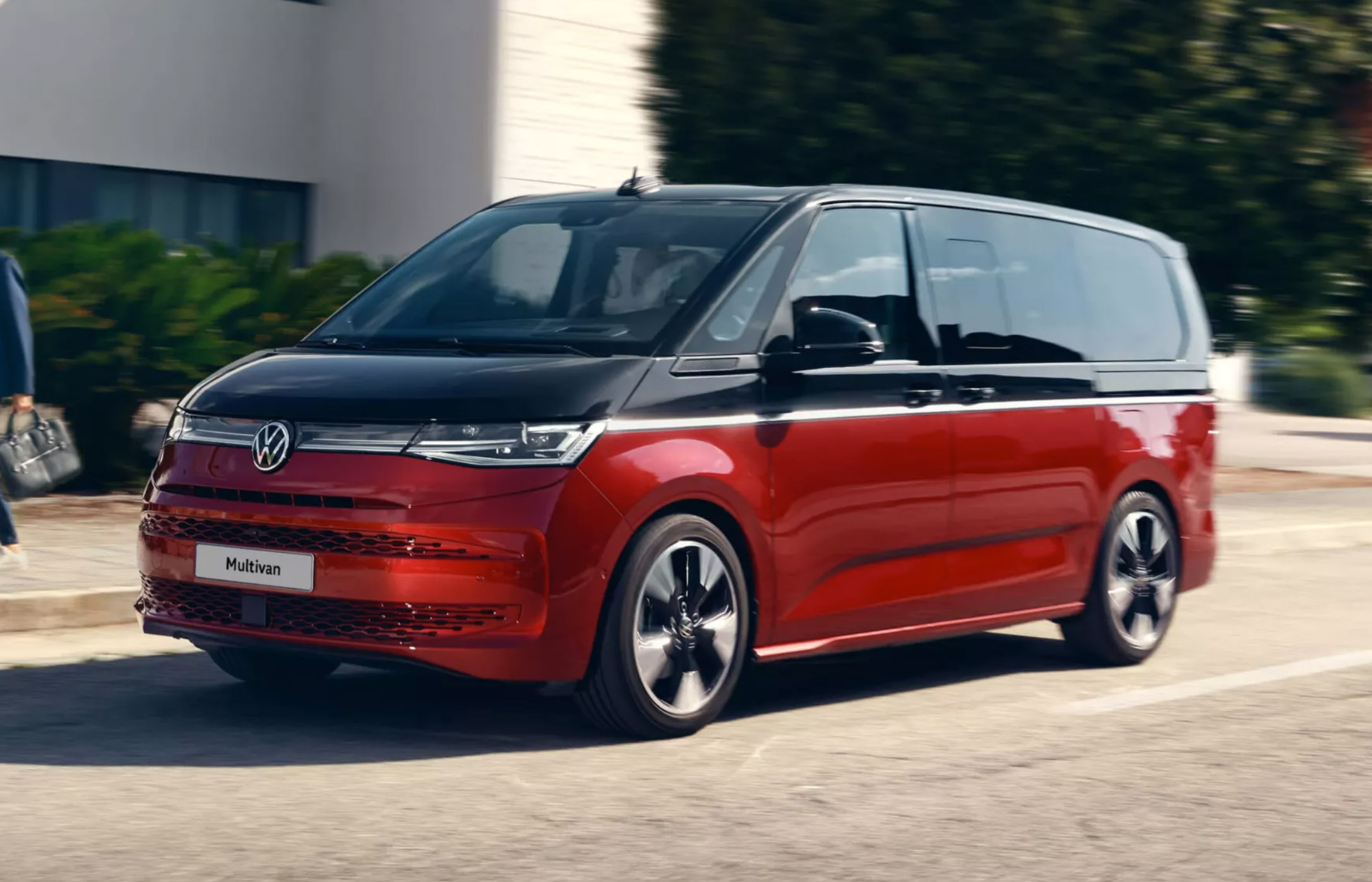
It’s called the MultiVan, and it’s a front-wheel-drive continuation of the thing sold here briefly as the EuroVan some years back. Most of them are used for service work, but they’re also available as passenger vans and are often painted in two-tone schemes similar to the ID. Buzz. In fact, from the back at a distance, I can see a lot of people confusing them for a Buzz. It’s available as a gas- or diesel-powered model and even a plug-in hybrid with up to sixty miles of all-electric range, and all-wheel drive is offered as well. The hybrid doesn’t seem like a rocket ship, but you do have a combined 245 plus horsepower when the gas and two electric motors all kick in (that gas motor, by the way, is a 1.5-liter, so God only knows how fast it would be with more than 2 liters).
This is not a new subject. Here’s just one of a number of interactions on Slack regarding the MultiVan and the interest, at least on the editorial staff, of seeing it here:
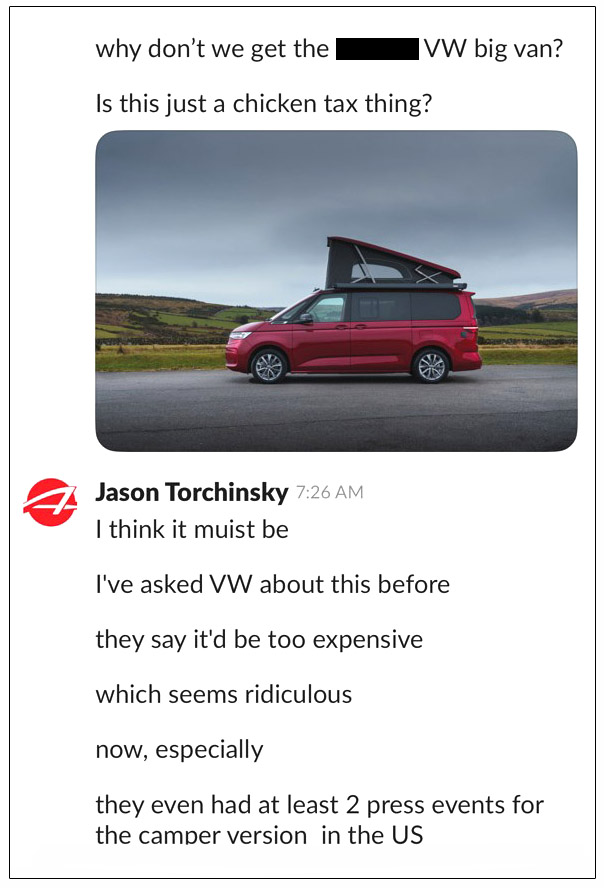
Based on my quick research, the VW person was not wrong. A fully loaded all-wheel drive MultiVan can sticker for as much as $80,000 in Germany; that’s a big chunk of change. However, there are less expensive MultiVan models, and it is a bit of a stretch to call that MultiVan “too expensive” when VW is selling the ID. Buzz with only under 200 miles of realistic range for similar money. At least a $70,000 to $80,000 MultiVan would be a real road tripping machine and rival the seating layout of high-end people carriers like Escalades and Grand Wagoneers.
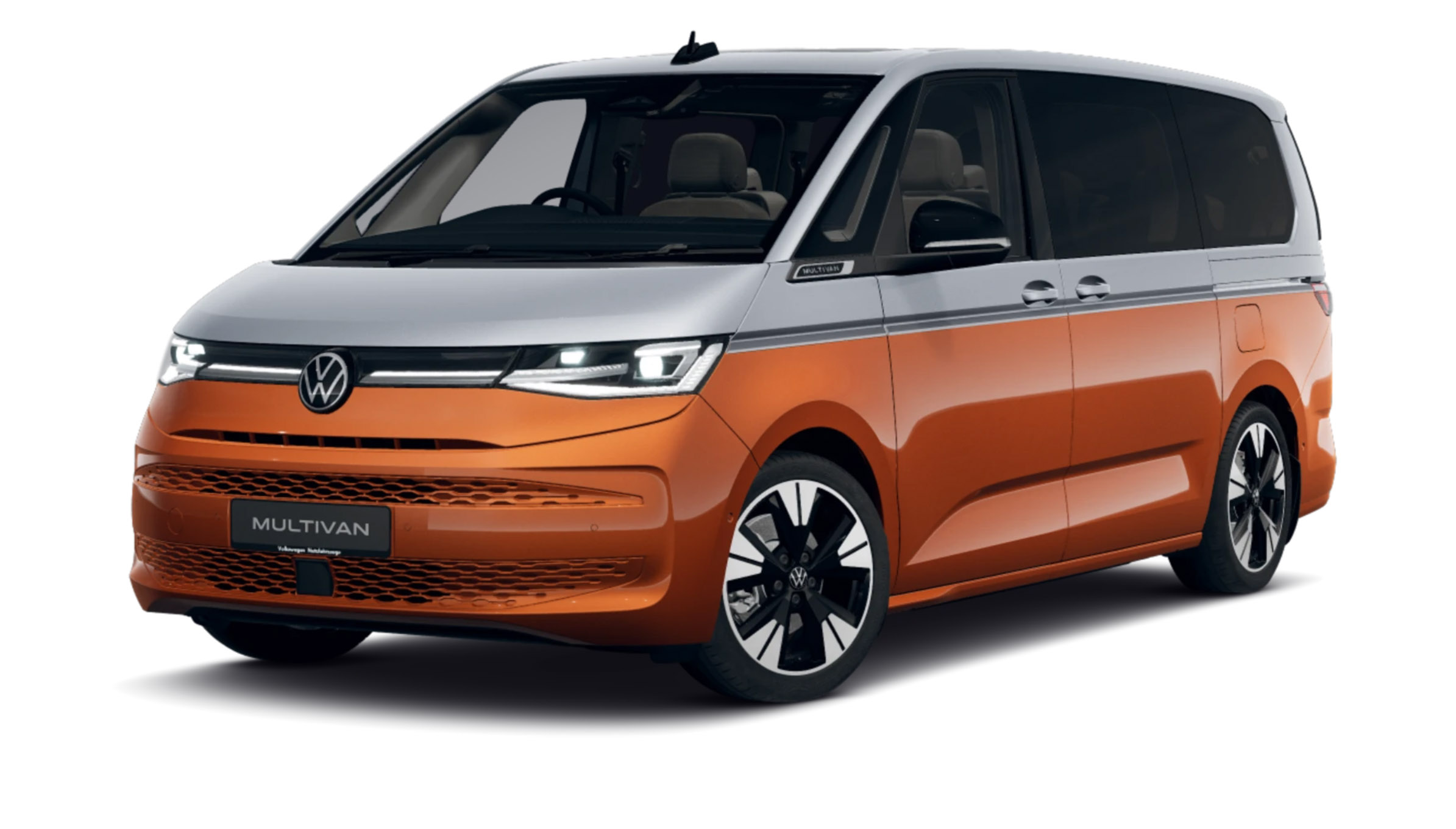
Yes, I know that a $60,000 plus MultiVan-based New Bus would upset people like Jason, who wanted this new Bus to be a rather affordable minivan for everyone, but I don’t think “affordable” and certainly not “cheap” is ever going to be possible with a German-built car now. Honestly, I’m surprised that Jason didn’t point out that it hasn’t been the case for decades. Don’t forget that the VW Bus and later Vanagon were hardly “affordable” propositions by the mid-seventies and only got worse from there.
For example, a brand-new VW Bus in 1976 stickered for a little under $6000, a price that could have gotten you an American luxury car like an Oldsmobile 98 or Pontiac Bonneville. Later, a still-slow 1988 Vanagon Syncro priced out at around $24,000, or about the same as a BMW 3-series coupe. Hell, for that price you could have bought something like a loaded 1988 Mercury Grand Marquis Colony Park top-of-the-line station wagon and had enough left over for a nearly-new Yugo. As with those older Buses, it seems like any New Bus will sadly be more of a high-end “boutique” product than an everyman machine, but that doesn’t mean that it can’t be good.
Let’s use a new MultiVan for our New Bus, which we will absolutely call the “New Bus,” dammit, and not some stupid series of letters followed by a pointless name.
‘Bussin Van
Now, I’m not sure how well you know our Jason Torchinsky, but he rarely does things the easy way, and he sort of expects the rest of us to do the same thing. When I mentioned to him the idea of turning a MultiVan into a New Bus, he was as happy as a pig in what comes out of a pig. Of course, I knew I wasn’t going to get off so easy. Check out this Slack message:

Oh, crap. So basically, he’s letting me change anything non-sheet-metal that bolts on, but the rest needs to remain. Why? Well, I didn’t ask since there would be no point in doing so, but my assumption is to prove to VW how bog simple it would be to make something they already have into something that we all really want. Also, I’m assuming that to meet Federal safety regulations, the front and rear bumpers/fascias would have to be altered (among other things) anyway.
I figured that I might as well start with the all-black MultiVan that I saw in the parking lot of the trade show I was at last week, since you simply can’t get too much more un-Bus like than such a somber color scheme. Also, if it can’t look like a “New Bus” without the two-tone, then it’s not really a retro bus in my book.

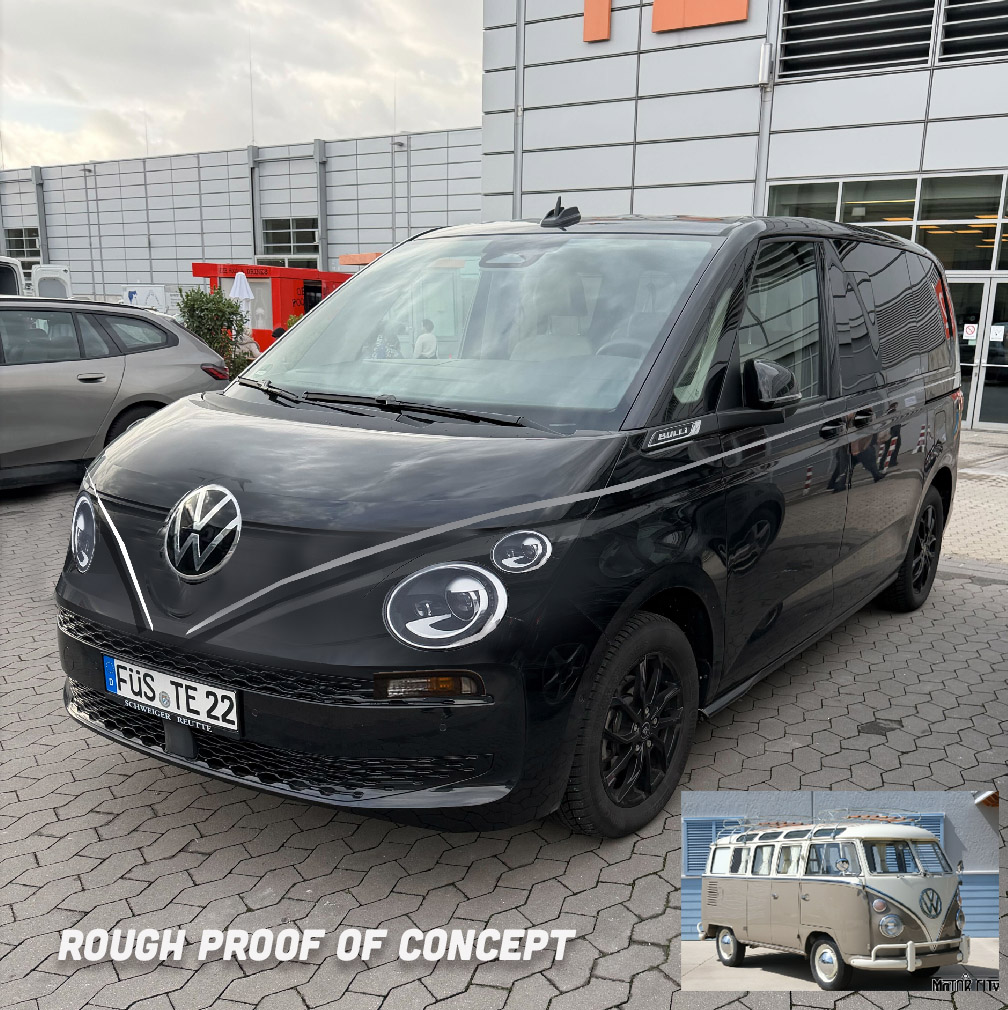
Below is a rough proof of concept Photoshop of the front. I used headlamps from the last A5 Beetle and made small turn signals above, as on pre-1968 transporters. The cut line on the side of the MultiVan (that hides the door glides in back) will be molded into the new face panel and sweep just like the arc on those iconic early Buses. A giant emblem will live in the center and possibly overlap (and be attached to) the unchanged sheet metal hood. Unlike the chrome outline Beastie Boys jewelry logo on the original buses, I’ll keep a new one in a black circle to hide things like cameras.
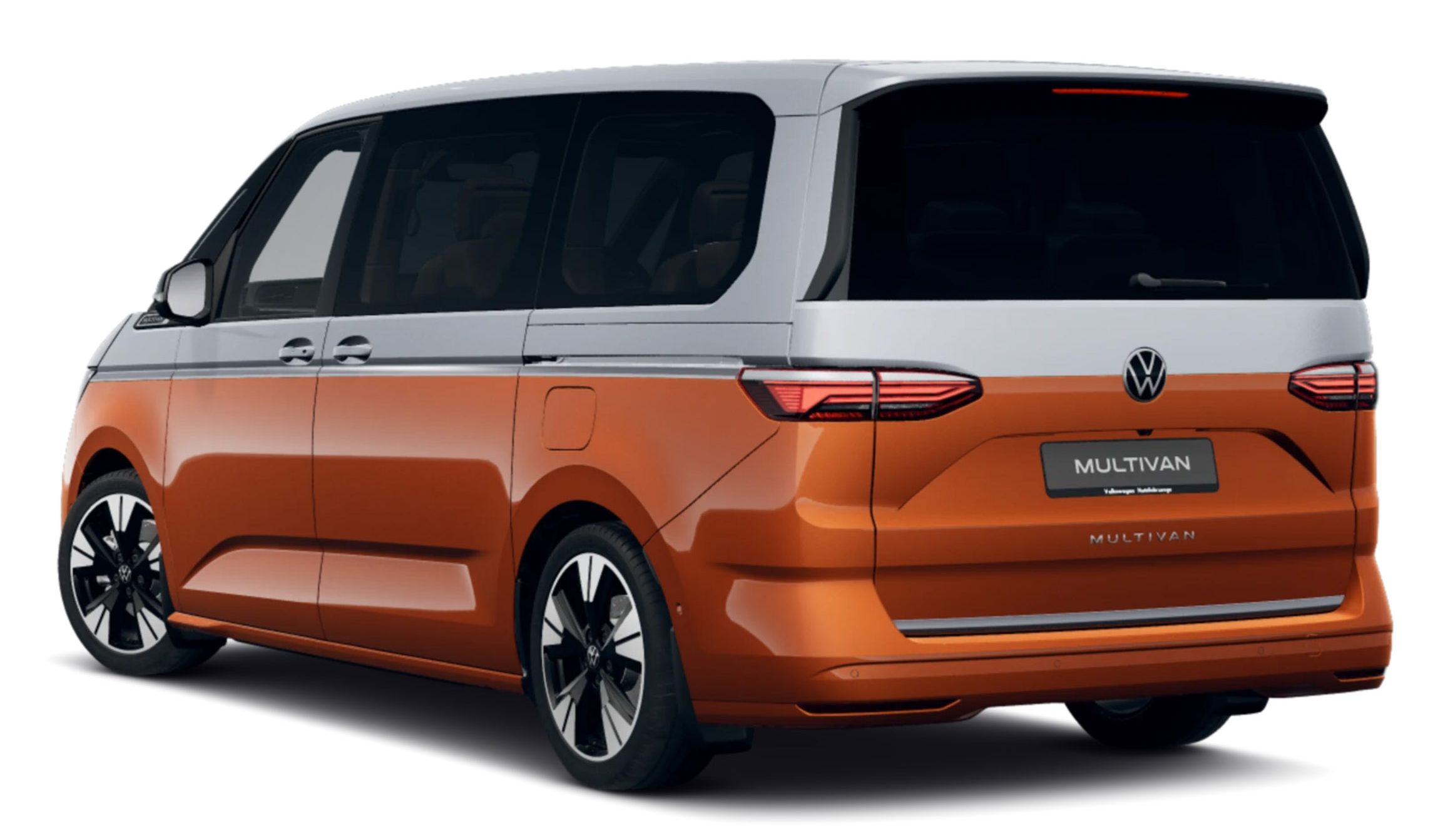
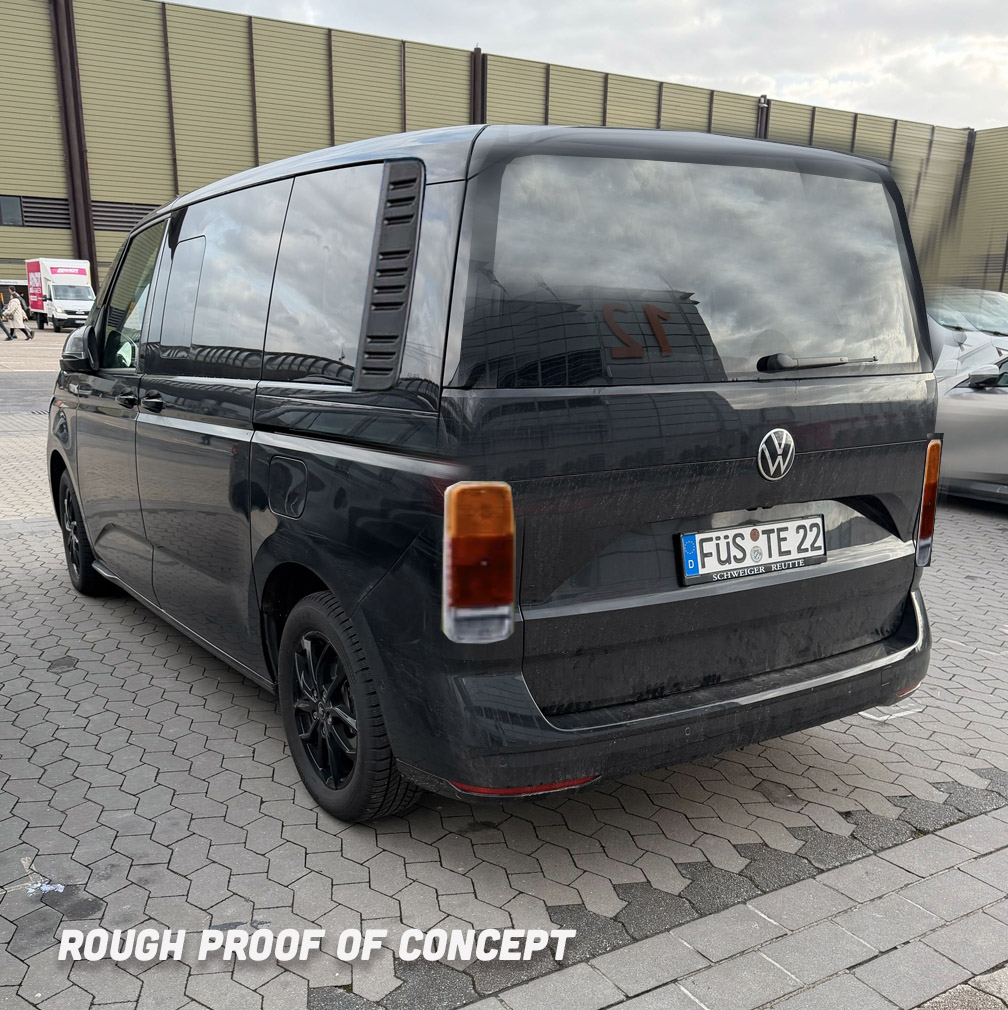
In back, the MultiVan looks very similar to the Buzz, and those horizontal taillights are doing nothing to help the “Bus” look.

Again, very rough scribble, but I removed that “duck bill” rear spoiler that everyone uses now and then filled in the taillights with plastic bits. Replacing them would be thin-profile LED units that could almost surface mount on the rear sheet metal to simulate the lights on 1972-79 Buses. I tried doing something more like the early buses, but it just wasn’t happening. Note also the plastic simulated vents on the rear quarters to match the old guy. Maybe Jason was right: it sort of works without changing anything else.
Admittedly, it’s sort of goofy looking, but isn’t that a bit of the point? Let’s go full color and really pour on the Buss-iness. The fact that the MultiVan is already available in two-tone combinations to me means that it’s just aching for the Bus treatment. Let’s add the changes from the proof of concept to that one in a tasty orange.

Note the alloy wheels with chrome caps to simulate the old Bus rolling stock (parts bin spotters note that I used Maserati Bora wheels as a basis). The front is almost a bit Nissan Juke-like, which I don’t think is a bad thing considering the happy-looking product we’re trying to create.
Jason also liked the idea of graphics or plastic to add on the side glass to replicate individual windows and look even taller and Bus-like:

Here’s an animation of the changes: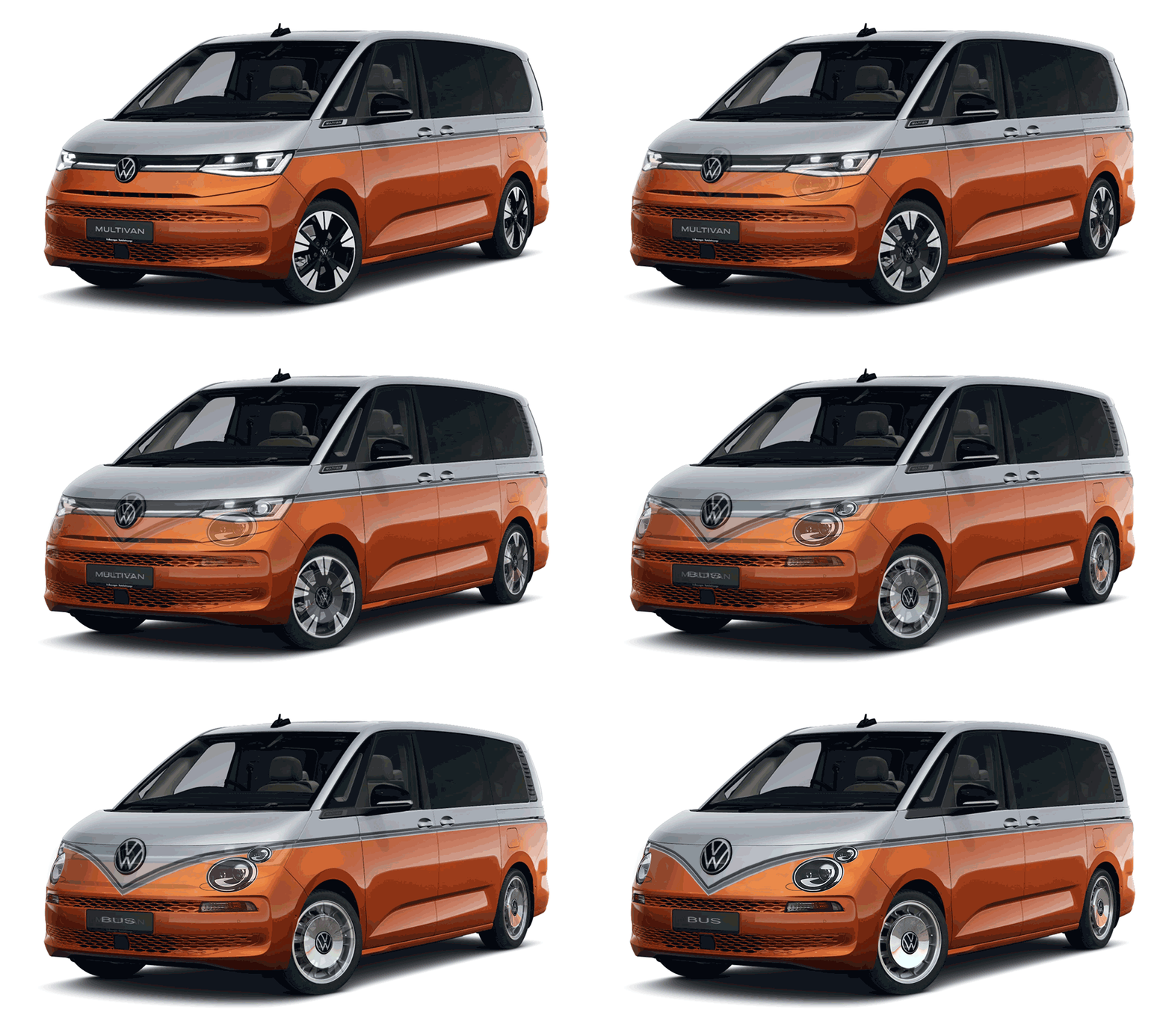
Now the back: getting rid of that duck bill in back and replacing it with a more rounded tailgate top helps to simulate the “Bus” look better regardless of what aerodynamic or functional purposes the EuroVan’s “fin” provides.

I’ve animated those changes again for you to see:
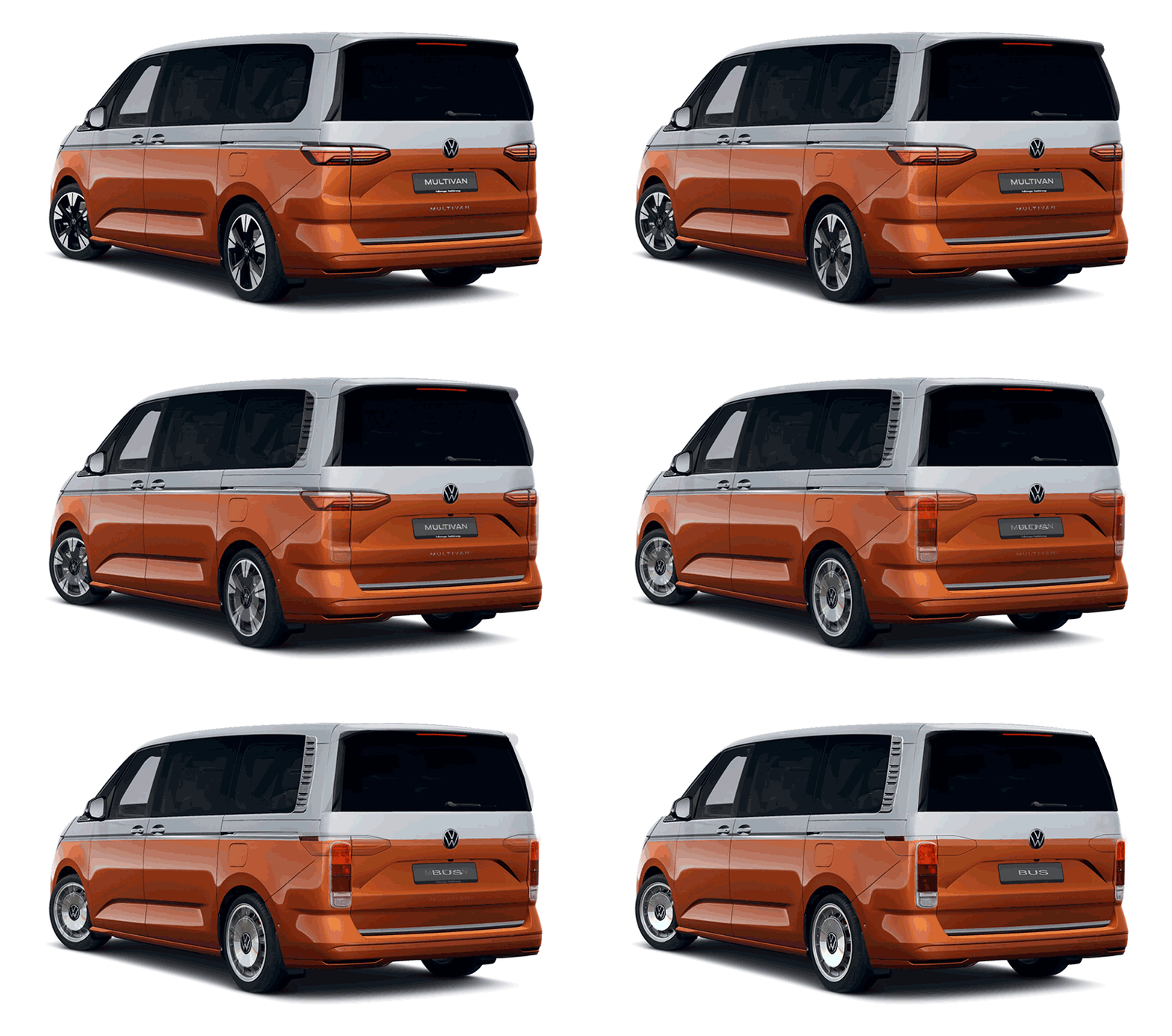
The final product has a bit of Mitsuoka silliness to it, but “silliness” and “fun” are things sorely lacking in today’s automobiles, so I don’t really see it as a negative.
Two Outta Three Ain’t Bad
No, we didn’t accomplish all of Jason’s goals. A MultiVan-based Bus would have the cargo room and passenger layout/capacity that the ID. Buzz lacks. The sixty-mile all-electric range would be perfect for almost all of your local jaunts, and you’ll never have to sit at charging stations every two hours or so like on the current Buzz. It would look even more like the transporter we all know and love.
Sadly, even base models would likely cost as much, if not more than, top-of-the-line Japanese or Korean vans, and at $70,000, plus the loaded ones would still be unattainable by the average Joe. Honestly, we’re dreaming if we think a large German-built automobile is ever going to be “affordable” again in the United States. Still, even at that rather steep price, the MultiVan-based Bus would be a good value for what you’d get, and I could see it selling far better than the Buzz could ever dream of.
Besides, a $75,000 plug-in hybrid Bus? Three or four years from now, when they come off of lease, you know what Autopians like you and me would be scouring for online during lunch, right?
Top graphic base image: Volkswagen


The Back end looks VW Bus correct.
That front end!?! Oof.
If the large round headlights swap position with the smaller round lights and make the vw emblem maybe 2/3rd the oversized size that would go a long way to clean up the front end looks.
Ideally for the V to look right, the front needs to be shorter, meaning at minimum a shorter hood, which likely would mean the front crash structure would need to be modified and that may not be practically / financially feasible.
I’m currently in Italy and there’s a VW I pass on my way to work with a two-tone Multivan. They look sharp in person, big fan.
What VW should have done is make a bare bones van that ‘the young van life crowed’ could buy for $27K that was a hybrid. They would not have been able to keep them on the lot. Instead they seemed to be trying to capture boomers with spare cash and nothing to do. My guess is that SLATE Truck might fill that niche I just outlined. People have focused on the accessories taht SLATE itself has shown; but other makers could mae caps, cabins, and accessories for SLATE.
Too many care makers want to be upmarket, and not everyone fits there and the world economy certainly cannot handle all automakers in North American selling upmarket. GM, Stellantis, Ford, VW, and Mitsubishi need to start making vehicles that are on average $8K cheaper. And, pickup trucks…well, Ford and Chevy need to stop making a pickup available that cost over $45K; these $65K to $90K trucks need to stop.
Yeah, used to be, if you wanted REALLY cheap new transportation, you bought a base model 2wd pickup with a vinyl bench seat, rubber floors, and no A/C, or else a tiny shitbox hatch, depending on your needs. Now? Good luck.
> I don’t think “affordable” and certainly not “cheap” is ever going to be possible with a German-built car now
Volkswagen makes them both unaffordable and cheap at the same time.
They’re a lot more affordable if you’re on the right side of the Atlantic.
the id buzz is clearly made by people who don’t need or actually want a mini van. but it is a crime how “bad” of a minivan it is. you only get 6 seats. the load floor is super high as is. then seats barely get out of the way so you can barely fit any actual cargo in there. then there is the efficiency and range problem. the ford f150 lightning is actually more efficient and gets more range with a similar size battery so its hard to make the case for it being a ‘green’ vehicle. It might be the biggest flop of VWs whole career. VW had every opportunity to do this right and we got this half baked garbage.
I think the current one looks fine. It’s the range and price that is the issue. And I’d like to see the poptop camper version. Knock 10-15k off the price and bump the range to 350miles. By my calculation that’s a 120kW – 130kW battery. That’s bigger than many vehicles but not out the door insane.
This looks pretty sweet. Agreed the range could be better, but even 280 would be an improvement.
https://www.tonke.eu/en/models/tonke-id-buzz/tonke-id-buzz-explorer/
I’m jealous. That poptop looks slim enough to where it might not even have a significant effect on mileage.
Yeah, IDK if they posted numbers anywhere, and it’s probably tipping the scales close to the weight rating, but I like the clever roof tent/pop-up arrangement they have going on. I previously was pretty anti glass roof, but seeing it as a way to add a pop-up to any vehicle with one has me rethinking my position.
The ultimate solution for the Bus is simply to have someone else design and build it.
Anything VW touches turns to shit, so remove them from the equation.
Hyundai/Kia is building a better one. So yeah, your point sticks.
A “New Bus”, you say?
Cue the Anubis jokes.
That should have them on the floor at the next Bembridge Scholars conference.
I have no doubt they’ll be all wrapped up in the discussion.
Considering his job, I think Anubis has had the Microbus “covered” for a long time.
And now you’ve got me thinking about Charon ferrying the deceased across the River Styx in a floating VW Bug.
The ultimate demonstration of its waterproofness.
But that’s the problem. Even if the price were justifiable as a more ‘executive’ high-end vehicle, there’s the fact that the Multivan is simply smaller, slower, and worse at being a minivan than the average American minivan at half that price.
The
PacificaVoyager starts at $42k with a 287 hp V6, has a fold-flat second and third row, and side windows that actually roll down. This Multivan starts at $65k with a 202 hp I4, requires you to remove each seat individually, and has those half-assed excuses for windows that betray its van origins.It’s simply too archaic and compromised to be appealing to U.S. minivan buyers while not having the cachet to compete with supposed ‘high-end people carriers’ like the Escalade or Wagoneer. Mercedes found that out the hard way when they offered the Metris ludospace to Americans. No amount of retro nostalgia is going to make an $85k VW PHEV sell any better.
it really needed the 68 V-Nose from a styling point. It should have come in multiple flavors of drive train. a base 5 cylinder 2.5 out back would be fine for me, though I realize the thing was never going to get an old stalwart(reliable) VW motor.
Still, had they taken a bit of the playbook from Ford on the maverick and offered a cheap Hybrid setup that was just adequate for power, that would have been pretty oldschol VW Van of them. All electric AWD with high end interior components might have been fine for a halo version, but yeah a 40K Hybrid or hell and EREV to get most of the stuff out back so the cab could be as far forward as the V-Face needs it to be to look right would have been a better starting point.
Just here to mention that the $6000 1976 sticker price cited is, still, only $35,000 in today’s money, which is depressingly distant from what any updated van would fetch.
I do always question those “x dollars” in today’s money since they seem so low. I do wonder if they really take into account income of the time and, more importantly, the fact that finance rates for cars were well into the teens back then.
They take into the fact the C-suite positions did not approach upwards of a 1000x the average employee pay of the company in the 1970s.
I’m not willing to give up on the VW ID. Buzz…. I gave up on it the moment they took the asinine feedback of some focus group, none of which would ever open their checkbooks for this thing, and decided yeah “ID Buzz” will look great on a tailgate
As an outsider, in both senses, i.e., from a visual perspective and as a non-purchaser, I like the current 2025 design. There are a few of these that I see from time-to-time and in a proper two-tone, they look good. If I were in the market for something with this type of function, it would not make the cut for reasons outlined in the article and by others. As a play-thing for the those with the disposable income, I understand it.
Now cut the whole rear roof off and make a pickup version.
The VWTopian VanUte.
Always thoroughly enjoy The Bishop’s takes irrespective of imposed
encumbrancesguidelines. For me, a Combi has to be affordable. And a workhorse. And simple.I dont think that is ever coming back, under any guise, anywhere…
The XBus looked really promising…as a true emulator of the original vw bus… of course that was from a start up and no idea if it will ever make it to production
Cheap & cheerful, simple and practical And fun. We need all of these things back in a load shapped van!
Unrelated to the redseign, but I just realized that “Buzz” is supposed to be a play on “Bus” with some electrical wordplay thrown in. I am not the sharpest knife in the drawer. Carry on.
this occurred to me only after reading your comment 🙂
Same here!
Is that why they chose that? Interesting. To me it always seemed a little self aggrandizing, like “we remade the bus and that is going to create some buzz in the industry. which it didn’t do.
For the longest time I thought the Chevy Bolt was that it had bolts in it. There’s only so many “electrical” sounding words in the world. Bolt is precarious for a car. Buzz reminds me of Aldrin the astronaut.
Yeah, for me I did realize (second) that Bolt was referring to lightning, but first thought absolutely was “mechanical.” I think it was a stretch too far in getting a rhyme for the Volt.