

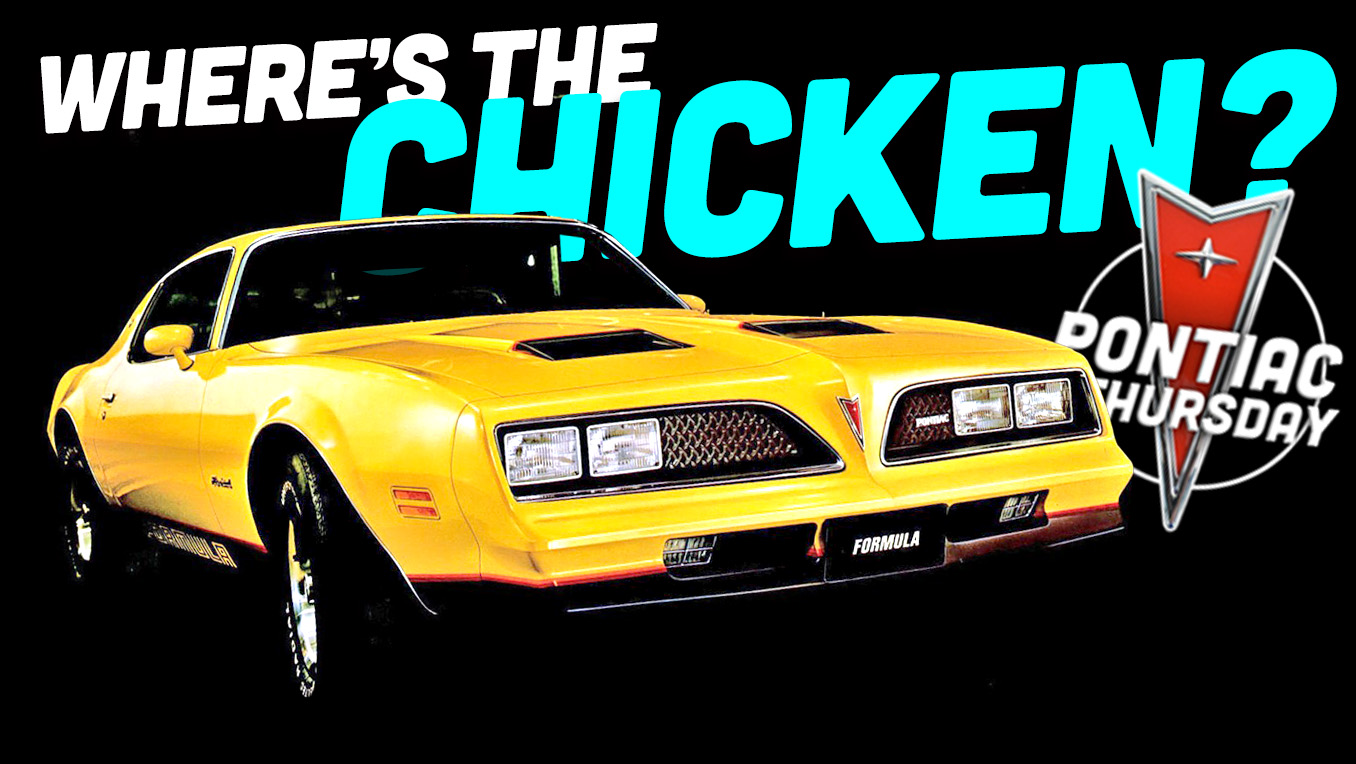
Let’s face a hard fact: Burt Reynolds could pull off driving a car with a card-table-sized bird of fire graphic on the hood, but you’d probably look pretty silly doing so.
Also, as an Autopian, you probably appreciate the clean styling of the second-generation Firebird and wouldn’t want to deface it with the stuck-on wheel flares and shaker hood scoop of a Trans Am. The big motor and tighter chassis of that car you’d take, but spare you the weight and expense of that showy junk, right?


If you’re in agreement with the above, Pontiac made just such a Firebird for you back in the late seventies. That Firebird Formula is still the no-nonsense go-to for enthusiasts that value thrash over flash, and you can enjoy one for a lot less cash than you’d expect today.
The Formula For Speed
I’m not entirely sure how insurance companies decide how to set premiums, but here’s the thing I hope they don’t know about Firebirds: Formula purchasers are the ones to look out for, because they just want to go fast. Base-model buyers only want to look good, Trans Am owners want the stickers, but the Formula guys are ones you’ll most likely spot parked on the side of the road with a police cruiser in tow.
You can’t give two-door coupes away today, but in 1977 Pontiac was able to move 155,735 second-generation Firebirds. A total of 68,744 of those were Bandit wanna-bes in Trans Ams, but a mere 21,801 picked a Formula: the enthusiast’s choice of ‘Bird without a Bird on the hood.
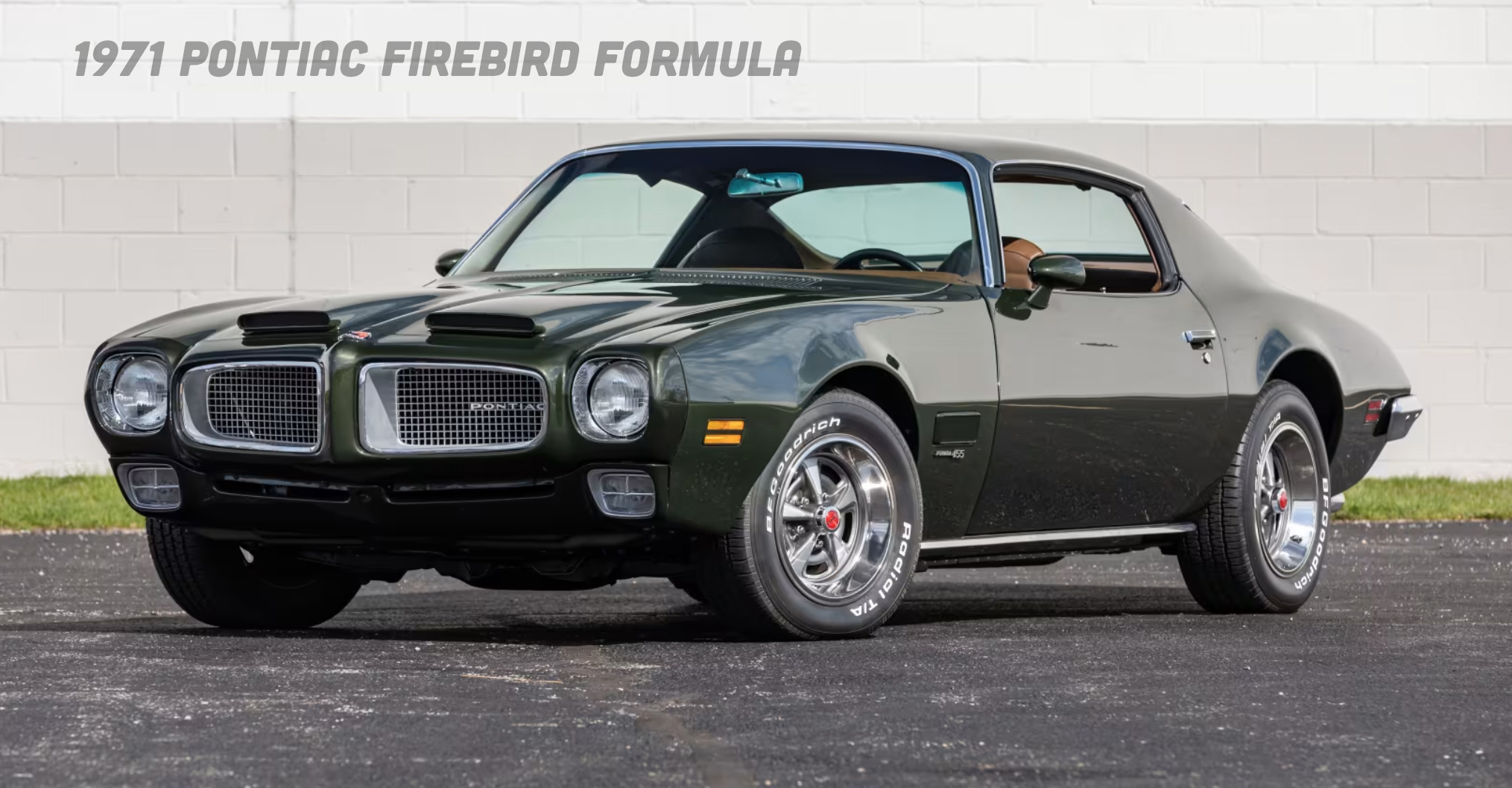
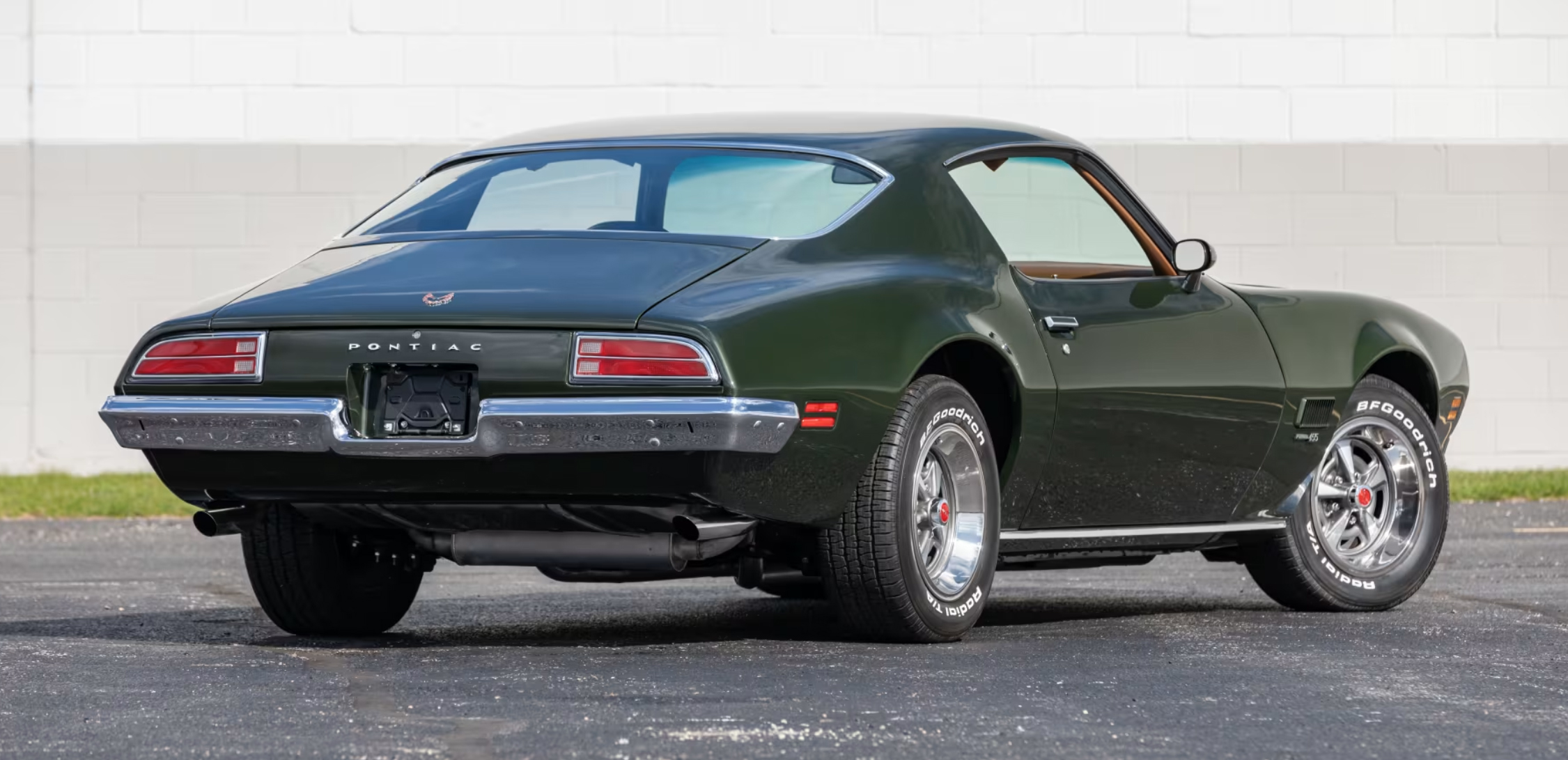
What exactly was the “Formula”? Well, today most car companies require you to shell out the bucks for the XXTi HyperCat R/S model to get the most powerful motor. Up through the sixties, however, many brands let you check the boxes to get the highest horsepower engine in the most stripped-down version of a car. By stripped down, in many cases, that meant with none of the chassis upgrades you really should have ordered to not have a death trap.
By the seventies, most makes still offered the fast motors in cheaper cars, but at least they forced some semblance of turn and stop in the mix. A famous one for Pontiac was the G-37 that our Mercedes Streeter wrote about; a sort of bargain-basement GTO with speed for those on a budget.

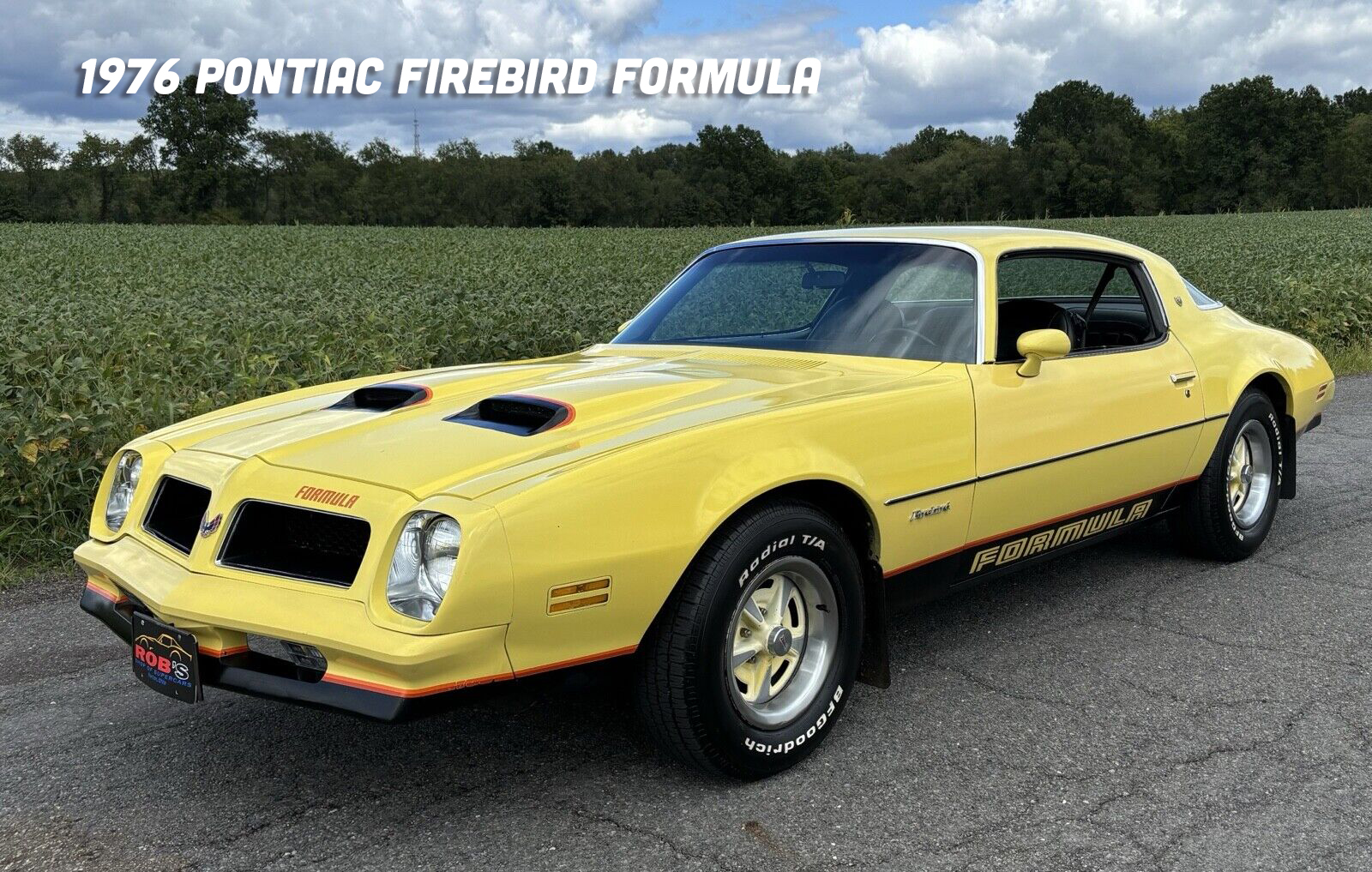
Pontiac’s pony car offered such a car as well, starting with a version of the new-for-1970 ½ second generation Firebird was called the Formula, situated above the more ritzy Esprit model and below the Trans Am. However, don’t go thinking that it was really a “step down”. No, the Formula could be ordered with all the options available to the Trans Am, up to and including the hottest 400 cu. in. V8. The only things you didn’t get were the T/A’s fender flares, big fender heat extractors, and the “shaker” hood scoop was replaced two small twin-snorkel hood scoops (which were functional with the “Ram Air” versions of the 400 V8 that offered up to 345 horsepower). Optionally, you could still get the rear spoiler that I’m always torn about whether I prefer it with or without. As you’d expect, the giant “RPO WW7” Hood Decal or “screaming chicken” that became available in 1973 wasn’t a box you could check on a Formula.
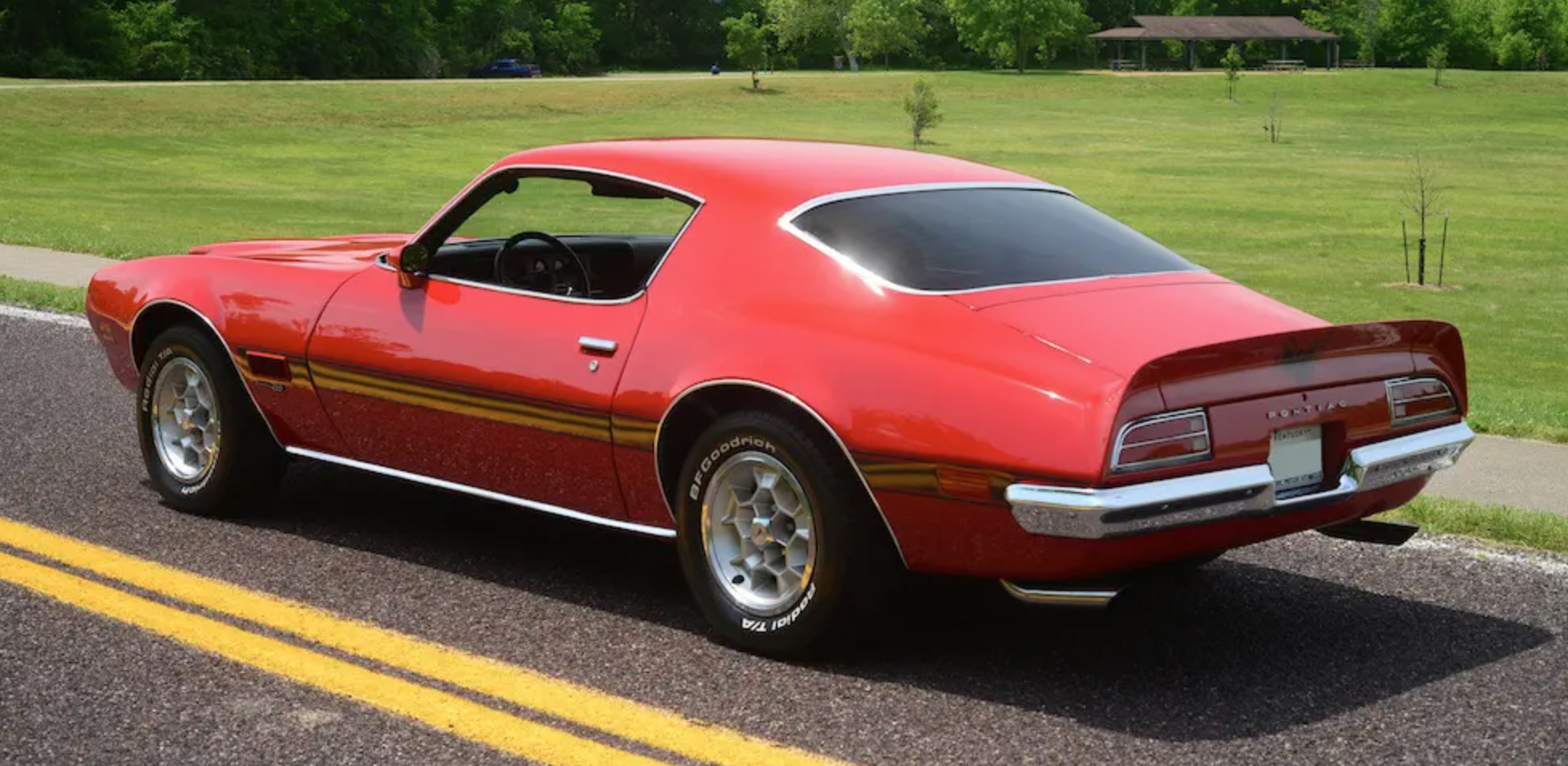
So, tell me again why wouldn’t one want the Formula over a Trans Am? That lack of stuck-on ornamentation wasn’t just good for performance; it made you realize just how good-looking that second-generation F-body really was.
Most of these kinds of sleepers had disappeared by the late seventies, as had performance in general. The Firebird could be had with a larger 455 cu. in. V8 from 1971 on, but overall power continued to drop. For 1976, the last year the biggest motor was available, that giant 455 produced a whopping 200 horsepower.
Yes, those earlier figures were gross versus net, but that’s still rather pathetic. What’s worse is the tightening CAFÉ fuel economy standard meant even the 400 cu. in. version of the Pontiac V8 was soon going away as well.
The Last Big Gasp Of The 400 V8
With news of the impending doom of any motor over around 350 cubic inches, Pontiac decided to create one last hurrah for their F-body coupe with a special version of the burly 400 Pontiac V8 starting in 1977. Dubbed the W72 package, the standard 180 horsepower L78 400 engine received higher-compression heads, a higher-performance camshaft, special oil pump and main bearing caps to protect the motor at high RPM, and molly-filled cast iron piston rings. The changes were good for 200 horsepower, the same as the outgoing bigger 455.

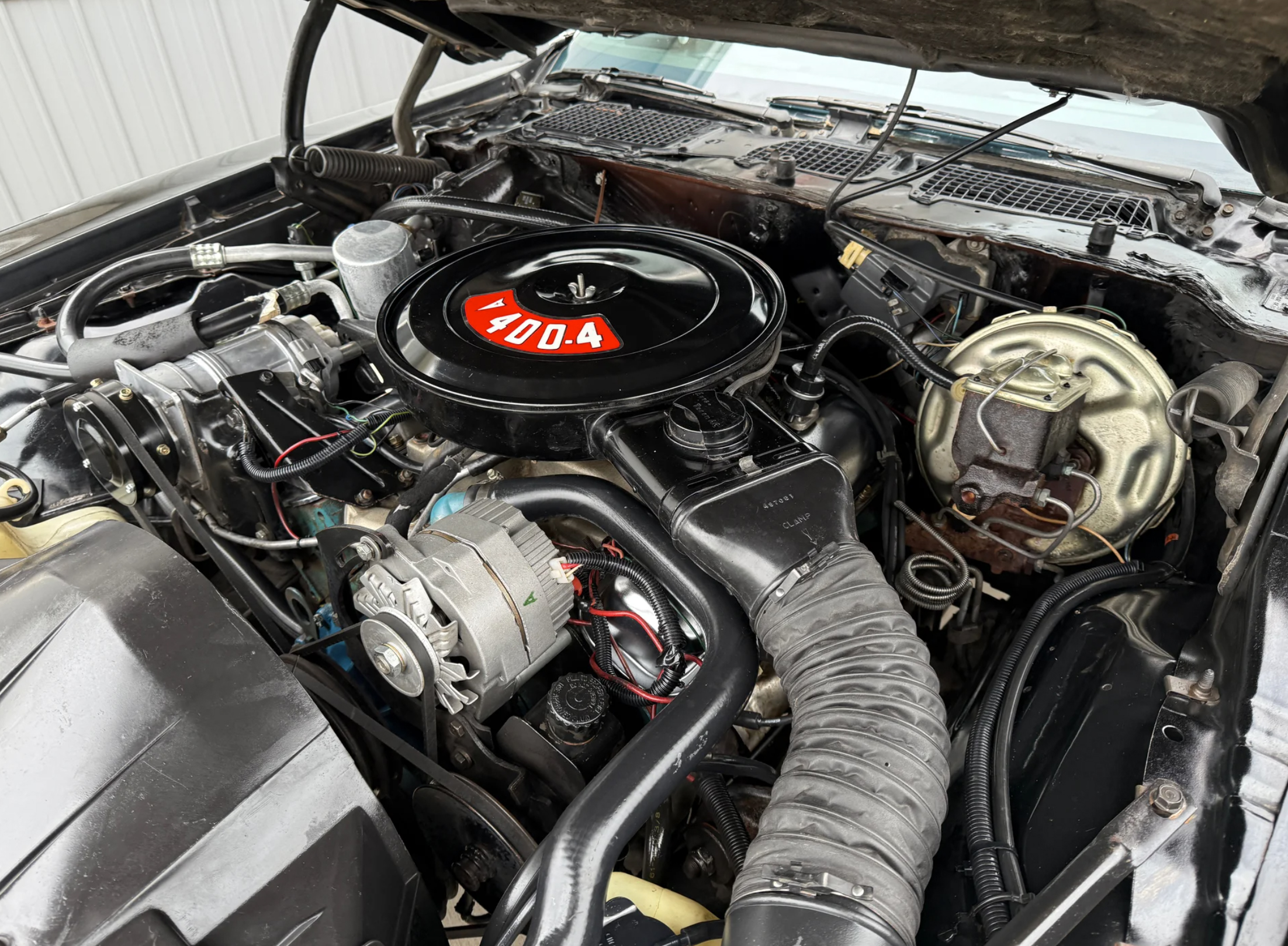
The best news? Despite the popularity of the Trans Am from its appearance in that year’s Smokey and the Bandit, you didn’t need to buy the showiest Firebird to get this powerplant. The Formula could also get this final outing of the big motor installed under a hood with lower-profile “snorkel” scoops.

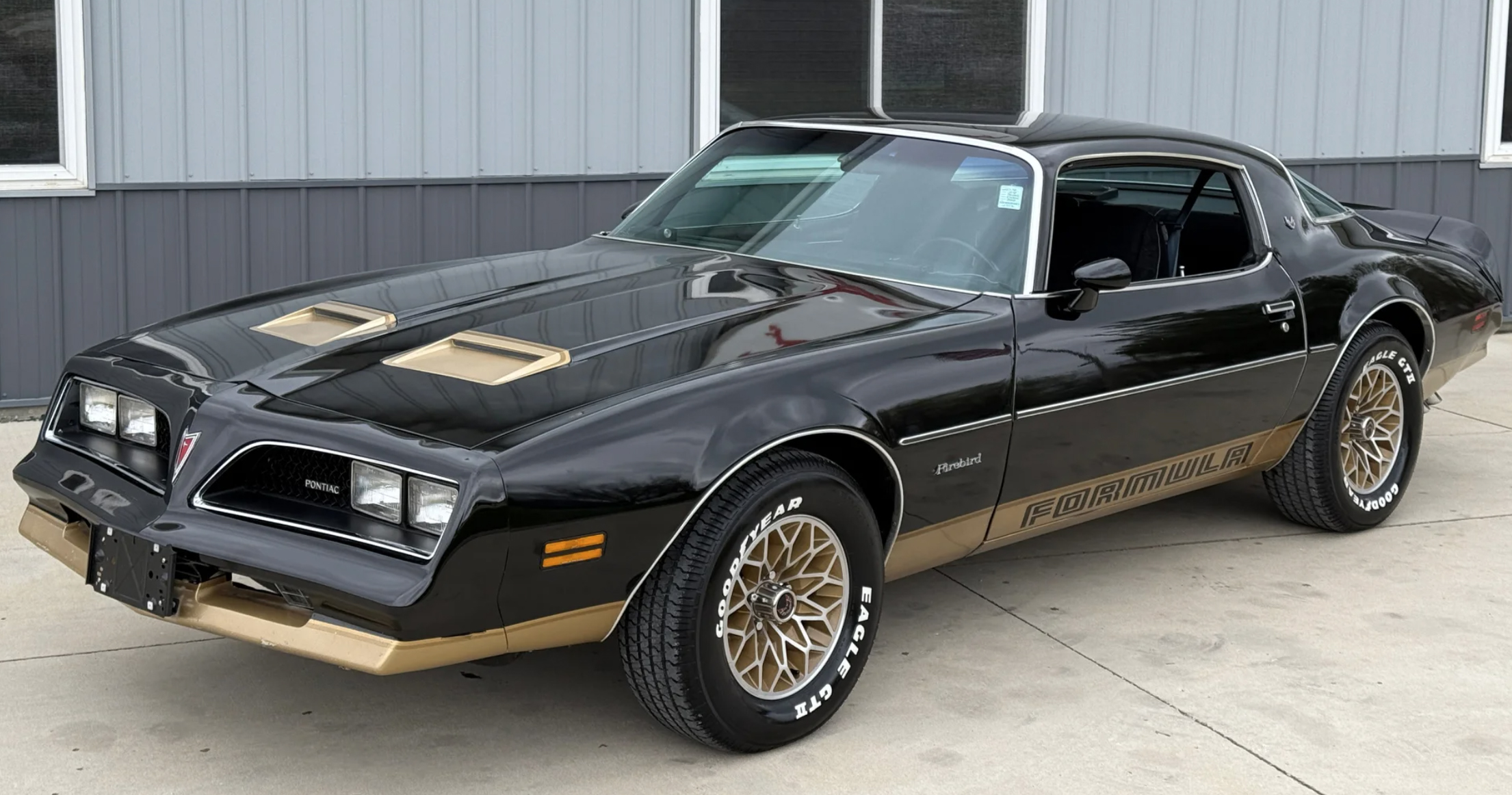
For 1978, the W72’s power went up to 220 hp, giving you performance that was blistering for the time, even if a zero-to-sixty time of around 6.7 to 7.2 seconds is compact SUV territory today. To make the ultimate Pontiac pony coupe, you’d also want to order the WS6 suspension package. This Special Performance package added a number of upgrades, like a beefed-up rear sway bar, tighter ratio steering box, additional frame bracing, and the famous “snowflake” 15 x 8 inch alloy wheels.
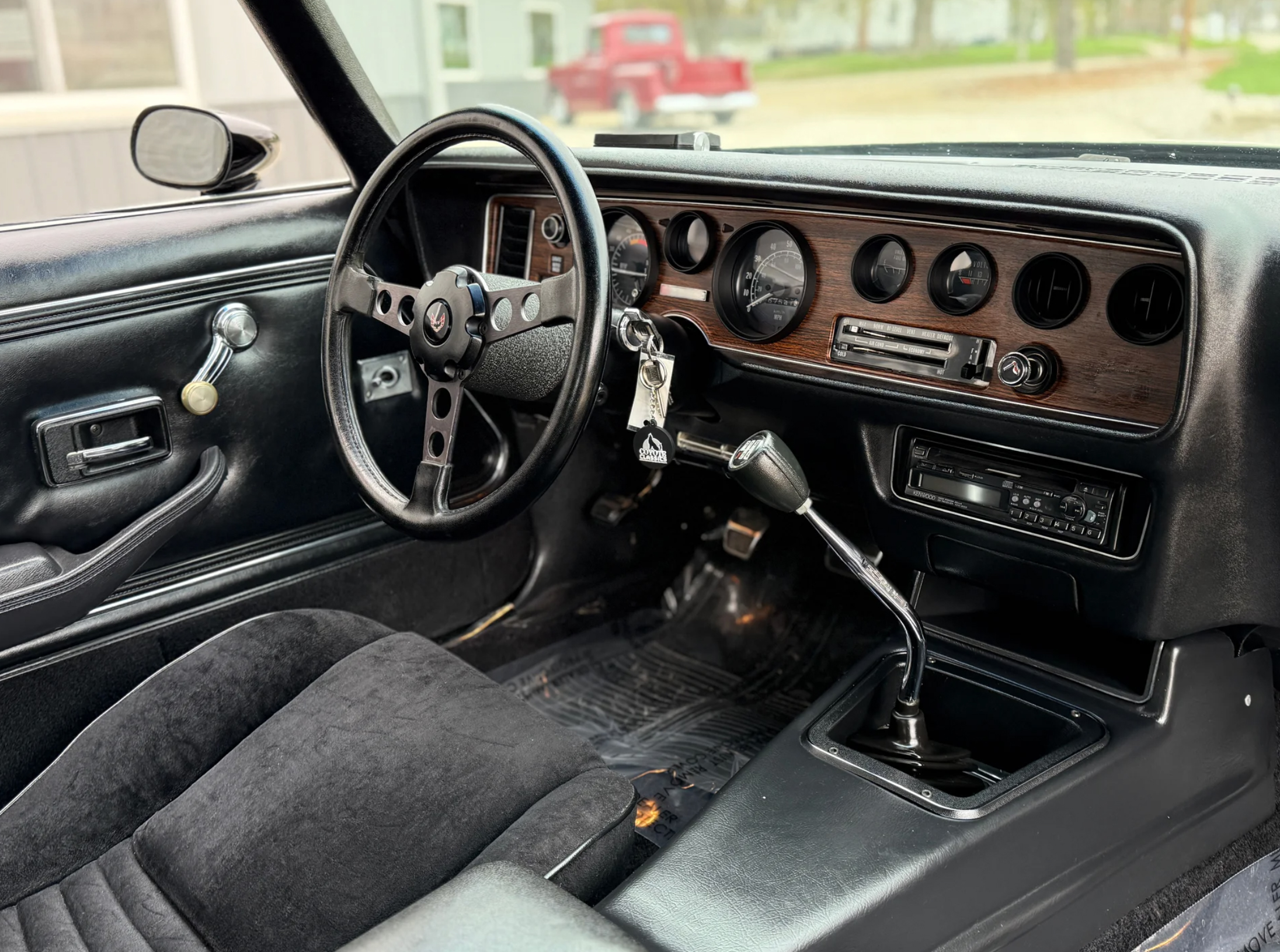
Inside, the Formula eschewed the “engine turned aluminum” dashboard finish of the Trans Am in favor of fake wood. The ersatz timber isn’t to every taste, but it’s arguably less distracting than the dazzling silver trim of the T/A.
The 1979 model with the new “soft nose” and blacked-out taillights got rear disc brakes with the WS6 package, but it was the end for the W72 motor; supplies of the 400 apparently ran out in March or April of that year. The following year’s turbocharged 301 was, well, the less we say about it compared to the W72, the better.


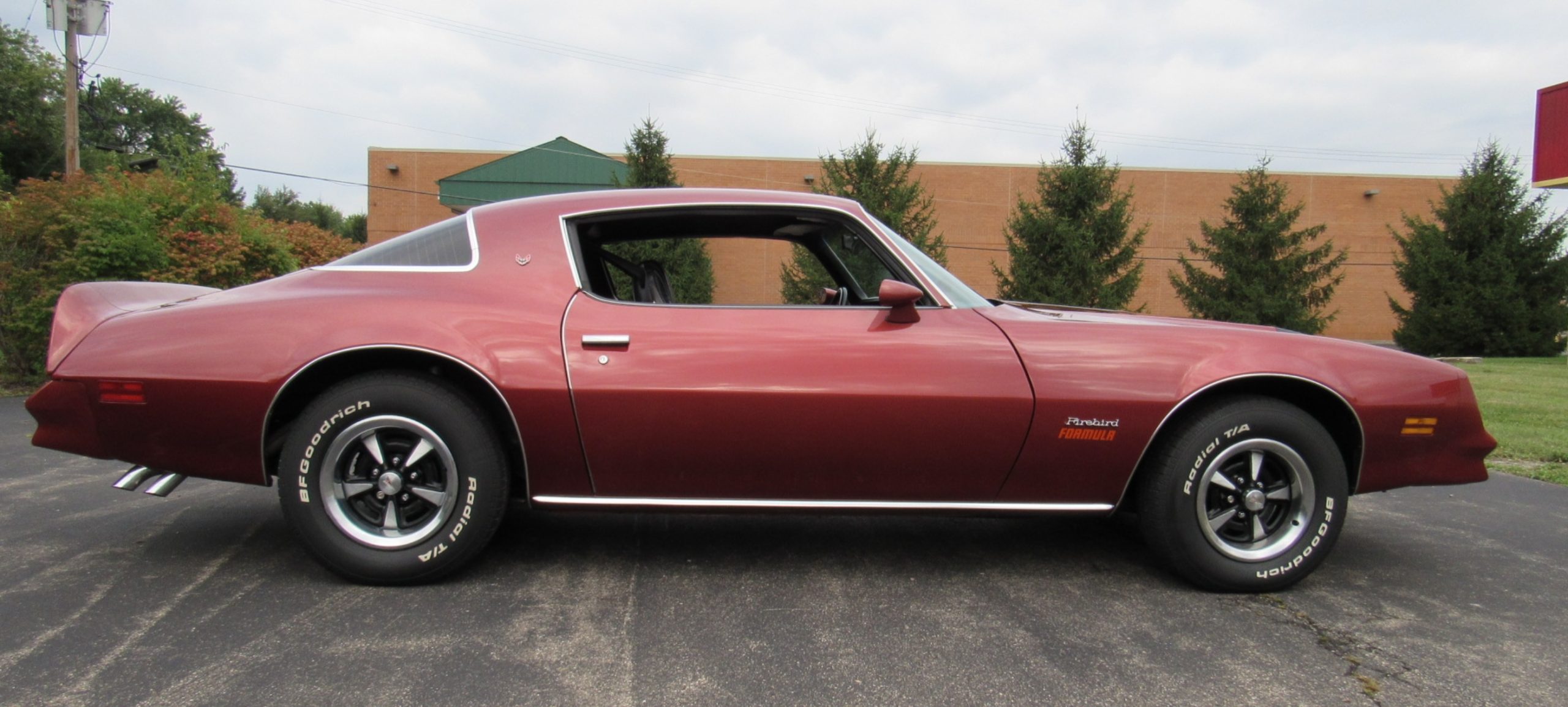
If you wanted just a touch of jazziness to your Formula, the W50 Appearance Group you see on most examples gave some rocker panel stripes, color accents, and FORMULA type across the back, but you’d still have a far more low-key car than the one with a bird-in-flames atop the hood. Personally, I’d go for the most unmarked Formula that I could get, like the maroon one below, and there’s a television detective in the late seventies that seems to have felt that same way.
At The Tone, Leave Your Name And Message
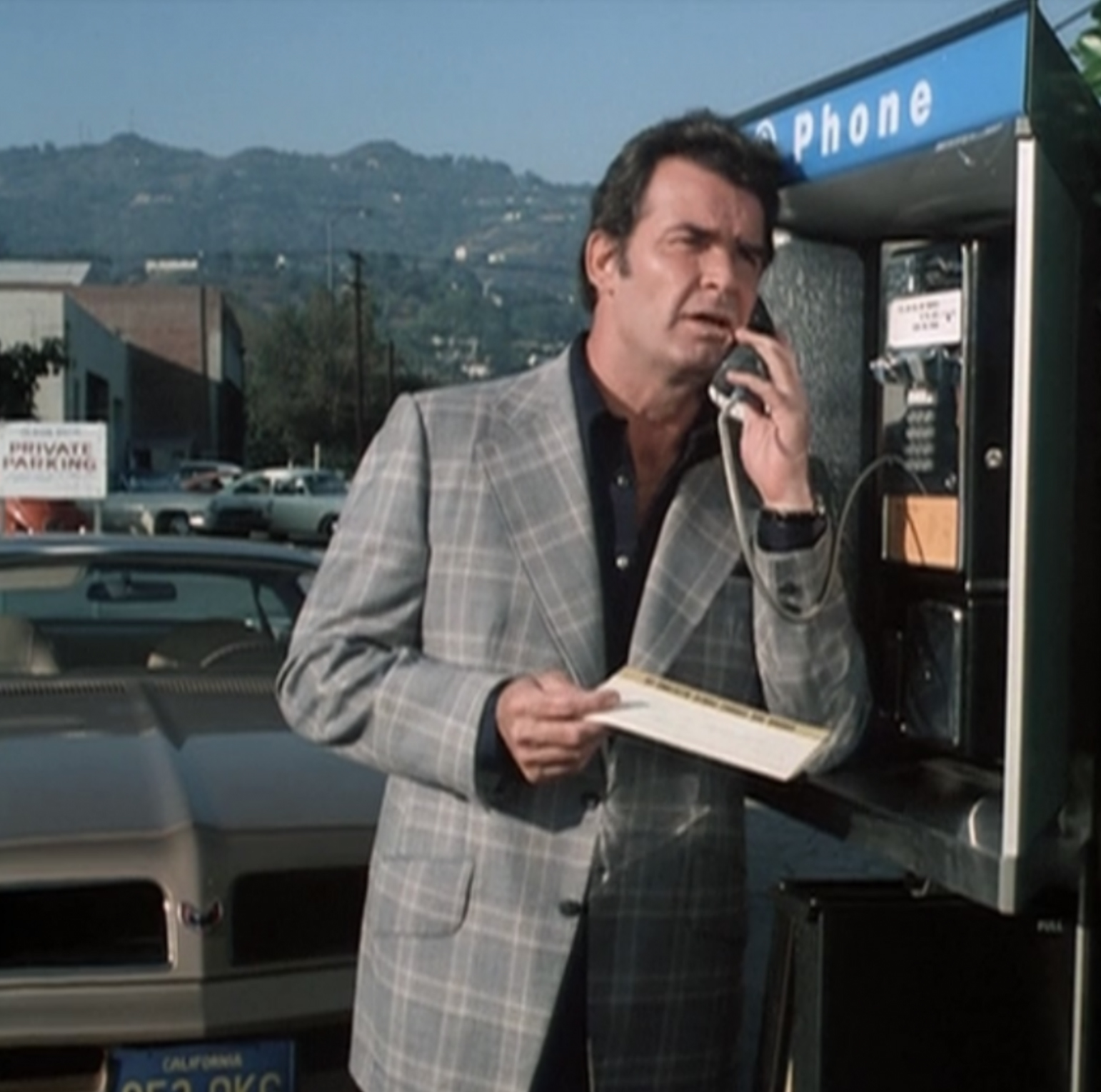
A while back, our Matt Hardigree made a strong case that, in reality, actor and occasional race driver James Garner was more the cool man’s cool man than Steve McQueen ever was. Garner’s funny, self-deprecating charm was on display in the seventies for six seasons of The Rockford Files and famously drove a gold Firebird Esprit. However, this was no ordinary Esprit.


Apparently, Garner loved the Trans Am but figured it would be unrealistic to have a cash-poor private eye who lives in a trailer with his dad drive the most expensive Firebird. Besides, could you really do incognito stakeouts in a car with a giant chicken on the hood?
That’s not to say that the production company and Garner didn’t want a Firebird that could create some small-screen drama. The solution they came up with was to take a 400-equipped Formula and disguise it as the lower-level Esprit model. The snorkel hood was removed, and the car was (accidentally) painted in a GM gold color not available on Firebirds from the factory. Whitewall tires on steel “rallye” wheels completed the ruse. The series ran into 1980, but you’ll never see a 1979 or later Firebird in an episode of The Rockford Files since James Garner apparently hated the new nose treatment!
I won’t use this tangent to show a video of top-notch driver (and supposedly all-around great guy) Garner doing shenanigans, including his signature “J” turn, will I? Of course I will:
An actual car from the show still exists today, as this insightful video from Jason Torchinsky’s old employer Jay Leno explains:
I remember being a very young kid and my dad finally letting me stay up past my 9PM bedtime to watch Jim Rockford on Friday nights, so this Formula-in-drag machine will stay in my memories forever as a car a fully self-confident guy would run. That’s enough to sell me.
Don’t Be A Steve Or A Burt: Be A Jim
Over time, the Formula model continued into later generations as well, competing against Ford entries like the similarly minded Mustang LX 5.0 for those that wanted a lower-key performance car that was, if anything, faster than the fully festooned range toppers. You’ll need to look pretty hard to find a Formula W72, though. The manual transmission examples are rarer than many Italian exotics:
1977 4-speed – 756
1978 4-speed – 810
1979 4-speed – 367
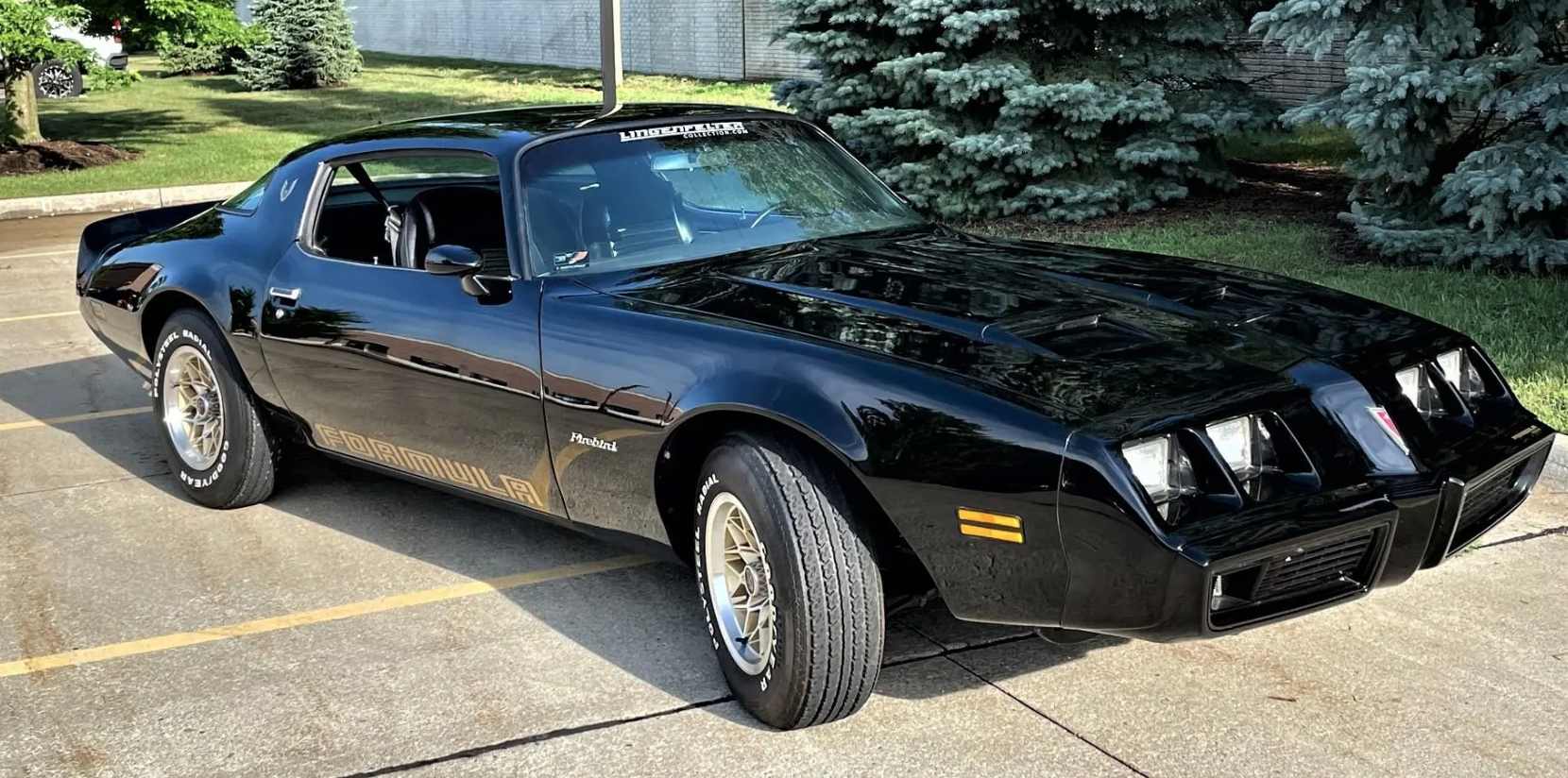
There seems to be little rhyme or reason as to pricing for second-generation Firebirds. Even the signature black Trans Ams are all over the map, from mid-twenties up to nearly a hundred grand from some well-preserved or restored examples. There are so few Formulas, much less L72 Formulas, to make an accurate assessment, but most of the really nice ones I saw online struggled to break high thirties regardless of their great condition. That’s sort of like the also-rare Macho T/A Firebirds I wrote up a while back that seem to languish in value like hidden gems. In terms of performance and gorgeous looks, it’s a much more desirable and usable car to me than any six-figure Hemi ‘Cuda.
The Formula is the connoisseur’s Firebird. Take it from the late, great James Garner; look quiet and restrained even though you can throw a hell of a punch. Besides, you’re never going to be a young Burt Reynolds on a bootleg run, so why pretend?
Pontiac Points: 98/ 100
Verdict: A rare case where the budget sleeper is superior to the top model. You like the fourth-generation SLP Firehawk, and you’d love a third-generation Twentieth Anniversary Turbo, but the second-generation L72/LS6 Formula? That’s the one you’re taking home.
Top graphic image: GM


You didn’t mention the absolute king of Firebird Formulas, the 1973-1974 Formula Super Duty 455. The Trans Am and GTO collector market and prices are nuts. I for sure prefer the low key hi-po 400 and 455 Firebird Formulas, T-37 and GT-37s. I even have a soft spot of hot Grand Prixs, Catalinas, 2+2s, Bonnevilles, LeMans, Grand Ams, ’73-’74 GTOs, Can Ams. I have been wanting a ’77-’78 B body Pontiac with a factory 400 for a while now too. I know they were only 180hp stock with the L78 but they have plenty of potential, much more than an Olds 307/350/403, Buick 350 or Caddy 425. The ’78-’81 LeMans 2 door is just as rare as a 400 B body and in my opinion roasts the looks of a Monte Carlo SS, 442 or Hurts Olds, right up there with the T Type and GN in my eyes, I like to image the way they looked as Winston Cup cars. They are just a 400/428/455 swap away from glory. Pontiacs had a lot more class and style than the rest of the malaise crowd and they are dearly missed.
It’s worth mentioning that the Trans-Am’s engine-turned aluminum dash finish became standard in the Formular beginning with the 1979 model year. This was always a good way to tell if you were looking at a legitimate Formula as most Firebird coupe engine-swappers weren’t bothering to change the dash…
“Optionally, you could still get the rear spoiler that I’m always torn about whether I prefer it with or without”
I’m in the ‘with the spoiler’ camp. Without it, it looks like it has a droopy ass.
Now having said that, from an aerodynamics perspective, it’s probably better without the spoiler.
I’m pro-rear spoiler, generally speaking, with one exception being the sleeper “secretary car” Firebird of my dreams.
I’m thinking 1973 Firebird Esprit, Verdoro green with white interior, white vinyl top, no spoilers, wheel covers, whitewalls… and a fistful of later WS6/W72 goodies hiding inside for a factory sleeper that isn’t what it seems at first glance.
Supposedly the rear spoiler makes 100 pounds of downforce at 100mph. Which is not a lot, but considering it debuted in 1970, is at least something.
I should clarify… from a aerodynamic wind drag perspective, it’s better without the spoiler for attaining higher speeds or needing less power to maintain a given high speed..
Now of course if there are issues with the rear getting too light at speed due to aerodynamic lift to the point that it affects traction, then the spoiler would be aerodynamically desirable.
Always preferred the Formula to the T/A. It just seemed leaner and meaner. Formulas by name went away with the body change in ’82 (the SE could be ordered in a similar package) but they came back in ’86. Overall, Formula was a great way for someone to enjoy what the F-body offered with less of the open shirt, hairy chest stigma associated with T/A.
Another Rockfish-approved story. Thanks, Autopian.
The Rockford Files. It holds up after all these years.
It has been too long for me to remember the exact details, and I was too young to drive, but the old lady pianist and choir director at our church had a black Trans Am with the 400. (I remember that much because my dad and I fixed the cooling system for her and even then I cared about cars and could do oil and brakes myself) It may have been this version. Automatic, not stick, but how many women born in the 40s had a hot car like this? She passed on a couple years ago, but she was a good one.
My Aunt Betty, born in the 20s and living in Pasadena (CA) had a green ’71 Camaro SS350. She wore surfer sunglasses that looked like Oakleys probably before Oakley existed. I don’t think she inspired the Beach Boys’ Little Old Lady from Pasadena, but she could have.
I don’t know what it is about me, but I was always more attracted to the quad small, sealed beams vs the bit dual big ones.
I loved many of the European headlamp treatments on cars that ended up being sold on both sides of the Atlantic. That we didn’t get. Especially the almost cat-eye Peugeots.
I spent too much time looking at European headlight design, like Jason does at taillights. But I was not writing articles about them. And I don’t think anyone else was so, fertile ground, Jason, Headlights. When you get tired of taillights. Just a suggestion.
I sold my uncle’s ’76 a few years ago after he passed away. Silver with honeycomb wheels, a stick, and leather bucket seats. (How could this article and all the comments not have talked about the amazing looking, complicated, and totally fake honeycomb wheels?!) He was proud to have ordered it with no spoilers, as the sales receipt in the dash showed. All original and no rust but had been poorly stored since ’82 so I let it go to a friend for a song. He specialises in restoring them. If anyone wants to track it down here in Ontario, let me know.
+1 on honeycomb wheels, which ARE NOT SNOWFLAKE WHEELS AND NEVER WILL BE. I’ve been hearing people call the latter by the former name literally all my life, and it’s been wrong the entire time. They are two separate products. But other than both being factory Pontiac wheels, I can tell you what else the two have in common: for my money, they are the two very best looking factory wheels ever made for an American car.
And yeah, the honeycomb wheel was originally supposed to be cast of aluminum, but the GM beam counters, true to form, decided they cost too much money, so they were polycast instead, meaning they were heavier than dark matter. I think they look better than snowflakes, but snowflakes definitely have way less unsprung weight.
Thank you for the rant, it drives me nuts too.
However I’m firmly in the camp Snowflakes > Honeycombs.
Hey, it’s a free country. You get enough credit from me for being enough of a Pontiac man to even have an opinion on it.
The PMD 5 spokes wheels were king, the Snowflakes and Honeycomb didn’t have a chance, only the Herb Adams WS6 wide 15×8 Snows are close. If I had any old Pontiac and I wanted to update it with modern rubber without killing the looks with goofy aftermarket wheels, a set of 17×8 or 17×9 PMD wheels would be the move with the center caps.
Love the snowflakes and honeycomb wheels, but I also have a real soft spot for another Pontiac OEM wheel.
https://wheelsamerica.com/product/pontiac-firebird-1984-1989-16-oem-wheel-rim-5/?srsltid=AfmBOood0Fwz1Bs79tN0EsDPu5GHkPXx41vfyC8RROzoC5Iz2-1BbkwA
Pontiac I think had some great stock wheels for a long time, always really went well with their general design ethos.
I always preferred the “innie” version of that wheel to the “outie” version you linked, LOL:
https://encrypted-tbn0.gstatic.com/images?q=tbn:ANd9GcRorVt7By6bL3TBLBMrunVz-5lo7yA24MuDpK3VVJMR-g&s=10
I forgot they had the variants honestly. I do prefer the “innie” as well. When my mother bought her 85 RX7, she made sure to get the “4 spoke” alloys simply because they kind of reminded her of those Pontiac wheels.
THATS IT IM GETTING THE PITCHFORK AND TORCHES! HOW DARE YOU LOOK DOWN ON THE MIGHTY FIRECHICKEN TRANSAM!!!!!
I’m usually spat upon when I express disdain for the screaming chicken and T-Tops. Formula was always my choice. I’m not saying I look like James Garner, but see him bracing on the door sill to get out of his car? That’s what I did to exit my ’78 Camaro. Class moves. In the “Rockford Files” pilot they had to tell James to quit outrunning the helicopter giving chase.
I always preferred the Formula for every gen. F-bodies were everywhere when I was a kid, so it’s partly for reasons of familiarity breeding lack of appreciation and partly that they were treated like regular cars, parked outside, and used as dailies back when cars didn’t look new for long before ending up in the hands of high schoolers that I didn’t appreciate them so much. It took most of them having long been junked and seeing mainly restored ones that I started to really notice the 2nd and 3rd gens as being (mostly) pretty good designs and it took the blanditude of the modern carscape to appreciate the goofy fun of things like the big decals I once rolled my eyes at.
It’s really astounding to think of how many they sold and that’s with so many other coupes on the market. I think if you combined the GR86, BRZ, Miata, Mustang, Z, Supra, and Corvette sales for last year, you wouldn’t even come close to the sales of the Firebird any year from ’76-80.
Yeah back then, unlike today, people seemed to care way more about style than practicality.
People overestimate how much practicality they really need
I’ve always preferred the formulas to the T/A, not counting the ‘69 cause there was no formula anyway and it was my favorite color combo.
You could just get a Firebird 400 from ’67-’69.
My brothers ‘68 Firebird 350 is rusting away in my parents backyard already.
I am unfamiliar with this “Burt Reynolds” that you speak of. Do you by any chance mean Turd Ferguson? ‘Cause that’s a funny name, ya know?
I think this “Burt Reynolds” is the full name of “Burt” who was friends with “Ernie” on Sesame Street…
The Formula Firebirds were the real deal. The Trans Am was more for the Grecian Formula 16 crowd.
And growing up, I liked the Grecian Formula 16 crowd… LOL
Maybe a dumb question, but I’m just a Millennial: Can these 70’s big blocks be ‘de-choked’ to make real horsepower?
They had low compression to run on the unleaded regular gas of the day required for catalytic converters and lousy exhaust systems. So it’s not a trivial upgrade.
I think the cams were also not very good for power as I remember people talking about that back in ancient times.
Nothing a McKellar #10 cam swap couldn’t fix!
Making 500hp from a Pontiac block is easy. Headers, cam and intake and a modern rotating assembly will pretty much do it. Mine makes 480hp at the crank and I’m still running 6X cast iron heads.
Talk dirty to me.
The thing to consider, too, is that the torque was good from these things, so 180hp from these feels a lot more powerful than 180hp from a modern 4 cylinder. Like, the acceleration numbers he mentioned would feel faster than in that modern compact crossover of similar numbers (and the Pontiac’s numbers were probably hurt by axle hop and wheel spin). They were also basically ox carts made of yoga mats, so that resulting drama amplified the experience, as well. I’m more familiar with 3rd gens, but they were fun cars in that lizard-brain kind of way.
“is that the torque was good from these things, so 180hp from these feels a lot more powerful than 180hp from a modern 4 cylinder”
Actually my C-Max Energi, when in EV mode, feels a lot like those 1970s cars with the big block V8s when it comes to power delivery.
Great power off the line, but then at higher speeds/higher RPM, they fall flat on their faces while the modern 4 cylinder will still feel lively at higher speeds.
When in EV mode, my C-Max Energi has a top speed of about 85mph… and the acceleration over 60mph is slllllooow. And it’s worse in cold weather where the top EV-only speed drops to around 65-70mph.
Of course switching it to hybrid mode solves the higher-speed power problem.
I had a Focus EV lease 10 years ago, it felt like a 4.6L Crown Vic launching in 2nd gear to me, a tiny bit soft from the jump then it pulled endlessly to the limiter at 86mph.
Yeah, it’s a whole lot harder to lay two black rubber stripes for an entire city block with 180 horsepower in 2025 than it was in 1978.
A friend is a Pontiac guy. NASCAR pattern new parts are available (probably not cheap). He’s dyno’ing near 700hp and 700ft-lb on several engines.
Depends on how you define ‘real horsepower’.
If by real horsepower, you mean 1960s pre-emissions levels of power, then yes. But then it would be technically illegal to use such a vehicle on public roads because it’s illegal at the Federal level in the USA to remove emissions equipment.
But even after you removed the emissions, you’d still have to do other things like install a less restrictive exhaust and intake, maybe install better heads, install a high-lift cam and maybe a few other things. Doing that won’t be cheap and isn’t worth it to most people.
Now if you mean ‘real power’ in the modern sense, nah. A modern Chrysler Hemi/Hellcat, higher powered versions of the GM LS or variants of the Ford Coyote engine will blow away the 1970s big block engines in terms of power, performance and fuel economy… and do all that while having way lower emissions, less weight and better durability.
The old big blocks, certainly Chevrolet and Pontiac can make gobs of power, just as much as anything modern, aluminum heads are available, stroker kits are available, roller cams, induction, power adders, aftermarket blocks even. Of course BBC but, guys like Butler are making 700+HP with Pontiac V8s N/A. Mopar and Ford Small and Big Blocks are the same.
“The old big blocks, certainly Chevrolet and Pontiac can make gobs of power, just as much as anything modern, aluminum heads are available, stroker kits are available, roller cams, induction, power adders, aftermarket blocks even”
Oh sure. But my point is whether it’s worth it because doing all that isn’t cheap.
And after doing all that, will they still be emissions compliant? And what will be the fuel consumption situation?
For on-road use, might be better to just get a newer engine from an auto recycler.
To some degree, yes. The first thing to do is what my uncle did with his brand new 1979 Trans Am with the 403 Oldsmobile under the hood, in 1979: chop off the catalytic converter and leave it to rot under an azalea bush in the backyard for the next 30 years, then go have true dual exhaust installed. Carb and intake go a very long way. But the heads and cam are the real power suck.
Fair warning, the blocks would not be as stout from about 1974 forward either, but yes, they can at least be made to get out of their own way, if not actually be a little fast.
Yeah you really need to have someone magnaflux the block first to make sure it’s sound. For Pontiacs, a set of four-bolt main caps are pretty much required if you’re going to be pushing 500hp or more. I would also recommend an aftermarket crank so it doesn’t end up in five pieces (ask me how I know). It can get expensive because Pontiac hi-po parts aren’t available at every corner store like Chevy stuff. There is a pretty good cottage industry of Pontiac parts out there now however.
The biggest handicap of the Pontiac is the heads, unless you’re running RA or SD heads. Others can be made to work but the real trick is an aftermarket head. My builder says there’d be 100 more horsepower in my engine just with Edlebrock heads alone. You can get as wild as you spend. But I’m making 480 with 6X heads and a manifold that keeps it all under the hood, and I shift at 6000rpm. So it’s not difficult
It must also be said: if we live in an age when people sneer at 480 horsepower, then what a time to be alive.
You children don’t know the heartbreak that your GenX and boomer forebears endured watching American horsepower just… die. Slowly. Tortuously. “Well, it was fun driving fast cars while it lasted.” If you don’t understand why we jumped for joy the first time we heard that the 5.0 Mustang and TPI Trans Ams and Z28s had finally broken 200hp again, get off my lawn.
The biggest limit for Pontiacs are the stock rods. A set of high compression pistons and forged rods will bring any ‘low compression 71-’79 400/455 engine along with head(either ported or aluminum ),cam, intake, exhaust up to the level of 400-500hp.
Mid year 77 Pontiac went back to the stronger XX blocks and they were strong again.
Yes, if you live in a state that allows it, absolutely, the 75-early ’77 400 blocks were lightened so some say they are not preferable for big power builds, I would imagine they could still take 300-400hp, they were still a lot stronger than the windowed main Olds 350/403 from that time, the big thing holding a Pontiac V8 back is the stock rods, once you get the compression back up and put some forged rods into them they can rev pretty good and make nice power, even the D port low performance heads can be fitted with 2.11″/1.71″ valves if they didn’t come with them and can be ported to flow pretty good. Now that China aluminum round port inexpensive heads are available there is less point. Pontiac V8 all the way to the ’79 400 were strong torquey engines.
Jim’s dad Rocky did not live with Jim in the trailer. Rocky had a house.
Indeed. He had a “house-in-the-Valley”.
It was always a marvel that Jim could get from Paradise Cove, Malibu to Dennis Becker’s Office in the Rampart District HQ in LA in under like 5 minutes. Like the Jack Bauer Syndrome.
It was also a marvel that the plumbing never worked in the trailer– so you “had to use the restroom in the restaurant across the parking lot”. The Answering Machine Greetings were the best.
RIP Jim, Dennis, Rocky and Angel. sigh
Angel Martin -the best, i forgot.
Stuart Margolin died only relatively recently IIRC.
He had some great supporting parts over the years, including the conniving supplies “acquisition” guy in Kelly’s Heroes.
Did you know that Rocky’s GMC was Garner’s personal truck?
Oooo! That’s great
Even more obscure trivia? There was a picture of Rocky (as a boy, childhood photo) in Will Rogers’ pocket when Rogers crashed-and-died in Alaska. Will Rogers and Wallace Beery (Rocky’s famous actor uncle) were good friends– Rogers knew Noah Beery Jr. as a child.
The picture’s in the Will Rogers Museum in Oklahoma. Weird callback to small town Hollywood when everybody knew everybody.
Interesting info!
Without some aftermarket traction bars, these had horrible wheel hop when you got on it especially the 4 speed ones.
Almost bought a 70 Ram Air III Formula. Nice car but it had a bit too much noise coming from the differential and the dealer would not come down in price. The car was the brother of the green one above, but in gray.