

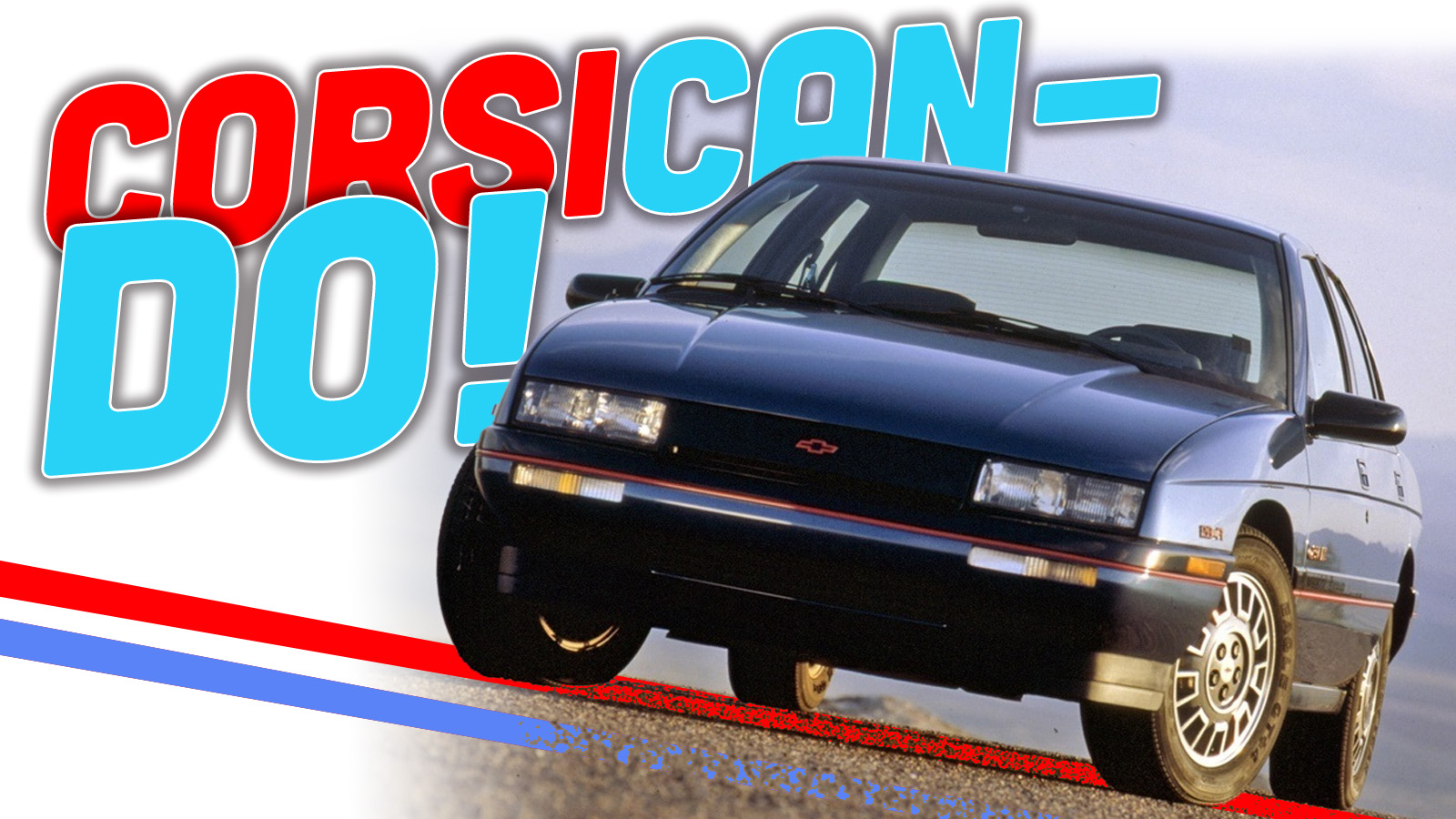
Most of General Motors’ front-drive coupes and sedans of the 1980s and 1990s are not remembered fondly among stereotypical car enthusiasts, if they’re remembered at all. Vehicles like the Chevrolet Cavalier and the Oldsmobile Calais were perfectly functional and utterly forgettable transportation, and the Chevrolet Corsica was another one of these cars.
Chevy sold over 1.6 million Corsicas spanning nearly a decade, and most of them were used up by families before their owners moved on. But the Corsica wasn’t always a boring family car. If you wanted a little spice to go with your morning school run, there was the Corsica LTZ and XT, a forgotten sort of mild sport-sedan version of a car that you probably haven’t thought about in years.


The Chevrolet Corsica is one of the vehicles that helped General Motors pull itself out of a slump that was at least partially self-inflicted. Back in the 1970s, affordable imports flooded America, and domestic brands struggled to compete. Detroit built its own competitors or just slapped American badges on Japanese cars, but it wasn’t enough. Young car buyers flocked to marques from Japan and Europe.
Efforts to slow down Japan also backfired. In 1981, Japan voluntarily agreed to cap its exports to America. Later, our nation would impose heavy tariffs on imported heavy motorcycles to protect the likes of Harley-Davidson. However, as CNN wrote in 1992, this didn’t stop Japan at all. Buyers still wanted Japanese cars and motorcycles even if supplies were limited. Japanese brands also chased higher margins, too. But it all wasn’t Japan. As CNN noted, few manufacturers used the opportunity presented by the export cap and the motorcycle tariffs to shore up their product lines. Harley-Davidson rejuvenated itself with its Evolution engine, but General Motors missed the mark.
As I wrote in the past, in the late 1970s, General Motors wagered that the bad times of the 1970s would bleed into the 1980s. Thus, in GM’s eye, the car buyers of the 1980s would care more about fuel efficiency and downsizing over power and thrill, just like they did in the mid-1970s. To facilitate this, GM produced a slew of smaller models that focused on miles per gallon above all else. Unfortunately for GM, the bet didn’t pay off. Gas got cheap again, and buyers wanted to have fun and horsepower again. GM fell behind the curve, selling cars that buyers weren’t looking for.
In 1982, GM launched the GM-10 program. This $7 billion program was intended to replace the Chevrolet Celebrity, Pontiac 6000, Oldsmobile Cutlass Supreme, and Buick Century. These vehicles couldn’t come fast enough because GM was hurting. GM held 44.6 percent of the car market in 1984. However, as public interest in GM products waned, so did its market share. By the time of the GM-10 program’s debut in 1987, GM’s share had plummeted to 36.6 percent. General Motors itself was also reorganized in 1984.
[Ed Note: Along with “normal” spots like the one above, GM also hawked the Corsica with a commercial that was pure nightmare fuel, as discussed here. – Pete]
The GM-10 cars weren’t the General’s only trick up its sleeve. GM’s plan to rise back up involved just flooding the market with smartly engineered new models. The GM-10s would be joined by Oldsmobile’s N-body and Chevrolet’s L-body platforms, which would underpin compacts. Out of the other end would come cars designed to draw buyers away from the imports. One of those cars was the Corsica, a car that you probably haven’t seen in a long time.
Chevy’s Import Fighter
General Motors set lofty goals for its new compact platform. Not only were the L-bodies supposed to make buyers forget about the Chevrolet Citation, but they were also meant to take on an armada of competitors. Chevrolet saw the Corsica going up against the Dodge Aries, Ford Tempo, Honda Accord, Toyota Camry, Nissan Stanza, Mazda 626, Plymouth Reliant, and Mercury Topaz. Those are some stiff competitors, and GM tried to give the Corsica the best shot at beating them.
Supervising the design of the Corsica and its platform mate, the Beretta, was Irvin Rybicki, who led the styling direction of GM’s downsizing strategy of the late 1970s and the 1980s. This was a big deal at the time because GM wasn’t just going smaller, as this was also the period of the General adopting front-wheel drive. Rybicki’s career with GM began in 1944 when he was hired on as a project engineer by GM’s Engineering Standards Laboratory at the GM Proving Ground. A year later, Harley Earl would see Rybicki’s sketches and place Rybicki into the role of a designer. Rybicki would rise through the GM ranks, from creating innovations at Cadillac to eventually becoming the chief designer of Oldsmobile in the latter half of the 1950s.
By 1962, Rybicki was in the seat of the chief designer of Chevrolet. He took over the role of vice president of design in 1977, the position that was held by Bill Mitchell. Rybicki oversaw the designs of GM’s A-platform cars, C/H-platform cars, GM-10 cars, and the J-Platform cars. He also had a hand in the futuristic wedge-shaped third-generation Camaro and the Corvette C4.
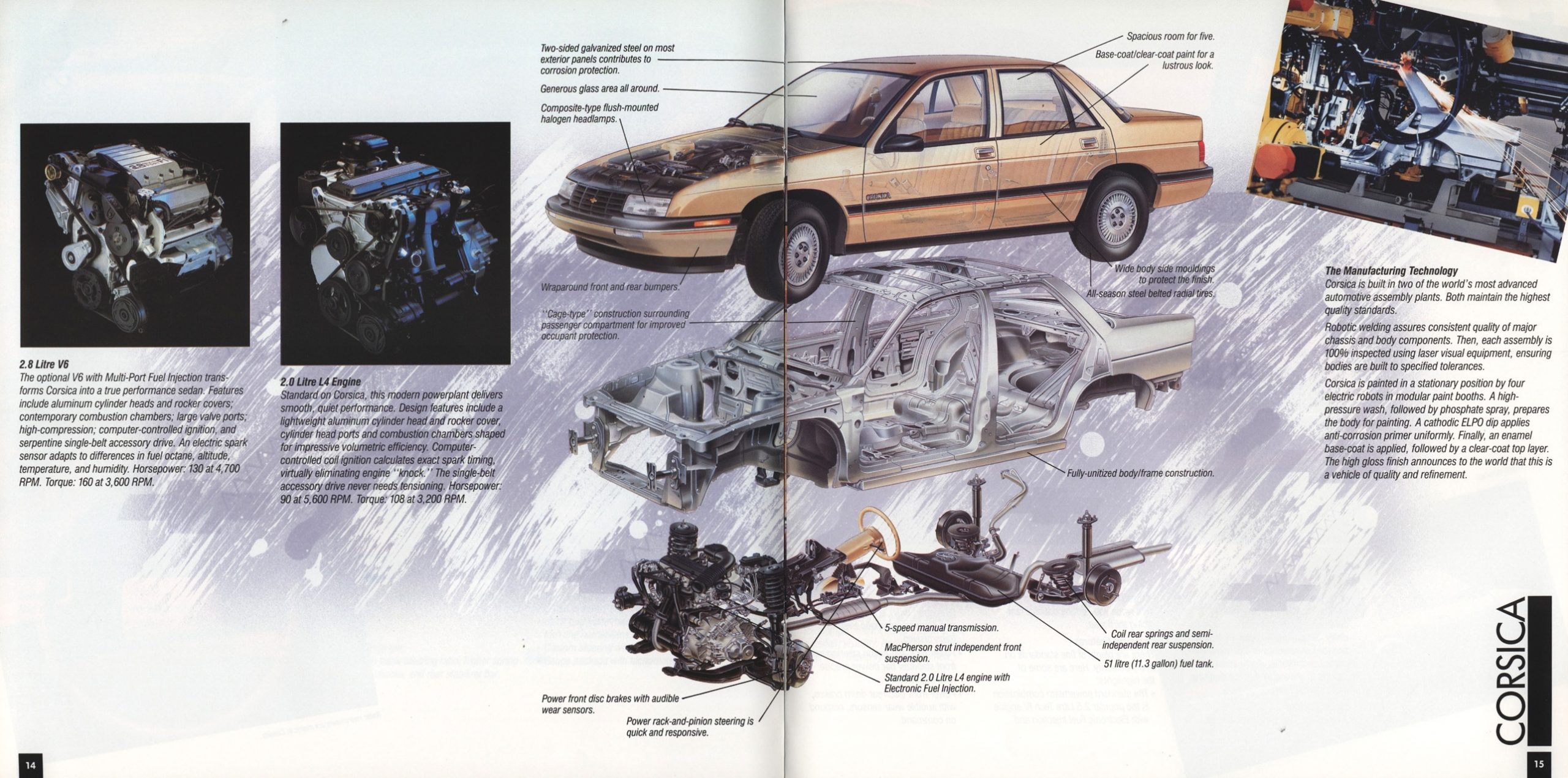
The Corsica’s wedge shape was penned in the same GM design house behind the Cavalier and Monte Carlo. From a design perspective, the Corsica and its Beretta platform mate were a step forward for GM. Both vehicles had lighting that better integrated with their bodies than the X-bodies they replaced. GM also upgraded its fight against rust by galvanizing the L-body’s steel panels.
Under those panels sat MacPherson struts up front, a twist-beam rear suspension, and, for the Corsica, a wheelbase of 103.4 inches. The base engine was the 2.0-liter four from the Cavalier with 90 horses and 109 lb-ft of torque on tap. The spicy option was a 2.8-liter V6 that pumped out 130 ponies and 170 lb-ft of torque. The hottest engine the Corsica would ever get would come in 1994 with a 3.1-liter V6 that had 160 horsepower and 185 lb-ft of torque to give.
According to MotorWeek (video above), the Chevy Corsica went into production in 1986 for 1987, but buyers couldn’t get their hands on them until the 1988 model year. GM had a fascinating plan for the launch of the Corsica and Beretta. Instead of selling them to the public first, GM sent them to rental fleets.
As the Chicago Tribune reported at the time, the plan was sort of genius. By putting the cars into rental fleets first, the public got to see and try the cars out before they went on sale. GM was also able to use feedback from rental customers to improve the cars before their public launch. Apparently, the hoods of rental Berettas had trouble closing, and the drivers of rental Corsicas kept trying to pull the headlight switch instead of rotating it.
An Overnight Hit
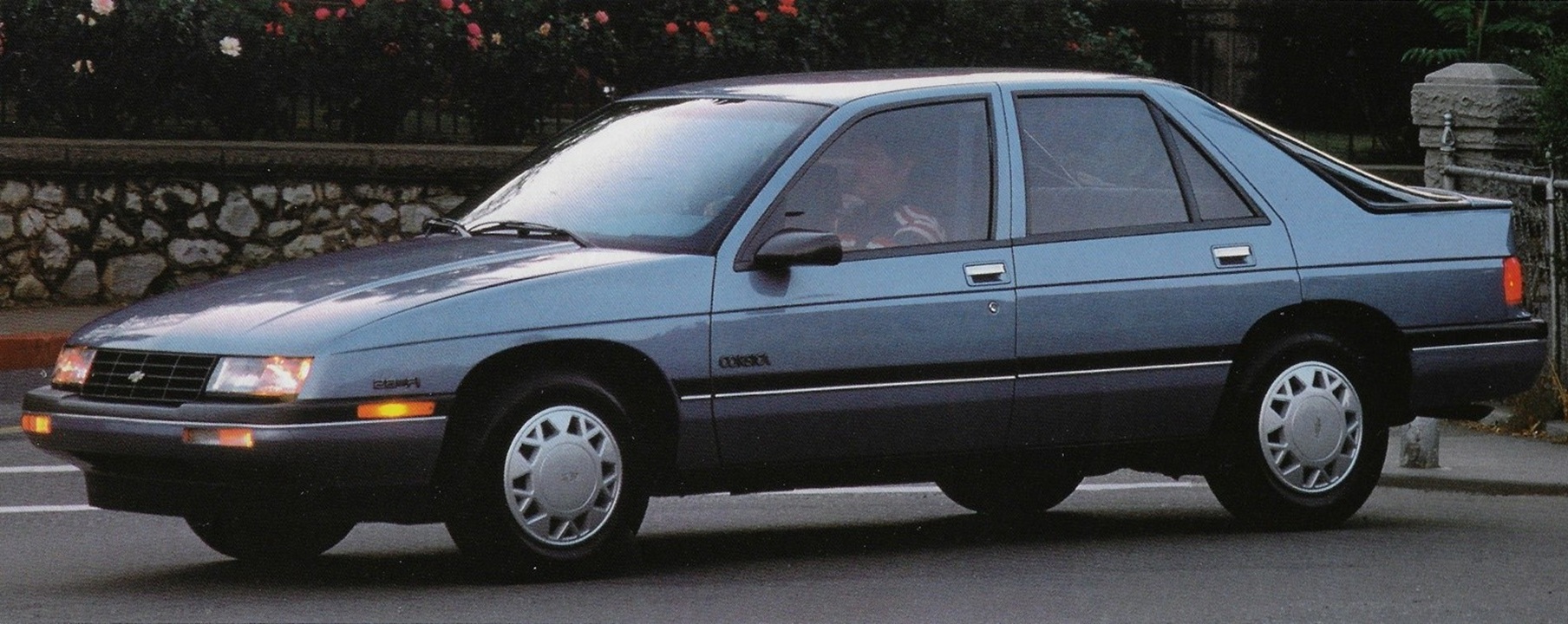
The Corsica was an immediate hit. Here’s what the Chicago Tribune said in a review:
Corsica’s main function at Chevrolet is as the replacement for the Citation, the compact X-body that was discontinued in 1985. Chevy waited until 1988 to bring out Corsica to give consumers time to forget about the charges of locking brakes in a panic stop with the X-body cars. Corsica is strong in two departments: looks and performance. It`s far more pleasing to the eye than the Citation. It benefits in 1989 from the addition of a glassy hatchback to the notchback sedan line. That curved hatch resembles the glass on a Camaro. Keep in mind that the size of the hatch glass will require air conditioning to keep the interior cool in the summer.
The compact Corsica is built on a 103.4-inch wheelbase and is 183.4 inches long. We test drove the LT version finished in a dark but rich gray with thick body side moldings to protect sheet metal. A red accent stripe along the moldings adds just the right touch.
Performance is the Corsica`s other strong suit, providing you get the optional V-6 engine. With the base 108-horsepower, 2-liter, 4-cylinder, fuel- injected engine, Corsica is an economy compact designed to carry the family of four and groceries. But with the optional 130-h.p., 2.8-liter, multiport, fuel-injected V-6, Corsica comes alive. Performance like this used to be reserved for two-door coupes. No more. A bit startling was the fact the standard 5-speed wasn`t typically GM temperamental. Good complement to the 2.8`s power. A 3-speed automatic is a $490 option.

While the newspaper had lots of praise for the Corsica, it also pointed out some rather weird flaws. One was that the driver’s seat felt “to be mounted on a hill” and that rolling the seat forward to be able to reach the pedals in the version with the manual would make you feel like you were sitting on the floor. So, the Chicago Tribune concluded that people with long legs would enjoy the manual best.
Other complaints from the Trib (as Chicagoans sometimes call the newspaper) include a heavy hood, a center console compartment that’s hard to reach and opens the wrong direction, rear seats that don’t fold flat, a hatch window that doesn’t have a wiper, seatbelts that dig into your neck, and, amusingly, a service manual note that instructed owners to replace the “carburetor air filter” every 50,000 miles. No version of the production Corsica had a carburetor.

But those complaints didn’t matter because the Corsica was a hot seller right out of the gate. 8,973 units were sold in 1987. Of course, that was during the fleet-only sales. In 1988, when sales opened up to everyone, Chevy moved a whopping 291,163 Corsicas. The Beretta was similarly crazy popular in 1988, selling 275,098 units that year. GM’s plan worked as its new compacts became among the top-selling cars in America in just their official launch year.
These cars remained popular, too. The Beretta remained in production until 1996 and bowed out after moving 906,230 copies. The Corsica? They practically flew off lots for years. Even in the final production year of 1996, when the Corsica was past its expiration date, Chevy still moved 148,652 of them. When all was said and done, Chevy sold 1,643,416 Corsicas.

Most of those Corsicas were perfectly fine and totally forgettable family cars. I remember my brother having a ’90s Corsica in 2007 when he was still a teenager. He got it from a buy-here-pay-here lot, and it was certainly one of the cars of all time. My most vivid memory of it was being impressed at how good the black paint still shone, and that the Corsica name on the trunk lid wasn’t even a true badge but a cheap sticker. I was also a fan of how the brake lights looked like louvers.
I’m willing to bet that most people remember even less about the Corsica than I do. When was the last time you’ve even seen a Corsica in the wild? I know I cannot remember. That alone is incredible, considering just how many of these were sold.
The Corsica Sport Sedan
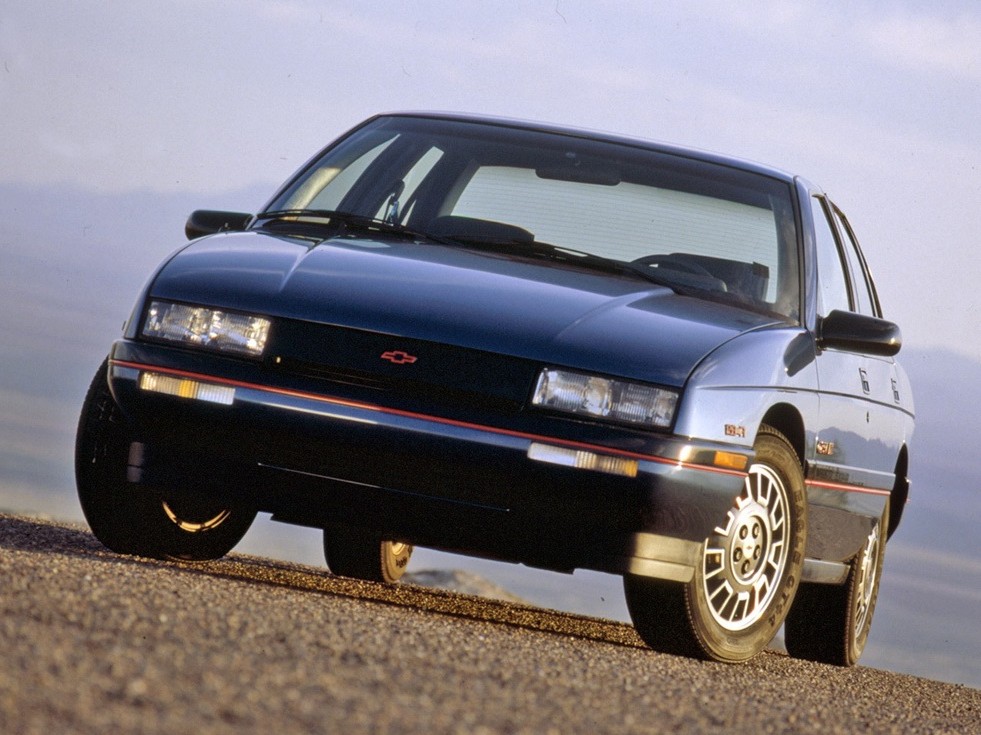
Yet, not every version of the Corsica is so easily forgettable. The LTZ sat at the top of the Corsica pile, and it included most features that were options on the base model and the mid-level LT. To make the LTZ a bit sportier, Chevy outfitted the sedan with the FE3 sport suspension, 15-inch Eagle GT all-season performance radial tires, red exterior accent lines, contoured bucket seats, the 2.8-liter V6, and, weirdly, a black cargo rack.
Opting for the LTZ also netted you an adjustable steering wheel, full gauges, split-folding rear seat, cruise control, tinted glass, and intermittent wipers. If you moved up to Preferred Equipment Group 2, you got a cassette player plus power windows, trunk opener, and locks. Apparently, Preferred Equipment Group 2 was a whopping $2,375 package, but came with a 1,300 discount.
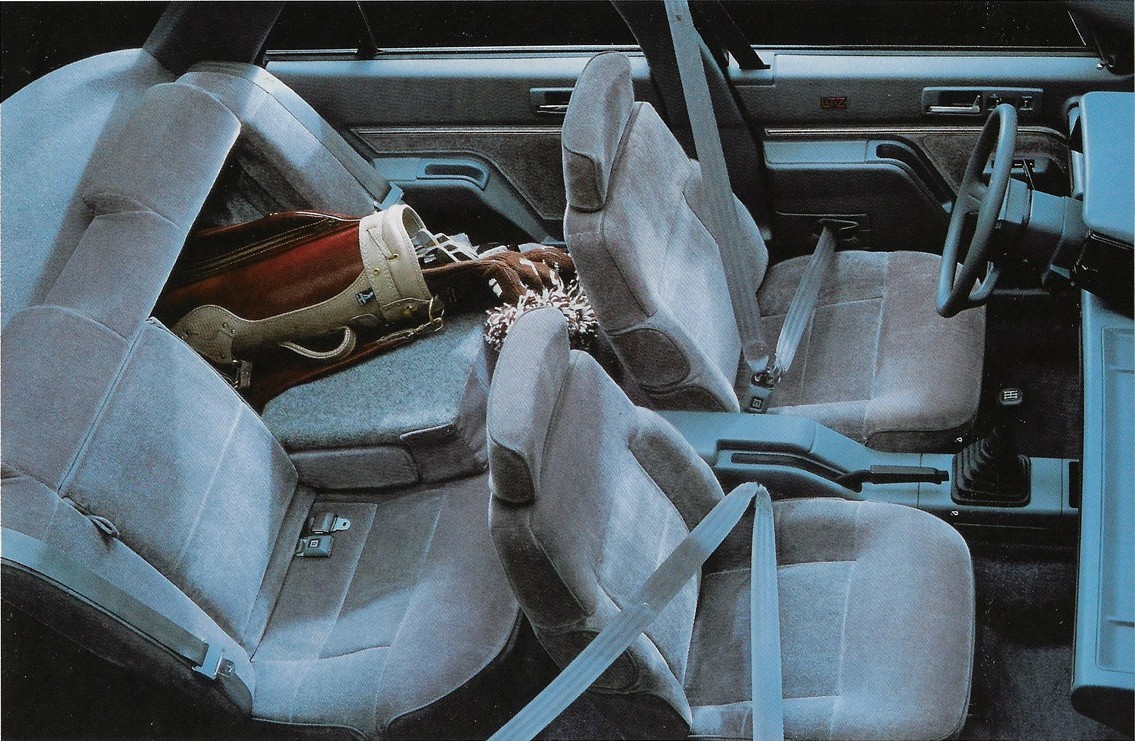
In 1987, a base Corsica was $8,995 ($26,433 in 2026). In 1988, the price rose to $10,375 ($29,303 in 2026). The mid-range LT was $11,395 ($32,184 in 2026), and the top LTZ was $13,239 ($37,392 in 2026). Five-speed manuals were standard on all Corsicas, and a three-speed automatic was available for $490. Most features that were available in the LTZ could be individually optioned in lower cars. A rear window defroster was $145, the V6 was $660, the hatchback version was $400 extra, and you had to pay an additional $425 for freight. The sedan sold 800 percent more examples than the hatch, as most buyers decided to save $400.
The Corsica would see several updates over the years. In 1990, a 2.2-liter four replaced the 2.0 four, bringing eight extra ponies with it. The V6 then became a 3.1-liter affair with 140 HP and 180 lb-ft of torque on deck. In 1991, the LTZ was killed off and replaced with the Z52, which was similar to the LTZ but added a sporty steering wheel. A four-speed automatic arrived in 1994, the same year the V6 reached the aforementioned peak power of 160 HP.
The Corsica’s marketing was interesting as Chevy wasn’t afraid to call the Corsica a family sedan that was also a sports sedan.
The Crowd Goes Mild
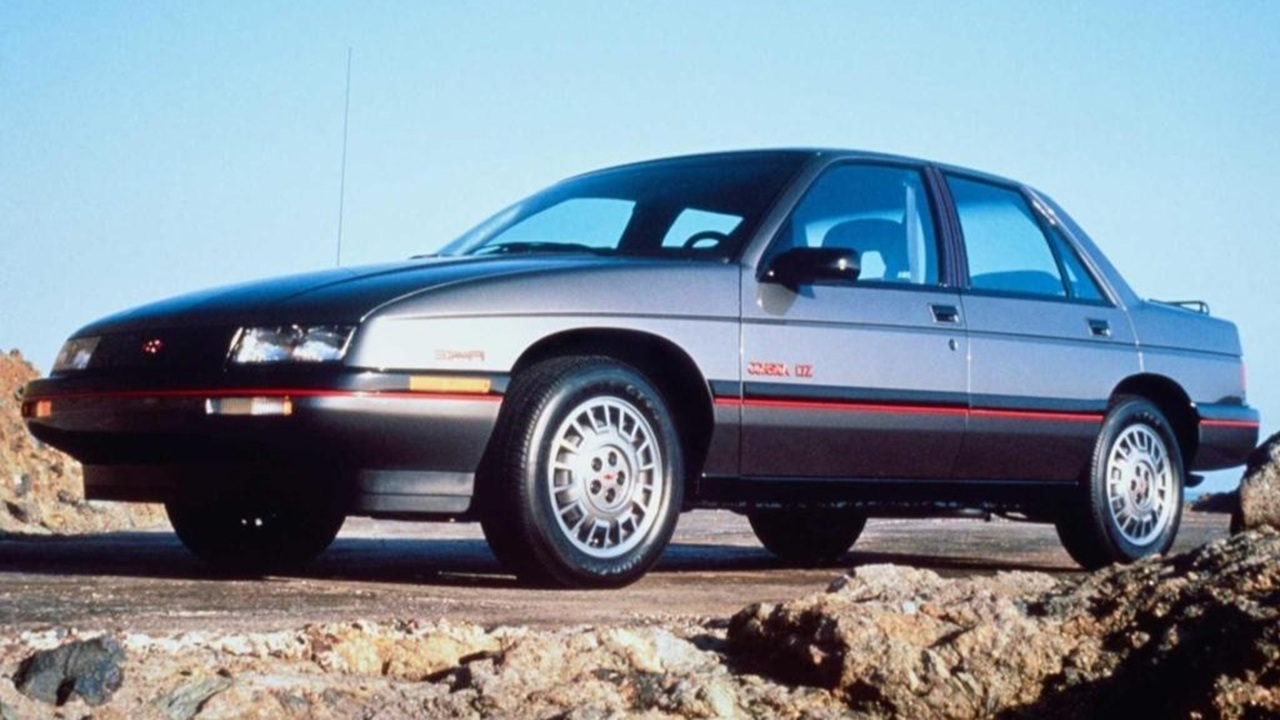
The reality was far more fascinating. In 1989, Popular Mechanics pitted the Corsica LTZ against the Dodge Spirit ES, Ford Tempo GLS, Honda Accord LXi, Hyundai Sonata GLS, Mazda 626 LX, Mitsubishi Galant GS, Nissan Stanza GXE, Oldsmobile Cutlass Calais SL, Peugeot 405 S, Subaru Legacy L, Toyota Camry Deluxe V6, and the Volkswagen Jetta Carat.
The fastest car in the lineup in a straight line was the Dodge Spirit, which hit 60 mph in 11.11 seconds and completed the quarter mile in 16.66 seconds at 82.19 mph. The fastest through the slalom was the Mitsubishi Galant at 68.57 mph. The best on the skidpad was the Peugeot 405 at .84 G. The only category won by the Corsica was braking, where it took only 123 feet to stop from 60 mph. The worst in the braking category was the Hyundai Sonata, which took a leisurely 167 feet to stop. The Corsica LTZ was toward the middle of the pack in acceleration, towards the front of the pack on the skid pad, and perfectly average at the slalom. Check out this commercial:
Here’s how Popular Mechanics summed up the LTZ:
Our test car came with the popular 2.8-liter V6 that’s available in almost every Chevy product, from the Cavalier to the S-10pickup. It’s a sturdy, well-developed engine that ought to be dead reliable for family car use.
The V6 Corsica has almost identical performance to the Quad 4 Calais, Where the Corsica shines is in its external appearance. The pointy nose, wedge shape and handsome roofline are as modern and lithe as any small sedan in production. Unfortunately, the Corsica interior doesn’t measure up to its exterior. The gauges are hard to see, the 2-spoke steering wheel is uncomfortable, with offbeat styling, and the pushbutton controls are hard to use. Driving the Corsica is fine at normal speeds on the highway, but the handling deteriorates dramatically as speeds rise or the mad turns bumpy. At high speeds, the car seems wobbly and under-damped, with a lot of pitch and-yaw motion.
Overall, we’d say the Corsica is an excellent, attractive platform from which Chevrolet could build a great family sedan. All it needs is a nicer interior, better suspension tuning and perhaps just a bit more horsepower. In all fairness, the top-line LTZ Corsica we tested costs about $2000 less than our favorite Camry.
There Is A Corsica Holy Grail Out There
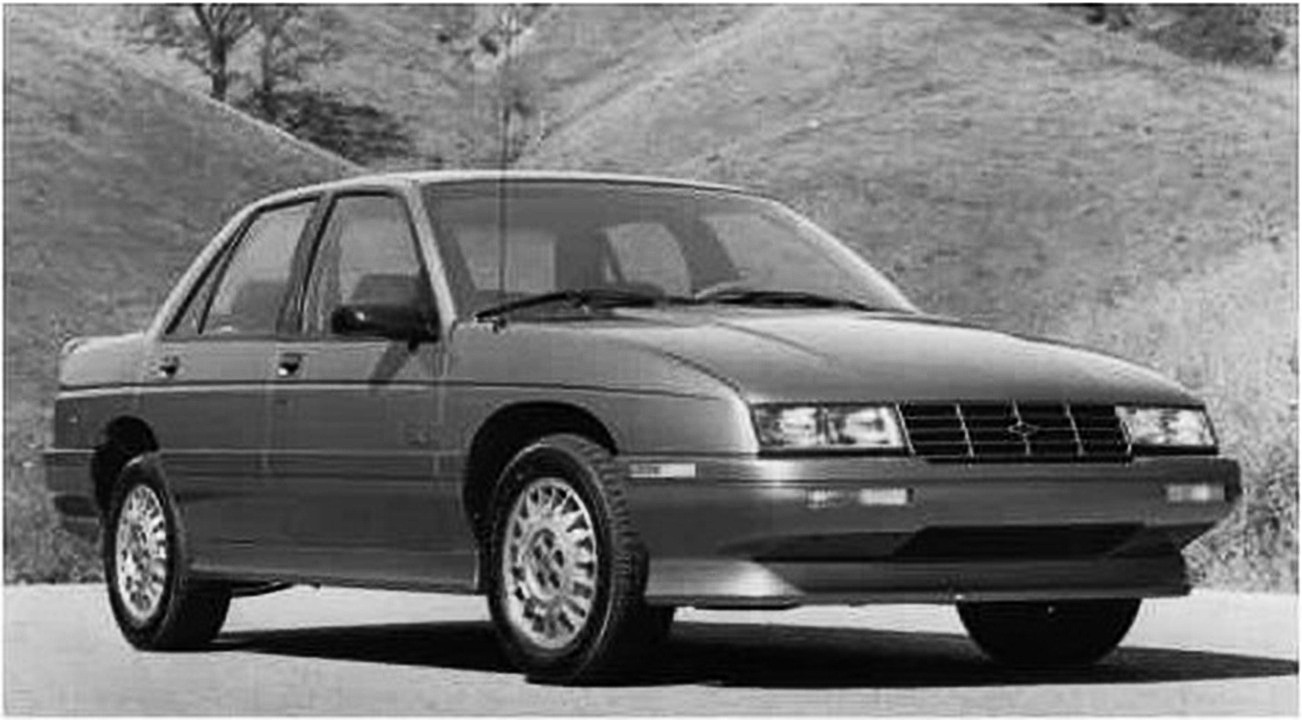
So, it seemed GM made its family sedan somewhat sporty, but not really any sportier than the competition. Yet, this isn’t where the Corsica story ended. For just 1988 and 1989, Chevy also offered what it called the Corsica XT.
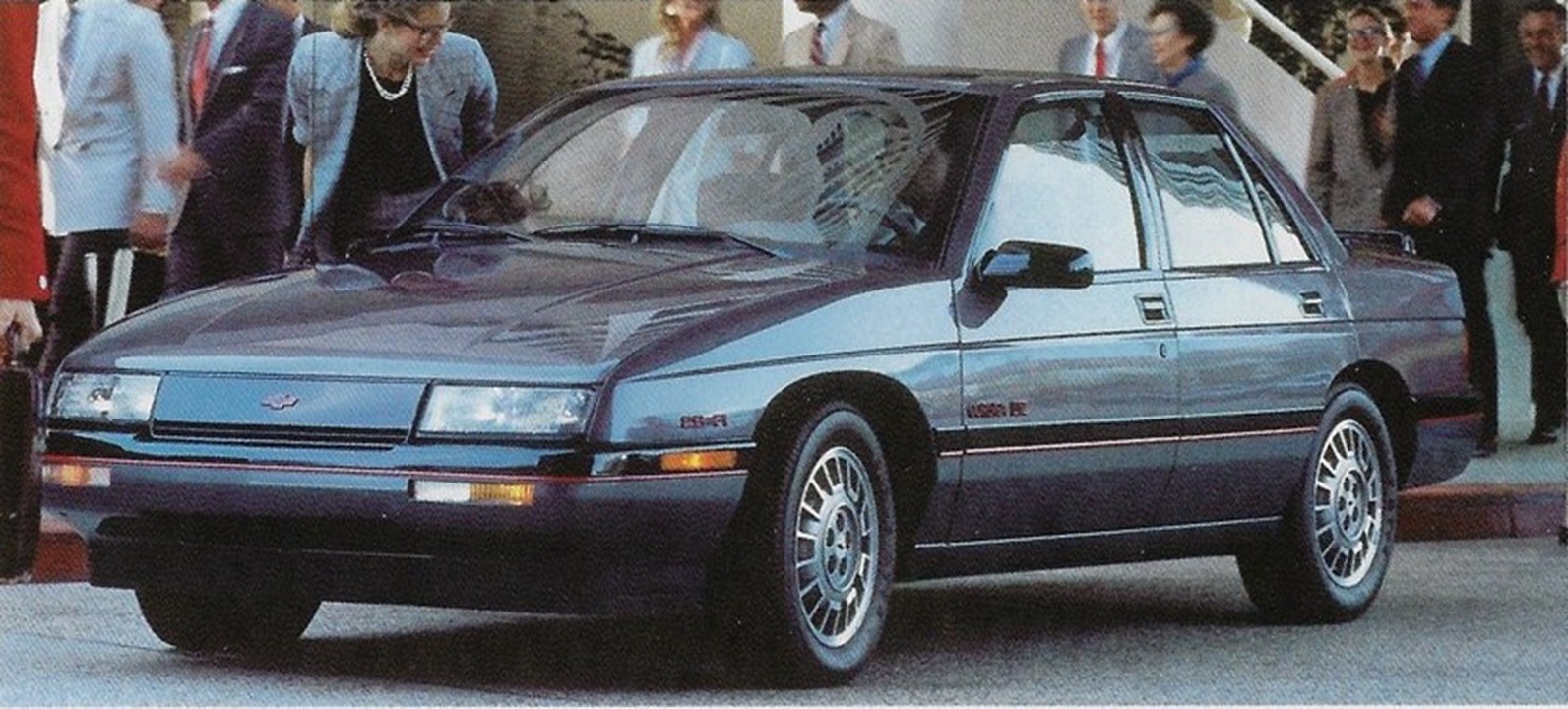
Sold in California only, the XT was more or less an LTZ with a special body kit from a third-party supplier, custom leather and vinyl bucket seats, and leather interior trim. It otherwise had the same wheels, tires, engine, and FE3 suspension of the LTZ. The press copy called the XT the “luxury version of the most aerodynamic sport sedan in Chevrolet history.”
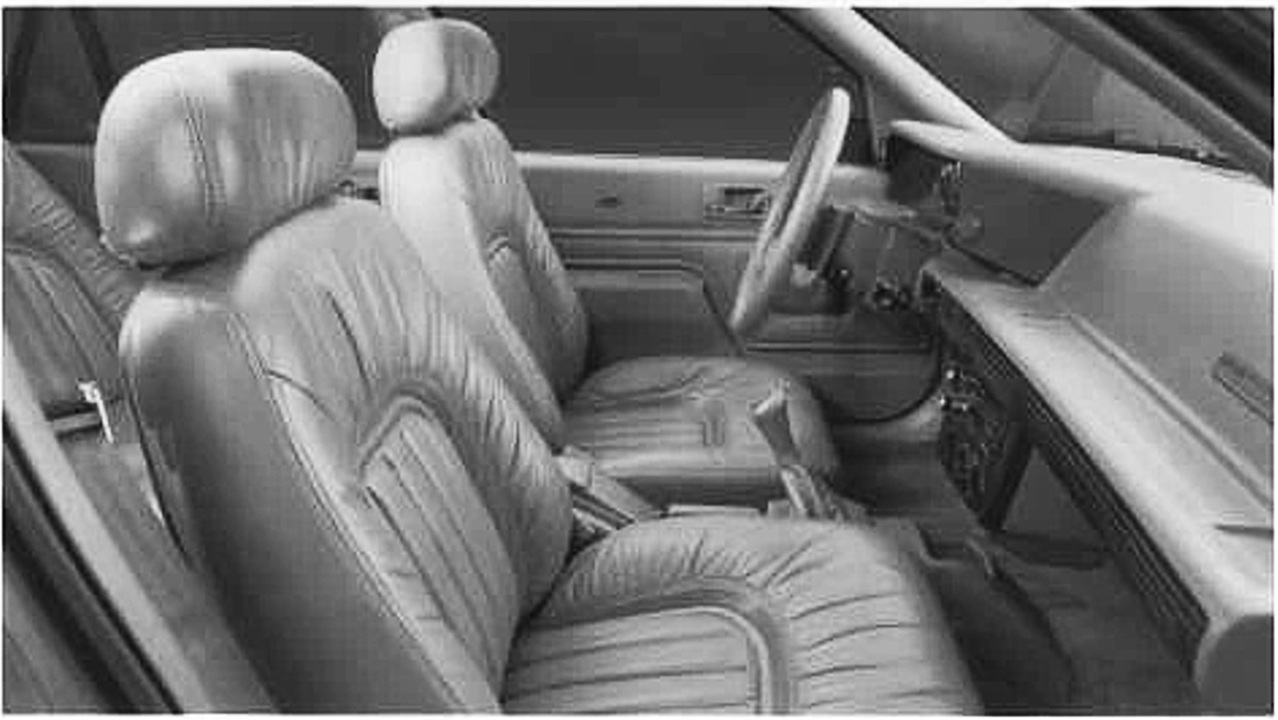
Amazingly, some of these were actually sold, and you can find a couple of them on the Internet. However, they appear to be one of the rarest special models of this era of GM. No exaggeration, I have been waiting longer than two years to write this story because I wanted to find an XT for sale to write about. I have searched Facebook Marketplace and elsewhere regularly without any luck. So, you get only the two low-res press shots.
The Chevrolet Corsica sits in a weird spot in automotive history. It helped America forget the X-body cars and was a step forward for GM styling and engineering. The Corsica was also a smashing success at a time when GM was recovering from a dark period.
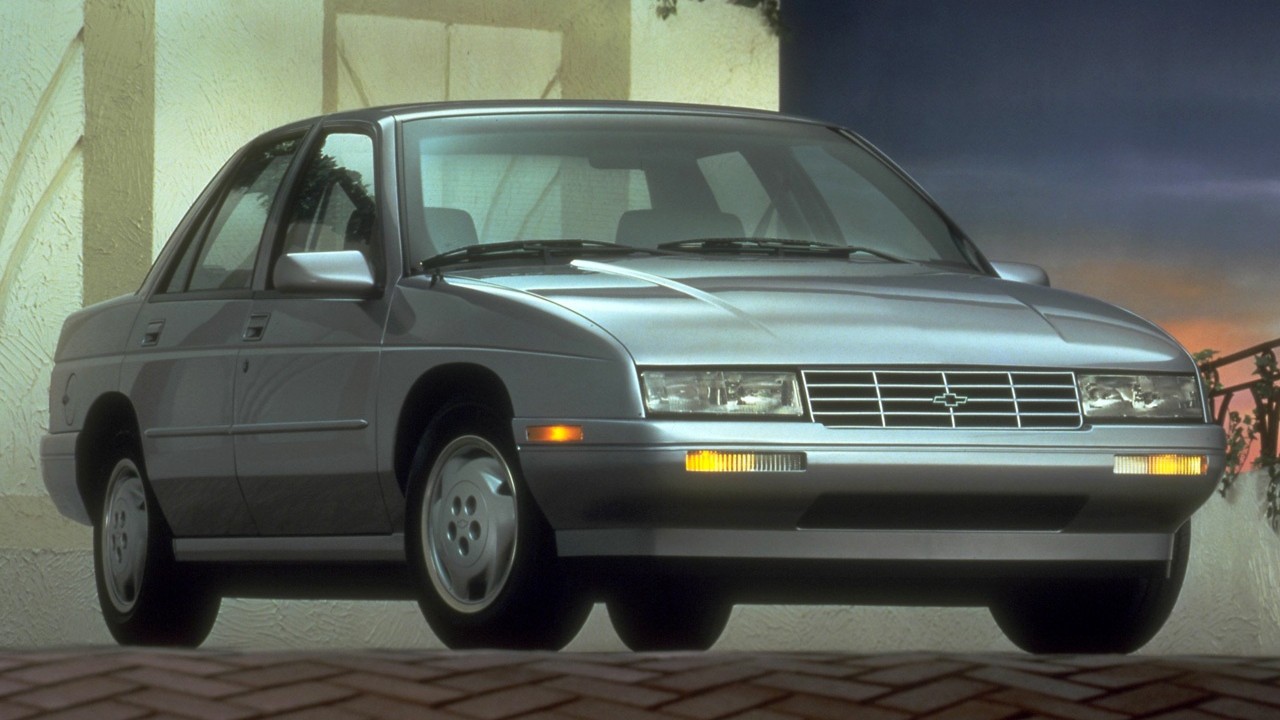
However, the Corsica is seemingly entirely forgotten and overlooked by most modern enthusiasts. These aren’t really seen as classic cars right now and aren’t even held to the same status as the Corvette C4. Many of these cars lived out their lives as family cars, first cars, and beaters, then were eventually retired. Even the sporty version of the Corsica was pretty mild compared to GM’s other rowdy cars of the era.
As such, it’s unlikely you’d ever pay much for a Corsica. A good one will probably cost you a few grand, and people will probably be shocked after seeing a car that they haven’t laid eyes on in perhaps a decade or longer. The XT remains a unicorn, yet I wouldn’t be surprised if I got an email from an owner of the rare Corsica XT.
But if you’re looking for something to bring to the next Radwood and don’t want to pay a lot for it, grabbing one of America’s hottest sedans of the late 1980s might be the pick. It has the wedge look that the fans of ’80s cars love so much, and even though Chevy sold over 1.6 million of them, they’ve become quite obscure today. Maybe the Corsica did not live up to the advertising, but it still marked an important moment for GM.
Top graphic image: GM


Corsicas and Berettas were everywhere when I was a teenager. My first two cars were ’79 Supras purchased well-used, and then I had a first-gen VW GTI forever. Even back then, the GM products I saw all the time had an air of disposability to them. They probably weren’t much more disposable than other similarly-priced cars, but they seemed worse, with cruder interior plastics and less-than-stylish design.
My dad bought a ’95 Corsica from Enterprise Rent-a-car (he swore by buying used rentals), it was $1K less than the others because it was painted Raspberry – a pink metallic which would have made waves at Radwood but was not a hit with typical Corsica buyers.
Aside from the color, it was a wildly forgettable vehicle, except that the right front wheel fell off one day. Luckily there is a lot of space on Colorado roads and he was able to gently turn right until he came to a stop, zero damage.
I remember that color. It looked good on Baretta Z26s of the era.
I’m pretty sure my grandmother had one of these, but I forget……
Also, its absolutely jarring to just see two half circle cutouts for wheel wells after seeing now decades of the “new style” wheel well everyone does with the 1-2″ flat face on them
I have a permanent reminder of the Corsica. We had one growing up and when I was 8 my brother slammed the door on my finger. It wasn’t a terrible injury, but we did have to visit the doctor to get it cleaned up and checked out and my fingernail still grows in warped and cracked nearly 30 years later.
My dad put “2 and a half” engines into it (2 complete junkyard engines and a top-end rebuild) over the years before finally replacing it with the Plymouth Breeze I drove in high school.
All my memories of these cars include the “G10” license plates. I worked at a full serve gas station as a teen in the mid 90’s, the military recruiting office was right around the corner, and all those guys drove Corsicas with govt plates. Every time they’d come in I’d get the sales pitch while fueling them up.
Had one of these as my first car. 1990 sedan with a 3.1l and the unfortunate 3-speed auto. Terrible at going around corners, you’d squeal the tires on highway entrance ramps quite easily. All the controls were on the dash, no stalk for anything (other than turn signal and high beams), which at the time may have been normal, but weird by the 2000s when I drove it. The door-mounted seat belt always felt pretty unsafe.
I have seen more Citations in the last six months than I have Corsicas or Berettas in the last five years. They really did just disappear. It’s amazing.
Having lots of personal seat time in Citations, I’m kind of attuned to spotting them. Car cultural hate for them notwithstanding, I liked them.
I liked the Corsica and really liked the Beretta, but never got to even ride in one. I thought the styling of the Beretta was really quite sharp but that the Corsica had somehow managed to out-Camry the Camry. It wasn’t just subtle, it was invisible. I would spot one like distant early warning radar detecting a Russian ICBM if it were anywhere within range now, but they’re just…gone. All of them.
Turns out the rapture was for a specific model of car, I guess, and only the Corsica was truly worthy.
My family had a 1989 Corsica LTZ, with the most ridiculous history that a car of that era could have had.
It was bought brand new in Massachusetts and promptly rolled on the beach in Cape Cod.
A local Vermont body shop bought it and repaired it with the requisite salvage title. The advertised it by parking it at the local ice cream/french fry shack in our tiny town. My mom liked it and the price was about half of what a new one would be – and it was only a year old at the time – I think it barely had broken 10k miles.
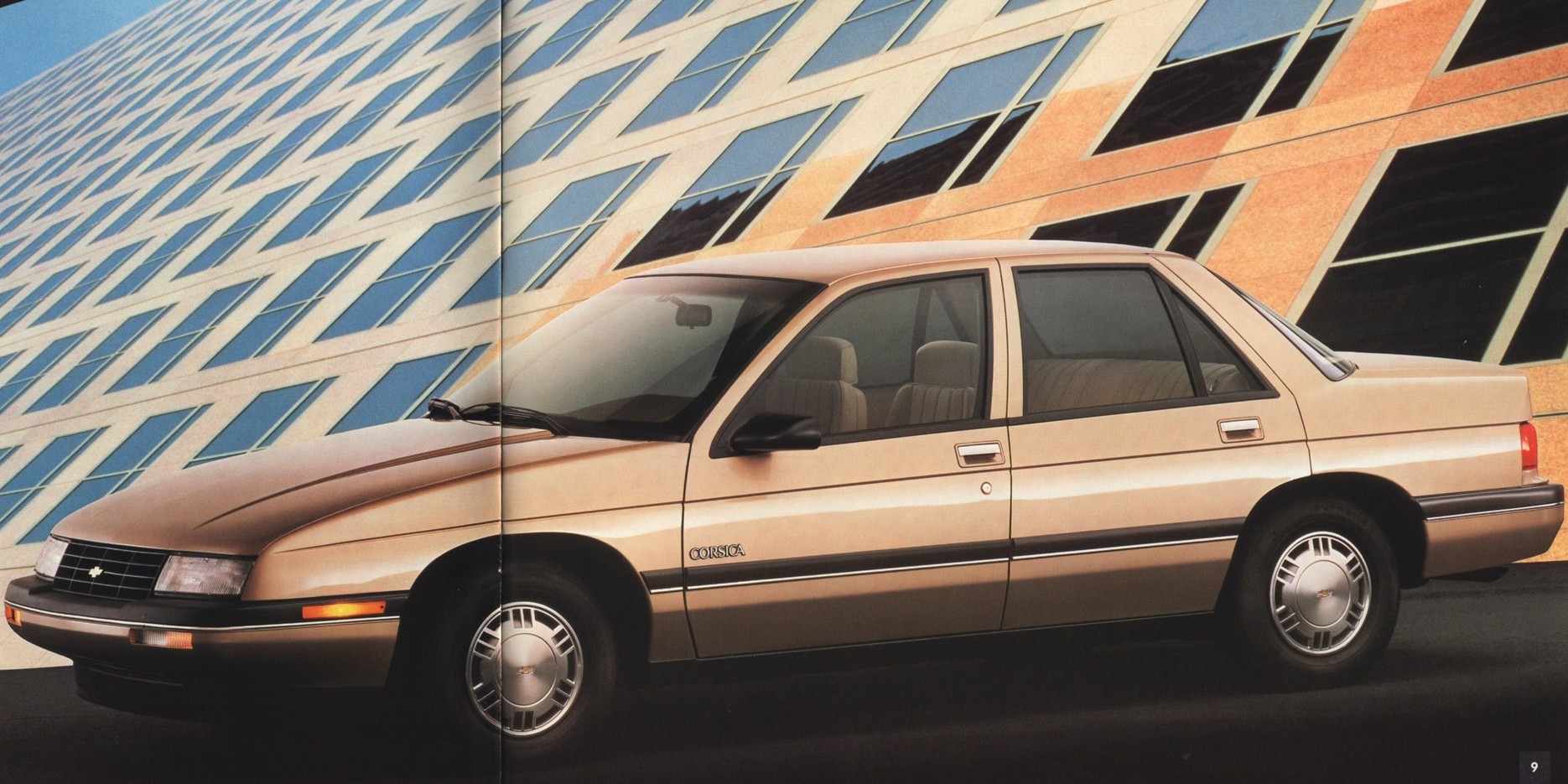
The entire car was resprayed, so the repairs were invisible, and it ran and drove straight and strong. It had the 2.8 V6 and the 3-speed auto and was identical to the gray car right under the section labeled ‘The crowd goes mild’.
We regularly found sand where sand should never have been i.e. under the drivers side sunshade mirror cover and in the rear seatbelt buckles.
As with all cursed vehicles, this one met an unfortunate end. The negative terminal self disconnected (damn you. GM side post batteries!) whilst driving, and the car went completely dead. We got rear-ended by an unattentive GMC Suburban at 40+mph.
The insurance check was a down payment on a 1992 Chevy S-10 Blazer Sport which was one of the most repair-intensive vehicles my family ever owned. At least the digital dash was cool.
The Corsica never needed a repair while we owned it.
Maybe the prior owner was trying to replicate this commercial.
My wife inherited a baby blue Corsica in the early 90’s, and it served her well through high school, college, and the start of her career. All told she drove it for 13 years, and it never let her down. Those were tough cars.
Popular Mechanics must’ve tested their cars on a very slippery track, or near Denver, because my ’86 Accord LXi did 0-60 in ~10 one-one-thousands. MotorWeek clocked it at 9.7 seconds. With a whopping 110 HP and a 4-speed automatic. If the Dodge Spirit was the fastest of the bunch, it would have to do better than 11.1.
These things are so forgettable that I forgot they debuted in the 80s, not the ’90s and that the hatch version even existed. They were still in rental fleets at the very beginning of my travelling career so I have driven a couple.
Typical GM dreck of the day.
I rented one once. It was like overcooked pasta to drive.
The hatch was super super rare; I’ve only ever seen one and that’s not from not looking.
As I said, Google sez 41K of 1.5M total Corsicas built. That is super rare alright! I wonder if it was stupidly more expensive or something, because I don’t see why you wouldn’t choose the hatch. More practical, AND it was better looking.
160 HP for a ‘sports’ sedan is weak sauce.
Not for those days it wasn’t. That was the same amount of power as a Saab Turbo or BMW 325i. The average family car had about 100. Unfortunately, that 160hp was in a GM shitbox, so utterly wasted.
Corsica. Meh.
I remember the Corsica and Beretta very well as this was near the apex of my childhood car-nerdiness. But I don’t remember the Corsica hatch at all.
Neither do I. Like as if was sold only in another market.
A quick google says they sold 41K of them from 89-91 only. Considering they sold more than 1.5M(!) of the trunked version, that is pretty damned rare. I too have absolutely no memory of that car.
I forgot about them too, until I saw a minty light blue one cruising around town last fall.
Wow! I don’t think I have seen a Corsica (inevitably called the Chevy C*cksucker where I am from) of any variety in 20+ years.
I forgot how homely the Corsica was, the Beretta or Z24 was what I would have wanted.
Back in the day I never saw many Corsicas in my neck of the woods, but the Beretta was huge. I think people still preferred two-doors back then.
Another unicorn (maybe a future Pontiac Pthursday article) would be the Canada-only variant of the Corsica, the 1987-91 Pontiac Tempest. The ribbed taillight design began with the Tempest before migrating to the Corsica.
Does that version of the Tempest have PosiTraction?
I didn’t know all of this about the Corsica. I didn’t know it put up such decent sales numbers. I didn’t know there were performance versions. I certainly didn’t know there was a liftback version with wraparound rear glass.
After reading this, I think the Corsica was a sales success, certainly. GM probably made its money on the program, especially when combined with the Beretta. But I’m not sure it was truly all that successful overall.
For one thing, GM probably didn’t need to have separate junior (J-body) and senior (L-/N-body) compacts, plus Saturn and the captive import (Prism) stuff. If they’d been able to manage their bloated infrastructure and focus on just one or two basic products that could be shared between brands, they might’ve been able to come up with something truly class-leading. For another, the Corsica didn’t do anything to further broadly GM’s or specifically Chevrolet’s brand loyalty in the family-sedan space. It seems like one of those cars that just quietly sold well, probably because it could be had for hundreds or thousands less than competing products, but that didn’t impress anyone and that was unlikely to garner repeat buyers.
And of course it’s right out of the pre-bankruptcy GM playbook to have a mediocre car, with one or two genuinely exciting versions that nevertheless represented a rounding error in terms of overall production numbers.
That Dodge Spirit’s turbo lag must have really been something if those numbers are right—11.11 to 60, but 1/4 mile in 16.66? I don’t know what ’89 Legacy L they tested, but my FWD 5MT wagon and that would pretty consistently do about 8 to 60 and it ran a 16.3 1/4 mile at 86mph, so while the Dodge in that test took about 3 seconds longer to 60, it was only about 0.3 slower in the 1/4.
On the Corsica, the actual subject car, these were absolutely everywhere. They were adequate enough and a major improvement over the previous trash, but I think the only real advantage they offered over the Japanese competitors (besides actual purchase price, I imagine) was better rust protection. As anecdotal non-evidence, I still occasionally see one up here in New England and not because it was savored by some weirdo, they’ve been very well used, while the Japanese beaters rusted away long ago (likely with their drivetrains still running well). The only Japanese cars of the time I see today are the kind that are actually appreciated and look like they’ve been brought in from a non-rustbelt state or possibly been restored.
I remember trunk racks being popular, but outside of the movie Planes, Trains, and Automobiles or an English car show with an MGB displaying some twee picnic basket tied to one, I can’t recall ever seeing anyone use their trunk rack, which makes sense with weather exposure, theft potential, and compromised rear visibility. It’s likely I saw someone use it and just don’t remember, but it was certainly uncommon. Maybe they were used more in places with consistent decent weather.
Trunk racks were the predecessors to rear decklid wings from the 1990’s onward.
Both signal “sport” – and are similarly functionless dead weight.
Not necessarily useless. My Spitfire has one, and I have used it on a number of occasions over the years. And I DO have one of the twee picnic baskets, LOL. It fits in the trunk too, but your repast will have a faint flavor of gasoline if you do that.
Most memorable use was taking an entire three computer point of sale system to a store in VT in the days when I installed those. Including three 14″ CRT monitors (I did take those out of the boxes), a pair of cash drawers, a pair of receipt printers, and a small HP laser printer. Managed to get all that in and on the Spitfire. Was an absolutely glorious early Fall week, no way I was driving my tintop up there from Maine! The look on the store owner’s face when I delivered his new system in a tiny British sportscar was pretty priceless. That was back when I drove it pretty much daily from Easter to Thanksgiving.
Every rule has an exception.
Had a rental Corsica in 88 or so, might have been new, I remember thinking it was heavy, slow, imprecise, and the finish was terrible compared to my father’s 84 Accord.
I simply do not get the average American.
Years ago in the 90s, when I was a hot young thing hanging out in the Castro – I met a cute, sweet, tall, dark-haired guy. He seemed like the kind of guy I could bring home to Mother someday. So rather than hook up with him that night, I got his number and promised to call him.
When he arrived for our date, he showed up in his blue Chevy Corsica automatic hatchback – just like the one in the photo above w/ the grey plastic wheel covers.
The date was nice, and he was sweet and all – but I just couldn’t get past that Corsica.
Why couldn’t he have driven a Mazda? Or a Golf? Or even an Escort?
Needless to say, I never saw him again.
My grandparents traded in their ’82 6000 for an ’88 Corsica with the 2.8L. It was fine, seemed futuristic, and was loads faster than my parents’ ’88 Tempo. However, with like 20k miles on it the block cracked and had to be replaced. My grandfather was not too keen about that development, but did stick with it until trading it in on a ’92 Caprice, the “Whaleboat” as we always called it.
Those were HUUUUGE as they say!
One of my many aunts had an ’89 for most of the ’90s and early ’00s. In that time the silver paint peeled almost completely off the primer.