

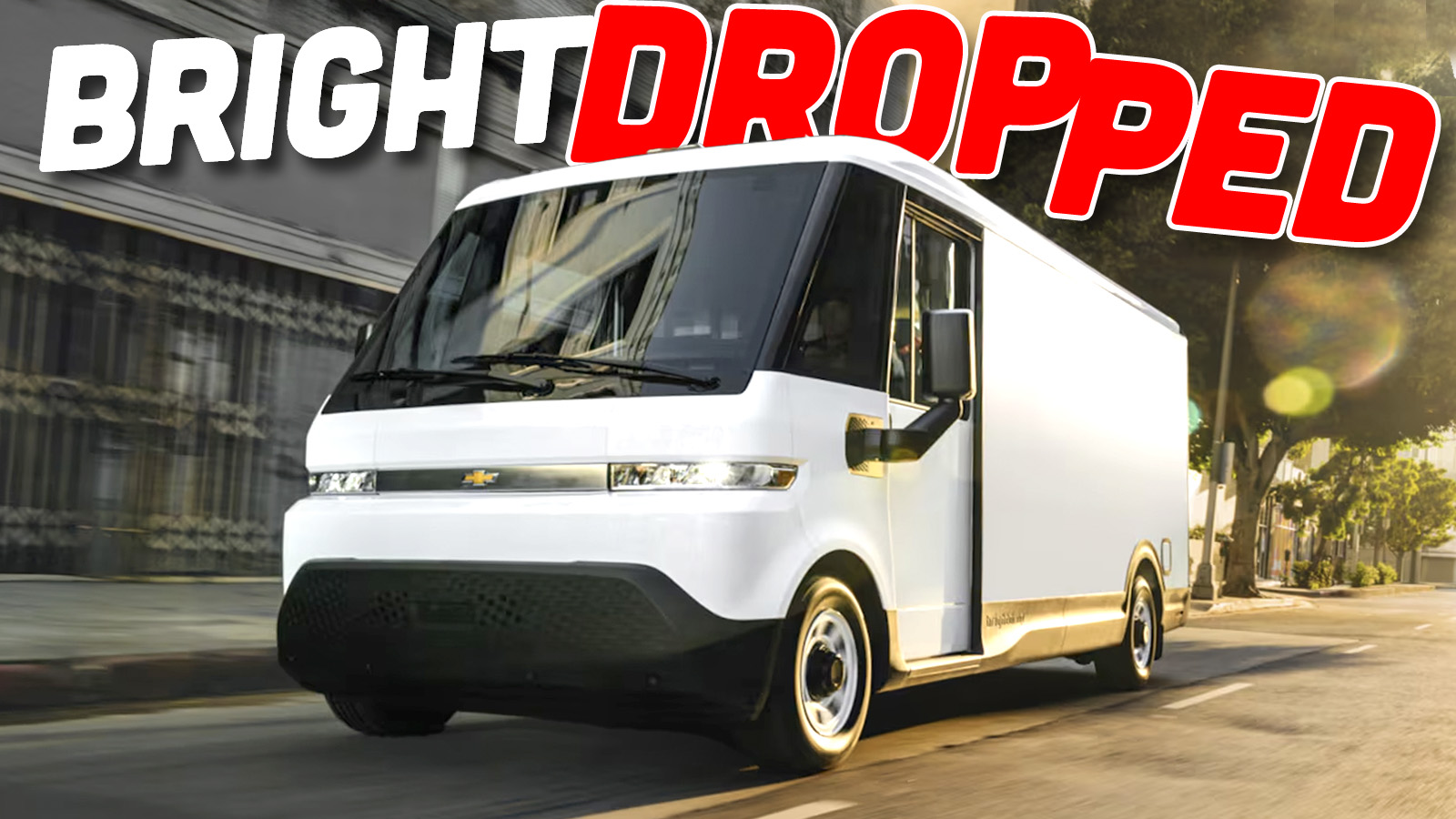
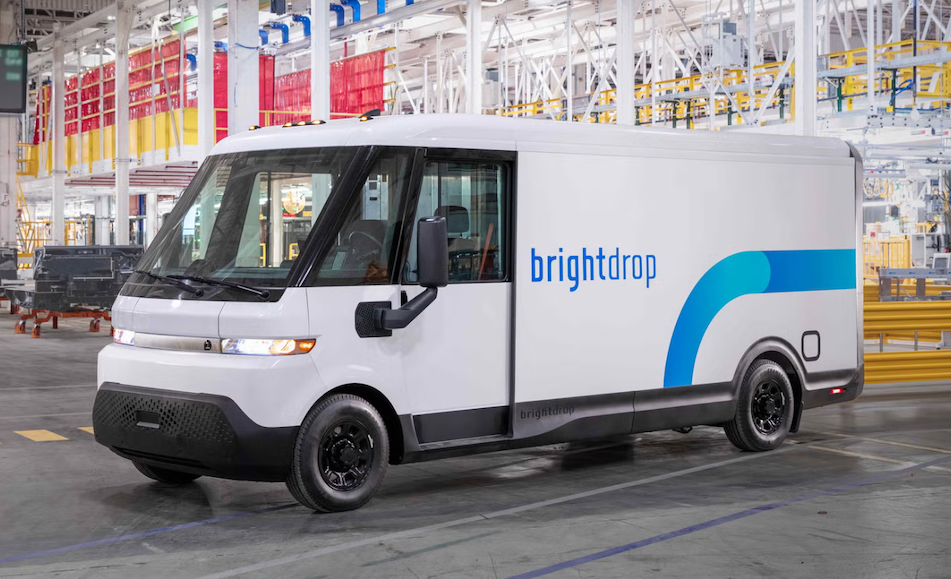
General Motors is pulling the plug on its BrightDrop delivery van. While this probably isn’t a big deal for most readers of this site, one immediate thought came to my mind. The RV industry has been proud to announce brand-new, state-of-the-art camper vans that use the BrightDrop to have nearly 300 miles of zero-emissions range. The death of the BrightDrop means that the best platform for building an electric camper van on is now dead, and the RV industry just got set back practically overnight.
As I have written before, the RV industry has had a difficult time cracking into the electric vehicle world. RV manufacturers are usually secondary manufacturers, which means that they get trucks, vans, and chassis from an automaker or truck builder and then construct a camper onto that. Until recently, this has meant that if an RV company wanted to get into EVs, they had to wait until a company like General Motors or Ford created a viable platform.


At first, this meant that early factory-built electric motorhomes sucked. The Ford E-Transit-based Winnebago eRV2 (below), for example, had a pitiful range of only 104 miles. But there wasn’t anything Winnebago could do about that because the EV part came from Ford. Most other electric camper vans have been custom-built based on gas vans that get converted to electric.

The BrightDrop was actively changing the electric camper van game. GM’s electric delivery van was spacious, powerful, fast-charging, and perhaps most important to RV owners, had a range of 270 miles to 286 miles depending on the camper van configuration. The BrightDrop was the first platform that could be made into a camper van that realistically handled long drives without driving its occupants insane with charging stops.
BrightDrop Campers Have Been Around
I have been writing about BrightDrop-based vans for a couple of years now. In 2023, Detroit-based startup Grounded RVs began production of the G2, a camper van with lots of space and 270 miles of range. Then, this year, Grounded launched the G3, an update to its BrightDrop camper van with a better interior and up to 286 miles of range. The folks of Grounded were also building custom BrightDrop camper vans for California startup RollAway Hospitality.
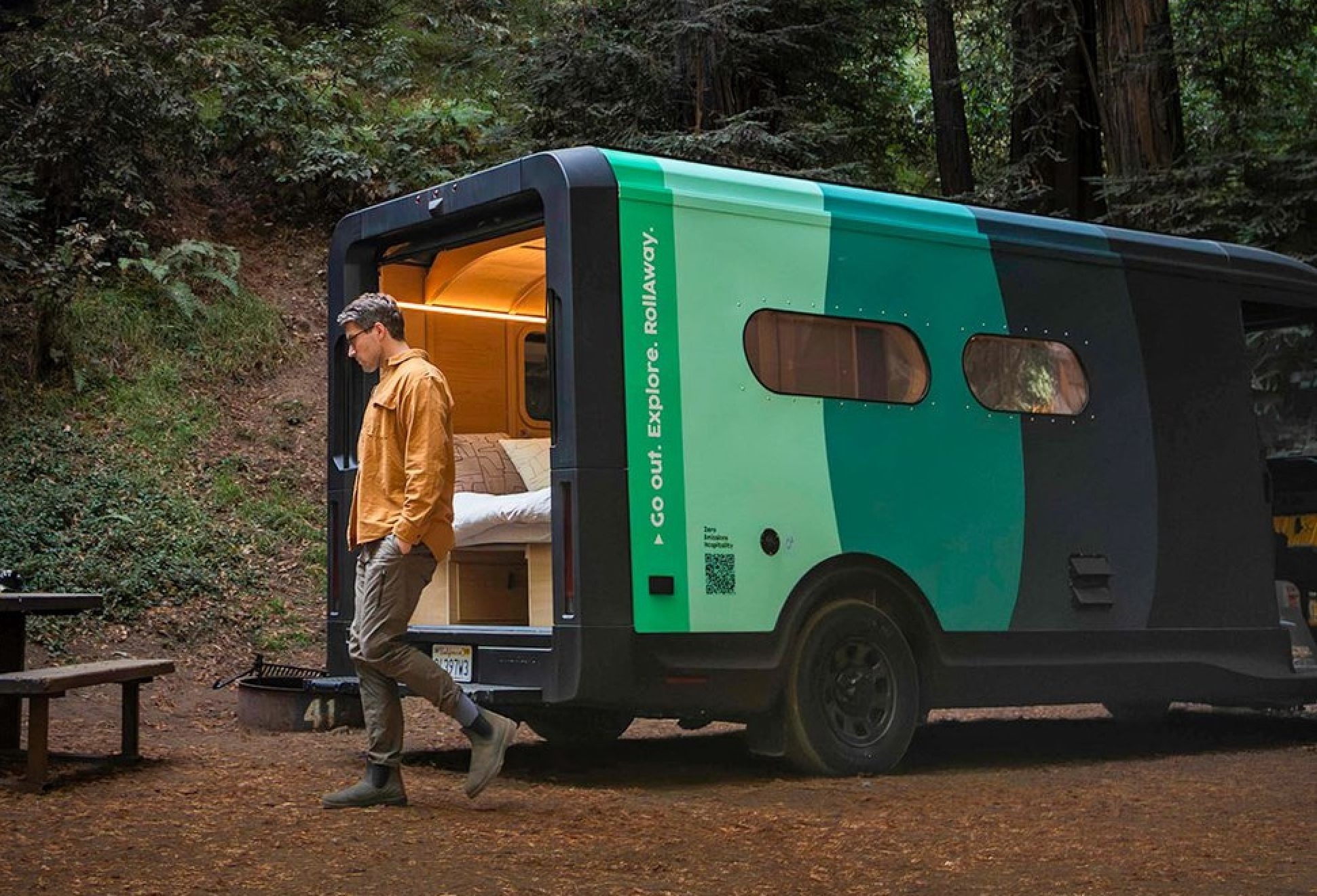
These vans didn’t just have great range, but the platform itself was almost perfect for camper vans. Our Thomas Hundal enjoyed his drive in a BrightDrop. The common camper van configuration involved Zevo 400 and 600 vans sporting dual-motor AWD with 300 HP and 390 lb-ft of torque.
Later this year, some huge news came out of Indiana with the debut of the BrightDrop-based Coachmen RVEX. The launch of this van signified the first serious production all-electric camper van from one of the massive Indiana RV manufacturers. Things were looking great. Between Coachmen, RollAway, Grounded, and smaller outfits, Americans had some real choices for a practical factory-built electric camper van.

I have criticized these vans for being imperfect for the role of being a camper. Since the BrightDrop was designed as a delivery van, the cab is separated from the cargo area. When these are built into campers, this dividing wall means that the front seats cannot be used as lounge chairs, as you’d get in a typical camper van. The cab of the BrightDrop also isn’t very luxurious, either. However, the BrightDrop was long enough to make up some of the difference, and at least there was a pass-through in the cab to get to the camper portion. I think the quirks of using a delivery van platform were worth it to get the BrightDrop’s great range.
Now, the RV industry isn’t going to have access to these vans anymore. The death of the BrightDrop is being blamed on “market demand” and the loss of EV incentives, but it doesn’t really matter why GM is killing it. Once the supply of BrightDrop vans runs dry, that’s it.
An RV Manufacturer Responds
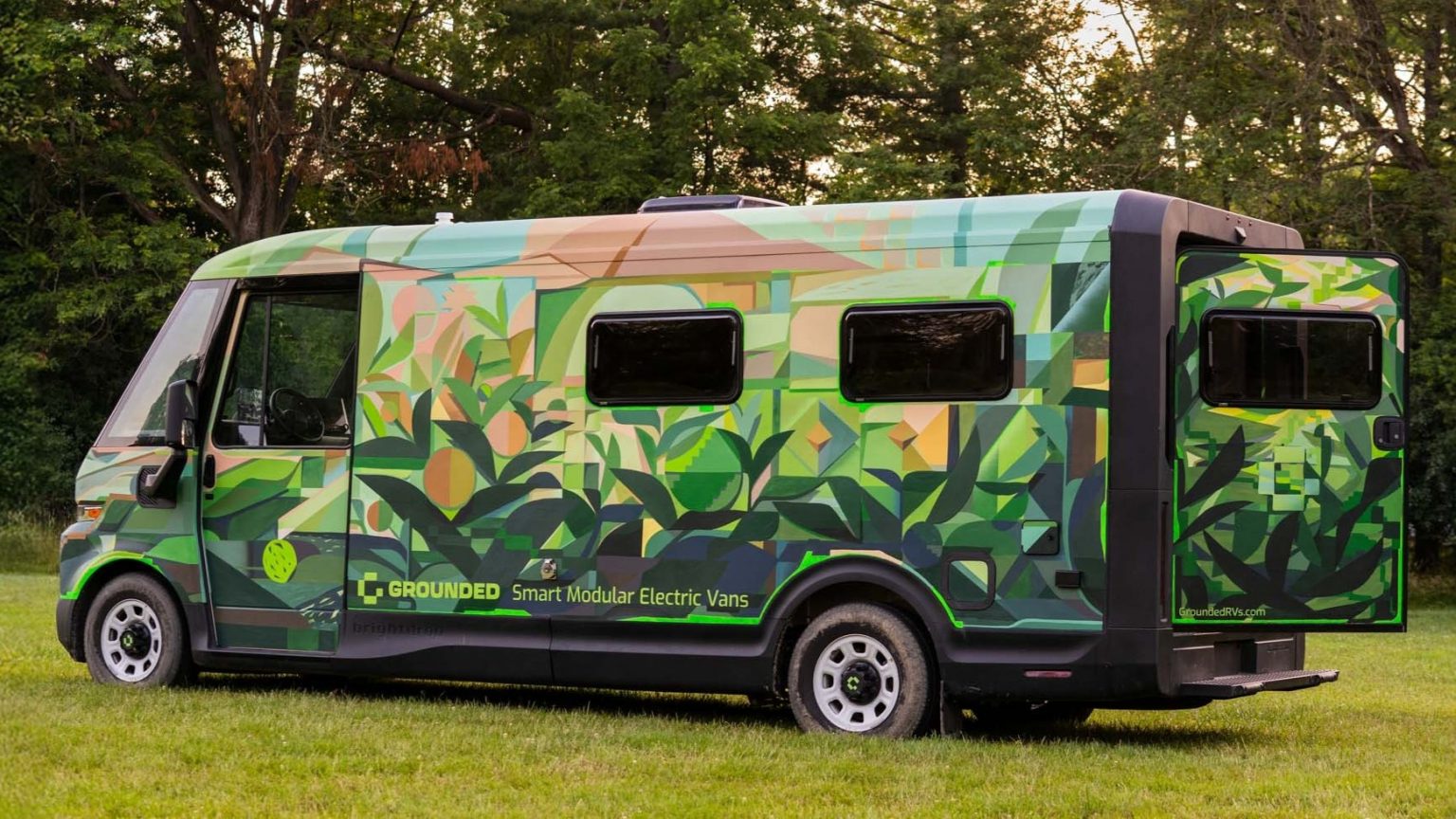
Admittedly, the first company that I thought of was Grounded. The startup was a pioneer in turning BrightDrop vans into campers, and, I think, would be impacted the hardest by GM’s decision here. Coachmen is a huge and flexible company, it can cancel the RVEX and perhaps few people would even remember. But this was Grounded’s bread and butter. So, I reached out, and got this back from Grounded:
BrightDrop is shutting down. Given GM’s whiplash-inducing EV strategy over the past few years, this comes as a surprise to no one. Detroit-based mobility innovation startup Grounded has long been considering expanding the company’s wildly successful personal and commercial upfits beyond electric and to gas for a truly platform agnostic future.
Today the company announced its expansion to the Grounded Gas line, which makes the company’s modular interiors, designs, Grounded+ telemetics software, and electronics available on any gas-powered platform.
Here’s what Sam Shapiro, founder of Grounded RVs, said:
“No one in the world tried as hard as we did to build on all-electric vans. But at the end of the day what differentiates Grounded is everything above the chassis: our design, materials, technology, and integrated fleet management software. We’ve built on fully-electric and hybrid platforms like Ford, GM, and Harbinger, and now, with Grounded Gas, which we’ve long considered, we’re looking to a truly platform-agnostic future. Our stock of available Brightdrops is strong at the moment, but expansion to gas vehicles will move the business forward and allow Grounded to continue to lead toward an electrified and hybrid future.”
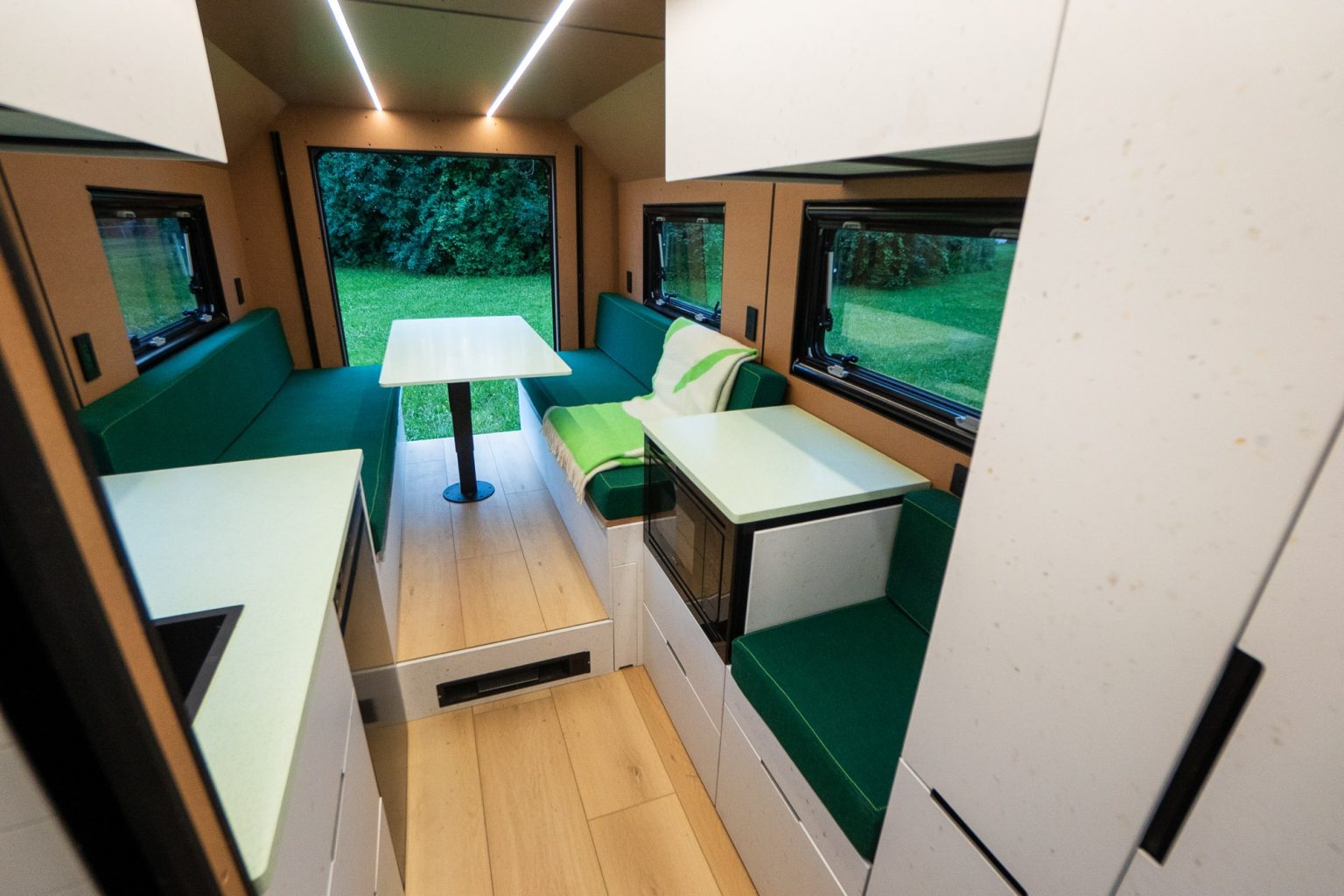
I reached out to Coachmen and have not yet heard back. But it looks like in either case, both companies should have enough BrightDrops to build campers out of for a decent while. However, at some point, these companies will have to pivot away from the BrightDrop platform.
It’s unclear what Coachmen is going to do, but Grounded is going to move away from depending entirely on an EV platform. That alone is pretty surprising, as Grounded started off as an all-electric, affordable camper van company. But it makes sense that Grounded would pivot to a fuel-agnostic design. That way, Grounded won’t have to start over every time a company kills a van or announces a new one.
At the same time, I feel like this decision sets the RV industry back. There doesn’t seem to a direct replacement electric van on the market. The Ford E-Transit currently goes about 159 miles on a charge. There’s also the Mercedes-Benz eSprinter, which is rated for up to 206 miles on a charge. The Ram ProMaster EV still comes more than 100 miles short at 164 miles of range. Even the Rivian Delivery, a logistics van like the BrightDrop, goes 161 miles on a charge.
Thankfully, GM’s decision only somewhat kneecaps the RV industry. This doesn’t impact the brilliant partnership between Thor Industries and Harbinger, which has produced the world’s first production extended range electric motorhome. However, that beast is a Class A motorhome and is not a pure battery electric camper. If you’re into electric vans, you just lost the best choice for range.
The Future

In the near future, the next best thing might be a camper based on the eSprinter. At least those will go about 200 miles, depending on the conditions. It’s not quite as sexy as 286 miles, but it seems to be better than the other options. Or, perhaps maybe Harbinger can make a camper van. With GM out of the market, there’s probably a void to be filled. Harbinger has already teamed up with Grounded to make the C1 all-electric or plug-in hybrid mobile command center; maybe some of those could be made into campers one day.
Or, perhaps, because of the changing climate around politics and EVs in America, maybe the BrightDrop doesn’t need a replacement. I’m not really sure what’s going to happen, but I can say that all of this whiplash about what EVs may or may not exist is absolutely headache-inducing.
The good news is that, for now, if you want to get a BrightDrop-based camper van, I’d buy one now before the stock dries up. After they’re gone, it will be interesting to see if and how electric camper van builders pivot. Either way, I hope this doesn’t discourage the RV industry as a whole. It’s still worthwhile to rid RVs of emissions and it’s still worthwhile to try out new tech in motorhomes. Let this be only a speedbump on a longer journey.





I saw one of these today for the first time in a rural part of the Puget Sound area. It was parked on the side of the road and appeared to be nearly new and to have been abandoned at least for the time being. It was white with no markings. This raised a question I hadn’t thought of before. If a gas car runs out of gas, you hoof it, get a gas can and some gas or call AAA to bring you some gas. If your electric vehicle runs out of juice, what the hell do you do? Is it just flatbed or nothing?
There are some remote ev fill up services that are starting. Basically either a giant battery on a flatbed or extremely large midsized commercial vehicle with a fast charger attached or a commercial generator (yes typically burning gas or diesel) that is powering a rapid charger, which of course is not ideal from an environmental perspective though I expect it beats the next option which you pointed out would be a Large flatbed tow truck…
Specifically avove solution a or b are there to provide enough electric juice to enable an ev that has run out to make it to the next available regular rapid charger.
Some brands of EVs come with a period of free flatbed toes. Alternatively some EVs can charge other EVs.
Wonder why UPS, FedEx, etc. didn’t buy a bunch of these. Seems like a no-brainer. Low mileage daily driving route and they go back to the barn at night, sitting parked long enough for low power (Level 2) 240V charging. Fast charge capable if truly needed.
The USPS’s proposal was done at the time that they were a sub to Amazon and delivered a lot more packages (needed the volume) and they talked with every stakeholder who touched the mail van. This was a good call, but the bad call was not culling the list. In the end, everyone got a pony and the USPS ended up with the custom vehicles, and not an off-the-shelf BEV van like nearly every other post office around the world who is electrifying.
C’est la vie.
When it comes to FedEx Ground, it comes down to routes being managed by contractors. Most of them have 3 plus routes. They know how to run, maintain and repair the ICE delivery vehicles. The first EVs that became available were/aren’t reliable. I’m talking about the XOS vans. That seems to have soured most contractors on EVs. They can’t have one of their three vans sitting on the lot waiting for repairs. Some of those XOS have sat at the terminal for more than a month.
The brightdrop might be better, but the lack of EV techs doesn’t bring confidence. The Brightdrop is also smaller than the full size delivery vans. I also haven’t heard of any of them breaking down.
USPS wrote their own spec that required a custom built to order vehicle. That spec is also when the next gen USPS vehicle looks so weird.
UPS uses larger vehicles and they have VERY expensive labor so it isn’t like they can just hire some more drivers and use smaller “package cars”. (I drove for UPS for a bit and they are funny about calling their vehicles “package cars”)
As Gil said – FedEx is a bunch of small contractors that bid on routes.
Well, this is sad news. 🙁
Sadly this has been the way of GM for the past 50 years.
Buy something to eliminate competition or to establish a stake in a new tech. which short term (this quarter or for a few quarters) excites investors and then let it die.
I say this and I am actively cheering GM on to some how reinvigorate itself. I want GM to be a strong leader in the Auto world and to innovate and lead in evs. And I can say that’s not just hopes and well wishes either as I recently put my money where my mouth is by (for the 1st time no less), buying a brand new car. And it happens to be a GM product (26 Equinox EV)!
The US needs strong companies that are also fair and inclusive of all their team members. Treat your people fairly and they will reward you with effort and loyalty, which of course has to be a two way street.
All very well said! 🙂
Of course, I want GM to succeed and prosper, but I’m not wildly optimistic at present. I know they sell a lot of crossovers and trucks, but lately I never think innovation when I think about GM.
I don’t understand how a company with SO MANY different brands (at least, a decade ago) can’t figure out that at least one of them ought to sell a decent, world-competitive, affordable small car.
I totally agree. They (GM) know How to sell small affordable cars, they simply choose not to in every market where they don’t think it is important enough to do so. The closest thing to an affordable car in the US market from GM in fact is likely to be the GM Equinox EV and even that in base base trim was just under $30K otd price With incentives ($7500 fed. ev tax credit that’s now sadly gone + we had $1k off foe being cosco members + there was some GM cash on the hood too). Which still.seems like a lot for what is supposed to be the ‘affordable’ ev offering from them.
Of course the Bolt is supposed to be even less expensive but I don’t know that official pricing has been released yet foe the US market.
Of course in China GM has an ev that is basically a neighborhood vehicle that they sell under a joint venture with SAIC that is challenging to call an actual real car… that is much cheaper…
That’s too bad, as a concept I really like the idea of short urban deliveries being done with electric power. That being said… EXPRESS WINS, ALL REPLACEMENTS WILL FADE AND THE EXPRESS WILL LIVE FOREVER. 30 MORE YEARS OF EXPRESS. 100 MORE YEARS OF EXPRESS.
All hail Hypno
toadExpress.How many of these BrightDrop vans has GM actually sold? I just saw one last weekend, and it was the first one I’ve ever seen. I didn’t even know what it was at the time. And I live near DC, not out in the middle of nowhere, so you’d think they’d be more plentiful where I am. I see plenty of those Rivian Amazon vans.
According to figures I saw yesterday, they’ve sold less that 4000 so far this year, and last year sold less than 1000. They needed to strike it big with FedEx or the like, and sadly that didn’t seem to happen.
The concept is so viable for the task, unfortunately these might have just been priced too high. When you can get an Express for half the cost the fuel savings becomes almost a non-factor. Add in the current lack of coherent energy / environmental policy and the BrightDrops had a major uphill battle.
Clean air is out, pollution is in. Get with the times. /s
I moved from central Florida to Denver this year. Never saw one down there, have seen a ton in Denver. Would be curious to see where they are used the most and what sales were like, I don’t trust GM to make the right decision at the first sign of trouble.
Aside from the bulkhead being problematic for camper use (couldn’t they have just cut it out of the van??) the roll-up rear door and the sliding front doors make any camper built off this chassis look like a repurposed FedEx truck.
It might have also been a structural support for the roof, required for rollover protection. While I agree they look more like a FedEx truck than anything, I still appreciate innovation in the RV world and these provided some measure of that.
Local Amazon depot just got about 25 of these to go with the hundreds of Rivians.
Going out of Business sale?
Isn’t GM the company that has a reputation for killing things at exactly the wrong moment?
That. Buying a new GM to own long term scares me for this very reasons. Currently own two GM products. Extended family has more.
Didn’t we just see an article about the GM president lamenting the premature cancellation of the EV1? I’ve got to wonder if this is going to come back to haunt them.
Save the tooling GM. You might want in a couple of years.
Or sell the tooling to someone like Grounded who might be able to keep it going. Grounded probably wouldn’t have the bandwidth for it, but surely someone would like to carry the torch.
The assembly plant is in Ontario, so it would be great if a Canadian company or public-private partnership bought it all up. I’m surprised that in these Canada-first times, everyone is still too timid to create a truly domestic auto company. And it seems like a niche manufacturer like this would be an especially good “baby’s first auto company”.
The Brightdrop/Chevrolet.
A product of the CAMI plant in Ingersoll, Ontario, Canada. So it hurts locally for me.
It was never a hot product despite the media hype and never even got to maximizing one shift and two were initially planned.
Trump’s economic games finally squished it like a bug.
The Canadian auto industry is a mess right now due to US nationalism.
I think the protectionism targeting China will be unwound to fill some gaps in the Canadian consumer market, how fucked up is that?.
The US will produce cars for their captive domestic market, nothing of any consequence will be exported. Historically the scale of the product is wrong for most countries with the notable exception of Canada.
Makes me sad, I’ve had two CAMI produced vehicles (Chevrolet Tracker and Suzuki Sidekick) and they’ve been some of the best built most dependable vehicles I’ve ever owned. Sidekick had 330,000 miles on it when I sold it, and the Tracker has had the everloving shit beat out of it off road and keeps going. Canadian production is an essential part of the US car industry. My Grand Marquis was built at the St. Thomas Ontario plant. Breaks my heart to see it as an amazon warehouse now.
This creates a void in the market that Japan, Canada, Korea or, less likely to make it over here, China, could easily fill. Partial knock-down kits for the frame, engine and transmission would fit in containers, get assembled here and then have the motor home plunked on top.
RVs tend to be used for hops between tourist attractions and campgrounds, and in that situation, recharging after driving three or four hours would not be a problem. The biggest challenge would be recharging when out in the boonies away from civilization. The only Mom-and-Pop grocery and gas station in the rural towns of 100 people would have to invest in a charging station or two, which would not get a lot of use, especially during the off-season. Campgrounds would have to be wired for overnight charging as well, and they surely would be happy to charge a small fortune per kilowatt hour.
RVs in themselves are absurd planet blazing consumerism (fine, let’s go out fiddling, but don’t tell me how fucking environmentally friendly the wood in your fiddle is). Making RVs electric is entirely performative. Certain aspects of an electric RV might be technically interesting but nothing of value was lost. And I have an electric car as my daily but that is enabled by 4 other gas cars and the EV is 5th on the list for any road trip.
Battery RVs seemed like a waste, as much as I hate to say it.
They don’t accumulate much mileage, except when doing road trips on the highway, which uses battery hard. So, you need a huge battery to get decent range. Otherwise, they sit. The cost of fuel use for RVs is low relative to their capital cost. They are often away from sources of mains electricity to recharge.
It’s sort of the opposite use-case to delivery trucks. Delivery trucks get mileage put on every day, day-in and day-out. They are used in stop-and-go-situations delivering things. They return to a serviced depot where they charge overnight. The cost of fuel over the lifespan of the vehicle is high relative to the capital cost.
Neat technological dead-end at this juncture in history.
Sadly the BrightDrop just launched into a world where other competitors got the big commercial contracts, dooming it to rot on dealer lots when smaller businesses would buy a Chevy Express for half the upfront cost.
This is a great insight into the divergent use cases. Maybe dino juice for RVs is just a more… pragmatic choice?
I’m with you on this one. EVs make less sense than a bikini in Antarctica for RVs.
Use lots of battery juice while in motion and then sit 50 weeks of the year is exactly the argument that all ev rvs need to be vehicle to grid capable. That way the owner (and the general public) can use these sweet seeet giant batteries throughout the Whole year. Simply plug in yout ev rv to your home, when you return from your trip. The ev rv then powers your home in partnership with your hm solar panels. You set a minimum charge you’d like the ev rv to maintain and you play electric arbitrage offsetting or possibly completely eliminating your electric bill and heck you might even make a few dollars to boot
This assumes of course your local electric utility will allow you to feed juice in to the grid and has net metering etc… I know such plans are not everywhere (yet). I do expect this will be come the norm eventually. The payoff to the utility is they eo t have to build more and more power plants and get low cost extra capacity to use to meet demands.
They need to adapt the body to a Silverado chassis and sell it as an ICE vehicle.
It never should have been a Brightdrop, it should have always been a Chevy or GMC.
It should have been a brand new van chassis to completely replace the Express/Savana with high roof options, cutaway/chassis cab options, ICE and EV powertrain options. Entering the step-van market was stupid… that’s a niche market with about 10k a year in sales across the board.
None of these bro startups turning them in to RV’s were legit, they were all frauds, and didn’t have the support of GM to do anything like a real certified upfitter.
Yeah it was stupid to not just badge them as Chevy/GMC from the get go. However at the time it was concieved the thought was a new brand was a good thing, seems they didn’t learn from all the money they threw away on Saturn. However building a new van at this point makes zero sense for GM. The market is too small and margins way to thin to invest in a new platform that would be North America only. There is a reason that in Europe most brands offer a van but the majority of them are rebages. Just not enough demand to make it profitable unless you can sell it around the world for 15+ years. Which brings us back to why the Dim drop was EV only at they time the pencil went to paper there was the expectation that they wouldn’t be building gas vehicles much longer. As far as making it a walk in truck that wasn’t a bad idea since so many vans are now last mile delivery vehicles where walk ins increase productivity significantly and they are good for other commercial uses like those in the building trades.
Couldn’t an RV manufacturers just buy the equipment to build their own brightdrop chassis if it is so good?
I imagine that’s a much bigger venture, which they’d be adopting just after a company with far more money selling it to a wider market decided it wasn’t worth maintaining.
I mean, I’m sure a giant like Thor or Forest River would have the capital to swing it. But the majority of RV companies do not get into the automotive side of manufacturing. That’s sort of why this whole thing sucks.
If they have a few billion spare cash…
But GM is shutting it down. They end up ahead if they get anything for it.
Even if you buy the tooling for a song you still need an plant and assembly line. You have to spend months training staff to do the assembly. You likely need to lay out money up front to get any of those GM suppliers to make a single part for you. You will also have to pay much more for each part because low volume costs $$$ and those suppliers aren’t going to do something low volume basically as a favor to keep on your good side and keep the high volume orders coming
Don’t forget to sign up and train service centers or pay GM to be your service center. Then there is stocking parts in warehouses for 10 years to fulfill warranty claims. Oh and the warranty risk that you might end up replacing all the batteries if you happen to have a small manufacturing error as you learn how to be a vehicle manufacturer instead of someone that bolts a fiberglass and plywood shell on top of a certified chassis.
This also assumes that GM is actually going to sell or scrap this tooling instead of sitting on it for a few years to see what the market does and how the political winds blow. They know they are going to have to make an EV delivery van at some point and they have no immediate plans for the assembly plant.
They made a great ev rv but i think they would also make a great van for many trades as well especially if you needed power on board. Just gm being gm their best effort cancelled and will be replaced with something junky in a few years.
I can’t be more pissed about this, and especially because of EV RVs that these companies were starting to build.
The 300 mile EV van is what’s badly needed, not the ancient V8 gas guzzling beast vans that are still on the market.
I can’t be sure but this sure seems like if Trump hadn’t gone to war against EVs it is more likely to have survived.
I currently own a Silverado EV 4WT. The strange caveat was that I was able to buy it about $20K under list since no one wants them. Their loss is my gain.
I owned my own company delivered Mission Tortillas there is no way this or any other EV on the market works.
Why? I think they work better than their gas equivalents.
All depends on your route and climate. The Rivian works well for Amazon and they have a few E-bastards now showing up in the local fleet too.
They are just missing a tornado hitting the factory so they can put a claim on their insurance. Cruise AV 2.0
GM is pretty much self insured. They have insurance companies to administer claims, but the financial risk is in-house.
Whilst I’m not shocked that no one is buying BEV vans right now (I haven’t sold a new E-Transit in about 2 years and I doubt I’ll ever sell another one), it seems a little short-sighted of GM to have not baked into the design the possibility of alternate drivetrains. With the death of this van, GM has to go back to the Express/Savana dinosaurs? Have they not seen how popular and flexible the gas Transits/Sprinters/Promasters of the world are?
Car companies are really fucking stupid sometimes.
I mean, how much worse than the Transit/Sprinter are you describing the Express? I’ve heard the new ones don’t get that much better fuel economy than the old BOF vans. And certainly, anyone looking for vans with high tow capacity is basically stuck with the Express at this point.
From my professional experience, the vast majority of my commercial customers appreciate the ability to actually stand up in their vans, something that obviously isn’t possible in the old GM models. All of the competitive brands offer multiple lengths/roof heights/etc for greater flexibility in adding upfits they can use without resorting to crawling into the vehicle to grab a tool. Conversely, almost none of them care about towing capacity. Also, my post had nothing to do with MPGs. My clients are much more concerned with the ease of use than fuel costs.
I truly feel that if GM had a similar vehicle for sale with an ICE powertrain, they’d be more competitive in the commercial segment. As a matter of fact, I wish they would, as healthy competition is a good way to keep pricing in check.
2025 YTD Van Sales:
118,560 – Transit
60,906 – Express / Savannah
51,016 – Promaster
13,025 – Sprinter
Huh. I was in Palm Springs over the weekend and saw a Chevy dealer overflow lot with like a dozen of these sitting covered in dust.
I notice when I search for EVs nationwide, Florida tends to have them marked down the most or almost the most. I’m not surprised.
And that of course is why they discontinued it.
I wonder if GM would sell the tooling to these guys
You can always count on GM to spend millions/billions to develop a new product – Then discontinue it.
This time, strangely enough, they did not bother to perfect it before giving it the axe.