

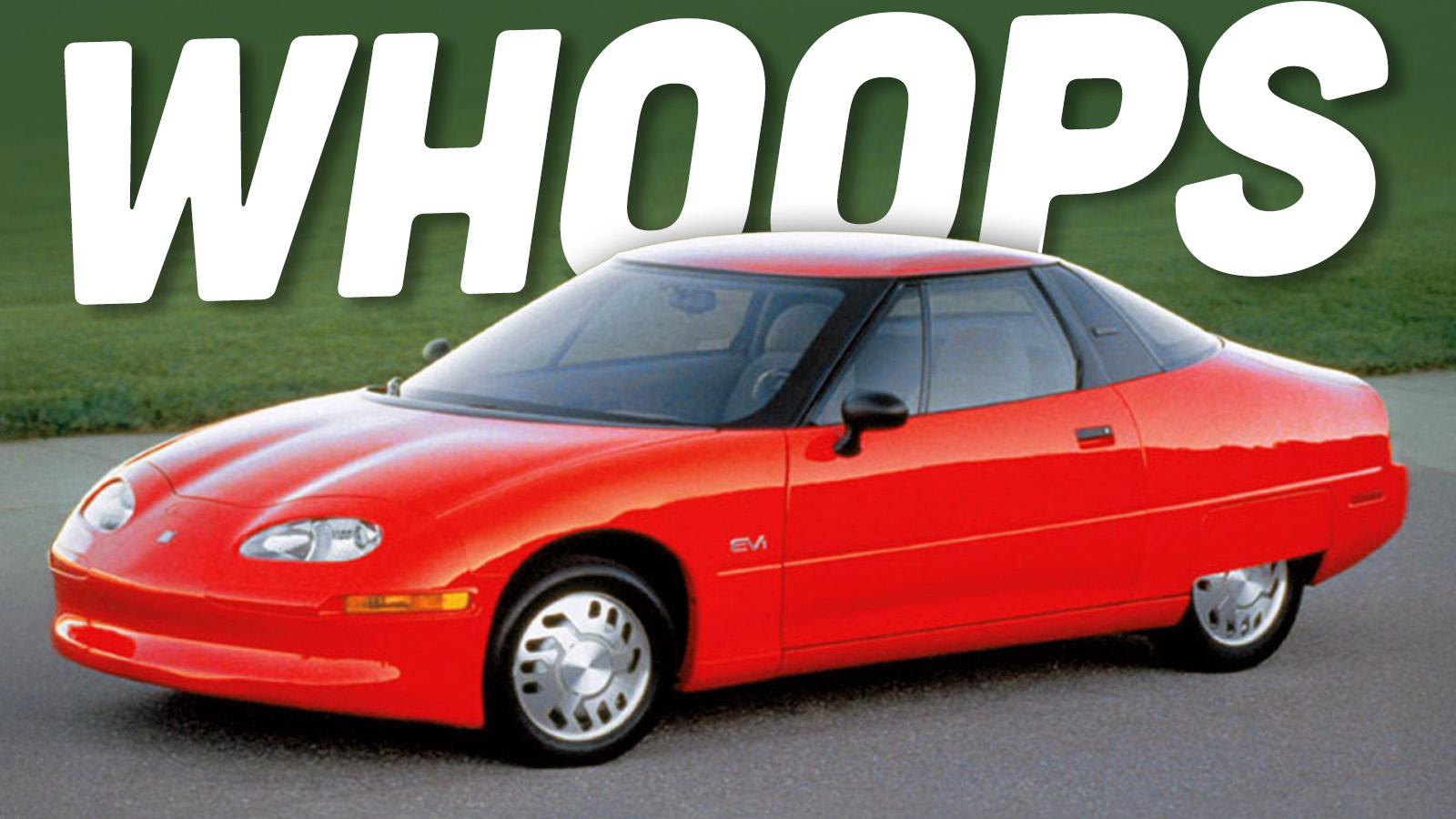
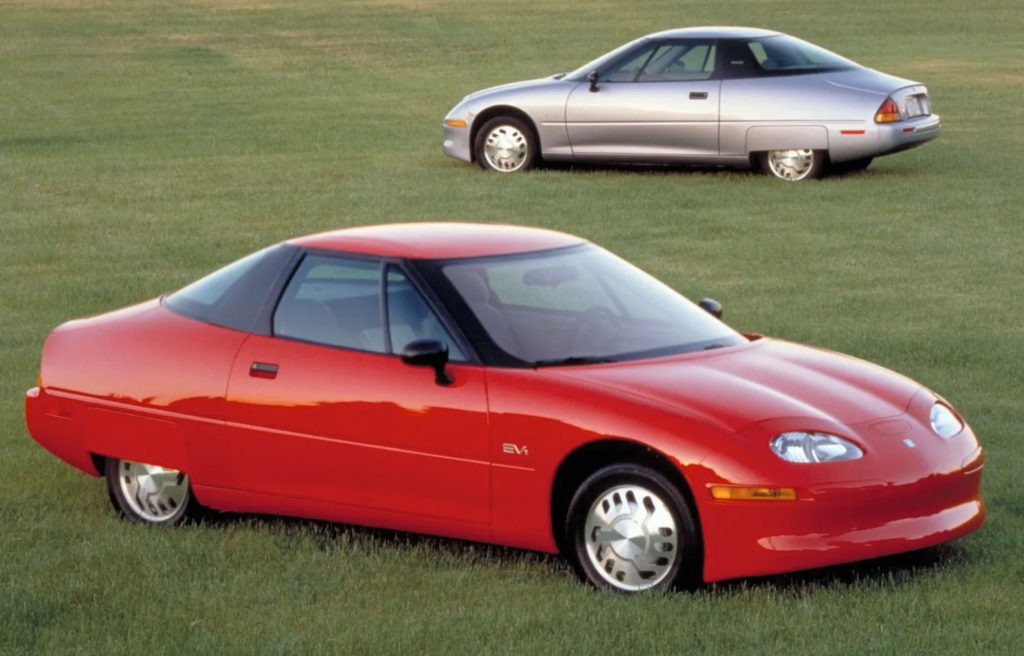
Ah, the EV1. General Motors’ electric moonshot of the late 1990s has become a legend, solidifying itself as the first modern EV for the masses, despite just a handful being leased to owners—several of whom were celebrities—before they were taken back by the company and mostly crushed.
The EV1’s tale is a fascinating one, with tons of data out there about how the car came to be, and all of the interesting ways engineers made it happen. I highly recommend reading David Tracy’s write-up on the EV1 factory service manuals he picked up last year, or our exclusive story on how there was nearly an EV1 convertible.


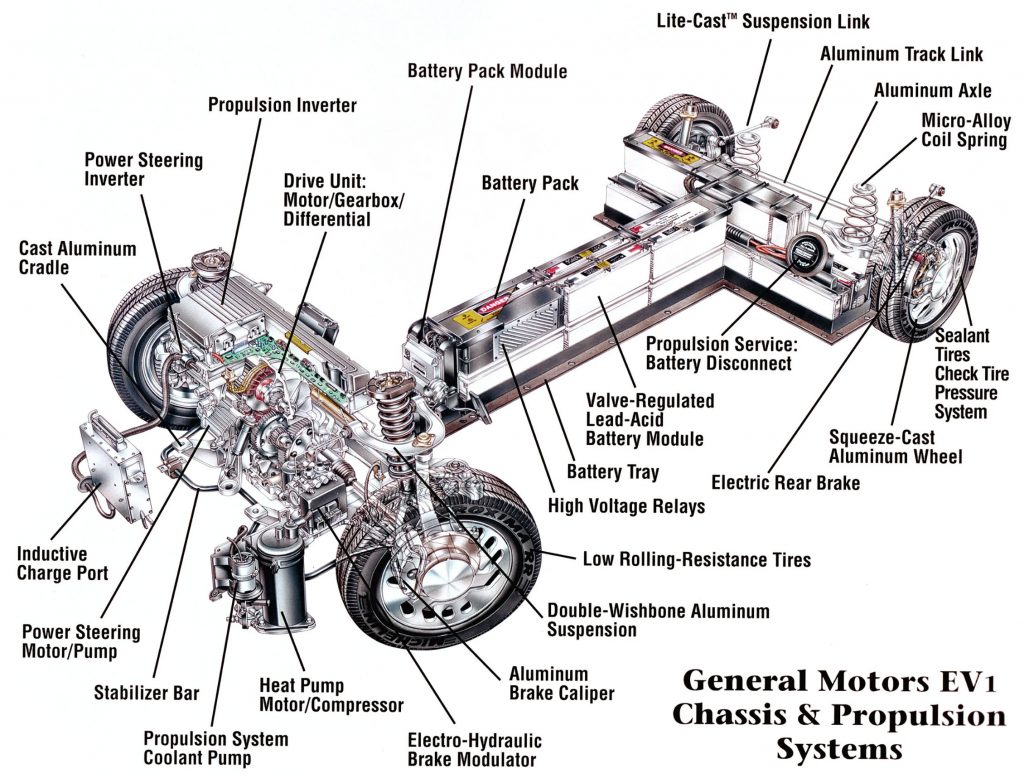
With just 137 horsepower from a single electric motor, 26 lead-acid batteries, and around 90 miles of range, the EV1 wasn’t exactly mind-blowing by modern EV standards. But it was vastly ahead of its time. This was a viable battery-powered car that hit the market over 10 years before the Tesla Roadster, after all. GM was way ahead of the game and in a position to set itself up for success in the decades to come.
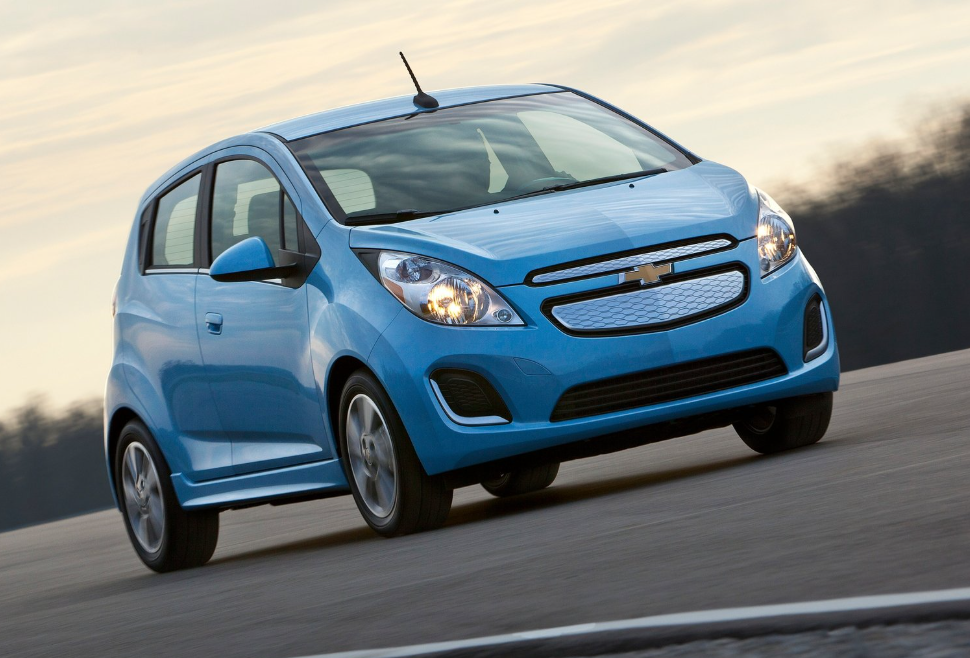
Of course, everyone knows what happened next. Low demand and high costs forced GM to cancel the EV1 program, despite owners voicing their praise for the car. GM collected every example and crushed them, aside from around 40 cars, which were donated to museums and universities. It would be another decade until GM introduced another electric car to the market, the Spark EV, in 2013.
With the electric car market as big and important as it is now, President Mark Reuss, understandably, wishes GM weren’t so quick to lower the EV1 to its grave. When asked about what he’d change with hindsight in an interview with InsideEVs, he brings up the revolutionary EV almost immediately:
I wasn’t around for EV1; I wasn’t in the company. But I think that might have been one example of something that we, the company, should not have done, which was canceling that; that was really quite a car.
The EV1 was a game-changer for a lot of reasons. It introduced stuff like low-rolling-resistance tires, regenerative braking, HVAC heat pumps, and keyless ignition. Gen-two cars got nickel-metal hydride (NiMH) batteries, which doubled range, while third-generation cars got even longer-range lithium-polymer batteries. It also had a drag coefficient of just 0.19, beating out modern equivalents like the Lucid Air and the Mercedes-Benz EQS. While most other manufacturers hadn’t even figured out EVs, GM was already hundreds of steps ahead. Who knows just how far ahead the company would be now in the EV space had it stuck with developing the car further.
While Reuss believes the EV1 was a stopping point, others at the company believed it was a stepping stone. Gary Witzenburg, GM’s EV program Vehicle Test and Development manager during the EV1’s development, said as much in 2021 in a retelling of the car’s chaotic history, which he wrote for Hagerty:
The momentum the EV1 program generated led to fuel cell electric vehicle (FCEV) research; Allison hybrid buses; plus “two-mode” hybrid technology for trucks, SUVs, and two generations of extended-range electric (EREV) Chevrolet Volts. (Successful and satisfying as the Volts were, they were too costly to be profitable.) Now GM touts the battery-electric (BEV) Chevy Bolt and Bolt EUV, with many more electric vehicles to come.
Witzenburg believed it was limited battery tech that held GM back from building the EV1’s successor in the early 2000s, rather than cost or demand. Whether you agree with him or not, Reuss seems to have learned from the past, going by the rest of that InsideEVs interview:
I think the strategy that we set a few years ago to grow our company with electric vehicles and ICE vehicles, and being able to manufacture some of those in the same place, like Spring Hill, Tennessee, and have cell plants in the United States located in the places we do. You can talk about adoption rate, you can talk about where we are today. But all I know is the adoption rate isn’t as quick as what we thought it was going to be.
The tax credit goes away, what’s going to happen? We’re going to see what happens. But I can tell you that a high percentage of people with buying a electric vehicle, for instance, buy another one. Yeah. So that’s a really good flywheel to be on, and a good trend that’s long term. And while the rate may fluctuate year to year in terms of how many, it’s permanent and it’s real. And I don’t I don’t see ever not being a big part of the U.S. auto industry.
So, despite the notion that EV sales will soon dip in America due to tariff costs and a lack of federal tax credits, don’t expect GM to give up on the tech any time soon.
You can watch the full interview below:
Top photo: GM


I work at the Crawford Auto-Aviation Museum in Cleveland, Ohio and can confirm that we do have an EV-1 in our collection. Stop by and see it. It is on display at the museum for all to see with museum general admission. Website for more info is http://www.wrhs.org
The Slate EV fan forum has at least one member who owns an original Ranger EV.
You know, an EV-refitted basic compact pickup truck with a De-Dion tube rear axle.
Hard to judge the unit costs on a limited production experimental vehicle, and not the best showcase of the technology on a conversion (rather than an EV-native platform), but a reminder that this has all been technically possible for a long time.
Battery technology’s limits are usually in the context of range/cost…that late-90s-early-00s era of EVs was the last time people could have reasonably complained about battery tech, when they were using lead-acid traction batteries.
Even then, shame on them for not trying at all (and for saying the EV1’s demise contributed to FCEVs, which are stupid).
Abandoning BEVs entirely was a ridiculous choice.
One of the good reasons for unprofitable development is to maintain a long-term technological advantage, and continuing some limited EV development/sales could have been an example of that.
I still remember the Ford 30k EV announcement having a quote from the Ford CEO about Chinese automakers having something like 10 times as many powertrain engineers as them, as if that made Ford an underdog.
Of course, a couple years before that, they had complained about having more engineers than their competitors and “streamlined”.
American automakers (and businesses in general) have spent decades working toward becoming the most “streamlined” losers in the world, and they have succeeded marvelously.
In an alternate timeline…
GM does not choose to throw a temper tantrum over the state of California telling them to sell a car it made. While it is a slow start, the EV1 slowly gains momentum and GM, looking to the future, is on the hunt for quality people to maintain their colossal lead in electric autos. Mark Tarpenning and Martin Eberhard, inspired by the success of the EV1, respond to GM’s call and join with GM to make the best electric cars in the world.
Working at GM, they do not start their own company, Tesla. Without the existence of Tesla, a young, relatively unknown son of a South African gem mine owner has no company to force a takeover to create the illusion of being a super engineer. He slowly fades into obscurity.
I still think the cancellation of the EV-1 was one of the best things to happen to the current EV market. In the early days of modern EVs the biggest fears were battery degradation, charge memory issues, expensive replacements at relatively low miles, slow charging etc. All things that were largely not an issue and didn’t have a reason to be a worry.
The EV-1 with its lead acid or NiMH batteries did have those concerns. If it hadn’t been killed off, everyone who was on the fence would have had real-world examples of EVs being expensive and troublesome to own. The different battery technology would have been too small a detail for most to notice or hear about.
Instead the EV-1 became a martyr before any of those things became an issue for those who had them.
Interesting take, and the Leaf as an example car with major battery issues (and the public fear of degradation that still exists) that was produced en-masse supports that thought