

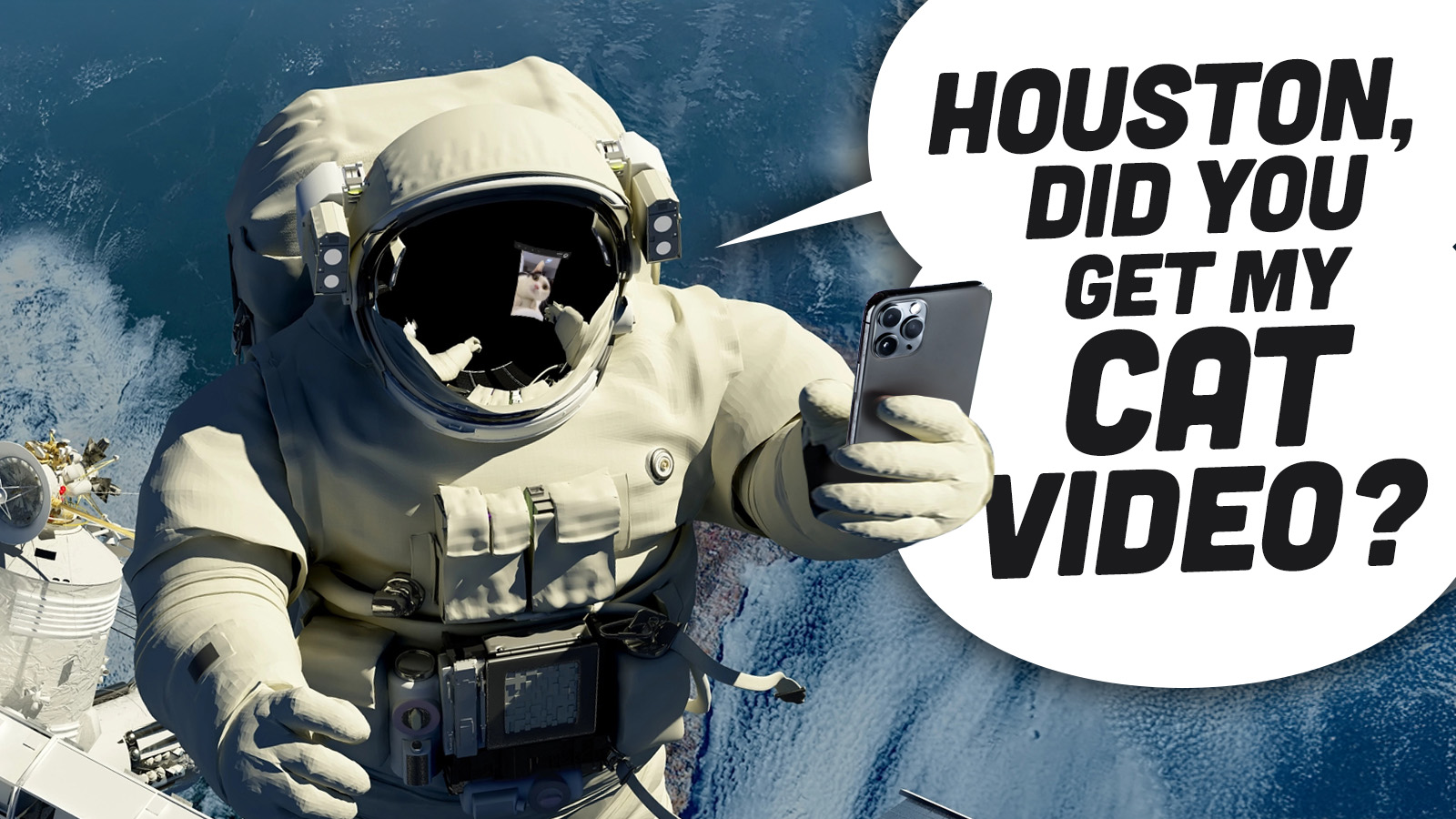
I have many addictions. Cars are a big one, obviously. Shopping for cars on Facebook Marketplace, too. I also love sugar to the point where I go into a tiny bit of withdrawal if I don’t have my daily fix. But my biggest addiction, by far, has got to be my phone. If I go five minutes without the thing and I’m not showering or sleeping, I get so anxious that I stop functioning.
For the longest time, I felt bad for astronauts going up into space. Sure, they get to see the unrivaled beauty and awe-inspiring views of space and earth from above, as well as the weightlessness of orbit, but they weren’t allowed to bring their smartphones along. If you can’t snap a video to send to your favorite group chat about being in space, then what’s the point? It’s basically like you weren’t there at all.


Thankfully, that’s changing with NASA’s upcoming missions. The head of NASA announced this week plans to start allowing astronauts to fly with today’s latest smartphones in their pockets. That means astronauts with crippling phone addictions like me won’t have to wean themselves off before venturing into the final frontier.
New Rules For Crew-12 And Artemis II
NASA astronauts will soon fly with the latest smartphones, beginning with Crew-12 and Artemis II. We are giving our crews the tools to capture special moments for their families and share inspiring images and video with the world. Just as important, we challenged long-standing…
— NASA Administrator Jared Isaacman (@NASAAdmin) February 5, 2026
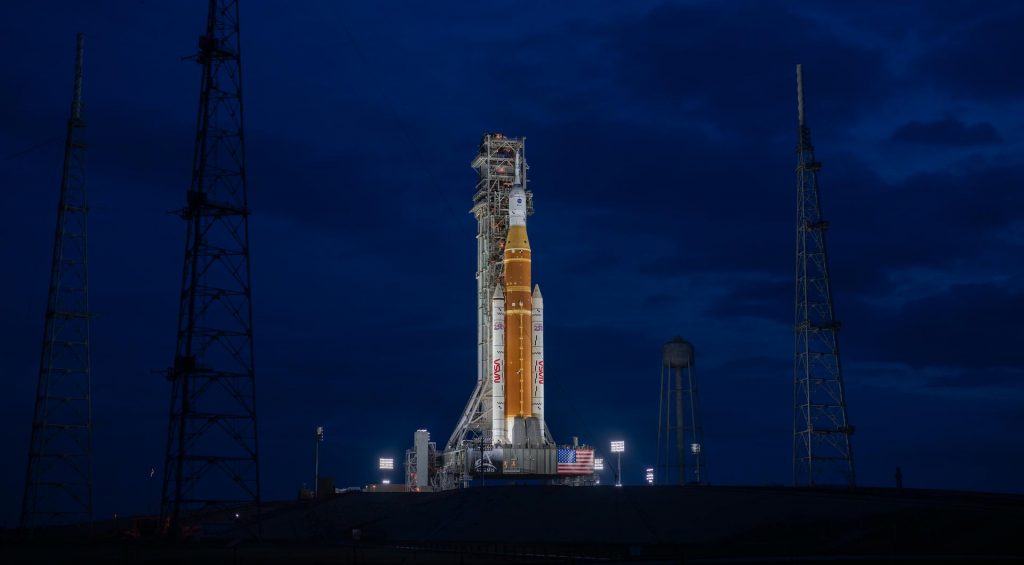
NASA has two upcoming missions on the horizon. The first, Crew-12, is a program set to launch sometime this month in collaboration with SpaceX aboard a Crew Dragon spacecraft, with four crewmembers (two NASA astronauts, one European Space Agency astronaut, and one Russian cosmonaut), going to the International Space Station. The next is Artemis II, a more involved mission that plans to take three American astronauts and one Canadian astronaut out of low Earth orbit and around the moon.
NASA administrator Jared Isaacman announced on X (formerly Twitter) Wednesday evening plans to allow astronauts from both of these programs to take smartphones aboard.
NASA astronauts will soon fly with the latest smartphones, beginning with Crew-12 and Artemis II. We are giving our crews the tools to capture special moments for their families and share inspiring images and video with the world.

Seeing as how the newest camera previously approved for the Artemis II flight was a 2016 Nikon DSLR, this is great news for astronauts who want to capture visuals with modern technology, and for the people who want to see photos and videos through the lens of a modern device. If I were an astronaut on one of these missions, I’d be pretty hyped that I’d be able to catch up on my TikTok notifications as I’m flying into Earth’s atmosphere at Mach 32 (around 24,000 mph).
Reconsidering How Devices Are Approved
But more than that, Isaacman says the move is a step towards challenging modern spaceflight requirements:
Just as important, we challenged long-standing processes and qualified modern hardware for spaceflight on an expedited timeline. That operational urgency will serve NASA well as we pursue the highest-value science and research in orbit and on the lunar surface. This is a small step in the right direction.
Overlooking the stringent requirements necessary for a device to qualify for space travel is no joke—the requirements are there because they ensure their effectiveness and the safety of the astronauts using them. But as Ars Technica points out, the approval process might be a bit bloated:
The challenge of qualifying modern technology for spaceflight is real. There are a million ways in which the technology can become mired in the approval process, from radiation characterization of chips to battery thermal and vacuum tests, outgassing concerns, vibe testing, and other qualification concerns. Yes, these requirements exist for a reason. But Isaacman is now telling his team to challenge requirements to ensure they are still needed today. (If you don’t believe this is important, ask any NASA contractor about bloated requirements.)
Still, it’s not like NASA is going to let astronauts pocket their iPhones and hop into their respective spacecraft without doing some research. Phones weren’t allowed on board previous missions over concerns about electromagnetic interference, which could disrupt systems like navigation, life support, or communications, all of which seem pretty important.

NASA is still going to test phones to make sure that stuff isn’t affected, according to Gadgethacks.com. They’ll also be making sure the phones are up to the agency’s high standards for flammability, and whether they can withstand cosmic rays while outside of low Earth orbit (these irradiated, invisible beams from space can corrupt memory files and degrade processors).
As for security risks, the agency is taking similar precautions. From Gadgethacks.com:
Astronauts’ personal iPhones operate on separate wireless networks with no direct access to flight control systems, scientific payloads, or classified communications—creating an entirely isolated network bubble within the spacecraft’s existing infrastructure. Data encryption, remote wipe capabilities, and mandatory security updates become non-negotiable in this environment. Any app installation must undergo vetting to prevent malware or inadvertent data leakage. Imagine the potential disaster if a compromised game app somehow bridged the network gap and interfered with life support telemetry. The stakes are literally life-and-death, which means the verification process for approved apps is orders of magnitude more rigorous than what you’d find in a typical enterprise environment.
So long as Facebook Marketplace is on the list of approved apps, sign me up.
Top graphic images: DepositPhotos.com; SmolFrenz/TikTok


“we challenged long-standing processes and qualified modern hardware for spaceflight on an expedited timeline”
Well that’s never gone wrong before.
I’m all for adjusting regulations if they no longer make sense, but doing it the right way is slow, tedious, and not newsworthy. You don’t make announcements bragging about it. This is just putting spin on taking shortcuts to appeal to the sort of “innovators” that brought us Oceangate.
Bet they get calls from double glazing sales bots….
Nasa’s going to have upgrade their Porn Hub and Only Fans accounts to unlimited data.
Being a cyber security person, this gives me a slight case of the heebie jeebies. So many questions. Hopefully they will at least be locked down Government-issued CSfC phones with some OPSEC rules of use, but given what I’ve been seeing in the military lately it could be pretty lax and exploitable, because ‘speed’ and ‘flexibilty’ and ‘innovation’.
I would hazard to bet they are going to be government issued phones with limited apps and websites one can connect to with them, and via a government VPN and network. Basically just treat space the same way they treat a government employee or elected official visiting another country.
With my agency you get to have zero personal electronics when you travel if you are connecting to anything we maintain or use, you have to use our laptop, ipad and or smartphone if you want to use anything.
The ultimate car-culture website…. and campers and trains, and space?! Let’s see David’s jeep via installments. Maybe another author doing something interesting with their vehicles?
You guys are great but seems to be lacking lately.
Does the administrator of NASA not know that the organization he runs has been capturing and sharing the highest possible quality photos and videos since its inception? Why is he pretending that photography began with the smartphone?
I don’t object to astronauts having their phones in principle (presuming, of course, that all applicable safety and mission assurance analyses are in place), but taking pictures with their phones just results in worse results than the SLRs or mirrorless systems that they’ve been using.
The bigger issue is one of rights. Previously, any image captured from a NASA mission using NASA hardware was the property of the agency and, by extension, the American people. Presumably astronauts would now own the rights to their pictures taken with their personal devices. For simple snapshots, selfies, and the like, that’s not too controversial, but what if an astronaut captures a spectacular space phenomenon with their phone? Does that mean that NASA would need to purchase the rights to that photo/video in order to conduct any scientific analysis of it?
I bet they have paperwork, in 3-ring binders, that cover this scenario
I suspect they will be using a NASA-provided phone, not their own phone.
The quote from NASA is “We are giving our crews the tools to capture special moments…”
Very toughtful rebuttal. My vision was an Apollo 1 disaster of burning smartphones.
Agreed on the issue of “pretending that photography began with the smartphone”
Brian doesn’t seem to understand either.
“2016 Nikon DSLR, this is great news for astronauts who want to capture visuals with modern technology, and for the people who want to see photos and videos through the lens of a modern device”
Does he not understand the image quality of a full-frame DSLR with a large F/2.8 or lower lens as compared to a small, even modern, cell-phone camera? The benefit of cell-phones is ease-of-use, NOT better image quality. Unless by “modern” we mean worse quality through the use of terrible fake bokke and fake depth of field which looks terrible and obviously fake?
DSLR images can be downsampled to post on Tic-tok. Cell phone images cannot be upsampled reasonably for publication-quality images.
I’m really interested in this.
Background, I’ve worked in aerospace for 11 years. When iPhone X and on started coming out, we started all having issues anytime we were in an environment with literally any amount of helium causing the phones to basically brick until the battery died. Some Samsungs had the same issue. What it turned out to be was the helium would mess with some internal components and throw off a count and kill the phone. We started putting signs up, flashing lights, and stuck phones outside of the shops, in cars, in fridges, basically anywhere away from the area. Our reports and warranty claims drove Apple to put out a notice.
Where I’m going with that is I’m curious how the unknown conditions are going to impact the phones. I’m interested in how fast these become bricks. That said, during Polaris dawn, there were FaceTime calls made and iPads are commonly used in space ops
Can’t wait to hear about how the ISS blew up because someone’s phone battery caught fire.
Yeah, this’ll probably be the first time anything battery-powered goes into space, right?
https://spinoff.nasa.gov/Knowledge_Is_Battery_Power
Can’t have your phone on during takeoff and landing in a commercial jet but it’s ok on a spaceship? I’d check my calling network because those roaming charges are going to be a bitch
Phones weren’t allowed on board previous missions over concerns about electromagnetic interference, which could disrupt systems like navigation, life support, or communications, all of which seem pretty important.
It’s amazing how all these shielded systems that prevent the sun’s electromagnetic interference and cosmic radiation can be destroyed by a simple mobile phone.
When are these gov’t agencies going to give up on this BS line. Remember when we couldn’t even use laptops on a plane because of concerns about electromagnetic interference, which could disrupt the delicate onboard systems.
I, along with thousands of other pilots, used my phone on board our little Cessna and Piper airplanes all the time without the navigation systems plowing us into the ground.
And why are my car’s vulnerable unshielded electronics perfectly okay with all this?
God, I’m tired of all this stupidity.
I think the concern was more that, if something goes even a tiny bit wrong, everybody dies. That regulation just erred on the side of caution, and flight regs are written in blood.
I’m guessing that a 7XX flight systems are a little more complex than a Cessna. My son has his private pilot’s license and uses an iPad when flying, but the Cessnas he rents have instruments mostly from the 50s. No glass dash on those. That said, modern electronics are thoroughly tested and vetted for emi and all that other stuff.
Automotive chips are largely 20+ years old (hence the inability to quickly switch to more readily available chips during the pandemic. They too are tested in high and low temps and all kinds of radiation environments (including radiation & various radar frequencies).
Well I am sure the electronics on a Cessna aren’t sophisticated enough to even link up to a modern electric typewriter. However with Bluetooth and automatic syncing it may kill a few people and lose billions of dollars.
Yep, I can’t just see the Artemis II crew with their smartphone Velcroed to the capsule dashboard with Google Maps open all the way to the moon.
This is all in preparation to have smartphones along for the first return to landing on the moon. Because the conspiracy theorists can’t claim the moon landing is faked when the astronauts make TikTok videos on the moon, right?
Why are we all pretending that phone cameras are the first cameras to exist? NASA has always documented its work with copious amounts of photographs and videos long before photography got shoehorned into telephones (even long before photography was digital).
This isn’t just directed at you but also at Space Tourist Isaacman’s statement: “We are giving our crews the tools to capture special moments for their families and share inspiring images and video with the world.” At least since the days of the Shuttle, astronauts have been bringing high-quality cameras and powerful laptop computers to space so that they could capture and share photos and videos with those on the ground. Doing it with a phone instead just means that it’ll be done with lower quality, and low quality isn’t an attribute that I want in a space program.
New phones have very high quality image sensors, sometimes better than old DSLRs. The problem is all the automated crap they put in, and the low quality lenses. I currently use a Canon 90D that takes lower resolution images than a high end smartphone. So while I think that NASA pictures may become lower quality, I don’t think it is because of the camera, I think it is because most astronauts taking pictures won’t have a passion related to framing it up.
Yes, some new phones image sensors have a higher quality than those of some old DSLRs, but that’s not exactly an apples-to-apples comparison, is it? NASA isn’t using old DSLRs — they use the best hardware that they can get flight certified.
And that’s just the image sensor. It says nothing of the lenses being used. Smartphones, by necessity, use tiny lenses whereas real cameras can switch out lenses so that the photographer is using the best tool for each situation.
Your point about auto-processing is a good one, too. Photographers (and, I would hope, scientists) want manual control over their tools so that they capture exactly what they intend — they don’t want blown-out saturation, fake HDR, and artificial bokeh just because it looks cool.
They are using a 10 year old DSLR.
Did you read the article before posting?
Historically, stuff in space used fairly old electronic components which were known to survive the radiation in space.
What they are doing is allowing lower cost commercial devices for non mission critical use.
I would expect that the cameras already on board the ISS will not be thrown out the window to become yet another piece of space junk to track.
I suppose only time will tell if NASA image quality goes down. I hope that they will continue to use their dedicated cameras for taking pictures like they were designed for, and phones will be used for calling people like they were designed for.
Neil Armstrong was the first person to take a photograph on the moon! The famous photograph of Buzz Aldrin stepping off the ladder onto the moon
Wait. Did you send David out in space to get that top shot or was it AI slop? (Sorry. Couldn’t help it.)
No no, it’s a fair question. We did in fact send David into space. This was *not cheap,* so if more of you could become Members, that would be GREAT
Partner Post: Mounting Tires in a Microgravity Vacuum is Tough, But We Did It
Would it be cheaper if he was going one way? Got to think of the Budget
Oooh, I can’t wait for David’s piece “I have 3 weeks to get this abandoned moon buggy running in time for the ‘King of the Craters’ off world event!
I understand the need to challenge existing requirements and amend them for modern times, but expediting testing because the boss said so? That’s never gone wrong for NASA before.
lol
Don’t worry, the iPhone’s Orings can withstand very extreme temperatures!
Sadly, these rules are written in blood. Too many times NASA has let a deadline outpace caution.
I would prefer if they didn’t.
I just don’t get it.
The wife and I still haven’t found a compelling enough reason to own smart-phones.
I suppose someday we’ll be forced to own one, but until then…
We get along just fine without one.
Hey if you can pull it off, by all means.
I have one friend who has stuck it out with a flip phone, a pretty rare phenomenon for a professional in their late 30s. It’s starting to wear on him how quickly nearly every function seems to assume smartphone ownership. And a little annoying for others to have to buy and hold things like concert tickets for him.
I just pretty much gave up on TicketBastard shows. Where I live, there are shows using eTix, TicketStar, and some good shows at smaller venues where we can still get paper tickets. I did see Metallica in Minnesota and Stevie Wonder in Milwaukee in 2024, and having to go to their “mobile resolution desk’ to get printed tickets was definitely a pain.
The wife and I do share a $10 flip-phone, but we only use it if we remember to bring it with us when we go out of town in case we need to make a phone call. It usually stays on a shelf at home completely turned off. We don’t text, and nobody has ever called us on that number. It’s only for making calls if we absolutely need to when we’re away from our land-line. We only pay around $6 / month through Tracfone if we buy 15 months at a time.
Someday we’ll probably be forced to downgrade to a smart-phone, but if so, it’ll most likely be used pretty much the same way. In it’s “off” state until we need to use it.
Username checks out.
Friend of mine removes most of the intrusive “non-removeable” software from his phones, mostly by persistence.
His battery life is wild!
There is software to use phones built for cell towers as local networks within your range.
Very useful in emergencies.
It’s only radio after all
I wish you well in your quest to avoid it.
That dude will be ready when the big solar flare hits in April 2027.
I only switched when my flip stopped working and I couldn’t find another one
I’ve been hit with some pretty serious roaming charges just in the Bahamas, can’t imagine what they are for the Moon
So long as they don’t need to do an EVA to reset the wifi router.
And don’t even get me *started* on the latency!
To iPhoneity and beyond!