

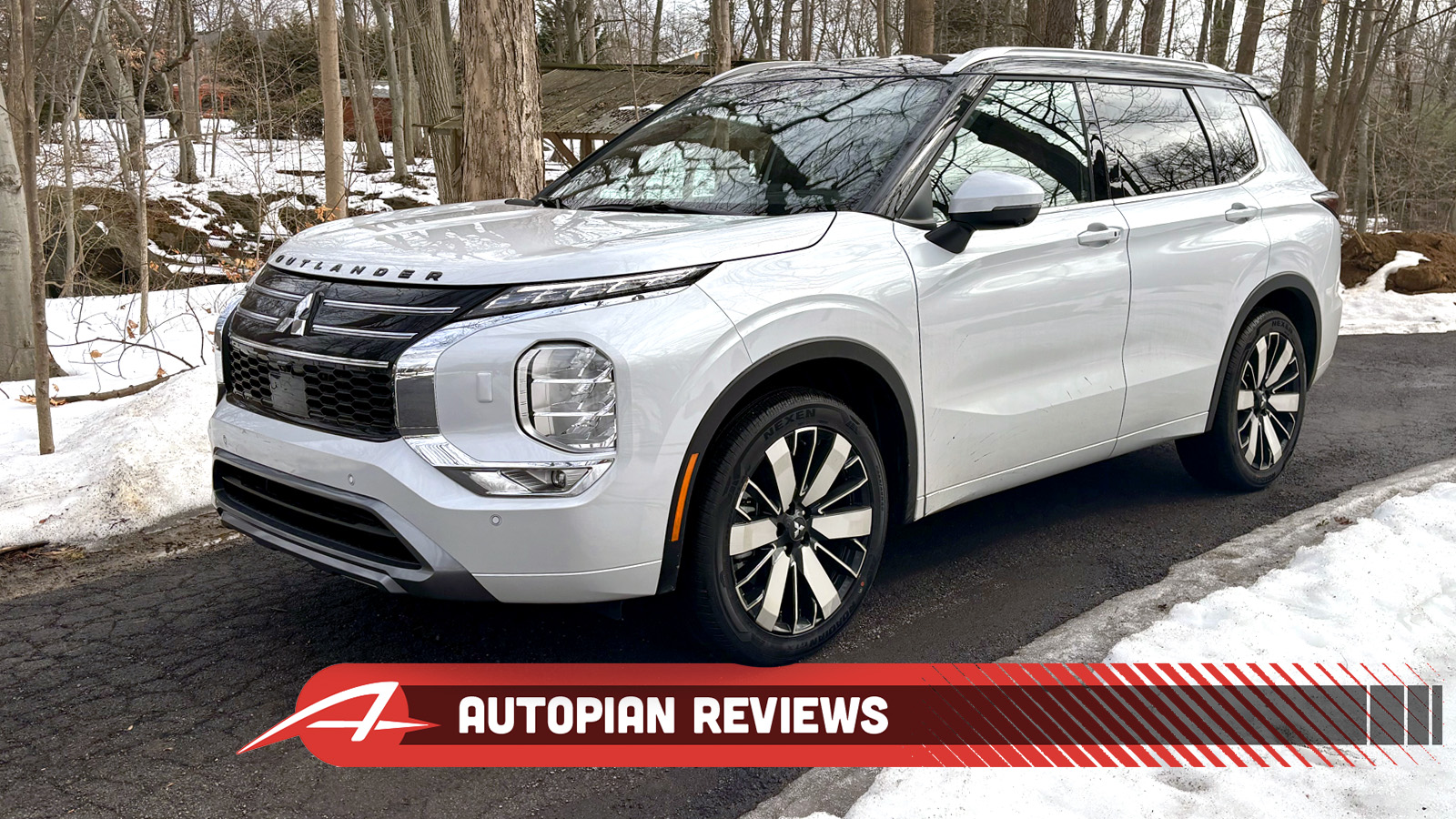
As a professional (depending on who you ask) automotive journalist and an amateur skeptic, I should be less susceptible to conventional wisdom about cars than the average person. I know better. Do I, though? No one is more susceptible to groupthink than someone in the group, right?
When I got a 2026 Mitsubishi Outlander SEL in my press car rotation, it wasn’t something I was super enthused about, having the typical car writer’s belief that it’s the thing you’re fine getting at the rental counter and nothing more.


That’s the line on Mitsubishi. It’s a company with a mix of ancient pre-Stellantis Franco-German-Japanese platforms and newer, pre-Nissan Renault divorce mediocre Franco-Japanese ones. Don’t buy’em, just rent’em, unless you’re desperately low on funds and the Mitsubishi dealer is the only one that’ll give you credit.
The story is a hard one to argue with, as that’s what Mitsubishi is on paper. It’s been ages since I’ve driven a Mitsubishi and that was the viewpoint that I took with me into driving this one. A viewpoint supported by my peers.
I now believe that view isn’t quite right. This latest Outlander is not the fastest, the best-handling, the most luxurious, or the most efficient three-row SUV on the market. It is the cheapest, though, while also being comfortable and efficient. I also think it’s one of the more interesting-looking SUVs for sale now.
The Basics
Engine: Turbocharged 1.5-liter inline-four w/48-volt mild-hybrid system
Transmission: CVT
Drive: all-wheel drive
Output: 174 horsepower, 206 lb-ft of torque
Fuel Economy: 30 mpg hwy, 26 mpg city, 27 mpg combined
Base Price: $29,995 FWD/$40,845 AWD SEL
Price As-Tested: $47,235 (including $1,745 destination charge)
Why Does This Exist?
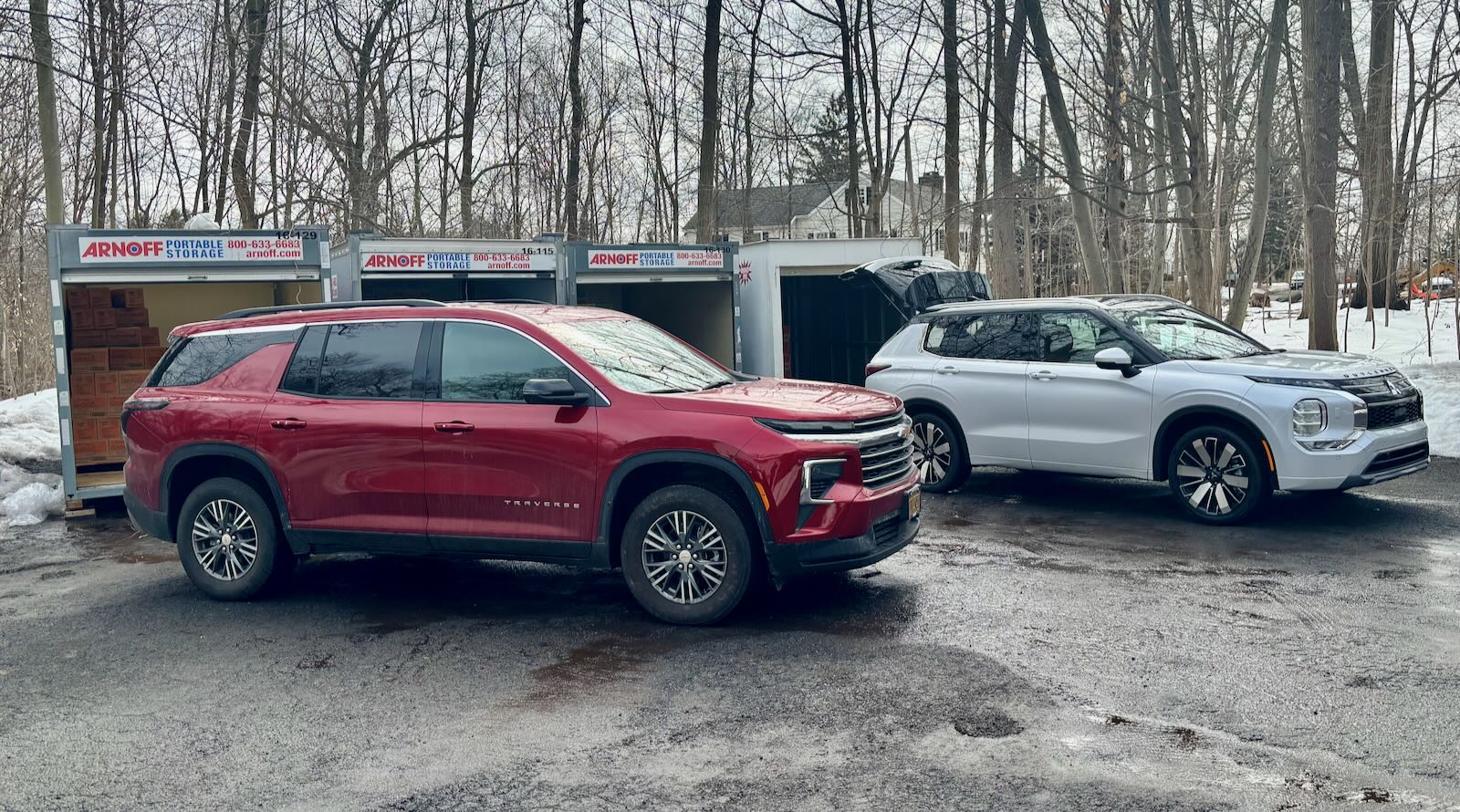
It’s easy being cynical. There are entire automotive news websites that seem to now be built on a youthful delusion that says assuming the worst in everything, and everyone is somehow edgier and more valuable than actual insight. If that’s your perspective, then you’ll only see the third row in the otherwise compact crossover-sized Outlander as a cheap marketing ploy.
I’d argue that the third row in about half of the three-row crossovers on the market is also a cheap marketing ploy. Here’s the reality: Most of them are bad! I don’t want to sit in the back row of a Mazda CX-90 or Hyundai Santa Fe. They are, at best, for children or adults you hate.
Is it not more honest, even altruistic, to make a smaller and more affordable vehicle that can have a third row in those rare times when you need a third row? Few of the families I know with three-row crossovers are using that third row all the time and, like normal people, often fold it down to make room for stuff.
Seen that way, the very base model of this, starting at a little over $30,000 delivered, is a great value and a wise use of money. Even my fully featured Outlander SEL with all the options isn’t that bad of a deal. The fact that this now comes with Mitsubishi’s 48-volt mild hybrid system means it’s also remarkably efficient for a cheap car.
How Does It Look?
Mitsubishi is a smaller automaker than it used to be in the United States (though still a force in other markets), and the not-too-big crossover is a strange holdover from when Nissan, Renault, and Mitsubishi were all uncomfortably the same company. This makes the Outlander, basically, a Nissan Rogue.
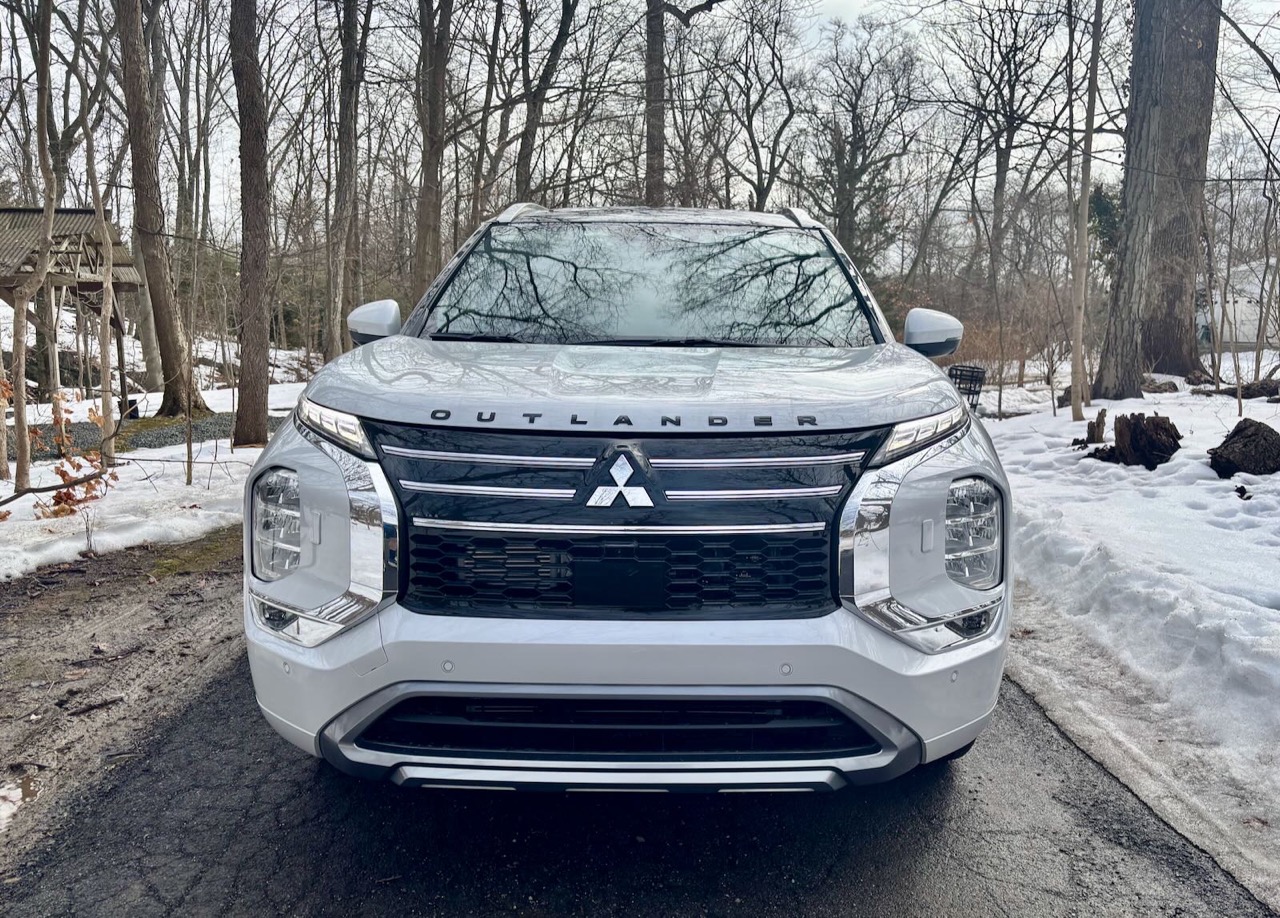
I have little in the way of feelings about the appearance of the new Nissan Rogue, which is mildly attractive in a forgettable sort of way. The Outlander, at least with the two-tone White Diamond body and black roof, stands out in a positive way to me. What can I say? White Diamond cars have always brought me luck.
Maybe it’s the giant white grille and chrome trim? If the French ever made their own version of one of the angels from Neon Genesis Evangelion, it might look like the nose of this car, but not in a bad way. The blacked-out A-pillar also gives the Outlander a kind of cool-guy wrap-around sunglasses look.
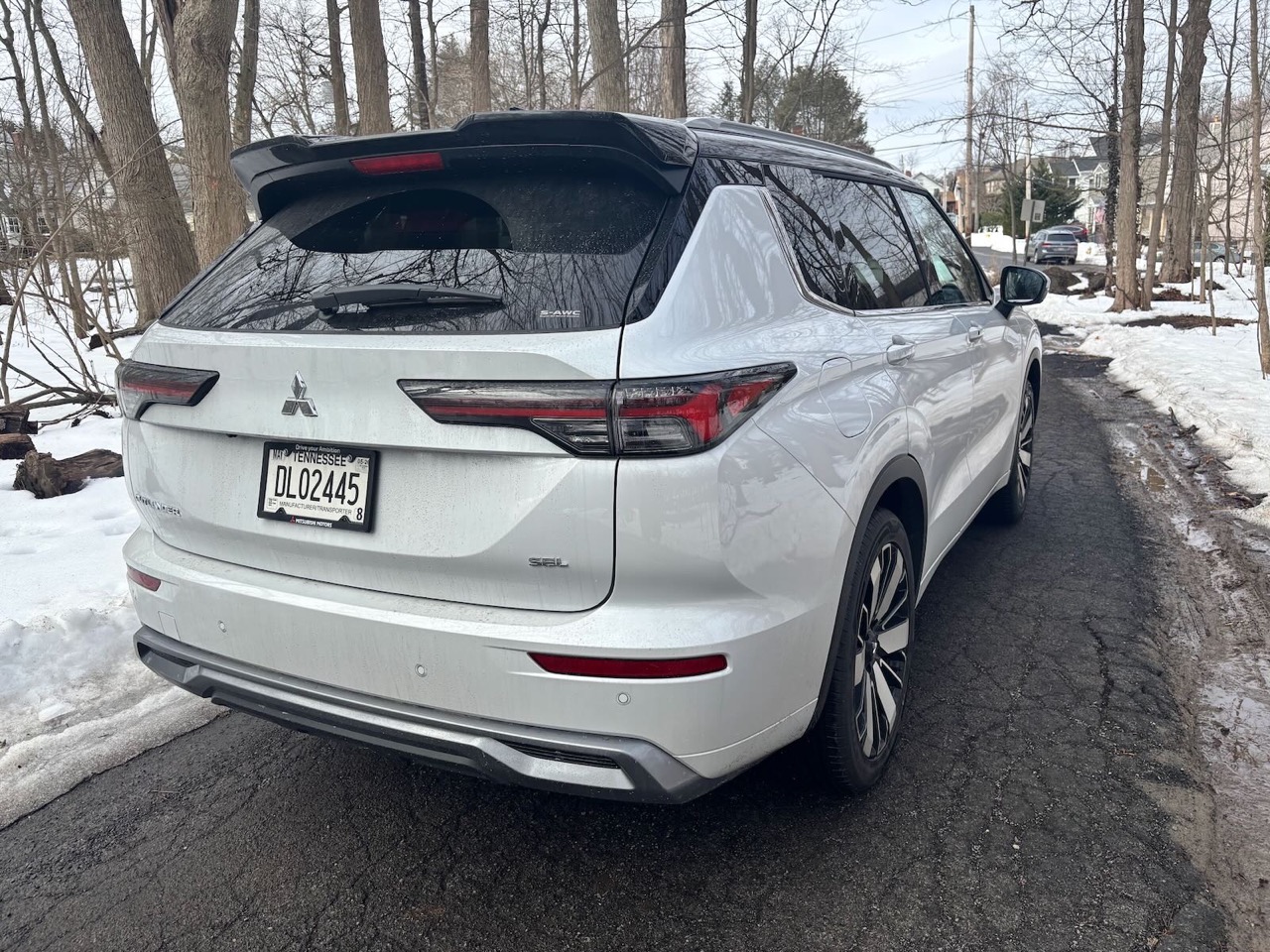
It’s not pretty, per se, though not everything has to be pretty. It’s interesting. The way that the black A-pillar flows into the roof and above the D-pillar is also a clever way to add dimensionality to the profile. In solid colors, it does look a bit more Rogue-like. The 20-inch, two-tone, food-processor blade wheels are also fun.
This used to be the least-interesting class in cars, and it’s now becoming the most-interesting, aesthetically.
What’s It Like On The Inside?
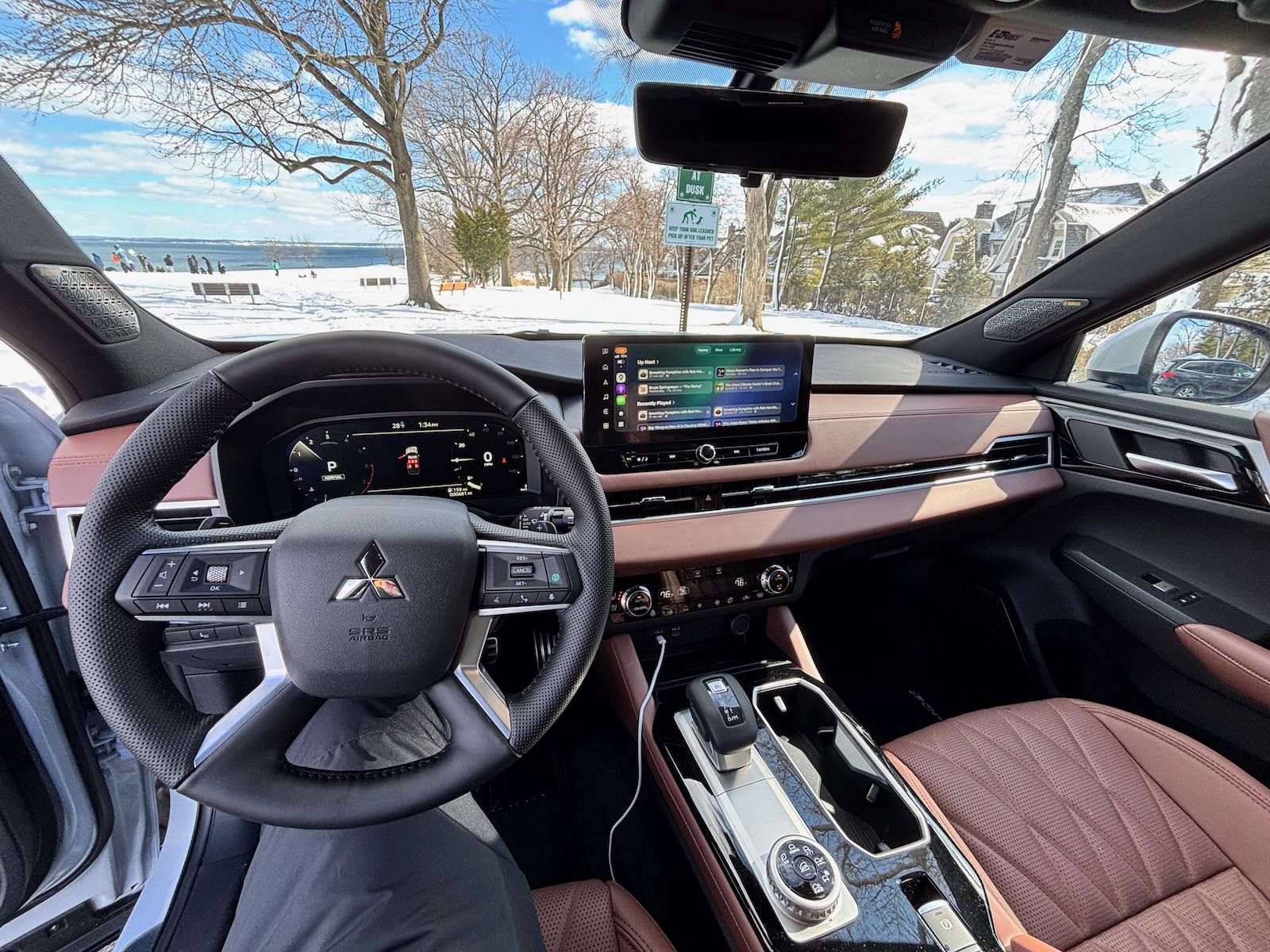
While the exterior is trying to do a lot with a little, the interior is sort of doing the opposite. It’s just a sensibly attractive car that isn’t overwhelmed by too many shapes or textures. While the quilted leather isn’t exactly made with soft bull hides like on a Rolls-Royce, the seats are big and soft.
Yeah, it’s a Rogue underneath, and it has its share of meh plastics, but there isn’t too much piano black, and everything just sort of works. As always, real dials and buttons are appreciated. The steering wheel is comfortable and, on a cold day, heated up nicely. As did the seats. The infotainment is basically indecipherable from the comparable era Nissan infotainment system, which is also fine by me. It’s not something worth reinventing.
As Thomas pointed out when he drove a similar vehicle last year, the Yamaha sound system is something Mitsubishi is proud of showing off. I mostly listen to podcasts, so it didn’t overwhelm me with sonic clarity. When I did listen to music, it seemed clear enough.
There’s a little more luxury in a Telluride, better ergonomics in a Grand Highlander, and more style in a Santa Fe. Whether or not that’s enough to justify the price increase is a personal question.
Ok, But Is The Third-Row Good?
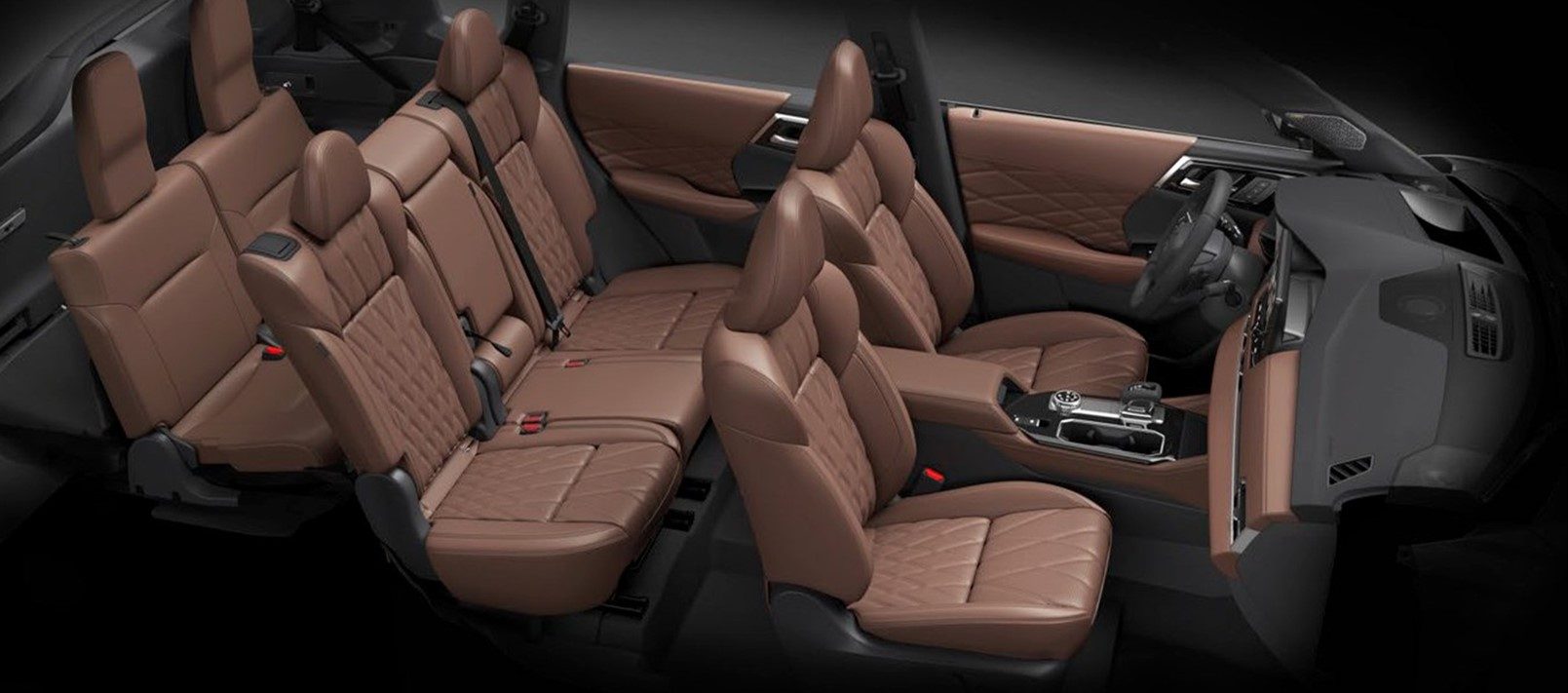
The Outlander’s greatest trick is that it is something that’s sized more like my CR-V yet offers a third row. This is an emergency third-row. As much as I like the car, I don’t want to give you the false notion that you should sit back there. Whereas the front seats are big and plush, the rear seats feel like they get thinner and smaller with each row.
How much legroom is there? If you push the second row forward, you can squeeze the calves of an undersized 1st grader through there. Getting my adult frame into the rear involved embracing everything I learned from yoga, and it was still like stuffing an entire tuna into a single Bumblebee can.

The seats themselves have an odd design, with these super narrow and tall headrests that make it look like you’re about to sit in the lap of one of the Separatist Droid Army robot soldiers from the Star Wars: Attack of The Clones prequel. It’s functional, mostly.
When writing about an older version of the Outlander, my old pal Ezra Dyer made a great point:
They’re a marvel of engineering, the Outlander’s third-row seats. Looking at the rear cargo area, you wouldn’t expect to find seats nestled under the floor. It seems like there’s no room. But Mitsubishi must employ engineers from the former East German resistance, people who once stuffed defectors into the false fender wall of a Trabant for a trip across the border. Because there is a two-up seat under there, complete with headrests that look like Star Wars clones and padding that is somehow an improvement over the lightly reinforced cardboard chairs of my 2007.
Damn, he had the same Star Wars reference in mind, but he incorrectly identified them as clone soldiers. I’m not sure if it’s more or less embarrassing to get that wrong. The point is well-taken, however, that anyone who owns an Outlander gets a giant storage area most of the time, and these neat little quasi-useful seats some of the time.
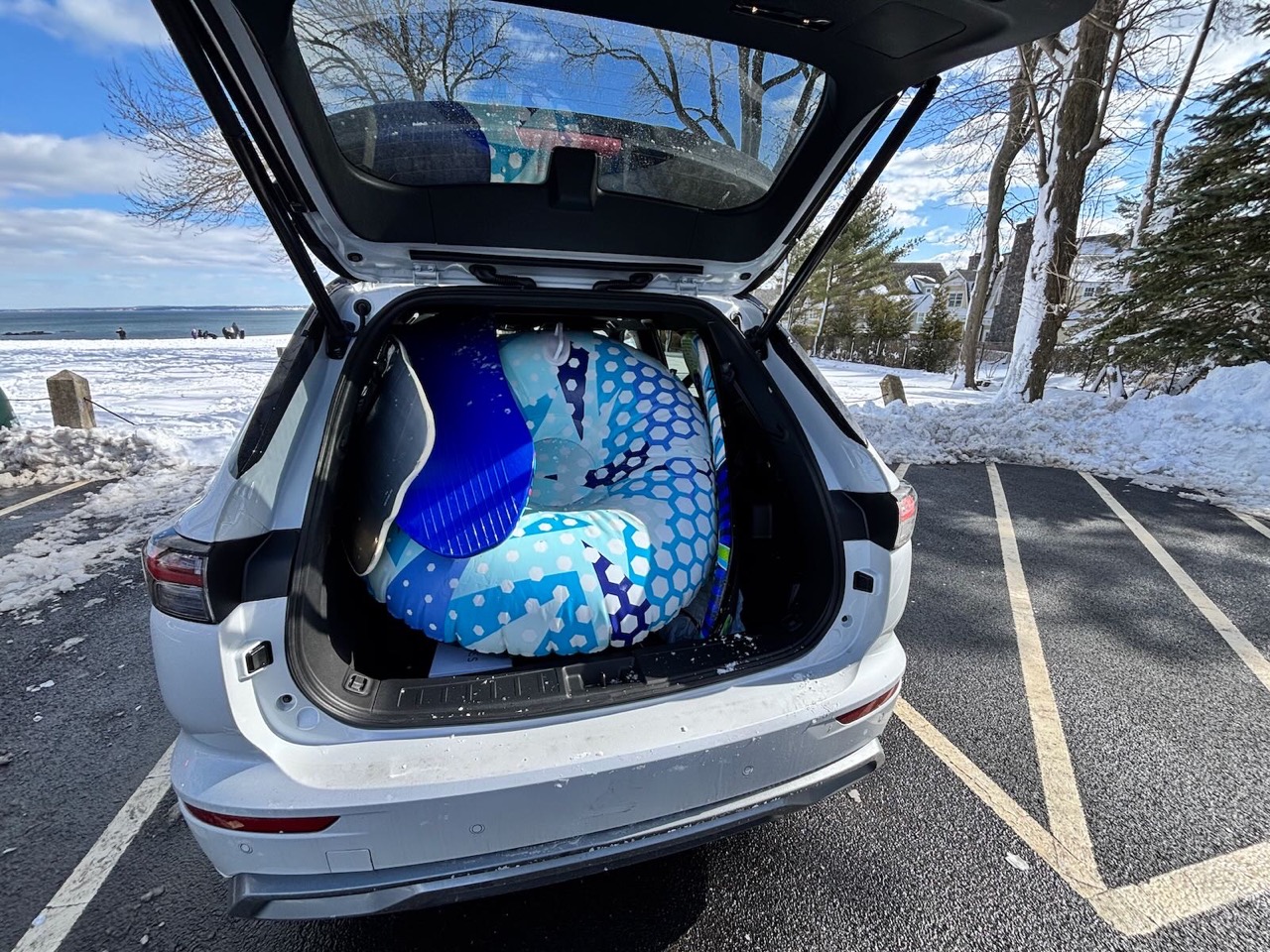
It snowed enough to go sledding when I had the Outlander, and I managed to fit all our sleds and tubes (inflated!) with plenty of room to spare for fellow children.
How Does It Drive?
The biggest news for the new Outlander is that the old 2.5-liter four-banger has been tossed for a newer, smaller, turbocharged 1.5-liter mill tied to a mild hybrid system. The engine itself is derived from the same 4B40 engine found in the Eclipse Cross, called the 4B40 Version 2 in this application. What’s strange is that there are almost no engine photos or cutaways of this new version online or in Mitsubishi’s materials.
Here’s the best I can do:
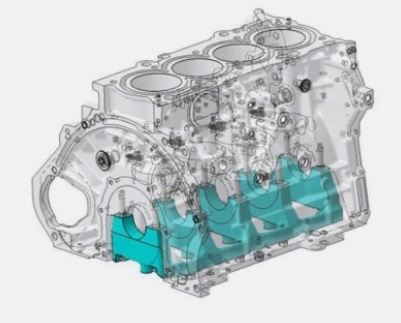
This engine doesn’t provide more power, but the addition of the mild hybrid system is a great upgrade. Basically, a 48-volt lithium-ion battery pack now sits under the rear cargo area and powers the belt-starter generator (BSG), which replaces a conventional alternator. This isn’t a full-hybrid system, but it does have a few advantages. The starter motor is still there for initial startup, but the annoyance of using it for start/stop is now replaced by the BSG. The BSG can also provide limited power during initial acceleration and while at highway speeds. Mitsubishi says this should reduce consumption and add longevity.
In practice, I barely noticed anything was happening other than an initial adjustment period to the unexpectedly abrupt engine-off period when slowing down. This is something that I hope Mitsubishi can dial in a little better over time, but for now, it’s worth it for the increased fuel economy. This is also mated to a CVT, which should complicate matters, but the CVT here is tuned fairly well.
I had the AWD version with Mitsubishi’s Super All Wheel Control (S-AWC), which performed well in low-grip situations. Because it was a press car and I’m an autojournalist, I immediately sought out as many piles of ice and snow as I could find. There was minimal slip, even on the Nexen all-season tires.
Does It Fulfill Its Purpose?

This is still a big, heavy crossover that can hold a theoretical seven humans for something like $31,000 when sparsely equipped. For that amount of change, you get a car that’ll get 30 mpg on the highway and 27 mpg combined. Even the fanciest, highest trim version of this is under the $50,000 average transaction price barrier, and my sense is that there are deals to be had. The sweet spot is probably the LE 1.5T S-AWC, which has most of the stuff you want on the model I had, minus the two-tone roof, for about $35k.
By comparison, a gas-powered two-row Honda CR-V in FWD trim is $34K out the door if you’re lucky. The cheapest Grand Highlander, which does have a useful third row, is about $44k if you can get someone to sell you a base Grand Highlander. A FWD Santa Fe is, maybe, $35K and gets 29 mpg on the highway and a comparatively bad 24 mpg combined.
There isn’t anything that offers three rows this cheaply, which is a big deal for some people. I don’t think any other compact crossover’s entry-level non-hybrid motor offers close to the same efficiency. Because of where the Outlander is positioned, you can basically get three rows, AWD, and decent fuel economy for the price of a two-row, FWD midsize crossover from a different Japanese or South Korean automaker.
That’s the purpose of this car. To exist in a space where no one has wanted to go, probably because no other brand would want to cannibalize its own sales. Mitsubishi doesn’t have a super popular two-row to compete with and, arguably, doesn’t have a lot of popular cars in general. It’s a brand that barely exists, but that doesn’t make it bad. It isn’t bad. It’s probably better than you thought. It’s certainly better than I thought.
Plus, with the seats down, it’ll transport approximately 384,000 calories worth of Girl Scout Cookies.
All photos Matt Hardigree unless otherwise noted.


To add to the “we had one as a rental” comments, we went to a wedding as a larger group, expecting to rent a minivan. Well, National was all out of minivans, in fact, they were all out of three-row anything except for some Outlanders. We were hesitant, but it was the only remotely practical option, so we took one.
Indeed, the third row is pretty small, and you don’t have great access to it. But you know what? We made it work. Moved the second row forward to make the back seats bearable, and had the front row seats in respectable-if-not-commodious positions to keep the second row happy. Tada! Up to 7 content adults in a small-ish crossover. It probably would’ve gotten old rather quickly on a road trip, and the safety of having everyone packed in like that is dubious, but for scooting around Dallas it was just fine.
While I definitely appreciate things that are better than expected, the curmudgeon in me isn’t too jazzed by this Mitsubishi. Disclaimer: I’ve only seen them and haven’t sat in or driven one.
If the $30K version works for someone’s needs, that seems maybe OK, especially if you were only leasing it or only planned to keep it for a few years. But to spend $40K or even close to $50K (more than $50K all-in w/tax/title/reg) this seems like a bad idea, unless you’ve got a specific need for that undersized third row. Perhaps you chauffeur amputees, or little people, or small dogs wearing harnesses… in those cases I can see it… maybe.
But for the 99% of the time where most folks aren’t doing those few specific (and odd) tasks, I think I’d almost prefer anything else in this class, even if it costs a few grand more. Being a curmudgeon, I also can’t help but think that the older, simpler, larger-displacement motor will actually have better longevity than the smaller, stressed, and partially electrified motor in this new Outlander.
Plus a CVT… yes, unavoidable in many small crossovers, but that doesn’t make it any more enjoyable/desirable in this one.
TBH, this Outlander would have to be marked down by 50% off of MSRP for me to start rationalizing it as a sensible purchase. Don’t get me wrong: I’m glad Mitsubishi is still around in the US market, but that doesn’t make this a desirable car IMO. You can get a Toyota Corolla Cross starting at $25K for the base version, and whatever version Toyota sells in the mid-to-upper $30s has got to be much nicer than this thing is in most every respect unless you DO drive amputees around or you somehow prefer all the exterior chrome and mish-mash styling elements of the Outlander.
All JMHO. I’ll shut up now. 🙂
I just had one as a rental last week, but I only used it to drive home for the airport. It was competent, and I only have a couple complaints. The instrument cluster screen UI wasn’t great I didn’t think, but maybe I just needed time. The other is that the turn signal sound was like nails tapping on a wooden desk. I found it grating as hell, but that’s definitely a personal problem.
I will say the heated seats were the fastest I’ve ever used. I got in the car, started it, started navigation and checked my mirrors, and my butt was already on fire. Damn good seat heaters.
Why the hell do so many SUVs have 3rd rows? Hardly anyone has that many kids. Get rid of the third row, and give me back the space to haul my crap.
I’ve got third rows in both of my Volvos: a 240 wagon and an early XC90 SUV. I didn’t need the third row and never use them in either car.
I drove one of these as a rental in the start of the year and it was a decent car. It only managed about 27 mpg which I was a bit surprised by,but it felt really heavy and underpowered so I guess it figures.
Just had one as a rental. So new they didn’t even remove the white plastic shipping covering from the roof. I’d agree it’s a mostly decent vehicle. But it is SO GUTLESS. This thing is woefully underpowered. I could never own something with so little power in 2026.
Not sure if we had the new 1.5 or the older 2.5, but our rental seemed to have no problem getting out of its own way. Perhaps yours was still in some kind of break-in mode?
There’s always going to be a spot in the market (and in my heart) for a cheap SUV shaped thing with next to no driving dynamics and a seat good enough to transport a couple extra kids in a pinch.
99 percent of the time, people that need a third row fall into two categories- 1) people that have 3-5 kids and are buying minivans or used tahoes and expeditions, or 2) families with 1 or 2 kids but always seem to be bringing someone else along.
As far as new vehicle sales went, The big name in town for this used to be the Journey. It was another car that was mocked quite a lot, but when you want that capability and a warranty, can’t/wont drive a minivan, and don’t give a rats ass about power to weight, 0-60 times, skid pad grip, and everything else that car rags base cars inherent goodness upon, nothing beats cars like the Outlander.
The third row seats in our ’18 MDX and the ’15 X5 that preceded it are also not places that I’d want any friends taller than Danny DeVito to sit or try to access. We’ve only used them a couple of times and then remembered why they spend nearly all of the time folded down.
However, both cars listed above are palatable to look at from the front. I just can’t find anything I like about the Mitsubishi’s headlights and all that chrome. The interior looks nice enough.
I’m not now and never will be in the market for an SUV, three-row or not. But the pricing does make this seem like a defendable choice compared to some others.
Wait, in that last pic, are those pallets of Girl Scout cookies or am I just craving some something sweet after eating my ‘healthy’ lunch?
My wife and I own two Outlanders, a ’22 and a ’24 model and we love them. It rides and drives better the Rogue and many other compact SUV’s out there. Size wise its a little better and despite all of the chatter about the “small” 3rd row, it HAS A 3rd ROW and my 8 and 10 year olds love it. Remember, this is a COMPACT SUV not a Suburban so sure the flippin’ 3rd row is going to be tight. (Attitude not directed at you Matt but to all of the auto media).
I can tell you these facts. Ours burn zero oil like many of our Korean cars loved to do.
They don’t shit themselves like many, many GM engines do.
They have been trouble-free with only 255/45R20 tires having been replaced and rear brakes on both and one battery…
The designs aren’t boring and the fact that we have been very pleased with both of these Outlanders as well as both of our Mirages we have had says a lot.
We don’t visit the service department much. The vehicles do what they are supposed to do and do it very well. Period.
I was really hoping you were testing the PHEV version, since it has a series/parallel powertrain setup I think is very interesting; at low speeds the engine (if it needs to start at all) is a generator and just supplies electricity to the traction motors. At high speeds (I think I’ve heard 35 mph on up) it engages a dog clutch that allows the engine to drive the wheels directly, optimizing the driveline efficiency at highway speeds. This setup strikes me as both smart and stone-simple, which is a great combo. It *should* be as reliable as a hammer, forever; there are no clutches to wear, no belts to slip, nothing. I think the Accord hybrid works in a similar way. If it drives nicely (which is what I’d like to learn from an Autopian review) I think it would be a very compelling product.
Maybe they’ve improved it, but my problem with the Outlander from a couple years ago was comfort. They offer all the features one expects, but the back seats are not as comfortable as competitors, it doesn’t feel like it drives as well as competitors, and it just leaves me feeling like it is the thing you settle for, not the thing you want.
I’m also not impressed by the third row, since that just means the cargo space is worse. Give me that space for storing stuff under the cargo floor or lower the cargo floor.
I don’t think the issue is that people think Mitsubishi is bad, it’s just that almost everything else is as good or better, therefore people don’t think about Mitsubishi much at all. They’re invisible.
And I don’t believe this is groupthink or gaslighting. I’m looking at their lineup. It’s minuscule and offers almost nothing that cannot be easily found elsewhere for similar cost and greater convenience.
They have all of three models, two of which (Outlander Sport and Eclipse Cross) are more or less indistinguishable from each other. Those two aren’t all that cheap (upper-20s after discounts, but see Trax, Kona, Seltos, Kicks, etc), and yet they are inefficient, slow, uninteresting, and less convenient to buy and service due to the sparse dealer network. You can frankly say the same thing about the non-PHEV Outlander in this review. It’s fine, but so is everything else.
I really don’t think they are failing here because of some autojourno herd mentality. To me, it looks like they can’t/won’t invest enough to create a remotely competitive product.
I’ve ridden in a top spec Outlander, and I would describe it as a perfectly cromulent people mover. The kind of car that you just drive and focus on the other things in your life. It was very comfortable in the front row.
Yes!I had one as a rental and drove it from Half Moon Bat along the coast to Alice’s Restaurant—great driving roads. The whole time I am thinking “this can’t be right—Mitsubishi sucks, right?” It was quite pleasant and had comfy seats, unlike my X1. Goes to show that you can’t trust groupthink. Ditching the CVT for an 8 speed wouldn’t hurt.
Alice’s restaurant: Where you can get anything you want, ‘ceptin Alice.
I wonder if DT will get this reference?
A different Alice, but hopefully DT doesn’t get. MH might because we are basically the same person, up from Texas.
I LOVE that radio stations around the country have made playing it a Thanksgiving tradition. It amazes me how many people my age (late 60s) have never heard it. But they almost always have smiles on their faces by the end when introduced.
Thanksgiving is a long day so you need something to do with the family about the mother rapers and the father rapers….
Let’s just pop down to the trailer in a parking lot-Mitsubishi dealer and take a look at the two cars they have in stock. We can pick up some Kratum and a few cases of cigs while we’re there.
I’m glad Mitsubishi exists. Everyone else has abandoned cheap cars. These come with an outstanding warranty. And cromulent is, as Matt discovered, actually above expectations at the price point. They may not be exciting, but they are still decently engineered and better built than many competitors.
“Everyone else has abandoned cheap cars”
I don’t think that’s correct at all.
The cheapest thing offered at my regional Mitsu dealers are badly outdated subcompact crossovers with a nearly $30,000 MSRP, at which point they are competing with numerous vehicles from numerous other manufacturers. It’s not like they are offering $15,000 subcompacts.
The one tested here is $47K with a little turbo motor and CVT. Granted it’s a top trim and it’s not a bad vehicle, but it’s also not much of a deal and it ain’t cheap.
Fair. I was being hyperbolic. I’m still glad Mitsu offers some decent cheap vehicles.
CUV 3rd rows are for other people’s children.
Not necessarily literally, but so your two kids can each bring a friend. If you can fill a 3-row with your own issue, it’s minivan time.
I was just curious about the weight of these Mitsu”bitch”i’s so here ya go:
The 2026 Mitsubishi Outlander (non-PHEV) has a curb weight ranging from approximately 3,770 lbs to 3,903 lbs depending on the trim and drivetrain. The 2026 Outlander PHEV (Plug-in Hybrid) is heavier, with a curb weight between roughly 4,762 lbs and 4,872 lbs. The smaller 2026 Outlander Sport model weighs significantly less, around 3,263 lbs
The gasoline-powered models are a bit slower but much lighter and handle better overall.
Makes sense…Thank you!
When inventories were barely bouncing back from being really limited, my dad asked me to go to lunch with him and check out a car. He had been shopping for PHEV CUVs, planning to downsize slightly for the sake of fuel economy, and it turned out to be a PHEV Outlander. Everything about it was nice, but they wanted something like $14,000 above sticker. It wasn’t that nice. It also put everyone off of the local (now closed) Mitsu dealership.
He ended up ditching the PHEV idea and getting a hybrid Highlander without paying a markup or downsizing, and it was still a vast MPG improvement over the body-on-frame SUV he replaced.
Mob mentality is tiresome. Everybody wants to hate something. Also, there’s not a dealer who doesn’t have a sub-prime lender in their contacts. There’s a ton of expensive cars who own people with a 600 FICO.
you can’t have a hero without a villain.