

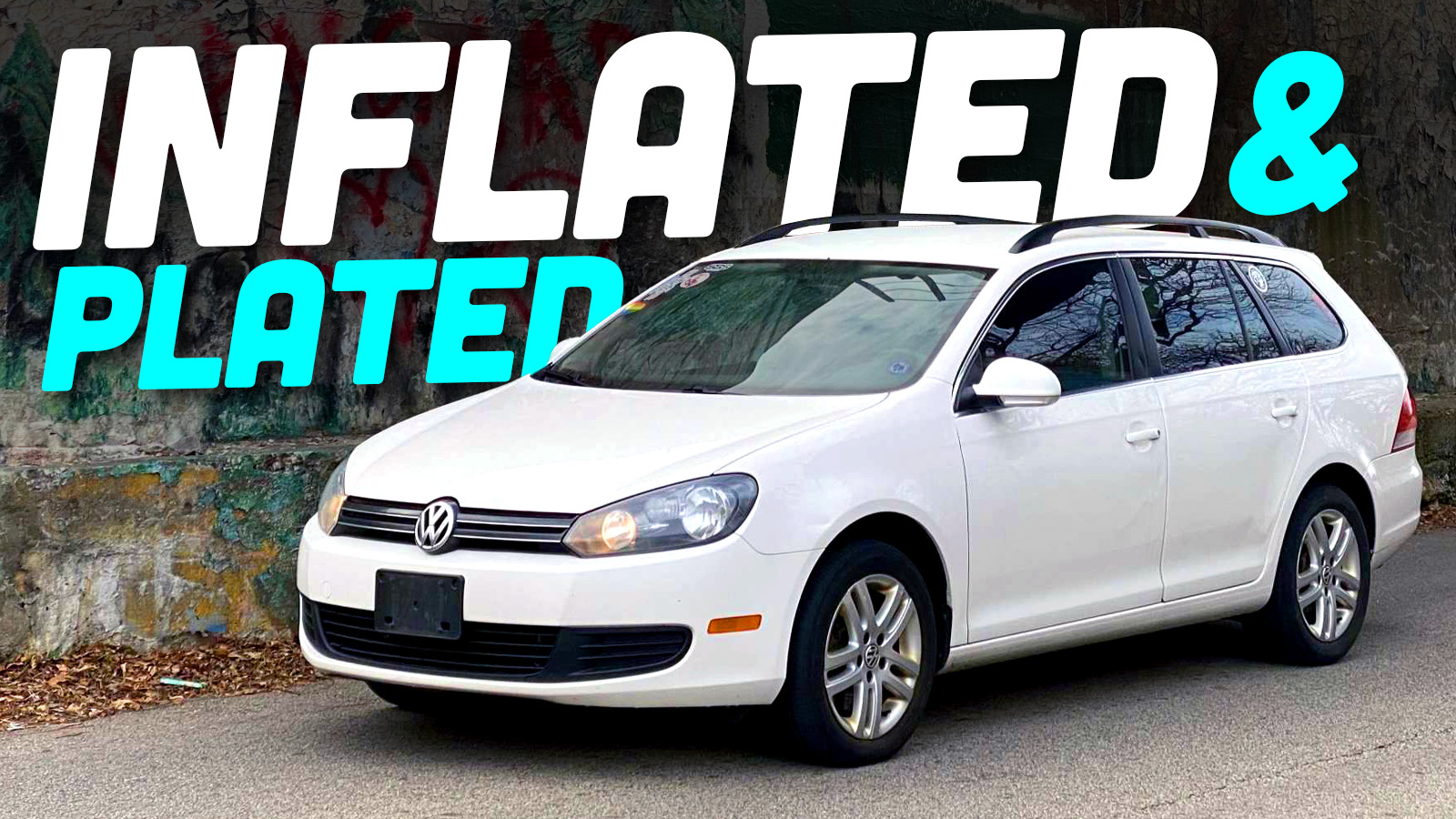
One of the hardest rejections a car buyer can face is being told “no” at the Department of Motor Vehicles. Usually, this means that something horrible has happened, like the state has banned your Japanese Kei car, or you just tried to title and register a car that might not have had perfect paperwork. That’s what happened to me five years ago when I bought a 2012 Volkswagen Jetta SportWagen TDI and tried to register it. I’ve finally emerged triumphant with a clean and clear title after getting into this massive headache, and here’s how I did it.
Back in November 2020, I wrote a post titled “Here’s What A Two-Owner Volkswagen Jetta Sportwagen TDI Looks Like After 355,000 Miles.” If you want to read some classic Mercedes Streeter, this was one of the very first posts I had ever written for a prominent car website, and in a cool way, it shows how far I’ve come.


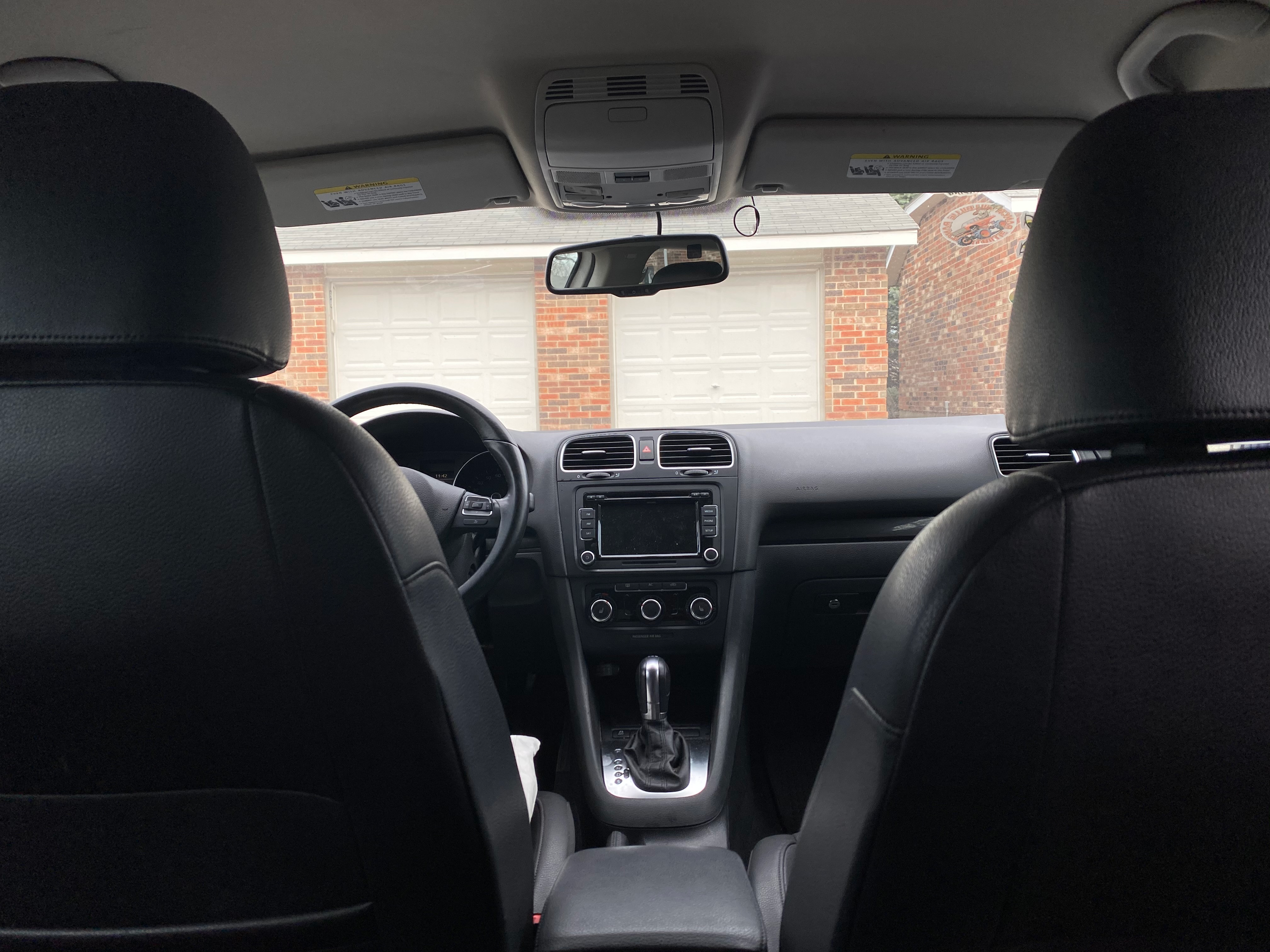
Anyway, this car was a big deal for me. I had been searching for the perfect German diesel wagon after deeply regretting selling my first Volkswagen, a 2005 Volkswagen Passat TDI wagon. I found this Jetta SportWagen for sale on Craigslist, and it checked all of my boxes. It was a one-owner car with piles of service records, both original keys, the original window sticker, functional emissions equipment, and a perfect interior. Sure, it had about 353,000 miles, but the first owner had clearly treated the car well. Seriously, I would later buy a 2010 Volkswagen Jetta SportWagen TDI, the same car, but with a manual transmission, and despite my 2012 having 130,000 more miles and a less desirable DSG transmission, it was significantly less worn out than the one with the manual.

The Forbidden Title
I had actually purchased the car around June that year, but I wasn’t hired on at Jalopnik until that October. But by that time, the car had already proven to be a thorn in my backside. When I bought the car, I never noticed that the seller signed the title on the wrong line.
When I tried turning the title into the Illinois DMV, I was swiftly declined. But, I knew that no two Illinois DMV locations are the same, so I started driving to different ones. My friends gave me stories about registering cars with sketchy titles at this hole in the wall DMV, or at that DMV in the middle of nowhere. I went to all of them, visiting over a half-dozen DMVs. Every single one of them had turned me away the second they saw the title.

One alternative is to go to a business called a Currency Exchange. Here in Illinois, you’d go to a store like this to cash checks, trade another nation’s currency for USD, or just for basic DMV services. A Currency Exchange can process title applications, and some of them have a bit of a reputation for being more lenient than the real DMV. After all, these businesses have a huge upcharge to do DMV work. Yet, not a single Currency Exchange wanted to touch this title, either.
This left me stumped. If the sketchiest of the sketchy places wouldn’t touch the title, what do I do? Back then, an officer at the Illinois SOS told me that I had only three real paths. I could contact the seller and have them get a duplicate title, or have them sign an affidavit and get it notarized, or go through the bonded title process. By this point, the Craigslist ad was long gone and I had no contact with the seller, so that was out.
The bonded title process is typically used by people who buy barn find motorcycles or cars that don’t have titles. The Illinois DMV told me that this process would involve getting a written appraisal of a car dealer and a mountain of paperwork that proves I have a right to the vehicle; then I would have to post a bond valued at 1.5 times the value of the vehicle. Suddenly, based on what the DMV told me, I was going to light a ton of time and money on fire just to register a cheap car that I had paid only $3,000 for.

Thankfully, I had found a safe harbor, sort of. Vermont was still very much “America’s DMV” back then. The state’s rules said that you could have license plates shipped out to you no matter where you lived in America, so long as you had basic proof that you owned the car. If your car was older than 15 years old, this proof was little more than a bill of sale and an online VIN check showing that it wasn’t stolen. If your car was younger than 15 years old, you needed an existing title, but the process was otherwise the same. Maybe I had lucked out or something, but while Vermont wasn’t willing to transfer the title, it did send me plates and a registration. That was good enough for me.
That was until 2023, when I decided to sell this car, and this put me into a pickle. I still had the original Wisconsin title that Illinois wouldn’t touch, and I had let the registration lapse a long time ago when the vehicle was in storage. Vermont had long closed its loophole by then, anyway. Even worse, I let an ex stay in my apartment while I was on vacation, and it looks like she used my title as a darned paper towel because it was thoroughly ruined and the title’s built-in fraud indicator had been activated.
Titling Companies Are Expensive

Now, there are other options out there. Residents of any state can register their car in Montana or South Dakota, so I looked into that. The catch with a Montana registration is that you need to start an LLC, which costs a pretty big chunk of change on its own, and then someone in my situation would need to go through the bonded title process of that state, so it wasn’t a real solution. South Dakota wouldn’t touch this title, either.
Then, I looked up companies that deal with situations like mine. The most famous one is Dirt Legal, which has this promise on its website: “Register or Title any Vehicle from any State. Guaranteed.” At the time, Dirt Legal said that it could get me a title for $2,000. What a deal. According to the Dirt Legal website, the title service for a situation like mine would now be $1,300, and all Dirt Legal would be doing is getting me a bonded Montana title.
I began to wonder why I would want to pay $1,300 just to get a bonded title from another state when I could just get a bonded title in Illinois?
That’s when I decided to just give the Illinois bonded title process a try. I figured that, in the worst case, I’d end up right back where I started. So, technically, I had nothing to lose and everything to gain.
Bonded Titles In Illinois

Illinois has a handy guide with instructions on getting a bonded title, and here’s what worked for me. You can also get the necessary documents from your local SOS office.
The how-to document that Illinois provides starts like this:
A bond is required when standard ownership documents (i.e., assigned title) cannot be surrendered with an Application for Certificate of Title (625 ILCS 5/3-109). The Secretary of State may, as a condition of issuing a Certificate of Title, require the applicant to file a bond in the amount equal to one and one-half times the current wholesale value of the vehicle. The filing of this bond will protect the Secretary of State’s office and any prior owner or lienholder as well as any subsequent purchasers, or person acquiring security interest or respective successors, against any expense, loss or damage due to the issuance of a Certificate of Title. The bond (and the deposit filed with a cash bond) must be returned at the expiration of three (3) calendar years from the date of filing, unless the Secretary of State has been notified pending any action to recover on the bond.
Definitions:
Cash Bond — A bond executed by the applicant for vehicle ownership and accompanied by the deposit of cash in the form of currency, cashier’s check, money order or bank certificate of deposit made payable to State Treasurer.
Surety Bond — A bond executed by the applicant for vehicle ownership and a person/firm authorized to conduct a surety business in Illinois, which obligates the guarantor to pay a third party upon default by the applicant in the performance of any duty the applicant owes to any third party.
Wholesale Value — The trade-in value of a vehicle or the value of a vehicle sold between licensed dealers and not at retail.
The Cash Bond was what scared me. Say that my car is assessed a value of $3,000. That means I’d have to pony up $4,500 in cash to the state before paying even more money in registration fees and taxes to title a car that I paid $3,000 for.
What interested me more was the Surety Bond. The idea here is that you’d pay an insurance company a small amount of money to issue you a bond. Should nobody come forward during the three-year time limit to try to claim your car, the insurance company keeps whatever cash you paid it, and you get to have a titled car without paying nearly as much as the Cash Bond. If you do default, the insurance company pays the duty and then comes after you for the money. If you’re in a situation like mine, where you have the legitimate title, but the title just doesn’t look good enough for the DMV, it’s basically pure profit for the insurance company.
You will find tons of Surety Bond companies online, and many of them will be happy to issue a bond for a low-value vehicle for only $100. That’s a heck of a lot less cash than $4,500.
Before I chose a surety website, I first needed to figure out how much my Volkswagen was worth. That’s where things got weird.
The bonded title fact sheet from Illinois gave two options for getting a vehicle appraisal:
A written appraisal of the current wholesale value of the vehicle from a licensed new or used vehicle dealer (including motorcycle, mobile home and trailer dealers), a licensed rebuilder (for salvage or junk vehicles only), a licensed real estate agent (for mobile homes only) or an officer of an antique vehicle club or association (for antique vehicles only). The appraisal also may be obtained from a used vehicle price guide, supported by copies of the front cover and pertinent pages of the guide, or printed from an online source.
NOTE: If you are a licensed Illinois dealer, you cannot perform your own appraisal. Appraisals must come from disinterested, qualified parties.
The problem was when I checked online guides for the process, everyone took the first option and went to an appraiser. I wasn’t even sure where to go for this. I knew of some dealerships that could maybe do an appraisal. The other little nugget is that dealers don’t spend the time to appraise your car for free. When I called around, I got appraisal quotes as high as $400. Should you take this route, the appraiser needs to fill out the Affirmation of Appraisal form.
But what if I didn’t need to do that? The guide does say that using an online price guide is a valid option. Surely, it couldn’t that easy, right?
KBB Saves The Day

People who have gone through the process before had told me that it’s unlikely the state would take a generic printout from Kelley Blue Book over an actual appraised value. However, in my eyes, Illinois wouldn’t have included the option if it wasn’t valid.
So, I went to KBB and pulled what it believed to be my car’s value. Just to be safe, I chose the condition to be good, and chose the value that was right in the middle, as KBB displayed. That was $3,198. I then ran the Edmunds version of the same tool.
Once I got my number, I decided to pick a surety bond website. As I said, there are a million of these things, so I chose a popular website with decent ratings for car bonds. That was SuretyBonds.com. I got a bond for $4,797, which cost me just $100.
Now, it was time to just gather paperwork, fill out the necessary forms, and follow the rest of the steps. We’ll go one at a time. From Illinois:
Evidence of your right to acquire a title, such as a bill of sale, receipt or canceled check. If evidence of your ownership is not available, a notarized statement explaining how you came into possession of the vehicle is needed.
NOTE: A bond cannot be used to obtain titles on abandoned vehicles, repossessions, mechanics liens or estates, or to remove a lienholder.
I satisfied the first step by having the valid, but ruined title. If you have just a bill of sale or even less than that, you’ll likely need to fill the Statement of Ownership form and have it notarized. To satisfy the second step, which is the appraisal portion that I quoted above, I printed out the numbers given to me by KBB and Edmunds.
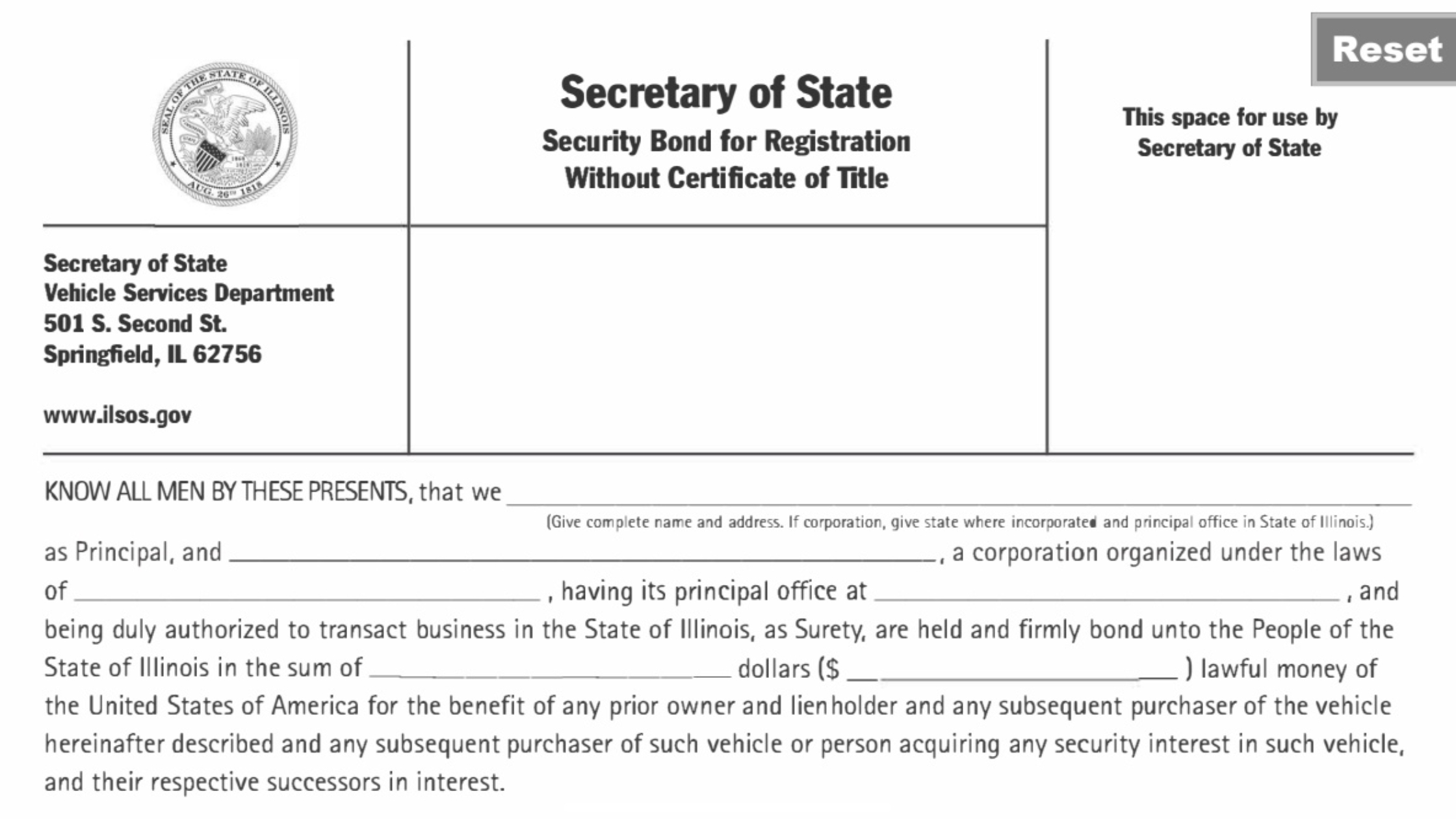
The third step was a properly filled out Illinois Security Bond form and a Power of Attorney form, which I got already filled out in an email from SuretyBonds.com.
From here, the process is no different than trying to register any other car. I filled out the Illinois title application form, filled out the tax form, and then wrote two checks, one for taxes, and the other for title transfer. In this case, the DMV got a check for $165 for the title and the Illinois Department of Revenue got a check for $100. I decided not to pay the extra $151 for license plates just in case this whole thing blew up in my face.
From there, I just packed everything up, pinned them all together, and put them in a folder. I then put a cover letter in the folder explaining why I wanted a bonded title. I explained that I have a physical title, but it’s damaged to the point where no DMV would accept it.
Third Time’s The Time

Then came the waiting game, and I tell you what, there’s so much waiting. I sent the folder off in April. I didn’t hear back until June, when the state said it had accepted everything but my checks and the Surety Bond. Apparently, the bond needed to be stamped by a notary. Oops. Also, at first, I wrote a single check for $265, thinking the Illinois government would be capable of paying itself.
So, I had the bond notarized and then wrote the two checks I mentioned above. I didn’t hear from Illinois again until July, when it said I goofed up by not signing my checks. Alright, so I signed the checks and sent them out again.
Finally, just a week ago, Illinois cashed both checks and then sent me an email confirming that the bonded title process was a success and that the title was going to be shipped. The car is now officially mine.
Honestly, I was shocked it was so easy. Part of the reason I waited so long was because of Internet comments talking about how much of a nightmare the bonded title process is.
I also found a guide online from someone who got a bonded title for a moped. This person talked about having to get a physical appraisal, and also filling out the aforementioned statement of ownership and having it notarized. The guide also talked about having the vehicle inspected by a police officer.
A big part of why this was so easy was because I already had a title that was signed over to me. It was just damaged. I would imagine that if I had no documentation at all or just a bill of sale I probably would have had to jump through the extra hoops.
In the end, all this cost me was $100 more than what it would have cost me had the title not been damaged. That is a whole lot cheaper than doing the Montana trick or paying Dirt Legal $1,300. Illinois says that, despite the bond being on the title for three years, the car can still be sold.
I did all of this to make selling the car easier, but honestly, I might celebrate by actually driving the car. I am also considering writing a 50-state guide on how to fix title issues because I know I am not the only one. Until then, if you have a car with a sketchy title issue, look into your state’s bonded title process. It might be easier than you think!


I went into a Junkyard looking for Parts for a project I was working on. Saw a motorcycle in the bike area, no tank, but the rest was there.
Asked to buy it, owner said they don’t usually do that, but I had a way to haul it, offered him cash, and he said, you won’t be able to title it, its a 76, and in NY that’s a death certificate.
Took it home. Ran the VIN. Found the last previous owner. Got his number, called and asked if he could provide me a title, and I would try to make it worth his while.
He asked how I had his precious bike, after he had let a nephew take it home to work on. I explained that I found it at the wreckers. After some swearing, he said stop over, he’d sign it over to me immediately.
We met, did all that, and that part went well. But his nephew had ZERO right to dump the bike, apparently for beer money of some shit.
I ordered a tank, fixed it up. Registered it easily, and it went on to become the best $100 1976 CB 750 I ever owned.
I love the Illinois DMV. I live in a state that borders Illinois and my dad lived in Illinois. When he died, I got his truck by default, and I found out that he never had the title transferred to his name after he paid it off. AFTER I did all his deferred maintenance so it would pass inspection in bodering-state, I went across the border with un-transferred title in hand and threw myself to the mercy of the DMV. The woman behind the counter said “If he would’ve signed this line here before he died, you could have this transferred to your name”. I was like, “Seriously? What am I gonna do now??”. She looked me dead in the eye, pointed to the line on the title and said in a very deadpan voice, “He would’ve just had to sign this line *RIGHT HERE*.”
I looked at her for confirmation that we were on the same page, and the truck was in my name and the title transferred to my state of residence later that day.
All that hassle just because, “.. seller signed the title on the wrong line.”
What a stupid world we live in.
The lesson guys learn here is that you NEVER buy a car without a clear title, and you verify the papers are filled out properly before driving away.
And you meet with the Seller in person at DMV to process the paperwork.
I bought a car that was registered with the wrong VIN. The original title was hand-written (in 1975 in Arkansas), and somewhere along the line, someone interpreted a scripty “F” as a “Y”. Luckily I had the original title as well as the incorrect title, and a paper trail showing where it happened. I still had to have a police officer inspect the vehicle, run both VINs, and forfeit all of the paperwork to the Secretary of State to get a valid title.
Insurance agents are great sources for surety bonds as well, and they keep as long as you need it. A family member had one for his dealer’s license for over 40 years
“Before I chose a surety website, I first needed to figure out how much my Volkswagen was worth. That’s where things got weird.”
No, it was weird a lot earlier. This is an amazing yarn; thank you for sharing it with us.
I have been through this twice on different cars. The first car I did was a rebuilt title 2008 S63. The previous owner had bought the car, went to flip the title in his home state and had to go through a salvage inspection, even though it was a rebuilt car. He couldn’t figure it out and unloaded it at a massive loss. I initially tried to contact the original selling dealer to get a duplicate title and register it in my name, but they were unwilling to help, even though I was happy to pay. Took 4 months through NJ (NJ does not do bonded titles) but I managed to get one. I sold it to someone who proceeded to get arrested and car impounded within 48 hours of purchase. I only found this out because NYPD reached out to me and told me that the car was in impound and it was still in my name. When I reached out to make sure that I wasn’t on the hook for impound fees, they told me that as long as I had proof of sale I was fine.
The second one was a Ferrari. I ended up going through the bonded title process, and it took less time but cost significantly more money. Well worth it, that car is getting a new lease on life and will be a really bad ass car when the new owner is done with it.
It can be a maze and a mountain of paperwork but in my experience there have always been helpful people and/or a clear guide to get it done.
“I am also considering writing a 50-state guide on how to fix title issues because I know I am not the only one.”
Surely such a good deed would go a long way towards storing up some treasures for you in car-guy heaven. I hear that’s a second line that St. Peter sends you through after you pass through the Pearly Gates. It’s manned by St. Carroll Shelby. Write such a book, and you’ll breeze through, no problem.
I m half worn out reading this. Cant imagine actually going thru it. Congrats Mercedes Bestwriter.
I’ve been to hell, I spell it
I spell it DMV
Anyone who’s been there
Knows precisely what I mean
I stood in line and waited
And choked back the urge to scream
And if I had my druthers
I’d screw a chimpanzee
Call it pointless…
https://youtu.be/5M_jh4CA8a8?si=G18N1xhbSsqBefWb
Fantastic that it only wound up costing $100., but the research, time, and effort you spent is probably more than I could manage. Ah, the enthusiasm of youth! 😉 Being a (former) VW TDI guy myself, I understand the attraction. 🙂
I’ve looked into getting a title for a motorcycle in Wisconsin and it can be done, but is pretty costly. It involves a bond-like thing (I forgot what the dmv called it but it was basically the same thing), a waiting period, an inspection by an officer (that you pay for), and a written explanation (that you pay to submit). All in the gal at the dmv told me it’d be a few hundred dollars.
I paid $250 for the bike. It’s a Honda CT70 knockoff. 72cc, 40mph is the end of the world. I got all the lights working, have a mirror, it’s totally legal except for the fact that the government doesn’t know it exists. So I just slap a plate from one of my other bikes on. I figure it doesn’t have enough power to get into trouble anyway. I actually did have a cop on a bicycle talk to me at a stoplight and he just said what a great little bike it was!
Vagaries of the baroque bureaucracy taken into account, a system that seems in almost any state or commonwealth to be intentionally inimical to performing its actual function in a fashion that aids the citizenry with any modicum of common sense, it is WILD to me that your “appraisal” was accepted – a printout of whatever shit you could have typed into two highly-commercialized websites. Not that I’m saying you did anything dishonest; never would I suggest such a thing. But you could have, so easily, while the rest of the process is so robustly procedurally defended against any sort of possible n’er-do-wellism such that it’s so difficult for an honest person to complete.
here’s an another example of “byzantine bureaucracy”: i found an error in massachusetts RMV regulations.
issued in 2012 and un-enforceable due to the error.
the MA RMV is such an extreme transaction-centric organization, they could not figure out what to do with my request for them to correct the regulation…it wasn’t a transaction like a title, registration or license.
MA secretary of state had no ideas how to fix.
my representative to the general court even more clueless.
finally got a hold of trial court law librarians who confirmed the error, agreed with my theory how it arose and gave me contact information to RMV’s legal counsel who agreed with everything but 6 months later the un-enforcable regulation is still in effect.
Our process here in NJ is horrifyingly expensive and complex. At one point you have to run a newspaper ad.
Ohh I need to look into getting a bonded title for my moped that was given to me but the title mysteriously disappeared in the move…
As a foreigner the main takeaway I got from this is apparently checks/cheques are still commonly used in the States.
As also a foreigner the main takeaway I got is that the UK’s obstructive and officious DVLA is actually efficient and simple to use. Lost/missing/soiled/never had a V5? Just fill out a form online, pay online, new V5 turns up in the post.
All this stuff with notaries (whatever they are) and insurance and weird companies to act as intermediaries all seems wildly inefficient for administering what should just be a simple government database of which cars are registered to which person.
Notaries are a person that shows up for money with a special stamp for when important documents are signed, like an official witness who confirms the signatures are valid. Mostly need them when buying a house and not a car. They do not wear funny hats.
I used to be a notary years ago but let it lapse. Now if they required funny hats, I might be tempted to renew.
In the UK just having a normal person co-sign something is proof the signature is genuine.
As a “suitable person” I can co-sign ID photos as genuine in the UK.
That could mean a local business person, librarian, professionally qualified person (for example a lawyer, teacher or engineer), police officer, bank or building society staff member, civil servant, minister of religion, magistrate, local councillor, Member of Parliament,
I’m a chartered engineer, my friends use me to get passports for their kids.
Several of my friends have PhDs, and apparently that’s good enough. I suspect most of the time you could get away with an entirely fictitious person.
Marriage licenses and passports just need a random person’s signature as a witness. Notories are needed for property issues, usually where the bank’s money is involved, like mortgage documents and property deeds. In addition to affirming that the collateral for the loan is real, they are confirming that the signer is not being coerced.
A friend of mine had to renew a UK passport while they were physically in the US. Missus is a New York State licensed teacher and her co-signing worked just fine. Foreign-based licensures were accepted.
I’m still getting used to terms like “building society” and “public school.” English English is funny.
That’s what vehicle titles are for in the US. They have a master database of the VIN kept by the state, and send the new owner a title once the previous owner signs over their copy of the title to the new owner.
Mercedes’ problem was she never turned in the title to register it in her name, and the title became damaged and invalid. Thus she wasn’t the registered owner, and her proof of ownership was invalid. Reading about the V5, it seems a UK owner would have a similar problem.
As a side note, if you, as the registered owner lose you title, you are able to quickly get a replacement one if needed, or you can go to the DMV in my state and sign over the vehicle in person to a purchaser.
If in the UK you were in Mercedes’ situation of not having a V5/title with a car you’ve bought you just fill in a V62 form and they send you a V5 for free or £25, depending on whether you got part of the old V5 or not.
I’ve done this after buying a car from a dealer who didn’t send off the paperwork.
How do you prove you purchased the car?
You don’t. They tell the previous owner that you’re claiming it, and if they don’t object you become the next registered keeper.
Registered keeper isn’t the same as the owner. If there’s a dispute over ownership the police/courts deal with it. But the registered keeper gets all the speeding fines and has to tax and insure the car, so all of the admin of ownership. The state doesn’t care who actually owns a car, only who is responsible for it.
Something you need to understand, Captain Muppet, is that inefficiency of the bureaucracy in the US is a feature, not a bug.
Every little greasy grifter goblin of a middle man wants his piece of the pie, and it’s set up for as many ‘connected’ people as possible to make as much money as possible by making what should be a simple piece of paperwork an absolute clusterfuck to make it extremely expensive for the people who are committed to doing it.
There’s so many weird little secondary ‘niche’ industries that ONLY exist in America because of how fucking hyper-capitalistic ‘MONETIZE EVERY SINGLE FUCKING THING’ mentality we have here. It’s exhausting.
They actually just stopped letting the old ladies at my grocery store use checks within the last year. This is the only place I have ever seen checks used in public in the last 20 years, and that is only because they installed machines to read the checks 30 years ago. They feed it through the top of the cash register and it makes a weird noise. The entire process took forever, especially the elderly woman with the pen thing.
To be fair, the Ohio BMV does accept credit cards, but they charge a fee for it. I can’t speak to other states.
It’s not the DMV, but in Texas, you have to go to the local county assessor’s office to retitle a vehicle. They also charge a fee for using credit/debit cards, but will accept checks.
Love the guide idea, can you also do a salvage title guide (copart sponsorship?) . Years ago I was tempted to get one one but it seemed like too much of a hassle.
I had 1 car w/ a salvage title; no problems at all, even w/ getting insurance. It was in TX so there may be more problems in other states. As far as the car, I had no problems w/ it…looked it over when I bought it. It also depends on the car when you buy it: Look for signs of flood damage, etc
Glad you got it worked out! Good to know the process wasn’t nearly as bad as we thought it would be.
Yes you have a title that you can use to sell the vehicle, but that isn’t necessarily mean that the sale will be easy. A lot of people will be scared away since literally the car can be taken away by the previous own until the time has lapsed. My friend ended up with a bonded title for a car he had and when he decided it was time to sell he had a hard time finding any takers for anywhere near what it would be worth with a truly clean title. He ended up riding out the time before he attempted to sell it again and was then able to get it sold at a reasonable price in a reasonable amount of time.
Now back in the day Alabama had the no titles on cars older than XX years thing and there was a company that would get the car licensed in Alabama and send you the plates and paperwork so you could transfer it in any state. Now this was back in the late 80’s and I think all in was under $150 including getting a bill of sale selling the car to the company notarized and getting a set of Alabama plates that interestingly only had ~1 month left and a bill of sale from that company to me accompanied by a letter stating that Alabama was a no title state.
All told I think it took 3-4 weeks from the time I bought the car, getting things mailed back and forth, getting an appt with the state patrol for an out of state VIN check and heading down to my local independent licensing agent. Of course I then had to pay the tax, title and registration for my state.
I think I still have those Alabama plate(s)? Somewhere in the garage of the house my daughter lives in?
In this case it was a Canadian car that was in our state, but had not gone through the importation process which was going to be much more expensive and difficult that the Alabama loop hole.
In my state, the party making the claim for the car gets the value of the bond, not the car.
I got a bonded title for Jason’s old xB here in Michigan, if you need an anecdote for your guide. It couldn’t have been easier. Glad your experience was similar!
Question: Why just not meet the seller at the DMV and do the sale there?
It’s pretty much been my SOP to transfer vehicles at the DMV so that if there’s anything funky with the paperwork, it gets sorted there. The only exception might be if I bought it at a dealer.
I get that we wouldn’t have an article if this had been the case, but when I’m at the point of thousands of dollars changing hands with associated regulatory paperwork, it seems like a basic precaution.
In the article, she states that her contact info for the seller was long gone. I’m guessing she has the name and address on the ruined title, but if they’ve moved and it’s a relatively common name, good luck finding them.
Also, she mentioned it was a Wisconsin title, so all this would probably have to be done over a considerable distance.
Edit: re-reading your comment, you must mean doing the title transfer at the time of the sale. My bad.
I pretty much only buy cars on the weekend when the DMV is not open. Not exactly by choice, but because doing a trip to Milwaukee would require me to take at least a half day off from work and for the seller to also be free at the same time. My wife also needs to be free so she can drive me.
If it’s even further out, like southern Illinois, southern Indiana, Michigan, Missouri, or further, I’d have to take the whole day off.
But ideally, yes, these transactions should be done at the DMV when possible.
In Pennsylvania there are privately owned “auto tags” businesses that can do transfers, so that you walk out with a cleanly transferred car and sparkling new license plates. And they’re open on Saturday.
From reading here it seems like other states are way more complicated.
It’s the same here in Oklahoma. We have “Tag Agencies,” who do various vehicle-title and driver’s license duties on behalf of the state.
We have those in NC, but in significantly less numbers than in PA (I’ve bought a couple of vehicle there.) There is like 1-2 per county in most counties, and they are only open 9-5, M-F. Where I went in PA, you couldn’t swing a dead cat without hitting a vehicle title place.
Oh, we have those in Illinois, too! That’s the “Currency Exchange” thing I noted above. But they’re a sort of last resort thing because the fees the shops charge are frankly ridiculous. One of my friends in Chicago paid $800 to register a $500 car because of all the fees.
It’s so easy here in PA. It’s easy to forget how good we have it.
The title of your book should just be Title.
Slow clap.
Something similar happened to my father and I in the 80s when we were buying a junker Grand Prix convertible. The guy signed it in the wrong place. We signed his name in the right place. So, forgery. I guess that wouldn’t work these days.
I had a similar issue, I signed the seller’s name on the form the DMV told me to get him to sign to correct the issue. It’s only forgery if you’re misrepresenting them.
They told me to have the seller sign the form in front of a notary, so I wonder if the DMV is onto that trick now. lol
Interesting. Maybe. This was only a couple years ago. Or maybe this is one of those DMV to DMV variances?
I was once gifted a car (that had been my grandma’s Cadillac) from my parents. But my mom hadn’t signed the title, just my dad. I told the clerk I’d come back another time then. He slid the title back and said, “Why don’t you take to her outside and have her sign it.” I was about to say, “Because she isn’t outside,” when I picked up what he was putting down and said, “Oh, great idea.”
Anyways, I’m glad you were able to get it titled. I’ll keep this in my bag of tricks for future shitbox dealings if necessary.
Did that myself but without provocation. Missed my wife needing to sign on one form and DMV agent pointed it out. I replied “oh, give me five minutes I’ll be right back.” Agent told me to skip the line on the way back and just come directly to her window.
Now, I would do the same. It just took a gentle nudging by a friendly DMV employee.
How hard would it be for the DMV to check with the former owner? They know who it is. We got a letter from the state in the mail a couple months ago saying our car had been impounded… a car we had sold 18 months prior. Send a letter to the former owner, if they don’t hear anything back, refund the bond and move on.
Impossibly hard, because it requires doing something.
I had to visit the DMV 3 times to register an out-of-state car from a state that doesn’t issue titles. I thought I was going to strangle the DMV employee who “helped” me. Never have I seen such willful incompetence and lack of sympathy/energy/willingness to help me solve my issue.
The second time I came I WAS ASSIGNED THE SAME EMPLOYEE.
The third time was easy. The lady was nice and actually interested in getting me plates and a title so I could drive my farking car.
But that one dude? Screw him with David’s first Jeep’s front axle (in its current condition).
The DMV refuses to do anything it is all on you. That is why DMV stands for Dying Made Victorious
You’d think it would be easy! The DMV has a title, it’s just a little ruined, but still legible.
My wife recently had the same problem as you. She sold her E39, and months later, she gets an angry-worded letter from a police department near Chicago. The jerk who bought the car never registered it and used it to commit a hit and run while driving on a revoked license.
Do the plates go with the car? In NY the plates stay with the owner. When I sold my old car, the old plates were turned into the DMV ASAP to make it clear to the state that I no longer owned the car. The other option is transferring the plates to a different car. That’s usually done to save on plate fees. It also leads to the situation of new cars with janky ancient plates on them.
That’s why – at least in California – you file a release of liability form when you sell your car.
Visited over a half dozen DMVs just to fail at registration of a $3,000 car? Sorry I’d rather visit a half dozen DMZs than DMVs. You either have the patience of a saint or you a sadomasochist. Just saying.
porque no los dos
We did get an informative article out of this headache. (Incompetent people and exes can really screw up a person’s life.)
Patience, persistence and curiosity pay off, and this is a personal triumph. Hopefully none of us will ever have to go through this nightmare.
Now I am wondering about getting a bond instead of liability insurance. Is that a not-so-well-known secret way to save loads of money, or would it be an even bigger headache than dealing with insurance companies?
Wild stuff. It seems really dumb there isn’t an easier way for cars like that based on age and value. You could even put a waiting period in place so that a former owner has a chance to object.
I can see having stricter rules for a brand new BMW when someone claims the title was mysteriously abducted by aliens. But a minor error in the title signature on a well worn low value vehicle shouldn’t be so critical.
When I was dealing with an estate matter involving the distribution of hundreds of thousands of dollars, the rules weren’t so strict. There were minor discrepancies in names on documents but they were relatively easily sorted out.
Frankly a legal search for theft and a certified letter to the last registered owner should be enough. If some owners failed to register ownership they should lose the right to claim ownership. Might get them doing something right.
Yep, I’ve often thought that there should be exemptions from NC’s hardline approach to titles (notary requirements and being hardasses about the signatures being your complete legal name.) Like if the car is over 10 years old and worth under 5k the notary requirement is waived. If the car hasn’t been registered on the road for a certain period of time (let’s say 5 years) and is worth less than a certain amount (again let’s say 5k) then a bill of sale and a clear theft report gets you a new title in your name. Lastly, there should be a time limit on liens, lets say 10 years. I’m all for protecting lienholders, but you haven’t exercised your right to repossess the vehicle within 10 years of the initial loan, then you have forfeited your lien.