


Rolls-Royce has been the acknowledged highest standard of automotive excellence – ugh, I hate the word excellence, but whatever – for over a century. Most of us mere, sweaty mortals will never get to appreciate the undoubtedly intoxicating highs of Rolls-Royce ownership, but thanks to the magic of old brochures, we can at least get some sort of pale sense of what it must be like. And this brochure, from 1966, is full of little details and surprising hints as to what Rolls-Royce ownership was all about.
Back in 1966, the idea of a “personal” Rolls-Royce – that is, one driven by the owner – was still somewhat novel. Even more novel was the idea of a unibody Rolls-Royce, the Silver Shadow, which first appeared one year before this brochure and as such was still very much a new idea.


The stuff that caught my attention most in this brochure seem to be mostly some little details and the particular and quite peculiar (to me at least) way of phrasing features and specifications, as well as the selection of what is focused on. It’s just all a little weird, at least for me, someone who doesn’t have $200-$400,000 (converted from 1966 dollars) to spend on a car.
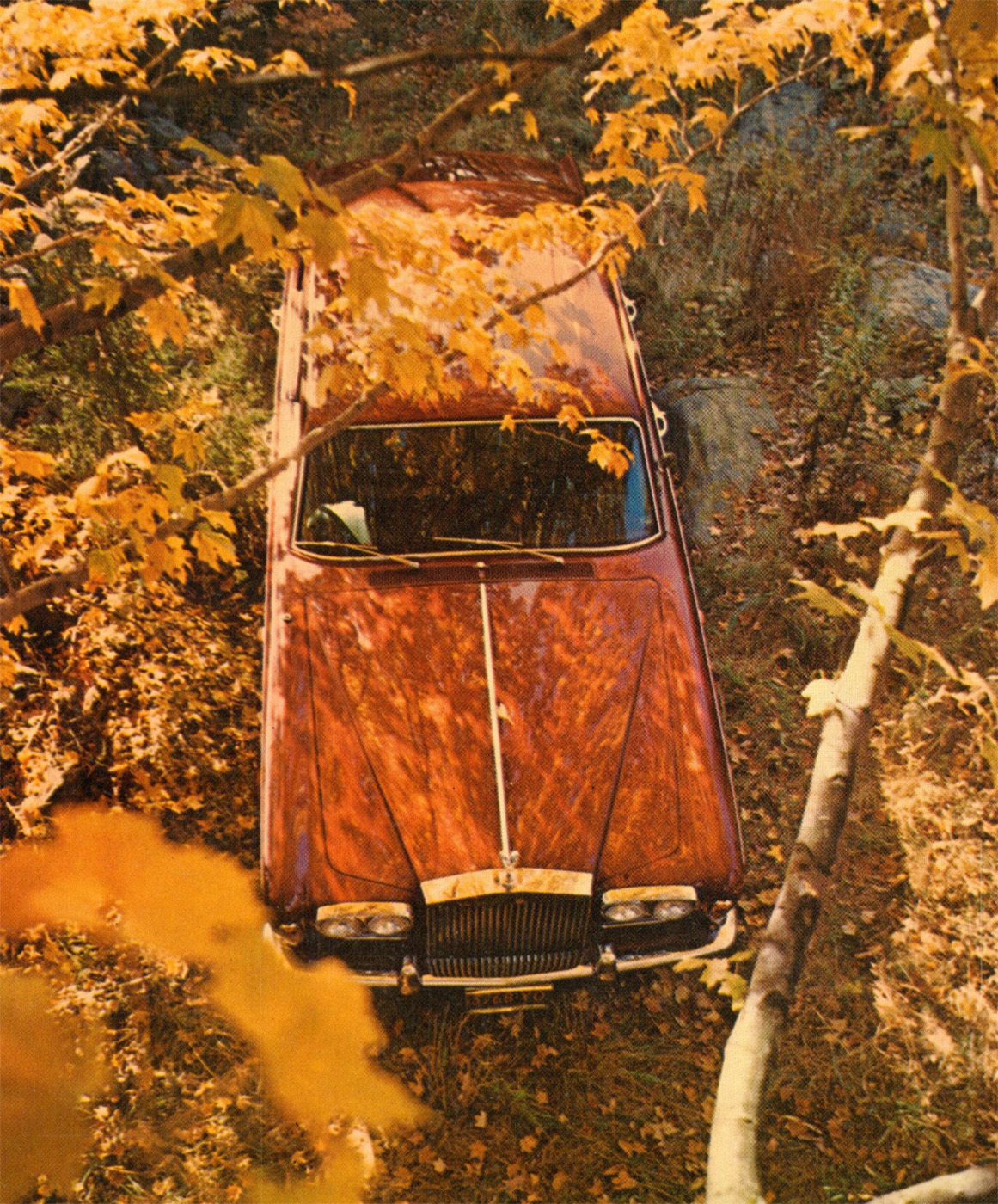
Hot damn, that picture is autumnal! I guess I should have warned you about the intensity of autumnalness that I’d be showing you; I hope no one was too blindsided by all the autumnality.

Okay, here’s some of what I’m talking about: the notion of opera hats, for example. Those are those top hats that pop out into shape and then collapse into a flat disc that looks like a phonograph record, sorta. I suppose I assumed those were largely extinct by the mid-1960s, but clearly not, if Rolls was putting opera hat pockets in cars.
And then, in this description/justification of a vinyl roof we have one of the strangest euphemisms for what I think must be referring to pollution? “Municipal fallout?” Was this ever a phrase that people used? The only references for the term I’ve found online use “municipal fallout” as a financial term, something to do with bond markets, which I’m not so sure vinyl is resistant to.
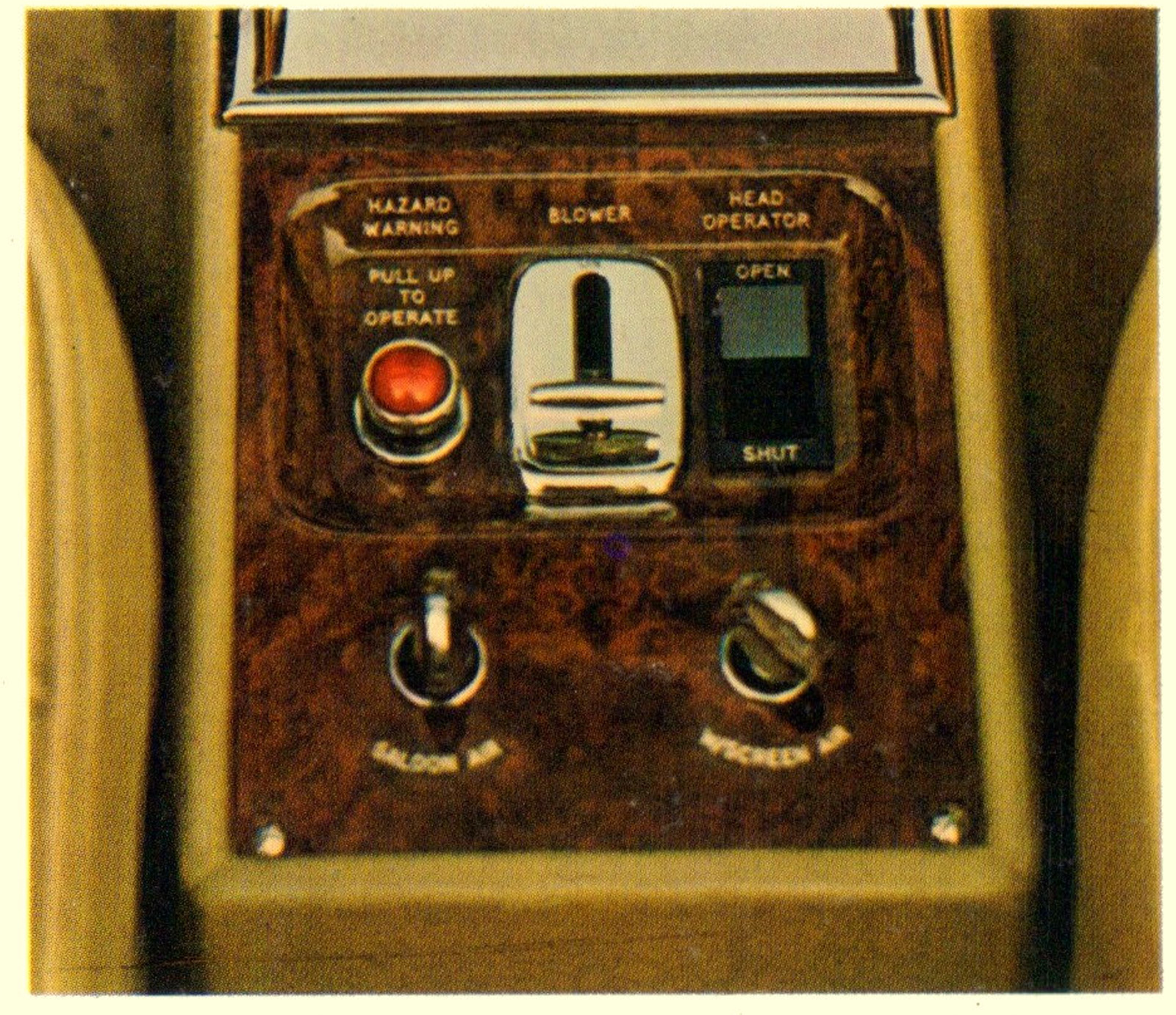
Rolls-Royces of this era had some charmingly clunky and verbose controls. Like the hazard lights switch – where we have just that little warning symbol now or perhaps the word HAZARD on most cars, here we have HAZARD WARNING / PULL UP TO OPERATE. And I also love the control for the convertible top, which is labeled HEAD OPERATOR.
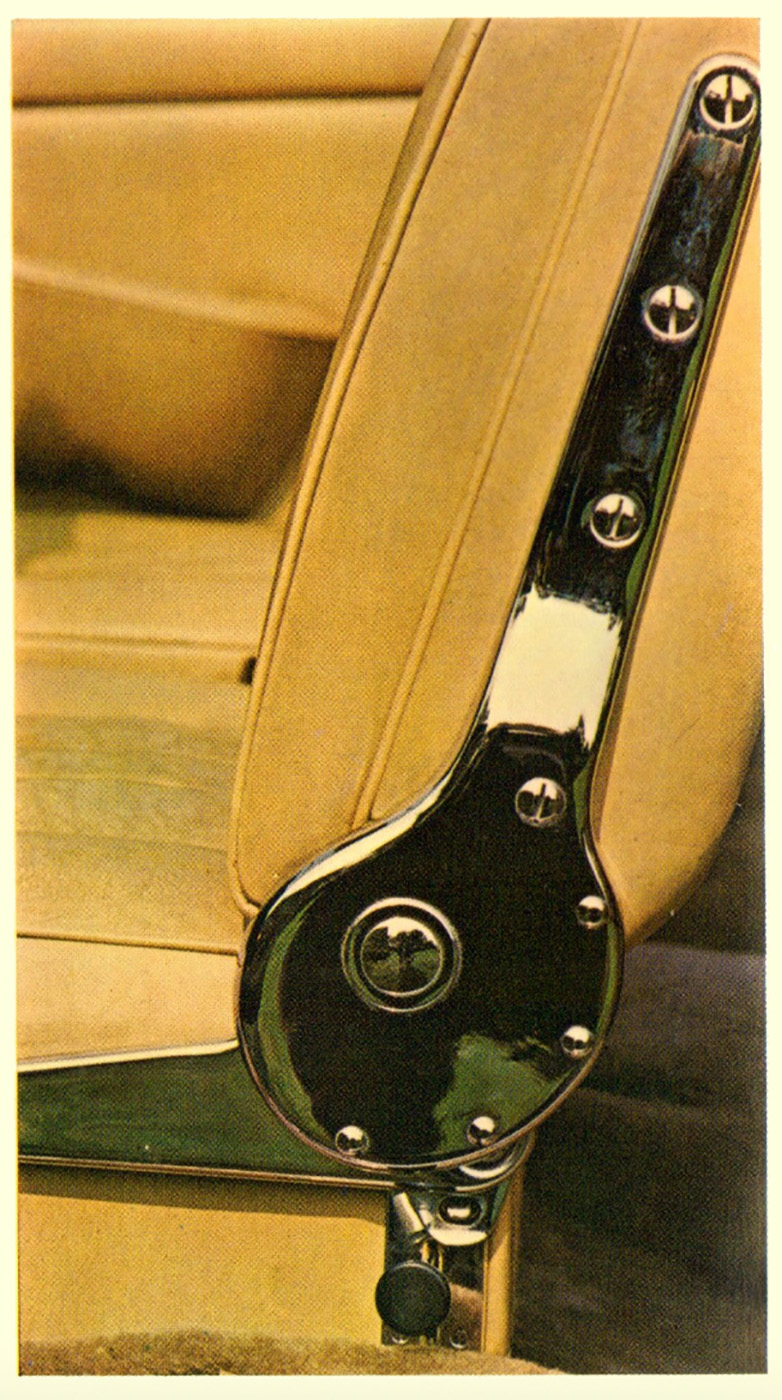
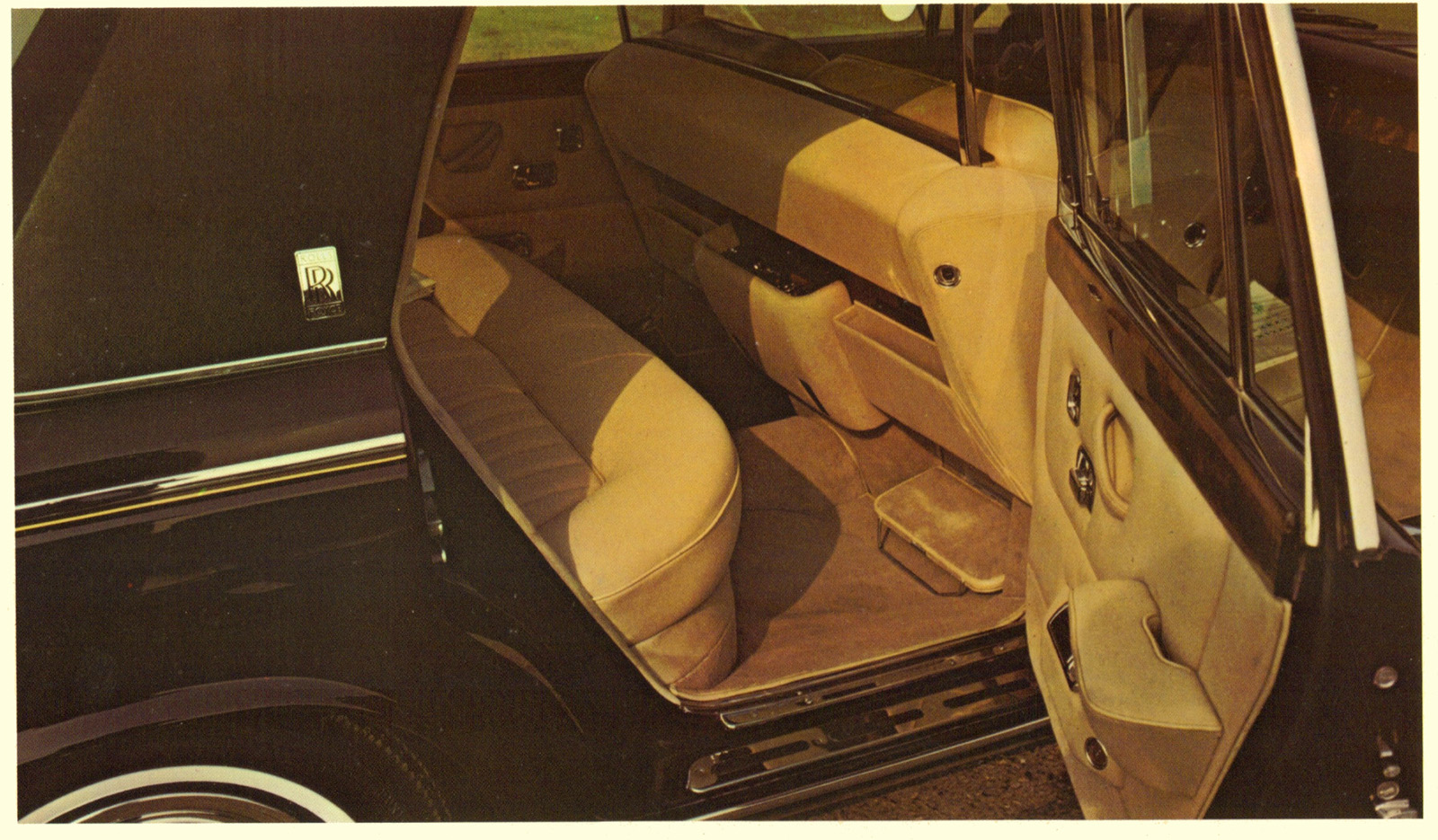
One thing I really like seeing, and something that has been on my mind for a long time, is that there is no shame of fasteners in this car. Luxury cars from recent decades have gone out of their way to obsessively hide fasteners like screw heads, and yet here those screw heads are all shown, proudly, unashamedly. You can see them here, polished and gleaming, on the backrest of the seat, and also in the picture above on the center console. Why hide such fine fasteners like these?
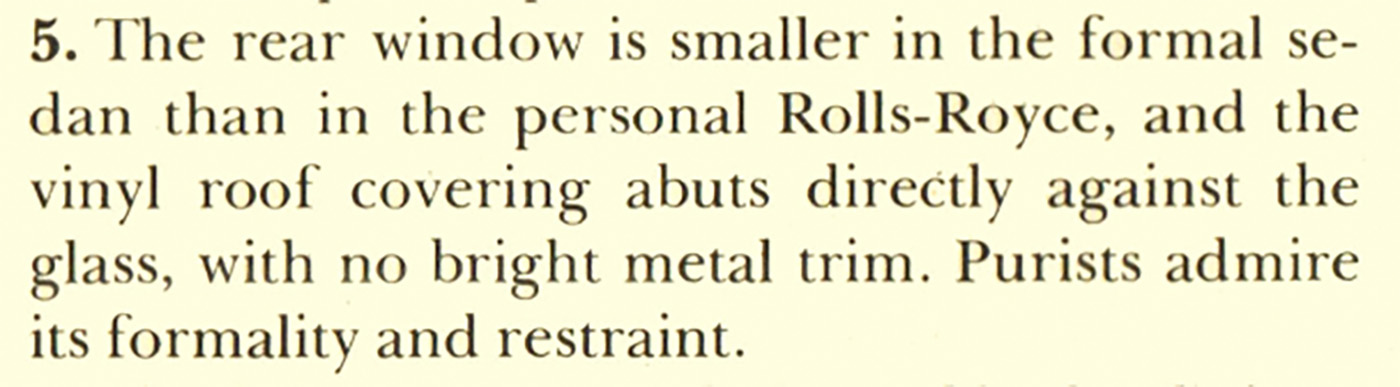
There’s multiple references to purists in this brochure; earlier they were protesting the use of vinyl instead of leather for the roof covering, and now they’re all giddy about the formality and restraint of having no rear window trim. Pick a lane, purists.
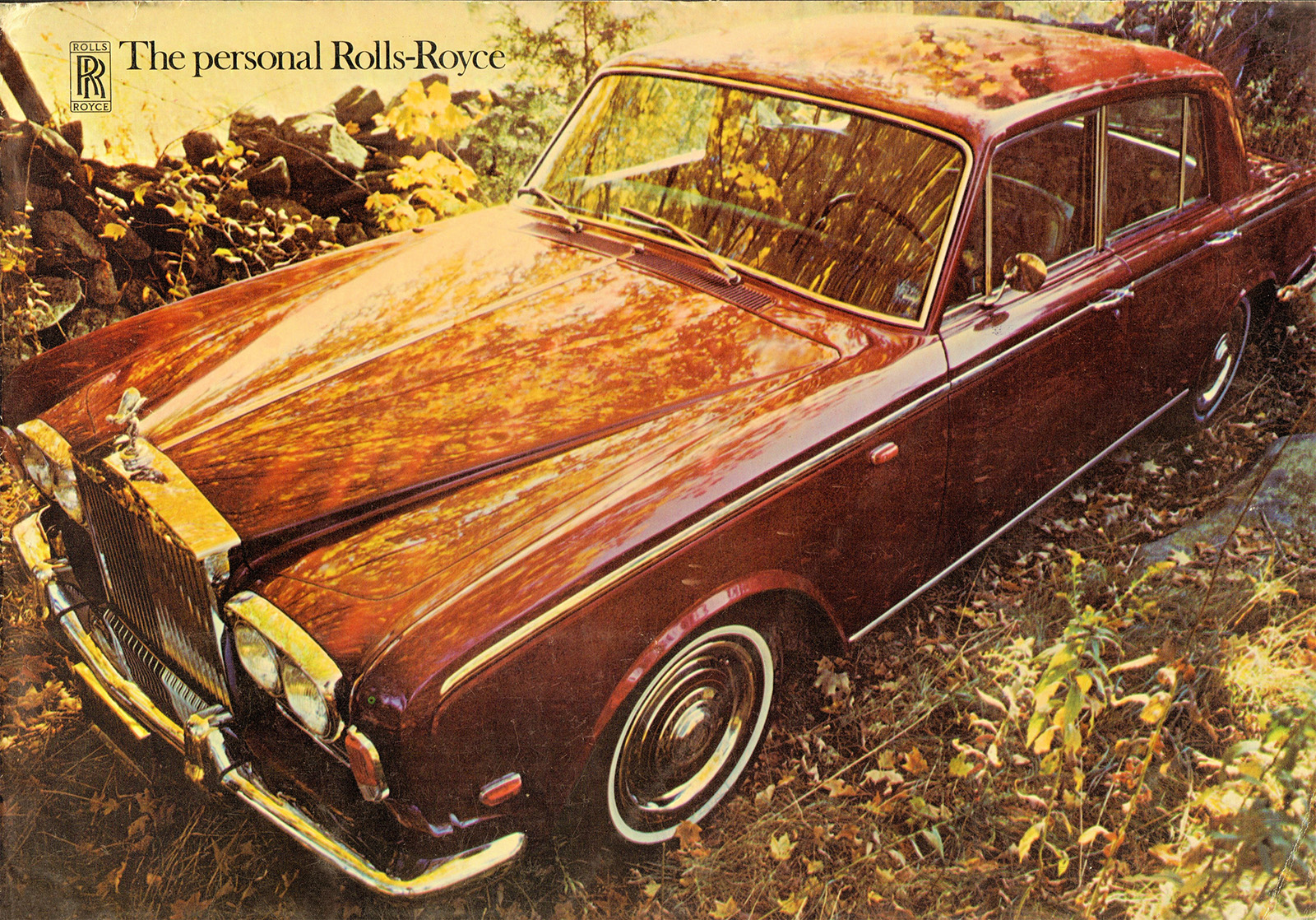
Who is parking their big, caramel-colored Rollers in the forest?
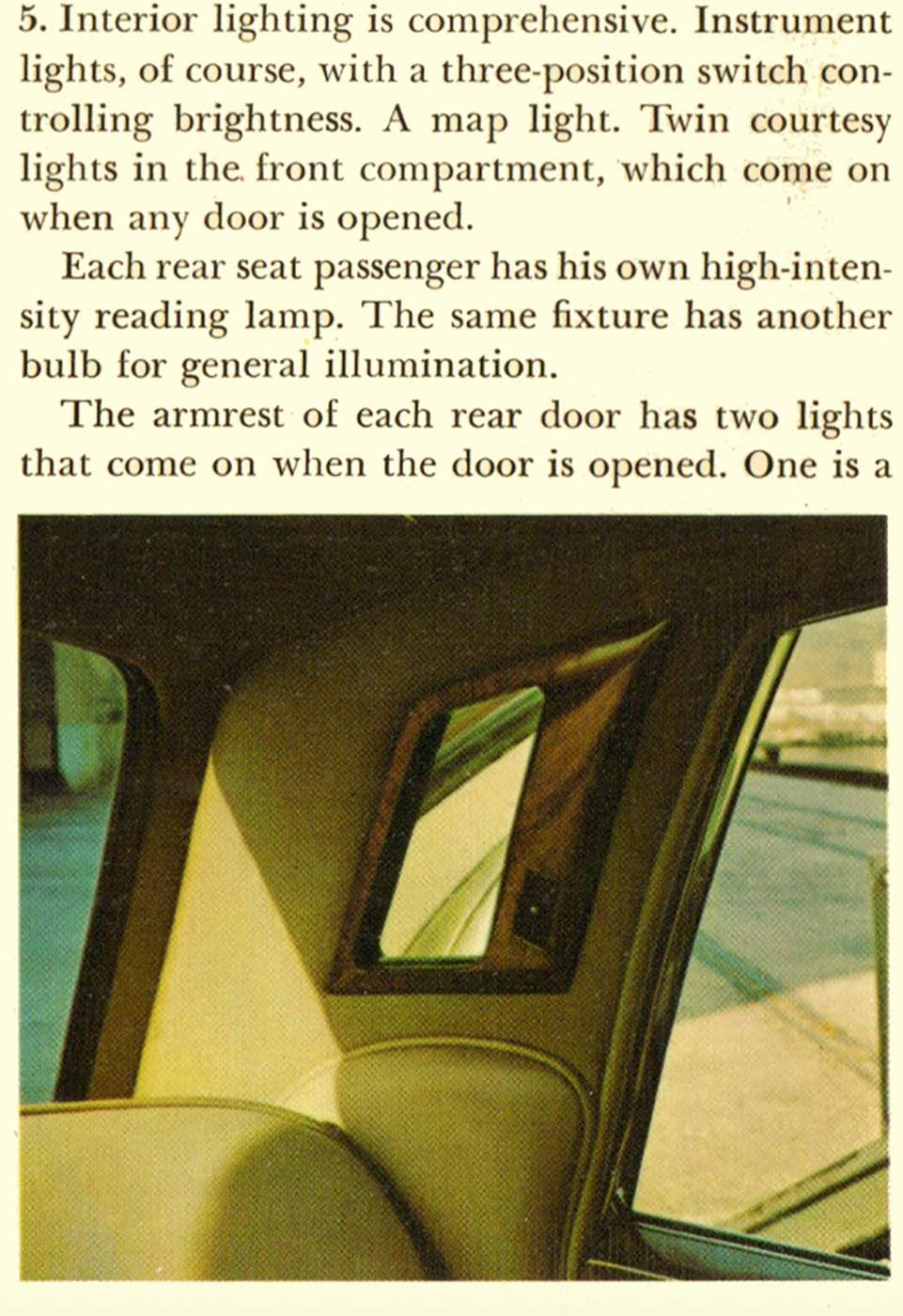
So, here’s something kind of weird: sure, you get vanity mirrors in the back seat and all kinds of courtesy lights, but the instrument light brightness is controlled by a three-position switch? All you get is low, medium, and high? Even my old Beetle has an infinitely-variable potentiometer for instrument brightness! Cheap bastards.
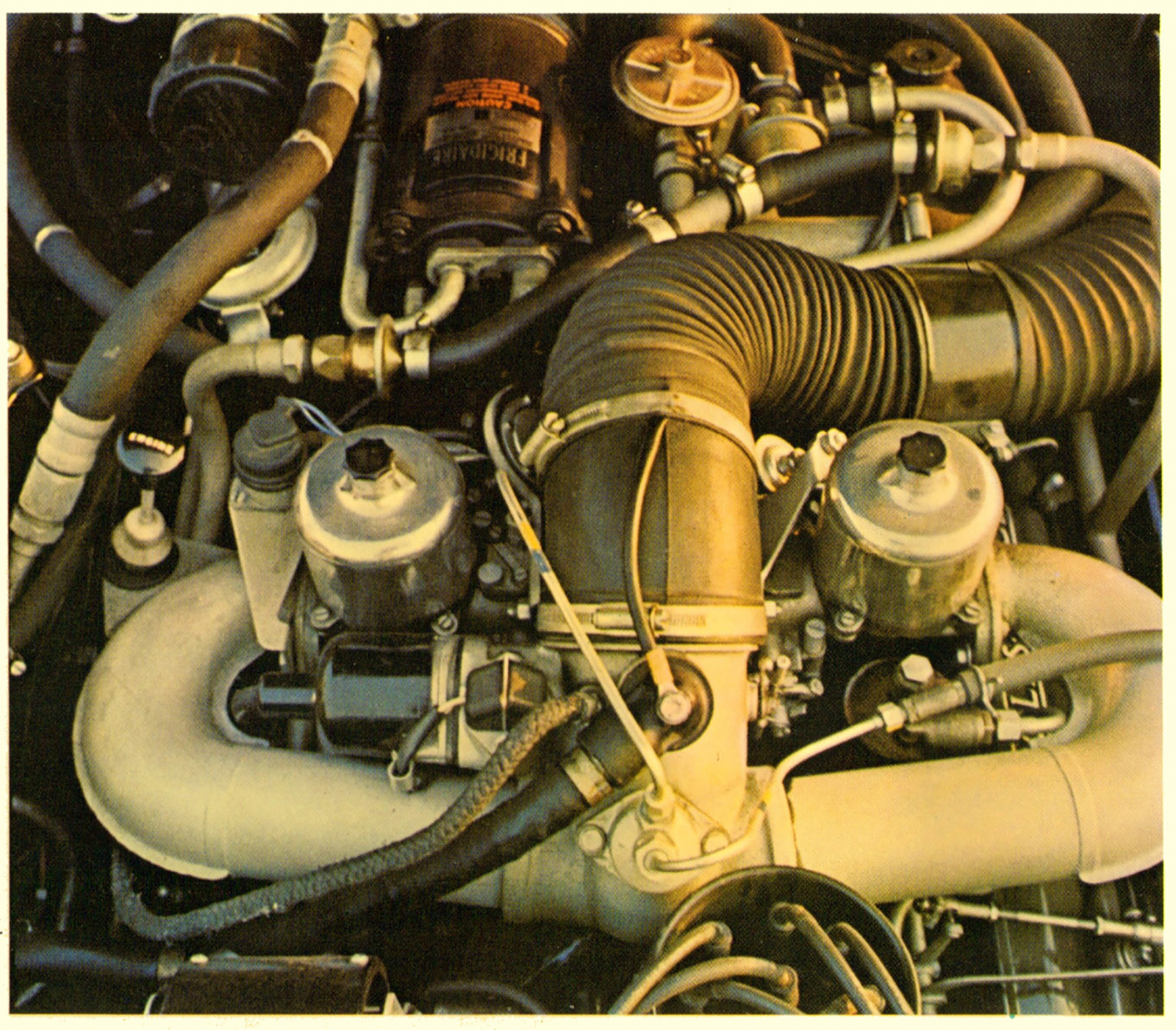
Look at that lovely pair of SU carbs! In fact, that whole intake manifold is pretty cool looking.
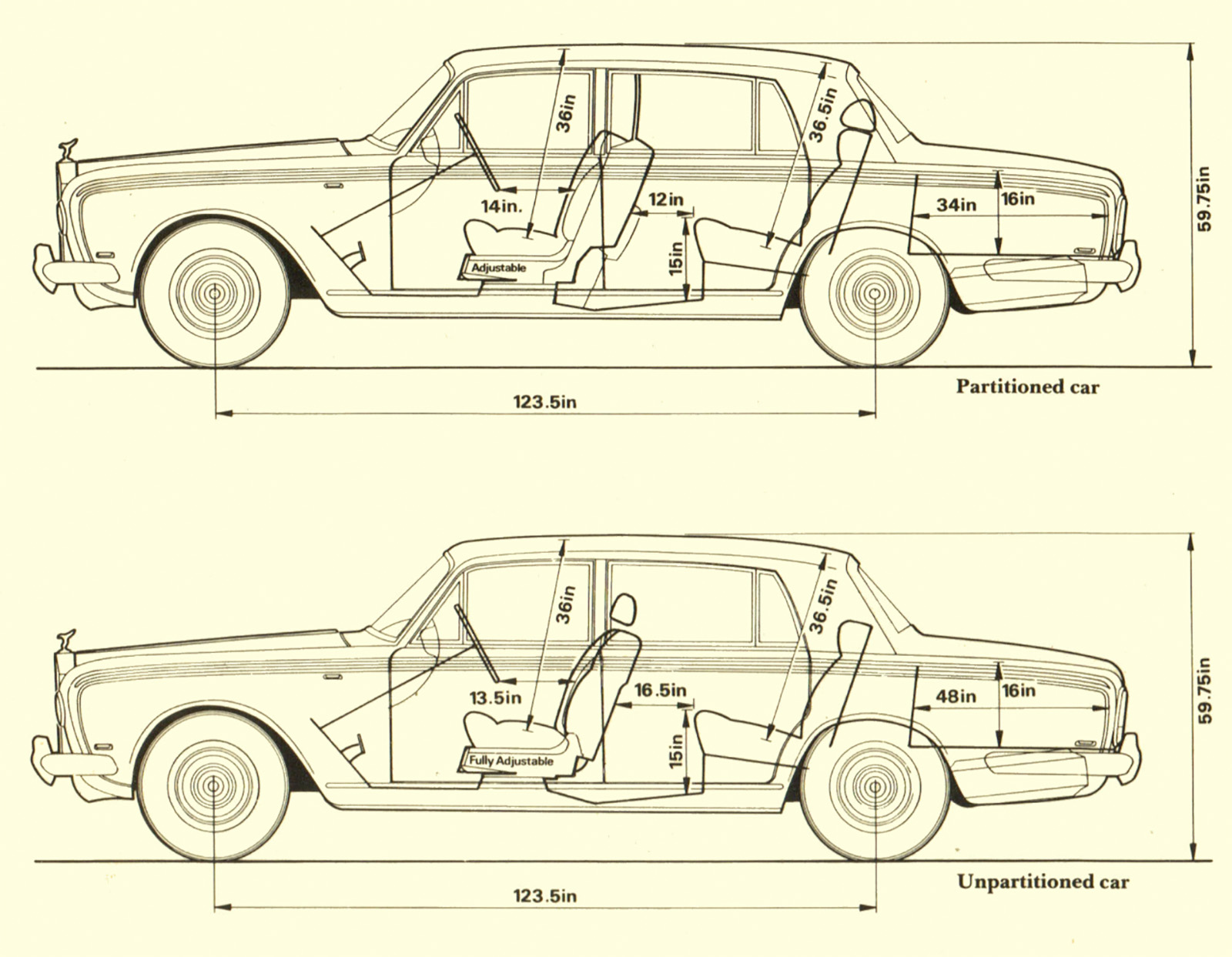
Have you ever seen the layout differences in a partitioned vs. non-partitioned car? I can’t recall if the partitioned, say, Nissan Versa is set up like this or not. And why is the trunk smaller in the partitioned car?
That’s what the partition setup looks like, if you’re curious.
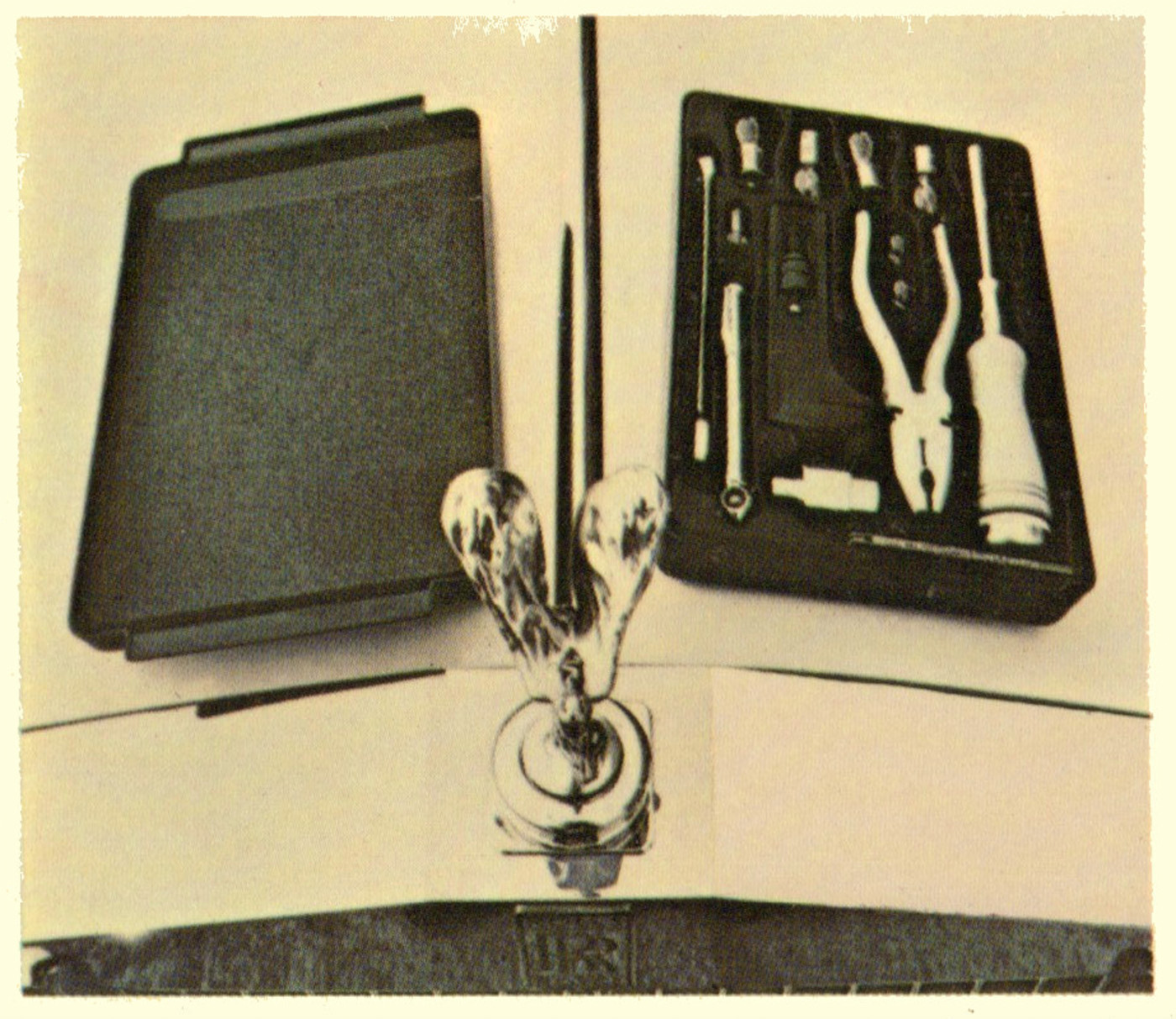
They came with tool kits! It’s hard to imagine a Rolls owner replacing their own bulbs, but four spares are included.
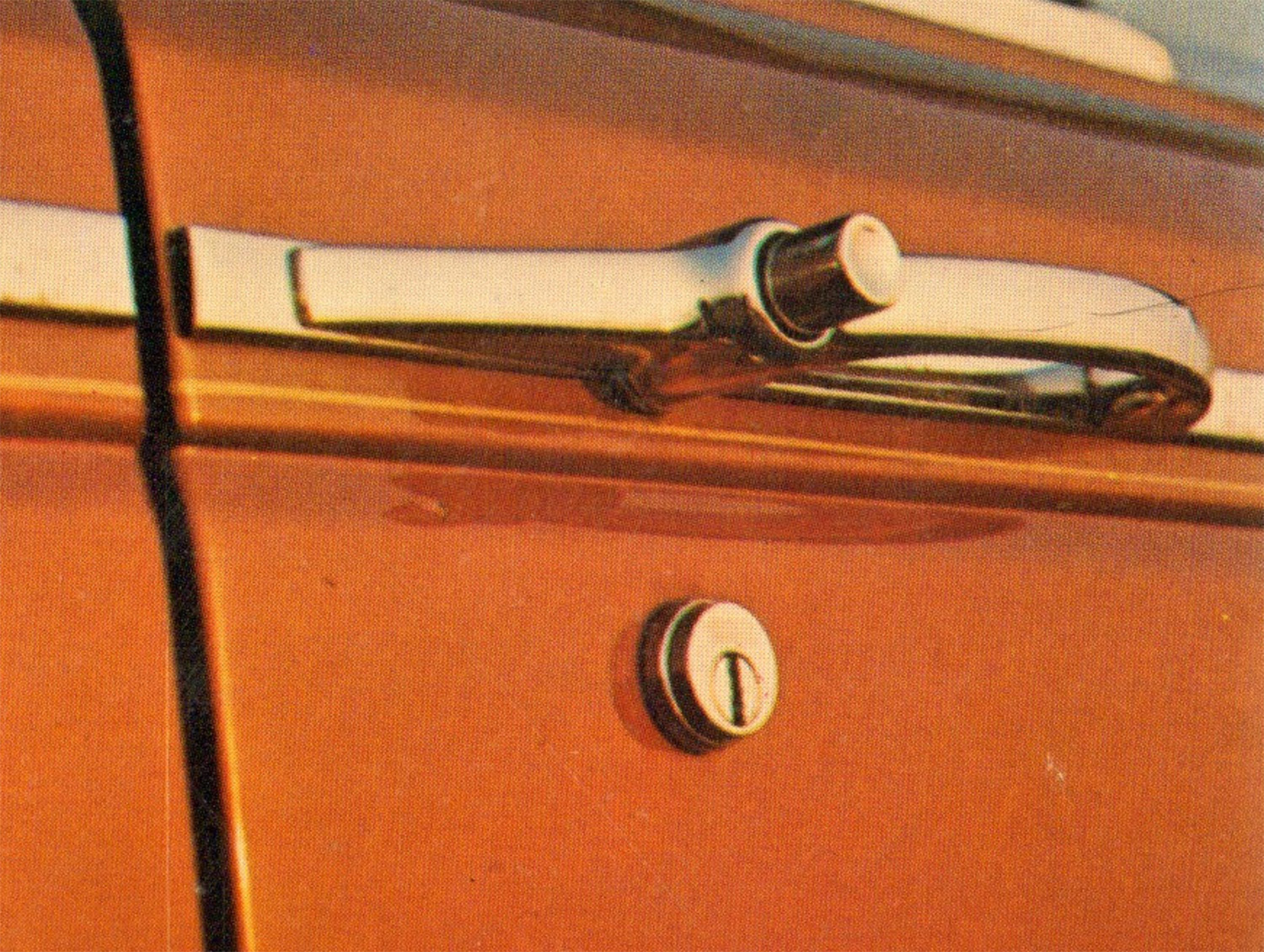
The door handles are lovely on these. They maybe should get more attention than this attention-hungry wad of chrome:

Look at all those flares and glints and starbursts! It’s like an Olan Mills school portrait.
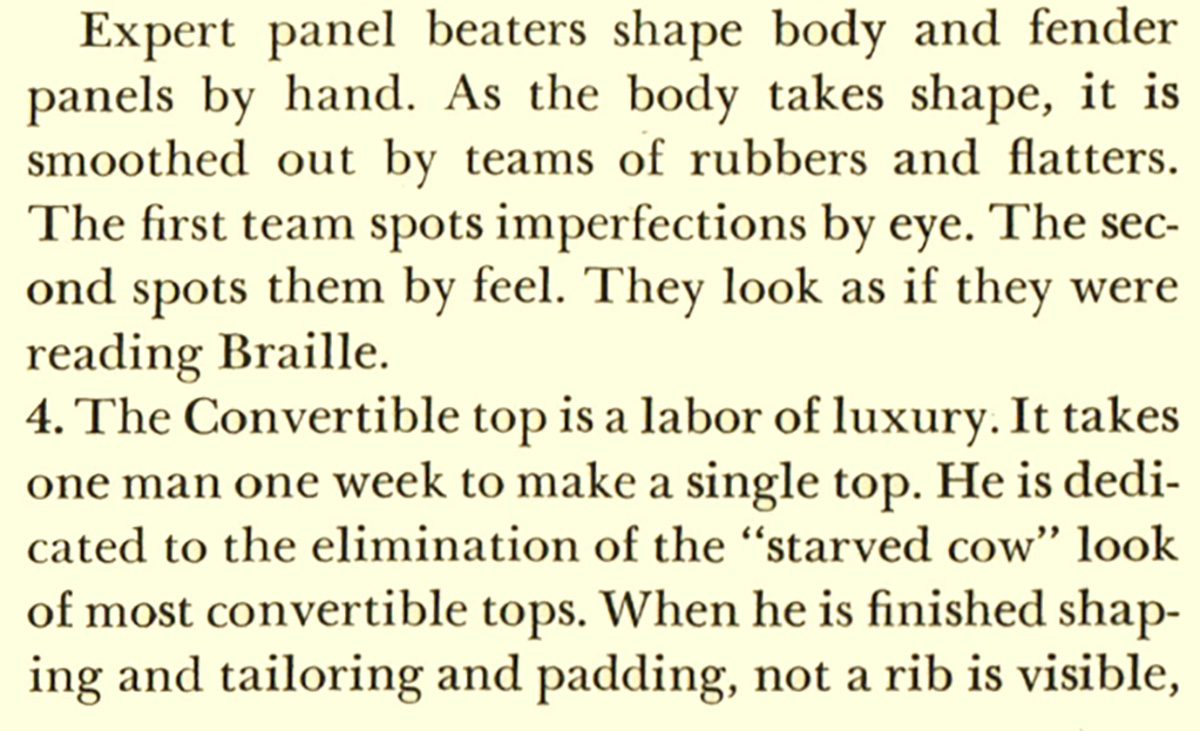
There’s some great new terms to learn here, like the “rubbers” and “flatters” working in the body shop. And I wonder if “starved cow” was common analogy in the British convertible top subculture?
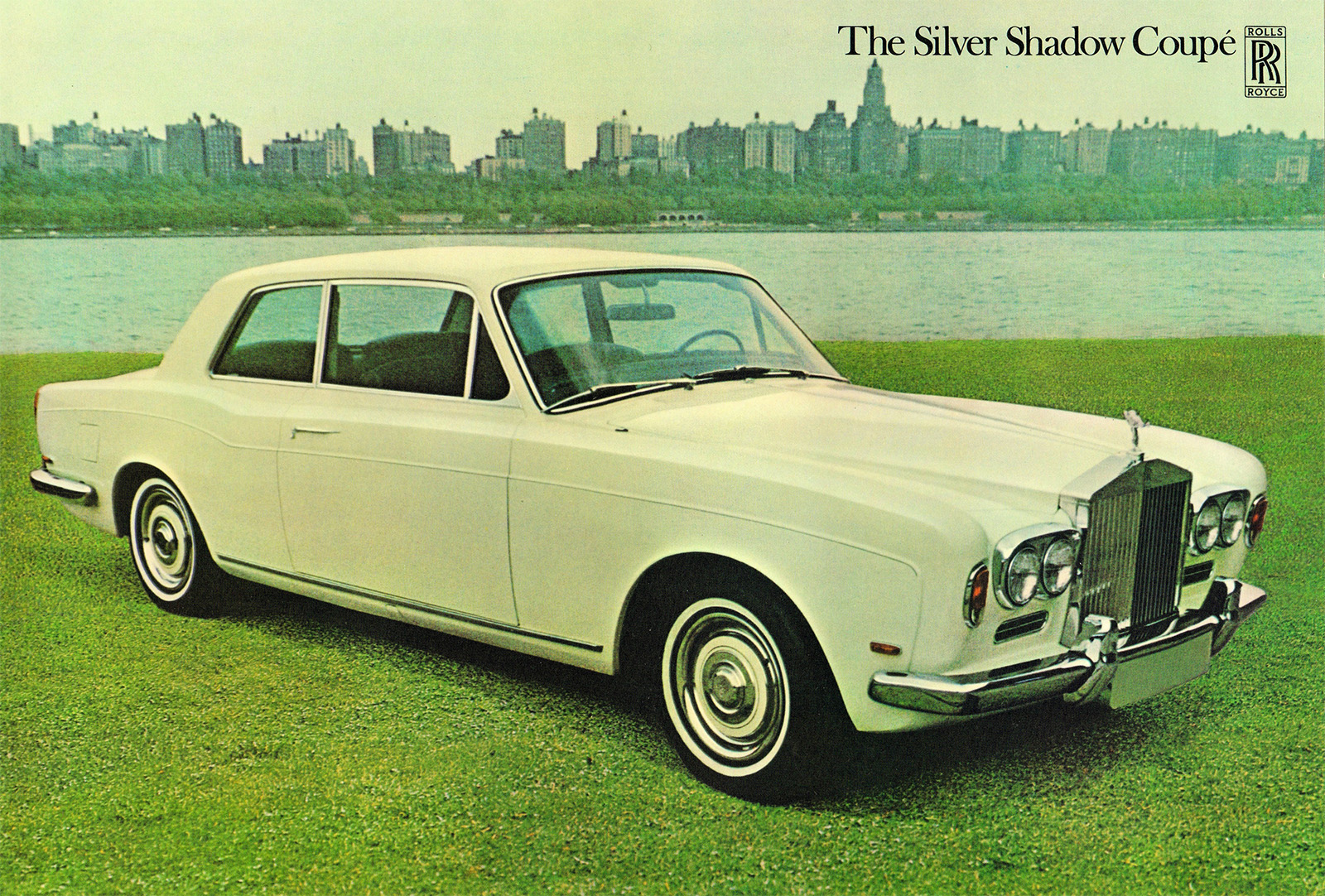
The coupé versions of these were far less common, but really lovely. Also, there’s no passenger side outside mirror?

Here’s another fascinating euphemism: “very personal shape.” I think I know what that must mean, but, damn, if it was any more oblique it’d be a muscle in your abdomen.
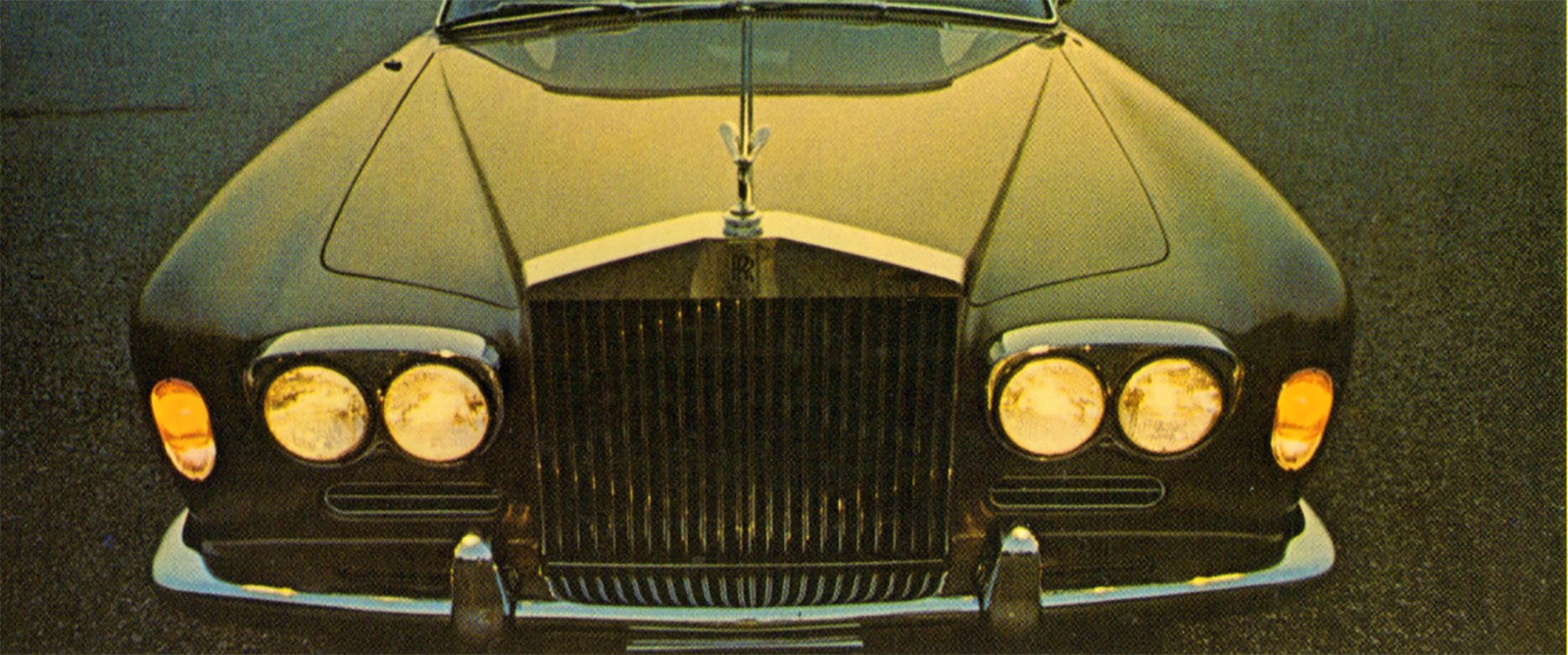
I wonder if “personal shape” could refer to someone short, like me? Who knows. That picture above I especially like because I know it had to be taken with the hazard lights on, at just the right moment, because the amber indicators would not be on together otherwise. The lower white sidelights handle parking light duties here, so this must have been while the hazards were blinking.
I’m told to turn those hazard lights on, one must pull up to operate, if you were curious.




‘1970’s Roll Royce catalogue speak’ is a pretty specific dialect of English, I’m not sure anyone actually spoke like that.
Half a shilling says “municipal fallout” is bird poop.
I’ve adopted Do The Needful, it’s terrific.
Kindly revert.
I don’t see side rearview mirrors on either side in many of the pictures. I remember seeing used Rollers of this era for ~$14,000 around La Jolla back in the mid-70s. I didn’t have that kind of coin back then, but if I had, I wouldn’t have done it because I wouldn’t have also been unable to afford the inevitable repairs or even maintenance.
A few things:
As others have pointed out – Cars simply didn’t have off-side/passenger side mirrors in the 60’s.
It’s called a “Head Operator” because the Brits referred to convertibles as “Drop Head Coupes”. This is clearly a US-market brochure.
Which leads us to where someone in the comments referred to the “Corniche” – but that nomenclature did not come into being until 1971. Prior to then it was a “Rolls-Royce Silver Shadow (Fixed Head) Coupe” or “Rolls-Royce Silver Shadow Drop Head Coupe”.
I’m a bit surprised the brochure referred to the roof covering as vinyl – as it was more properly referred to as “Everflex” Again, indicative of a US market brochure. https://en.wikipedia.org/wiki/Everflex
The bulbs are in the took kit not so the owner would necessarily replace the bulbs themselves – but so their driver, valet, butler, or local garage man could swiftly change a bulb without need to drive someplace with a burnt-out bulb to procure one. When the car was next serviced by your friendly Rolls-Royce specialist, the missing bulbs in the kit would be replaced.
Panels are beaten by hand for three reasons: One, tooling is very costly for low-volume builds – hence, hand fabrication. Secondly, the fenders of the Silver Shadow series were extremely complex and could never be stamped in one piece. Thirdly, the fenders of the Silver Shadow series are aluminum – and the stamping capabilities for aluminum simply did not exist at the time.
Municipal Air Pollution Fallout:
In an urban context, “fallout” describes the dry deposition of suspended solids from traffic, industrial sources, and wind erosion of soils. These pollutants accumulate on city streets and surfaces and are a major component of nonpoint source pollution, meaning they come from a wide area rather than a single pipe or smokestack.
Key pollutants found in municipal fallout include:
Heavy metals: Lead, mercury, cadmium, zinc, copper, and chromium.Organic pollutants: Polycyclic aromatic hydrocarbons (PAHs) and polychlorinated biphenyls (PCBs).Microplastics: Particles from tire wear, artificial turf infill, and the breakdown of plastic litter.Other substances: Nitrogen and sulfur oxides, general hydrocarbons, and incinerator particles. When it rains, this deposited material is discharged as urban runoff into sewer systems and local bodies of water, degrading water quality, depleting oxygen, and harming aquatic life.
Oh to be a fly on the wall at the Rubber’s lodge on a Friday night.
BTW, Excellence is a quality performance word. Much like Sport trim on a pickup truck or riz.
The rear compartment on the partitioned cars probably has it’s on HVAC pack over the rear axle in the trunk.
You know that the apprentice on the shop floor got a cuff around the ear for not perfectly aligning all the slots on those screws, right? The QC guy should have sent this back before it got as far as the brochure.
I appreciate that R-R took the time to index the screws. I’m surprised there is no mention of the Citroën DS based hydropneumatic suspension.
“Who is parking their big, caramel-colored Rollers in the forest?”
Mostly Purists, one would think.
Also, “Municipal Fallout” sounds like what happens when you get caught driving your Roller near a crowd of prols and they start flinging poop at you.
In 1966 very few cars had four way flashers. I’ll bet the owner’s manual used two paragraphs to describe operation.
So much to discuss:
Man, I’d love a Corniche in 70s brown.
Old Rolls-Royce joke from the “Rolls-Royces never break down” era:
Guy goes on a Rolls-Royce factory tour. Sees a worker diligently polishing a radiator shell. The shell has a perfect mirror finish and yet the worker keeps polishing. The visitor asks, “How do you know when you’re finished?” The worker glances up, “I’m never finished. I just keep doing this until they take it away from me.”