


When is it the right time for a member of the Big Three add another automobile brand? Back in the nineties, it seems like they all had more brands than you could shake a stick at from Plymouth to Pontiac even though the cars were, in many cases, hard to tell apart. However, today I think I see a case where reviving a long-dead brand might be worth it.
Hear me out: Ford should bring back Mercury as an all-electric nameplate and offer a series of exclusive product. In that mix would be a subcompact EV built with the most cost-effective current methods and take inspiration from a concept car of nearly half a century ago.


I know it sounds crazy, but how is that any different from the other things I present on a weekly basis?
We Gonna Rock Down To..
If I said to you that I just got back from Chick-Fil-A, it’s understood that red meat was not part of my lunch. At the same time, telling the valet to go get your Rivian, Tesla, or Lucid will let the people next to you know that you’re an all-in adopter of the EV lifestyle. There’s something about a brand devoted to a certain technology that adds a certain cachet and even upscale feel that you won’t get from buying an electric car at a place that mainly sells gas-powered cars.
What’s worse is the inevitable comparisons that you’ll get when offering an EV at a place like a Ford dealership. People might not directly compare a Rivian to an F-150, but I can promise you that an F-150 Lightning parked next to a less-expensive (or better equipped) gasoline-powered big Ford pickup on the same showroom floor will almost demand such a side-by-side analysis.

Based on recent sales figures, the Lightning just ain’t doing so hot in that comparison.

Also, you’re all probably well aware of the stories about taking identical mass-produced products and putting them in very different environments with vastly divergent price points. The Dollar General-based one will be given a price tag a fraction of the cost of exactly the same thing placed in a Lord & Taylor, yet both will sell with neither buyer thinking they’re getting a deal or being fleeced. As a consumer product, cars are the same.
For years, Lincoln-Mercury dealerships sold what were essentially the same products offered at more ubiquitous Ford stores; often, they were sold at a premium. You know what? People didn’t mind, since the vestigial add-ons somehow made them seem more upscale, and the Lincoln-Mercury dealership experience was often far better than at the lower-level stores. So that’s why people purchased Pintos with funny chrome grilles on them: the infamous Mercury Bobcat.

All of this speaks to the advantages of an all-electric Mercury dealer, but there’s an even bigger reason to do it. I’m sure most Ford dealerships have a sales consultant that fully understands the ins and outs of the EVs on offer; on our last car purchase, we met with The Electric Gu,y who really helped to sell us on the plug-in hybrid we bought when nobody else at the place could really answer all our questions. With a Mercury EV store, the sales consultants and service representatives would theoretically all have more knowledge about electric products since it’s not just a small fraction of the cars that they sell and work on.
Come on, “Mercury” is a great name for an electric car brand! Plus, some of our favorite Mercury products had very-EV-like “light bar” front ends! We can (and will) come up with some more upmarket EV Mercury products later in this article, but how could we make a cost-effective but still somewhat upmarket-looking product to fill in the lower end of the electric market that none of the other “boutique” brands seem to be able to fill? Well, very few ideas are totally new; the same challenges we face today in the automotive market existed fifty years ago. Unfortunately, with many of these concepts, there wasn’t the technology or know-how back then to make it work effectively. Today, it might be a different story.
Toys In The Attic
Somehow, toys that we had as kids pointed the way to different automotive solutions that we later learned couldn’t really be done in an actual vehicle; or so we thought. One toy that appeared after my childhood was a modular car system where you could use a series of wood and plastic parts to create all sorts of vehicles, from a sports car to a pickup truck or an SUV.

We can’t forget Candylab toys!

Back in 1982, Giorgetto Giugiaro’s Ital Design came up with a vehicular concept that was very similar to this innovative child’s plaything.

Dubbed the Capsula, the idea was to create a nearly flat, low-profile base that featured the engine, all mechanicals, and low cargo bins upon which you could build whatever type of vehicle you wanted to, from a four-passenger gull-winged minivan to a tow truck or a small cargo van.

I’ve seen some sites state that with a screwdriver or wrench, you could “change out your car in minutes” though I very seriously doubt that was possible. Also, you know how you get that EEEKAHEEEKAEEKAH from loose trim pieces in your 100,000-mile car? I would imagine a vehicle made of a bunch of bolted-together body parts could make a downright symphony of such noises with accompanying wind and water leaks.

Still, this concept was crying out for the electric “skateboard” chassis that is commonplace today, so it’s easy to see why the Capsula is still talked about today as an idea whose time might be arriving.
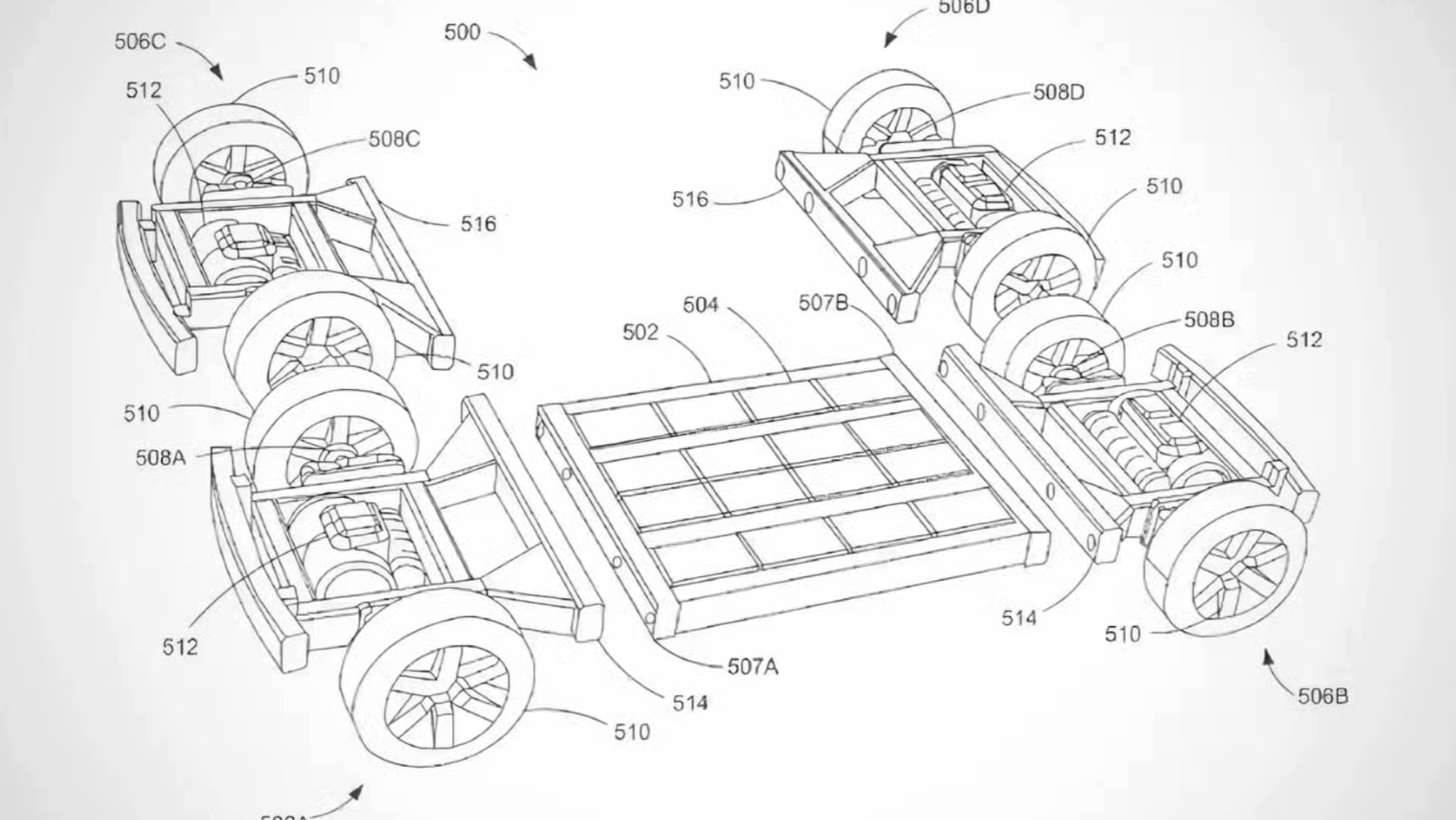
How about years ago, when you built plastic car models, getting woozy from the scent of the glue that stuck to your fingers? In many cases, the “chassis” of the scale car was one big, molded piece of plastic that included the frame, floor pan, and other components. You learned later in life that in real cars, those were in fact an assembly of dozens of parts and not one big piece, since there’s no way that you could stamp out anything that large.
That’s not the case today. Manufacturers are talking about “gigacasting”, the ability to form large and rather complex forms out of steel. This technology will reportedly reduce assembly time and cost exponentially on future cars.

We’ll incorporate both of these ideas on our new little Mercury EV, but with all of this modular stuff, will it end up looking like a Fiat Multipla mated with a Harlequin VW Golf? Have no fear: we’re actually going to make it feel more retro than future-shock.
Boxy Is Foxy, Like A Fox Body
As with the sub-$30,000 sort-of-truck that I suggested for Ford a few weeks back, the Bobcat would be a little larger than a Mini Cooper and available in a host of different body styles that shared many parts for the sake of economy. The front and rear gigacastings would be connected by two different-length battery packs to give short and long wheelbase options of pickup trucks and SUVs.
The overall look would be throwback style and ultra boxy to counter the ultra-swoopy designs of most crossover SUVs with overwrought “lighting signatures” and excessive body detailing. Honestly, the Rivian and Teslas seem to stand out due to their lack of such ornamentation. The rectilinear Range Rover-style aesthetic would naturally have the old Mercury “light bar” front end from their late eighties/early nineties Sable heyday. Eighties-looking wheels, too!
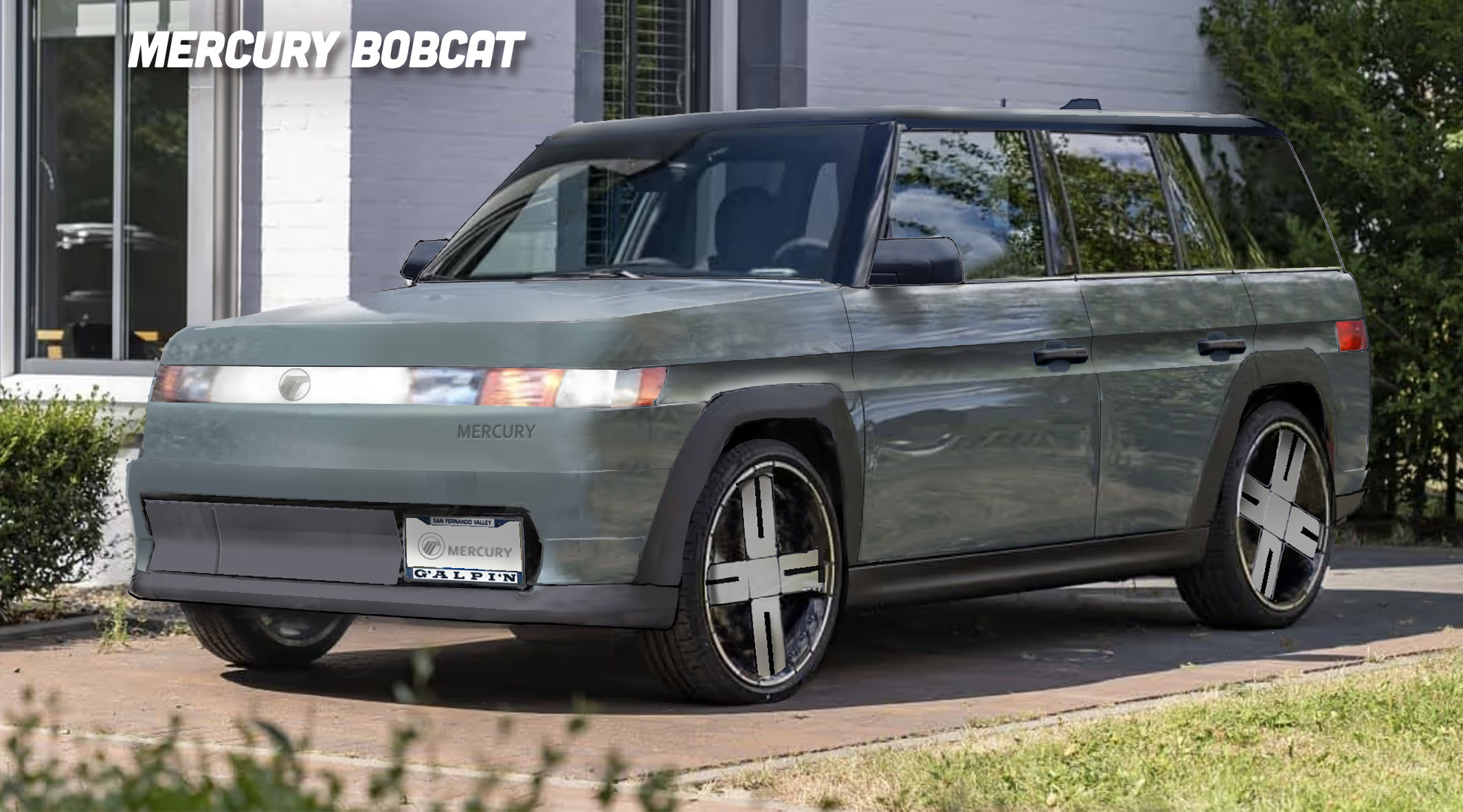
The back would have a similar full-width taillight.

You’ve got body styles-o-plenty with the Bobcat in either short or long wheelbase formats. Slate style pickups! Convertibles!

Like the Ital Capsula proposed, such different body styles could be done for minimal tooling cost, and the sky would be the limit for the number of different versions you could do. Naturally, the body parts would be robot-welded together and mechanically fastened as the Capsula intended. Honestly, the whole “modular” car wet dream that designers had never really found buyer acceptance, as things such as the 1987 Pulsar NX proved (the available wagon back barely lasted a year). Nobody really wants to keep a backyard full of parts to change their pickup to an SUV overnight, thank you. Too bad: I’m one of those design weenies who thought it was a cool concept.
Inside would be equally clean with what looks like a cantilevered armrest and screen console that sort of follows the shape of the Mercury logo (there would be supports coming out of the dash, so it wouldn’t actually be cantilevered). I like the idea of an armrest to steady your hand as you operate the screen. “Gear” selector buttons on the side of the screen housing face the driver.
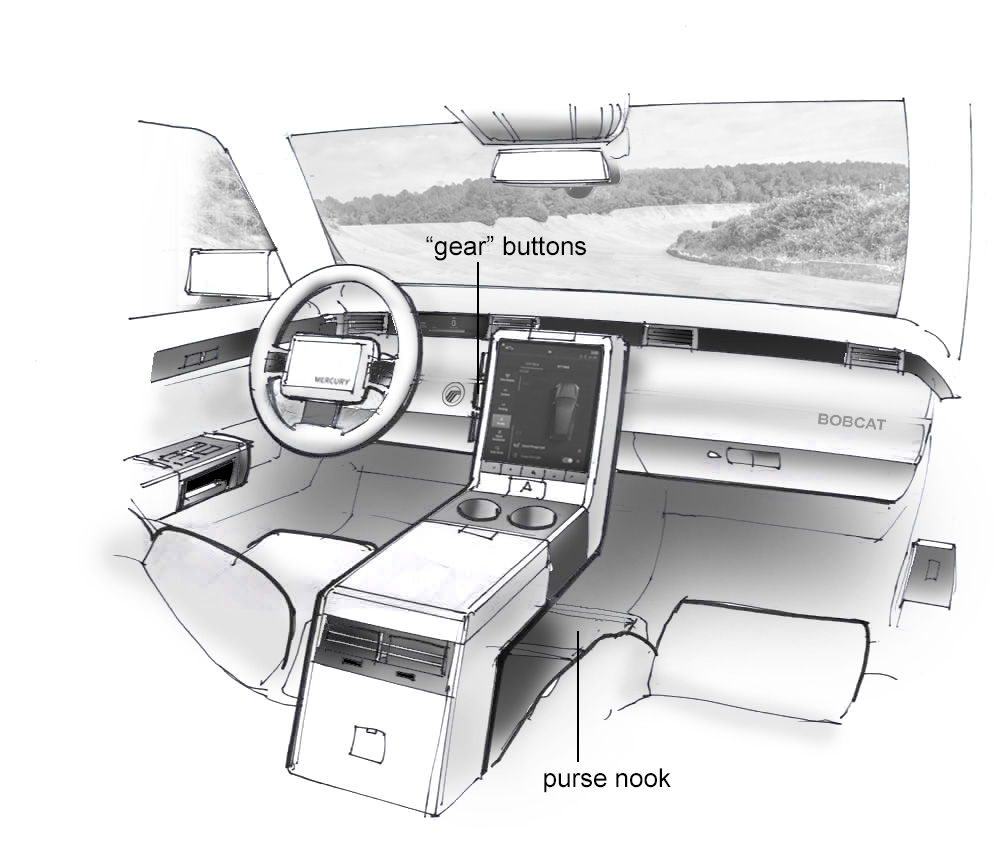
Just a very clean and basic design that still appears more finished than Tesla products.
Cougars And Bobcats, Oh My: The Initial Model Lineup
We don’t want to have a new Mercury EV dealership with just one car on offer, do we? If the Bobcat will be our all-new entry level electric product, we can populate the other categories with unique vehicles that wouldn’t require a clean sheet of paper approach. However, these would be more than just space fillers like the 1990 Lexus ES 350 or Infiniti M30 was; we’d offer some products the electric market is looking for.
Mercury Cougar
What it is:
I presented this a while back: an EV rear-drive coupe and convertible that would be a tribute to what might be everyone’s favorite car to wear the Name Of The Cat: a 1969 XR7 convertible as seen driven by the lovely Diana Rigg in the James Bond outing On Her Majesty’s Secret Service.

We’d have a hardtop as well.

Hey, today we can do sequential rear turn signals without all of the complexity required for the original.
What it really is:
It’s a Mustang, of course. The Mustang was not developed to be an EV, but there’s no reason you couldn’t put batteries up front where the engine was (but closer to the firewall for better weight distribution). It wouldn’t be ideal, but it also wouldn’t be impossible.
Why it might work:
The Cougar was never meant to be a traditional muscle car like the Charger, as even the Cobra Jet XR7 was a bit of an iron fist in a velvet glove. As a convertible, it would offer a body style the slow-selling EV Charger does not, and it would embrace the quiet operation and lack the dumb fake motor sounds nobody seemed to go for anyway.
Mercury Montego (two and three row)
What it is:
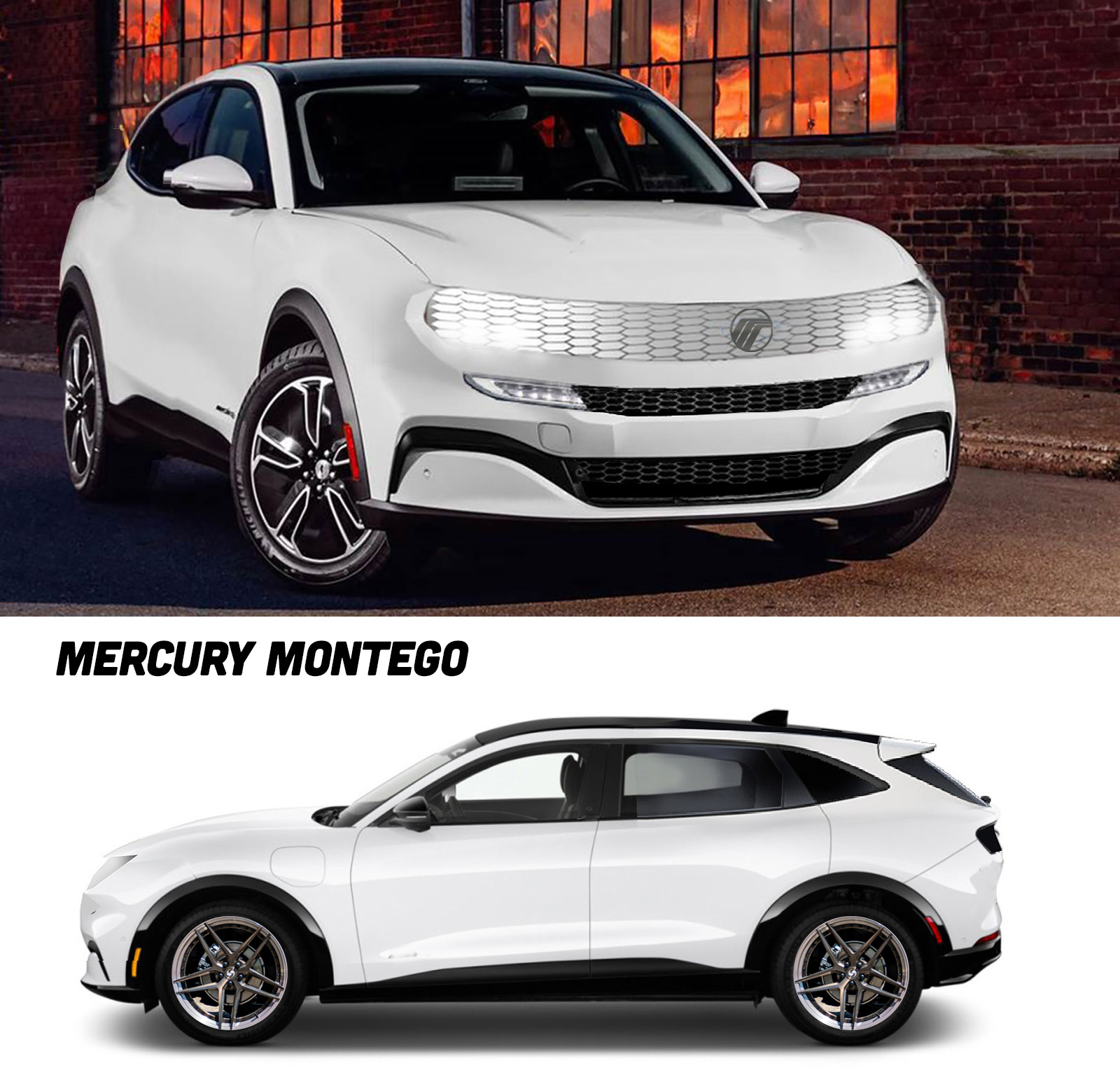
Another Mercury would be a mid-sized SUV with an optional third row to bring another much-requested seven-passenger EV to the market.
What it really is:
This would merely be a stretched Mustang Mach-E with a more upright back end.
Why it might work:
That Mach-E is an excellent, underrated product, so why not build off of it? It would be sacrilege to make a three-row ‘Stang but a Mercury? No problem. If you find the Rivian too large, the Tesla Model X too expensive, and other EVs too small, the Montego could be your family car.
Mercury Montclair
What it is:
A somewhat luxury oriented EV full-sized pickup. If a Cybertruck is too ugly for your tastes and you’d rather have something other than a Rivian, the Montclair could be for you.
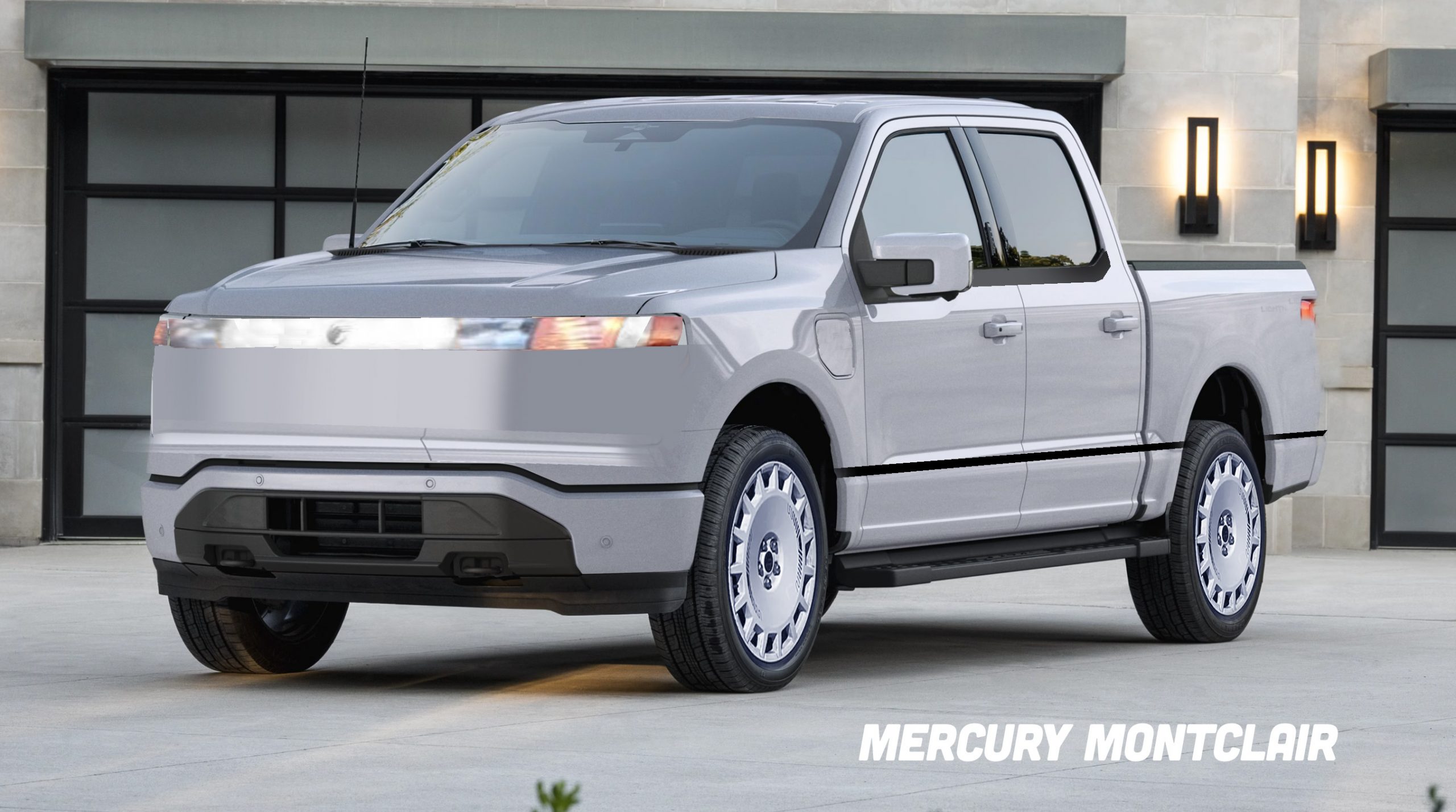
What it really is:
A certain excellent Ford full-sized EV pickup (the Lightning) that has sadly lit the market on fire like a box of wet matches.
Why it might work:
Ford’s gamble to pitch the F-150 Lightning as a sort-of-work-truck adjacent product to the gasoline version has not panned out as expected. Marketing this thing more like the Rivian or Cybertruck as a sort of premium, upscale product wouldn’t hurt to try.
Only At The Sign Of The Cat (Growl)
I’m seeing a Mercury “boutique” inside selected Ford stores to start out if needed. Note how the shape picks up on the Mercury logo. There are stools to sit down and play with fabrics and color swatches, plus merchandise like T-shirts (free with a test drive?) to make it a different kind of car shopping experience:

However, the main goal would be to create standalone Mercury stores with the same kind of feel as a Tesla showroom inside.

Many people entering an early Saturn dealership had no idea they were a GM brand; Mercury would also seem worlds apart from a Ford store.
There Really Was McSpaghetti By The Way
Did the Big Three get off on the wrong foot with EVs? I think so, and I don’t think it’s too late for them to attempt a sort of do-over. The Mercury brand might be a great way for Ford to launch an affordable but still premium-feeling electric product in a manner to appeal to people accustomed to the Tesla or Rivian experience.
There’s a reason one can’t buy McTacos, or a Beef-Fil-A. You can’t be all things to all people, and maybe it’s time car companies learned that as well.


You’ve just posted the most compelling and thorough reason why Mercury’s cancellation was justified.
If you bring back the breezeway, I’m in!
No Topaz or Lynx?
Sad.
very sad. the lynx xr3 should be able to do burnouts with a High Output Motor
The timing of all these as EV’s would’ve made more sense a little over a month ago, before the CAFE rollback.
I support anything that brings back the Bobcat and their adorable little Bobcat mascot.
I don’t think it will ever happen.
Hell, Ford can’t even make a new Lincoln Mark IX coupe/convertible (which would be based on the current Mustang)… or even a Lincoln version of the Mach E.
If they can’t even do these basic things that they SHOULD do, they’re too risk adverse to bring back Mercury.
Boy, that platform looks really Flex-ible.
I support any plan that revives Mercury.
A small EV sub-brand that carried the battery manufacture on their P&L so it could be spun off into an independent company that sells batteries to Ford.
You know, when I saw the headlines my first thought was ‘no, Mercury died for a reason. Let it lie.’ But bringing it back as an EV sub-brand sold through existing dealer networks (aka Hummer via GMC, only with a less ridiculous initial product) does make sense. Then if it proves successful, you can spin it off to a full brand later. I’m in.
However, I don’t think reverse-engineering the Mustang to be a Cougar EV using batteries under the hood in place of the combustion engine will work as well as you think. There are private companies that do that level of conversion for combustion-engined cars, but the limitation is the amount of battery you can stuff just under the hood without absolutely ruining the weight distribution. Most conversions have ranges of 100+ miles, and while an OEM may be able to through more money and resources at such a conversion than a private shop, I’m not sure they’re going to be able to get enough range in that config to make something appealing to more than a handful of people. Most just aren’t comfortable buying a vehicles with less than a 250-mile range. Maybe you could give up some trunk space and stash a supplemental battery pack behind the rear seats?
That said, if there’s a breakthrough that makes solid-state battery technology more feasible for mass production that may change the game for such a refit.
Weaksauce Badge Engineering is what killed many of the brands, including mercury I believe. MEL motors were Mercury, Edsel and Lincoln only and were designed to be larger and more bespoke. The big Merc in the sixties were one step behind Lincoln in styling, but nobody mistook a lincoln for a mercury and the same could be said For Fords and Mercurys. When the differences were simply different grills and maybe tail lights then there became less reason to shift a step upscale. This becomes more of an issue when the ford vehicle start to have levels internally. the PLatinum Ford would almost have to be slotted below the base Mercury to make enough of a value difference for people to pay up to step up. and sadly Mercury lost it’s image anyway.
That being said, I would personally welcome a Cougar built on the basic Mustang skate. Make the Ecoboost 3.0 the base motor and a 5.2 NA or a 3.5 Raptor V6 on the XR7, with an optional 5.2 Supercharged motor on the Eliminator version. Basically make it more comfortable than a mustang to live in and give it options that Mustang does not have, or if they do, make them very specialized versions.
“The big Merc in the sixties were one step behind Lincoln in styling, but nobody mistook a lincoln for a mercury and the same could be said For Fords and Mercurys.”
In some cases, Mercury was actually ahead of Lincoln in its styling.
Look at the front of the ’69 Marquis – then that of the ’69 Lincoln.
Then look at the ’71 Lincoln.
But yes – FOMOCO exchanged styling themes among all it’s brands for decades:
Look at the tail of a 1958-60 Lincoln – Then the rear of a 1963 Mercury.
The Breezeway roof of the ’61-66 Mercuries was clearly a hand-me-down from the ’58-60 Continentals…
But the Thunderbird roofline from 1958 directly influenced the roofline of the 1961 Lincoln Continental – after all, the ’61 Lincoln was initially designed to be the ’61 Thunderbird – right down to the similar headlamp/grille arrangements. Even the dashboards: The ’61 Lincoln is just a squared off version of the Thunderbird dash.
Look at the front of a ’64 Lincoln and it’s dashboard – then the front and dashboard of a ’64 Comet. (Mini-Me!)
Compare the front of a 1966 Mercury to a 1968 Ford Galaxie
Sometimes it went both ways: Look at the front of the 1968 Mercury – then the front of a 1969 Lincoln – then the front of a 1972 Mercury Monterey.
Then have a look at a 1974 Lincoln – Are you certain that’s not a 1974 Mercury Marquis?
I feel like anything in the 70’s has a strong chance of being yanked into the weaksauce badge engineering era. Certainly by 75 the Pinto/Bobcat, Thunderbird/cougar, and the Maverick/Comet were very hard to tell apart from 20 feet away at 20 miles and hour. The Marquis and the Lincoln Continental were Upright Grill type cars, though the lincoln had the more Rolls Styled grill and the Merc was perhaps more in line with the other Merc from across the pond. the grill was upright but less so ala the 280S. Still the big boats looked like and LTD and/or the continental enough to barely differentiate. the drivetrain options were the same across the three. though I think the LTD did have a dinky 302 option. However, outside of the 4 wheel disc brake 9 inch from the lincoln there was really not enough differentiated them to my eyes.
“though the lincoln had the more Rolls Styled grill”
Lincoln didn’t put a Parthenon grille on the Continental Sedan and Coupe until 1977. Between 1974 and ’76 it was a ringer for the Mercury Marquis grille. Probably one of the big reasons Lincoln went with a substantial update in 1975 with the “Town Car” pillared rooflines.
Back in the day the BOP brands, especially Pontiac, provided in house completion that kept Chevy sharp. Same at Ford- I worked at a Mercury store kiddy corner to a Ford store and while they had big trucks, we had British Cortina’s and German Capris they didn’t!
And Panteras.
Thanks for picking up this ball and running with it. I too had advocated in these comments for just such a corporate entity.
Those are some swell model offering proposals you’ve crafted.
Together we Autopians might just save one of the American Big Two from an otherwise inevitable slide into irrelevance.
I’d go for a Topaz over a Bobcat but that’s just picking at it.
Love the Flex-y designs, but I feel they need a little character in front of the wheels.
I’m very interested in the reverse hybrid thing Ford seems to be investing in with their electrics, and just as interested in the solid state Doughnut claims to be rolling out – it feels like a few variants may hit, 27-28.
Tracer was the next badge slated for revival at the time Mercury was killed, was going to be a rebadged Focus
That top shot looks like a Saturn VUE had a liaison with a Slate truck. I think it’s the Saturn-y wheels maybe. I don’t hate it.
Good idea and I think GM should have done this with Saturn as well.
The last thing the auto industry needs right now is more brands.
This makes a lot of sense — therefore unlikely that it’ll happen
Mercury Fun Fact: I worked for Ford back in the day and nearly launched what would have been the last new Mercury product. I still have the “stop-the-presses” prints for the accompanying brochure. Program got canned just 3 weeks before its reveal.
What was that final new product?
Go on…
^^^ what Mercedes said. WHAT WAS THE PRODUCT, PANDAMANIAC. SPILL!!!
done!
I forgot I posted this! LOL, internally we lovingly called it the “Mocus” because it was based on the 4 door all new global Focus (C346, but I can’t recall the program code for the Mercury) but externally it was going to revive a Mercury name from the past — a non-alliteration name at that. The story on how it got its name is fantastic: we consumer-tested and had legal clear multiple possible “M” names, we also ran calculations on the marketing spend it would take to get a new model name up to a brand awareness level consistent with the mercury showroom at the time (Milan, Mariner). We made it through every one of our reviews (of course Ford has a naming convention alignment process to follow) but when we walked that data along with our recommendation into a meeting with Mark Fields, he took one look and said, that’s crazy, we’re calling it Tracer. And that was that.
This is brilliant. Love the Flex 2.0 aka Bobcat. I’d be in for one. The Mercury brand definitely needs a comeback.
Exactly what I saw as well. Flex seems like such an obvious choice for the skateboard platform.
Do. it.
Well thought out., including the dealership and boutique spaces. I tend to like the square proposals more than the curvy ones. It would be nice to have a unified design language beyond just the light bars to signify, “I’m crazy ‘bout my Mercury.”
A whole line up of EVs. It’s like an … Electric Avenue
an all-electric Flex would dope.
My first car was Much Mercury – an LN7.
It was white with a blue interior, and the differences between it and it’s Ford EXP sibling were very minor – tinted tailights, more slots to the grill and a bubble glass hatchback.
Also, the Pulsar NX was amazing and I still want one.